In our eyes and to our ears, there’s no better family of musical genres to usher in the holiday season than roots music. Bluegrass, Americana, old-time, country, blues, and beyond – they’re all perfectly suited for the coziest time of year, for togetherness, for parties and gift-giving and cookie icing. Whether you celebrate Christmas, Hanukkah, Kwanzaa, or Winter Solstice – or even if you feel like opting out of the ruckus altogether – there is roots music for you.
Each year, we like to share our picks for the rootsiest time of the year in BGS Wraps, a weekly collection of songs, videos, albums, shows, tours, and events that celebrate the season. We share a few of our favorites, mostly brand new but often classics and timeless selections, too. Plus, we collect all that we can into a running playlist so you’re ready when the family or party hands you the aux cable.
We hope you enjoy BGS Wraps and tune in the next week as we continue our series celebrating the holiday season. (Catch up on week one here. And check out week two here.)
Merry Happy Whatever, The Doohickeys
Country duo the Doohickeys go fully original with their brand new Christmas EP, Merry Happy Whatever. Their trademark wit and humor are evident across the project’s five songs – including gut-busters like “Santa Needs A Beer” and “Santa Is A Stoner.” (Does Santa need a breathalyzer, as well?) On the EP’s title track, the delightfully crowd-pleasing and all-encompassing “Merry Happy Whatever,” Haley Spence Brown and Jack Hackett are joined by the Wolves of Glendale, with rich background vocals and holiday winds and brass to accomplish that full-tilt holiday sound. And a merry happy whatever to you, too!
A Cherry Valley Holiday, Carter Faith
A favorite of ours from the mainstream country space, Carter Faith released an excellent A-side/B-side holiday single this season, pairing “Nothin’ For Christmas” (featuring William Beckmann) with “Please Come Home For Christmas.” Packaged as a two-song collection titled A Cherry Valley Holiday, both tracks are perfectly suited for your countriest Christmas playlists. Faith’s duet with Beckmann showcases how both artists keep tradition alive while still looking to the future. You may be reminded of iconic duets like Lee Ann Womack with George Strait or Dolly Parton with Kenny Rogers. The holiday cheer doesn’t stop there, either, Faith recently joined Jimmy Fallon himself on “Ugly Sweater,” a funny seasonal track produced by Dave Cobb that the pair unveiled together on The Tonight Show. Between the Christmas singles and “Ugly Sweater,” there’s a country holiday flavor for everyone. Carter Faith does it all.
“Christmas in Yuma,” Cameron Knowler
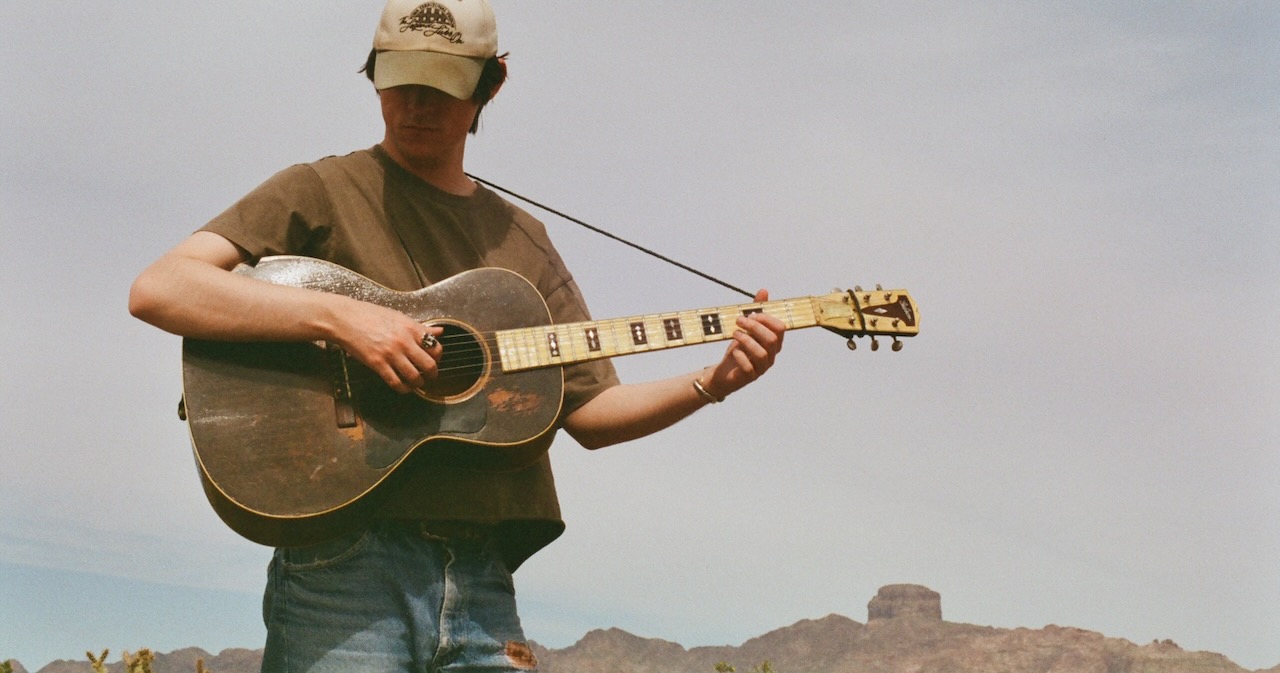
One of our favorite albums of the year was released by guitarist, archivist, writer, and composer Cameron Knowler (who sometimes writes for BGS, too). CRK was released in April and, being set in the desert in and around Yuma, Arizona, the project feels properly warm and sunny, painting sonic pictures of red rocks and cactuses and blacktop baking in the sun. If that doesn’t sound properly Christmas-y to you, take a moment to inhabit the album’s lead track, “Christmas in Yuma.” A gorgeous prose poem set to sparse, textural guitar, the text was written by Knowler but is read by his friend and fellow Southwesterner, Jack Kilmer. It’s a truly stunning beginning to the project and we’ve been holding onto it all year for just this occasion. It may not be the most sing-along ready track of the holiday season, but its transportive feelings of nostalgia, grief, longing, and pain at seismic transformations – or at cloying, gluey stagnation, or both – are altogether more than perfect for the holidays.
“Christmas Love Song,” Willie Nelson
If the only present any of us received this year was a “Christmas Love Song” from Willie Nelson, well, that would feel like a pretty complete holiday season, wouldn’t it? With just one simple offering, every “need” could be checked off our wish lists. Written by fellow legend Bill Anderson (with help from Bobby Tomberlin and Marv Green) and produced by fellow legend Buddy Cannon, “Christmas Love Song” includes plenty of Nelson’s signature charm, whether in his languid phrasing or his tasteful nylon-string licks on his trusty guitar, Trigger. In the lyric itself Nelson is remarkably humble about his holiday offering: “It ain’t a lot, but every word of it’s true/ It don’t sparkle or shine/ But it’s one of a kind…” For all of us who’ve received this holiday gift from the legendary Willie Nelson, it feels like more than enough. And we will certainly cherish it.
“Oh, It’s Christmas,” Sage Palser and Prairie Wildfire featuring Danny Paisley
New bluegrass holiday hits are all too rare, so we relish them when we find them. This release from 2024 is a great example, cheery sleigh bells giving way to burning bluegrass that will warm the winter right out of your heart. Sage Palser joined Danny Paisley and the Southern Grass on a recent single that ended up on Paisley’s most recent album, Bluegrass State of Mind, and their knack for collaboration is showcased on “Oh, It’s Christmas,” as well. Paisley and Palser sing in duet while backed up by Palser’s band, Prairie Wildfire. This one has got us in the mood for Dollywood’s Smoky Mountain Christmas. It’s the perfect bluegrass track for some cinnamon bread and roller coasters.
“Office Christmas Party,” Brittany Ann Tranbaugh feat. Carsie Blanton
Ah, at long last, a tribute to everyone’s favorite events of the holiday season – the dreaded office Christmas party. From Brittany Ann Tranbaugh and Carsie Blanton, “Office Christmas Party” is silly and light-hearted, but with a message direct from Ebenezer Scrooge’s counting house employees: Sure, gifts of appreciation from our employer at this time of year are appreciated, but we’d much prefer workers’ rights, collective bargaining, and a living wage. Enjoy the free beer, cookies, and pizza at your corporate party, of course – and commiserating with our coworkers is solidarity, whether they know it or not – but focus on what will really bring the reason for the season into focus. A union! Tranbaugh and Blanton continue to showcase their penchant for making mission-focused music that’s also fun, engaging, and joyous.
“Where My Heart Is,” Randy Travis
Thanks to technology, AI, and contributions from vocalist James DuPré, Randy Travis “got his voice back” last year and began releasing brand new music featuring the low, smoky, dulcet tones for which he was adored. It’s one of the more interesting use-cases of AI in music, leveraged to give an artist their agency back instead of stealing it away forever. Travis’ pair of singles with his new AI-enabled voice are well-executed for what they are, but a newly released from-the-vault track like “Where My Heart Is” still reaffirms the ineffable in his hitmaking voice that we won’t ever get back. Even the best AI just cannot compare. “Where My Heart Is” was recorded prior to Travis’ fateful 2013 stroke that would render him unable to sing. It’s a lovely, heartfelt track that falls in perfect step with his beloved holiday albums An Old Time Christmas and Songs of the Season. We’ll take any/all Randy Travis songs we can get, but this one feels extra special.
Christmas with el Twanguero, Twanguero
Spanish guitarist Diego Garcia is Twanguero, maker of one of the finest holiday collections to be released this year, Christmas with el Twanguero. Recorded entirely to analog tape, the album of instrumental renditions of holiday favorites is tasteful, warm, and cozy. It would fit just perfectly bookended by Vince Guaraldi Trio and Sharon Jones & the Dap Kings. It’s understated in its execution, relying on retro vibes and sounds to do the heavy lifting holiday pomp and bling would normally bring on such a project. For an album centered on the guitar, it never feels like it has to rely on showboating or hot licks, instead leaning into familiarity to bring us something that feels refreshing and new. It’s cinematic and lush, but down to earth and intimate, too. Plus, the album supports El Patojismo, a school of arts and social transformation based in Jocotenango, Guatemala, fostering education and creativity within its community. All around, it’s a lovely holiday discovery.
Peace, Love, and Cowboys (Holiday Edition), Lainey Wilson
Not sure if or when we’ve ever enjoyed such a holiday treat as this! Lainey Wilson returns to “Peace, Love, and Cowboys” from the deluxe release of her 2024 hit album, Whirlwind, to offer us a lovely holiday rewrite of the track. Retooled for the season, the message of the song resonates all the same – we need more hippie cowboys, cowgirls, and cowbabes, this time of year and beyond. The Christmas EP also includes a duet with Bing Crosby himself on “Let it Snow! Let it Snow! Let it Snow!” – Wilson can get anyone on a feature! Plus, she revisits a prior holiday single, “Christmas Cookies;” she also includes instrumental versions of each number, if you happen to have a word-free playlist that needs new transfusions of seasonal songs. We love the way Wilson approaches country music, and this little collection shows the creativity and outside-the-box-thinking she brings to the table.
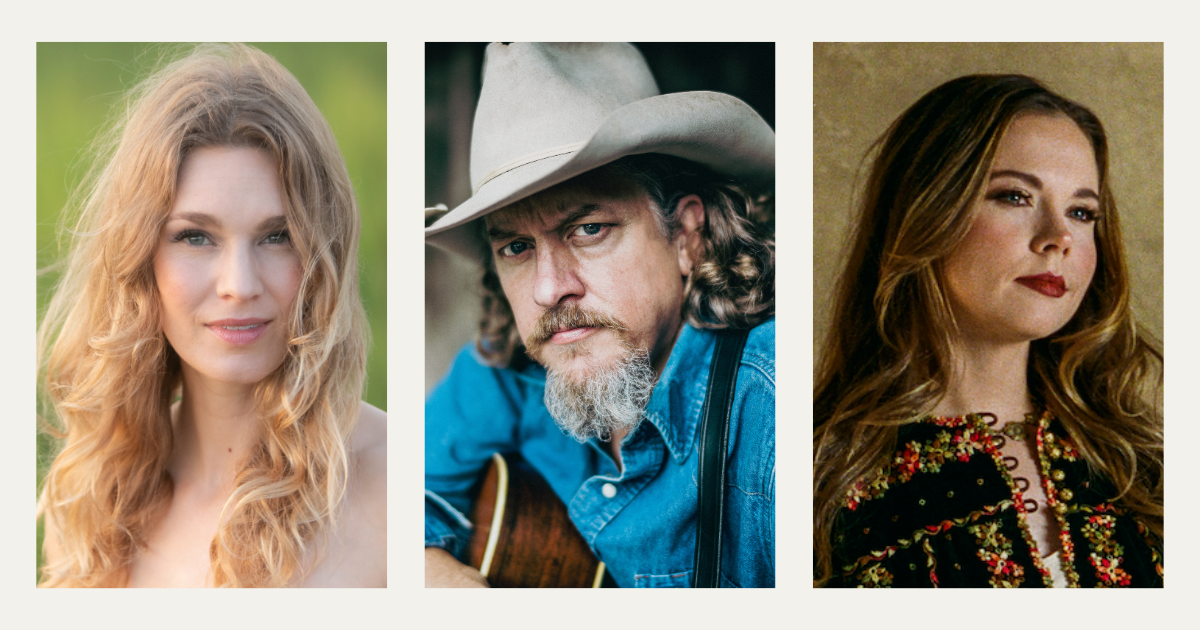
Lead Image: Randy Travis by Marisa Taylor; Carter Faith by Bree Marie Fish; The Doohickeys by Jesse DeFlorio.
If you’re looking for a definitive, qualitative, and deliberate ranking; a firm and scientific rubric; or an unbiased, sterile reckoning of the best albums made in bluegrass this year, this roundup may not be for you.
Truthfully, as someone who’s worked, been acquainted, and become friends with many of the artists on this list in various capacities – from bio writing to onstage performances to media coverage to pickin’ parties to recordings and beyond – objectivity isn’t something I, personally, could establish anyway. And such year-end or other merit-based lists and collections aren’t all that interesting, are they, if not just to argue with their curation and selections.
I would not even attempt such things, because to me – to many of us – that’s not what bluegrass is about anyway. Bluegrass is about a feeling. It’s about innovation. It’s about virtuosity. It’s about tradition, loving it or retooling it or coaxing it or turning it upside down. It’s about adrenaline and a high pulse – and passing a mason jar around. It’s about feeling downtrodden or alone, shedding tears into that very ‘shine, and wailing along with the high lonesome sound. It’s folk music as much as it’s abject commercial country in “poor people drag.” It’s endlessly interesting and complex, but pretty damn simple, too.
Anyone with even an ounce of sense knows and understands that bluegrass can’t ever be objective. So indeed, why try? Why not acknowledge that bluegrass is always a matter of taste, of preference, of whimsical or capricious or convicted opinion? Bluegrass is always debatable, because, after all, bluegrass is always in the eye of the beholder.
In the eyes – and especially ears – of this particular beholder, these albums released in 2025 were the best, the most memorable, the most engaging. These collections stick to ribs like ham hocks, or stick in your throat like the tastiest clod of emotional peanut butter. They each advance, subvert, perpetuate, or wrinkle our core ideas of what bluegrass is – and what it can be.
Are each and every one of these LPs the best in bluegrass from 2025? Perhaps not… But also definitely yes.
Big Richard, Girl Dinner
In January, we gobbled down a heaping helping of Big Richard energy with the nourishing and nutritious Girl Dinner. The project may have been the band’s album debut, but this Colorado all-women quartet had already been making remarkable waves in the bluegrass, jamgrass, and string band scenes – and each of the members had extensive and glitzy musical resumés before they even convened. With a new album, Pet, on the horizon for February 2026, a signing with Signature Sounds, and an upcoming co-bill tour with fellow femme outfit Della Mae, we can tell this Girl Dinner is set to become an ongoing traveling feast.
Shawn Camp, The Ghost of Sis Draper
I remember attending Station Inn shows in Nashville in the early 2010s and sitting with rapt attention – like Martha’s sister Mary at the feet of Jesus – as Shawn Camp performed his suite of Sis Draper songs with his star-studded bluegrass bands. Often you’d hear just “Magnolia Wind” or just “Sis Draper.” Sometimes he would perform a more complete handful of the tracks he had written, individually and with his hero and mentor Guy Clark, about the mythical roots music figure from his home state of Arkansas. Now, he’s collected the slate of material – what could easily become a musical or multi-disciplinary theatre work of some kind – into one commanding, lovely, and visceral album. These are timeless songs, written and rendered as only Camp could.
Jason Carter & Michael Cleveland, Carter & Cleveland
Every now and again a new collaborative duo album comes along and makes you think, “Oh! This must have been what it felt like when Skaggs & Rice was released.” Or Tone Poems. Or Ralph Stanley and Jimmy Martin’s First Time Together. A monumental occasion, captured for posterity’s sake in the studio. When fiddlers Jason Carter & Michael Cleveland released their duo debut, that was the feeling. History made in the present, a work that will be regarded as seminal ages into the future being enjoyed in real time. Carter and Cleveland have collaborated quite a bit over the decades they’ve known each other, but what a gift to have that musical friendship ensconced forever on this album. We hope there is more to come.
Wes Corbett, Drift
Look, if all modernist banjo players sounded like Béla Fleck and Noam Pikelny, that would certainly be great. But thankfully there are dozens of five-string pickers continuing to expand on the Fleck (and Pikelny and Munde and Keith and Trischka) school of Scruggs-style, each in their own veins. Corbett is one of the best. Though he blends effortlessly into Scott Vestal’s former role in Sam Bush’s band – or into any number of recordings and one-off pick-up bands that boast his playing in newgrass and bluegrass and beyond – Corbett is a true idiosyncratic banjo player and composer. Drift, his latest, often employs traditional techniques as tools for innovation and contemporary tunesmithing. He recalls the great melodic pickers while always sounding first and foremost like himself.
East Nash Grass, All God’s Children
A few years ago, if you had told me the ragamuffin band holding down Monday nights at Dee’s Country Cocktail Lounge in Madison, Tennessee, would in 2025 release an album you’d describe as “heartfelt, contemplative, and intentional,” I would have probably laughed. East Nash Grass were just as jaw-dropping good then as they are now, but with that down-home silliness and clumsy charm all the great bluegrass bands born of indentured residencies have had. All God’s Children finds the band all the way grown up (but not really), and they never forsake their banter-rich, never-know-what-you’re-gonna-get roots. That overlap – of silly and heartfelt and virtuosic and not too serious – is where most (if not all) of the best bluegrass is born, anyway.
Sierra Hull, A Tip Toe High Wire
Every single time Sierra Hull releases a new album, journalists and critics love to talk about how she’s now “found herself” and “found her sound.” This writer, however, disagrees. I first saw Hull perform when we were both in our mid-teens and then as now I knew, wholeheartedly, this is someone who knows who they are. Granted, Hull has done plenty of finding herself along the way, as we all do, but the songs and tunes of A Tip Toe High Wire were obviously not born of someone just locating her voice, musically or otherwise. They don’t feel experimental or out on a limb, they are each solidly in her wheelhouse. They do still push the envelope, though, and they all tell personal stories, draw on individual experiences, and chase those treasured Hull-ian melodies wherever they lead.
I’m With Her, Wild and Clear and Blue
Perhaps all future I’m With Her albums should be made while basking in the “Ancient Light” of a total solar eclipse, given the striking sonic successes of Wild and Clear and Blue. Is that cosmic magic why their second full-length release feels so distinct and metamorphosed from their debut? Is it all the years and personal growth in between recordings? It’s not like they reinvented the wheel, they’re the exact same band – but something feels different here. Whatever the special sauce may be, all of I’m With Her’s offerings over the course of the band’s lifespan have been stellar, but this latest full-length project stands apart. As long as Jarosz, O’Donovan, and Watkins are making music together, we will be unendingly grateful they offer us these recorded windows into their creativity.
Kissing Other ppl, Kissing Other ppl
Bluegrass and old-time birth new projects, bands, and collaborations all the time. Some are purposefully momentary, some are unintentional flashes in the pan, some are such long strings of last names ampersand-ed together you know there’s no future for them. We hope Kissing Other ppl are here to stay. Rachel Baiman and Viv & Riley joined forces on the album – and band – turning mainstream and pop songs into bluegrassy and old-timey string band arrangements that positively vibrate with passion and life. “Sad boi” covers these are not, though you may at times find them subdued or tender or mild. Long may this old-time Americana musical polycule reign.
Cameron Knowler, CRK
If you’ve been craving a contemporary storyteller and poet who utilizes the guitar as their medium – like Norman Blake or Doc Watson or Tony Rice or so many others – I am so pleased to step onto my soapbox to tell you about Cameron Knowler. Also a writer (at times for BGS), archivist, photographer, and visual artist, Knowler’s guitar-centered album, CRK, is almost anything but a “guitar album,” despite each and every composition centering on the instrument. The LP paints vivid and haunting musical portraits of a place Knowler loves, longs for – and despises or begrudges, too – Yuma, Arizona. Knowler wouldn’t even pretend to compare himself to Norman Blake or state that he’s deliberately taking up Blake’s heavy, heavy mantle in the 2020s, but I’m saying he is. Thank goodness.
Bryan McDowell, Bryan McDowell
You may recognize multi-instrumentalist Bryan McDowell from his time performing, recording, and touring with artists like Claire Lynch, Sierra Hull, Molly Tuttle, Alison Brown, and many, many more. He’s an incredibly talented sideman and session player, so when I first received his new self-titled solo album, I imagined the sort of formless instrumental project most pickers with similar resumés create. What a pleasant surprise to find a fully fledged, well-rounded, complete song sequence chocked full of original songs and McDowell’s lovely, honeyed singing voice. (I know Bryan and I didn’t know he sang like this!) It’s on me, really – I shouldn’t have been surprised at all – but McDowell’s skill set is clearly no longer just geared towards backing others up. I am looking forward to seeing what’s next.
Shelby Means, Shelby Means
Speaking of artists ready to step out of the role of sideperson or session musician. Bassist, singer, and songwriter Shelby Means’ debut solo album is fantastic. Since departing Molly Tuttle’s Golden Highway, Means has already built striking momentum as an artist unto herself, and the quick success of her album has played a huge role in that. With originals, tasteful (and surprising) covers, and a star-studded roster of pickers – Tuttle, Ron Block, Michael Cleveland, and more – the project certainly doesn’t feel like a debut. And it shouldn’t, Means has crisscrossed the country and the globe for decades, she’s more than ready to step to the center of the stage. She’s done it before, she’s doing it again – and now a lot more frequently, I’d bet.
The Onlies, You Climb the Mountain
All the best bluegrass is old-time these days. (I say that over and over again, here’s what it means.) While mainstream bluegrass sounds more like ‘90s country played by a bluegrass string band, or jamgrass, or “MASH” – all of which depart greatly from the 1945/1946 sound of its origin – modern old-time becomes more and more of an audio swatch of essential parts of what bluegrass used to sound like and used to include. One album this year that epitomizes this phenomenon is the Onlies’ You Climb the Mountain. Is it phenotypical bluegrass? Oh, no. It’s not. But it also has plenty of textures and tones endemic to original bluegrass that are becoming increasingly rare in its modern forms. I shouldn’t sell the Onlies short, though, they aren’t here because they’re “better bluegrass” than bluegrass, or more authentic, or more “real.” They’re here because this album is excellent, on its own terms.
Danny Paisley, Bluegrass State of Mind
Danny Paisley is celebrating 50 years of bluegrass with his latest album, Bluegrass State of Mind. Still looking for new challenges and trying to add fresh sparkle to his dyed-in-the-wool traditional sound, the new LP includes Dobro (for the first time), drums (sacrilege!), and a bit of an Americana lean. (Don’t you dare call it “grassicana.”) To BGS readers, the project will most likely sound like straight down the middle bluegrass of the highest order. Longtime fans of Paisley & the Southern Grass, though, may notice that very sparkle Danny has been chasing, as he targets new audiences and still sets new goals, five decades into his career as a bluegrass tradesman. It’s the family business.
Missy Raines & Allegheny, Love & Trouble
Missy Raines is one of the winningest musicians in the history of IBMA, amassing 10 Bass Player of the Year trophies over the years and and a handful of honors in other categories, as well. She may have won her biggest prize, though, when she landed on her latest band lineup, Missy Raines & Allegheny, a few years ago now. Her second album with the group, Love & Trouble, continues building upon the chemistry and collaboration that dripped from 2024’s Highlander. They often rise to the occasion of my preferred nickname for them, Mashy Raines & Allegheny, but they remain a consistently dynamic group capable of gritty, barn-burning bluegrass and contemplative and emotive slow burners, just the same.
Red Camel Collective, Red Camel Collective
They began as Junior Sisk’s backing band, and like many of the great “spinoff” bluegrass bands of yore – Quicksilver (Authentic Unlimited), the New South (American Drive), and many more – Red Camel Collective have quickly shown they’ve got the chops to take the same route. Their debut self-titled album was released earlier this year and was made at Sisk’s suggestion – and with his blessing. (He regularly steps off the stage at his own shows to spotlight the Collective and their music, as well.) This band of lifelong pickers have clocked so many miles playing bluegrass and executing the visions of others that, when charting their own course as Red Camel Collective, they’re able to sound exactly like themselves. It’s tough to sound singular in modern, radio-inclined bluegrass. But Red Camel Collective do. Is that why they won New Artist of the Year at the IBMA Awards this fall? It sure ain’t coincidence.
Sister Sadie, All Will Be Well
Sister Sadie’s All Will Be Well is like dropping the needle on a 45-minute bluegrass therapy session. I don’t say it flippantly or sarcastically; it is indeed shocking the level of earnest contemplation, processing, emoting, and growth evident in the songs on this album. At the same time, when you hear the tracks played down at a bustling bluegrass festival or a packed rock club or a subdued listening room, they never feel twee or try-hard or sodden with greeting-card level sentiments. They never feel heavy, actually – this is fun, often hilarious, party-ready music. Dance-along music. Shout-along songs. You’ll laugh, you’ll cry. (At the vocals alone.) These are real human ideas, thoughts, and feelings set to bluegrass. Imagine.
Larry Sparks, Way Back When
How does this album seem like it could have been pulled from any year, any decade of Bluegrass Hall of Famer Larry Spark’s sceptered career? Because it could have been, damnit. He’s Larry Sparks. Way Back When sounds warm and live, like listening to tape or vinyl over earbuds or cell phone speakers. Like being in the room with that resonant, vibrant, and patinated voice. The material is timeless, but never tired or lost in retrospection. Sparks is obviously making bluegrass in the present, as he always has. He just sounds exactly like this. And the way he talks about making music – as he did in a BGS interview set for publish in January 2026 – you can tell, for him, it’s essential to inhabit the present and inhabit the song. Bluegrass really is his calling, and we’re all all the better for it.
Billy Strings & Bryan Sutton, Live At The Legion
One of the best bluegrass albums of the year? Of course. One of the best live shows and tours of the year? Doubly, triply, quadruply of course. You’d think it would be brain-melting to listen to hours of two acoustic guitars and an electric bass pick through bluegrass, fiddle tunes, and Doc Watson classics, but it was divine. Trance-like – not with eyes glazed over, but on the edge of your seat. I wasn’t at that show at the Legion when they tracked the album, but was lucky enough to catch their show this fall at the Ryman in Nashville. If you weren’t so fortunate, don’t worry, ‘cause this isn’t an incredibly exclusive club. This record really does capture all that’s ineffable of being “in the room.” (No one is surprised.) Turns out, you can actually bottle and sell it, if you’re these two. Now if only you could buy the skillset, too…
Thompson the Fox, The Fox in Tiger’s Clothing, vol. 1 & vol. 2
Maybe once a year I trip over or into a new music discovery that gets me so excited I start getting annoyed with myself from having to hear me recommend them over and over again. With Thompson the Fox, it never got annoying (not to me, at least) and the excitement of turning folks onto their music still hasn’t worn off. So here we are, again. If this is your initiation, don’t thank me, thank the people who sent Thompson the Fox my way. Jazz, newgrass, bluegrass, bebop, ragtime, and oh-so-many more styles and textures combine in a completely fresh and distinctive form. I’ve never heard new acoustic music quite like this, yet it’s clearly rooted in that tradition. The simple math of xylophone, banjo, bass, and drums doesn’t quite math, but this group sounds resplendent, rich, and fascinating. Takumi Kodera on banjo is a revelation and Rie Koyama (xylophone), Akihide Teshima (bass), and Tomohito Yoshijima (drums) complete the Tokyo-based ensemble.
Cristina Vane, Hear My Call
Cristina Vane exists at an intersection of roots music that far too few inhabit, because very few can manage there. Vane can. She does blues, bluegrass, old-time, country, and Americana. Sometimes blended, sometimes compartmentalized. She’s got short-form, short-attention-span, vertical-video appeal for days, but her songs are never vapid or playing to any kind of commercial common denominator. Her instrumental skills and the passion for learning and song collection across roots and folk genres that she exhibits bring it all together. I’d not want to subject either woman to the corniness of comparing one to the other, but for folks who love Sierra Ferrell and are looking for more artists in a similar roots-meets-mainstream space, Cristina Vane can do it. She is doing it.
Vickie Vaughn, Travel On
Vickie Vaughn has won IBMA Bass Player of the Year for three years in a row and on the heels of that remarkable accomplishment, she’s released her debut full-length solo album, Travel On. Produced by Deanie Richardson of Sister Sadie, it’s Vaughn’s first recording under her own name released in 10 years. Original songs and covers are packaged in a sound that’s always trad bluegrass, but often infused with a dash of Osborne Brothers from the ‘80s or Jim & Jesse with a drum kit. It’s an Earl Scruggs Revue sort of flair, troubadour-steeped bluegrass-country. And it’s divine.
To conclude this long yet non-exhaustive and surely myopic list of the best bluegrass albums of 2025, let me leave you with this gentle reminder. What’s bluegrass and what’s best are always in the eye – and the ear – of the beholder.
What was your favorite bluegrass album of 2025? Let us know on social media. We hope you discover some new music to love in our BGS Class of 2025 and we can’t wait to make new discoveries with you, too.
BGS Staff contributed to this list.
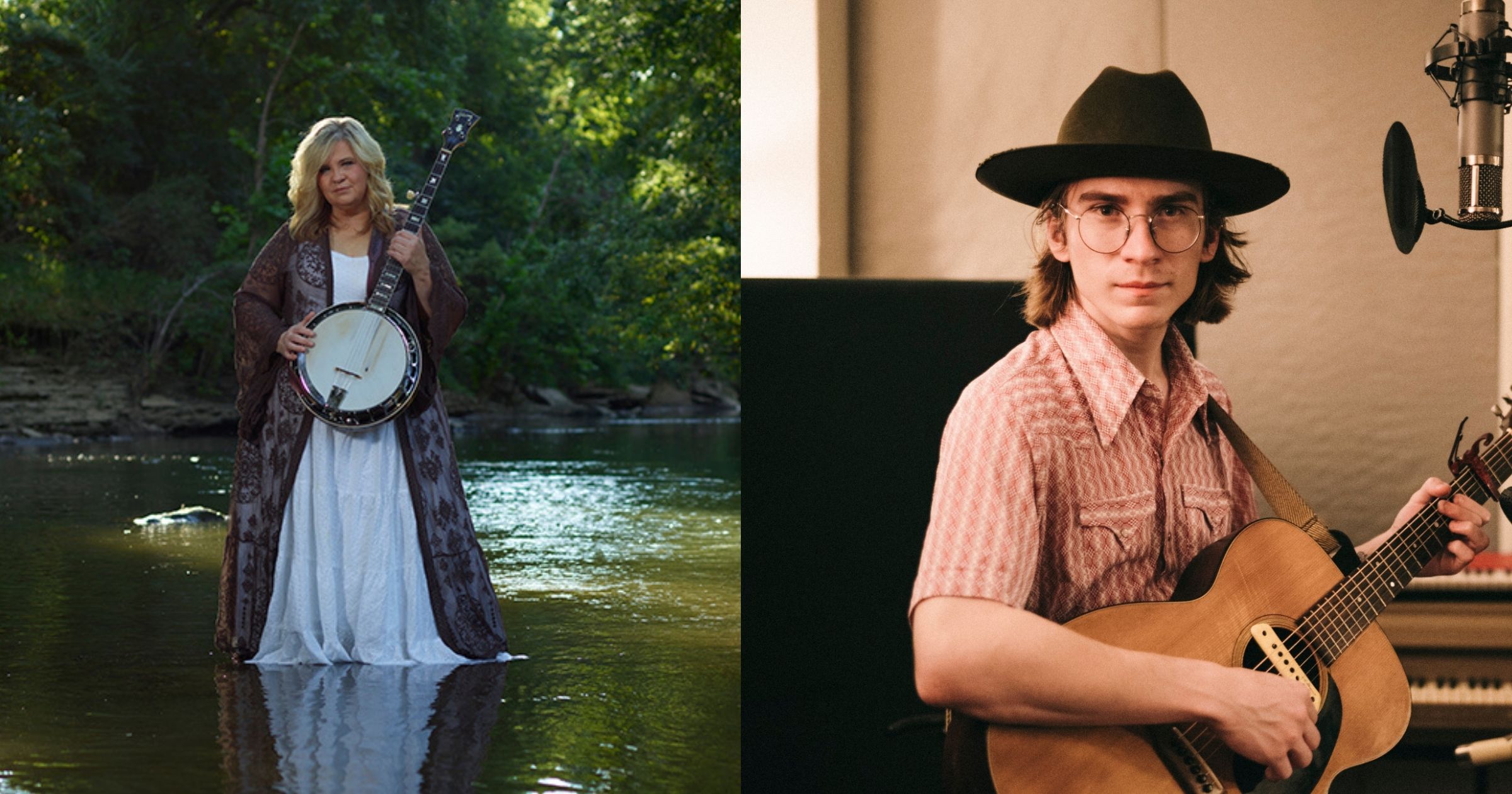
Photo Credit: Shelby Means by Hunter McRae; Shawn Camp by Neilson Hubbard; Sierra Hull by Spencer Showalter.
Happy first Friday of November! Let’s kick off a month of new music roundups with our first edition of our usual weekly collection for November.
To begin, banjoist Gena Britt – whom you may know from Sister Sadie – releases her brand new solo album, Streets, Rivers, Dreams & Heartaches today. We’re sharing “What Kind of Memory Will You Be” off the new project to celebrate its launch. It’s one of Britt’s favorite tracks from the album. Her Sister Sadie bandmate, fiddler Deanie Richardson, is also included in our roundup today, joining fellow fiddler Kimber Ludiker (of Della Mae) on a twin fiddle rendition of a rip-roaring original instrumental, “No-See-Um Stomp.” It’ll have you dancing and smacking the hell out of some sandflies, too.
Singer-songwriter and guitarist Sammy Brue previews his upcoming album that pays tribute to one of his creative heroes, Justin Townes Earle, by crafting songs from inhabiting and being inspired by Earle’s journals. Brue wrote “Lonely Mornings” based on snippets of unrecorded lyrics in Earle’s journals, before Earle’s own recording of “Lonely Mornings” was released on ALL IN last year. The tunes stem from the same source, and feel connected, but show the intricate ways a single origin point can grow into two distinct songs. Watch the video for Brue’s “Lonely Mornings” below.
Our Missouri bluegrass pals the HillBenders bring us a brand new music video for their most recent single, a rock and roll and disco-infused string band version of Ola Belle Reed’s classic, “I’ve Endured.” The band leans into their genre-blending tendencies and highlight a couple of new members in the new studio music video, too. Plus, Americana-folk singer-songwriter Brendan Walter launches his new album, Disappearing Days, today and we’re sharing a new music video for his song “Pipe Dream.” Contemplating the realities and trials of building a career in the music industry, “Pipe Dream” and the album together demonstrate Walter’s goals in music are anything but far-fetched.
Make sure to check out a new single from guitarist-writer-archivist Cameron Knowler, as well, who covers Elizabeth Cotten’s “Wilson Rag” in a simple, pared-down arrangement featuring acoustic guitar, pedal steel, and kick drum. Knowler tweaks Cotten’s original arrangement slightly, continuing the age-old tradition of musical transfer and cross-pollination in bluegrass, old-time, and beyond.
It’s quite a nice roundup to get the month rolling, isn’t it? Check it out for yourself below, ’cause You Gotta Hear This.
Gena Britt, “What Kind of Memory Will You Be”
Artist:Gena Britt Hometown: Star, North Carolina Song: “What Kind of Memory Will You Be” Album:Streets, Rivers, Dreams & Heartaches Release Date: November 7, 2025 Label: Mountain Home Music Company
In Their Words: “This song was penned by one of my Sister Sadie bandmates Dani Flowers and co-written by Paul Sikes. She had actually sent it to us several years before she ever joined the band. I remembered it and pulled it back out when I was starting to gather songs for this recording. I asked her if she would mind if I recorded it one weekend that we were on the road and she graciously agreed. We had so much fun working this up and recording it in the studio. It ended up being one of my favorite tunes on the album. And, that Dobro ride at the end of the song by Jeff Partin is out of this world good! I hope everyone enjoys listening as much as we did recording it!” – Gena Britt
Track Credits: Gena Britt – Banjo, lead vocal John Meador – Guitar, harmony vocal Alan Bartram – Acoustic bass, harmony vocal Jason Carter – Fiddle Jonathan Dillon – Mandolin Jeff Partin – Resonator guitar Tony Creasman – Drums, percussion
Sammy Brue, “Lonely Mornings”
Artist:Sammy Brue Hometown: Ogden, Utah Song: “Lonely Mornings” Album:The Journals Release Date: November 12, 2025 (video); January 23, 2026 (album) Label: Bloodshot Records
In Their Words: “The song ‘Lonely Mornings’ was written in collaboration with Justin Townes Earle’s journals. After I wrote this song, New West Records released a new album of Justin’s called ALL IN which contained unreleased recordings and songs of his. I was ecstatic to find a song called ‘Lonely Mornings’; it was like a sign. Even though our songs didn’t sound similar, they are connected through a couple lines at the end of his last verse and a similar cadence on the tag line. I found the early rendition of his lyrics and they seemed to be almost a decade old, which goes to show how long Justin really carved a song like it was made of marble. I found inspiration and a whole song in just one verse of his true version of ‘Lonely Mornings’ before I even knew it existed. To me, this song holds the mundane scenes that go with living the artist lifestyle. It also holds a sentiment that we both share, which is the love of spending a morning alone… a writer’s heaven.” – Sammy Brue
The HillBenders, “Tradical Volume 1: I’ve Endured”
In Their Words: “We’ve always leaned into ‘bluegrass meets rock ’n’ roll,’ a tag our late manager Louis Myers, co-founder of SXSW, gave us early on. So when we started talking about a new recording project, we didn’t feel the need to change course. Like I tell people, we blame our love for traditional roots music and classic rock on our parents’ vinyl collections. There are so many great legacies to pull from in that wax.
“Instead of putting out a standard album or EP, we decided to start a new series called Tradical, where we let those two loves live together. The first release is Tradical Volume 1: I’ve Endured. For the traditional side we went to Appalachian songwriter Ola Belle Reed’s classic ‘I’ve Endured’ and gave it a rock almost disco groove.
“This track also lets you hear our newest bandmates and singer-songwriters, Andrew Morris (banjo/mandolin) and Jody Bilyeu (keys/mandolin). Jody takes the lead vocal on this first Tradical release. This song is our nod to the rocky road that is show business and to the people who keep going against the odds simply because they love music and performing.” – Jimmy Rea
Track Credits: Jim Rea – Guitar, harmony vocal Gary Rea – Bass, harmony vocal Jody Bilyeu – Mandolin, lead vocal Andrew Morris – Banjo John Anderson – Drums
Cameron Knowler, “Wilson Rag”
Artist:Cameron Knowler Hometown: Yuma, Arizona Song: “Wilson Rag” Album:East of the Gilas (Lagniappe Session) Release Date: November 14, 2025 (EP) Label: Castle Dome Records
In Their Words: “As far as anyone knows, Elizabeth Cotten composed ‘Wilson Rag’ and recorded it a few times on various projects. Though her performances often include a third part which changes slightly from take to take, I decided to focus on the first two parts, adding a bit of reharmonization to make the tune sing with my buddy Will Ellis’ pedal steel playing. Ellis also engineered this track at his home studio in East Nashville, where varied bird songs quietly spilled through a large window. I’m the one playing the ratty Lyon & Healy kick drum from the nineteen teens or twenties, which was performed live with an early-1900s Antonio Grauso acoustic guitar, tuned quite low. I’m also using one of Guy Clark’s old thumbpicks. This tune sure feels great under the fingers and is one that I’ve played for quite some time.” – Cameron Knowler
Artist:Deanie Richardson & Kimber Ludiker Song: “No-See-Um Stomp” Release Date: November 7, 2025 Label: Mountain Home Music Company
In Their Words: “I wrote ‘No-See-Um Stomp’ after meeting a flock of no-see-ums for the first time on the East Coast. As a PNW girl, I was mortified by their existence and the one billion bites I suffered. This tune came out of me very quickly. The first part is the swarm and the second part… human agony. I recorded it once with my band Della Mae and, although there’s an amazing ‘twin guitar’ moment with Avril Smith and Molly Tuttle, I always heard this tune as a twin fiddle tune. As you know, you never encounter just one of these bugs, so I’m very excited to have a twin fiddle version of this with Deanie Richardson. We took a mild ‘controlled chaos’ approach to this, which fits the tune perfectly. Instead of linear twin fiddle parts, we depart here and there, swarming around each other just like the little critters this tune was written for.” – Kimber Ludiker
Artist:Brendan Walter Hometown: Dallas, Texas Album:Disappearing Days Song: “Pipe Dream” Release Date: November 7, 2025 Label: RECORDS/Sony Music Nashville
In Their Words: “I started writing this song while I was still in college, when I was figuring out if I wanted to pursue my majors or follow my lifelong dream of being a musician. At first, music felt like a pipe dream due to the fact that I knew nothing about the industry or how to get started. During college and for about a year after graduating, I bartended full-time to survive while nurturing this dream to make music my full-time gig. Those long nights definitely lit a fire under me to fully pursue music. I had no idea how I was going to accomplish my dreams in this wildly new world, but I knew I wanted it more than anything else and I wasn’t going to stop until I could make it a reality.
“Now, having a couple years in the industry under my belt, I still feel like I’m the new kid on the block, but I know a lot of other artists have felt that way so I thought it was fitting to show a glimpse of my struggles and aspirations along the way. I also worked in a strum pattern inspired by Mumford & Sons, because their music got me into playing guitar and writing songs. I had the opportunity to play with session musicians for the first time when making my debut album and, on this song specifically, I got to play with the very talented Kurt Ozan. Hope everyone enjoys this one!” – Brendan Walter
Photo Credit: Gena Britt by Tom Turk; Sammy Brue by Joshua Black Wilkins.
It’s a warm, summery day in early April when I sit down with archivist, writer, and guitarist Cameron Knowler on the shores of Old Hickory Lake in Middle Tennessee. Both Knowler and myself happen to now live in Old Hickory, a small village in Davidson County that was formerly a DuPont company town and is nestled on the edges of the eponymous, manmade US Army Corps of Engineers lake on the Cumberland River.
The setting is a far cry – geographically, topographically, and ecologically – from Knowler’s hometown of Yuma, Arizona, a place that serves as the inspiration, background, and foreground of his stunning new solo guitar album, CRK (released April 4 by Worried Songs). Knowler’s upbringing in Yuma was traumatic and bleak, not exactly a storybook experience by any measure. Still, like many roots musicians and creatives, the landscapes and dioramas of the wild west California/Arizona border town have become the guitarist-composer’s primary muse.
CRK sounds like the desert. Like hot, searing parking lots. Like mesquite and cactuses and roadrunners and mesas and red rocks. Stark flatpicked and finger-plucked melodies give equal consideration and immortalization to sweeping natural landscapes and small, depressingly human settings, too. Unlike so many of his subjects and inspirations in and around Yuma, this collection of compositions never moves to pave over the intricacies, nuances, and subversions Knowler finds in revisiting his hometown in music and memories. Still, the album is as gorgeous and transportive as any of our favorite famous paintings of the Old West, or soundtracks to iconic western films, or depictions of ancient pueblos. Perhaps his subject is a strip mall or a vignette of the proverbial “suburban hell,” but in this context each feels like an entire universe unto itself, a dreamscape – a home.
CRK opens with a gorgeous prose poem set to music, a track titled “Christmas in Yuma.” Immediately, the record is thereby attached through terroir and tradition to other western artists like Steinbeck and McCarthy. The album’s package is ornamented with gorgeous photographs, polaroids, bits of imagery, printed art, and poetry, further evoking artists we associate with the Southwest like Dorothea Lange and Linda Hogan. But the stories herein are told almost exclusively by guitar – usually Knowler solo as centerpiece, but sometimes joined by ensembles including guitarists Jordan Tice (who co-produced the project) and Rich Hinman, as well as other instrumentalists like Rayna Gellert, Robert Bowlin, Jay Bellerose, and more. The guitar is an instrument so pervasive and ubiquitous we often forget how aptly it can showcase these kinds of narratives, and how at home the six-string always feels in the West.
But with CRK, listeners won’t ever forget those facts. This is a narrative album. Is it also a technical achievement, intricate and intriguing and complex? Absolutely. But making an impressive guitar album was clearly not Knowler’s goal. Telling stories, with his medium being the guitar and the traditions that encircle it, was his chief aim. To say the project is successful in this regard would be an embarrassingly trite understatement.
And so, while watching the springtime water birds and snacking on lunch – with Knowler’s neck, wrists, and fingers dripping in Native-smithed silver and turquoise – we two sat down on the banks of a long, twisting lake on the Cumberland River in Nashville to discuss the guitar, the desert, and the little town on the banks of the Colorado River called Yuma – that Cameron Knowler once, and still, calls home.
I wanted to start by talking about place. I’m obsessed with how music has been slowly but surely divorced from its relationship to place over time. Your album, what jumped out at me immediately was it has such a strong relationship to place. How do you take something physical, tangible, geographical – a place like Yuma or Old Hickory Lake – and translate that into your medium? How do you think about evoking landscape or evoking an image with music?
Cameron Knowler: That’s a great question. I have like 10 ways of responding to that. As you said, music is getting divorced from place and I think it’s something of a cliche at this point that we’re losing regionalism. In the sense that, even with bow strokes– fiddlers in Galax, Virginia are different than fiddlers in northern Virginia. Not consciously, necessarily, but just as a colloquialism. As a part of their place. I didn’t [have] an old man or an old woman playing a fiddle who taught me tunes, I never had any of that [regionalism]. Instead, the “white kid from the suburbs” phenomenon happened. When I moved to Texas, I got connected with a regional fiddler in Terlingua, Texas – kind of [where the movie], Paris, Texas started. I learned his repertoire, which was interesting in that he learned a lot from Brad Leftwich when they were young and living in Santa Barbara. That was the void that I was missing. Not even musically, just in my life. I lost my mom, I lost my dad, I didn’t have family, so to me that was a cue, like a clue.
Then it flips, because there is a robust fiddle tradition of the Tohono O’odham [Nation] right there on the Yuma, Arizona/California border. But that’s not my culture. I could have gone in and said, “I’m gonna learn this tune” – or melody or whatever. Then that [could be] my way into the landscape. Instead of coming at it from an internal perspective, it was an external perspective, basically like a western painter. Like an oil painter painting Tucson or Walpi.
To answer your question, it’s slippery, ’cause you can’t go on stage and say, “Okay, this instrumental song is about a grocery store that I grew up driving by.” [Laughs] I can’t say that. It does come from that place, but I don’t say that. For me, the visual aspects of the record, I weigh them as equally, I would say, as the sonics. I think that’s where I can insert song titles – all the song titles on the record are related to Yuma.
There’s this tradition of stark solo or nearly solo acoustic guitar as an iconic sound of “the Wild West.” One of the first things I thought about listening to CRK is the score and soundtrack for Brokeback Mountain, so much of it is just solo plucked, tender guitar. Then of course in other music that evokes the West, you have sweeping strings and countrypolitan country and western. Even in that context you’ll often hear nylon-string guitar out front, solo. There’s something about unadorned guitar that is connected to landscapes.
But what I’m hearing you say is it’s not about translating the grandeur of Western landscapes at all. It’s about the grocery store, or it’s about the building that burned down, or it’s about a stretch of miles and miles of highway.
Totally. Yes. There’s so much programmed into the sound. David Rawling says, “The sound of a minor chord is a cowboy dying,” which is such a great way of saying that.
I believe this is true of the development of the flat-top guitar in general. At a certain point in 1934 or 1933, when the dreadnoughts start to get developed, there’s something about that that conveniently carries forward the agenda of interrelated musics – like Hawaiian music and bluegrass music for two totally different agendas. Then that [sound and body style] becomes the golden standard. But there were so many other brands and makers and thinkers from different cultures making guitars that, in an alternate universe not far from our own at all, would’ve been the golden standard. I feel the same way about the tradition of the music itself, right? And a dreadnought itself can do an infinite number of things, but just the format itself excludes a lot. As a constant instrument to play solo.
Another thing that David Rawlings says about his small guitar is that the smallest things sound the biggest, when they are in their own diorama – describing what he does with Gillian [Welch]. That’s his goal, to convince listeners that the “baby dinosaur” [small guitar] can actually eat them. Working in miniature, making little boats in glass bottles, you open yourself up, it’s an entire universe. The littlest things sound the biggest. In that way, there’s opportunity in the format itself.
I think people like Norman Blake and John Steinbeck are both hyper-regionalists who synthesize very eclectic sources to create something that is uniquely their own, but also totally comes outta left field. ‘Cause yeah, you think about Norman and certain people would say he is a flatpicker. Some people would say he was a pot smoking hippie who played with John Hartford – and they’re both equally true! Tying together otherwise disparate histories is a compelling format and is rewarding to the solo practitioner, I think.
We should talk about Steinbeck. We talked about it a couple of weeks ago when we first met by chance. But you starting the album with “Christmas in Yuma,” immediately I was like, “Oh, I know where we are. I know what we’re doing.” We’re in the West, there’s poetry/prose poetry happening. That song feels like it’s part of a longstanding tradition. Immediately I was thinking about a couple of my favorite Steinbeck passages listening to that.
Starting with poetry, starting with spoken word over that beautiful sound bed that you’ve created for it, what does that accomplish for you as an opening to a record?
Two things come to mind. Kenneth Patchen, who made these poetry records for the Folkways label in the ‘50s backed by a jazz band and it was almost comical, but he took it so seriously and it’s so convincing when you just forget what the format actually is. The great Texas – I don’t even wanna say outsider artist, but in terms of how he’s viewed – outsider artist Terry Allen, with some of his concept records like Lubbock (On Everything) with the pedal steel. You can do anything at that point. That’s why I started [CRK] out that way.
Also, quite frankly, Ice Cube’s records – I’m thinking of N.W.A. – start out with these sound collages of him getting arrested or walking down a cell block, or the imagined character is. To me, he could do anything after that point. He could make the amazing record that it became, or he could have done some something entirely different. I just think it’s an earnest way of saying, “I’m not trying to do what you [already] know.” We all know that everyone is infinitely complex, but in terms of what they release, it’s fine to not be infinitely complex?
For me, it’s not a flatpicking record. It’s not a fingerpicking record. I’m really not trying to make it a guitar record, so to speak. I wanted to make it a narrative record. [“Christmas in Yuma”] was just an earnest way of saying, “I’m not what you think I might be.”
It’s also a tradition in these roots and folk music spaces to play with expectation. People generally know what a solo guitar record is gonna sound like and what it’s gonna be and what it’s gonna do. I’m imagining a program director at a radio station putting on the record and doing the 30-second listen through – and the first song is poetry?!
I think maybe that’s what you’re talking about? Whatever conscious or subconscious projection you might have about what this album is in your hand, or what this is about to be as you put it on, you want to play with that projection. You’re saying, “I’m gonna tell you what this is.”
That is a beautiful point because, not to go too far back [in my history], but I was “unschooled” and I didn’t have a high school diploma or a GED. [Through all the hardships I’ve faced], I’ve learned this notion of leveraging. I surveyed how I was going to be able to reach people, and it gets more representative of myself as [time] goes. But it’s always been under the guise of leveraging unexpected muscle groups towards something else. That’s just built into this like fight or flight thing. I just have nothing to lose.
Your point about the radio DJ – or whoever that’s listening to the poetry – I think that’s a unique opportunity. At that point, they’re suspending judgment. If I wanna listen to a guitar record, I’m gonna listen to Leo Kottke 6- and 12-String Guitar. It’s perfect. It does exactly what it needs to do.
People should continue to try to make records like that. To me, it’s not a push against that at all. It’s starting out on a different foot. You may end up in a place that, by design, is very different than you would if you just tried to hit it on the nose. You can still hit it on the nose. Then you might even have a chance to open it up to somebody. Sometimes people just don’t know who Norman Blake is. But then, there’s a tune like “Yuma Ferry.” Who plays like that? Norman plays like that. If I were to make a whole record of “Yuma Ferry”-style tunes, I think everybody listening would know that it was a Norman Blake type of thing.
Let’s talk about “Christmas in Yuma” a little more in detail, because I’m curious about how you created it. Was it the poem that made the music happen, or the music demanded to have a poem set to it? What was the creative process like for the track?
I woke up from a nap on December 21, 2021, and I just went to Google Docs and typed it out. It just came out like that. The recording process, I had my friends Harry and Dylan sit down with me in our friend Marshall’s studio and we just recorded improvisations with the loose framework. [It’s read by my friend] Jack Kilmer, who similarly grew up in the Southwest. His father, like my mother, was also Christian Scientist. Those are all the things that were vibrating around. I was like, “He has to do it.” He’s an amazing voice actor, amazing actor, and just a great musician. Very musical and a beautiful artist. I had him do it first.
Then we went to the studio and we just said, “This is how long the track is. We’re not gonna play to the track. We’re just gonna play.” There was one take that was like the perfect length of time and I just put it under there. All those sonic features that interact with the vocal are totally incidental.
The music of CRK is so evocative and so visual and is so good at text painting, but I wanted to talk about your work in other media and about how you curated the package for the album, too. You’re so multifaceted in what media you’re working in – archives, photography, visual art, written word, music, melody. How do you see all those forms converging and diverging with this project specifically? Because I see your eye for detail at every level. You can just tell from the package that the whole thing is art to you, not just the songs.
Photography, it is always fiction. That, to me, is the beauty of it. If there’s a picture of someone jumping, you don’t really know where they jumped from. Or if they smile, they are actually crying? Maybe this person crying is not the good guy. Maybe they’re the bad guy.
You can start to track things like that, as the smile gets “invented” throughout photography. But it’s this line of fiction that, if you spend enough time with it, you can infer things right or wrong in there. They can all take you to a different place. Movies are that way, but you lose a little bit with the moving image. ‘Cause then you see the speed at which they’re moving, even if the frame rate isn’t representative of reality.
But then, say you’re playing jazz standards and you’re playing things with semantic content that came from a show, a Broadway show in the ‘40s. You’re shackled by the semantic content of that. I think it’s a convenient metaphor, in my opinion, to see photography and instrumental music as this thing, where – back to working in miniature – smaller things give you more room to insert yourself into it. I shouldn’t say more room, but there’s more fiction to play with, I would argue.
There’s less to compete with.
Right? In terms of things being programmed to you. In movies, you have the aesthetics, you have the costumes, you have the music, you have all this stuff. With photo books, the way that they’re sequenced by gestures is such a fitting way of dealing with sequencing things that aren’t visual. There’s a lot of inspiration from the photo book as a tradition, in terms of sequencing. And how with photojournalism, we don’t really have an American, coalesced identity of the West without the photography of the Dust Bowl. I’ve spent a lot of time looking at FSA photographs and there’s some great Dorothea Lange photographs in Yuma from May of 1935 which can be seen via the Library of Congress. I actually licensed one of them that was not within the purview of her [federal] work from the Oakland Museum and that’s in the song folio for CRK.
Obviously, Norman Blake is a really important musician to you and Dave Rawlings is as well. You’re talking about wanting to make music, wanting to make a record that isn’t just another acoustic guitar, flatpicking, flat-top record. Norman and Dave are great examples of guitarists who make albums that aren’t just the same old same old, and aren’t just products, they’re art. Both showcase that simple solo guitar, that miniature world we’re talking about, can be so expansive and huge and lush. But who are the others? Who are the folks that modeled for you that having your own voice and perspective on your instrument was more important than just doing it to do it. Or to be “best” or to sell yourself as a product for consumption?
For banjo, I think John Hartford. I love the idea that Blake Mills said, he called guitar an instrument for assholes. [Laughs] What I love about that is, no matter how you look at a guitar, the guitar is always a toy. [Andrés] Segovia tried to institute a formal repertoire. The bluegrass people tried to, the rock people [tried to]. Is Jimi Hendrix the definitive repertoire for the guitar? AC/DC? But, it’s still a toy. It’s still marketed as a toy.
I don’t need a million people to listen to my music to make a living or to keep doing it. It’s all within the art/archives, how to make these raw ingredients that are embedded into everyone into something that’s not commercial, but digestible.
In terms of other people [who inspired me]. John Fahey. Leo Kottke, but I didn’t fingerpick up until about three and a half years ago. About 80% of the record is finger picking. To your point about the poem earlier, there’s more outside of the solo, acoustic guitar canon of stuff, too. People like Rambling Jack Elliot and Sam Shepard, yeah.
One final point, I would play these solo concerts in Texas of just flatpicking melodies, like four flatpicking melodies in four different keys. And I was just like beating my head up against a wall, trying to tell some sort of cinematic, fiddle tune-driven [story over an entire set of just flatpicking]. I wanted there to be an arc. Through stubbornness, I decided I was going to learn how to fingerpick convincingly, where I had control of each voice. It’s really hard. It was a pain in my ass to figure that shit out.
But yeah, I see them all as tools: the poetry, the flatpicking, the fingerpicking, the drumming. It could be seen as pushing back against commercialism or whatever, but in some ways it’s actually the opposite. I was like, “I want more. I want a diverse audience. I want as many people to listen to this as possible.” Not sheer numbers, but in terms of who they are and what their listening diets are. Not just everybody in the audience being someone who will already know each of those fiddle tunes.
This week our roundup of premieres and new music is a special, “Oops! All Bluegrass!” edition of the weekly series. But still with plenty of variety herein.
Kicking us off, Infamous Stringdusters fiddler Jeremy Garrett unveils “Fly Away to Your Love,” a driving and bluesy modern take on how love can take command of your life, drawing inspiration from Romeo and Juliet. Garrett’s labelmates, Montana-based bluegrass band the Lil Smokies, continue with the theme of love, romance, and sacrifice with “Lay it Down for Love” – because investing in love always pays off.
Guitarist Cameron Knowler showcases “Mule at the Wagon” an acoustic guitar trio number from his new album CRK, which releases today and text paints the beautiful – and stark – Yuma, Arizona, its surrounding states, deserts, and the plains. Plus, mandolinist and professor Joe K. Walsh launches his new album, Trust and Love, today so we’re highlighting a lovely and vibey instrumental, “Oatmeal,” that he appropriately wrote over breakfast.
Bluegrass legend, multi-instrumentalist picker and singer-songwriter Tim O’Brien announces his upcoming album, Paper Flowers, today as well. The lead track from the project, “Lonesome Armadillo,” was written with folk icon Tom Paxton and O’Brien’s partner Jan Fabricius, who features across the new album. It’s a funny tale of a backyard critter trap and a surprise armored four-legged prisoner. Meanwhile, supergroup Sister Sadie bring us a devastating and heartfelt song, “Let the Circle Be Broken,” about interrupting cycles of generational trauma and finding redemption in ourselves and support systems. Written by Sadies Deanie Richardson and Dani Flowers with in-demand songwriter and artist Erin Enderlin, the track is moving and deeply resonant.
Each week of new music is its own adventure, but this roundup feels particularly superlative. You know what we think– You Gotta Hear This!
Jeremy Garrett, “Fly Away to Your Love”
Artist: Jeremy Garrett Hometown: Drake, Colorado Song: “Fly Away to Your Love” Album:Storm Mountain Release Date: March 28, 2025 (single); June 27, 2025 (album) Label: Americana Vibes
In Their Words: “When troubles may come, in any relationship, the idea is to persevere – to overcome with grace. The hope of love eternal, or at least a love that stands the test of time. And in the end, like Shakespeare’s famous Romeo and Juliet, if it can’t be, then there is no hope of anything better. So, will it command your life? Is dying in hopes to be with the one you love better than life itself without that someone? Fly away to your love is a modern take, written in an old-time way, encompassing that passion and story in a song.” – Jeremy Garrett
Track Credits: Jeremy Garrett – Lead vocal, fiddle Chris Luquette – Guitar Ryan Cavanaugh – Banjo Travis Anderson – Bass
Cameron Knowler, “Mule at the Wagon”
Artist:Cameron Knowler Hometown: Yuma, Arizona Song: “Mule at the Wagon” Album:CRK Release Date: April 4, 2025 Label: Worried Songs
In Their Words: “‘Bull at the Wagon’ is a fiddle tune I sourced from The Lewis Brothers, a great old New Mexico-via-Texas string band with a sweet tooth for rambunctiousness. I changed ‘bull’ to ‘mule’ because, well, I’ve had a few donkey encounters out in West Texas, not far from where the Lewises cut their four sides for the Victor label in 1929. It’s one of those titles that popped into my life at the damndest times – while playing tunes with Frank Fairfield in Los Angeles, performing at a border crossing party in Terlingua, Texas, and visiting with Norman Blake at his home in Rising Fawn, Georgia. To my ear, its melody moves past some of the stylized landscape found in American traditional music these days; maybe it’s the way the four chord asserts itself in the second part, or the way the five chord lands so starkly and dominantly in the third; this mix of quick and static passages is highly generative for arranging and improvising.
“I wanted to see what this tune would yield in a lilting, sort of pastoral setting, so I called my talented friends Jordan Tice and Robert Bowlin who graciously agreed to record it with me at The Tractor Shed in Goodlettsville, Tennessee. Jordan tuned to open G (capo 2), I played out of standard (capo 2), Robert in standard with no capo. Mr. Bowlin and I are playing our old Gibson J-35s and Jordan is using his Preston Thompson OM. The performance found on CRK is one of the first takes.” – Cameron Knowler
Track Credits: Robert Bowlin – Guitar Cameron Knowler – Guitar Sean Sullivan – Engineer Jordan Tice – Guitar, producer
The Lil Smokies, “Lay It Down for Love”
Artist:The Lil Smokies Hometown: Montana Song: “Lay It Down for Love” Album:Break of the Tide Release Date: April 4, 2025 Label: Americana Vibes
In Their Words: “The greatest honor of my life is to have spent it fully immersed in music. That’s not to say it hasn’t come without cost. Words can’t carry the weight of the sacrifices required, though I’ve enjoyed trying to explain. All I know is that the loss and doubt I’ve faced has given me a more beautiful life than I ever imagined when I set out on this path. I wouldn’t change a thing. ‘Lay it Down for Love’ was written in some of the darkest days of my life, when there was no evidence that my wagers would come back to me. Today I hear it as a reminder that those days come and go, but investing in love always pays off.” – “Rev,” Matthew Rieger
Track Credits: Andy Dunnigan – Dobro, vocals Matthew Rieger – Guitar, vocals Jake Simpson – Fiddle, guitar, vocals Jean Luc Davis – Bass Sam Armstrong Zickefoose – Banjo
In Their Words: “There’s an awful lot of talk about migrants invading from the south, but nobody’s talking about armadillos. After we started trippin’ over little holes in our yard, Jan baited a raccoon trap, focused the security camera on it, and then we drove to Memphis to play a show. On the set break, we saw we’d caught the hard-shelled offender, but after the show we saw that he’d arched his back, bent the trap, and escaped. We told Tom Paxton about it the next week and he said, ‘Let’s tell his story.’
“Jan and I started weekly co-writing sessions with Tom in the spring of 2023 and twelve of the fifteen songs on our June 6th release, Paper Flowers, come from those Wednesday afternoon Zooms. It’s our first real collaborative project and a narrative of Jan’s and my life together runs through the record – from courtship to growing old together, with a road trip, the armadillo, and a granddaughter’s wedding in between.” – Tim O’Brien
Track Credits: Larry Atamanuik – Drums Mike Bub – Bass Jan Fabricius – Mandolin, vocal, songwriting Mike Rojas – Accordion Justin Moses – Resophonic guitar Tim O’Brien – Guitar, vocal, songwriting Tom Paxton – Songwriting
Sister Sadie, “Let the Circle Be Broken”
Artist:Sister Sadie Hometown: Nashville, Tennessee Song: “Let The Circle Be Broken” Release Date: April 4, 2025
In Their Words: “Dani Flowers, Erin Enderlin, and myself wrote ‘Let the Circle Be Broken’ right after my Dad passed away. He was an abusive man who verbally, emotionally, and sexually abused me for most of my 18 years living at home with him. When I confronted him as an adult, he said that it had been done to him as a child. This song is about that generational trauma and abuse that keeps getting passed down. The continuing of that trauma and abuse stops with me. It doesn’t go any further. It was such a healing and therapeutic experience to write this with Dani and Erin. The recording session for this was so emotional for me. I felt like I was talking to my Dad at the end during the instrumental fade. He was there and he heard me. That circle is officially now broken.” – Deanie Richardson, fiddle
“Deanie, Erin, and I wrote this song about generational trauma, which each of us have experienced different levels of. This song is about how we’ve decided that these cycles that have been repeated over and over in our families end with us. I was born into a family of some of the worst types of people to ever exist in this world and it is sometimes so hard to sit with the fact that you come from a line of people who are capable of doing such awful things to others — to you. While I can’t say the same for many of my family members, I can say for sure that my children will never experience from me what I experienced from my mother and what she experienced from hers and what she experienced from hers.” – Dani Flowers, vocals
“The song ‘Let The Circle Be Broken’ touches us all within this band because of its very personal nature. We feel it every time we perform it on stage. Deanie, Dani, and Erin wrote an incredible song that touches the audience. It’s not uncommon to look out and see tears streaming down people’s faces. As a creator, it’s very overwhelming.” – Gena Britt, banjo
“I resonate so deeply with the message of ‘Let The Circle Be Broken’ and I find myself a little emotional every time we play it. As someone who is actively working to heal my own generational family trauma, seeing the strong women around me working to do the same makes me feel hopeful, grateful and connected.” – Rainy Miatke, mandolin
“I think ‘Let The Circle Be Broken’ is a beautifully written song that a lot of people need to hear. It has a very important message about stopping generational messes and I cry almost every time we play it. I love Deanie so much and I know this song means so much to her, as it does to all of us. ‘Let The Circle Be Broken’ I think could mean a lot of different things to a lot of different people, too, and that’s the sign of a fantastic song. Dani Flowers, Deanie Richardson, and Erin Enderlin crafted an amazing piece of art.” – Jaelee Roberts, vocals
Track Credits: Deanie Richardson – Fiddle Gena Britt – Baritone banjo Dani Flowers – Lead vocal Jaelee Roberts – Harmony vocal Mary Meyer – Mandolin, piano Maddie Dalton – Upright bass, harmony vocal Seth Taylor – Acoustic guitar, electric guitar Dave Racine – Drums, percussion
Joe K. Walsh, “Oatmeal”
Artist:Joe K. Walsh Hometown: Portland, Maine Song: “Oatmeal” Album: Trust and Love Release Date: April 4, 2025 Label: Adhyâropa Records
In Their Words: “There are so many tunes that I love that are comprised of an entirely (or almost entirely) diatonic melody which has been harmonized with non-diatonic chords. Some favorite examples are ‘Moon River,’ ‘Someone to Watch Over Me,’ David Grisman’s ‘Dawg’s Waltz,’ Pat Metheny’s tune ‘James,’ and Matt Flinner’s tune ‘Fallen Star.’ I’ve taught a tune-writing ensemble at Berklee for many years, with the idea that each of member of the ensemble writes and presents a tune every week, and I like to use this idea as a prompt for the students. This tune was one I wrote over breakfast in response to this prompt one morning before heading to Boston for school.” – Joe K. Walsh
Track Credits: Joe K. Walsh – Mandolin Rich Hinman – Pedal steel Zackariah Hickman – Bass John Mailander – Fiddle Dave Brophy – Drums
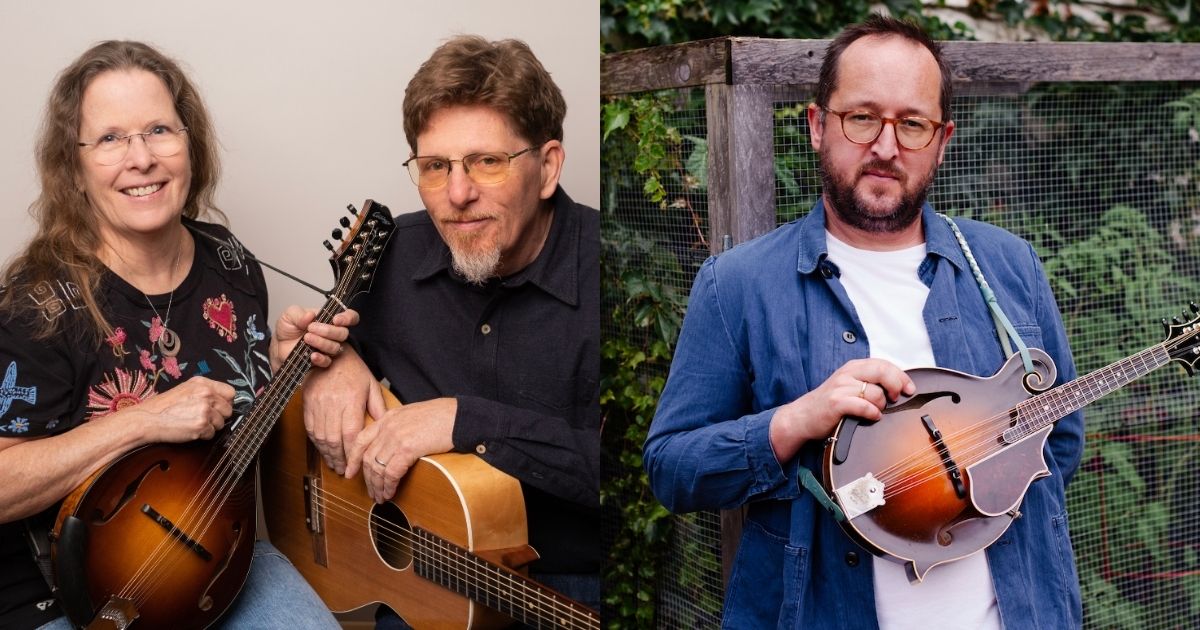
Photo Credit: Tim O’Brien and Jan Fabricius by Scott Simontacchi; Joe K. Walsh by Natalie Conn.
Most listeners would probably attribute the incredibly unique musical approach of guitarist Beppe Gambetta to his country of origin. Being a native of Genoa, Italy, he certainly brings a global and European folk flair to his bluegrass and old-time inflected six-string compositions. But it would be shortsighted to simply credit that truly original voice to mere geography.
Gambetta is an instrumentalist who always works with intention. Developed over a lifetime of playing and cultural cross pollination, his style exists in the fertile ground somewhere between a triangulation of Norman Blake, Doc Watson, and Django Reinhardt. He’s learned from, recorded, collaborated, and performed with so many of “greats” such as these across several generations of American roots music virtuosos. Gambetta is a bluegrasser through and through, but he’s also so much more.
His latest album, Terra Madre (released in April 2024), is a lovely continuation of his lengthy and harlequin catalog of recordings. It’s bilingual, cinematic, and thoughtful, while also impassioned and brash. But he’s never a one-note musician, so the collection is artfully subtle at the same time. Gambetta doesn’t just know this intersection – aggressive and gentle, bold and subdued – it’s as if he lives there. It’s his address.
Perhaps most of all, Gambetta is a perfect representation of how an individual can bring himself into a generational folkway and established aural tradition such as American roots music, while simultaneously preserving his selfhood and his singular point of view. Our email interview, like the new record, is a perfect representation of Gambetta’s melting pot style – and the way he uses the entire earth, terra madre, as his medium.
The title track of Terra Madre is cinematic and vibey, with a bit of funk and a dash of charming silliness. I love that it starts with the sound of footsteps, grounding the listener on terra madre herself. Can you talk a bit about the song, its title, and how being embodied on earth, on this rock hurtling through space, inspires your music and songwriting?
The song “Terra Madre” is the most dramatic of the album: the footsteps are from a couple of escaping refugees, the song is about their dreams. They meet with friends and jump the border wall in the dark of the night with fear, pain and hope. We don’t know the exact story, the place where it happens is also unknown in order to represent a ubiquitous pain that can be found all over the world.
It was hard to express these extremely dramatic sentiments only with acoustic instruments, but the use of the flatpicking style with strong bass lines and heavy strums turned out to be a good tool. I used a regular guitar but also a low bouzouki guitar and few slide guitars “prepared” with special strings and tunings. As you noticed, I added the sound of the escaping steps in order to ground the listener to the earth and with drummer Joe Bonadio we decided not to use the snare drum in order to create a more “suspended” atmosphere only with toms and cymbals.
How much of the earth’s current worries are in this album? How much did the planet’s current state of being inform the song itself?
The album’s general concept is related to the cry of pain that rises from our Earth and to the right of musicians to dream about a better world in moments of darkness. In the different songs there are dreams for a better life, for peace, repentance, friendship through music, adventure, forgiveness, survival of minority cultures, redemption, dreams to win, rage, envy, hate, and more.
In a period where leaders and politicians in charge are not able to resolve conflicts and crises there is a need for every other category to give a positive contribution. Probably scientists, philosophers, historians, theologists will give important contributions, but also artists can do their part.
I’m sure that even in modern times there is still a strong power that comes from folk songs and I decided to write my songs in different languages. For different reasons the album is totally self-produced and if you self-produce you need to put more love, passion, time, and money using all your resources.
“Sit and Pick with You” is certainly the stand out track on the album. Can you talk a bit about that song, its meaning, and how important the community aspect of this music is? Because, truly none of us would exist as pickers in bluegrass and string band music without folks – whether friends or peers or heroes or legends – to sit and pick with.
The inspiration for the song came to me during a California tour. I wrote it in order to celebrate some musical encounters with legendary fathers of the music – David Grisman, Dan Crary, Peter Rowan – dear friends who, at the end of their careers, continue to hold high the torch of beauty. I wrote the song with the sounds of the 1930s in mind, with a guitar riff inspired by “The Wildwood Flower” or “Jimmy Brown the Newsboy,” because I believe it is a timeless sound that can still speak to people’s hearts and move them.
I decided to sing the song as a duo, like an old brother duet. I first asked Norman Blake by sending him a handwritten letter in pencil, as we used to do in our correspondence in the 1980s. The reply was really kind, also handwritten by Nancy and signed by Norman, who thanked me for the thought and encouraged me in the project, but at that time Norman felt that his voice was not at the right level to appear on an album.
Luckily, my friend Tim O’Brien was available to sing it and did it with a perfect vintage-style rendition. Then David Grisman added his unmistakable signature [sound] on mandolin. Dan Crary played guitar in harmony, taking advantage of the depth of his “long neck” guitar tuned down a tone. The final touch to the quartet’s sound came from bassist Travis Book.
The positive meaning of the song is felt by many fans who identify with the sentiments it expresses: The joy of getting together and the friendship that comes from the beauty of music. Many began to incorporate it into their jam sessions with friends, as it happened at the Walnut Valley Festival campground in Winfield, Kansas, a gathering place for music lovers par excellence. I received many requests for the guitar part and finally now I distribute the tablature at all my concerts. For sure, this is the standout track of the album and it got a very special recognition and attention. It was number one in the Folk DJ chart in June and July and still now it is present in the top positions.
Your approach to the guitar – and really, to music and composition and picking in general – is totally unique. You have a voice all your own on the instrument. I think a lot of listeners on this side of the Atlantic would attribute that to your being Italian, but I think that’s a bit shortsighted and simplistic. How have you cultivated your particular style and how do you keep your music and creativity fresh and innovative, to yourself and to your listeners?
I wanted to develop my own particular voice, starting from the style of the American fathers and filtering in the influences gained during my tireless journey on the road that has given me particularly formative encounters, not only in Italy but in the whole world. It took time and attention, choosing and adding to my style drops of beauty from different sources, trying to limit the obvious “Tony Rice mania” and using ideas also from Dan, Norman, Clarence and much more.
For sure, all my studies about old Italian music and generally my natural Italian aesthetic sense and passion for melody has influenced my style. The work that I did in researching and studying the “Italian string virtuosi” and performing the albums Serenata and Traversata (produced with David Grisman) left an important mark in my playing.
Studies and stylistic research in flatpicking can go in different and almost opposite directions. On the one hand, the virtuosity of breathtaking phrasing combined with speed and improvisation – the shiver in your spine that you start to feel when you listen for the first time to “Black Mountain Rag.” On the other hand, the search for expressive techniques and melodies that touch the listener’s soul – the passion and tenderness of “Church Street Blues” in Tony Rice’s version is the perfect eye-opener to the expressive potential of flatpicking beyond mere circus performance.
This second aspect, probably underestimated in the current scene, is the one that fascinated me the most. I worked a lot to learn to play slow (using tremolos, partial strummings, crosspicking, and “separate crosspicking” on two, four, five, six strings, string jumps, crosspicking to obtain grace notes, etc.).
Rhythmic tension and speed, however, continue to fascinate me; it was fun to develop the licks of my tune “Chipmunk,” an instrumental that describes the run of New Jersey’s fastest pet on the front porch of our Stockton home, using down-down-up on two strings at 162 beats.
The secret of the freshness of my style stays in continuing to be excited by both creating something new and playing something old, and in sharing this happiness every day with my wife Federica! Often before taking the stage I revive the memory of those who helped me and believed in my art (Mama Gambetta first of all) and this gives me a strong power. Even if I am close to my seventieth birthday I continue to be ready and happy to do my job.
I also think your shows are so stunning and one-of-a-kind, too. You do so much with just a guitar, your voice, and your stories. How do you keep your show engaging and interesting, when you have so few variables or so few inputs? Do you find such a stark set up to be limiting or empowering or…
Standing in front of an audience with one guitar, a voice, and a pick is certainly a big challenge. That is why I have been working over the years to create a show that I can take to audiences around the world and to distant places. I try to speak to people’s hearts and maintain my authenticity, deciding to minimize the use of excessive volume, technology, and sound effects, avoiding wiggles and winks, and simply presenting myself as I am, as if I were playing acoustically in a living room.
An artist who influenced me in this direction was John Hartford, for whom I opened a concert in Ohio many years ago and I was inspired by his charisma in communicating alone with the audience. Over the years I have studied singing, learned how to narrate and create special atmospheres with the use of open tunings and different languages, and also to joke with the audience with “Old World” irony. Not to mention “Gino,” the name I gave to my pedal loop, which I always use sparingly and treat as an old cousin who travels with me and accompanies me with his guitar.
In music, limitations are often a source of creativity; Django Reinhardt invented amazing phrases using only two fingers of the left hand, blues harmonica players got missing notes by inventing bending, and so on. In flatpicking, the strong limitation is the inability to play two distant strings at the same time as you would do easily with fingers. The effort to overcome this limitation has always forced me to invent creative solutions.
Can you tell us the story or stories behind “Saint James Hospital”?
In 2023, on the centenary of Doc Watson’s birth, in addition to visiting his grave and playing a tune for him, I decided to rearrange some of the master’s songs so that I could celebrate him on many occasions, because Doc was my most important influence and changed my artistic life.
Doc was a giant because he invented a fresh repertoire for the acoustic guitar and developed a unique and engaging way of building a show. Among the various songs of his repertoire, “Saint James Hospital” represents his extraordinary ability to discover and rearrange true gems of beauty. “Saint James Hospital” comes from ethnomusicologist Alan Lomax’s earliest field recordings, when he was first allowed to record the prisoners in a Huntsville, Texas, jail in 1933. Among the various prisoners was James Baker, known as “Iron Head,” and from this seemingly dangerous character came a song with a refined and touching melody that spoke of repentance, redemption, and a dream of a better end of life.
For me it was a challenge to create a new arrangement after Doc Watson’s and Tony Rice’s masterpieces. I decided to invent a new interlude using many guitars in different tunings and I completed the arrangement on the high register with the arpeggio of a Cuban tres. The result was well-rewarded because also “Saint James Hospital” appeared for many months on the Folk DJ charts.
What’s next for Beppe Gambetta? What should folks be watching out for?
One of the reasons I continue to be active and innovative with so many projects is because I am lucky enough not to have a retirement plan! It’s a joke that tells the truth: The anxiety of having to keep working for a long time feeds my creativity and helps my determination to invent new music, new productions, new events and embark on new journeys.
Future projects fortunately are many, first of all the upcoming tours in America and Europe in support of Terra Madre.
Besides touring, an event I’m very excited about will happen on February 15, 2025 in Mendocino, California. It will be a reunion concert with Dan Crary, who just turned 85. We will celebrate his legacy and more than 30 years of touring as a duo. On May 15-16-17, 2025 there will be the 25th edition of my Acoustic Nights, a thematic concert series with international artists on the stage of the Teatro Nazionale in Genoa, Italy, an event that we conceived with [my wife] Federica and made grow over the years. The edition number 25 promises to be a beautiful big party with a large audience of friends who will come from far away to celebrate.
Also, in Italy, I produced two different plays with actors and script, one related to my autobiographical book, Declarations of Love, and the other related to songs about legendary bandits.
Among the American projects I would like to mention, the trio show about Italian virtuosi of the early 20th century with Mike Guggino and Barrett Smith (members of Steep Canyon Rangers). It is a “side” project that is growing over the years and for the first time we will take it to a festival, Wintergrass, in 2025.
With the Folk Project in Morristown, New Jersey, we started an annual event, the New Jersey Guitar Summit, an educational full-immersion event with a final concert (held in October). And also in New Jersey on January 11 and 12 we will have my “home concerts” with guest Bruce Molsky at the Prallsville Mills in Stockton, New Jersey.
If there were any picker, living or passed, that you could sit and pick with today, who would it be and why?
In this respect I am very fulfilled, because one of the greatest joys of my artistic life is that at different times I was able to play “Salt Creek” with Doc Watson, Norman Blake, Dan Crary, and Tony Rice, four fathers of the music I love.
Of course, if I had the time machine, I would also choose to play “Salt Creek” with another great father of flatpicking, Clarence White, who I never met because he died young in a car accident. Using the same time machine I would certainly travel to Paris to play with Django Reinhardt, then I would move to Argentina to make music with the tanguero Roberto Grela. In Portugal it would be wonderful to meet the Portuguese guitar passion of Carlos Peredes, while in Italy I would certainly love to meet the early 20th century virtuoso Pasquale Taraffo, the inspiration for so much of my research.
The most enjoyable jam session of the last few years was with guitarist Cameron Knowler, a young picker who amazed me by cultivating and carrying forward into modern times the sounds of Riley Puckett and Norman Blake, a sign that among the new generations there is a refined aesthetic sense that goes beyond fashions and gives us hope for the continuation of the forgotten beauties of the past.
Welcome to the BGS Radio Hour! Since 2017, this weekly radio show and podcast has been a recap of all the great music, new and old, featured on the digital pages of BGS. This week, we bring you a modern classic instrumental bluegrass tune, new music from Tim O’Brien, and much more! Remember to check back every week for a new episode of the BGS Radio Hour.
“New York” a song Amanda Anne Platt wrote about leaving the house that she grew up in, and kind of saying goodbye to that younger version of herself. We recently premiered a video for the track.
Singer-songwriter Rachel Sumner first wrote and recorded “Lose My Love” for the bluegrass group Twisted Pine, but now that she’s branched out as a solo artist she decided to reclaim and reimagine the tune in this new context.
“Done Gone” is something like a mission statement for musician Cameron Knowler’s album, Places of Consequence. It’s an example of how he examines fiddle music thoughtfully and renders it meditatively — while paying homage to his hero Norman Blake, too.
We sat down with singer-songwriter Aaron Burdett for a 5+5 — that’s five questions and five songs — about his inspirations, his mission statement, and more.
For Cape Breton fiddler Brad Reid, “Northumberland Shores” has become almost a meditation, bringing a sense of calm and grounding while symbolizing Reid’s Scottish ancestors’ journey to America.
This song didn’t start out as an homage to Springsteen’s “Born in the USA” or Neil Young’s “Rockin in the Free World,” but in retrospect Son Volt see the track as a nod to both — while questioning the mythology of the American dream.
Tim O’Brien’s latest album, He Walked On, explores the many realities and histories of what it means to be American. With his well-known ability to tell a story through song he shares intimate and intriguing tales that reflect on the political turmoil of the past few years through both modern and historical lenses. O’Brien was our Artist of the Month for July of this year, and we spoke to him in a two-part interview.
Mandolinist John Reischman wrote a modern classic instrumental tune, “Salt Spring,” which is now available for the first time digitally and streaming. The track features a roster of young pickers who grew up playing the song in jams and on stage.
Singer-songwriter Margo Cilker didn’t write “Tehachapi” to be an exuberant song, but it certainly became one — both in her live shows and on her upcoming, Sera Cahoone-produced album, Pohorylle.
The quirky, upbeat energy of the latest single from Austin-based Irish singer-songwriter Pat Byrne belies the song’s tragic content, which is all about a breakup and a plea for one more chance.
Grayson Jenkins wrote “Mockingbird” inspired by a noisy, singing songbird and a recent break-up: “When a bird was chirping nonstop by my van while I was trying to sleep. I couldn’t get it to leave, kind of like her memory.”
Everyone has heard the saying, “When life gives you lemons, make lemonade.” Tylor & the Train Robbers turn this phrase on its head, because when you don’t find a way to bring some good out of the bad, you’re just stuck with the same old lemons.
Photos: (L to R) Rachel Sumner by Hannah Cohen; Margo Cilker by Matthew W. Kennelly; John Reischman, courtesy of the artist.
Artist:Cameron Knowler Hometown: Yuma, Arizona & Houston, Texas Song: “Done Gone” Album:Places of Consequence Release Date: July 16, 2021 Label: American Dreams
In Their Words: “‘Done Gone’ exists as a mission statement for the album: examining early fiddle music etymologically, rendering it meditatively, with a slow tempo and low tuning. In some ways, this is meant to problematize the history of flatpicked guitar, wherein guitarists learn fiddle tunes from other guitarists as opposed to fiddlers. This version borrows from a number of early fiddle sources while paying homage to my hero, Norman Blake, whose guitar playing is a broad synthesis of early country music, while pushing far beyond the scope of the genre’s canon. Recorded on a late ’30s plywood guitar, I hope the listener is directed toward the inconsistent and unwieldy qualities of the instrument, a factor that shapes the performance just as much as my sources. This track is in conversation with an Easter egg found on the record.” — Cameron Knowler
Photo credit: Laura Lee Blackburn
This website uses cookies to improve your experience. We'll assume you're ok with this, but you can opt-out if you wish.AcceptRejectRead More
Privacy & Cookies Policy
Privacy Overview
This website uses cookies to improve your experience while you navigate through the website. Out of these, the cookies that are categorized as necessary are stored on your browser as they are essential for the working of basic functionalities of the website. We also use third-party cookies that help us analyze and understand how you use this website. These cookies will be stored in your browser only with your consent. You also have the option to opt-out of these cookies. But opting out of some of these cookies may affect your browsing experience.
Necessary cookies are absolutely essential for the website to function properly. This category only includes cookies that ensures basic functionalities and security features of the website. These cookies do not store any personal information.
Any cookies that may not be particularly necessary for the website to function and is used specifically to collect user personal data via analytics, ads, other embedded contents are termed as non-necessary cookies. It is mandatory to procure user consent prior to running these cookies on your website.