MIXTAPE: Jade Jackson’s Songs for Loneliness

Loneliness is something I’ve experienced [for] as long as I can remember. Before I fully comprehended its meaning, I became familiar with it in my earliest childhood memories. Finding comfort in what we’re used to, I naturally gravitated toward music that evoked that feeling and when I started writing and creating art, it was my biggest inspiration. – Jade Jackson

Bruce Springsteen – “The River”

Similar stories have been told by artists over the years. But Springsteen’s take on loneliness is untouchable. The harmonica crying in the intro sets the tone for this genius tale of faded love.

Sheryl Crow – “The Difficult Kind”

This song blends loneliness and strength. Owning up, recognizing you’re the reason for your loneliness is tough to face. The pain in her voice along with the electric fiddle combine to tug at your heart as the lyrics capture an honest look inside.

Mojave 3 – “Yer Feet”

This song reminds me of hopelessness, heartache, and the dull pain that foreshadows lost love.

John Fullbright – “High Road”

I remember bursting into tears the first time I heard the climax of this song. The story unfolds beautifully and illustrates true love ending too soon.

Hank Williams – “I’m So Lonesome I Could Cry”

Hank Williams spun in our record player more than any other artist growing up. It’s a song I loved when I was young, because of its imagery, and as I grew older I related to it in a whole new way.

Violent Femmes – “Good Feeling”

“Vague sketch of a fantasy
Laughing at the sunrise
Like he’s been up all night
Ooh slippin’ and slidin’
What a good time but now
Have to find a bed
That can take this weight”

Enough said.

Townes Van Zandt – “Waiting Around to Die”

Townes Van Zandt is one of my all-time favorite songwriters, and in my opinion, the king of sad songs. Behind the vocals the guitar picking, drums, and harmonica in this song sound like a drunken heartache. The Be Good Tanyas have a rendition of this song that I find equally despondent.

Johnny Cash – “Hurt”

Trent Reznor’s song “Hurt” covered by Cash takes my breath away. Loneliness often leads to a numbness begging to be broken by self-inflicted pain. This song is a raw tribute to wanting to disappear.

Patsy Cline – “Walkin’ After Midnight”

This is the perfect lonesome song, with its desperation and hopelessness accompanied by pedal steel.

Mazzy Star – “Fade Into You”

I love how poetic these lyrics are. They evoke a yearning for emotional connection; walking through depression wishing to be loved by someone.

Jade Jackson – “Bridges”

I wrote this song during one of my loneliest times of my life.

Jade Jackson – “Loneliness”

This song was inspired by realizing you don’t have to be alone to feel lonely.


Photo credit: Matt Bizer
Editor’s Note: Jade Jackson released her new album, Wilderness, on June 28.

Uri Kohen Unites a World of Music at Westport Folk and Bluegrass Festival in Ireland

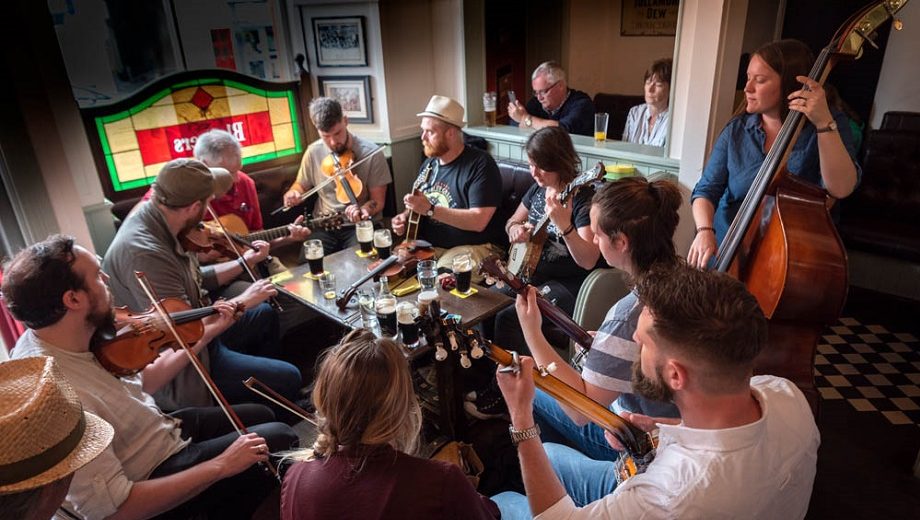
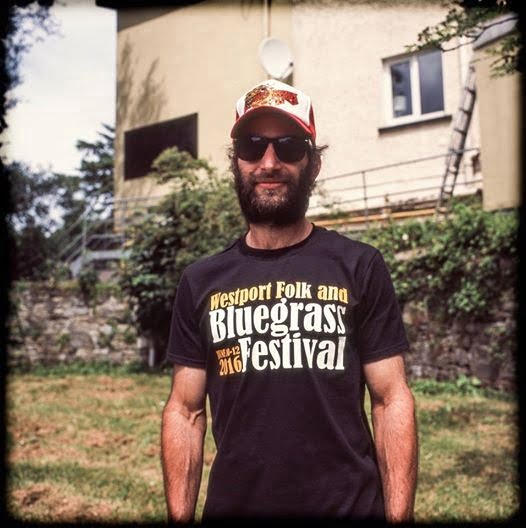
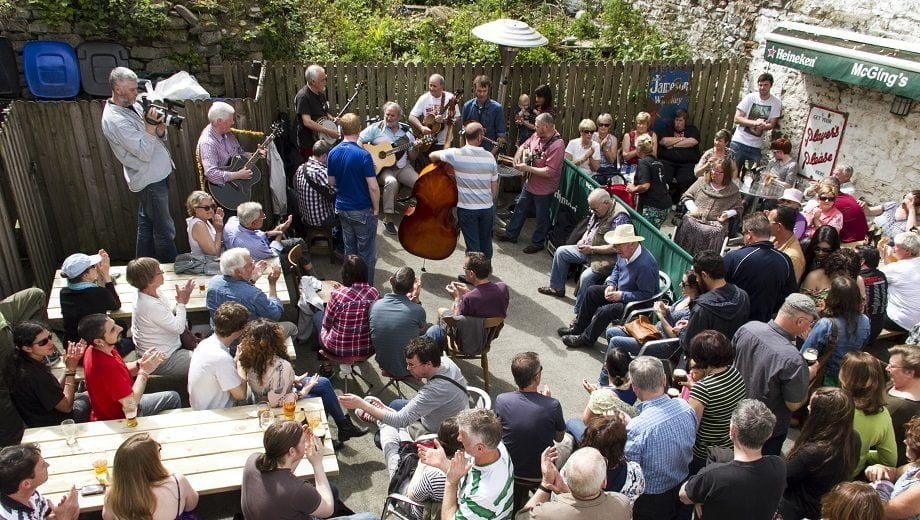
This summer, BGS UK is celebrating the festival makers – the men and women who put their time, their finances and their sanity on the line to bring us the music we love. For the past decade, Israeli-born Uri Kohen has been flying the flag for roots music in the west of Ireland with his Westport Folk and Bluegrass Festival in County Mayo. What started out as a labour of love has become an event that draws people back, year after year, from across the globe. We caught up with Uri to find out more.

BGS: Uri, describe your hometown of Westport for those of us who haven’t been there.

It’s beautiful! It was voted as Ireland’s best town to live in and we still very much hold that title. It’s particularly famous for the mountain overlooking the town, Croagh Patrick, where St. Patrick sat 40 days and nights and banished the snakes from Ireland. We’ve got some of the best restaurants in the country, and they recently built an entire cycle lane all the way round called the Greenway which brings people in droves to ride their bikes. Brilliant pubs, too.

But it’s not where you’re originally from.

No, I grew up in a kibbutz in the west of Israel.

Is there a bluegrass scene in Israel?

Not particularly. I’d never heard bluegrass before I came to Ireland. But in the 1970s an English couple moved to a kibbutz called Ginosar, and they started a festival called Jacob’s Ladder. It was focused on Anglo Saxon music, so there was English folk, Scottish ballads, and American folk too. There was even a massive scale square dance! They’re still running it and it’s a super cool festival. You do hear bluegrass instruments getting into Israeli music now – pop albums with banjo.

What were your musical influences, growing up there?

My parents were socialists so the music they listened to in their early 20s was real workers’ music. My dad had spent two years in the US so he was influenced by that; he researched Alan Lomax and was a big fan of Leadbelly! And of The Weavers, Johnny Cash, and Peter, Paul & Mary… Pete Seeger came to Israel in 1964 and my dad actually got to meet him. But when I started stealing my parents’ records I chose the Bob Dylan and the Leonard Cohen.

You mention that they were politically inspired by the folk artists. Was there a lot of music making on the kibbutz too?

Yes, but bear in mind that most of the people that lived in my kibbutz were immigrants from Eastern Europe, so at that time Israeli music was heavily influenced by Russian music, led by accordion, clarinet and fiddle. The accordion was the main instrument and it’s still very popular to do public singing there – people pay good money to go and sing along with someone who leads them in communal singing. My granddad, who came from Austria, had played in a mandolin orchestra when he lived there, and I have a picture of him doing that which is cool.

You didn’t want to be a musician yourself?

I couldn’t play so I became a sound technician, which is the Failed Musician Syndrome. I loved rock and roll, and even as a little kid I was DJ-ing for friends and at school parties. I didn’t have equipment – I just used to sit all night and tape the songs from the radio. The ability to shape people’s mood by playing them good tunes is something I love to this day. Then at 14 I joined a sound company in my local village and I became fascinated by speakers and microphones. I really learned my craft touring the former Soviet Union as a sound engineer for the Israeli army’s bands. We had to work with whatever equipment we found there, and it wasn’t much.

Uri Kohen

How did you end up moving to Ireland?

It was like an actual dream. I woke up one day when I was about 16 with this epiphany and told my parents I was moving to Ireland. I didn’t know much about Ireland at all but I was charmed by it. Once I had the idea it was where I wanted to be, I read books and watched films about it and as soon as I saw The Commitments I knew that’s the way I wanted to live my life. Own a pub, live in the countryside. So that’s what I did! I flew to Dublin on a one-way ticket. I’m sure my parents were upset about it, but then again, my father went to kibbutz which wasn’t what his parents raised him to do… They’d taught us to do our own thing and so in a way they were probably proud of it.

Westport seems like a pretty remote part of the country to end up in.

There was an Israeli man by the same name, Uri, who lived here, and I knew of him, and he’d said sure if you’re in Ireland come over for a look. I went down and stayed in his house for three weeks! Within a week or two I got a job in a pub, and about the same time I met Leesa — who is now my wife. I don’t believe in fate but still, I couldn’t believe I ended up here, and that everything just worked out so well.

So you moved to Ireland, knew nothing about bluegrass — and now you run the country’s biggest bluegrass festival. Explain.

Well, I’d been running pubs and I’d almost left music production behind. Then one year some friends asked me to help them put on a Kurt Cobain tribute night and suddenly we had 200 people and six bands, something this small rural town had never seen before. Until then we’d just had a local band called the Kit Kat Boys because they’d play two songs and have a cigarette break. It inspired this idea to really develop the music scene in the town with a strong emphasis on production values and quality acts.

Anyway, I had the idea of doing a festival in the style of The Band’s The Last Waltz. I was imagining music like the Grateful Dead, and then someone said, “Why not do it with bluegrass?” I said, “I don’t have a clue what bluegrass is, but let’s do it.” And the great thing about Ireland is that the bluegrass family here is so keen that they came in droves. I couldn’t believe it. I remember the campers arriving on Thursday… I was so confused. I said “We don’t start til tomorrow!”

What has running the festival taught you about Irish bluegrass?

First of all it is way bigger than what we think. Both from a musician’s perspective and a fan’s one. Second, you don’t need to be an expert to enjoy this stuff. When I came to this music Bill Monroe and Lester Flatt meant nothing to me. What’s important for the crowds is that the acts are good — not whether you play Kentucky-style or California-style.

Festivals are famously risky from a business point of view. Did you ever feel out of your depth?

In the second and third years I lost a lot of money because I was determined to book the best bands I could. But the response was amazing and it just grew and grew. I think I hit the jackpot choosing this style because these musicians want to play all the time. I brought the Loose Moose String Band from Liverpool and they almost played for 72 hours straight. And I’ve seen Tim Rogers — who’s the number one fiddler in Ireland and the managing director of the festival — once do a session for 11 hours solid.

Every night we have a gala concert but everything other gig is free and bluegrassers are so approachable that seasonal musicians who just have a fiddle lying in their house can come and join the sessions with the headline acts. It’s like playing on the street with Bruce Springsteen – when people see it for the first time they are blown away. For instance, in 2012 Roni Stoneman played an afternoon set, and there was a young feller, 13 years of age. Roni, in her 70s, plays “Dueling Banjos” with him. He returned to the festival year after year, and now he’s one of the most sought-after banjo players in the country.

So who excites you in this year’s line-up?

Brennen Leigh and Noel McKay, a country folk duo from Austin, Texas, are going to close the main stage on Saturday night with some special guests. And I can’t wait to see The Local Honeys, a duo doing old-time music from East Kentucky, doing a gospel hour on the Sunday morning. We’re also bringing over a six-piece from Alaska called Big Chimney Barn Dance, and Blue Summit from California, with the brilliant AJ Lee. It’s their first-ever visit across the water! There’ll be sixteen different acts including bands from Paris and the Netherlands and of course Ireland and the UK.

Sounds like you’ve got the beginnings of your own Bluegrass Eurovision.

As I like to say, it takes an Israeli man to bring a French band to play traditional American music in Ireland. I truly believe in world peace through bluegrass! We have all the worlds’ problems sorted here.

14 Songs for Roller Skating in Buffalo Herds

No matter where you may stand on the Lil Nas X viral sensation “Old Town Road” and the associated media firestorm, Twitter debates, and raging country-purity authenticity signalling, we should all be able to agree on one thing: country music has always been a welcoming home to musical memes. Sure, that term may be more recent, a product of the internet age, but ever since the dawn of country as a format silly, tongue-in-cheek, self-deprecating, hilarious, and downright foolish songs have been just as integral a part of the genre as heartbreak, cheatin’, booze, and trucks.

We thought it’s high time we celebrate the knee-slappin’, gut-bustin’ history of country music’s meme-ready songs from across the decades. Here are fourteen of our favorites — yes, just fourteen. We can assure you there are dozens and dozens more where these came from.

“A Boy Named Sue” – Johnny Cash

The man in black, one of the most iconic personas in the history of country music, famous for his grit, his stoicism, and his rough-hewn voice wasn’t even “above” recording a song steeped in satire. Hopefully in 2019 life is getting easier for boys named Sue.

“What a Waste of Good Corn Liquor” – Tennessee Mafia Jug Band

Originally recorded by Country Music Hall of Fame and Bluegrass Hall of Fame member Mac Wiseman, this disconcertingly happy-sounding song tells a story with a moral: moonshine will melt you. Don’t spoil the moonshine.

“The King Is Gone (So Are You)” – George Jones

A song about Elvis, Fred Flintstone, drinking, and heartbreak. This one ticks all of the boxes. Even the “use yabadabadoo in a song” box.

“Did I Shave My Legs For This?” – Deana Carter

Country, after all, is all about the relatability of the human condition. Jilted would-be lovers everywhere have felt your pain, Deana. We truly have.

“Don’t Let The Stars Get In Your Eyeballs” – Homer & Jethro

The original Weird Al Yankovics of country and bluegrass, Homer & Jethro wrote (and re-wrote) scores of songs with wacky, eye roll-inducing, laugh-out-loud funny lyrics, ad libs, and arrangements. Check that steel solo!

“I’ll Oilwells Love You” – Dolly Parton

No, Whitney Houston did not cover this one. But that would have been magnificent.

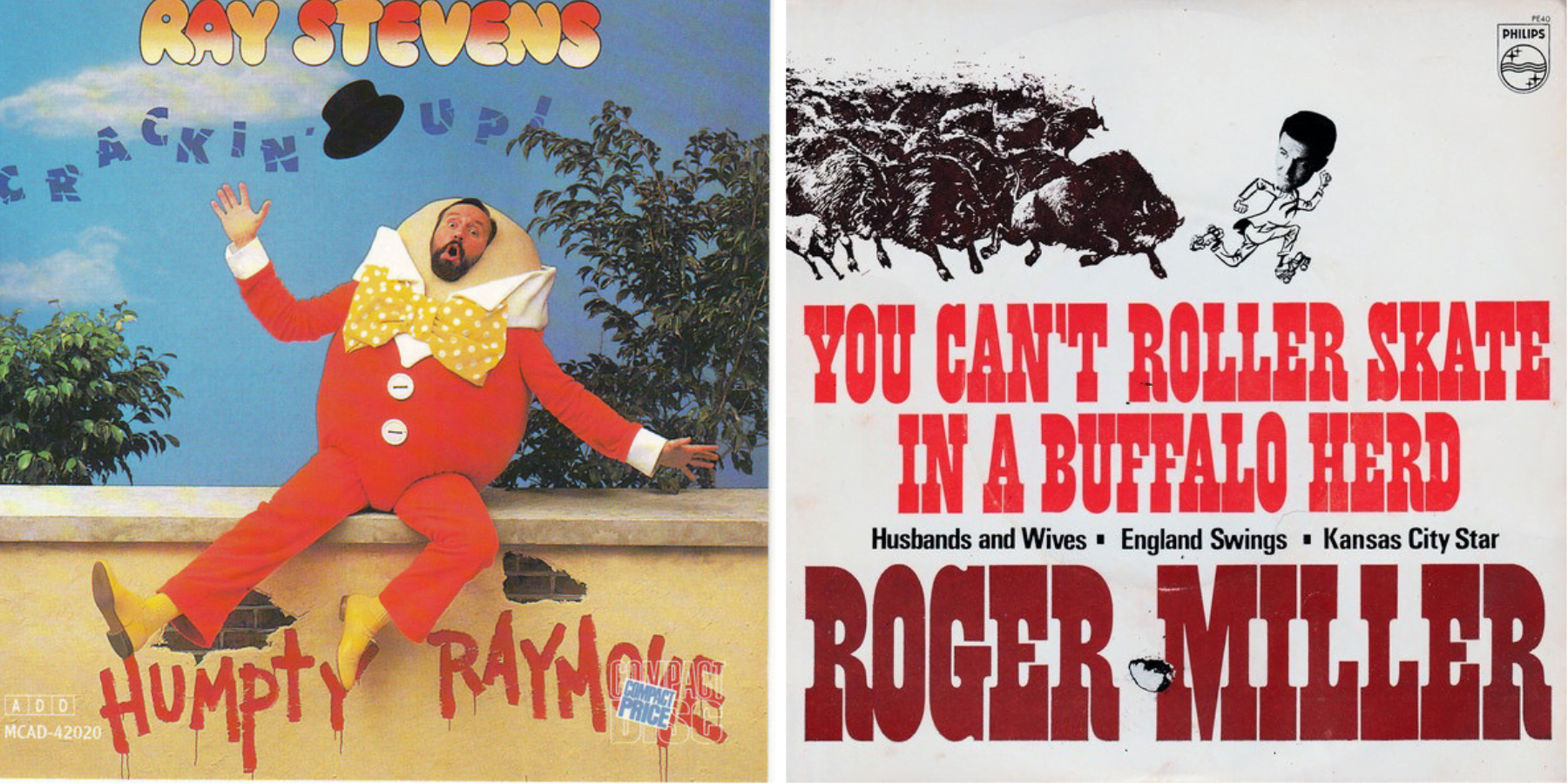
“You Can’t Roller Skate In A Buffalo Herd” – Roger Miller

One of country’s humorous kings, Roger Miller recorded a host of silly songs over the course of his career. We chose this particular number because of its evergreen wisdom. Of course.

“You’re The Reason Our Kids Are Ugly” – Loretta Lynn & Conway Twitty

But you know what? Looks ain’t everything. And money ain’t everything.

“I’m My Own Grandpa” – Willie Nelson

Get out a piece of scratch paper and sketch this family tree as you go. Does it seem a little… circular? Yeah… that’s the problem.

“Would Jesus Wear A Rolex” – Ray Stevens

A modern country parable. Again, an artist with plenty of silly and sarcastic songs to choose from — and Ray Stevens is being inducted into the Country Music Hall of Fame this year. Sounds pretty country to us…

“Cleopatra, Queen Of Denial” – Pam Tillis

Yes. More country songs with outright puns as their hooks, please. And of course, we’ve all been there, Pam. Denial is a popular destination.

“Illegal Smile” – John Prine

On the opening track of his debut album Prine immediately set the tone for his entire career with some of the most nonsensical and witty lyrics ever set to song. “Well done, hot dog bun, my sister’s a nun.”

“I’ll Think Of A Reason Later” – Lee Ann Womack

If you’ve never driven down the road shouting along with this one, we highly recommend that you do — as soon as possible. The song’s main character has a remarkable sense of self-awareness for being so viscerally incensed. If you really hate someone — who may or may not have ended up with your former significant other — it may be your family’s redneck nature.

“My Give A Damn’s Busted” – Jo Dee Messina

Look, if you’ve gotten to the end of this list and you haven’t enjoyed yourself, or maybe you don’t get the point, or maybe you think this is just useless clickbait… whatever the case may be, this song counts as our response. “Nah, man. Sorry.” (Isn’t country the best?)

LISTEN: Andy Hughes & the Mighty Few, “Friday Nights”

Artist: Andy Hughes & the Mighty Few
Hometown: La Crosse, Wisconsin
Song: “Friday Nights”
Album: Songs for Sunday
Release Date: March 24, 2019
Label: Move Along Music

In Their Words: “‘Friday Nights’ is classic-sounding country. I knew I wanted to write a song like that as I was listening to a lot of George Jones and Johnny Cash at the time. It’s a personal song but also takes some liberties within the verses to make the story relatable and have some mystique to it. As a musician on the road I’ve certainly felt that line, ‘Singing my way home to you…’ and I know my wife has, too. I believe a lot of us have probably been in a bar like that, too. The Mighty Few really throw down on this track!” — Andy Hughes


Photo credit: Dylan Overhouse

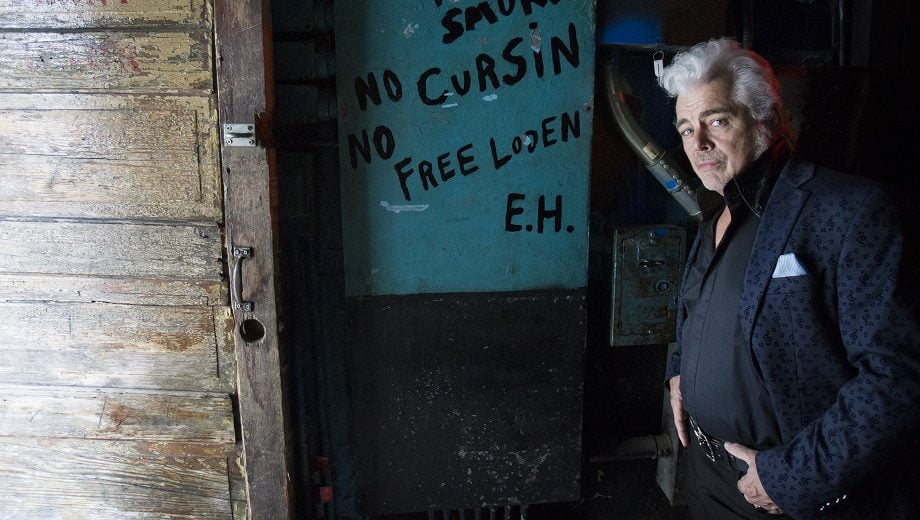
Dale Watson Makes Himself at Home in Memphis

Call us lucky that Dale Watson is feeling so lucky these days. He’s recently bought a house in Memphis, the city where he recorded his new album Call Me Lucky at Sam Phillips Recording studio, purchased the famous nightclub Hernando’s Hideaway, and continues to develop his sound and to reign as the king of Ameripolitan music. Call Me Lucky includes traveling tunes, love songs, and trucking songs, all under three minutes, and featuring Watson’s signature rockabilly sound.

On the slow-burning ballad “Johnny and June,” Watson and Celine Lee, who co-wrote the song, channel Cash and Carter as they look into each other’s eyes and sing about how deeply their lives are intertwined: “you’re the cream in my coffee/you’re the grits to my gravy/you’re the wind in my sails/a lullaby to my baby.” Cash’s drummer W.S. “Fluke” Holland provides the driving beat for “The Dumb Song,” which features a galloping bass line straight out of the Man in Black’s catalog. Every track features Watson’s inventive songwriting, from the Waylon Jennings-like “Restless” to the scampering Merle Haggard-esque “You Weren’t Supposed to Feel This Good.”

BGS caught up with Watson by phone for a chat about songwriting and his new album.

BGS: You recorded this album in Memphis at Sam Phillips Recording studio. Why did you decide to record it there?

Watson: Mostly I record my albums here in Austin, either at my studio, but sometimes at Willie’s or at Ray Hubbard’s studio. A friend of mine, Matt Ross-Spang, who’s a great producer, had been working over there and I went to visit him. I became close to the Phillips family. Since the 1960s, some of the greatest American records have been made there. It felt like home, and it has this great sound, of course.

What made you decide to buy a house in Memphis?

I’ve always liked Memphis. Wherever I was going that took me in that direction, I’d stop in there. The city has grown but it’s done well in cleaning itself up. Memphis reminds me of Austin in the ‘80s. I can record where I want but I wanted to come here to do this one.

You recently purchased the fabled Hernando’s Hideaway nightclub. Is it open yet? How does owning a club help you in your own music?

We’re still doing work on the club but hope it will open up sometime later this year. Hernando’s Hideaway is the only bar where Elvis, Johnny Cash, Jerry Lee Lewis, Carl Perkins, and Charlie Rich played in, never at the same time, though. I am able to get discs from new bands, so I hear some new music. As the owner of the bar, I have to really look for these people to perform and play the kind of music I want in the bar. If I sit in the bar, though, I am going to hear some music that I really like and that I want to hear more of.

Is this album a bookend to your 2015 album Call Me Insane?

(Laughs) I never put those two things together. I never thought of that. The label wanted to go with one of songs for the title, and this is what they chose.

Who would you say are your major influences?

Merle Haggard, Ray Price, Buck Owens, Lefty Frizzell, Johnny Cash, Carl Perkins.

Can you define Ameripolitan? How did you come up with the term?

I came up with the term out of frustration, I think. (laughs) I’d be somewhere, and people would ask me what kind of music I do, and I’d say country music. They’d say, “I love Kenny Chesney.” Nothing against them, but by today’s standard of country music, they’d be disappointed with my music. If I tell them my music sounds like Hank Williams or Jimmie Rodgers or Merle Haggard, more often than not people say they’ve never heard of that.

So, it’s easier to explain what we are by using a different word, Ameripolitan, to describe original music with a prominent roots influence. It starts with Jimmie Rodgers and has a relationship to music between Rodgers and Hank Williams. We’ve been holding the Ameripolitan Awards Show now for six years and promoting the music. We held the first four shows in Austin; this year’s show we held in Memphis.

You have a knack for writing songs quickly. What’s your view of songwriting? When did you start writing songs and playing guitar?

Early on, I learned to write from my dad, who wrote songs. When I was about seven or eight years old, I started making up songs on a ukulele. A little later I wrote a song about the girl across the street. All the good ones are about the girls. (laughs) I’m not writing “American Pie.” I pick a subject or I write about people or a situation I see. You write and you write and you have an album.

I was cleaning up my place for a move a couple of years ago and I found a good song that we dusted off. The only time I wrote songs on the way to the studio to go on an album was for the Sun Sessions. I wrote about four to five songs on the way there. I started playing guitar when my brother Jim needed a rhythm guitar player in his band. He taught me how to play some chord progressions. Two years later I had my own band and I learned on the job.

You wrote “Inside View” on the spot in a club. How did you come up with it?

We were playing the Continental Club in Austin. There were these two girls near the stage and they kept screaming for me to play “inside view, inside view.” Well, we didn’t have a song called that but I said, “All right, ‘Inside View.’” I turned to my band and I wrote the song there on stage. My drummer and road manager, Mike Bernal, usually records our music; he’ll send it to me later to refine. Usually I have to go back and re-record, but I didn’t have to do that with “Inside View.” I get most of my ideas from my audience.

How did the idea for “Johnny and June” come to you?

I was driving with my daughter when the idea came to me, and she wrote it down as I told her about it. I played Johnny’s guitar on that one. It’s got that Cash vibe to it and it’s a duet between Celine and me.

There’s a song on the album called “David Buxkemper.” How did that song come about?

I never met the guy before I wrote the song. One day I got an email through my website from this guy named David Buxkemper. He told me he was a big fan of the Reverend Horton Heat, and he’d seen me on tour with Heat. He told me he was a truckin’ farmer, and he was a big fan of my trucking songs. He also told me he and his grandfather used to watch Hee Haw together and that he liked listening to trucking songs while he was farming. I was intrigued by his story, and with a name like that—you can’t make that up! So I asked him for more details about his life and ended writing this song about him. I like writing about real people.


Photo credit: Mike Brown

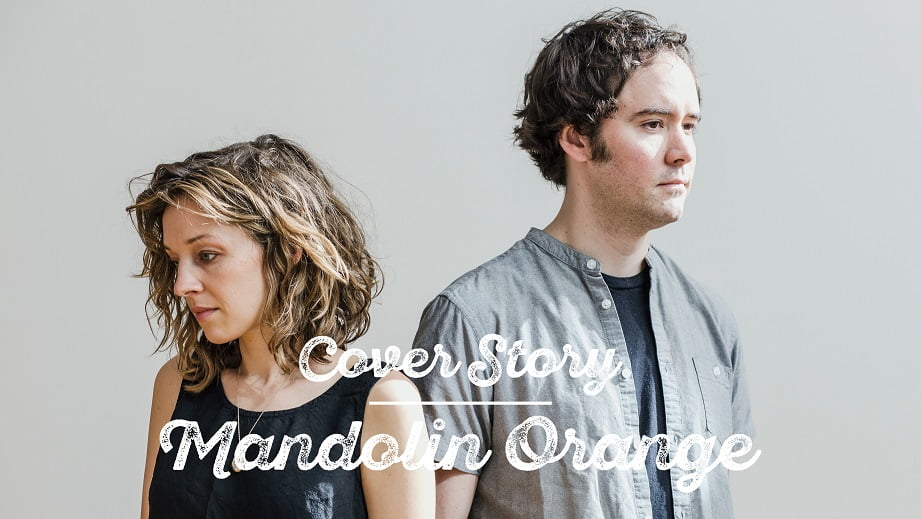
Mandolin Orange: How Bluegrass Brought Them Closer (Part 2 of 2)

Because they have developed a fan base that stretches across genres and generations, it isn’t so easy to, ahem, segment Mandolin Orange into one specific category. But throughout a decade of performing together, bluegrass has been a major part of the music created by the duo’s Andrew Marlin and Emily Frantz. In the second part of our BGS cover story, they discuss their biggest bluegrass influences.

Editor’s Note: Read Part One of the BGS Cover Story with Mandolin Orange.

BGS: There’s a real country feel on “Lonely All the Time.” Are you classic country fans?

Andrew: Yeah. It’s not something I dig into, and really break apart, like I do with old-time and bluegrass music, but I think Emily and I both grew up listening to classic country. My dad is a country music fan, and that was a song that inadvertently got written from his perspective, living alone these days. I wanted to do a classic country duet sound for that, and Emily had the idea to do harmony all the way through it, like a George Jones and Melba Montgomery tune.

Emily: I think our road to classic country has been more roundabout. We listen to a lot of bluegrass, and when you listen to a lot of the older country, it’s a lot more acoustic and smaller-sounding, sonically. A lot of it is not very different than standard bluegrass tunes. It feels like that’s a natural path for us to go down with this band.

Andrew: Yeah. I like Hank Williams and early Johnny Cash, where it’s just a small ensemble playing the music.

Who are some of the bluegrass musicians you return to, just for enjoyment?

Emily: Andrew spends a ton of time listening to Bill Monroe, from a place of really digging into mandolin, and I guess for enjoyment too. But for listening pleasure, I would say a lot of the brother duets – the Stanley Brothers, the Louvin Brothers…

Andrew: Yeah, the Stanley Brothers for the songs, too. They were lonely, man. They were lonely dudes! I think the Stanley Brothers had a natural, bluesy feel, and their songs were so heavy and beautiful. Definitely, for songwriting, the Stanley Brothers would be a big influences, especially on our tune, “Suspended in Heaven,” on the new record. But also the Sam Bush and Tony Rice era. I listen to a lot of Sam Bush and Tony Rice, and just keep getting farther and farther into the Sam Bush catalog. I love his energy and what he brings to whatever ensemble he’s playing. It’s cool that he has a documentary out about him now. He’s getting the respect that he is due.

You may never emerge if you dive too deeply in Sam’s catalog. That stuff is so great, and sounds so good at festivals. He’s like the king of festivals.

Yeah, I think that’s because he’s able to maintain what he wants to do musically, but he’s still energetically appealing to mass audiences. That’s a hard to thing to do at a festival and I feel like he does it well.

That festival crowd can be tough. How many festivals have you all played over the last 10 years?

Andrew: We’ve played a bunch of ‘em. And playing quiet music. That can be an intimidating thing sometimes.

How did you overcome that?

Andrew: We shut our eyes and just hope they don’t mind hearing some quiet music. (laughs)

Emily: I think it was actually realizing that there is a place for that at festivals, even though it doesn’t seem like it. We’d get on stage and feel outgunned at the outset, but the more that we talked to people and realized that they appreciated having that in their festival experience, to offset all the crazy jamming going on. Everybody needs to balance out a bit. Once we realized that, we were able to own it a little more and recognize that that could be our role.

Andrew: It’s more like the hangover weed crowd than the late night drunk crowd, I would say.

I want to go back to “Suspended in Heaven.” It does have that Stanley Brothers sound, but it also has that church music sound, in a way. Are you influenced by music of the church?

Emily: Probably more in that we listen to and enjoy the old gospel tunes that are part of the bluegrass repertoire. We both grew up with church music but it wasn’t necessarily this kind of church music.

Andrew: My mom’s mom was the piano player for the church I went to, growing up, and then my mom took over her responsibilities, then my sister took over for a little while. So it’s like three generations of piano players at this church in Afton (North Carolina) that we went to, growing up. I was around a lot of old hymns and old gospel music, and you can’t really separate my mom from gospel music. I think in wanting to pay homage to her, and to her life, it made sense to write a standard old gospel tune. I guess the lyrics are not traditionally leaning but the sound definitely is.

Tell me how you became interested in bluegrass music.

Emily: For me, it was in the very beginning when I was taking Suzuki violin lessons as a kid. Our teachers didn’t give lessons in the summer but they did fiddle camps. I always played by ear but that was my first experience of being encouraged to learn to play by ear and not being forced to read sheet music. So I learned “Old Joe Clark” and “Bile ‘Em Cabbages Down” – all the first fiddle tunes you learn. And gradually I phased completely out of doing anything classical.

I was able to take more fiddle lessons and play in a local bluegrass band around the time I started high school. And learned a ton from the guys I was playing with, about how to sing tenor and what role the fiddle is supposed to play. It’s cool that traditional bluegrass has pretty hard-and-fast rules about what the given instruments are supposed to do, and I’m really glad that I learned that. We don’t play that way ourselves, on our own tunes necessarily, but it’s really fun to jump in and make a bluegrass song sound just like bluegrass-–if you know the rules.

Andrew, how about you?

Andrew: I’d only just started getting into bluegrass when Emily and I met each other, actually. I grew up with country and switched to rock ‘n’ roll, and then from there I fell into a metal zone. I was in a metal duo, actually, before I moved to Chapel Hill. I don’t think there are any recordings of that out there – hopefully not. I credit the Skaggs & Rice record a lot as being that switch for me that flipped me to bluegrass. When I heard that, I was like, ‘Who is this guitar player?” And the way they are singing together, it’s really quality. Especially Ricky Skaggs’ mandolin playing on that record.

So from there, I found out about Norman Blake and David Grisman and John Hartford and of course Sam Bush. I just fell in love with it, and especially the mandolin. So I think when Emily and I first met, I’d only been playing the mandolin for a year or so.

Emily: Andrew didn’t know very many bluegrass tunes. I was more of the source, at that point.

Andrew: She was showing me a bunch of fiddle tunes to learn on the mandolin, which really helped me figure the instrument out. I’m still figuring it out. So I’d say meeting Emily was a big part of my schooling in bluegrass, in a lot of ways.

After ten years of knowing each other, do you have a good intuition about what the other person is thinking?

Emily: I would say yeah, especially musically. I think all those years, too, of playing just the two of us, it becomes like a second language, and you don’t even necessarily realize it’s happening.

Was there a time when you did realize it was happening? Where you thought, “Wow, this is actually pretty good.”

Andrew: It depends on what we thought the other one was saying. (both laugh)

Emily: I remember reading an interview with Gillian Welch a long time ago, when she was talking about playing with a duo, about how it’s so much harder than playing with a full band, but also how it’s so much easier. And a lot of the things that she said about it made me realize how we were communicating, in a way that I didn’t necessarily realize before.

Andrew: I definitely love the spontaneity of playing in a duo, playing with just one other person. It’s really hard to make that split-second decision to vamp on a chord if you forget a lyric, or to extend a solo section, when there are four other people on stage with you. But when it’s just the two of us, we can kind of look at each other and give an eyebrow raise, and it’s like, “Oh yeah, I forgot the lyrics, so….”

Emily: It’s not even visual sometimes, but if somebody misses something, you automatically compensate for it in some way, and it’s not even conscious. I guess that’s probably possible in larger ensembles but it probably takes ten times as long to get there.


Photo credit: Kendall Bailey
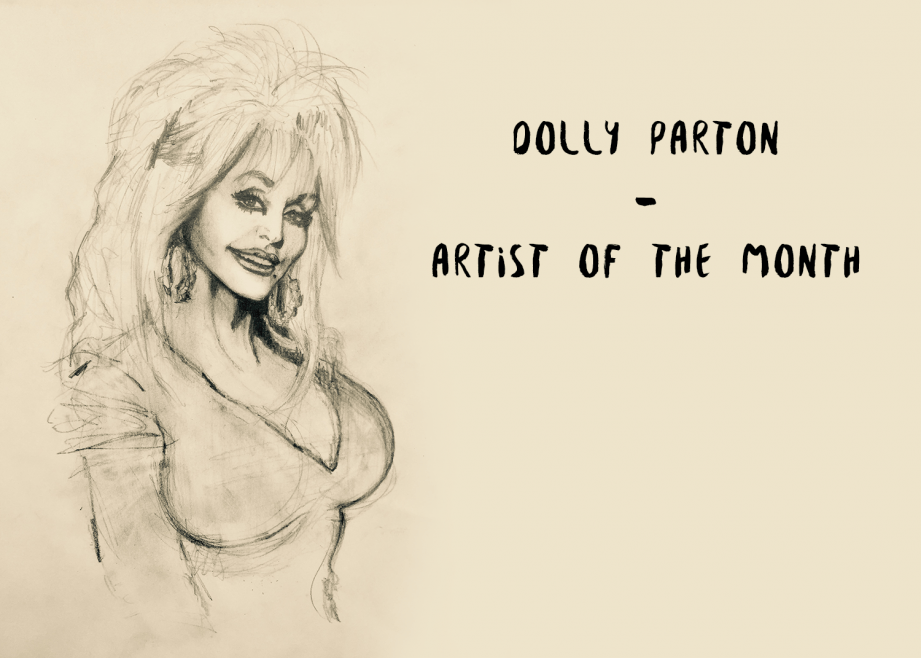
Dolly Parton Carries Childhood Memories Throughout Her Career

Back through the years, I go wandering once again
Back to the seasons of my youth…

So begins “Coat of Many Colors,” which Dolly Parton frequently cites as the favorite song she’s written. That 1971 country classic is just one example of Parton’s ability to view the world through a child’s eye, whether she’s writing about her own life, placing a fictional young character in dramatic circumstances, or simply making a connection to a new generation of kids.

The newest example of this gift is Dumplin’ – a Netflix film where an overweight teenager finds solace in Dolly’s music. Leading up to the movie’s release, Parton released a duet version of “Here I Am” with Sia – an ironic choice, as the pop star is famous for singing with her back to the audience. But that anthem of self-declaration sets the tone for the Dumplin’ soundtrack, underscoring one of the reasons that a teenage girl would love Parton’s music in the first place. The heartfelt film is based on a young adult novel by Julie Murphy.

Seeing an early cut of Dumplin’ inspired Parton to write “Girl in the Movies,” a thoughtful song that finds her identifying with that very character — the “girl in the movies.” Parton told NPR that she wrote it for every little boy and girl. The song carries a strong message, she says: “Don’t just live in a fantasy of watching someone else live their lives. You star in your own role. You be the star of your own life.”

Parton has embodied that perspective for 60 years. In fact, 2019 is the 60th anniversary of the first time she released a song she wrote – in this case, “Puppy Love,” composed with her uncle Bill Owens. Parton was 11 years old when she wrote it, 12 when she recorded it, and 13 when it was released as a single on the tiny Goldband Records. She sang locally around Knoxville, Tennessee, and moved to Nashville on the day after she graduated from high school in 1964. Two years later and still chasing her dreams, she married Carl Dean, a lasting union that nonetheless yielded no children of their own.

Yet time and time again she incorporated a child into the storyline of her music. For example, in “Mommie, Ain’t That Daddy,” Parton sings from the perspective of a woman whose kids happen to see their father begging for money. In “Jeannie’s Afraid of the Dark,” Parton describes Jeannie as a child who feared burial; her duet partner Porter Wagoner then reveals that Jeannie dies. “Malena” is another doomed child who dies on the night of her birthday, finally receiving the set of wings she’d asked for.

By 1970, Parton had carved out a solo career in addition to her role on Porter Wagoner’s TV show. Her first No. 1 hit, “Joshua,” tells the story of an orphaned girl who hears about a mysterious man living a good ways down the railroad track. Curious, she seeks him out – and then promptly moves in with him. (“Why, you’re just what I’ve been lookin’ for!” she exclaims.) The poetic “Coat of Many Colors” arrived a year later, serving as a morality tale that still resonates decades later.

Parton employed that same autobiographical approach for “In the Good Old Days (When Times Were Bad),” a gem from My Tennessee Mountain Home. Reflecting on her childhood years, she sings, “No amount of money could buy from me the memories I have of them / No amount of money could pay me to go back and live through it again.” (Merle Haggard identified with the lyrics so much that he recorded a version, too.) Another of the compositions on that album is simply titled “I Remember” and finds her blissfully recalling those seasons of her youth. Of course, as she matured, so did her songwriting, most notably on poignant compositions like “I Will Always Love You,” “Light of a Clear Blue Morning,” and of course, “Jolene.”

Still, if you dig into her albums from this era, you’ll find songs like “Me and Little Andy,” about a poor girl and her dog who wind up on Dolly’s doorstep. She agrees to let them spend the night; by morning, the girl and the dog are both dead. Another one, “Mammie,” is about a midwife who raises a child after the mother dies at birth and then teaches the child to sing and play guitar — but Mammie herself doesn’t live to the end of song. “Silver Sandals” recounts the story of a disabled young girl who couldn’t walk; when she inevitably dies, Dolly and Porter imagine her happily walking up the golden stairs of Heaven.

On a brighter note, Dolly reminisces about a banjo picker she knew as a kid named “Applejack.” Almost like a precursor to Dumplin’, Parton composed “Shattered Image” about sitting on a bridge as a girl and throwing rocks into her reflection in the water. She compares the experience to the way people were shattering her public image as an adult. A 1979 album cut, “Nickels and Dimes,” is a co-write with her brother Floyd Parton, who died in December. While writing it, Dolly thought about how she’d open up her guitar case in downtown Knoxville as a young girl and busk in order to get enough quarters to buy hamburgers. By the time the song ends, she’s a star, but here’s how it begins:

“I used to stand on the corner and sing as a child
And I’d play my guitar and sing as the people went by
The sidewalks were crowded but I’d just sing louder ‘cause I didn’t mind
Spending my time, spinning my rhymes, and singing for nickels and dimes.”

Even beyond her musical output, Parton has kept a strong bond between herself and a younger generation. In 1986, she invested in a theme park in East Tennessee and rebranded it as Dollywood – a gift that keeps on giving, with new attractions added nearly every year. And it’s not all roller coasters. Parton’s mother sewed a replica of the fabled coat of many colors to display in the museum dedicated to Dolly’s life and career.

Nearly a decade later, Parton instituted the Imagination Library, where pre-school children receive a monthly book at no charge. To these lucky kids, Parton is known as “The Book Lady.” Meanwhile, “Coat of Many Colors” has been successfully transformed into a children’s book and an award-winning TV movie, in addition to being recorded by the likes of Eva Cassidy, Emmylou Harris, Joey & Rory, and Alison Krauss & Shania Twain.

When Parton was 70 years old, she secured a No. 1 country album with 2016’s Pure & Simple. One of the most charming songs on it is titled “I’m Sixteen,” where she sings, “It goes to show you’re never old / Unless you choose to be / And I will be sixteen forever / Just as long as you love me.” A year later she released her first-ever children’s album, I Believe in You.

As 2019 begins, Parton is in the spotlight again. On January 6, “Girl in the Movies” will compete for a Golden Globe award in the category of  Best Original Song in a Motion Picture. A month later, she will be recognized as the MusiCares Person of the Year at an all-star concert event, just a day before the Grammy awards. Along with celebrating her magnificent musical achievements, the presentation also acknowledges the fact that the Imagination Library has given out 100 million books since its inception. Parton is the first member of the Nashville music community to be honored at the annual MusiCares gala.

Way down in the fall, Parton will return to the Grand Ole Opry, celebrating the 50th anniversary of her induction in October. But her history to the Opry stretches about a decade before that. When she was 13, Parton and her uncle Bill Owens had lingered outside the Ryman to meet Johnny Cash. When he emerged, a starstruck Parton begged Cash to let her sing on stage – but it would take a while for this dream to be realized. In time, Opry star Jimmy C. Newman gave up his slot for her, although Cash handled the introduction that night. According to Parton’s autobiography, Cash told the audience, “We’ve got a little girl from up here in East Tennessee. Her daddy’s listening to the radio at home, and she’s gonna be in real trouble if she doesn’t sing tonight, so let’s bring her out here!”

Parton wrote about this career milestone in her book: “I know I had never heard a crowd cheer and shout and clap that way. And they were doing it all for me. I got three encores. This time I was prepared for an encore, but not three, not at the Grand Ole Opry. Someone told me later, ‘You looked like you were out there saying, “Here I am, this is me.”’ I was. Not just to that audience but to the whole world.”


Illustration: Zachary Johnson

BGS Top Books of 2018

As we turn the page on another year, the Bluegrass Situation has compiled ten music-related books from 2018 that may appeal to fans of bluegrass, roots, classic country, and yes, even alt-country.

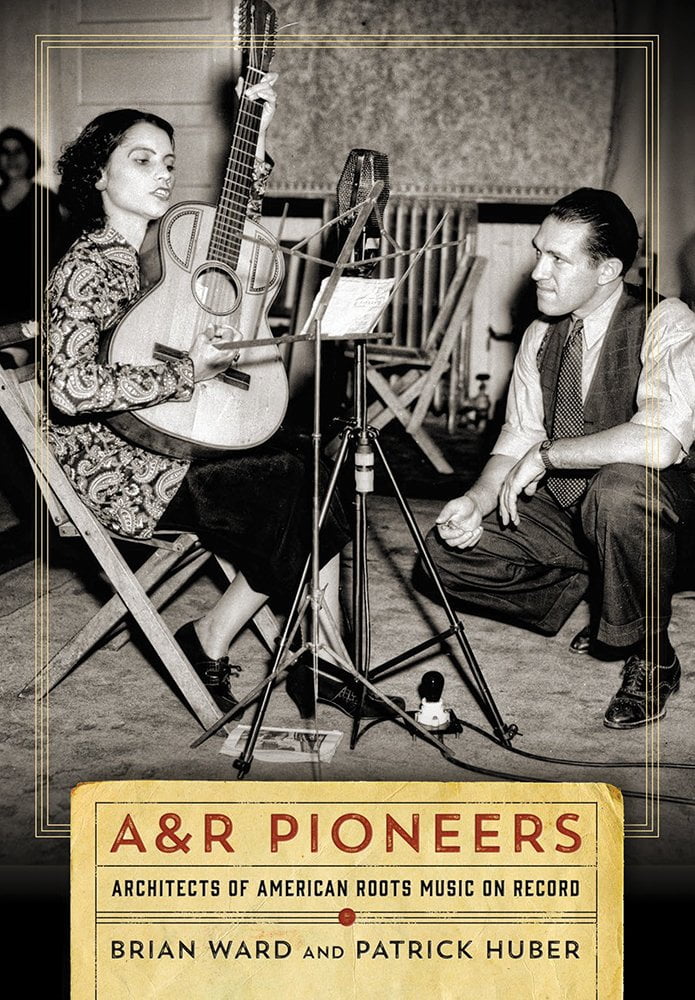
A&R Pioneers: Architects of American Roots Music on Record
Authors: Brian Ward and Patrick Huber
Some musicians just have that “it” factor – as true 100 years ago as it is today. This historical volume looks at the men and women who shaped raw talent for record labels as A&R (“artists and repertoire”) scouts. With an emphasis on roots music, the book focuses on important figures like Ralph Peer, Art Satherley, Frank Walker and John Hammond, as well as many less-celebrated figures. It also acknowledges that some of these A&R executives were not exactly virtuous. Authored by two professors, the project is jointly published by Vanderbilt University Press and the Country Music Foundation Press.


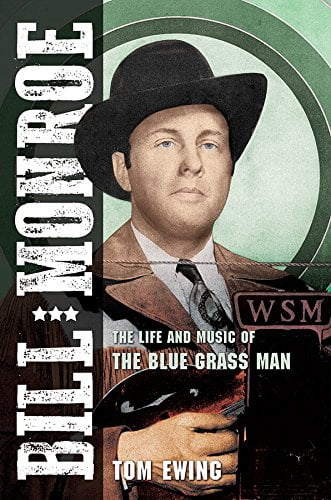
Bill Monroe: The Life and Music of the Blue Grass Man
Author: Tom Ewing
In addition to spending 10 years on the road as Bill Monroe’s bandleader and guitarist, author Tom Ewing may be the foremost expert on the Father of Bluegrass. At 656 pages, this biography ties together Monroe’s personal and professional life without glossing over the tougher times. Ewing writes with the knowledgeable bluegrass fan in mind, making this an especially rewarding book for students of bluegrass and those who are familiar with Monroe’s contemporaries. With hundreds of new interviews and rare access to Monroe’s archive, Ewing is able to build a comprehensive narrative that is likely to become the definitive account of an American music legend.


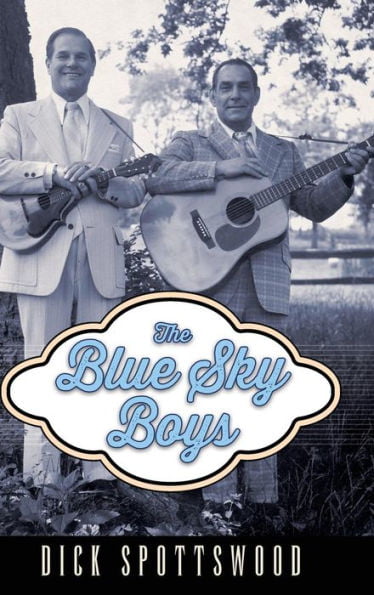
The Blue Sky Boys
Author: Dick Spottswood
Born and raised in North Carolina, the Blue Sky Boys emerged as one of the first and finest brother duos in country music. As teenagers, Bill and Earl Bolick riveted radio listeners in the Southeast with a stunning harmony blend. Earl sang baritone lead and acoustic guitar, while Bill sang tenor vocal and played mandolin, although their music was never fast and high like bluegrass. A deal with RCA Records in 1936 led to appealingly understated recordings such as “The Sunny Side of Life.” Drawing on archived interviews and Bill’s written accounts, this biography also compiles vintage photos and a complete discography.


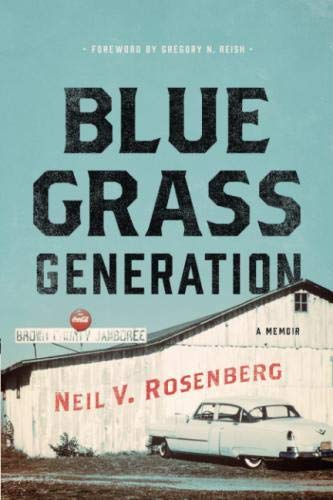
Bluegrass Generation: A Memoir
Author: Neil V. Rosenberg
Author and historian Neil V. Rosenberg vividly recounts his own experiences with Bill Monroe and many other memorable characters at the Brown County Jamboree and the Bean Blossom Bluegrass Festival in the early 1960s. Through these recollections, Rosenberg shows how these seminal concert events helped solidify Bill Monroe as a bluegrass icon. Rosenberg’s scholarly reputation is already well-established, thanks to his prior books and the title of Professor Emeritus of Folklore at Memorial University of Newfoundland. Yet this volume is more personal, as it describes how an eager college student in Indiana became entrenched in bluegrass banjo and the festival scene.


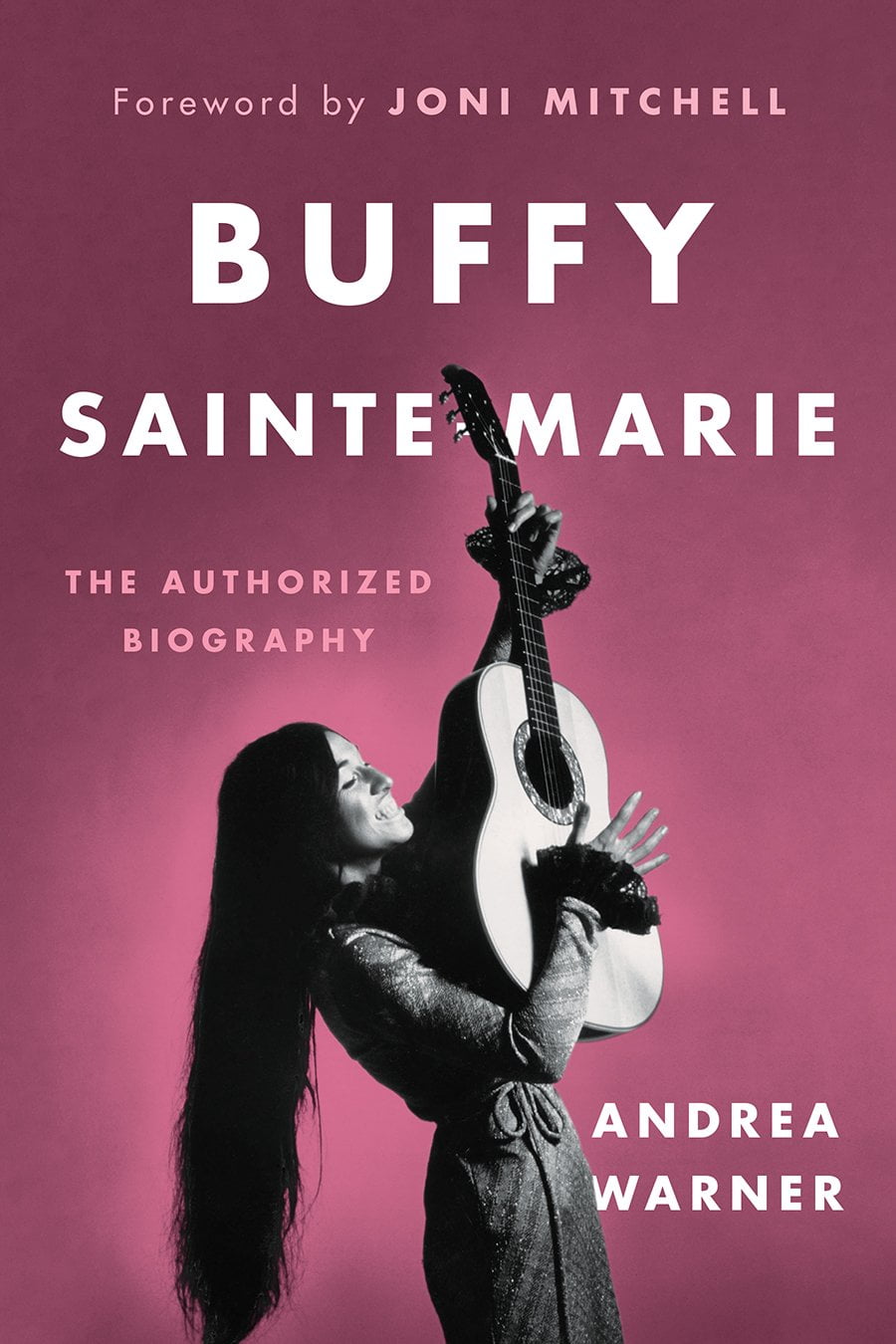
Buffy Sainte-Marie: The Authorized Biography
Author: Andrea Warner
In February, Buffy Sainte-Marie will receive the People’s Voice award at Folk Alliance International in Montreal. Presented to an individual who unabashedly embraces social and political commentary in their creative work and public careers, the songwriter known for the poignant 1964 anti-war anthem “Universal Soldier” fits that description neatly. This approved biography portrays the Cree musician as an advocate for Indigenous rights, as well as a woman who endured a traumatic childhood and intimate partner violence. Feminist author Andrea Warner distilled more than sixty hours of original interviews into an insightful story that illuminates Sainte-Marie’s activism and art.


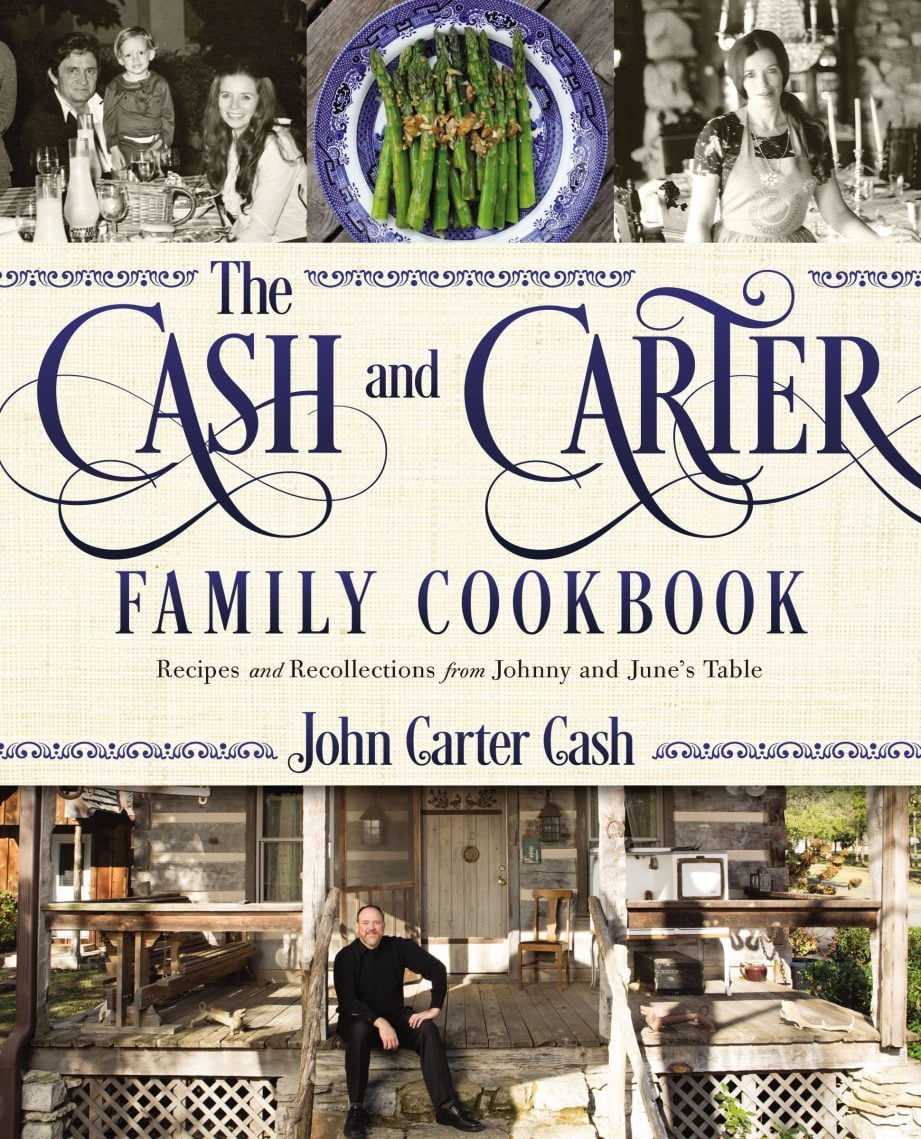
The Cash and Carter Family Cookbook: Recipes and Recollections from Johnny and June’s Table
Author: John Carter Cash
John Carter Cash is a foodie and it shows in this lovely cookbook dedicated to his parents, Johnny Cash and June Carter Cash. Family recipes abound, with the first two recipes being June’s biscuits and Mother Maybelle Carter’s tomato gravy. This isn’t all Southern cooking, however. Johnny and June also liked Asian flavors and vegetarian dishes, including their own veggie burger (a.k.a. Cashburger). The full-color photos are beautiful but the coolest pic is in the front, where the Man in Black presides over a barbecue wearing a white apron and shorts. His famous recipe for Iron-Pot Chili is in here, too.


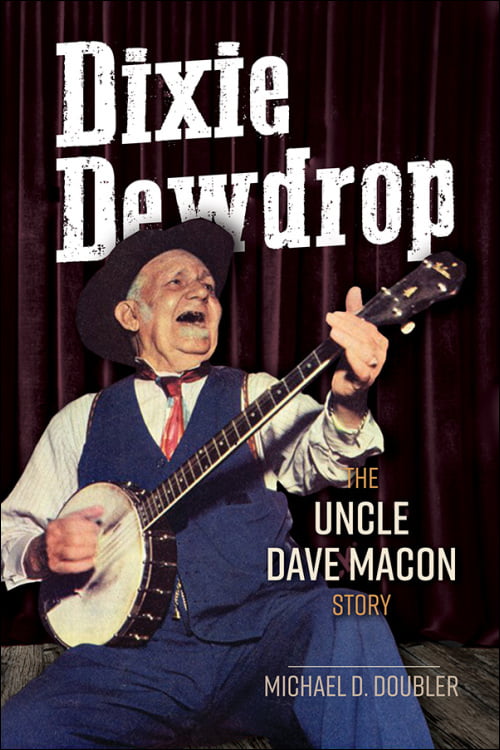
Dixie Dewdrop: The Uncle Dave Macon Story
Author: Michael D. Dubler
Considered the first superstar of the Grand Ole Opry, Uncle Dave Macon is remembered as one of the finest banjo players of his era. This well-researched biography by his great-grandson, Michael D. Dubler, also captures the entertainer’s complex personality. Pulling from original and archived interviews, the narrative provides a detailed account of Macon’s recording output, as well as crucial personal moments, such as his father’s murder in Nashville. Because Macon’s career didn’t really take off until he was 50, the book also conveys just how much strength – both physical and emotional – it took for Macon to stick with it.


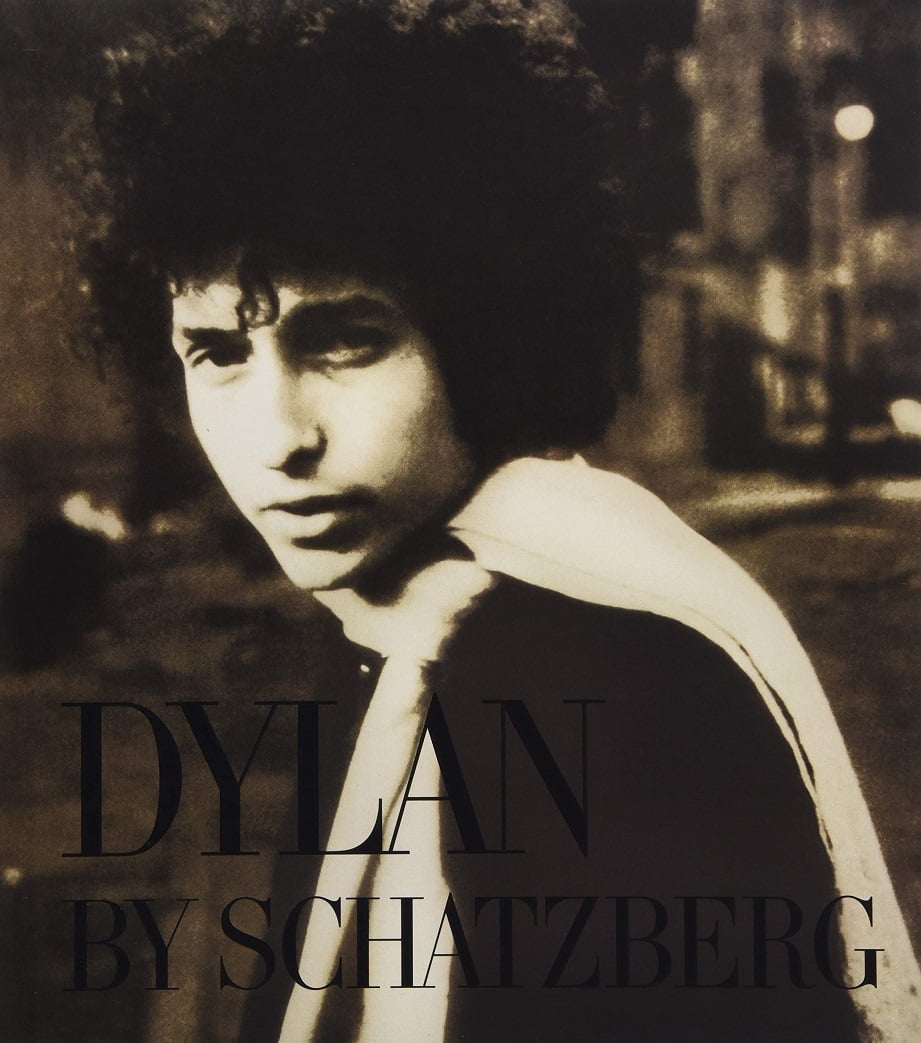
Dylan by Schatzberg
Author: Jerry Schatzberg
Bob Dylan seems the epitome of cool when gazing at the lens of photographer Jerry Schatzberg, who took innumerable pictures of him in the 1960s. Now in his 90s, Schatzberg has compiled personal stories and never-before-seen photos from that era for Dylan by Schatzberg. Inside, the enigmatic subject is documented in recording studios, concert stages, and city streets. For example, Schatzberg snapped the famously blurry Blonde on Blonde album cover in the Meatpacking District in Manhattan. Some believed it was a metaphor for drug use, but Schatzberg says it’s out of focus simply because both men were shaking in the cold.


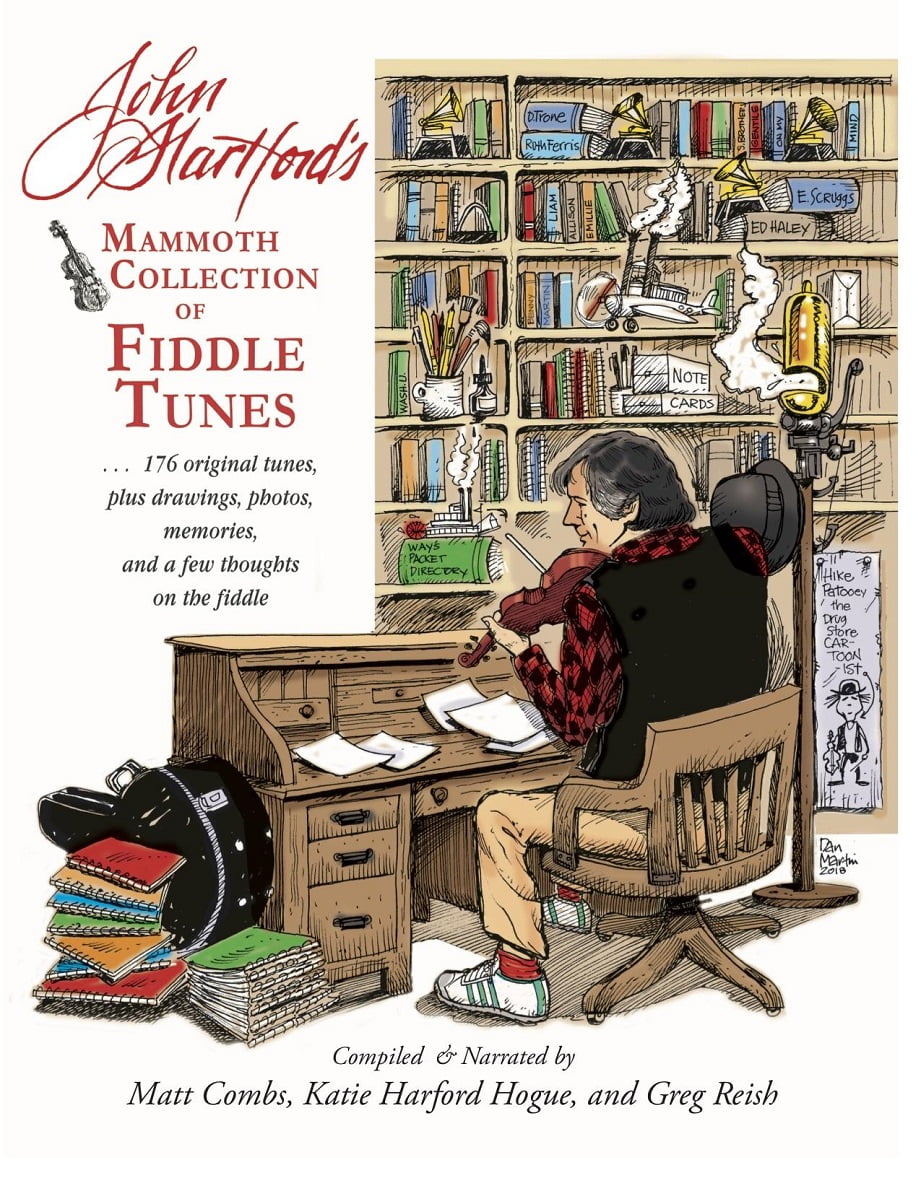
John Hartford’s Mammoth Collection of Fiddle Tunes
Authors: Matt Combs; Katie Hartford Hogue; Greg Reish (Author), John Hartford (Illustrator)
One of acoustic music’s most treasured talents, John Hartford left behind a brilliant legacy that is ceaselessly resonant. This full-color book goes a long way to explain why generations of bluegrass fans continue to admire him. Co-authored by accomplished fiddler Matt Combs, Hartford’s daughter Katie Hartford Hogue, and musicologist Greg Reish, the volume expands beyond career landmarks like writing “Gentle on My Mind” and recording Aereo-Plane. Readers can also peruse 176 original compositions (some never before published), more than sixty of Hartford’s personal drawings, interviews with musicians who still consider him an essential player of American music, and Hartford’s own ruminations on playing the fiddle.


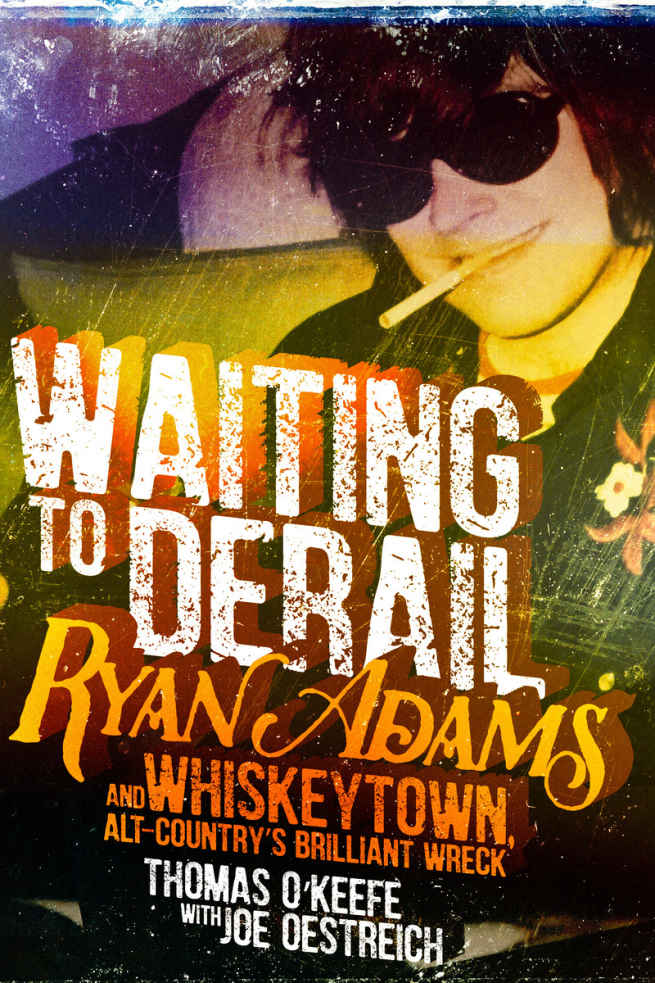
Waiting to Derail: Ryan Adams and Whiskeytown, Alt-Country’s Brilliant Wreck
Author: Thomas O’Keefe
Time has been kind to Whiskeytown’s 1997 album, Strangers Almanac, with country-tinged tracks like “16 Days” and “Yesterday’s News” paving the way for the Americana movement. (Back then it was usually called “alt-country.”) But why didn’t the band have more national success? This candid book written by their former tour manager makes it obvious that Ryan Adams didn’t care about playing nice to fans, venue owners, influential radio programmers or the music industry. Still, there’s an important scene where Adams silences a North Carolina club with “Avenues,” serving as a potent reminder of just how powerful his music can be.


Rosanne Cash Brings Urgency, Courage to ‘She Remembers Everything’ (2 of 2)

On her new album, She Remembers Everything, Rosanne Cash keeps watching the clock. It’s an album about time slipping away, about the bittersweet realization that you have more time behind you than ahead. “It just wasn’t long enough,” she sings on the hymn-like “Everyone But Me.” “Still it seems too long.” And on “Many Miles to Go” she puts her affairs in order, itemizing the artifacts and inside jokes she shares with John Leventhal, her frequent collaborator, longtime producer, and husband of twenty-three years. With its rambling, almost anxious upbeat tempo, the song celebrates their relationship more than it commiserates its inevitable end: “There aren’t many miles to go and just one promise left to keep.”

However, she didn’t record that song with Leventhal, who produced roughly half the tracks on She Remembers Everything. He was, she says, shy about the song. Instead Cash traveled about as far from her home as she could, all the way from Manhattan to Portland, Oregon, to record with the album’s other producer, Tucker Martine. By disrupting her creative process, she says, “It did break something open in me.”

(Editor’s Note: Read Part 1 of the Bluegrass Situation’s interview with Rosanne Cash here.)

You’ve mentioned that these songs are very autobiographical. How does your relationship with these personal songs change over time? What is it like to revisit them onstage?

I played some of these songs for the first time just recently, and it felt good. I felt very relaxed with them. You know how the truth can unsettle you and scare you, but the truth can also allow you to let your guard down and relax? That’s how I felt. But it’s different every night. Every audience is going to bring something different to what they hear, and hopefully they will bring their own lives to it. They’re not coming to hear about my feelings or about my life. They’re coming to experience their own lives and their own feelings. They’re coming to have things reflected back to them that will be revealing or inspiring or whatever.

That’s the function of art. It’s that kind of service industry. We help you access your life and feelings. It’s not about narcissism. It’s not about me. That takes the fear out of it. These aren’t diaries; they’re songs. There’s craft that went into them. There’s music. There’s a beat and a melody. So I’m not going to be up there naked.

That leads me to another song I wanted to ask about, “Not Many Miles to Go,” which almost sounds like a letter you wrote to your husband.

I have a very tender feeling about that song because I really did write it for John — and to John. When you’re in a long-term relationship, it’s inevitable that one of you is going to leave the other. It’s sad, but it’s worth acknowledging the artifacts of your life together, even if it’s just a Telecaster. So you know when we’re gone, that Telecaster will still be here. Our son will probably play it. I wanted to document those things for us.

I like the idea we keep the beat for each other.

That’s a beautiful idea, and a close couple will do that for each other. When I wrote that line, I was thinking about the actual tempo when I play rhythm guitar for him. We have to remind each other to stay in time. I’ll tell him he’s too slow, or he’ll tell me my timing is off. He used to complain about my meter a lot, and then we did a gig with some other people a few years ago. When he came offstage, John said, “I’m never complaining about your timing again!”

How does he feel about the song? It’s really an intimate conversation in front of the audience.

I think John felt a little shyer about it than I did, but I think he’s gotten past that. And his guitar solo just kills me, especially that real Telecaster sound that he pulls off. It sounds like Clarence White or James Burton. When I wrote the song, it had more of a folk vibe, and then Tucker took it to this really intense place with a lot of energy to the arrangement. That was a bit of genius on Tucker’s part. It’s funny, I couldn’t have done that song with John. I had to do it with Tucker, and then we flew John’s solo into the track.

How did you end up working with Tucker Martine?

I’m a huge Decemberists fan, and he works with them. Then I heard the case/lang/veirs record he produced and I just loved it so much. I’d been thinking that I wanted to break away from John a little bit, because I felt I’d grown so dependent on him. He has very forceful opinions and it’s easy for me to acquiesce to his sensibilities because he’s such a gifted musician. I started thinking, you know, I need to be making those decisions, even if the choices are “wrong.” I need to do that. I called Tucker out of the blue and asked if he’d be interested in working with me. I truly didn’t know what he would say. Maybe I wasn’t his kind of thing.

But he said he’d love to and it was a matter of getting our schedules together. I was nervous, he was nervous — we didn’t know how it was going to work out. But it was this incredible experience, start to finish. I teared up many times, feeling so grateful to be working with him. It did break something open in me. After doing five tracks with Tucker, I came back to work with John and I felt fresh. We wrote some of the best songs I think we’ve ever written, like “Crossing to Jerusalem” and “Everyone But Me.” I had most of the lyrics for “The Undiscovered Country” and he wrote the music for it.

And you got The Decemberists frontman, Colin Meloy, on the record, too.

That was through Tucker. I was really shy about asking him and one day I just asked Tucker if he thought Colin would sing on the record. He thought he might, so he called him and Colin came down to sing on “The Only Thing Worth Fighting For.” While he was there, we snookered him into singing on “Rabbit Hole.”

Overall, on these songs, I get the sense of time running out. This seems to be an album about realizing that time is short and that creates a sense of urgency.

Well, time is running out. It’s an hourglass. It’s less than half-full now, and I feel an urgency about saying whatever else I have left to say. It’s really quite emotional to me. The regrets I have at the end of my life — except for the regrets I have about hurting anyone or mistakes I made as a mother — are going to be about what I didn’t say in my work, in my life. What I held back. So there is some urgency to get that out there, but I feel more liberated than ever because now my thinking is, what’s the point of not doing it or not saying it? This is the life I’ve chosen, to live in a public sphere and to be in this service industry of songwriting and performing. I don’t want to hedge my bets anymore.

Most people would rather not think about the time they have left and what to do with it. I know I’m guilty of that a lot of the time.

It’s painful, so that’s what we do: We push away what we don’t want to consider. Buddhists say death is certain, so how will you live? We push out the first part, and then we push out the second part to the extent that we default on our choices every day. We put the blinders on and think we have forever. I do not exempt myself from that. I do it, too. I say, “I’m going to wait to do that.” No. Can’t do it anymore.

When I heard Leonard Cohen’s You Want It Darker, that gave me a little more courage. Even the title of that Paul McCartney album from a few years ago, Memory Almost Full, struck me too. Paul and Leonard are obviously older than me, but they were signposts in that direction. I notice those things when they’re out in the world. I notice those pieces of poetry and music. I find myself responding to it more and feeling somewhat comforted by the fact that other people my age are doing it as well.


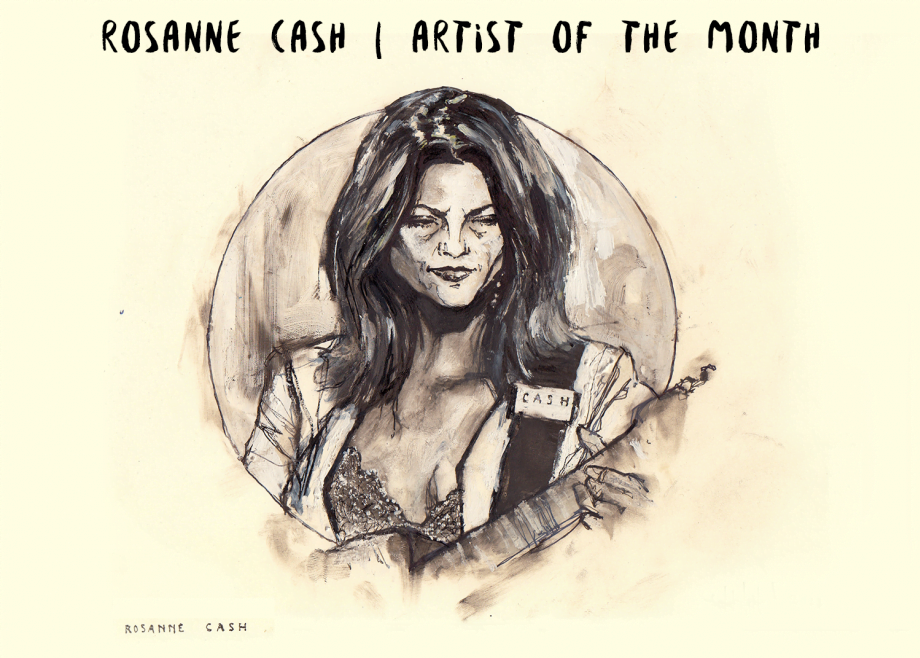
Photo of Rosanne Cash: Michael Lavine
Illustration: Zachary Johnson

Rosanne Cash Reveals Herself on ‘She Remembers Everything’ (Part 1 of 2)

“This is an album for adults,” Rosanne Cash says of She Remembers Everything. “It’s not a kids’ record.”

The word kid of course is a subjective term. “I don’t think it would mean anything for someone who is 25,” she says. Maybe or maybe not, but by “adult” Cash is referring to the album’s perspective: the set of eyes through which she sees the world and writes her songs. It is the perspective of a woman in her early ’60s, with forty years in the music industry, as well an enviable catalog of critically acclaimed albums and mainstream country hits.

When she started writing and recording in the late 1970s, she was unmistakably recognized as the daughter of one of the most popular country artists in history, but what she inherited from him, aside from that iconic surname, is an appreciation for the well-crafted and sturdy pop song, for the wisdom such a thing might convey. During the 1980s she thrived in an industry that made room for left-of-center artists like Lyle Lovett and k.d. lang. Her 1981 smash “Seven Year Ache” remains a classic-country radio staple even today, and King’s Record Shop from 1987 is not only one of the finest country albums of that decade but a pivotal release that sent Cash hurtling into a second career in what we now call the Americana market.

Rather than try to maintain her mainstream success, Cash foregrounded her literary ambitions in the 1990s and in the mid-2000s launched a series of albums that addressed her origins — her career, her family, her South. Black Cadillac, from 2006, blazed rocky trails out of the grief of losing her mother (Vivian Liberto Cash Distin), her father (Johnny Cash), and her stepmother (June Carter Cash) — all too much tragedy to bear in such a short period of time. She put some of those lessons into play on 2009’s The List, featuring her own unique readings of songs made famous by her father. And 2014’s The River & the Thread, one of the best works of her career, is a travelogue through the South and into her own past.

She Remembers Everything sounds like a culmination of those dark, deeply personal ruminations. The songs are full of strong language, poetic and direct, but nothing that would demand a parental advisory sticker. There are intimations of sexual desire both fulfilled and unfulfilled, but nothing that would incur an R rating. There is no violence, but with a specificity that becomes harrowing, she depicts the horrific aftermath of violence, in particular a fatal shooting in “8 Gods of Harlem.” The story behind that long-dormant song begins the first of our two-part interview with Rosanne Cash.

I wanted to start by asking about “8 Gods of Harlem,” which seems like an outlier on the album. Not only does it feature Elvis Costello and Kris Kristofferson, but it’s also written explicitly from someone else’s point of view.

I wrote that with Kris and Elvis in 2008. It’s the oldest song on the record. I just had this idea to write a song with them, so I asked if they would be interested. And they both said yes. We’ve been friends for decades, and we figured out the only day we would all be in New York together was in April, so I wanted to get a lot done before they got here. I remember I had been going into the subway, and this Hispanic woman was coming out, and she seemed really distracted and sad. She was talking to herself, and I thought I heard her say “ocho dios.” She was coming off a train from Harlem, and I couldn’t stop thinking about it. Why did she say that? Did she say that? I don’t really think so, but the phrase stuck with me.

I’ve worked in the anti-gun-violence movement for twenty years, and I just started writing that verse, about a child who was the victim of a shooting and how it shattered a lot more than just his life and his family, how it rippled out into the community. I sent that to Elvis and Kris, and when we got to the studio, I said, What if I was the mother? What if Kris was the father and Elvis was the brother? They finished writing their verses in the studio and we recorded it that day.

How did it end up on your album instead of one of theirs?

It was in the vaults, and periodically we would touch base. How are we going to get this song out into the world? Is it on your record this time? It didn’t fit on The River and the Thread. When I was working on this record, I asked them if they minded me including it, and they were both happy to have that happen. And it’s still relevant. It’s sadly a familiar scene. I was a bit worried that it would stick out from the other songs. It’s very different, this trio song. The subject matter on the other songs is really deeply personal, and this is the only one that is playing in character about a subject outside myself. But I think it works.

“She Remembers Everything” seems to be about trauma and its aftermath as well, albeit in a very different vein.

I wrote it with Sam Phillips. I sent her the lyrics, and she sent back this amazing melody. I wanted to write about how early trauma affects us, how some people spend the rest of our lives trying to repair it or ignore it or just squeeze your eyes shut against it. Who would you be if it hadn’t happened? How much more would your spirit have expanded out into the world if it hadn’t been truncated by this blow? That’s what that first line is about: “Who knows who she used to be before it all went dark.” You have to find things you can steal from the world, but in a good way: bouts of joy, moments of peace, a good relationship.

But I also feel like a lot of the time you’re getting the third degree from the world. This song comes out right after the Kavanaugh hearings, when a woman’s memory is questioned and discarded. Watching those hearings was very painful to me and to a lot of women I know. It was crushing, in fact. And I started thinking more about “She Remembers Everything.” A memory is like a library, and you can pull things off the shelf. Those memories are safe there, but they can cause a lot of turbulence. But women’s memories aren’t trusted. They never have been. You’re made to feel like you can’t be trusted with yourself, to make decisions about your body or your life or your memory. It just infuriates me.

That shows up again in “The Undiscovered Country,” when I say she went down for me. She knew she would be scorned and mocked, but she took that risk. So many women take that risk—the women in the #MeToo movement, the journalists who keep writing even though they’re threatened on a daily basis. All of these women go down for all of us, so the next generation doesn’t have to live with it.

I want to be hopeful, but there’s thirty years between Anita Hill and Christine Blasey Ford.

Me too. I thought progress went in one direction. Turns out it doesn’t.

How old are some of the other songs on the album?

“Particle and Wave” is several years old. But those are the only two that really go back further than the last two or three years of writing. I wrote “She Remembers Everything” with Sam Phillips leading up to this record. “Not Many Miles to Go” I wrote shortly before I started recording. “Crossing to Jerusalem” John and I wrote while we were recording. So the songs cover a little bit of a time span, but I’d say most of them are immediate.

This album title, She Remembers Everything, seems to tie everything together. Even those older songs, it’s all remembered.

Absolutely. I think I’ve been working up to these songs. They were the next logical step. They were what was behind the wall up till now.

How do you mean?

I don’t think I could have accessed these songs before now. I couldn’t have gone as deeply into the subject matter. It’s not a record a kid could have written. I couldn’t have written it ten years ago. The songs are all very autobiographical, and I’m not afraid to say that at this point. When I was younger, I would hedge my bets on that: Well, they’re universal. Whatever. No. This is all me.

(Editor’s Note: Read the she second part of Rosanne Cash’s interview.)


Illustration: Zachary Johnson
Photo of Rosanne Cash: Michael Lavine