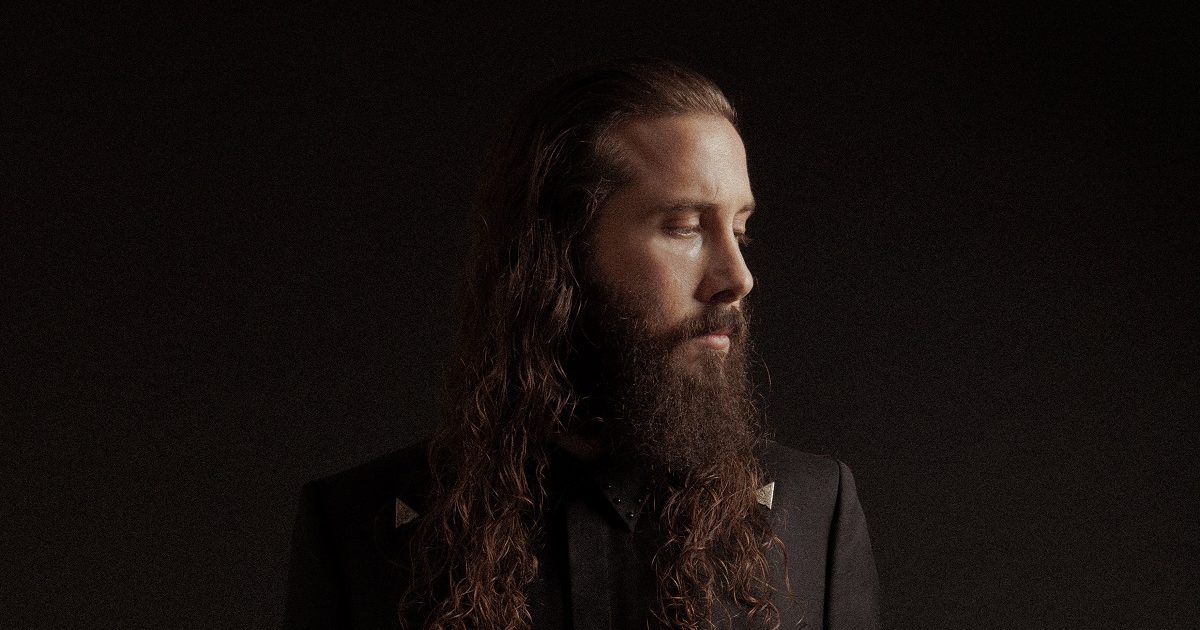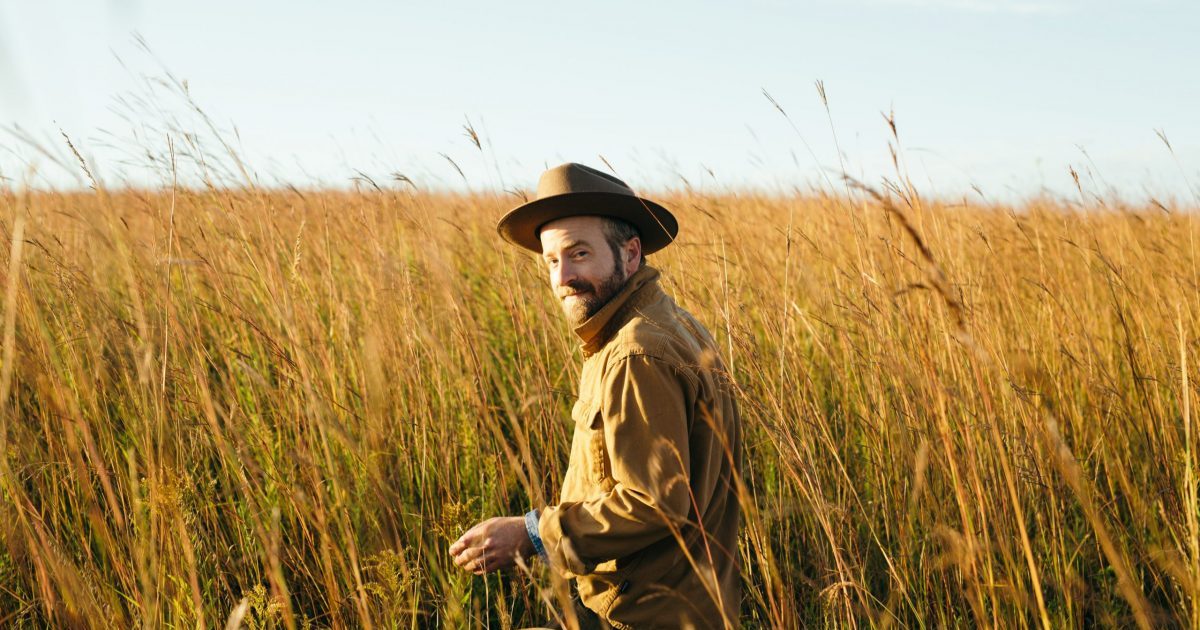
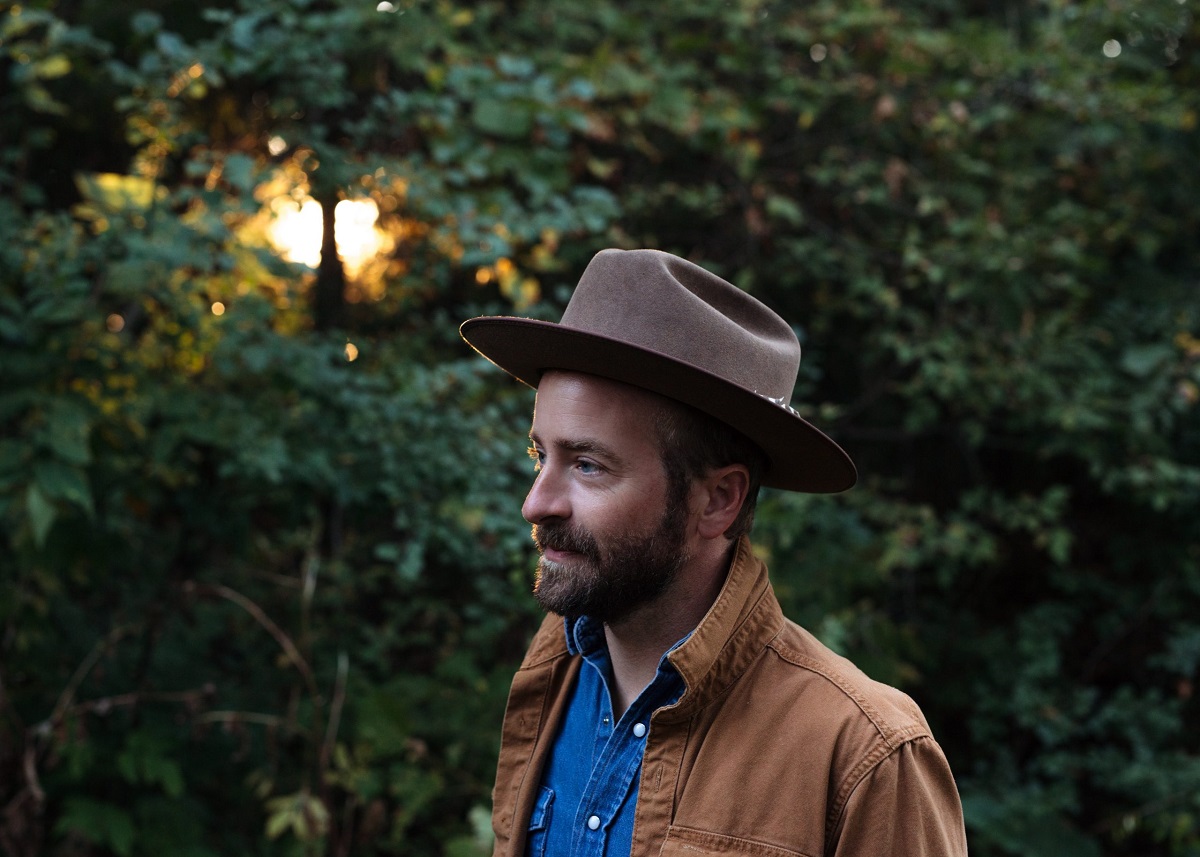
Dave Simonett Offers Clarity and Community on Solo Debut, ‘Red Tail’

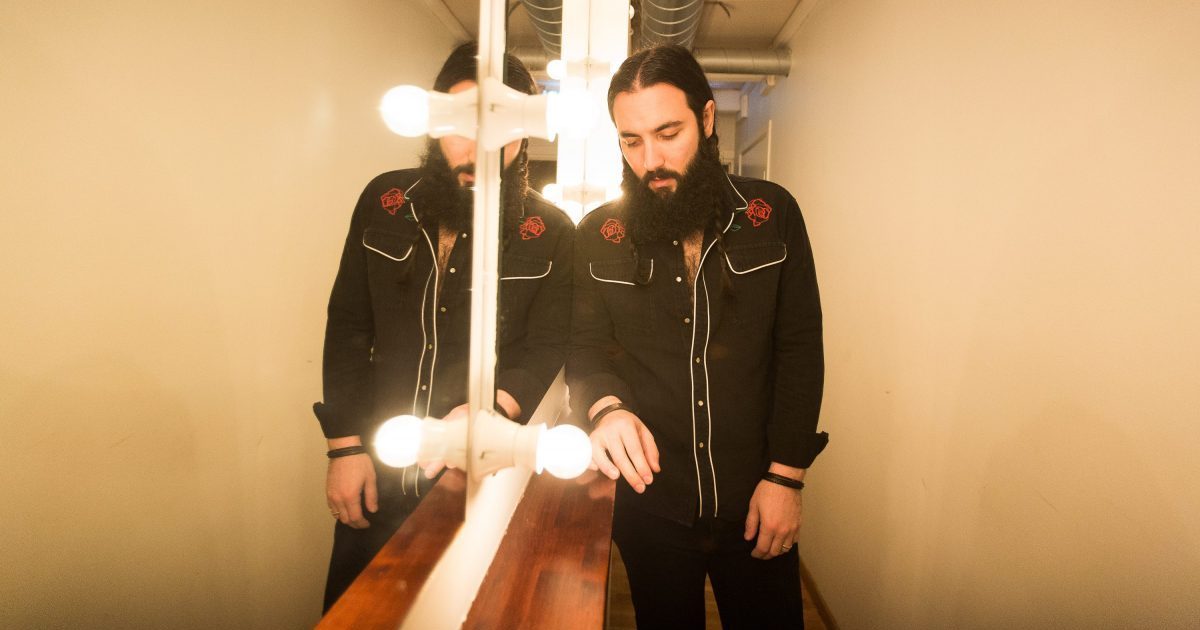
Dave Simonett has proven himself to be a man no genre can hold. Some days the Minnesota-based singer/songwriter is fronting prominent Duluth string band, Trampled by Turtles. Some days he’s playing with a full rock band behind him as Dead Man Winter. Now his latest project comes in the form of his first full-length solo album, Red Tail. In a phone conversation with BGS, he discussed his freedom from expectations, the project’s emotional clarity, his love of musical diversity, and more.

BGS: Tell me about making this album. What’s memorable or special about it for you?

DS: Well, I started out just making it by myself. That was kind of what I had in mind for the whole thing, initially. I have a studio in Minneapolis and I was working there. I recorded pretty much all of the songs that ended up being on the record and thought I was done, but at the end of that process I thought I’d like to expand a few of them with some other players.

So I ended up going down to Pachyderm Studios outside of Minneapolis with a small band and re-recorded about half of it down there. Still used some of the stuff from my studio, some from Pachyderm, and just kind of smashed it together. This happens to me pretty often. I’ll have what I think is a concrete idea of what I want to do at the beginning of a project, and then it evolves from there. I’ve learned over the years to let that process happen.

You mention that Red Tail benefited from a freedom from expectations because you recorded it without really knowing if anyone would ever hear it. How do you think that freedom helped flavor the album?

I do think there’s a freedom to that and I think it’s the first time I’ve ever done that. Normally when I started to record anything there was an end product in mind: “We’re going to go make a Trampled by Turtles record,” or something like that. That carries with it a certain amount of pressure, which this didn’t really have. I just had these songs and I wanted to record them. I didn’t know what it would be, I just wanted to record them. So I had a little bit of time on my own doing it, and then I thought, “Well, let’s see what they sound like with the other people and a little bit of time in the studio.”

The whole time I was thinking, “You know, this could be something or not. Maybe this is just demos for another band.” But as the process went on, it started to fuse together into something that felt like a record to me. It ended up being a really easy and natural feeling, and that came from the thought process at the outset when I thought, “This doesn’t have to be anything.” I didn’t have a deadline. I didn’t have anything like that. It was really open, and in a weird way it took away a lot of stress.

From the point that you realized this album was something that you’d be releasing, did the songs change in any way from an arrangement or textural standpoint?

Yeah, definitely. Both of those. They even changed from a lyrical standpoint, and I think that a lot of times when I’m working on a record it will do that throughout the process. It’s something as simple as adding some different people in there. That in and of itself just changes it so much.

We recorded everything pretty much live, which is how I generally like to work, so there wasn’t a whole lot of forward thinking in that way. It was more like, let’s get these guys in a room and see what happens when they play the song however they feel like it. And then maybe a couple little adjustments, but that was really all of the arranging we did. Just the fact that there were other people contributing stuff from their own creativity was enough to change it quite a bit.

You say that recording this album was the best you’ve ever felt in your personal life while recording. Do you think that helped give you the clarity to better examine some of the darker subject matter on the album?

Yeah, and I generally get the same vibe from other writers that I’ve talked to. I think that maybe depression, or hard times in general, get a little bit romanticized in music. It might be like the whole Townes Van Zandt myth or something like that; that you have to be super messed up to write music. In my life, in periods where I’ve been like that, I can’t make anything. I feel like creativity and the drive to go make something are at their peak when I’m feeling good.

I think that’s a pretty simple equation when you think about it. Sometimes it’s hard to get out of bed, let alone go to a studio and write all day, along with all of the stuff that goes into making a record. I do think that “clarity” is a good way to put it. Everybody has rough patches in their life. Being at a point to look at some of those and examine them, I think the best way to do that is from a different place. For me it is.

A healthy mindset keeps you from being sucked down an emotional rabbit hole that can end up impacting the entire album and recording process.

Yeah, that’s a good point. You can look at it and almost have a sense of humor about it instead of taking it, and yourself, too seriously in that subject matter.

You talk a lot about how special it is when the listener can apply a song to their own life. At the same time, this is your solo album and sort of a vulnerable look into your life. How do you write in a way that’s specific enough for these songs to mean something to you, but also broad enough that any listener can apply it to their own lives?

I have no idea. [Laughs] I don’t think it’s very intentional. I feel like most of the time I’ll just write, and once in a while I’ll see a line and recognize that from some experience in my life. Instead of thinking about an experience and writing towards that, I just write and then I can look back on it and say, “Oh, I know what that was about.” Most of my work has been that way. It starts like that for me. It starts kind of ambiguous.

It all comes from inside. All the stuff that’s jumbled up in my brain comes out as this, so it’s by its own nature personal. I’ve never really been good at writing stories about things that didn’t happen to me. Some other people are really good at that, but I can’t do that. It all comes from me, but very rarely does it get very specific, and I think that’s just my general style. Maybe a comfort level thing.

“There’s a Lifeline Deep in the Night Sky” strikes me as one of the purest representations of the community and fellowship that surrounds roots music. For somebody who may not know anything about this music, what would you want them to know about the community that surrounds it?

I don’t know if I can think of anything that specifically applies to roots music. This might be a roundabout way to say it, but when I started playing music in Duluth with Trampled, and a couple other bands before that, the music community was really tight. It was also really diverse. There wasn’t another string band in that town. The scene was small and creative enough to sort of only allow for one or two bands who sounded similar, and then nobody else would want to start something like that because it’s already being done. So my sense of musical community comes more from the diversity of the scene.

[Trampled by Turtles] didn’t really start out in an Americana scene. We’ve grown in that world since then, but I think community applies to music in general. I think a lot of people divide stuff up into genres a little too harshly. The people who came down and sang with me on “There’s a Lifeline Deep in the Night Sky” were just a gathering of people who happened to be at the studio. These were people, a lot of them musicians and a lot of them not, who were from all over the place musically. It was more like, let’s all get in a room together and sing a song. I feel like you could probably find that in hip-hop, metal, or anywhere. I hope so, anyway.

I felt really lucky to grow up musically in Duluth in the early 2000s. Every show we played would be with two or three bands. It would be us and a punk band, a hip-hop band, a straight-up rock ‘n’ roll band, but we were all friends. It was celebrated that we were all different from each other, and that’s why we were all doing this together. That’s one of my favorite things about local music scenes across the country. Finding that stuff. You’re right, we do have a great roots and Americana scene around here in the Midwest, but there’s great everything. When people get too caught up in one thing it can get a little poisonous. I feel like music itself brings communities together.

Recording a song like “There’s a Lifeline Deep in the Night Sky,” we recorded it with one microphone onto a cassette player. It was about as informal and unrehearsed as it gets. It was just fun. Nowadays, especially with the modern recording process, it’s easy to make a perfect song. You can make the tempo perfect, the pitch perfect, and everything. Still nothing compares to getting a bunch of people in a room and playing a song live. Embracing the little imperfections that happen as part of the uniqueness of the recording.
Playing with punk bands and metal bands, how does coming from a place like Duluth impact your scope? Does coming from a scene with so many different types of music open your borders and give you some freedom to explore new ideas?

Absolutely. If nothing else, it helped me get out of my own head. If I wanted to go see some live music I would see so many different kinds of music. It wasn’t like it is in some places, where I could go see a folk act every night. I can’t go see a bluegrass band every night in Duluth. It forced me, and hopefully a lot of other people, to celebrate all these different bands.

To me, the genre doesn’t matter at all. A song could be on a banjo or a laptop, but if the song connects with me then I’m into it. I don’t really give a shit which instruments are played. It’s about the song, or if you can see some kind of art in the performance that you really connect to. To me, that’s the most important part. That’s what I want to celebrate. When I record, this is how I like to do it, but that doesn’t mean I don’t want to go see Atmosphere some time. Just because I can’t play that music myself doesn’t mean I don’t love it.

I try to be honest with myself in the recording process, where if something comes up that I want to try I’ll give it a shot. Sometimes it works and sometimes it doesn’t. But to your question, I really am thankful for that diversity in my music growing up. That’s helped me keep an open mind. I feel like the older people get, and the older I get, it’s even more important to keep your mind open.


Photos: Zoe Prinds
WATCH: Wild Rivers, “Kinda Feels Alright”

Artist: Wild Rivers
Hometown: Toronto, Ontario
Song: “Kinda Feels Alright”
Album: Songs To Break Up To EP
Release Date: May 1, 2020
Label: Nettwerk

In Their Words: “‘Kinda Feels Alright’ holds an important place on the Songs To Break Up To EP, exploring the positive side of a breakup. It’s also a big part of the personal story of the record. It’s about beginning to accept a breakup and feel alright. Sonically, it feels like a bridge between a classic Wild Rivers song and the new territory we explore with the rest of the EP.” — Khalid Yassein, Wild Rivers


Photo credit: Stefan Kohli

LISTEN: Webb Wilder, “Night Without Love”

Artist: Webb Wilder
Hometown: Born and raised in Hattiesburg, Mississippi, based in Nashville since 1982
Song: “Night Without Love”
Album: Night Without Love
Release Date: April 10, 2020
Label: Landslide Records

From the Artist: “‘Night Without Love’ is an old song by RS Field whom I have known for about 50 years! The song itself is easily 40 years old, although it has never been recorded and released until now. I’ve always known about it and I’ve always liked it. I guess I’m just a sucker for a good line and ‘face like an Idol from the Yucatán’ pretty much cinched it for me when I first heard it all those years ago. I used to be in a band called the Drapes. We played this song live, although Bruce Tinnin sang it instead of me.” — Webb Wilder


Photo credit: David McClister

The String – Ron Pope

Ron Pope is a case study in good indie art and commerce. He’s an admired songwriter with an avid following for his cathartic, detail-laden songs and his wide-ranging command of roots and rock and roll genres.


LISTEN: APPLE PODCASTS

Over more than a dozen albums, Pope has steered his own ship in a business partnership with his wife/manager, Blair, and their label, Brooklyn Basement Records. The newest project is the sweeping album Bone Structure. A Georgia native, he got his career moving in New York and then moved to Nashville, where he’s raising a daughter and keeping the songs flowing. Also in the hour, a radio field trip to Nashville’s shrine of analog recording, Welcome To 1979.

LISTEN: 100 mile house, “Grateful”

Artist: 100 mile house
Hometown: Edmonton, Canada
Song: “Grateful”
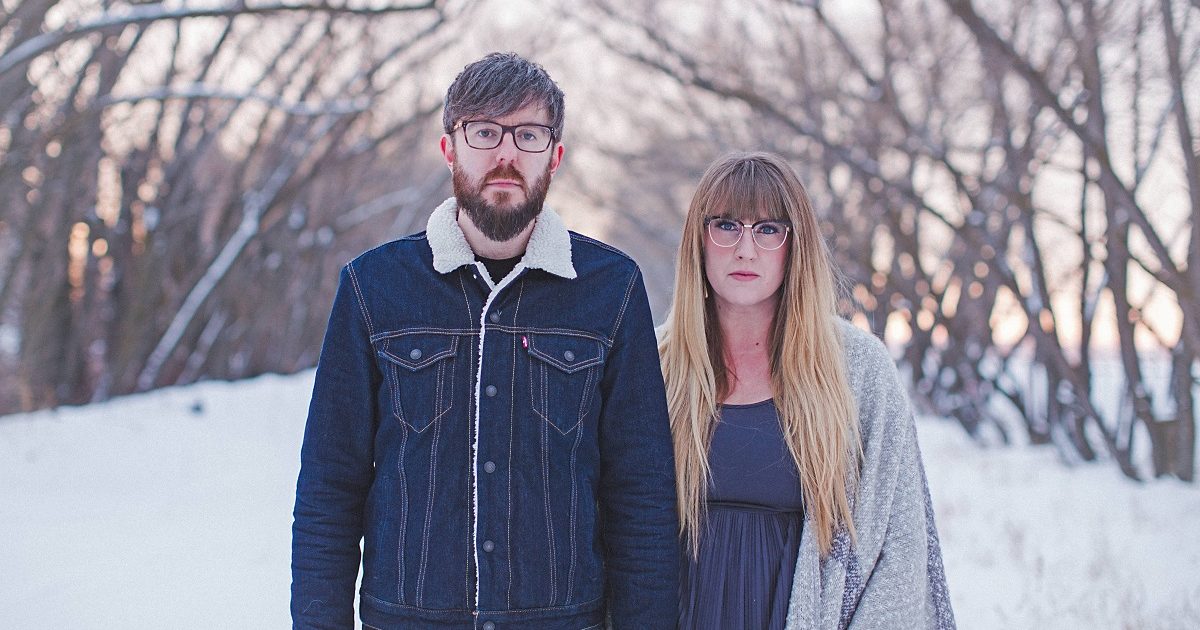
Album: Love and Leave You
Release Date: March 27, 2020
Label: Fallen Tree Records

In Their Words: “‘Grateful’ was probably the hardest song to complete from the new album, from any of our albums in fact. For years I wanted to be able to write about some of the darker corners of life and love — a parent suffering from addiction; not being able to have children — but to find a way to be grateful for them. Hope and courage can’t exist without these moments, so I wanted to shine a light on them.” — Peter Stone, 100 mile house


Photo credit: Jessica Fern Facette

WATCH: Grace Pettis, “Landon”

Artist: Grace Pettis
Hometown: Mentone, Alabama; current residence is Austin, Texas
Song: “Landon”
Release Date: March 20, 2020
Label: MPress Records

In Their Words: I spent about ten years writing ‘Landon.’ It was a tough sentiment to get just right. Landon and I became best friends in a high school in a small town in Alabama. He came out right after graduation and I was one of a few trusted people. My job, in that moment, was to listen. Instead, I responded with a canned answer — one that was drilled into me by a devout Christian upbringing. I knew, deep down, that I was wrong. It took me years (I’m embarrassed by how many years) to confront my conscience and admit that to myself.

“In a lot of ways, my faith journey as a liberal Catholic was jump-started by these questions. It was scary. It was liberating. I felt closer to God than I ever had. By the time I’d figured out how to write the song and how to face up to it, we’d both come to a new place of understanding ourselves in the world. ‘Landon’ is an apology. When I play ‘Landon’ at shows, I like to dedicate it to anybody in the audience who’s owed an apology; one that’s many years coming. And then I dedicate it to anybody in the audience who owes somebody else an apology; one that’s many years in the making.” — Grace Pettis


Photo credit: Nicola Gell Photography

LISTEN: Hownd, “Somethin'”

Artist: Hownd
Hometown: Byfield, Massachusetts
Song: “Somethin'”
Album: Just to Feel
Release Date: March 20, 2020
Label: Lazare Music Inc.

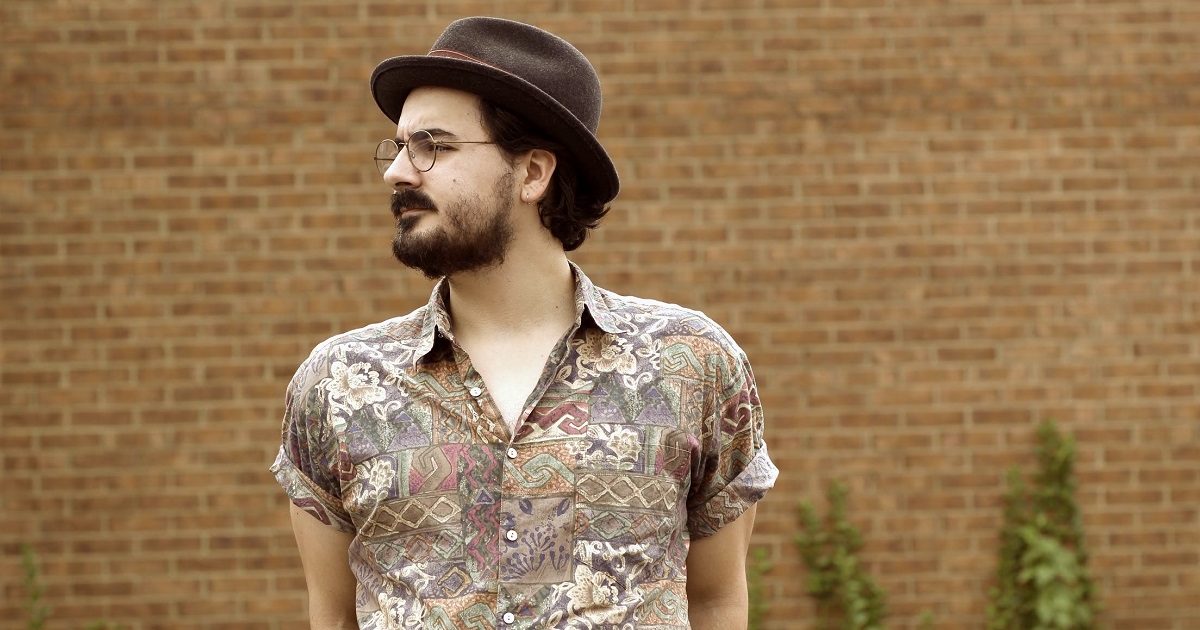
In Their Words: “‘Somethin” is a reflection of faith and trust in a greater good, whatever darkness may be chasing after you. I wrote this song years ago in Boston, beginning to truly explore the acoustic guitar while also wrestling with philosophies of life, purpose, and religion. Written during a time of transition and unknown, I came to find real comfort in not knowing what’s out there. Regardless of the struggle to find ‘truth,’ the faith of knowing something bigger is out there watching over me is clear as crystal, watching over everyone, I believe.” — Hownd


Photo credit: Julia Cannon

With Debut Album, The Panhandlers Take Pride in West Texas

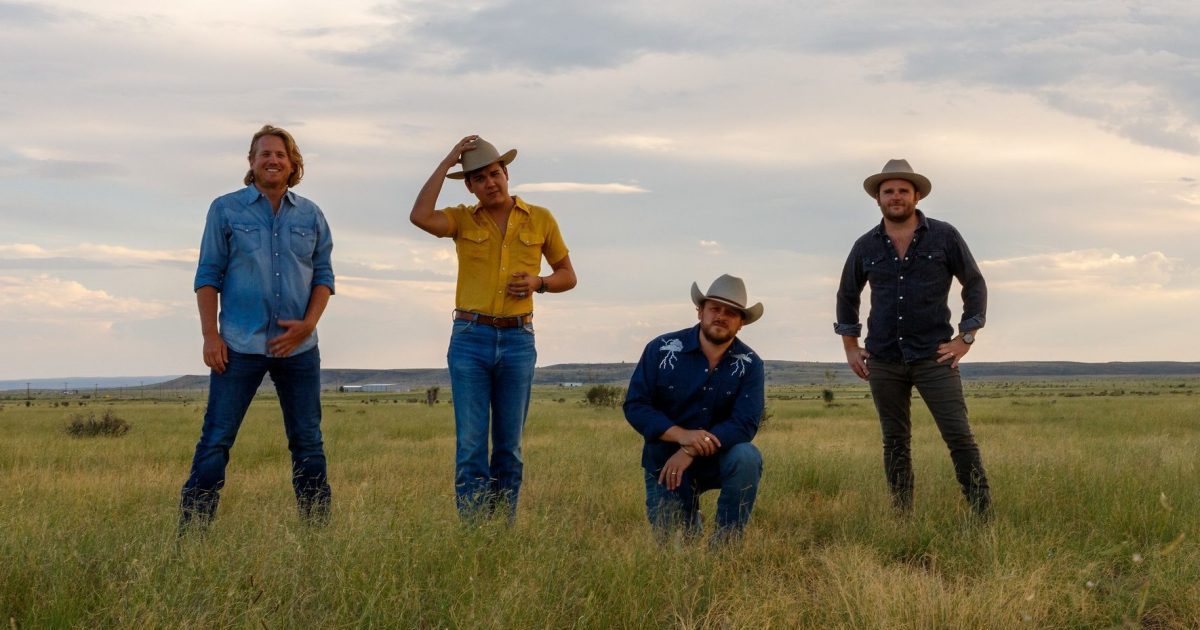
The Panhandlers are carrying on a West Texas songwriting tradition that’s both witty and wistful, and their self-titled debut album will almost certainly appeal to anyone who’s fond of the Lubbock life. With 10 original songs about their home turf, the four artists — Josh Abbott, Josh Baumann, Cleto Cordero, and William Clark Green — teamed up with producer Bruce Robison, who somehow makes the task of balancing four lead singers look like a breeze.

By email, all four of the Panhandlers fielded questions from BGS about working together, writing about each other, and not quite being able to leave West Texas behind.

BGS: I’m sure you guys all knew each other before this project, but when did you all first get into a room together?

John Baumann: Other than music festivals or late-night gatherings after shows on buses, the first time we sat down and talked about this project as a group was at The Next Waltz office in Austin, Texas. I think Josh was still mispronouncing my last name at the time. Needless to say, the group was all on good terms and friendly, but I think this project really bonded us as musicians, songwriters, business partners and made us become friends.

William Clark Green: I have written with Josh and John previously, but it was my first time writing with Cleto. It was a lot of fun getting to see his thought process. Obviously I have a lot of respect for everyone. I knew we wouldn’t be writing any trash songs.

There are several references on this album about leaving West Texas behind. Is that common for people to insist they’re going to move on, but never actually do? And what compels them to stay, do you think?

Josh Abbott: Well it’s twofold: 1) Yes, I think it’s common for people to desire a change and never seek it, and 2) There are a lot of folks who have to move away and reflect on their time there with nostalgia and a fondness. This isn’t exclusively unique to being from that region of Texas by any means, but it’s the lens from how we approached this album.

Cleto Cordero: There’s not much to see or do in West Texas that isn’t related to oil and gas or farming and after a while the sometimes bleak landscape can lend one to ponder what [it would be like] to live in a big city or any other place with topography that isn’t flat or covered in mesquite bush! Oh, and water… jumping into a body of West Texas water only occurs in one’s dream. Most folks entertain the idea of leaving for greener pastures (which is why I believe creatives flourish there, always exercising their dreaming muscles), but end up sticking around because although life there is simple, it is a great place to raise a family. The land is home to many good-hearted, hard-working people — traits that come through persistence and faithfulness.

JB: Ironically, all four of us have left the region at some time or another, but it always calls us back. Mostly for opportunities to perform, but sometimes just to see people you have gotten to know. I have become such close friends with some people in the region that sometimes it feels like I have a second life there when I go back, and I just pick right back up where I left off. I think it’s common for people to want to leave the area, and explore bigger and more developed cities, but there is something about it that always calls you back. I think people also feel compelled to stay. They love the sunsets, and dry air, and the four seasons — one of those only regions in Texas that actually gets four seasons. And seriously Lubbock is one of the friendliest cities in the U.S. Not just because the billboards say it, but because it really feels true.

WCG: I think the Mac Davis song says it best: “Happiness was Lubbock, Texas in my rearview mirror.” The song eventually turns around and tells the story of how much you miss the country and the people

“This Is My Life” captures the life of a touring musician in Texas — brisket for lunch, pizza at night. And you’re sharing it with friends — “a rowdy group of dreamers, drinkers, and has-beens.” Josh, how hard (or easy) was it to kind of distill these guys’ personalities to just a few lines?

JA: Honestly, it flowed pretty naturally. I wrote it in less than an hour at my house the night before our last studio day. Bruce encouraged me to write a feature song where I could have a voice on the album since the other three guys all have features. I originally just wanted to blend in the background on this album, but Bruce said I needed a feature too. So I went home and just wrote a song about the group and the life we live. The only line I debated was “William’s loud but he’s a good hang” mostly because I didn’t want it to seem like a shot at him. But that’s his personality and that’s why everyone loves him. So I kept it in there.

CC: I love how fun and simple that song is. I think Josh captured each of us pretty well.

I like the dry humor on this record, like on “No Handle.” It’s funny without being corny, which is tricky. As songwriters, how do you strike that balance of being lighthearted without going into novelty song territory?

JA: I’m not sure I’ve figured out that balance! But John Baumann sure has!

JB: I just tried to be as plainspoken about it as possible. I just found humor in the fact that there is a guy who is openly unhappy about where he is. I think it is a delicate balance, but I think it’s important for voices in songs, or narrators, to have personality — be it sad, or ironic, or subtly jabbing. It just gives the lyric and the story more truth.

WCG: I think you just have to believe in what you are saying and the rest comes with it.

CC: I heard Carlos Santana say during a video something along the lines of “You should play, write, sing, and perform being led by your Spirit. If you want to be funny or make a joke of everything, you should be a comedian.” I think John (who wrote that song) is a clever man, but he knows the difference between clever and being a jester. I believe he is the former.

“Caprockin’” shows a bittersweet portrait of life in and around Lubbock. What sets that city apart from other places you’ve been in Texas? What do you wish people understood better about it?

JA: I think my biggest frustration with people about Lubbock is [when they say] that it’s in the middle of nowhere and there’s nothing to do. And I just don’t agree with that, especially in the era we live in now. You can fly to Lubbock from the major cities in Texas in less than two hours. And there hasn’t been a city that has transformed as much in a per capita manner than Lubbock has. Businesses are developing constantly, the city is expanding south at a rapid pace, and Texas Tech has grown into an enormous institution. All Lubbock lacks is professional sports teams, high property taxes, and congested traffic. Lubbock is great! I’m glad John wrote this song with a sense of endearment. This song channels Jimmie Dale Gilmore so much to me.

JB: The friendliness of it. People will take the shirt off their back for you at every corner. They treat strangers like friends. They support you when nobody else will. They rarely have a bad word to say about anyone. I wish people understood that it’s more than just a flat desert panhandle town. It has a real community, and it’s a wonderful place to raise a family.

CC: Many towns in West Texas just don’t have the infrastructure that allow artists to flourish. Lubbock seems to be a mecca for artists and musicians of West Texas because it has just about everything you’d need to get a musical dream to take flight: a continuous stream of young, potential listeners (via Texas Tech University), a legendary watering hole and stage to play your original songs (via the Bluelight Live), and various local radio stations that promote and play local artists (via Red Dirt Rebel). I don’t think folks outside of West Texas understand how we find it so beautiful a place, despite it being dry, dusty Flatland.

WCG: I wish people understood how laid-back and nice the people are in West Texas. In all my travels they are my favorite.


Photo credit: Charlie Stout

Avi Kaplan Comes Full Circle to Folk Roots on Solo EP, ‘I’ll Get By’

Growing up near the Sequoia forests of Northern California, Avi Kaplan gravitated toward the low-key albums by John Denver, Bill Withers, and Simon & Garfunkel in his parents’ CD collection. But in time, the term “low-key” took on a whole new meaning as his baritone voice dropped dramatically upon starting high school. Suddenly possessing a clear, thundering bass range, Kaplan discovered a newfound confidence and rare vocal ability that ultimately led him away from the dream of becoming a choral director to joining the a cappella group Pentatonix.

After six years as a member of that Grammy Award-winning group, Kaplan parted ways with Pentatonix in 2017 and essentially went off the grid for a year. Now living in a cabin in the woods outside of Nashville, he is ready to reconnect to his roots — as he did on his new album, I’ll Get By. With a speaking voice that’s as resonant as you’d expect, Kaplan caught up with BGS by phone.

BGS: I’ve read that you had an early interest in folk music, so I was curious to know if you’d consider this is a full-circle moment, coming back to the music that you grew up loving?

AK: Oh yeah, absolutely. I grew up listening to it and it’s always the music that I’ve listened to throughout my life. And it’s always the music that I’ve written as well. I had a departure when I went and did the Pentatonix thing, but it definitely is a full-circle thing. It’s really surreal for me.

You released “Change on the Rise” about a year ago and it sent you on the path to this record. Why did you choose that song to usher in this stage of your career?

In the past I’ve written a lot of songs that are softer and maybe on the prettier side. A little fire, a little less power, and more about the soft, serene beauty of folk music. I really wanted to come back with something that just had a little more fire in it, because it was really reflective of where I was in my life. I felt like I really got my fire back. I didn’t want to come back with something people had already heard from me. Even then, people hadn’t heard much from me in general, when it came to a solo voice, or my voice out of its lower register. So I wanted to come back strong.

What was on your mind when you wrote “I’ll Get By”? That seems like an anthem of this record.

Thanks, man. Whenever I write a song, I don’t listen to it for a while. Then I come back and listen to it again so I can hear it on fresh ears, without the critical ear. When you’re in the writing situation, you’re criticizing everything you’re doing, so I had to get myself out of that. And when I listened to it again, I got emotional. It was something that really felt special to me. It felt really strong to me. It felt like it was conveying exactly what I was going through at that time, and hopefully something that would help other people get through the same type of thing.

On another song, “Chains,” there’s a lyrical reference to needing peace, and phrases similar to that. Were you needing peace and quiet to keep on going?

Oh yeah, absolutely. I was living in L.A. for about seven years and I’m just not a city guy in general. But when I wasn’t in L.A., I was touring non-stop. I was always going, so I really feel like I lost myself and I lost touch with the things that I loved the most – hanging out with my family, being in nature, all that stuff. … It was about a year after I left the group that I really started delving into writing. I wanted to do some healing first, but even through that, I was still healing just from a lot of stuff I was going through. So yeah, absolutely I was in that spot.

What did that healing process look like for you? What were you doing that year?

Well, I left the group and I just took some time to do the time to do the things that I’ve been longing to do. So I camped a bunch. I moved out of L.A. and moved into a cabin in Tennessee. But before that, I went back out to the Sequoias, where I’m from, and did a camping trip there. I did a lot of time in the Eastern Sierras and the Mojave Desert, and up in the mountain lakes.

I also went to Holland. I went to Germany and did a bunch of nature stuff. Then I went to Israel and I went hiking out there as well. So, I kind of went all over and just got away from everything as much as I possibly could. I just sought out to heal and find myself again, and just do work on myself. It was really important at that time. It was something that I needed more than I even knew.

Why did Tennessee become the place you ultimately settled?

I knew that I wanted to do music still. And really Nashville is the only music city where you can drive like 15 minutes outside the city and be in the country. And that’s where I wanted to be. That was a huge reason and also my sister lives out here. Also, with the music that I’m doing, I would say it’s more of a hub than I would say L.A. or New York anyway.

So, all signs pointed that way. I never had a doubt in my mind either. It was like, “OK, now it’s time for me to move out to Tennessee. I need to get a cabin out there and be in the forest.” It was all very clear to me what I needed to do. I didn’t exactly know how I was going to get into a place where I was good again, but I knew that’s where I needed to go to do it.

You mentioned earlier that you’re singing in a different part of your range on this record. But not a lot of people can sing as low as you. When did you realize you can do something that very few people can do?

It was my freshman year of high school. I joined the choir when I was in eighth grade but I was a baritone back then. And over that summer between eighth grade and freshman year, my voice changed big time. So I remember coming to the choir room and my choral director was extremely excited to hear my voice because it’s hard to find basses and that’s very much needed in choir. So he was a huge inspiration for me and a huge advocate for me. He helped me realize how different it was and how I could utilize it. I owe a lot to him, definitely.

It sounds like music education in your school is a cornerstone of your development.

That’s huge for me. Now I run a summer camp for high schoolers based around harmony and a cappella, music, songwriting, and all that, because that was such a huge inspiration to me. It changed the course of my whole life. It’s always been something that’s been important for me. Before I joined the group I was on track to be a choral director. I was also studying opera, but being a choral director was the dream, just because it had such an impact on me.

Was country music an influence for you growing up?

I didn’t listen to actual country, like Garth Brooks and that type of thing, but I loved bluegrass. I loved John Denver. Bluegrass is more of what I listened to when I was younger. And the Sons of the Pioneers, old-school country. There was actually a band in my hometown that was very similar to them called that Sons of the San Joaquin that I listened to a lot.

What was your entrance point into bluegrass?

I really started delving into it when I was a bit older. What’s funny is that I got on the Bluegrass Situation’s YouTube channel and I just went down a rabbit hole. I was blown away by some of the newgrass that was going on, and by some of the old-school. I think one of my favorite videos that you did was the one of Tim O’Brien. That blew me away. I love it so much! I would watch it all the time.

Then I started getting into Hot Rize, and an album with Tim O’Brien with Darrell Scott, and then I got into Elephant Revival, then Mandolin Orange, and I kept going down and down and down. I really delved into it and fell in love with it even more because it felt like my roots. I had grown up with that kind of thing, but I had gotten into more of the contemporary modern folk with Iron & Wine and Bon Iver.

I’m a huge fan of bluegrass and I tell people all the time that bluegrass musicians are world-class musicians. They are truly virtuosic. So unbelievably talented. It’s amazing to hear music that I love with such virtuosic musicians. That is something that is always very inspiring to me – a musician’s musician, someone who is really amazing at their craft. And that is definitely what bluegrass is about.

I wanted to ask about auditioning people for your band. What are you looking for when you pick a band?

I’m always looking for vocals. Harmonies. That’s the most important thing to me. Especially with my music, it’s not the toughest stuff to do, instrumentally speaking. With this album, the drums are actually more complex than I thought they were going to be, but at the end of the day, it’s nothing crazy. The harmonies are really where I’m looking for the strength. Yeah, that’s it – harmonies, 100 percent, all the way.


Photo credit: Bree Marie Fish

The Breakdown – ‘O Brother, Where Art Thou?’

Advertisement

This week, hosts Patrick M’Gonigle and Emma John dissect the bluegrass-centered soundtrack to the Coen Brothers’ film, O Brother, Where Art Thou?, with a little help from their friends Chris Thomas King and Dan Tyminski.

LISTEN: APPLE PODCASTS • MP3

O Brother, Where Art Thou? was the movie that brought bluegrass to a new generation, and sent dozens of musical careers into the stratosphere. Fake beards not required.

Season 2 of The Breakdown is sponsored by The Soundtrack of America: Made In Tennessee. Visit TNvacation.com to start planning your trip.