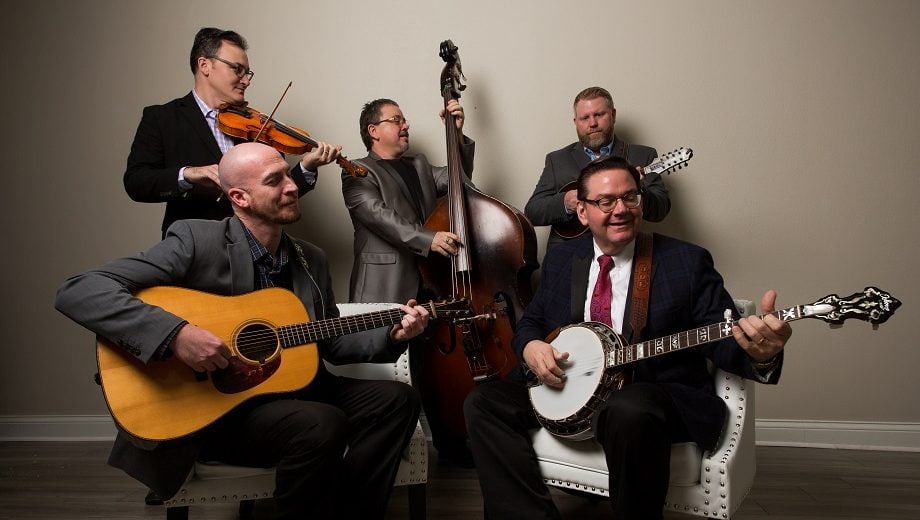
Joe Mullins & the Radio Ramblers Turn the Dial to Bluegrass Tradition

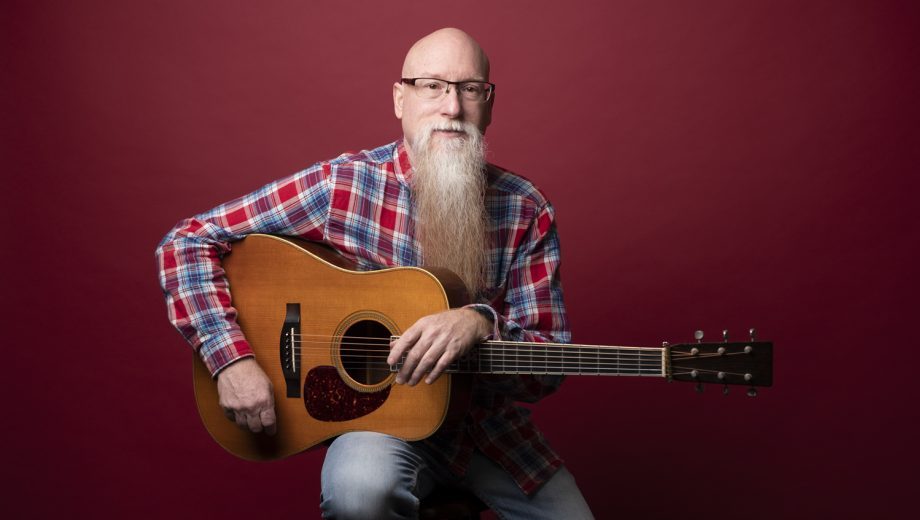
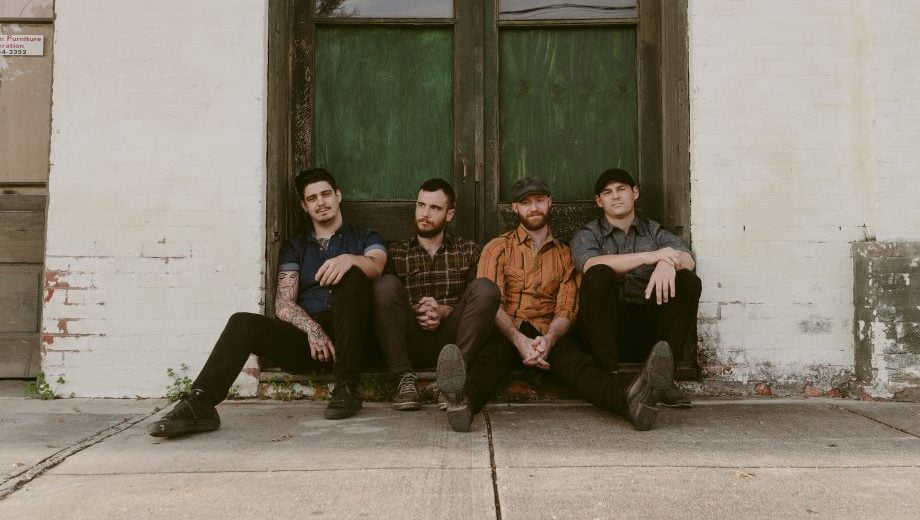
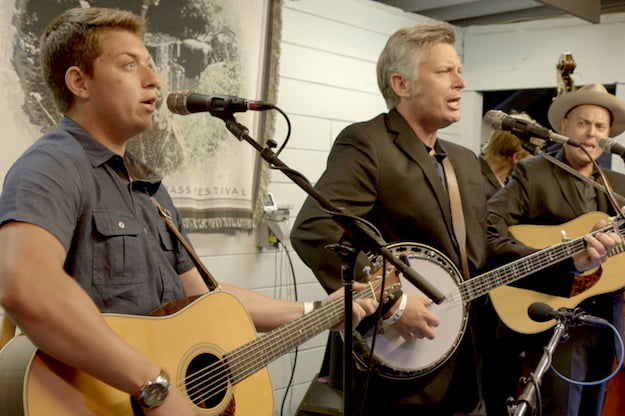
For the record, Joe Mullins is a cornerstone of the modern bluegrass community. He’s chairman of the International Bluegrass Music Association, as well as a radio station owner and an award-winning musician. Plus he’s just an easy guy to talk to. During a visit with the Bluegrass Situation, Mullins traced his decades-long career, from teenage gigs to For the Record, his latest album with the Radio Ramblers, featuring Jason Barie on fiddle, Mike Terry on mandolin and vocals, Duane Sparks on guitar and vocals, and Randy Barnes on upright bass and vocals.

BGS: Did you go into these latest sessions with a certain sound or musical direction in mind?

Mullins: We had three or four new songs that we wanted to do, and wanted to make those our own. I try to make certain that when we combine rare tunes that we want to cover with new songs, that we get the perfect balance of a variety of vocal and instrumental arrangements. I don’t like the same ol’, same ol’. We’re fortunate in the band to have so much vocal versatility. There are three of us that can sing any part, plus a bass singer if we want to do a quartet number. So, I make certain there’s a good balance vocal arrangements, keys, tempos, subject matter… If you listen to all 12 songs in a row, I don’t want you to get bored and go to sleep.

That’s harder than it sounds.

It is! Especially when you combine original material with some rare tunes that you want to cover, and that you want your audience to hear. I always find a few of those. We’re called the Radio Ramblers because I have been on radio and on stage since ’82. I was 16 the first time I played a major bluegrass event as a banjo player, the same year I started in broadcasting. So I’ve got a real deep well to draw from, everything from old-time stuff to contemporary country, classic country, Americana music, and everything bluegrass. On this new album, we’re covering a Johnny Cash/Hank Jr. tune (“That Old Wheel”), and doing new songs, and something from a hundred years ago, out of a hymnbook. So there’s a little bit of everything.

I’ve heard you talk before about the bluegrass history in Southwestern Ohio, and you made a reference to Sonny Osborne and J.D. Crowe as being mentors to you. What was that relationship like?

My dad was a broadcaster and a good bluegrass fiddle player. He was in and out of bands. He sat in with the Osborne Brothers a bunch when I was a kid. He sat in with J.D. Crowe when Doyle Lawson and J.D. had the Kentucky Mountain Boys going. He was on a ton of recording sessions in the ‘60s and ‘70s with a variety of bands. In Southwestern Ohio, the Cincinnati/Dayton region, it’s just thick with bluegrass history. Everybody from Flatt & Scruggs to the Stanley Brothers — they all recorded in this area at one time or another. Larry Sparks started here and grew up here.

The Osborne Brothers started here. Their parents had left Kentucky to get a job in Dayton, Ohio, when they were boys. Bobby and Sonny started their career right here in the same neighborhood where the Radio Ramblers started. They started in the late ‘40s, early ‘50s, and we started in the early 2000s. Matter of fact, Bobby started singing on the radio in Middletown, Ohio, in 1949 — the same station my dad started working at in 1964, and the same station I started working at in 1983. So there’s just a lot of connection there.

The Osborne Brothers and J.D. Crowe and Ralph Stanley and Don Reno — all these first-generation bluegrass leaders were all family friends. They were in and out of the house when I was a kid. My mom fixed breakfast or supper for everybody I just mentioned, multiple times. Dad sat in with them and played on Larry Sparks’ first record, and played on all kinds of recordings in the area. I saw these guys growing up a lot.

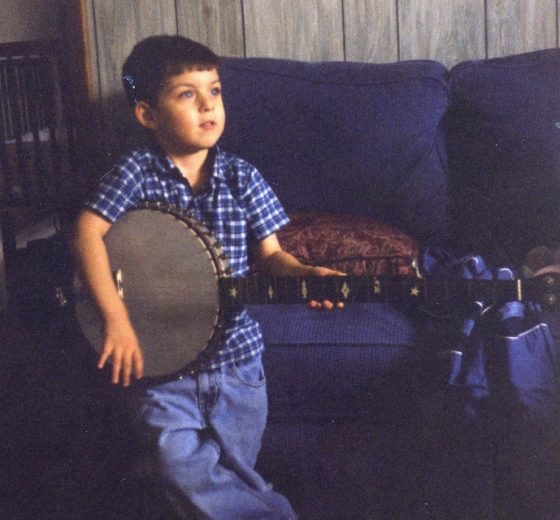
So when I decided to attempt the five-string banjo, I had seen J.D. Crowe and Sonny Osborne and Ralph Stanley in their prime, multiple times, and had all the recordings already in my bedroom. Then, when it came to me pretty naturally, and I had the opportunity to play and perform and record as a young guy, if I was having a struggle with something, I always had access to J.D. Crowe or Sonny Osborne or Don Reno or Ralph Stanley. “How do you do this?” “How do you that?” I got to see them often and I got some one-on-one time with all of them.

Did that strike you as amazing at the time? Or was it later in life that you realized how incredible that was?

Later in life I realized I am the most blessed guy in the world. The most fortunate cat, you know? To be 15 or 16 years old, trying to learn how to play banjo, and have access to these guys always – and get to be encouraged by them, and sing by them… Sonny especially, he would lecture about all kinds of stuff besides banjo playing. “Make sure you go to college! Quit smokin’!” That’s just who he is. We still talk often and I play one of his banjos on this record. He’s had custom banjos built and designed for many years and I’ve had one of them for the last six years.

I wanted to ask about your dad and touring with the Traditional Grass. Was he easy to travel with?

Not always. [Laughs] I often look back on the Traditional Grass – we had it going on in the late ‘80s and early ‘90s. We had a ball! We were on the road all the time and back then it was just wide open. Us, the Del McCoury Band, the Bluegrass Cardinals, the Lost & Found Band — and the first generation guys were still out there. We saw the Osborne Brothers, Ralph Stanley, and Jim & Jesse all the time.

I was real young and I look back on it now a ton, because Dad was my age then. He still was a pretty hard-charger. All the other guys in the band were young and it didn’t matter how late the show was, or how long the party went on, he hung in there with us. [Laughs] He wasn’t really hard to get along with. He just got tired and cantankerous sooner than all of us young cats did, I guess. But he didn’t worry about details. He worried the most about playing great music and having a good time.

In the ‘90s, you were pretty visible with Longview, too.

Very fortunate. Worked out great. Traditional Grass toured like crazy in the early ‘90s. We burned it up from ’89 to about ’95. I about burned myself out and burned myself up, just living hard on the road. I was very fortunate to have an opportunity to buy a local radio station here in this wonderfully historic bluegrass neighborhood in Southwestern Ohio.

The Longview thing was already in the works before I came off the road with the Traditional Grass. We started conversations around ’94. I was on the road with that band through the summer of ’95 and launched my first radio station as an owner in the summer of ’95. And Longview recorded first in December of ’95, so by the time the album came out, there was a good buzz with it and it was an immediate success. And we had to go out and tour part-time.

So I had just enough time to get my radio business started and established without a heavy tour schedule. And then I had this wonderful, high-profile gig as a special event recording band that also got to tour and play everything from MerleFest to Wintergrass, from Telluride to Myrtle Beach. We played everywhere as a special event band in the late ‘90s and it kept me from falling off the radar.

If you look back on the late ‘70s when you were developing, to now, where you’re thriving in a lot of different areas, so many things have changed in bluegrass. But what would you say has been a consistent thread from those days until now?

You’ve still got to be able to play in time and sing in tune. [Laughs] I don’t care how young or old you are! Some of the consistent threads are that there’s nothing to hide behind in bluegrass music. You still have to be able to cut the gig. You still have to be able to bring it. I’m still on stage every night with five guys who have to know exactly how to manhandle their instrument, and vocally, it’s all out there.

The simplicity of that part of it — for my band and the sound we look for — it hasn’t changed. It hasn’t changed from the original formula that Monroe and the Stanleys and the Osbornes and all of ‘em have put on stage since the ‘40s and the ‘50s. It’s still got to be players that are masters at the craft. It’s still a combination of art, entertainment, and blood, sweat and tears. That’s bluegrass.


Photo credit: Amanda Martin Photography

Molly Tuttle: Confident and ‘Ready’

Even before releasing her first full-length album, Molly Tuttle made history. She became the first woman to be named IBMA Guitar Player of the Year, a title she’s won twice, in addition to winning Americana Music Association’s Instrumentalist of the Year, all on the strength of her 2017 EP, RISE. But to focus exclusively on Tuttle as a guitarist would be a mistake. She isn’t interpreting others’ songs. She’s writing and singing her own, and as her debut record When You’re Ready proves, she’s doing it not only with classically trained musicianship, but with an exciting willingness to explore and trust her own wide-ranging artistic instincts.

Tuttle talked with BGS about When You’re Ready, feeling optimistic about women in music, and why California’s Bay Area has her heart.

BGS: When You’re Ready is such a confident debut. Were you feeling confident from the jump, or did your confidence grow as you recorded?

Tuttle: I think it grew. As I was writing the songs, I got more and more confident just saying what I felt and what I was thinking in the songs. I remember feeling really confident in the studio in what I was saying and in the parts I was playing. Ryan Hewitt, who produced it, helped me feel confident. He wanted everything to sound really strong – it was a good experience.

A lot of these songs seem to explore relationships and how we interact with each other. Do you feel like there are some currents that run through thematically and connect all of these songs?

I think there’s kind of a theme of longing on the album, and also a theme of just being confident in who you are and what you’re feeling. When I was writing it, it was, “I’m just going to say where I’m at.” The theme on the album for me would be accepting your feelings and embracing them.

You’re from California, then you went to college in Boston, and now you’re living in Nashville. Do you feel like all of that geographic diversity changed the trajectory of your music?

I think so. I got exposed to lots of different kinds of music in California, and then especially when I was at Berklee, there were all sorts of different kinds of music going on all the time at school. Then, obviously, Nashville is one of the most amazing music cities in the world. I think living in California was influential, growing up there. I really relate to the Bay Area and a lot of my songs are still inspired by California. It’s where my soul is, still.

What is it about the Bay Area you love so much?

I really love the ocean. I love the nature there, the scenery. I think people are really open there. Everyone — well, not everyone, but a lot of people in the Bay — are just trying to be good people and trying to be accepting of other people. That was something I was taught in school a lot as a kid: that you should accept everyone as they are. Of course, nobody is perfect at that. But I think people are trying to do that there, and that’s a feeling I’ve tried to carry with me.

When you write, are you focusing on the guitar part first and then the lyrics, or does it vary?

There are times when I do the guitar part first, but for this album, I was really focusing on the lyrics and melodies. The guitar parts were the last parts that came with these songs — and I really wanted to have interesting guitar parts on this album. I thought it’d make it more interesting to have a singer/songwriter record with guitar lines that could weave it all together, so I worked on that after I finished writing the songs.

The guitar playing on “Take the Journey” jumps out: the percussion, the lead, the bass, the counter-melodies — that’s all you on acoustic guitar. How’d you come up with this song?

I wrote that with Sarah Siskind. We wrote it pretty quickly in a couple of hours, which for me is quick for writing a song. We had a song that was in that modal-key feel — you don’t really know if it’s major or minor. When we were writing it, I went into this different tuning: it’s an open G tuning, but you get rid of the third and tune the B up to C, which makes it like a Gsus4.

I like that style of guitar playing. When I was a teenager, I learned clawhammer banjo because I really liked old-time music. Someone showed me that you could move the clawhammer style onto the guitar and play a really percussive-sounding style. I went with that and created different rhythms that I like to use — more syncopated — and really worked on getting the bass notes to pop out, letting my hand hit the guitar so it’s percussive sounding.

Your vocals on “Don’t Let Go” move between smooth and comfortable verses to more of a staccato and breathy chorus. How’d you decide to approach the vocals this way?

Where the melody is in my range, I naturally had to go up to a breathy head voice, so we thought that could be a really cool thing, to make it sound really emotional. And on this one, when I was singing the chorus, I did get really emotional in the studio. That helped me get the quivers in my voice. I think you can hear it in the track. There are little things that came out in my singing that I hadn’t really done before recording this. I had to go to an emotional place to get the take that worked.

Do you have a favorite song on here or is that impossible?

I think my favorite is “Sleepwalking.”

All of that imagery on “Sleepwalking” – and on some other songs too – blurry screens, white noise, and even sleepwalking itself: it’s such a direct contrast to the specific, refined sounds you’re making. What is it about the hazy imagery that you’re drawn to?

Yeah, I think a lot of my songs have themes of trying to make a connection with a person or a place or a feeling. There are a few songs that talk about white noise or static or anything that’s kind of blurring the connection. That’s something I feel — like with technology, sometimes it makes me feel like I’m not actually connected to anything and not connected to myself.

I think that comes through in my songs. “Sleepwalking” is a song I wrote about that specific feeling of being disconnected from the world around you. Maybe you’re relying on one person or one place or feeling to be your connection. It’s kind of a love song, but it’s kind of a cry for help in a way. [Laughs]

Of the women who are widely known first as guitar players – a number that’s still too low – most aren’t acoustic, steel-string players. It’s also a physically demanding instrument, especially the way you play. Why were you drawn to it? Why do you think you’ve succeeded?

I’ve never really seen limitations on guitar for me as a woman. I remember, I was first drawn to it in a really natural way when I was a kid. I just liked the mellow sound of it. So I don’t remember specifically what drew me to it, but I remember seeing guitars around, and I told my parents I wanted a guitar. That was after I’d tried like three different instruments and failed at all of them. [Laughs] I tried to play fiddle, and I think I got tired of just not sounding good on it. Guitar is a lot less abrasive when you’re first starting out. I had a tiny guitar when I started, and my dad showed me some stuff on it.

I really liked that you could play it while you were singing. I never thought about it being a physically demanding instrument, even when I first played and my fingers got really sore. It felt pretty natural to me. Then, when I went to Berklee, I was 19 and all of a sudden there were no other women in any of my guitar classes. [Laughs] That was weird. It was definitely an uncomfortable experience at times.

But it was good because I’d walk into class and be the only one, and because all this attention was instantly on me, I thought, “Oh, I better practice and be good or they’re just going to write me off as some girl trying to play guitar.” It felt like there was some added pressure there, which is not really fair, but at least it made me practice more.

You’re not the “best woman guitar player.” You’re the best guitar player. Do you feel like the industry and culture in general are beginning to consider contributions of women more fairly – that you’re weighed equally?

I think it’s definitely changing at a rapid pace right now, especially with the #MeToo movement. Now that’s starting to affect the music world. I’m seeing so many women coming up and their careers are just exploding in new ways – like at the Grammys. There were so many women winning awards and playing.

I think women are feeling really empowered to just say, “No. I’m not a female musician. I’m just a musician.” Women are fully embracing feminism more and just feeling like we can say what’s on our minds. We don’t have to tiptoe around these issues anymore. I think that’s helping everything change. We are not accepting any crap anymore — like “you’re a female guitar player.” [Laughs] I certainly don’t want to be pegged as a female guitar player. My gender doesn’t have anything to do with my guitar playing. We’re talking about the issues more and that’s helping everything to change.


Photo credit: Alysse Gafkjen

David Grier, “Waiting on Daddy’s Money”

The initial A and B parts of virtuosic flatpicker David Grier’s “Waiting on Daddy’s Money” will strike your ear as timeless. It’s a subtly haunting and awry melody that conjures many of bluegrass and old-time’s iconic fiddle tunes. But, as soon as the first form is complete, Grier’s countless embellishments and reiterations of that melody demonstrate that this is no play-the-same-tune-for-half-an-hour-in-unison old-time revelry. Instead, this is an artistic study, a series of complicated opuses revisiting and revising the tune into a truly original, nearly inimitable six-string soliloquy.

What’s remarkable though, through that artistry — that ebbs and flows from simplistic, familiar staple licks to utterly singular, mind-boggling musical acrobatics — is that the tune, and Grier’s cyclical interpretations of it, are never at any point esoteric or inaccessible to the listener’s ear. Somewhat counterintuitively, it effortlessly holds onto that classic fiddle tune vibe. Grier himself refers to these interpretations as “mutations,” though that descriptor belies the decades upon decades of learned, practiced nuance and ease that make each reharmonization, key change, chord inversion, syncopated rhythm, and string sweep a boon to the song, rather than self-aggrandizing distractions.

Above all else, “Waiting on Daddy’s Money” — and the entire album, Ways of the World — demonstrates that Grier is an unimpeachably superlative guitarist with a one-of-a-kind musical voice that not only draws on his history growing up with bluegrass, but also consciously and magnificently blazes an impeccably fresh trail that no other picker has yet to even attempt to trod.


Photo credit: Scott Simontacchi

Gimme a Breakdown: 10 Tunes to Get You Going

Breakdowns are the barn-burning, breakneck, slapdash stalwarts of bluegrass and old-time traditions. They can be banjo songs, mandolin songs, fiddle songs — but every single one is truly a dancing song. Sometimes, all you need is an up-tempo bluegrass tune to get you going, so here are 10 breakdowns that will help you avoid any/all other types of breakdown.

“Foggy Mountain Breakdown”

Of course we had to lead off with this icon! Earl Scruggs’ most popular instrumental, for sure. It may be overplayed, but going back to Earl’s original reminds us why it’s ended up getting so many miles. It deserves the recognition and repetition, that’s for sure.

“Shenandoah (Valley) Breakdown”

It’s like “Boil Them Cabbage Down” but fast fast fast. This one goes by two names because with a tune so nice, they named it twice. Alan Munde gives it the melodic treatment, but you’ll notice his bouncy melody-driven take doesn’t lose a single ounce of drive. That’s Munde for you.

“White Horse Breakdown”

Casey Campbell and Mike Compton give “White Horse Breakdown” an incredibly tasty mando duo treatment, juxtaposing their distinct approaches to traditional, Monroe-style mandolin. This one just lends itself to duos, whether fiddle/banjo, mando/mando, or whatever combination you fancy!

“Crucial County Breakdown”

Béla Fleck and his illustrious Drive band (Sam Bush, Jerry Douglas, Tony Rice, Mark Schatz, and Mark O’Connor) turn the breakdown format on its ear for this newgrass-meets-traditional take. A nice reminder of why Béla and Drive are absolute essentials in the modern bluegrass canon.

“Blue Grass Breakdown”

The best example of a mandolin-centered breakdown, this one was named before bluegrass had been combined into one word — before the genre itself existed! The Father of Bluegrass himself, Bill Monroe, wrote the tune and kicks it off as only he can. It’s like “Foggy Mountain” but with F chords!

“Champagne Breakdown”

It’s a decadent, indulgent, wild one that registers only barely as a breakdown as we know them — I mean, modulations?! — but the Country Gentlemen were always about pushing the envelope and this delightful tune surely does that. You never quite know where it’s going to go next and that, my friends, is what breakdowns are all about.

“Pike County Breakdown”

All I can tell you is, make sure you get that signature lick right in the A part or the jam circle might give you some sidelong stares. Scott Vestal nails it on this recording, of course — along with Aubrey Haynie, Wayne Benson, Adam Steffey, Barry Bales, and Clay Jones. STACKED. Clean, hard-driving bluegrass. It’s what the world wants.

“Old & In The Way Breakdown”

In 1973, Jerry Garcia, David Grisman, Vassar Clements, Peter Rowan, and John Kahn coalesced as Old & In The Way, becoming one of the most influential bluegrass ambassador bands in the history of the music. Jerry Garcia shows his five-string chops quite well on this tune, which also goes by the name “Patty on the Turnpike.” But then it wouldn’t be a breakdown, now would it?

“Snowflake Breakdown”

And now, a fiddlin’ breakdown. Breakdowns are an integral part of fiddle contests — contests often require each contestant to play a tune considered a “breakdown” during competition. This one, performed by Bluegrass Hall of Famer Bobby Hicks, is often heard in contest situations, if not for the unexpected chord changes, simply because emulating Hicks never hurt anyone in a fiddle competition. No one really wonders why that is, either.

“Dawggy Mountain Breakdown”

Written by David “Dawg” Grisman, “Dawggy Mountain Breakdown” doesn’t just sound familiar because of its purposefully malapropistic name, it’s also the theme song for NPR’s incredibly popular radio show, Car Talk. The show’s hosts, Click and Clack the Tappet Brothers (AKA Tom and Ray Magliozzi), were/are big bluegrass fans and especially fans of Dawg and his music. It’s a beautiful little bluegrass easter egg on public radio — which are much too few and far between, if you ask me.

“Girl’s Breakdown”

(Edited to add:) Thank you to a commenter on social media for pointing out that, as is much-too-easy to do in bluegrass, our list of breakdowns didn’t include a single woman! Alison Brown, one of the world’s premier banjo players, even penned a satirically-titled tune to skewer this sexist paradigm in bluegrass. Y’all have heard “Earl’s Breakdown” plenty, it’s time for a dose of “Girl’s Breakdown.”


LISTEN: April Verch, “Durham’s Bull”

Artist: April Verch
Hometown: Pembroke, Ontario, Canada
Song: “Durham’s Bull”
Album: Once a Day
Release Date: April 12, 2019
Label: Slabtown Records

In Their Words: “A fiddler first, I’ve always adored the country stars who turned it over to the band for a rippin’ instrumental halfway through the show. I felt that including something similar would be an important part of making this classic country album complete. Paul Warren used to play a version of this tune at the end of some of the Flatt & Scruggs TV shows. Buddy Durham played it regularly on the WWVA Wheeling Jamboree from 1955-1966. My sources for this assortment of parts also include Uncle Dick Hutchison (who contributed the crooked B part, via my good friend Jerry Correll of Elk Creek, Virginia,) and Paul Holley (the only version I found that had a C part at all) along with Benton Flippen and Paul Brown. Having Al Perkins and Redd Volkaert solo on this fiddle tune took it over the top for me!” — April Verch


Photo credit: Sandlin Gaither

Mile Twelve Bring a Modern View to ‘City on a Hill’

Of the many things bluegrass has been celebrated for, thought-provoking themes of social commentary are not high on the list. But that isn’t stopping Mile Twelve. With their second album, City on a Hill, these rising stars filter current events through the timeless lens of traditional American music.

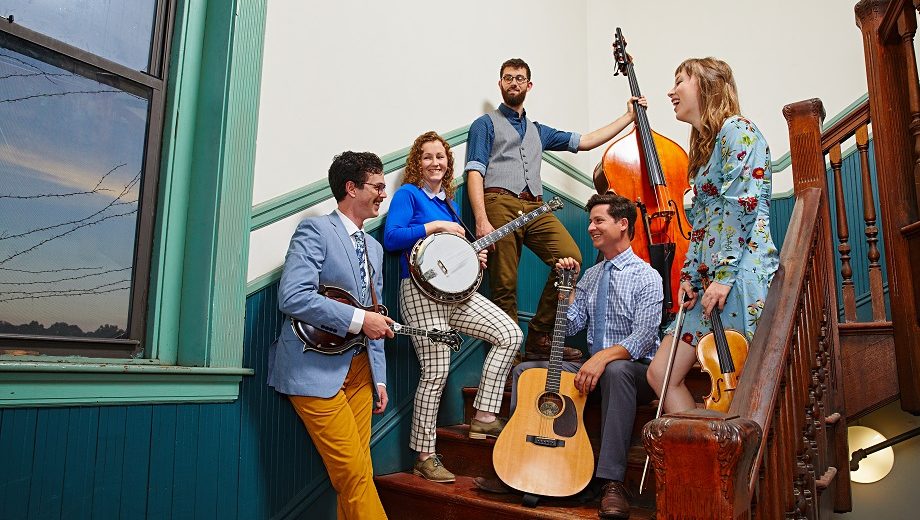
Composed of David Benedict (mandolin), Catherine “BB” Bowness (banjo), Bronwyn Keith-Hynes (fiddle), Evan Murphy (acoustic guitar) and Nate Sabat (bass), the Boston-founded band have already won three IBMA Momentum Awards between them to signify the respect they’ve earned in the genre’s mainstream. But for City On a Hill they’re taking a bold – perhaps risky – step up to the mic, and they’ve gained a powerful ally to do so: guitar great Bryan Sutton, who produced the album.

“I hope fans hear something they haven’t heard before,” Sabat says of the project. “Whether it’s the content of the songs or the arrangements, or just the essence of who we are, all of us feel like this record is our voice in a way our past records have not been able to express – because we were too young to do that yet. Mile Twelve is here, it’s something new, and I hope people will hear that.”

Mixing crisp-yet-rich bluegrass sonics with challenging narratives courtesy of Murphy and Sabat — plus a few choice covers — City on a Hill rises to the occasion of modern politics. With a clear point of view, it engages listeners on even the most divisive of topics, yet does so without patronizing or taking cheap shots. “Innocent Again,” for example, addresses the stigma that comes with a criminal conviction – even after the time has been served. “City That Drowned” uses metaphor to imagine the effects of sea level rise. “Jericho” applies Biblical wisdom to military veterans struggling with PTSD, and “Liberty” stirs memories of Jewish refugees fleeing war-torn Europe.

Four of the band’s five members spoke with The Bluegrass Situation by phone, helping to navigate the challenging intersection of bluegrass and politics found on City on a Hill.

BGS: Your band is known for a mix of progressive attitude and reverence for tradition. Where does the sound land for City on a Hill?

BB: I think it depends on your view. Like, if you’re in New York City, this album might sound really traditional to you. But maybe for Nashville or something it might sound more progressive. It’s definitely a mix.

Is that a change?

Bronwyn: I think you can hear the tradition in our solos. Instrumentally, a lot of us are coming from a really rooted, bluegrass playing style, so our solos comes across as very bluegrass.

Nate: Yeah, I think what’s progressive about this record is the content – what the songs are about. A lot of it is not what you would traditionally hear in a bluegrass song. I think by and large, it sounds like bluegrass … until you listen to the words.

There’s definitely some serious social commentary on the album. Do you think bluegrass and politics mix well?

Nate: That’s a tough question. I feel like human beings and bluegrass mix well together, maybe that’s a better way to put it. What we’re trying to do with this album is just tell stories, and whatever message people see in it is up to them, because we have our own version of what we see. That’s the reality of politics in this country. People see what they want to see, and it’s hard to change minds.

BB: Also, we never sat down like, “Let’s write a political song.” I think it was always centered around the story.

David: Even inside the band, we all have varying political views and might not always be on the same page. So with these songs we’re not trying to beat anyone over the head or make it be a political mantra. It’s just trying to tell stories of real situations that aren’t right, or things that are troubling and need addressing.

With that as your reference point, do you feel optimistic about where culture is at?

BB: Depends on the day. (laughs)

Nate: I feel like the conversation has been started, thanks to the 2016 election. People are talking more than ever before, but I don’t know. I am interested in what’s happening, and I’m engaged in a way that I wasn’t before, so that’s good.

Tell me about “City That Drowned” — is it about climate change?

Nate: Speaking for Evan, who wrote it, I definitely think it’s about climate change. We don’t actually say those words, but the story holds true and it’s a foreboding tale of what could happen to a number of cities around the world in the next 50 to 100 years, with coastal flooding and all that. But instead of talking about coastal flooding, we’re talking about a son who’s been displaced from his father’s home and feeling lost. But some people might hear it and be like, “That’s just a cool fable.”

It’s interesting you’ve mentioned fables, because when somebody says “Jericho,” you immediately think of Biblical stories. How does that tie in with this idea of what military vets are going through?

David: This is another one of Evan’s, and it was one of the first ones we came up with for the album. It started as a song about PTSD and this feeling of being pushed to do something this guy didn’t want to do, but it wasn’t quite coming across, and the biblical story of Jericho was also tied in. So, Evan spent some more time with it and came back with the version we have now, which I thought elevated it to a new level.

It ties in this story from the Bible about conquest and mission and purpose and being part of a higher calling, but also a sense of brokenness that comes along with destruction, and how duty can sometimes have a weight to it that’s strong enough to break you apart. I think Evan did a lot of research and has some friends who went through difficult things related to wartime, and he was sort of putting himself in that story even though he’s not experienced it himself. It connects with people in a way that some of our others don’t.

What about “Liberty”? It’s very interesting timing because this is a story about Jewish American immigrants, but do you see any parallel between that and what’s happening today with Trump’s border wall?

Nate: Yeah, that’s the reason I wrote it. [Laughs] It’s interesting because we were getting into this stuff with another band last weekend, and we have different views but even they were saying everyone is very open to the idea of legal immigration. People want it to be accessible, but the reason I wrote this is just to ask people who don’t think about it often to reflect on their own path. We perform for people of European descent almost 100 percent of the time – people who came here in search of a home. That’s my family, and everybody in the band except for BB, she’s from New Zealand. So it’s definitely a parallel.

Do you feel like the points of view you’re expressing set you apart in the bluegrass world? Like, do you ever worry about crowds throwing bottles at you?

Bronwyn: I think it’s a diverse group of people in the genre now, but I don’t know a lot of other bands who are doing songs about social issues. That said, we’ve played these songs for some very seemingly conservative audiences and festivals in the South, and they come off well.

BB: Yeah, and it’s not like we introduce them like, “This is an immigration song!” We’re just like, “This is a story, here’s another song we wrote.” I think it matters how you present it, and we try to play shows that bring people together instead of dividing them.

David: That’s what I love about what Nate and Evan have done with these songs – they’re not really divisive in nature. You can really disagree with the content of the song and they still don’t feel antagonistic or preachy, anything like that. It just starts a conversation, and we’ve gotten to connect with people from all types of backgrounds because of that.


Photo Credit: David Green

BGS 5+5: The Rayo Brothers

Artist: The Rayo Brothers
Hometown: Lafayette, Louisiana
Latest album: Victim & Villain
Personal nicknames: Daniel – “The Squirrel”; Jesse – “Banjovi”; Lance – “Mandolin” (he’s the drummer); Jordan – “Sad Samurai”

What’s your favorite memory from being on stage?

Daniel: We were playing at a dirty dive bar with a bluegrass band from Texas. It was one of those gigs where you have more people on stage than in the bar. After the show the bar closed and we went into a vacant lot next door and jammed with the other band until 3 a.m. Bluegrass music was a big influence on us growing up and it’s so much fun to play. We really bonded with that band, and that night always remains in our memory as one of our favorites. One of the best things about playing in a band is finding kindred spirits from around the world to share music with. Even when the audience doesn’t turn out and the pay sucks, there’s always the music itself. That’s the reason we’re doing this.

What other art forms — literature, film, dance, painting, etc — inform your music?

Jesse: Daniel and I both write lyrics for the band and literature is a big influence on both of us. Before I realized I was writing songs, I was just writing poems not meant for music. I often don’t have a melody in mind when writing lyrics, so I try to make them sound good on their own even without music. A lot of the poetry that inspires me is from the late 19th and early 20th century – Robert Frost, Rudyard Kipling, and William Ernest Henley. And as cliché as it is, we’re both into Shakespeare, so that has probably informed some of our writing too.

What rituals do you have, either in the studio or before a show?

Jordan: We used to do shirtless chest bumps backstage after shows. I don’t remember how that got started, but we did it for a long time. But once we started having a female violinist playing shows with us, that ritual died out.

Which elements of nature do you spend the most time with and how do those impact your work?

Daniel: This might be an odd answer, but it’s a path. Whether it’s a narrow road through fields and woods, or even a hiking trail. It’s where the human element meets the natural element. The road is like time – our perpetual motion through life. It moves us forward, brings us from one place to another. It’s a guide to move you through vast landscapes of possibility.

How often do you hide behind a character in a song or use “you” when it’s actually “me”?

Jesse: We almost always write in the first person. Usually we’re writing a song by taking some thought or emotion that we have had and building a story around that. But even if it’s not from personal experience, you still have to be able to think like your character when writing a song. So that naturally leads to speaking in the first person, even if the character is not really me.


Photo credit: LeeAnn Stephan

Eric Gibson’s Family Shares Autism Story in New Film

In recognition of Autism Awareness Day, the Bluegrass Situation is drawing attention to The Madness & the Mandolin, a new documentary about Kelley Gibson. The son of The Gibson Brothers’ Eric Gibson and his wife, Corina, Kelley received an autism diagnosis as a boy. Since that time, the family has faced its shares of challenges and breakthroughs, which are documented in the film by producer/director Dr. Sean Ackerman. The filmmaker answered some questions by email about The Madness & The Mandolin.

What inspired you to pursue this project?

My mentor, Jim Hudziak, MD, is one of the most influential child psychiatrists in the country. His research is focused on how wellness strategies like music, exercise, and mindfulness can change the brain and improve mental health outcomes. He and I were brainstorming about how to get some of those ideas out into more mainstream clinical practice. Then Kelley was referred to Jim, and his story is just a perfect reminder that changing the way you live your life — through exercise, meditation, reading, and music — can sometimes be the most powerful treatment. With my film school background in mind, we thought a documentary would be the best way to get the message out.

What was your time frame for filming and editing from start to finish?

Almost exactly 3 years. I took one day off a week for 3 years to put together the film. During that time I would occasionally set aside longer blocks of time to travel to film Kelley. To be honest, it was hard to pick an “end” to the filming, because Kelley’s story is still evolving. I see the film as document of one era of Kelley’s life. In the film Kelley’s Dad, Eric Gibson, calls that time “the beginning of something great.” I hope that sentence stands the test of time. Kelley’s well-being really means a lot to me. I grew to really admire him and his family.

For those of us who have never met Kelley, how would you describe his personality?

First off, Kelley is a bit of comedian. When he’s doing well, he’s always looking for a punch line. That doesn’t come across in the film because what we were talking about is so serious. After that, I would say Kelley, at his best, is a natural optimist and a natural hard worker. Despite being dealt blow after blow, he always gets back up again. There’s no real quit in him. I would say a lot of that is due to his family. They won’t let him quit. His parents — Eric and Corina — they may be humble, but the love they have for their kids is a force of nature. The extent to which they have battled for Kelley is inspiring.

The concept of mindfulness is a significant part of this film. Has this film affected your definition of that term?

Great question! Mindfulness has really become watered down in the current culture. For me, when I say “mindfulness,” I’m really thinking of meditation but without strict entanglements to a specific religion. The reason I think of mindfulness as meditation is because the research that supports the treatment of anxiety with mindfulness is generally about practices that could be considered meditation or close to meditation.

What surprised you the most about this story, once you wrapped up the project?

I was honestly very surprised by the bluegrass community. I feel like after going to a few festivals and interviewing people I got to know the bluegrass community pretty well, whereas before the film I had little knowledge of that culture. I was really impressed by how caring, how welcoming, how warm that community is. There is a section of the film set aside to portray that sense of community I discovered. Life isn’t always easy… so it was damn nice to stumble across a big bunch of decent people just listening to music together.

What do you hope people will take away from watching the film?

That there is now an impressive amount of research supporting various wellness approaches to mental health, and we need to take these interventions seriously. For the public in general it is meant to inspire people to pursue some of the wellness strategies in the movie. It is also meant to change how we as providers treat patients, and we’ll be showing it at various conferences to try to get the message out. We just screened at the national meeting for the American Academy of Child and Adolescent Psychiatry and had a great response. I’d like for providers to know what type and what “dose” of wellness interventions help for specific diagnoses.

Dr. Sean Ackerman

Then we need to really take the time to make the right recommendations to patients and help them overcome the barriers that prevent them from making lifestyle changes. For example, everybody knows that exercise helps depression and meditation helps anxiety, but few people know what type and how much exercise and meditation is actually research-based. Also, these are hard things for patients and families to motivate themselves to do. How do we help them overcome these barriers? The movie doesn’t get into all of the details, but it’s meant to inspire and start the conversation.

What was the personal reward for you after investing so much time into the film?

The joy it has given me. I mostly spend my current days working in medicine, but there was a time when I spent my work days exclusively in film. During my former life in film, I worked on some complicated projects with famous actors… but it never really made me happy. Making The Madness & The Mandolin was a truly inspiring process, and much of that was due to the sincere decency of the Gibson family. The time I spent with them continues to shape my work as a doctor, and it’s infectious… it is changing the way other providers think too after they see the movie.

LISTEN: Amanda Cook, “Point of No Return”

Artist: Amanda Cook
Hometown: Jay, Florida
Song: “Point Of No Return”
Album: Point Of No Return
Release Date: April 12, 2019
Label: Mountain Fever Records

In Their Words: “When I first heard Ashby Frank’s song ‘Point Of No Return,’ it spoke to me. I feel like it represents the journey that I’m on with my music and my career. I truly have reached the point that I could never go back to what I was doing before. Music is my life, and I’m so truly blessed to do what I do. It was a no-brainer to make this tune the title track of my new album. I’m proud of the work the band did recording it, and I hope everyone enjoys it!” — Amanda Cook


Photo Credit: Katelyn Carter