The Show On The Road – Dom Flemons

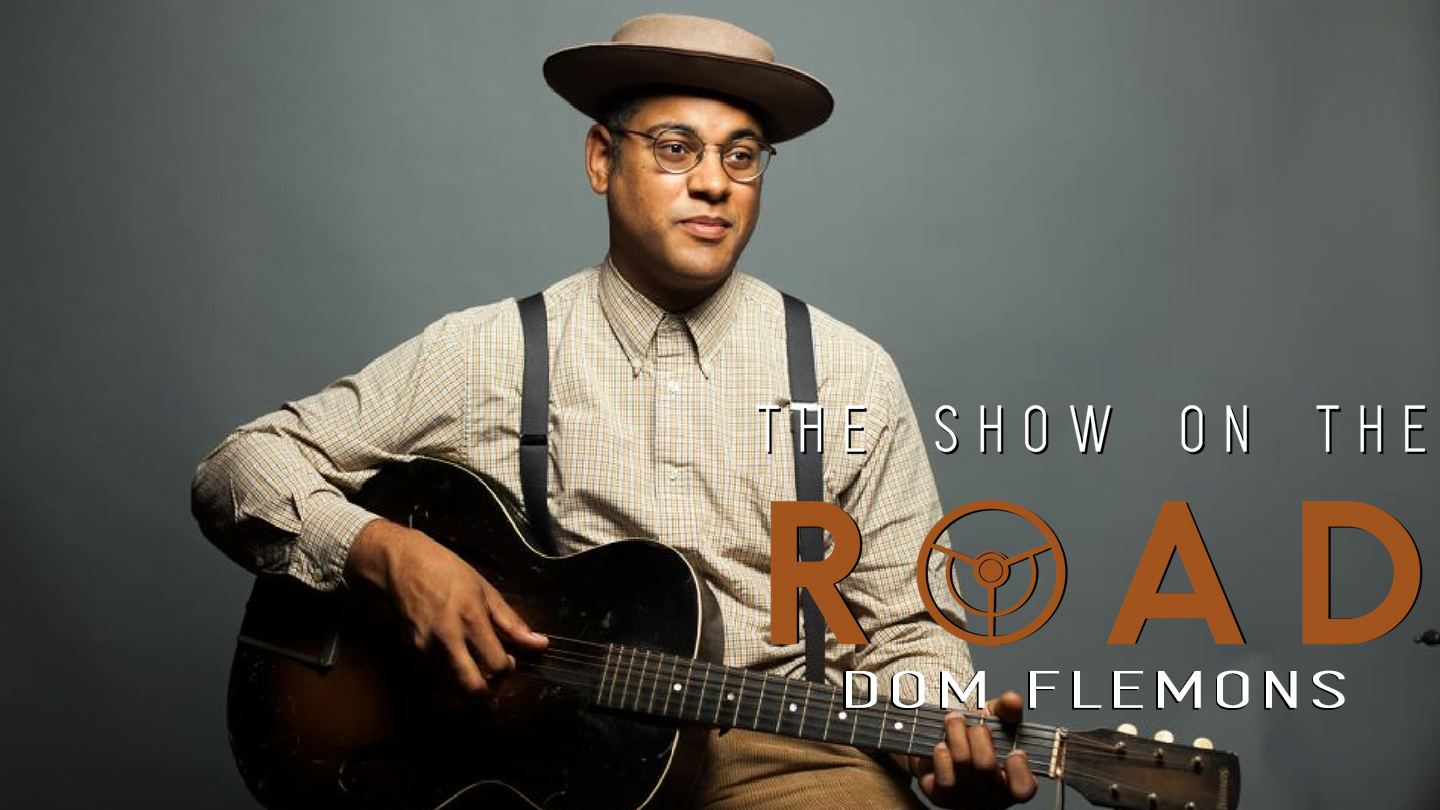
This week on the show,  Z’s two-part conversation with Dom Flemons, the Grammy award-winning American songster who has made it his mission to reclaim and rejuvenate the lost acoustic music of the past and bring it whistling brightly into the future.

LISTEN: APPLE PODCASTS • MP3

Born in Phoenix, Arizona to parents of African American and Mexican heritage, the ever-curious young Dominique Flemons went from playing drums in his school band and busking on the streets of Flagstaff with his fingerpicked guitar and neck rack harmonica to taking a chance that would change his life completely. He scrounged enough money to make it to the Black Banjo gathering in North Carolina, where he would meet Rhiannon Giddens and Justin Robinson and begin a seven year run with their groundbreaking African American string band, The Carolina Chocolate Drops. They would go on win a Grammy for Best Traditional Folk Album, headline festivals and theaters around the world, open for Bob Dylan, play the Grand Ole Opry, and burst into the collective consciousness of young acoustic music hopefuls all around the world who were tired of the same stoic, hillbilly bluegrass and white-washed old-time songs played over and over around the festival campfire.

LISTEN: Irene Kelley, “Highway Back to You”

Artist: Irene Kelley
Hometown: Nashville, Tennessee
Song: “Highway Back to You”
Album: Benny’s TV Repair
Release Date: May 10, 2019
Label: Mountain Fever Records

In Their Words: “David Starr and I started writing together about two years ago. A friend had the notion that David and I might be a good team and that has proven to be very true. We started out on the day we wrote ‘Highway Back to You’ with a melody that I had and a first part of the verse that David brought. We just let the song take us to where we ended up. A song about asking for a second chance. The highway is always a great metaphor for an emotional journey. This one is full of love, sentiment and hope. The musicians nailed the track and Ronnie Bowman’s harmony vocal is a perfect finishing touch. It is one of my favorite songs to sing on Benny’s TV Repair.” — Irene Kelley


Photo credit: Anne Goetze

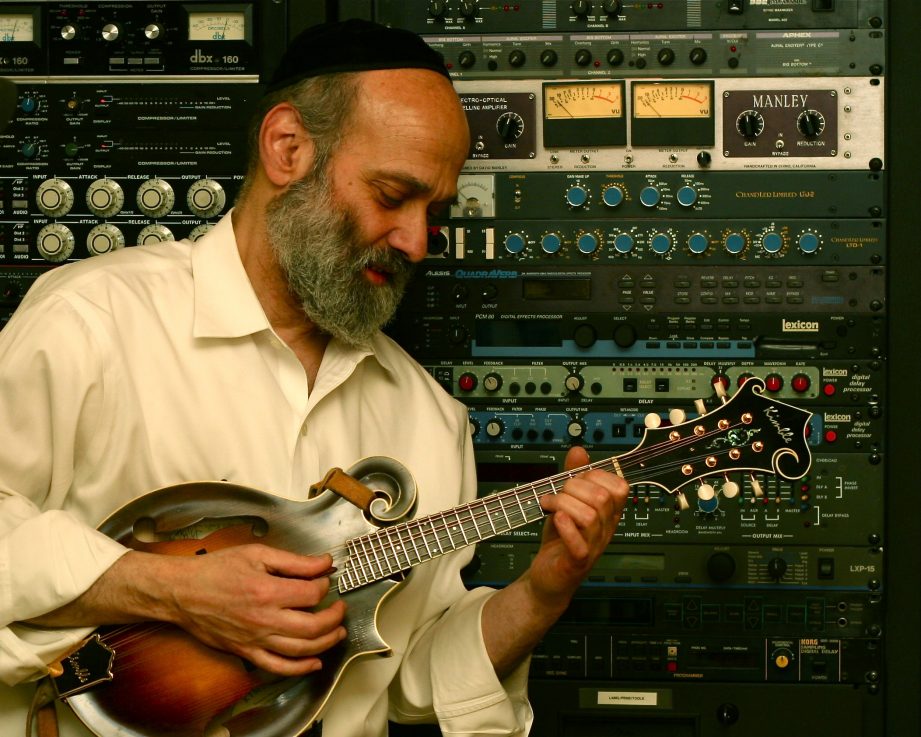
For Mandolinist Andy Statman, Music Is the Great Unifier

Mandolinist Andy Statman is quick to deny that his identity — he’s a devout modern Orthodox Jew — has anything to do with his music. “To tell you the truth,” he says, “it never entered the picture. I was just into the music…”

However, his latest album, Monroe Bus — an exploration of traditional mandolin techniques utilized in contexts as familiar as Bill Monroe standards and as far-reaching as klezmer and jazz-infused originals — belies that denial. And, as we converse about his history in music and the harlequin nature of the album it becomes obvious that his work isn’t devoid of his identity at all. In fact, the opposite is demonstrable.

Statman’s music is, of course, archetypically and idiosyncratically his own. He, as much or more so than any other mandolinist on the scene today, is truly original. He’s reached this destination not through purposeful attempts in his music to express his identity — religious, cultural, and otherwise. Instead he simply focuses on playing the most meaningful music he can, while remaining in the moment and establishing human connection with his fellow musicians. The rest, his whole identity, shines through his art organically and effortlessly as a result. Statman is a testament to roots music’s ability — whether consciously or subconsciously, overtly or covertly — to allow its purveyors’ souls to be the keystones on which entire albums, catalogs, and genres are built.

BGS: Your record strikes me as “melting pot” music. Whether you’re playing more jazzy music or bluegrass or klezmer, you’ve always considered your music to be quintessentially American. Why is that?

Statman: First of all, I’m an American, so the culture I grew up in was an American culture. I heard things through an American ear, I saw things from an American eye, and while there might be certain regional differences, all in all it’s all pretty much the same. I grew up right after World War II, my father was a veteran. I was born in 1950, so I grew up in the early 1950s in an area in Queens, New York called Jackson Heights. It was a diverse neighborhood. Everyone got along. Everyone grew up together. The other kids were just other kids, and it didn’t matter what their background was. The music played at this time was classical music, or jazz, or square dance music, or other stuff. As a kid we used to have square dances every week in public school. I remember every year we used to have a Lebanese American come and play songs for us. At that era you were able to sort of culturally imbue almost all of the last one hundred years of American culture. It was all there to be touched and heard and seen and lived. It was there, in the air, but it was America so it was live and let live.

What was your entry point to bluegrass, then?

My brother is about eight years older than me. He went to college in the ‘60s — 1960 I guess was his first year. He got very involved in listening to like the Kingston Trio, the Limeliters, the beginning of the folk revival. Then he started bringing home records of Dave Van Ronk, Bob Dylan, and Joan Baez. That wasn’t really so much for me, but then he started bringing home some New Lost City Ramblers records and this other record that Mike Seeger was involved in, Mountain Music Bluegrass Style, which basically was recordings of the incredible bluegrass scene in Baltimore, Maryand, and Washington D.C. in the late ‘50s and early ‘60s — people like Earl Taylor and Smiley Hobbs, just an amazing collection. I really gravitated to that. I remember for my birthday he got me Foggy Mountain Jamboree, a compilation of the early, classic Flatt & Scruggs Columbia 45s. He was also involved in what they used to call jug and skiffle bands and they used to rehearse at the house. He played guitar and sang and there was a banjo player in the band who played some bluegrass and I was just very excited by that whole thing. That just did it for me. All I wanted to do was play bluegrass.

What was it about the music that grabbed your ear?

On a very simple level, emotionally, I was excited and moved by the music. It really spoke to me. The singing, the harmonies, the instrumental playing. There was an excitement to it that I really liked. I was very moved by the slower, ballad types of things, also. I started listening on the AM radio to WWVA out of Wheeling, West Virginia, which was a bastion of country music back at that time. We had a guitar in the house, my brother’s guitar, so I started learning the Doc Williams guitar method, I learned some chords, but I really wanted to learn banjo. I finally was able to get a banjo and started taking lessons.

On Sundays back then in Washington Square Park people would go down and play outside in different groups. There’d be a group playing bluegrass, a group doing topical songs, a group doing blues, so I started meeting people doing bluegrass. On these records that I liked I was getting more and more moved by the mandolin playing — it was really exciting me. Earl Taylor’s playing and I think on the Scruggs records it was Everett Lilly playing one or two solos that were just like, wow. I was getting chills from hearing this stuff. I decided I would make the switch and become a mandolinist. I had already been playing banjo and guitar for a few years. I was still in my early teens, so when I stepped into the mandolin role I already had some muscles developed and some understanding of the music.

The record, Monroe Bus, really clearly illustrates the value and the beauty that comes from allowing our musical art forms to reflect our identities. How do you think we can help foster the idea that any background or identity is valid and can be showcased through these art forms?

You know, I don’t think that way. Forgive me. I’m just into playing music, playing the best music that I can, and I’ve been fortunate that I’ve been able to study with a lot of musicians of different cultures and different backgrounds, both playing American music and music that maybe isn’t played here so much. To me, it’s all about the music. When I’m playing, I’m just playing. Identity or background is really meaningless to me. It was always like that, but at this point in my life even more so. When I’m playing I’m just looking to play the most meaningful music I can play. Those are my only real concerns.


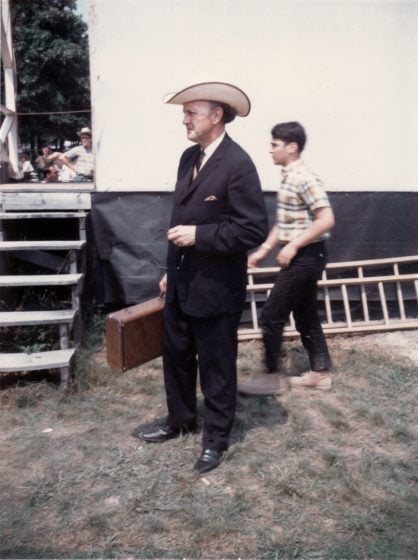
Bill Monroe (foreground) and Andy Statman at Fincastle Bluegrass 1966. Photo by Fred Robbins

You are always blending different musical forms in these crazy, unexpected ways. How do you respond to folks that are worried that that dilutes bluegrass or that it will kill the genre in the long run? What’s your response to the typical, “That ain’t bluegrass” kind of gripe? Do you have one?

First of all, this is not a bluegrass record, obviously.

But there are undeniable bluegrass threads throughout.

Of course, but I’m not presenting myself as [pure bluegrass.] I spent a lot of time studying bluegrass, and there are always new insights and things to learn, but for me, the original blossoming of bluegrass is where it’s at, where it reached its fullest expression. If I’m going to listen to bluegrass, I’m probably going to listen to bluegrass from before 1970. Not to say that what came after is bad, this is just my preference. The feelings and creativity of that particular period, to me, are really unsurpassed. And while the technical level might have gotten better, this doesn’t necessarily make for a more meaningful, deeper music, it just makes for a more athletic music. [Laughs]

Listen, people have to be who they are. It’s just music. There are always going to be people who hear things differently, who want to add or subtract things, and if you don’t like it, then you don’t like it. I can see that there’s a strong core of people who are really interested in playing music in the mode of what was played in the ‘40s, ‘50s, and ‘60s. I think there isn’t any danger of that not continuing.

I do believe, though, that it’s important for musicians to really try and master a traditional style. Because, if you’re going to try to build on something, you really need to understand where it’s coming from, to be able to relate to that music on its own terms. Which is getting back to the roots of all this music and being able to speak that language naturally, in your own way and find your own voice in it. You’ll understand phrasing, variation, improvisation, how to play melodies, how to bring out what’s in the melody, how to play rhythm. Without that firm grounding in a particular style, particularly when we’re talking about folk music, it won’t click.

It’s interesting that you say that, because I think that a song that perfectly illustrates what you’re talking about on the record is “Raw Ride,” a sort of version of Bill Monroe’s “Rawhide.” I love this version because the song is so iconic, but you’re still turning it on its ear. You’re demonstrating that foundation that you’re talking about, but you’re finding your own voice in it. How did you come up with this arrangement?

Well, I’ve been playing the tune for years. “Rawhide” is one of those tunes that, if played in the traditional Monroe manner, requires a lot of energy. It’s always a question of is it worth the energy for the payoff? [Laughs] It usually is. There’s obvious extensions of the melody or the chords that you hear if you’ve been involved in playing other types of music. So I just sort of followed those. As with all of these things, it reflects who I am, my musical experiences, and my studies.

…When you’re writing music and playing music it really just reflects who you are and what your experiences are and how you live. It’s a reflection of that. That’s what Bill Monroe did. His music was a synthesis, an ongoing synthesis, and he developed a certain kind of aesthetic.

When I came out of the closet and was going through that process of coming to terms with my identity as a gay man, I had a moment where I doubted my place in bluegrass. I thought maybe bluegrass wasn’t the place for me, it wasn’t a place where I could belong. Did you ever feel like your Jewishness made you question your place in bluegrass?

Not really, no. To me, it was all about the music. All the musicians I know are wonderful, thoughtful, and kind people — in the bluegrass scene and in others as well. We’re all in this together and we all have a common passion for the music. It’s a uniting force. It has a real life of its own, and we’re just sort of passing through it, so to speak. If you’re worried about the thoughts or beliefs of the people you’re playing music with, then you can’t really be playing music. Music, in its essence, is the great unifier. It can unify people in terms of ideas and feelings and speak to the commonality of everyone. At that point, all of these other things melt away.

It really has to do with heart. It’s a spiritual thing. In Hasidic teachings they say that music, particularly instrumental music, can go higher than anything. A song without words isn’t even bound by the concepts of those words. In certain ways, it’s a universal heartbeat. You can see the tremendous life force that music carries. To me it’s something that’s very sacred.


Photo credit:Bradley Klein 

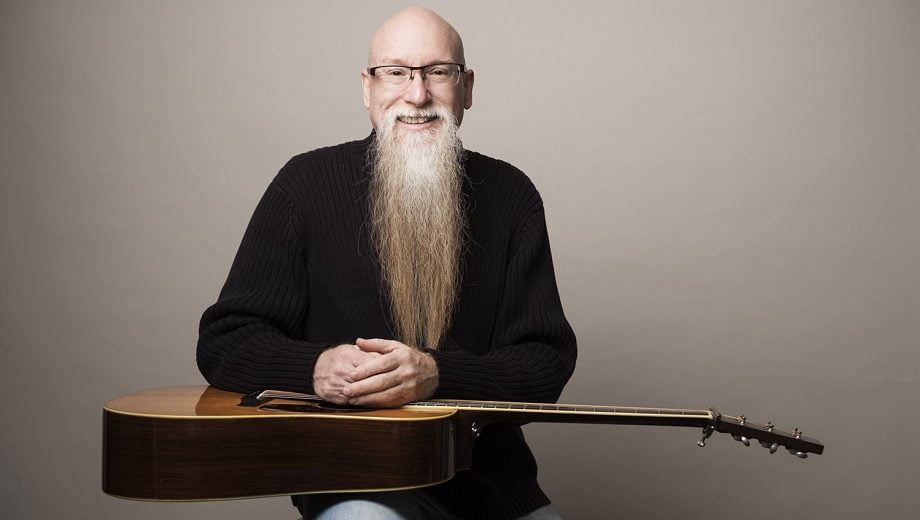
Guitarist David Grier Steps Out as a Lead Singer, Too

David Grier gets asked all kinds of questions.

He’s asked about his phenomenal cross-picking guitar techniques, which put him among the greatest bluegrass/folk players of the last several decades, talked about in the same breath with Doc Watson, Clarence White, and Tony Rice.

He’s asked about his dad, Lamar, who played banjo with Bill Monroe. Yeah, that Bill Monroe, the Father of Bluegrass.

He’s asked about Clarence White’s brother Roland, the Kentucky Colonels mandolinist who was an early teacher of his. And of course he’s also asked Clarence, Grier’s big influence, who brought bluegrass guitar into the rock age with the Colonels and then, on electric guitar, powered early country-rock with the Byrds.

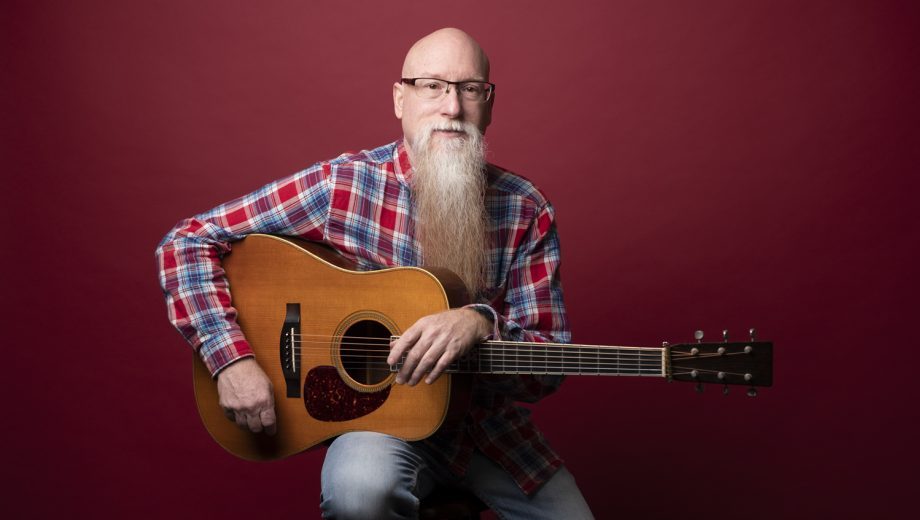
He’s asked, maybe too much, about his beard, a prodigious gray broadsword of whiskers stretching from chin to navel, an abstraction of which is the signature feature of his silhouette, featured on his T-shirts and other merch.

But one thing the D.C.-raised, Nashville-based musician is never really asked about: His singing. And for good reason. He’s never done it.

“It’s always been, ‘Why don’t you sing? You play guitar!’” he says, an irrepressible joviality marking his droll drawl.

Somehow, he sighs, people often seem to think that simply because he plays guitar he ought to sing too.

“I know I play guitar,” he says, more amused than exasperated. “I never donated any time toward [singing]. I tried once or twice through the years. Just like anything else, I gave it five or ten times and stopped.”

Until now.

His new album, Ways of the World, features five songs with him on lead vocals. That’s a first. In his career going back to the early ‘80s and covering ten solo albums now, several side projects (Psychograss, Helen Highwater Stringband), and hundreds of guest spots and sessions, he’s never stepped out as a vocalist before.

And in a rather bold move, he puts his lead vocals alongside some noted vocal talents: Maura O’Connell, Tim O’Brien, Shad Cobb, Andrea Zonn, and Mike Compton. What’s more, he’s feels pretty good about it.

“I do,” he says. “I know later I won’t, because every time I think something’s perfect, I listen to it later and go, ‘Gee, why didn’t I hear that before?’”

So the next question comes naturally: “Why now?”

“It was the Helen Highwater Stringband,” he says. “Three or four years ago they said they needed another singer for a vocal trio. They looked at me. I said, ‘I don’t sing!’ They said, ‘You do now!’ I went, ‘Wow.’ They were encouraging. It was helpful. All that went into account and then I did it on stage. People weren’t running for the exits, so this is good. And it just kept going.”

If he was going to sing, he needed words, and he dove right into that as well. Songwriting was another new challenge.

“I’d written the first two lines: ‘I’m afloat on the great big waves of the ocean, I drift on the ways of the world,’” he says of the title song, with Zonn singing with him, which opens the album. “I thought, ‘Hell! That’s going to be a song!’”

But he thought he’d need help and, while heading out for a five-and-a-half-week tour in South Africa, he went to a friend to have him finish it. That didn’t happen. So with two off-days he set to it himself.

“I finished it in an Airbnb on the beach in South Africa,” he says.

It was a whatever-it-takes approach to songwriting. “Dust Bowl Dream,” with harmonies by O’Brien, came from a bar bet for a round of drinks with some Nashville buddies as to who could write the best song in a week.

“I wasn’t even going to write a song,” he says. “Thought I’d just buy drinks for the buddies. But I had this melody that was lonesome and I thought, ‘Well, dust bowl is lonesome.’ Wrote the words in an airport, wrote the verse, chorus, second verse. I thought it was great. Got to the hotel later that day and started playing. First verse was great, second was great, last verse was horrible! I wrote another and that was worse. I went back to the first version I wrote and thought, ‘If I don’t sing it, that’s great.’ So I talk through it, like Bill Anderson would. It’s a recitation, and I think it really helped the tune. You feel it more.”

Now, all you who savor every splendiferous Grier guitar lick, dread not. The five songs featuring vocals are accompanied by eight sparkling instrumentals, and the ones with singing also feature, of course, his spectacular picking.

The heartfelt vocal numbers are surrounded by a selection of wryly titled original picking showcases (“Waiting on Daddy’s Money,” “The Curmudgeon’s Gait,” and so on) and sparkling interpretations of, or variations on, old fiddle tunes (“Billy in the Lowground”). And playing with Grier is a stellar cast of associates: a core of Casey Campbell on mandolin, Stuart Duncan on fiddle, Dennis Crouch on bass, with John Gardner on drums for some songs, and banjo from Justin Moses and Cory Walker. What’s more, there’s electric guitar by Bryan Sutton on one song (“Dustbowl Dream”) and on “Farewell to Redboots,” there’s trumpet by Rod McGaha — something perhaps even more surprising than Grier’s singing.

“For me having a trumpet on a song is brand new,” he says. “I just heard it in my head that way and imagined it that way. But having it happen was amazing.”

The whole experience, it seems, was liberating in a way that led Grier to try some different approaches to his picking, as if the pressure was off to make the album completely about that. The result is a rich, engaging tone throughout.

“I think on this record there’s less flash, just for flash’s sake,” he says. “Less, ‘Watch what I can do! Watch! This is hot!’ This is more reined in for a bit. Some of the solos are simplistic, and in my mind harken back to the beginnings of bluegrass music.”

He cites the intro to one song, “Dead Flowers,” an original, not the Rolling Stones song.

“That’s as basic as you can be,” he says, noting that it happened that way in the moment when he was caught off guard. “I got in the studio and thought someone else would kick it off. ‘Who’s gonna kick it off?’ Crickets. ‘You start it.’”

On the other hand, he also found himself spontaneously taking some other unexpected directions in “Red Boots.”

“There are three solos in that,” he says. “First one of me, then the horn, then me again. The first one’s just the melody, nothing fancy. The melody is cool. But the last solo is completely different, a little bit of Wes Montgomery, some string-bending in there. Just popped out! I’d never played that before. Every time I’d played that song it was just the melody, ‘cause I’m generally sitting here playing by myself. In the studio it was, ‘Well, I’ve done that. I want to do something different.’ I like that. Fresh and exciting. Note by note. Not the boring same old thing.”

And that’s the thread of the whole album.

“A lot of improvisation on this record,” he says. “From my viewpoint, it’s playful. All in the vibe. Not some hot lick thrown in just to show I can play a hot lick.”

Not that he isn’t proud of his playing here.

“There’s things in there people might want to learn when they hear it,” he says.

And speaking of learning, one more question: Has he ever tried fingerpicking?

Grier sighs.

“That’s another thing maybe I gave five minutes.”

Well… given what he said about singing, stay tuned for the next album.


Photo credit: Scott Simontacchi
Doc Watson & David Grisman, “Watson Blues”

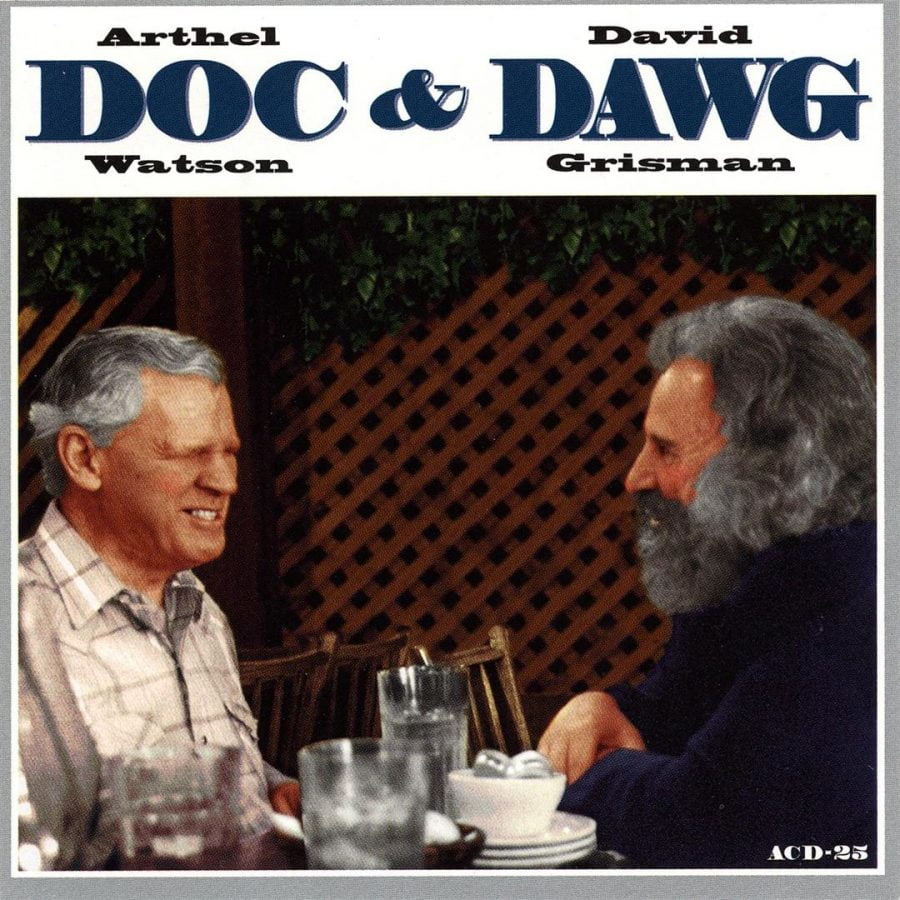
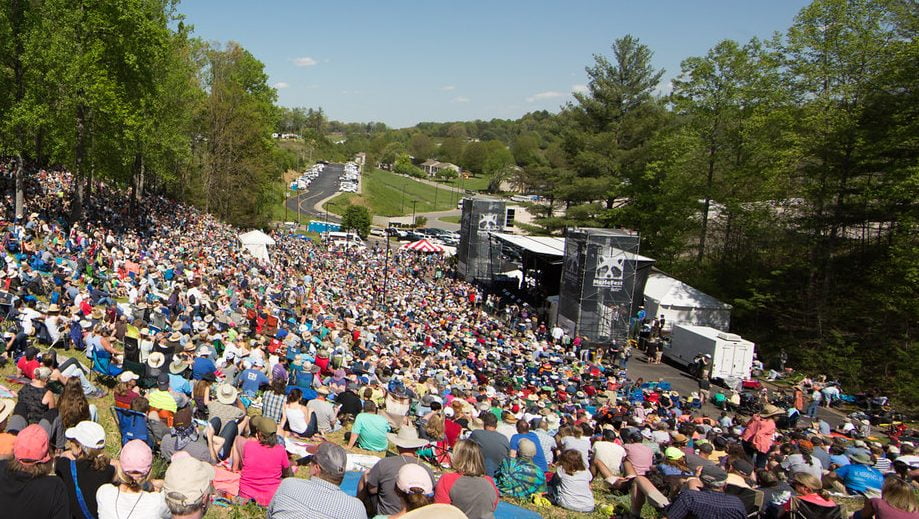
It’s fitting that this week, leading up to the 32nd year of MerleFest in Wilkesboro, North Carolina — a festival named after Doc Watson’s late son, Merle — that for Tunesday Tuesday we spend a few minutes with a song named after Doc himself. Bill Monroe wrote “Watson Blues” (or “Watson’s Blues,” as it’s also called), naming it after his friend and premier flatpicker, and the two performed it live and recorded it together on more than one occasion. This version with David “Dawg” Grisman, though, showcases the effortless way that Doc could keep up with and quietly, subtly innovate alongside musicians and artists who were much more famous for roaming further afield.

What’s additionally striking about this particular recording is how simple and focused the track is. Doc’s steady, unwavering hand pushes the song along at a perfectly breezy clip, matching the mellow, round, warm, huggable tones from his flattop. Meanwhile, Dawg plays the roll of Big Mon convincingly, peppering his signature, wacky, jazz-inflected phrases only rarely, choosing instead to let the tune stand on its own. Stuart Duncan’s plaintive twin fiddling is the icing on this tasty, minimal, “Watson Blues” cake.

If you’re headed to MerleFest this weekend, make sure this track is on your driving playlists to/from the festival — and be sure to check out our 2019 MerleFest preview for tips and tricks for the weekend. And, finally, make sure you stay tuned after the 3:52 runtime of “Watson Blues” passes — Doc, Dawg, and Jack Lawrence give us an incredibly tasty version of “Bye Bye Blues” to wrap up the album. It’s an acoustic pickin’ heroes encore.

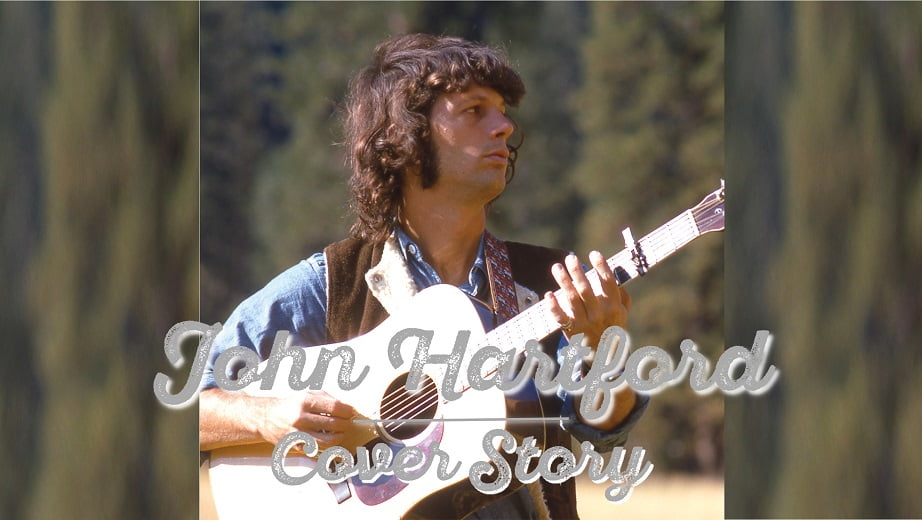
New John Hartford Set Shows Evolution of a Singular Figure

Sum up the importance of John Hartford in one sentence?

That’s the challenge given to Skip Heller.

Five minutes later, after a stream-of-consciousness run of superlatives, analogies and tangents — songwriter, entertainer, transitional figure and simply great are among the terms employed, as is the declaration that Hartford was a “gateway drug to bluegrass music” — Heller finally sighs.

“You are talking with someone who, with money he got on his fourth birthday, bought a John Hartford record,” he says.

In other words, Heller is just too deep into all things of Hartford’s life and music to boil it down to one line. While that worked against coming up with a neat summary, it served him very well as compiler and producer of the new Backroads, Rivers & Memories album.

It’s an illuminating and lively collection of previously unreleased early- and mid-1960s recordings that pre-date and pre-sage Hartford’s soon-to-come impact as a major songwriter (the 1967 Glen Campbell hit “Gentle on My Mind”), a “newgrass” pioneer (the much-beloved, still-unique Aereo-Plain album), and a solo banjoist, fiddler, foot-stomper, noted wit and colorful chronicler of life on Mississippi (a St. Louis native, he piloted the steamboat Julia Belle Swain every summer for much of his life).

And it comes as the presence and adoration of Hartford, who died in 2001 at 63 of Non-Hodgkin lymphoma, has had a resurgence, with a new legion of young fans discovering his music and prominent posthumous places on the soundtracks to the Coen Brothers’ O Brother, Where Art Thou? and 2017’s Lady Bird. For the latter his melancholy “This Eve of Parting” underscores a key scene, his sad baritone conveying the distress of the mother, Laurie Metcalf’s character.

But the genesis of the set can be traced to a fateful ’68 evening in Heller’s family’s Philadelphia living room, the TV tuned to CBS. It was a moment for the then-tyke comparable for him to what many experienced a few years prior watching the same network when the Beatles made their American TV debut on Ed Sullivan’s show.

On the screen was The Smothers Brothers Comedy Hour, and Hartford, a regular on the show picking banjo and appearing in some sketches, was duetting with Glen Campbell on “Gentle on My Mind.” That appearance essentially previewed Campbell’s own variety show that would be inaugurated soon as the Smothers’ summer replacement, with Hartford a major presence on it as well — that was him each week standing up in the audience to pluck the same song’s intro on banjo to start the show.

“If you were inclined toward music and you were going to spend your money on a record, it was going to be that or a Monkees record,” he says, allowing that perhaps Campbell would have been the attraction here for most, “but my parents already had those records.”

The album in question was either 1967’s Earthwords & Music (which included the version of “Gentle on My Mind” that caught Glen Campbell’s ear) or the next year’s Gentle on My Mind & Other Originals (piggybacking on Campbell’s massive hit with the song). He had them both, one that he bought, the other given to him by his “cool uncle,” but he’s not sure which was which. Regardless, the boy’s path in life was set.

So let’s — pardon the expression — skip ahead to the present. Heller, an accomplished and respected roots-and-far-beyond musician based in the Los Angeles area, stands as perhaps the foremost authority on his hero’s life and music, and this new album came from that and from the close relationship he developed with Hartford (opening for him at a Philadelphia concert in 1996 remains a personal highlight) and with his family. The family, including Hartford’s son Jamie, a guitar ace and singer who has carried on some of his dad’s traditions, had already released some archival material and talked with Heller about other possibilities. Ultimately, Heller was sent an extensive digital library and set to assessing, quite the task as Hartford was an obsessive taper.

“He had a tape of pretty much any show he played,” Heller says. “He also had a tape of every jam session.”

After contemplating a compilation of live recordings, Heller hit on the notion of building an album from Hartford’s ‘60s songwriting demos, adding to that some airchecks from his regular radio show on WHOW in Clinton, Illinois (near St. Louis) and — a real treat for fans — the entire eight-song output of his early Ozark Mountain Trio, pretty straight bluegrass.

Overall, it shows an evolution of a singular figure, someone who took traditions and made them his own, infused them with his distinctive talents and personality, and in turn shaped sensibilities of others to come. Along the way there are demos of “Gentle on My Mind,” “Eve of Multiplication,” “This Eve of Parting,” and other songs he would record for his late-‘60s run of albums on RCA. And, as a tantalizing if brief and ephemeral bonus, there’s a 30-second excerpt from a rehearsal with a band of Nashville pros of what would become “Steam Powered Aereo Plane,” which a couple of years later would become a centerpiece of that forward-thinking album he made with fiddler Vassar Clements, guitarist Norman Blake, Dobro master Tut Taylor, and bassist Randy Scruggs.

“The Ozark Trio and radio things, those are the makings of John Hartford,” Heller says. “And you can hear how when he starts finding his own voice through this, Pete Seeger was the transitional figure who was around. He really gets clearer about who he’s going to be. His batting average as a songwriter gets much better, a combination of Pete Seeger and Roger Miller. He gets his elliptical words stuff from Miller.”

Heller found a lot of epiphanies and revelations in the course of putting this all together. One that may strike many is in the Ozark recordings.

“If you didn’t know that was John on banjo, you’d go, ‘Who is that?’” he says. “He’s amazing. Not doing anything J.D. Crowe or other of the ‘real’ guys would be doing, and you can hear Earl [Scruggs] on it, and maybe also Doug Dillard’s influence. One of the things in this album for me was to show how incredibly grounded he was in traditional bluegrass. He could have gone on and just done that, could have made a life of that, just be a banjo player. And on those radio airchecks, he is one of those old-time country guys. To hear that professionalism before he even got to Nashville was an epiphany.”

But even more so, Heller was astounded by how meticulous Hartford was in the songwriting process.

“The revelations to me were often how he would evolve a piece of material in the process of writing before he ever played it,” he says. “There are songs for which we had four, five, six versions. He really could get in the weeds. Any really good songwriters can.”

The biggest questions may revolve around the “Aereo Plane” clip. Why just 30 seconds? And what can we learn from that short passage?

“The whole rehearsal of ‘Aereo Plane’ is like 40 minutes,” he says. “You hear the band that’s on the RCA records rehearsing it — and not quite getting it.”

These are ace musicians, Heller notes, some of the top that Nashville had to offer. But Hartford’s vision has moved in a way that they couldn’t quite follow.

“Once he hits [the album] Aereo-Plain it’s all going to change,” he says, citing that later album’s fusion of old-timey string band gospel and progressive flights of fancy, spiked by touches of both heartfelt tenderness and witty Dada-hippie absurdities (including the two spellings of plane/plain) only hinted at in his earlier works.

“To me that feels like the natural cut-off point, the end of the RCA years. Why? The band he has can’t quite play the next thing he had in mind.”

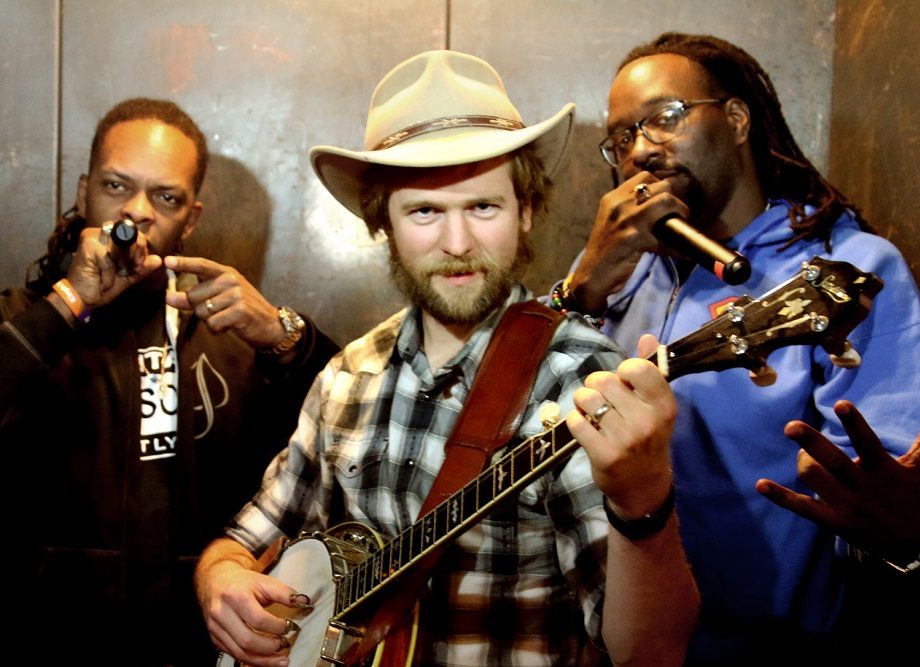
MIXTAPE: Gangstagrass’ Standard Setters

As purveyors of genre crossing, we like to recognize standouts within a genre that innovated simply by epitomizing a sound with particular skill: tracks that demonstrated what virtuosity could do within a genre, that pushed the genre to new heights (or at least new places) for us, tracks that maybe we used to judge what came afterward. We could list a lot of classics, but this list is really about the tracks that were the standard setters for each of us personally, making a mark in how we thought about a genre or sound. For our Mixtape, we selected a few songs and described the impact the tracks made. — Gangstagrass

Flatt & Scruggs – “Foggy Mountain Special”

Earl’s fast, regular picking in songs like “Foggy Mountain Breakdown” made his three-finger rolls, like the Foggy Mountain roll, iconic. But this heavily-swung tune, while not a slow song by any standard, really explores the bluesy side of bluegrass banjo. The syncopated banjo kick, with the band entering on the second beat, throws off the listener’s perception of time. The main lick itself deserves to be as iconic as any fast-flowing Scruggs roll. And that solo! From the single-string bends to that chromatic octave line, Earl knows to keep playing it just a little bit longer. You couldn’t go back and redo any part of this any better, not in a hundred years. They nailed it.

Norman Blake and Tony Rice – “Little Beggarman/Gilderoy”

Tony Rice sounds his best on duo albums, whether it’s with country superstar Ricky Skaggs on a journey to reconnect with his bluegrass roots, or songster Norman Blake, whose clear-as-a-stream picking and earnest vocals are augmented by Tony’s unparalleled rhythm work and rich baritone. On this instrumental track, guitar and mandolin trade breaks and, unusually, trade tunes. Because they’re both in A, with similar chords and melodies, you almost don’t notice the transition, except that the tune Blake plays on mandolin is minor, while Tony’s guitar tune is major. It’s a beautiful, subtle effect that showcases both artists and enhances the sound of each instrument.

The Steeldrivers – “Ghosts of Mississippi”

Before Chris Stapleton was Chris Stapleton, he was in a band called the Steeldrivers. The mainstream music audience has rightly picked up on his powerful vocals and formidable songwriting, but arguably his best work has been with this band that gave him a perfect setting. From the smoldering growl of the banjo to the searing whine of the fiddle, the sound has not been surpassed by either Stapleton’s pop work or by any other bluesy bluegrass band. This track in particular sets the bar, serving up equal parts groove, emotion, and one hell of a catchy melody.

Béla Fleck and the Flecktones – “Hole in the Wall”

The Flecktones represent Béla’s furthest ventures outside traditional bluegrass, and this late track on their second album, Flight of the Cosmic Hippo, is a representative example of their early sound. Of note, Howard Levy’s keys get more room than on most other tracks which tended to feature more of his admittedly superlative harmonica work. Near the end, there’s enough sonic buildup to justify a fantastic extended banjo solo with fluidly shifting time signatures and tonalities. Banjo players who have tried to emulate this piece will have noticed that, like many Béla tunes, it centers around a particular lick, in a particular nonstandard key, played in open G tuning. But as with magic, sometimes understanding the trick doesn’t make it any less exciting to see it performed right in front of you. — Gangstagrass

Pharoahe Monch feat. Black Thought – “Rapid Eye Movement”

Every now and then there’s a collaboration that you just know is going to be dope just by the parties involved. “That’s what I figured when I saw these two MCs on a track from Pharoahe Monch’s 2014 album P.T.S.D. I wasn’t prepared for HOW DOPE, however,” says R-SON. Pharoahe Monch drops bars about being in a relationship with his ammunition and then filing for divorce and releasing his “ex-calibers.” Not to be outdone, Black Thought starts his verse with the last two lines of Pharoahe’s and goes on to “send shots to ancient Greece to pop Socrates.” Black Thought’s line “the ex-slave sado-masochist/who gave massa my ass to kiss” is, as R-SON puts it, “just another example of Black Thought’s conscious swagger that laces every verse that he blesses a track with.”

Black Star – “Thieves in the Night”

Mos Def and Talib Kweli came together on the Black Star album and created gems but this was the standard for R-SON. Their distinct flows built two very different parts — Kweli’s recounting what his man Louis said and thought and how those thoughts affected Kweli. Mos Def’s verse, on the other hand, had a breakdown of the hook where he responded to the things said in it. The song ends with one of the great lines in the genre’s history: “I give a damn if any fan recall my legacy, I’m tryina live life in the sight of God’s memory.” R-SON notes that “in my younger days the song brought tears to my eyes and I’m happy to say that it still does.”

Mos Def – “Mathematics”

We cannot think of another time when someone counting from 1 to 10 (Dolio the Sleuth on “Ain’t No Stopping” aside) has had more meaning. Mos raps, “5 dimensions, 6 senses, 7 firmaments of heaven and hell, 8 million stories to tell, 9 planets keep orbit around the probable 10th, the universe expands length….” He continues his “…numbers game, but shit don’t add up somehow,” speaking of the number of bars he has to do what he does, and the minimal amount of money he gets from it all. “6 million ways to die for the 7 deadly thrills / 8-year-olds getting found with 9 mils / it’s 10 p.m., where your seed, he’s on the hill/….pumping crills to keep they bellies filled.” His word (and number) play is immaculate.

UGK – “Int’l Players Anthem (I Choose You)”

A seminal “posse cut” that unites two legendary duos of Southern hip-hop, UGK and Outkast, exhibiting four distinct flows and approaches to the subject of being a “player.” Each emcee delivers a memorable verse complete with the stunning street poetry they’re known for, with cadences that ride the beat (or the lack of beat, in the case of Andre 3000’s intro verse) that samples heavily from Willie Hutch’s “I Choose You” from the soundtrack of 1970s Blaxploitation flick, The Mack.

Ralph Stanley and the Clinch Mountain Boys – “Nobody’s Love Is Like Mine”

Rench was listening to 1970s-era Clinch Mountain Boys when he started putting Gangstagrass together as a sound. There’s been a good deal of attention to the Stanley Brothers, but the sound was developed and refined to a new level with the addition of Ricky Skaggs and Keith Whitley. The vocal harmonies are tight and the full string section is on point in a way that epitomizes the best of classic bluegrass sound.

Stuff Smith – “Serenade for a Wealthy Widow”

Stuff Smith is one of the few truly iconic jazz fiddlers. His style is on Charlie Parker’s level. “In an alternate reality, where we weren’t so hung up on jazz’s horn players, I feel Stuff would have been one of the fathers of bebop,” says Brian. Stuff’s style pulls from such a diverse array of influences, from Stéphane Grappelli to the Western swing fiddlers like Bob Wills. The gruffness of his tone and clarity of his lines point to the meld between the character of string band/blues fiddlers players before him like Clifford Hayes and Robert Roberson, and the progressive harmonies that took over jazz after bebop. Stuff is the perfect example of harmonic personality over the harmonic intellectualism that followed. “This track is one of the more off-beat compositions that I love to surprise folks with,” Brian adds.

Slam Stewart – “Oh Me, Oh My, Oh Gosh”

“I feel much the same way about Slam as I feel of Stuff; his musical voice is synergistic of the eras before and after him,” Brian says. The way he rides the rhythm comes from an era of bassists mimicking the sound of tubas in marching bands, indicative of players like Bill Johnson, Wellman Braud, and Pops Foster. His style foreshadows others like Jimmy Blanton, Oscar Pettiford, and Ray Brown with their strong solo personalities. This tune is a favorite; it’s a slick lyric and showcases what Slam can do on all fronts.

Outkast – “Rosa Parks”

This one came out of left field in 1998 — when Southern rap was growing into national attention — and planted a flag with the trademark quirkiness of Outkast style, including a harmonica breakdown in the middle of the song. Their fast-flow style is undeniable and surgical here, while their unabashed Southern drawls in this radio hit opened the floodgates for Southern hip-hop to start dominating the charts.

Wilson Pickett – “Hey Jude”

This has a lot to do with the way the Swampers in Muscle Shoals epitomized the soul sound of the ‘60s in the best way, but this track in particular pushed boundaries by including what would later become familiar Southern rock sounds, courtesy of a young Duane Allman. Of course, the wicked Mr. Pickett kills it with a prime example of soul vocals just owning the track.


Photo credit: Sean Aikins

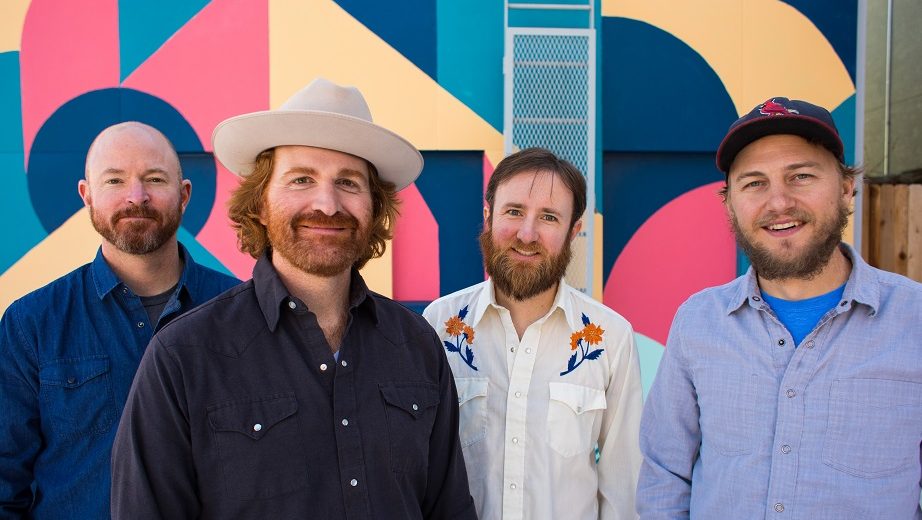
LISTEN: Chain Station, “Half Full”

Artist: Chain Station
Hometown: Denver, Colorado
Song: “Half Full”
Album: Backroads
Release Date: May 3, 2019

In Their Words: “‘Half Full’ is a laid-back, feel-good bluegrass song that’s all about positivity, living the good life and finding the light on the darkest days. ‘Half Full’ was inspired by my father, Pat Pickett, whose humor and energy were, and are, a comfort to everyone he met. This song is a celebration, so raise your glasses and…keep your glass half full!” — Jon Pickett, bassist, Chain Station


Photo credit: Johnny Brewers

14 Songs for Roller Skating in Buffalo Herds

No matter where you may stand on the Lil Nas X viral sensation “Old Town Road” and the associated media firestorm, Twitter debates, and raging country-purity authenticity signalling, we should all be able to agree on one thing: country music has always been a welcoming home to musical memes. Sure, that term may be more recent, a product of the internet age, but ever since the dawn of country as a format silly, tongue-in-cheek, self-deprecating, hilarious, and downright foolish songs have been just as integral a part of the genre as heartbreak, cheatin’, booze, and trucks.

We thought it’s high time we celebrate the knee-slappin’, gut-bustin’ history of country music’s meme-ready songs from across the decades. Here are fourteen of our favorites — yes, just fourteen. We can assure you there are dozens and dozens more where these came from.

“A Boy Named Sue” – Johnny Cash

The man in black, one of the most iconic personas in the history of country music, famous for his grit, his stoicism, and his rough-hewn voice wasn’t even “above” recording a song steeped in satire. Hopefully in 2019 life is getting easier for boys named Sue.

“What a Waste of Good Corn Liquor” – Tennessee Mafia Jug Band

Originally recorded by Country Music Hall of Fame and Bluegrass Hall of Fame member Mac Wiseman, this disconcertingly happy-sounding song tells a story with a moral: moonshine will melt you. Don’t spoil the moonshine.

“The King Is Gone (So Are You)” – George Jones

A song about Elvis, Fred Flintstone, drinking, and heartbreak. This one ticks all of the boxes. Even the “use yabadabadoo in a song” box.

“Did I Shave My Legs For This?” – Deana Carter

Country, after all, is all about the relatability of the human condition. Jilted would-be lovers everywhere have felt your pain, Deana. We truly have.

“Don’t Let The Stars Get In Your Eyeballs” – Homer & Jethro

The original Weird Al Yankovics of country and bluegrass, Homer & Jethro wrote (and re-wrote) scores of songs with wacky, eye roll-inducing, laugh-out-loud funny lyrics, ad libs, and arrangements. Check that steel solo!

“I’ll Oilwells Love You” – Dolly Parton

No, Whitney Houston did not cover this one. But that would have been magnificent.

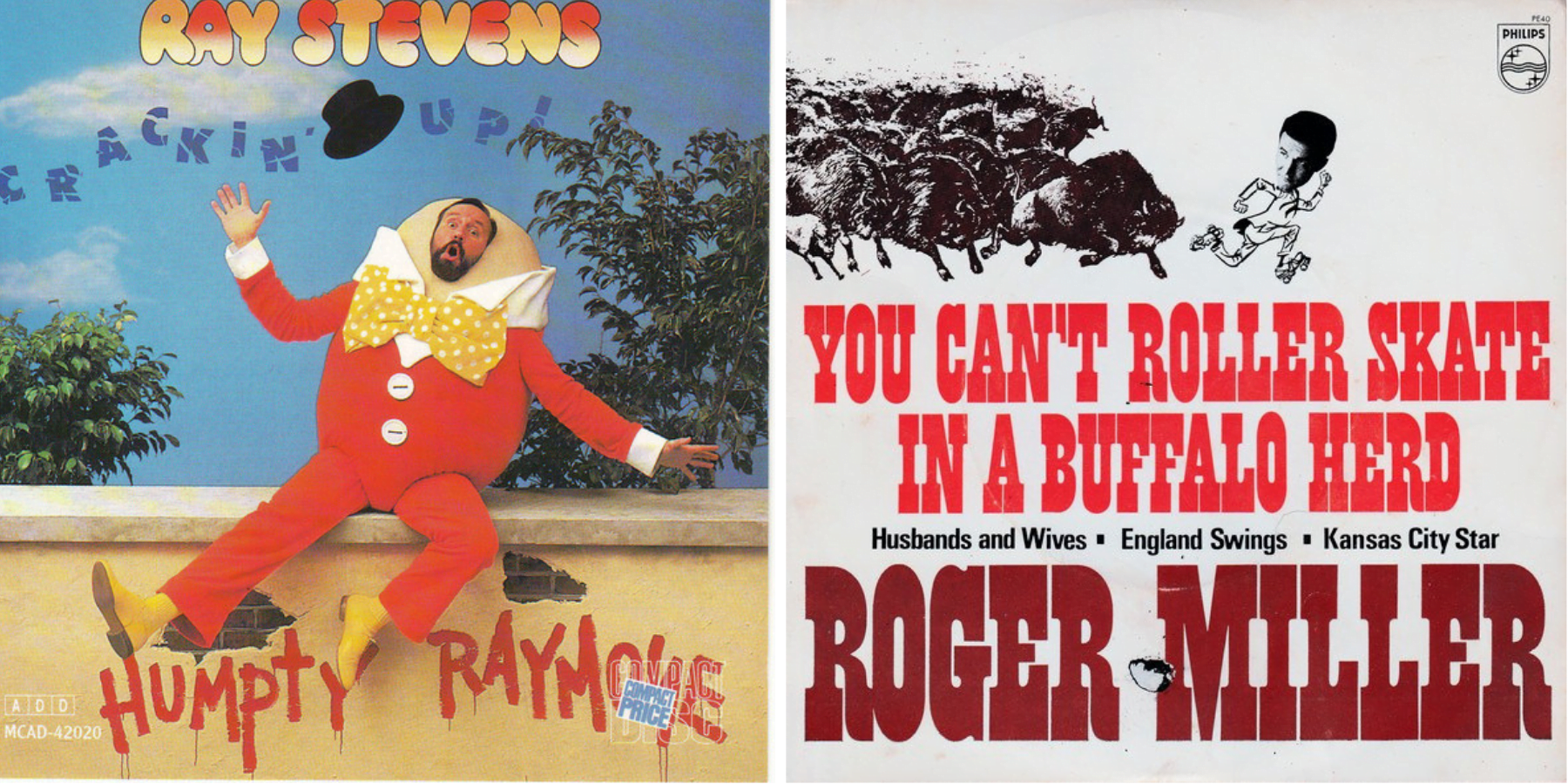
“You Can’t Roller Skate In A Buffalo Herd” – Roger Miller

One of country’s humorous kings, Roger Miller recorded a host of silly songs over the course of his career. We chose this particular number because of its evergreen wisdom. Of course.

“You’re The Reason Our Kids Are Ugly” – Loretta Lynn & Conway Twitty

But you know what? Looks ain’t everything. And money ain’t everything.

“I’m My Own Grandpa” – Willie Nelson

Get out a piece of scratch paper and sketch this family tree as you go. Does it seem a little… circular? Yeah… that’s the problem.

“Would Jesus Wear A Rolex” – Ray Stevens

A modern country parable. Again, an artist with plenty of silly and sarcastic songs to choose from — and Ray Stevens is being inducted into the Country Music Hall of Fame this year. Sounds pretty country to us…

“Cleopatra, Queen Of Denial” – Pam Tillis

Yes. More country songs with outright puns as their hooks, please. And of course, we’ve all been there, Pam. Denial is a popular destination.

“Illegal Smile” – John Prine

On the opening track of his debut album Prine immediately set the tone for his entire career with some of the most nonsensical and witty lyrics ever set to song. “Well done, hot dog bun, my sister’s a nun.”

“I’ll Think Of A Reason Later” – Lee Ann Womack

If you’ve never driven down the road shouting along with this one, we highly recommend that you do — as soon as possible. The song’s main character has a remarkable sense of self-awareness for being so viscerally incensed. If you really hate someone — who may or may not have ended up with your former significant other — it may be your family’s redneck nature.

“My Give A Damn’s Busted” – Jo Dee Messina

Look, if you’ve gotten to the end of this list and you haven’t enjoyed yourself, or maybe you don’t get the point, or maybe you think this is just useless clickbait… whatever the case may be, this song counts as our response. “Nah, man. Sorry.” (Isn’t country the best?)

BGS Preview: MerleFest 2019

When it comes to roots music, the MerleFest 2019 lineup is tough to beat. From bluegrass heroes to country legends, along with a number of perennial favorites like the Avett Brothers, this year’s four-day event promises to be one for the record books. Where to begin? Check out the BGS daily preview below.

Editor’s Note: MerleFest 2019 will take place April 25-28 in Wilkesboro, North Carolina. The Bluegrass Situation is proud to present the Late Night Jam on Saturday, April 27. Get tickets.

THURSDAY, APRIL 25

Headliner: Wynonna

No one else on earth has a voice like Wynonna. Of course she got her start in the Judds, which brought an acoustic flavor back to mainstream country music in the 1980s. She’s also frequently cited Hazel Dickens and Alice Gerrard as among her earliest musical influences. You’ll surely hear the hits, yet a new record deal with Anti- means that more music is on the way.

Don’t miss: Junior Brown can wow a crowd with his “guit-steel” double neck guitar, not to mention wry tunes like “My Wife Thinks You’re Dead.” Dailey & Vincent know a thing or two about quick wit, with their fast-talking banter tying together a repertoire of bluegrass, country, and gospel. Accomplished songwriter Radney Foster issued a new album and a book – both titled For You to See the Stars – in 2017. North Carolina’s own bluegrass combo Chatham County Line kicks off the day, likely with a few familiar tunes from their new album, Sharing the Covers.


FRIDAY, APRIL 26

Headliner: Tyler Childers

With the album Purgatory, Tyler Childers captivated fans who demand authenticity from their favorite artists. The acclaimed project falls in that sweet spot where Americana, bluegrass and country music all merge gracefully. Yet the sonic textures of “Universal Sound” show that he’s not stuck in the past. In a crowded field of newcomers, Childers’ distinctive singing voice and incisive writing set him apart.

Don’t miss: If you’re into guys who write quality songs, then you’re in luck. Leading up to Childers’ set, fans can dig into the likes of Amos Lee, The Milk Carton Kids, The Black Lillies, American Aquarium, and Steve Poltz. If bluegrass is more your style, check out Mile Twelve and Junior Sisk & Ramblers Choice in the early afternoon. Before that, make the most of your lunch break with country music from Michaela Anne and Elizabeth Cook. The Chris Austin Songwriting Competition is worth a stop, too.


SATURDAY, APRIL 27

Headliner: Brandi Carlile

Brandi Carlile catapulted into a new phase of her career by singing “The Joke” on the Grammys this year, not to mention winning three awards before the show. However, dedicated fans have followed her ascent since her auspicious 2005 debut album and its exceptional follow-up, The Story. She’s a master at engaging a crowd and a Saturday night headlining slot at MerleFest is yet another feather in her cap.

Don’t miss: Doc Watson himself would have approved of all the bluegrass artists on Saturday, such as Sam Bush Band, The Earls of Leicester, the Gibson Brothers, and Molly Tuttle. Keb’ Mo, Donna the Buffalo, and Webb Wilder converge upon Americana from different originas, yet they are united in their ability to electrify a crowd – even at a mostly acoustic festival. Folk fans should swing by The Brother Brothers, Carolina Blue, Driftwood, Ana Egge, Elephant Sessions, and The Waybacks. The Kruger Brothers always offer a pleasurable listening experience, too. Still not ready for the tent? Drop by the Late Night Jam, hosted by Chatham County Line and presented by yours truly, BGS. You won’t want to miss the set of special collaborations and true, on the spot, one of a kind jams with artists from all across the festival lineup.


SUNDAY, APRIL 28

Headliner: The Avett Brothers

The Avett Brothers elevate the MerleFest experience by bringing together a multitude of influences, from string bands to stadium rock. The charming track “Neopolitan Sky” dropped in February, employing a Tom Petty vibe and a surprisingly scaled-back production, as well as the sibling harmony that’s central to their sound. The North Carolina natives are proud fans of Doc Watson, so here’s hoping for “Shady Grove” to go along with fan faves like “Live and Die,” “Murder in the City,” and “I and Love and You.”

Don’t miss: The Del McCoury Band always brightens a Sunday afternoon with traditional bluegrass and any number of hollered requests. Steep Canyon Rangers will deliver a set inspired by the North Carolina songbook. After that, the ever-prolific Jim Lauderdale will take the stage with a set drawing from his country and bluegrass career. Early risers will be treated to morning music from Lindi Ortega, who hit a career high of creativity with her newest album, Liberty. Also of note: Jeff Little Trio, Andy May, Mark and Maggie O’Connor, Peter Rowan, Scythian, Larry Stephenson Band, Yarn, and all the good vibes that MerleFest has to offer.


Photo credit: Willa Stein