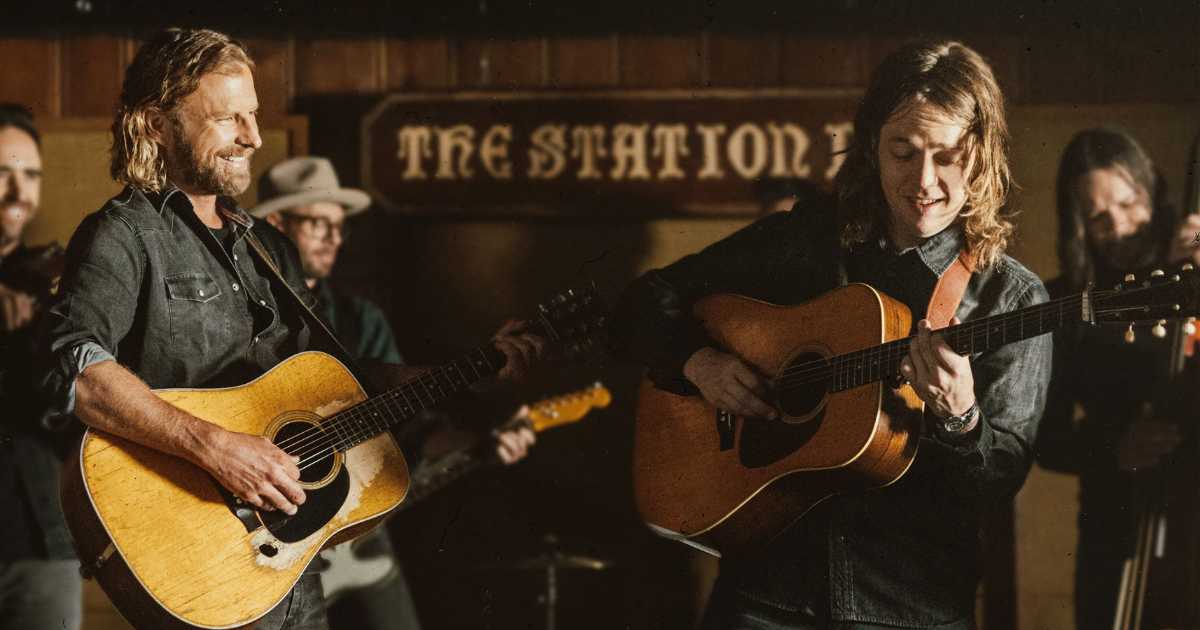
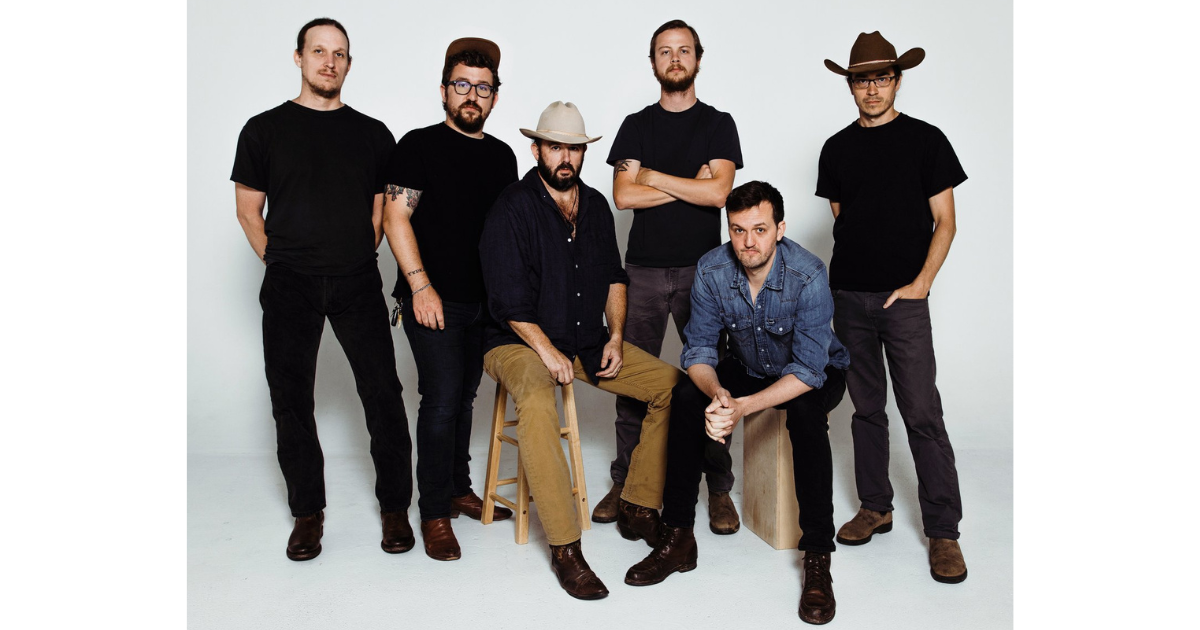
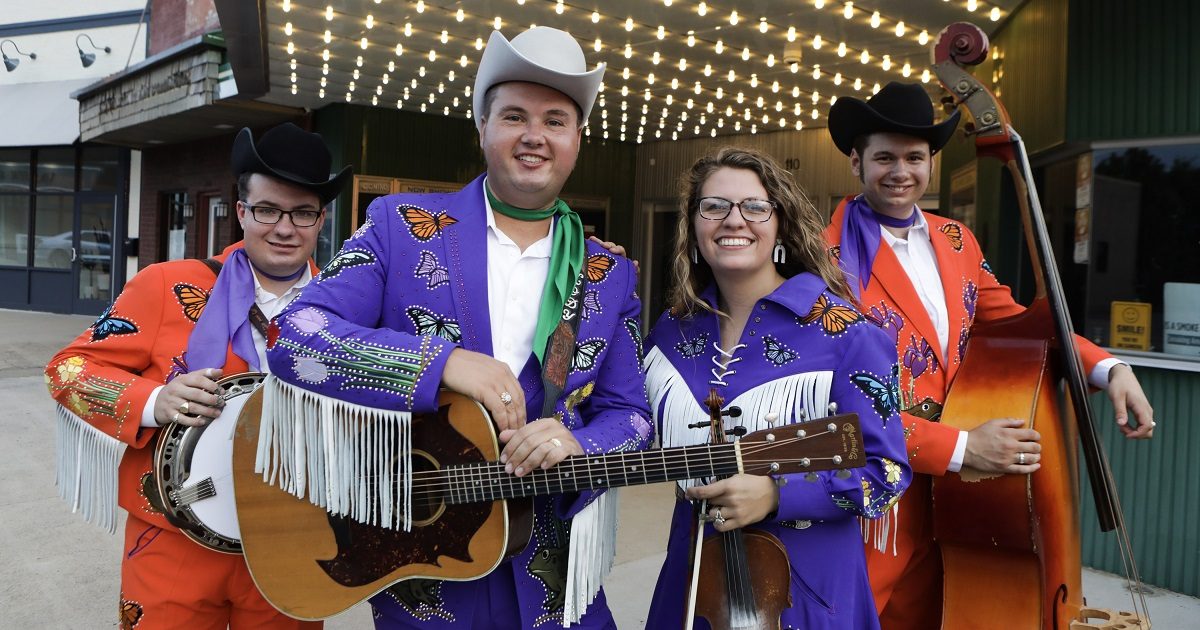
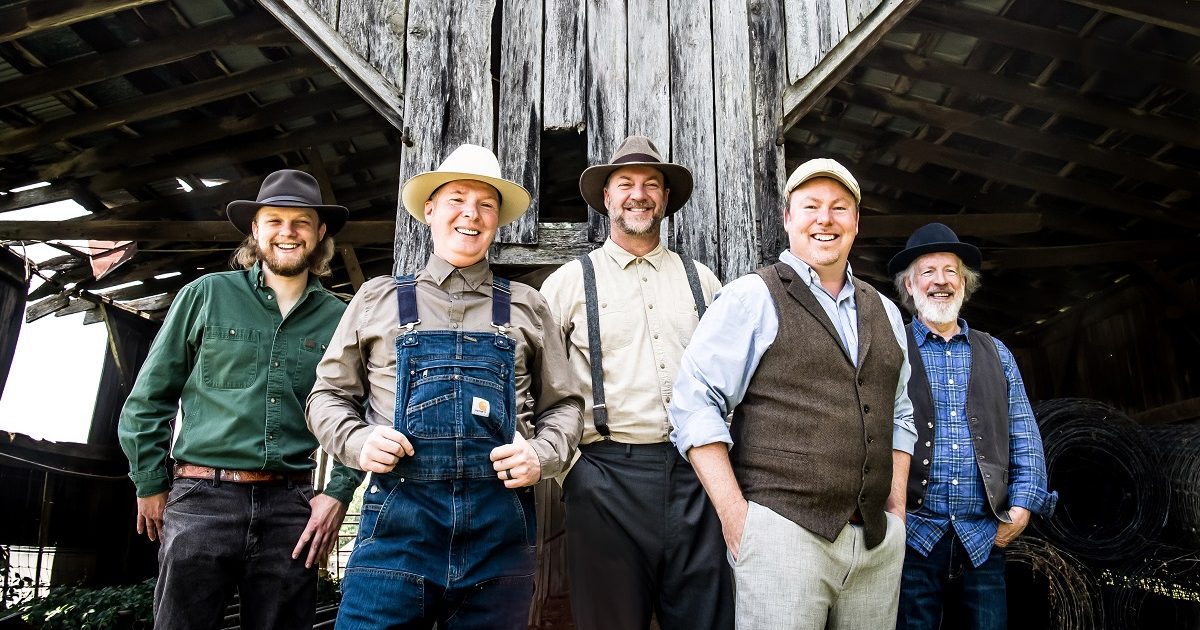
LISTEN: Appalachian Road Show, “Only a Hobo” (Bob Dylan Cover)

Artist: Appalachian Road Show
Hometown: Nashville, Tennessee
Song: “Only a Hobo”
Album: Jubilation
Release Date: October 7, 2022
Label: Billy Blue Records

In Their Words: “‘Only a Hobo’ is a classic Bob Dylan song. It’s the kind of song that can fit in many different genres, musically speaking. We were fans of the song already, but when we heard Hazel Dickens’ version, we immediately put it on our ‘short list’ of songs to record. We feel like it is a great representation of what Bill Monroe called his ‘high lonesome sound.’ Appalachian Road Show’s version of the song comes equipped with capos on the 4th fret and a little yodeling.” — Barry Abernathy, Appalachian Road Show


Photo Credit: Erick Anderson

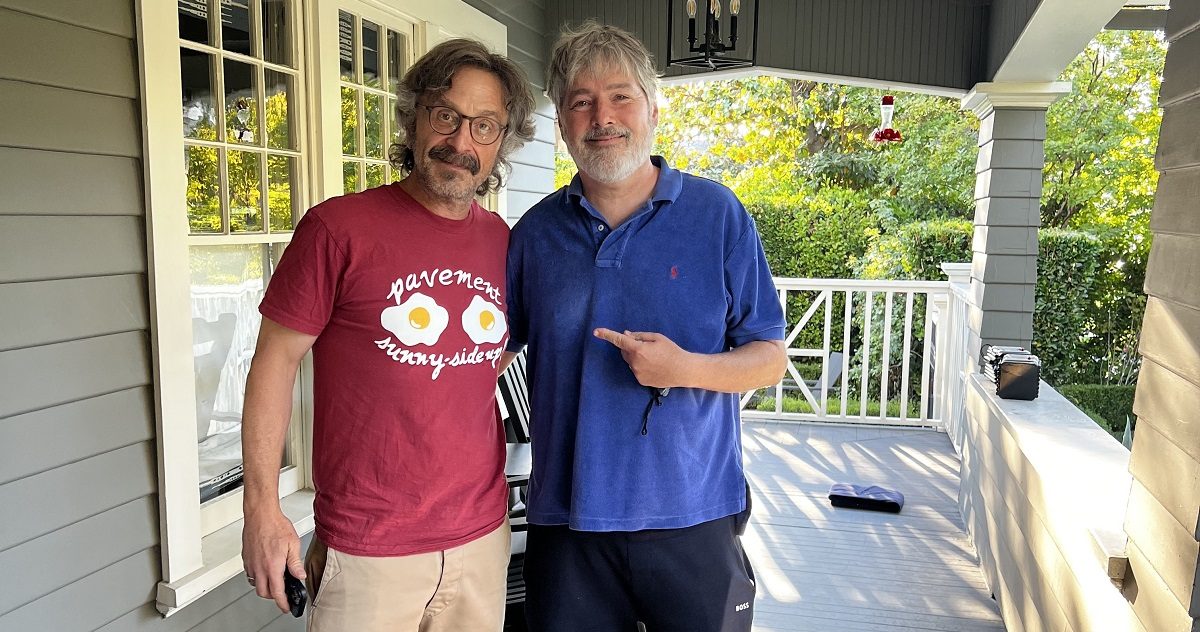
Bluegrass Memoirs: The First Canadian Bluegrass Festival (Part 2)

[Editor’s note: Read part one of Neil’s Memoir on the First Canadian Bluegrass Festival here.]

On Wednesday, August 2, 1972, after an overnight ferry voyage, I arrived in North Sydney, Nova Scotia. A four-hour drive brought me to Fred and Audrey Isenor’s mobile home in Lantz, 50 km (30 miles) north of Halifax. It was just after 7 pm, and they already had company, including gospel singer Lloyd Boyd, known as “The Radio Ranger,” and Charlie Fullerton, a dobroist and bassist whose sound system was to be used at the Jamboree.

Other friends of Fred’s dropped in that evening – men and women active in the local country music scene who shared his interest in bluegrass. I was the center of attention, the imported expert on the eve of Nova Scotia’s first homegrown bluegrass event. In my diary I noted:

Immediately I was quizzed on my knowledge of instruments, principally, D- series 45 style Martins but other things as well. Fred’s F-5 pulled out, my F-4 and Mastertone looked at.

Owning a prewar Gibson or Martin was a mark of serious interest in bluegrass. The big fancy Martin D-45 was the top of that guitar-maker’s line. Only 90-some were made from the early ‘30s to 1942; these were owned by famous country stars, including bluegrass great Red Smiley. In the late ‘60s Martin began making the D-45 again. Lloyd had one. 

I noted another visitor: 

Carl Dalrymple, a C&W bassist and guitarist about to go on the road with his sister-in-law [Joyce Seamone] who has a number one Canadian Country hit, “Testing, One, Two, Three,” came [by]. He’s a D-45 owner, too.

Carl’s son Gary, then three years old, already introduced by his father to bluegrass, became one of the second generation of musicians nurtured at the Festival which grew out of the coming Friday’s Jamboree. In 1993 Gary, a mandolinist, joined The Spinney Brothers, one of Nova Scotia’s most successful bands. I was honored to have them play during my 2014 induction into IBMA’s Bluegrass Music Hall of Fame.

By the early ‘70s, bluegrass in the Maritimes had been embraced by the young, working-class, rural country musicians who formed most of the “spread out” Canadian bluegrass community Vic Mullen had told me about. This night at the Isenors’ was my introduction to a new world of musical friends and acquaintances.

As the evening wore on, the focus shifted from instruments to music making. We jammed; I noted:

We played lots of gospel songs, few bluegrass standards, I did requests for Peggy [Warner, a budding banjo picker]. Tempos were slow generally.

This was not like bluegrass jams I’d experienced during the 1960s working and hanging out at Bean Blossom. In a sense, it was a step back in time for me. In my college years, fifteen years before, I’d first learned about bluegrass through recordings. It was a distant thing.

Then I moved to Indiana, met Monroe at Bean Blossom. By the time I moved to Canada the festival movement had attracted new audiences. Mid-’60s youth had embraced folk music; that drew some of them into bluegrass — the beginning of a process of gentrification that I’ve written about in Bluegrass Generation (pp.240-42). In 1972, this hadn’t happened yet in Atlantic Canada. 

The next afternoon, Thursday the 3rd, Fred took me into Halifax. Knowing I was a professor of folklore, he wanted to show me a new shop in town, the Halifax Folklore Centre. He introduced me to the owners, the Dorwards, who, I noted:

Looked at my F4 (fret wire needed, if they are to do a fret job). I got the J&J instrumental LP. Lots of blues records. Fred and Tom Dorward, the owner, get on well.

I don’t recall much talk about the Jamboree. Months later, Fred confided to me that in promoting the event, they’d failed to connect with the Halifax university students who were into folk music. Dorward would play a role in that regard at the Festival, which grew out of the Jamboree. Next, I noted:

…we went to CBC to see about placing ads, and then to an electronics distributor for a mike.

Later I added to this note:

…a local fiddler who was supposed to play in Friday’s festival — Russ Topple — had unexpectedly gone to the U.S. (Wheeling) so when we stopped at the CBC … Fred put my name on the ad as visiting banjo picker. Everyone knows that I worked with Monroe, most think that means as a banjo picker. Lots of questions about the banjo (“old Mastertone”) etc.

After supper we went to farmer John Moxom’s place out in the country at Hardwoodlands, the festival site, about 14 km (8.7 mi) east of Lantz, to help Charlie Fullerton set up his sound system. I noted:

Farmer J.M. has built outdoor covered stage about the size of and dimensions of that at Roanoke. On 4 posts 6’ high; 18’x10’ floor with covered sides (except for the last 4’ at front). Roof slopes from 10’ at the front to 7’ at the back. Rough steps off the left corner rear. We end up setting speakers on Fred’s ’66 Chrysler roof beside the stage for separation. See map of festival site on the following page.


A hand-drawn map of the layout of the first Canadian bluegrass festival. Excerpt from Rosenberg’s personal journals.


The evening ended with a rehearsal at the home of Don and Joyce Peck, Fred’s bandmates. I noted:

Charlie subbed on bass for Fred’s partner (in his Lantz music store, Country Music Sales), Bruce Beeler, who works as a chef on the CN RR.

After dinner the next day (Friday the 4th), Fred and I returned to his home after visiting more of his musical friends, to find The County Line Bluegrass Boys had arrived. They would be playing at Jamboree that evening. They were from Lunenburg County, down on Nova Scotia’s South Shore. I noted:

The mandolin player and the banjo player (Mel Sarty) are the central figures in the group — first got into Bluegrass when they were 11-12 years old in the early sixties, when a relative bought the Bluegrass Gentlemen LP by chance. Have learned entirely by records. … They do quite a bit of four-part singing. 

Vic Mullen, Nova Scotia’s best-known bluegrass musician, was the emcee that evening at the Jamboree. The audience was mainly in cars, parked in front of the stage. Applause came in the form of honks and flashed lights. Three Nova Scotia bands appeared.

The Pecks with Fred and Bruce on bass opened. Vic and I helped add a bluegrass touch to their sound with fiddle and banjo. A number of other singers and pickers joined us for guest appearances. Next came the County Line Bluegrass Boys. 

The Boutilier Brothers closed the show. They came from a musical family; their grandfather was a well-known old-time fiddler in the region, and the two oldest brothers, Bill and Larry, began their professional career with their father, also a noted fiddler. They were inducted into the Nova Scotia Country Music Hall of Fame in 1999.

By the early 1960s they were singing brother duets and appearing with Vic Mullen on banjo. With the help of Mullen, they made four LPs (all had “Bluegrass” in their title) on the Rodeo label between 1963 and 1967, by which time a third brother, Ken, had replaced Vic on banjo. The brothers had retired several years before, but came out of retirement specially for the Jamboree. 

When Fred and Vic surveyed the results of the Jamboree, they decided to try another the following year. This time they would announce it as “the second annual BLUEGRASS FESTIVAL at Hardwoodlands, N.S., July 27, 1973.” The Boutiliers and the Country Line Bluegrass Boys appeared again; more widely advertised, it was successful and drew enough bluegrass enthusiasts that in 1974 Fred and Vic brought Tom Dorward into their planning and began working on a two-day event.


John Moxom, Neil Rosenberg, Vic Mullen and Fred Isenor at Hardwoodlands, N.S., July 1973


For the next five years, I traveled to the Festival annually from Newfoundland to help Fred and the gang, running instrumental workshops, emceeing, and appearing with our St. John’s-based band, Crooked Stovepipe.

As the Festival took off, young musicians began appearing. Eventually a fourth generation of Boutiliers became involved. In the 1980s these young pickers added Vic Mullen to their band, and, with his encouragement, took on his old band name, calling themselves Birch Mountain Bluegrass Band. In 2001, 2002, and 2004 they won the East Coast Music Association’s “Bluegrass Album of the Year” award.

Another second-generation band developed out of the County Line Bluegrass Boys. In 1973 banjoist Mel Sarty’s brother Gordon joined the band as bassist and in the 1980s he and his three daughters created a new band, Exit 13. Lead vocalist, songwriter, and banjoist Elaine Sarty fronted the group. They won the ECMA “Bluegrass Album of the Year” in 1997 and 1998. Here’s a profile of the band that appeared in the ‘90s on a national prime time CBC show, “On The Road Again.

This, of course, was all to come! I knew nothing of the Jamboree’s bluegrass festival future when I left the Isenor home on Saturday August 5, 1972, continuing my research trip. Heading west on the Trans-Canada Highway, a half-day’s drive brought me to Woodstock, New Brunwick, near the Maine border. There I visited a student and her family who’d invited me to see the Don Messer Jubilee at Old Home Week, Woodstock’s annual fair.

The event was held in a large building in Connell Park, the fair site. It had three components: the Jubilee concert, a fiddle contest, and a dance.

The concert followed the format of Messer’s television broadcasts, with fiddle tunes prominently featured along with songs by the band’s remaining vocalist Marg Osburne. Her singing partner, Charlie Chamberlain, had died less than a month before. This was one of the Jubilee’s last public performances; Messer would pass in March 1973.

The fiddle contest, which Messer judged, was won by Mac Brogan, a fiddler from Chipman, NB. Here’s a sample of his fiddling, very much in the Don Messer style, from his 1984 album:

Finally, chairs were cleared away and Messer and the Jubilee orchestra played for dancers. Although Messer continued on the fiddle, several of the other musicians switched to wind instruments. The music was mainly a sentimental reprise of popular songs from the big band era that they’d played for dancers during their salad days in the ’40s and ’50s.

After the dance I introduced myself to Mac Brogan, telling him I was interested in researching old-time and country music in Canada and asking if he would be willing to talk to me some time for an interview. He consented and gave me his address. It would be over a year before I’d have time to do the interview, but this, along with my conversations with Fred and Vic, marked the start of what would become a decade of studying the connections between country and folk music in the Maritimes.

On Monday the 7th I was off again, heading into New England, en route to southern bluegrass scenes.


Rosenberg is an author, scholar, historian, banjo player, Bluegrass Music Hall of Fame inductee, and co-chair of the IBMA Foundation’s Arnold Shultz Fund.

Photo of Neil V. Rosenberg by Terri Thomson Rosenberg, all other photos by Neil V. Rosenberg. 

Edited by Justin Hiltner

Billy Strings, Béla Fleck, Dolly Parton Win IBMA Bluegrass Music Awards

Three of the most innovative artists in roots music — Billy Strings, Béla Fleck, and Dolly Parton — were revealed as IBMA Bluegrass Music Award winners on Thursday night (September 29) in Raleigh, North Carolina.

Billy Strings received the coveted Entertainer of the Year Award for the second year in a row, along with Song of the Year honors, at the 33rd Annual IBMA Bluegrass Music Awards Presented by Yamaha. In addition, Béla Fleck claimed awards for Album of the Year, Instrumental Group of the Year, Instrumental Recording of the Year, and Banjo Player of the Year. Dolly Parton’s recent recording of the gospel classic “In the Sweet By and By,” featured on the 2021 Country Faith Bluegrass album, won Gospel Recording of the Year and Collaborative Recording of the Year honors.

Other familiar musicians to win awards include Sierra Hull, Bronwyn Keith-Hynes, Cody Kilby, Doyle Lawson & Quicksilver, Del McCoury, Justin Moses and Molly Tuttle. Rick Faris was named New Artist of the Year. Jason Moore, a member of Sideline who died of a heart attack last November at age 47, was named Bass Player of the Year. Previously announced inductees into the Bluegrass Music Hall of Fame are beloved instrumentalist and vocalist Norman Blake, broadcast pioneer and recording artist Paul “Moon” Mullins, and eclectic, influential singer-songwriter Peter Rowan. Hosted by Ronnie Bowman and Dan Tyminski, the show was held at the Duke Energy Center for the Performing Arts.

The recipients of the 2022 IBMA Bluegrass Music Awards are:

ENTERTAINER OF THE YEAR: Billy Strings
(Editor’s Note: Read our BGS Artist of the Month interview with Billy Strings.)

SONG OF THE YEAR: “Red Daisy,” Billy Strings
Written by Jarrod Walker/Christian Ward

ALBUM OF THE YEAR: My Bluegrass Heart, Béla Fleck
(Editor’s Note: Read our BGS Artist of the Month interview with Béla Fleck.)

INSTRUMENTAL GROUP OF THE YEAR: Béla Fleck My Bluegrass Heart

INSTRUMENTAL RECORDING OF THE YEAR: “Vertigo,” Béla Fleck featuring Sam Bush, Stuart Duncan, Edgar Meyer, and Bryan Sutton

VOCAL GROUP OF THE YEAR: Doyle Lawson & Quicksilver
(Editor’s Note: Read our BGS interview with Doyle Lawson.)

NEW ARTIST OF THE YEAR: Rick Faris
(Editor’s Note: Watch the BGS video premiere of “Deep River.”)

COLLABORATIVE RECORDING OF THE YEAR: “In the Sweet By and By,” Dolly Parton with Carl Jackson, Larry Cordle, Bradley Walker, and Jerry Salley

GOSPEL RECORDING OF THE YEAR: “In the Sweet By and By,” Dolly Parton with Carl Jackson, Larry Cordle, Bradley Walker, and Jerry Salley

FEMALE VOCALIST OF THE YEAR: Molly Tuttle
(Editor’s Note: Read our BGS interview with Molly Tuttle.)

MALE VOCALIST OF THE YEAR: Del McCoury
(Editor’s Note: Read our BGS interview with Del McCoury.)

BANJO PLAYER OF THE YEAR: Béla Fleck

BASS PLAYER OF THE YEAR: Jason Moore

RESOPHONIC GUITAR PLAYER OF THE YEAR: Justin Moses

FIDDLE PLAYER OF THE YEAR: Bronwyn Keith-Hynes

GUITAR PLAYER OF THE YEAR: Cody Kilby

MANDOLIN PLAYER OF THE YEAR: Sierra Hull


Photo Credit: Joshua Wilkins Black

Basic Folk – Brittany Haas

Fiddler Brittany Haas has an impressive resume: she started touring at 14 with Darol Anger, recorded her debut album at 17, started performing with Crooked Still before she finished college, has played on Chris Thile’s radio program Live From Here and done stints in David Rawlings and Gillian Welch’s David Rawlings Machine. Currently, she’s teaching workshops and classes in between working with her band Hawktail along with Paul Kowert, Jordan Tice and Dominick Leslie. Their latest album, Place of Growth, is a song cycle in appreciation to the natural elements, which have always intrigued Brittany.

LISTEN: APPLE • SPOTIFY • STITCHERAMAZON • MP3

She’s a trailblazer in fiddling and also has an acute awareness of burnout. The past few years have seen her pursuing and obtaining a masters in social work and teaching classes at East Tennessee State University as their artist-in-residence. Our conversation includes a discussion of balance and awareness when it comes to keeping her music joyful. And then there’s science: she has a degree in Evolutionary Biology at Princeton University. Also, Hawktail’s latest album is a journey through the natural world. We talk about the band giving each other the space to be themselves on the record. Brittany is chill, brilliant and generous. Enjoy and then go listen to Hawktail’s new record all in one sitting.


Editor’s Note: Basic Folk is currently running their annual fall fundraiser! Visit basicfolk.com/donate for a message from hosts Cindy Howes and Lizzie No, and to support this listener-funded podcast.

Photo Credit: Dylan Ladds

A Bluegrass Family Reunion at AmericanaFest: Photo Recap

Ahh it was good to be back at AmericanaFest this year. While last year’s conference felt a bit lighter than normal years, with the pandemic bringing a tentative air, 2022 felt like a bit of a family reunion as we came back in full swing, especially as BGS gathered through the week with so many of those closest to us to celebrate our 10th year. After all, BGS is nothing without our community. BGS is the community! Take a look at the gallery below for a photo recap of our week in Nashville.

We started things off on Tuesdat at a packed Station Inn for a night of bluegrass with Jason Carter and Friends, featuring special guests like Ronnie and Rob McCoury, Michael Cleveland, Ketch Secor, Bronwyn Keith-Hynes, Shelby Means, Kyle Tuttle, Vince Herman, and David Grier.

Wednesday brought a happy hour at the City Winery Lounge ahead of the Americana Honors and Awards that evening, as we officially celebrated 10 years of BGS (featuring a ton of birthday cake – thanks to the Cupcake Collection!) and an afternoon of music from Rainbow Girls, Willie Watson, and Kyshona.

Finally, on Friday we gathered at the Basement with our friends at Nettwerk Music Group and Taylor Guitars, with performances from Lullanas, Phillip LaRue, Brooke Annibale, Mark Wilkinson, Old Sea Brigade, and Bre Kennedy.


Photos by Steve Lowry

Peter Rowan Shares a Timeless Lesson He Learned From Bill Monroe (Part 2 of 2)

Born on July 4, 1942, it seems rather poignant that this musical ambassador of freedom and exploration came into this world on Independence Day. First emerging onto the national scene in the early 1960s as a member of Bill Monroe’s Bluegrass Boys, Rowan was a young buck — a “green horn,” as he’d say — who found himself alongside the “Father of Bluegrass,” singing lead and playing rhythm guitar.

And though Rowan and Monroe were very different people from equally different backgrounds, there was a deep, mutual love and respect for the sacred art form that is music — either learned, recorded or performed live — where lessons and anecdotes spun by Monroe decades ago have remained written on the walls of Rowan’s memory and throughout his extensive melodic travels.

The second half of our conversation hovers about the road to the here and now, about nothing and everything, and anything in-between, which is just how Rowan has always carried himself, that signature glint of mischief in his eyes radiating hardscrabble sentiments of a life well-lived.

Editor’s Note: Read the first half of our interview with BGS Artist of the Month, Peter Rowan.

When you think about getting older, what are your reflections on your relationship with Bill Monroe — as a musician and as a mentor to you?

Rowan: I’m just taking what he was doing a little further — that’s all. He said, “Pete, don’t go too far out on the limb, there’s enough flowers out there already.” He saw me coming. And his mentorship is just something that’s part of me.

Which you’ve parlayed into mentoring other people.

Yeah, I’m at that point. I remember what Josh White and John Lee said to me as I nervously presented my playing to them — “take your time, take your time.” The bluegrass guys, [fiddlers] like Tex Logan and Kenny Baker, were the touchstone of bluegrass at the time. Any jam session was led by the fiddlers, and then you’d throw a few songs in. But it was the fiddlers — Buddy Spicher, Richard Greene, Kenny Baker, Tex Logan, Vassar Clements. It could be five fiddlers and they’d all play that tune. That’s what the jam was, it was playing fiddle tunes. It wasn’t like, “Okay, you take a chorus and just play.” You stayed within the structure.

By the way, this whole idea of jamming, there’s always that element in the jam where you go to sort of an unknown place. There’s a real artless art to that. And I’m not sure the bluegrass folks are going there, because most of their instruments are short duration notes. It’s not like a saxophone where you take a breath and just blow for eight bars. But, I have to say the fiddle player for the Steep Canyon Rangers, [Nicky Sanders], he’s taken it up [a notch] — he’s paid attention to Vassar.

When you look at all of the musicians you came up with in the 1960s, there’s not a lot of them left right now.

It’s me and Del [McCoury].

That’s about it. And maybe Bobby Osborne.

Bobby is still alive, and I’m so glad I got to record with him a few years ago for Compass [Records]. And there’s David Grisman.

In terms of touring, you and Del are the ones that are always out there, onstage and on the road.

Yeah. Well, I think it’s part of the gift of being able to indulge in the thing that gives you the power to sing. You can have a lot of afflictions. But if you can sing, you can overcome. The weight of age. For instance, I saw Del last summer. We played out in Colorado, and there’s this picture of us — we look like we’re 10 years old. Just laughing and smiling, well, because it is a joy.

Both of you have never lost that childlike wonder of creation and discovery. You’ve always retained it.

Yeah. But people who want to say Del is upholding the tradition? Yes — stylistically, musically — he is. But he’s doing Richard Thompson songs. Del’s not close-minded.

You’ve always had this core of tradition, but you’re never shied away from jumping the fence into other genres.

And I’ve been criticized for it. Going to Jamaica and recording reggae with bluegrass songs. Going to Texas and recording with the great Flaco Jimenez. Come on, these are masters of our world — how could anybody in their right mind not do what I did? Bluegrass Unlimited once referred to me as a “schizophrenic musician,” like it’s a mental thing, where “he’s gone off the deep end.” [Laughs]

The criticism you faced is like what Billy Strings is facing today, and what Sam Bush faced in the 1970s. It seems every 20 years or so, the critics always say the sky is falling in the world of bluegrass. But it never does. It remains.

I think that goes back to Bill Monroe. He said this [to me], “If you can play my music, you can play any music.” That goes for Billy [Strings], too. And [Bill] saw it, where maybe I didn’t see myself as that. [Growing up], I had my little rockabilly band The Cupids, and I learned some Lead Belly tunes, trying to learn Lightnin’ [Hopkins] tunes. And here’s Bill Monroe, and it’s perfect. There’s harmony. It’s hard-driving. There’s acoustic guitars. It’s got everything I wanted.

You’ve had this incredible life — traveling the world, meeting people, collaborating onstage and off with all these musicians — what has the culmination of all of those experiences thus far taught you about what it means to be a human being?

Well, you know, all of these players were always the ones that didn’t have any prejudices. You sit down with Lightnin’ Hopkins and he doesn’t care. He’s not like, “Oh, white boy wants to steal my music.” These guys were musicians, and they weren’t just your average person.

I lived in the South long enough to have tremendous respect for the amount of heart that the Black people down in the South had. People who lived through the hard times and were glad to be driving a cab to get you to the airport, [where] you shake hands with that man — his hand is warm, just warm love and compassion in that hand. During those years — the 1960s — when it was still segregated in the South, it was weird, this thing of love and theft.

I was with the Bluegrass Boys and I remember one night we played the Guthrie Theater in Minneapolis. Mance Lipscomb was on the bill. He came back and we’re all sitting around the dressing room. I asked Bill and Mance if they would play together. You might see [something like] that at Newport [Folk Festival], maybe. But mostly it was segregated into different musical styles [at that time] — Cajun, blues, bluegrass. I said, “Would you guys play?” And they didn’t know what to play. Bill goes, “What do you want us to play?” Bill didn’t know what to play. He didn’t know the starter blues. And Bill just started playing, and Mance played along, too. But it wasn’t this moment that I had imagined, like this intergalactic grandeur, you know what I mean?

[Bill and Mance] were really specialized in their own world. Mance Lipscomb, his music was complete, his version of the blues. Bill Monroe’s music was complete, his version. But [Bill] would talk about his “other music.” He’d say, “It wouldn’t have a dobro, but it might have a slide guitar.” I’d say, “And a mandolin?” He’d say, “Maybe not a mandolin, but maybe one of them little guitars.” [I’d say], “Like a what? A ukulele?” I think his “other music” was the mellifluous laidback music of a Hawaiian feel. Slow. Because bluegrass was all about keeping it up, playing for farmers who were exhausted, folks that had been up since 4:30 in the morning, go to a little schoolhouse and see Bill Monroe. He said he wanted to give them something that would raise their spirits.

And the world changed while Bill was alive. Typically, he would steer away from anything that compromised him. He began to understand that his position was not that of a star so much as [he was] a progenitor of musical tradition. He took from many different things — blues, gospel, Celtic. And he alone had figured out a way to put it all out there, soon to be copied by many, many others. And the talent of those others were helping him develop his style — Earl Scruggs, Lester Flatt, Don Reno, all those folks.

(Rowan pauses for several seconds, seemingly lost in thought at the initial question posed.) What are you thinking right now?

Well, I’m not really thinking very much. [Laughs]. But I want to make sure that we’ve covered some of the things that you’re asking.

Well, you’ve lived the life of an artist. What is that life of an artist, and why is it that was the path you ultimately chose?

Okay, this is the connection now. When I was four years old [in 1946], my Uncle Jimmy came back from the Navy. He’d been in the South Pacific [during World War II] and he brought back grass skirts and coconut bras, all this tourist stuff because he’d been stationed in Honolulu, Hawai’i. I remember the first musical experience I had was Uncle Jimmy dancing around our living room [in Massachusetts] in his skivvies with his sailor hat on playing the ukulele and singing “My Little Grass Shack in Kealakekua, Hawai’i.”

I guess that just seemed like such a happy thing, you know? That was so different from what was the norm. After World War II, they were all celebrating. But Uncle Jimmy was saying, “Hubba, hubba, ding, ding,” all these strange things. Well, [later in life], I went to Hawai’i and traced Uncle Jimmy’s footsteps. I found out he [used to hangout] at this hula bar called Hubba Hubba. He had absorbed what he could — during the middle of World War II — some of that inspiration from the Hawaiian aloha spirit.

And that’s in you. I know that’s in you, too.

Yeah. So, when Bill Monroe was talking about his “other music,” I think he was talking about Hawaiian music. Because his song, “Kentucky Waltz”? The melody of that song was recorded in 1915 in Honolulu by John Kameaaloha Almeida, this Portuguese-Hawaiian orphan, who was adopted and raised by a Hawaiian family. He had a really strong band. A lot of the younger singers of the 20th century went through his band as featured singers, and he had three girls singing harmony. So, when Bill Monroe had a hit with “Kentucky Waltz,” he was singing a melody that came from Hawai’i, probably a classically derived melody. There’s this strange sort of admixture of technique and heart, you know? And that’s always been my path.

I feel like, maybe subconsciously, that memory you have of your uncle is what you’ve been chasing after your whole life.

I think I’ve been wanting that coconut bra and grass skirt again, man. [Laughs].


Photo Credit: Amanda Rowan

At 80, Peter Rowan Is Still Broadening the Scope of Bluegrass (Part 1 of 2)

Slowly stepping off a small stage underneath a large tent at the Suwannee Spring Reunion, Peter Rowan wipes the sweat from his face with a fresh towel and releases a big sigh — another whirlwind solo set in the books, another audience clapping wildly for the mesmerizing, singular presence that is Rowan.

It’s hot out, especially for mid-March, with the oppressive heat of an impending southern summer already present in the depths of rural Florida where the gathering calls home. Dozens of concertgoers rush over to Rowan to get an autograph and take a photo together, but more so to share a story or memory of another juncture where their paths crossed.

At 80 years old, Peter Rowan is an American musical institution, this cosmic chameleon of raw talent and endless curiosity, one who has meandered up and down the peaks and valleys of the universal sonic landscape — bluegrass, rock ‘n’ roll, reggae, blues, Tex-Mex, folk, jazz, and so on — since he was a teenager first learning to play music in his native Boston. He has created his legacy on his own terms, and at his own pace — something not lost on those who view him and his music as the way, and the truth.

Enjoy the first part of our interview with BGS Artist of the Month, Peter Rowan.

BGS: What are your thoughts about turning 80? I know you’ve never been someone to focus on time itself, seeing as you’ve always looked at everything as “one moment,” you know?

Rowan: Well, somebody [recently] asked me, “How do you feel when you sing the old songs that you wrote in the ‘Land of the Navajo’ days?” — in the late 1960s, driving across America, still haunted by the same ghosts that Jack Kerouac was finding on the road. I was part of that vibe, you know? And I told them when I sing those songs, they’re as fresh to me today as when I wrote them. I’m not reliving them, but I’m keeping alive the experience that I had. I don’t feel necessarily that I have to go into a mode. In other words, I’ve been onstage enough to have fun.

And to get around this little bit of this question of the past and turning 80, I just recorded with Flaco Jimenez again down in Texas, recorded with the band Los Texmaniacs, and they’re all disciples of Flaco. And the kind of polarity that was happening in the late 1970s and 1980s, Flaco was criticized by his own people for playing with me and Ry Cooder. It’s like, the rock/folk pretty much white audience thought it was the greatest thing in the world. But his own community felt that he slightly betrayed [them].

The same thing happened to me when I went to England and played with Flaco. The English critics hated what I was doing because it didn’t fit the mold. I was not a brown person. I didn’t have that look. Everybody associates something with a visual, with a taste. But we were still happy to play. It’s just after a while that was a hard hill to climb, when your fellow musicians believe in you, but the critics are critical of the whole thing. It’s a little bit odd. But now, it’s gone. They’re not there anymore. They’d have to be 90 years old and grumbling at their television, because they were all older than I was [back then].

I’m turning 80, and it’s great to feel like I’m, maybe, leading the pack in some way, as an example of a person who broadened the scope of a couple of things. All of Flaco’s musicians — Los Texmaniacs, Max and Josh Baca, Noel Hernandez — they all grew up hearing Stevie Wonder. So, their Tex-Mex music is way beyond [how it was before].

I think it’s the same thing in bluegrass. I just did a record for Rebel and I’ve got Molly Tuttle, Chris Henry, Julian Pinelli, Billy Strings and Max Wareham [on it]. Some of them aren’t that well-known in the popular imagination of bluegrass because they’ve been doing it on a [certain] level. Billy’s a breakout artist. Molly’s a breakout artist. Chris has been doing it since he was five years old, and he’s never gotten his due.

With the critics, I just don’t pay that much attention. Because, right now, what used to be the complaint is the sort of crossover factor. It used to be a complaint that it’s not pure. Well, how can it not be pure? Everybody who’s playing it now has listened to world music since 1990. They’re all in their late 20s. So, the musicality is still evident. We play Monroe-oriented style — it’s all the lineage through the Monroe style.

It’s that experience of being raised in the internet age, having access to all music at all times, and what that influence does to a person.

Right. And that somebody has the musicality to choose a direction. If I was to say, critically speaking of the jam-grass scene, it’s great exercising your musicality in an open-ended way, right? I guess for the party, for the crowd-pleasing, the stadium-grass — that’s why that happened, because that can happen. People are willing to get out there and bounce around and listen to bluegrass bands. I think the Grateful Dead started a wheel spinning that is just always creating sparks of creativity.

I never learned any Grateful Dead songs except for a couple of verses of some songs, but I got to play with Phil Lesh over the past few years, and I really appreciated his architectural approach to form. I got to sit in with him, and I did it without learning any songs — I got to learn onstage, which is the best way to learn.

And you know, [with playing with Phil], I realized why Jerry [Garcia] liked my songs, because in my songs are a lot of the same chord juxtapositions form-wise that are in he and [Robert] Hunter’s songs. I never realized that before. There are two things that Jerry wrote from; he wrote from fiddle tunes and the blues. And I realized that playing Grateful Dead songs — going into the chorus, “Oh, it’s the fiddle tune part,” going back to the verse, “Oh, it’s the blues.”

Old & In the Way was such a groundbreaking act that blew the doors open in a lot of aspects of bluegrass, country and rock ‘n’ roll music. What do you remember when you look back at that time?

A freedom to record any kind of songs that were emotional, like “Wild Horses” or “The Hobo Song.” In “Midnight Moonlight,” there’s that mysterious little section where there’s a freeform solo going from the key of C back to the key of A. I got that from Otis Redding. That was one of his famous chord changes when he does his outs on those R&B songs. In fact, it’s in “I’ve Been Loving You Too Long” and I think it’s in “Shout Bamalama,” too. It’s also the same thing with “Jumpin’ Jack Flash,” passing through that kind of thing as a riff. I thought, here’s a song in the key of A, and it’s using A/D/B minor/D/E/F sharp minor/E/D and then, if you throw a C in there for the solo section, it’s like a complete release from all these chord changes. So, that release became the beginning of these younger pickers going, “Wow, we can play on that for an hour.” Because we used to play 10 minutes on that riff alone.

What sticks out from that experience onstage with those musicians in Old & In the Way?

Well, if it was a local [show], Jerry would be there before anybody with his carton of Camel cigarettes, and Steve Parish [would be there, too]. And you realized that Jerry was an intergalactic traveler, just dropping in on the Earth scene for a little while, but he was totally at home.

I had just come from a band called Seatrain, which was very organized. It was extremely organized. It was great because we rehearsed so much that when we got out onstage you didn’t have to think at all, you could just rock out, you know? Rock ‘n’ roll was the vibe. They were a very adventurous band. All kinds of time movements, changes and kicks, accents. And then to come to Old & In the Way from there was like, “Oh, I can breathe again.” I remember singing the ending of “Land of the Navajo” at the first rehearsal and I looked over at Jerry. He kept nodding his head like, “go.” It was like Jack Kerouac at Allen Ginsberg’s poetry reading at City Lights Bookstore — “go, man, go.” Encouragement, encouragement.

And at our shows with Bill Monroe, you can hear me and Richard Greene encouraging Bill. In bluegrass, you just do the beautiful grace of presenting the music, being good neighbors and all that stuff. But you could hear us in the band going, “go, man, go.” Go for it, that’s where we came from. That’s what Old & In the Way was — the “go for it” signal to everybody.

Editor’s Note: Read the second half of our BGS Artist of the Month interview with Peter Rowan.


Photo Credit: Amanda Rowan

For Bluegrass Fans, Kentucky Offers a Commonwealth of Tourist Attractions

Kentucky music is currently having a moment, but it’s far from the first time. Before artists like Tyler Childers, Sturgill Simpson, and Chris Stapleton made it big, folks like Bill Monroe, Loretta Lynn, Keith Whitley, Crystal Gayle, Tom T. Hall, Patty Loveless, Ricky Skaggs, Dwight Yoakam, and countless others helped build up the Bluegrass State’s rich musical foundation spanning bluegrass, country music, and more.

With so much talent having originated from Kentucky, there’s no shortage of destinations around the Commonwealth to consume this musical history. From the Mountain Arts Center in Prestonsburg in the southeast to the Muhlenberg Music & History Museum in the west, Lexington’s Red Barn Radio and beyond, every nook, cranny and holler throughout the state is full of destinations beckoning to be explored by music fans. We’ve compiled more than a dozen of these attractions below in an epic road trip that could be called the Kentucky Music Trail.

Central Kentucky

Opened in 2002, the Kentucky Music Hall of Fame & Museum in Mount Vernon features exhibits showcasing talent from throughout the state ranging from country and bluegrass trail blazers like Bill Monroe, Loretta Lynn and Keith Whitley along with Black Stone Cherry, The Kentucky Headhunters and Exile, among others. The museum is open from 10 a.m.-5 p.m. daily with an admission of $10.


Also sitting on the same 55-acre property is the Renfro Valley Entertainment Center. First opened in 1939, the massive barn features two unique performance halls that host country, gospel and bluegrass music annually from April through December. Additionally, the venue has been the home of Renfro Valley Gatherin’, a syndicated radio program airing on Sunday nights at 9:30 p.m. EST, since 1943. The show is the third oldest continually broadcast radio program in America and the second longest continuously running such program featuring country music, behind only the Grand Ole Opry.

Back inside the Hall of Fame & Museum, one of the most prominent exhibits is one showcasing Woodsongs Old-Time Radio Hour, an internationally syndicated radio program hosted by folk musician Michael Johnathon in front of a live studio audience at the historic Lyric Theatre in Lexington on most Monday nights at 7 p.m. Launched in 1998, the entirely volunteer-run production spotlights musicians across all genres performing their songs and sharing the stories behind them. Now over 1,000 episodes in (and counting), the program has featured artists like Sam Bush, J.D. Crowe, The Black Opry, Riders in the Sky and Billy Strings. Each show also features a “Woodsongs Kid,” helping to encourage and grow the next generation of Kentucky songwriters.

Another radio program based in Lexington and featuring talent from around Kentucky, Appalachia and the southeast with a similar mix of conversation and performance is Red Barn Radio. Founded in the early 2000s at Renfro Valley’s little red barn (from which the show draws its name), co-founder Ed Commons helped lead the show’s move to its current home inside LexArt’s headquarters in downtown Lexington in 2005. The show has taken off since moving there, hosting everyone from Sam Bush to J.D. Crowe, Tom T. Hall, John R. Miller, Arlo McKinley, Sierra Ferrell, Sunday Valley (led by a young Sturgill Simpson) and Tyler Childers. In the case of Childers, his performance on the show became so revered that he ended up releasing it as a live album, Live on Red Barn Radio I & II, in 2016.

Eastern Kentucky

Out east on the campus of Morehead State University you’ll find the Kentucky Center for Traditional Music (KCTM), a school teaching the next generation of bluegrass and old-time musicians the nuances, history and business side of the music. Founded in 2000, the center offers the only Bachelor of Arts in Traditional Music in Kentucky along with a minor in traditional music. It also features an extensive digital archive of Kentucky and Appalachian traditional music, a recording studio, sound-proofed classrooms and rehearsal spaces. Alumni from the school include Linda Jean Stokley and Montana Hobbs of The Local Honeys, current professor and pedal steel player for Nicholas Jamerson, Thomas Albert; Lauren and Leanna Price of The Price Sisters, and current Assistant Director, Archivist, Instructor and member of Tyler Childers’ band, Jesse Wells.


Just over an hour southeast of the KCTM you’ll find the U.S. 23 Country Music Highway Museum. Located just off of U.S. 23 in Staffordsville just north of Paintsville, the museum features memorabilia from Tyler Childers, Chris Stapleton, Loretta Lynn, The Judds, Patty Loveless, Dwight Yoakam, Billy Ray Cyrus, Tom T. Hall and other artists hailing from the counties that the highway passes through in Eastern Kentucky. The area known as the “Country Music Highway” is distinguished as having the highest number of charting country musicians calling the area home per capita than anywhere else in the world. Admission to the museum is $4.

After another half-hour drive through the area’s Appalachian mountain back roads and hollers you’ll come across Loretta Lynn’s birthplace at Butcher Hollow in the old coal mining community of Van Lear. The humble mountainside cabin features four rooms to explore—one bedroom for Loretta, younger sister Crystal Gayle and her five other siblings; a bedroom for her parents, a tiny kitchen and a cozy dining room—all covered wall to wall in pictures and other collectibles from the Coal Miner’ Daughter’s childhood and life as a musician. Tours are $5 and are typically guided by members of Lynn’s family who still call the holler home.


About a mile up the road from Lynn’s home you’ll find Webb’s Grocery, a general store constructed by the Consolidated Coal Company in 1918 when Van Lear’s coal output was near its peak. In addition to stocking ice cold Coca Cola, Mallo Cups and other quick bites the shop also is stuffed with tons of pictures of Loretta Lynn and her family including a massive banner reading “Welcome Loretta Lynn.” A journey to Butcher Hollow offers not only an incredible look back on the upbringing of one of country music’s most iconic voices, but also a look back on the mountain towns ravaged by the boom and bust of the coal industry that back in the day helped to power our entire country.

Another 30 minutes south of Van Lear is the Mountain Arts Center (MAC) in Prestonsburg. Opened in 1996, the building features a 1,000-seat concert hall, a state-of-the-art recording studio, loads of rehearsal space and will soon be the home to the TV and radio headquarters of CMH23, an organization dedicated to educating people on the history of artists from the Country Music Highway and giving a platform to up-and-coming musicians from the region. According to Executive Director Joe Campbell, the MAC and CMH23 are also partnering with The Country Network on Live From CMH23, a show that will focus on rising artists from around the state.


The MAC is also the home of a family variety show called Billie Jean Osborne’s Kentucky Opry, as well as the Kentucky Opry Jr. Pros. (an educational program for aspiring entertainers ages 6 to 18) and the Appalachian Arts & Entertainment Awards. Kentucky Opry alumni include Chris Stapleton’s longtime bassist J.T. Cure, Jesse Wells, Tyler Childers’ piano/keys player Chase Lewis, Brit Taylor, Marleena Vanhoose and Rebecca Lynn Howard.

Western Kentucky

Just under two and a half hours west of Lexington via the Western Kentucky Parkway is Rosine, a small town in Ohio County with its claim to fame being the birthplace of the Father of Bluegrass, Bill Monroe. In the heart of Rosine, you’ll find several landmarks commemorating the artist starting with the Bill Monroe Museum, which houses countless instruments, outfits, fan letters, photos, personal furniture and even Monroe’s personal Cadillac DeVille in a constantly growing and evolving collection. The museum is open Monday-Saturday from 10 a.m.-4 p.m. Admission is $3-5.


Less than a mile up the road from the museum is the Rosine Barn Jamboree, which hosts free bluegrass jams every Friday night from mid-March through mid-November. A stone’s throw away from the barn sits the Rosine Cemetery, where you can’t miss the grave of Monroe. Featuring an obelisk-style monument and adorned in flowers, Monroe’s grave stands tall over the quaint hillside cemetery as, even in death, he watches over the town that helped to define him. The cemetery also includes several of Monroe’s family members including Birch and Charlie Monroe and Pendleton (Uncle Pen) Vandiver.

Also nearby is Jerusalem Ridge, Bill Monroe’s homeplace. On the compound you can see Monroe and other family member’s childhood homes. Restored in 2001, Bill’s home features guided tours Monday-Saturday from 9 a.m.-4 p.m. and Sundays from 1-4 p.m. The site also features several stages and plays host to the Jerusalem Ridge Bluegrass Celebration, a festival taking place annually in September with some of the region and country’s best traditional bluegrass bands.

Less than an hour west of Rosine in Central City you can learn about icons like John Prine, The Everly Brothers, Merle Travis, Ike Everly, Mose Rager and Kennedy Jones at the Muhlenberg Music & History Museum. In addition to the traditional museum the building features a 1950s era jukebox serving up hits from the aforementioned artists that call Muhlenberg County home along with a towering Everly Brothers monument just outside. It also houses the Kentucky Motorsports Museum.


Just under an hour north of Central City is the last stop of our Kentucky Music Trail tour at the Bluegrass Music Hall of Fame & Museum along the banks of the Ohio River in Owensboro. The latest jewel of Owensboro’s transformed downtown, the $15.3 million building opened in October 2018 not only houses the museum and hall of fame, but also the 447 seat Woodward Theatre, a gift shop and several private event spaces along with a 1,500-seat outdoor amphitheater to boot.

When it comes to the museum, the biggest of bluegrass fans could easily spend a day diving into everything the facility has to offer. A self-guided audio tour will inform you on the ins and outs of each exhibit, the roots and impact of artists to bluegrass music, the nuances of the music and more, helping to fully immerse and indulge visitors in the music. On display are items from the likes of Rhonda Vincent, Bill Monroe, Billy Strings, Sam Bush, The SteelDrivers’ fiddler Tammy Rogers, Flatt & Scruggs, The Steep Canyon Rangers, J.D. Crowe, Hee Haw, bluegrass’ cinematic coronation O Brother, Where Art Thou? and more.


Other facilities in the museum include a pickin’ parlor where guests can play on pre-tuned guitars, mandolins, banjos, upright bass and more along with a transcribed and searchable interview database provided in partnership with the University of Kentucky’s Louie B. Nunn Center for Oral History, a massive display honoring banjo maker Jimmy Cox and the Hall of Fame itself. The prestigious space contains 68 plaques honoring those instrumental to bluegrass from its roots to its golden age and everywhere in between. Much like the museum, it offers a tremendous look back at the genre’s roots, where it is now and how it got there.

The same could be said for all of these destinations. I was already in love with my home state prior to visiting all of these places, but after having done so I’ve grown an even greater appreciation for the state, its musical roots and trailblazing artists. I’m confident that you will too upon making the trip for yourself.

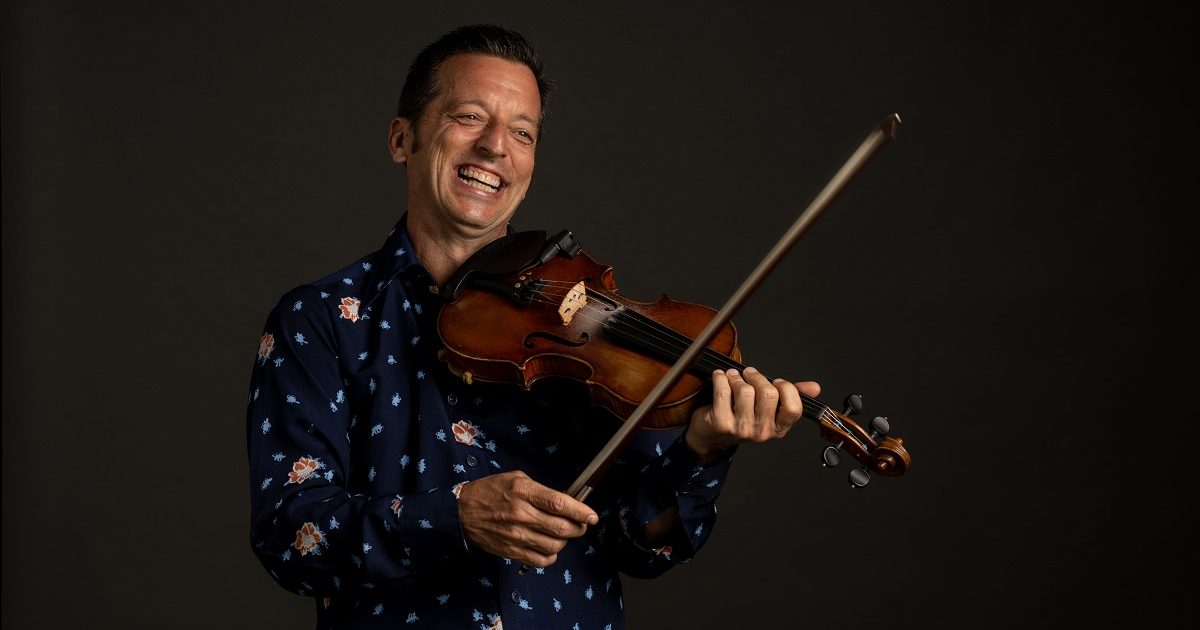
LISTEN: Hot Buttered Rum, “Find My Way”

Artist: Hot Buttered Rum
Hometown: San Francisco, California
Song: “Find My Way”
Album: Shine All Night
Release Date: September 16, 2022

In Their Words: “‘Find My Way’ is another of my pandemic babies. I did my best to write a simple song about dealing with loss and lack of direction in the midst of a global shutdown. James’ drumming makes this track for me, along with Ben’s fiddle intro and tenor vocals. Like a long, dark piece of music, the pandemic started small, then got bigger, louder, and longer. Hot Buttered Rum did their best to cope with its indignities, as we all did. In HBR’s case, much of that coping was done through the business of making lots and lots of noise. The songs that emerged and became the band’s new album, Shine All Night are bigger and louder than any the band has ever released, and they aim to provide some cheer in the times ahead, whether those times are brighter, darker, or, as is often the case, somewhere in between.” — Erik Yates, Hot Buttered Rum


Photo Credit: Laurie Marie