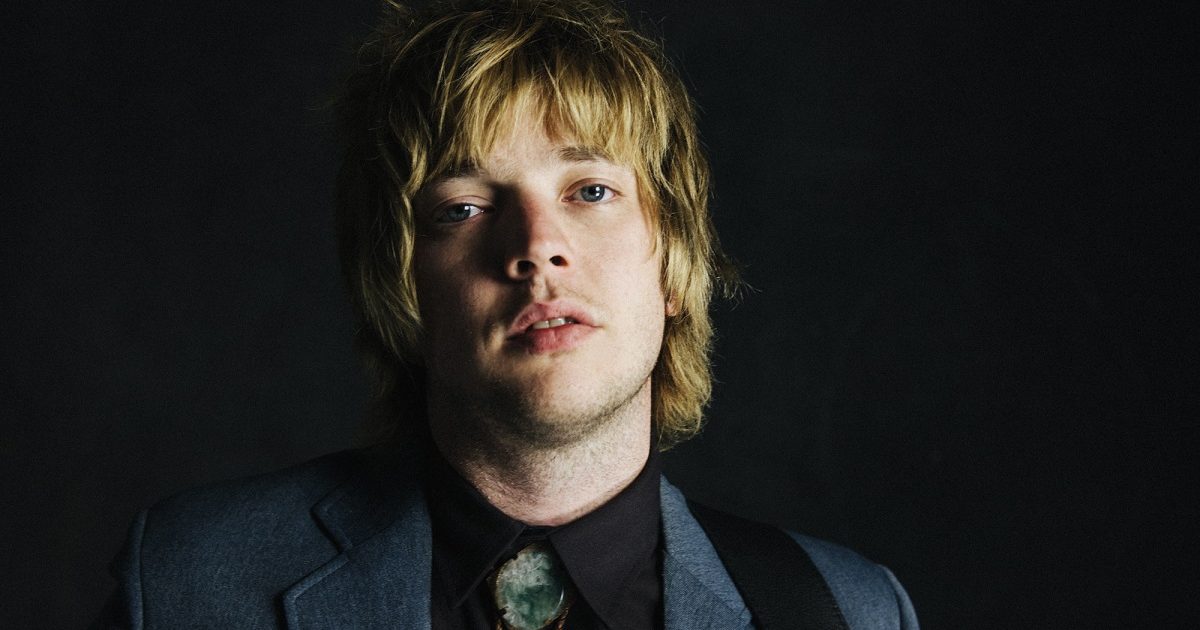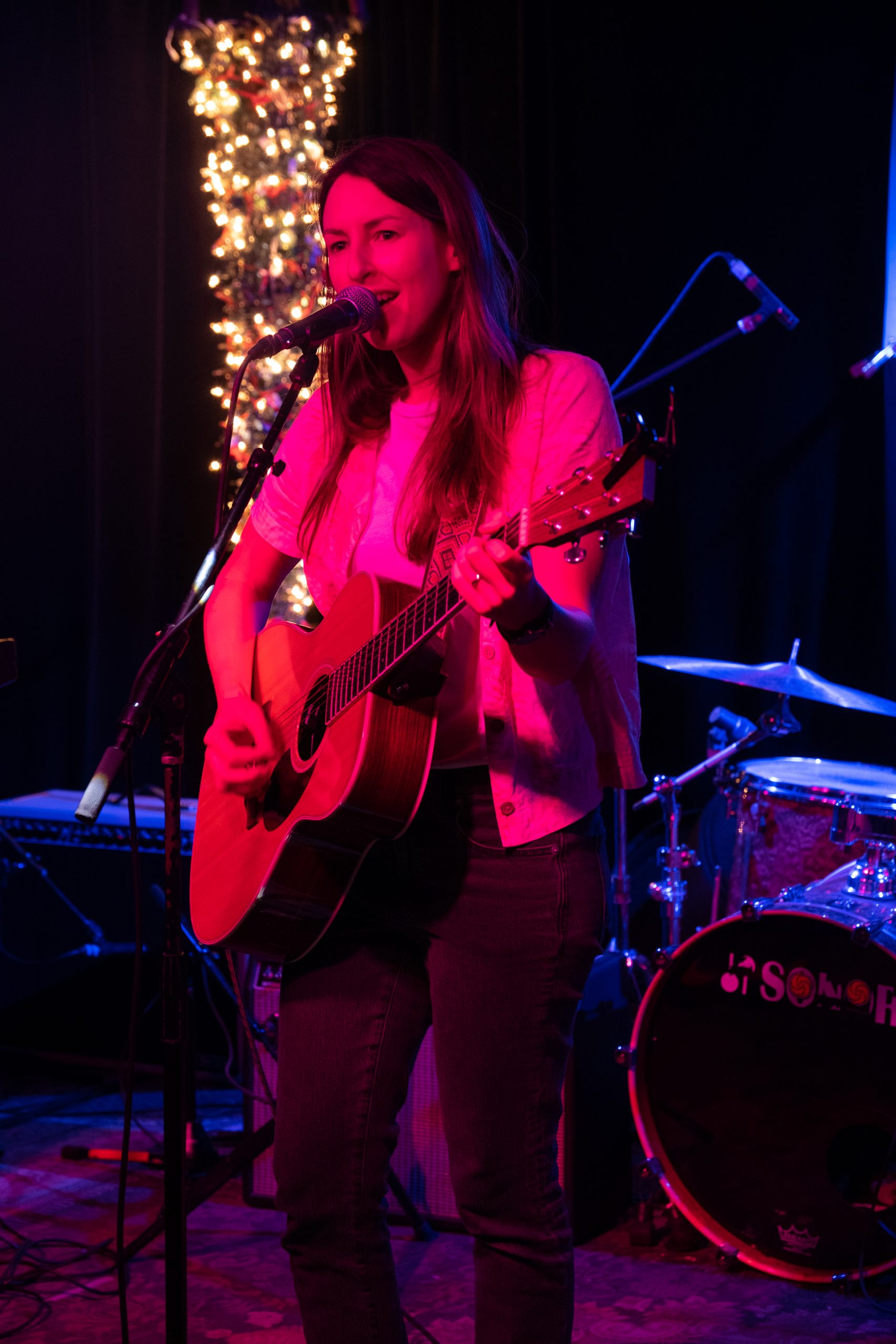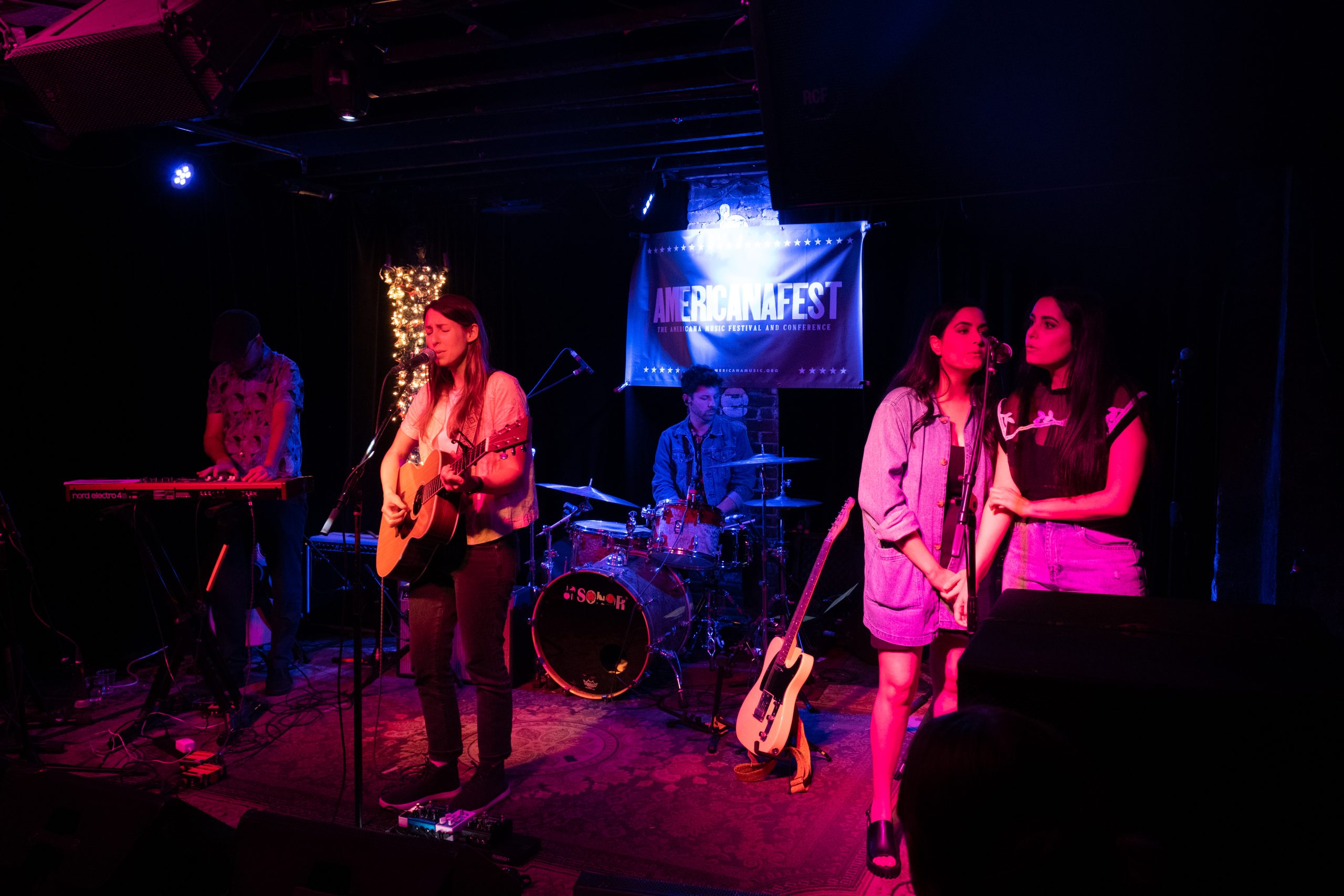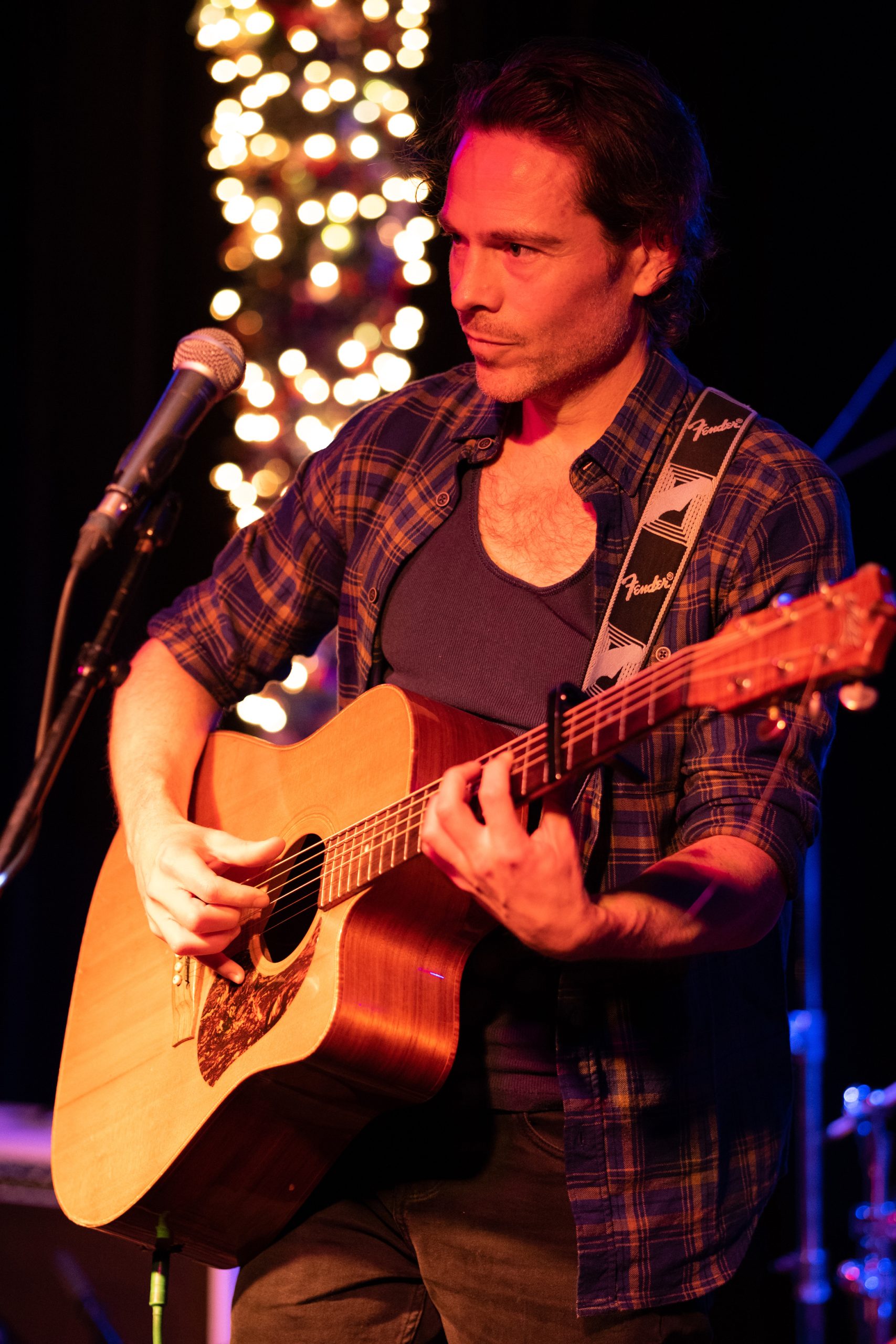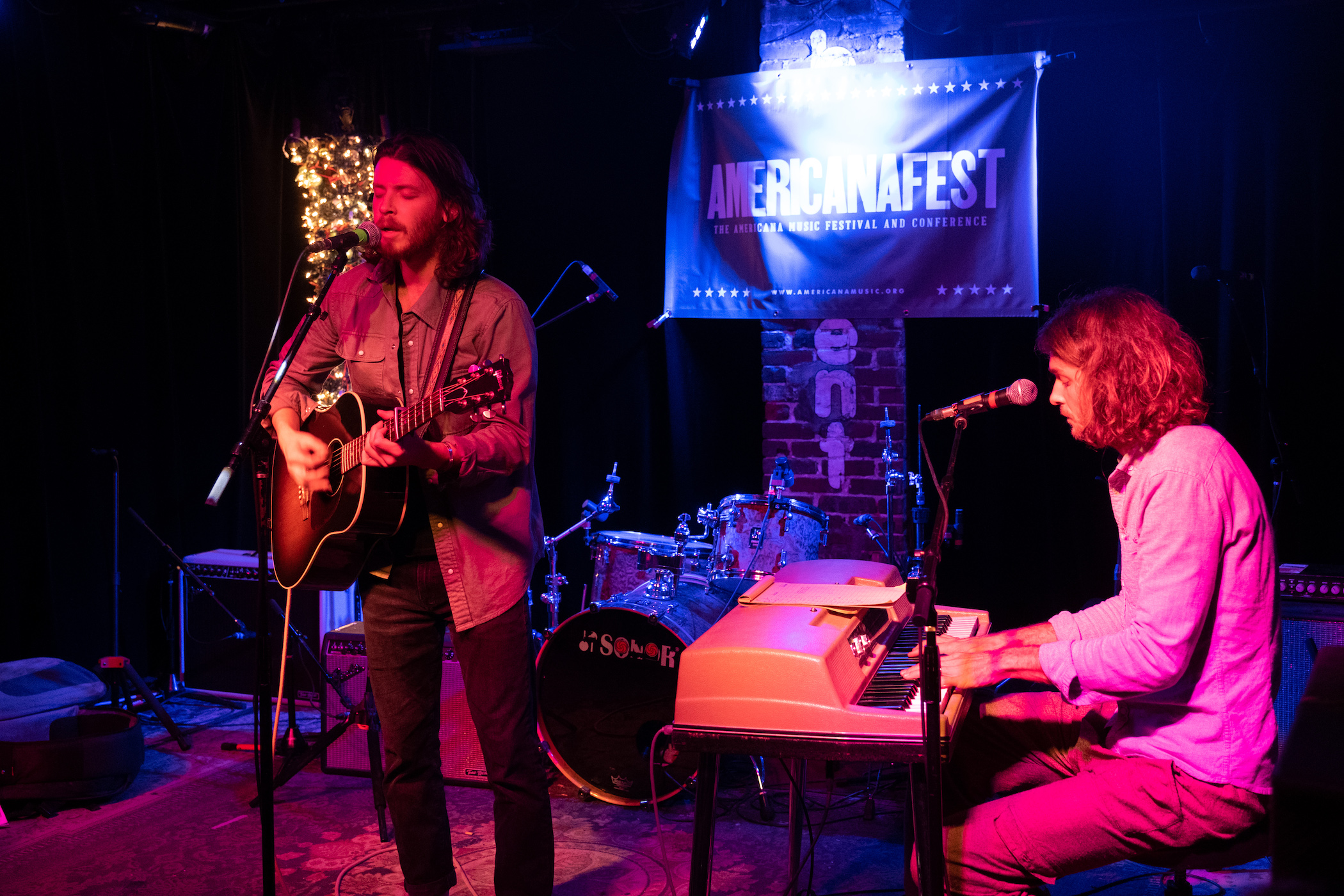
Singer-songwriter Lindsay Lou reemerged in July with an EP titled You Thought You Knew. As her first music since her early 2021 release The Sweetest Suites, it’s a sort of touching base for Lindsay Lou and her fans. An explorer by nature, she had the following to say about her newest project: “I hope my longtime fans will appreciate the EP as a sort of peace offering before I take another jaunt into the exploratory world of my multifaceted musical identity.”
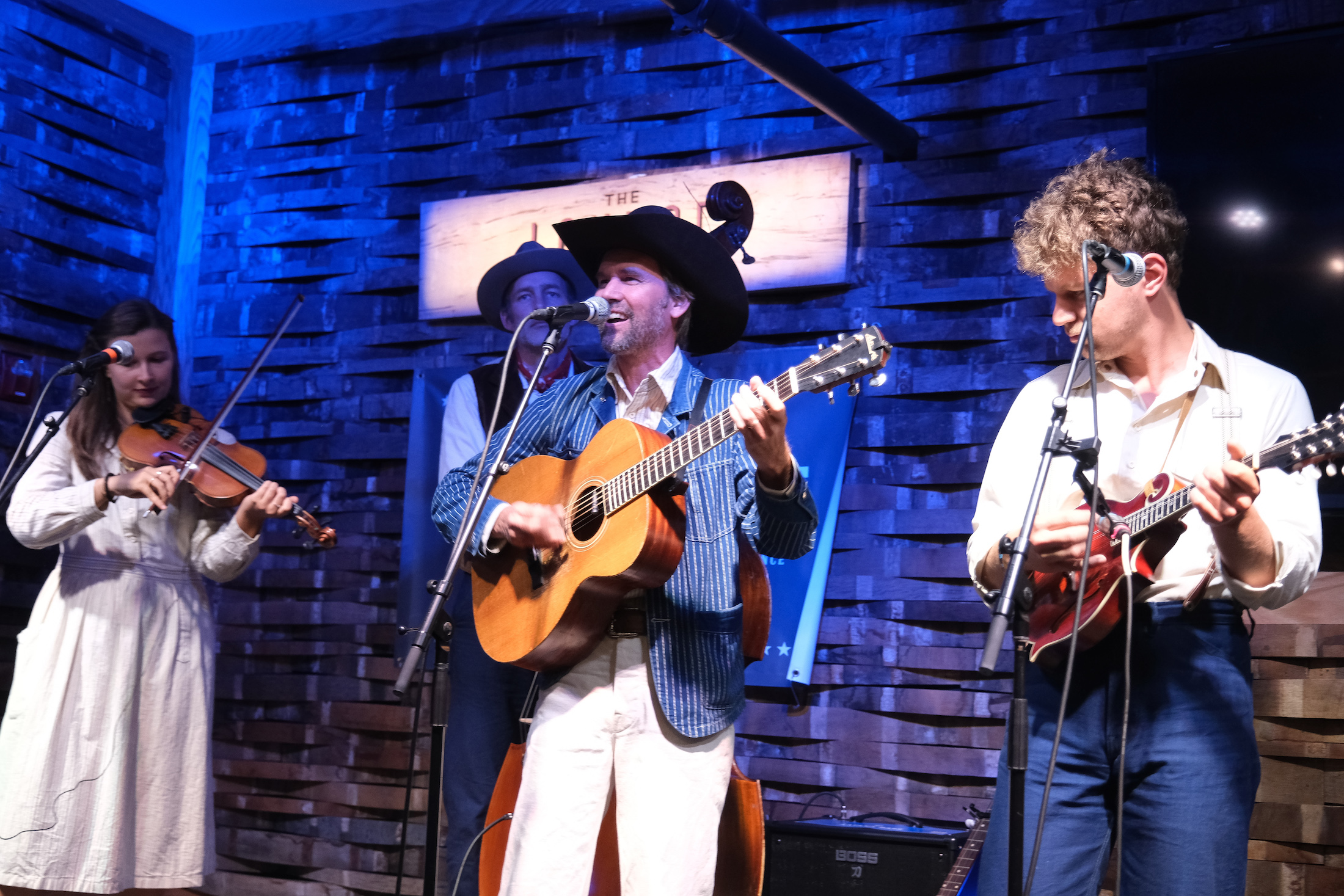
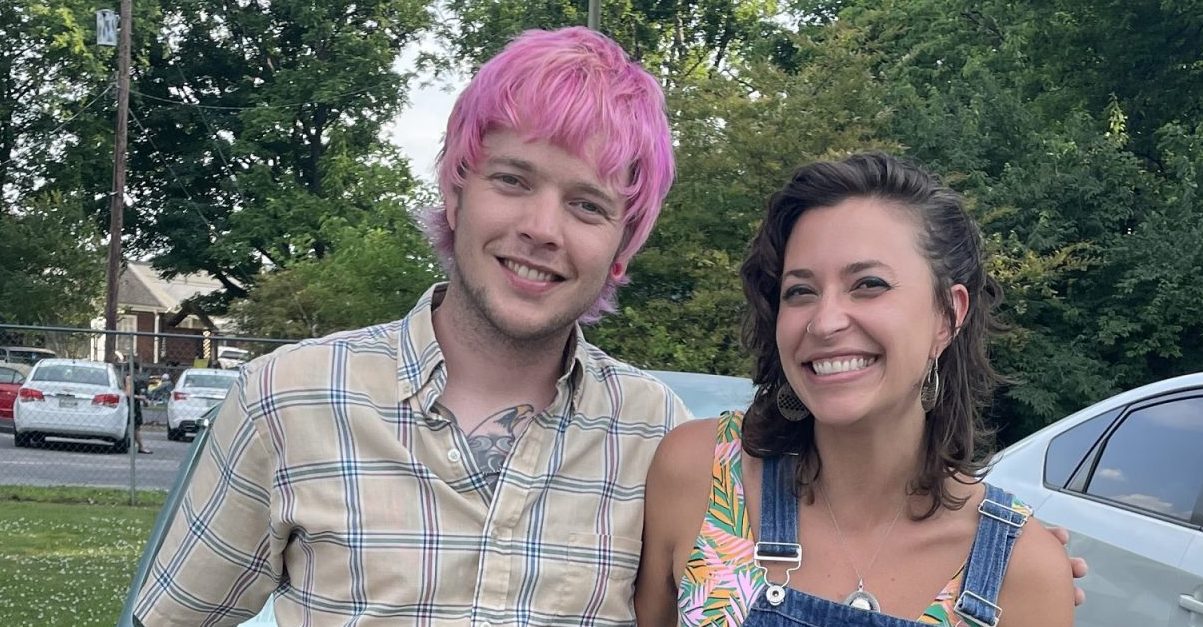
Although her artistic direction may be in flux, Lindsay Lou can still deliver as good a song as ever. On this EP, she sings a duet with her former neighbor, who happens to be Billy Strings. The song they collaborate on is called “Freedom” and it’s characterized by a timelessness and natural quality heard in many folk and bluegrass classics. “Billy and I both transplanted to Nashville from Michigan and wrote this song on a rare snowy day in Nashville while we were neighbors on Petway Ave,” she observed. “We wanted to write something of our own that felt like the bluegrass standard ‘Daniel Prayed’ to sing. There are a lot of references to Kahlil Gibran’s writings in The Prophet ‘On Freedom’ in the lyrics, which I’m always reading and referencing because it grounds me in the same way an old traditional song does.”
Beloved tunes like “Wildwood Flower” and “You Are My Sunshine” give a sense that they always existed — deeply ingrained pieces of music that have fallen out of the air into hearts and memories of everyone. “Freedom” is a lot like that. Recorded and performed straight, Billy Strings and Lindsay Lou echo back and forth over one guitar accompanying. She added, “When Billy and I wrote ‘Freedom’ at the table, he used a cheap old Silvertone catalog guitar given to him by Fanny’s House of Music in town. I wanted this recording to have the same sound as the demo we made right after we wrote it, so I tracked down the guitar and brought it to the studio for our session.”
Enjoy the new collaboration from Lindsay Lou and Billy Strings below.
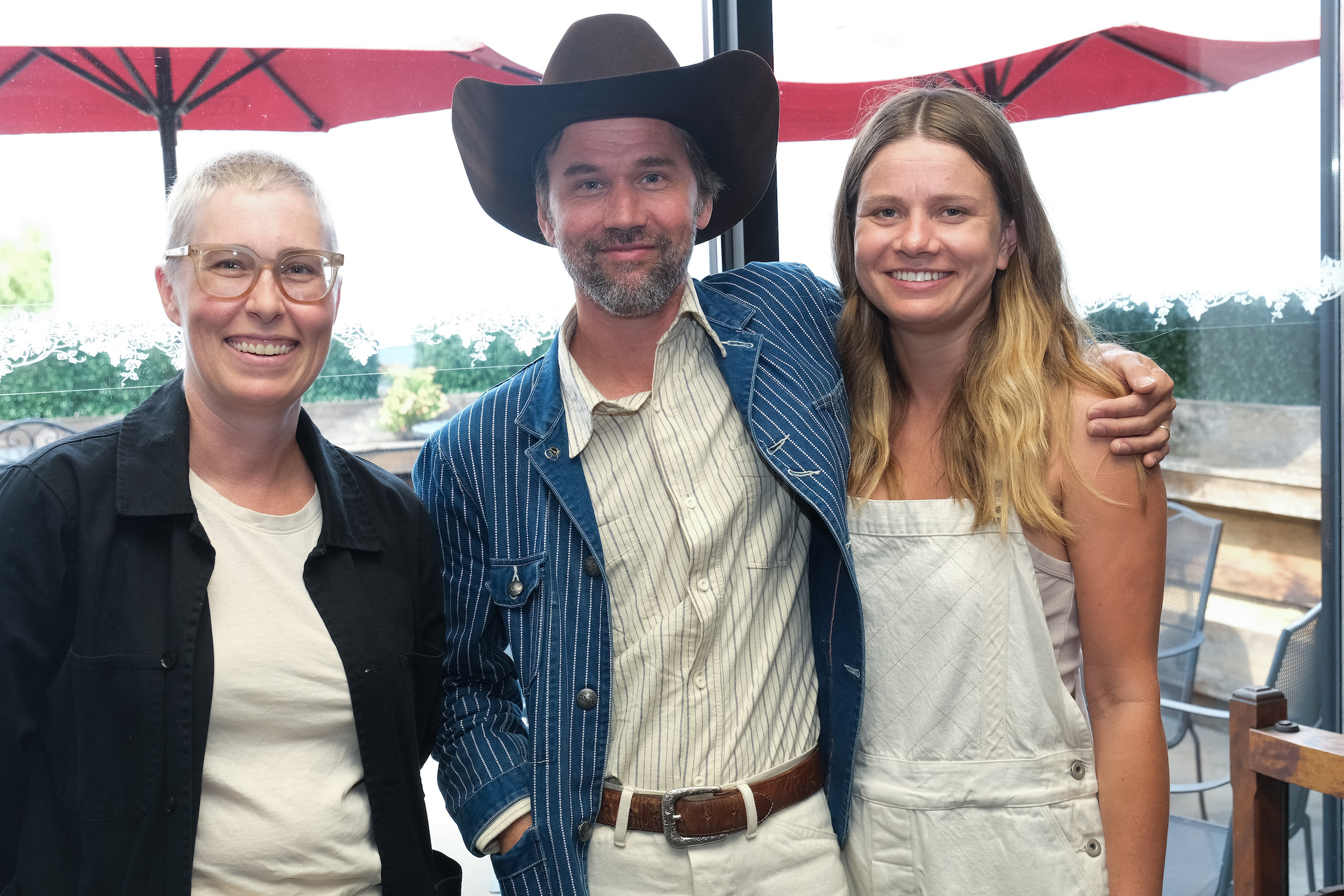
Americana duo Violet Bell‘s new album, Shapeshifter – out October 7 – tells a story of the mythological selkie, a mermaid-like creature from Celtic folklore that embodies a form that’s half woman, half seal. In their retelling and reshaping of this ancient folk narrative, they tease out its connections to the transatlantic journey of American roots music, to the cultural and social melting pot of the “New World,” and to agency, intention, and self-possession.
A concept album of sorts, the music is remarkably approachable and down-to-earth, while the stories and threads of the record tell equally ordinary and cosmic tales. At such a time in American history, with fascism once again on the rise and attacks on bodily autonomy and personal agency occurring with greater frequency at every level of governance, Shapeshifter offers a seemingly timeless lens through which to engage with, understand, and challenge the overarching social and political turmoil we all face on the daily. Moreover, it’s an excellent folk record, demonstrating Violet Bell’s connections to North Carolina, Appalachia, and the greater communities that birthed so many of the genre aesthetics evident in the album’s songs.
Shapeshifter is a gorgeous exercise in community building, an artful subversion of societal norms, and a stunning folktale packaged in accessible, resonant music with a local heartbeat and a global appeal. Read our interview with duo members Lizzy Ross and Omar Ruiz-Lopez and listen to a brand new single from the project, “Mortal Like Me,” below.
BGS: I wanted to start by asking you about community, because I know it’s always very present in your music making. I feel it, definitely, in Shapeshifter. Not only because you’ve got Joe Terrell and Libby Rodenbough (Mipso), Joe Troop, and Tatiana Hargreaves on the project, but because I can feel that community is a tent pole of this record. What does community, musical and otherwise, mean to you in the context of this project?
Lizzy Ross: It was such a wild time to be making the record because it was March of 2021, so vaccines hadn’t quite happened yet and we had all been on lockdown for about a year. We were obviously really missing our community and the live music community. There was also this strange thing, where our friends who would normally always be on the road all the time were at home. So we had an incredible opportunity to call up people, like calling up Tati and Joseph and Libby and Joe Troop – who lived in Argentina but came home because of COVID! The way that it worked out, people were around and we were able to convene and make this album in circumstances that probably wouldn’t have been possible, because everybody would have been on the road.
Omar Ruiz-Lopez: Or, [we would have had them] recording remotely. Which is not the same. One of the reasons why I play music is because of the community. That ability to bring people together and share music and hold space together, the energy that comes from that is so vital to the human experience. Getting to create that space, to bring an album to life, there’s not much else in this world that I live for, besides that. Getting the opportunity to bring everybody together, especially after such a big isolation, was so life-affirming and helped bring me back to why I make music in the first place.
That’s definitely palpable in the music itself, but also in the overarching viewpoint that y’all have within this record. I also find that it’s very grounded. You might have heard BGS just released our first season of a podcast called Carolina Calling, about North Carolina’s history through music. One of the through-lines that keeps coming up in all of our interviews is that North Carolina specifically has such a strong sense of musical community. Even though this is kind of a story record and kind of a concept record, it feels very grounded in North Carolina and in the South.
LR: Omar and I are kind of mongrels from the non-South. But we’ve come and steeped ourselves in this land and these traditions and this community, so I think that what our music reflects is the internal sort of “musical diet.” Our musical diet is probably atypical when you consider what most people think of as North Carolinian or Southern music. The music we were listening to going into this even, we were listening to a lot of Groupa–
ORL: Groupa is a Scandinavian folk band that makes these albums based on music from different countries, like Iceland, Finland, and Sweden. I feel like anything that’s not from here is called “world music,” but their brand of folk music is very beautiful and out there and organic and grounded in the different traditions they represent on their albums. It’s mostly instrumental music, it’s pretty powerful. We were listening to that a lot, as well as Julia Fowlis, a singer who sings in Gaelic primarily. Those cultures – Scottish, Irish, Scandinavian folk – they’re related to the music here like old-time, bluegrass, and Appalachian folk traditions of fiddle and banjo.
To bring it back to the question, I’ve been here for twelve years. I was born in Panama and raised in Puerto Rico listening to Spanish and Latin folk. When I say Spanish, I mean Spanish-speaking, the language of our colonizers. But there’s something still not-from-Spain in the native, Indigenous musical and cultural influences in that music. Like in Bachata and Cumbia. Then I moved to the States and fell in love with rock ‘n’ roll and more of the singer-songwriter tradition here.
LR: Originally I came here for school. I grew up in Annapolis, Maryland, where I didn’t really find a musical community. There was one, I just didn’t find it. When I came to North Carolina it was the first time I saw people gathering together over a potluck and music, with like shape note singing and like the Rise Up Singing book. Having this experience of big, group harmonies I had this realization more and more that music could be a part of my daily life in a way it hadn’t been as a child. Or, rather, as a way of public, shared daily life. Because it was always part of my life, but it was part of community life here in North Carolina. That was a big element of how music and North Carolinian music in particular drew me in and captured my heart.
Can you talk a bit about the central storyline of this album and how you picked up the mythos of the selkie and turned it into this project?
LR: The story of the selkie came to us and it’s something that is in the culture, it’s floating around. Many folks have seen the movies Song of the Sea or The Secret of Roan Inish. The first song that came to me, Omar and I were at the beach one day and I was playing on the banjo and this song came out. It was “Back to the Sea.” We were in the Outer Banks of North Carolina at that time, at the ocean, and I was kind of just listening for who this character is and what they are saying. It was a selkie. It was a selkie singing of getting to return home.
I would say that coming home to ourselves is one of the central themes of this album and one of the themes the selkie story really brings into focus. The whole myth is centered around a being, a mystical ocean being, who gets yanked out of her native waters and forced to live in a world that doesn’t understand her and wasn’t built around her existence. To me, there’s a really clear connection. That story is a medicine for the cultural wound of when we don’t fit into the prescribed paradigm of power. If we don’t fit into white supremacy or if we don’t fit into normativity or if we don’t fit into patriarchy. It’s the sense of feeling like we have to cut off parts of ourselves that aren’t compatible with those power structures so that we can be acceptable to the power structure at-large.
This story says, “No, don’t do that.” You can reclaim the parts of yourself that you’ve had to orphan in order to survive. You can reconnect to those pieces of you and you can come home to yourself. It speaks to integrating who we are, the characters of the land and the sea in this story are really powerful to me. The sea, to me, is this cosmic force. It’s a pervasive, creative, destructive, loving, mysterious force that the selkie comes out of. It doesn’t follow the rules of the land-bound world. To me, it’s like the structures and hierarchies of our culture – whether it’s capitalism or something else.
One of my questions was going to be about how queer the record is, and not just Queer with a capital Q, but also a lowercase Q, the idea of queerness as just existing counter to normativity. But it’s not just a story of otherness, it’s a story of otherness in relationship to embodiment. In the South right now especially, but in this country in general, embodiment is under attack. Whether we’re talking about COVID-19 or abortion access or trans rights. There’s something in this record that speaks to all of that.
LR: I think one of my experiences [that informed this music] is that I’m in a female body. There’s a line in one of the songs, “I Am a Wolf” – that song is two parts. First is the fisherman speaking, he’s kidnapped the selkie, taken her out of her native waters, he’s made her come be his bride, and he’s like, “Why isn’t this working?” It sucks, he’s lonely, he thought things would be better. The second half is the selkie responding and she says, “I am a wolf, not a woman.” That’s the first thing she says. That was something I said at one point, when I was connecting with a sense of deep grief and rage within myself around what I felt were the prescribed cultural parameters of my existence.
ORL: The people who made this album were mostly by BIPOC people and [people who fall outside those norms]. Joseph Sinclair and I are not white and Joe, Tati, [Lizzy], and I are not straight. I feel like a lot of different perspectives went into making this album. We didn’t just get white, straight dudes to make this album and it felt good that way, getting different musical perspectives on this. We could have just made it ourselves, that’s the other thing. I’m a multi-instrumentalist and Lizzy is a harmony singer, we could have overdubbed to kingdom come. Part of the reason why we got all these people together into the same room is because of their unique perspectives on the traditions they brought to the table.
LR: This thread about embodiment is really important and by asking this question you’re helping me articulate something that I’ve been sitting with for months, a year, as I’ve been thinking about the writing and the words and characters in this story. And also, what is it for me in this story that I’m trying to unravel with this album. Also on a cultural level, what are we talking about here?
The selkie, her skin is taken away from her in a moment of innocent revelry. The story starts with her dancing in the moonlight on a rock and that’s when the fisherman steals her skin. When I think about the people that I know and love, I think a lot of these systems are violent towards people whether or not they fit within the system’s perception of dominant power. When I think about the six-year-old version of a person or whatever version of a person was able to un-self-consciously dance or feel good or go into their mom’s closet and put on her clothes and makeup and not feel ashamed – there’s a different version of this for literally every person and what that means. That innocent revelry, it’s experiencing oneself not through the eye of an external observer but through the juicy presence of embodiment and joy and a sense of wholeness and rightness in your being.
Everybody’s had the experience of having their “skin” stolen from them. When you get yanked out of your sovereignty, your joy, your bliss. You get catcalled, you get shamed, you get this or that. There’s violence done to you, whether it’s physical or not, there’s that sense of losing your skin, when we start to separate from ourselves and regard parts of ourselves as less than. I think that dysphoria is a really important part of this story and this album. When we don’t experience ourselves or feel ourselves as the cultural perceptions tell us we’re supposed to be, whether it’s a question of gender or color, this feeling of not being at home in our bodies, I think that was a lot of what really resonated with me, even unconsciously, about the selkie. One of the ways that it took root and grew in my consciousness and eventually in our shared consciousness, between me and Omar and the folks who are on this music.
As a picker I have to talk about “Flying Free” and “Morning Girl,” because I think having instrumentals on this record makes so much sense. I have some ideas about how they fit into the story, not just based on the titles, but also based on how the tunes are so evocative like the rest of the project. Why, on a record that feels like a concept record, why instrumental tunes?
LR: Words are our inheritance from so many of the same structures that can oppress us. And they’re also our freedom. Words allow us to develop and communicate concepts and they also contain hierarchies and power structures that we may or may not really need. The name of the song, “Flying Free,” and the fact that it’s instrumental, to me it’s like this somatic sensation of the selkie plunging back into the sea and the joy of being reunited with her home waters. Which to me is her sense of self, her sense of worth and safety and agency.
ORL: Sound, organized sound inside of space, one of the powerful things about it is that we are able to attach emotion to it. It’s kind of beautiful how two people could feel similar things listening to one piece of music. When it came time to put together the songs for this album, there were a handful of tunes that came up that weren’t asking for words. But that totally helped paint the picture of the world of the selkie and what she was going through.
Growing up in Palo Alto, California, Molly Tuttle was surrounded by music. Her dad was a teacher at Gryphon Stringed Instruments, which is not-so-coincidentally where I got the pickups installed on my mini harp. Molly took to the guitar early and intensely, eventually earning a scholarship to the prestigious Berklee College of Music. But I think it was those early days growing up in California, attending bluegrass festivals with her family, basking in the glow of the jam, that set the tone for her warm and collaborative approach to playing music.
At Berklee, Molly formed a band called “The Goodbye Girls,” and cut her teeth touring in Scandinavia. Digging into The Goodbye Girls was a good launchpad for talking about what it means to be a female musician in Americana, as well as what happens when you explicitly call yourself an all-female group. As the first woman to win the IBMA Guitarist of the Year award, Molly has a unique perspective on this particular conundrum. It’s juicy.
I talked with Molly about her debut album, When You’re Ready, and her dazzling covers album …But I’d Rather Be With You before sifting through the many layers of her latest album, Crooked Tree. Crooked Tree features Molly’s brand-new band, Golden Highway. This new record is a study of bluegrass sensitively executed by one of the genre’s stars. Molly’s interpretations of bluegrass traditions like the murder ballad, shiny stacked vocal harmonies, and lightning fast guitar playing, are something to behold.
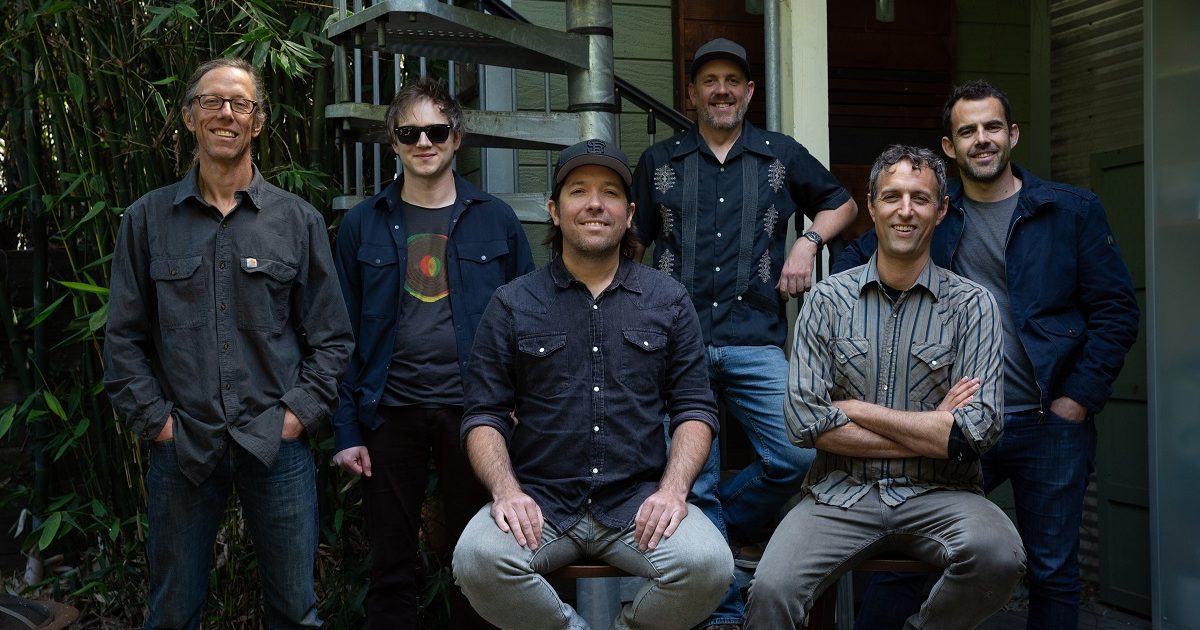
The music on Place of Growth, the new third album by the Nashville acoustic string band Hawktail, calls a lot of things to mind. One thing it decidedly does not call to mind is the late country singer and songwriter Roger Miller.
And yet, here on a Zoom chat, the quartet’s bassist Paul Kowert is singing the opening line from Miller’s kids song, “Robin Hood.”
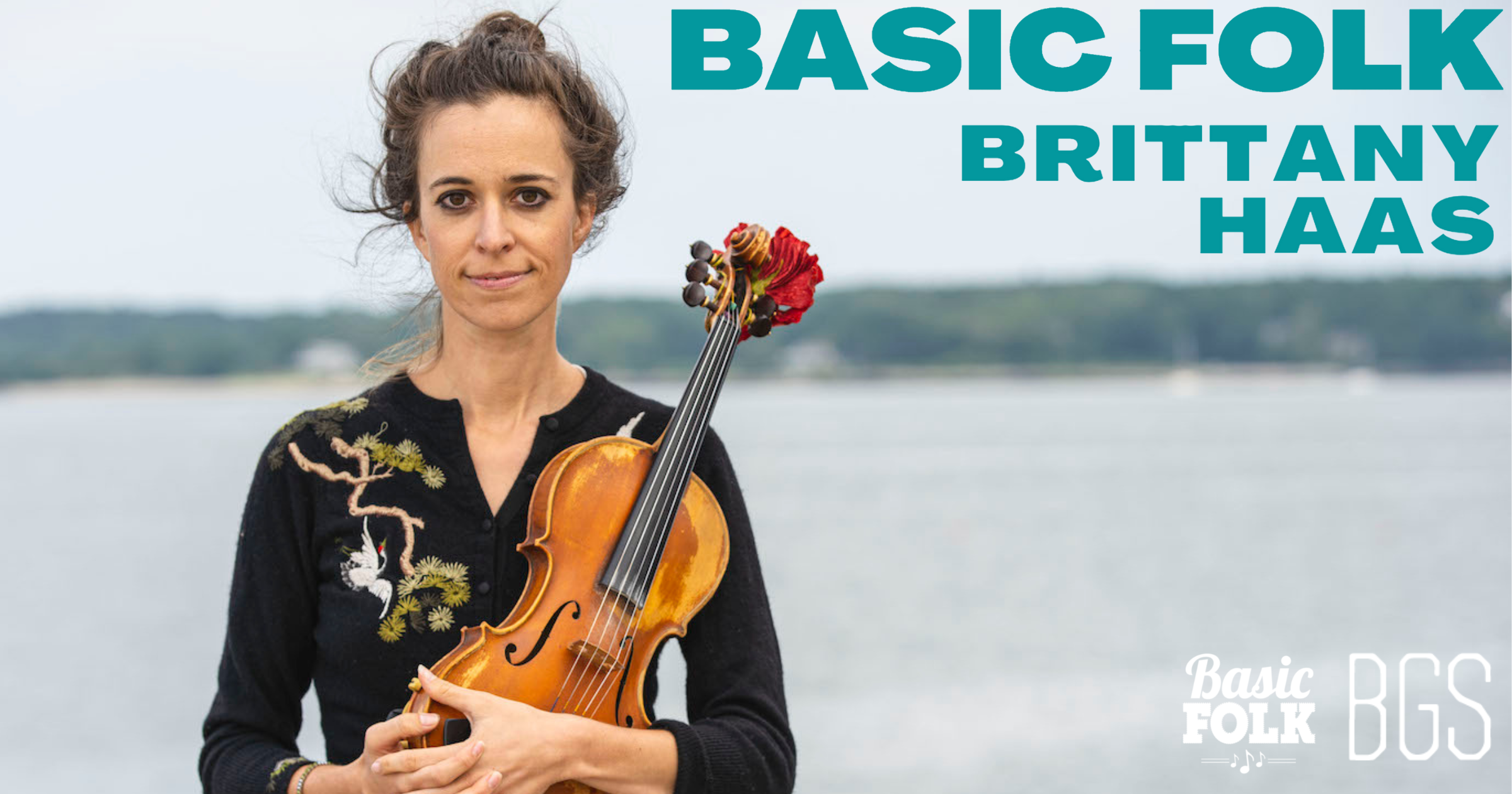
“Robin Hood and Little John and welcome to the forest,” he intones in a goofy, sing-songy, Miller-esque voice, from a hotel room in Seattle where he’s on tour as a member of the Punch Brothers. That, understandably, cracks up Brittany Haas, Hawktail’s fiddler, also on the Zoom from her Nashville home, just back from a duo tour of Europe with her cellist sister Natalie.
What the album does evoke is a lovely nature walk in a spirited suite of pieces including “Antelopen” (German for “Antelopes”), “Updraft” and “Pomegranate In the Oak Tree,” and three short linking “Wandering” interludes. Kowert, who is releasing the album on his Padiddle Records label, is cautious about overplaying that angle, though.
“It’s not programmatic and the titles aren’t even prescriptive,” he insists. “It’s just you need a title and what’s more universal than nature? It kind of pulls it all together, and there’s sort of a storybook quality to the music.”
Hence the Miller ditty.
Kowert, keeping a remarkably straight face, adds, “So that’s not inherent to the piece.”
But it works.
“It works, yeah,” he says. “It’s just that the album would take your imagination on a journey of its own creation and that each thing that comes leads you a little further on your trip. It was the desired effect.”
So yeah, Roger Miller is an unlikely reference. But how about Mussorgsky’s Pictures at an Exhibition, with its Promenade interludes, and — dare we say — Beethoven’s 6th Symphony, a.k.a. the Pastoral? Given Kowert’s strong classical background before he wandered into bluegrass, that’s not a stretch.
Place of Growth saunters through landscapes where bluegrass, newgrass, fiddle tunes and, yes, composed classical music blend vividly, reflecting the sensibilities of the musicians, with guitarist Jordan Tice and mandolinist Dominick Leslie filling out the foursome. More immediate antecedents would include the artistic expanses covered by Chris Thile (Kowert’s Punch Brothers boss), Béla Fleck, Bruce Molsky and Sam Bush.
Most directly, they cite two mentors: Kowert, who grew up in Wisconsin, studied at the Curtis Institute of Music in Philadelphia with pioneering multi-genre composer and double bassist Edgar Meyer. San Francisco Bay Area native Haas, as a teen, connected with fiddler Darol Anger, a founding member of both the bluegrass-gypsy jazz hybrid David Grisman Quintet and the classical-jazz straddling Turtle Island String Quartet. Not only did he take her on as a student, but put her in his Republic of Strings ensemble.
Underscoring the classical connections, Hawktail has put out a companion to the album: sheet music of the gorgeous Place of Growth piece “Shallows,” arranged for violin and guitar by Kowert. Vinyl? Cassettes? Whatever. This is the real throwback format.
The letterpress print is lavishly illustrated with a stately heron and flowering vines by friend Heather Moulder, including a limited-edition hand-tinted version. This follows two earlier, finely crafted poster prints done by Moulder incorporating musical notation.
“That was sort of an early pandemic response,” says Haas. “We lost a bunch of gigs and said, ‘Let’s do something.’ You put the music in the hands of people in their homes and they can read it and play it themselves.”
So are fans playing from the sheet music?
“Some people are,” Kowert says. “Even if you don’t, it’s an art piece. It’s quality. It’s letterpress. You can run your fingers over it. You might not be able to sight-read music. You might not even be a musician. But you can see that the line goes up. you can see it go down, see how long the tune is. It’s like sharing the spirit of it, even if you don’t read the music.”
Ah, but is Hawktail playing from written music? Well… yes and no.
“I prefer as much variety as possible,” Kowert says. “Our music will have a segment of five seconds where everybody is composed and 20 seconds where two people are composed, but two are improvising, 10 seconds where one person’s composed and one person’s improvising and the other two are resting.”
“It’s pretty fluid,” says Haas. “Like, ‘This person will take this melody or that stuff.’ But it’s still like you don’t have to do what it says.”
They both laugh.
“We still want everybody to be themselves within it,” she adds.
Tice and Leslie add bluegrass roots — both of their dads play banjo and Tice’s mom is a fiddler — but go far beyond. Tice cites Tony Rice and Norman Blake as influences and has played with the Dave Rawlings Machine (as has Haas), Carrie Newcomer, Steve Martin and Yola, among others. Leslie, who grew up in bluegrass-rich Colorado, has played with Noam Pikelny and is currently on the road with Molly Tuttle.
Haas, Kowert and Tice connected on the festivals-and-camps circuit more than 15 years ago while going to college — Haas (who had joined “chamber-grass” band Crooked Still alongside singer Aiofe O’Donovan) at Princeton in New Jersey, Kowert at Curtis and Tice at Towson University in Maryland.
“When we first met it was clear there was a synergy between us,” Kowert says. “Jordan had a car, so he would pick me up in Philly and we’d drive out to see Brit and we would play [Norwegian hardanger fiddle player] Annbjørg Lien and [Swedish trio] Väsen tunes, music that was really suited to our ensemble, stuff we could kind of get excited about and play for fun.”
Not exactly the Bill Monroe canon.
“It was also music that was slightly on the fringe of what was most common to be playing,” Kowert says.
That carried through with the 2014 Haas Kowert Tice trio album You Got This and the first two Hawktail quartet sets, 2018’s Unless and 2020’s Formations.
Place of Growth is a culmination of that, meant to be taken as a whole piece. And that’s how Hawktail has been playing it in concerts — when they’ve had chances. Given each of the members’ active careers in other pursuits, that’s tricky.
“Hawktail’s a project that we all hold dear to our hearts,” says Haas, who is artist-in-residence and teaching at East Tennessee State University’s bluegrass program these days. “So we make time for it when we’re able to, and we really value that time and just the kind of musical bond that we’ve forged between the four of us. It’s instrumental music, and in the world at large it’s not that there’s not space for it. There totally is. But it’s not mainstream. And so it kind of finds its way, it curves around through.”
Fittingly, she turns to nature for an analogy.
“It’s like a little stream that’s running alongside the larger flow of music or something. It’s something that will always be there for us.”
Adds Kowert, “Hawktail has been our avenue to put our own personal twist on it. It’s like, ‘Oh, it’s a string band. They’re playing this fiddle tune, but this stuff is happening I’ve never expected.’ And we love that.”
Photo Credit: Benko Photographics (lead image); William Seeders Mosheim (inset)
Artist:Town Mountain Hometown: Asheville, North Carolina Song: “Firebound Road” Album:Lines In the Levee Release Date: October 7, 2022 Label: New West Records
In Their Words: “With ‘Firebound Road,’ I tried to capture the rough and tumble energy of touring and constantly being on the move. When you’re not sure if what you’re doing is worthwhile, it’s certainly not very profitable, but you know you love doing it so you keep rolling on. The line ‘feeling a little inconsequential’ in the chorus was a reference to the added feeling of being deemed ‘non-essential’ when the pandemic hit and the music industry was one of the first to shut down. Another autobiographical reference is the verse about the misspelled marquee. I know our name is pretty generic, but we showed up to a club we were very excited to be playing and there we were in big bold letters on the marquee… Mountain Town. An honest mistake I’m sure, but still a little deflating… and comical.” — Phil Barker, Town Mountain
Artist:The Alex Leach Band Hometown: Jacksboro, Tennessee Song: “Together (We’re Going All the Way)” Album:All the Way Release Date: August 19, 2022 Label: Mountain Home Music Company
In Their Words: “A few months ago I was in my office working on writing some new material, and after playing around with many ideas, a certain melody just kept coming back to me. It was catchy so I decided to write some lyrics with it. It was actually one of the easiest songs I’ve ever written! The words started flowing freely as I pictured being on the road doing what I love with the band, mixed in with some deep thoughts about my personal life, and thinking about how amazing this world would be if we all viewed one another as a brother or sister, even if we all don’t see eye to eye on things. Life is a journey so let’s stand beside one another and enjoy the ride together!” — Alex Leach
Artist:Fireside Collective Hometown: Asheville, North Carolina Song: “When You Fall” Album:Across the Divide Release Date: August 5, 2022 Label: Mountain Home Music Company
In Their Words: “‘When You Fall’ is a song about unconditional love. I wrote this song for my daughter, right before her first birthday. Literally catching her as she’s learning to walk and knowing that as she grows older, no matter what roads she chooses to walk along, I will support her and be there for life’s inevitable ups and downs. From a sonic standpoint, I wanted the song to be a gentle yet dynamic musical journey. It moves along like a classic bluegrass song, but has undertones reminiscent of Nickel Creek and Crooked Still. This song serves as a message of comfort to all those who strive to grow each day and when faced with a difficult challenge, push on knowing somebody loves them no matter what.” — Jesse Iaquinto, Fireside Collective
Not unlike the rest of the acoustic music community, Dan Tyminski is still grieving the loss of bluegrass guitarist Tony Rice, yet he laughs as he recalls the memory of following his hero around like a documentarian. “Oh, I stuck video cameras in his face and said, ‘Man, just do this for me for a second!” Tyminski recalls with a smile. “I remember having a camcorder, and it was just the opportunity. You know, you can’t pass something like that up.”
Bluegrass has long paid tribute to the masters, which obviously and importantly carries the tradition forward. Beyond that, there are just songs in the bluegrass canon that are beloved among generations — such as Rice’s timeless interpretations of Norman Blake’s “Church Street Blues.” His graceful touch on landmark acoustic albums are too numerous to mention. In the spirit of collaboration, Tyminski gathered his friends and fellow admirers for One More Time Before You Go, an EP that reflects an admiration for Rice without simply replicating those classic records. Instead, it’s a well-curated look into Rice’s life and career, and perhaps a gateway for a new generation to discover the guitarist’s artistic genius, too.
Tyminski called BGS from the recording studio to speak about One More Time Before You Go.
BGS: “Church Street Blues” is a fitting way to start this EP. Was that the song that got you turned on to Tony?
Tyminski: It’s one of the first songs I remember trying to pick apart and study how he did it. When I saw him do it for the first time, for sure, I realized his right-hand technique is almost uncopy-able. And then I obsessed on it for a little while. It was the best way I could pay tribute to him. He made my brain work really hard for that one.
Do you remember what kind of reaction you had when you first heard him play?
I can remember the first solo. A friend of mine called me over to a little horse stall where we were camping out at a bluegrass festival in upstate New York. And he played me Bluegrass Album Band, Vol. 1, “Blue Ridge Cabin Home,” and the first guitar solo — I had never heard a guitar solo done in such a way. At that point in time, man, that was unheard of. And it just parted my hair. It was amazing, and that was when I first realized how much I loved the guitar. Even over the banjo, because I was a banjo geek up until that point.
Tony’s ability as a guitarist is obviously well-known, and he had that gift for finding and recording great material. But I wanted to ask you about his sense of rhythm. How crucial is that, do you think, to the Tony Rice sound?
I don’t even know if it can be stressed high enough. That is ultimately what pulls me in to all of his music. It’s his sense of rhythm and timing. He has the most interesting right hand on an acoustic guitar that I have ever heard. No one else is able to pull off the techniques that he used to play that stuff. Each note that came out was highly dependent on the note before it, so if any one note were off, the whole thing derailed. When he was at his peak, he did stuff simply no one else could do.
In the song you wrote about Tony, “One More Time Before You Go,” there’s a lyric where you reference his life and legacy. I’m curious, to you, what is the legacy?
To me, it changed the world of guitar. It changed how it was played and how it was looked at. I don’t think there are any new musicians in bluegrass right now who don’t have an element of Tony Rice’s playing in them.
When you finished writing that song, who did you play it for first?
Like all things, I played it for my wife first. (laughs) She is always supportive and kind. And then, you know, I didn’t really play it for anyone for a little while because I didn’t write it as something that I necessarily wanted to publicize. I wrote the song truly as a way to self-heal. I was in mourning and I called someone else who I knew was in mourning as well – Josh Williams. He spent some of the last years touring with Tony. He came over to the house, and through our own stories and talking about it, we came up with this song. At the time I wrote the song, I didn’t really have this EP in mind. This song was kind of the birth of wanting to get enough material to make it sensible to put that song out.
I appreciate the fact that this EP isn’t overly reverent or stiff. There’s a liveliness to it that you don’t always get on a tribute record. Did you go into these sessions with a certain sound in mind, or a vibe you wanted to capture?
I wanted to capture the essence of who I thought the players were. Sam Bush and Jerry Douglas and Todd Phillips — there were critical moments in all that stuff they recorded with Tony that kinda made them sound like who they were. We didn’t grind out and try to make the most perfect recording we could. We played full passes through and I wanted to capture the essence of what each individual sounded like to me.
Was there a combination of sadness and happiness at that moment?
Bittersweet doesn’t even cover it. I was thrilled and excited to have some of my heroes here in my little studio at home, and at the same time, there’s no way not to consider the reason why everyone is there is because we all miss the man.
You have a natural voice for “Ten Degrees and Getting Colder.” Why is that song special to you?
The era that it came from. It was on that record that got me into bluegrass music in the first place. When I heard the 0044 record [J.D. Crowe & The New South from 1975] with Tony and Jerry and Ricky and Bobby Slone, that record set a mark for me for the rest of my bluegrass career, for sure. That was one of the highlight songs for me. The kickoff on that is probably one of the best guitar kickoffs of all time and I wanted to take my crack at it.
To sing it, did you get inside of that character in the song?
In the case of this, I really did. I really tried to make sure that I listened to the song and had the feel of what he was trying to [convey]. A few things surprised me, going back. I really did try to pay homage and do it in very close tempos and give it due consideration that way. That one’s almost faster that I thought it was! I’ve played it for years by myself but I’ve never played it against the record. And son of a gun, when it came down to recording it, I realized, that was right up there! It made my right hand work a little bit.
I think of that as a road song, and hearing you sing it reminded me of seeing Tony on tour with Alison Krauss & Union Station back in 2007.
That was a dream come true when we got to do that with Tony. That was the most time we got to spend and actually talk to him about personal stuff, and how records came to be, and how solos came to be. That’s a dream come true, to get to have your hero out on the road with you.
Did he accept the role of hero? Or did he deflect from the attention?
“Deflect” might not be the word that I’d choose, but you can’t not be aware that everyone is looking at your every move. So, he handled it with grace, and he was always willing to share. He was just a kind man.
I watched an interview where you said that Tony decided to drive to all the tour dates, rather than get on the bus.
He would not fly and he would not get on that bus. We insisted, in fact, that he take a driver with him. You know, a co-pilot. So, if he was going to drive, he would have someone else, because all of our drives were through the night to the next city. It turns out those were just Tony’s hours. He had a co-pilot but that other man never touched the wheel. Tony drove everywhere. That was his style.
There’s also a line in “One More Time Before You Go” about him being a mystery untold.
He was. Because in a quiet room, he wasn’t boisterous or loud – you didn’t get a lot out of Tony. But what you got was gold. He was really confident in the things that he did say. I think he was aware that he had that kind of power over a room, but he never abused it. He was just the man who could do that one particular thing better than everyone else.
I liked hearing “Where the Soul of a Man Never Dies” with Billy Strings on there.
And I’ve got to credit Billy with the pick, because there were a lot of duet songs you could choose from. That was one of the first songs that came back from Billy and it took about a flat second to say that’s the perfect one. Because with Billy, I wanted him to play guitar, and it gave me a chance to play a little bit of mandolin. That was just a totally live cut. We sat there and jammed for a little while, and took track #3 of #4 or whatever it was. It was so much fun and his right hand is so unique and great. You can hear Tony and Doc – you can hear a lot of people – in Billy’s playing.
Have you known him a long time?
No, I hadn’t known him a long time at all. I met him once before and we got together for the session. We’ve since booked stuff together. Hopefully I’ll spend a little more time with him. He’s an interesting guy and a great player.
Isn’t that something how bluegrass can bring people together and you feel a chemistry right away?
Well, for me, it’s always been a community. When I was little, growing up, what attracted me more than anything was the ability to go to bluegrass festivals and meet new people and instantly pick together and play together and eat together. There was a sense of community that you could just feel. That’s big in bluegrass.
If you could introduce Tony to a new bluegrass listener, where would you start?
That’s a good question because there’s a lot of different eras of Tony. I think different eras of Tony’s career appeal to different appetites of music. It would depend a lot on the person. It would depend on the situation. He has a lot of landmark music. You could pick almost anything he did and say, “That’s going to be someone’s favorite music.”
For me personally, as I get more and more into him, I can go back and listen to the earliest stuff I can find of his where you can hear the evolution of Tony Rice. How he went from his early Clarence White-style to who he ultimately became. His whole career fascinated me, mostly in the right hand, and how he went after his solos and his rhythm playing. Outside of his solos, I can tune into his rhythm playing and not even have to wait on a solo. I’m satisfied with just his rhythm. He was a monster.
For those listeners who already love Tony’s work, what do you hope they’ll take away from this project?
Just a love for the instrument and how much influence he had on other people who are doing it now. There are a bunch of young people out there who are not just carrying the torch, they’re stoking the fire and making it bigger. Tony’s a big part of what has made these young people want to do that.
North Carolina musician Tray Wellington is fresh off a nomination for this year’s IBMA New Artist of the Year, following the release of his full-length debut album Black Banjo. Still in his early 20s, Wellington pulls from a myriad of influences — on his latest album he cites jazz as the major influence of his progressive bluegrass style. Many other banjo players of this younger generation are using the influence of genre and blurred genre lines, adapting and subverting narrative and traditions, and utilizing sheer unrestrained creativity to operate outside the traditional confines of the instrument.
In honor of BGS Banjo Month, Wellington gathered a collection of current artists who are thinking outside the box, creating their own voice on the banjo in new and innovative ways, and striving to make the banjo a better-known and appreciated sound.
Artist:Joe Mullins & The Radio Ramblers Hometown: Xenia, Ohio Song: “Big City” Release Date: July 29, 2022 Label: Billy Blue Records
In Their Words: “Paul Williams wrote and recorded some of the most requested songs in bluegrass history alongside Jimmy Martin with the Sunny Mountain Boys. Their show was in great demand in the early 1960’s, nationwide, from Nashville to Las Vegas and throughout Canada. Paul signed on as a staff writer for Sure Fire Music and Decca Records. Many of his songs were recorded by country artists, including ‘Big City.’ I found the original version on an Ernest Tubb album from 1965. Paul’s given last name is Humphrey. He began his career as a radio performer in the early 1950’s with a duo known as the Williams Brothers and kept the stage name. His brother, Sam Humphrey, was a frequent co-writer. Coincidentally, I recorded several albums with an all-star band, Longview. The first hit single that band released in the 1990s was written by Sam Humphrey, ‘I’ve Never Been So Lonesome In My Life.’ Paul is a wonderful mentor to The Radio Ramblers and so many other artists inspired by his fantastic voice and songs, and his sweet spirit. Old or new, it’s always a good choice to record a Paul Williams song!” — Joe Mullins
This website uses cookies to improve your experience. We'll assume you're ok with this, but you can opt-out if you wish.AcceptRejectRead More
Privacy & Cookies Policy
Privacy Overview
This website uses cookies to improve your experience while you navigate through the website. Out of these, the cookies that are categorized as necessary are stored on your browser as they are essential for the working of basic functionalities of the website. We also use third-party cookies that help us analyze and understand how you use this website. These cookies will be stored in your browser only with your consent. You also have the option to opt-out of these cookies. But opting out of some of these cookies may affect your browsing experience.
Necessary cookies are absolutely essential for the website to function properly. This category only includes cookies that ensures basic functionalities and security features of the website. These cookies do not store any personal information.
Any cookies that may not be particularly necessary for the website to function and is used specifically to collect user personal data via analytics, ads, other embedded contents are termed as non-necessary cookies. It is mandatory to procure user consent prior to running these cookies on your website.