Gloria Belle: A Woman “Sideman” Who Held Her Own in Bluegrass

Gloria Flickinger’s first public singing engagement was at age three. Her parents placed her on a chair to reach the microphone at a radio station broadcasting a church program. 

More than 70 years later, Gloria – by then long known as Gloria Belle – was still singing the gospel music she loved in churches in the Tennessee region.

Between her first performance and her death on May 5, 2023, at age 84, Gloria Belle broke barriers as a multi-talented musician in the male-dominated world of first-generation bluegrass. She set a standard for all-around musicianship, independence and grace-under-fire for future generations of women in bluegrass.

Gloria grew up listening to the Grand Ole Opry and the Wheeling Jamboree on the radio – where her attention was caught early on by Little Miss Evelyn singing with the Bailey Brothers. She also was taken by the powerful voices of Mollie O’Day and Wilma Lee Cooper.

At age 11, she picked up a mandolin that she said her mother “had never learned to play like she wanted to.” She learned basic guitar from her mother, as well, and learned to pick out melodies by listening to Mother Maybelle Carter and Bill Clifton.

When she was 13, her parents took her to a Bailey Brothers performance at Valley View Park in Pennsylvania. In a 2006 interview, Gloria said, “When I saw that show, I said, ‘That’s it.’” She was going to be a musician. At 15, she dropped out of high school, saying, “I don’t need a high school education to play music.”

After leaving school, Gloria took day jobs (most notably in a potato chip factory). She honed her instrumental skills, played for a time with a local band and continued singing in churches with her parents – who were enduringly supportive of her music. 

During that period, a teenaged Tom Gray (legendary bass player with the Country Gentlemen and Seldom Scene, as well as others) jammed with Gloria in a parking lot in West Grove, Pennsylvania. He said, “She impressed everyone with her singing. What a strong voice. And she could play most of the instruments. Our mentor, Bill Clifton said, ‘There is a woman who can sing like Molly O’Day.’”

One family vacation, the Flickingers drove to a showing of the Farm and Home Hour – live broadcast programming started by entrepreneur Cas Walker to promote his Knoxville retail businesses. Danny Bailey, formerly of the Bailey Brothers, invited Gloria and her mother to perform a few tunes.

About six months later, Bailey wrote to Gloria, asking her to come to Knoxville as soon as possible to replace departing performers.

On the way to Knoxville, the family stopped in Huntington, West Virginia, so Gloria could meet her hero, Molly O’Day. The older woman received them graciously, recommending which of O’Day’s songs Gloria should incorporate into her repertoire. 

One of these was “Banjo Pickin’ Girl”– which Gloria would play in seven shows a day, six days a week during one long, North Carolina summer.

Jump ahead to 1959, Gloria was 21.

Almost immediately, Gloria began breaking new ground as a bluegrass musician. Beyond being the “girl singer,” she was establishing herself as an instrumentalist and harmony partner, as well as a lead singer.

For five years, Gloria played with Cas Walker’s live radio and TV programs. Walker dubbed the singer “Gloria Belle,” because he couldn’t pronounce Flickinger.  

Gloria sang duets with Danny Bailey, as well showcasing on banjo and twin mandolins. During this period, she recorded two singles, becoming only the second woman (the first was Donna Stoneman) to record a bluegrass mandolin solo.

After leaving Walker’s organization, Gloria easily found other work. She spent a season at the Ghost Town shows in Maggie Valley, North Carolina. It was there she played ‘Banjo Pickin’ Girl’ so often, she said, “I felt like a robot.”

She then performed with Betty Amos and her All-Girl Band, playing country and bluegrass.

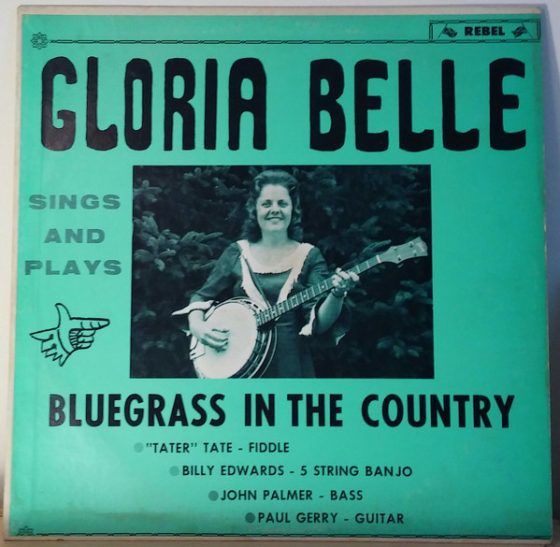
In 1967, Rebel Records released Gloria Belle Sings and Plays Bluegrass in the Country. She was only the fourth female bluegrass artist with her own album, and the first woman to play lead instruments (banjo, guitar and mandolin) on a solo project. 
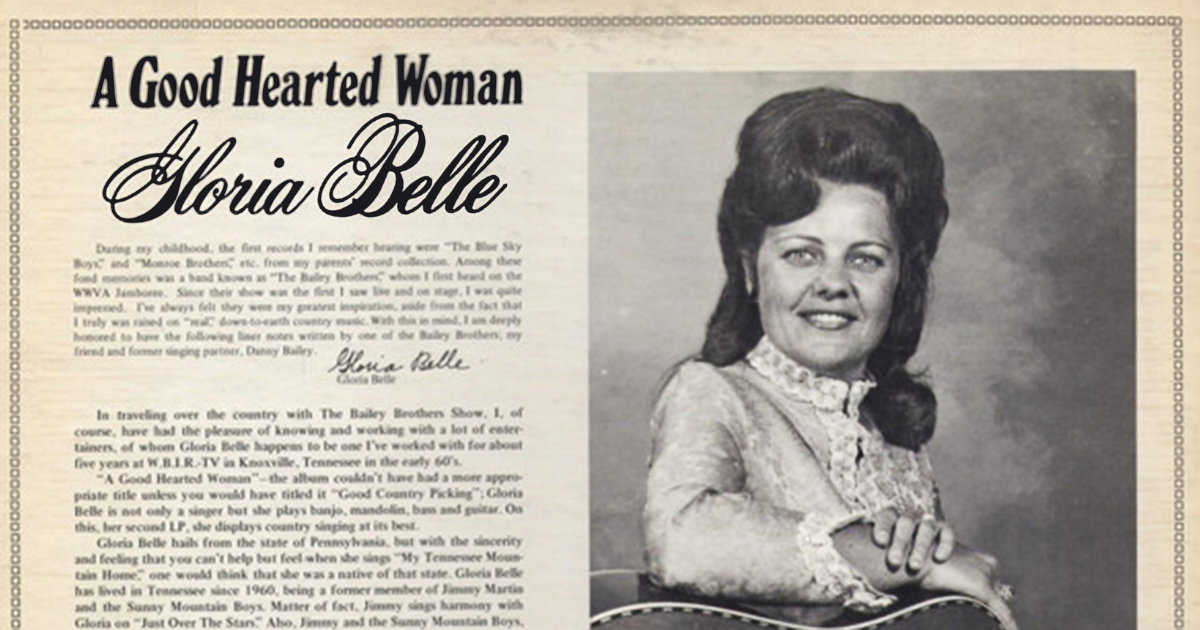
On two later solo albums (A Good Hearted Woman, 1976, and The Love of the Mountains in 1986) she preferred to concentrate on her singing, only playing one stunning mandolin solo that kept up with the speed of her stellar back-up band, the Johnson Mountain Boys.

Around this time, the band Bluegrass Travelers invited Gloria to join them as band leader. Gloria again broke new ground, fronting an all-men’s band. She also demonstrated her strong sense of values by insisting that all band members, including herself, receive the same pay. 

In her important book on women in bluegrass, Pretty Good for a Girl, Murphy Henry wrote, “What we are seeing here is a picture of the quintessential bluegrass side musician, only this had never been done before by a woman in bluegrass.  . . . Gloria Belle went where the work was.”

Occasionally, being a female musician could open doors in bluegrass. The audience appeal of a “girl singer” encouraged Jimmy Martin – one of the top names in bluegrass – to invite Gloria to join his Sunny Mountain Boys.

While he never took full advantage of Gloria’s instrumental abilities (she played snare drum before moving to bass with him), Gloria’s voice shone as a harmony singer, including on high baritone parts of trios and quartets. While Martin discouraged her from playing on recordings, she sang on many tracks, adding harmonies that Henry described as “spine-tingling.” 

Gloria distinguished herself in other ways. As a tiny woman on stage, she held her own with grace, kindness and gratitude for doing the work she had always wanted to do. (And she hauled her upright bass across the stage effortlessly.)

As a boy, Mark Newton saw Gloria perform with the Sunny Mountain Boys. “She held her head high. She was confident. She was determined.” And he remembers the passionate gleam in her eyes when she played and sang.

Timmy Martin (Jimmy Martin, Jr.) met Gloria when he was a young boy playing in his dad’s band. He bought his first – and still favorite – car from Gloria at age 14.  

Gloria was assigned to ride shotgun when the teenaged Timmy drove the bus, entertaining him with conversation during long hours on the road. “She was always really, really nice,” even during stressful episodes – like when the band had to sleep on a broken-down bus somewhere near Kansas for days.

A frequent comment about Gloria’s days with Jimmy Martin’s band was, “It can’t have been easy.” But Gloria seems to have laughed off the wisecracks and insults. 

Author Bob Artis quoted Martin as joking, “She’s not very good, but we let her sing with us ‘cause we feel sorry for her.” Whether he garbled her name during an introduction or deliberately distracted the audience during her solos, Gloria didn’t let it bother her: “I was just doing my job.” 

Gloria left the Sunny Mountain Boys for several years, during which time she played with an all-female country dance band and later in a duo with Charlie Monroe. In 1975, she returned to Martin’s band, recording with him a final time in 1978.

Gloria returned to Cas Walker in Knoxville, taking other jobs in the region as time permitted. Eventually, she moved to Florida, where she took temporary day jobs, jammed and for a short time performed with an all-female group called Foxfire.

Until this time, Gloria had remained single by choice. But after crossing paths musically with luthier and guitarist Mike Long for many years, Gloria married Long in 1989. Until then, she said, “I wasn’t going to marry somebody who would stop me from playing music.”

The couple formed Gloria Bell and Tennessee Sunshine. Based in Virginia, they toured and recorded five albums, three of which were entirely gospel. Nancy Cardwell, Executive Director of the International Bluegrass Music Foundation said, “Gloria …was definitely the band leader, and Mike treated her like a star…”

During her later years, Gloria remained visible in the bluegrass arena. Murphy Henry notes two memories of the Gloria at IBMA gatherings that stand out particularly: “…a Women in Bluegrass performance at Fan Fest, where she played killer mandolin on the rapid-fire instrumental ‘Dixie Breakdown,’” and “a Women in Bluegrass workshop where she and Hazel Dickens stole the show by singing a hair-raising version of ‘Banjo Pickin’ Girl.’”

In 1999, Gloria was the first person Mark Newton contacted when he planned his duet album, Follow Me Back to the Fold, a tribute to women in bluegrass. In 2001, Newton’s project was named IBMA Recorded Event of the Year. Henry wrote, “At the IBMA Awards Show… Gloria Belle participated in the grand finale… When she stepped up to the [mic] to belt out her verse of the title song, the audience broke into spontaneous applause for her energetic performance.” 

Also in 1999, Gloria became only the ninth woman to be awarded the IBMA’s Distinguished Achievement Award. And in 2009, she won another Recorded Event of the Year award for Proud to be a Daughter of Bluegrass.

The IBMA Foundation’s Cardwell said, “That ‘She Persisted’ T-shirt that was popular a few years ago could have been inspired by Gloria Belle. She was one of the first women in bluegrass during her era to tour, perform and record professionally in well-known groups . . . as a side musician who wasn’t a part of a family band or married to someone in the band. 

“She played lead and rhythm instruments well  . . . and pulled her weight musically as a band member . . .  she was a role model and an inspiration for all the great female instrumentalists, singers and band leaders that have come along in bluegrass music in later years.”

Acclaimed bassist and band leader Missy Raines remembers her reactions to Gloria’s stage appearances. “Her impact on this young girl was real. She always dressed for the stage – lots of sparkle. She sang great and played everything. She endured Jimmy Martin’s stage banter with grace and fortitude that can only come from a true professional.”

Becky Buller, a much-lauded singer and fiddler who also worked her way from side musician to band leader, believes she had much to learn from Gloria. She conducted a long search to find her, but only succeeded after Gloria was too ill to speak. But the 2006 video brought Gloria’s personality to life for Buller. “I especially loved her laugh.”

Friends remember how close she was with her parents, who were a constant source of support and kindness. After her father’s death, Gloria’s mother continued to be a presence at Gloria’s performances as well as in her home.

Barbara Martin Stephens, who first hired Gloria for Jimmy Martin’s band and who stayed friendly with her and Mike, had nothing but praise for Gloria: “She was always a kind person,” she said, who never spoke ill of anyone. “And she was a happy person,” Barbara said. “You just don’t find many people like that.”


Editor’s Note: To honor Gloria Belle, the IBMA Foundation will establish a scholarship fund in her name. Foundation board member Becky Buller said the foundation provides around $50,000 in grants and fellowships annually for a wide range of educational and research pursuits. Buller recognizes that in the last decades of Belle’s life, she may not have gotten the recognition she deserved. She hopes an enduring scholarship will keep Gloria’s name and spirit at the forefront of the bluegrass community.
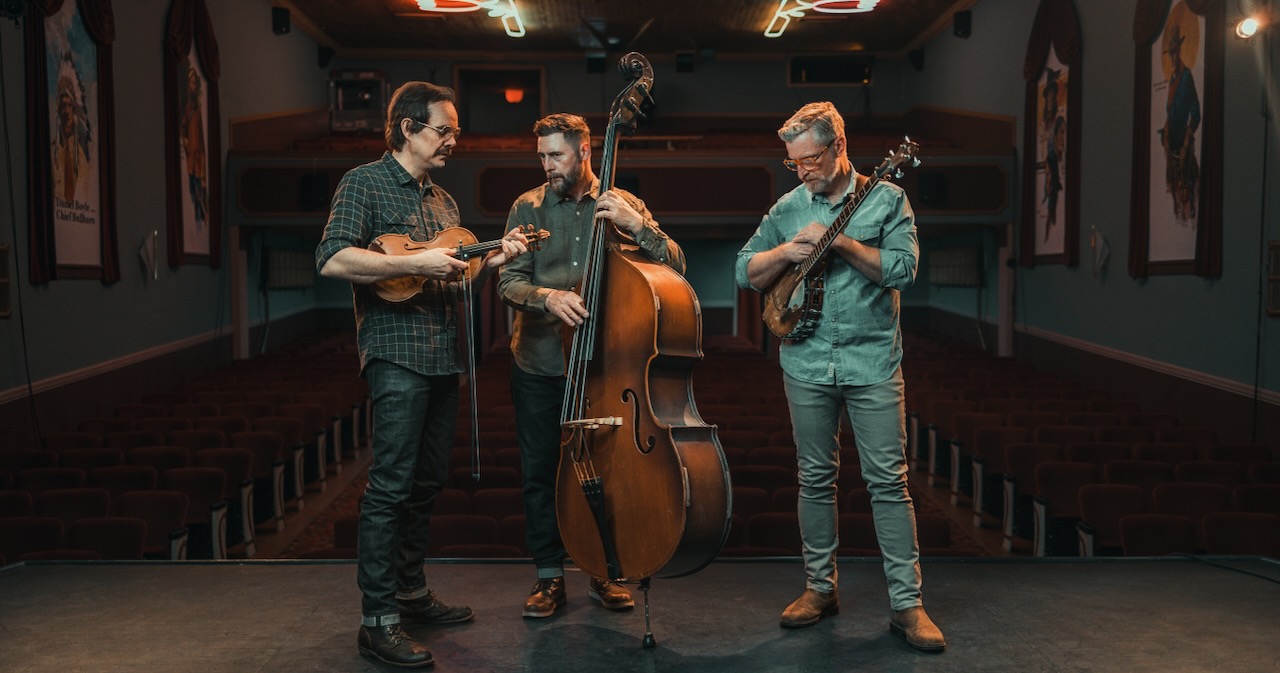

WATCH: The Lonesome Ace Stringband, “Crossing the Junction / Deer River”

Artist: The Lonesome Ace Stringband
Hometown: Toronto, ON / Horsefly, BC
Song: “Crossing the Junction / Deer River”
Release Date: June 2, 2023

In Their Words: “The Junction is the neighborhood in Toronto that John and I live at either end of. In the early days of the pandemic, one of us would have to cross the Junction every time we wanted to get together to play music. There was such an uncertain and ominous vibe to everything at that time, even something as simple as walking across your own neighborhood seemed fraught and uncertain. I think you can feel that tension in this tune we wrote together.

“The second tune in this medley is named after a river I grew up fishing in Eastern Ontario. There are lots of waterfalls, and plunge pools as the river runs from pool to pool – I think you can hear it tumble along, especially in the first part of this tune.” – Chris Coole


Photo Credit: Joel Louis Varjassy

WATCH: Gary Brewer, “Old Brown Case”

Artist: Gary Brewer
Hometown: Louisville, KY
Song: “Old Brown Case”
Album: House of Axes
Release Date: May 26, 2023 (single); June 30, 2023 (album)

In Their Words: “This is the main axe I’ve carried on the road with me all these years. It’s a 1941 D-28 Herringbone. All-original. You can see she’s got quite a bit of wear on it. One of 183 ever made and she’s still doing good. A good and strong guitar. Going to see if I can go way back and do an old Norman Blake song I recorded a number of years ago. It’s called ‘Old Brown Case.'” – Gary Brewer


Photo Credit: Alyssa Brewer

WATCH: Henhouse Prowlers, “Lead and Iron”

Artist: Henhouse Prowlers
Hometown: Chicago, IL
Song: “Lead and Iron”
Album: Lead and Iron
Release Date: May 26, 2023 (single)
Label: Dark Shadow Recording

In Their Words: “I wrote this song from the perspective of a parent who has lost a child in a school shooting. I found myself thinking about the quote that no parent should have to bury their child. That quote always hit me hard and I couldn’t imagine the pain of losing a child, especially from a school shooting, a place meant for peace and learning. I wrote this one at the end of last summer, I wonder if it was a way for myself to mentally preparing for the next school year and the potential of another deadly shooting (the potential which seems to come true every year).” – Jake Howard, mandolin

“I realized what this song was about halfway through listening to it on a rough demo Jake sent us in October last year and it immediately gave me chills. There’s something about the perspective of it all that continues to rock me when we are rehearsing it. That line about ‘first words spoken and tying shoes’ hits hard.” – Ben Wright, banjo


Photo Credit: Stephen Mougin

WATCH: Missy Raines, “These Ole Blues”

Artist: Missy Raines & Allegheny, featuring Danny Paisley with Darol Anger, Shad Cobb, and Ellie Hakansan
Hometown: Short Gap, WV
Song: “These Ole Blues”
Album: Highlander
Release Date: Fall 2023
Label: Compass Records

In Their Words: “I found this gem of a tune while taking a deep dive into Loretta Lynn’s catalog. Loretta wrote the perfect bar room country shuffle, but I immediately thought it could be a great bluegrass crooner and I knew exactly who I wanted to sing it with – Danny Paisley! I grew up listening to Danny and his father, Bob Paisley, sing together. Danny’s high lonesome edge defines a lot of what is bluegrass to me. Recording this duet with him was a personal bucket list item checked off and everything about the song fits perfectly into the theme of my new album, Highlander, which should be out later this year.

“The project is about paying homage to the earliest sounds that inspired me and this version of ‘These Ole Blues’ feels both authentic and genuine to my very core. Rounding out the track are the triple fiddles of Darol Anger, Shad Cobb, and Ellie Hakanson as well as the other members of my band, Allegheny: Tristin Scroggins (mandolin), Eli Gilbert (banjo) and Ben Garnett (guitar).” – Missy Raines


Photo Credit: Natia Cinco

Mandolinist Ethan Setiawan’s Influences Run the ‘Gambit’ on New Album

Ethan Setiawan knows the importance of a good pick. The Portland, Maine-based mandolin player has lately been experimenting with changing the entire sound of his instrument through one tiny, flat piece, pinched between his fingers. The material, girth, texture, and weight of his pick all play a crucial role in how his mandolin sounds, sometimes bright and plucky, or dark and full-bodied. “It’s good to have a sound and have gear that you like, but often the thing that helps me be more creative is just being able to change it up,” he says. “Change is helpful for your own growth and can really spark new ideas or keep things fresh.”

On his new record, Gambit, he finds himself somewhere in between, which is fitting given the way he fuses his entire musical background to create something completely new. It isn’t jazz, but it’s not not jazz. It’s bluegrass, but not in the traditional sense. It’s funk, but also old-timey. 

The Berklee College of Music grad could easily fool you into thinking he’s much older than his years. A seasoned bandmate to some of bluegrass music’s finest — including Gambit producer Darol Anger, whom he first met as a high school student — Setiawan is beginning to carve out space for his own songwriting. Written in Boston, workshopped in California, recorded in Maine, and then mixed in Nashville, Gambit, as its title suggests, is a joyful mixed bag of the many styles of music that have shaped him into one of the most formidable mandolinists of his generation. 

BGS: Darol Anger produced this record, and though you had been playing together for some time, this was your first experience working with each other in this capacity. What led to this partnership?

Ethan Setiawan: We’ve played a bunch of gigs over the years, and it just felt like a good next thing to do was to make a record with him. And he was on board thankfully. We had plans to [record] in August 2020, and then the pandemic started to happen, and it became apparent that wasn’t going to work. So eventually I did make this big road trip out to California where Darol was living at the time, and we had these really nice couple weeks out there, working through the material, just me and Darol kind of playing through the stuff, trying to solidify arrangements and get ideas down on paper to go into the studio with. And eventually in October, we made it into a studio, the Great North Sound Society Studio in Parsonsfield, Maine. We had this four-day session and worked probably 12 to 14 hours a day, every day. And sometimes sessions like those feel like work, you feel tired and drained after a day. But at least for me, those sessions felt really fun, really good. Part of that was not having played music with a band before that time for six months or whatever, and it was cool for me to see these tunes come together, and just working with Darol and seeing how he functioned in the studio. He put in the longest hours of everybody. He was up until 3:00 every night, replacing fiddle parts and working on everything. 

The tunes on Gambit are all originals, but there’s so much tradition rooted in these styles of music you’re playing. How do you reconcile that when trying to create your own compositions?

I do a lot of that, pulling from past traditions or old recordings. A lot of the compositional ideas and things that remain the same throughout the record are tunes by people like Matt Flinner and Béla Fleck, other people that have kind of pushed the envelope compositionally. On the record there’s kind of a whole, well, gambit of different styles. There’s old-timey music with fiddle and banjo, Appalachian string band [style] — and kind of in chronological order, I guess the influences would start there. Then you’d move into bluegrass, get into jazz and eventually fusion, funk, that kind of thing. Darol actually summed it up nicely. He was in the David Grisman quartet way back in the day, so he kind of had a hand in forming this style of music. He said something along the lines of, it felt like a journey through the past 40 years of his career. It just ended up this way that all these tunes grabbed from different areas of the past 40 years. The old-timey, the bluegrass, the sort of new acoustic, the jazz. And hopefully by merit of them being my tunes, they kind of hold together as a collection at the end of the day. 

How much of creating an original arrangement is improvisational?

For me, there’s always a lot of throwing paint at the wall. There’s a stage that kinda looks like that, where I write a lot of tunes or even just generate a lot of ideas, not even taking the tunes to a completed state. The way I write is kind of two stages: there’s the melody and there’s the harmony, these two sides of the composition. Basically, I write the melody and I try all different combinations of notes and phrase endings. With chords, I’m always trying different stuff. That does a lot to create a mood, I think, for the tune. For any one note, you could harmonize in many different ways, and for any one bar. So I think the important thing for me is just to try all the options, really try to be objective, and see what works the best and what feels the best. Mandolin is the main thing that I play, but I also play some guitar and some cello. So just getting off the instrument I’m most familiar with and getting onto something else can be really helpful in sparking some creativity. 

Given this wide range of styles of music you’ve played over the years, how do you describe your sound now?

I’d say that it’s sort of a furthering of the stuff that Darol’s been really involved in, this new acoustic sound. Which is not a label I totally love—just the sound of it—but it’s kinda what we got, I guess. It’s using the attitude of bluegrass in a lot of ways, but not being confined to the stylistic trappings of bluegrass if that makes sense. If you think about how Bill Monroe created bluegrass, he’s kind of the guy that finally took all these influences and put ‘em together and said, ‘here’s the thing.’ He wasn’t even trying to be original; he just was being original. He was just taking all the music that he liked and synthesizing it into what he wanted to hear. And that isn’t often actually the attitude of bluegrass musicians today, but it’s an interesting concept to me and a really interesting way to sort of look at music. So that’s the essence of bluegrass that I’m trying to go after.

How has your relationship with bluegrass evolved since your earliest experience with it?

I think bluegrass is kind of the underpinning of everything that I do, even if it’s not at the forefront of the final product. When I started playing mandolin, I started playing these old-time fiddle tunes, which pretty quickly brought me to bluegrass. When we’re talking about progressions, that is kind of the natural next step for somebody who’s interested in the tunes and the music and improvising especially. You’ll get drawn to bluegrass and then eventually to jazz and so on. That bluegrass vocabulary on the mandolin is really the basis of most of my writing and my playing. And I think that comes through on the record almost more in the way that we approach the tunes and treat how we play the tunes more than the compositions themselves. There are a couple tunes that are a little more bluegrass, but they’re always a little weird. There’s always something a little funky about them. It’s sort of the attitude of the thing that I think has stuck with me the most. 


Photo Credit: Louise Bichan

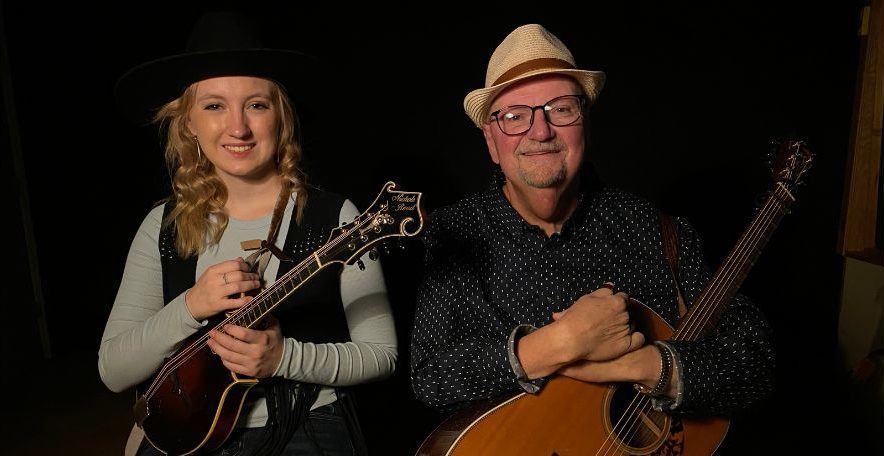
WATCH: Danny Paisley, “What Crosses Your Mind” (Feat. Sage Palser)

Artist: Danny Paisley
Hometown: Landenberg, Pennsylvania
Song: “What Crosses Your Mind” (Featuring Sage Palser)
Release Date: February 23, 2023
Label: Pinecastle Records

In Their Words: “‘What Crosses Your Mind’ is a song I heard last year at IBMA, and immediately fell in love with. Sage Palser and David Stewart both wrote it. I wanted to capture the classic style of Porter and Dolly, Tammy and George, etc. So I wanted Sage to sing it with me. She really knocked it out of the ballpark. I’m just so happy with the way it turned out.” — Danny Paisley

“‘What Crosses Your Mind’ was a huge accomplishment for David Stewart and I to finish. Recording it with Danny Paisley just put the cherry on top! It is such a joy to get to sing with one of the greats in the bluegrass world on this powerful ballad of a love lost!” — Sage Palser


Photo Credit: Pinecastle Records

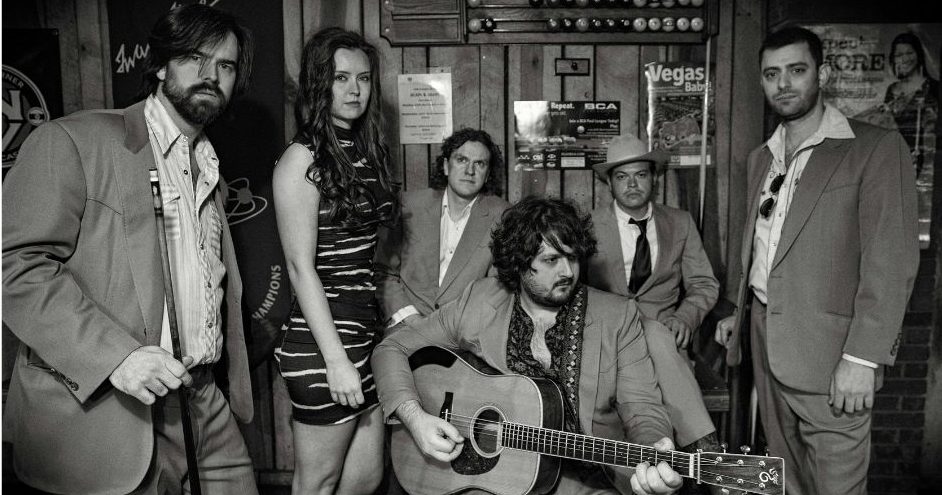
LISTEN: East Nash Grass, “Magic City Grey”

Artist: East Nash Grass
Hometown: Madison, Tennessee
Song: “Magic City Grey”
Album: Last Chance to Win
Release Date: August 18, 2023
Label: Mountain Fever Records

In Their Words: “When our buddy Christian Ward and my brother Jarrod wrote this one, we couldn’t help but think of our beautiful home, Madison. They wrote it about Magic City (Birmingham, Alabama) but THEY WROTE IT IN MADISON. Madison IS Magic City to us, and we love the song. This was the first song we recorded that morning at the Tractor Shed. We’re so excited for people to hear our new album, Last Chance to Win, available August 2023.” — Cory Walker, East Nash Grass


Photo Credit: Aaron Fishbein

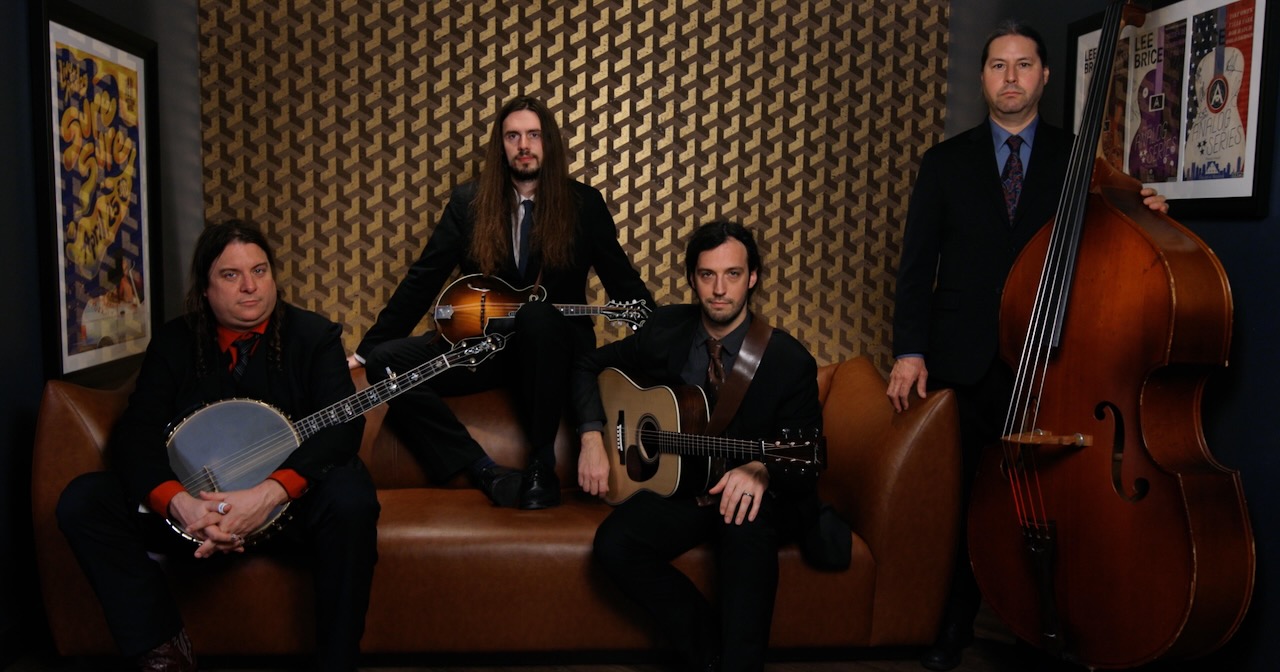
LISTEN: Unspoken Tradition, “Moments”

Artist: Unspoken Tradition
Hometown: Cherryville, North Carolina
Song: “Moments”
Release Date: May 19, 2023
Label: Mountain Home Music Company

In Their Words: “I’m so happy to be giving ‘Moments’ a second life. I originally recorded this song, written by our producer Jon Weisberger and Andy Hall of the Infamous Stringdusters, on my solo album, and in the intervening years it has grown to be one of my favorites. I think my own journey reflects the subject material — with more than a decade of hindsight, it takes on a different meaning in thinking about how fleeting time can seem, how the moments of our lives can ‘turn us all around, lift us up or knock us down.’ I’m excited for Unspoken Tradition to put our own spin on this poignant song!” — Sav Sankaran, Unspoken Tradition


Photo Credit: Sandlin Gaither

Robbie Fulks Reflects on a Funny, Smart and Heartfelt ‘Bluegrass Vacation’

In the liner notes to his new album Bluegrass Vacation, released at the beginning of April, Robbie Fulks talks about his formative experiences in the genre. He also mentions how, as a young musician in the early ’80s, he drifted away from it in search of the coolness of trendier sounds. “But what made me think there was anything cooler than bluegrass?” he asks, playfully reprimanding his younger self.

Bluegrass Vacation makes the case that there is indeed nothing hipper than some of the world’s most decorated musicians tearing into a tried-and-true format. And it doesn’t hurt when they do so in service of smart, funny, heartfelt material, which is what Fulks delivers here and is emblematic of his output for the past three decades. While he proves that he can write rollicking back-porch jams like “One Glass of Whiskey” and “Let the Old Dog In,” he also slows the tempo for tender acoustic beauties like “Molly and the Old Man” and “Momma’s Eyes.” And in the stunning “Angels Carry Me,” he pushes bluegrass boundaries with a multi-movement piece of fearless lyrical and musical complexity.

Considering it took 2 ½ years from first session to album release due to pandemic holdups, Fulks is thrilled to finally have Bluegrass Vacation out in the world. He talked to BGS about early influences, his impressive cohorts on the record, and whether he’d consider dipping back into the genre again.

BGS: What are your earliest memories of bluegrass and what drew you to it?

Robbie Fulks: Early memories are a reel-to-reel tape of Doc Watson’s first Vanguard record. There were a couple of other records on the tape as well, but Doc was the first thing up, “Nashville Blues” going to “Sitting on Top of the World,” that warm, beautiful, versatile sound. Doc did all these different things that kind of put him one foot in bluegrass and one foot out. That was probably the earliest thing that hooked me. And then after that it was like The Country Gentleman and Will The Circle Be Unbroken. A couple of other records that my folks had, and then the festivals.

What made you decide that now was the time to do an all-bluegrass record?

Generally, over the last 10 years, I’ve been making more inroads. My bluegrass hot-shot Rolodex has expanded to where it’s like, holy shit, I have Jerry Douglas’ email and can call Sam Bush (laughs). It just seemed like it had reached a tipping point the last couple of years where it was like I gotta do this. The older guys are going to be dead soon including myself, and that’s part of the reason (laughs). But I’ve been leaning that way more and more for the last five to 10 years.

Did your songwriting process change at all?

I varied my angles on the songwriting as I went along. On a couple of them, I had a genre thing in mind. Like “Lonely Ain’t Hardly Alive,” I was thinking about Jimmy Martin in the late ’50s and early ’60s and wrote to that. With “Angels Carry Me,” that came about because I had inked (mandolinist) Sierra (Hull) on a session. I started thinking about what kind of a groove I would like to hear her on and wrote from the groove forward thinking about the way she plays.

And did writing for bluegrass steer you in the direction of any particular subject matter?

I’ve noticed that I gravitate repeatedly toward four or five rough subjects over and over again. One of them is alcohol, and that shows up in a couple songs. One of them is memories of when I was a kid, and that shows up. Or music itself. When these subjects show up, I always think “Should I go ahead, or not go ahead?” Because it’s well-trodden ground for me. Like “Old Time Music Is Hear to Stay,” I thought “Well, I’m writing another song about music. I’ve done of lot of that. Should I go forward?” And as I went forward with the song, I just found that I really liked it and that compensated for any qualms about having done something similar before. I guess it’s a long-winded way of saying no, it really wasn’t any different. Just going into a room with an instrument and seeing what happened.

Considering the incredible instrumentalists on this record, did you give them a lot of direction? Or was it more like, “Here’s the song. Let it rip?”

Generally, I’ve noticed in the studio that the less I say, the better. Because it’s surprising how you can say four words that seem well-chosen and exactly what you want and then things go haywire because it’s overinterpreted or misinterpreted. My approach is that I definitely have things in mind and I chart and have rough end points in mind. But when you hear the first go at it, I go with the idea that that’s what it’s going to be, like 90 percent, and then I direct the other 10 percent of it as delicately as I can.

Tell me about recording “Angels Carry Me,” which is fearless with how it expands the notion of what a bluegrass song can be.

The people that were on the session, it skewed a little younger, because Sierra was there and (guitarist) Chris (Eldridge) was there. And (fiddler) Stuart (Duncan) is just kind of ageless and genre-less, just pure music. Todd (Phillips) is the same way on the bass. He’s a really wide-brained guy. I think if it had been different players, it might have been more of a challenge. But those players can go anywhere and just have adventurous spirits, as do I. It was never a question that it would be too weird for somebody to get their mind around.

That song also has one of my favorite lines I’ve heard in a long while: “And only a fool thinks he can leave just by driving away.”

That was a line that took me by surprise. I worked on the song for three or four weeks in an attitude of mystery and concern (laughs). Because I didn’t know where it was going or what I was doing. It was kind of amorphous. But the appearance of that line at the end, it seemed like, “Ah, that could have been in my sights the whole time and I just didn’t know it.” It appeared as a gift.

Did you have to embellish any of “Longhair Bluegrass,” which talks about you going to see a festival as a kid with your parents?

I think the only untrue part is that in the fourth verse, I put an example of somebody at the festival, an old-timer that was not into the younger generation and their attitude. And I put in Wilma Lee Cooper because I looked at a poster of that Culpepper festival. Her name fit and I thought the age bracket kind of fit. In the session, Sam Bush said, “No, she was real easy-going about it.” I said, “Who wasn’t?” And he said, “Probably Ralph Stanley.” So I put that in. That was a little untruth, because I didn’t see Wilma or Ralph at that festival looking around angry. And maybe my parents weren’t stoned out of their heads like I implied in the song (laughs).

You talk in “Old Time Music Is Here to Stay” about picking up the electric guitar and then losing interest in it as you returned to more traditional sounds. How accurate is that?

100 percent. I think it was just a natural thing for me to want to swim with the current when I was 17 years old. But even at the time, I think it was at the back of my mind that this music by, I don’t know, Aztec Camera and Big Country or U2, it was OK, but it just didn’t grab me in the way that I was grabbed by a Doc Watson record. It was a little bit more work coming to the popular music of the late ’70s, early ’80s. But what can you do? The stuff that gets in you when you’re five or ten years old, that’s the stuff that doesn’t go away.

Did you feel extra pressure on this record because you wanted to do the genre proud?

There was pressure there, but it was more from being in an isolation booth and looking out the glass door and seeing Sam Bush over there or Ronnie McCoury over there. No matter how welcoming these people are, it’s a mind fuck to pick up your instrument and be playing with them (laughs). It freaked me out a little bit.

I know you just finished this one, but is it possible you could return to the genre again somewhere down the road?

I’m starting to think about what to do next. I’m open-minded. If people like this enough, I loved doing it. I would do another one.


Photo Credit: Scott Simontacchi