BGS 5+5: Ron Pope

Artist: Ron Pope
Hometown: Nashville, Tennessee
Latest album: Bone Structure (March 6, 2020)

Which artist has influenced you most and how?

Springsteen has always been my North Star. First of all, he’s a band guy in solo artist’s clothes. I’ve always felt the same way; I meant to be in a band of equal partners (and that’s how I started), but in the end, I was unwilling to cede the control necessary to do that forever if I was going to have to do the lion’s share of the work. That was a tough thing for me to admit to myself, but I figured it couldn’t be that wrong if Bruce did it.

I guess it was also coming from that same kind of blue-collar background and trying to tell the stories of how real people around me were living their lives. Bruce showed me that a songwriter could reflect the world they came from and represent those who would otherwise go unrepresented. I never had to learn that, because he was doing it before I was born; I’ve always known that was possible.

What’s your favorite memory from being onstage?

The first time we played at Irving Plaza in New York my grandparents happened to be in town. They hadn’t seen me play in years. The last show they’d attended was at a shady club in Miami where there were maybe six paying customers and we’d been instructed by the management to pay some tweaker named “Speedy” to watch our van. At this sold-out show in New York with over a thousand people in attendance, my grandparents were pretty wide-eyed. At some point during the show, I called them out and had a spotlight thrown into the balcony. The whole crowd went wild. I’ll never forget my grandmother standing up there waving down at the crowd like the queen. My grandpa (who is not an easy man to impress) was very stoked. I’ve never been happier on stage than in that moment.

What other art forms inform your music?

I am constantly reading. I can’t imagine attempting to be a writer if you’re not an avid reader. I have to put words in to get words out. Recently, I’ve been on an autobiography kick. I just finished Elton’s. Now I’m reading Presidents of War. Thinking about rereading On The Road next.

If you had to write a mission statement for your career, what would it be?

My philosophy is simple: Just don’t stop. When everyone around you quits, just keep on going and eventually, you’ll get where you’re hoping to go. When I was starting out, I wasn’t the best musician in my social circle (not by a mile), but as each of them decided it was too hard to keep going, I refused to surrender. That’s what made the difference.

What is your dream pairing of a meal and a musician?

My wife and I do a silly cooking show on Instagram that we’ve dubbed “Frankie’s Test Kitchen.” (In theory, we’re teaching Frankie, our twenty-month old, how to cook; in practice, she just tries to eat fistfuls of flour and chases the dog.) We always want to have our musician friends over, but it’s rare that any of us are in town at the same time. In 2020, I’d like to find one day where I can get everyone to the house all at once and do a big Sunday supper like my grandma used to do, with my homemade meatballs and red sauce.

Everyone who’s ever gotten a dinner invite to my house could come (including Lilly Hiatt, Lauren Morrow, Michaela Anne, Katie Schecter, Kirby Brown, the Trotters from The War and Treaty, Struggle Jennings, Caroline Spence, Alanna Royale… I could do this all day; I’m forever inviting people to dinner at the house). So rather than some dream pairing where I make coq au vin for Jimi Hendrix, I just want all these people who I know and like to come eat a dish that usually makes people smile. And if you happen to talk to them, somebody tell Bruce and Patti we’re saving them two seats!

BGS 5+5: Griffin House

Artist name: Griffin House
Hometown: Springfield, Ohio; currently resides in Nashville, Tennessee
Latest album: Rising Star
Personal nicknames (or rejected band names): “Balls” was my nickname, which is part of why I named my 2013 album Balls. I guess you could say it was kind of like a self-titled album. My friend (when we were younger) thought it was funny to add the suffix “balls” onto everything. All nouns, common and proper, including people’s names. Griff-balls apparently had a nice ring to it, since it stuck. Eventually it was shortened to G-Balls and eventually just Balls. It was fun when that album “dropped.” The jokes were endless.

Which artist has influenced you the most … and how?

So many influences, but I think probably Woody Guthrie is the greatest. I do a little more singing than I heard him do, being influenced by guys like Bono and Jeff Buckley, but Woody passed down an American tradition to Bob Dylan, Bruce Springsteen, Wilco, etc; his songwriting influenced [and] shaped how we’ve all done things. I relate to him particularly being a guy with his guitar traveling all around America and singing and telling stories about what’s going on around him. He really paved the way for all of us modern day troubadours singing any kind of folk songs.

What’s your favorite memory from being on stage?

One of the first shows I played when I started was opening for John Mellencamp. I was so nervous I told the crowd I was going to go back behind the curtain and “When I come back out,” I said, “Can you just pretend like you are all here to see me and go crazy?” They gave me a standing ovation and went wild before I even played a note. On the last song, I did a victory lap around the audience of 5,000 people and high-fived everyone and then finished the last song. I mostly did it because I didn’t know if I’d ever if I’d ever have an opportunity like that again and I wanted to make the most of it (and have a good story to tell). It felt like something you’d see happen in a movie.

What other art forms — literature, film, dance, painting, etc. — inform your music?

Lots of film. I love watching movies and disappearing into the scenes that I’m watching. It’s a great escape for me and sometimes inspires a song. Going to museums and looking at paintings and sculpture is a wonderful joy for me too. I also love books; I majored in English Literature in college and learned to really appreciate writing during that time. Poetry and literature probably have the biggest direct influence.

What was the first moment that you knew you wanted to be a musician?

I saw Rattle and Hum and wanted to be Bono, circa 1988. [U2] were just so unbelievable. That set the bar pretty high, but I’m also content just making a living, telling my stories, and being a singer and storyteller playing for smaller crowds.

What’s the toughest time you ever had writing a song?

“Yesterday Lies.” I think it took me a couple years to write. But the toughest ones were the ones I couldn’t write at all. Every one I finish is easier than the ones that never happened.


Photo credit: Gabe McCurdy

MIXTAPE: Jade Jackson’s Songs for Loneliness

Loneliness is something I’ve experienced [for] as long as I can remember. Before I fully comprehended its meaning, I became familiar with it in my earliest childhood memories. Finding comfort in what we’re used to, I naturally gravitated toward music that evoked that feeling and when I started writing and creating art, it was my biggest inspiration. – Jade Jackson

Bruce Springsteen – “The River”

Similar stories have been told by artists over the years. But Springsteen’s take on loneliness is untouchable. The harmonica crying in the intro sets the tone for this genius tale of faded love.

Sheryl Crow – “The Difficult Kind”

This song blends loneliness and strength. Owning up, recognizing you’re the reason for your loneliness is tough to face. The pain in her voice along with the electric fiddle combine to tug at your heart as the lyrics capture an honest look inside.

Mojave 3 – “Yer Feet”

This song reminds me of hopelessness, heartache, and the dull pain that foreshadows lost love.

John Fullbright – “High Road”

I remember bursting into tears the first time I heard the climax of this song. The story unfolds beautifully and illustrates true love ending too soon.

Hank Williams – “I’m So Lonesome I Could Cry”

Hank Williams spun in our record player more than any other artist growing up. It’s a song I loved when I was young, because of its imagery, and as I grew older I related to it in a whole new way.

Violent Femmes – “Good Feeling”

“Vague sketch of a fantasy
Laughing at the sunrise
Like he’s been up all night
Ooh slippin’ and slidin’
What a good time but now
Have to find a bed
That can take this weight”

Enough said.

Townes Van Zandt – “Waiting Around to Die”

Townes Van Zandt is one of my all-time favorite songwriters, and in my opinion, the king of sad songs. Behind the vocals the guitar picking, drums, and harmonica in this song sound like a drunken heartache. The Be Good Tanyas have a rendition of this song that I find equally despondent.

Johnny Cash – “Hurt”

Trent Reznor’s song “Hurt” covered by Cash takes my breath away. Loneliness often leads to a numbness begging to be broken by self-inflicted pain. This song is a raw tribute to wanting to disappear.

Patsy Cline – “Walkin’ After Midnight”

This is the perfect lonesome song, with its desperation and hopelessness accompanied by pedal steel.

Mazzy Star – “Fade Into You”

I love how poetic these lyrics are. They evoke a yearning for emotional connection; walking through depression wishing to be loved by someone.

Jade Jackson – “Bridges”

I wrote this song during one of my loneliest times of my life.

Jade Jackson – “Loneliness”

This song was inspired by realizing you don’t have to be alone to feel lonely.


Photo credit: Matt Bizer
Editor’s Note: Jade Jackson released her new album, Wilderness, on June 28.

LISTEN: Tyler Ramsey, “Evening Country”

Artist: Tyler Ramsey
Hometown: Asheville, North Carolina
Song: “Evening Country”
Album: For the Morning
Release Date: April 5, 2019
Label: Fantasy Records

In Their Words: “A couple of years ago my band and I started messing around with some of my older and more pared-down songs and trying to bring them into a band setting. ‘Evening Kitchen’ was a song that I had written for the Band of Horses record Infinite Arms and when we did that record it stood out because it was in contrast with the rest of the album and really bare bones. A lot of that album was lushly produced and I thought having the song recorded with a single acoustic guitar and vocals would help balance things. It worked well in the sequence of that album and led to a lot of the more intimate moments in our live shows and the direction we headed in for the live Ryman acoustic album.

“This version, called ‘Evening Country,’ was a way to reimagine the song and a chance to put it into a new frame with some truly amazing musicians. It was recorded in Louisville, Kentucky, with Seth Kauffman (Floating Action), Kevin Ratterman (Lalaland Studio, My Morning Jacket, Ray Lamontagne), and I doing the basic tracking. Seth had worked with pedal steel guitarist Russ Pahl before and we were able to get him to play on it (I still jump up and down when I hear his playing!). And the goosebump-inducing harmony vocals were sung by Molly Parden and Thad Cockrell and recorded at the Fleetwood Shack in Nashville by my old friend Bill Reynolds (former Band of Horses bassist). The opportunity to revisit this song in the way that we did has given it a new energy for me as well as new meaning.

“A wild memory of this song: years ago we were playing at Bonnaroo after Infinite Arms had been released. We finished our set and climbed down off the stage and our manager came up and told us to go back up and play a couple more songs because Bruce Springsteen had come onto our side stage to watch us play just as we were walking off. We ran back up and ended up playing ‘Evening Kitchen’ last, and all I could think about the whole time was that there was Bruce Springsteen standing fifteen feet away from me and watching us play this song I’d written — don’t f*ck it up! We made it through and headed back down off the stage and there he was with that Bruce Springsteen smile and handshakes all around. Our monitor man Jon Cronin told me afterwards that he heard Bruce say ‘That’s a good song!’ That’s enough for me!” — Tyler Ramsey


Photo credit: Jameykay and Arlie

MIXTAPE: The Mallett Brothers Band’s Favorite Artists Live

We have just released Live In Portland, Maine and thought it would be fun to put a playlist together of some live recordings of our favorite artists. Live is where it’s at! — Andrew Martelle of The Mallett Brothers Band

JJ Cale – “River Boat Song”

JJ Cale is a favorite late-night cruising soundtrack for TMBB. If we have a late-night drive to the next gig, there’s a fairly good chance JJ Cale’s cool laid back vibe is carrying us down the road.

Jerry Jeff Walker – “Takin’ It As It Comes”

This really should be the anthem of all traveling musicians. On the road whether we’re playing the Continental Club in Austin, Texas, or Brooklyn Bowl in Brooklyn, New York, or Revolution Hall in Troy, New York, we’re all just takin’ it as it comes!

Todd Snider – “Play a Train Song”

Who doesn’t like a good ole train song! Todd Snider is certainly one of the best, his ability to tell a story through his songs is second to none. And, if you haven’t seen him live, you’re really missing out…

Jason Isbell – “Cover Me Up”

Jason Isbell is one of those artists that can cut to your soul. This recording is from the Ryman last year. Whether his time with the Drive-By Truckers or his solo stuff, he can sure write one hell of a song and put on the live show to back it up.

David Mallett – “Hard Light”

Will and Luke’s father David Mallett is one of the greatest songwriters of the last fifty years. This recording is from a live record he did years and years ago. Do yourselves a favor and dig in and see how it’s done!

Bruce Springsteen – “Born in the USA”

This recording is from Springsteen on Broadway. He’s the boss. This rules. There isn’t much more to say.

Dierks Bentley and The Travelin’ McCourys – “From the Bottle to the Bottom”

Dierks and the TMs playing one of Kris Kristofferson’s classic songs. The state of modern country music has been shaped by artists like Dierks Bentley being willing to go back to his roots and put out music that is not only mainstream country but also traditional bluegrass. And the Travelin’ McCourys are just a force, whether it’s playing gigs with their father Del or playing sets of Grateful Dead music.

The War On Drugs – “Holding On”

The War On Drugs gets plenty of airplay in the van and has helped us crisscross the country getting from gig to gig. Their sound is so unique and has a way of drawing you in to that emotional place they so often go.

Waylon Jennings – “I’m a Ramblin’ Man”

Waylon was one of the true original outlaws. He did it his way. He paved the way for so many great artists across the country to break from tradition.

Old & In The Way – “Panama Red”

Our fiddle player wouldn’t be playing fiddle if it wasn’t for this recording. Vassar Clements has a way of bridging traditional and non-traditional fiddling. Mixed with Jerry Garcia’s banjo playing and the powers of David Grisman and Peter Rowan, if this record can’t get you hooked on bluegrass than we’re not sure what can!

Guy Clark – “Stuff That Works”

Guy Clark is on of our favorite songwriting troubadours. He’s another one that gets a lot of airtime in the van. Dig in to his catalog. You’ll be a better person because of it.

Drive-By Truckers – “18 Wheels Of Love”

These guys are a constant point of inspiration for the band. They do it their way, which is usually folk with a healthy dose of rock ‘n’ roll. This is something TMBB certainly prescribes to. DBT doesn’t necessarily fit a mold, but hot damn if it doesn’t grab you by the heart with a shot of whiskey and some loud electric guitars.


Photo credit: Ray Macgregor Photography

LISTEN: The Weepies, “Backstreets”

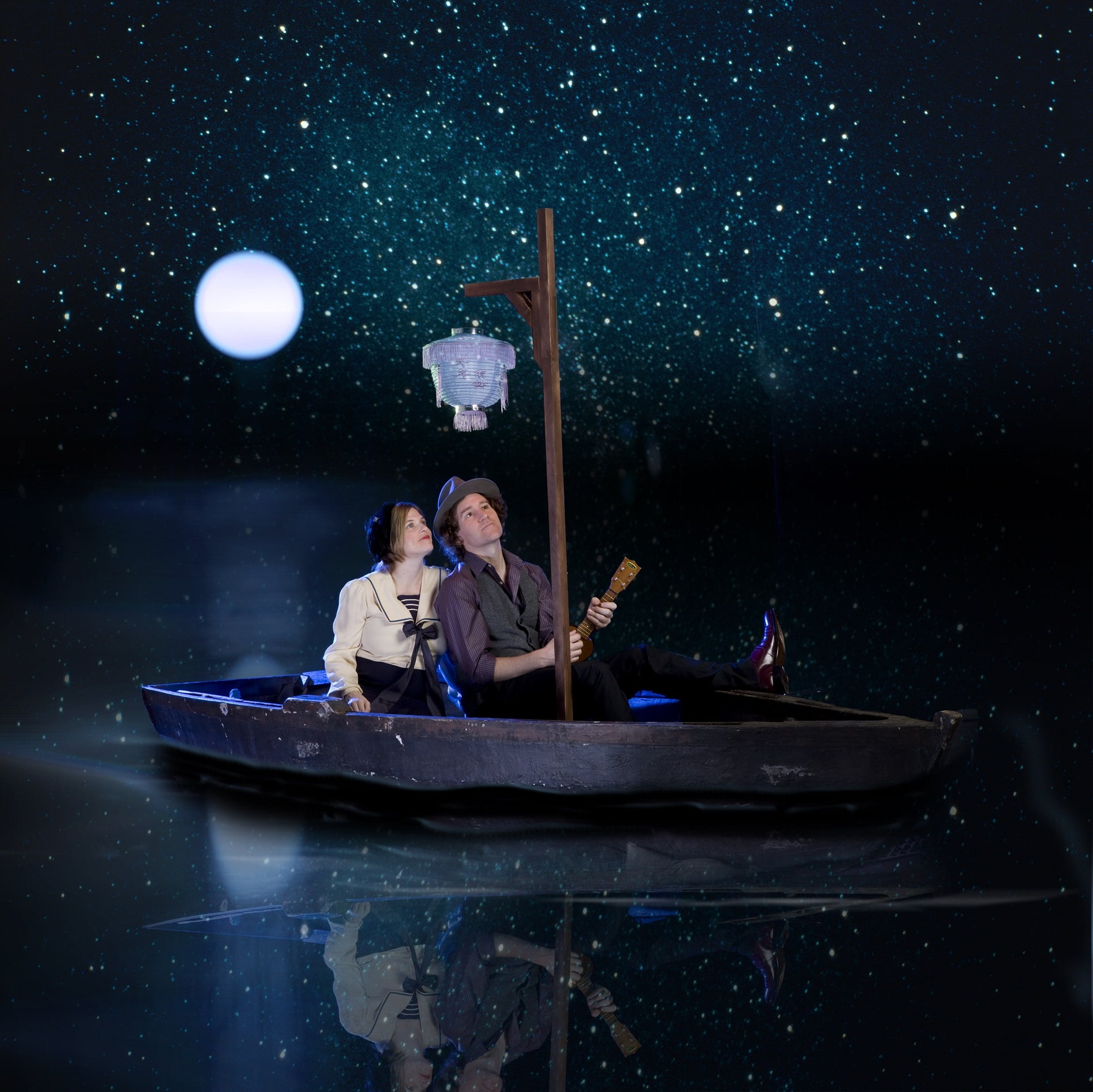
Bruce Springsteen’s arena shows are legendary, yet his songs can be pared all the way down to just a few voices and a ukulele – as heard on this rendition of “Backstreets” by folk duo The Weepies. The poignant track is a centerpiece of an upcoming compilation album, Born to Uke, which recreates the rock star’s iconic Born to Run album on ukulele. Proceeds from the project will benefit Little Kids Rock, funding music education in underprivileged public schools. Ahead of the album’s release date of January 18, 2019, The Weepies’ Steve Tannen spoke about the new track.

The decision to cover a Springsteen song isn’t to be taken lightly, especially one from Born to Run. What kind of emotion were you hoping to capture in your recording of “Backstreets”?

Obviously the reason songs are great is that you can’t quite express the emotion any other way but the song. I’ll do my best knowing I’ll come up short. The key line for me is: “After all this time we find we’re just like all the rest, stranded in the park and forced to confess / to hiding in the backstreets.” It’s not just sad–it’s romantic, hopeful, and stark, and revelatory. Early friendship and disappointment can be transcendent. I connected to this as a 17-year-old, and I feel the same now as a dad. I think our spared down version reflects that.

To me, Springsteen is one of the best songwriters about dreams that don’t work out. When you think about the lyrics of “Backstreets” in particular, what sort of imagery comes to you?

The end of the night when I was alone in my teens–I see me and my friends late at night at diners and in cars. Most of those friends are gone or we all moved into a different place in our lives, split off from a few singular moments as teens. I like that I can revisit those moments through songs.

To some people, ukulele appears easy to play — but I imagine it could be tricky, even for seasoned musicians. What has been your experience in getting comfortable with that instrument?

We were given a Mya-Moe ukulele a few years ago that is fantastic. I’ve played guitar for decades, so it’s pretty natural. I definitely play uke like a guitar player though!

I believe that music in public schools was a saving grace for a lot of the Americana, bluegrass and folk community. Why is an organization like Little Kids Rock important for you to support?

Programs like this are like rain in the desert for bringing something holistic to schooling. Beyond reading and writing, the experience you take from school is holistic no matter what–you learn how to be a person, and what you need to do be happy or survive in society. Music and art are essential to getting me through life with some enjoyment and grace. The more of that that is in education, the better chance for a positive connection.


Photo credit: Robert Sebree

Dawes’ Taylor Goldsmith, The Over-Sharing Songwriter

Taylor Goldsmith is done trying to be cool.

“I feel like there’s an aversion to sentimentality in 2018,” the Dawes frontman (pictured far right) says from his home in Los Angeles. “And I think for a long time I wanted to try to figure out a way to play by those rules. I would write the songs in a certain way; I would maybe even carry myself onstage in a certain way because I was aware of that fact. There was a coolness that had always been there I guess to varying degrees, but I feel like now more than ever it’s important that if you’re a guy in a band, you have to not mean what you say, not know what it means, you have to kind of keep your ballcap pulled down as far as it can go and just kind of recede into the shadows of coolness. And as time goes on and when I feel most myself, I find that just not who I am, and I’m never gonna be.”

That self-awareness is evident on Passwords, the band’s sixth record. It’s an outward-looking album, one that deals with modern themes ranging from the current political climate to social media’s effect on our lives, but it also sees Goldsmith stretching his wings as a songwriter by both pushing himself out of his comfort zone and leaning in to an emotionality that has always been a part of Dawes’ oeuvre.

Case in point: the lovely “Never Gonna Say Goodbye,” written for his fiancée, the actress Mandy Moore. That song poured out of him one night while he was on tour in Detroit. (“Songs typically don’t come out that fast for me,” he says. “They take a good month or two sometimes.”) It was meant as a private “I miss you,” and Goldsmith never intended for it to be heard by anyone besides Moore until she and his brother Griffin convinced him it belonged on the record.

“The main thing [I struggled with] really was the sort of lover’s language that’s really nobody’s business, like the way anyone speaks to the person they’re with when they’re going to bed at night or waking up in the morning or the way they look at each other,” Goldsmith says. “That is the most sacred, private world that I would never dream of wanting any access to. So for me, I was like, ‘Man, this is a very vulnerable moment for me, to say “I love you and I miss you.”‘ It was just a quick thing and I didn’t really want everyone to be eavesdropping, you know? But that ended up being what I liked about it. Because it was like, ‘Okay, what is art? What is music supposed to be other than sharing these personal attitudes that can resonate with someone else?'”

Producer Jonathan Wilson, who worked with the band on their first two records and reunited with them on Passwords, helped Goldsmith feel that he made the right choice about “Never Gonna Say Goodbye” when they got into the studio to record it.

“I was talking to Jonathan about it, and I was like ‘Is this song a little too…much?'” he explains. “I feel like we would all love it if Willie Nelson recorded it in 1973 maybe, but in 2018 is that acceptable now? And Jonathan was like, ‘That’s exactly why I like this song so much. That’s exactly why this should be on the record, because people don’t have the guts to go to this more vulnerable and intimate and earnest place.’ And so that’s something that I used to be scared of because I wanted to be this sort of obtuse artist that was impenetrable because that’s what I’ve always admired in songwriters, but the reality is I’m never gonna be that. The more I embrace what comes out naturally, the better it all feels.”

That approach helped him unlock the album’s themes; though Passwords is not a concept record, its songs share a commonality that make it feel cohesive and uniquely tethered to life in 2018. Goldsmith credits “Crack the Case,” a call for empathy in a time when our country is more divided than ever, with helping him find a direction for the rest of the album’s tracks.

“Oftentimes I find that the themes and ideas present themselves,” he says. “‘Most People’ and ‘Things Happen’ are pretty much about the same thing, and I think that’s pretty cool. I think that’s indicative of a certain attitude being consistent, or something that was really on my mind. Or when I listen to ‘Born to Run’ and ‘Thunder Road,’ one’s almost a continuation of the other, but it’s something that I love about those two songs and that time in Bruce Springsteen’s career, where ‘there’s a better world out there and get on my motorcycle and I’m gonna take you there.'”

He laughs. “In every Bruce Springsteen song, it becomes the identifying mark. It becomes the fingerprint. So with this album, after writing ‘Crack the Case’ and then all of a sudden writing ‘Living in the Future,’ in a way it’s like these songs are about the same thing. One of them comes from a much more paranoid place, but it’s still in the chorus like ‘we’re living in the future, so shine a little light.’ That line could be in ‘Crack the Case.’ So the way that certain songs would bleed into each other and kind of play different angles of the same conversation, that’s something I didn’t think about until it was all written.”

But his plea for entertaining other perspectives on “Crack the Case” isn’t just directed at others. As he gets older, he has challenged himself to get out of his own head and try writing more through the eyes of others, whether it’s the fear and resignation of “Stay Down” or the weariness of “Feed the Fire,” where he’s “working for attention I’ll eventually resent.” (“The song is in this mode of ‘I,’ it’s in first person, but it’s not representative of how I feel,” he says.)

“I think that as time goes on, like anything, anyone who does anything for a living, there become things where you feel like, ‘Cool, I did that and I don’t want to do it anymore because I know how to do it now. I wanna do something that I don’t know how to do,'” he explains. “And for a long time certain approaches to songwriting or to song structures became what I would go back to because that’s what I wanted to learn how to do, especially like ‘Coming Back to a Man’ or ‘That Western Skyline,’ songs that I’m very proud of but also songs that were sort of building blocks for me to take those concepts and then follow into the way I speak as an adult rather than a young guy looking to be a songwriter. There’s a lot of talk of like sunsets and mountains and rivers on our first few records.”

He laughs before continuing, “It is very songwriterly. And that’s because I was learning the language, and as time has gone on, I’ve been trying to figure out how to find the lyrical, find the song in something that otherwise wouldn’t seem like one, you know? When I wrote ‘From a Window Seat’ I was really excited, I was like, ‘This is a song about the weird, obscure metaphysical fear of flying, and it should be off-limits from a band like Dawes, but here it is.’ And I try to keep chasing that down, finding things that just seem like they’re not lyrical and they’re not up for discussing through song. But then more than that, the thing that’s important to me is trying to explore the difference—like when I listen to early music that I wrote, it’s a lot of just me, me, me.”

He adds, “And that’s still the case, and that’ll always be the case, but at the same time, I want to make sure I’m coming from a place where I can adopt attitudes that I don’t identify with….certain perspectives that are not my own, certain narratives that I’m not even a part of, that stuff I feel like is newer. That’s how my writing’s changed. I feel like it’s all as indicative to how I view the world as it ever has been, but trying to take it beyond ‘I love you and you love me, let’s not lose each other, blah blah blah.’

“Because that’s part of what it is to be in your early 20s, but now I look at these songwriters that have these long, rich careers, and a lot of it is because they know how to tackle concepts that are bigger than relationships, that are bigger than self-reflection. They might involve those qualities, but they reach for more ambitious concepts. And so that’s something that I try not to think about too much, but I know that when I sit down to write a song, if it’s going to motivate me to finish it, I want to feel like it’s terrain that I haven’t covered before.”

Even when he doesn’t necessarily agree with what he’s singing, there’s a certain sincerity at the heart of Goldsmith’s songs—perhaps stemming from his ability to place himself in someone else’s shoes sans judgment—that he’s learning to take pride in, no matter how unhip that makes him.

“There’s this coolness that exists right now, and when we come across people that stand up against it and just say how they feel and they don’t mind being emotionally available and earnest and clear and proud, it’s an inspiring attitude,” he says. “I mean, that can come from a person like Bruce Springsteen or it can come from a person like The Rock. His attitude and his sense of gratitude and the way he presents himself in this world, I think there’s something very deep and enlightened about it. He has transcended coolness, and that’s amazing because he’s not here to pretend like he’s some impenetrable artist. He’s not here to pretend like he doesn’t care. He definitely cares, and he’s definitely grateful, and he’s definitely proud, and if we all took a bit of a tip from that attitude towards life, I think it would actually edify us. It would motivate us.

“And so I think for me as a songwriter, after all this time of not knowing where I stood, like, ‘Well, how do I be the cool guy? How does David Bowie be David Bowie? How does Father John Misty be this kind of enigmatic Father John Misty?’ And the reality is that’s just who those people are. And I am the person talking to you right now; I’m the over-sharer. And me coming to terms with that has been kind of the best feeling I’ve had as a songwriter in a long time, like the more I embrace myself directly corresponds to how true I feel my music is. It should be a simple enough lesson to learn pretty early on, but it’s not. It’s really hard. There are few things harder than getting to know yourself and then committing to it. So if someone heard this new album and felt like ‘I’m more willing to be myself. I’m more willing to be open and earnest and share the way I feel,’ I dunno, it sounds cheesy saying it out loud, but I feel like if that were to be something that someone was left with, that would mean a lot.”


Photo credit: Magdalena Wosinska
BGS 5+5: Mariel Buckley

Artist: Mariel Buckley
Hometown: Calgary, AB
Latest Album: Driving in the Dark
Personal Nicknames: Bucks

Which artist has influenced you the most … and how?

My influences are always changing, but a cornerstone of my education in songwriting will always be Bruce Springsteen’s Nebraska. It is one of the most well put-together, genuine, and captivating group of songs I’ve ever heard. The fact that he recorded them to be demos for the E Street band on a four-track is mind blowing. It’s so bare bones and not demanding of anything except your attention to his words, which are near perfectly crafted. I try to take that approach when I’m writing. If it isn’t good enough with none of the bells and whistles, it isn’t good enough for anyone to hear.

How do other art forms — literature, film, dance, painting, etc — inform your music?

I spend a lot of time reading biographies of artists — musicians, actors, writers. The telling is always so honest. And that, to me, is the most important part of creating art. It’s sharing a really vulnerable piece of human existence in a way that not many people feel comfortable doing. So reading those narratives always gives me lots of empathy, which fuels a ton of my writing.

What’s the toughest time you’ve ever had writing a song?

I recently went almost a year without writing a single word on paper. It was excruciating. I was depressed and felt empty of inspiration or any kind of story to tell. “Why is what I’ve got to say so important?”
When I removed my filter of self-deprecation, I realized that my lack of inspiration was due to a lack of confidence, point blank. So I wrote about that, and then I wrote this entire record.

What rituals do you have, either in the studio or before a show?

My pre-show ritual is hard to beat: fear of being late for soundcheck, an hour too early for soundcheck, change my shirt, sweat through that shirt, change into a second shirt, crippling anxiety, self-doubt, burst of confidence, SHOWTIME.

If you had to write a mission statement for your career, what would it be?

To never sacrifice authenticity for accessibility.

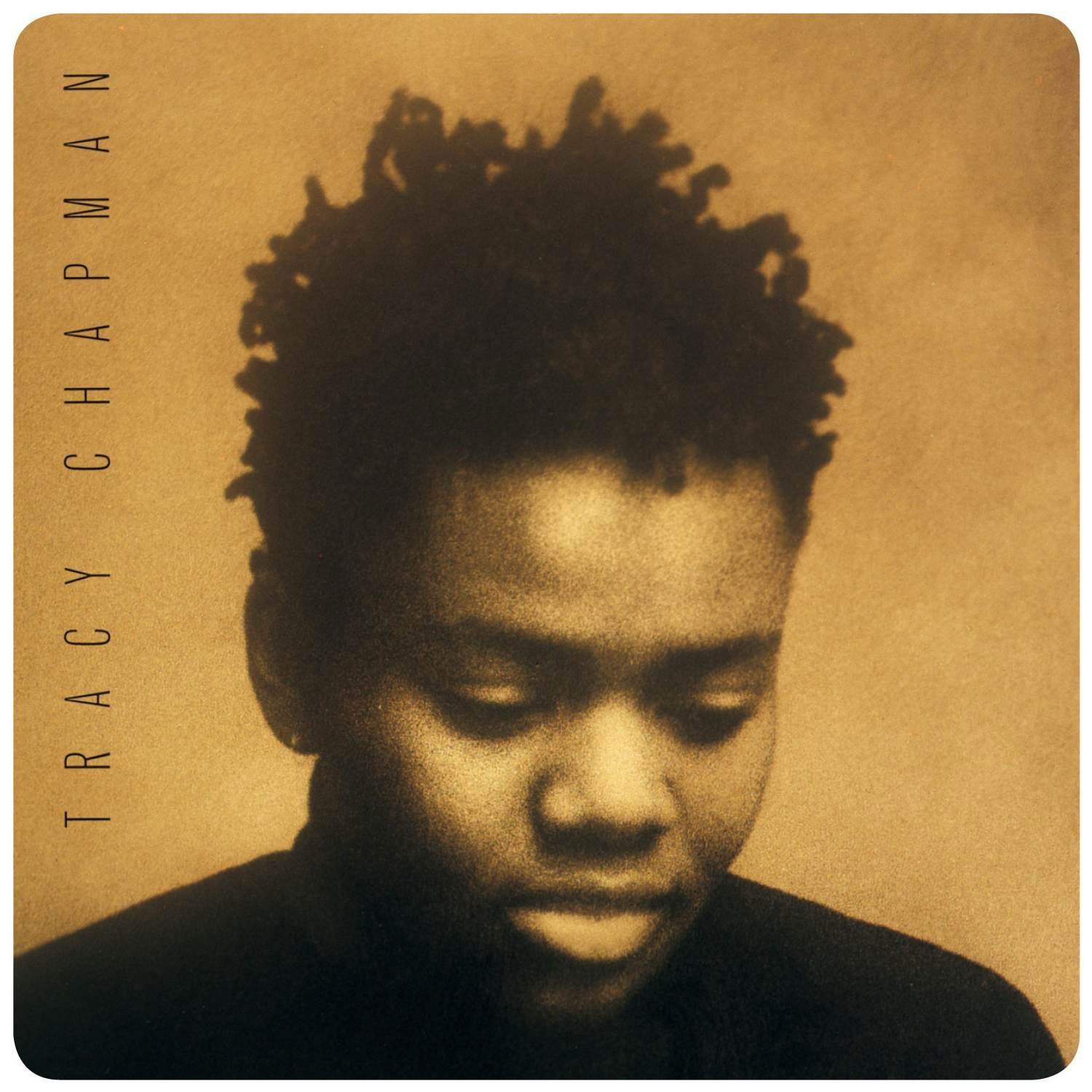
Canon Fodder: Tracy Chapman, ‘Tracy Chapman’

For the week of August 27, 1988, the number one song in America was George Michael’s “Monkey,” a crackling dance-pop tune off his multi-platinum Faith. Rounding out the top 10: Elton John’s “I Don’t Wanna Go On with You Like That” and Chicago’s “I Don’t Want to Live Without Your Love,” along with “Simply Irresistible” by Robert Palmer and “Sweet Child o’ Mine” by a new band out of L.A. called Guns n Roses. Lodged at number six — as high as the song would climb, but still remarkable — was “Fast Car,” by a young singer/songwriter named Tracy Chapman, who just a year earlier was busking in coffee shops around Boston and Cambridge. She had released her self-titled debut in the spring, and “Fast Car” had become a radio hit. She was a curious presence on the singles chart, as she was not a pop artist nor does she play power ballads: “Fast Car” is an acoustic ballad about poverty, hardship, and the kind of dreams that prove more burdensome than freeing.

She was never going to give George Michael a run for his money, but Chapman’s success in 1988 is remarkable for a newcomer making her debut, especially one who chronicles the lives of people who can’t afford to buy albums or cassingles. In “Fast Car,” a pair of lovers determine to escape their hardships together. “We gotta make a decision,” she sings, “leave tonight or live and die this way.” They move to the city, look for jobs, live in a homeless shelter, have kids, continue to struggle as much as they ever did. The end of the song is ambiguous, as the narrator tells her lover to leave: “I got no plans. I ain’t goin’ nowhere, so take your fast car and keep on driving.” Is she giving the driver their freedom? Or has her lover become extraneous, one more anchor weighing her down? Is it an act of love or of its opposite?

Bruce Springsteen is the obvious touchstone, in particular songs from Darkness on the Edge of Town and The River — his grimmest albums with his most desperate characters, many of whom drive fast cars and nurse dashed dreams. In other words, Chapman was not as much of an anomaly on the charts as she might have initially appeared. Just a year before, Suzanne Vega notched a number three hit with “Luka,” about child abuse and our responsibilities to the people around us. And even before that, there was a song that shares a story with “Fast Car,” albeit definitely not a sound: Bon Jovi’s “Livin’ on a Prayer.” As the Reagan era died down in the late 1980s, pop music was reflecting the woes of the country back to itself, and Tracy Chapman appeared in 1988 as the culmination of pop’s newfound social engagement.

Chapman grew up in working-class Cleveland, raised by her single mother who saved money to buy her daughter musical instruments. She began writing songs as a child and, after winning a scholarship to a progressive private school in Connecticut, Chapman began performing at the school coffeeshop. An anthropology major at Tufts, she developed a reputation, locally, as a protest singer, which brought her to the attention of a fellow student named Brian Koppelman, whose father co-owned a major publishing company. Soon, she had a record contract with Elektra and a new manager (who also managed Bob Dylan and Neil Young). Making her debut, however, was much more difficult, because most producers declined to work on a folk album. Eventually, David Kershenbaum, who had previously helmed hits for Duran Duran and Supertramp, accepted the job and promised to keep the music austere and subtle.

The focus is on Chapman’s expressive singing and surprisingly dexterous acoustic guitar playing, which naturally led fans and critics to connect her with the ‘60s folk revival. They’re not wrong, but the comparison is more limiting than revealing. Yes, Chapman sings about revolution and peace and poverty and the military-industrial complex just like Dylan and Baez, but her musical palette is broad. “She’s Got Her Ticket” rides a percolating reggae beat without sounding like a musical tourist. “Baby Can I Hold You” is a domestic drama staged as chamber pop. “For My Lover” is a thumping blues number, with Chapman boasting about spending “two weeks in a Virginia jail … for my lover, for my lover.” (Given the persistent and unseemly speculation about Chapman’s sexual orientation, it’s tempting to hear that song as a gay blues, which would place the song in the tradition of Bessie Smith and Ma Rainey.)

Perhaps the most startling moment on Tracy Chapman is “Behind the Wall,” which she sings a cappella. It’s a story about domestic abuse, the narrator describing the violent arguments she hears coming from the apartment next door, and the lack of any accompaniment contrasts the noise that keeps her up and eventually draws the police. Chapman pauses between the lines of the verses, letting that silence scream loudly, yet the song is as much about how society ignores or disregards the dangers faced by women, in particular black women: “It won’t do no good to call the police, always come late, if they come at all.”

Not everything is quite so powerful. Some of Kershenbaum’s flourishes anchor the music to 1988, in particular the sitar on “Baby Can I Hold You.” And, occasionally, Chapman skirts actual outrage for naïveté, especially on “Why?” “Why are the missiles called peacekeepers, when they’re aimed to kill? Why is a woman still not safe, when she’s in her home?” Her desire for safety and community are sound and all sadly relevant today, but the rhetorical structure of the song does them little justice. Answering rather than simply asking those questions would make a more substantial song. Chapman had been working on many of these songs for nearly a decade, back when she was at that private school in Connecticut. There is a youthful idealism animating many of them, which is at odds with the harsh realism that animates others. That tension gives the album an electric jolt, even 30 years later. Tracy Chapman is the sound of a young artist clinging to her optimism, even in the face of so much cynicism.

Tracy Chapman peaked at number one on the album chart and earned three Grammy nominations, including Album of the Year. She lost to George Michael, but did pick up a trophy for Best New Artist. Also in 1988, she appeared on the Amnesty International Human Rights Now! Tour, on which she shared a stage with Springsteen, Sting, Peter Gabriel, and Youssou N’Dour. Was it all too much too soon? Chapman’s follow-up, Crossroads, released a year later, was arguably better than her debut, but sold fewer copies. She enjoyed a massive hit in 1995 with a 12-bar blues called “Give Me One Reason,” but it seemed like a fluke. Gradually, Chapman’s musical protests grew more general: Songs like “The Rape of the World” and “America” are as broad as their titles, less rooted in story and character, no longer enlivened by the well-observed detail or the thorny insights. As of this writing, it’s been a full decade since she released an album of new material, and yet, Tracy Chapman sounds as sadly relevant as ever.

BGS 5+5: Pauline Andrès

Artist: Pauline Andrès
Hometown: Nashville by way of France
Latest Album: Fearless Heart
Personal Nicknames: Musicians call me P.A, Spanish friends Paulinilla, Southern friends Mama.

If you could spend 10 minutes with John Lennon, Dolly Parton, Hank Williams, Joni Mitchell, Sister Rosetta, or Merle Haggard how would it go?

Tough choice between Merle and Dolly. I guess I’d go for Dolly because such a moment would surely get me high on a crazy good mood for about a month. I would humbly ask for two pieces of advice: one from Dolly, the songwriter, and one from Dolly, the businesswoman. I’d also thank her for both her badass career and the incredible fun I had at Dollywood last Christmas.

Since food and music go so well together, what would be your dream pairing of a meal and a musician?

My life would be complete if I could ever have a big slice of pizza with Springsteen. Wouldn’t even need to talk. But if I could hear an anecdote or two, then my life would be extra complete.

If you had to write a mission statement for your career, what would it be?

Work in the best interest of the songs and nothing else. If it does not serve the songs, it ain’t worth doing.

How do other art forms — literature, film, dance, painting, etc — inform your music?

Literature plays a big part. When I write a song, I always start with an idea, concept, or actual plot. Rarely with a melody or rhythm. Storytelling in the form of books, tales, or poetry is the brainier sister of songwriting. A couple of songs I’ve released are entirely based on literary influences and many are just sprinkled with more subtle references. “On the Doorstep” is feeding off Lovecraft’s writing in every single line and was inspired by at least 10 of his short novels. “She” was born from my obsession with fairy tales — the original, darker, and often Eastern versions of the stories we (think we) know so well.

As you travel around the world, what is the overriding sense you get of the people?

It’s fair to say I’ve traveled a lot and for longer periods of time. At the end of the day, whether in Nashville, Hanoi, or Berlin, you just see the same people with similar-ish struggles. The scenery changes — that’s all. The scale of the problems, too. But not their essence.

It’s probably this universality, this pain that we share, that allows music and arts to create such amazing connections that cross languages and borders. When you travel intensively, you also realize that idiots come in all sizes and languages; therefore, any generalization about a nationality or culture is not only morally wrong, it’s literally not true. People are people. Fact. And the touching part, for me, is to see that most just do the best they can. Even when that ain’t much.