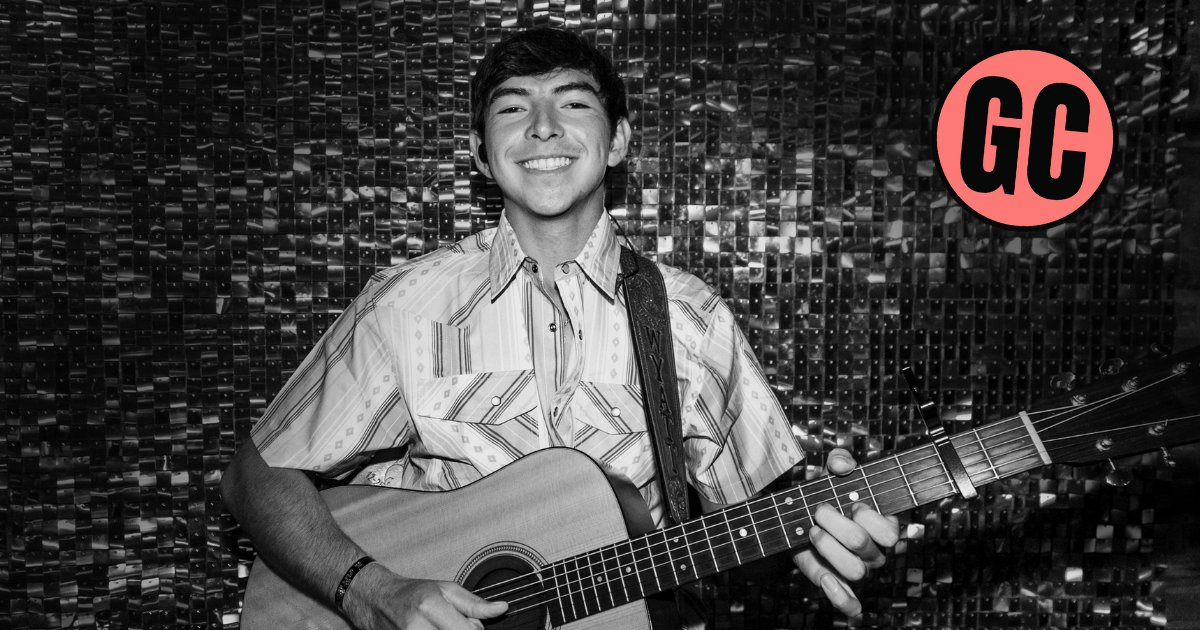
‘Welcome to the Plains’ and to the Red Dirt Universe of Wyatt Flores

Each year, the country music machine and its many fans and acolytes turn over, again and again and again, the quintessential question of “What is authenticity?” We’ve asked that very question quite a few times on Good Country over the last year ourselves, and we know as long as roots music and folk music are made, listeners will continue to ponder what is or isn’t “real,” “raw,” or… “authentic.”

Wyatt Flores has been chosen as authentic. Country Music has spoken, and this quickly skyrocketing young artist has been riding a wave lately surfed by folks like Sierra Ferrell, Tyler Childers, Colter Wall, and Zach Top. Like these real country “poster children,” Flores’ music is realistic and grounded. It isn’t idealized revisionism in outlaw trappings. His songs never attempt to sugarcoat or mythologize, paving over the complications of rural life, red dirt realness, or the gritty patina of a rural places – like his homeland of Oklahoma.

Flores’ new album, Welcome to the Plains, is decidedly and delightfully trad country with nearly universal critical and listener acclaim. He currently racks up 3.5 million streams a month on Spotify alone, bolstered by a series of incredibly popular and consistently viral singles and EPs leading up to this, his full-length debut. For so many writers, diehard fans, and critics, Flores has long been “one to watch,” but that visibility stretches further and wider, to listeners across the country and around the world from so many different backgrounds and starting points.

Part of the reason why such a young artist with a relatively nascent career could have already amassed such a coalition of followers is that realistic, unguarded, “I know who I am, even though I’m still figuring out where I’m going” approach. It’s evident in his artistry, his performing prowess, and his skill for songwriting – all of which are evidenced prominently across this album.

Welcome to the Plains is one of the most remarkable records of 2024; it continues a tone long set in Flores’ career and music, even before this current inflection point and its substantial momentum. Wyatt Flores is bound for longevity, for many more successes, for many more millions of plays, as long as he remains exactly who he is: Wyatt Flores.

Your music has such a strong sense of place, so I wanted to start by talking about Oklahoma and growing up there. You’re down to earth in the way that you talk about Oklahoma from the beginning of the album, from the first notes of the title track. You’re viewing it in a very realistic way, not just in an idealized way. Can you talk about how Oklahoma inspired the album and what “home” means to you?

Wyatt Flores: When you think about Oklahoma, you have to [barely] scratch the surface to know that the history behind it is pretty screwed up, how Oklahoma came about, and we’re not one of the best states, if that makes sense? We’re 49th in education. And we’ve got a lot of people from California moving there just because it’s cheaper and everything else, but to live in Oklahoma, you gotta bear through the weather.

Then also, every year is a coin toss if things are going to grow, right? This year’s been a struggle up until this past couple of weeks, [during] which we just got like a foot of rain. But yeah, it’s been one of the hardest places to really build. And the people are so damn nice in Oklahoma, but it’s a tough place to live. Most people don’t want it. But I love it. “Welcome to the Plains,” it’s trying to describe [Oklahoma] … in the verses I really wanted to try and find more of a nature side to it, and then by the chorus just really tell the truth about it.

It feels really authentic and grounded, but you can still hear that you love Oklahoma in it, too. I think that’s a really interesting combination. Country is really good at rural America propaganda – and I love rural America, so I’m for it, to a degree – but to me, your album doesn’t feel like it has to close an eye to the history of Oklahoma to love it.

Yeah, it was a fun journey to try. I was sitting there just trying not to write songs about the road, because that was the only thing that I was doing. I was like, “This is the only life I’m living.” And not many people know what it’s like to be on a bus or on tour – at that time we were still in the van. It was more so daydreaming about home, missing the place, and then just trying to find the memories to piece everything together.

And I had a lot of weird influences, like “Little Town,” I was really trying to find the same feeling as listening to “Pink Houses” by John Mellencamp. I don’t write too many happy songs, and I was not in a good headspace in that time period. For some reason, I guess I was just daydreaming of a better life, and I kept writing about home, but in a different format of not always missing it.

Another song that really captures this topic is “Stillwater.” I love that it has this sort of dark, contemplative tinge and it feels gritty. Could talk a little bit about writing “Stillwater” and about your relationship with “home” and the construction of “home”? That’s such a country tradition as well, not just talking about home and missing it, but understanding that home is a nebulous, intangible thing, even if it literally exists.

There’s a lot of bands that say they come from Stillwater, but they really just started in Stillwater and they came from a different area, since it is a college town. But I was born and raised there in Stillwater. All my life the college has been my backyard. When I wrote that song in the summer of ’22, I had my guitar player with me and my fiddle player’s husband and we sat down to write that. It was more so just trying to give people a different perspective on what it’s like to actually grow up in a college town, because it’s a vicious cycle of the same shit – like, no one else sees it, because they’re living inside of the four years of going [to college].

And me also being a college dropout, I never got to actually go to [Oklahoma State University]. I went to OSUIT in Okmulgee, Oklahoma. And that did not last long. [Laughs] But yeah, I was like, “No one’s ever actually talked shit on a hometown and actually put the name in it.” So I was just being ballsy with it. I had to change quite a few lyrics, because I kind of went a little too far. I probably would have pissed a lot of people off.

The song was intentional. I don’t know, [I wanted to] make people think differently. Because that is my home. A lot of times, you just see people take advantage of the town, and the town keeps growing. Every single time I come back home now, there’s another chicken place and another damn car wash. I was like, “How many do we need?” Good lord. I was really pissed off in the mindset of it. I’m glad that we captured it, because for a while, I was scared to release it just because I was like, “People are gonna think that I hate Stillwater.” But really, it’s still a love song towards it.

It feels like you’re loving Stillwater, you’re loving Oklahoma, but your love for it requires you to look at it through an accurate lens and not an idealized version of it.

And it’s a relationship. My relationship with that town has just been back and forth. You’ll have that resentment, and you’ll have that frustration with it, but you still love it. It’s crazy to think about it that way, through that lens, but that’s what it is.

You touched on your co-writing process and I was excited to see how forward your own writing and your own perspective is on this album. Can you describe your co-writing and collaboration process for these songs? I noticed, too, that Ketch Secor co-wrote the title track.

When I wrote with Ketch, that was super cool. ‘Cause I had just gotten done watching Killers of the Flower Moon. I was already so inspired by that and wanting to really speak some truth. But not just by absolutely laying into people on the bad shit that’s going on – you can’t force-feed people. When we sat down [to write, Ketch] said that he wanted to write shit about Oklahoma and I was like, “That works out great!” The song just came together and it was it’s one of the coolest things, because I didn’t know how to feel about it quite yet. I was like, “This has some good shit in there…” and then when we went to record it, I was like, “Here it is! This is the way it’s supposed to go.”

But with the writing of this entire album, I was scared shitless. I didn’t think I was good enough, and I didn’t think these songs were good enough for an album. I started overthinking the entire thing. People can get mad at me all they want for doing co-writes, but I’m still writing. It’s not like I just sit in there and wait for these people to write these songs for me. This is all me.

The other thing is, my music taste [has] so much variety that I think it’s only better if I sit down with other people that have other strengths, to get to where I want to go – into these different styles of songs. I don’t want to do the same song, different chords, you know what I’m saying? I wanted it to be so unique and to keep it the way that I’ve always done it, which is to have different styles of songs. For that, I feel like you have to have different songwriters come in and give you different pieces.

I also have to ask you about bluegrass. One of the first things that we shared on our site of yours was a Tyler Childers cover that you recorded with Sierra Hull at Red Rocks. Our audience loved it so much. I think part of why your music resonates across diehard country fans to indie fans to bluegrass fans is that you’re not just a performer and a songwriter, but you’re a picker, too. What is your relationship like with bluegrass music? Is it something that’s prominent in your listening and in your influence?

So, I will first and foremost say this: I am not that good of a picker. [Laughs]

That stuff, that is something that I love. That is a different art. That is so beautiful. But my love for it– everyone in Oklahoma started listening to Tyler Childers and that’s when he came around, I want to say in my high school days. That’s when everything took a shift. I was like, “I don’t know what this is…” because we all grew up listening to red dirt [country], which is what I am. But my influence has really changed. In the summer of ‘22, Laurel Cove Music Festival was the first time that I had seen Nicholas Jamerson, Charles Wesley Godwin, Sierra Ferrell, Cole Chaney. That changed everything for me. It changed the entire way that I looked at music, and from that point on I started listening to every single one of those artists. It just led to more.

I love bluegrass and I try to have a couple songs [in that style], but I can’t call myself bluegrass. As much as I love what they’re doing and I try, I have my influences, I’m still red dirt. The way that those artists do what they do, it’s because they are them. I have my influences, but I am still just me. So whatever comes out, it’s just me loving and respecting it. But I can’t fully call myself a bluegrass musician, because I’m not. I’m jealous of it though, I’ll tell you that much. I’m jealous, I wish!

The production style and the different aesthetics that you’re utilizing on the album feel like classic country and old country plus dashes of country & western. There are moments that are really rocking and there are moments that are really subdued. It’s also really modern and crisp. How much of that is coming from you or from the ensemble and how much is coming from your producer, Beau Bedford?

A lot of that was Beau. I learned so much from him. [Before,] I really didn’t ever get the experience of being in a studio with musicians that are just wizards. Beau really took care of me.

It was a challenge, because we recorded in three different places. We were in Nashville, in North Carolina, in LA, and then we finished in Nashville. We were scared that it wasn’t gonna flow together, being in these different studios and then also just having this [group] of songs. Luckily, it all came together and as different as they do sound, they still flow. That was all just luck. We’re all we’re all sitting there going, “Huh? Hope this goes right!” I had my doubts, too, and [Beau] goes, “Wyatt, everything’s gonna be all right, because you are the main character that runs through this entire thing.”

That’s the constant throughout the entire project. I’m just lucky that it worked. When you go from different styles of songs – red dirt, and then you got this beachy [thing], old-time. It’s just crazy how they all go along together. Then it goes into this weird psychedelic rock and “Falling Sideways.” It was a wild adventure, and I’m so grateful for it. I just can’t believe the way that it turned out.

I ask this last question often, especially with people like yourself who are so effortlessly traditional country. There are a lot of folks out there who are excited about you – and artists like Zach Top and Tyler Childers and Zach Bryan – because these listeners sense that there’s this “new movement” that’s going to save country music, that’s going to renew country. That country is going to be what it used to be before “murder on Music Row.”

I wondered what your thoughts and feelings are on that paradigm? Because I sense that you don’t care so much about what is or isn’t traditional or what is or isn’t “inside” country. Does country music need to be saved? Do you see yourself as part of that saviorship? Do you care?

There’s something to be said about it, because yeah– I have my opinions about commercial country. There’s some really good songs and then I also think there’s some songs that say absolutely nothing. I guess as a songwriter, my goal is to keep writing about real shit and keep expressing myself with vulnerability. And to still write good songs.

I have a very important person in my life who’s been a mentor to me; his name’s Shane Lamb. I used to talk about writing these super-poppy melodies. And he goes, “Yeah, it’s because it’s popular music. … Who are some of your favorite artists?” We started going through Tyler Childers, early on in the days of me being in Nashville. [Shane] was like, “Listen to the fucking melody, Wyatt. It’s a pop melody. It’s for popular music. That’s why it works. But his arrangement is country.”

And I was like, “Oh… when you think about it that way, yeah, I guess you’re right.” So, I do try to have poppy melodies as much as I can, but I still try and keep my verses very needy, if that makes sense. I like putting a whole bunch of detail and really trying to focus in on the verses and let the chorus speak for itself.

That’s so perfectly put; yes, country has always been popular music. It’s one of my favorite Tyler Mahan Coe quotes, the creator of Cocaine and Rhinestones, the podcast and the book. He talks regularly about how country music has always been popular music. That’s not to say that fact absolves Music Row and Music City from all the truck and beer songs, but it certainly helps remind us that hand-wringing over “Is country music going to be okay?!” is not something that’s ever going to go away, but it’s also not something we really need to worry about.

And I think for the first time ever with social media, people are able to find new music that’s always been there. They’re just now finding out about it for the first time, because the radio stations aren’t playing it. That’s its own deal. But now they’re able to find all this new music and I feel like country is still going to be country. Like you said, when it comes to beer and truck songs, I think the thing that’s missing is them not explaining what they love about it. They’re just talking about it, not being vulnerable with it.

I think about “Drive” by damn Alan Jackson, dude. That is just talking about driving. That’s really all it is, but the sentiment is there, because it has to do with the father and the son. And then, all of a sudden, there’s the father and the daughter – that is fucking awesome country music that I still absolutely love! I wish that I could do that, like that Zach Top thing. I told him that whenever I met him, I was like, “Dude, I wish I could do it.” I really do. ‘Cause he’s fucking killing it. There’s so many different styles of music and I’d rather just do what I want to do, which is all of them, rather than just settle for one sound.


Photo Credit: Natalie Rhea

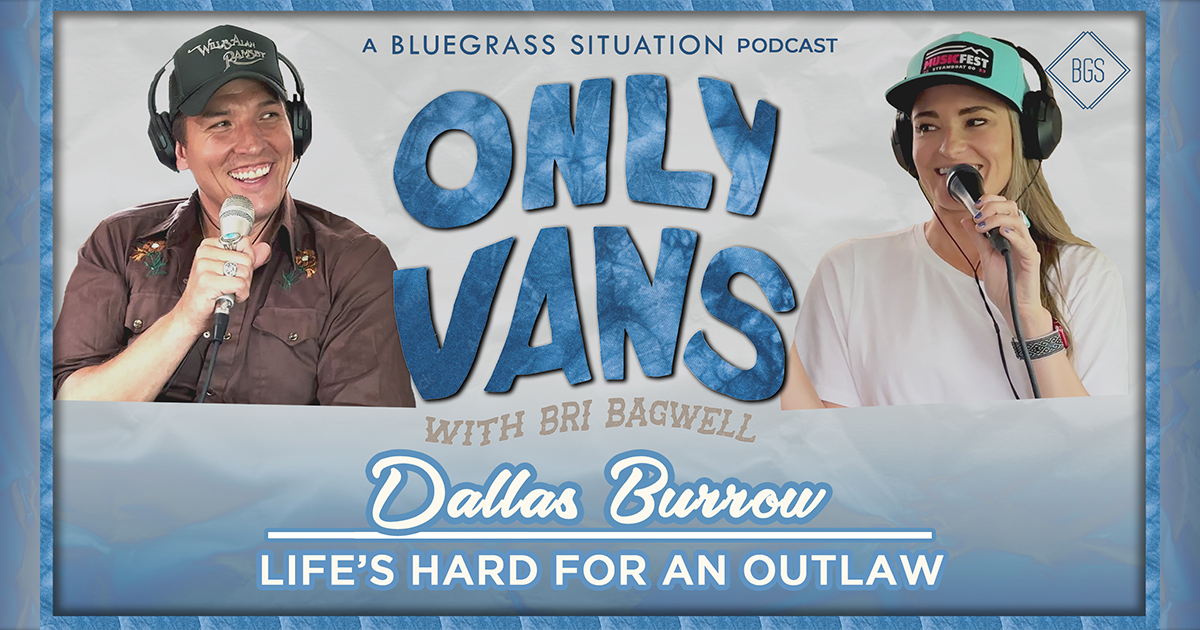
Dallas Burrow on Only Vans with Bri Bagwell

One of my favorite people on earth, Dallas Burrow, stopped by for this new episode of Only Vans to talk about owning a music venue, shamans, Charley Crockett, having a complicated past, and all the good vibes!

LISTEN: APPLE • SPOTIFYAMAZON • MP3

Find Dallas’s music, podcast, tour dates and merchandise here.

Thanks to our sponsors for this episode, The MusicFest at Steamboat, Lakeside Tax & CH Lonestar Promo!


Editor’s Note: Only Vans with Bri Bagwell is the latest addition to the BGS Podcast Network! Read more about the podcast coming on board here. Find our episode archive here.

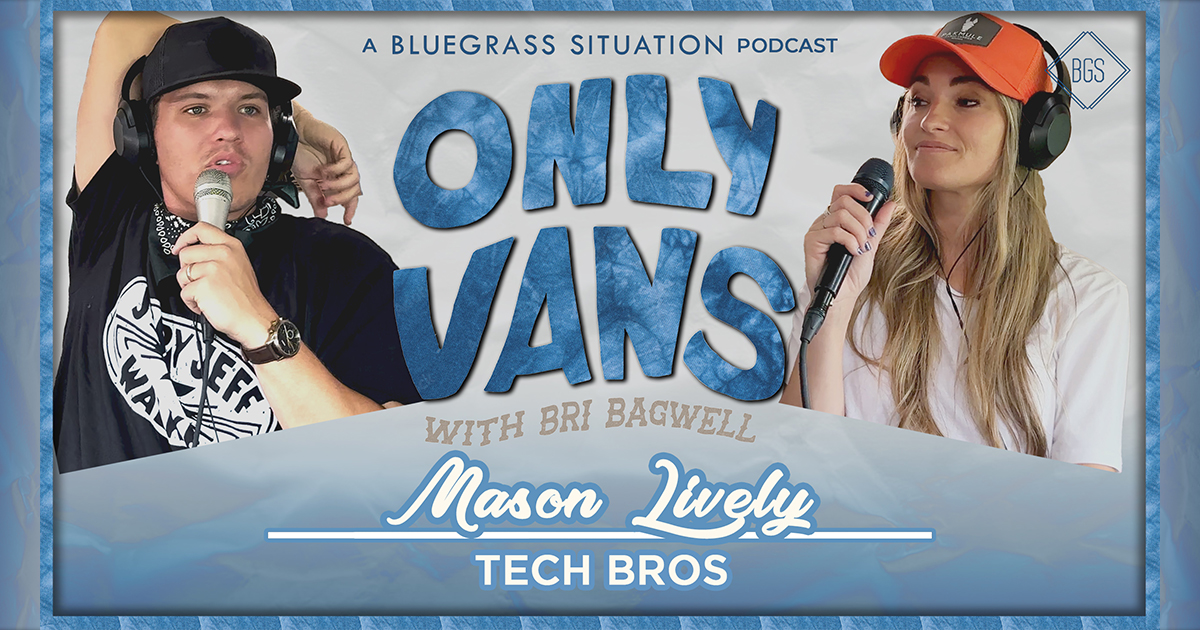
Mason Lively on Only Vans with Bri Bagwell

Fresh off a new full length album, country and Americana singer-songwriter Mason Lively joins the show to chat with host Bri Bagwell about songwriting, priorities, babies, and the housing market. Do yourself a favor and check out Mason’s new record, Burn The Ground, today!

LISTEN: APPLE • SPOTIFYAMAZON • MP3

Find Mason’s music, podcast, tour dates and merchandise here.

Thanks to our sponsors for this episode, The MusicFest at Steamboat, Lakeside Tax & CH Lonestar Promo!


Editor’s Note: Only Vans with Bri Bagwell is the latest addition to the BGS Podcast Network! Read more about the podcast coming on board here. Find our episode archive here.

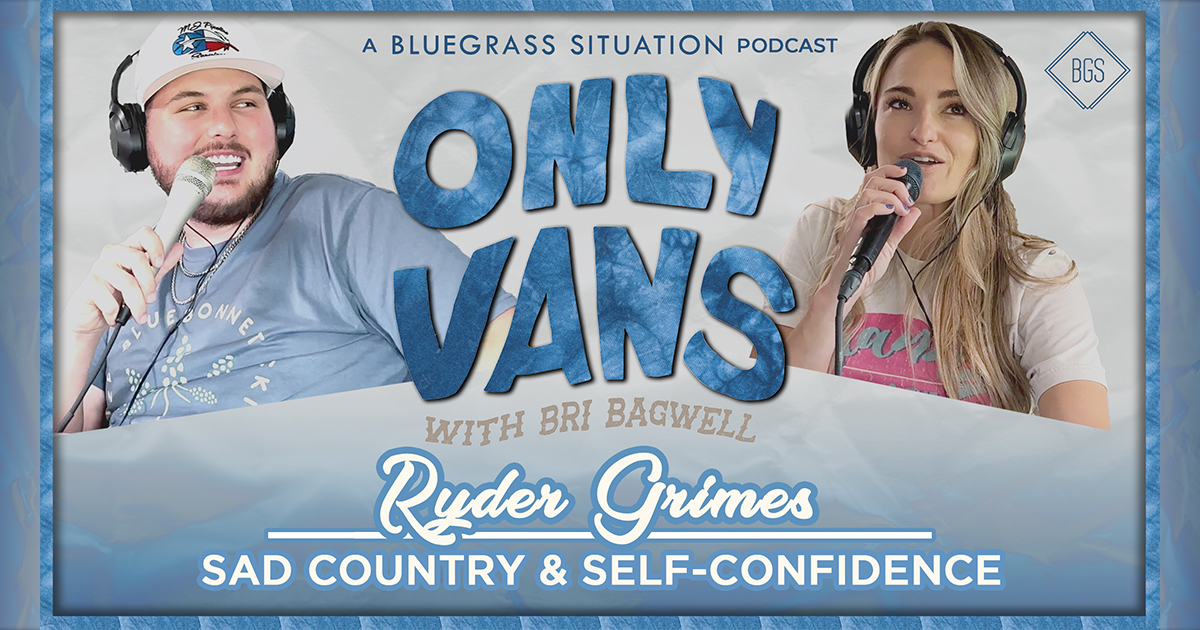
Ryder Grimes on Only Vans with Bri Bagwell

Ryder Grimes is one Texas Country’s most exciting up-and-comers. He’s got a vintage, old soul style and one-of-a-kind voice. On today’s episode of Only Vans we dive into starting early, self-confidence, fashion sense, and the classic “van vs. bus” argument.

LISTEN: APPLE • SPOTIFYAMAZON • MP3

Find Ryder’s music, podcast, tour dates, and merchandise here.

Thanks to our sponsors for this episode, The MusicFest at Steamboat, Lakeside Tax & CH Lonestar Promo!


Editor’s Note: Only Vans with Bri Bagwell is the latest addition to the BGS Podcast Network! Read more about the podcast coming on board here. Find our episode archive here.

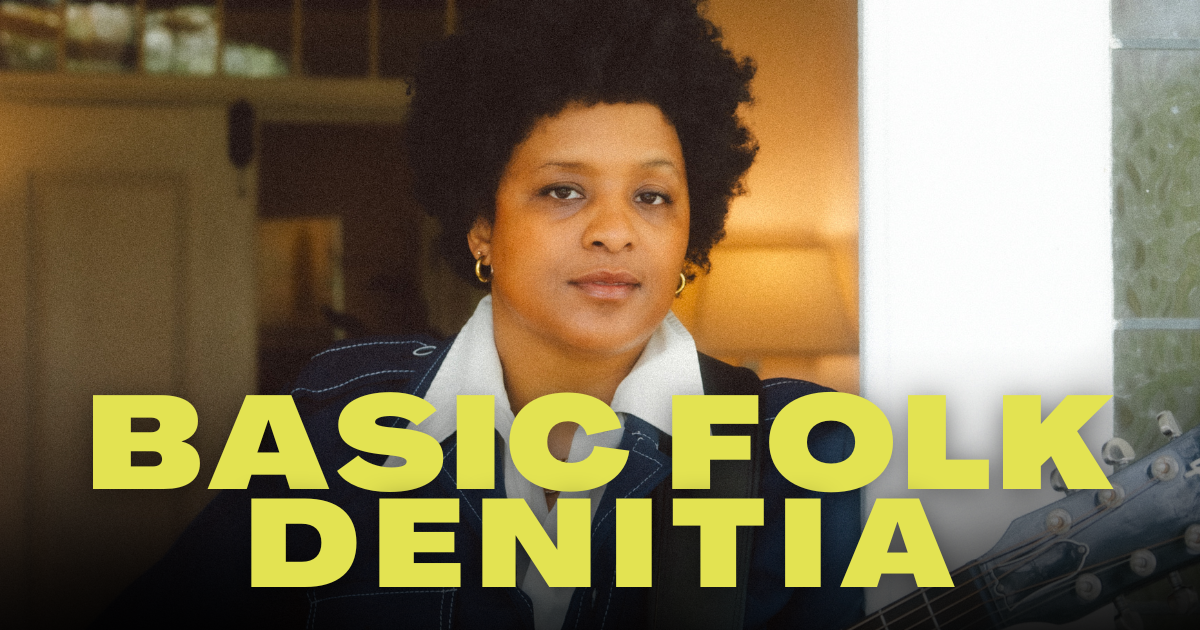
Basic Folk: Denitia

Sometimes it strikes me just how much power can emanate from a creative mind. Speaking with Denitia was one of those times. When the indie music artist comes across an unfamiliar musical concept, she goes “sponge mode” until she understands it. Then she seamlessly integrates it into her artistic vocabulary. This relentless curiosity and sense of play can be heard across Denitia’s catalog, from her early work as half of the New York indie R&B duo denitia and sene to her breakthrough 2022 country album, Highways. Her fluency across multiple genres gives her a refreshing approach to record-making, sound, and fashion alike (from her New York streetwear days to thrifting vintage clothes in Nashville).

LISTEN: APPLE • SPOTIFY • AMAZON • MP3

Since moving to Nashville and pivoting from R&B to indie country, Denitia has been grabbing audiences’ attention with her gorgeous voice and catchy-as-hell, cool girl indie songwriting. Denitia was selected for the CMT Next Women of Country Class of 2024, and her forthcoming album, Sunset Drive (out September 6), delivers on the hype. Denitia and her longtime songwriting partner, Brad Allen Williams, have painted classic country landscapes against which tales of escape from the ordinary are told with longing and warmth. The new record is something of a full-circle moment for the Texas-born artist and a showcase for her prodigious talents as a vocalist.

Basic Folk co-host Lizzie No leads the conversation in our interview with Denitia, where she offers music industry insights, vocal warm-up techniques, and music marketing strategies.


Photo Credit: Chase Denton

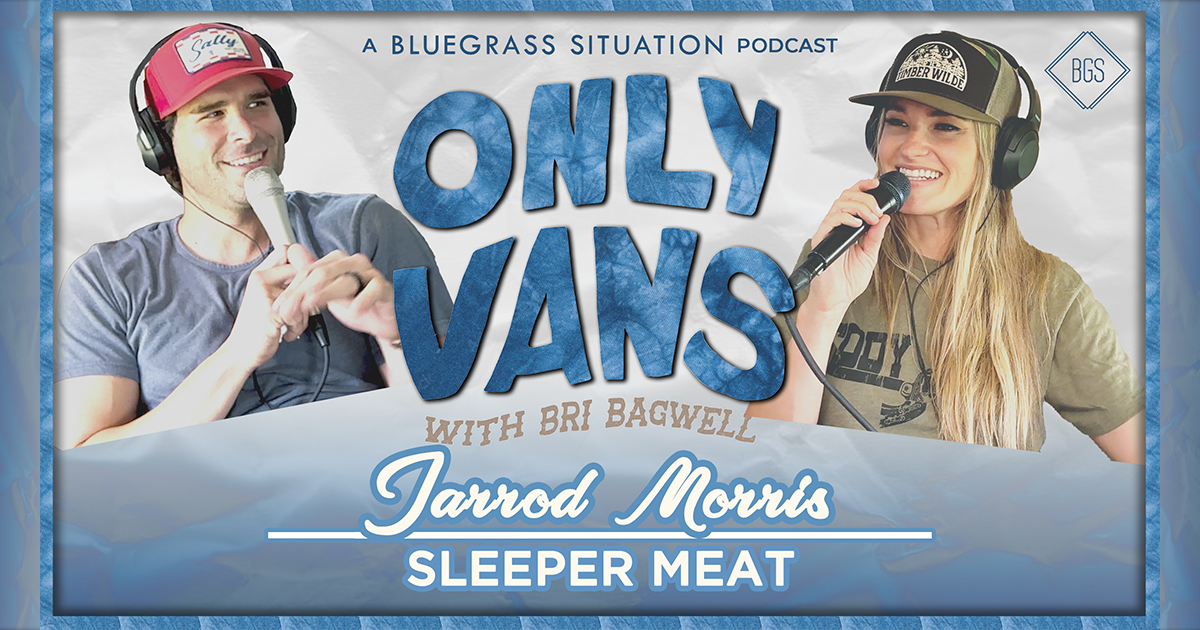
Jarrod Morris on Only Vans with Bri Bagwell

(Editor’s Note: Only Vans with Bri Bagwell is the latest addition to the BGS Podcast Network! Read more about the podcast coming on board here. Find our episode archive here.)

Fellow Texan, country musician, and podcaster Jarrod Morris joins Only Vans on this week’s episode to discuss being “cool,” hygiene, meat, and the origins of farriery. This is a hilarious and honest conversation and it was so great getting to know Jarrod.

LISTEN: APPLE • SPOTIFYAMAZON • MP3

Find Jarrod’s music, podcast, tour dates and merchandise here.

Thanks to our sponsors for this episode, The MusicFest at Steamboat, Lakeside Tax & CH Lonestar Promo!


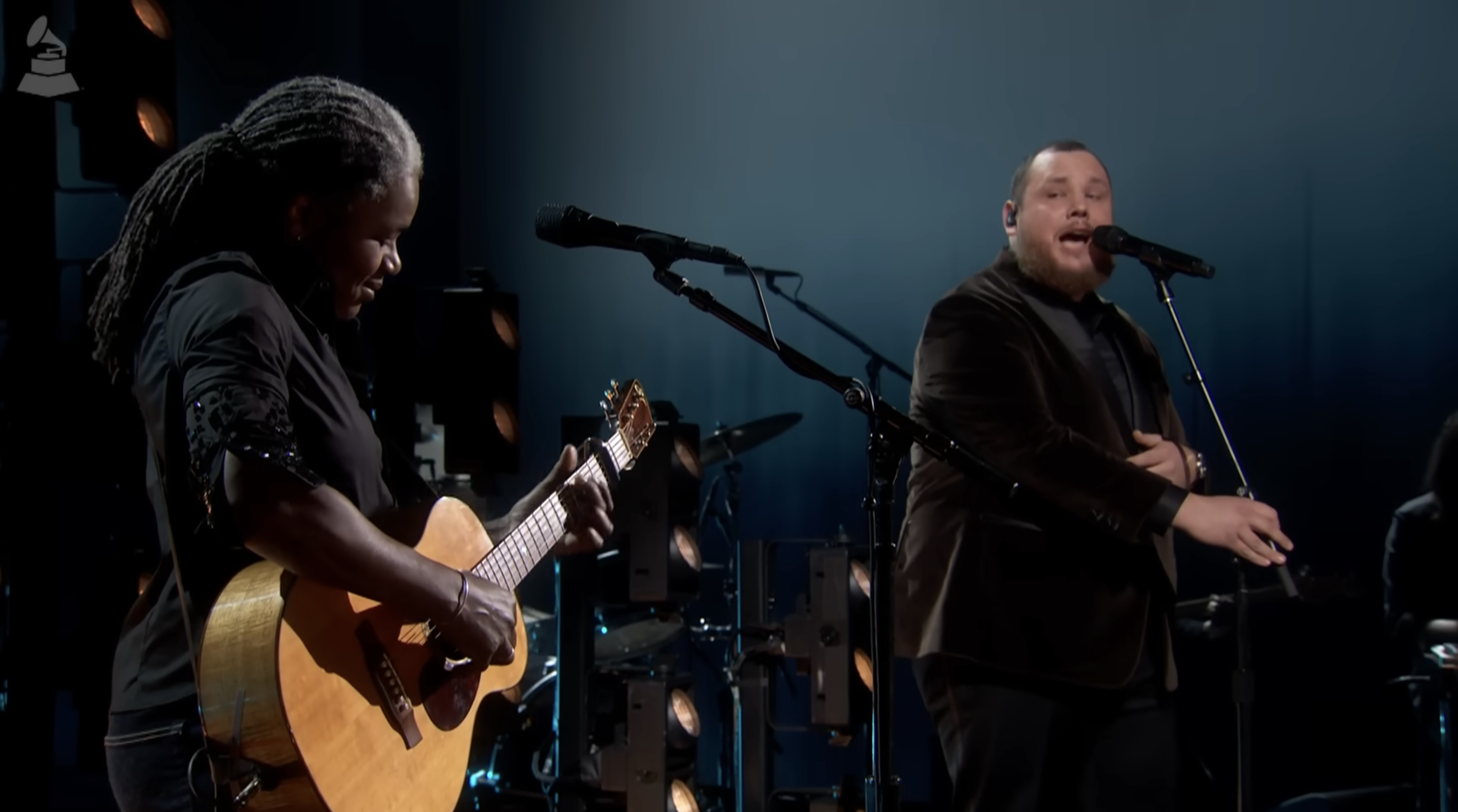
Watch Tracy Chapman and Luke Combs’ Stunning Performance of “Fast Car”

Since the Grammy Awards ceremony on February 4, the country and folk music worlds have waited with bated breath for the Recording Academy to share a stand-alone video of Tracy Chapman and Luke Combs’ stunning collaboration on their mutual, cross-generational hit, “Fast Car.” Late last week, the Academy made our dreams come true – you can now watch the performance in its entirety. (View above.)

The song was a highlight of the Grammys’ primetime telecast and, to its global audience and more than one commentator, signaled a sense of unity and come-togetherness that many feel is woefully lacking in the current zeitgeist, news cycle, and pop culture content machines. Chapman seemed to glow while Combs quite obviously basked in her limelight, content in sharing the stage and the iconic song with one of his childhood heroes. Chapman, something of a recluse in the past two decades, occupied the enormous Crypto.com Arena stage with a quiet confidence and an undercurrent of joy. An electric energy emanated from her guitar strings as she picked the unmistakable melodic hook. Then, on the song’s soaring chorus, the two sang in unison, finding power and common ground in a lyric that has now been sung, heard, and enjoyed by millions more – and entirely new generations.

In the audience, celebrities and musicians like Taylor Swift, Michael Trotter of the War and Treaty, Brandi Carlile, and many more sang along boisterously, indicating the staying power of the song and its lyrics – and the long-lasting adoration held by so many for Chapman.

“Fast Car” will continue to resonate long into the future – and not just on road trip playlists. It’s a perfect, sonic example of the angst endemic to the American dream, of queer placemaking and history-telling, and of all the ways a story so specific, granular, and microscopic could feel entirely universal and relatable. There’s a reason why so many listeners have needed reminding that Combs didn’t, in fact, write the song himself – no matter who we are, where we come from, or who we love, we all so easily see ourselves reflected in “Fast Car.” We’re each hungry for that reflection; “Fast Car” is satiating and then some.

For a brief moment during the Grammys’ 66th Awards Ceremony, we were all contented, joyful passengers in Chapman and Combs’ cosmic “Fast Car.” Let’s each take time to continue to inhabit that moment, as we navigate the traffic of our busy, distinct, distracting, and often divided lives.


Yes, That Is Rhiannon Giddens Playing Banjo on Beyoncé’s New Track

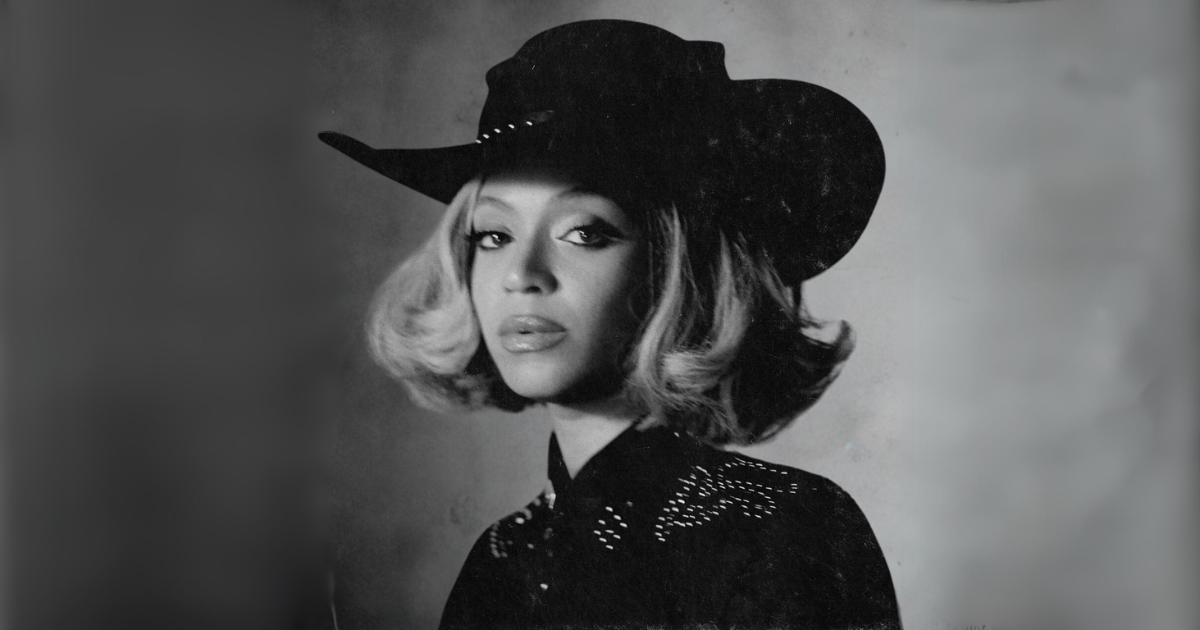
During a series of high profile Verizon ads during yesterday’s Super Bowl, Beyoncé announced that her upcoming Act II following 2022’s incredibly popular dance album, Renaissance, will find the globe-crossing singer/creative powerhouse returning to country. As music journalist Marissa Moss points out in a brand new post for the country newsletter she co-founded, Don’t Rock the Inbox, Beyoncé Knowles-Carter’s relationship to the genre is nothing new – as far back as 2007 the Texas born-and-raised artist rode a horse as she entered the iconic Houston Rodeo, an internationally known, marquis event in her hometown. Across the decades, Knowles-Carter has constantly utilized her music to remind her audience of her Americana roots, with songs, tracks, and production values that regularly reference country and roots music idioms. At the Grammy Awards on February 4, she wore a modernist couture cowgirl get up – a motif that has been peppered throughout the visuals for Renaissance and its world tour. As Lana Del Rey had just announced her next album, Lasso, would be country, the world wondered – why is Beyoncé wearing a cowboy hat?

But Beyoncé’s relationship to country goes deeper, still. In 2016, as Moss and many other journalists and industry insiders pointed out in reaction to last night’s announcement, Knowles-Carter appeared with The Chicks (at that time still referred to as The Dixie Chicks) in a fiery medley performance during the CMA Awards. The trio joined Beyoncé on her countryfied Lemonade track, “Daddy Lessons,” before morphing into a barn burning all-skate on the Chicks’ Darrell Scott-written hit, “Long Time Gone.”

These new songs, which were initially unveiled exclusively on the streaming service Tidal, are built on the “Texas Bama” terroir that all of Knowles-Carter’s music is intentionally rooted within. “Texas Hold ‘Em” begins with a full, warm, fretless old-time banjo, playing a looped, intricate melodic hook. If your ears perked up during Act II‘s teaser video upon hearing the five-string, you are correct – the banjo and viola on the track were performed by the one and only Rhiannon Giddens and were tracked with Demeanor, Giddens’ nephew, another roots music innovator and genre blender, acting as engineer.

It is beyond apropos for Beyoncé and her team to tap Giddens here, someone who has also built a career and prolific musical output on holding together seemingly disparate influences, textures, tones, and styles. It speaks to Knowles-Carter’s aptitude for not only trying on and exploring new or relatively unfamiliar idioms, but also inhabiting them wholly, intricately, and intuitively. It seems obvious to state, but Beyoncé is no roots music carpet-bagger or opportunist putting on “poverty tour” cosplay just to bolster her bottom line.

Though the production style and arrangements here are decidedly interconnected with Renaissance, the beats and underscoring beneath and around the clawhammer banjo and finger-picked acoustic guitar don’t feel entirely like Avicii’s “Hey Brother” or similar, more heavy-handed attempts to intermingle string band music with house, disco, and dance. Ultimately, these two tracks feel less like a “stomp & holler” money-grab/chart-grab and more like post-modernist line dancing music, carrying forward the placemaking and space-holding of her 2022 album. This is music about gathering, moving, and polishing the floorboards with a pair of cowboy boots.

As MacArthur “Genius” and New York Times columnist Tressie McMillan Cottom points out in a NYT blog entry on the new tracks, the most country-sounding aspects here don’t originally stem from “country” at all: “‘Texas Hold ’Em’ sounds like a Maren Morris-style bop, with many of country-pop’s current themes,” says Cottom. “There is a good reason for that. Those themes are very R&B and hip-hop coded: harmonies, danceable hooks, trap percussion and call-and-response.”

In the mind of this writer, though, “16 Carriages,” the proverbial B-side to the more glitzy and grabby “Texas Hold ‘Em,” is the most remarkable of the two singles currently available from Act II. It’s a Beyoncé train song, one that straddles the divide between urban and rural, city folk and country folk, hillbilly music and rhythm and blues. This is a deft balancing act, one that collectives like the Black Opry and artists like Mickey Guyton, Brittney Spencer, Black Pumas, Buffalo Nichols, Julie Williams, and yes, Giddens, have been demonstrating to the roots music industry and its fans for years and years, now. Such a balance can easily go awry, but as we know, Beyoncé so rarely goes awry – even in a would-be treacherous foray into this well-guarded and gatekept genre.

@black_was_genius Replying to @🌚 you asked, i responded. #beyhaw #blonde #takeover ♬ original sound – Tressie McMillan Cottom

These two songs, but “16 Carriages” especially, illustrate how important it is to view music such as this not as aberrations from a country music norm, but as distillations and representations of what has always been possible in country. Especially if we let arbitrary, moralistic, and bigoted “rules” and expectations fall away and we let artists – whether the most famous in the world or the busker on the street corner – be who they are, unencumbered and empowered by their identities, in all of their idiosyncrasies and complications. Beyoncé’s Act II will showcase that we really do all belong in country, whether your hat and boots are literal shit kickers or are overlaid in hundreds of disco ball mirrors.


Photo courtesy of Tidal.

When You Listen the Land Speaks

(Editor’s Note: Sign up here to receive Good Country issues when they launch, direct to your email inbox via Substack.)

An often nameless, faceless character present in all country music is land. In a genre commonly referred to as country & western, land is a constant presence, whether foreground or background, evoked or painted, longed-for or spurned. Another nameless, faceless character that comes hand-in-hand with country and its relationship to land is colonialism – white supremacy, genocide, and imperialism advanced by music that claims to simply center nostalgia, rurality, and an “old fashioned” way of doing things.

This kind of revisionist history in country music – a sanitization of this nation’s past and present, in order to fit into widespread myths, around which this genre and our national identity is built – is no less pernicious simply because it is common and pervasive. It’s important to not only acknowledge country’s relationship with land, but to also attempt to deconstruct the ways that these roots genres perpetuate colonialist ideals and norms.

Can Good Country exist if it must deny the history of the land it professes to love? Can Good Country exist if it must deny that there would be no “country & western” without Indigenous people? These are questions that we feel are essential to ask, right out of the gate, even if their answers are not so simple. Good Country hopes to be a place that can represent all kinds of country music, but it cannot do that if we accept, uninterrogated and unexamined, that country’s relationship to the land must be good, moral, wholesome, and just.

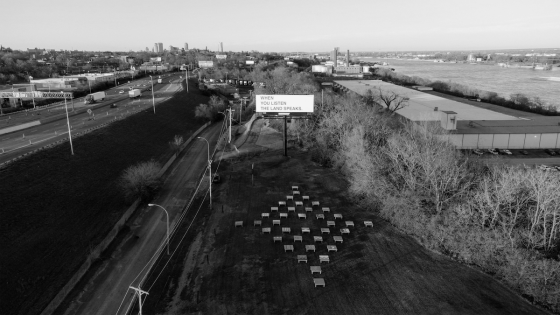
At the heart of the second edition of Counterpublic – an artistic activation described on its website as “a civic exhibition that weaves contemporary art into the life of St. Louis for three months every three years…” – just south of downtown and the towering Gateway Arch, sits Sugarloaf Mound. From April to July 2023, Counterpublic included twenty-five public art installations at a variety of locations, including Sugarloaf Mound, a sacred site for the Osage People and the last intact mound in the city. In earlier eras, the area was home to many thousands of Indigenous people – and the largest city in what would become the United States, Cahokia.

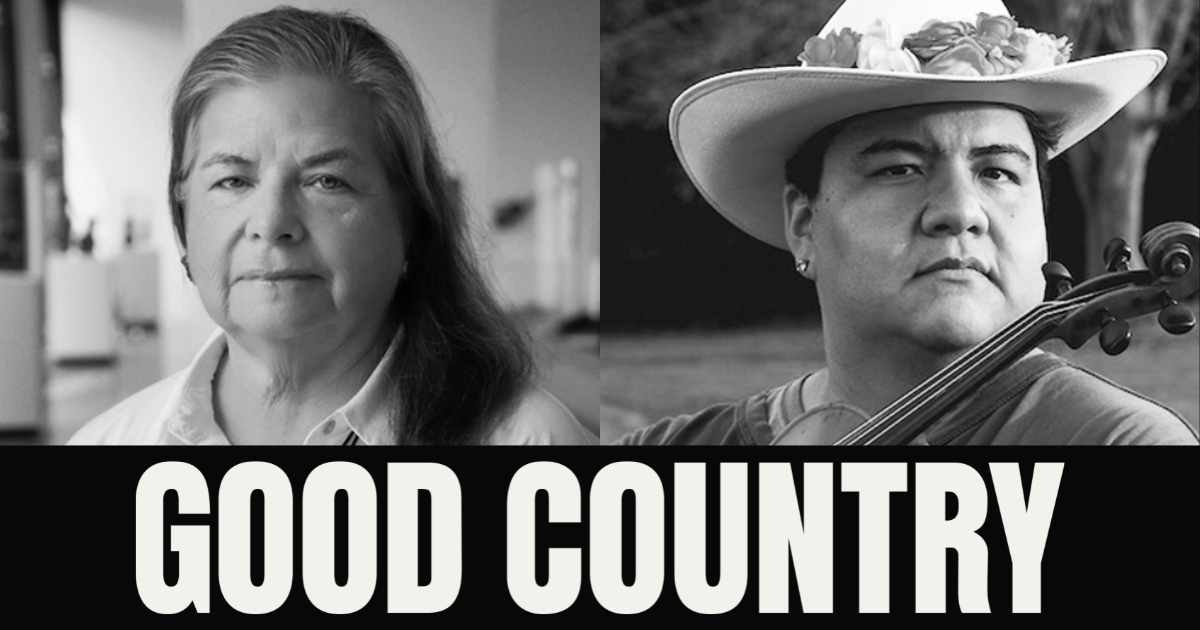
Adjacent to Sugarloaf Mound was the first Counterpublic installation and site, a collaborative piece that wove together sculpture, land, and music by mother-and-son artistic duo, Anita and Nokosee Fields. Anita Fields (Osage/Muscogee) is a fine artist who works in many media, but especially clay and textiles. Nokosee Fields (Osage/Cherokee/Muscogee) is a critically-acclaimed and in-demand old-time fiddler, equally at home in country and Americana as in old-time and string band traditions, and with a great deal of expertise on Indigenous fiddlers and Indigenous fiddling.

Their piece, WayBack, which was curated by Risa Puleo, is synopsized as such:

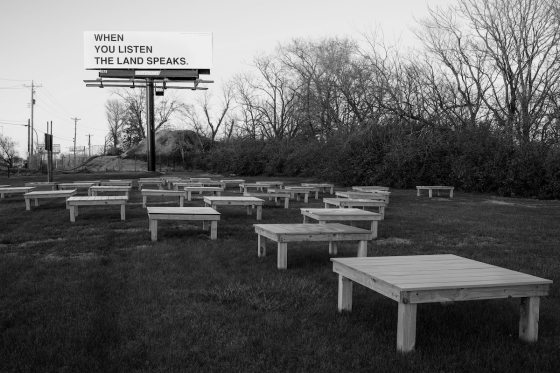
“Created in collaboration with her son Nokosee Fields (Osage/Cherokee/Muscogee), Anita Fields’s (Osage/Muscogee) WayBack invites visitors to gather in physical relation to each other, to Sugarloaf Mound, and to Osage ancestors, history, and legacy. When the Osage Nation purchased part of Sugarloaf Mound in 2007, the sacred site was reabsorbed into the Nation through the auspices of property, extending Osage territory from the site of their displacement in Oklahoma back to their ancestral homeland. Atop this site, forty platforms are installed, modeled after those found at Osage events in Oklahoma. Each platform is embellished with ribbons that reference Osage cosmologies of balance between sky, water, and earth. Nokosee Fields’s composition for wind instruments invites further consideration of the earth from which the mound was constructed, the sky that unfolds above the platforms, the sound of the Mississippi River on the banks below the quarry and the wind that flows through the surrounding trees that transform first into breath. After the exhibition, the platforms will travel from St. Louis to Tulsa where they will be distributed to Osage community members completing the link between the current home of the Osage Nation and its ancestral homelands.”

“Middle Waters,” the labyrinthine composition by Nokosee that acted as soundtrack for the installation, its platforms, and the adjacent mound (listen via the Counterpublic site here), perfectly illustrates how adept country music – and its textures, styles, and traditions – can be at capturing the ineffable, spiritual qualities of land and our relationships with it. Fiddle, field recordings, wind instruments, voices, and more intermingle in a piece that feels as organic and grounded as Anita’s sculptures.

Now, after the installation’s closing, each of the forty platforms constructed by Anita and displayed at the Counterpublic site will be moved to what’s now called Oklahoma, to be distributed to members of the Osage community and to have a continued life, further illustrating how art, music, and land gain all of their meaning from the communities that interact with and rely on them.

On the occasion of Good Country’s inaugural issue, we spoke to Anita & Nokosee Fields about WayBack, “Middle Waters,” the Counterpublic exhibition, and how humans, land, music, and art intersect and combine.

Could you just take me into the inspiration and the conception of WayBack and how you started working together and collaborating on the piece, not only with each other, but also with the land and with the site? Um, maybe Anita, do you want to start?

Anita Fields: Sure. Over two years ago now I was contacted by Risa Puelo, who was one of the curators chosen for the Counterpublic triennial in St. Louis. [Risa] asked if I would like to join and explained their purpose, what they were doing, and what their groundwork was for the triennial. She said, “I know your whole family are artists, so if you would like to invite somebody from your family to participate with you, that would be absolutely fine.”

But let’s begin with what their goal was, and that was to talk about the difficult histories of a place. St. Louis is certainly one of those. The reason that I was asked to join was that, for the Osage People, St. Louis, Missouri – and even further than that – is our ancestral homeland. It’s a large area, including St. Louis, Missouri, Arkansas, and even further than that in the beginning, migration from almost the East Coast to the Ohio Valley, to where our written and documented history begins in Missouri. So that was our homeland and there are documented villages there, still, and lots of history there, because after Lewis and Clark’s expedition we held the trade there. After Lewis and Clark, we started interacting real heavily and marrying with the French, partially because the French were trying to hold onto political power through the fur trade.

That is our history there [in St. Louis]. And then of course came displacement. A series of treaties started moving us out of that area, ‘til we came into Kansas. We had a reservation there and then we sold that reservation and with that money we bought what is our reservation today from the Cherokee Nation in Oklahoma. That’s it in a nutshell, and of course it’s way more complicated than that.

Nokosee and I don’t live in close proximity to one another, so I was like, “Oh my gosh, is this going to be able to work over the phone and Zoom? That’s going to be kind of difficult!” Then an opportunity arrived for me to go to Bogliasco, Italy for a month-long residency. I asked if I could bring a collaborator, and that’s where we landed for a month – on the Mediterranean, in this beautiful, beautiful, beautiful place, on the coast of Italy, not very far from Genoa. We schemed and dreamed and planned. And it was very difficult trying to arrive at a place where we were both happy.

Nokosee, I wonder how, as a songwriter and composer, you began approaching this? How did you take your musical vision and dovetail it with the physical vision, with the sculpture, and with the place? What was the process like as you sat down in Italy to start creating together?

Nokosee Fields: When we were both in Italy, I had a little field recording kit that I had been using. I would just roam around the grounds recording things. There’s the ocean right there, there are all these really intense waves happening, a lot of sounds to be had. There was also a poet, Robin Robertson, who was a fellow there at the foundation and I asked if he wanted to do any collaborating, because we had a lot of time there – it was a testament to the importance of having space and time to have creative thoughts. Which, I feel it’s really rare. For a lot of artists, you have to hustle a lot. We were there for one month, I was getting very regular sleep, I was eating three nourishing meals a day, and getting some exercise. And again, it’s also in this beautiful location, and we were surrounded by really smart artists. It was just a very stimulating, nourishing, and calm environment. I was able to actually have some visions and clarity. And I was able to indulge a lot of things – where, you know, most of the time I’m just barely piecing things together to make money or to pay rent.

It began with [Robertson] reciting a poem, then I started layering him reciting this poem with the waves and different sounds from around the grounds, manipulating them. I like the idea of using really intricate, small, detailed, fine sounds – using a really sensitive mic – and then turning that into something else. Or, pitching it, layering it on top of people’s voices or singing, or maybe something a little more recognizable.

For me, the space and time to have all of that creative flow happening – it took what felt like a month of just space to finally get somewhere with something. It was eye opening, a testament to needing space and time, because we kinda flip-flopped back and forth on what we were gonna do. I wouldn’t say we were struggling, it was just that we were in this new place and jet lagged. Our project was not hands-on, because it was just all conceptual, so it was a little difficult to land on something.

I do want to talk about the site, because – obviously I’ve only seen the photos – there’s an interesting juxtaposition of this kind of dreamlike soundscape for the piece with “Middle Waters” and then the site itself feeling somewhat shoehorned into modernity. You have the river there you have the highway here and of course there’s a billboard incorporated into the piece, as well. Anita, can you talk about how you wanted to play around with that juxtaposition with this sacred site that now is somewhat entrapped by modernity and by settler culture?

AF: There’s always a backstory surrounding my work, and how I came to be. I was born on the reservation and spent a lot of time with my grandmother, who was full blood, and I’ve chosen to be very close to my culture, even as an adult. As much as I could, I did what my grandmother did for me for my children, to make sure they have a place there, [in my culture]. In my own work, as I became older and older, I would be inspired by things that come from our worldview, which is a very complex worldview, but it’s very beautiful.

We still have those values. As a modern person, those values are still in place – you know, where I’m from. You can witness them in how we interact with one another, a lot of times. I think that is a very beautiful thing to know that what my ancestors left for us you can still recognize. A lot of my work surrounds that kind of thought, that there is another way of looking at the world that is not just a tunnel vision of, “We’re all like this and we’re going to go to the mall forever.”

And that’s our worldview; it’s way deeper than that. Through art, that’s a beautiful place to be able to tap into those kinds of thoughts and values. So I wanted, because that is our original homeland and that is such an important site, I wanted to be able to bring in this sense that we’re reclaiming that space again, marking it as ours, and [saying] this is who we are. I want people to know this is who we are.

Those wooden platforms are actually found throughout [our culture]. I’ll describe it to you this way, because this is the way I write about it: They have been around for a very long time. My earliest memories of them are when I was a young person, a young girl going around with my grandmother, and I would see them outside of large Osage homes or outside of our dances.
At camps, people have family camps, and these platforms would be there and you’d see older people putting their blanket down and sitting on it and then maybe somebody giving them a glass of lemonade or a Coke. And then they’d light up a cigarette and they’d be just visiting and laughing away with a relative or a friend.

And it always looked very calming and peaceful to me. Those are the kind of memories too that I often tap into. But it’s also much deeper than that. What I was seeing there was, yes peaceful and calming, that was happening, but I was also witnessing survivors who had gone through a lot just for us to be able to be here. There are always these links.

What better place to be able to bring those [platforms], because that is the place that we had to survive from, to move from St. Louis. I’m always interested in giving people a glimpse into who we are. It’s not my job to talk about ceremony or rituals or any of that kind of thing. But I want people, again, with that thought in mind, I want people to know who we are and that there’s a different way of looking at the world and it comes from very complex, intelligent thinking and is based on observing nature and the cosmos. These values and these systems are still here for us today.

With the platforms, we started by going to Google Maps, downloading maps and images, and the site was kind of big, so it wasn’t working with one platform. And we just kept going, “Guys, that platform is gonna drown in that big space!” It’s beautiful to be able to work with a great curator because between our conversations with all of us we decided, if the money can be found, maybe we can have more – it began there. That is how those arrived and then we topped them with designs that are familiar to us as Osage People. We painted those on there, designs that are used in our ribbon work clothing – which comes directly out of our interaction with the French, when we started trading for ribbons and needles and threads and thimbles and that kind of thing. This kind of interaction with the French and our time there totally changed our culture forever.

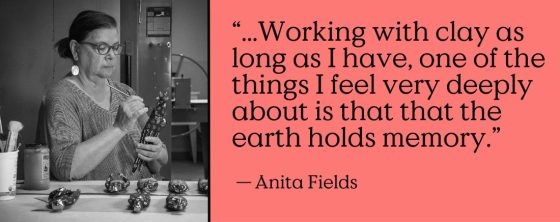
…You know, with working with clay as long as I have, one of the things I feel very deeply about is that the earth holds memory. That has been revealed to me, just because of how clay is made over time. I’m certain it holds the memories of who was there, wherever in the world.

I mean, in Italy, a couple of times when we would travel to these places and then we would read about the history, I felt that there, too. No matter where you’re at there are always the similarities to what has happened in history – “the conqueror” and “the conquered” – these stories are all threaded together and similar. I couldn’t see WayBack without sound in any way, shape, or form. It just wouldn’t have the punch that I was looking for.

I did want to ask, where are we at in the lifespan of the piece? I know that the plan is to distribute the platforms to Osage community members back around Tulsa. I just wonder where you’re at in that process?

AF: Yes, it was temporary and as soon as Counterpublic closed, I think it was within two weeks, they were picked up and shipped back to Tulsa to the [Tulsa Arts] Fellowship. The Fellowship is storing them for me. Then I got a call from the First Americans Museum in Oklahoma City, which is I think in its second year. They have a beautiful courtyard plaza and they have built a mound-like area where you can witness the solstices. The curator was at the Counterpublic closing and she said, “I want to bring these to First Americans Museum, what’s the plan for these as soon as this is over?” Well they took half of them and then half of them stayed here, displayed at a place called Guthrie Green in Tulsa for about a week. Yesterday, the ones from First Americans Art Museum were delivered to the Osage Nation. I want to distribute them to the Osage community. In my mind I’m like, “What am I going to do with 40 platforms when they return? What’s going to happen with these and who owns them?” And actually that was [curator Risa Puleo’s] suggestion: Is there any way these could be returned to the Osage community?

People are excited about it, those that know about it. Not a whole lot of people know. I’m trying to keep it [quiet] ‘til I get it all figured out, but they’re excited about it. I’m excited about it, too, because that is another way to make art accessible. To bring it back to where you come from. Because those folks are totally my inspiration, and I say this at every turn, whenever I have the opportunity. You’re my inspiration. Your grandmother, my grandmother, every interaction I’ve seen throughout my life. This is my inspiration.

Nokosee, I wonder, do you see a similar way of bringing “Middle Waters” to the people? Do you see a lifespan for that piece beyond this installation? Or do you think it’s a moment in time and it’s onto the next work?

NF: Yeah, I think it’s just a moment in time. I might edit it, but I’m pretty pleased with it. If anything, it’s more of a reason to want to do more sound installations, sound art kind of things. I’ve been wanting to transition to that kind of work. As much as I’ve enjoyed touring – and I’ll probably do it for as long as I can – I find it to be pretty taxing. It’s tons of fun, but I think I need something that’s a little more cerebral, a little more isolated, a little more supported, and also a place for my voice and creativity. I feel like I’m kind of waking up from an obsession where I just got into traditional American music, traditional fiddle. Now that I’m steeped in that world and I feel like I’m really a part of it, I also feel like there’s a lot of it I just don’t really care for.

This sounds really uppity, but making traditional fiddle music feels kind of separate from [country], it’s just melody. I like the foundational aspects of music and the research and tone, things like that. And I like it because it’s not really tied to lyrics, it’s not putting on a type of personality, like lyrical content [does].

That, to me, is often just perpetuating settler mythology about old-time music. There are a lot of things that could be said about old-time music that are also problematic. Instrumental music is where I really jive and get into stuff, but I’ve also had to constantly interface and participate in lots of country music or lyrical music that has content that, to me, just feels like propaganda with really rudimentary, basic understandings of the land.

It feels like a type of erasure. It’s just kind of designed that way – maybe not maliciously – but it’s just so deeply woven into how things work in this country. …I find a lot of country music today, a lot of the younger, popular stuff, it feels like it’s about convincing white people that they’re white or something. There’s this pseudo-woke take on country music, which I think is fine, it’s just not radical enough for me or something. It’s like it’s just enough for people to kind of maybe get their outlaw fix.

It still doesn’t work for me and I still find it very rudimentary and actually not very confrontational or very deep, as far as what’s actually going on in the world or on this continent.


Sign up here to receive Good Country issues when they launch, direct to your email inbox via Substack.

Lead Image: Anita & Nokosee Fields via Counterpublic.
Image of Anita Fields: Courtesy of the Artist.

Headline text from Anna Tsouhlarakis, “The Native Guide Project: STL.” Billboard and digital signage. Curator: New Red Order. Counterpublic 2023, Sugarloaf Mound Site.
NEWS: BGS Announces New Brand, Good Country

BGS is proud to announce the launch of a new brand in 2024: GOOD COUNTRY. By this point, you may have seen or heard mentions of Good Country on our site, at our events, and on our socials feeds as we prepare this exciting new expansion for our readers and fans.

Launching in mid-January 2024, Good Country is a curated, bespoke email newsletter that will highlight all good country from across the roots music landscape. Every other week, GC will deliver high-end country music reporting, long reads, playlists, videos, and exclusive content from your favorite country artists direct to your email inbox. As you scroll, you’ll dive into the deep and broad world of Good Country, from gritty and raw Americana to glitzy and glamorous radio hits, from bluegrass supergroups to southern rock ensembles and swampy string bands. Sign up for Good Country now.

“Good Country is a brand new horizon for BGS,” says managing editor Justin Hiltner. “But, at the same time, it’s nothing more than a reinforcement of our values as a media company and roots music community. Country – like its family members bluegrass, folk, and Americana – is more than just music, it’s a lifestyle, an identity, a way of being. There’s so much good country being made out there right now and we know our audience agrees. Whatever ‘good country’ means, you’ll know it when you hear it. And you’ll hear plenty of it in this newsletter!”

Each issue of Good Country will center features, think pieces, and interviews penned by the best writers and thinkers in country music highlighting not just the biggest names in the genre, but new and upstart artists as well. Exclusive newsletter content will live alongside deep dive playlists, sonic explorations, and thoughtful examinations of what country is, who makes it, and to whom it can belong – everyone.

BGS co-founder, actor, activist, and musician Ed Helms, will be featured in each issue as well with “Ed’s Picks,” artists and bands selected by Helms himself, direct from his own listening.

“From the very beginning, BGS was forged on a foundation of celebrating the full spectrum of roots music fans and artists,” explains BGS co-founder Amy Reitnouer Jacobs. “This community has never been one thing, nor has it been static. It’s a diverse, expansive, and ever-changing art form. The same can and should be said for country music. And that’s why now is the perfect time to create a more representative media landscape. It’s time for Good Country.”

Good Country’s first issues will feature music, art, and content featuring Zach Bryan, Sierra Ferrell, Amanda Fields, Veronique Medrano, Shania Twain, Chris Stapleton, Vincent Neil Emerson, Brittney Spencer, and so many more. No matter your entry point to this music, with our new brand and newsletter you will find endless Good Country to enjoy. Interact with content in your email inbox, on our website, and on our social media – wherever you are, Good Country will meet you there.

Good Country isn’t about deciding what is or isn’t good country music. Good Country is a place. It’s a way of looking at the world, a way of enjoying music. If you think it’s good and you think it’s country, then you’ve found Good Country.

Sign up now to be one of the first readers to receive Good Country direct to your email inbox. And, begin your exploration of Good Country with our BGS Class of 2023: Good Country year-end list.


Photo Credit: Zach Bryan by Trevor Pavlik; Vincent Neil Emerson by Thomas Crabtree; Sierra Ferrell by Bobbi Rich.