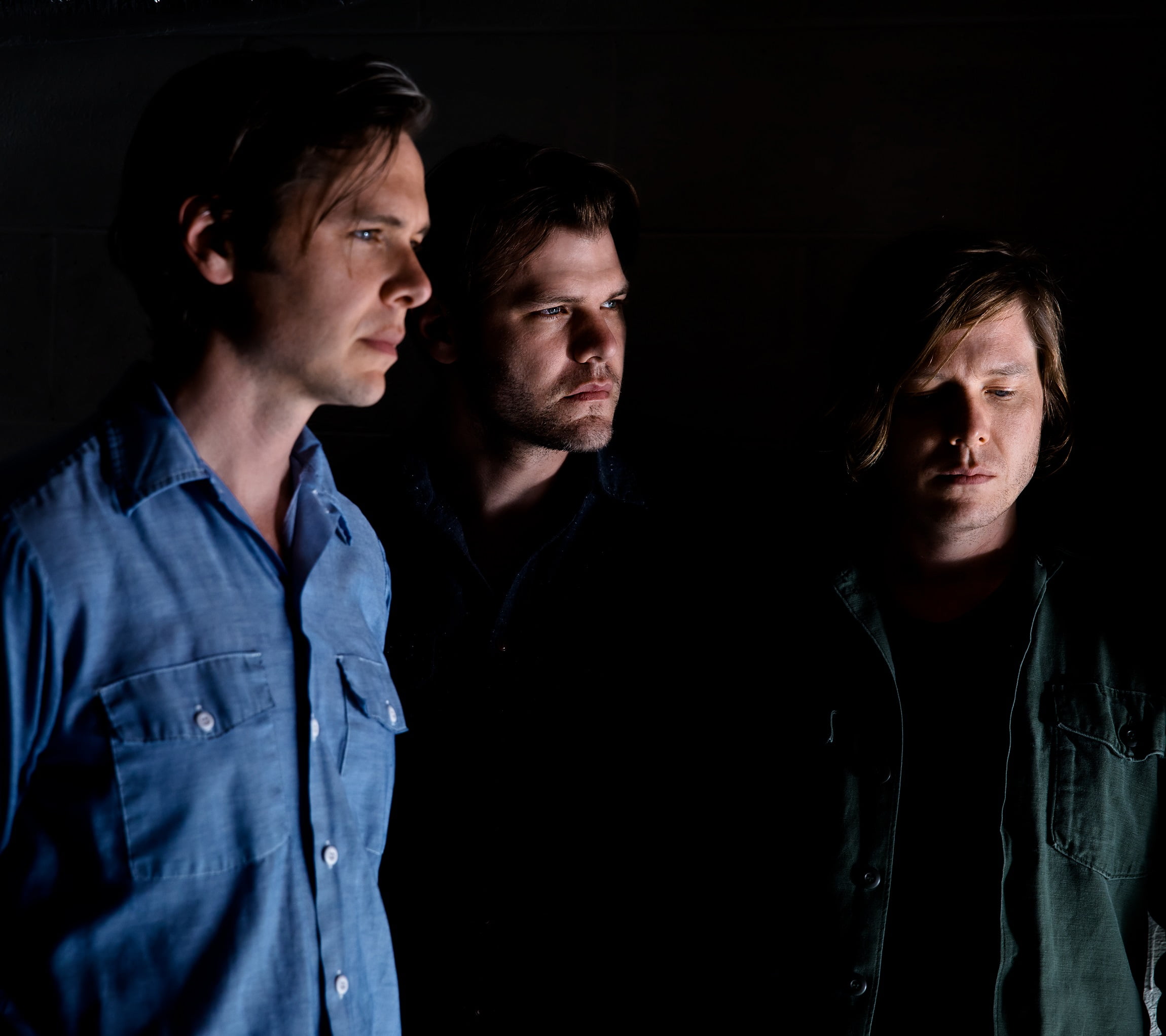
Jason Eady: Down to a Single Point

There are two songs about dying on Jason Eady’s new I Travel On, but he insists this isn’t a downer album. Neither the contented “Happy Man” nor the rambunctious “Pretty When I Die” flinch as they depict the end of life, but Eady says the songs “put a positive spin on it. I think they’re both very positive songs. Live life to the fullest. Leave it all on the table when you go.”

Positivity was the conscious theme of the Fort Worth-based singer-songwriter’s seventh record, yet these songs aren’t naïve or blindly, blandly uplifting. What makes I Travel On so poignant and so memorable is Eady’s willingness to look something like death right in the face and find that silver lining. “It’s going to happen to everybody, so why not talk about it? It doesn’t have to be this unspoken thing that’s sad and depressing. Life is life and death is just a part of it. That shouldn’t be ignored.”

It helps that those two songs, along with every other one on the album, are expertly and even jubilantly picked and strummed and bowed and plucked and sung by Eady’s road-hardened touring band, with special guests Rob Ickes and Trey Hensley. “This album,” Eady explains, “is very specific to our last year. We traveled so much during that time, and we listened to Rob and Trey’s two records, which were a big part of our lives at that time. So it seemed like the perfect thing to call them up and see if they wanted to be on the record. These two guys were with us out on the road, even if they didn’t know it.”

Just as Eady writes within the parameters of positivity on I Travel On, the band played only acoustic instruments: guitars, bass, drums, Dobro. Their limited arsenal forced them to be more creative, to find new ways to use their instruments. As a result, the playing on these songs is somehow both loose and tight, technically precise yet lively, focused but eclectic. “We all sat down, miked everything up, and just went for it. There are no punches, no overdubs, nothing. When you hear something on the record, that’s what happened.”

The record is a document of getting lost out in America, gauging the climate of the country touring out-of-the-way places like Calaveras County, California, which gets its own song. It’s about finding silver linings in the gray clouds overhead. It’s about traveling on. And it has one of the finest album covers of the year: an evocative and psychedelic image that was one of many subjects he discussed with the Bluegrass Situation.

First of all, can you tell me about “Calaveras County”? What about that place inspired you to write that song?

That song is a mixture of some things that happened last year and another thing from my childhood that I always wanted to get into a song. We played a festival there last summer, which was the first time I had been there. I fell in love with the place. We were touring up the California coast, and every place was blazing hot. But it was breezy and nice and the weather was beautiful. The people were great. We had a chance to catch our breath and relax. The night before the show we had a big bluegrass jam. When we were leaving, it just struck me how awesome the place was.

Of course, the name Calaveras County doesn’t hurt. It just sounds good. I wrote the song when I got off the road. I can’t really write much on the road, so I just collect notes and thoughts. When I get home, I sort it all out. And the first thing I did after that tour was sit down and write that song.

What’s the other story? The one from your childhood?

There’s a verse about the man in the multicolored Volkswagen bug. That’s a true story from my childhood. I was maybe 6 or 7 and my dad was driving us through the Mojave Desert. We had run out of gas, and it was thirty miles to the next gas station. This was before cell phones, not that cell phones would have done us any good out there. So my dad had to hitchhike to get gas, while we sat in the pickup on the side of the road. People just kept flying by him and flying by him.

The guy who finally stopped was an old hippie who looked like Santa Claus. He was driving a Volkswagen bug and every single panel on the car was a different color. He gave my dad a ride into town, and then he gave him a ride back and wouldn’t take any money for gas. This guy goes sixty miles out of his way just to get us a tank of gas! That always stuck with me. My dad called me the other day and told me he couldn’t believe that I actually remembered that story.

How could you forget something like that?

It was my first experience of not judging people on appearances. This guy was nothing but helpful. Completely selfless. I’ve always wanted to get him into a song. I tried before to find ways to mention that story, but it never fit until now. It just went with the spirit of “Calaveras County.” The people up there had a similar spirit to them: Anything you needed, they would run into town to get it. They would do anything to make sure you enjoyed your stay in their town. The song fell into place pretty quickly.

I get the sense that most of these songs were written pretty quickly.

I did something this time around that was pretty terrifying. We booked the studio before I had the songs. So I gave myself a deadline to write this record. We got off the road in October, then we went into the studio in December. I wrote them all in those two months in between. It was a challenge, but I’ll tell you what I love about it: This is a very intentional album. These songs were all written in the same space, so it makes for a very cohesive record. I didn’t have to just take the best twelve songs I’d written in the last two years. Everything was written to be on this record.

A lot of the songs relate to things we did over the last year. I didn’t realize that until later. I called it I Travel On because that’s what we did. That’s where the spirit of the record comes from, and I think every song is about getting from one place to another, whether it’s physically traveling or mentally shifting ideas. “Always a Woman” is a good example. It starts off very tongue-in-cheek, very dark, but by the end of the song you’ve traveled from that idea to a very different idea. You’re using the same words but putting a positive spin on them. You move from one position to another in that song.

It inverts the country convention of the woman doing wrong to a man.

Well, I didn’t want to be negative on this record. That’s not where I’m at in my life, and the world doesn’t need any more of that right now. I wanted this to be a positive record. With that song, I didn’t know where it was going after that first verse, but I knew I wanted to take it somewhere different. I didn’t want it to be a dark song, so I had to find some way out of that.

You’ve mentioned that you recorded these songs completely live in one take, with no overdubs. Was that a difficult process? Were there any songs that proved especially hard to get through?

“Always a Woman” for sure. It’s a one-chord song, and I knew when I wrote it that it was going to be tricky. How do you make a one-chord song interesting for four minutes? I just do the same picking pattern for four minutes. Who wants to hear that? For that reason it was the last song we recorded. It was a daunting thing, but I think they all did an unbelievable job of finding ways to change it from verse to verse and add dynamics. Kevin Foster on fiddle did these things where he muted the strings but still rubbed the bow against them. Rob Ickes did something similar on Dobro. It sounds like a distorted electric guitar. I think some people just assume that’s what it is, but it’s all acoustic. I think everybody thrived under that constraint. It made us all more creative.

Way off topic, but this is one of my favorite album covers of the year. What can you tell me about that image?

It’s one of my favorite things I’ve done since I’ve been working in music. For years I had this concept, but I’m not a visually creative person. I can barely draw a stick figure. But I had this idea and I took it to a couple of graphic artists. It’s this universal concept: Everything starts from many, then filters down to a single point, then explodes back out to many again.

You’re going to have to elaborate for me.

Genetics is an example. It took an infinite number of people to get to me being here right now, and from here I’ll have offspring who’ll have offspring and it multiples back out. Events are the same way. All of these events in the history of everything have made this conversation we’re having right now possible, and then from this conversation will come other things that will spread back out. It’s a universal idea. It applies to everything.

But the only visual idea I could come up with was an hourglass, which I didn’t want it to be. But then Casey Pierce, who did the video for “Why I Left Atlanta” and documented the sessions for I Travel On, he’s a graphic artist and his work is very abstract. That’s exactly what I was looking for. I explained the concept to him and what you see on the cover is his first draft. As soon as I opened the email, I couldn’t believe it. It’s the coolest thing I’ve ever seen. He got it all. He got the vagueness of it.

It’s very different from your typical country album cover.

Yes, but Casey made it look like a road, like you’re going down the road and these clouds are in front of you. The road is disappearing into the horizon, which goes along with the title of the record. That’s the beauty of what he did. There’s a lot going on inside of it. It’s art.


Photo credit: Scott Morgan
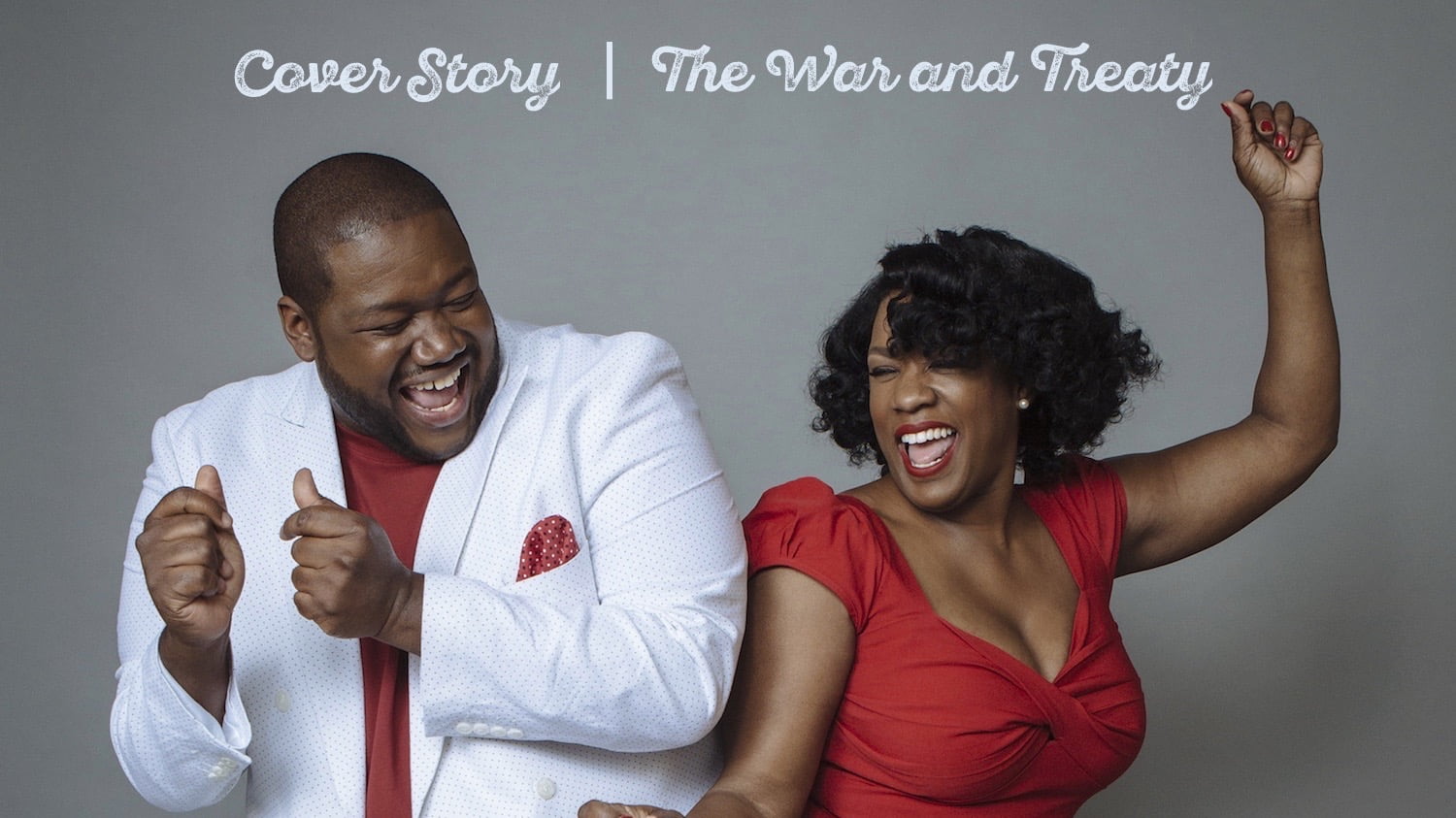
The War and Treaty Bring Their Love to ‘Healing Tide’

More often than not, it seems, the telling of the story of the War and Treaty begins with the war, specifically a piano in the basement of one of Saddam Hussein’s palaces. It is a tantalizing tale, and we’ll get to that.

But this time, let’s start with the Treaty: the moment Michael Trotter Jr. and Tanya Blount first met and two formidable talents took hold in life and in music.

“We have probably two different accounts,” Michael says by phone from Nashville, Tanya audible in the background, laughing as she agrees with the prediction.

Spoiler alert: There is to be much laughter in the ensuing chat, from giggles to hearty peals, and much weighing in from whoever doesn’t have hold of the receiver. And some tears and choking up too. It’s a real delight, everything up-front and on the table, just as anyone who has seen them perform would expect, and every bit of it captured in their new debut album, Healing Tide, a wonder of gospel-soul-country-rock-folk carried on their from-the-heart vocals, both of them capable of gale-force belting and whispered-breeze tenderness, sometimes, somehow, both at once.

It’s a love story through and through, evidenced in song titles along: “Love Like There’s No Tomorrow” (the album’s foot-stomping gospel invocation), “Are You Ready to Love Me?,” (swampy Southern soul), “Here Is Where the Loving Is” (fiddles and guitars and Emmylou Harris!) among them. And a belief that love is contagious, that it can repair the world — the boisterous title song (a bit of Ike and Tina and a lot of Delaney & Bonnie, perhaps), the steamed-windows twinkle of “Jeep Cherokee Laredo.” And in “One and the Same” they have given us unity anthem for the ages. All of the ages. And in album-closing “Little New Bern,” Michael wrote a vivid ode to Tanya’s large, loving family and the former plantation land where it began and at which all the cousins still gather with her grandparents (73 years of marriage!) every summer.

But back to that meeting: “I remember going to Laurel Lakes Park for an event, the Love Festival, Aug. 28, 2010,” he says of a day of music in Laurel, Maryland, near where each lived at the time, at which they were both scheduled to perform. “I was led under this awning and I saw this most beautiful woman I ever saw in my life.”

A “wow” is heard in the background, as if she’s never heard this before.

“And she did what any beautiful woman would have done with a slouch like me. She ignored me,” he says. “We introduced ourselves and she thought nothing of me. I thought everything of her. So I got on stage and performed, and then after I saw this woman running across the field in heels toward the stage, and it was her. She just wanted to know about my songwriting. The rest is history.”

Tanya grabs the phone: “He’s kinda telling the truth,” she allows. “Mine is the part where he says I ignored him. I was out there with some friends and a young lady working with me at the festival kind of whisked me away and said, ‘I want you to meet Michael.’ Which kind of came as he said it. It may come off as I was ignoring him. But I wasn’t. I was trying to do two things at once.”

As to her reaction to his songs, well, on that she agrees wholeheartedly.

“Oh my goodness! I lost my mind!” she says. “After he finished performing I ran over and bought six of the CDs he had and was a crazy person handing them out to people — ‘This is the best thing I’ve heard!’ He was amazing.”

And then?

“We exchanged numbers — and he would have a different account here,” Tanya says. “He lost my number! Threw it in the trash can. So I proceeded to call him and ask him if he could write songs for my brother and I. We were working on a project. I invited him over to the house. He wrote 10 songs in about two hours. He had songs ready, came over and sang them to me and we became friends, inseparable friends. And after I had a birthday party, that was September of 2010, and from there, the next day, we never separated. He moved into my house the next day.”

Michael’s take?

“You know? That’s accurate.”

Okay, then. Now let’s skip ahead to March this year, when the couple, having made their home in Albion, Michigan, found themselves in Nashville, being produced by Buddy Miller at his house — “We wanted to give Buddy Miller a chance to be discovered,” Michael says, barely containing silly giggles. “Just wanted to help him out” — and surrounded by such stellar musicians as drummer Brady Blade, fiddler Sam Bush, pedal steel and banjo player Russ Pahl and multi-instrumentalist Jim Hoke, realizing the love-filled vision they’d been honing tirelessly in the intervening years.

Oh, and there’s Emmylou Harris climbing the porch stairs, not only to add her voice to “Here Is Where the Loving Is At,” but to deliver a batch of birthday brownies to Michael one day.

“Another lady who might need to be discovered,” Michael says, not succeeding at holding back the giggles, before adding, “Everyone knows her for her singing, but people don’t know she makes the BEST BROWNIES EVER.”

The sound is a realization of an array of influences and passions, some shared ones including Aretha Franklin, Ella Fitzgerald, Nat King Cole, the gospel icons the Gaither Singers and James Cleveland. A big influence when they started performing together, Michael says, was the Civil Wars — he sheepishly notes running into that act’s John Paul White and, tongue-tied, blurting out that his act was called the Civil Wars. But what the War and Treaty draw on together is distinctly their musical DNA.

“We really have different backgrounds,” Tanya says. “My mom was from Panama. I grew up listening to Calypso and opera. My dad was from New Bern, North Carolina, and we also listened to Christian music, gospel, but also secular music — Whitney Houston. A plethora of sounds growing up. My dad loved western, so some country songs. We would have a guitar player in church, or sometimes just foot-stomping and clapping. ‘Love Like There’s No Tomorrow’ comes from that. Michael comes from a Seventh Day Adventist background and grew up listening to incredible harmonies and some of his writing comes out of that. His uncle Zilbert Trotter plays organ like no one I ever heard before. We took all that and married it together and it came together with the help of Buddy Miller as a beautiful piece of art.”

Though they’d made a well-received EP, Down to the River, spawning some viral videos to match the word-of-mouth from their dynamic concert performances, this was a whole other world for them, with new expectations, intimidating ones.

“When you get those musicians in the room, they know that no matter what accolades they have, they say, ‘Lead us,’” Michael says. “I had to learn to lead. Buddy Miller is not going to let you escape that responsibility. You come in and have a vision, he’s going to hold you to it. He’s a sweet man, but he has a way to make sure you stay authentic. He’s not going to do take 17, take 18. We did two takes of everything. We had it in the first one. Did the second one because Buddy felt guilty that we had it in the first one.”

He continues, “They all wanted to see where I wanted to go — show us what you’ve got. The intimidation factor was sky high. I don’t consider myself of the caliber of those giants, but then you have to believe you belong there. I remember playing my minor 7ths and diminished chords and this and that and they were laughing, had to explain to me what I was doing. Russ Pahl said, ‘How does it feel to have millions of dollars of education, and never gone to school a day in your life?’ I said, ‘Feels pretty good, Russ.’ He popped me on the head with a wad of paper and walked away.”

The closest he had ever gotten to a music education was under the most unusual circumstances, which brings us back to Saddam’s piano. Michael, having enlisted in the Army in 2003, was sent to Iraq, scared and unprepared. He found himself in a platoon stationed in one of Hussein’s abandoned palaces. A captain heard him sing, heard the inspirational power of his voice and took him to the basement where there was a piano and told him to go at it, learn to play, make music. Not long after, the captain was killed and Michael was asked to sing at his service, the first time he ever sang a song he wrote in public.

But as he talks here, that wasn’t the part of the Iraq story he wanted to tell.

“No one knows this,” he confides. “This is special. I was singing in Baghdad once, and it was probably two in the morning, singing to the troops. And they were singing and clapping with me. And one of the soldiers on guard duty said, ‘You all gotta come see this!’ And when I looked over the gate, the Iraqis with their tea were sitting down at the gate, listening to me sing. And they were clapping and patting their thighs with me. That’s the power of music, the power of songwriting. The war stopped for at least 30 minutes.”

That’s the kind of thing he remembers as his and Tanya’s life accelerates, as success builds and the demands grow — not least being having to spend more time away from their child.

“I’ve cried on the road and broken down,” Michael says. “We travel with our son, but time has now come where we have to leave him with someone for two or three weeks at a time, all for the call of the mission and honoring our life.”

That mission. That call.

“I’m singing with my wife, songs I wrote for us, and we’re on the road and helping bridge humanity in our way. Toughest thing we have to deal with is leaving our son. But no one’s calling us derogatory words.”

He cites a couple of rough epithets that in past have been hurled at many from various directions.

“No one is doing that. There are no signs that you have to drink from the black water fountain. That’s not happening,” he says. “We are blessed that we have not faced it that way. We have a multi-cultural band that reminds folks of what we have overcome. I’m not here to promote the black race or white race, but am genuinely invested in unifying the human race. I do believe there ain’t no better thing in life. I’m almost coming to tears just thinking about if Dr. King’s dream can be a reality daily. We make sure at every concert that everyone hugs each other and tells each other they matter, black or white, foreign or domestic. We are all human beings.”

As the song says, with equal grace and power, we are all “One and the Same.”

Tanya puts it simply and profoundly: “This project is an act of love.”


Photo credit: David McClister

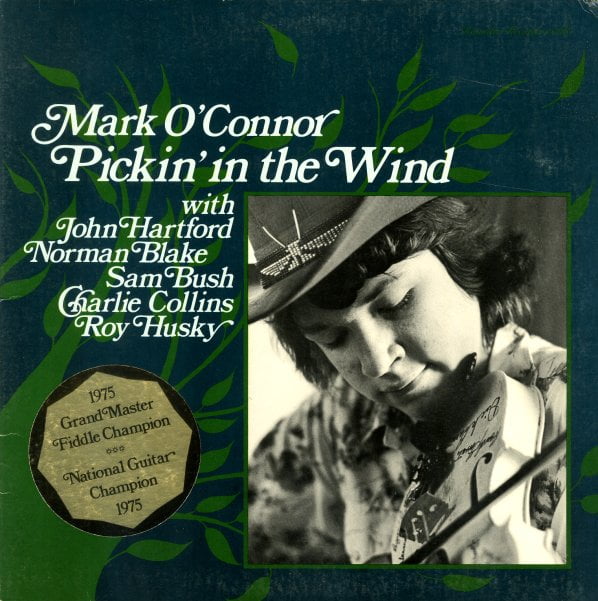
Mark O’Connor, ‘Pickin’ In The Wind’

Mark O’Connor comes about as close to being a household name as any musician in bluegrass (and its adjacent genres). Because bluegrass is predicated upon instrumental skill, the origin point of O’Connor’s recognition will always be his virtuosity, his musical expertise, and his command of his instrument. He’s a true master of bluegrass fiddle and contest fiddle forms, he’s a trailblazer in fiddle-flavored classical compositions of all manners and sorts, his musical code-switching extends to jazz, gypsy jazz, and swing, and he is pervasive on recordings and sessions from his years spent in Nashville. He even has his own violin and fiddle curriculum, The O’Connor Method, which pedagogically capitalizes on and celebrates American music, rather than Western European music, as usual.

Yet, no matter the level to which he transcends any/all musical barriers or the ubiquity of his name and brand, many folks don’t know he’s a maddeningly adept guitar player as well. In his youth, as he racked up wins at fiddle contests far and wide, he was also taking home flatpicking trophies with the same bravado. On his iconic 1976 album, Pickin’ In The Wind, the title track and the first tune on the record opts not to showcase his signature fiddling, but rather his guitar picking — backed up by a band that is no less than jaw-dropping: John Hartford on banjo, Sam Bush on mandolin, Norman Blake on dobro, Roy Huskey Jr. on bass, and Charlie Collins on the rhythm guitar. The tune listens down as straight-ahead bluegrass, but with a chord progression and arrangement that never strays into the simplistic, thanks in part to O’Connor’s compositional taste and the supreme talent of his fellow musicians. It’s an O’Connor staple that doesn’t require a single bowstroke.

So, in celebration of O’Connor’s birthday (August 5), it seems appropriate that we shine a light on the guitar stylings and the unbelievable ensemble of “Pickin’ In The Wind.”

WATCH: O&O, “Tears in the Rain”

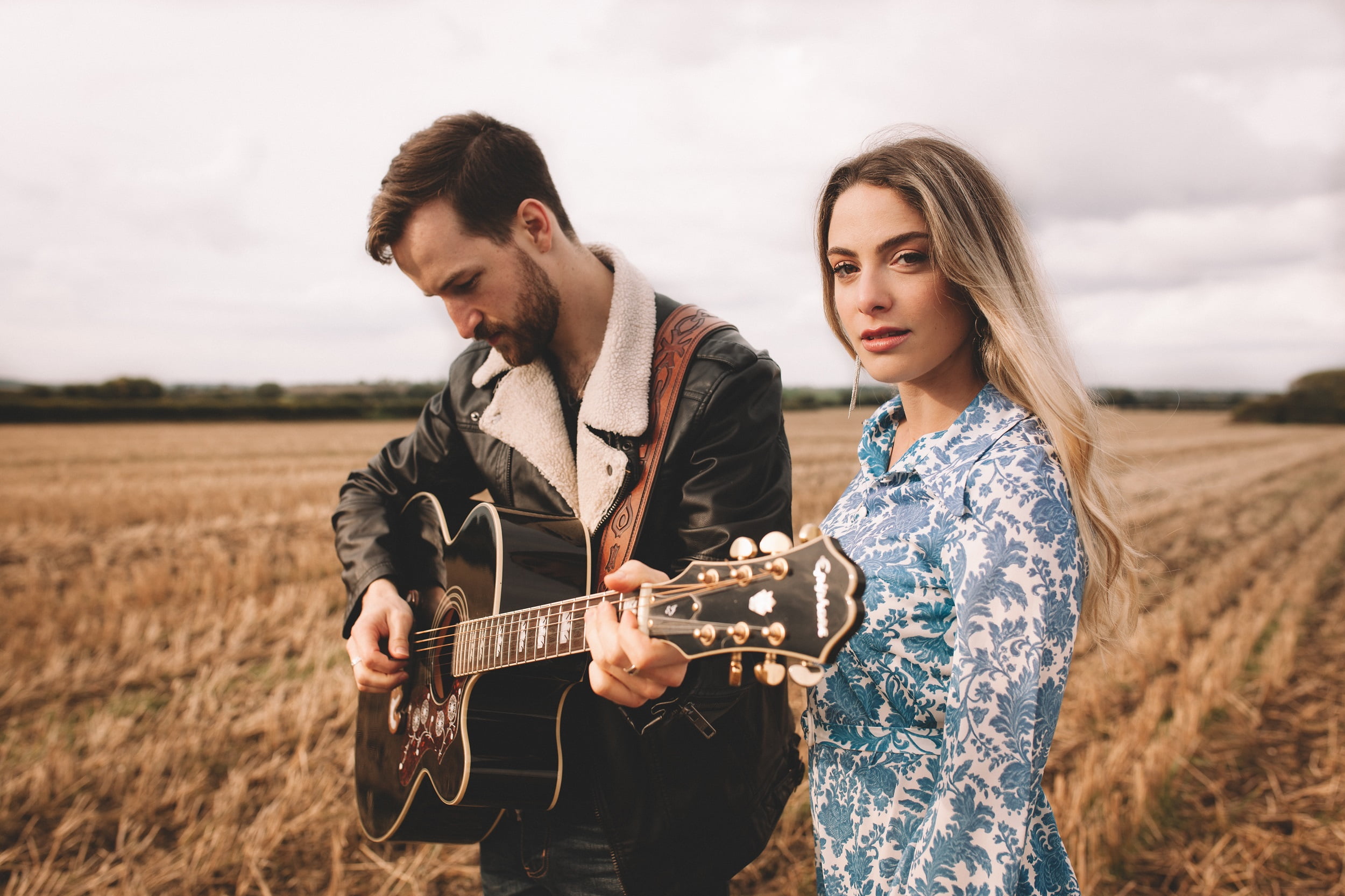
Artist: O&O
Hometown: Colorado / Israel (based in London)
Song: “Tears in the Rain”
Album: Tears In The Rain

In Their Words: “The video for ‘Tears In The Rain’ is our second collaboration with filmmakers Jordan Rawi (director) and William Fielding (director of photography). We shot the whole video in one day at the historic Clementi House in Notting Hill. We wanted the video to reflect the uncertainty of where the relationship in the song stands and add a haunting element. In the video, the two characters are in a mysterious pursuit of each other through the many rooms of the quirky house, but whether or not they could ever find each other again is open to the viewer’s interpretation.” — Obadiah Jones & Orian Peled


Photo credit: Max Weir

MIXTAPE: Brent Cobb’s Songs from the Road

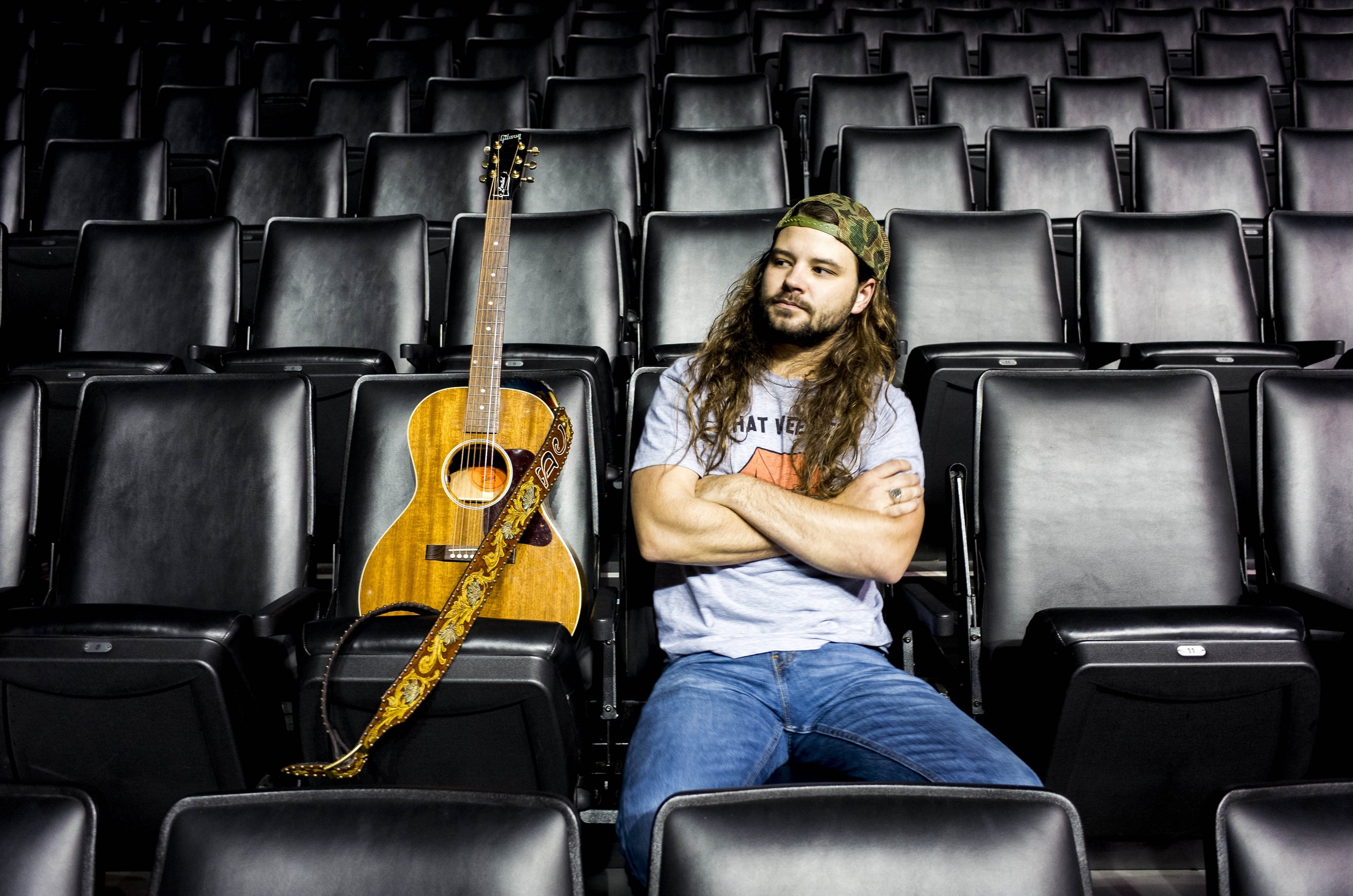
Brent Cobb may have the coolest summer job ever – opening shows across the U.S. for Chris Stapleton and Marty Stuart. During some downtime in Oregon, the Georgia native gave the Bluegrass Situation the lowdown on 11 of his favorite songs.

“Lord, I Hope This Day Is Good” – Don Williams

I woke up today singing Don Williams’ “Lord I Hope This Day is Good.” Because it just felt that way, you know? It’s just a beautiful day, I kind of want to smell the smell of hickory smoke rollin’ around in the wind. That’s also what Don Williams makes me think of, you know? We got a little somethin’ on the smoker and a little Don Williams playin’ – it’s hard to beat that.

“New South” – Hank Williams Jr.

That kind of leads into the next one, it’s sort of the same path, but Hank Jr., “New South.” It’s on his album, The New South, his first record after he fell off the mountain. Waylon Jennings, Toy Caldwell, and Marshall Tucker — they helped him produce that record. The whole album is so good, you want to sit around a campfire sound, you know? That particular song, “New South,” it also makes me want to put something on the smoker on a beautiful sunny day, pick a guitar, and maybe throw some horseshoes.

“I Wonder Do You Think of Me” – Keith Whitley

After that, I got Keith Whitley, “I Wonder Do You Think of Me.” The other night, I was sittin’ up, a lot of times when I’m on the road it’s the only time that I have to go back to my regularly scheduled writing process program. My daughter’s not out here so I don’t have to wake up at 6 o’clock every morning like I do when I’m home, so a lot of times I’ll sit up and play music and I sat up the other night till about three in the morning listening to songs. This particular one – I had forgotten about this song, I rediscovered it and listened to it about 25 times in a row the other night. It’s just so damn well-written and the chords in that song are amazing. It seems like such a simple country song, but I can’t play it. I try to pick it out.

“Leaving Trunk” – Taj Mahal

Something we listen to every night before we go on stage is Taj Mahal, “Leaving Trunk.” It’s just got that dirty south, down south, funky, country feel that I love. You can tell that the Allman Brothers were borrowing a lot from Taj. And well obviously “Statesboro Blues,” that song particularly, it’s just got that … I don’t know, it feels funky. It also would be great on a day like today, just kind of walkin’ around and have that song playin’ in your mind and be-bopping to your own beat.

“Coming Home” – Delaney & Bonnie

That makes me start thinking of other songs you could listen to, to get in the zone. So I got Delaney & Bonnie’s “Coming Home.” That’s another one we listen to before we play. I know you probably know who that is, but for those who don’t, they would have Clapton and George Harrison and folks play on their records. They influenced a lot of their peers of that time, and Dave [Cobb, Brent’s cousin] actually turned me on to that track. I’d never heard it before. Yeah, just kind of that funky country, man, gets ya goin’.

“Ohoopee River Bottomland” – Larry Jon Wilson

Which leads us into Larry Jon Wilson. Larry Jon Wilson was from Swainsboro, Georgia. He did a couple of records in the ‘70s that were super funky country. “Ohoopee River Bottomland” is the song I’m thinkin’ of. It’s also just that pre-show jam, you know? It kind of gets you down the road a little bit, and the way Larry – especially that song – would use Southern-isms or just rural-isms. He’d talk about, “this low rent land has turned to sand and I’ve done stood ’bout all I can I’m leaving…I’m leaving,” and “I got a wore-out mule and a no ‘count tractor quit now…and this is it now.” I just love the way he talks. You really capture his South Georgia background, but then he’s able to put it to some funky music.

“Play Something We Know” – Adam Hood

Alright so after Delaney and Bonnie and Larry Jon Wilson, that made me think of my buddy Adam Hood, because those are two songs that a lot of people may not know. It made me think of my friend Adam, I do a lot of writing with him. We wrote a lot of songs with this newest album of mine. He has a song called “Play Something We Know.” It’s all about hearing “play something we can sing to and play us something we know.” It’s about that guy or girl in the bar that’s slightly belligerent at your show, and they’re like “play me some ‘Brown Eyed Girl.’” You should check it out, it’s hilarious. Adam is just a great all-around artist.

“Forever Lasts Forever” – Nikki Lane

After thinking of Adam, it made me think of some other peers that I’m into, that I love, that have been good to me. Nikki Lane took us out at the top of last year and I think, in my humble opinion, she’s about the most authentic of our time. She has a song called “Forever Lasts Forever.” If you haven’t heard it, you should really check it out. It’s inspiring to listen to anything she writes, but that song is so wonderfully written. Just a wonderful breakup song, you know? Everybody loves a good breakup song.

“Hole in the Sky” – The Steel Woods

That brought me also to some other peers and also pre-show jams. The Steel Woods did a cover of Sabbath’s “Hole in the Sky.” I don’t know if you’re familiar with them, but son of a gun… It’ll get ya goin’, man. Their whole record is great. They’re recording a new record right now. That “Hole in the Sky” song, I remember the first time I heard it, I had no idea it was an old Sabbath song. It blew my hair back, it’s incredible.

“Anyhow, I Love You” – Guy Clark

Now this is gonna take us to after-show jams….the slow jams. Made me think of Guy Clark, “Anyhow, I Love You.” Man, talk about a damn well-written song. It took me a long time to get into Guy, not because I wasn’t into him…it’s just some things you gotta live enough to really appreciate it. That was one of those songs, man, “Anyhow, I Love You.” I could listen to that one, same as “I Wonder Do You Think of Me,” over and over and over and over again.

“Open the Door” – Otis Redding

That made me think of Georgia because Guy Clark is so good at writing about Texas. It made me think of an old Georgia artist, Otis Redding. Everybody knows him. “Open the Door” by Otis Redding feels like church. It’s like being back at Antioch Baptist Church when the preacher’s talkin’ to you and then he lays it on you.


Photo credit: Don Van Cleave

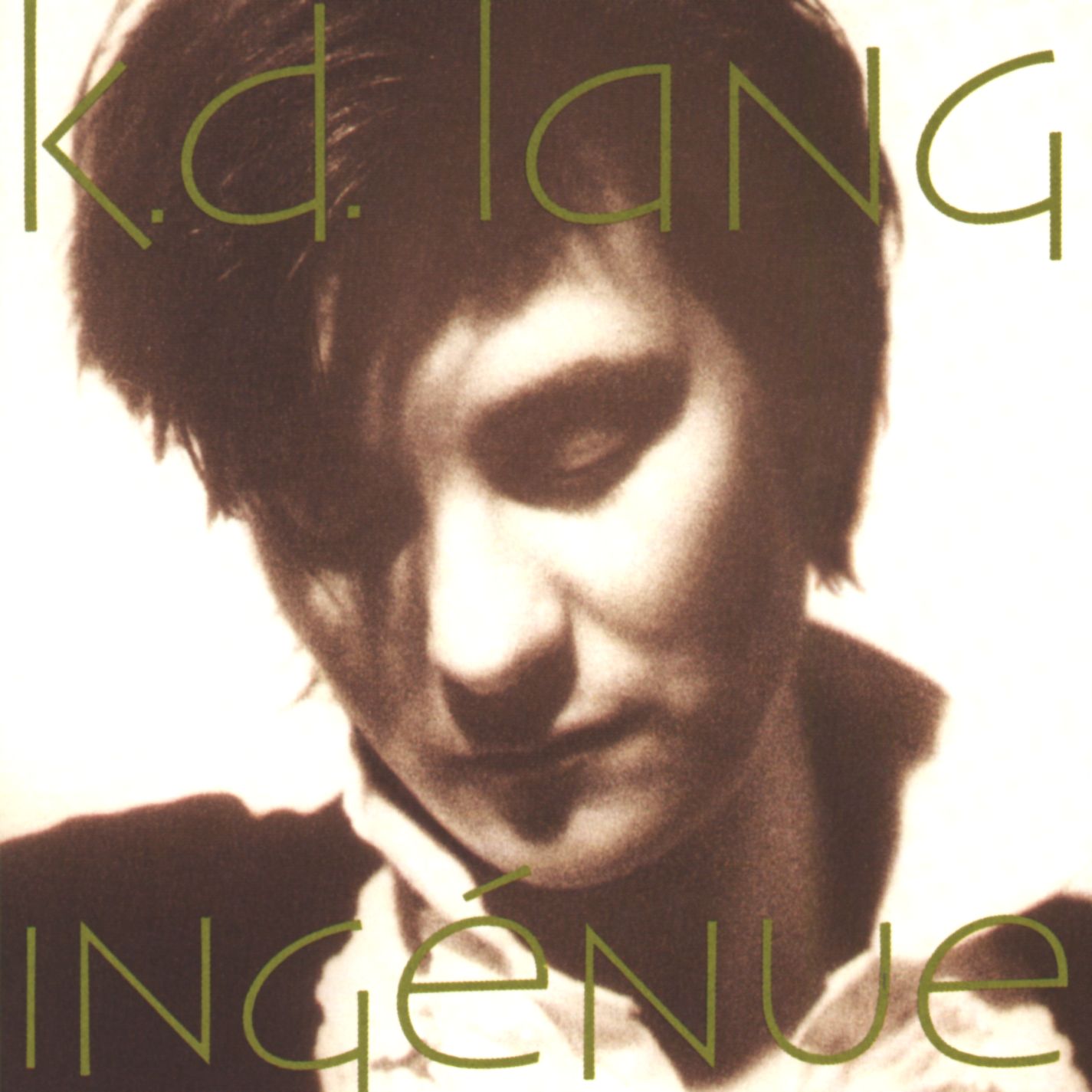
Canon Fodder: k.d. lang, ‘Ingénue’

For better or for worse, k.d. lang’s 1992 breakout album Ingénue will always be associated with her coming out. Throughout the late 1980s she had established herself as an unlikely country star, a traditionalist who sang like Patsy Cline and worked with Owen Bradley but whose short punk haircut and androgynous persona branded her as an eccentric like Lyle Lovett. Also, she was Canadian—not a roadblock to country stardom (see: Anne Murray, Shania Twain), but certainly another way in which she was an outsider in Nashville. Nevertheless, she made a place for herself in the country mainstream, winning a Grammy for “Crying,” her 1989 duet with Roy Orbison, and the album Absolute Torch and Twang, released the same year, proved a more-than-modest hit, peaking at No. 12 on the country charts.

And yet, there were rumors that lang was… well, you know. She had come out to her family, but had not made that an explicit part of her public persona, despite playing a lesbian in the independent film Salmonberries. So the media pried into her personal life, posing uncomfortably direct questions to which she carefully measured her answers. lang was going to be made a spokesperson for the LGBTQ+ community whether or not she wanted that responsibility. The pressure came from within that community as well as from without. According to Newsweek, Queer Nation, an activist organization founded in 1990, put up posters around New York with photos of entertainers branded with the words Absolutely Queer. The Advocate outed a top-ranking military official at a time when gays were not welcome in the military, just prior to President Clinton’s infamous “don’t ask, don’t tell” waffle.

To preempt being forcibly outed—essentially, to take control of her own story rather than let someone else come out for her—in 1992 lang gave a lengthy, at times very tense interview to The Advocate. Her sexuality was discussed only generally throughout the exchange, with lang officially calling herself a lesbian near the end of the article. “I feel like it’s a part of my life, my sexuality, but it’s not—it certainly isn’t my cause. But I also have never denied it. I don’t try to hide it like some people in the industry do.” This was largely unexplored territory for any artist, especially one in a traditionally conservative genre and especially one who was going to so radically change her sound.

In retrospect it’s hard to convey just how chancy and therefore how pivotal Ingénue was for lang, who rejected absolute twang for torch songs rooted in jazz and pop, in chanson and klezmer, in Gershwin and Weill, Holiday and Dietrich. She described it at the time as “postnuclear cabaret.” Especially in the 1990s when changing your sound or courting a wide audience could be viewed as selling out, the album was a calculated risk, a means of shedding a long-held persona that might alienate old fans without attracting new ones. Gone were the fringed Western wear and the Stetsons; what remained was that haircut and, most crucially, a voice that sounds like a starry midnight.

The personnel didn’t change, but her approach certainly did. lang worked with co-producers and co-songwriters Greg Penny and Ben Mink, the latter a member of her backing band the Reclines. But this is not a case of treating country songs to new arrangements. The change happens at a conceptual level. Ingénue is lang’s first collection of entirely original material. She and Mink wrote songs outside the country format to find new ways to use her voice and new emotions to express. “Season of Hollow Soul” sounds like a Weimar torch song, as though the singer is playing both Annie Bowles and Cliff Bradshaw in Cabaret. “Miss Chatelaine” is an exuberant love song that cheekily references lang’s own iconography, in this case the cover of Chatelaine magazine, which in 1988 named her Woman of the Year. To contrast the photograph’s Nudie suit glory, lang toyed with her own androgynous look, even performing in a formal gown on Arsenio Hall.

Deep into the twenty-first century, of course, country music seems by nature a porous genre, one which artists drift into and out of constantly, whether it’s a pop star looking for a career renewal (Darius Rucker), a tourist taking snapshots of Music Row (Sheryl Crow), or a country star looking to broaden their audience (Taylor Swift). But perhaps no artist has made that transition with more grace and finesse—with more sense of the inevitable—than lang, whose voice was so much bigger than one genre could contain. Ingénue not only showed how artfully she bend that voice and suppress that twang, but also demonstrated how she could use it to inhabit a very different desire than the pop charts typically allowed. For that accomplishment she’ll receive the 2018 Trailblazer Award at the Americana Music Honors & Awards in September.

The album has been tied to her coming out, a vehicle for her ascension not merely as a pop star but as a gay pop star. This is, of course, not the only interpretation of the album, but it’s one that lang herself reasserted in interviews. She was forthright about the inspiration for the album, confessing that it was inspired by the end of an affair with a married lover. lang was still in love, but accepted that the relationship was impossible; that contradiction became the spark that illuminated these new songs. No names were given, but the implication was that this married lover—the subjects of the lyrics, the object of desire—was a woman. This seems even more radical than the Advocate interview, a means by which lang insisted these songs were personal, first-person, and grounded in gay desire. “Can your heart conceal what the mind of love reveals,” she sings on “Mind of Love,” and if you miss that she’s talking to herself, she calls herself by name: “Why do you fight, Kathryn? … Why hurt yourself, Kathryn?”

Yet, Ingénue is about desire, not orientation. These songs express a sexual, physical, and emotional yearning that is specific to her as an individual, specific to her as a lesbian, but she conveys it in such a way as to be universal on some level: something that might resonate with any listener, regardless of their orientation or even their opinion on orientation. In 1992 this might have had a humanizing, normalizing effect, because the risk paid off and then some: Ingénue was an immense crossover hit, anchored by the smash “Constant Craving.”

That song in particular has stuck with lang ever since: her signature tune, a mainstay of every concert she performs. “I knew it was a hit, and I was mad at it for that. I felt that it was a sellout at the time,” she told the New York Times earlier this year. But it’s not hard to see why the song would resonate with her audience, as it expresses a resilience in the face of prejudice or suspicion. “Even through the darkest phase, be it thick or thin,” lang sings in that voice, which sounds neither angry nor outraged but observant, matter-of-fact, as though a “darkest phase” was natural. “Always someone marches brave, here beneath my skin.” lang draws out those syllables in the chorus, pushing against the backing vocals, putting her words on the off-beats, drawing out those syllables—the consonants in “constant,” the long vowel and sensuous V in “craving”—to hint at possibilities: Craving for what or for whom? Constant as both heroic and burdensome, never satisfied?

Whatever it might mean to any one potential listener, it “has always been.” This craving is natural, lang insists, coded deep into all humanity, as constant in 2018 as it was in 1992.

Sam Lewis, A Blue Jeans Type of Person

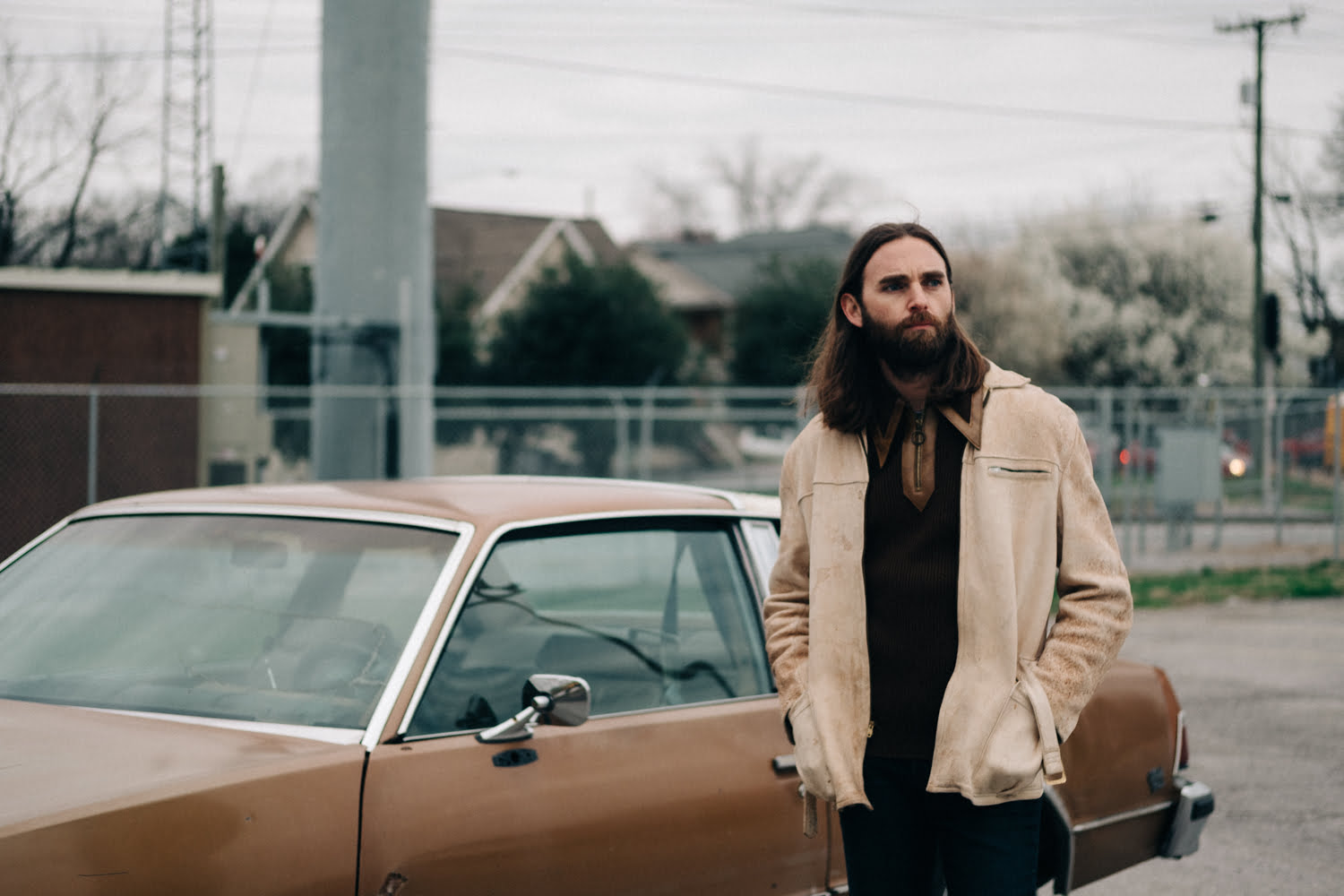
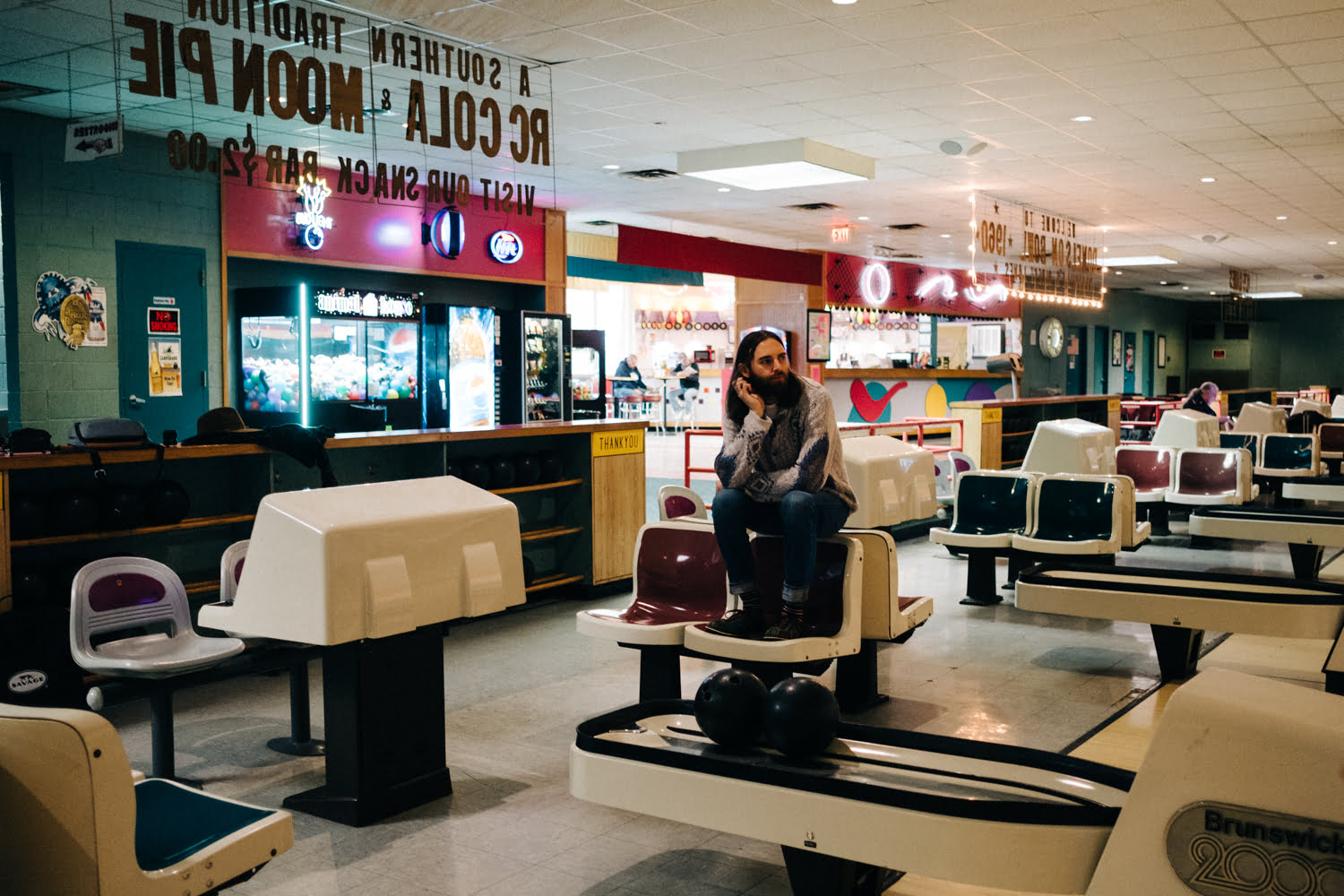
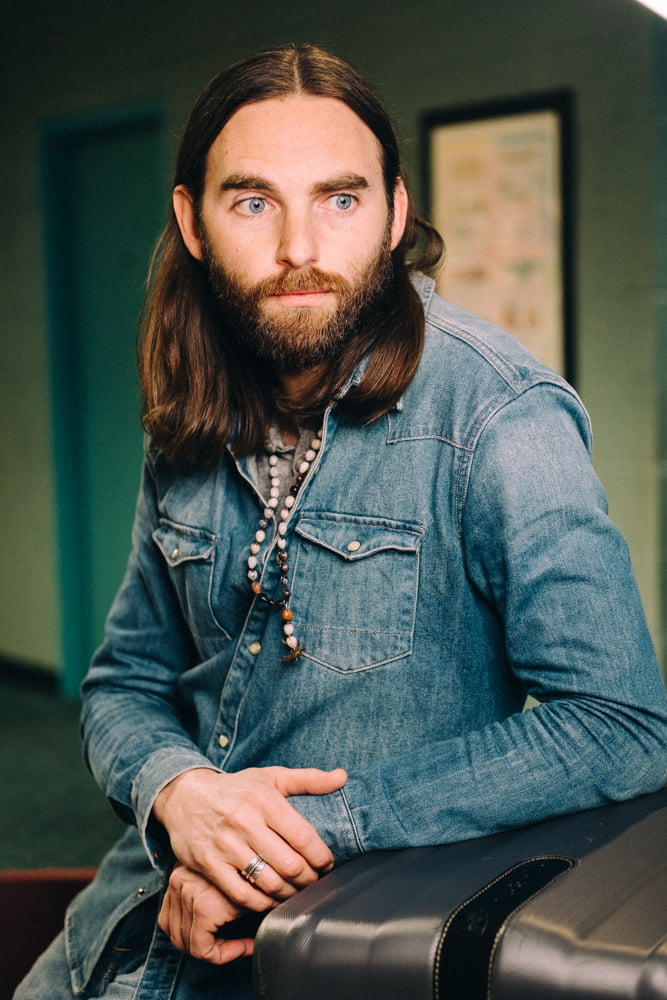
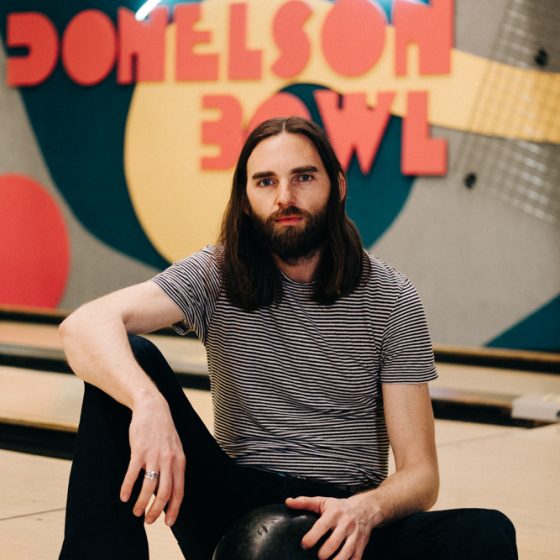
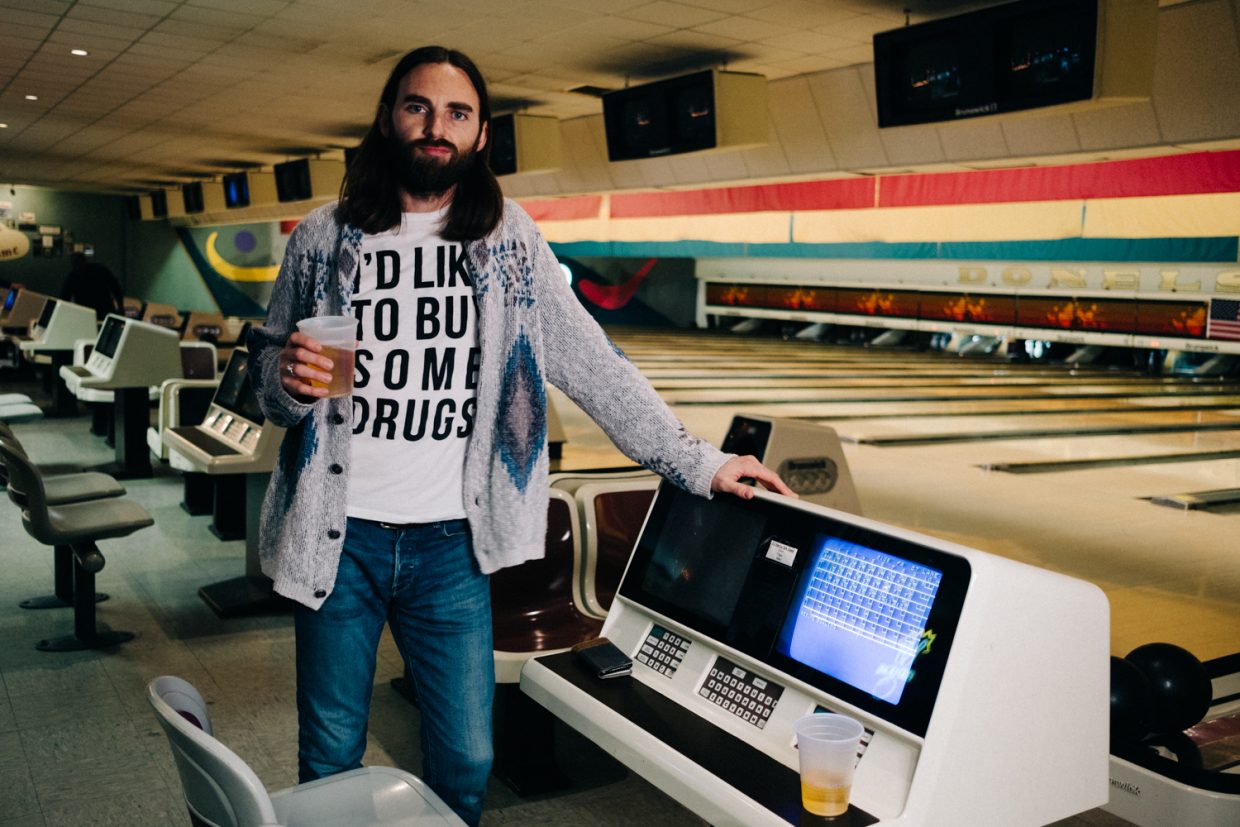
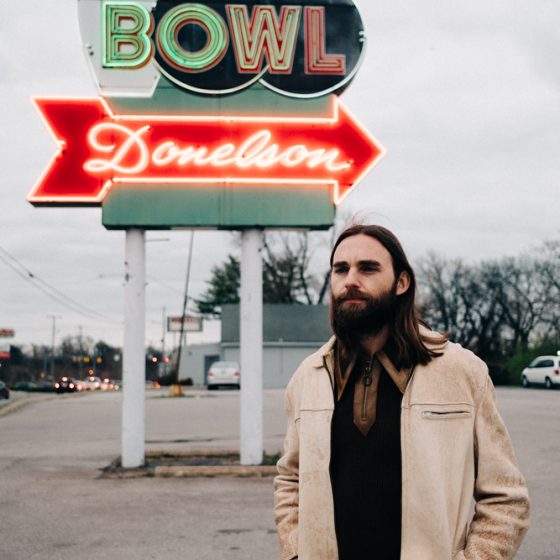
Would you jump at the opportunity to hang out with Americana singer/songwriter Sam Lewis at a bowling alley while he waxes poetic about style? We would — and we did. He may describe his simple, blue jean style as “mediocre,” but his eye for detail, his love of functionality, and the sentimental value of pieces that some would consider everyday or commonplace set his looks apart. 

I’m clueless when it comes to style and fashion. I’m rarely comfortable wearing the clothes that make up my wardrobe and that’s probably why I despise shopping and will happily wear any article of clothing someone might give me before they donate it to a charity shop or, frighteningly enough, throw it away. It truly sickens me that some people throw away clothes… they’re probably the same people that leave the faucet running full blast while they are brushing their teeth.

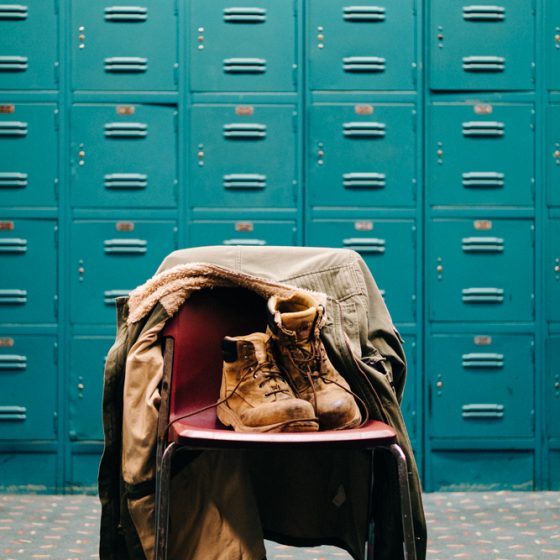
I got into work boots recently. I’ve been wearing a pair of work boots since November. I don’t remember where they came from, or why I started wearing them, but I love them. It’s been a “get shit done” few months for me and I’m almost compelled to credit my footwear for helping me complete so many tasks. I’m a blue jean type of person — always have been and always will be. I love t-shirts with silly sayings and socks that compliment them. Long johns — thermal underwear, or whatever you call them — are in daily rotation from October through March. I’m not kidding. Ask anyone that knows me well enough and they’ll either agree or ask you to leave them alone. I hate being cold; it hurts!

Accessories can be very telling and extremely personal items; they typically find you and they certainly have stories to tell. The few I own are beyond being called “accessories.” I have a long, beaded necklace with a ceramic dove at the end that’s been with me since 2012. I purchased it from a registered nurse at a fire department fundraiser in Southwestern Virginia. She had a table filled with jewelry she made in her spare time. She told me the beads on the necklace I was holding were given to her by one of her favorite patients, who passed the year prior. They are similar to rosary beads and in place of the crucifix that you usually find sits a small dove that the nurse told me signifies peace.

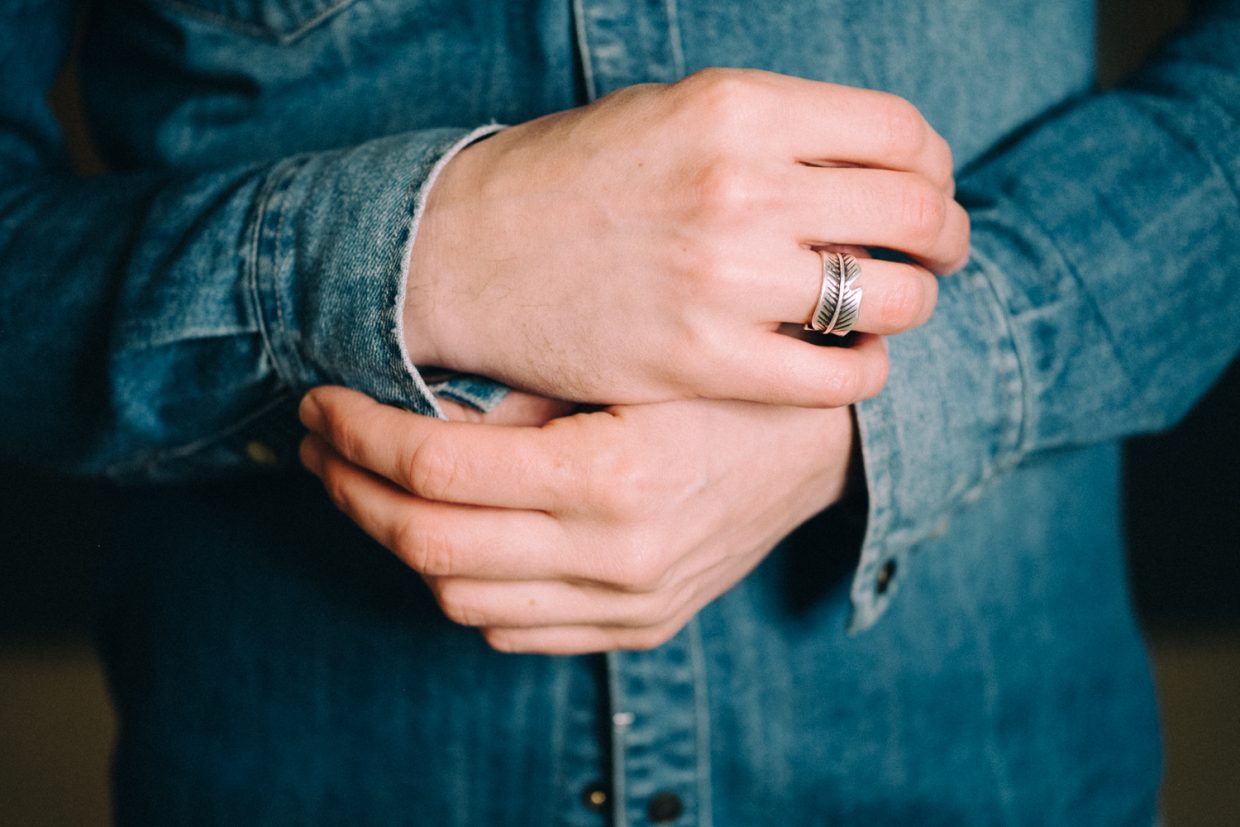
I also have a leather belt that I wear almost daily that I purchased from a charity shop in 2003. It was already worn in when I found it and you can imagine the shape that it’s in currently. A few years ago a friend of mine gifted me an elaborate silver and turquoise belt buckle that now proudly holds the belt together. There’s a ring I wear most days that I found in New Orleans (my favorite city) that has a feather design that unintentionally matches the feathers on the belt buckle. These three items have been with me all over the world yet their stories were shared with very few people. I truly believe most things in life find you and not the other way around. Almost everything I truly cherish was either gifted to me or found me at the right place and right time.

Donelson Bowl is one of my favorite spots in Nashville. If they had better coffee and rented cots for overnight slumbers I would probably be paying rent there right now. Other than that, they have everything else you could want or need. Lots of room too; I like space. Space is so underrated. Space is my favorite instrument in music, but we are not talking about music right now so I’ll spare you anymore insight into that topic.


Photos by Kelly Amber Garcia

Gig Bag: Joshua Hedley

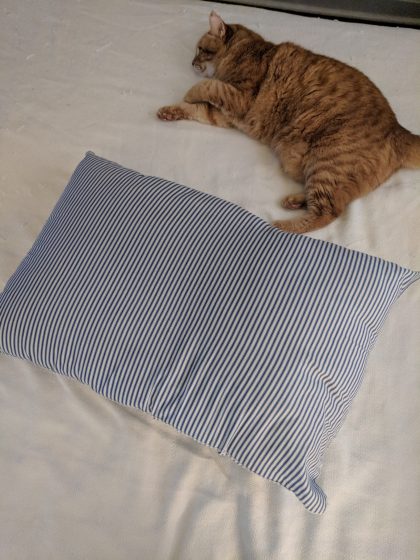
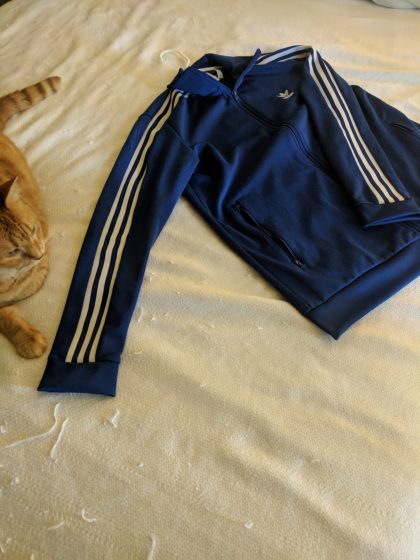
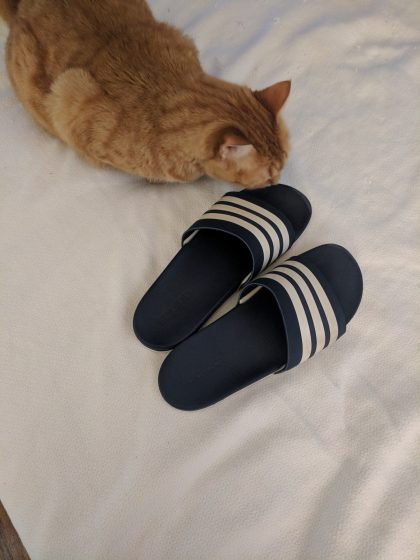
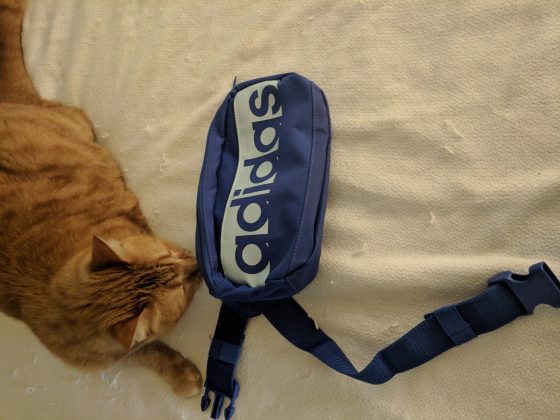
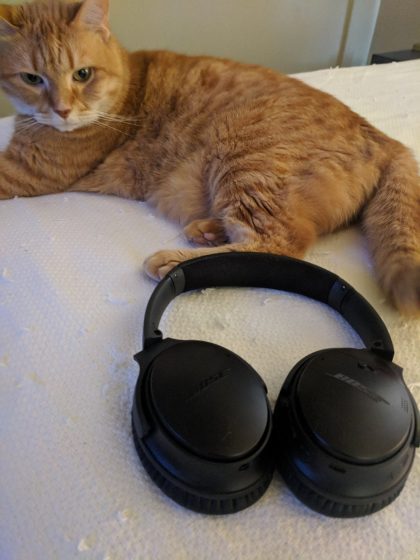
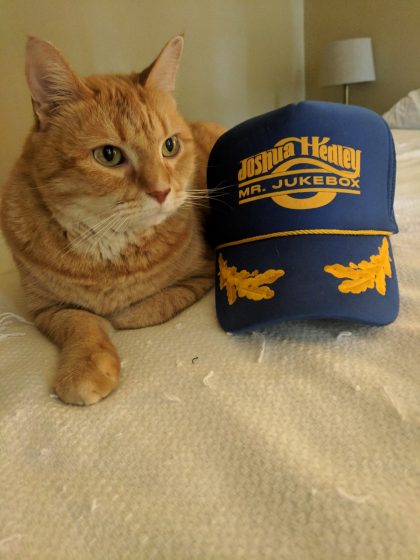
Welcome to Gig Bag, a BGS feature that peeks into the touring essentials of some of our favorite artists. With a guest appearance from his cat, Possum, Joshua Hedley details the items he always has nearby when out on the road.

Truck stop pillow: It’s cheap, it doesn’t need a pillow case, and it’s more comfortable than a van seat headrest.

Adidas Tracksuit: It takes up less room than a blanket because you’re wearing it.

Adidas Adilette Cloudfoam Plus slides: Just get a pair. You’ll see. P.S. definitely wear with socks.

Fanny Pack: It doesn’t matter what brand, I just like Adidas. Anyway you can keep all your stuff in it and it takes up less room than a backpack. It gets cramped easily in the van so minimizing clutter is key.

Bose QuietComfort 35 II headphones: I fly to Australia twice a year. That’s a long ass flight and the batteries in these things last FOREVER. They’re not cheap but they’re worth every penny.

My own hat: Idk, it’s a free hat.


Photo of Joshua Hedley: Jamie Goodsell

MIXTAPE: Sons of Bill’s Songs by Other Brothers (and Sisters)

“What is it like to be in a band with your brothers?” is always the introductory question we’re asked in interviews. Sadly, I never really have any salacious stories of drama or rivalry. I just love, trust, and respect my brothers, and we share a deep history. There’s just no one I’d rather be in a band with. — James Wilson

The Louvin Brothers – “The Great Atomic Power”

The Louvin brothers made such terrifying and beautiful music. They are the first band that comes to mind when I think of the famous Tom Waits quote – “beautiful melodies telling me terrible things.” Their gospel music can seem so superficially brimstone Baptist but that’s all just a front for brothers who really knew the depths. You can hear it in their voices. Ira was a wild man – his wife shot him four times. Their gospel music still gives me chills and strangely seems to increase in depth and staying power with the passing decades.

The Beach Boys – “Warmth of the Sun”

This is band that definitively kept us from laying claim to “The Wilson Brothers.” We grew up with their music from my mom’s record collection. I know the term genius is thrown about too often, but Brian Wilson deserves it. He did all of the writing, all of the elaborate vocal and instrumental arrangements, and yet completely abandoned the glory of performing live at the height of their careers. Such a pop music purist.

The Replacements – “Left of the Dial”

We don’t often think of the Replacements as a brother band, since Paul Westerberg is considered the main artistic force of the group, but I think that Bobby and Tommy Stinson are a big part of what made this band so legendarily great. They gave the band this shambolic-fearless-Midwestern-blue collar front which Paul wore like a mask, giving him the courage to be the face of the Replacements. It always seemed that the Replacements “thing” — the drinking, the self-defeating “fuck you” attitude — was all some sort of elaborate defense mechanism for a guy who was probably much too existentially sensitive to handle life without it. It’s this strange combination of ennui and bone-head rock and roll that made me fall in love with this band.

Lamb of God – “Walk With Me in Hell”

As Virginians we’ve got to give it up for Richmond’s Lamb of God. The Adler brothers manage to make virtuosic angry music that is completely free of pretension. We’re taking a band field trip to see them again this summer with Slayer on their farewell tour.

The Jesus and Mary Chain – “April Skies”

I just love this band. You could say they were the brothers that made me want to start a band but it’s more accurate to say they’re the band that made me want to have brothers.

The Stanley Brothers – “Are You Afraid to Die”

My dad loved the Stanley Brothers and we grew up with their songs long before I heard their recordings when bluegrass music came back into fashion in the early 2000s. Individually the Stanley Brothers voices are so raw and honest but when they sing together something altogether different happens—their voices take on this angelic purity. We learned how to sing harmony from a lot of these songs.

The National – “Fake Empire”

Matt Beringer is often the face and spokesman for this group, but I think it’s the two sets of brothers that make them one of my generation’s greatest rock bands, instead of a summer art project. The depth of compositions and chemistry between the brothers is so compelling. You’ve got to experience it live.

The Everly Brothers – “Bye Bye Love”

We grew up with the songs from the Everly Brothers and it’s still some of the best pop music ever recorded. I find myself listening to the Everly Brothers when I want to listen to the Louvin Brothers, but don’t want to hear so much about Satan. It’s a rare occurrence but it does happen.

AC/DC – “Thunderstruck”

Angus got most of the air time but Malcolm held it all together. Everything you could ever possibly want from two guitars.

Dawes – “That Western Skyline”

When you see this band live you can really detect a special chemistry between Taylor and Griffin Goldsmith. It’s such a cool thing to see a band whose primary trust and chemistry is between the drums and vocals. It anchors the song and creates such a cool space and freedom.

Radiohead – “The National Anthem”

Jonny and Colin greenwood are such masters of their respective instruments. So much of what breaks up bands with brothers is ego, but all of their parts feel so perfectly and completely egoless. They are both of one mind in simply serving the music.

Haim – “Falling”

This band gives me faith in modern pop music. It’s so important to be reminded in 2018 that pop music doesn’t have to be terrible.


Sons of Bill’s new album, Oh God Ma’am, will be released on June 29. Photo credit: Anna Webber

Live What You’re Singing: A Conversation with Sarah Shook

Within the bounds of country music, pronoun play doesn’t come easy, but Sarah Shook believes listeners are more than capable of finding ways to see themselves in her songs. With her band, the Disarmers, she deals with gender in her songwriting as a means to challenge the heteronormative forms of representation within country music.

On “The Bottle Never Lets Me Down,” from the band’s new album, Years, she sings about becoming the man she used to be, while on “Parting Words,” she addresses a woman, her former lover, about the way things ended. Not only does she weave together traditional country, honky-tonk, blues, punk, and more, but she conscientiously flips country music’s perspective around in order to be more inclusive.

There’s a definite sense of who belongs and who doesn’t in country music, but that’s slowly shifting.

It’s a really very cool and exciting time for women making country music, especially the sort of throwback traditional country. There’s a lot of buzz centered around this new wave of women outlaw country artists. I think that’s a really good thing, and industry-wide it’s a lot more prevalent than you realize. One of the things that was frustrating for me last year when we put Sidelong out, I probably did 50-some odd phone interviews, and two of them—two of them!—were with women. I had a whole conversation with my manager, like it’s hard enough being a woman playing music, but it’s a tough field to be a woman in journalism. This year with this release, I feel like there’s been more of a balance as far as speaking with male and female journalists, and that’s been encouraging too.

You’ve been mentioned along with country outsiders like Sturgill Simpson and Margo Price. How do you see your relationship within the genre?

I think that we’ve been branded outlaw, and I feel like people interpret that in different ways. Of course outlaw country is the super old school Waylon Jennings beat, but I think the term is evolving pretty rapidly into something that is more inclusive to people doing it their own way. That’s one of the things that was really cool about country music in its heyday, when it was first starting out and all those classic artists were on the radio. As soon as the song started—a few bars in—you could tell whose band it was because all those bands had such a distinct sound. That is really hard to find today, everything sounds the same. It’s very clear that people are just looking for patterns that have achieved success and are popular. And then you have folks out there like Margo Price and Kelsey Waldon and Kacey Musgraves, and they’re kind of doing their own thing. Their bands have respective sounds that are unique and identifiable. That is really cool and very exciting.

You’ve been forthright about your sexual identity. How do you navigate your personal story within the larger scope of representation?

To a degree, I feel like there are certain points in time where it’s paramount to be very outspoken about that stuff. Most of the time, I feel like doing what I’m doing—touring relentlessly, putting out records, and being unapologetically myself—is a very powerful and political maneuver as well. Sometimes it’s more effective in a palpable way to live what you’re saying and be the person that you’re talking about. I think it’s a cool and different way for people to realize, especially within country music, which has a certain, specific demographic of people, that, yes, you can be a pansexual atheist vegan making country music, and does that affect the music? Sometimes lyrically, yes, but the overarching theme is just that I don’t necessarily have to have everything in common with my fans. We can have differences. It’s really cool to have interactions with people who are like, “I never felt comfortable with the idea of homosexuality or bisexuality, and I meet you and we’re talking and hanging out and having a good time. You’re just a regular person.” I’m like, “Exactly, we’re regular people, believe it or not.” [Laughs]

When you put it like that, it’s so depressing, but it rings true. Every time I meet someone who’s uncomfortable about anything outside heterosexuality it’s usually because they haven’t spoken to anyone who’s different from them.

Exactly. And that is such a big thing. We can play New York City and that’s a totally different experience than playing a small town in Alabama. I think consistently being the person who is always willing to talk to fans after a show and be real and be myself and form unlikely friendships, I think that’s a really cool way to create change.


I always thought action over verbiage is the way to go about it. But then looking back, we’ve seen from the Dixie Chicks how speaking your mind can be dangerous. Do the repercussions ever concern you?

You know, I’ve never been concerned about that because I feel it’s important to be honest and forthright as a human being, and as an artist and certainly lyrically as well. The other thing to me that’s really important, from the word go I’ve been very strategic about how I wanted to grow this band and how I wanted to see success. It’s never been my prerogative to go after the country music fan base—and certainly that’s the majority of our fan base. My thing was, “Yes, this is country music, but this is music for anyone who likes it.” It’s inclusive, and anyone that these songs resonate with, it’s for you. Taking that stance and being strategic about it has certainly helped. It’s really encouraging to be a country band playing outlaw country and have a very diverse audience, and I think that’s a thing a lot of traditional artists struggle with. They get pigeonholed. Being outspoken in an honest fashion but not a combative fashion, I feel that’s really helped push our music to demographics that it wouldn’t necessarily otherwise reach.

All this talk of the new outlaw makes me excited for a tour one day, or even a festival.

We need our own cruise. [Laughs] That would be amazing.

An outlaw lady cruise.

Exactly. Oh my god, that’d be a lotta fun.

Critics have referenced the underlying sense of menace in your voice, but your vocals on “New Ways to Fail” have such a biting, sarcastic note. Where does that darker sense of humor come from?

I’m very nihilistic. [Laughs] I’m one of those people that thinks life is way too short to take yourself too seriously. Within this world, there’s this huge danger of being, “I’m so and so, do you know who I am?” I’m just a person playing music and having a good time. Music should be fun, and, yes, it’s business too, but if it’s all business you’re going to get burnt out. You gotta have fun with it.

There’s also a tone of defiance in both your voice and music, which requires constantly stoking that fire inside you in order to stay angry enough to fight. How do you find yourself doing that?

I definitely have a lot of personal experiences that certainly stoke the fire. I have a lot of trans and non-binary friends here at home in Chapel Hill. Chapel Hill is a progressive little community, but even within the context of a progressive community, I’ve been out at bars before and had people give them shit about how they look. That’s a real thing. It’s so wild to me that the trans community is what’s being targeted because they’re already vulnerable to begin with and they’re probably the most non-combative people. They’re not putting up fights, they’re just trying to exist and have a life and be comfortable, like everyone else wants to do. You witness injustice like that firsthand, and you try and de-escalate situations like that. It’s a very real thing and there’s still a lot of work to be done in terms of showing people that we’re not the enemy, and yeah we’re kind of freaks but we’re not out to destroy morality.

Everyone can exist together.

Exactly, yup.

I noticed you play with gender a lot in your lyricism, either by not using specific pronouns or by flipping them in other interesting ways. Can you talk a bit about that process?

I’ve always liked pushing the boundaries with that. I think blurring gender lines is really important because it totally leaves the story open to listener interpretation. People can be like, “Well, I’m not really sure if this song is written from a man’s point of view about a woman, or a woman whose woman lover left her.” Leaving that open to interpretation and letting people wonder and figure it out for themselves and how it applies to them personally, I think that’s a cool way to let people arrive that their own conclusions, and also realize that they feel perfectly OK not really knowing.


Photo credits: John Gessner