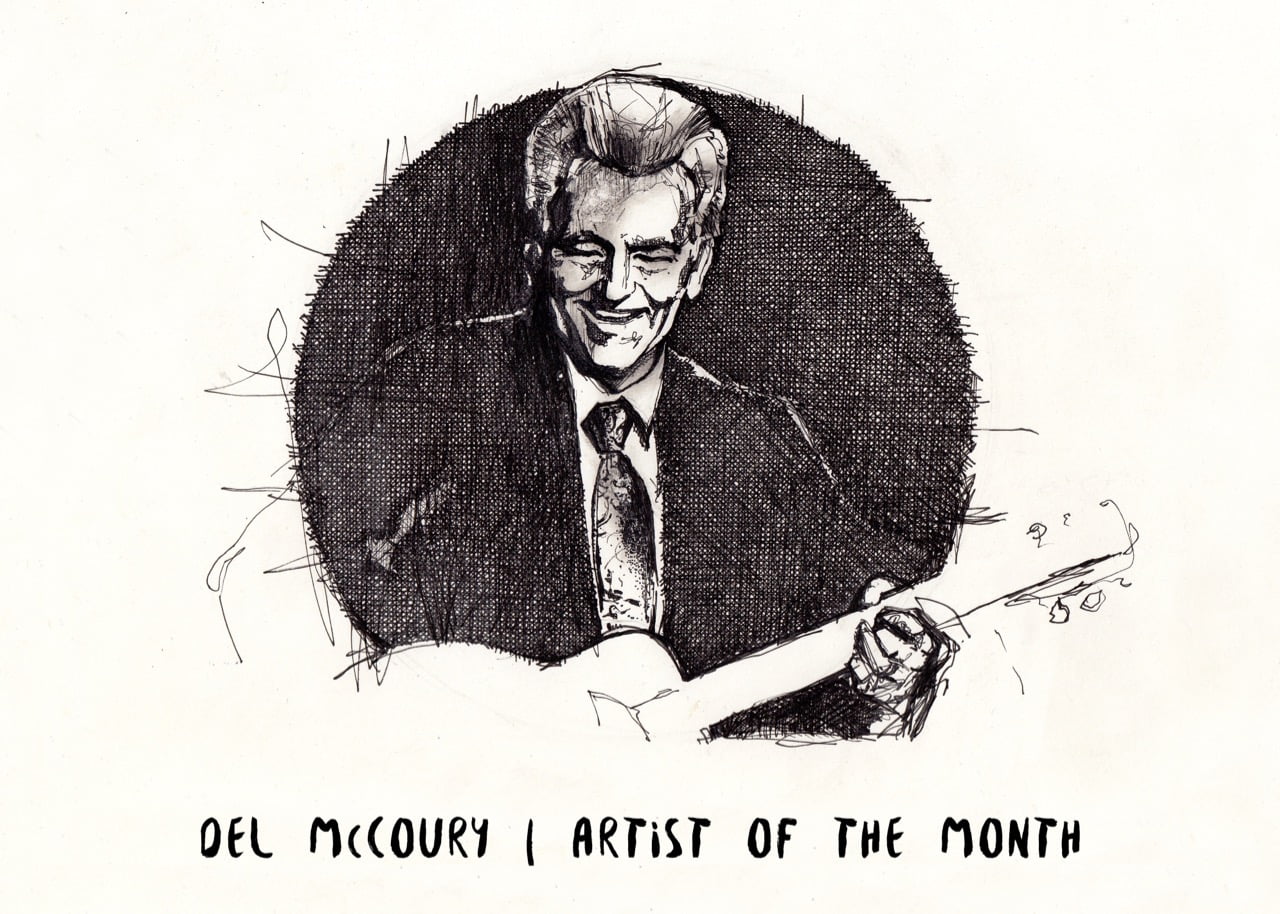
Del McCoury: Whatever Suits the Song

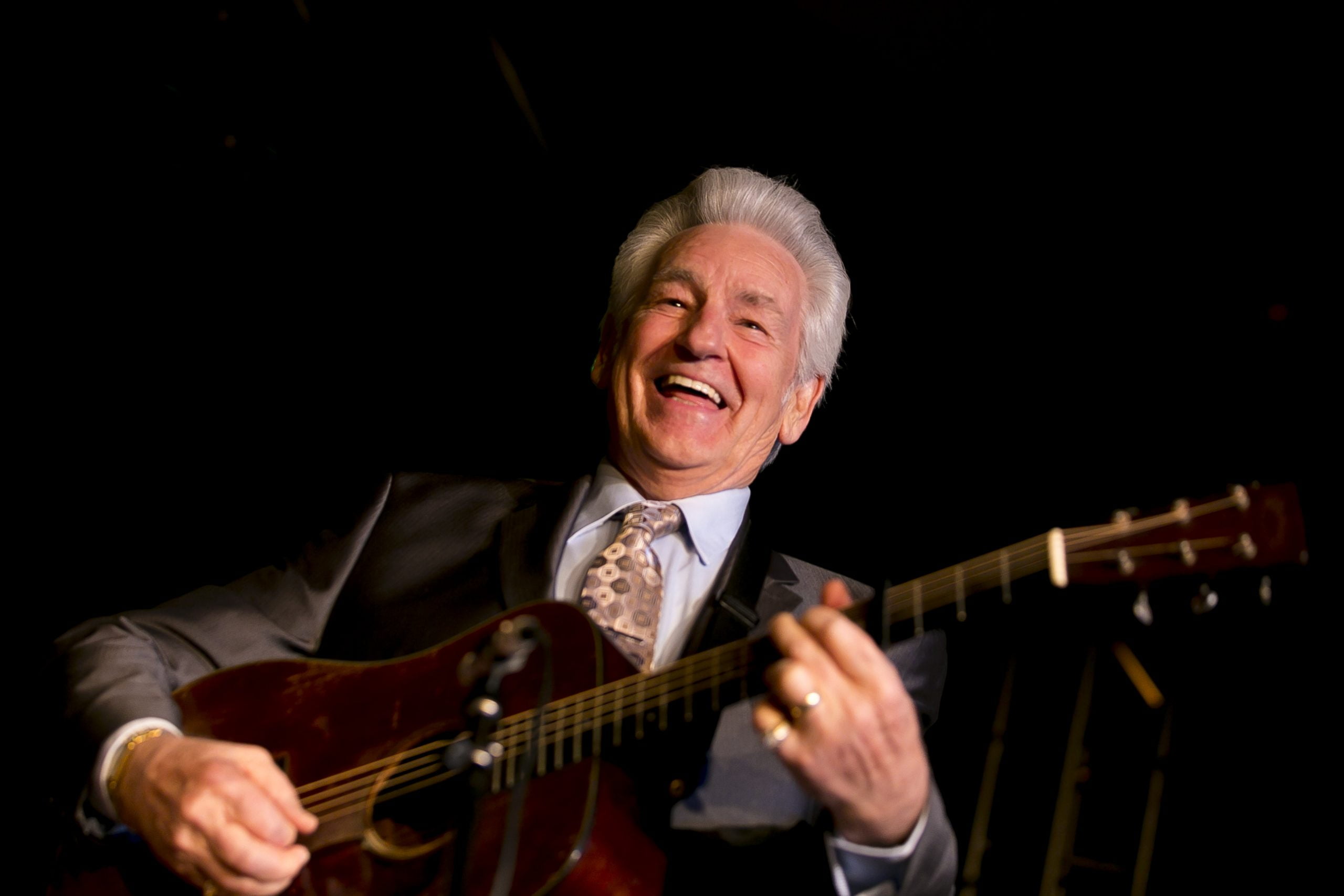
There are three things that you need to know about Del McCoury before anything else: His hair is incomparable, he giggles almost ceaselessly, and he still sings bluegrass.

Fifty years ago, after ending his stint with Bill Monroe’s Blue Grass Boys as lead singer and guitarist, McCoury released his debut solo project, Del McCoury Sings Bluegrass, with his now-iconic pompadour coiffed proudly and precisely on the cover. The album was released on Arhoolie Records, whose founder and proprietor, Chris Strachwitz, produced the album, phoning the young McCoury barely a day before the session to offer him the deal. Because of the severely short notice, the band was cobbled together from whomever was available and the songs chosen from whatever Del knew: A lot of Bill Monroe material, plenty of traditional bluegrass, and some old-time country, too.

Since those days in the late 1960s, songs have been the most significant driver of McCoury’s inspiration and creativity all along. “In the early years,” he remembers, “my producers would bring songs to me and I would usually just do them, even though sometimes I didn’t really like the song. As time went by, I got to thinking, ‘I’m just going to record songs that I like, instead of doing everything [anyone] brings to me.’ I figured I’m the one who’s going to have to sing these songs!”

It’s this love for the songs themselves that has informed his entire career, sculpting the iconic McCoury style that can be detected through each and every one of his albums. It’s remarkable that he’s been able to sustain such a particular, tangible musical identity over the decades without it ever growing stale or cliched. That identity — innovation balanced with tradition and overlaid with melody-focused, virtuosic picking, while centered on soaring, high lonesome vocals, all accomplished with a wink and a smirk — doesn’t always come from overt attempts at consistency. “I’ll tell you what it is,” he says in a tone that foretells that this is not some ironclad secret. “It comes down to, simply, I just record songs that I like. It’s hard to say where they’re going to come from. … I don’t think about if anybody else is going to like it when I do it. I just think about me having to sing it.” And as far as production and arrangements? That’s no proprietary recipe under lock and key, either: “But really, it’s whatever suits the song.” Whatever he’s throwing into the pot, it is downright delectable on McCoury’s brand new album, Del McCoury Still Sings Bluegrass.


Thank goodness that he does. If his signature chuckle, a constant as he tells stories and discusses the new record over the phone, wasn’t indication enough, Del has always been a beacon of joy in bluegrass communities. From the first second of track one, the slightly silly, totally burning, almost-a-love-song “Hotwired,” through a high-speed Alan Jackson cover, a classic fast waltz, yes, a train song, too, and another couple of handfuls of carefully curated material, that joy is palpable. It’s a striking through line that stems first from his absolute adoration of just doing the thing. It’s a love he’s always had. “In the early days,” he says, “When I was playing bluegrass festivals, we’d stay up all night, play all night, and go and do a show the next day in the afternoon. I had that much interest in it that I could play night and day and never stop. When you get older, you can’t do that; you have to pace yourself. But I still have that interest, I really do.”

Even casual observers would not note McCoury’s current clip as “pacing oneself.” He’s a member of the Grand Ole Opry and a Bluegrass Music Hall of Fame inductee, he tours nationally, he hosts the radio show Hand Picked with Del McCoury on SiriusXM’s Bluegrass Junction, and he presents an annual roots-music-festival-meets-family-reunion, DelFest, in Cumberland, Maryland, every May. All of that notwithstanding any current album release cycles and press junkets he may be running. While plenty of other artists with such long, successful careers would be pumping the brakes, Del is still looking ahead. “I just never lost interest in it. I never lost interest in recording records and entertaining folks. It’s something I love to do.”

And the folks love him back. Whether listeners come from the most staunch camps of bluegrass diehards, or from hippie festivals and jammy string band gatherings, or symphony halls and performing arts centers, they all count Del as one of their own. The rarity of that fact is not lost on him. “[That’s why] when we do a show, we never have a set list. We figure these people paid to see us, so we’re just going to do what they want us to do, we’ll see what they want to hear. It keeps me enthused, the audience excited, and also the boys [excited, too.] And the audience never know[s] what we’re going to do. ‘Cause I don’t!”



By choosing to record and perform material that he connects with personally, he’s passing down that care and respect for songs to every one of his audiences, who, in turn, learn to appreciate and then reinforce that care. So, when a song comes along on Still Sings Bluegrass that includes an extended, rip-roaring electric guitar solo (in this case played by Del’s grandson, Heaven), or when “To Make Love Sweeter for You” kicks with a jangly upright piano, you don’t hear the predictable, “that ain’t bluegrass” balking. Furthermore, the traditional, straight-ahead policers are visibly absent from DelFest, where more fringe, jammy acts like Trey Anastasio and The String Cheese Incident are just as likely to appear as Larry Sparks — or Tedeschi Trucks Band. And whether he’s recording a set of songs such as this fresh crop, curated by the man himself, or lending his voice and his band to projects like Del and Woody, an album of unrecorded Woody Guthrie songs, or American Legacies, the New Orleans-meets-Nashville, jazz-meets-bluegrass, Del McCoury Band-meets-Preservation Hall Jazz Band crossover album, his footing within bluegrass never falters and is rarely challenged.  

Del doesn’t believe there’s a secret antidote to the signature, absolutist trains of thought some find in bluegrass and he clearly says so. When asked why he thinks his fans might let him off the hook he laughs, “You know what, I’m afraid they’re gonna let me go any minute!” But we know this isn’t true. Now more than fifty years into his song-led career, Del’s creative vision has never been so clear, his perspective never more innovative, his hair never more enviable, his laugh never so charming, and his music never more joyful.

No matter how that ends up sounding from the stage or through the speakers, by definition, it’s still bluegrass.


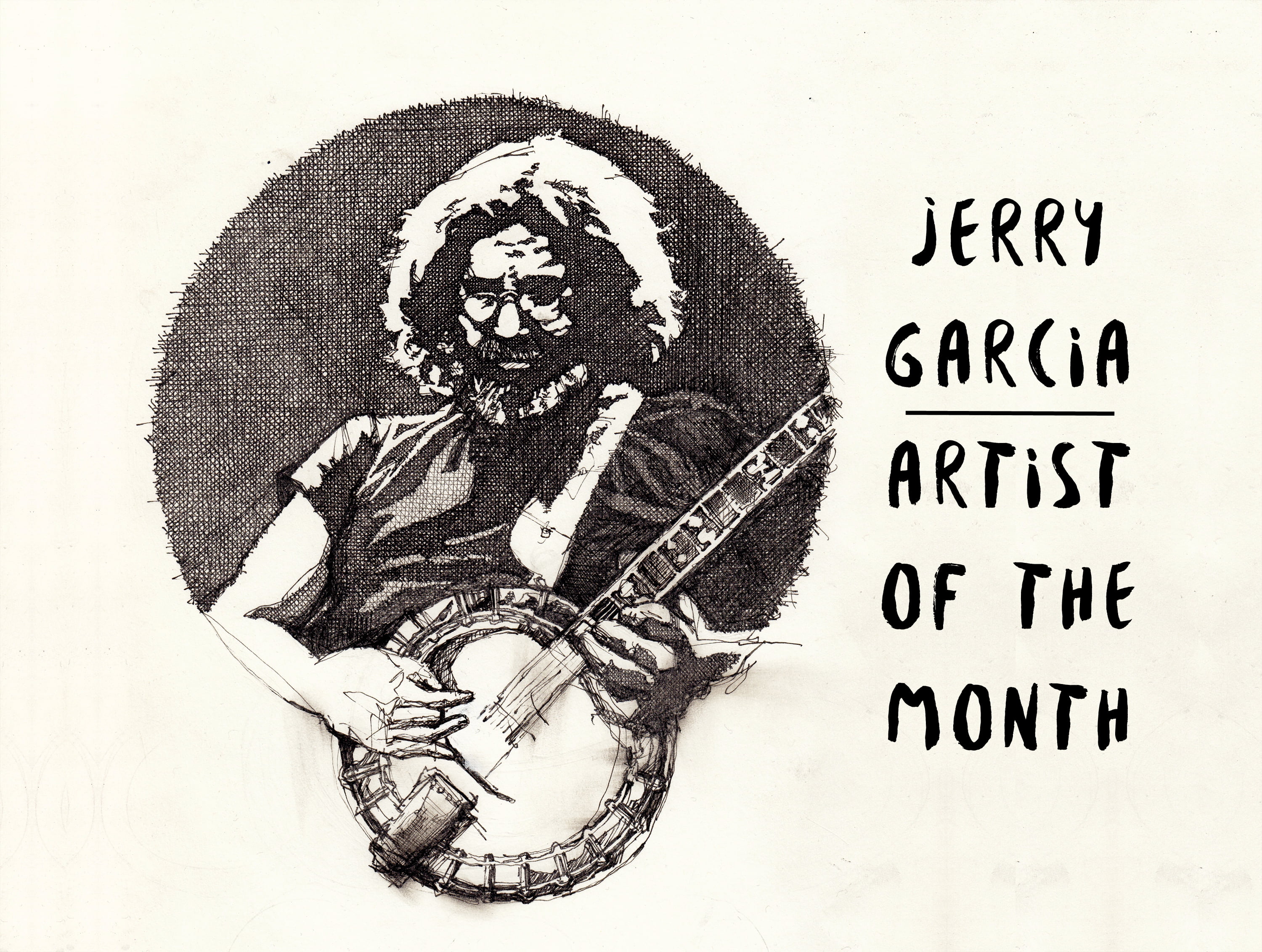
Illustration by: Zachary Johnson
 

Traveler: Your Guide to Cumberland, MD

Cumberland, Maryland, is a mountain town tucked into the base of the Appalachian Mountains. It earned the nickname “the Gateway to the West” because of its location as a jumping off point to the western United States during the Gold Rush. It’s an artsy town with a healthy dose of a small town feel. One of our favorite artists takes over this mountainside town for four days every May for DelFest, started in honor of and in conjunction with the great Del McCoury. (If you are reading this, you know who he is, so I’ll spare you the storied history about his bluegrass career.)

Getting There

Nestled along the Potomac River, Cumberland is located in western Maryland. It’s a stone’s throw from both Pennsylvania and West Virginia, and right around two hours from Baltimore, D.C. and Pittsburgh. Airport options include Reagan, Dulles, Baltimore, and Pittsburgh. Amtrak also provides intercity service to Cumberland via the Capitol Limited rail line.

Where to Stay

If you’re attending DelFest, most people camp on the ample festival camping grounds or stay at area hotels. Airbnb and VRBO are also fruitful in the Cumberland area. If Cumberland is booked, try Lavelle or Frostburg for a short fest commute. Paw Paw is another town nearby which we know nothing about, but love the name. Please let us know if you visit.

What to Do

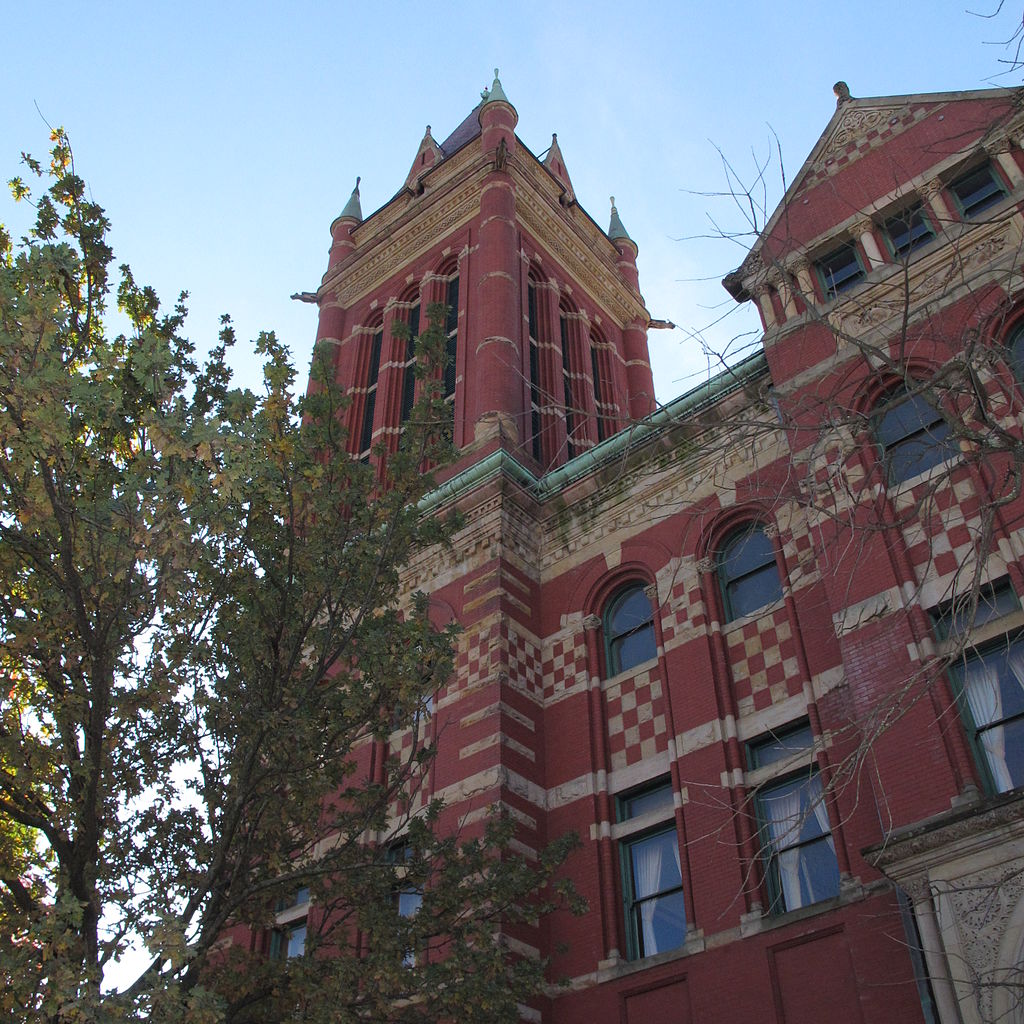
Allegany County Courthouse Tower. Photo credit: Preservation Maryland.

A mountain town at heart means trails on trails on trails are at your disposal in Cumberland. The Great Allegheny Passage is a seemingly daunting 135-mile hiking and biking trail connecting Cumberland with Duquesne, Pennsylvania. Hiking bits and pieces of the trail is perfectly acceptable, if you’re not up for the whole journey.

The Chesapeake & Ohio Canal National Historic Park boasts nearly 185 miles of biking and hiking trails with parks, camping, and historical structures along the way. Take the Western Maryland Scenic Railroad from Cumberland through the Allegheny Mountains for a fascinating adventure with mountain eye candy.

If you’re mainly a city dweller, Washington Street Historic District is a neighborhood in the southern part of the city which was once Fort Cumberland, serving as George Washington’s headquarters during the French and Indian Wars. It’s a playground for architecture and history nerds.

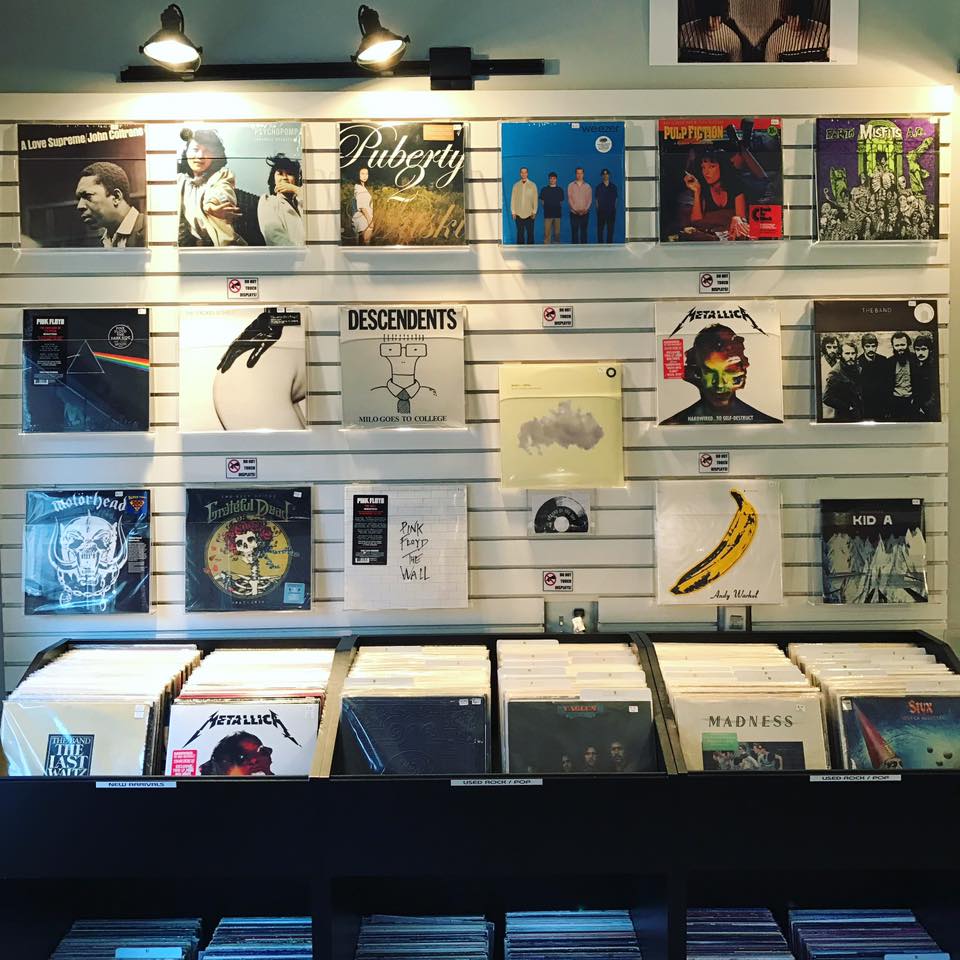
Yellow K Records

This rural town has a quaint arts and culture scene. The Cumberland Theatre is the town’s musical theatre go-to; Graphicus Atelier is a print-making studio and gallery dedicated to fine prints; and Dante’s hosts poetry slams. We’re also fans of Yellow K Records in downtown Frostburg for your new and used vinyl fix.

Eats & Drinks

Puccini’s Pizza

Puccini’s woodfired pizza is renowned in Cumberland, plus it’s in a converted Civil War hospital (which isn’t as creepy as it sounds).

El Jinte is an unsuspecting hole-in-the wall, serving affordable and authentic Mexican food. And Ristorante Ottaviani is another classic and fresh Italian spot offering wine tastings in town. For sushi, Thai, or Chinese, head to Jins Asian Cuisine and try their Shumai dumplings. For breakfast, head to Clatter Coffee in Frostburg for some of the best smoked trout around.

DelFest Tips

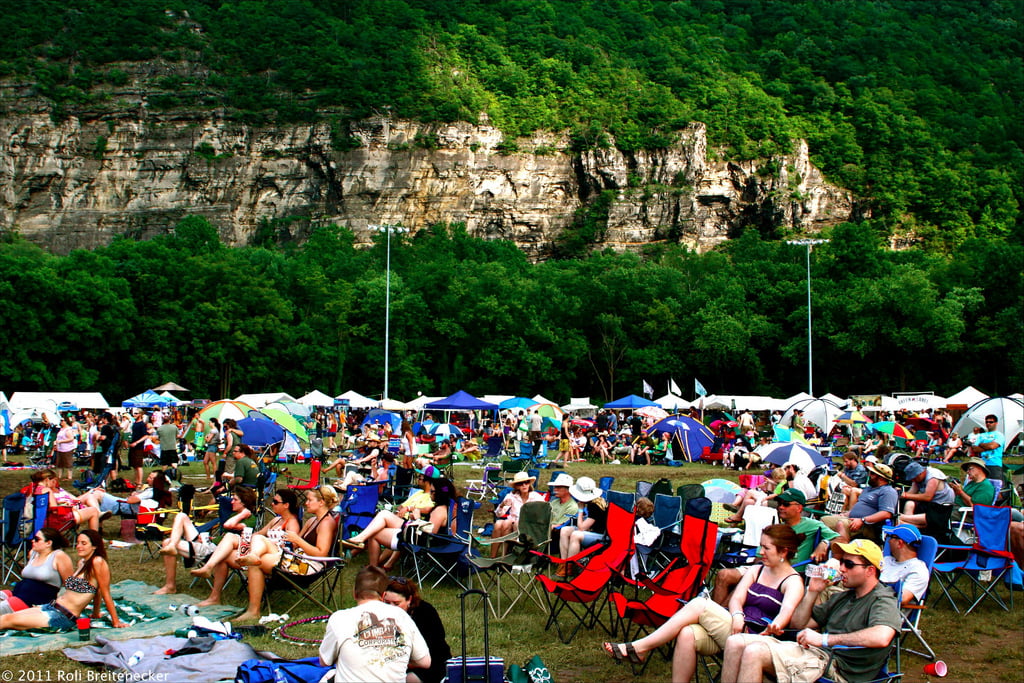
DelFest. Photo credit: Roli Breitenecker.

DelFest is held at the Allegany County Fairgrounds, nestled along the Potomac River. The festival celebrates the rich legacy of the McCoury family’s music, while helping fans discover new favorites. This isn’t a stuffy bluegrass festival, but instead one where you’ll see Del on stage with Trey Anastasio one hour and Junior Sisk the next.

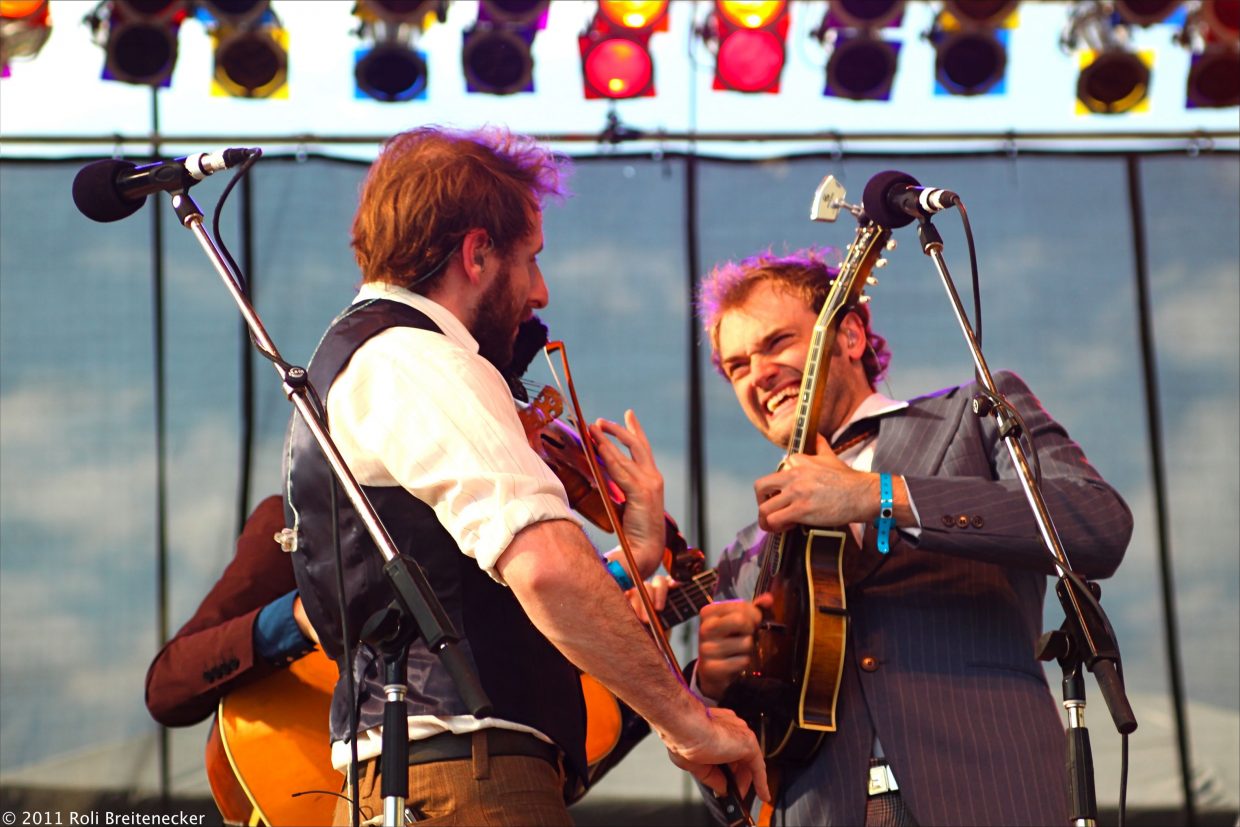
Punch Brothers. Photo credit: Roli Breitenecker.

In its 11th year, the lineup is more bluegrass than it has been in a while. On Saturday night, they are even holding Bluegrass Congress (the most productive Congress we can think of …) with Sam Bush, David Grisman, Béla Fleck, Ricky Skaggs, Bryan Sutton, Stuart Duncan, Jerry Douglas, and the Del McCoury Band holding court. DelFest is a jam band-influenced festival, so of course it has copious amounts of dancing, craft beer, and staying up into the wee hours of the night.


Lede image: The Great Allegheny Passage. Photo credit: Jbrown620 at English Wikipedia.

Another Ring in the Tree: A Conversation with Ketch Secor

Maybe it’s true in life, but it’s certainly true in writing about music that the longer you do it, the more often you hear echoes of the past — not only in the music itself, but in artists’ attitudes and, especially, in their stories. Hearing Old Crow Medicine Show’s Ketch Secor recount the odyssey that preceded the band’s settling in Nashville, it’s easy to be reminded of the contintent-spanning journey taken by Western swing ensemble Asleep at the Wheel some 30 years earlier. Like AATW, who eventually were embraced by all but the most benighted purveyors of authenticity — and with whom they recorded a blistering “Tiger Rag” in 2015 — Old Crow have made their way into the heart of hillbilly music’s most cherished institutions, signified by their 2013 induction into the Grand Ole Opry cast.

Yet the group’s ascension to Opry membership was hardly predictable, much less preordained. Old Crow’s stature in the country music world has been built on a determination to make their own sound that’s every bit as strong as their allegiance to the broad swath of hillbilly music music that forms its foundation. When Marty Stuart invited them to join the Opry, he mentioned an early description of the radio barn dance as a “good-natured riot,” and it’s a description that obviously applies to the band’s shows, too — a simultaneous looking back and looking forward that has made legit fans out of the likes of bluegrass Hall of Famer Del McCoury. With Volunteer marking the group’s 20th anniversary, it seemed like a good time to look back at how they got from there to here.

The press release mentions this is the 20th anniversary of the band.

That’s no joke, brother.

Does the band have a hard start date — a day you could point to and say, “This is the day the band was formed”?

Well, the band left — that’s the day the wheels turned, and we left our home — in October of 1998, because grape season was over, and we had money. We had picked enough, and raised enough, and washed enough dishes, and cleaned enough attics, and played enough nursing homes, and bought enough cartons of cigarettes to get across the border in style.

I was thinking about this because the occasion for this interview is the release of a new record and, 20 years ago, the record industry and the music industry looked a lot different than it does now. And you guys have become what you are during this period of tremendous change and turmoil.

For example, when we crossed that border and finally got waved through into Canada in the fall of 1998, one of the things we had packed was our boombox, so that we could dub our tapes. Because this band sold cassettes. In 1998, this band sold cassettes on the street corner for $10 — Canadian. That was crazy. We were selling them, too. Our tape was flying out of the box — we had a shoebox full.

Why was that?

Well, it was not the quality of the tape. The tape wasn’t very good. We recorded it with one microphone hung from the ceiling, on a four-track recorder. It sounded really, really shitty — low-fi, low quality. That tape was called Trans:Mission. It was the time to dream, with your body, the things that you wanted to have happen. It was the time to read Bound for Glory by Woody Guthrie and think, “I’m going to get on that boxcar, too, goddammit; I’m going to hobo. I’m going to thumb it, I’m going to flag the diesel down. I’m gonna go West.” A good time in life to take that risk, and drop out. Isn’t that what it’s all about? Isn’t that where all of the magic lies, in that moment of deciding that you’d rather wear a mask — and pick a really great one?

So you made your way to Nashville …

That happened three or four years later. Now, I had already been to Nashville before I got to Ottawa. I had been here with another band in 1997, and played on the street corner here. I was gonna busk! I’ve been busking Nashville for like 23 years, or something stupid like that.

What’s the value of busking? I mean, aside from the financial.

Well, we can’t all play like Del McCoury, or anyone in that band — particularly when we’re kids. But we had the passion. It’s the same passion. I was never gonna get as good at playing the fiddle as Jason Carter, but I had the same drive to play as hard as Jason plays. And I couldn’t get onto a stage anywhere because … well, one, I was drunk. I had taken this old-time loyalty oath that made me fiercely pro-old-time and anti-bluegrass, so I didn’t play well with others. I was rabble-rousing. And also, I sucked. So where was I gonna go, with all of that energy and drive, but none of that finesse? And I was somewhat unapproachable. I might have smelled bad. I might have had blood on my shirt, or on my mouth. That was part of the mask I wore, was unapproachability.

Being in Tennessee seems to be important to the band, at this point. Is that a fair statement?

Yeah. I think, as soon as we got to Tennessee, it got a lot more legit.

In what way?

It got legit because it got more focused on the idea that, all right, this band is the soap box. In the chapter previous to our move to Nashville as Old Crow — which is the chapter that runs from about 1999 to about 2000-and-a-half — in that chapter, we were probably as interested in farming and making whiskey and planting by the lunar signs as we were about playing live shows. And that was where learning about early hillbilly and country music was as much an engagement with the landscape of the music as it was with the actual performance of the music. When it got to Nashville, then it became about doing that in Nashville, which had a different musical landscape.

So, in our journeying, we start with the quixotic journey, which is the fire, the odyssey. And then we end up in this sort of hillbilly monastery up in east Tennessee and west North Carolina. And then we come to Nashville, and we end up in this crack house kind of mentality of revolving doors of freaky people, motel rooms, and rent money going out and booze coming in, and songs, and percolation, and Del McCoury, and the road. The beginnings of the way the road would look. It became more vocational and less about kind of artistic presence and disturbance. As buskers, we were as much protesters as we were entertainers.

You guys still feel that way?

Yeah.

How does it express itself? Musically?

Oh, there’s a ferocity to what we do, and an intensity. I mean, I’m feeling it right now, which is why I’m jacked up. But I’m jacked up always. I’m always jacked up, when I talk about the fiddle, and when I talk about John Hartford and Del McCoury. I’m always jacked up because that stuff’s just so powerful.

When I hear “volunteer,” especially in a music-related setting, I think of the Volunteer State — Tennessee. Is the title a reflection, in part or in whole, of the environment in which you’re in now? Or does it have some other significance?

What I think it means is that it hearkens to the pack mentality of our youth. The band really took this oath, this pledge, and we all volunteered to risk our lives, to sacrifice personal identities, personal goals, for collectivity. To be very much a band. The way that we lived together — it’s like we had all signed up, that we would do it come hell or high water. And it turned out it was both.

There’s an audience connected to old-time and bluegrass and country music — all the variety that gets presented on the Opry — by virtue of where they were born, who they grew up with, and the community they live in. And then there are whole other audiences who are drawn by maybe musical affinity, or some kind of cultural signifying. One of the features of our world in the last few years has been that the differences between all these people has become more apparent and the edges become a lot sharper. You guys are also heading for your fifth anniversary as Opry cast members. You play the Opry, which is still kind of a focal point for one community, and then you go out and tour and play for all these other audiences. It feels to me like that’s reflected in some way in this record. Is that true?

When we play the Opry, we’re mostly playing for tourists. But we’re also playing in a kind of center of all of hillbillydom. And when we play the “Wabash Cannonball” on the Grand Ole Opry, we sound more like the Woody Guthrie role than we do the Montgomery Gentry role, or even the Roy Acuff role. Roy is kind of the same as Woody. He’s a good example because, though politically, he’s certainly on the right — he’s from East Tennessee, he’s a Republican, he’s a conservative dude, he wants to shut down the Opry because he doesn’t want to share the same locale as the peep shows and the drug dealers, so he advocates moving it out. But he’s singing music that makes you want to desegregate a school, because that’s the power of the “Great Speckle Bird,” that’s the power of the “Wabash Cannonball.” They’re actually very front-line songs, really excited, rabble-rousing kind of proletariat sounds.

That’s the thing about country music: The people, en masse, who believe in the power of folk music, just by nature of having an underserved class being championed by a music — that’s a very expansive concept, one that can’t be pigeonholed in any particular political realm. We played the Budweiser stage last week, and most people were about 25 years old or younger. We’ll play gigs this summer where everybody’s 25 or older, 50 or older — we’ll see crowds from Delaware to Red Rocks and everything in between. We’ll play in Oklahoma to drunk leftists, and we’ll play in New York City to conservative lawyers. And everywhere we go, we will allow people to step into a world that has no political affiliation. That is the world of Old Crow, the entertainer. And the Old Crow who’s an entertainer, I always think of him as this top hat-wearing bartender that’s serving it up to the people, no matter what the color of the skin is, or who they voted for. Because the Old Crow, he doesn’t vote. He just pours.

So what’s the connection between Old Crow, the entertainer, and that volunteer collective that stepped up and took its oath? What you described as the fundamental nature of the band — of you coming together and making this choice to pursue something — seems to imply a certain kind of purposiveness that goes beyond being an entertainer.

The political party here is, live music is better. The revival tent, or the voting booth, or the campaign rally is one in which you believe that live music has the power to change the world. I like records fine, but we’re a live band. What we do is play the music that we play in the moment that you’re hearing it. If you’re on your phone getting a message from a friend, you missed it. Sorry, dude. If you go to the beer line, that’s cool, we’re going to keep doing it. You don’t have to hang on every word. But this is our tent here. It’s the live music hour. That’s what we do.

We’re having this conversation, in part, because you made a record. So if live music is where it’s at, and that’s one of the changes in the music industry over those 20 years, and that records no longer occupy the same position in the music world, what are you wanting to do with this record?

Put another ring in the tree upon which this Old Crow has been precariously perched these 20 years. It’s just another ring in the tree, another notch in the belt.


Photo credit: Danny Clinch

Jerry Garcia: Expanding the Musical Consciousness

Before becoming the psychedelic guitar-playing icon of the Grateful Dead, Jerry Garcia was already living a life completely dedicated to music. Heavily immersed in the folk idioms that coalesced with the beat poet scene in San Francisco — and in the peninsula towns of Menlo Park and Palo Alto — in the beginning of the 1960s, Garcia’s concentration, determination, and passion for musical collaboration planted the seeds for a force that would not only influence the world in song, but that would let loose a seamless tie to multiple genres through multiple generations. What’s now viewed as Americana, Garcia was creating with the Dead right from the outset. His impact looms far and wide, perhaps even greater as the years since his passing roll on. From the bluegrass world of the McCourys to esteemed guitarists like Mike Campbell of Tom Petty and the Heartbreakers, David Hidalgo of Los Lobos, and David Rawlings, to jam bands like Leftover Salmon, and the current generation of musicians like the National, Jenny Lewis, and Ryan Adams, Garcia’s ethos is being deeply felt and utilized.

Garcia had a mind hungry for knowledge and interested in art, comics, and horror films, even as music ran through his family. After initially getting an accordion for his 15th birthday and successfully trading that in for a guitar, the quest for constant improvement was born as he devoured the styles of Chuck Berry, Jimmy Reed, Buddy Holly, and Bo Diddley. As the ‘60s approached and the initial rock boom faded, Garcia and his friend (and soon to be Grateful Dead lyricist) Robert Hunter found themselves in the middle of a very fertile Bay Area folk scene. Being steeped in Harry Smith’s Anthology of American Folk Music led to a fascination with the Carter Family and then Flatt & Scruggs.

It was at this time, in 1962, that Garcia began his complete immersion into the banjo and the bluegrass style of Earl Scruggs. He formed the Hart Valley Drifters with Hunter and David Nelson (later of New Riders of the Purple Sage and the Jerry Garcia Acoustic Band), and the scene grew to encompass the likes of Eric Thompson, Jody Stecher, Sandy Rothman, Rodney Albin, Janis Joplin, Jorma Kaukonen, David Crosby, Paul Kantner, and Herb Pedersen. The Hart Valley Drifters performed at the Monterey Folk Festival in 1963 in the amateur division and won Best Group, and Garcia took the Best Banjo Player award, which strikes with irony as, throughout his career, Garcia would never consider music to be a competition of any kind. He was more into turning people on.

While absorbing as much music as possible and focusing on his craft with diligence, Garcia came into cahoots with people like Ron “Pigpen” McKernan and John “Marmaduke” Dawson through a string of continuous collaborations and a rotating cast of characters at joints like the Boar’s Head, Keppler’s Bookstore, and the Tangent. McKernan was the blues aficionado with the biker looks and heart of gold who would lead Garcia into the electric blues band the Warlocks, which then became the Grateful Dead, while Dawson would be the one who had the canon of songs for Garcia to base his pedal steel guitar learning around to form the New Riders of the Purple Sage.

But it was on a cross country road trip with Rothman in 1964 that Garcia met David Grisman, the young mandolin player to whom Thompson had tipped him off. It was at Sunset Park in West Grove, Pennsylvania, where acts like Bill Monroe and the Osborne Brothers were featured, where Garcia and Grisman first did some pickin’ together, and a friendship was born that would lead to musical ventures that would have more than a lasting impact.

Both Garcia and Grisman were imparted with some crucial advice from Monroe, which was to start your own style of music. Garcia, no doubt, led the Dead (as much as he refused to admit to any leadership role) to their unique musical domain, while Grisman created his own “Dawg” style of music that was the precursor of “New Grass” in the ‘70s. According to Grisman, “Jerry was always the true renaissance music man.”

While each had gone on to create their own paths, it was 1973 when they started hanging out together at Stinson Beach, picking and having fun, when Peter Rowan (a former Bill Monroe Bluegrass Boy member) joined in along with legendary fiddler Vassar Clements, and, needing a bass player, John Kahn was brought in. Old & In the Way was born. In typical Garcia nature, the musical fun led to some local gigs which, thankfully, were recorded by Owsley “Bear” Stanley. With the guitar and the Dead being Garcia’s main drive, getting back to the banjo and picking with his pals in Old & In the Way was not only stress free, but fun and a piece of his musical puzzle that really exemplified how the muse consumed him. It wouldn’t be out of the norm, at the time, to find him in the span of a week or two playing gigs with the Dead, Old & In the Way, and one of his other musical soulmates, Merl Saunders.

The release of Old & In the Way, taken from Bear’s recordings at the Boarding House in San Francisco in October of 1973, hit the world in 1975 on the Dead’s Round Records label. It was through the Dead Heads fan club mailing of a 7-inch, 33 rpm sampler that many fans got their first dose of Old & In the Way. Many of that generation — and a few that followed — were exposed to bluegrass thanks to that release. The album continued to turn on the masses and was widely respected as one of the best-selling bluegrass albums of all time.

While fame was never of interest to Garcia, the expansion of musical consciousness was, perhaps, the most beneficial and unintended consequence of his popularity. Just like the Dead were doing with their music — turning kids onto Merle Haggard, Buck Owens, and Johnny Cash songs — here, Garcia and Old & In the Way were turning rock and rollers onto bluegrass and the songs of Peter Rowan, the Stanley Brothers, and Jim and Jesse McReynolds. The aspect of turning people on to music was certainly not limited to bluegrass, where Garcia was concerned. The Jerry Garcia Band was his outlet for a good 20+ years, wherein he’d groove to just about any and everything. Motown, Louis Armstrong, Los Lobos, Allen Toussaint, Irving Berlin, Bob Dylan, Bob Marley, Van Morrison … the stream of tremendous musical taste was just about endless. And, of course, adding his own flair, passionate vocals, and one-of-a-kind guitar to it all made for hundreds of satisfying shows and numerous albums.

Jerry Garcia made music that was loaded with adventure. Improvisation was his nature, always seeking out what was around the bend, never wanting to play the same thing the same way twice. That adventure is what drew so many to him and his music. That adventure lives on, not only eternally in his music, but also through the lives, songs, and good deeds of those he inspires.


Illustration by Zachary Johnson

Give Me the Wintertime: 10 Bluegrass Songs for the Cold

If we really have no choice but to endure winter (other than high-tailin’ it toward the equator), we might as well give in, cozy up, and spin some wintry bluegrass songs. Cold rain, cold snow, cold wind, cold hearts … some folks like the summertime when they can walk about, but wintertime … well, it’s a season that happens, too.

Tony Rice — “Girl From the North Country”

The north country = where the wind blows cold on the borderline. It feels like Tony sings about winter and its themes quite a lot. It just fits.

Emmylou Harris — “Roses in the Snow”

Not to throw around the term “iconic,” but this one is iconic. We’re familiar with the idea that love is like the seasons, but this time, love is like a greenhouse. It can grow roses in the snow! It’s a refreshing twist on a concept that usually ends up with the flower of love frozen over and wilted in the cold.

Larry Sparks — “Snow Covered Mound”

The only conscionable reason to highlight any recording of this song besides Ralph Stanley’s is … Larry Sparks. His voice captures winter and its grief perfectly. It will send a shiver up your spine.

The Osborne Brothers — “Listening to the Rain”

Some places aren’t lucky enough to enjoy the austere beauty of snow in the winter months, getting rain, and gray, and mud, and gloom instead. Of course, cold rain with a heapin’ helpin’ of lost love sounds about right.

Ronnie Bowman — “Cold Virginia Night”

IBMA’s 1995 Song of the Year leans into the cold heart metaphor. It is beautiful. And catchy. And still reverberating off the walls and in the halls of every former IBMA convention host hotel.

Jim Mills — “Sledd Ridin’”

If you gloss over the strange spelling of “sledd,” you’ll find this rollicking banjo tune feels like a day spent on the snowy neighborhood hill. Time for hot cocoa.

Reno & Smiley — “Love Oh Love Oh Please Come Home”

In a dynamic twist, the woman has left the man alone, at home, with their baby, while the snow has covered up the ground.

Del McCoury — “Rain And Snow”

It’s a murder ballad. It’s a lover’s lament. It’s sung in an astronomically high register. And it’s pretty sexist. It’s bluegrass to a T. It also happens to be a goddamn classic. Del McCoury does it right.

J.D. Crowe & the New South — “Ten Degrees and Getting Colder”

Somehow the saddest part of this song isn’t that he’s traded off his Martin. This song is a masterpiece and distillate of the troubles of a working musician: The coldest months are always the hardest months.

Bill Monroe — “Footprints in the Snow”

Once again, we are reminded that the father of bluegrass not only originated the genre, he’s responsible for a good many of its themes, too. In this case, winter isn’t an analog for heartbreak; it’s a silver lining, guiding the song’s speaker to his love via her footprints. You can’t trace footprints in the summer!


Photo by The Knowles Gallery on Foter.com / CC BY

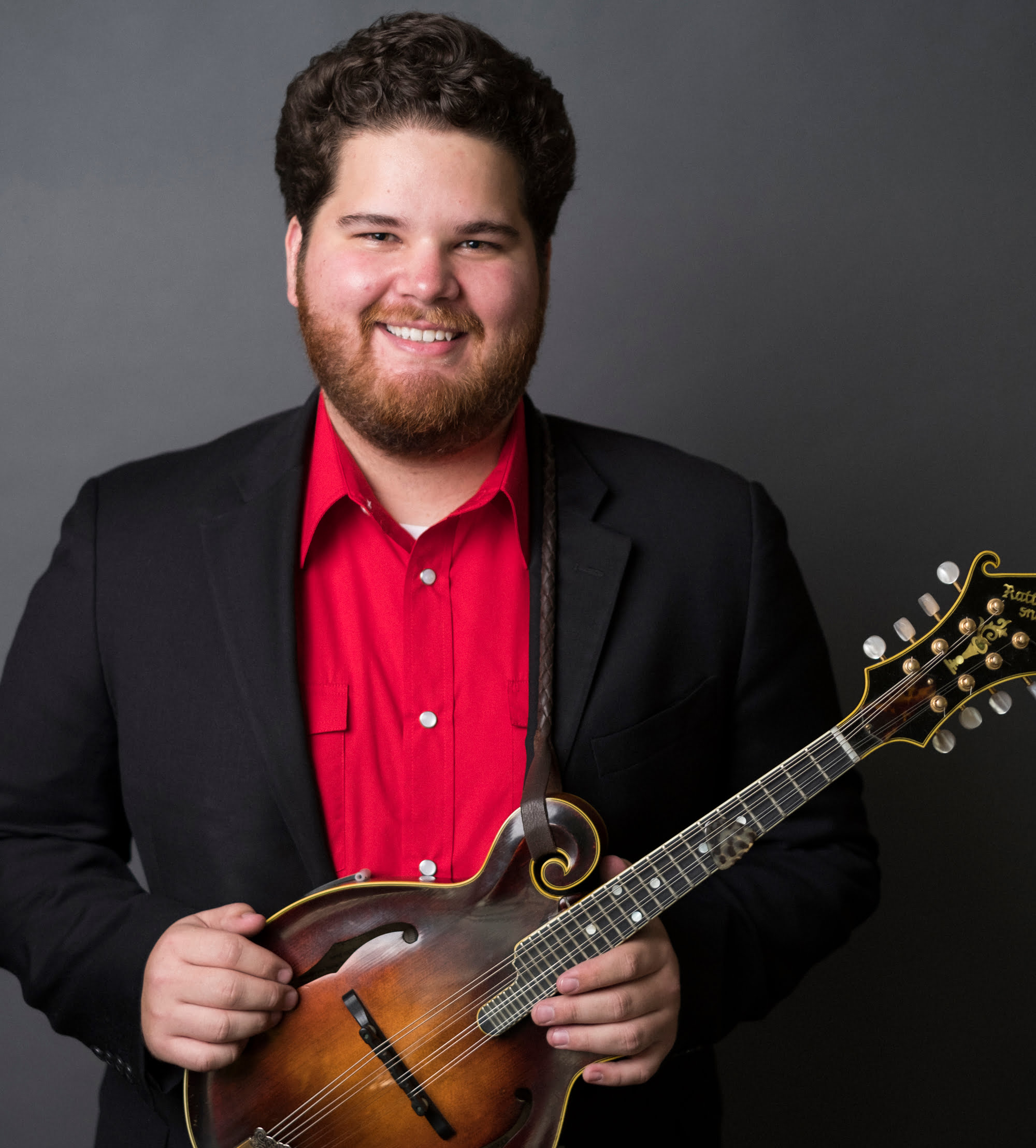
MIXTAPE: Casey Campbell’s Mandolin Masters

With his latest release being Mandolin Duets, Vol. 1, who better than Casey Campbell to put together a Mixtape of mandolin masters for us? No one. That’s who. He has studied them all — and played with many — so take his carefully selected collection to heart (and ear).

Bill Monroe & Doc Watson — “Watson’s Blues”

Where else to begin but with the Father of Bluegrass, Bill Monroe. There are hundreds of recordings to choose from, but I’ve always been a big fan of this duo album of Bill and Doc Watson entitled Live Recordings 1963-1980: Off the Record Volume 2. It features some great duet singing from Bill and Doc, as well as a bevy of short, sweet, and to-the-point instrumentals. I am partial to “Watson’s Blues” not only because this particular recording features the writer (Bill) and the inspiration for the tune (Doc), but also because it is a bluesy little number (and I like my bluegrass to be bluesy).

Ronnie McCoury — “McCoury Blues”

Ahhh … it was the mid-2000s. MySpace was all the rage, and we had yet to discover fidget spinners, stick basses, and Netflix. You know, the good ol’ days. I came across “McCoury Blues” while scouring through Rhapsody (the Spotify before Spotify existed), and, in my opinion, it is a 21st-century take on “Watson’s Blues” with Ronnie’s smooth tremolo and Del McCoury’s powerhouse guitar runs. More importantly, this song led me to the Bluegrass Mandolin Extravaganza album. This project, spearheaded by Ronnie and David Grisman, is a mandolin goldmine including Ronnie, David, Sam Bush, Ricky Skaggs, Buck White, Frank Wakefield, Bobby Osborne, Jesse McReynolds, and Del McCoury on rhythm guitar. Of course, growing up in the bluegrass world, I had heard all of these players before, but this album was my introduction to the concept of musical style and the intricate differences between musicians. Throughout my mandolin obsession, I have continually returned to this album to draw inspiration (read: steal licks). If there is one album I would recommend to any mandolin fan, it would be Bluegrass Mandolin Extravaganza.

Mike Compton & David Long — “Tanyards”

If you haven’t picked up on the pattern yet, I’m a big fan of duet recordings. A large part of that came from this album by mandolin masters Mike Compton and David Long. My mother picked me up from middle school in her silver PT Cruiser — yes, we were that cool — with a copy of this album in the passenger seat. We listened to it on the way home, then I listened to it again, and again, and again. Mike and David have such fluid playing styles, and you would be hard-pressed to find other players that could replicate the chemistry on this album. This track does a great job of showcasing each player and also letting the two intertwine as they swap licks. It is one of my favorite albums of all time.

Ricky Skaggs & Kentucky Thunder — “Crossing the Briney”

Adding a little Irish flair to the list, here is a song that starts out bare and ends with a full-on orchestra with all of the bells and whistles (literally). This song is featured on Ricky Skaggs’s Instrumentals albums and, in my opinion, is the standout hit. I mean, where else can you hear instrumentation like this, AND a kickass Andy Leftwich fiddle solo in the middle? This song also opened my mind to how to take what is essentially a pretty standard Irish fiddle tune and raise it to a new level. Admittedly, Ricky doesn’t really get to stretch out on this tune, so it’s not the best representation of his great mandolin playing. But don’t worry: He is one of the best players mixing modern and traditional styles together, and there are plenty of great examples on this album.

The Whites (Buck White) — “Old Man Baker”

Buck White is a national treasure. Not only is he one of the sweetest humans I’ve ever had the honor of spending time with, but he is also one of the swingin’-est mandolin players you will come across. Whether he is kicking up his heels as a special guest with the Grand Ole Opry Square Dancers or playing mandolin on one of his many iconic albums with the Whites, there is no doubt he has a huge smile on his face and joy in his heart. This tune, written for fiddler Kenny Baker, is one that I often play when I am warming up on the mandolin. It’s a tough tune, for sure, with plenty of pinky work and string-jumping, but it is undoubtedly the most fun song on this list to play. Buck’s playing is just like his personality: bouncy, memorable, and always tasteful. If you are at all interested in hearing some Texas Swing mandolin playing, check out more of his catalog.

Strength in Numbers (Sam Bush) — “Texas Red”

Picking one song from the Strength in Numbers album is like picking a favorite child. People in the music business like to throw around the word “supergroup” for every other band, in hopes that it will create some kind of buzz or increase sales. Strength is one of the few occasions where the term accurately applies: Sam Bush, Béla Fleck, Jerry Douglas, Mark O’Connor, and Edgar Meyer. Between the late ’70s and mid-’80s, each of these trail-blazing musicians had helped to established a new frontier of acoustic music. Here they are, together in their prime, with one of acoustic music’s most influential instrumental albums of all time. PS: This album is Sam Bush Rhythm 101. Class dismissed.

David Grisman & Doc Watson — “Kentucky Waltz”

When I am teaching lessons or at a camp, it is without a doubt that I’ll get asked about mandolin tremolo. What is it? How do I do it? How do I make it better? All of these questions (and more) can be answered with Doc & Dawg’s version of the “Kentucky Waltz.” It is one of the most beautiful, simplest recordings of a mandolin and guitar I have come across. For the uninitiated, David Grisman is an icon in the mandolin and acoustic music worlds, heavily influencing today’s top mandolin players like Sam Bush, Ronnie McCoury, and Ricky Skaggs. With dozens of must-have albums spanning throughout his 50-year career, David led the way to the frontier of “new acoustic music” during the ’70s and ’80s. Even today, at 72, he is still going strong. touring with the David Grisman Bluegrass Experience, the David Grisman Sextet, and as a duo with Del McCoury. Despite all of his ground-breaking compositions and albums, when it comes to keeping it simple and making the most of a melody, David is still the king.

Radim Zenkl — “Memory of Jaroslav Jezek”

I couldn’t consider this list finished without introducing you to something a little outside the box. For his Galactic Mandolin album, Czech Republic mandolinist Radim Zenkl (pronounced Ra-deem Zeen-kl) experimented with different mandolin tunings for each song. Because a mandolin has four sets of strings (eight total), it is normally tuned GG-DD-AA-EE. This particular tune has the mandolin tuned in minor thirds. When I first heard this tune, I felt like it was a crazy of mixture of big band jazz and harp music, or something I might’ve heard on the original Nintendo version of The Legend of Zelda. I’m kind of mesmerized by its weirdness.

Andy Statman — “Pale Ale Hop”

While we are spending some time outside the box, now would be a good time to introduce you to Andy Statman. If there is a musical genre out there, Andy has covered it: bluegrass, jazz, Irish, klezmer, rock ‘n’ roll, etc. “Pale Ale Hop” showcases his rockin’ mandolin playing, transforming into something you might hear at a surf-rock dance party in the ’50s. My favorite thing about Andy is that, for all of his experimental compositions, he is a true student of all music and can play the most traditional bluegrass style you could imagine, then turn around and play a John Coltrane solo. If you’re interested in more of Andy’s left-of-center music, check out his earlier LPs, like Flatbush Waltz or Nashville Morning, New York Nights.

Jethro Burns & Tiny Moore — “Flickin’ My Pick”

Here is a classic album with two of the best jazz and swing mandolin players of the past century. Jethro Burns is known primarily as one half of Homer & Jethro, one of the great country comedy duos of the 1930s-60s. Despite all of his joking around, Jethro was a serious musician, playing anything from classical to bluegrass. On this particular song, he is playing the acoustic mandolin and taking the second solo. The other player you’ll hear is Tiny Moore, a pioneer of the electric mandolin. Tiny played with Bob Wills & His Texas Playboys and Merle Haggard’s band, the Strangers. Together, these two legends recorded Back to Back, which would become one of the definitive albums for jazz mandolin enthusiasts.

Norman Blake — “Valley Head”

Getting back to the roots of old-timey mandolin music, here is a tune written and played by Norman Blake. Although he is known mostly as one of the great bluegrass guitarists, both Norman and his wife Nancy are great mandolin players and have recorded quite a bit of mandolin music over the years. Similar to the “Kentucky Waltz” earlier on this list, the thing I love about Norman’s playing and this track, in particular, is the simplicity. Sure, this tune might have a lot of notes, but Norman sticks to the melody the entire way through, letting the song speak for itself. For those interested in more of Norman and Nancy’s mandolin playing, check out Natasha’s Waltz, an album that features a slew of great mandolin tunes.

Chris Thile — “Watch ‘At Breakdown”

Sometimes you’ve got to give the kids what they want … and they want Chris Thile. Between his work with Nickel Creek, Mike Marshall, the Punch Brothers, Michael Daves, the Goat Rodeo Sessions, Edgar Meyer, Jon Brion, Béla Fleck, and Brad Mehldau, among others, Chris has traversed just about every inch of the musical landscape. As if that weren’t enough, he is now the host of A Prairie Home Companion, collaborating with a new lineup of musical guests every week, including Jack White, Jason Isbell, Lake Street Dive, and more. With such a long and diverse resumé, he has become one of the most popular and influential mandolin players in the realm of Bill Monroe, David Grisman, and Sam Bush. “Watch ‘At Breakdown” is the starting track on Chris’s How to Grow a Band album, and shows off his bluegrass chops, while hinting that there are no bounds to his abilities.

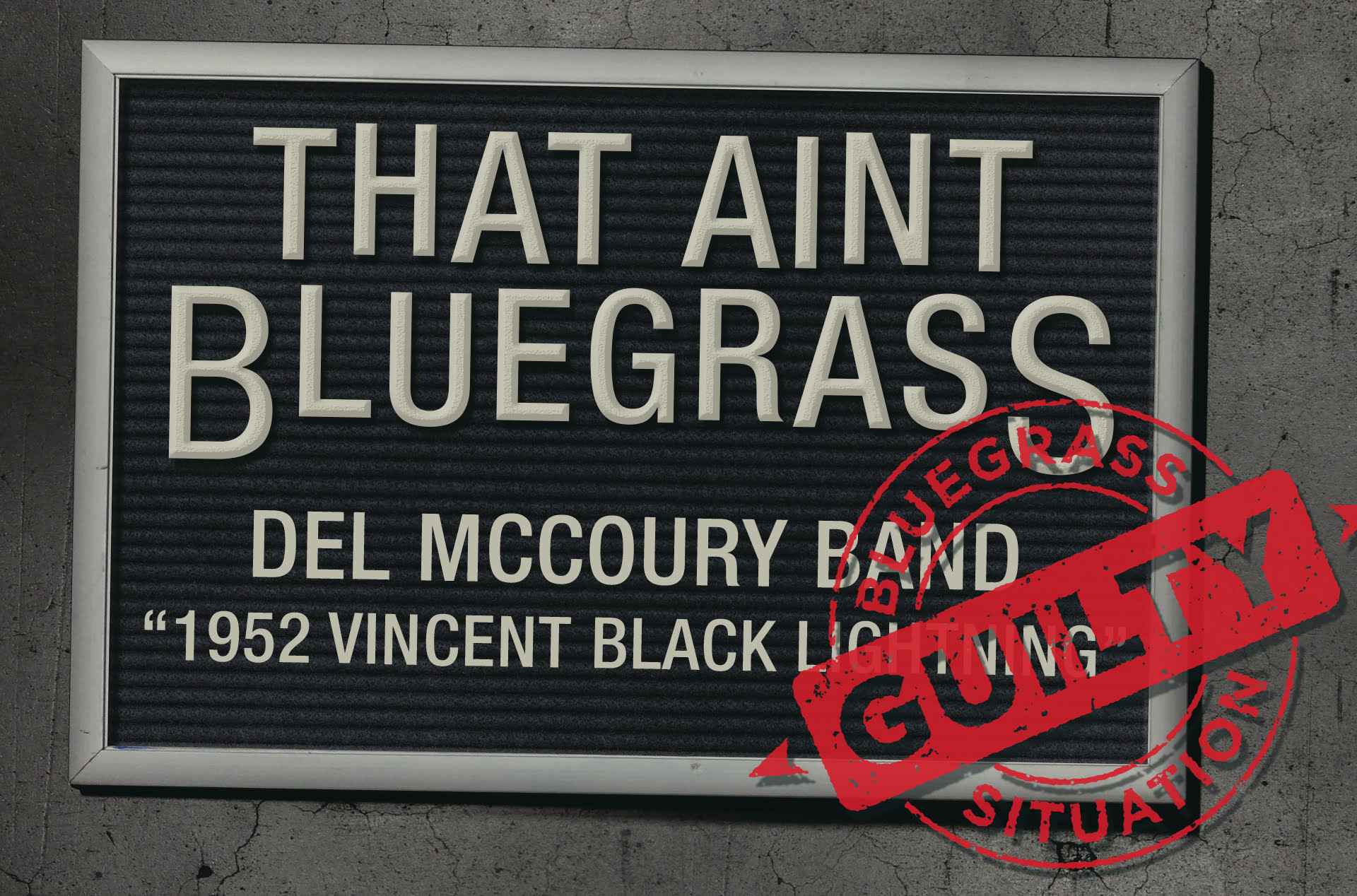
That Ain’t Bluegrass: The Del McCoury Band

Artist: The Del McCoury Band
Song: “1952 Vincent Black Lightning” (originally by Richard Thompson)
Album: Del and the Boys

Where did you first hear “1952 Vincent Black Lightning?”

You know, I never heard it before on the radio, but a friend of ours heard this song on the radio in New York City or somewhere. He called Ronnie and said, “You guys ought to think about recording that song.” Like I said, I had never heard it before. Ronnie played it to me and it’s a great story. That’s what attracted me to the song. It was Richard Thompson — the guy from England — he was just playing acoustic guitar on that and he plays with his fingers instead of a pick. He had his own way of doing it, which is unique, too. But really what attracted me to it was the story. I really liked that story and I thought, “Well, you know what? We’ll see what key we can get it in.” I think he did it in Bb, but C kind of suited me better. And I thought, too, it would be good with banjo to tune it down in C and play it. We ran through it, and I didn’t get the melody exactly like he did it, I don’t think, in some spots. Either that or, since I recorded, it I’ve changed it a little. [Laughs] You kinda do that after recording a song: You’ll change little things now and then. But that’s actually the beginning of it right there.

There’s this tradition in bluegrass music of covering songs from outside of bluegrass — it’s kind of been done even since Bill Monroe and Flatt & Scruggs.

Yeah, that’s right.

Why do you think that bluegrass artists like to cover these kind of pop or folk songs?

I’ll tell you what, with me, there’s something in that song that touches me or attracts me to it. It don’t matter where the song comes from, really. I think that’s what it is with most people that record songs from outside the bluegrass realm, I guess you could say. It’s either the story or a different melody that will hit your ear that you like — it’s really a complicated thing, I think. I know, with me, that’s mainly what it is. I either like the story in the song or the melody that’s a little different somehow.

A lot of people ask me, when I do interviews for people that write magazines or have a radio show or whatever, they’ll say, “When you go to record, what kind of songs are you looking for?” And I say, “Well, I never know what I’m looking for.” [Laughs] ‘Til I hear it, you know? I don’t have a certain thing in mind, when I go to record. People send me songs all the time now and they might send a whole CD of maybe 12, 14 songs. Sometimes you might find one in that bunch. And you never know what’s going to attract you, you know? It’s a funny thing.

What do you think makes this song a good bluegrass song?

I don’t even think about that — about it fitting. [Laughs] If I like the tune or the story, I just don’t think about it. I just think, “I could do that song!” I don’t think about where it came from. I know that once I sing it. I may have suggestions of how to do the instrumental parts, but for the most part, I don’t. I just let those guys come up with what they can with the melody. I figure I like for them to be creative, too, and do what they can with the song. I really don’t think about it that way. I just think, “I’d love to sing that.” [Laughs] See what I can do with it, whatever it is.

Now, you know that ain’t bluegrass, right?

That’s true, yeah! [Laughs] It ain’t bluegrass! I tell ya, Justin, I’ve thought about this a lot: All music is related. Somehow there’s a connection in all music. Pop, rock, rock ‘n’ roll, and whatever! In bluegrass, country, or hillbilly, they’re all connected in some way. People think — I used to think myself — for one thing, “Bill Monroe, he come up with this bluegrass music and he didn’t listen to anybody else.” But he listened to a lot of people! He listened to jazz down there in New Orleans and he used to go down there. He’d spend time down there when he was young, because he liked that music. I didn’t find this out, even when I worked for him I did not know that, but I found this out later. For instance, he grew up listening to Jimmie Rodgers. All those yodel things, he got from Jimmie. That was completely different, that was even different than country. I don’t know what you would class that kind of music as. Later in years, once he come to Nashville, he would cover a lot of songs that the country people were doing in those days.

I like that your perspective on it is, if you like it, if there’s something about the song that you like, that’s all it takes.

Because if you record that song, you may have to sing that song for 10 years or longer! [Laughs] So you better like what you’re doing! I’ll tell ya, Justin, through the years I have recorded songs that I really didn’t like. The producer would bring them. I needed songs, but usually, when that happens, I don’t sing them in public. [Laughs] I found out another thing, too: Sometimes you gotta think about a song that you put on a record that you don’t like, because there’s going to be somebody that they’ll buy the whole record for that one song that you did that you don’t like. I’ve witnessed that, too. Sometimes there will be a lot of people that like that one song you don’t like, so you might have to learn it and sing it!

Bluegrass Underground Takes the Genre to New Depths

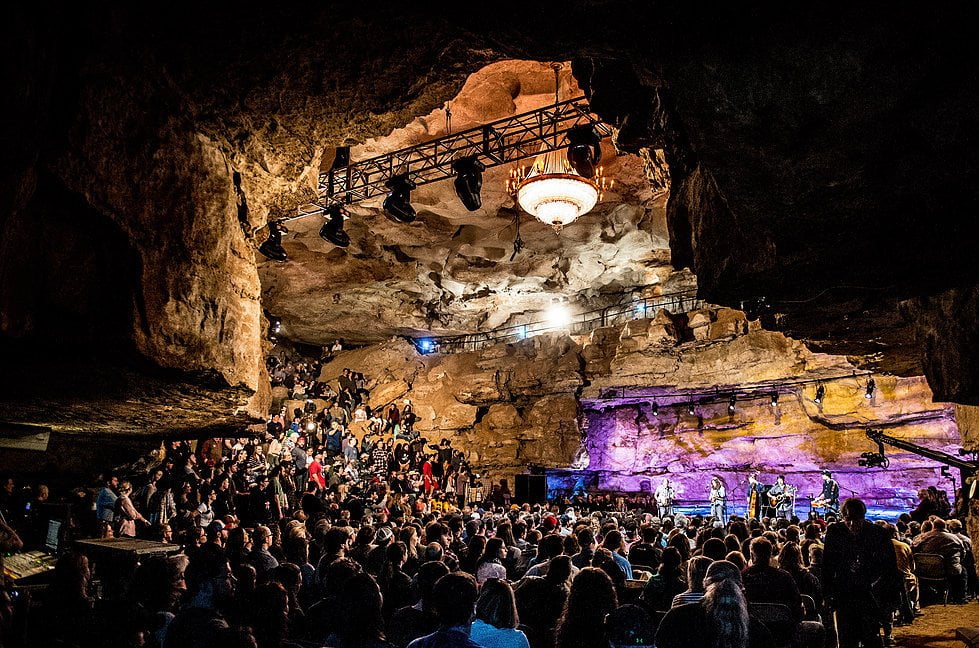
If you’re a fan of bluegrass, PBS, or both, there’s a good chance you’ve seen the Emmy-winning show Bluegrass Underground. The series, which features the biggest voices in roots music performing in an actual cave, has been on the air since 2011, with shows first taking place 333 feet below the earth in McMinville, Tennessee’s Cumberland Caverns in 2008. Since the show’s inception, it’s featured a who’s-who of bluegrass and Americana’s finest artists, including Old Crow Medicine Show, Del McCoury, and Lucinda Williams. 

New episodes for the 2017 season taped over the weekend with three days of shows that featured Conor Oberst, Parker Millsap, Rhonda Vincent, and Marty Stuart, among others. This new season — the series’ seventh on television — is its biggest yet, a lineup that had Larry Nager, who serves as the show’s resident journalist and blogger, as excited as ever to get down to the cave. 

Prior to getting involved with Bluegrass Underground, Nager worked as a journalist, musician, and bluegrass historian. His first brush with the series came in 2008, when he attended one of the very first shows — featuring the likes of Tim O’Brien, Bryan Sutton, and Stuart Duncan — at the behest of Bluegrass Underground founder Todd Mayo. He cites that lineup as inspiring him to join the show’s team, but also is quick to explain that the venue itself played a large role in getting him on board.

And it is quite a sight. After trekking down a dimly lit, winding path flanked by rock formations and crystalline pooled water, visitors descend upon a grand “room” made of rock, at once cozy and breathtaking, lit by a large chandelier that can only be described as prehistoric chic. 

“There are artists who won’t go because they don’t like the idea of being in a cave,” he says. “That, in itself, is interesting. But there’s kind of a magic that happens underground. It takes everybody out of their usual zone. For bluegrass bands or any working band, it’s gig after gig after gig and they all kind of run together, but when they come down there they say, ‘This is one we’re gonna remember.’”

Though Nager has seen countless shows over the years, there are a handful of moments from his time in the cave that rank among his favorite musical memories. One of the most treasured of those memories is his experience seeing the late Dr. Ralph Stanley perform in 2011.

“Ralph did two shows down in the cave,” he says. “To get him in the cave is just a cool thing. He did ‘O Death’ with a pin-spot on his face in the dark cave. That was one of those moments … It was transcendent. That’s definitely one of the moments I’ll remember.”

Nager noted that moments like those are made available to viewers beyond the lucky few hundred in the venue by PBS, an entity threatened by budget proposals by the Trump administration. Without the support of PBS, there likely won’t be a home on television for Bluegrass Underground or similar roots-centric shows like Music City Roots

“There really is a message there, in that PBS, for people who love roots music and love bluegrass … you’re not going to see it anywhere else, not on broadcast television. There’s also an underserved rural population that, the influence of PBS there, is not often stated, but for a lot of places that’s the alternative TV they get. Otherwise, it’s Dancing with the Stars.

“If you’re open to it, the beauty of it, the strangeness of it, the uniqueness of the experience is inspiring. It’s just old-fashioned magic.”

The Essential Del McCoury Playlist

Delano Floyd McCoury was born in York, Pennsylvania in 1939. He began his career in the 1960s playing with the great Bill Monroe and his Blue Grass Boys. At first, McCoury was hired as a banjo player, but eventually graduated to lead vocals and rhythm guitar — a coveted position in the first generation of big time bluegrassers. 

McCoury, who is now 76 years old, is known for his perfectly tailored suits, extravagantly coiffed hair, and high tenor voice. And would you believe that he nearly ended his career after his tenure with Monroe?

It's true — in the '70s, the guitarist took up a few construction and logging jobs (see this vintage photo of McCoury with a pile of wood he chopped for reference) but returned to playing professionally in the 1980s.

Since then, he has become one of the world’s most beloved bluegrass musicians … and rightfully so. He has remained true to the traditions of the genre — from the sartorial splendor of his stage appearance to his repertoire of classics — while creating a new and youthful audience with his family band’s incendiary live performances. 

Drawing from a Spotify-approved list of albums McCoury has cut with his boys (Ronnie and Robbie) as the Del McCoury Band, we offer this excellent playlist of songs that draws from some of their best albums, like The Cold Hard Facts, It’s Just the Night, The Company We Keep, and The Promise Land.


Photo Credit: Michael Verity

Smithsonsian Folkways Brings New Life to Arhoolie Records Catalog

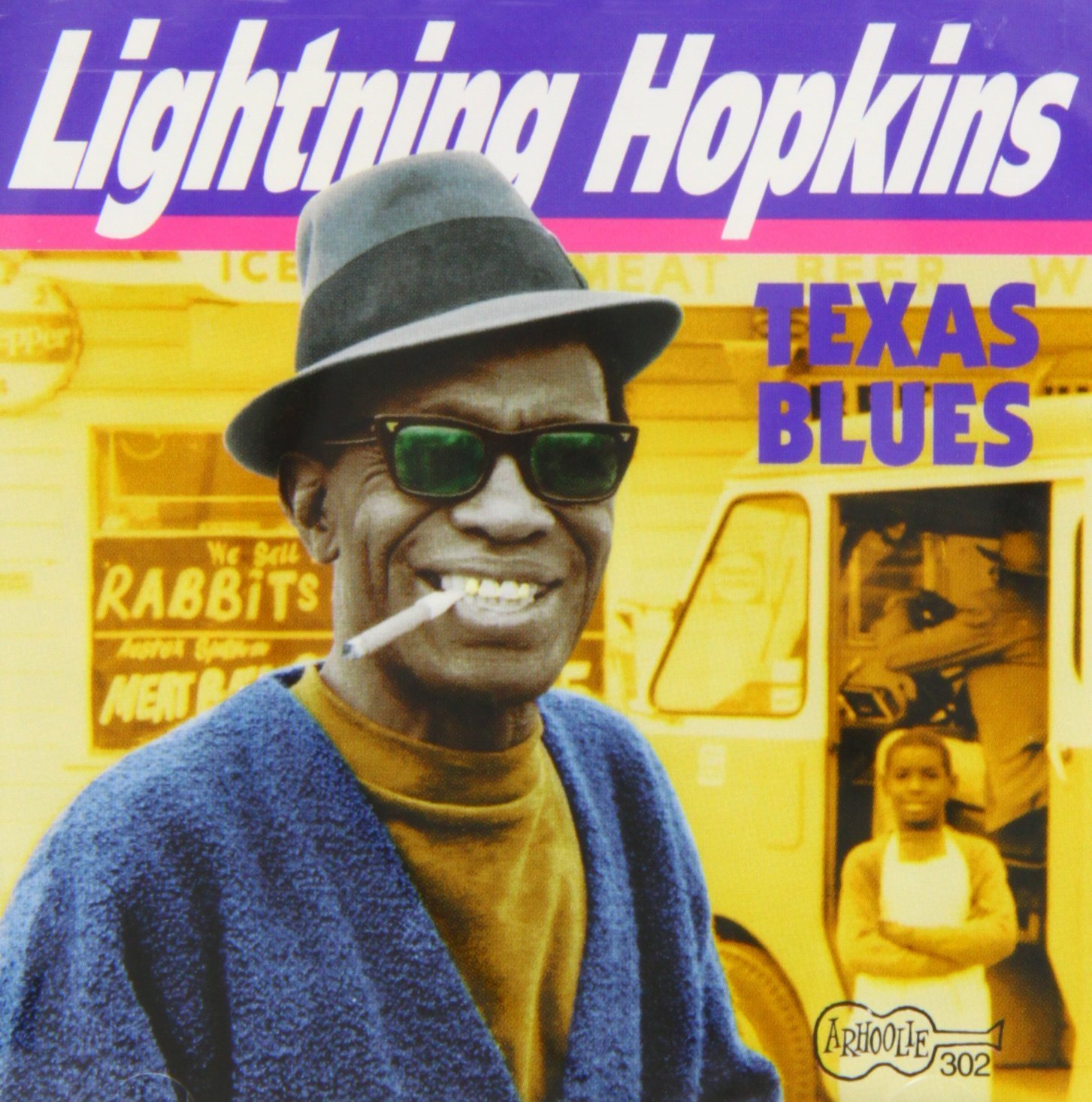
Arhoolie Records is one of the most important labels in roots music history. Founded by Chris Strachwitz in 1960, the El Cerrito, California-based label, which has built a reputation for sharing and preserving traditional American music, was responsible for releases from such roots, blues, bluegrass, and R&B greats as Lightnin' Hopkins, Mance Lipscomb, Mississippi Fred McDowell, Flaco Jiménez, and Del McCoury. In May of 2016, Smithsonian Folkways Recordings acquired the extensive Arhoolie catalog from Strachwitz and and his Arhoolie partner, Tom Diamente, with plans to make the label's 650+ albums available to the public across a variety of media. 

Since its acquitsition of Folkways Records in 1987, the nonprofit record label of the Smithsonian Institution has amassed a vast catalog of diverse music, including collections from the Blue Ridge Institute (music from Ferrum College's collection of recordings made between the 1920s and 1980s), Fast Folk Records (a project of Fast Folk Magazine boasting cuts from Tracy Chapman and Shawn Colvin), Paredon Records (an assortment of songs, spoken word, and poetry recorded at the tail end of the Civil Rights movement of the late 1960s), and the UNESCO Collection of Traditional Music (an impressive collection of out-of-print world music). 

The Arhoolie collection featuring music from more than 1,000 artists launched on October 21 by making a number of the label's catalog album available digitally, on CD, and on limited edition vinyl LPs. A glance at the 395 titles currently available shows a number of rarities, like out of print 7" records from Big Mama Thornton and Hank Williams, as well as CDs and digital downloads from everyone from Freddy Fender to Elizabeth Cotten. The collection also features albums from Peruvian label Discos Smith and regional Mexican labels Ideal, Falcon, and Rio.

Look for more titles from the Arhoolie catalog to be released in coming months. In the meantime, listen to a selection of Smithsonian's Arhoolie titles on Spotify and browse titles available for purchase here