5 Uncommon Trad Instruments Played Like You’ve Never Heard

We’re all familiar with the standard bluegrass five-piece band (also a common lineup in old-time or string band music), but there are quite a few second- and third-string instruments — no pun intended — that are rarely invited to join ensembles of guitar, fiddle, upright bass, mandolin, and banjo. Dobro is perhaps first on this short list, but accordion, dulcimer (hammered and mountain), autoharp, washboard, harmonica and dozens of other music and noisemakers could be encountered alongside these acoustic staples.

The five musicians below are awe-inspiringly adept at their instruments, each considered more like afterthoughts or casual embellishments in American roots music, rarely considered centerpieces themselves. But no matter how uncommon they may be at your local jam circle, or around the fire at the campsite, after you’ve been introduced to each of the following, you’ll be craving more unexpected and uncommon sounds in your bluegrass lineups.

From bones to nyckelharpa to Irish harp, here are five uncommon traditional instruments played like you’ve never heard them before:

Simon Chrisman – Hammered Dulcimer

A familiar, towering figure in the West Coast old-time, folk, and DIY roots music scenes, Simon Chrisman is criminally underappreciated on a national or international level. He most recently released a duo album with acclaimed banjoist Wes Corbett, he has been touring and collaborating with the Jeremy Kittel Band, and he’s performed and recorded with the Bee Eaters, Bruce Molsky, Laurie Lewis, and many others. His hammered dulcimer chops exist on a plane above and beyond even the most accomplished players on the trapezoidal instrument, throwing in pop and bebop-inspired runs, reaching down to bend strings by hand to achieve particular semi-tones, bouncing along at a rate only matched by a three-finger banjo player’s rapid-fire sixteenth notes. It’s jaw-dropping, even in Chrisman’s most simple, tender melodies and compositions. This rollicking number, named for Corbett’s beloved cat, is neither simple nor overtly tender, but your jaw will find the floor nonetheless.


Rowan Corbett – Bones

Rowan Corbett is a singer-songwriter, multi-instrumentalist, and percussionist best known for his time with seminal modern Black string band, the Carolina Chocolate Drops. Also a longtime member of Baltimore-based acoustic-grunge/world-folk group ilyAIMY and a veteran of Celtic outfit Tinsmith, Corbett is something of a musical chameleon, though it never feels as if he’s just putting on genre costumes to match whatever melodic motif suits the moment. Instead he inhabits each one authentically and wholly. ilyAIMY, for being billed as a folk band, are captivating, passionate, and energetic, perhaps most of all while Corbett fronts the group. But all of his musical moxie across all of his instruments pales when he pulls out the bones — traditional, handheld percussion instruments similar to their more mainstream (if not more vilified) counterpart, the spoons.

It’s no wonder a bio for Corbett begins, “What are those and how does he do that?” Corbett’s percussion skills are precise and technical, laser-like accuracy meshed with generation-blurring soul. During a guest appearance with Rhiannon Giddens at the North Carolina Museum of Art in Raleigh, North Carolina, in September 2019, Corbett brought thousands of listeners gathered on the hillside by the amphitheatre to their feet with his bones and just a couple of bars. This improv/battle video with Greg Adams displays just a taste of Corbett’s prowess on the ancient instrument.


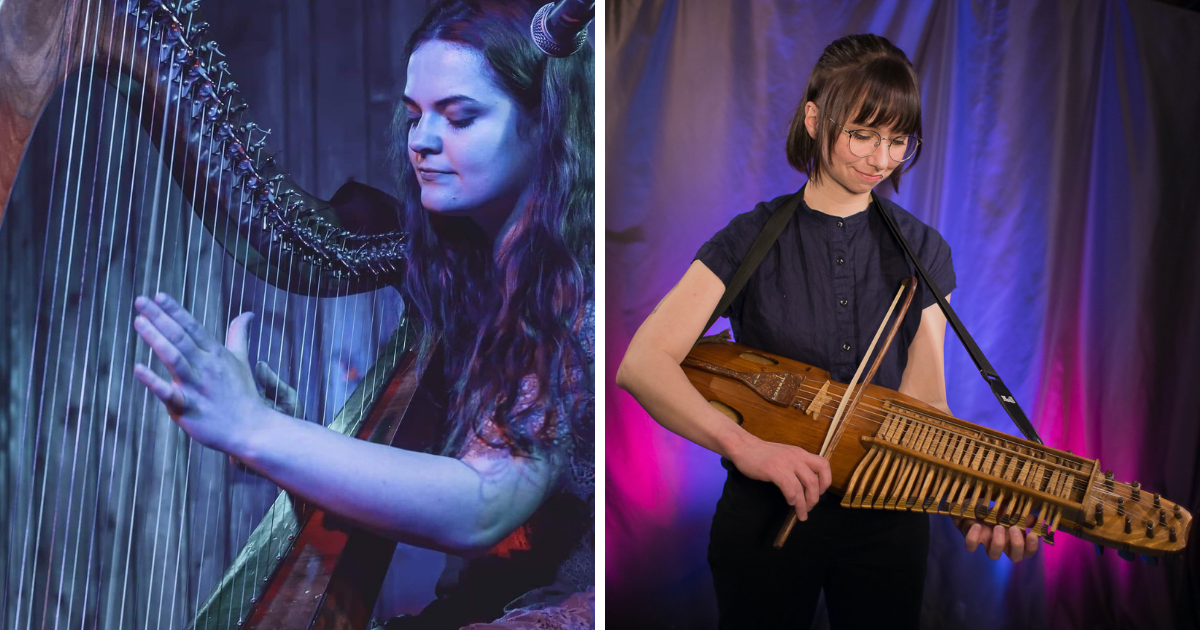
Amy Hakanson – Nyckelharpa

Pandemic aside, if you’ve jammed with an old-time fiddler in the past two years you’ve probably fumbled (if you’re like this writer) or charmingly tripped your way through a Swedish fiddle tune or two. Musicians like Brittany Haas and Molly Tuttle have brought Swedish tunes into their repertoires, birthing dozens of new acolytes of the crooked, wonky, joyful tunes. Many an American fan of Swedish folk traditions were introduced to them by Väsen, a genre-blending, nearly 30-year-old Swedish folk band adored by multiple generations of American musicians, thanks to their status as a favorite band of everyone’s favorite pickers. (Väsen counts Chris Thile, Mike Marshall, Darol Anger, and others among their most vocal proponents and collaborators.)

Nyckelharpa player and scholar Amy Hakanson was first introduced to the instrument by Väsen as well and in 2014 she took her fascination with the heady, engaging music to the source, to study nyckelharpa with Väsen’s Olov Johansson himself at the Eric Sahlström Institute in Tobo, Sweden. Her approach to the instrument — a traditional Swedish, bowed fiddle-like apparatus played with keys — has a storied, timeless air, even as she carefully places the nyckelharpa in modern contexts. This original, “Spiralpolska,” for instance, utilizes a loop machine, ancient droning and modern droning combined.


Sarah Kate Morgan – Mountain Dulcimer

The mountain dulcimer is simple and beautiful in its most common use, a gentle, pedalling rhythm section for languid, introspective folk tunes. Counterintuitively much more common in the hallways and hotel rooms of Folk Alliance International’s conference than IBMA’s or SPGBMA’s gatherings, this writer first encountered Kentuckian Sarah Kate Morgan and her melodic-style dulcimer among the many booths of IBMA’s World of Bluegrass exhibit hall. She was holding her own in an impromptu fiddle jam with mandolins, fiddles, banjos — all instruments much more familiar with picking intricate, free flowing hornpipes and hoedowns. But Morgan doesn’t just strum the dulcimer, capitalizing on its resonant sustain and open tuning, she shreds it. Playing a finely-tuned, impeccably intonated instrument with a radiused fretboard, she courageously and daringly dialogues with whomever accompanies her down every bluegrass and old-time rabbit hole she meets. It’s incredible to watch, not only with the understanding that most mountain dulcimers are treated as an aesthetic afterthought, but also knowing that Morgan’s prowess outpaces just about anybody on any instrument. A truly transcendent musician.


Alannah Thornburgh – Harp

Harp keeps coming up lately! And for good reason. No matter the genre label applied, harp is having a moment. We’ve kept up with Alannah Thornburgh for a few years, featuring her work with Alfi as well as across-the-pond collaborations like this one, with mandolinist (and BGS contributor) Tristan Scroggins. Living in Dublin, Thornburgh plays in the Irish harp tradition, but has toured and traveled extensively in the United States, giving her style a distinctly old-time and fiddle-tune-influenced approach. She takes on the complicated, contextual vocabularies of American old-time music with ease, almost leading listeners to believe that emulating the banjo or mandolin or executing new acoustic compositions or modern reharmonizations of old-time classics is what the harp was designed to do.

An Instagram video of Thornburgh displays a mischievous, winking arrangement of Béla Fleck’s “The over Grown Waltz,” from one of his masterworks, The Bluegrass Sessions: Tales from the Acoustic Planet, Vol. 2. An earworm of a tune well-worn and familiar to any acoustic music fan Generation X and younger, it’s not uncommonly called at some jams, but its hummable melody is secretly, deceptively, subversively complicated. Once again, Thornburgh simply smiles and pushes onward, as if reaching and pulling these intricate licks and banjo phrases seemingly out of thin air on a harp were as everyday an activity as brushing one’s teeth — or a wedding performance of Pachelbel’s Canon in D.


View this post on Instagram


A post shared by Alannah (@alannahthornburgh) on


Photo credit: Alannah Thornburgh (left) by Tara McAuley; Amy Hakanson by Amy Hakanson.
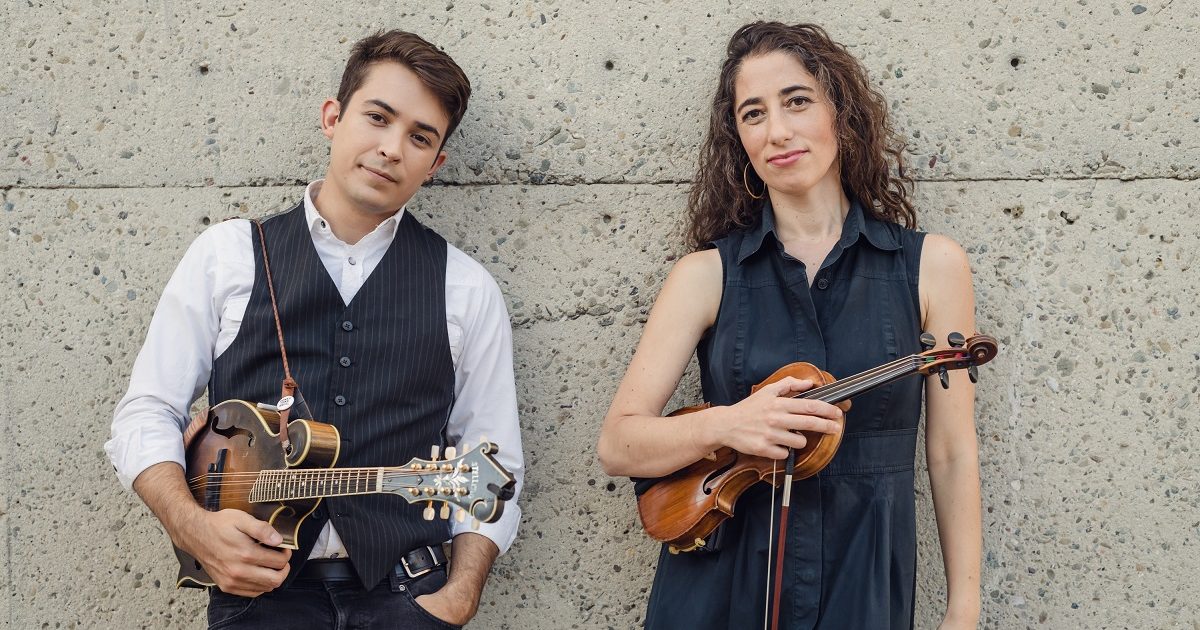
BGS 5+5: Scroggins & Rose

Artist: Scroggins & Rose
Hometown: Oakland, California
Latest Album: Curios
Release Date: June 26, 2020
Personal nicknames (or rejected band names): We’re not really the nickname types. haha I think for a while we thought of calling ourselves Spiral or something like that, but we landed on Scroggins & Rose pretty quickly.

What other art forms — literature, film, dance, painting, etc. — inform your music?

Alisa Rose: I believe any art that I experience influences what I create. I love the floaty mysticism of Chagall’s paintings, the elegant structure in Martha Graham’s dances, the lyricism of Morrison’s books, and the beautiful details of Proulx’s stories. I hope a bit of all of these seep into what I create.

Tristan Scroggins: I’ve always loved paintings and have been inspired by how they can convey so much meaning and emotion through things other than the picture itself. The brush strokes and colors and style all tell their own story without necessarily being the center of attention and I try to incorporate that idea into my playing as much as I can. With composition I/we draw inspiration from a lot of different sources. One of my favorite writing games we did while writing the tunes on this album was listening to an album of tongue twisters and trying to write tunes based on the rhythm of certain ones.

What was the first moment that you knew you wanted to be a musician?

AR: When I was 6, I read a story about Paganini and how he played the violin so beautifully that he made people cry. I was really struck by the power of music, and from then on I thought I would like to be a violinist.

TS: I grew up listening to my dad play the banjo but it had never crossed my mind to play music until I was 8 years old. I was watching my dad perform and was overcome with a sense of pride and I asked him to teach me to play. It was never a conscious decision after that to be a musician. I always just assumed that I was going to do that.

What rituals do you have, either in the studio or before a show?

AR: Before a big show I like to have a few hours of relaxed practice with some slow work on intonation, basics, and the pieces I’m going to perform. I also try to eat well (I like lots of protein before a performance) and go on a walk or a run in nature if possible. With Scroggins & Rose performances it’s important for us to improvise and warm up together as well to make sure we are both attuned to each other and able to connect well on stage.

TS: For a long time I would do confidence exercises/meditations. I’m pretty shy in everyday life so I had to consciously embody the persona of someone who wanted to be the center of attention. For Scroggins & Rose shows we usually warm up together and will do some improvisation games so that we can get in the mindset of reading body language and musical cues on stage.

Which elements of nature do you spend the most time with and how do those impact your work?

AR: I spend as much time as I can walking through redwoods and exploring the rocky dramatic Californian coastline near my home in the Bay Area. For me, music is deeply associated with my experiences in the natural world and many of my tunes are inspired by the feeling of specific places I’ve been to. For instance, “Wisconsin Wayside” is about driving through beautiful green rolling hills and cornfields on winding country roads in Dane County where I grew up. I also spend a lot of time thinking about melodies I’m working on while I hike; the melodies often find their own path while I’m walking on one.

TS: I spend a lot of time looking at nature but not really being a part of it. I’ve gotten to see lots of really beautiful things but usually through a car windshield. Those sceneries and landscapes are often used as inspiration for textures and moods in composition (such as the “wide-open” feeling of tunes like “the French Cowboy” or “Wyoming”). I also find myself writing about birds a lot. I wouldn’t call myself a “bird watcher,” but I do spend a lot of time watching birds and I have written a number of tunes about birds.

How often do you hide behind a character in a song or use “you” when it’s actually “me”?

AR: Although the music I write has no words, to me the tunes are often about a character or story that is not my own. I feel music is a powerful way for people to connect to each other around the shared experience of listening, even if what each of us hears is unique. To perform a tune, like an actor, I find I need to experience the story and emotions as my own, even if they were not originally conceived that way.

TS: I think this is a really interesting question as someone who mostly writes instrumental music, because I think the answer is “always.” Or at least almost always. Whenever I write a tune about a personal event or feeling I don’t feel the need for any restraint because, ultimately, people are going to interpret the tune in their own way. That’s the nature of instrumental music. It’s like a magic trick where the interesting part of the performance is only happening in the viewer’s mind. Of course I can lead the audience’s interpretation by telling them what I wrote it about before it’s played, but even then what each note means to me will be different from what it means to them.


Photo credit: Lenny Gonzales

Julian Pinelli, “Simple Mountains”

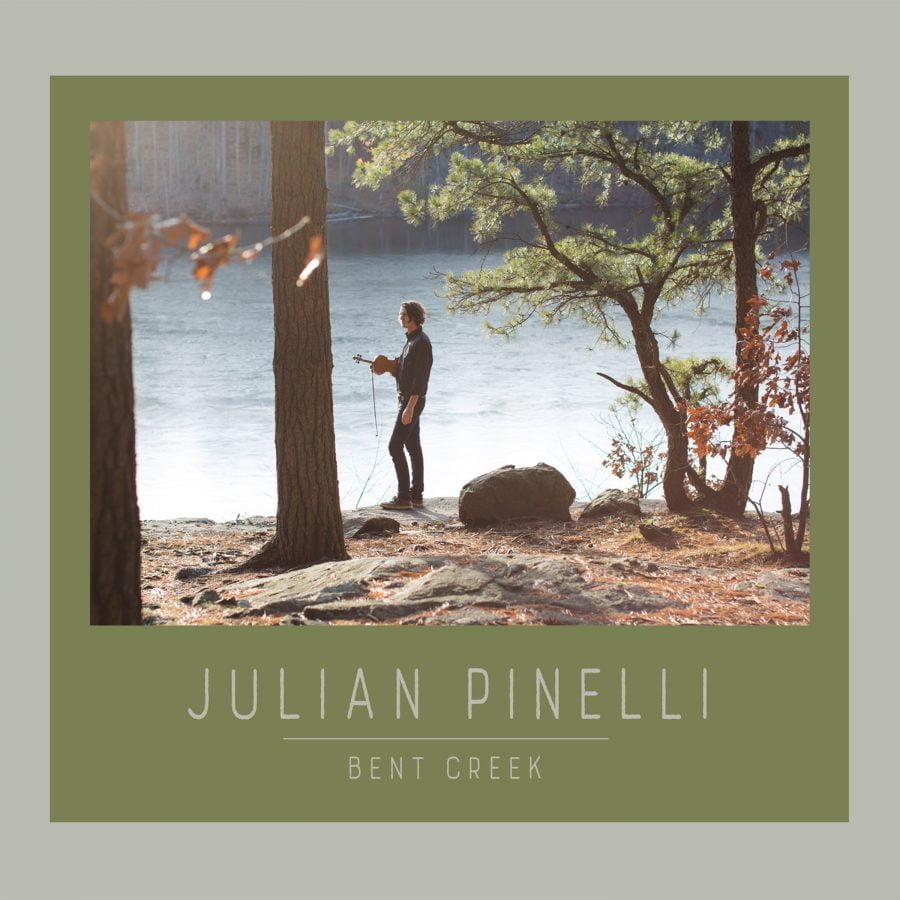
There’s an almost intangible subversion to fiddler Julian Pinelli’s debut album, Bent Creek, and an original tune included therein, “Simple Mountains.” The track begins with fiddle and banjo, but not in their age-old, familiar capacities. There’s a lyrical, pop-like sensibility to their duetted intro, painting a dreamy soundscape, a background for what’s to follow. The tightly-knit, free-flowing, jaunty tune calls back to the Appalachian Mountains from which Pinelli hails, but with the modern, neat, and tidy crispness of the string band scene of Boston, where he attended Berklee College of Music.

Though Pinelli and his band, Matthew Davis (banjo), Tristan Scroggins (mandolin), Sam Leslie (guitar), and Dan Klingsberg (bass), were well acquainted before the project, they were assembled expressly for these recordings, under the direction of the ever ethereal roots/folk savant Aoife O’Donovan. The group, especially on “Simple Mountains,” sounds impossibly in step with one another, tight and ever-listening. Their musicality and the authentic purity of the instruments — you’ll hear unexpected G-runs, an unyielding mando chop, and stunning double-stops — coupled with their impressive commitment to innovative, untrod musical ground elevates the entire set of songs above simple “vanity album” status. This is not a gratuitous, self-serving shredfest. It’s a surprisingly mature, impressively realized record that not only showcases exactly how the future of bluegrass-based, new acoustic-tinged music will play out, it shines a spotlight on a few of the exact pickers who will make that future happen. Hopefully not without a lightly subversive touch here and there.

Tristan Scroggins, “Chinquapin Hunting”

Mandolin has long been the keystone on which bluegrass is built — and it’s not simply because Bill Monroe, the undisputed Father of Bluegrass, played the instrument. Its backbeat chop, set against the boom-thump of the upright bass, isn’t just the backbeat, it’s the backbone of the music — setting the pace, driving the songs forward, and/or gently setting them down in the pocket. Of course, with its multiple hundreds of years of history, the mandolin is easily one of the most innovative instruments in the bluegrass lineup, equally comfortable in traditional bluegrass situations as those jazzy, classical, western swing, and world music genres that also lay claim to the instrument.

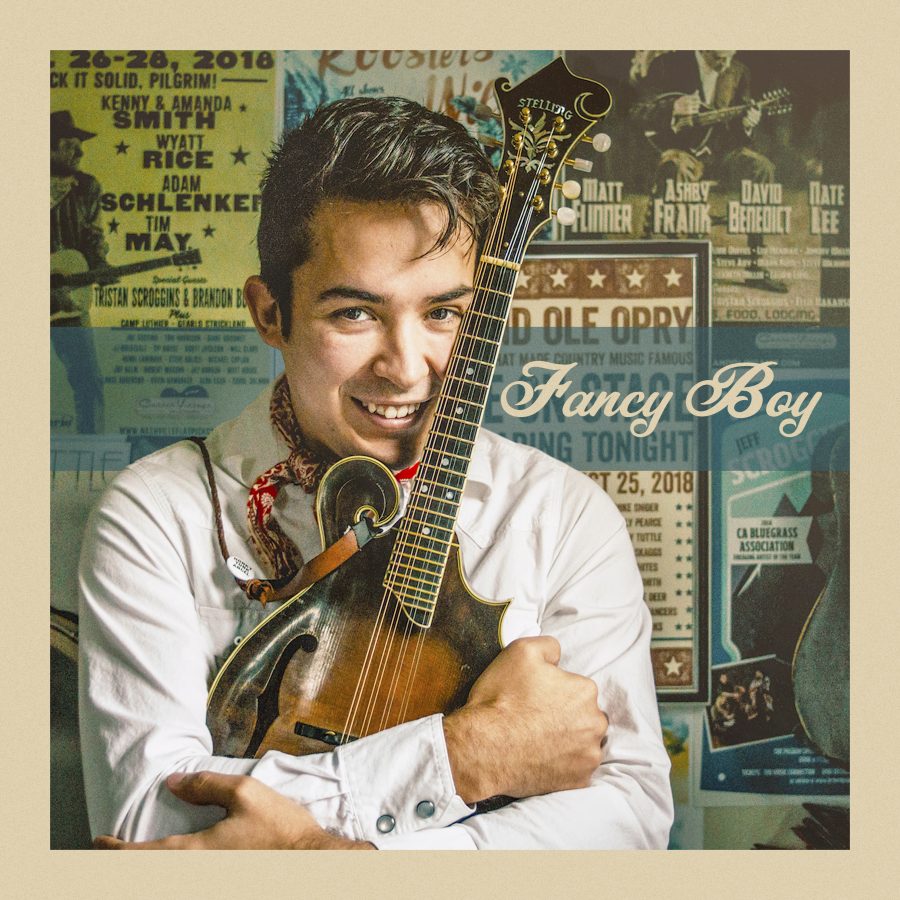
In bluegrass, invention on mandolin takes many forms, but one of these has become a pillar unto itself in bluegrass mandolin pedagogy: crosspicking. Pioneered by Grand Ole Opry member and Bluegrass Hall of Famer Jesse McReynolds (among others), crosspicking is a counterintuitive right hand approach that gives the mandolin a lilting, bouncy, arpeggiated, melodic feel that’s all at once astounding and — when done right — seamless. On his brand new EP, Fancy Boy, IBMA Momentum Award winner Tristan Scroggins pays tribute to crosspicking on five quintessential tunes, one of which is “Chinquapin Hunting.” The hours upon hours Scroggins has devoted to the technique show, as he carefully and deliberately teases crosspicking melodies out of each of these tunes — no matter how difficult that task may be.

It’s refreshing to hear the eight-stringed stalwart of the genre played so thoughtfully and intentionally, without simply being a mashed out, toneless chopping speed demon. Not that crosspicking can’t be accomplished also at a foot-stomping clip — Scroggins shows this method’s expansive depth and breadth with aplomb.

Jeff Scroggins & Colorado: Over the Line and Across the Divides

Bluegrass is barely older than rock and roll, but it’s a lot smaller. The problems that small size can engender are obvious, but there’s also a bright side, where a fan seeking to understand how the music has grown can more quickly see musical lineages, trends, and tendencies — for the same reason it’s easier to see the trees in a sparser forest. Even today, the influences of most artists are pretty easy to trace, no matter how creatively they’re built upon.

So it is with Jeff Scroggins & Colorado, whose new release, Over The Line, offers a delicious update of one long-running bluegrass strand. Produced by the band’s occasional bass player, Mark Schatz, Over The Line’s folk-leaning material gets a treatment that isn’t afraid to invite comparisons with the sounds of the Country Gentlemen, a group that navigated its way through the bluegrass and folk revival scenes of the late ‘50s and ‘60s (and beyond) so successfully that they were inducted into the Bluegrass Music Hall of Fame years ago.

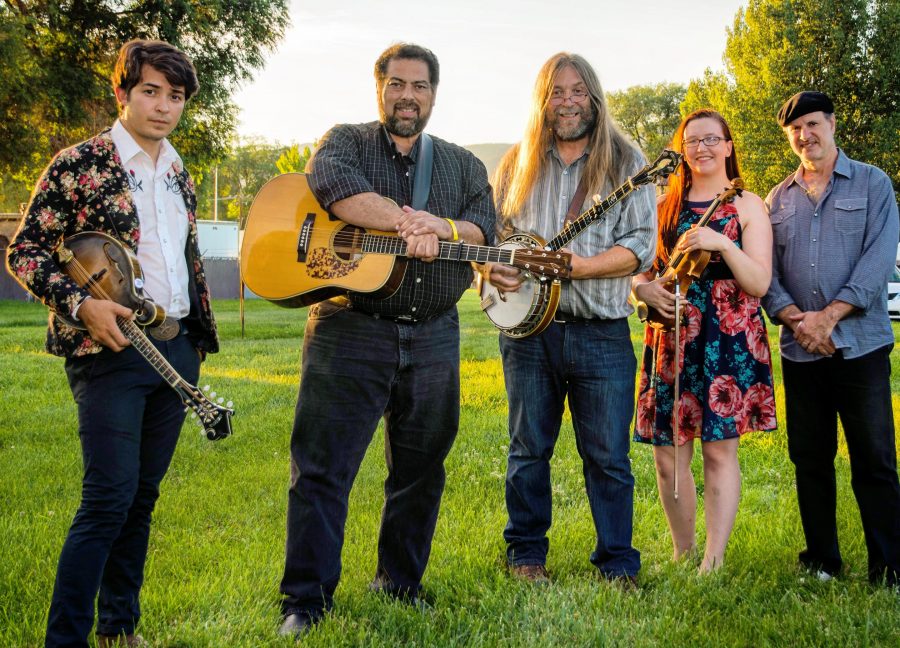
Even so, the pronounced individuality and musicianship of banjo man Scroggins and each of his band members (Greg Blake, guitar; Ellie Hakanson, fiddle; Tristan Scroggins, mandolin) ensures that the sound is fresh and unique — and it’s that sort of double vision, where you can see at one glance how these artists relate to those who came before and what new, distinctive things they’re bringing, that is one of bluegrass music’s most endearing characteristics. In that respect alone, the album is a triumph.

Another consequence of bluegrass’s small scale is the persistence of geographical variety. I’m not talking about bogus efforts to claim that only those from a certain area have the capacity to play “real” bluegrass, but rather about variations that range from the attitudinal to the climatic to the economic, all of which combine to make the experience of bluegrass surprisingly different from one part of the country to another — most broadly, from east of the Great Plains to the Front Range and points west.

Whether for cultural, economic or musical reasons, there are plenty of bands that stay on their own side of the divide, so although he’s been a staple of the western scene for a long time, Jeff Scroggins’ name is just now starting to ring in the ears of the rest of the country. With that in mind, gathering a little background seemed like a good way to start our conversation.

I suspect that for a fair number of readers, this is probably the first time that they’ve heard much about you and the band, so let me jump back to the beginning — you’re a westerner by birth?

I was born in Oklahoma, I suppose that’s pretty far west.

It is from the Nashville perspective! How did you come across bluegrass music?

Probably the first time I heard it was when my parents would take me on little vacations in the Ozarks; I didn’t know anything about it, but I always liked it. And then, when I was 20, I bought a banjo at a garage sale. I was playing heavy metal music at the time — but six months later, I liked it so much I sold my Les Paul and my Marshall amp and bought a better banjo. So that kind of ended my rock and roll career.

So how’d you learn to play?

The guy who had always been my music store guy, he was a bluegrass guy. So when I brought the banjo in, he kind of fixed it up a little, and he sold me the Earl Scruggs instructional book and record, and he sold me a Peter Wernick book and a Tony Trischka book, and I went home and started figuring it out. Then a couple of years later, I ran into Alan Munde, who was teaching lessons in a music store in Norman, Oklahoma, which was about 20 minutes from where I lived. That was my real first serious connection to bluegrass, seeing him do it correctly.

I started playing in some local bands, around where I grew up, and I ended up moving to Irving, Texas, to be in a band — which was short-lived. But I moved into the Dallas area, and it was an amazing scene for a short time there. There were a lot of people who were really good who were all there at once; I was seeing people like Brad Davis and Greg Davis, Scott Vestal — in fact, I replaced Scott Vestal in a little family band. And that was sort of my learning, going there and being around a lot of people who did that; I was learning it all as I went.

And you’re a contest winner, too, right?

I grew up in Oklahoma, but it wasn’t that far to Winfield, Kansas. I started going to the big festival there, and decided I wanted to win that banjo contest — and I did, and won a bunch more along the way.

Talk about the difference between what you think about and focus on when you’re playing contests, and what you think about and focus on when you’re playing in a band.

Well, it certainly is different. For me, I watched the contest, and I tried to figure out what I needed to do to win the contest. I think the most important thing is to be a good Scruggs style player, because if you’re not doing that, I don’t think the rest of it is going to help you much in a contest, honestly. So I really focused on that, and I also tried to get the melodic and single-string; I specifically started getting the single-string stuff because people who were winning contests were doing that.

But yeah, I think when you’re doing contests…I was recording everything every few days and listening to it, and just trying to really perfect these tunes. And it ends up being reasonable training for doing the other thing, but it is certainly different. I felt like I developed the techniques I was going to need to play bluegrass, but I didn’t really know how to do that.

People who have played a lot of contests have told me that there, it’s all about you and not much else, but in a band, you’re playing backup. You learn that the space you make for other people is at least as important as what you’re doing — that it’s a real mental adjustment to not be the center of attention.

I found for myself that I didn’t really want to be the center of attention. I was pretty shy. And to this day, if people compliment me on my backup playing, it’s sort of the thing that makes me the happiest. Because I figured out a long time ago, that’s what you’re going to be doing 90 percent of the time. So I decided that if I was going to do it 90 percent of the time, I was going to try to get really good at it. And obviously that really is one of the main differences, is learning how to work without the ball, as they say in sports.

I think I first saw your name with the Blue Canyon Boys. Was that the last thing you did before you got Colorado started?

It was. I was getting divorced, and coming to Colorado, and I was looking for some sort of musical thing to do. That was the thing that fell in my lap. I had known the bass player for a long time — in fact, he went back to my Texas days — so it was based on friendship. I didn’t necessarily feel that it was an awesome fit for me, but they were looking for a banjo player and I was looking for a band, and so I did it for a few years. And by then, Tristan — he was 14 at the time — was becoming pretty amazing, so we decided to start a band.

Who else did you have in the band?

Greg Blake, Tristan and I were the founding core. And then we had Annie Savage playing fiddle, and a guy playing bass who had a business, and he was the first one to bail when it started to get busy. It’s funny, we’ve had one banjo player; one guitar player; one mandolin player; three fiddle players and 37 bass players.

How did you meet Greg?

I met him in 2011, at a mutual friend’s wedding where he was doing the music. The reception was a bluegrass jam, and we jammed for seven hours until they threw us out of the place. Sort of played every song we knew. At the end of the night, I said, “I’m starting a band, and I think you should join it.”

So you’ve been working pretty hard since then, putting four albums out.

I had written out a business plan, and written goals five years before this, when I first decided I was going to get serious about this. I had a very specific idea of what I wanted to accomplish, and so when I asked people to join the band, I just handed them these pages and said, “Read this, and if it seems like something you’d like to do, then join this band.” But I was out of work and looking for a way to make a living. I had applied for a million jobs, and none of them came through, and I took that as a sign from somewhere that I was going to do this. So when we started, I started out immediately trying to make it pretty serious, and within a couple of years we were working full-time.

When I was younger, I hadn’t been very smart about it; I’d never thought about doing that sort of thing, so I never tried to make a lot of connections with promoters. But over the few years that I was playing with the Blue Canyon Boys, I made connections and kept them. I also had a lot of older connections, too. When I had been younger, I’d been in a lot of bands, but I’d never called in all the favors I’d had, because I figured that at some point I was going to have a project that I was going to pull out all the stops on. So I called everything in all at once, and that got us working really fast.


Photo credit: Clyde Clevenger

WATCH: Befangled Night Bird, ‘Booth Shot Lincoln’

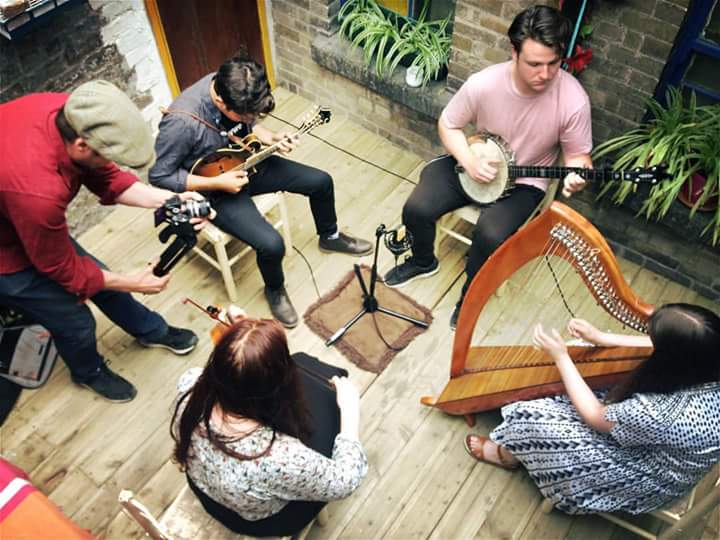
Artist: Tristan Scroggins, Ellie Hakanson, Allanah Thornburgh, and Ryan McAuley (aka Befangled Night Bird)
Hometown: Maynooth, County Kildare, Ireland
Song: “Booth Shot Lincoln”

In Their Words: “My favorite thing about touring in Ireland is getting to visit and play music with Alannah and Ryan and a collection of other incredible, young Irish musicians who we inexplicably met through Lauren Varian, the director of this video. It was really special to get to capture this kind of behind-the-scenes, cross-genre interaction, especially at a place like the Back Loft with a videographer as talented as Myles O’Reiley.” — Tristan Scroggins


Photo credit: Lauren Varian

LISTEN: Scroggins & Rose, ‘Eagle’s Nest’

Artist: Scroggins & Rose
Hometown: Denver, CO / San Francisco, CA
Song: “Eagle’s Nest”
Album: GRANA
Release Date: May 23, 2017

In Their Words: “This was one of the first tunes that Alisa and I worked up as a duo. I had written this long before we started playing together and had a full band in mind for it. After playing it a few times and feeling how easy it was for us to play textures over each other’s interpretations, I knew we’d have no problem filling up the same space, sonically, even without a whole band.” — Tristan Scroggins