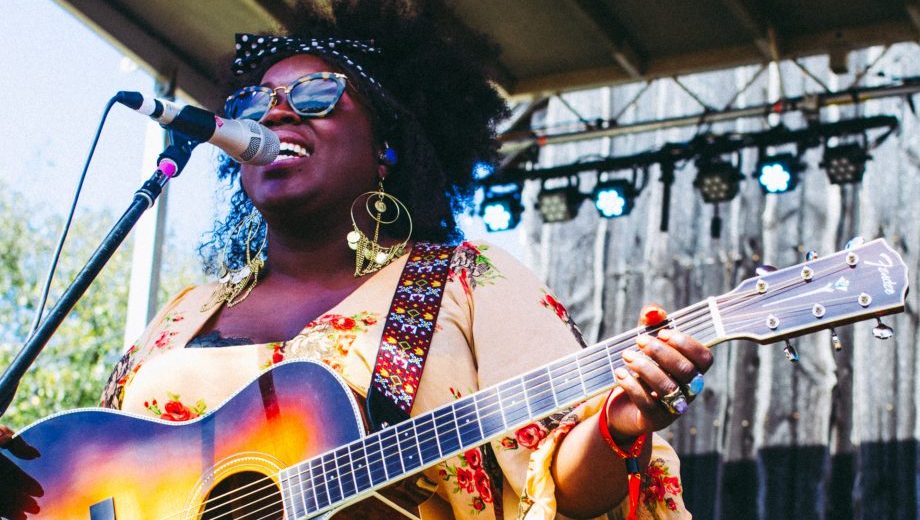
BGS WRAPS: Liz Vice, “Refugee King”

Artist: Liz Vice
Song: “Refugee King”

In Their Words: “I don’t write very often. Songwriting often feels like a miracle and when I’m in a space to write there is an hour of wrestling myself to just chill, surrender, and let the music come to me.

“‘Refugee King’ was written during a songwriting retreat at Calvin College in Grand Rapids, Michigan. Five of us were put into a group together. We could either write an original song or rewrite a well-known carol. We decided to rewrite ‘Away in a Manger.’ One thought that came to mind was, ‘How does a crying baby change this whole image we tend to celebrate around Christmas?’ The arrival of Jesus wasn’t pretty and a lot of babies died during this time.

“The story of Christmas is less about gifts under a tree, but about Jesus coming to this hot mess of a world to invite us to indulge in what heaven has to offer on earth (now).

“I thought about this song often and as time went on, I knew the song was begging to be released to reach the people it was supposed to reach. I didn’t release the song to be a voice for anything other than the story of Jesus. Humans just tend to repeat history.

“I first performed the song when I opened for the Blind Boys of Alabama. While we waited to hit the stage, the band that I had hired sat in the lobby. To kill a little time, I decided to record a live take. After that short tour, while visiting family in Portland, I reached out to some people I knew and recorded the song. It was a pretty quick turnaround. I knew what I wanted and I wanted it to be simple and that’s how I produced it. Vocals, guitar, cello, and had my friend in Virginia, Orlando Palmer, add some of his sweet piano playing on it. Had my friend Danny mix and a woman who did the mastering for my vinyl master this track.

“Turned out great and I’m hoping that this song just causes people to pause and re-evaluate the real story of the birth of Jesus.” — Liz Vice

BGS Top Songs of 2019

Here at The Bluegrass Situation, we’re always eager to hear a new song. This year it’s likely that thousands of them drifted by, each with their own charms. Yet, rather than ranking our favorites, we decided simply to pick tunes that reached out and grabbed our attention in 2019 — listed here in alphabetical order. Take a look.

Brad Armstrong, “Carry Your Head High”

Formerly of the great Alabama art-folk outfit 13ghosts and more recently a member of the impossible-to-kill Dexateens, this Birmingham singer-songwriter has in the last few years emerged as a solo artist who can bend old musical forms into brand new shapes. “Carry Your Head High,” off his second album, I Got No Place Remembers Me, may be his most stunning composition yet, a churchly acoustic hymn of self-reckoning and survival that builds to a weird, intensely ecstatic climax. It’s the sound of a man shaking loose every last burden. – Stephen Deusner


Bedouine, “Echo Park”

Carrying on a long legacy of Eastside LA troubadours, Bedouine’s standout track from her brilliant sophomore album captures the essence of lackadaisical days in the Southern California sunshine by Echo Park Lake. On repeat all year long. – Amy Reitnouer Jacobs


Dale Ann Bradley, “The Hard Way Every Time”

An exquisite singer, Dale Ann Bradley has put her stamp on countless cover songs, but there’s something special about the way she interprets this 1973 gem written and recorded by Jim Croce. More than just singing it, she inhabits it. The poignant lyrics allude to lessons learned and dreams broken, but also the insistence that the narrator wouldn’t have done it any other way. Through Dale Ann’s perspective, it’s presented as a blend of nostalgia and fortitude, delivered by one of bluegrass’ most believable vocalists. Musical support from Tina Adair, Tim Dishman, Jody King, and Scott Vestal round out the good vibes. – Craig Shelburne


Tyler Childers, “All Your’n”

It was a banner year for Tyler Childers, whose seemingly endless run of sold-out tour dates gave way to a staggering sophomore album, Country Squire, that took his snarly Appalachian drawl and quick-witted lyrics to the top of the Americana charts (and to college football fans everywhere). From the sweeping piano at the outset to the final wail of affection, “All Your’n” elevates van-tour vernacular to a kind of love language — “loading in, and breaking down / my road dog, door-deal dreams” — with a grin of a chorus that conveys a confident, just-gets-better-with-time kind of intimacy, miles between be damned. – Dacey Orr Sivewright


Charley Crockett, “The Valley”

A life story set to music, “The Valley” recounts the bumps along the way for this Texas musician, who somehow overcame the obstacles — from tough family situations to open-heart surgery — to create an exceptional album of the same name. Echoing his own experiences, the instrumentation on “The Valley” is a pendulum of highs and lows, yet sits squarely in classic country territory, thanks to Crockett’s magnetic voice and the through line of superb steel guitar. – Craig Shelburne


Maya de Vitry, “How Do I Get to the Morning”

This earworm caught me after seeing Maya de Vitry at The Basement in Nashville a few months before the release of her album, Adaptations. If you’re not familiar, The Basement is essentially that – a small club below the former location of Grimey’s Records. It’s dark, intimate, and sports a max capacity of about 50, but de Vitry lit the place up with this one. It’s funky, soulful, positive, and it’s bound to leave you humming the chorus for weeks after your first listen. – Carter Shilts


J.S. Ondara, “American Dream”

A kid from Kenya, obsessed with Bob Dylan, wings his way to Minneapolis, starts playing music and, a few years later, has a deal with Verve Records and an acclaimed, highly affecting debut album. American Dream, indeed. But his song of that title is full of unsettling images — guns, beasts, ghosts — the darkness at once belied and deepened by his sweet, accented voice and lilting jazz-folk settings, echoing Van Morrison as much as the Bard of Hibbing. If you see him perform or talk with him (read our BGS feature from February), though, his hope and optimism beam through. – Steve Hochman


Our Native Daughters, “Black Myself”

Though watching a majority-white audience gleefully shout along to this righteously vengeful, imposing, empowered anthem by Amythyst Kiah might justifiably raise an eyebrow or two, this phenomenon is a testament to those Black musicians and creators who lead the way in actively un-writing myths that claim Black experiences and Black stories — especially those of Black women — are not relatable to the mainstream and its consumers. Recorded with Rhiannon Giddens, Allison Russell, and Leyla McCalla on Songs of Our Native Daughters, this track demonstrates that talking about our shared history, telling our truths without censorship or defensive reflexes, is key to moving forward with healing and intention. And just a dash of raisin’ hell, too. – Justin Hiltner


Tanya Tucker, “Wheels of Laredo”

For an album with a largely decentralized creative process — Tucker herself has been quoted in numerous interviews describing having to warm up to the songs, the recordings, and the entire project — While I’m Livin’ is a perfect distillation of the persona, the vim and vigor, and the pure X-factor that makes Tanya Tanya. (Read our Artist of the Month feature from August.) “The Wheels of Laredo,” written by Brandi Carlile and Tim and Phil Hanseroth, remarkably sounds as if it’s been plucked directly from the subconscious and lived experiences of Tucker herself. A haunting refrain, “If I was a White-crowned Sparrow…” reminds us that the human barriers by which we allow ourselves to be thwarted are just that. Human. No one stops a sparrow at the border of a not-so-distant land. – Justin Hiltner


Yola, “Faraway Look”

You know an album is special when a deluxe edition is released in the same year of its debut. Yola’s Walk Through Fire is just that kind of record. (Read our interview.) The opening track, “Faraway Look,” sets up the album with a soaring chorus and vintage vibe, paving the way for what’s to come. And with four Grammy nominations, including Best New Artist, it’s sure to continue its relevance well into 2020. — Chris Jacobs


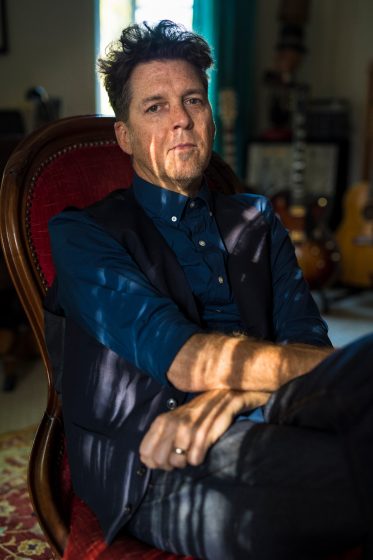
Joe Henry Surrenders to the Song

Joe Henry is sitting and chatting in the living room of his vintage, Spanish-style home in Pasadena, California. The subject of the note that starts off his new album, The Gospel According to Water, comes up. He looks over his left shoulder and points to the corner.

“It’s that guitar right there,” he says. “It’s an all-mahogany Martin from 1922. It was the first guitar they made that was created for steel strings.”

Seeing this small, plain instrument, it seems impossible that it was from this that he conjured the note in question, a sound deep yet brittle, intimately resonant. It’s at once ancient and fully present in the now. And it’s a sound that serves as something of a motif throughout the marvelously moving, affectingly poetic cycle of songs. It was a sound from a specific source that was echoing in his head when he sat in the Los Angeles studio of his longtime friend, recording engineer Husky Huskold, to set a new batch of songs on tape.

“I played him one song from Lightnin’ Hopkins,” he says. The song was “Mama and Papa Hopkins,” a 1959 recording from the point of view of young Lightnin’ getting his feuding parents to see the good they share.

“It was just vocal and acoustic guitar. And Lightnin’ is mostly singing to a single string that he’s playing. And yet the way it’s recorded, it’s so heavy. There’s such a sense of ominous space. And I said, ‘Look. I know I’m not him. I’m never going to be Lightnin’ Hopkins. But listen to what’s going on here. There’s something that’s making this so visceral in a way that I want to hear. Even if this is just demos, I want to hear a sense of drama.’”

You’d think Henry, who just turned 59 last week, would have had more than enough drama. A week before Thanksgiving 2018, he’d been diagnosed with prostate cancer, which had metastasized to his skeletal system. (He is in remission now and feeling hearty.) When he went in to record, it was a week before Father’s Day. All but two of the songs had been written in an unexpected rush of expression that started at Valentine’s Day. He specifically references those poignant holidays when giving the timeline.

As he plucked that first note for “Famine Walk” (one of two songs on the album written during a two-month writing residency at a small art college on the west coast of Ireland, before the cancer diagnosis), he had no idea it would be how he opened the album. He had no idea he was making an album.

He just wanted to get these songs down while they seemed fresh, and that’s all he thought he was doing in the course of two quick days of recording with his son, as well as reeds player Levon Henry, pianist Patrick Warren and guitarist John Smith sitting in on some of the songs, and with David Piltch playing bass on “Book of Common Prayer.” At the end of the second day, he went home to listen to the recordings, sitting in his office with his wife Melanie Ciccone, Levon, and a friend. Only then did he really hear what he had.

“We just listened to the whole thing,” he says. “And it was so obvious to me and to everybody in the room listening back that it felt fully realized. I mean, it’s raw. It’s really spare. But emotionally speaking, I heard it and thought, ‘I don’t know if I’ll get closer to the intention of these songs.”

The only thing added later was the background vocals of Allison Russell and JT Nero, AKA Birds of Chicago, on the songs “In Time for Tomorrow” and “The Fact of Love.” He would have added his longtime drummer Jay Bellerose to some of this, but when he sent the tracks to him, Bellerose responded with a simple voicemail: “Um, not on your life.” His drummer’s instincts of when not to play, though extreme here, were exactly right.

In its sense of space, The Gospel According to Water is a perfect portrayal of the experiences that brought it about, mystifying and mystical in as personal a way as can be. At times it’s as elliptical and elastic as the engagingly playful folk-jazz that’s been a signature of his last several albums. But here that portrayal is stripped down to its essence.

At the center is the natural fragility of Henry’s voice as he lingers over key words and phrases in ways that can be enchanting and startling, sometimes both at once. While it’s instantly recognizable to anyone familiar with his work, it stands apart not only from his previous 14 solo albums, but also from his many production credits: for New Orleans titan Allen Toussaint’s final works (including the 2006 The River in Reverse, a collaboration with Elvis Costello following the city’s devastating flood), Bonnie Raitt, Rosanne Cash, Bettye LaVette, the Milk Carton Kids, Joan Baez’s most recent album Whistle Down the Wind, and Rhiannon Giddens’ and Francesco Turrisi’s stunning there is no Other.

But he winces at this being considered his “cancer album.” He even considered trying to avoid the topic in interviews and promotion of the release. But ultimately he opted for openness.

“Whether it’s fair or not, it’s going to happen,” he says. “I lost a little bit of sleep over that, wondering how I can mitigate that. And then I just realized that I can’t now, more than I ever could, control how people respond to the music — if they respond at all — and rein that in… People are going to hear it like that, and there’s not much I can do about it. It’s an aspect of how this record happened and what it is.”

Indeed, as the music made its way out to the world, friends and fans alike started sending him notes, almost all mentioning his health issues. He came to accept that for the good intentions, too.

“I just believe in the songs enough,” he says. “They’re already moving out into the world without me. They’re going to have to make their own way. They’re going to have to straighten their own teeth, find their own job. I can only do so much and when I go out and perform these songs, I may or may not at times offer any framing context about how the songs occurred or when they occurred.”

He references a comment made many years ago by his mentor T Bone Burnett, who produced Henry’s 1990 album Shuffletown, when discussing his Christian faith in regards to his art. Burnett said that while some sing about the light, he sings about what he sees illuminated by the light. Henry addressed that, in his own way, when he first played a few of the songs in public, in a concert at the Los Angeles’s Largo theater.

“Part of my preamble was to say, ‘Look, I know I’m holding this shoehorn that would help you into the tight fit of a big batch of new songs. And if I have one reluctance to hand this shoehorn over it’s because I don’t want you to think, from what I’m about to say, that where a song comes from is what a song is,’” he says. “A song is not where it comes from. Just because my particular health crisis has invited me to receive these songs in a particular sort of way, that is not what the songs are.”

He thinks back to being with Toussaint, doing interviews right after New Orleans was flooded in 2005, his home among the many destroyed. In interview after interview, Henry saw Toussaint refuse to deliver the “heartbreak” stories journalists craved. Finally, when pushed by a CNN interviewer, he made his point.

“He said, ‘You have to understand something: More than a drowning, this was a baptism,’” Henry recalls. “And talk about something that silenced the room, myself included. I’ve thought about this so many times since this occurrence for me, the fact that Allen wasn’t in denial about what had just happened. He just had the ability to see, that his vision didn’t stop with this trauma. He was seeing beyond.”


Some of that is elusive on the album, found in shadows cast by the metaphorical light. The song “Orson Welles” is a good example, with its arresting chorus: “You provide the terms of my surrender, I’ll provide the war.” He’s still mystified how that one came about, the words written as he and Melanie flew from Burbank to San Francisco.

“That’s just something I found falling off my hand,” he says. “I open my notebook and I literally watched my hand write ‘Orson Welles’ at the top of the page. And I didn’t know what Orson had to do with anything. It’s just one of those moments where it felt spring-loaded. I didn’t believe I was writing about Orson, but I believe that somehow his specter was kind of directing, gesturing me on to something, somewhere I needed to go in that moment. And I just followed, because, you know, who wouldn’t?”

He found himself thinking about a part of Citizen Kane in which Welles’ title character wants his newspaper to have headlines from a conflict in South America that is petering out, so he cables his correspondent there, “You provide the prose poems, I’ll provide the war.” (In real life, William Randolph Hearst instructed his staff, “You furnish the pictures, I’ll provide the war.”)

For Henry it took a different turn, though, with the idea of surrender — certainly tied to his health situation, and the ultimate lack of power over it, but extending far beyond that.

“I feel like I’ve written about surrender a good bit,” he says. “And I don’t mean surrender in terms of resignation, I kind of mean surrender in terms of radical acceptance, which is empowering, which is motivating, as opposed to the idea of collapse.”

Two titles stand out, though, for the clear view of the basics of life, the perspective brought by such things as loss, age, kids growing up and facing mortality. “The Fact of Love” is pretty much self-explanatory, but “Salt and Sugar” really captures it. “Everything is salt and sugar now,” he sings, boiling it down to things that make life possible and meaningful — though too much of either can kill you.

He explains that he and Melanie have been doing some “decluttering” in recent years, having left the large house in which they raised their two kids, and moving twice to subsequently smaller places. But the song definitely shows what he’s seen from the light brought by his health.

“It’s paring things down to salt and sugar,” he says. “Everything. What matters? How do you make a record? How do you express what you want to say? Who do you spend your time with? What do you spend your days doing? All that.”

He recounts many of the changes in his life in recent years, the moves, the attachments and the letting go of attachments. Finally, he sums it up in a way that gets to the heart of what he has done with The Gospel According to Water, and it’s just as on-point as that note he plucked to start the album.

“I mean, just, you know, occupy life.”


Photo Credit: Jacob Blickenstaff

BGS WRAPS: Drew Holcomb & the Neighbors, “Let It Snow”

Artist: Drew Holcomb & the Neighbors
Song: “Let It Snow”
Album: Let It Snow EP

In Their Words: “We are thrilled to release this new Christmas EP. It has our take on the classic ‘Let It Snow’ and two original songs — Ellie singing ‘Christmas Style’ and our first-ever Scrooge song, ‘It’s Christmas.’ ‘Let It Snow ‘ is one of my favorite Christmas songs to sing with the family around the holidays. Was a really fun one to record with Ellie.” — Drew Holcomb

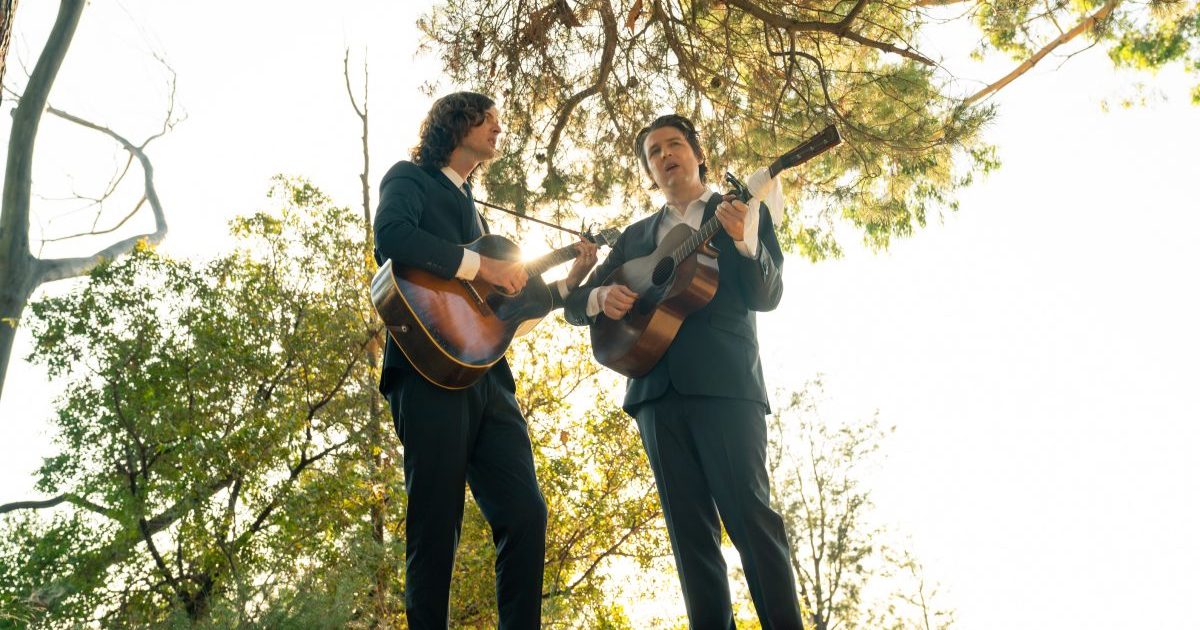
MIXTAPE: The Milk Carton Kids, In Harm’s Way

“There’s a paradox at the heart of great harmony singing: when voices combine in so elemental a way that they disappear into each other, the effect is dizzying, mystifying, disorienting, and yet by far the most satisfying sound in music. Here’s a VERY incomplete playlist, spanning a few generations, of bands defined by their harmonies, who set my mind spinning with their vocal arrangements, execution, and pure chemistry as singers.

“Full disclosure: my own band is included aspirationally and for the sake of self-promotion. Author’s Note: Sorry not sorry for naming this playlist with a pun.” — Joey Ryan, The Milk Carton Kids

The Jayhawks – “Blue”

That unison in the first few lines is so thrilling cause you know what’s about to happen, and when the parts separate it just feels so good.

Gillian Welch – “Caleb Meyer”

The harmonies and Dave’s playing are so intricate in this song you’d be forgiven for glossing over the lyrics, which tell the story of an attempted sexual assault victim killing her attacker with a broken bottle. Check out the Live From Here version with Gaby Moreno, Sarah Jarosz, and Sara Watkins, and catch the alt lyric subbing “Kavanaugh” for “Caleb Meyer” about halfway through.

Gram Parsons & Emmylou Harris – “Hearts on Fire”

Just one of the all-time great duets. Who’s singing the melody, Emmylou or Gram? Hint: trick question.

Our Native Daughters – “Black Myself”

Do all supergroups hate being called supergroups? I wouldn’t know. Our Native Daughters is a supergroup though, and the power of their four voices in the refrains and choruses of this one are all the proof I need.

Dolly Parton, Linda Ronstadt, & Emmylou Harris – “Those Memories of You”

It’s insane that three of the great singers of their generation just so happened to have this vocal chemistry. Their voices swirl together like paint and make a color I’ve never seen before.

boygenius – “Me & My Dog”

Favorite game to play when this song comes on is “try not to cry before the harmonies come in.” Very difficult. Impossible once they all sing together.

The Smothers Brothers – “You Can Call Me Stupid”

GOATS. IDOLS. Favorite line is, “That’s a pun isn’t it?” “No, that really happened.”

The Milk Carton Kids – “I Meant Every Word I Said”

My band. Imposter syndrome. We recorded the vocals on this whole album into one mic together. It helps us disappear our voices into each other’s.

Crosby, Stills, Nash & Young – “Carry On”

For me, CSNY are the pinnacle of that disorienting feeling harmonies give you when you just have no idea what’s going on. I’ve never been able to follow any one of their individual parts and I LOVE that.

Sam & Dave – “Soothe Me”

When the chorus comes around and you can’t decide which part you want to sing along with, you know they did it right.

Louvin Brothers – “You’re Running Wild”

The Louvins sound ancient to me. Primal. The way their voices rub against each other in close harmony is almost off-putting but I’m addicted to it.

The Highwomen – “If She Ever Leaves Me”

There’s probably even better examples of the Highwomen doing that crazy thing with their four voices where they become one entirely unique voice, all together, but this song is just so good I had to go with it. And the blend in the choruses is just as intoxicating as it gets.

I’m With Her – “See You Around”

Really an embarrassment of riches in modern music on the harmony front. Hearing I’m With Her perform around one microphone drives me insane with the best possible mix of confusion, jealousy, and joy.

Mandolin Orange – “Paper Mountain”

The melancholy is so satisfying when either one of them sings alone, and then they bring that low harmony and I have to leave the room.

Skaggs & Rice – “Talk About Suffering”

This whole record is a masterclass in two-part harmony. It changed my entire concept of singing. I’m Jewish, but when this song comes on it makes me sing wholeheartedly of my love for Jesus.

The Everly Brothers – “Sleepless Nights”

The absolute masters of both parts of a two-part harmony standing alone as the melody. Credit to Felice and Boudleaux for that, for sure, but the Everlys executed it better than anyone before or since.

Simon & Garfunkel – “59th Street Bridge Song (Feelin’ Groovy) — Live at Carnegie Hall, New York, NY – July 1970

This is far from my favorite S&G song, but this live version especially showcases what geniuses they were at arranging crossing vocal lines, unisons, parallel melodies, nonsense syllables and swirling harmonies. Plus the nostalgic “awwww” from the crowd gives me hope that a sensitive folk duo could one day achieve mainstream success again.

Shovels & Rope – “Lay Low”

This starts out as a song of profound loneliness with just one voice singing, then the harmony comes in and it gets… even lonelier? Harmony is magic.

Boyz II Men – “End of the Road”

I’m a child of the ‘90s, don’t @ me. I never realized at all those 8th grade slow dances that we were subliminally being taught world-class harmony singing and arranging. Good night.


Photo Credit: Jessica Perez

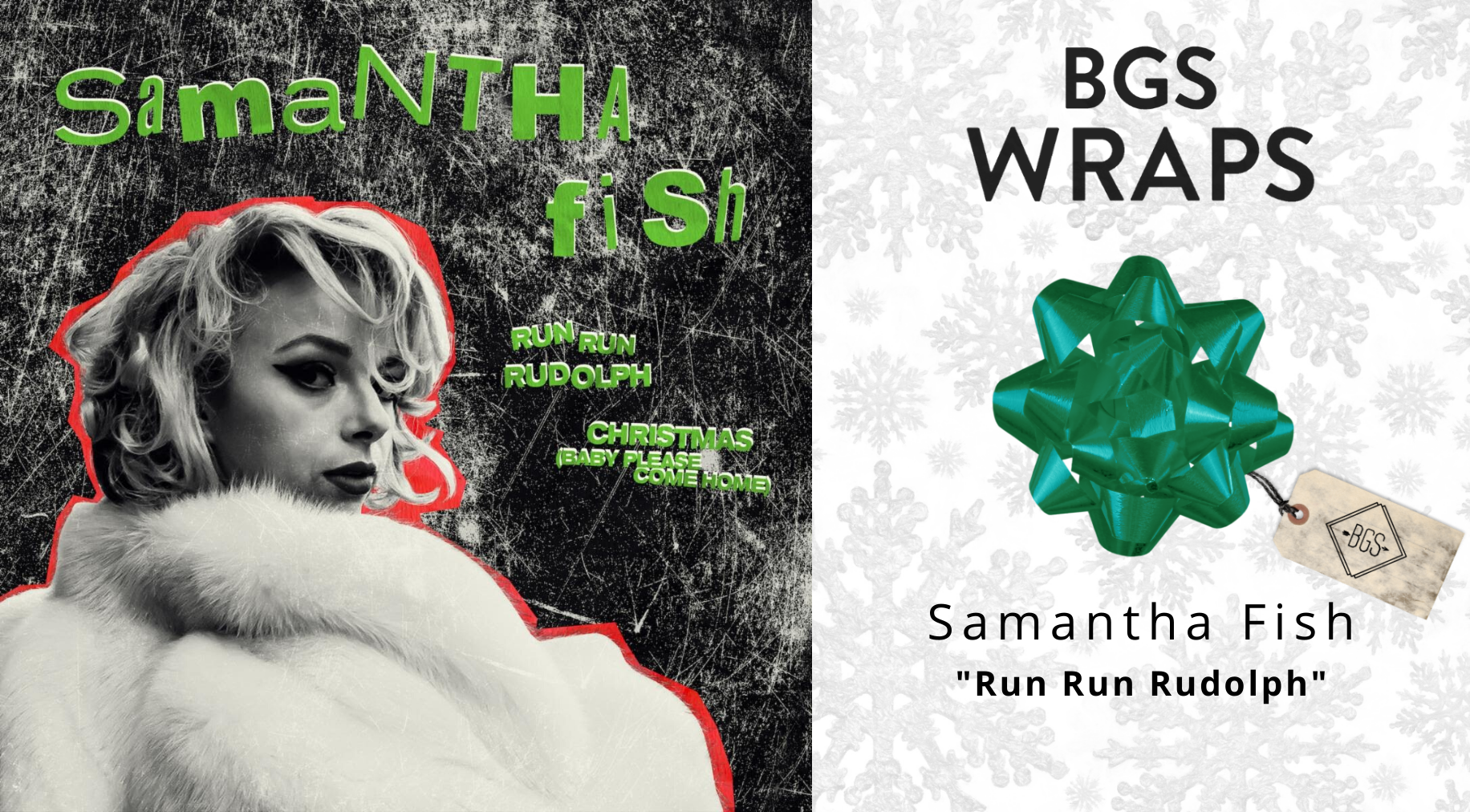
BGS WRAPS: Samantha Fish, “Run Run Rudolph”

Artist: Samantha Fish
Song: “Run Run Rudolph”

In Their Words: “‘Run Run Rudolph’ is always such an upbeat song, we thought it would be cool to dip it in some noir. It’s catchy and fun. I wanted to pay homage to the classic Chuck Berry song, yet interpret it in a different way. I think it walks the line between vintage rock ‘n’ roll and being a unique track all its own.” — Samantha Fish

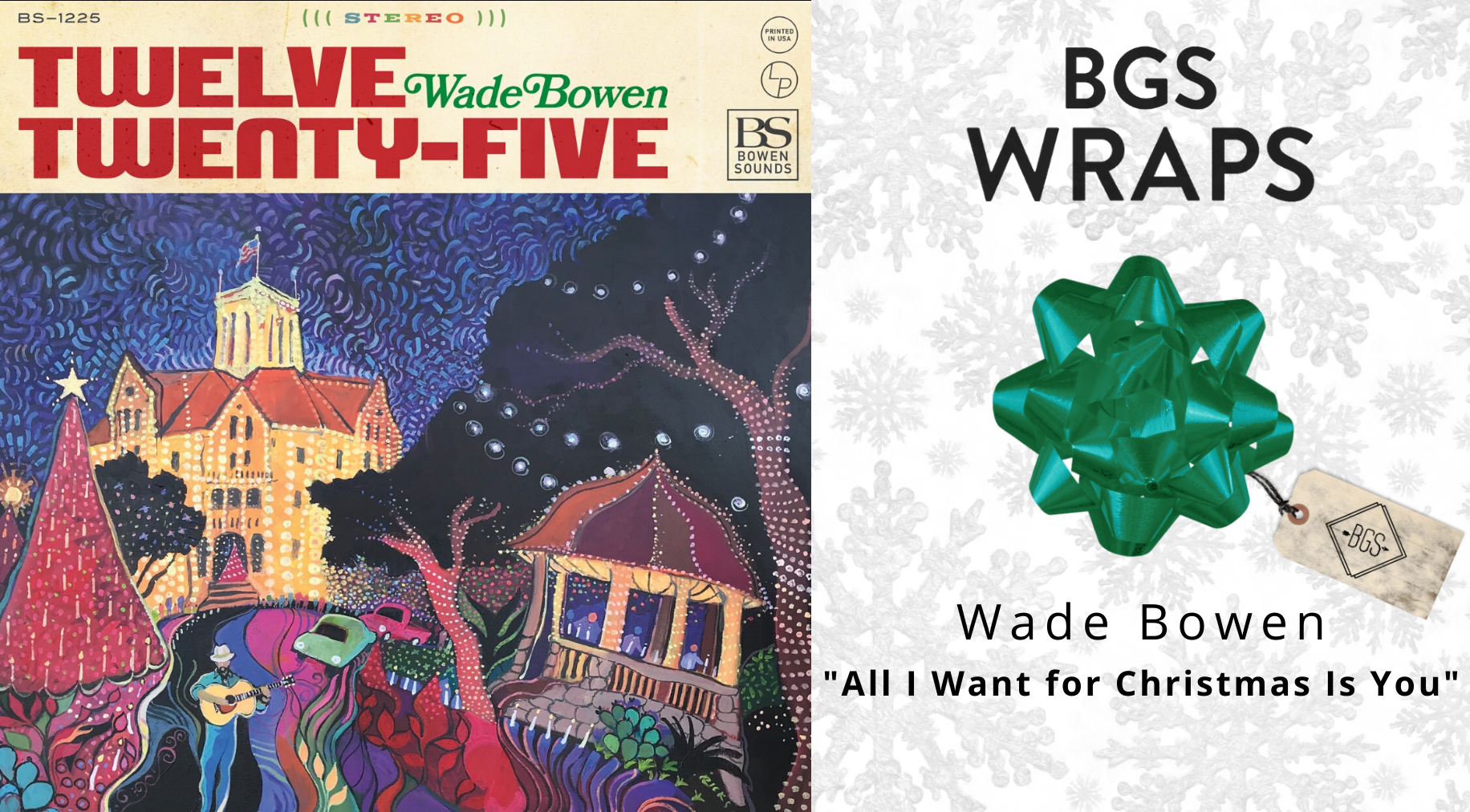
BGS WRAPS: Wade Bowen, “All I Want for Christmas Is You”

Artist: Wade Bowen
Song: “All I Want for Christmas Is You”
Album: Twelve Twenty-Five

In Their Words: “Christmas has always been the most personal of holidays, with its combination of faith and family. That was true for me while growing up and it’s still true for me today, albeit in a completely different way. As a husband and father who spends so much time traveling the world playing music, I love the feeling the Christmas season brings to my life. And I recognize how quickly time passes and how each Christmas is unique and fleeting. With my family, I try to keep the best parts of the warm, magical, small-town vibe that my parents gave me while growing up in Waco.

“I’ve always wanted to make a Christmas album that reflects all of that. All that I’ve grown to love. I can remember sitting around listening to Christmas music with my mom and sisters and singing every word. So when it came time to choose the songs for this album, I wanted those to be part of the project. But on top of the classic songs I grew up with, I want to introduce my kids to the modern holiday songs by my favorite singers or things that I watched on TV that also became part of what Christmas means to me. So this record is a reflection of all of that…with a timeless feel. It was made with friends and family, singing songs that came to mean something to me over the years. And maybe, if we’re lucky, something on this album might become a small part of what Christmas means to you. I hope you enjoy it.” — Wade Bowen

BGS WRAPS: Phöenix Lazare, “Winter White”

Artist: Phöenix Lazare
Song: “Winter White”
Album: Winter White/Evergreen

In Their Words: “‘Winter White’ is a full-spirited Christmas lullaby that celebrates the magical annual transition into the holidays. Capturing the warm glow of the season, the song is straight from my heart. This is emulated in the vocals, piano and soft drums that lie underneath lyrics reflecting on the small miracles of a simple, yet meaningful holiday. I hope ‘Winter White’ transports listeners to a cozy, familiar kitchen or fireside.” — Phöenix Lazare

WATCH: Yola, “Goodbye Yellow Brick Road”

Artist: Yola
Hometown: Bristol, England
Song: “Goodbye Yellow Brick Road”
Album: Walk Through Fire: Deluxe Edition
(Featuring “I Don’t Wanna Lie” and “Goodbye Yellow Brick Road”)

In Their Words: “Can’t believe it has only been a year since we announced Walk Through Fire, working with Dan Auerbach and the team has been an absolute dream and [I am] so proud of everything we have achieved. So many great songs from that session didn’t make the final cut, including ‘I Don’t Wanna Lie.’ I’m a HUGE Elton fan and we’ve been playing ‘Goodbye Yellow Brick Road’ on the tour and wanted to cut a version for this release, which Dan also produced! And then for Elton to personally premiere it, well that is the icing on the cake!” — Yola


Photo credit: Daniel Jackson

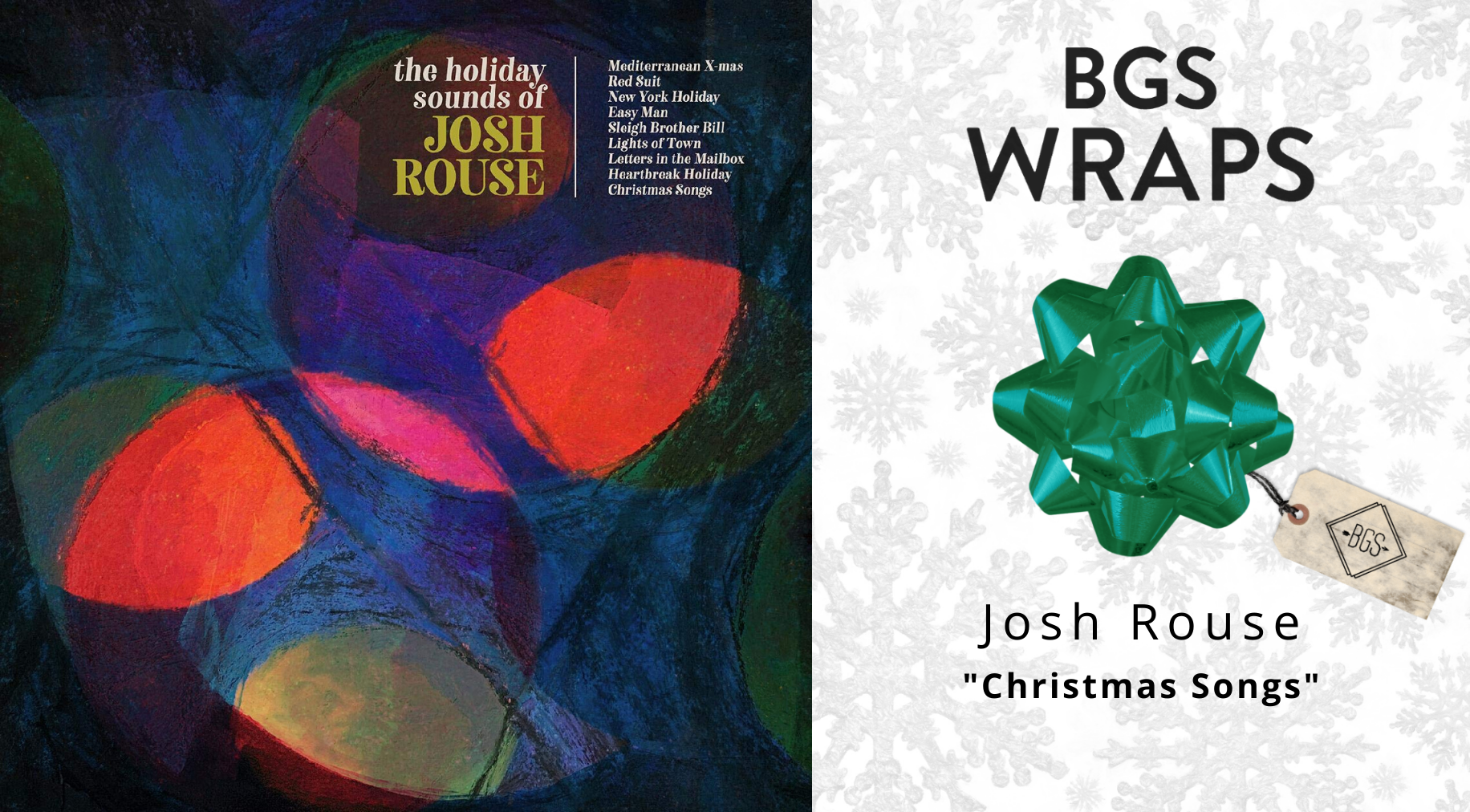
BGS WRAPS: Josh Rouse, “Christmas Songs”

Artist: Josh Rouse
Song: “Christmas Songs”
Album: The Holiday Sounds of Josh Rouse

From the Artist: “[‘Christmas Songs’] was written a few weeks before recording the record. I was on tour in Sweden and I needed one more song to add to the group I had been collecting for years, an end credit if you will. I had Lee Hazlewood and the album Cowboy in Sweden in mind.” — Josh Rouse