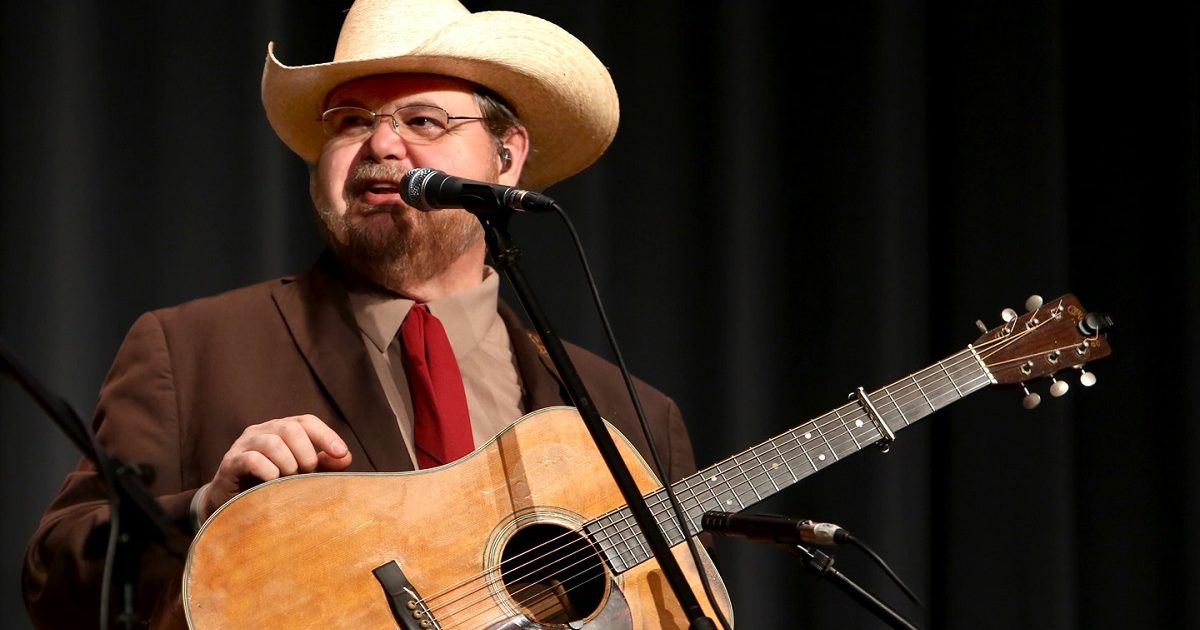
The Breakdown – ‘The High, Lonesome Sound of Bill Monroe’

It’s high, it’s lonesome – it’s The High, Lonesome Sound of Bill Monroe.

LISTEN: APPLE PODCASTS • MP3

Unpacking Bill Monroe’s bluegrass legacy through this 1966 compilation of Decca recordings is no small task – so Patrick and Emma have enlisted some high-profile help, including the legendary Sonny Osborne (a 14-year-old debutant on this album) and the wonderfully insightful Laurie Lewis.

Season 2 of The Breakdown is sponsored by The Soundtrack of America: Made In Tennessee. Visit TNvacation.com to start planning your trip.

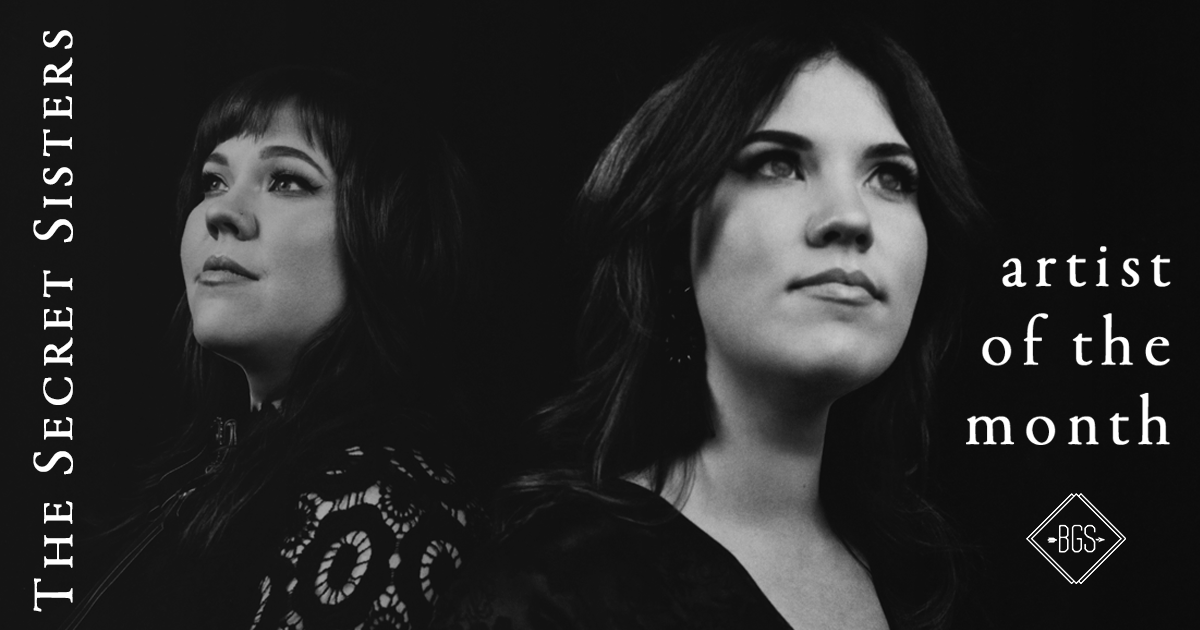
The Secret Sisters’ Laura Rogers: From Separation to ‘Saturn Return’ (Part 1 of 2)

Laura Rogers and Lydia Slagle are best known for doing things together. As sisters, they’ve celebrated birthdays, graduations, and many more of life’s big milestones together. As the Secret Sisters, they’ve made a name for themselves singing together, with intuitive harmonies that lend a honeyed sheen to folk tunes, country anthems, and the occasional murder ballad, too. But for their latest album, Saturn Return, the duo tried things a little differently.

At the suggestion of Brandi Carlile (who co-produced Saturn Return with twins Tim and Phil Hanseroth), Laura and Lydia recorded their vocals separately for the first time, integrating lengthy solo segments in addition to their trademark harmonies. The resulting record reveals two women at the top of their crafts, reveling in their independence while cherishing the inimitable depth of their voices together.

In tribute to their recording individually for the first time, BGS spoke to each sister separately, too. In part one of our Artist of the Month interviews, Laura talks about the influence of her hometown, self-inflicted career pressure, and how Carlile introduced the sisters to new sides of themselves — both individually and as a group.

BGS: You sang separately from your sister on this album for the first time. What did that feel like at first, and how did your feelings about it evolve?

Laura Rogers: I was very uncomfortable about it at first. I play off of Lydia, and I choose my notes based on what Lydia chooses. We read each other so closely when we sing together. Singing without her felt like driving a car for the first time without your parent in there. But when Lydia sang by herself, even though I know she was uncomfortable, I sat there listening to her and thinking, She is so good. She’s so good. I remember thinking about how glad I was that her voice was finally going to get a chance to be heard without mine, because her voice has so much beauty to it.

I thought, It’s time for people to hear what Lydia sounds like without me distracting them. But I was super scared to sing by my self, just because I … Well, I just don’t feel like I sing as well without Lydia. I’m more critical of myself, and I don’t have her to kind of pick up the slack that I need. [Laughs] So in the moment, I remember thinking, I don’t know if this is the right thing. How are we going to pull it off live? But then of course, after the record was done, we would listen back to it, and Brandi’s theory about it was so… right. And so beautiful.

How so?

While we were recording, Lydia and I really were in really separate places for the first time in our lives. I was pregnant and Lydia was trying to get pregnant. We felt this chasm, the two of us. We felt like we were in different places. Brandi could see that, in her bird’s-eye view of our circle. She knew that she needed to capture that moment.

Lo and behold, a few months later, we found out that Lydia was pregnant too, and we were back on another path together. We had been separate for only a moment. So I’m really thankful. I feel like Brandi is a really good photographer who caught the perfect moment with the perfect light and the perfect ambiance — this really special moment that will never come again.

You’ve recorded murder ballads and darker songs, and “Cabin” on this record — which you’ve said grew out of coverage on the Kavanaugh hearings — touches on a crime that was never brought to justice. What are the challenges and nuances you have to consider when broaching topics like those?

That’s a good question. “Cabin” can really be about a pretty broad range of crime. But we were specifically writing about sexual crime: abuse, harassment, and mistreatment of people by those in places of power. We had a message that we wanted to convey, but it felt like we had to tiptoe around some things to try to avoid any sort of heavy political slant.

Lydia and I are not political songwriters. We just aren’t, and don’t want to be. But there are certain elements of that that do come up in our writing that we feel like we have to kind of carefully craft in order to express ourselves, but not isolate. That’s also true with murder ballads. It is a sensitive subject matter, and our protection — up until we wrote “Cabin” — was the fact that those songs that we had written were mostly fiction.

When [our songs] talk about getting your heart broken, or going through bankruptcy, or being done wrong by someone who is supposed to be your friend, those are actually based in truth. We would never specifically mention anyone by name, but if they hear the song, they’ll know that we’re talking to them. If you feel like we’re singing to you, we are.

That’s the way that we view our music — as therapy. The murder ballads have always been about us challenging ourselves to write songs about things that we didn’t experience. On the flip side of that coin, there are a lot of songs that we went through firsthand and had to process through writing.

You sing about the push-pull of success in “Nowhere Baby.” What does that song mean to you, and how do you fight back against the low moments?

I hope that people can find their own story in a song like that. For us, “Nowhere Baby” is about constantly feeling like we’re arm wrestling the music industry; feeling the need to say yes to everything that comes along, because you’re afraid that if you say no you’re going to set yourself back or miss an opportunity; feeling like you need to prove yourself. As artists, creative souls, and women, sometimes we put that on ourselves. We make these ridiculous schedules that we think we have to stick to. “If we don’t go do this show, what’s gonna happen? Are we gonna miss something that could be really important, could get us to the next level?”

We are so hard on ourselves about our careers. We love music, and we love that we’ve gotten to make a lifestyle of playing our songs on the road, but it’s a hard life. You sacrifice more than people on the outside ever realize. You miss the birthday celebrations and the holiday events. Through experience in the ten years that we’ve been on the road, we’ve learned that it’s OK if you need to just be a person for a minute. It’s OK if you want to just sit at home for a few weeks. Nobody’s gonna forget about you, you’re not going to lose your edge.

You’re from just outside of Florence, Alabama, and started singing harmonies with your sister at church. Did your hometown have any impact on the artist you are today?

Oh yes, 100 percent. We grew up pretty close to Muscle Shoals, which is obviously a legendary place for music. But we weren’t exposed to the music of Muscle Shoals as much as you might think. We listened to more folk music, bluegrass, gospel, and country. And where we are geographically had influence on us as musicians — I mean, it’s this weird little place that’s so perfectly located. It’s close to Nashville, so you get the country music influence. It’s close to Memphis, so you get a little bit of the blues. It’s close to the mountains, so you get some Appalachian music. You get gospel music, because we’re in the middle of the Bible Belt. It’s this perfect spot where these little genres of roots music all began.

I think living in a rural place, and growing up where there isn’t a lot to do other than hang out with your family or do sports or play music, is why we are the way that we are, and why we’ve become the musicians that we’ve become. We are so spiritually tied to our hometown. When I leave, I become a different person, and it’s almost like I have to go back to regroup and establish myself again. I come home and I’m like, oh, that’s who I am. [Laughs] I may get to go to all these great places, but when I come back, I’ve still got to scoop up chicken poop off my porch.

Read our interview with Lydia Slagle here.


Photo credit: Alysse Gafkjen

Lynn Morris: The National Banjo Champion Who Couldn’t Get an Audition

If you’re in a jam with women over 50, it’s likely that you’ll hear at least one song learned from a Lynn Morris recording.

Her singing is as pure and sweet as a mountain spring. She brought every song alive and made every story real. And during most of her career, there simply weren’t a lot of women topping the bluegrass charts. So aspiring female singers naturally gravitated to her music – sung in their range and often, from their perspective. Although a stroke halted her career in 2003, her legacy endures through her fans.

Lynn was born in 1948 in Lamesa, Texas, where she rejected piano lessons at an early age, but fell in love with the guitar. At age 21, she had a banjo epiphany when she heard a bluegrass band in Colorado Springs. As she told author Murphy Hicks Henry, she was so taken with the banjo sound that she thought, “I will die if I don’t learn how to do this.”

And learn she did. Within five years, Lynn became the first woman to win the National Banjo Championship — and later became the first person to win it twice. She was slow to gain confidence in her singing, and in her earliest band affiliations she primarily played banjo and guitar, singing harmony and rarely taking vocal leads.

On a trip to her home state, she met Marshall Wilborn, who claims he could barely play the bass at the time. But within months, he joined Lynn in the Pennsylvania band Whetstone Run. They later moved to their present home in Winchester, Virginia.

In the 1980s, bluegrass was still very much a male business. Lynn’s success in banjo competitions were always in blind contests — where the judges couldn’t see the pickers. Apparently, banjo judges weren’t ready to acknowledge women. Similarly, after moving to Virginia, she couldn’t get an audition with any of the bands she wanted to play with.

So, in 1988, she started her own, believing, as she told Murphy, that her career depended on it. Lynn, with Marshall on bass and vocals, attracted stellar sidemen, with whom they recorded five successful Rounder albums. Lynn was IBMA Female Vocalist of the Year three times and won IBMA Song of the Year for her recording of Hazel Dickens’ powerful “Mama’s Hand.” She also was the first female IBMA board member.

Four years after winning her last IBMA award (in 1999), Lynn had a near-fatal stroke following knee surgery. While she recovered to a miraculous extent, some hand weakness and residual speech problems prevent her from performing. She remains active and vigorous. For several years, she handled sound for Bill Emerson’s band. One of her paintings hangs in Winchester’s best breakfast spot. An ardent animal advocate, she dedicates much of her time to roughly a dozen rescue cats.

Lynn Morris’ enthusiasm and gratitude for life are a continuing gift to any who get to meet her.

(Editor’s note: For more details about — and terrific quotes from — Lynn Morris, read Murphy Hicks Henry’s book, Pretty Good for a Girl: Women in Bluegrass.)


Photo credit: Rounder Records

BGS 5+5: Danny Barnes

Artist: Danny Barnes
Hometown: Port Hadlock, Washington
Latest album: Man on Fire
Personal nicknames (or rejected band names): Possum Grunt. Crawfish Ate Your Face. Why Me Lord. The Crumbled Earth. Dirt Is My Witness.

Which artist has influenced you the most … and how?

I’d say Stringbean. I saw him in about 1970 when I was nine. The type of work a man was expected to do where I was from was roofing, something in the farming industry or construction, which were really hard and not fun, and here was this guy traveling around the country making people happy with a banjo, and I thought, “That’s what I’m going to do for the rest of my life,” and that turned out true, at least the traveling and the banjo part.

What other art forms — literature, film, dance, painting, etc — inform your music?

Well I love poetry, especially William Blake, and I read the Bible a lot, and I’ve read lots of classic novels and philosophy. I got the idea from John Hartford and Paul Leary of the Butthole Surfers to make records that were like movies in your head, so I do get quite a few ideas from old movies. I like Westerns and sci-fi, old ones.

If you had to write a mission statement for your career, what would it be?

To uplift people when they are really down, especially when you are of an unmoneyed heritage and things are overwhelming and it seems like the cops, society, the church, your family, God, and everybody has it in for you. And also to show that despite all the conventional wisdom on the subject, if you want to make art you can, especially if you must make it!

Which elements of nature do you spend the most time with and how do those impact your work?

I walk on the beach every day when I’m home. I like the salt water. And I like seeing God’s handiwork in the sky and in the plants and animals.

How often do you hide behind a character in a song or use “you” when it’s actually “me”?

Well, a normal person only has about four songs based on their life, then you run out of life and you have to start making up stuff, or reading an awful lot. So, pretty much never. I write about some horrible characters, ha ha. Though in my defense, it’s not that they are “bad,” they are just trying really hard to figure out a way to lay their burdens down.


Photo credit: Sarah Cass

Del McCoury – Toy Heart: A Podcast About Bluegrass

In an interview backstage at the Grand Ole Opry host Tom Power talks to Bluegrass Hall of Famer and Grammy award-winner Del McCoury about how he started playing banjo, his (interesting) time in the military, joining Bill Monroe’s band, being replaced by Bill Keith, starting over, playing music with his sons, and how he found his way to becoming a legend of bluegrass music — and to some, defining the whole thing.


Listen: APPLE MUSIC • STITCHER • SPOTIFY • MP3

Subscribe to TOY HEART: A Podcast About Bluegrass wherever you get your podcasts. New episodes drop every other Thursday through May.


The Breakdown – Alison Krauss & Union Station, ‘So Long, So Wrong’

Advertisement

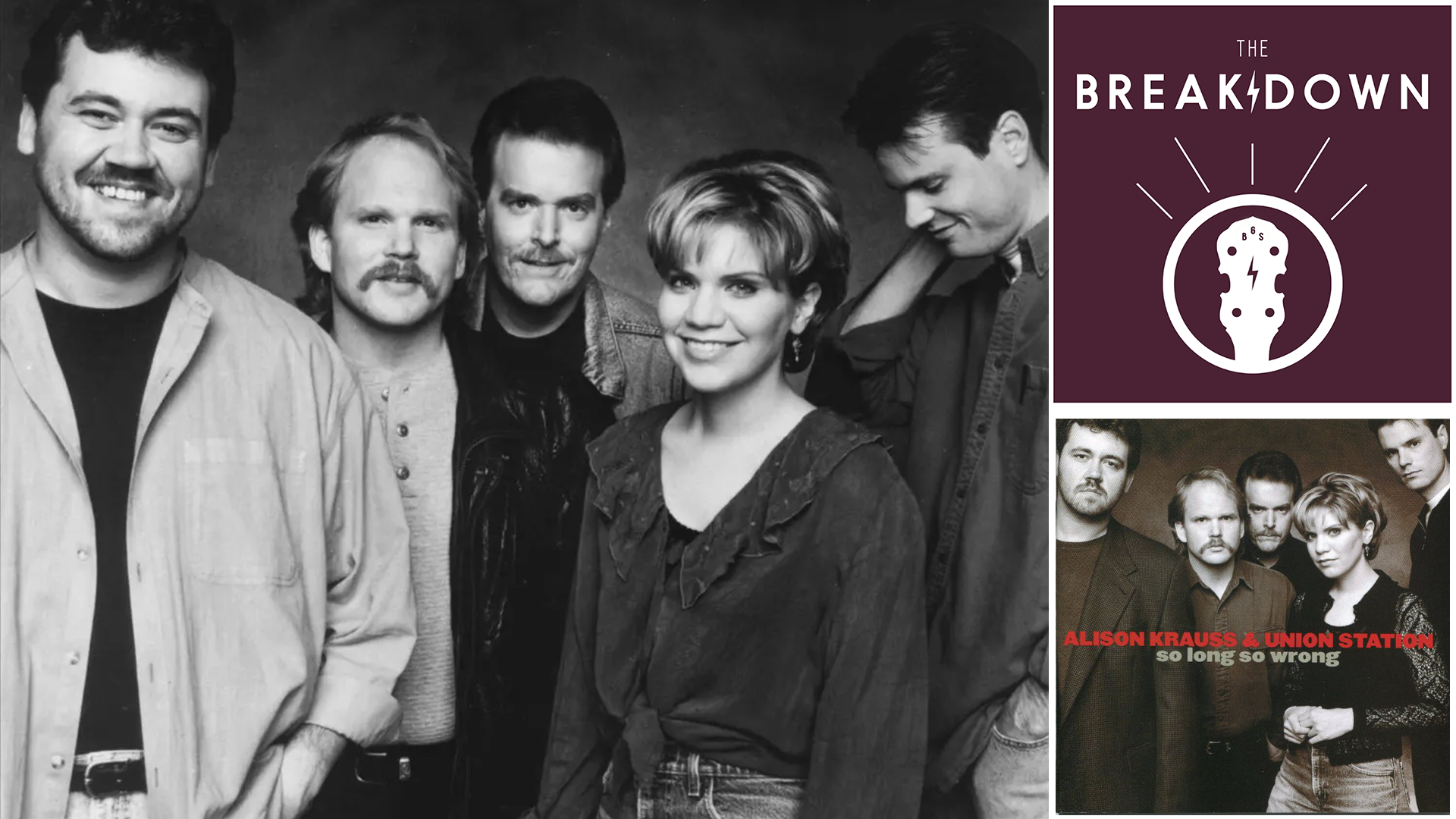
Episode 3 of The Breakdown’s second season explores Alison Krauss & Union Station’s 1997 album So Long, So Wrong.

LISTEN: APPLE PODCASTS • MP3

It was the album that nearly broke them – but instead, it made them. If you weren’t in love with Alison Krauss and Union Station by the end of their third album, So Long, So Wrong, you needed to check your pulse. Patrick and Emma find out the stressful story behind the second best creation of the ’90s (after Pop Tarts, of course).

Season 2 of The Breakdown is sponsored by The Soundtrack of America: Made In Tennessee. Visit TNvacation.com to start planning your trip.

WATCH: Bryan Sutton Declares He’ll “Lay Down My Old Guitar” on ‘Live From Here’

If you find yourself stuck in the late-winter blues, this video is for you. Ten-time IBMA Guitar Player of the Year Bryan Sutton visited Live From Here with Chris Thile recently, and the result was nothing short of breathtaking. Sutton and Thile teamed up on a classic bluegrass number, “Gonna Lay Down My Old Guitar,” but there was nothing ordinary about the performance. The in-the-moment communication between Sutton and Thile is truly a sight to behold as they trade blazing leads, soulful harmonies, and curious facial expressions. From the moment it kicks off, the audience is treated to an experience that only two prodigious instrumentalists like these can provide. If you’re in need of a little extra to get through the day, week, or month, look no further.


Junior Sisk Hitches His Wagon to the Stars of Traditional Bluegrass

Junior Sisk is on a mission. Although he’s been a fan of traditional bluegrass since childhood, he’s now fully focused on keeping that history alive. That passion for tradition is evident in Load the Wagon, the award-winning vocalist’s first release since disbanding Ramblers Choice.

“The Stanley Brothers, Flatt & Scruggs, Jim & Jesse, and all of them had big hits, but they also had hidden treasures on all those LPs. A lot of them that were never played and they’re not a jam tune. That’s what I’m looking for,” Sisk says. “It’s going to be like new tunes to a lot of folks. That’s what I’m after – to still pay tribute to the founding fathers of traditional bluegrass music, but in the Junior Sisk style.”

The Virginia musician’s recovery mission has unearthed a number of gems on Load the Wagon, like Flatt & Scruggs’ little-known “Lonesome and Blue” and the heartfelt “Lover’s Farewell,” a Carter Family gem suggested by his new bandmates Heather Berry-Mabe (guitar, vocals) and Tony Mabe (banjo, guitar, vocals). Jonathan Dillon (his mandolin player from Ramblers Choice), Gary Creed (bass, vocals), and Douglas Bartlett (fiddle, vocals) round out the lineup.

Sisk also re-cut the song that remains his most requested number, “He Died a Rounder at 21,” from his time with Wyatt Rice & Santa Cruz in the mid-‘90s. Leading up to a show at Station Inn, he invited BGS on the bus for a chat.

BGS: The first song on this album, “Get in Line, Buddy,” will be a familiar tune for fans of the Country Gentlemen. What made you want to record it here?

Sisk: Me and Bill Yates got to be good friends there for a long time right toward the end, and every time we’d play together at a festival, I’d always get together with him and ask him to do “Living on the Hallelujah Side” that he’d done with the Country Gentlemen, and this one right here — “Get in Line, Buddy.” Those are a couple that he sang solo on. It was just great, great singing.

It’s like what I’m trying to do right now. I’m in line with Flatt & Scruggs, the Stanley Brothers, and all that. I’m way down the line, but I’m in line anyway. And it still rings true today when you come to Nashville. When you walk the streets, you see them on the streets. You see them in all the clubs and everything. Everyone’s standing in line. I feel like I’m still standing in line for traditional bluegrass music.

With “Get in Line, Buddy” and “Best Female Actress,” there’s a sad story there, but you find a way to put humor into those songs. It’s not an easy thing to pull off. How do you approach that?

Well, when I go into the studio and start to record, I’ve always done a lot of tongue-in-cheek songs. I’m noted for that, but I sing with a lot of emotion. I sing with a lot of feelings. That’s why a lot of times I’ll lose my voice, to tell you the truth, because I’m singing so hard and with as much feeling as I can.

I love to look out in the crowd and see them either crying, if I’m singing a pitiful song, and if I’m singing a tongue-in-cheek song, I like to see them laugh and carry on. It just makes for a good show, I think. And Charlie Moore has been one of my favorites. He’s one of the most underrated bluegrass artists ever. He’s a great singer.

You also have some songs on here, like “Just Load the Wagon,” which are plain-and-simple funny. I’m curious, where did you get your sense of humor? Was there someone in your family where you picked that up?

Yeah, my dad. He’s a songwriter. He’s probably got a thousand songs at the house for me to choose from. But every song he writes, at the top of the page he writes the date he wrote it, and he writes, “Sing in the key of D and sing like Carter Stanley.” [Laughs] I said, “Dad, you can’t sing ‘em all like Carter Stanley and they can’t all be in D!” But if he had his druthers, that’s what it would be. That’s pretty much me, too. I was raised, born and bred, on the Stanley Brothers’ music.

This one here, I thought the folks would really enjoy, and now that I’ve gotten rid of the Rambler’s Choice name and went to the Junior Sisk Band, I’m trying to pay tribute to traditional bluegrass music, so we brought back the old-style banjo, the mountain-style banjo-playing with the clawhammer on this one. And it’s turning out to be one of my favorite tunes that we’re playing now. It’s a lot of fun and the crowd can react to it. It’s a toe-tapping tune.

You mentioned that the Ramblers Choice name is gone. Why was that an important move for you to shift to Junior Sisk Band?

Well, Jason Davis, Kameron Keller, and a couple of guys left. My dad always says when wintertime comes around and things start getting slow, somebody blows a whistle and everybody switches. It’s pretty much like that. If you don’t have any work, I’m going where the work is. But I was actually straying away from my heart – I was straying away from traditional bluegrass music a little bit. I just did not want to do that. I finally came to the conclusion that what I’m going to do until the end of my career is pay tribute to traditional bluegrass music, and try to keep it alive as long as I can. That’s what we’re trying to do today, is keep it straight-ahead bluegrass, right in the middle of the road, and turn the younger fans onto traditional bluegrass music.

Why is it important for you to carry that torch for traditional bluegrass?

I’m just tickled to death to see the young’uns out here today that come to our shows, or to see them out jamming at festivals and playing the old-style music. You don’t see that a lot anymore. It seems that the younger generations is trying to play every note they know. …When I hear somebody with real emotion, and real feeling, who’s a traditional young’un coming up, I love it. Because we’ve lost so many — Ralph Stanley, James King, and a lot of traditional artists here lately. I think I’m a torch holder and that’s what I hope to be until the end of my career. As long as I’m able to breathe and sing, I’m going to keep their music alive.

It hurt to lose James King, didn’t it?

Oh, it was hard. I was there holding his hand on the day he died, in the hospital. I was on one side and Dudley Connell was on the other. And we told him we would keep his music alive. I’m getting chills now, but it meant the world to me, just to be there. He was a torch holder as well.

You re-recorded “He Died a Rounder at 21” from your days with Wyatt Rice & Santa Cruz. What’s it like to sing about that guy now, 24 years later? Does it bring out a different emotion in the song for you?

It’s still the same. The story in that song is awesome. I’ve grown up with a lot of folks in the bluegrass industry and I’ve seen a lot of ‘em pass away from alcoholism and just the hard life, the bluegrass life. People around home say, “Wow, you’ve got it made. You go on stage and play 45 minutes…” They don’t know about the 15 hours you travel to get there. It’s a hard life. You don’t eat right. You don’t take care of yourself. And I can understand where this guy came from. He only lived 21 years – but 21 years was like a thousand years in his time. I understand that, and that’s why I put everything I got in that song. Because it rings true.

Was there a pivotal moment for you when you decided to go into bluegrass full-time?

In my early teens, I lived and breathed it. I sat at the end of the bed in my mom and dad’s room with an old LP player and played Dave Evans, Larry Sparks, the Stanley Brothers, just trying to learn everything George Shuffler ever did on guitar. I was in it hot and heavy, and eat up with it.

In the early ‘80s, I moved up around the DC area and that’s when the Johnson Mountain Boys came on the scene. I followed them everywhere they went. They brought me back to life, and still today if I get to feeling sad, or get down about the music, I can put a Johnson Mountain Boys DVD in, and it will bring me right back. There was so much excitement and energy, they just tore me all to pieces. That’s what it’s all about.


Photo credit: Susie Neel
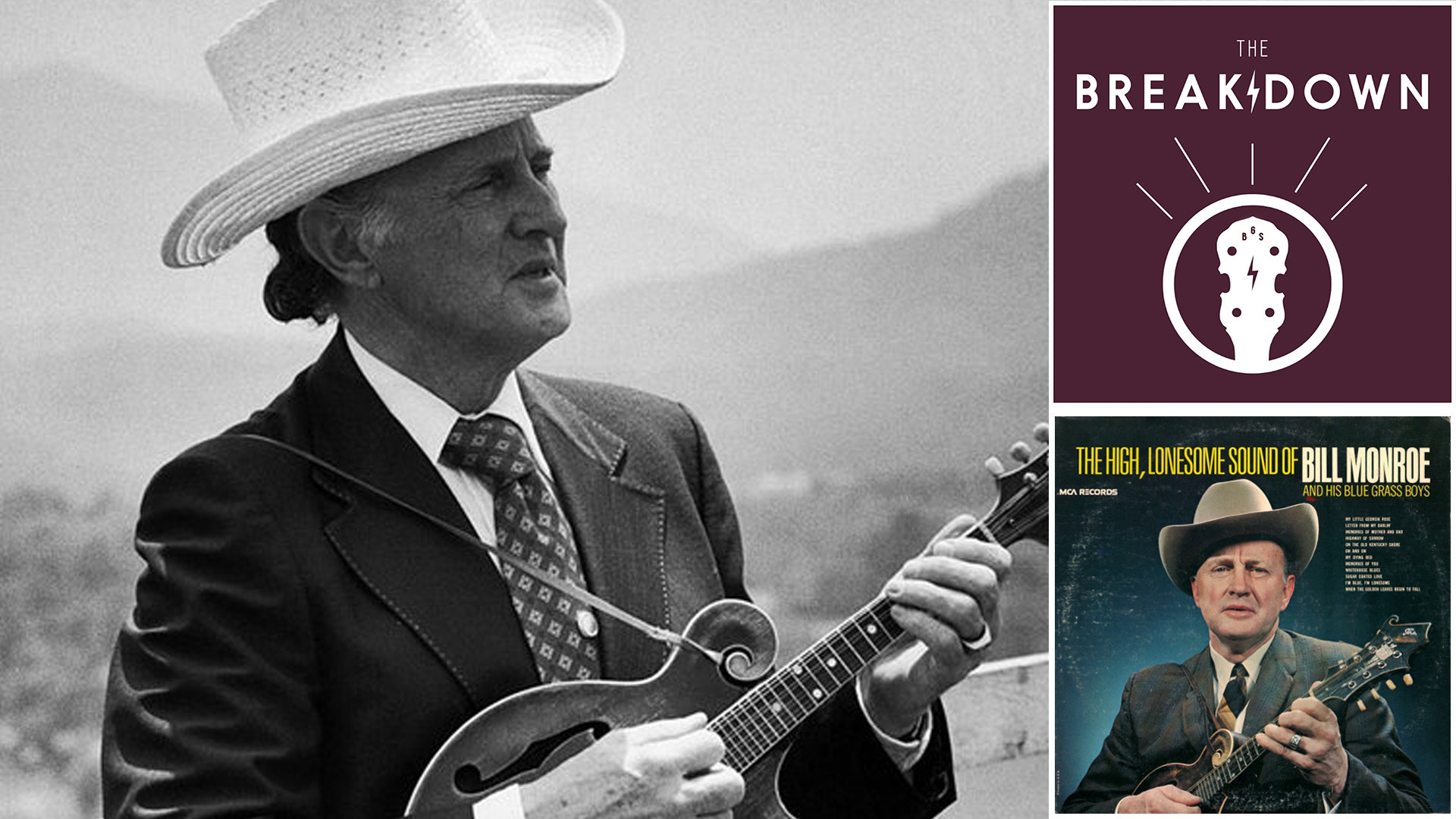
LISTEN: Kristy Cox, “Finger Picking Good”

Artist: Kristy Cox
Hometown: Adelaide, Australia originally (now Nashville, TN)
Song: “Finger Picking Good”
Album: No Headlights
Release Date: February 28, 2020
Label: Mountain Fever Records

In Their Words: “Since I was a girl, I have been a huge fan of Tommy Emmanuel. When my co-writers Jerry Salley, Bill Wythe, and I were writing this song we spoke about how great it would be if we could feature Tommy on the different fingerpicking tunes throughout the track, I was so incredibly excited when he said yes. I love this song; it was so much fun to write and even more fun to perform.” — Kristy Cox


Photo credit: Billy Joe and Clockwork Photography

The Breakdown – Jim & Jesse, ‘The Jim & Jesse Show’

Advertisement

Season 2 of The Breakdown continues with an in-depth exploration of Jim & Jesse McReynolds’ 1975 live album, The Jim & Jesse Show.

LISTEN: APPLE PODCASTS • MP3

Bluegrass and Japan are like peanut butter & jelly – it might not seem the most obvious match up, but boy, does it work. Patrick and Emma talk to Jesse McReynolds, one of the oldest living Opry members, about Jim and Jesse’s 1972 trip to Tokyo – and the awesome live album it resulted in.

Season 2 of The Breakdown is sponsored by The Soundtrack of America: Made In Tennessee. Visit TNvacation.com to start planning your trip.