Tristan Scroggins, “Chinquapin Hunting”

Mandolin has long been the keystone on which bluegrass is built — and it’s not simply because Bill Monroe, the undisputed Father of Bluegrass, played the instrument. Its backbeat chop, set against the boom-thump of the upright bass, isn’t just the backbeat, it’s the backbone of the music — setting the pace, driving the songs forward, and/or gently setting them down in the pocket. Of course, with its multiple hundreds of years of history, the mandolin is easily one of the most innovative instruments in the bluegrass lineup, equally comfortable in traditional bluegrass situations as those jazzy, classical, western swing, and world music genres that also lay claim to the instrument.

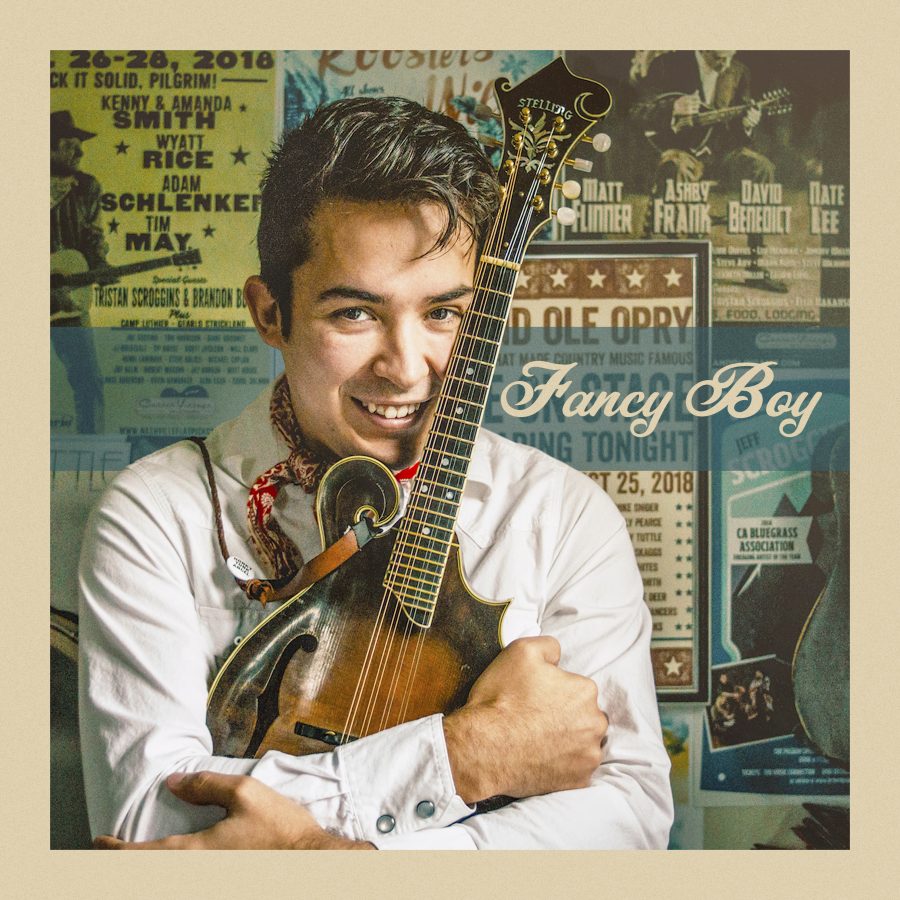
In bluegrass, invention on mandolin takes many forms, but one of these has become a pillar unto itself in bluegrass mandolin pedagogy: crosspicking. Pioneered by Grand Ole Opry member and Bluegrass Hall of Famer Jesse McReynolds (among others), crosspicking is a counterintuitive right hand approach that gives the mandolin a lilting, bouncy, arpeggiated, melodic feel that’s all at once astounding and — when done right — seamless. On his brand new EP, Fancy Boy, IBMA Momentum Award winner Tristan Scroggins pays tribute to crosspicking on five quintessential tunes, one of which is “Chinquapin Hunting.” The hours upon hours Scroggins has devoted to the technique show, as he carefully and deliberately teases crosspicking melodies out of each of these tunes — no matter how difficult that task may be.

It’s refreshing to hear the eight-stringed stalwart of the genre played so thoughtfully and intentionally, without simply being a mashed out, toneless chopping speed demon. Not that crosspicking can’t be accomplished also at a foot-stomping clip — Scroggins shows this method’s expansive depth and breadth with aplomb.

Britain’s Got Bluegrass: March 2019

Get off your couch and go hear some live music with Britain’s Got Bluegrass! Here’s the BGS-UK monthly guide to the best gigs in the UK and Ireland in March.

Mile Twelve, 20 March, Green Note, London (and nationwide)

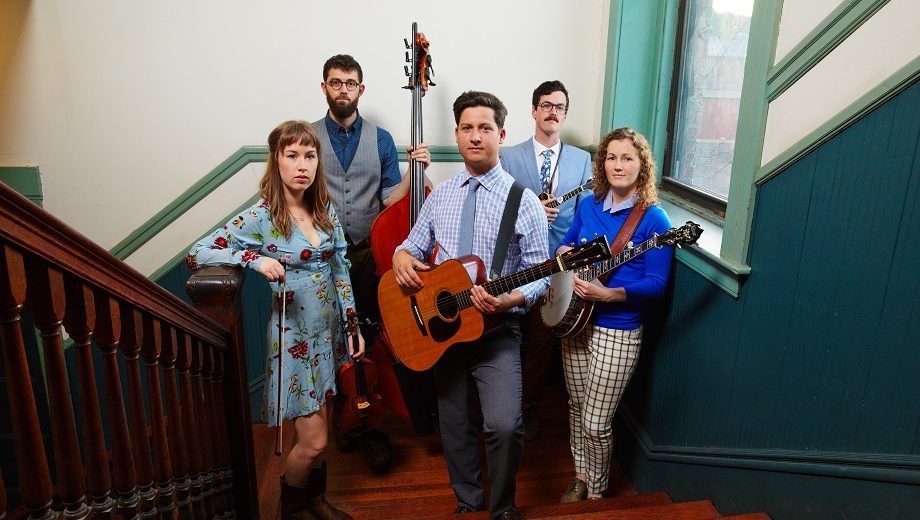
First let us rave about Mile Twelve, a band who, unlike the bearded wonder, have never played in the UK before, and who will–we guarantee — send you home with a big smile on your face. This young five-piece from Boston are some of the most skillful musicians of their generation — they’ve picked up multiple Emerging Artist award nominations at past IBMA Awards for their ability to mix hard-driving traditional bluegrass with a thoroughly modern sensibility, all while charming an audience’s pants off. Catch them on this UK tour and you’ll be able to say you saw them first… Check out their cover of “Rocket Man.”


Chris Stapleton, 8 March, Glasgow

If there’s a musician more likely to bring a British arena to its knees this month, we’d like to know who it is. In a land of anxiety-ridden repressives (we can say that because we are too), Chris Stapleton is so droolingly cool that it’s tempting to worship him as a god. Last time he was in the British Isles he was duetting with Justin Timberlake at the Brits, for heaven’s sake. In addition to Glasgow, you can catch his barrel-aged voice in Dublin and London, where he’ll be sharing the billing with Keith Urban, Lyle Lovett, Ashley McBryde and Lady Antebellum among many more at the C2C Country to Country music festival.


Thunder and Rain, from 6 March, nationwide
A dreamy blend of dobro, mandolin, guitar and bass, the Colorado-based band Thunder and Rain sound as Golden as the town they hail from. There are plenty of opportunities to catch them across the UK and Ireland on their month-long tour, from Bangor to Basingstoke, Southport to Middlesbrough, and Edinburgh to Whitstable.


Ida Mae, 12 March, Norwich

With their Ethan Johns-produced album dropping this summer, it’s a good time to introduce yourself to Ida Mae, the husband-wife duo of Chris Turpin and Stephanie Jean. Their previous band, Kill it Kid, specialised in indie-grunge, but they’ve now created an altogether mellower sound that’s already proving hot property stateside. Having upped sticks from north London and moved to Nashville, this is a rare chance to catch them back in Turpin’s hometown. They’ll also play London’s Omeara before heading back to the US to tour with Blackberry Smoke.


I’m With Her, 19 March, Hackney Empire, London

The three artists in I’m With Her don’t like being called a supergroup. So let’s just say that the hot-damn are-you-serious this-is-too-much power trio of Aoife O’Donovan, Sara Watkins, and Sarah Jarosz stop off in London for a single night at the Hackney Empire before they embark on a European tour of Norway, Denmark, the Netherlands, and Spain. And if you’ve never heard them sing live, you need to get yourselves to this gig and find out just how many ways their vocals can break your heart.


Photo of Mile Twelve: David Green

George Jackson, “Dorrigo”

As a fiddler in Nashville, a town whose guitarist population is only rivaled by the sheer quantity of fiddles and bows, it takes a singular voice to stand out. Or, in George Jackson’s case, perhaps it takes a singular accent. The New Zealand native recently transplanted to Music City and has been carving a niche for himself in bluegrass, old-time, and their offshoots ever since. He currently tours with acclaimed bassist Missy Raines’ latest lineup, a minimalist-while-mighty acoustic trio, and he’s also been spotted collaborating with folks like Front Country and Rachel Baiman.

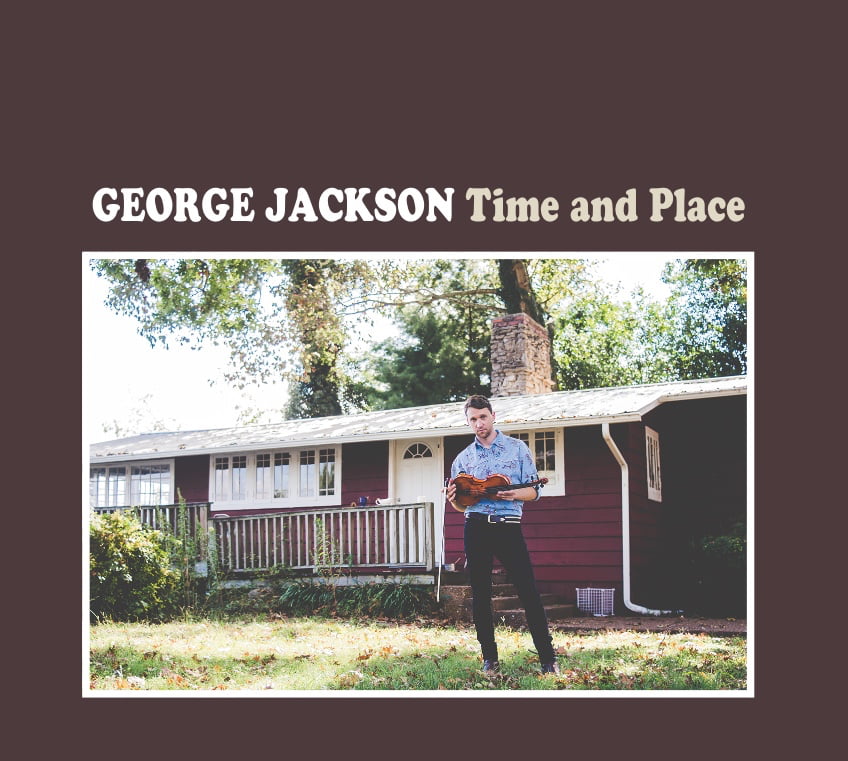
On his brand new album, Time and Place, Jackson steps into the role of frontman and bandleader, demonstrating that his voice — musically and otherwise — is so much more than just a charming, Oceanian accent. His fiddling is an intentional, pragmatic, and judicious combination of styles that range from Vassar Clements’ harebrained wit to Clifftop, West Virginia’s down-homiest old-time sawers. “Dorrigo,” a tune whose title tributes Australia, another former home to Jackson, perfectly demonstrates this old-meets-new, Northern Hemisphere meets Southern Hemisphere originality. The turns of phrase and melodic hooks register as familiar and timeless, before being unwound in surprising trajectories. Mandolin Orange’s Andrew Marlin, Charm City Junction’s Brad Kolodner, Mark Kilianski of Hoot and Holler, and Jackson’s longtime friend and collaborator Andrew Small fill out the band, demonstrating laser focus on old-time simplicity and bluegrass precision.

Perhaps thanks to his international roots, or his egalitarian approach to fiddle styles, Jackson’s “Dorrigo,” and by extension, Time and Place, simply do not bother trifling with authenticity signalling or genre designation. They simply elevate his singular voice.

From Banjo to Opera, Rhiannon Giddens Brings History to the Stage

An interview with Rhiannon Giddens these days feels like a game show lightning round. Since winning the Steve Martin Banjo Prize in 2016 and a stunning $625,000 MacArthur Fellowship in 2017, the songwriter, singer, and instrumentalist has widened her scope and let a range of fine and folk arts projects flood into her idea-driven world. When we caught up with her in Nashville, for example, she was in rehearsals for Lucy Negro Redux, a multi-layered original ballet about Shakespeare, his purported black mistress and issues of identity and otherness. Working with poetry by Caroline Randall Williams, she composed the music with one of her latest collaborators, jazz pianist and world percussionist Francesco Turrisi. They’ve made a duo album set for release this year.

Here, Giddens speaks about her broader artistic scope and her attention on how women of color negotiate the past and present.

How different is your creative life now versus five years ago?

Oh my god. It’s like: “Who was that person?” I don’t even know. I am so grateful for that time. I was transitioning from the Carolina Chocolate Drops to my solo career. But it’s definitely become more of a creative life. I still am very much an interpreter. I’m very interested in giving old songs new life and putting them through a lens of today and I think there are a lot of things that are left on the shelf that need to be aired. But I definitely have found over the years that I’m finding more and more of my creative life to be in writing and collaborating. I’m very rarely going to sit in a room and write stuff. It’s like I write things and then I want to work with somebody and develop them or have a reason to do it.

So my collaborative opportunities have really grown since I left the band because it’s a lot easier to do things as your own person. There are all these things you have to think about when you’re in a band that I don’t have to think about any more. And it’s really allowed me to focus on the woman side of things, which is hard to do when you’re in a band full of boys, you know? Now I feel I can focus a bit more on what I’m finding is very important and front and center for me, which are women’s issues and women of color, in particular. Dealing with the history of what we’ve had to go through in this country and in other places, and what does that mean? And creating platforms for other women of color to have their voices heard, in my limited capacity.

You have background in opera, which may be the most collaborative of all the fine arts, with all its component parts. And you’ve started doing Aria Code, an opera podcast. What’s that about?

I was approached by Metropolitan Opera to be guest on this podcast and it just turned into becoming the host. And that’s been really fun. The wonderful producer Marrin Lazyan, she’s put it all together and I’m there to provide context and if there’s stuff that jibes particularly well with what I know like Otello, the Verdi opera, I can bring in my expertise on blackface and things like that. It’s been great.

And I’m going to be in my first production next year as a mature artist. I’m doing Porgy & Bess with the Greensboro Opera. It’s to open up the new arts center in Greensboro. So it’s kind of part of my involvement in my hometown. And also an opportunity to sing Bess, which I’ve never been able to do. So opera’s come back into my world in kind of unexpected ways. I’m writing an opera. I sing with orchestras on a regular basis. So it’s been really wonderful to see that come back into my life because it is something that I love so much and that I have spent a lot of my years doing. So we’ll see where it goes. I don’t know!

You produced the album Songs of Our Native Daughters, which brings you together with Amythyst Kiah, Allison Russell, and Leyla McCalla. What motivated this and how do you put these women into context?

It was an amazing opportunity. I was already working on this idea of early American musical history and speaking to it through the music of the banjo and the music of minstrelsy for Smithsonian Folkways. So it took this little turn and became a record with these really strong women of color. With my co-producer Dirk Powell, we were talking about who we wanted to be on this project, and that’s where we ended up. I was like, “Oh, this is where it needs to go.” From then on it took this slightly different path down to really talking about the woman of color’s experience in America and having a platform to respond to that in an artistic way.

And to each of the women who came in, I said, look, bring your banjo. And let’s talk about what it means to be a woman of color here and what it means to have ancestors who’ve gone through what they’ve gone through. It was an amazing experience to watch them feel like they had this space to write about these things that maybe they’ve touched on, but to have days to focus on these themes and these ideas. It was a beautiful collaborative thing. I’ve worked with each of them in various ways so I just knew it was going to work. And it worked better than I could have ever really dreamed. It went places I’d never have considered. That’s why you pick people and then you let the project do what it does instead of going, “It’s not exactly what I envisioned.” Well, usually because it’s better! So leave it alone and let it do what it’s going to do.

In this respect, do you see yourself as a mentor, or as a leader in this widening and overdue effort to infuse folk and roots music with more voices?

I’m always looking for ways to facilitate. People in these positions, like the folks putting on the Cambridge Folk Festival or at Smithsonian Folkways, they’re looking to me, and I’m like, “Hey these people, because they’re awesome.” And if that’s how I can use whatever little power I have in the world, that’s what I want to use it for. I’ve got my own career and it’s very important to me, but that’s also very important to me–creating the community of people that are doing this.

Because that was the strength of the Carolina Chocolate Drops. We were a band and we had each other. In a time where, even less than now, people were like, “Black people on banjos? What?”, we had each other and I know what that community can mean as an artist. It really gives you strength. And that was my idea with Our Native Daughters and with anything I’m (doing). Amythyst has opened for me. Leyla was part of the Chocolate Drops. JT and Ally (Birds of Chicago) — I’ve definitely championed them. I think that’s what we need to do for each other. If I’m in a position where somebody who has power asks me, I’m going to spread that around. Because I think that’s what you’re supposed to do.

They tell writers that it’s better to show than to tell. And it strikes me that roots music is moving from a phase of ‘telling’ about inclusion to a phase of showing. Is that fair to say?

I think so. I’m definitely moving that way in my own life. There was a lot of talking with the Chocolate Drops because you had to educate people. But there was also a lot of just doing. We found the balance; we’re going to contextualize this, but then we’re just going to play it. Because the facts are the facts and we’re not in a position to shame you about not knowing this. We didn’t know this. But I definitely found that over time, I’m tired. I just want to play and sing.

And the next record of mine is not a project. It’s not a mission. It’s coming out in May (I think) and Francesco and I did that together. It’s really all the worlds that I’ve been talking about and being in all together. I just want somebody to put it on and listen to it, and they don’t know anything about me, and they come away – I want them to love the record but I also want them to feel this aspect of nobody owns any sounds. Nobody owns any experiences in humanity. We’re taking all the sounds you heard in the ballet and the notion that humans have been moving since the beginning, and we’ve been affecting each other since the beginning.

So a religious trance drum from Iran works perfectly well with an Appalachian a cappella ballad. Because they’re representing universal human truths. It would be really nice for people to just experience that through sound and through the experience of the songs. And of course we’ll talk about it. But I’m kind of moving toward showing and inhabiting all the work that’s come up until now and living in that and taking that to where it needs to go.


Craig Havighurst covers music for WMOT Roots Radio. Hear the interview.

WATCH: Bluegrass Pride, “Live and Let Live”

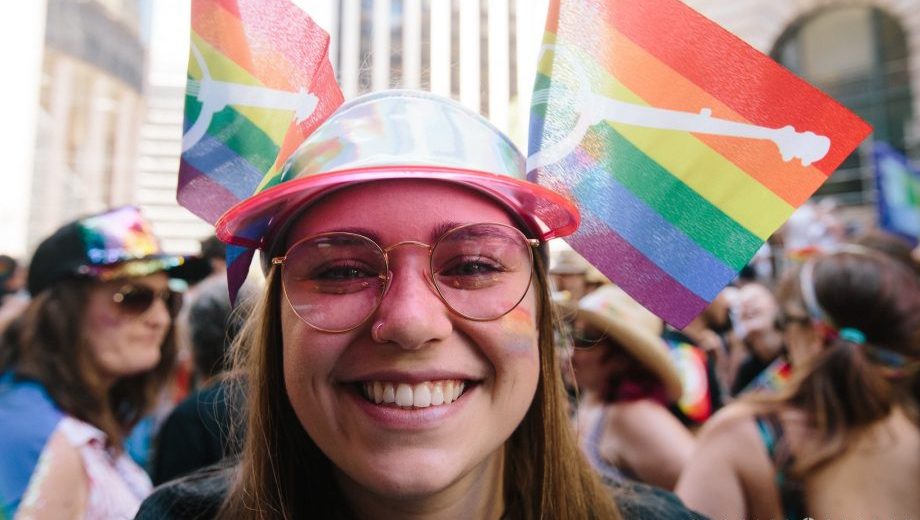
Artist: Bluegrass Pride
Hometown: San Francisco, California
Song: “Live and Let Live” (feat. Justin Hiltner, Melody Walker, and Laurie Lewis)
Release Date: February 22, 2019

In Their Words: “This song was written in honor of Bluegrass Pride during our first season and almost immediately became our unofficial anthem here in San Francisco. Its message of inclusion and unqualified acceptance speaks to the exact mission of Bluegrass Pride and the way we want the world to be. Making this music video was really a way for us to show people what Bluegrass Pride is really about. When you watch this video and listen to this song, you can truly feel the community that made it and all the love that makes Bluegrass Pride so special. As we continue to grow, we hope that folks can take this message with them, and maybe, in the end, we can spread a little more unconditional love throughout the world and make tomorrow a little bit better.”


Photo credit: Michael Pegram

LISTEN: Big Country Bluegrass, “Keep On Going”

Artist: Big Country Bluegrass
Hometown: Independence, Virginia
Song: “Keep On Going” (written by Red Allen)
Album: Mountains, Mamas and Memories
Release Date: February 22, 2019
Label: Rebel Records

In Their Words: “’Keep On Going’ appealed to me and my wife Teresa immediately upon hearing it. Red Allen has always been one of my favorite bluegrass lead singers, and when we heard Scotty Stoneman’s fiddling on the original County Records recording, we were hooked. Scotty was part of the Stoneman Family, who were from our neck of the woods here in Southwest Virginia, and his fiddling along with Porter Church’s banjo playing really filled out the song so well. I asked our guitar player Eddie Gill to listen to the song, and when the band cut it in the studio, I was really pleased!” — Tommy Sells

“The lyrics, and the picking and singing stood out, and it was almost like the song was a blueprint of how good bluegrass music should sound.” — Eddie Gill


Photo credit: Sandy Worrell

Six of the Best: Songs About Gunslingers

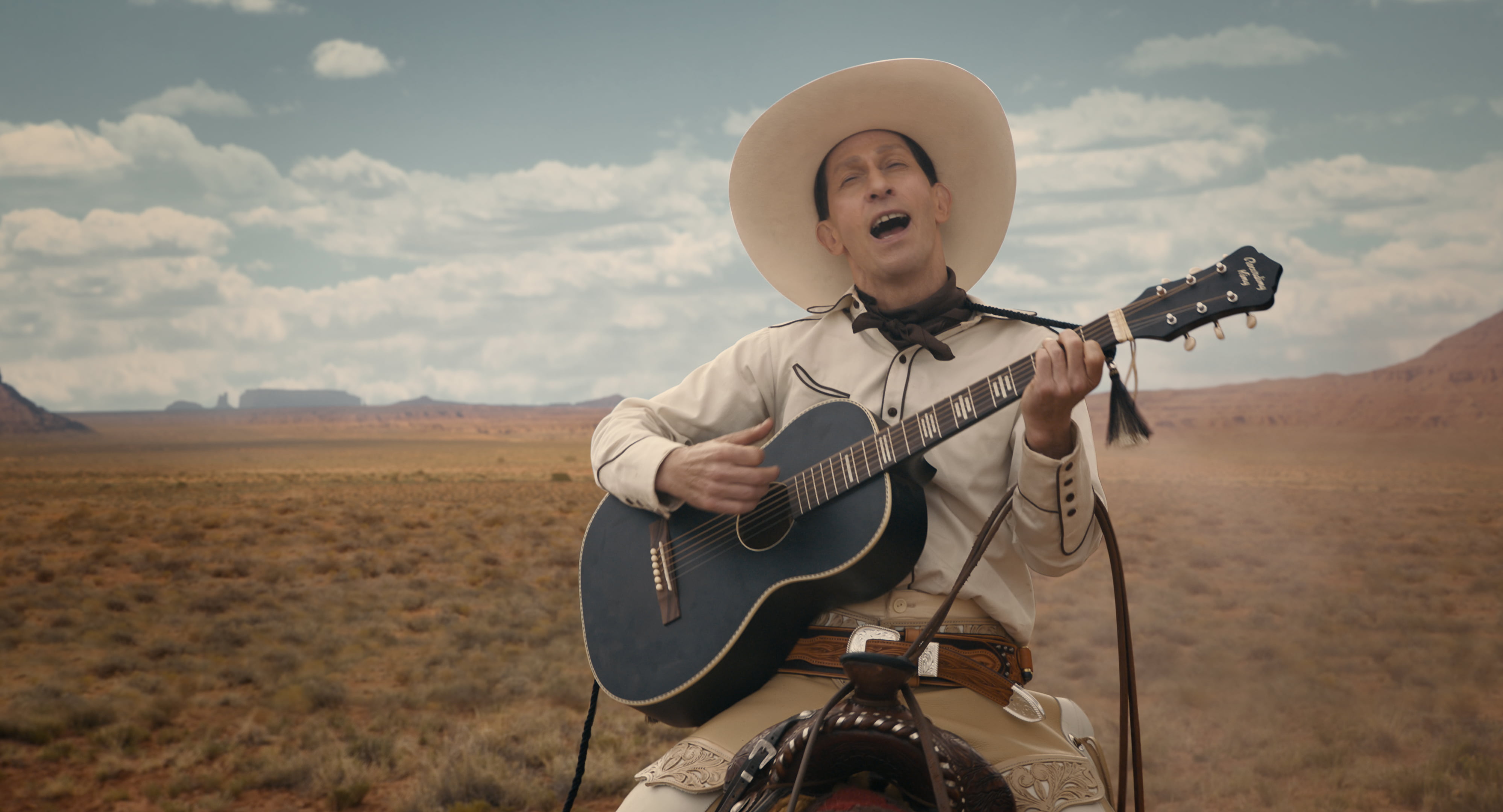
Like movies? Like yodeling? Wow, is this a big week for you. And, as it happens, for Gillian Welch and Dave Rawlings, who will be mixing it with Lady Gaga and Mary Poppins on the Oscars red carpet on Monday as Best Song nominees. If you haven’t yet seen The Ballad of Buster Scruggs, the Coen Brothers’ latest movie, then believe us that it’s worth the Netflix subscription, if only for the sight of Tim Blake Nelson singing “yippie-kay-yey” while floating through the sky with a celestial harp. Maybe it’s the fact that we’ve been bingeing on the Sergio Leone/Clint Eastwood Man with No Name trilogy this week (God bless you, Ennio Morricone), but it’s about time for a list of great songs about gunslingers. (Please note: we don’t think that shooting people is cool, or a viable alternative to an impartial judiciary.)

“Big Iron” – Marty Robbins

Robbins’s iconic 1959 album, Gunfighter Ballads and Trail Songs, is packed with sharpshooters and outlaws – from Billy the Kid, to Utah Carol, to the nameless man about to be hanged for killing Flo and her beau. Sure, it’s most famous for Robbins’s biggest hit (and Grammy winner) “El Paso.” But if you’re looking for the classic quick-draw at high-noon (or in this case, twenty past eleven), you won’t find better than the opening track, “Big Iron.” Written by Robbins himself, it’s a classic tale of good vs evil as a handsome stranger (and Arizona ranger) rides into town to bring down murderous outlaw Texas Red. If those backing harmonies – especially the incredible bass drop – don’t give you goosebumps, check your pulse. You may be technically dead.

“Gunslinger’s Glory” – The Dead South

If there’s one thing Canada’s premier punkgrassers love to write, it’s songs about Westerns. Maybe it’s because lead singer Nate Hilts’s uncle, back home in Saskatchewan, was (as he puts it) “a big ol’ cowboy”. Either way, their albums are littered with shootouts and bodies, and their high-energy, high-drama approach to performance lends itself well to the subject. This is one of their best, tackling the age-old problem of being a famed gunfighter: that everyone else wants to bring you down. Tell us about it, punks.

“The Last Gunfighter Ballad” – Guy Clark

Johnny Cash’s version – the titular track from his 1977 album – is better known than Guy Clark’s original, recorded a year earlier. But Cash’s spoken-word rendition, given with his trademark rhythmic trot, isn’t perhaps as melodious, or as affecting, as Clark’s. A simple guitar line underlies the story of an old man drinking at a bar, recalling his former life of shoot-outs in dusty streets and “the smell of the black powder smoke”, and the twist in the final chorus is a reminder that modern living isn’t without its own dangers. That’s Waylon Jennings on the harmonies in the chorus, by the way.

“When A Cowboy Trades His Spurs For Wings” – Gillian Welch and David Rawlings

Probably the best thing about the Coen Brothers’ portmanteau of short stories from the Wild West is its opening, with Tim Blake Nelson clip clopping into frame on his white horse, strumming a black guitar and singing Marty Robbins’s “Cool Water.” The second best comes seven minutes later, when Willie Watson shows up as his nemesis. The duet that Welch and Rawlings penned for the pair may be a parody of a cowboy song, but the music’s so en pointe and beautifully sung that the humour takes second place to the artistry. Also, Welch and Rawlings invented a new word – “bindling” – for the song, which has got to be worth the Oscar nom.

“Gunslinging Rambler” – Gangstagrass

There’s a fair amount of reference to guns and violence in the songs of the world’s first (and only) hip-hop bluegrass fusion band. Despite the title, and the assertion of the protagonist that “you gonna wind up another notch on my gun belt”, you realise as the lyrics progress that this one’s not actually about a gunfight, but its modern-day equivalent, the rap battle. R-SON recorded this track for their 2012 album, Rappalachia, and it contains arguably the most devastating lines on the album. “I’m not killing these guys, please let me explain/But when I’m done, there’ll be very little left of their brains.”

“Two Gunslingers” – Tom Petty and the Heartbreakers

What’s the best kind of story about gun violence? One where everyone agrees to give it up. Released in 1991 on Into The Great Wide Open, it’s a glorious moment of self-revelation that subverts both the genre and our expectations. As one of the gunslingers so eloquently puts it: what are we fighting for?


Photo courtesy of Netflix

Britain’s Got Bluegrass: February 2019

Get off your couch and go hear some live music with Britain’s Got Bluegrass!, BGS – UK’s monthly guide to the best gigs happening in the UK and Ireland. Here are our top picks for February:

Mike McGoldrick, John McCusker & John Doyle — from 11 February, nationwide.
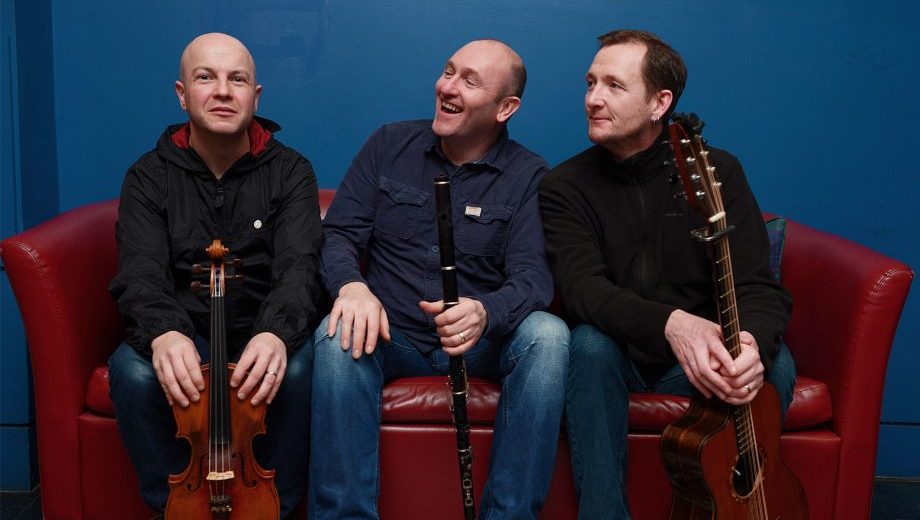
After their sell-out shows with the Transatlantic Sessions, John McCusker, Mike McGoldrick and John Doyle take their powerhouse folk trio on the road. The Wishing Tree Tour visits 24 towns and cities across Britain until 9 March, including London (Kings Place), Liverpool and Perth.

The Dead South — 17 February, Birmingham.
The Bastard Son tour has reached the UK and Saskatchewan’s superstars of bluegrass have been steamrollering their way through the UK on a series of sold out gigs, and their remaining nights in Portsmouth, Brighton, London and Cambridge are all returns only. But you can still buy tickets for their Birmingham gig, at O2 Institute3, so grab them while you can.

Whiskey Shivers— to 23 February, nationwide.
The Austin punkgrass outfit are halfway through their rumbustious tour, with gigs still to come in Galway, Norwich, Nottingham, Settle and Newcastle upon Tyne. We recommend the 19 February gig at the Lexington in London, whose upstairs room should suit their energetic, anarchic spirit.

John Smith — 24 February, Royal Exchange, Manchester.
The singer-songwriter’s first album, Hummingbird, combines his original songs with a deeply personal collection of traditional folk tunes. And he’s bringing his unique blend of slide and fingerstyle guitar to one of Manchester’s favourite venues.

Tim O’Brien, “La Gringa Renee”

It’s February. It’s that time of the year when everyone is contemplating migrating closer and closer to the equator. Whether by plane or by car or by cruise, these dull gray winter months chase us to sunnier climes and happier times. “La Gringa Renee,” a meditative instrumental that’s equal parts Bolero and Klezmer, is the perfect soundtrack for such climes and times, especially given that it was inspired by the Yucatán peninsula, Soliman Bay, the wind through the palm fronds, and a lovely lady.

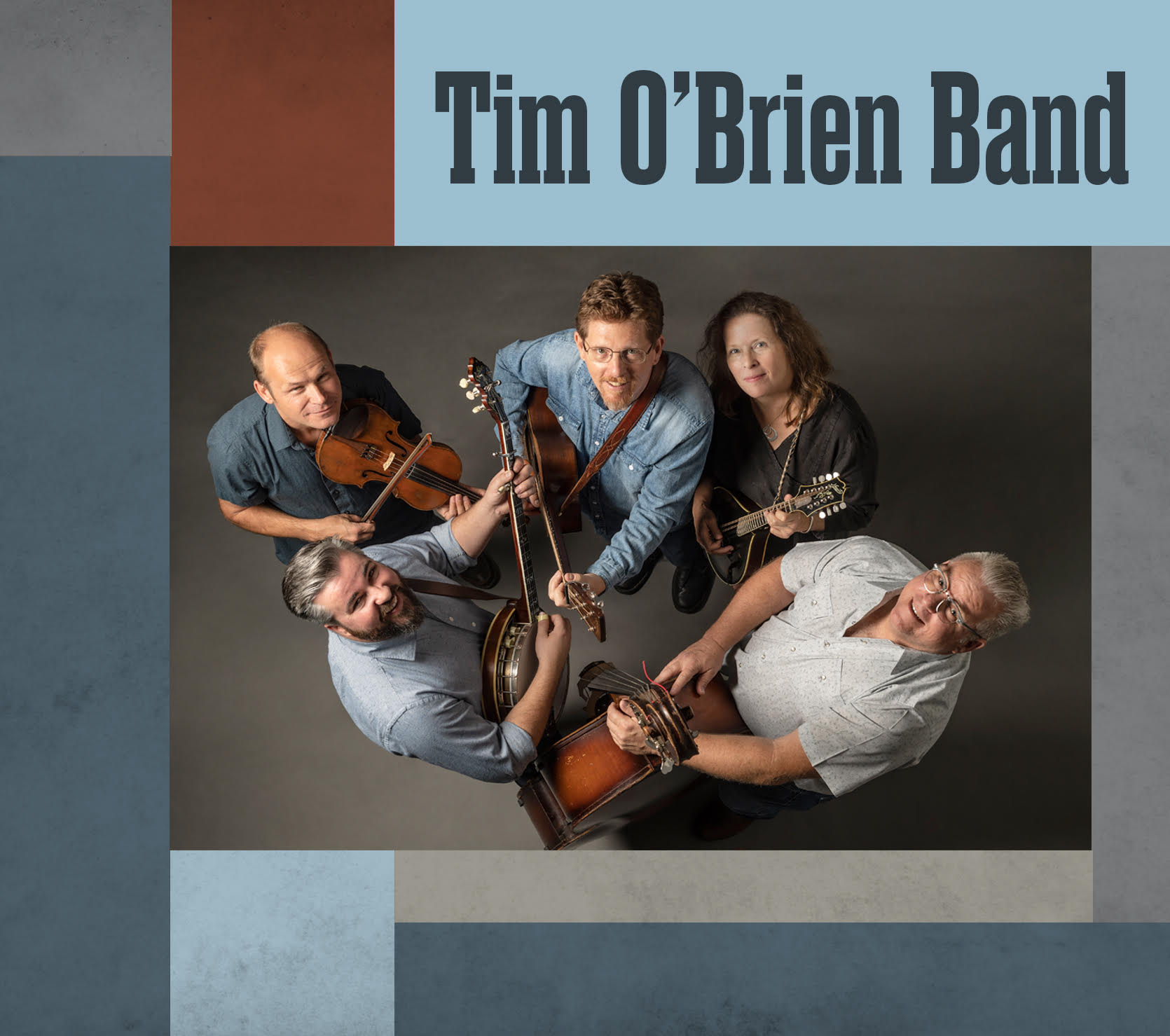
Tim O’Brien’s upcoming album, released as the Tim O’Brien Band and self-titled, is touted as landing “with two feet squarely back in bluegrass,” but this original is already a slight departure, toying with tropical, south of the border themes and languid melodies that rest and relax and dart and play just like children kicking up sand on the beach. O’Brien’s human inspiration, Jan Fabricius (whose middle name is Renee), appears on the album singing harmony vocals and playing some mandolin, but the band following the wistful, wavy palm fronds of O’Brien’s mandolin on this tune are Shad Cobb (fiddle), Patrick Sauber (banjo), and Mike Bub (bass) with special guest Bryan Sutton lending his unfalteringly tasteful guitar pickin’ as well.

We recommend pouring a drink with a summery, Caribbean flair, lounging back, and letting the tune wash over you like the incoming tide. It’s warm, inviting, and relaxing — with just a touch of O’Brien’s familiar voice cooing at us like a lullaby to sweetly bookend “La Gringa Renee.”

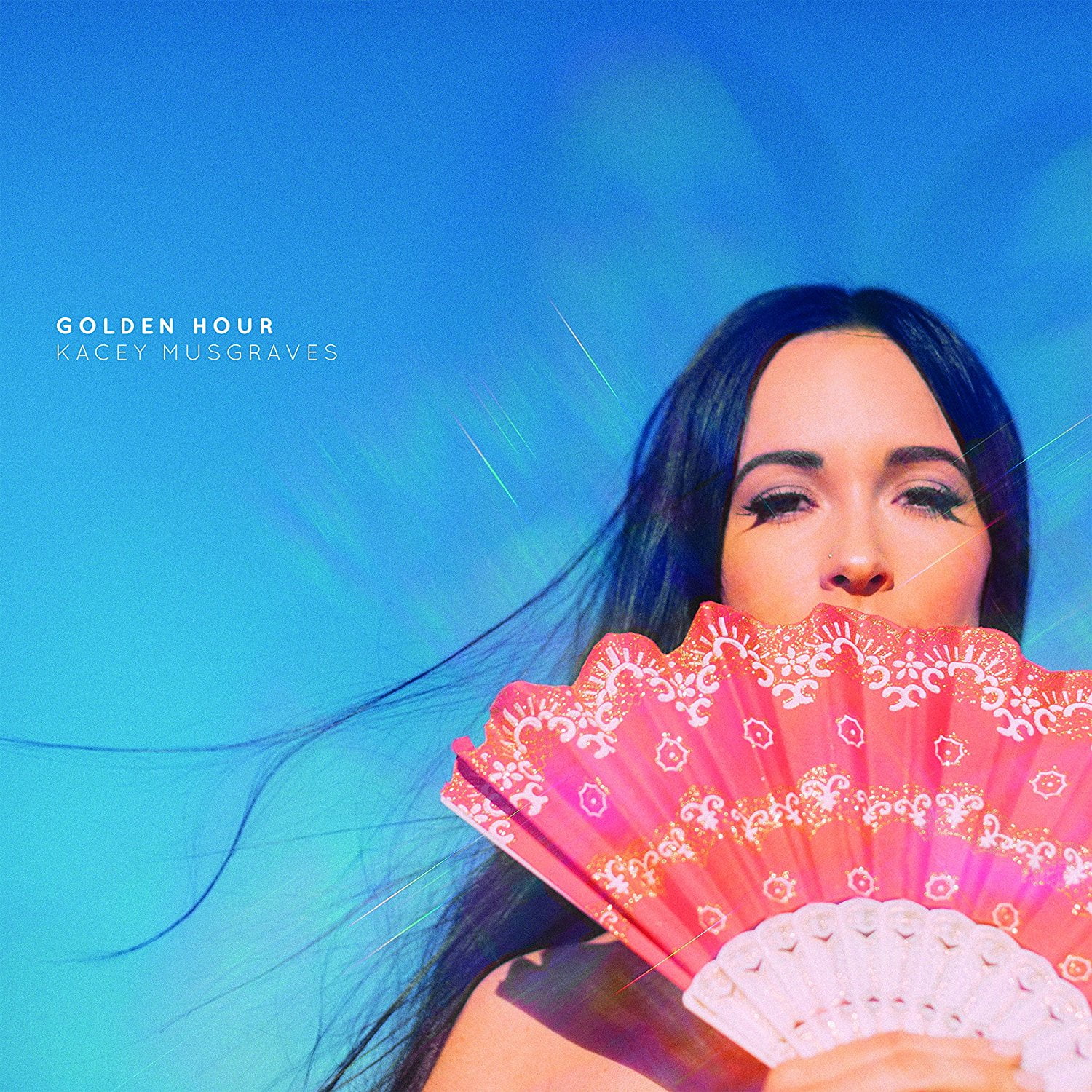
Kacey Musgraves is Country’s Queer Icon, but These Roots Artists are Actually Queer

Kacey Musgraves’ dominance during Sunday’s 61st Annual Grammy Awards has certainly solidified her place as country music’s newest queer icon. She offered simply stunning, near-perfect performances during the primetime broadcast and took home four trophies: Best Country Solo Performance, Best Country Song, Best Country Album, and one of the most prestigious awards of the night, Album of the Year. So-called “Gay Twitter” devolved into a tizzy as the show unfolded through the afternoon and evening with Musgraves decidedly at the top.

Said Album of the Year, Golden Hour, saw a critical mass of LGBTQ+ fans embracing Musgraves’ music, but her relationship to the broader gay community has been percolating since her debut album, especially given its overt “Follow Your Arrow” message. All combined, her eye for gratuitous-yet-effortless glamour, her acid-steeped, anime-meets-California-meets-trailer park aesthetics, and her singular, pop-influenced countrypolitan sounds are gay country manna from heaven. And it’s not just in the music. This year, she made an appearance as a guest judge on VH1’s RuPaul’s Drag Race All Stars and she routinely advocates for LGBTQ+ fans and their causes on her social media feeds.

To be sure, Musgraves fits the diva-idolized-by-gays criteria impeccably, but there’s a certain passive erasure that can occur when fans consciously or subconsciously become myopic in their praise of and infatuation with straight, cisgendered, female artists. It’s true that Musgraves has played an important role in expanding country music’s borders — musically, socially, and otherwise — but at the same time a burgeoning community of LGBTQ+ writers, artists, musicians, and creators are carving out their own space within country, Americana, folk, and even bluegrass and old-time.

This writer would never go so far as to suggest that one ought not squeal with delight at Musgraves’ fierce-as-fuck costumes, her tear-jerking solo performance of “Rainbow,” or her impossibly long and flowy Cher-callback, bump-it wig. Rather, if you love Kacey Musgraves and Golden Hour — because queer identities can be seen and reflected within her work, because she opens the door to the idea that country isn’t a forbidding place for these identities, and/or because she’s unabashed and unapologetic in her pursuit of these goals — you’re going to love these eleven badass, talented, inspirational, openly queer roots musicians, too.

Time to get stanning:

Brandi Carlile

After last night’s show this name should no longer need mentioning or introduction, as Carlile and her twin collaborators, Tim and Phil Hanseroth, absolutely brought down the Staples Center with one of the most moving performances of the night, the soaring, galvanizing, overtly queer, and now Grammy-winning masterpiece, “The Joke.” Carlile is openly gay, married, a mother of two daughters, and a tireless voice for representation and progress in Americana and its offshoot genres. If “The Joke” resonates with you (i.e. if it makes you sob uncontrollably, as it does this writer), check out “That Wasn’t Me,” “Hurricane,” and, of course, “The Story.”


Mary Gauthier

Gauthier’s latest, Rifles & Rosary Beads, was nominated for Best Folk Album this year and though it didn’t take home the prize, the album has received universal acclaim for its message of hope, empathy, and visibility for members of our armed services and the struggles they face during and after their service. Gauthier collaborated with veterans of the military in writing all of the record’s heart wrenching, honest, raw songs — which might seem counterintuitive given gays’ historically tenuous relationship with the military writ large. But Gauthier’s own life story, and the trials she’s faced, make her the perfect writer to prioritize empathy above all else in these songs.

Don’t sleep on the rest of her discography, though. The simple profundity of her writing is consistently awe-inspiring. Check out “Mercy Now” after you’ve given Rifles & Rosary Beads a listen.


Karen & the Sorrows

Jewish New York City native Karen Pittelman may seem like an unlikely frontwoman of a country band, especially when you factor in her past punk and queercore experiences, but it turns out she grew up bathed in the country compilation albums her father produced and sold for a living. Her voice recalls country mavens of bygone eras — it’s delicate yet powerful, with a pin-up girl quality that’s as subversive as it is natural. Also check out “Take Me for a Ride,” a Pittelman original that plays like a trad-country, queer version of Sam Hunt’s smash hit, “Body Like a Back Road,” but without the cheese.


Little Bandit

All of the hollerin’, barn-burning, hell-raising country soul of your favorite outlaw country rockers, but with lacy gay edges, Little Bandit (AKA Alex Caress, et. al.) is as honky-tonk as it gets. It’s a beautiful balancing act, presenting as an impossibly big-voiced, piano-smashing, charismatic frontman while singing male pronouns without hesitation. He leans into a beautifully paradoxical queerness that equally embraces diamonds, Waffle House allusions, platform shoes, and plain ol drinkin’. If you like it — and you will — check out “Diamonds,” too.


Sarah Shook & the Disarmers

Outspoken outlaws in a crop of alt-country artists who align with that eponymous country movement of the 70s, Sarah Shook & the Disarmers are a road-dogging band that would seemingly fit that mold, excepting Shook’s deliberate efforts to challenge the inherent heteronormativity of country music at every turn. For Shook it’s not necessarily about having a political message, as she put it in a 2018 interview with BGS, “I feel like doing what I’m doing — touring relentlessly, putting out records, and being unapologetically myself — is a very powerful and political maneuver as well… I’ve never been concerned about that because I feel it’s important to be honest and forthright as a human being, and as an artist and certainly lyrically as well.”


Indigo Girls

Both Amy Ray and Emily Saliers — the two halves that make up the absolutely iconic Indigo Girls — have released solo albums in the past year, both of which draw heavily on folk, Americana, and country influences. This should be no surprise to even the most casual IG fans. Banjos, mandolins, ukuleles, and so many other hallmarks of roots music have been integral to the Indigo Girls’ sound all along. But the songwriting, devastating and personal and oh so very real, is the real takeaway from both projects.


kd lang

This list might as well not exist if it excluded kd lang. Before her crossover to more mainstream genre designations, kd pretty much originated the role of badass queer making unimpeachably trad country music that refused to shy away from its queer touchpoints. Just take a look at this video! “Honky Tonk Angels,” sung with Loretta Lynn, Brenda Lee, Kitty Wells, and finally, kd in all of her butch, gender-bending, binary-eschewing glory — complete with a Minnie Pearl cameo! Country has always been (more than) a little queer, y’all.


Lavender Country

A man well, well ahead of his time, Patrick Haggerty (AKA Lavender Country), released his debut, self-titled album in 1973. It was a groundbreaking work, but the world, let alone the country music community and its commercial machine, were not ready for it. A Seattle DJ was fired for playing “Cryin’ These Cocksucking Tears” on the airwaves, only one thousand copies of the album were printed, and the band was relegated to performing exclusively at LGBTQ+ events and programs. But, despite being largely shut out of the industry, Haggerty and Lavender Country never ceased. In 2018, at the age of 74, Haggerty took part in AmericanaFest’s very first queer-focused showcase.


Amythyst Kiah

Amythyst Kiah’s booming, captivating voice, and her haunting, Southern gothic approach to Americana, bluegrass, and old-time set her apart from almost anyone else on the scene at this moment. Her reimagination of Dolly Parton’s magnum opus, “Jolene,” is a perfect example of how she carefully turns tradition on its ear. Based in East Tennessee herself, she draws on the rich musical heritage of the region, adding her own spin, creating space to allow herself to soar. And there’s plenty more soaring in her future, as she has opened shows for artists such as Rhiannon Giddens and Indigo Girls across the country and in Europe, and her collaboration album with Giddens, Allison Russell (Birds of Chicago), and Leyla McCalla, Songs of Our Native Daughters, is set to drop February 22.


Alynda Segarra

Singer/songwriter, activist, and Hurray for the Riff Raff frontwoman Alynda Segarra entrances with The Navigator, a concept project that focuses on the life and times of a fictitious Puerto Rican youth living in New York City. Themes of immigration, identity politics, displacement, disenfranchisement, and capitalistic overreach are threaded throughout the album, which offers its songs as tableaus of this girl’s — Navita’s — reality. It’s a stunning reminder that the intricacies and nuances that define us, and by doing so, separate us, are not so difficult for us to overcome with empathy and understanding. “Pa’lante!” (which translates to “forward!”) is the album’s battle cry, a song that turns utter despondency, grief, and a sore lack of humanity into a glimmer of hope.


Trixie Mattel

While almost all other drag queens who delve into the music scene release dance tracks, rap albums, or similar club-ready jams, Trixie Mattel (AKA Brian Firkus) draws upon her rural Wisconsin roots on two folk-adjacent, country-ish albums, Two Birds and One Stone. (Get it?) This isn’t just an opportunist attempt to punch up Trixie’s Dolly Parton-esque, country barbie aesthetic, she’s really got the chops. Not only is she a talented humorous-while-poignant songwriter, her technical skills on guitar and autoharp (yes, autoharp) are precisely honed to showcase her original music. This is no gimmick — though the Doves in Flight Gibson guitar and the custom, pink d’Aigle autoharp are jaw-droppingly perfect additions to Trixie’s lookbook.