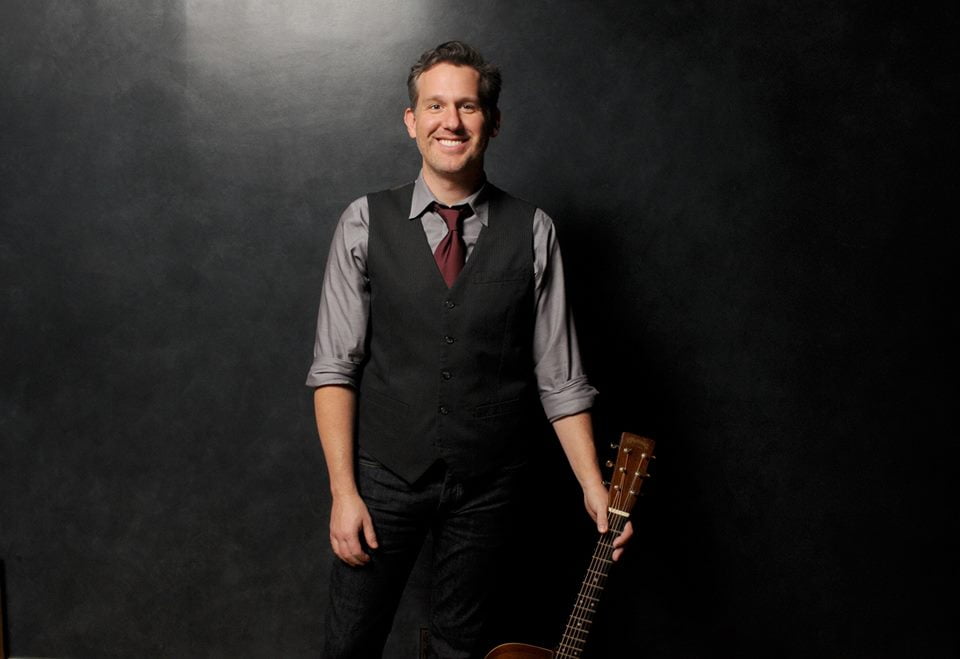
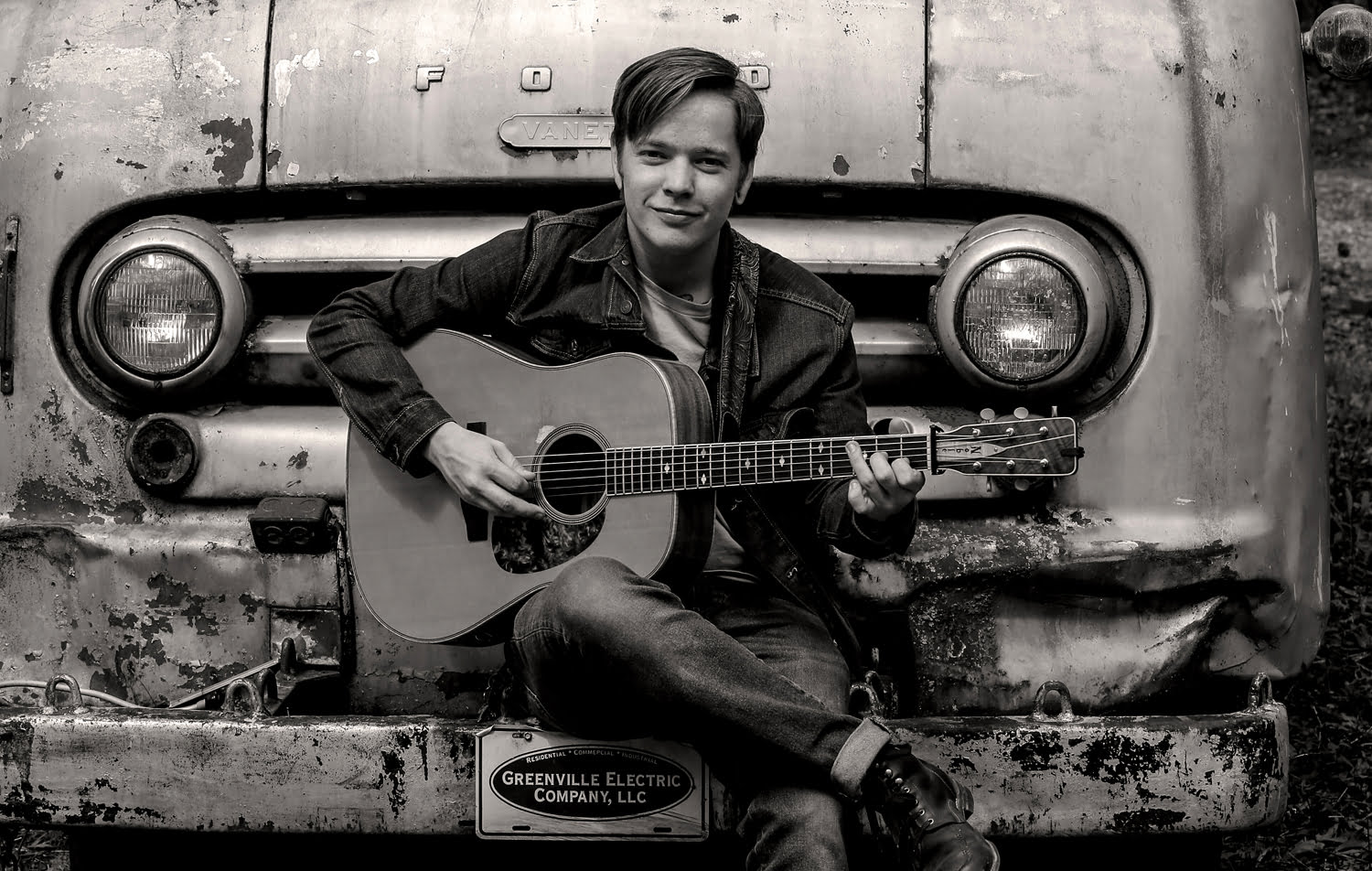
WATCH: Bryan Sutton Declares He’ll “Lay Down My Old Guitar” on ‘Live From Here’

If you find yourself stuck in the late-winter blues, this video is for you. Ten-time IBMA Guitar Player of the Year Bryan Sutton visited Live From Here with Chris Thile recently, and the result was nothing short of breathtaking. Sutton and Thile teamed up on a classic bluegrass number, “Gonna Lay Down My Old Guitar,” but there was nothing ordinary about the performance. The in-the-moment communication between Sutton and Thile is truly a sight to behold as they trade blazing leads, soulful harmonies, and curious facial expressions. From the moment it kicks off, the audience is treated to an experience that only two prodigious instrumentalists like these can provide. If you’re in need of a little extra to get through the day, week, or month, look no further.


IBMA Reveals Award Nominees, Hall of Fame Inductees, Distinguished Achievement Winners

Five of the top bands in bluegrass earned IBMA Entertainer of the Year nominations from the International Bluegrass Music Association. The ballot was revealed on Wednesday morning in Nashville.

The Entertainer of the Year nominees are Balsam Range, Sam Bush Band, The Earls of Leicester, Del McCoury Band, and Joe Mullins & the Radio Ramblers.

Due to a tie, seven titles will compete for the Song of the Year category. The IBMA Awards will take place Thursday, September 26, at the Duke Energy Performing Arts Center in Raleigh, North Carolina, with hosts Jim Lauderdale and Del McCoury.

Mike Auldridge, Bill Emerson, and the Kentucky Colonels have also been named as inductees into the Bluegrass Hall of Fame.

Distinguished Achievement Award recipients include radio personality Katy Daley, Mountain Home label founder Mickey Gamble, former IBMA executive director Dan Hays, The Lost and Found founder Allen Mills, and Japanese language magazine Moonshiner, now in its 37th year covering bluegrass and acoustic music.

The full ballot is below.

ENTERTAINER OF THE YEAR

Balsam Range
Sam Bush Band
The Earls of Leicester
Del McCoury Band
Joe Mullins & the Radio Ramblers

VOCAL GROUP OF THE YEAR

Balsam Range
I’m With Her
Doyle Lawson & Quicksilver
Russell Moore & IIIrd Tyme Out
Sister Sadie

INSTRUMENTAL GROUP OF THE YEAR

Sam Bush Band
Michael Cleveland & Flamekeeper
The Earls of Leicester
Ricky Skaggs & Kentucky Thunder
The Travelin’ McCourys

NEW ARTIST OF THE YEAR

Appalachian Road Show
Carolina Blue
High Fidelity
Mile Twelve
Billy Strings

SONG OF THE YEAR (7 nominees, due to a tie)

“Dance, Dance, Dance”
Artist: Appalachian Road Show
Writers: Brenda Cooper/Joseph Cooper/Steve Miller
Producers: Barry Abernathy, Darrell Webb, Ben Isaacs
Executive Producer: Dottie Leonard Miller
Label: Billy Blue Records

“The Girl Who Invented the Wheel”
Artist: Balsam Range
Writers: Adam Wright/Shannon Wright
Producer: Balsam Range
Executive Producer: Mickey Gamble
Label: Mountain Home Music Company

“The Guitar Song”
Artist: Joe Mullins & the Radio Ramblers with Del McCoury
Writers: Bill Anderson/Jamey Johnson/Vicky McGehee
Producer: Joe Mullins
Associate Producer: Jerry Salley
Label: Billy Blue Records

“The Light in Carter Stanley’s Eyes”
Artist: Peter Rowan
Writer: Peter Rowan
Producer: Peter Rowan
Associate Producer: Tim O’Brien
Label: Rebel Records

“Next Train South”
Artist: The Po’ Ramblin’ Boys
Writer: Mac Patterson
Producers: The Po’ Ramblin’ Boys, Dave Maggard, Ken Irwin
Label: Rounder Records

“Take the Journey”
Artist: Molly Tuttle
Writers: Molly Tuttle/Sarah Siskind
Producer: Ryan Hewitt
Label: Compass Records

“Thunder Dan”
Artist: Sideline
Writer: Josh Manning
Producer: Tim Surrett
Label: Mountain Home Music Company

ALBUM OF THE YEAR

City on a Hill
Artist: Mile Twelve
Producer: Bryan Sutton
Label: Independent

Del McCoury Still Sings Bluegrass
Artist: Del McCoury Band
Producers: Del and Ronnie McCoury
Label: McCoury Music

For the Record
Artist: Joe Mullins & the Radio Ramblers
Producer: Joe Mullins
Associate Producer: Jerry Salley
Label: Billy Blue Records

I Hear Bluegrass Calling Me
Artist: Carolina Blue
Producers: Bobby Powell, Tim and Lakin Jones
Executive Producers: Lonnie Lassiter and Ethan Burkhardt
Label: Pinecastle Records

Sister Sadie II
Artist: Sister Sadie
Producer: Sister Sadie
Label: Pinecastle Records

GOSPEL RECORDING OF THE YEAR

“Acres of Diamonds”
Artist: Joe Mullins & the Radio Ramblers
Producer: Joe Mullins
Associate Producer: Jerry Salley
Label: Billy Blue Records

“Gonna Sing, Gonna Shout”
Artist: Claire Lynch
Producer: Jerry Salley
Label: Billy Blue Records

“I Am a Pilgrim”
Artist: Roland White and Friends
Producers: Ty Gilpin, Jon Weisberger
Label: Mountain Home Music Company

“I See God”
Artist: Marty Raybon
Producer: Jerry Salley
Label: Billy Blue Records

“Let My Life Be a Light”
Artist: Balsam Range
Producer: Balsam Range
Executive Producer: Mickey Gamble
Label: Mountain Home Music Company

INSTRUMENTAL RECORDING OF THE YEAR

“Cotton Eyed Joe”
Artist: Sideline
Producer: Tim Surrett
Label: Mountain Home Music Company

“Darlin’ Pal(s) of Mine”
Artist: Missy Raines with Alison Brown, Mike Bub, and Todd Phillips
Producer: Alison Brown
Label: Compass Records

“Earl’s Breakdown”
Artist: The Earls of Leicester
Producer: Jerry Douglas
Label: Rounder Records

“Fried Taters and Onions”
Artist: Carolina Blue
Producers: Bobby Powell, Tim and Lakin Jones
Executive Producers: Lonnie Lassiter and Ethan Burkhardt
Label: Pinecastle Records

“Sunrise”
Artist: Sam Bush & Bela Fleck
Producers: Akira Otsuka, Ronnie Freeland
Label: Smithsonian Folkways Records

COLLABORATIVE RECORDING OF THE YEAR

“Burning Georgia Down”
Artist: Balsam Range with Atlanta Pops Orchestra Ensemble
Producer: Balsam Range
Label: Mountain Home Music Company

“Darlin’ Pal(s) of Mine”
Artist: Missy Raines with Alison Brown, Mike Bub, and Todd Phillips
Producer: Alison Brown
Label: Compass Records

“The Guitar Song”
Artist: Joe Mullins & the Radio Ramblers with Del McCoury
Producer: Joe Mullins
Associate Producer: Jerry Salley
Label: Billy Blue Records

“Please”
Artist: Rhonda Vincent and Dolly Parton
Producers: Dave Cobb, John Leventhal, Frank Liddell
Label: MCA Nashville

“Soldier’s Joy/Ragtime Annie”
Artist: Roland White with Justin Hiltner, Jon Weisberger, Patrick McAvinue, and Molly Tuttle
Producers: Ty Gilpin, Jon Weisberger
Label: Mountain Home Music Company

MALE VOCALIST OF THE YEAR

Shawn Camp
Del McCoury
Russell Moore
Tim O’Brien
Danny Paisley

FEMALE VOCALIST

Brooke Aldridge
Dale Ann Bradley
Sierra Hull
Molly Tuttle
Rhonda Vincent

BANJO PLAYER OF THE YEAR

Gina Furtado
Mike Munford
Noam Pikelny
Kristin Scott Benson
Scott Vestal

BASS PLAYER OF THE YEAR

Barry Bales
Mike Bub
Beth Lawrence
Missy Raines
Mark Schatz

FIDDLE PLAYER OF THE YEAR

Hunter Berry
Becky Buller
Jason Carter
Michael Cleveland
Stuart Duncan

RESOPHONIC GUITAR PLAYER OF THE YEAR

Jerry Douglas
Andy Hall
Rob Ickes
Phil Leadbetter
Justin Moses

GUITAR PLAYER OF THE YEAR

Kenny Smith
Billy Strings
Bryan Sutton
Molly Tuttle
Josh Williams

MANDOLIN PLAYER OF THE YEAR

Alan Bibey
Sam Bush
Sierra Hull
Ronnie McCoury
Frank Solivan

Guitarist David Grier Steps Out as a Lead Singer, Too

David Grier gets asked all kinds of questions.

He’s asked about his phenomenal cross-picking guitar techniques, which put him among the greatest bluegrass/folk players of the last several decades, talked about in the same breath with Doc Watson, Clarence White, and Tony Rice.

He’s asked about his dad, Lamar, who played banjo with Bill Monroe. Yeah, that Bill Monroe, the Father of Bluegrass.

He’s asked about Clarence White’s brother Roland, the Kentucky Colonels mandolinist who was an early teacher of his. And of course he’s also asked Clarence, Grier’s big influence, who brought bluegrass guitar into the rock age with the Colonels and then, on electric guitar, powered early country-rock with the Byrds.

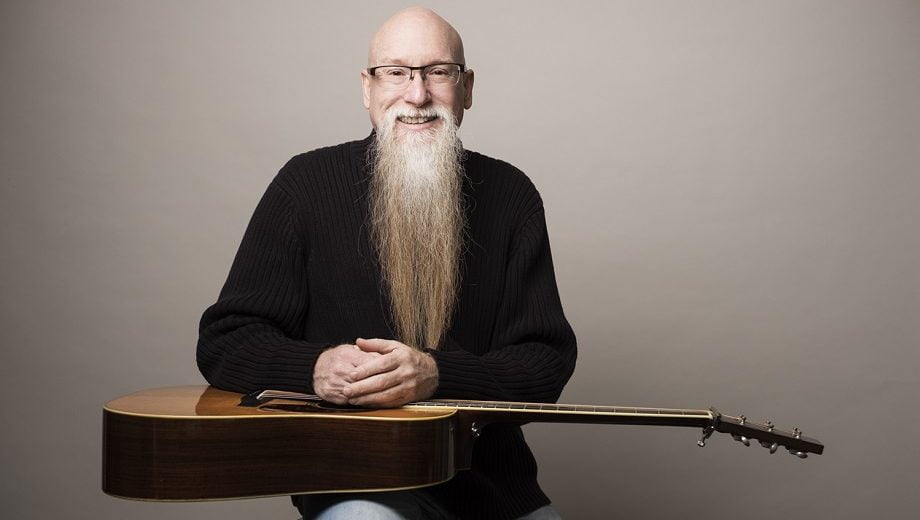
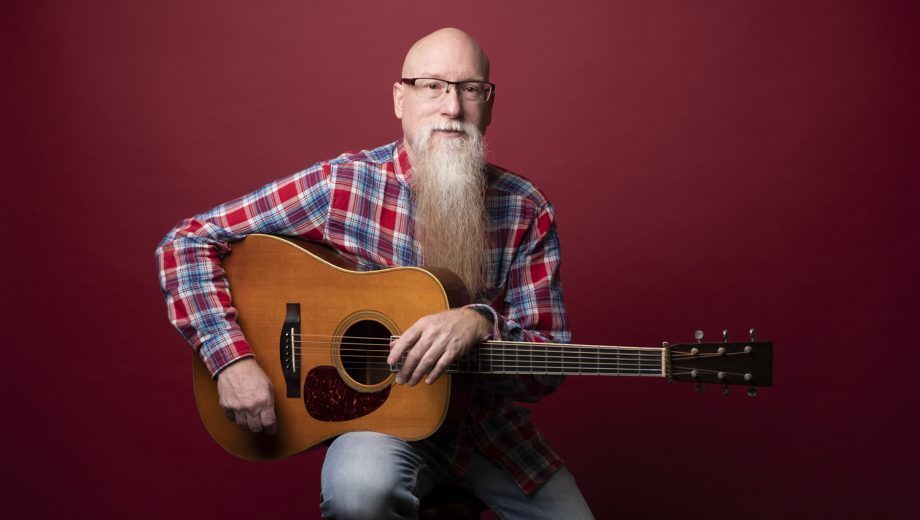
He’s asked, maybe too much, about his beard, a prodigious gray broadsword of whiskers stretching from chin to navel, an abstraction of which is the signature feature of his silhouette, featured on his T-shirts and other merch.

But one thing the D.C.-raised, Nashville-based musician is never really asked about: His singing. And for good reason. He’s never done it.

“It’s always been, ‘Why don’t you sing? You play guitar!’” he says, an irrepressible joviality marking his droll drawl.

Somehow, he sighs, people often seem to think that simply because he plays guitar he ought to sing too.

“I know I play guitar,” he says, more amused than exasperated. “I never donated any time toward [singing]. I tried once or twice through the years. Just like anything else, I gave it five or ten times and stopped.”

Until now.

His new album, Ways of the World, features five songs with him on lead vocals. That’s a first. In his career going back to the early ‘80s and covering ten solo albums now, several side projects (Psychograss, Helen Highwater Stringband), and hundreds of guest spots and sessions, he’s never stepped out as a vocalist before.

And in a rather bold move, he puts his lead vocals alongside some noted vocal talents: Maura O’Connell, Tim O’Brien, Shad Cobb, Andrea Zonn, and Mike Compton. What’s more, he’s feels pretty good about it.

“I do,” he says. “I know later I won’t, because every time I think something’s perfect, I listen to it later and go, ‘Gee, why didn’t I hear that before?’”

So the next question comes naturally: “Why now?”

“It was the Helen Highwater Stringband,” he says. “Three or four years ago they said they needed another singer for a vocal trio. They looked at me. I said, ‘I don’t sing!’ They said, ‘You do now!’ I went, ‘Wow.’ They were encouraging. It was helpful. All that went into account and then I did it on stage. People weren’t running for the exits, so this is good. And it just kept going.”

If he was going to sing, he needed words, and he dove right into that as well. Songwriting was another new challenge.

“I’d written the first two lines: ‘I’m afloat on the great big waves of the ocean, I drift on the ways of the world,’” he says of the title song, with Zonn singing with him, which opens the album. “I thought, ‘Hell! That’s going to be a song!’”

But he thought he’d need help and, while heading out for a five-and-a-half-week tour in South Africa, he went to a friend to have him finish it. That didn’t happen. So with two off-days he set to it himself.

“I finished it in an Airbnb on the beach in South Africa,” he says.

It was a whatever-it-takes approach to songwriting. “Dust Bowl Dream,” with harmonies by O’Brien, came from a bar bet for a round of drinks with some Nashville buddies as to who could write the best song in a week.

“I wasn’t even going to write a song,” he says. “Thought I’d just buy drinks for the buddies. But I had this melody that was lonesome and I thought, ‘Well, dust bowl is lonesome.’ Wrote the words in an airport, wrote the verse, chorus, second verse. I thought it was great. Got to the hotel later that day and started playing. First verse was great, second was great, last verse was horrible! I wrote another and that was worse. I went back to the first version I wrote and thought, ‘If I don’t sing it, that’s great.’ So I talk through it, like Bill Anderson would. It’s a recitation, and I think it really helped the tune. You feel it more.”

Now, all you who savor every splendiferous Grier guitar lick, dread not. The five songs featuring vocals are accompanied by eight sparkling instrumentals, and the ones with singing also feature, of course, his spectacular picking.

The heartfelt vocal numbers are surrounded by a selection of wryly titled original picking showcases (“Waiting on Daddy’s Money,” “The Curmudgeon’s Gait,” and so on) and sparkling interpretations of, or variations on, old fiddle tunes (“Billy in the Lowground”). And playing with Grier is a stellar cast of associates: a core of Casey Campbell on mandolin, Stuart Duncan on fiddle, Dennis Crouch on bass, with John Gardner on drums for some songs, and banjo from Justin Moses and Cory Walker. What’s more, there’s electric guitar by Bryan Sutton on one song (“Dustbowl Dream”) and on “Farewell to Redboots,” there’s trumpet by Rod McGaha — something perhaps even more surprising than Grier’s singing.

“For me having a trumpet on a song is brand new,” he says. “I just heard it in my head that way and imagined it that way. But having it happen was amazing.”

The whole experience, it seems, was liberating in a way that led Grier to try some different approaches to his picking, as if the pressure was off to make the album completely about that. The result is a rich, engaging tone throughout.

“I think on this record there’s less flash, just for flash’s sake,” he says. “Less, ‘Watch what I can do! Watch! This is hot!’ This is more reined in for a bit. Some of the solos are simplistic, and in my mind harken back to the beginnings of bluegrass music.”

He cites the intro to one song, “Dead Flowers,” an original, not the Rolling Stones song.

“That’s as basic as you can be,” he says, noting that it happened that way in the moment when he was caught off guard. “I got in the studio and thought someone else would kick it off. ‘Who’s gonna kick it off?’ Crickets. ‘You start it.’”

On the other hand, he also found himself spontaneously taking some other unexpected directions in “Red Boots.”

“There are three solos in that,” he says. “First one of me, then the horn, then me again. The first one’s just the melody, nothing fancy. The melody is cool. But the last solo is completely different, a little bit of Wes Montgomery, some string-bending in there. Just popped out! I’d never played that before. Every time I’d played that song it was just the melody, ‘cause I’m generally sitting here playing by myself. In the studio it was, ‘Well, I’ve done that. I want to do something different.’ I like that. Fresh and exciting. Note by note. Not the boring same old thing.”

And that’s the thread of the whole album.

“A lot of improvisation on this record,” he says. “From my viewpoint, it’s playful. All in the vibe. Not some hot lick thrown in just to show I can play a hot lick.”

Not that he isn’t proud of his playing here.

“There’s things in there people might want to learn when they hear it,” he says.

And speaking of learning, one more question: Has he ever tried fingerpicking?

Grier sighs.

“That’s another thing maybe I gave five minutes.

Well… given what he said about singing, stay tuned for the next album.


Photo credit: Scott Simontacchi

Hot Rize Turns 40: Nick Forster and Tim O’Brien Look Back

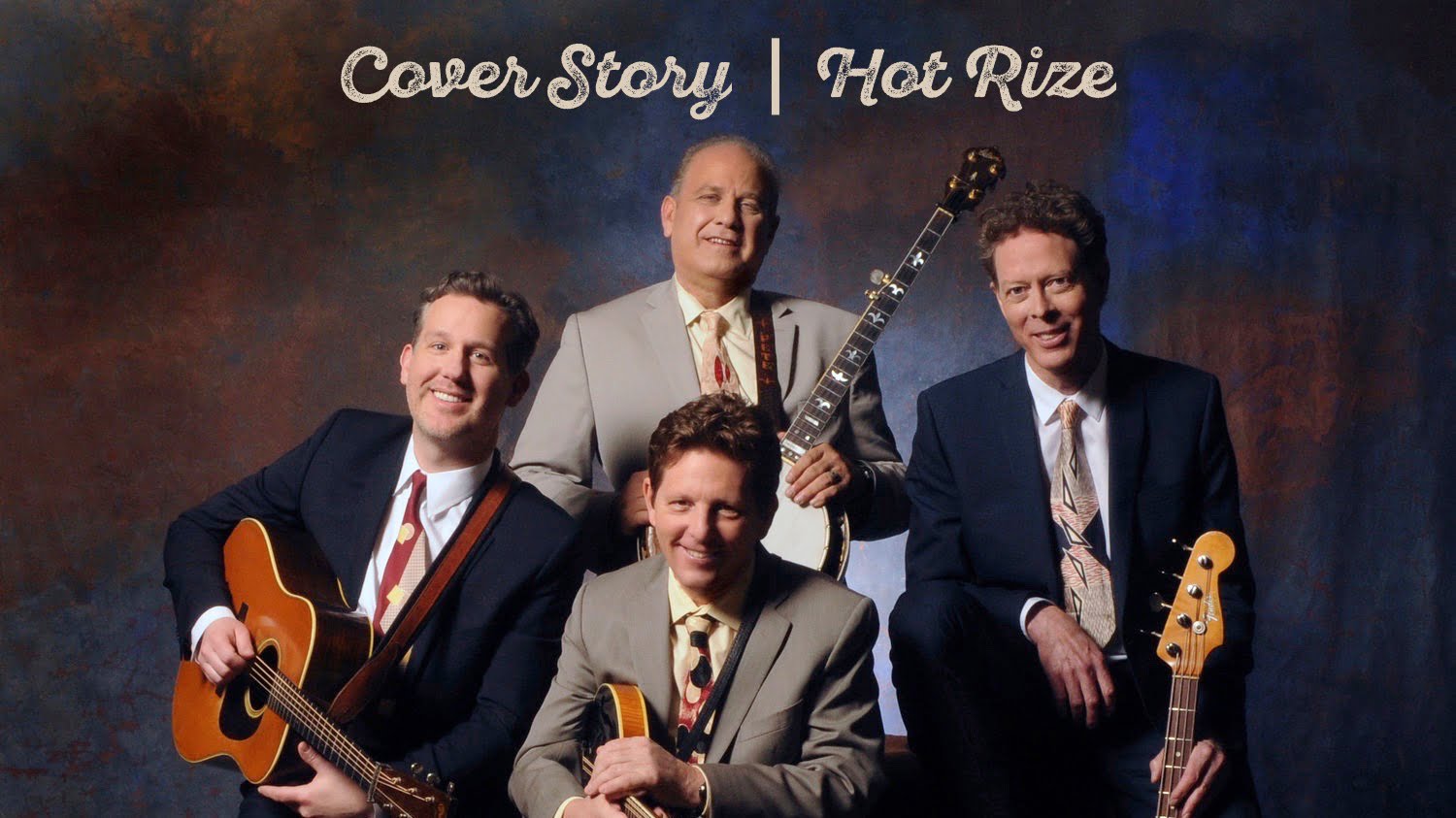
He’s had 40 years to think about it, but it took Nick Forster a while to get to a real answer to some existential questions about Hot Rize, the bluegrass-rooted band he, mandolinist-singer Tim O’Brien, banjo wizard Pete Wernick and guitar master Charles Sawtelle formed in in Denver in early 1978. Just what is it that made Hot Rize, well, Hot Rize? And just what is it that make the band — which will host the 29th annual International Bluegrass Music Association Awards on Sept. 27 in Raleigh, North Carolina — still treasured, still distinctive, lo these two score years later?

Forster paused at the question, and then hemmed and hawed a bit before giving it a try. First he tried to break it down to the talents and sensibilities they each brought to the mix. Then he tackled the way they all interacted — the natural combo of O’Brien’s and Wernick’s instrumental skills, O’Brien’s voice, the instinctive guitar skills of Sawtelle (and later of Bryan Sutton, who stepped in when Sawtelle died of cancer in 1999). And then he looked at the balance of celebrating traditions and exploring new paths with choices of material. Blah blah blah. Whatever.

Finally, almost sheepishly, he mentioned one other thing: “Also maybe, I don’t know if it came through sonically, but we were having fun!” he offered. “We were pretty young and had a sense of humor and were having fun!”

Well, there we have it. For fans, for anyone who’s heard the band, there’s no “maybe” about it. From the very first gigs through the three-night anniversary celebration at the Boulder Theater in January with guests Sam Bush, Stuart Duncan and Jerry Douglas — commemorated on the new 40th Anniversary Bash album, recorded in January at the Boulder Theater — it’s that ineffable spirit that stands out, even if we can’t really identify it any better than Forster did.

But let’s let O’Brien have a stab at it as well.

“I don’t want to compare to Bob Marley or anything,” O’Brien says, risking those dangerous waters anyway. “But he was trying to make country music and rock ’n’ roll, and that’s what came out. He had his thing and place and time and what he did. We were too hippiefied and too Western or something to play it like the guys from the Southeast, I guess. We were a Boulder band, a college town band. But we were also a reaction to the Newgrass movement. We adjusted the steering a bit. That was a little too far to the left of us. So we went to the center, but we were still a good deal left of center. … So I don’t know,” he concludes. “It was a weird recipe that seemed to work.”

Not that they followed any recipe, let alone a long-term game plan.

“We thought we’d just play for the summer,” says O’Brien, pulling one right out of the Famous Last Words file.

That was the view from their first gig, in Denver, on May 1, 1978, growing out of jam sessions at the Denver Folklore Center, where they all had found jobs. From the very start there was something different, distinctive about them — the first song the four of them remember playing together was not bluegrass at all, but “Wichita Lineman.” Just two weeks after the May Day gig they were up in Minneapolis booked to play on a new public radio show called Prairie Home Companion, and a month after that they were on the bill of the Telluride Bluegrass Festival. And without even thinking about it, they found themselves in a full-time proposition.

“The fact that we didn’t have a long commitment meant we would just be a band for as long as we had gigs,” Forster says, noting that Wernick, a.k.a. Dr. Banjo, served as de facto booking agent as well as band member. “So we kept saying, ‘Yes.’ Pete would say, ‘Do you want to play this wedding? This party? This club?’ ‘Yes!’ We had a goal of trying to make $100 a week take-home pay each. That was a lot of pressure on Pete.”

It was quite the time. Forster and O’Brien were in their mid-20s, Wernick and Sawtelle in their early 30s, all having found their way to Colorado from various points on the compass, meeting through working at the Denver Folklore Center. Fairly quickly, jam sessions grew into something more solid. Forster was recruited to play electric bass (which packed into a car trunk more easily than an acoustic bass), though it was an instrument he’d never played before. As soon as they hit the road they found themselves in the middle of some amazing settings.

“It was an incredible time to be in a bluegrass band, in my view,” Forster says, a time when many of the founding fathers of the form were still going strong, while a new generation — the “newgrass” crowd — was searching for fresh ways to expand the bluegrass lexicon. “I don’t know that we’re fully the third generation of bluegrass, but maybe two-and-a-half. So if we played festivals in the late ‘70s, and because there weren’t as many bands then, a lot of times you’d play the whole weekend, Friday, Saturday and Sunday, two shows a day. So Bill Monroe and Ralph Stanley and Jim & Jesse, and [such younger bands as] Seldom Scene and Hot Rize would do two sets a day.”

That was just a part of the vibrant world in which they found themselves.

“Between the sets, you’d sit at your merch table and there’s Bill Monroe sitting at the merch table, and Jim & Jesse, and you’re at someone’s farm in Oklahoma or Georgia, so lots of personal hang time with everyone.”

They didn’t exactly become pals with the old-timers, but a community quickly formed among the younger musicians, particularly after Hot Rize became a client of booking agent Keith Case, whose roster included Newgrass Revival (featuring Sam Bush), John Hartford, autoharp magician Bryan Bowers and Norman and Nancy Blake. Case took advantage of any opportunity to have two or more of those acts sharing bills as much as he could.

“That was so incredible,” Forster says, “to be part of this rolling band of gypsies. Almost every other weekend you’d run into one or even three or four of them.”

Gig by gig it kept going, and kept getting bigger, abetted by their association with their, uh, friends, Western swing ensemble Red Knuckles & the Trailblazers. (“Oh yeah,” Forster sighs. “Those guys.”) By 1990 it had gotten so big that Hot Rize was named Entertainer of the Year in the very first IBMA Awards. But it had also gotten so big that O’Brien and Forster in particular found themselves reassessing things.

“Three things happened concurrently,” Forster says. “We achieved so many of our original goals, frankly. We got to make records, got a bus, got to play the Opry and Austin City Limits, could play any festival. Spectacular. I don’t mean to sound ungrateful, but we felt a little like, ‘Okay, we’ve done this. This is the end of a chapter.’ Pete and Charles, being older than Tim and me, said, ‘You guys, you don’t understand! This is the brass ring! We hit the jackpot! We’re a band and we can play together and it’s going to get better.’ And we being in our mid-30s rather than mid-40s thought, ‘That’s cool, but we’re going to do other things.’”

And so Hot Rize went into “rest mode,” as Forster puts it. O’Brien, who had established himself as an in-demand songwriter, signed a solo deal with RCA and recruited Forster, who had gone on tour with Sam Bush and John Cowan, to join his band. In the course of that, Forster came up with the idea for a radio show combining roots music and discussion of environmental sustainability, about as Colorado a concept as you could find. That show, eTown, launched in 1991, with its demands ultimately being too much for him to stay on the road with O’Brien.

Meanwhile, Wernick started Live Five (sometimes known as Flexigrass) with some Klezmer-meets-Dixieland approaches, while Sawtelle worked with Peter Rowan and opened a studio, taking on production gigs. There were many calls for reunions, and now and then they would get together for one-offs or a few gigs. When Sawtelle was diagnosed with cancer in 1996 there was a feeling that they needed to do something bigger and took on a full tour, resulting in a live album. After Sawtelle died in 1999 there were occasional shows with several guitarists stepping in, including Peter Rowan a few times. Then Sutton came on board as a full-time member in 2002, though “full-time” was still fairly sporadic, peaking with a 2014 album, When I’m Free, and the first real tour since the sorta-hiatus.

And then they saw that 40th anniversary looming and it was too big to overlook.

“The approach was frankly just celebratory,” Forster says of the concerts. “This is a milestone and it should not go unnoticed. So let’s just do something fun and have a party.”


Photo credit: Jim McGuire

A Desire to Inspire: A Conversation With Molly Tuttle

I can’t pin down the year I first heard Molly Tuttle picking a few tunes in a Sugar Hill Records suite at the IBMA’s World of Bluegrass, but I know it was before the event’s 2013 move to Raleigh, and I know I wasn’t the first to pay attention to her guitar playing. Indeed, it was only a few more years until Bryan Sutton called her name as a picker to listen to in the course of accepting one of his ten IBMA Guitar Player of the Year trophies—and just two years after that, last fall, she accepted the same award herself.  

Even so, her growing recognition among bluegrassers has led to a higher profile for Molly in the broader musical world; she earned the Folk Alliance’s Song of the Year award in February, and a nomination for this year’s Americana Music Association’s Instrumentalist of the Year title, too. Between that, her own eclectic outlook, and the predispositions of journalists unfamiliar with the bluegrass world, it’s not hard to see why the musical substance of her engagement with the genre can sometimes be given short shrift. Yet the fact is, she appears to be as happy tearing through a bluegrass classic in the company of her youthful contemporaries—or with a certified bluegrass legend or three—as she is playing anything else.

I was reminded of this shortly before our interview, when Instagram presented me with a snippet of video that showed her sitting in with the East Nashville Grass, a collection of pickers who mostly work in other bands, at a ‘grass-friendly’ Madison club—and since the next Molly Tuttle record is still likely months away, it seemed like a good place to start the conversation.

Just this morning, I saw a video of you sitting in with the East Nashville Grass guys, ripping on some bluegrass—“White Freightliner Blues,” which I know you’ve been doing for a while—and it got me to wondering. Your dad was a music teacher when you were growing up; was he more of a folk guy, or an acoustic guy generally, or a bluegrass guy?

What my dad always loved was bluegrass. He grew up playing bluegrass, and that’s really what he studied and what he loves. But he did end up playing some folkier music; he played in a band called the Gryphon Quintet, which was all people who worked at Gryphon Music, the store he teaches out of. And that was jazzier stuff, some swing stuff, four-part harmony arrangements, and some of their stuff was kind of folky, too. So he ended up playing a bunch of different styles, but he really comes from bluegrass.

So when the family band got started, it was a bluegrass band.

Yeah!

You’re getting out beyond the bluegrass audience these days, into the larger musical world, and there’s been a whole line of people over the years who have done that. What do you think you’ve learned as a bluegrass musician that you carry with you when you do all this other stuff?

I think one of the most valuable things I learned was improvising and making up my own solos. Just being creative, really, because it’s such a creative genre. Some of the most incredible improvisers in the world are bluegrass musicians and you can really carry that into any genre—those improvisational concepts, you can take those in so many different directions. So that’s something I feel bluegrass really taught me, something I can use for the rest of my life.

And also, technique. I think it’s so important in bluegrass to have great technique, to be able to play fast, slow…I think that was really helpful for me to learn. And the style itself is so authentic. It has this raw feeling to it, and my favorite bluegrass is old bluegrass, where it’s all so live and energetic—just real, authentic stories from their lives. I think that’s really inspiring.

I’ve heard from some younger musicians that when they found a bluegrass jam or something like that when they were getting started, the older guys were really encouraging and supportive—and then, when they started getting into other kinds of music, those folks weren’t so supportive. Have you run into that?

A little bit. People just like what they like, so people who love traditional bluegrass aren’t as supportive as others about me branching out and doing new stuff. But I haven’t run into too many people who are openly discouraging me from doing what I want—it’s just not their cup of tea, so they’re not as excited.

When you started putting the Molly Tuttle Band together, how did you decide what you wanted? Was that a question in your mind—am I going to have a banjo player?

It kind of was! But it was like the right musicians just sort of presented themselves to me. I’ve played with Wes [Corbett] for three years now and he’s such an amazing musician—he’s so versatile. He plays amazing stuff on my songs that are more singer-songwritery, but he’s an incredible bluegrass musician, too. So it’s been a great fit for me. I think the bluegrass band just made sense. But then, I’ve been working on a new album that has drums on everything, and electric guitars, so I think going forward I’m going to be trying out different band lineups.

Are you working on your new record a few days at a time, or did you set aside a big block of time to make a whole record?

We had six days where we got all the tracks done; eleven songs, all with the same band. We did that at Sound Emporium and it was mostly all live. And then I went in and did harmony overdubs, I overdubbed some vocals, put some other instruments on, tracked strings—that was really fun. Nathaniel Smith worked out these really great string arrangements with Rachel Baiman and Mike Barnett, so they came in. And then we got some special guests on it—Sierra [Hull] came in and played, which was fun. So it’s just been going into the studio and finishing things up whenever I’m back from touring.

So maybe the next big release coming out that you’re on is a Roland White tribute project. And there was definitely an element there of you kind of playing the part of Clarence White on the tunes that you did. How do you prepare for that, for playing the part of Clarence White?

I just went and listened to recordings of Clarence. And with “I Am a Pilgrim,” there’s this great YouTube video of Clarence and Roland playing it, and Clarence was playing the coolest stuff ever. I teach at camps sometimes, and last summer, I thought it would be fun to teach a workshop on Clarence White, so I transcribed his rhythm playing on that, and was teaching it to people. So that was a good one to get to do, because I already knew some of the licks, and I’m obsessed with his playing on that song—it was fun to try to get into that mindset.

It seems like you really succeeded in being Molly Tuttle, but also Molly Tuttle playing Clarence White.

That’s what I was trying to do, so that’s good to hear.

We played a house concert a few weeks ago, where [12-year-old fiddler] Clare Brown and her dad came out and opened for us. I heard her doing a soundcheck with “White Freightliner Blues,” and I thought, I’ll bet I know where she learned that. Does it freak you out that there are even younger musicians coming up who are influenced by you?

I think that’s so exciting and that’s what I wanted to do with my music since really early on: inspire the younger generation, especially younger girls. I think it’s really important for them to see the generation of women before them doing it. So that’s one of the things that keeps me going with my music, to see something like that.

Who were you seeing that way? Who did you look up to?

When I was a kid I looked up to Laurie Lewis, Kathy Kallick, Keith Little, Bill Evans, my dad—all these Bay Area people. There’s a really great scene there and they were all so supportive of me. But especially Laurie and Kathy, seeing them lead their own bands and play shows. They were my biggest heroes and I thought they were the coolest, and I still do.

Is it important to you to keep an eye on and try to inspire young musicians to play bluegrass in particular?

I think it’s a really great tradition, especially for kids, because it’s such a supportive community. And there are jams, so you can get together with other kids your age. That’s a really healthy thing for kids to do for fun. For me, it was really great in high school to have that, to go to festivals, and get together for jams, and play shows—that was a great outlet for me. It’s a great genre for kids to play, and it’s really important to keep carrying on the bluegrass tradition, to keep it alive, so I think it’s great to encourage kids to play it.


Photo credit: Kaitlyn Raitz

Jumping into the Deep End: A Conversation with Billy Strings

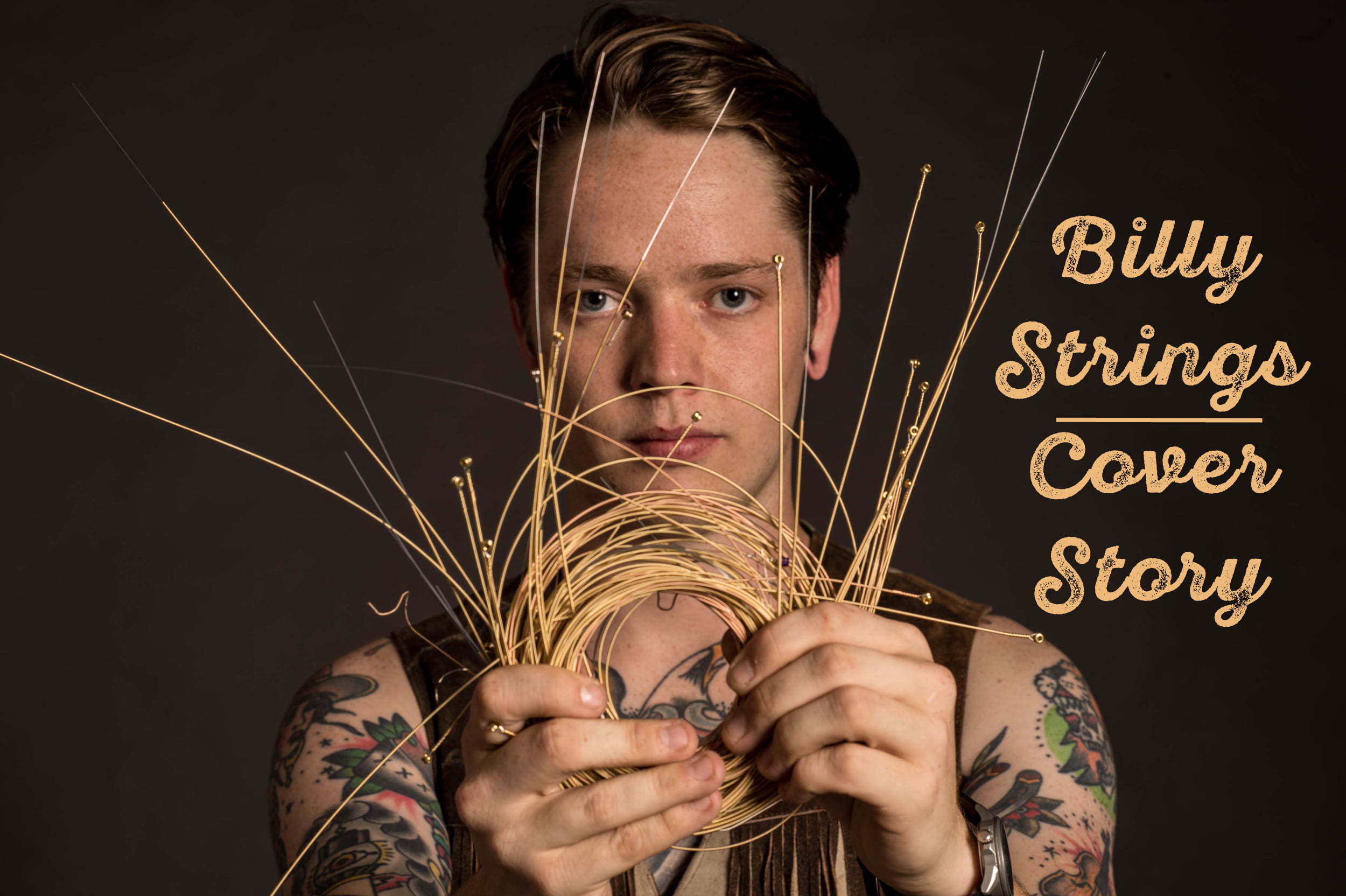
Guitar virtuoso Billy Strings (born William Apostol) is on the road somewhere between here and there, when he picks up the phone. That question “Where exactly?” gives him pause. “The other day, I couldn’t remember where I was,” he admits, a note of earnestness betraying his 25 years of age. It’s that sweet natured tendency the young have to overshare. “It took me probably at least 40 or 50 seconds just to go, ‘Oh yeah.’ I don’t know if you’ve ever felt that before, but it’s a really strange thing.” It’s the kind of problem that comes with being a popular bluegrass musician, and one he’s forever adjusting to as he zips from city to city. “We were in the van once, and I literally asked the question, ‘Is this where we are?’” he says with a laugh, knowing the existential weight of his own seemingly ordinary question.

Billy’s ever-probing mind, technical proficiency, and weighted voice all suggest a much older player. He recently released his debut LP, Turmoil & Tinfoil, recorded with Greensky Bluegrass’s producer, Glenn Brown, in the dead of Michigan’s winter. Even in that setting, it burns with a feverish heat. “It was like being snowed in, like cabin fever,” Billy says about the session, which could explain the album’s bracing pace. As much as he nods to tradition on Turmoil & Tinfoil, he also playfully stretches the bounds of bluegrass via face-melting guitar phrasing (thanks to his abiding interest in heavy metal, classic rock, the blues, and more) and socially conscious songs. Both the wounded “Living Like an Animal” and the frustrated “Dealing Despair” pry into issues of personhood and community at a time when both seem more fractured than ever. What others have termed his “authenticity,” Billy chalks up to “honesty,” and it serves, in a way, as his battle cry. He’s not afraid to keep asking questions, big or small.

Just out of curiosity, how many back-up strings do you bring on tour, given your penchant for breaking them in your wilder fits of playing?

Nowadays, I actually have three guitars onstage with me. I have two Preston Thompsons on stage, and then I have a Roy Noble on stage with me, as well. Rarely do I get to the third one anymore, but there have been times where I’ll reach for the Roy Noble.

So would you say, then, that a particularly crazy night on stage is a Roy Noble night?

Yeah, I guess so. You could.

Tradition has long been a defining force within bluegrass. How have you navigated your way through it?

I grew up playing bluegrass music and traditional bluegrass music, and I have a deep passion for that, as well, but I like all kinds of music.

Right, I know you’re a big metal fan, specifically.

Yeah, I love some death metal and some rock ‘n’ roll and blues. I like all sorts of stuff. When I was younger, I was a little bit more closed-minded about a lot of things, whether it was “Why would you want to play bluegrass but not bluegrass?” This or that, you know? But eventually I got out of that shell, and I want to get so far away from that “This is bluegrass and this ain’t” as I can. It’s just music. I’m just trying to let myself be free with music.

I think that’s something that we’re seeing a lot from the younger generation, bringing all these influences into the genre.

Definitely. I think there will always be a hint of traditional bluegrass in my shows because that’s how I learned to play guitar. My ears were trained by “How Mountain Gals Can Love” and “Blue Moon of Kentucky” — that’s the music I cut my teeth on. You’ll always hear it, I think, but I’m also going to do whatever the song calls for. I used to be embarrassed to show anybody a song that I wrote, and I’m just trying to ditch that whole mentality. Who cares if a song is that or this, or if somebody likes it or they don’t? It’s the song.

You’ve mentioned in the past that you’ve never learned anything note for note; instead, you just hear it and emulate it. What does your writing process look like, then, for original compositions?

It looks like me walking around my house with my guitar, staring at my reflection in the microwave. Pacing back and forth when nobody’s home, just scribbling on notebooks and stuff, and being on my Google Doc. I sit there with my guitar and I sing it and then, if I got something cool, I’ll write it down.

Dealing Despair” is such a powerful original song in light of how divided the country seems. Where did that come from?

I actually wrote that quite a while back. It was after another unarmed Black man was shot down by police, and I was awfully pissed off. I was shook. I’m feeling it lately, too; there’s so much going on in the world.

It feels so divided. I mean, it always has been, but more than ever it seems.

Yeah, and we should just talk about music. But I’m feeling it lately, and you’ve gotta write about what you’re feeling, and that goes back to what I was saying about letting it happen and not worrying about if people are going to like it or not because certainly some people might take that song as a little aggressive.

I know some listeners keep clamoring for artists to shut up about politics and just be artists, but bluegrass has always been a space to sort through social issues.

Well, man, that’s folk music. Look at Woody Guthrie, Bob Dylan. You have to sing about that shit. You absolutely have to. It’s kind of our duty. I’m not going to punch anybody in the face. I’m not going to carry a gun. I’m not going to fight a war. But with my guitar, I will. All I have is my songs to fight back against the ugliness that’s out there.

But that fight exists as an “either/or” these days, and it can alienate certain listeners.

I want people that are loving and not cruel to each other to come to my shows. I really don’t care what anybody thinks. I’m just doing my thing.

Turning away from politics, your father also played on this album.

Yeah, he’s on the last track [“These Memories of You”].

I thought so! The harmonies have this interesting familial tone.

What you just said is a huge compliment to me. My voice sounds the best when it’s right next to his; I can’t sing with anybody like that. My dad didn’t even know that song. He just walked right into the studio, and I wrote the lyrics on a piece of paper, and he just did it. He knows how to follow me, and I know how to follow him. My dad is a seriously heartfelt musician. When he plays a song, he really means it. He’s not just saying the words.

You learned from him when you were younger, so what was that moment like in the studio?

He was so happy to be there. It was kind of like he was a little kid. He sits around the house and plays, but he rarely goes and plays on stage anywhere — let alone in a recording studio.

And look how the tables have turned.

Those moments are what I cherish the absolute most. For instance, when I was six or seven years old, I was learning “Beaumont Rag,” and I just played the rhythm, but I kept messing it up in this one part. Right in the middle of the song, I said, “Stop. Dad, why don’t you play it and let me listen?” I listened to what he was trying to say with the guitar, and I go, “Now, let me try it again,” and I nailed it. He started laughing. He reached over his guitar and squeezed my little hand. He called my grandmother and said, “Listen to your grandson right now!” I was a little kid, but I’ll never forget that moment. Now there have been several moments since then, like when I got to introduce my dad to David Grisman in real life because my dad introduced me to David Grisman when I was seven years old. We got to sing songs all night.

That is so wild.

Yeah, it is wild because we come from a tiny little town and it’s not always been easy, and our family has had a lot of crazy stuff. Those moments are super good for me because I feel like it’s that same thing: It brings me right back to when I got the “Beaumont Rag” right. It really pushes me, and there are all sorts of reasons that I’m doing this, but that’s a huge one — because mom and dad are proud. I’m so grateful that they turned me onto this music. My childhood was a lot of bluegrass. I’m so grateful for that because I love this music.

It’s interesting, too, because it seems like listeners are, in part, gravitating toward what they keep calling your authenticity. At 25 years old, that can be a loaded statement. How have you found your own way through that kind of praise?

I don’t know. I haven’t heard that word thrown around me that much.

Maybe not to your face.

Yeah, right. When I was talking about my songwriting, I’m just trying to do my thing and just be honest. Even in life. Don’t dip your toes in the water; just jump right into the deep end. Don’t get yourself into a situation that you don’t want to be in because you know what you really want. Don’t lie to yourself. Just be yourself.

You are wise beyond your years.

I think a lot, you know?

That comes across in your playing, too.

When I’m playing, it’s easy to learn a song and go through the routine and just play it night after night. But when I go out on stage, that’s not what I do. I try to actually pour it out with my guitar, from my heart. If you listen to a lot of the people I grew up listening to — Mac Wiseman, Bill Monroe, Larry Sparks, Keith Whitley — when they’re singing, they’re not kidding. That’s why you can cry when you hear it. I love players like that. And there’s so much music out there today, you know Top 40 everything, that’s garbage.

Well, it’s too constructed, but I can see how your dad shaped you to sing from the heart.

Every time he picks up the guitar, he does that.

What a great way to learn.

I also learned a lesson from Sam Bush without him saying anything. I leaned over and took a drink of my beer — this was quite a while ago — and I looked over at Sam Bush and he had his eyes closed playing the hell out of the rhythm. It’s like, “Why do I think that I can just stop playing the song right now to take a sip of beer? Wake up, kid. You’re playing a song. What are you doing?” It’s that attitude. Whenever those dudes play, Sam Bush gives it 110 percent. Bryan Sutton was telling me the other day that Doc would never pick up his guitar and just play a little ditty or half of a song; he would always play the whole song.

Speaking of Bryan, I know you collaborated on “Salty Sheep.” How did that come about?

I think I just called him and asked him. [Laughs] It was so amazing for me. We sat a microphone in between us, and we sat in two chairs really close to each other, just facing each other. With no headphones on, we just played the tune a couple times, and holy shit.

Well, talk about Doc Watson vibes.

Well, that’s what me and him geek out on. When we go to lunch, we’re always talking about Doc Watson. We both love him so much.

So we can expect a covers album from you two soon?

I have no idea. I’m down, but you’d have to ask Bryan. He’s such a wonderful friend and mentor. He’s done this 20 years, and he’s got a lot of advice for a young guy like me. I’m so grateful for that advice. He just gives it away for free because he’s a good friend and he cares about guitar and Doc’s legacy and all that. I’m honored to have him as a friend, and completely honored to have him on the record.

RECAP: The BGS at Bonnaroo 2017

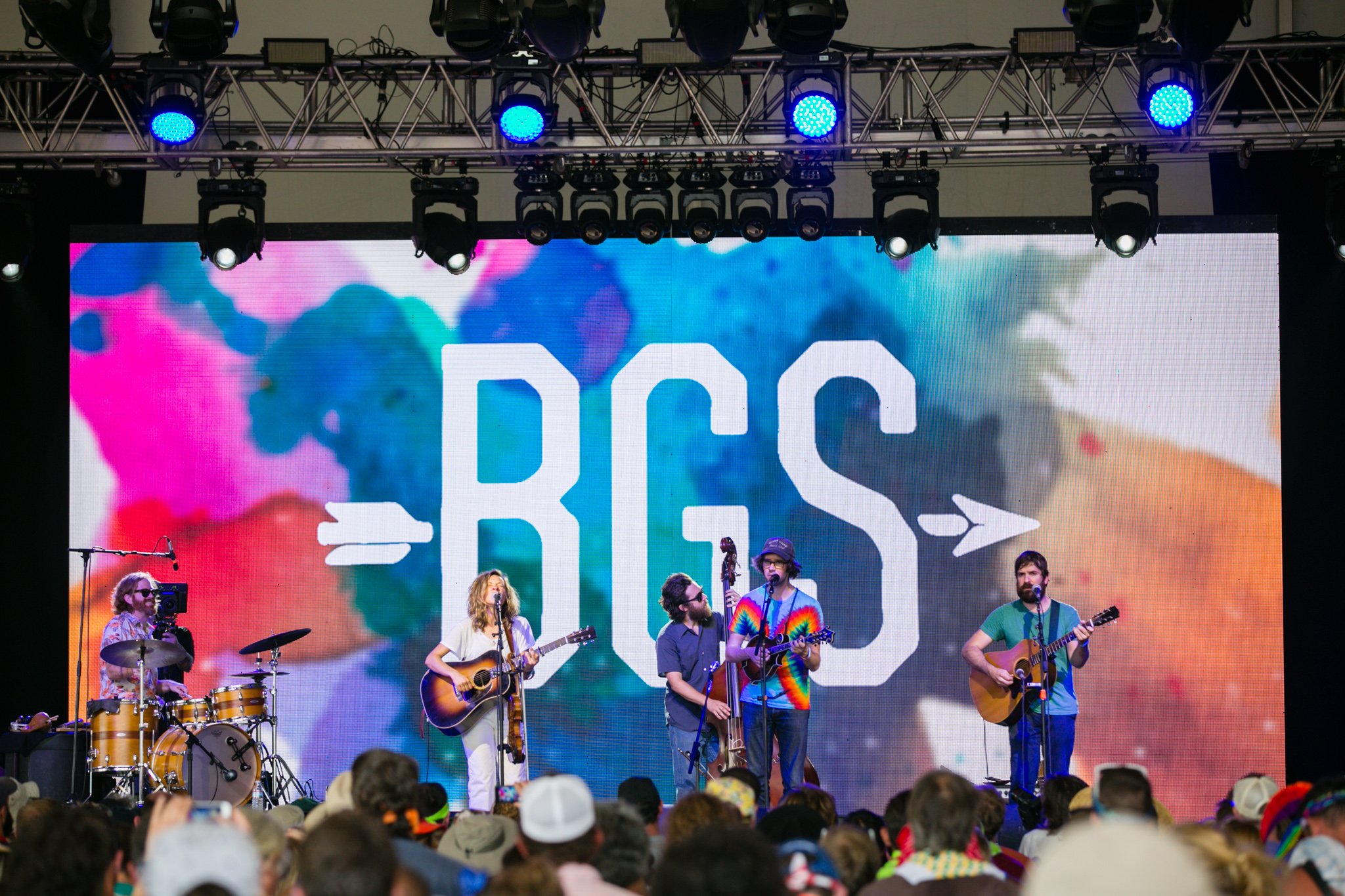
River Whyless stepped onto the stage at That Tent while the temperature was still bearable, the dust was still minimal, and the sky was bright blue — that signature Tennessee summer haze would come later. Their fiddle and harmonium wafted out over Centeroo like a roots music call to prayer. The BGS stage had begun!

Aaron Lee Tasjan and company took the stage second, with double-drummer power and super-dapper duds. Earlier in the day at the daily press panel, Tasjan referenced iconic one-liner comedian Mitch Hedberg as a personal songwriting influence and inspiration. It seems an unlikely reference point for his rockabilly-infused, hot-and-heavy rock ‘n’ roll, but it all made sense watching him live. There’s a darker, sly, unexpected humor to ALT.

Our longtime friends Mandolin Orange came third, playing with a full band — Emily Frantz in pure white head to toe, looking summery and fresh despite the now-ridiculous temperature, and Andrew Marlin lending festival cred to our entire operation with his rainbow tie-dye tee. They sprinkled old favorites in and among songs from their latest album, Blindfaller.

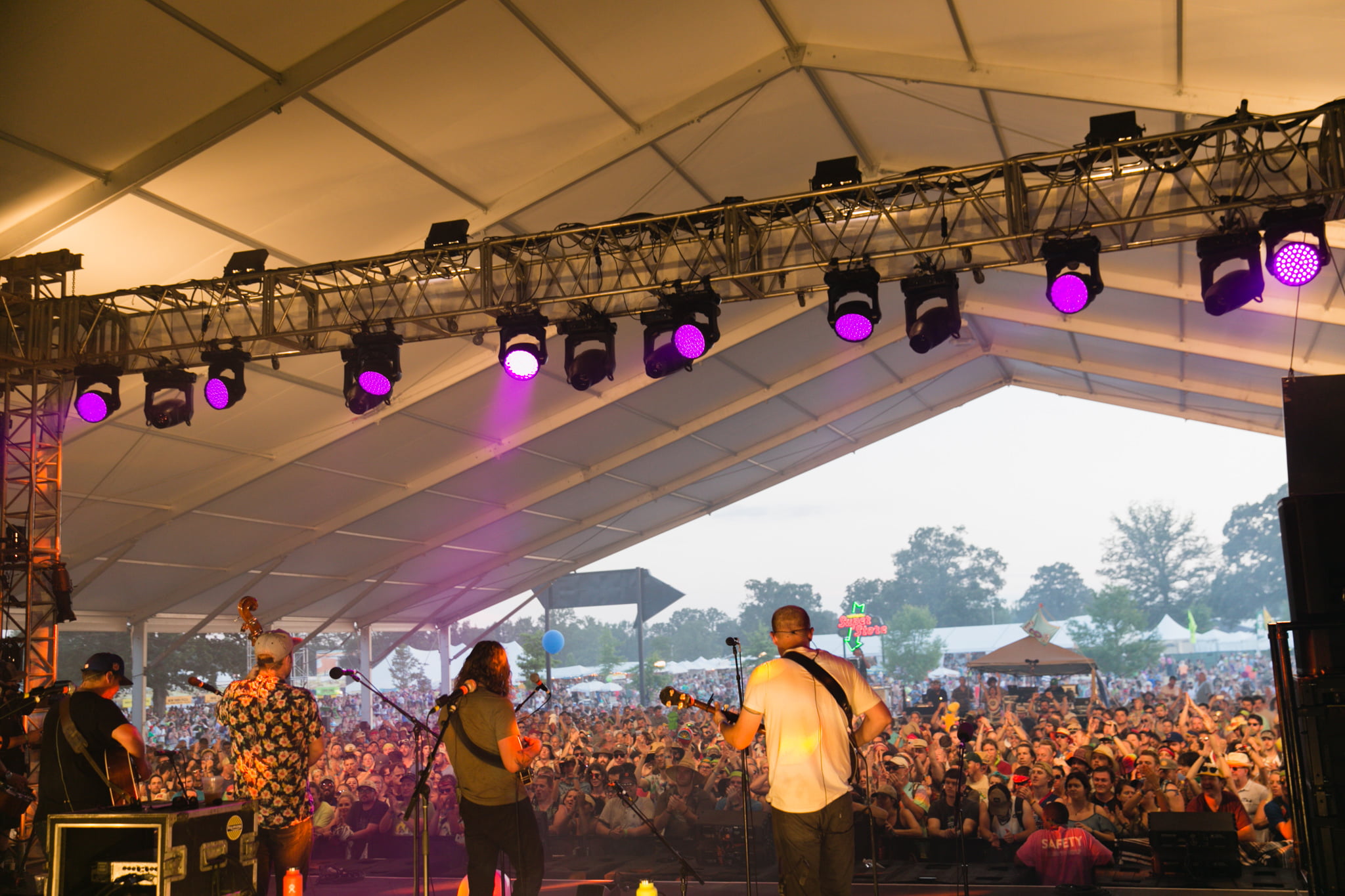
The crowd had now totally pushed the blanket, beach towel, and inflatable hammock loungers out of the tent, as more and more fans packed the front of the stage for Greensky Bluegrass. Their long jams, lighting design, powerful vocals, and incredible energy brought out the loudest, most raucous cheers and applause from the audience all day. No surprise there! You could hear the crowd roar from almost anywhere in Centeroo.

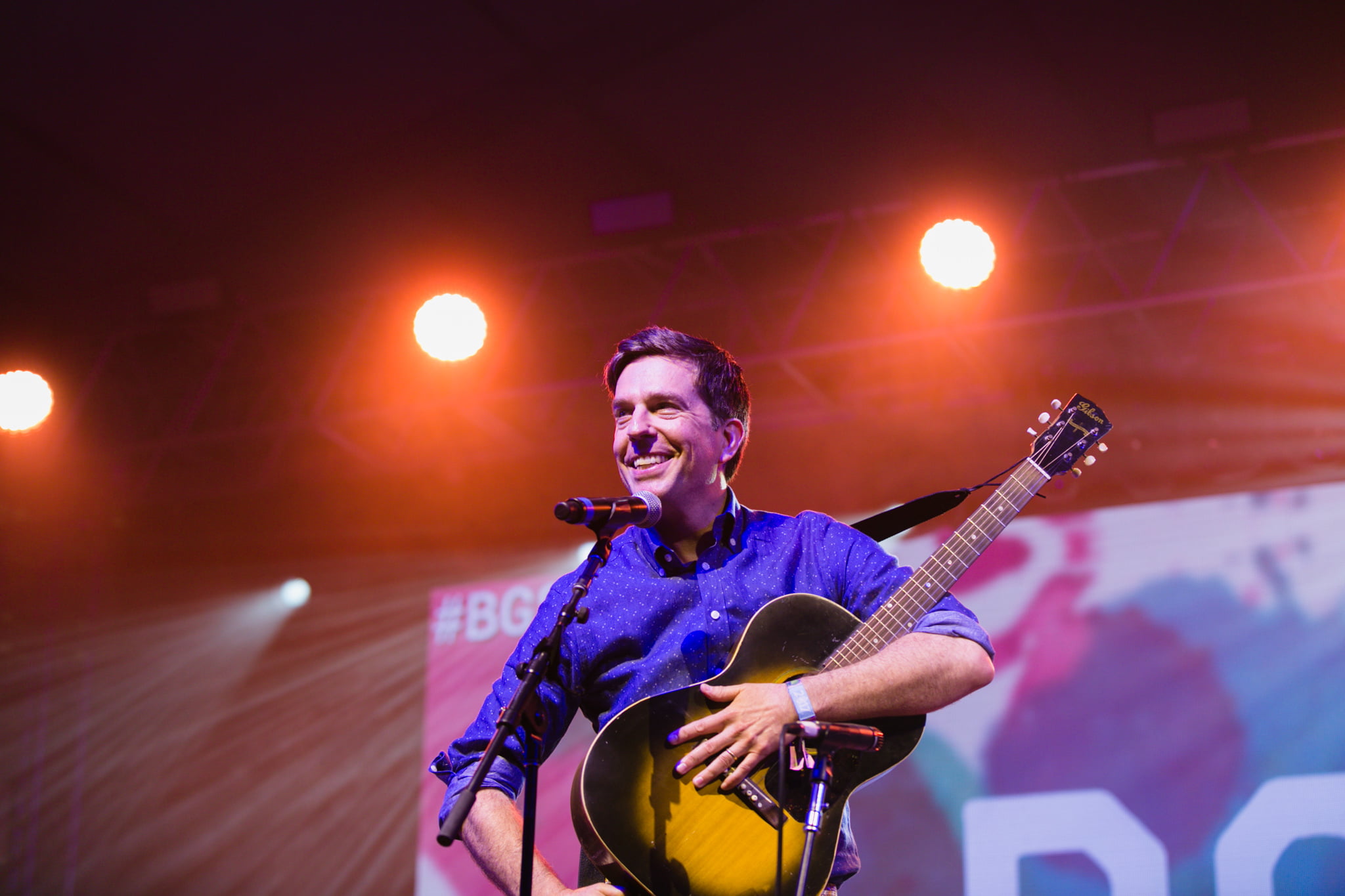
As Greensky finished their set and exited — to one more round of thunderous applause — dozens of stagehands, artists, and musicians descended, transforming the stage in minutes. The lights came down and the crowd cheered as the Bryan Sutton Band (seriously, could there be a better house band?) tore into a bluegrass medley of “Walkin’ Across This Land” and the burning instrumental “Cricket on the Hearth.” Then, to cheers and hoots and hollers and whistles, Bryan introduced “Andy Bernard” and “Captain Underpants” — aka BGS co-founder and our SuperJam host, Ed Helms. Ed sang Doc Watson’s bluesy “I Am a Pilgrim,” before welcoming back River Whyless to play CCR’s “Fortunate Son.” Baskery, a Swedish Americana (Swedecana?) trio who had performed earlier in the day at the New Music on Tap Lounge were next, performing a bluegrass-tinged, folky cover of Paul Simon’s “Graceland.”

Mandolin Orange returned to the stage and led an epic, all-tent sing along of “Strawberry Wine,” a song perfectly fitting for Bonnaroo. Martina McBride followed, knocking all of us out with her fringed boots and her stunning cover of the Beatles’ “Blackbird,” continuing the sing-along vibe. The night wouldn’t have been complete without a Dolly Parton, Emmylou Harris, Linda Ronstadt Trio cover, so Baskery came back out to join Martina on “Those Memories.” No one in attendance will forget those memories anytime soon!

A couple of bluegrass tunes later and Aaron Lee Tasjan was welcomed back to promptly tear through Todd Snider’s “Pretty Boy” with the Bryan Sutton Band going electric. The incredible Gaby Moreno was next, giving the audience a muah muah muah muah “KISS” — we want more Gaby sings Prince, please!

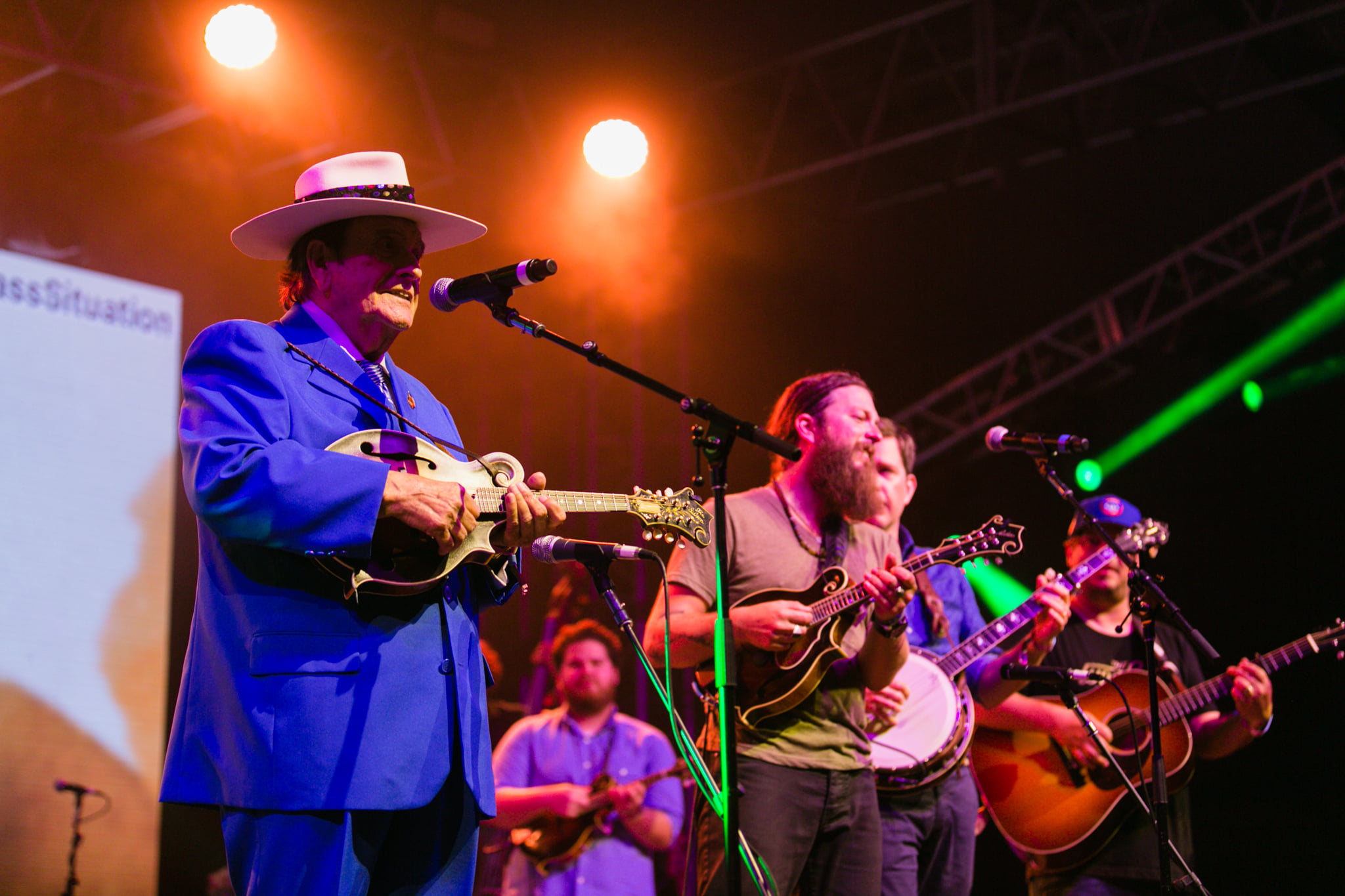
One of the most moving moments of the night came when Lillie Mae stepped on stage to introduce one of her heroes — the bluegrass living legend, Bobby Osborne. Before he had played or sung a single note the audience applauded for a solid two minutes. Seeing an enormous crowd at a music festival like Bonnaroo acknowledge the talent and impact of Bobby Osborne was outright stunning, but Lillie Mae, Bobby, and Bryan’s three-part harmony on “Beneath Still Waters” was earth-shattering. A long, long round of applause came again. On “Once More” they struck up an amazing three-part blend … once more. At 85, Bobby has still definitely got it and Bonnaroo knew it.

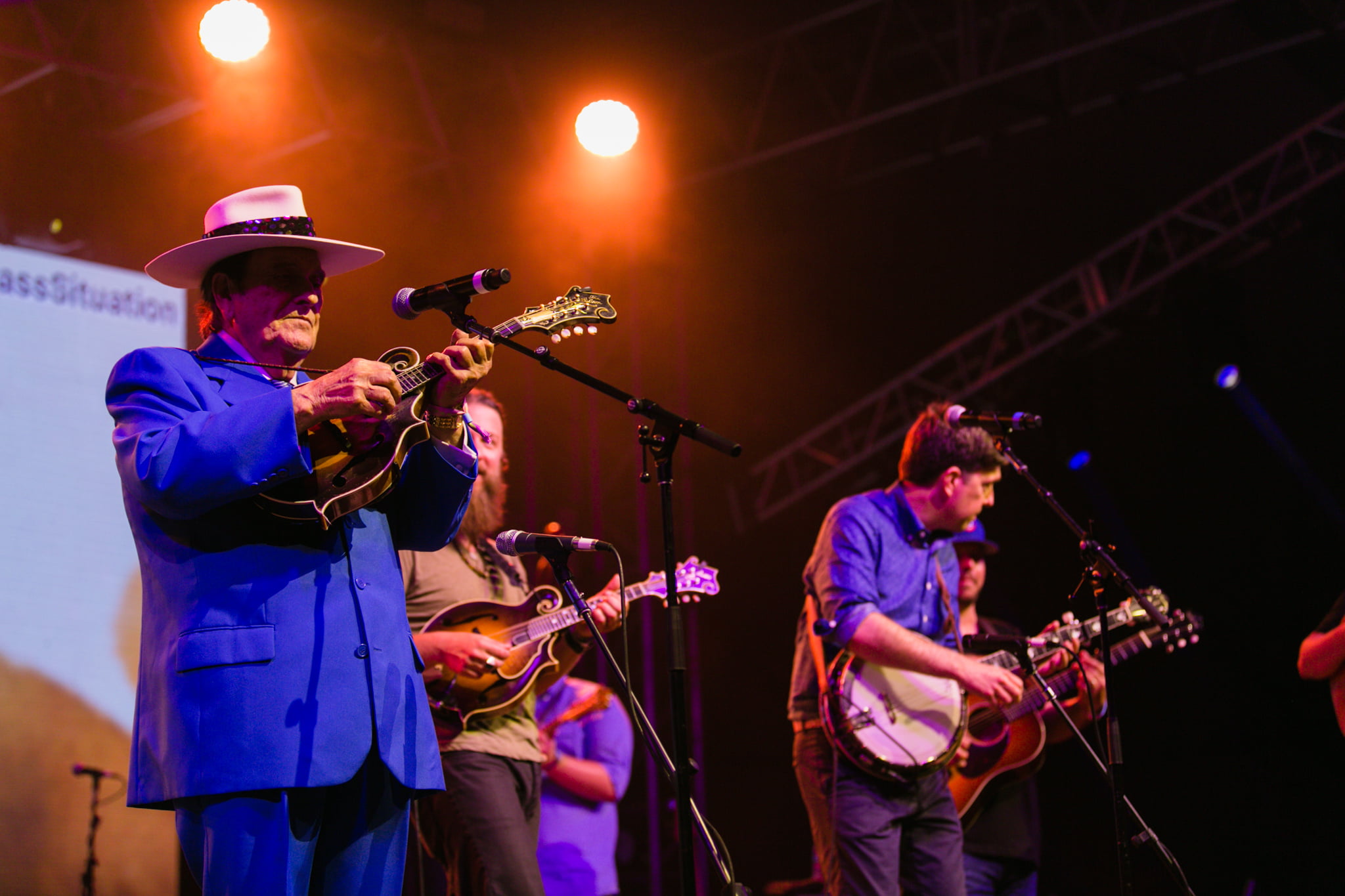
Greensky returned to the stage once again to cover the Boss, rocking it out on “Atlantic City.” Ed called the whole cast back to the stage, Bobby in his bright blue suit and iconic hat, among them. From somewhere in the crowd, someone shouted “Rocky Top!” Others agreed. They knew what was coming. Ed kicked off the Tennessee state song on banjo and Bobby sang the iconic lyrics that he and his brother Sonny first made famous. Not a single person in That Tent or overflowing out of it did not sing along.

For the grand finale, Ed introduced our closing number. Waving U.S. flags on stage, the whole group belted and swayed to the unforgettable, patriotic lyrics of “God Bless the USA.” The climax of the song was not its final chorus, with dramatic stop and crash cymbals though, it was its second chorus, when Gaby Moreno stepped forward and sang in Spanish:

Y a los que murieron por dármela
Nunca voy a olvidar
Ni a los inmigrantes
Que luchan hoy
Con coraje, amor y fe
Esta tierra es rica en diversidad
God bless the USA!

What pride to be from America
Where I live in freedom
I’ll never forget those who died
To give that right to me
Nor all the immigrants
Who fight today
With courage, love and faith
This land is rich in diversity
God bless the USA!

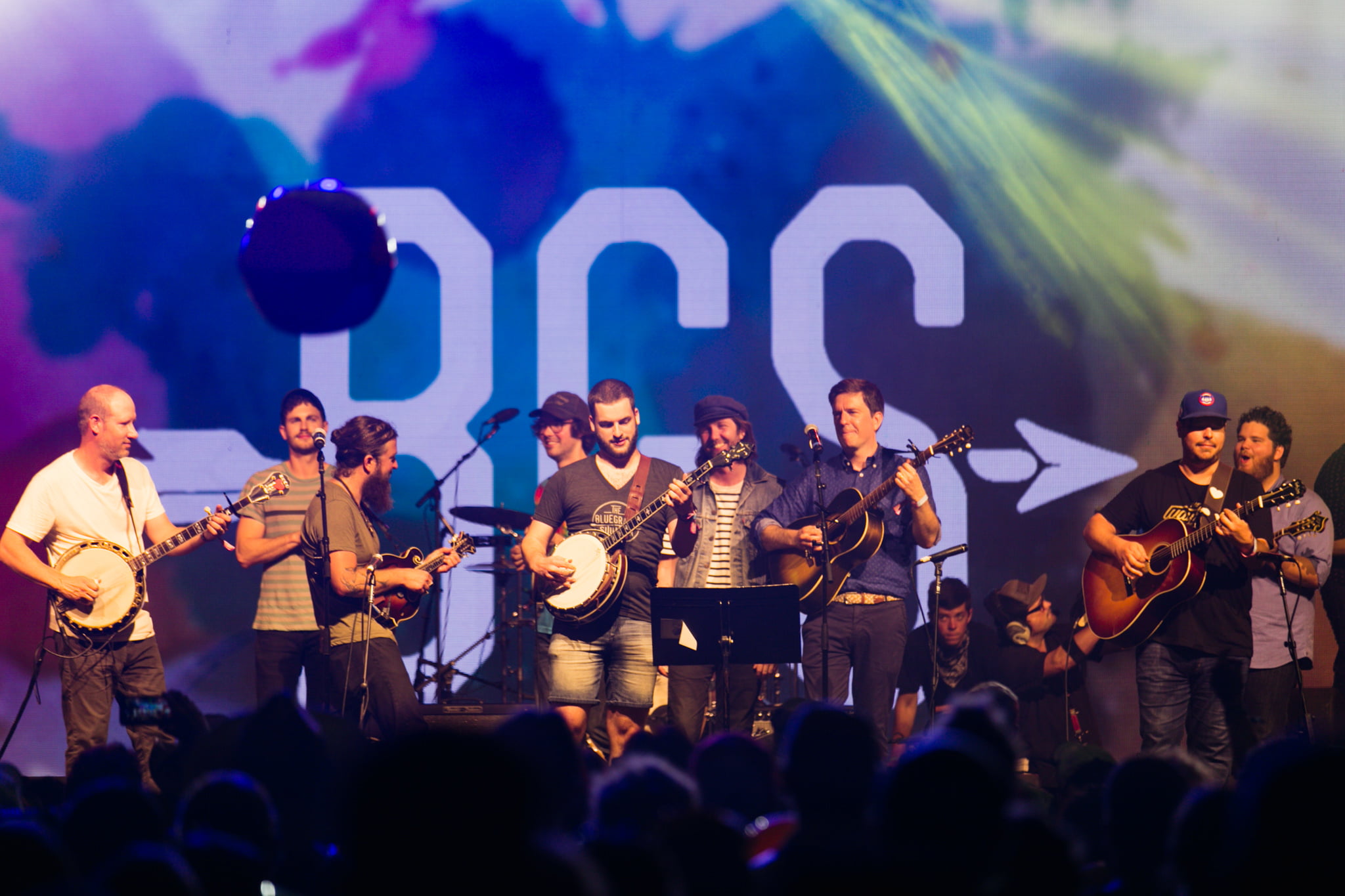
And if that wasn’t exactly what the world needs right now, then it must need John Mellencamp. Right out of “God Bless the USA,” Bryan Sutton morphed the song into “R.O.C.K in the USA.” Last-minute, surprise guest Margo Price sang a verse and rocked out on tambourine with long-time friend Aaron Lee. The musicians all traded solos, launching a friendly musical battle between Greensky’s Anders Beck and Paul Hoffman, as Gaby and Martina shouted along and U.S. flags still waved. Then, Ed signaled the band to drop out, leaving just the crowd singing, jumping up and down with beach balls flying — and our fifth annual Bluegrass Situation SuperJam hosted by Ed Helms came to a close.


Photos by Elli Papayanopoulos for the BGS

ANNOUNCING: The BGS Midnight Jam at MerleFest 2017

The BGS Midnight Jam returns to MerleFest 2017 with North Carolina’s own Mipso as the host band. The Midnight Jam takes place at the Walker Center starting at midnight on April 29 and requires a separate ticket that is available for purchase by four-day and three-day ticket holders and Saturday ticket holders. Artists confirmed to play the Midnight Jam this year include:

Mipso
Jim Lauderdale
Donna the Buffalo
Peter Rowan
Bryan Sutton
10 String Symphony
Sierra Hull
and more.

“Many years ago, Tony Rice and a few others came up with the concept and started the Midnight Jam,” remembers Steve Johnson, artist relations manager at MerleFest. “From there, the Midnight Jam has become a highlight of the MerleFest weekend, bringing together unique configurations and surprising ensembles of musicians gathered at the festival. You never know who may walk out from behind the curtain to take the stage on Saturday night in the Walker Center! For 2017, we are extremely excited to have a MerleFest favorite, Mipso, serving as the host band.”

Tickets for MerleFest 2017 are on sale now and may be purchased at MerleFest.org or by calling 800.343.7857. An advance ticket discount runs through April 26, 2017. Gate pricing begins on the first day of the festival.


Photo credit: Sasha Israel

Everyone’s Doing It: Bryan Sutton in Conversation with Billy Strings

Bluegrass is a small community. Bryan Sutton and Billy Strings hail from opposite ends of the country — North Carolina and Michigan, respectively. There’s about a 20-year age difference between them, with Sutton enjoying the crest of a long career and Strings (birth name: William Apostol) just starting out. Sutton just released his fifth solo album, The More I Learn on the legendary Sugar Hill label; Strings recently self-released his first solo EP. Aside from a love of Doc Watson that borders on obsession and a mastery over the acoustic guitar, these two guys would seem to have little in common.

And yet, they’ve jammed a few times, usually backstage at a show or during off hours at a festival. They’re both steeped in the other’s work and even hang socially from time to time. Before they started interviewing each other for the Bluegrass Situation, Strings asked Sutton to recommend a restaurant to him, some place he could take his girlfriend and get brownie points (Café Rakka, if you’re curious about Sutton’s answer). Both Sutton and Strings will be in Raleigh, North Carolina, next week for World of Bluegrass.

How do you two know each other?

Bryan Sutton: I first heard about Billy Strings from Chris Eldridge — the fantastic Critter.

Billy Strings: Actually, the first time I met you was when we were playing somewhere in Pennsylvania. Maybe it was at the Sellersville Theater. You were playing with Hot Rize, and we played the front room before the show even started. They let us set up out there and sell some merch, then we hung back with you guys. I remember watching you warm up. I was a fly on the wall.

Sutton: We had a good chat. I remember talking about rhythm and keytars. One of the highlights of this year was our backstage jam session at MerleFest. I went to that festival with the intention of making that happen, finding some time to pick with you.

Strings: That’s why I moved down here — to be able to pick with badass musicians all the time.

Sutton: When I moved to Nashville, it wasn’t quite the scene it is now. There were good players. David Grier was here; Roland White would hang out of a lot. But it was nothing like it is now as far as the amount of players. It’s really exciting.

Why did you move here?

Strings: The reason I moved here was, I was getting ready to leave Michigan, where I had lived my whole life. I was just ready to check something else out. My friend Lindsay was like, "You have to come here. You can just pick all night and hang out. Don’t even think about Denver. Screw that. Nashville!" She was just putting it in my head. She even found the house I’m living in, which is literally next door to her house. But I would sit around and think, "I don’t have anybody to pick with." I’d play along with videos on YouTube or pick by myself, but you can’t interact. I was in a weird spot. I wasn’t getting any better.

Sutton: I’m not good at that. I’m not good at playing at home with records. I know you had some experiences picking a lot with friends and family. That really does get under your skin. You really need that.

Strings: When I was younger, I always had my dad to pick with, and I got to play with other people and sing harmonies with them. Playing solo is hard for me. I really like having other people to interact with. You figure out ways to make cooler music doing that.

Sutton: Definitely. But you spent some time playing with Doc’s records, right? You learned note for note and did some diligent Doc work?

Strings: Not necessarily. I never actually learned anything note for note. I just hear it. I just listen to it so much that I can try to emulate it. But I don’t know if it’s note for note.

Sutton: The way you talked about this the other day, the pocket of your crosspicking is as close to what Doc Watson would do than anybody I’ve ever heard. The emulation of that is really spot on — and not in an effort to copy it for the sake of copying. It’s a spirit and the groove.

Bryan Sutton

Strings: Nobody will ever touch him, as far as I’m concerned. I’m as big a Doc Watson freak as anybody out there. I’ve spent a lot of time with him. I listened to Bill Monroe and Lester and Earl and other bluegrass stuff. But my dad was spoon-feeding me Doc Watson … “Beaumont Rag,” “Don’t Let Your Deal Go Down,” stuff like that. I was learning to play the rhythm to those tunes, and my dad would play the lead. Whenever I play “Beaumont Rag,” I try to put my dad’s flavor in there. He does the same thing. He’ll emulate Doc, but he puts a little bit of his own thing in there. And that’s part of my thing now, too. I think it’s a rock 'n' roll thing, the way he plays. You can hear him playing some classic rock licks, the way he bends the strings. It’s really cool.

Sutton: It comes out new. I remember one of the cooler Christmas morning things for me was about four Doc Watson records and a record player. That was big time. That was a good one. That was my first exposure to the Southbound record. Do you have a favorite doc record? Southbound’s the one for me.

Strings: I don’t think I have a favorite. They’re all the best. But they’re all so different. Later on, he was doing some rockabilly stuff. I’ve been digging into that Milestones thing hard. I’m so excited about it — all this new information that I didn’t have before, all these new tunes I haven’t heard Doc play.

Sutton: One of the more intimidating things in my life was to be around him and just interact. I wanted him to like me as a player, but my goal was just to get to know him and be on a first-name basis. I didn’t get to spend tons of time with him, but I think it got there.

Strings: When you were hanging with Doc, were you an established player?

Sutton: When I played with the Ricky Skaggs band, toured with him starting in 1995, that’s when I first played MerleFest. I was one of thousands of people who shook Doc’s hand that weekend, but as a I continued to hang around, a mutual friend had put together some benefit concerts, and I got to play with Doc and talk with him. That’s when I got to know him a little better. That was around 2003. When I was playing with him, I didn’t want to pick anything too fast. You’re sensitive to that kind of thing. He was getting on in years, and it’s weird to be around a hero like that when you know he’s not what he was on those records from 40 years ago. I had a similar experience with Earl Scruggs. You know it’s still there, and sometimes it comes out in their playing.

Strings: Listening to those older-generation players, they slow down a little bit, but just the knowledge in their playing is amazing. David Grisman still has a lot of years left, but he’s an excellent example of that. You listen to him play nowadays and he plays the coolest notes. It’s really spaced out and thought out. But you listen to his early stuff and he’s just ripping it up, really fast and crazy. Your stuff, too, man. Your new album in comparison to Into My Own, it’s a little more laidback. It’s not like you’re trying to prove anything.

Sutton: That was part of the goal. Going into the record, I was just trying to be honest and real. That was the agenda.

Strings: That comes across. That’s what I love about Doc’s playing, too. You can do all this fancy stuff, but you play those melodies pretty straightforward.

Sutton: It’s really hard for younger players … well, to be more precise, it continues to be hard for me to just trust the tune. Trust the melody.

Stinrgs: I’m guilty of that, too. I go out into outer space with my stuff, sometimes. But if I’m sitting there playing a tune, most of the time I just play the melody. But sometimes I’m just trying to put on a show for the folks.

Sutton: I agree, it is a weird space. I’m always intrigued by the balance of playing a melody and doing your own thing with it. John Hartford has that great phrase — “playing with the music” — which I think is really cool. Your effort is not to just break it down and rebuild it, but to leave it as it is and shift some things here and there.

Strings: I just love that freedom. In the last year, I feel like I’ve been accepted by bluegrass folks and jam band folks and the festival circuit. It feels good to not be pigeon-holed — not bluegrass or this or that. I can just play music. It’s boundary-less. I think it comes from playing some metal. Being onstage, I get up there and I’m looking out at the audience and thinking, "Let’s rock these people’s lives."

Sutton: There’s a huge amount of parallel between the energy of metal and bluegrass, especially when you look at old-time stuff. Not necessarily modern bluegrass. Are you an anti-Metallica guy?

Strings: Definitely not anti-Metallica. I used to not like them, but as I’ve gotten older, I can appreciate it. It’s like AC/DC. I never liked them — the same three chords and the same annoying vocal sound. But when I came back to it and just listened to it, that shit rocks. It rocks. Same thing with Metallica. You can’t sit here and say that doesn’t rock because it absolutely does.

Sutton: There’s a lot of the metal crowd that likes to be anti-Metallica. I have a tough time with that because I’m a fan. I finally got to see them live at Bonnaroo. That was the coolest thing in the word, to see them out in a field in front of 40,000 people. It was so big. It was huge. That’s what I like about it.

Strings: I miss the metal scene a little bit, because we would have our own shows. We would rent out a VFW hall or something like that, and we’d make everybody pay a few bucks so we could bring in a cool band. It was totally underground. Everybody’s just moshing and running off the stage, and the band members are jumping around and everybody’s covered in sweat. It’s so powerful.

Sutton: I almost got a gig with the guys that I played with in high school. We almost had a gig at this union hall, but it never happened. These were dudes that I went to high school with, and they were were a little more legit than I was. We would get together and play after school. It was the late ‘80s, so we had had a lot of AC/DC and Metallica, but there was a lot of Skid Row and Guns N' Roses. A lot of Ozzy Osbourne in there, too.

Strings: Do you play shredder guitar?

Sutton: I can sort of do that. It’s been a while. I learned the solo to “Crazy Train.”

Strings: I wanna hear you play that shit, dude.

Sutton: We should come up with an acoustic guitar duet version of “Crazy Train.” Were you ever hip to George Lynch, with Dokken? Dokken was a little more radio metal, so true, hard, metal guys probably would probably diss them. But George Lynch, I liked his tone. He had a good sound. When I was high school, I was heavy into Ibanez guitars. I thought those were the coolest things. I had a poster of Paul Gilbert [from Mr. Big] on my wall. He came through my town and did a little guitar clinic, which was cool. Steve Vai was another one. Back when he was playing with David Lee Roth, he had that guitar with three necks on it in the shape of a heart. He would tap on both necks with either hand. That was a real rock spectacle. It’s great. It’s show business.

So metal and bluegrass are pretty strongly connected for you?

Sutton: It’s all there. Think about the darkness of songs like “Little Sadie” or “Down That Lonesome Road,” Doc’s version. Just dark, heavy things. Most of the serious rock 'n' roll guys really understand how to respect bluegrass, especially the older stuff. That’s what it was when you listen to “Rocky Road Blues” and things Bill Monroe was doing in the 1940s. He’s hammering the mandolin like Chuck Berry. Bill Monroe was the Chuck Berry of the mandolin. Or Chuck Berry is Bill Monroe on guitar.

I think about those older guys being on the road almost constantly, playing shows every night. How do you feel about touring, especially since you’re both at such different points in your lives and careers?

Strings: I love being on the road. It’s an adventure for me. Every once in a while, I get tired, but it’s always fun.

Sutton: I have never been drawn to the road as much as other folks — or even as much as I probably should be. I’m always trying to figure out how to hang around the house a little more. But what I love about bluegrass is that it’s about playing with other people. You can do that in the studio and you can jam 'til you’re blue, but the stage thing has to happen. There’s a balance to it. That’s always been a little bit of a challenge for me.

Strings: You do a good business hanging around doing sessions.

Sutton: That’s the whole day job thing for musicians here in Nashville. I started doing it when I was really young. I was married by the time I was 23, so this year is our 20th anniversary.

Strings: Congratulations.

Sutton: I think that has made me think about why people get into music and why they stick it out, especially something like bluegrass and traditional music. You don’t get into it thinking you’re going to fill arenas and stadiums with 100,000 people. It’s about the small jam and the day-to-day grind.

Billy Strings

Strings: For me, it’s really about my childhood. Playing the tunes I was learning back then enables me to go back and revisit my childhood. Those were the finest days of my life — just sitting there playing with my dad, learning tunes and singing and being around him. He would sing songs all night long, and I love looking back on that. That’s how I got out of the metal stuff. I just realized that "Holy shit, this bluegrass stuff is really cool." For a while there in middle school, I didn’t exactly tell everybody that I played hillbilly music. It’s not that I was embarrassed by it, but everybody was into metal. So I went with that whole crowd. When I would break into “Beaumont Rag,” people would lose their shit. But it wasn’t something I thought was really awesome, just something I had done as a kid. Then I had this realization that I just love the music and I feel lucky to have grown up around it.

Sutton: Are you writing new stuff that you feel is inspired by those tunes you learned as a child? That’s where my head is right now. My head is full of the songs I’ve played all my life — other people’s songs or traditional songs trying to make that leap. Maybe I’ll have a particular idea … "Okay, then, how would I say that?" For me, the challenge of songwriting is trying to find that curious balance of what feels traditional and what feels unique.

Strings: Lately, I’ve been thinking more about giving myself some freedom to stop worrying about what the next line is going to be until I write it. If you listen to that early Hartford stuff, he was just so free with his pen. It was like he just took the pen and set it on the paper. When he lifted it, that’s when the song was done. The songs wrote themselves in a way. Maybe I’ll write a hundred songs and only five of them will work for this band. That being said, I can do whatever I want, really. I’m trying to give myself that freedom not to be so picky. But I’m still nervous about it, actually, especially showing people stuff.

Sutton: It’s a weird thing to get over. What helped me a lot was working with Tim O’Brien. It was really strange to sit in front of him and say, "Hey man, check this song out." Here’s a guy I’ve been listenin got since high school …

Strings: … who writes the most amazing songs ever.

Sutton: What you learn about being around those guys is that they’re really no different. They’re just as nervous to play a new song in front of people as anyone else. It just comes back to freedom. It comes back to just keeping it going. Especially over the last year and a half of touring, I find that I do a lot of writing on planes. Sometimes the guitar makes it a little too … not predictable … a little too much of the same old shit over and over again. So it helps to give myself a little freedom with lyrics and freedom with what I think a band might do with a song. For whatever reason, I can disappear into this little bubble on a plane. I like being captive for an hour or two hours. I’ve got this whole file of ideas on my phone. I just keep going back to it and adding stuff. Sometimes I’ll get whole songs; sometimes it’s just a good chorus. It really works as a strategy. I’ve never been the kind of writer who has to get up and write something every day. Stuff comes to me. Sometimes I’ll get whole songs in five minutes. I don’t have a lot of the patience to sit around and really hash over lines over long periods of time. It’s more like a puzzle that I come back to every now and again.

Strings: There are just so many dimensions to it all. That is the thing … I have to sometimes remember that we’re playing for the audience here. We have to engage with them instead of closing my eyes and playing the tunes the best I can. But it certainly is fun playing guitar. I can’t believe they pay us to do this shit.

Sutton: It’s pretty amazing. One day they’re going to figure it out — how easy it is — and everybody will start doing it.


Illustration by Abby McMillen. Photos courtesy of the artists.
Guitarists of the Year: Bryan Sutton Points to 15 Emerging Stars

Awards acceptance speeches like this one are rare.

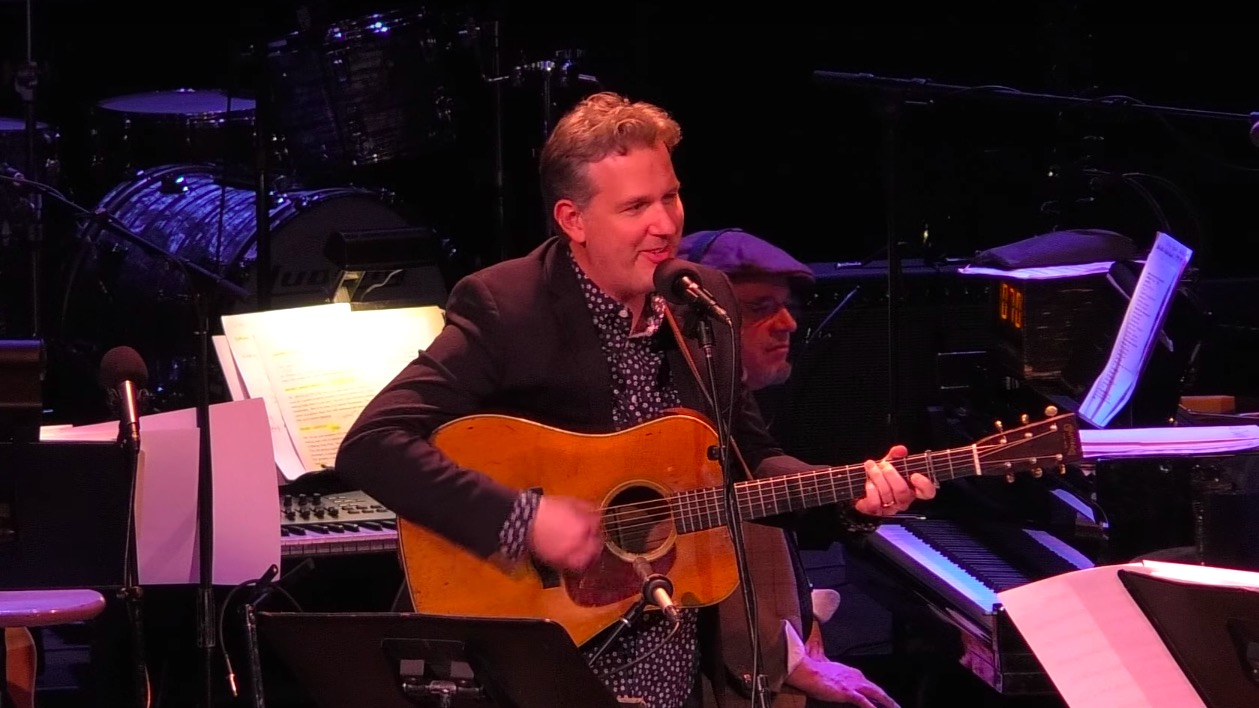
Just about a year ago, at the International Bluegrass Music Awards in Raleigh, North Carolina, Bryan Sutton (Hot Rize, Telluride House Band, five solo albums) accepted his (unprecedented) ninth Guitar Player of the Year Award. It was no surprise that the dominant flatpicker of his era won again or that he was magnanimous and humble.

But he did something incredibly gracious for a moment like this. Instead of thanking his business team, God, and family, he took his time to acknowledge 15 young guitarists who are out there ripping it up — no doubt with Sutton as one of their key generational influences. This was, in a nutshell, what’s wonderful about bluegrass music: It supports and nurtures its next wave of talent and fans without fear of being displaced or outgunned. And it was an interesting and very public forum in which to do so.

Here’s the speech followed by a quick guide, in no particular order, to the young pickers Sutton urged us to keep an eye on.

Seth Taylor: A North Carolina native, he won numerous contests including first prize on guitar at the 2008 Merlefest. He co-founded the band Monroeville and joined Mountain Heart in 2012.

Rebecca Frazier: She was the first woman to make the cover of Flatpicking Guitar Magazine. The Virginia native swept awards as a member of Hit & Run Bluegrass. She still fronts the group and records under her own name, as well.

Chris “Critter” Eldridge: Son of Ben, banjo player with the legendary Seldom Scene, Chris was briefly with the Infamous Stringdusters before joining Punch Brothers where, for six years, he’s made some of the most complex and beguiling string band music of all time. He also tours and records with young jazz master Julian Lage.

Jake Workman: He grew up on AC/DC and the Beatles, has a jazz guitar degree, and plays bluegrass like a master. Based in Salt Lake City, he’s a member of the band Driven.

Trey Hensley: Adept at both acoustic and twangy electric country styles, Hensley has become a very popular musician in his home region around East Tennessee. Now he’s in Nashville, working in a duo with Rob Ickes and showing singing/writing chops that are impressing veterans like Marty Stuart.

Caleb Smith: A life-long resident of Haywood County, North Carolina, Smith began his bluegrass career chiefly as a singer. But, as he’s ramped up his guitar playing, now as a member of star band Balsam Range, he’s ramped up his guitar building, too. His hand-made dreadnaughts are prized posessions.

Chris Luquette: Straight out of Seattle, he’s capable of grace or grunge on acoustic guitar and many other instruments, as well. Find him shredding or tastefully touching up in the music of Frank Solivan & Dirty Kitchen.

Courtney Hartman: She moved from her native Colorado to Boston where she studied at Berklee and joined the mighty and creative Della Mae. With that band on hiatus, Courtney (an Acoustic Guitar magazine cover subject) is songwriting, collaborating, and readying a solo release.

Jordan Tice: His bluegrass picking family in Maryland helped get him ready to record his first album as a leader and composer at age 17. Since then, he’s collaborated with and supported the best acoustic musicians in the world. He tours in a chamber grass trio with bassist Paul Kowert and fiddler Brittany Haas.

Grant Gordy: This versatile, jazz-schooled player filled the guitar shoes of Tony Rice and Mark O’Connor in the David Grisman Quintet for six years before moving on to other pursuits, including his band Mr. Sun with fiddler Darol Anger.

Billy Strings: His aunt gave him the nickname Billy Strings when he was a boy and he’s sure lived up to it. The Michigan native came to notice in a flexible duo with mandolinist Don Julin. Now, as a band leader, he’s crafting an explosively powerful new twist on bluegrass tradition.

Jon Stickley: A North Carolina native who went West and became known in the band Broke Mountain. Now in Asheville, he leads a power trio dedicated to original instrumental jazz-grass. Stickely is an inventive player who finds new timbres and means of coaxing sound out of the flattop box.

Zeb Snyder: The young hotshot from North Carolina (that state again) spits notes and funky grooves on acoustic and electric guitar in the tradition-bucking Snyder Family Band. He channels much Southern soul and is especially gifted playing the blues.

Molly Tuttle: This slight young woman with spidery fingers grew up in California with a dad who was a performer and mentor/teacher to most of the up-and-coming bluegrassers in her area. Formal training at Berklee put a razor’s edge on her intricate and personal style. Nashville-based, she sings and writes beautifully, too.

Presley Barker: Okay, he’s ALSO from North Carolina and he’s barely 12 years old and he’s fantastic. So just enough already. Truly the next generation, Barker was raised on Doc Watson records and the tutelage of the great Wayne Henderson.