What Was Tony Rice Really Like? Todd Phillips Reminisces With Robbie Fulks

No BGS reader needs a rundown of Tony Rice’s biography or accomplishments. Earlier this month I chatted with Todd Phillips, Tony’s close friend and bassist across multiple groups (David Grisman Quintet, Bluegrass Album Band, Tony Rice Unit) from 1975 to 1985. During these years Tony used inspiration from mid-century jazz and musical peers, along with his innate willpower, as levers to crack open a stunning new guitar vocabulary. In doing so he rose from a bluegrass badass to a global force, operating well above tribes and vogues.

When Todd emerged in the 1970s, bass guitar was a cross-genre norm. A young upright player who melded Scott LaFaro’s gracefulness with J.D. Crowe’s timefeel was a fairly wonderful anomaly in bluegrass. I started working with Todd in 2014, and grew close with him fast. He brought something rare — a relaxed whiphand — to the feel onstage. In the van, he indulged my ceaseless fanboy questions about the old days. An equable ex-stoner with a mildly grumpy edge, he’s as adept at building an instrument or a chicken coop as analyzing acoustic riddles, and his long experience working with people as unalike as Joan Baez, David Grier, and Elvis Costello gives him a high perch from which to reflect. He reminisced fluidly about Tony over the phone with me for two hours, stopping only twice, once overwhelmed by emotion and once to get a bottle of tequila. (Read more from our conversation at my blog.)
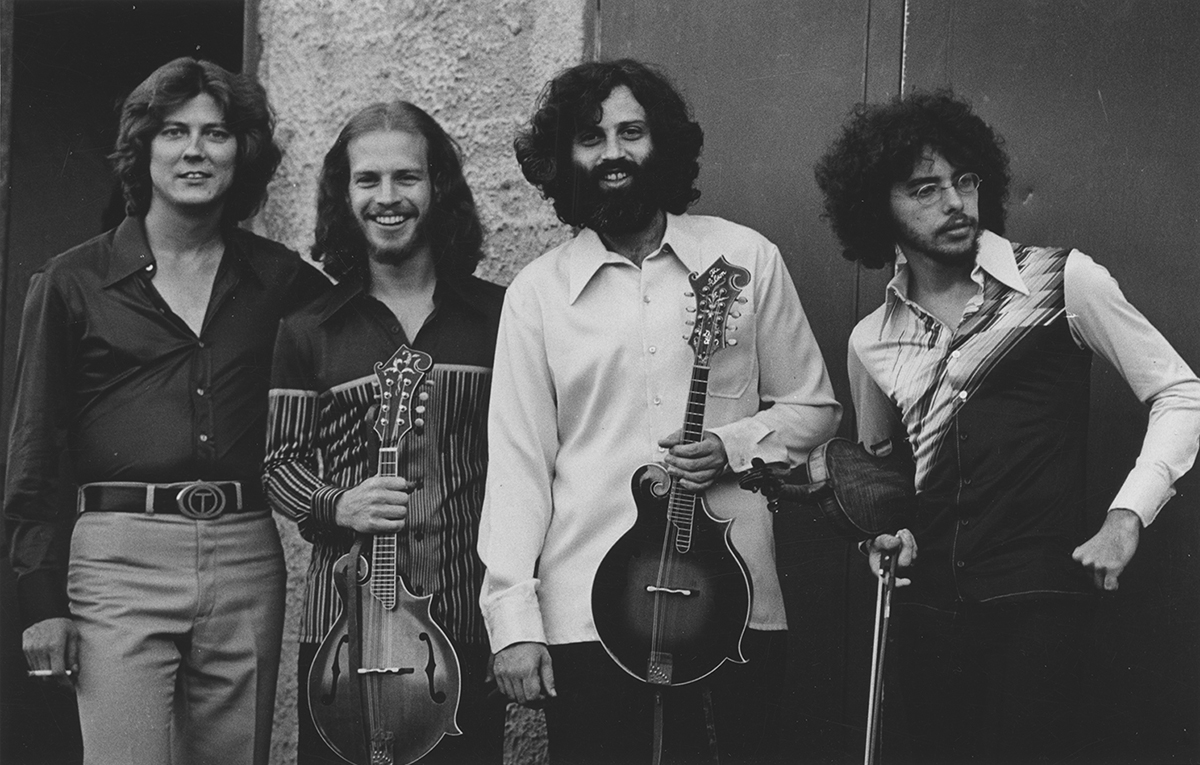
Members of David Grisman Quintet, 1977. L-R: Tony Rice, Todd Phillips, David Grisman, Darol Anger. (Photo by Jon Sievert.)

Robbie Fulks: I listened back today to California Autumn and other records I hadn’t heard for ages, and heard little passages that sounded uncharacteristic of Tony. Did gestures come into his vocabulary, stay there for a while, and then fade off as he went to concentrate on another idea?

Todd Phillips: That’s true, yeah. He would go through cycles, get on a kick. He’d get on riffs, like hearing Billy Crystal: “You look marvelous.” He’d say that 40 times a day, and a year later, drop it for some other riff. The vocabulary would change, according to the era.

That’s fascinating, to compare it to a non-musical example. So let’s dive in, go back to the start. Tell me about meeting Tony — when, where, and how you guys got underway with the Grisman project.

I was a beginning mandolin player, and I was certainly in over my head, playing mandolin with David, but he’d never heard me play bass, which I’d played since I was a little kid. This was 1974, and Clarence White had died the year before. And we just thought, this is a good band, we don’t need a guitar — no one else could fill Clarence’s shoes, and he’d be the only guy that would work in this thing. Then David came home from a Bill Keith recording session and said, “I just met the guy that could do it.”
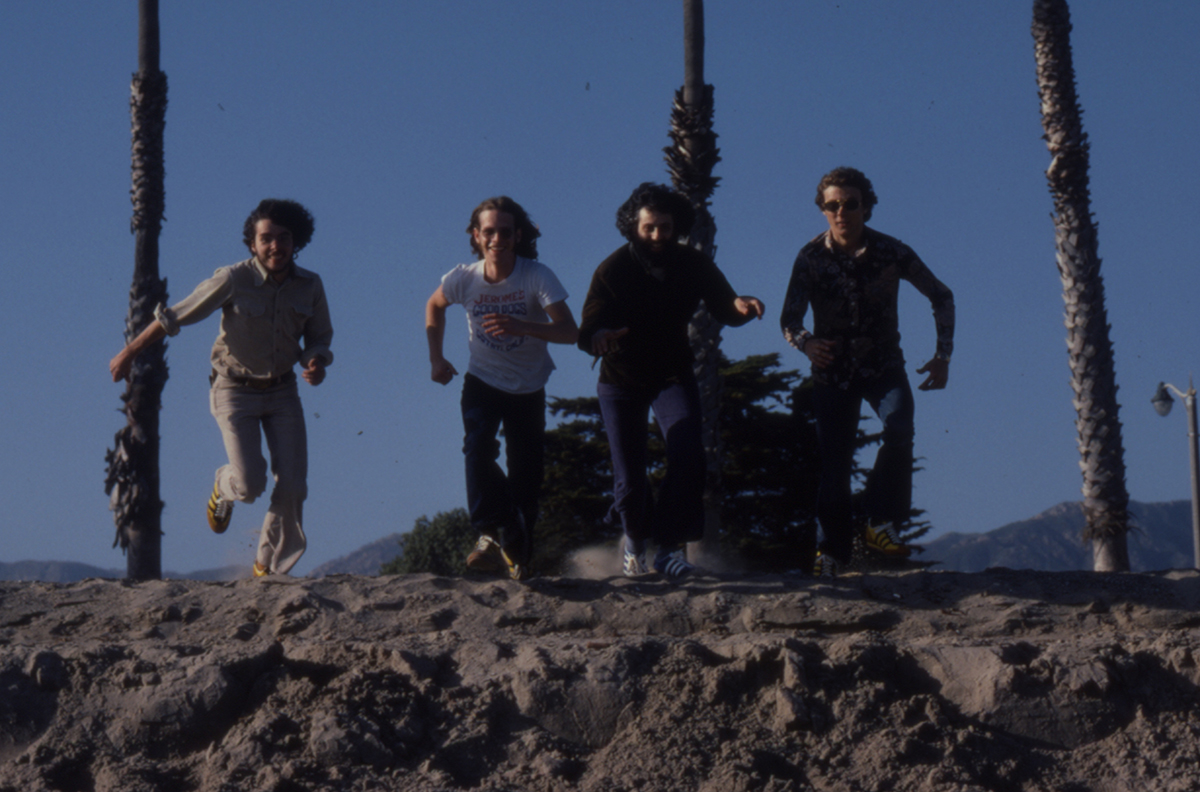
(Photo by Todd Phillips)

Shortly after that, J.D. Crowe and the New South were on their way to Japan, and they stopped in San Francisco to play one gig. They hung with us for a couple days and… I had never hung with, um, that many guys from Kentucky all at once. [Laughs]

I’ve told you about that Mexican restaurant in Berkeley. The Californians — me, Darol, and David — and the Kentucky guys — J.D., Tony, Ricky, Jerry, and Bobby — were seated at one giant round table. First, Crowe ordered: “Six tacos and a Coke!” Then each New South guy ordered exactly the same. I guess they were used to the little three-inch tacos you can eat in two bites. So this big table ended up covered with plates full of giant tacos, surrounded by a pretty interesting mix of characters. I wish we had a photo. Polyester and tie-dye T-shirts all around.

After they came back from Japan, Tony gave J.D. his notice. He hooked up a little U-Haul trailer — clothes, suitcase, guitar, and stereo system — and got an apartment in Marin County. And we started rehearsing. At that point, we had what we had, but then Tony’s chemistry came into it. And it just catalyzed the whole thing. It was huge. Tony had to learn his harmony and a bunch of chords he hadn’t really played before — but we had to learn to play rhythm like J.D. Crowe. So we probably rehearsed for another six months before we went out and played our first shows.
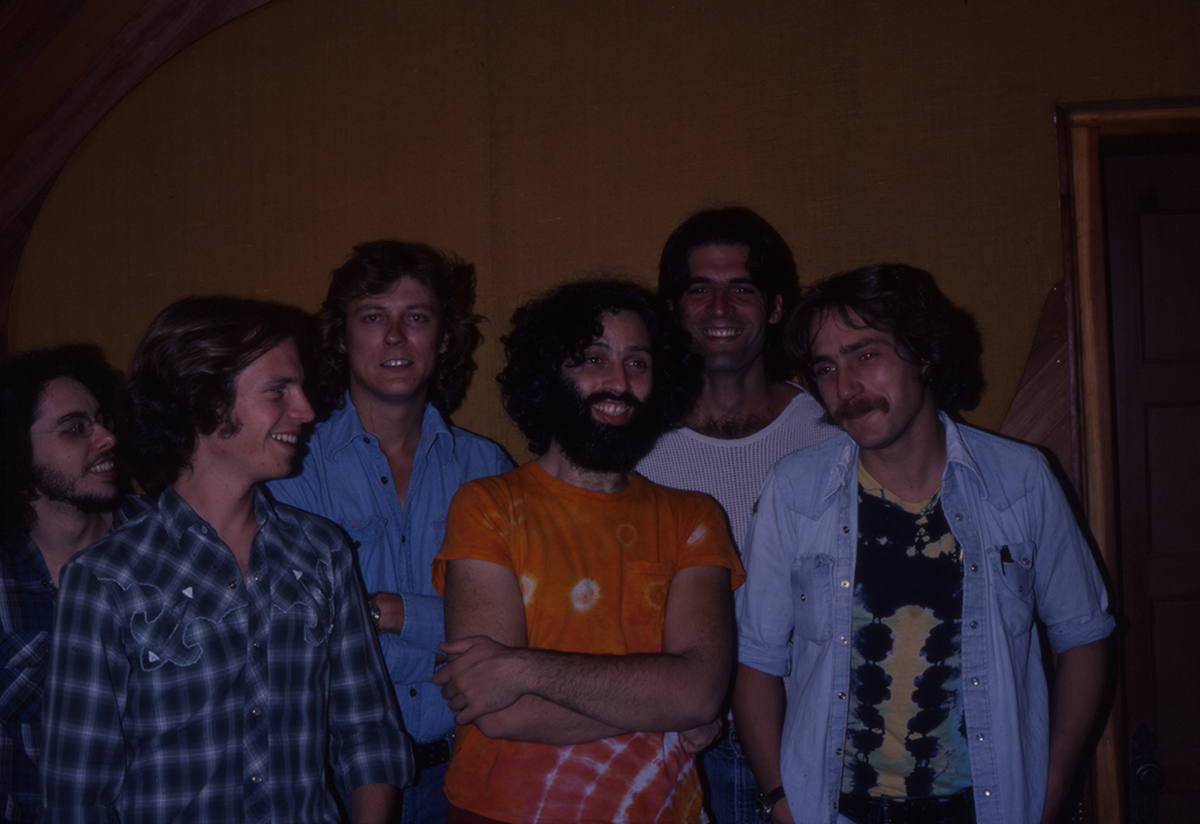
Recording the first David Grisman Quintet album. (Photo by Todd Phillips)

Tell me about the first gig.

Our first show was in Bolinas [in Marin County], in the community center. We made our own posters and put them up all over Bolinas, so it was sold out. And no sound system. We wanted people to hear us just like we rehearsed. There were probably 200 people there.

So small room, gather round, and somehow the guitar projected through.

We played with dynamics — if Tony was soloing, we shut ourselves up. We got down light and tight under him. Since we hadn’t played through a sound system, we just did what we did every day anyway.

The first on-the-road thing, not long after, was in Japan. Our show was a bluegrass quintet with Bill Keith and Richard Greene, followed by a set of DGQ. Then, as soon as we got back from Japan, we recorded the first quintet record. So it still had that energy. We were still excited to hear it, too, every time — it would raise the hair on our arms! It was kind of a… strong existence. Life felt — pumped up, you know?
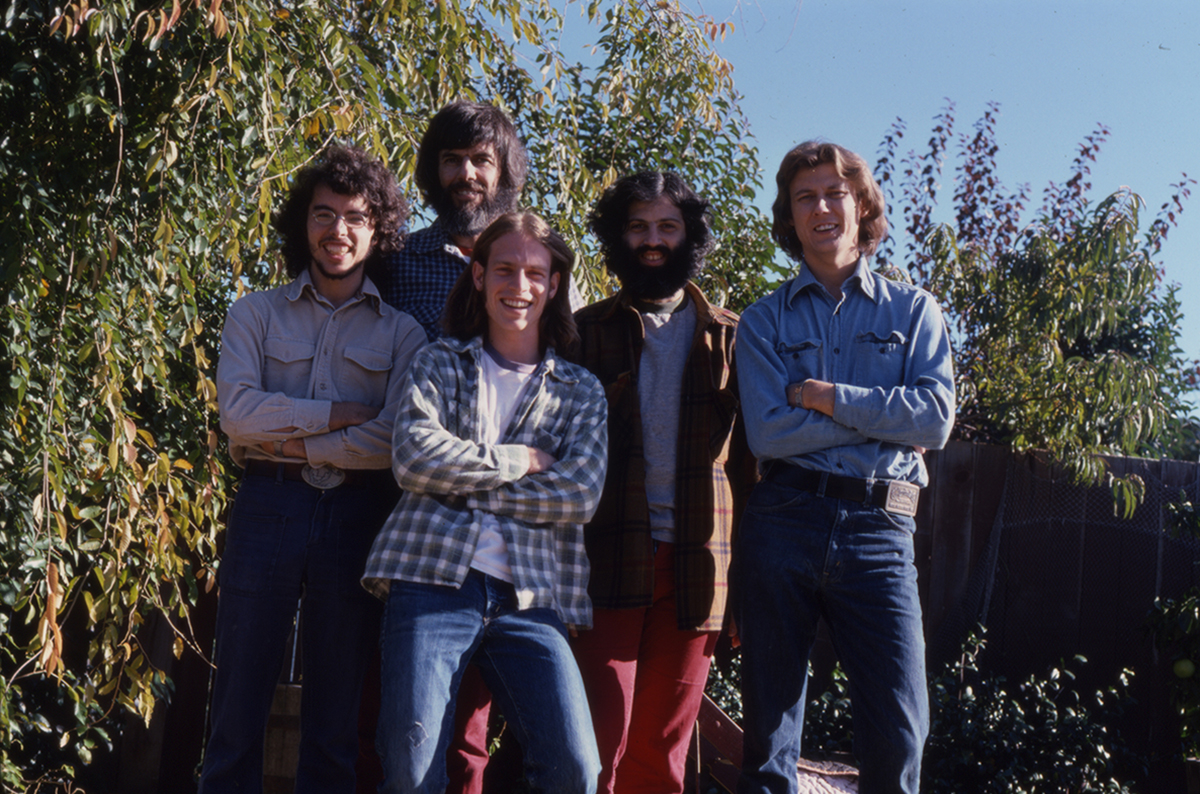
First photo of David Grisman Quintet, 1975. (Photo by Todd Phillips)

Close companions in an intense situation. A lot of people have been in a band or in the army. But on top of that, you guys were altering the course of music.

Yeah. Maybe it is a little like an army buddy. I was a cross between his bass player and his little brother. Also his babysitter, sometimes! He had left his old friends, and when he came to California, I seemed to be the guy he gravitated to. On off days, all of a sudden there’s a knock on the door at 10 a.m., and it’s Tony — “Hey man, let’s go the boardwalk, ride the roller coaster. Let’s go to the record store.” We went to the record store a million times. Came home with bags of records and stayed up all night listening — I mean, he taught me to listen close, whether playing music or just listening to records.

Any memories of the 1975 Grisman Rounder album sessions?

Tony was hilarious! We’d go out to eat, and he’d come back with a couple of cloth napkins. He’d fold one up and put it on his head, and put on sunglasses. Looking like a weird Quaker. And then drape another napkin over his left hand and go, “I don’t want anybody to steal any of my licks.” [Laughs] He’d leave that thing on his head, with the sunglasses, for like, three hours.
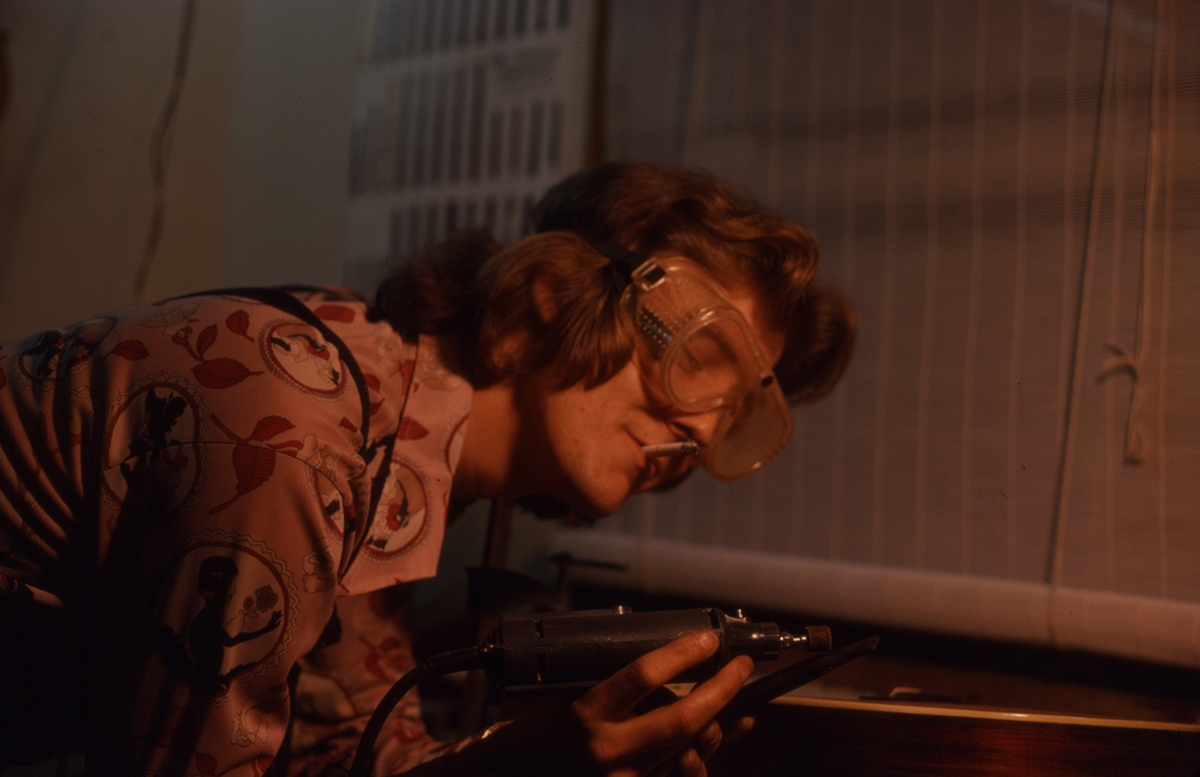
(Photo by Todd Phillips)

Have you heard guitarists who managed not to sound like Tony, in the years since?

Well, because Tony opened the door, after Clarence, you can’t help but sound like him as a bluegrass soloist. He found those avenues on a fingerboard that you can play with a strong attack and accurate, strong expression. A lot of it is mechanics. A D-28 with semi-high action, there are certain phrases that fall naturally under your fingers, and Tony found those. So I think a lot of guitarists use those avenues because — they’re there. You might hear different phrases but they’re not as strong. They might be more interesting, or more academically pleasing, but the effect — I haven’t heard it as strong as in those passages that Tony found.

Tell me about Manzanita.

There was no preparation that I remember. The guys came to Berkeley and we went to work. We ran a tune for 20 minutes, then recorded it maybe three to six times.

Béla Fleck said Tony didn’t like to rehearse much.

Yeah. Sink or swim.
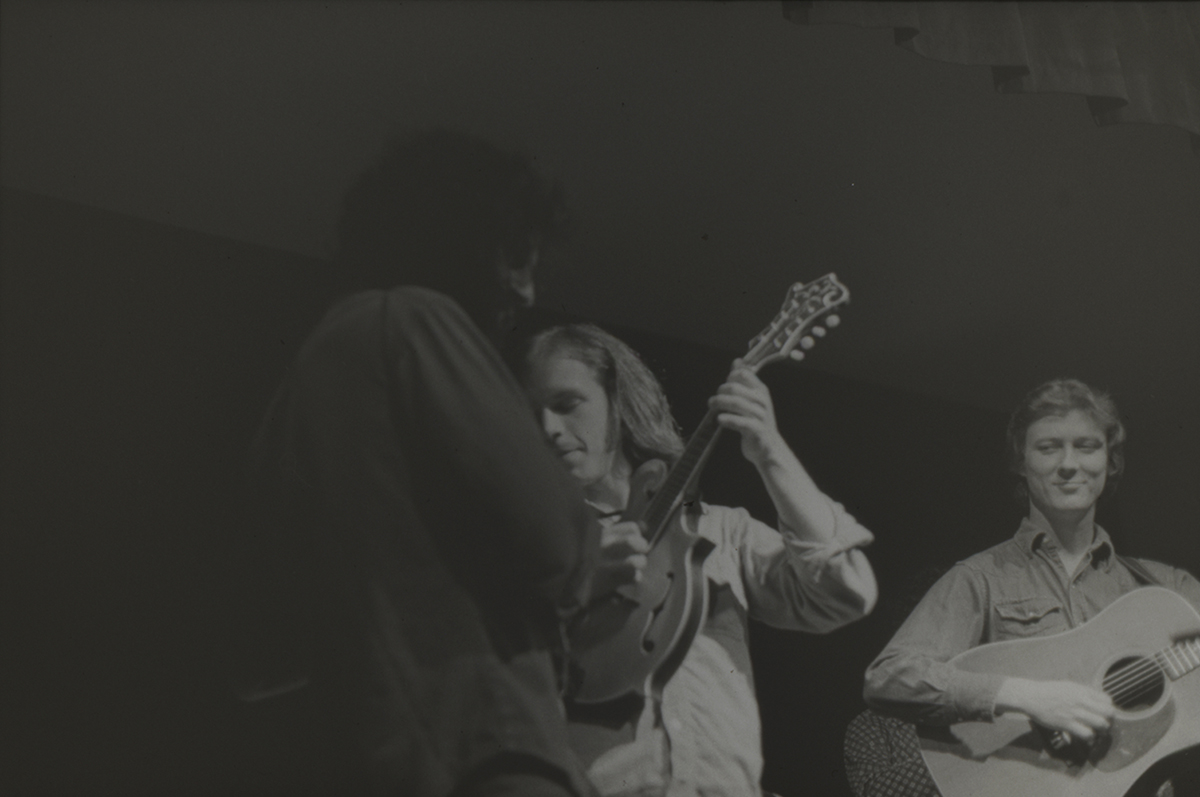
David Grisman, Todd Phillips, Tony Rice (Photo by Todd Phillips)

Any road memories involving Tony?

He didn’t go out a lot. We went to Japan once, the three Rice brothers — Larry, Wyatt, Tony — and me. And Tony — maybe that’s when he started — he just never left his hotel room.

What was he doing in there?

Ordering room service. Later, traveling with the Unit, he’d stick to the room. I mean…he pretty much lived in front of his stereo, smoking cigarettes and drinking coffee. That’s what he thrived on.

How did you listen to music away from the home stereo back then?

In the early days, he drove a noisy Dodge Challenger. A muscle car, with a cassette player in the dashboard. We’d listen loud. And driving from Grisman’s house back to mine every night, it was pretty much all John Coltrane, the classic quartet.

Interesting!

Yeah, and later, a lot of Oscar Peterson. He’s like Tony: you recognize the phrases, and they’re strong as hell. Meticulous mechanics. Tony never studied music academically — but the sound of it. He took that in and it’d come out later somehow, the power and the attitude, more than specific notes or theory.
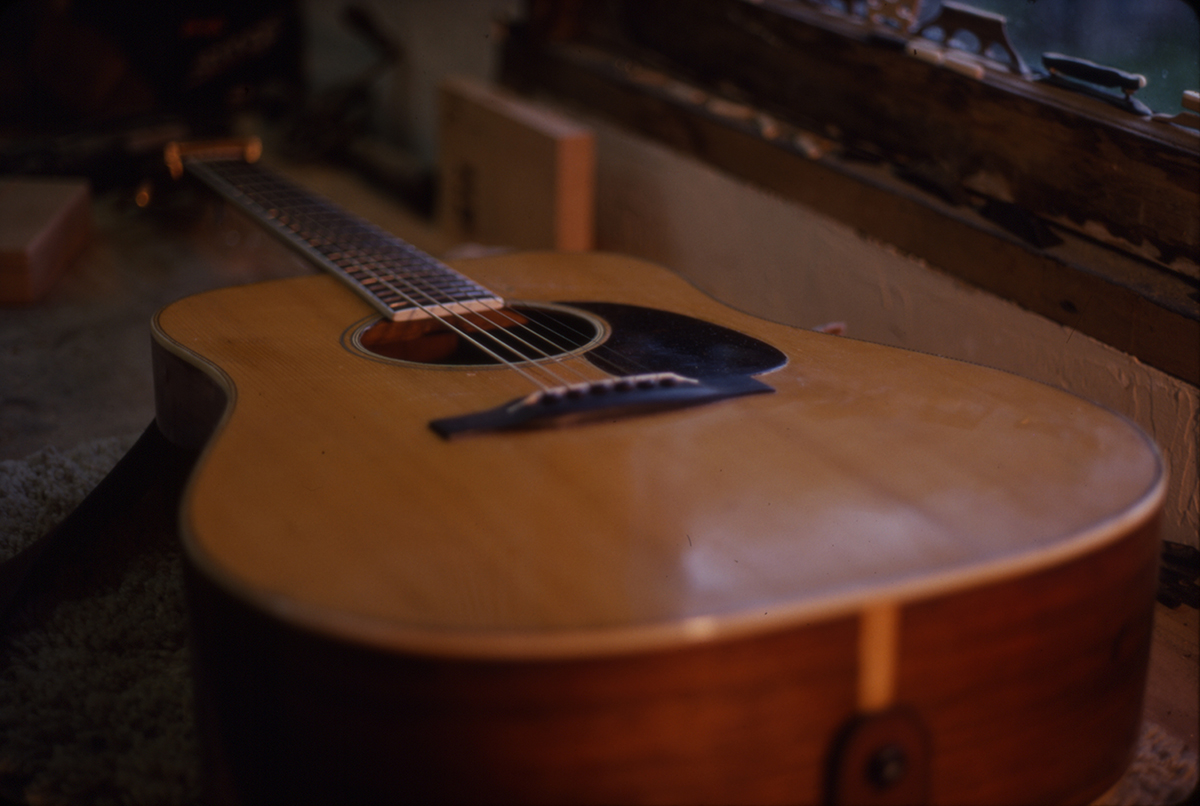
(Photo by Todd Phillips)

Did he have any relationship to the written page?

No. Not at all.

Tony cited Miles Davis and Eric Dolphy as favorites, but I don’t hear a strong kinship.

I think those were unique voices. Like Django, or Vassar.

Individualists.

I think that’s it. The attitude. He liked those kind of characters, like David Janssen — he really had an obsession with David Janssen. Or Lee Marvin.

Ha!

I’m not kidding! The Marlboro Man.

People that laid it down.

Exactly.
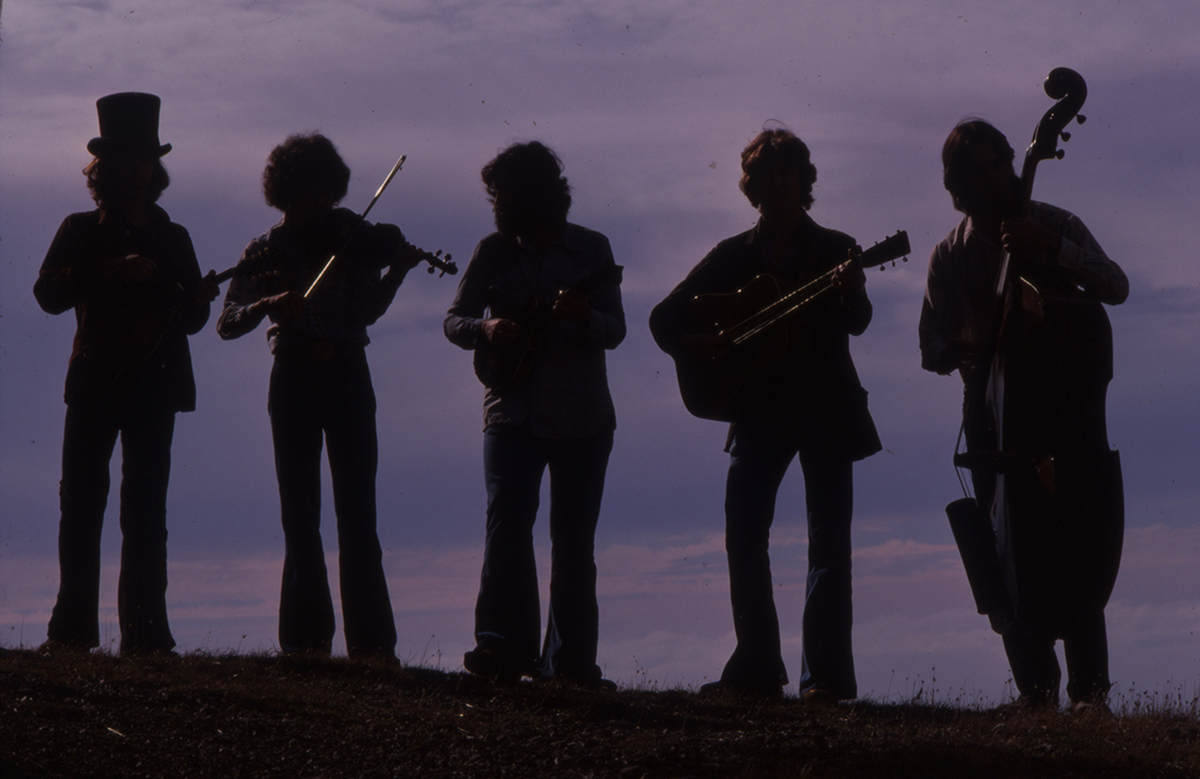
David Grisman Band in silhouette, 1976. (Photo by Todd Phillips)

I’m curious about the chemistry between Tony and other strong personalities. You’ve told me your take on the Skaggs-Rice dichotomy, the good and bad guys from everyone’s high school…

Yeah, Ricky would be class president and Tony would be Eddie Haskell. [Laughs] There’s a little of that, but musical respect bridges all gaps.

With David, did Tony slip easily into a sideman role?

The chemistry was — not volatile, but exciting. The New Jersey hippie and Mister Perfection. You know, when Tony was new to California, David’s living room was a real event. You never knew who you’d run into — Jethro Burns, Taj Mahal, Jerry Garcia. I think that excited Tony. He’d dig in his heels, just be who he is, and people respected that. He was…I guess I want to use the word “stubborn.” Clear-headed, with his vision.

Were cigarettes it for Tony, or were there harder things he liked to do?

No! He actually went light on the marijuana, compared to everyone else in Marin. He kinda puffed a little bit, just to participate.

Any whiskey?

No, he drank a few beers at home. I don’t remember any hard liquor at all.
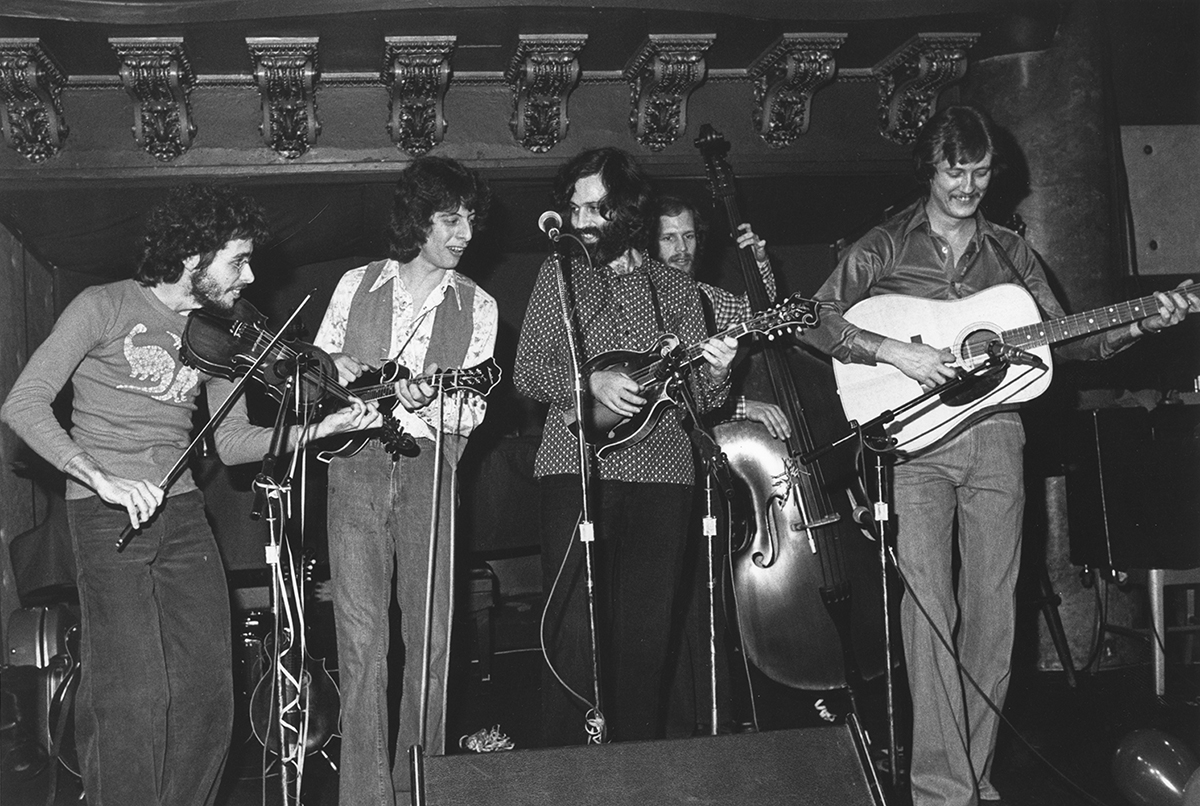
New Year’s at Great American Music Hall, 1978-1979. (Photo by Jon Sievert.)

I read in The Guardian obit: “apprentice pipe fitter”…?!

Yeah! His dad was a welder, pipe fitter, and Tony and his brothers did that too.

What did he do to keep his fingers strong besides play?

Nothing. He bit his nails. He had no fingernails, and his fingertips looked like blocks of wood. Like the rounded end of a wooden dowel. The guy played a lot. He had hands that physically, mechanically, work in a different way. He could push down with his thumb, on his right hand, but also push up, with his first finger. You can look at YouTube and see it — a really strong muscular mechanism between thumb and index.

His down and upstrokes weren’t ascribed to the usual beats, weren’t automatized in the normal way — and were equally forceful.

Yeah. And rhythmically, a lot of triplet syncopation on the upstrokes. People just say “syncopation,” but technically it’s playing 3/4 against 4/4, like Elvin Jones’s drumming. You can’t tell if it’s in 3 or 6 or 4 or 2. It’s all of it. It’s all of it! And those subdivisions, I learned that from Tony — you slice that up in all kinds of ways, so those polyrhythms are all churning in your hands or head at the same time. That’s what generates good time, not tapping your foot. Tony had all those superimposed polyrhythms in him.
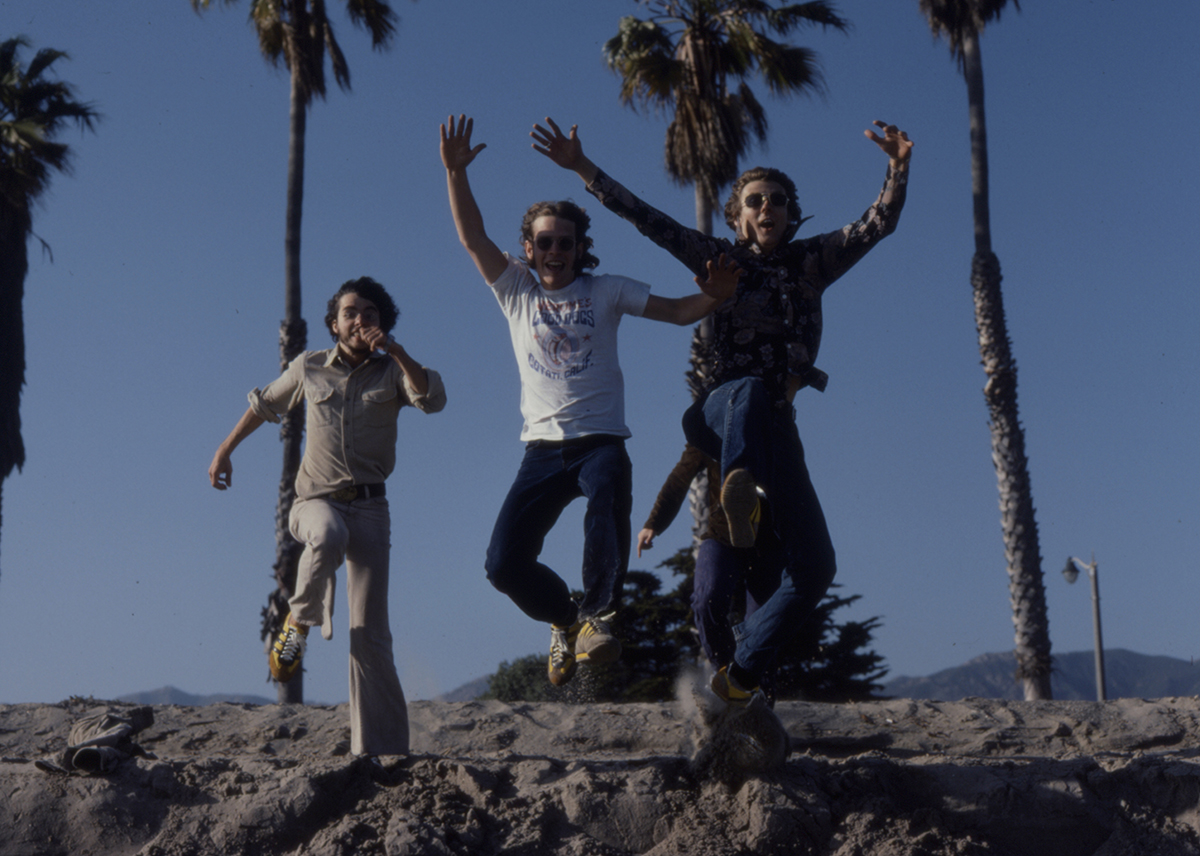
(Photo by Todd Phillips)

Bluegrassers work hard and live long, on the whole. And with so many players of your generation now in their 70s and performing as energetically as ever, Tony’s story looks more profoundly sad to me.

You know, I don’t know why Tony went the way he went. Why he couldn’t be as youthful as Sam Bush. Who knows, if there was some kind of a depression, or if that desire for perfection wore him out. You know? Because he did play with joy, but it was also that crazy obsession, to be perfect and accurate — maybe he was just too hard on himself.

He was hard on everybody around him. I know that I developed way more than I ever would have developed if I’d never known him. It was not that he was ever mean or harsh to me, but being around him, you put pressure on yourself to live up. I think everybody that played with him was like that. He jacked up the music to this level — and then it was your challenge to get up there with him. Being around him changed me forever.


Lede image by Heather Hafleigh. All photos provided by Todd Phillips and used by permission.
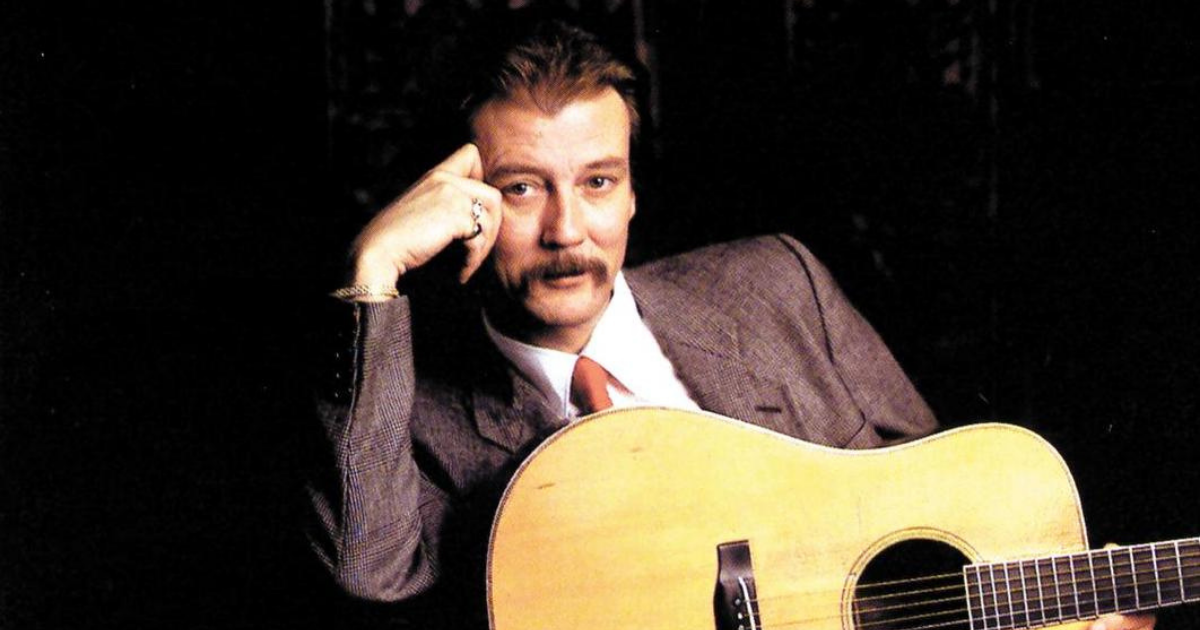
Ricky Skaggs Remembers Tony Rice

Tony Rice, revolutionary guitar player and Bluegrass Hall-of-Famer, died Friday, December 25 at the age of 69.  His passing was confirmed and memorialized by friend, collaborator, and fellow Hall-of-Famer Ricky Skaggs, per the request of Tony’s family.  He was a true icon and will be remembered and revered by everyone in the community.  Read Ricky’s full post below:


View this post on Instagram


A post shared by Ricky Skaggs (@rickyskaggs)

“Sometime during Christmas morning while making his coffee, our dear friend and guitar hero Tony Rice passed from this life and made his swift journey to his heavenly home. It’s still quite a shock to the whole family. After talking with Tony’s wife Pam and their daughter India, they asked if I would make a statement on their behalf and give them some privacy to process during this difficult time. I was honored to help out. Tony is also survived by his brothers Wyatt and Ronnie, and all of you who loved his music and those who will continue to share it with others.

Tony Rice was the single most influential acoustic guitar player in the last 50 years. Many if not all of the Bluegrass guitar players of today would say that they cut their teeth on Tony Rice’s music. He loved hearing the next generation players play his licks. I think that’s where he got most of his joy as a player. With many IBMA Awards and a Grammy Award, Tony was a gracious recipient of the International Bluegrass Music Award’s highest honor as an inductee into their Hall Of Fame in 2013.

Not only was Tony a brilliant guitar player but he was also one of the most stylistic lead vocalist in Bluegrass music history. When I joined the group The New South in 1974, I knew I’d found a singing soul mate with Tony. Our voices blended like brothers. In 1980 we recorded the album “Skaggs And Rice” for Sugar Hill as a tribute to our duet hero’s with just the simplicity of guitar, mandolin, and our voices. All these years later people tell me how much the purity of that record still touches their heart. That’s who Tony was, a singer from the heart.

I will miss him as I’m sure all of you will. But where Tony is right now, he’s not missing us. He’s in the place that God has prepared for those who love Him and receive Him. Rest In Peace dear brother. Thank you for your great talent and the music that will continue to inspire more and more generations to come.”

– Ricky Skaggs


Photo via ‘Tony Rice Sings Gordon Lightfoot’

WATCH: Molly Tuttle Reinterprets Rancid’s “Olympia, WA”

One of Molly Tuttle’s strongest suits is her fluency in an array of instruments and styles. Using her experience as an excellent clawhammer banjo player and a masterful guitarist, she has forged a unique style of clawhammer guitar-playing. Similarly, Tuttle is at home in old-time music, traditional bluegrass, and more modern roots styles. Already an artist who seemingly can do it all, the California native’s newest endeavor is showcasing an even broader range of musicianship.

Her 2020 album, titled …but i’d rather be with you, is made completely of cover songs by artists from many different genres, including the National, the Rolling Stones, and Grateful Dead. In her interpretation of Rancid’s “Olympia, WA,” Tuttle’s ability to match her voice to the energy of the song speaks volumes of the caliber of musician that she is. In her trademark effortless way, she brings an acoustic guitar to a punk rock song and somehow still delivers an inspiring performance. Watch the video here.


Photo credit: Zach Pigg

BGS Wraps: Tommy Emmanuel, “Rudolph the Red-Nosed Reindeer” (Live)

Artist: Tommy Emmanuel
Album: Live! Christmas Time
Song: “Rudolph the Red-Nosed Reindeer”
Release Date: December 4, 2020

In Their Words: “This live Christmas album was recorded at The Big Room at the Sierra Nevada Brewery in Chico, California, which is the same place I filmed and recorded my album, Center Stage. That room just has some mojo for me. When I listen to this recording, I hear the joy, soul, and fun we had at that show. Christmas music is so joyous to me and I feel we rose to the occasion that night. I’ve always felt a connection to the song ‘I’ll Be Home For Christmas.’ It just speaks to the heart, especially to anyone who travels for a living. Annie Sellick’s singing is just beautiful on that song. ‘Amazing Grace’ and ‘Guitar Boogie’ are also standout tracks for me. Pat Bergeson’s harmonica playing seems to push me to another level.” — Tommy Emmanuel, CGP


Enjoy more BGS Wraps here.

LISTEN: The Sharp Flatpickers, “Red Haired Boy”

Artist: The Sharp Flatpickers
Hometown: Florida and beyond!
Song: “Red Haired Boy”
Album: Sundrops on the Water – Reflections
Release Date: November 20, 2020
Label: Mountain Fever Records

In Their Words: “Scottish and Irish tunes were brought to America and became standard fare in bluegrass and old-time music. ‘Red Haired Boy’ is one of those classics (imbued with plenty of folklore if you dig around a bit). With this instrumental version Bryan McDowell and Kate Lee O’Connor play twin fiddles, and our arrangement fondly pays homage to THE UNIT. I’m proud of the warmth that comes through here and the solid licks all these fine players graciously deliver for it. Nothing not to love.” — Lee Kotick, The Sharp Flatpickers


Photo credit: Mark Schatz

WATCH: David Grier & Tommy Emmanuel Shred “Workin’ Man Blues”

Flatpicker David Grier and his band have missed the stage in recent months, itching to perform with the regularity they once did. Luckily, the good folks at Nashville TuneStream have given them a stage from which they can perform safely and deliver their golden musical product to audiences around the world.

A weekly residency was established for Grier and co. at the livestream production company earlier this year, and we at BGS have been watching. If you haven’t yet had the privilege of seeing David Grier work his magic live, we strongly encourage you to do so at the next safe opportunity — though streams will certainly stand in until that point! A purist and traditionalist of sorts, Grier isn’t quite a household name, but you’d be hard-pressed to find a better flatpicker in the world. As a testament to his musicianship, Grier’s band is always loaded with heavy-hitting instrumentalists, this time including Stuart Duncan, Casey Campbell, Dennis Crouch, and renowned virtuosic guitarist Tommy Emmanuel.

Emmanuel leads the band through Merle Haggard’s “Workin’ Man Blues.” The train gets off to a powerful start, but Grier and Emmanuel derail the ensemble and venture off into a delightful guitars-only playground near the song’s end. During this pseudo-guitar duel, the rest stop entirely and share laughs with one another, as amused as we viewers at the mini guitar hero battle. The David Grier Band is scheduled to perform weekly for Nashville Tunestream, so watch this performance as a teaser and, if you can, support the band by tuning in!


BGS 5+5: Larry Keel

Artist: Larry Keel
Hometown: Lexington, Virginia for the past 24 years.
Latest album: American Dream, out November 6, 2020
Personal nicknames (or rejected band names): My wife and I call each other “Ange” (pronounced “Aynge” with a long “a”) other nicknames are “Doghead” and “Late-night Man.”

What’s your favorite memory from being on stage?

My favorite memory is standing next to two of my heroes that I had studied all my life up to that point, and getting to collaborate and share in the music we made together on stage… I’m speaking of Tony Rice and Vassar Clements, during a period in my career when both of these iconic musicians played regularly in my band. Other major moments I cherish and will never forget are playing with Little Feat in Jamaica on a beach in Negril, playing Carnegie Hall in New York, playing Red Rocks Amphitheatre, and getting to play live music with my wife and my brother all throughout my career.

What other art forms — literature, film, dance, painting, etc. — inform your music?

I truly love to paint! Bob Ross got to me early in my childhood, and he’s still all up in my soul. I paint with watercolors, markers, pens, anything when I feel the urge. I guess poetry also influences my music, because I lean on that literary form for my songwriting. And I’m currently getting more into designing a meal and preparing the food, then plating it artistically.

What was the first moment that you knew you wanted to be a musician?

I knew I had to be a musician when I was little and I started paying more attention to my father and older brother playing (they both played guitar, my father also played banjo and sang). I loved watching them have such a good time and I could see how everyone playing music with them or listening to them all enjoyed it so much. Then, when I was 7, my brother bought me a guitar, helped me get started with chords and positions, and I never set the instrument down…I was hooked from then on.

If you had to write a mission statement for your career, what would it be?

The mission is to let the art take me and everyone listening on a journey together, to get us all on the same page for the time we’re connecting through the music. If I had to give myself or a budding musician advice, I’d say be ready to work HARD. Do your music and your business your own way. Let your own instincts and your own style guide your decisions. I’m a big believer in “march to the beat of your own drum…” and, be frugal and be kind.

Which elements of nature do you spend the most time with and how do those impact your work?

I spend lots of time in the garden, right here at my home. It’s such a zen feeling to plant seeds, nurture them, watch them grow and then enjoy the fruits and veggies of mine and my wife’s labor. Fishing and being on any water is another zen-like activity that keeps me grounded. All in all, I try to spend as much time as possible in nature, because it charges up my “feel-good” and gives me a connection to something timeless and eternal. I’m always trying to tap that genuine energy when I write and play music. That’s the goal.


Photo credit: Lyric Photography

Jordan Tice, “Stratford Waltz”

Do you remember the soundtrack to your earliest childhood memories? Do you remember the songs that wafted from the car radio to the backseat as you rode along the highway, en route to a family reunion or summer vacation? My earliest memories of seemingly interminable, minivan-filled-to-bursting road trips are often scored by solo acoustic guitar. My older brother, a fingerstyle enthusiast and acolyte, had an equally interminable collection of Phil Keaggy albums. At one point, I could tell you the exact title of the tune that was my favorite to fall asleep to on the road — though by now I’ve long forgotten which one. 

Guitarist and Nashville transplant Jordan Tice counts many a virtuosic, acoustic guitar aesthetician (cutaway or not) among his influences, from Norman Blake to Mississippi John Hurt — two pickers Tice references as direct inspirators of his upcoming solo album, Motivational Speakeasy. The record was written pre-pandemic and, despite its “stripped down” nature, feels impetuous, mischievous, and adventure-ready, even in a song as languid and buttery as “Stratford Waltz.” Named for Stratford Avenue in Nashville’s Inglewood neighborhood, the tune immediately recalled to mind the family road trips of my childhood, my brother’s CD carrying case, and my sleepy head bonking against the back window in our circa 2004 Chevrolet Astro Van.

The intimate setting of the album — it’s just Tice and his “beloved and well-worn Collings guitar,” as a press release puts it — and the subtly lush reverb magnify the gentle, magnetic momentum of “Stratford Waltz.” With that motion and the sly adventuresome spirit we know from Tice’s writing, both lyrical and instrumental, it’s no wonder a mind might leap immediately to the open road, with hundreds of miles ahead. And personally, it’s certainly fitting because, nowadays, when I turn off the highway and head south on Gallatin Pike in Nashville towards my current home, my most direct route is down — did you guess it? — Stratford Avenue


Photo credit: Jacqueline Justice

BGS 5+5: Stephen Mougin

Artist: Stephen Mougin
Hometown: Ashfield, Massachusetts
Latest album: Ordinary Soul
Personal nicknames (or rejected band names): Mojo

What’s your favorite memory from being on stage?

2006 was my first trip to Telluride with the Sam Bush Band. It was all “larger than life” from the ride in, to the amazing town, to the incredible lineup, to the unbelievable stage/sound/light crew. I remember walking out on stage (which is quite tall), getting set up, then looking out at the mountains just as the sun was setting. It was so breathtaking and surreal that I didn’t even notice the audience for at least three or four songs. Telluride is a special place and Planet Bluegrass makes it even better!

What other art forms — literature, film, dance, painting, etc — inform your music?

I was interested in shooting some interview videos for our record label so I purchased my first DSLR, learned about photography exposure, lighting, etc. and began my journey as a videographer. I really enjoy street, landscape, and architectural photography while I’m out on tour as a method to practice, and it makes for nice memories when I’m home. Our videography has grown to include music videos which I direct, shoot, and edit. There’s so much similarity between video light/color and audio frequencies/instruments, I feel like my visual understanding has informed my audio engineering and overall musicality.

Which elements of nature do you spend the most time with and how do those impact your work?

My pal Thayer Washer (a Nashville musician who toured with Connie & Babe and the Backwoods Boys in his younger years) wanted to take me bass fishing as a thank you for working on a project for him. Little did I know it would remain a fun, calming hobby, pushed forward with the addition of a jon boat and trolling motor. When I fish, I don’t think about ANYTHING other than where to cast, which lure, what rod technique to use, and where they might be. It is a necessary brain cleanse. I’m a workaholic and I often feel guilty for taking a few hours to go, but feel so much better when I do.

Since food and music go so well together, what is your dream pairing of a meal and a musician?

My two favorite singers are Frank Sinatra and Lester Flatt. I’d love to share a meal with both of them (can you imagine THAT conversation?) and I’d picture it as some sort of surf-and-turf involving large shrimp, a slab of steak, and a baked potato with a large dollop of butter. Though that’s not really my favorite meal, it seems like what those guys might eat (maybe Lester would pass on the shrimp…). We’d chat about memorable gigs and I’d have a thousand questions from vocal delivery to the hardships of touring in their time.

How often do you hide behind a character in a song or use “you” when it’s actually “me”?

As a voice teacher, I often encourage students to “get inside the song” by pretending to be the character. Dabbling in musical theater in my youth, followed by my classical voice training, naturally set the footprint for this particular technique. When I sing, I have a movie playing behind my eyeballs which helps me feel the truth in the song (even if it’s not “MY” truth). I’ve spent so much time working on song personalities, there’s really no “ME” in it… except that “I” am the character (if I’m doing my job well). The direct answer to your question lies in the particular songs one chooses to sing!


Photo credit: Elliott Lopes

Doc Watson: Live Moments and Memories

While the late great Arthel “Doc” Watson released scores of albums over the course of his career, he only made the main Billboard charts once and peaked at a modest 193 (for his 1975 album, Memories). But Watson made a far bigger mark as a performer, often in some unusual settings — from the most prestigious concert stages down to humble living rooms.

Even though Watson wasn’t a huge record seller, few artists in the history of American music ever generated more transcendent moments. He remains revered as one of the best flatpick guitarists of all time, and MerleFest (the festival he founded in memory of his late son) stands as an essential acoustic-music event.

Here are some of Watson’s signature moments of performance, captured for the ages. (Listen to the playlist below.)

“Roll In My Sweet Baby’s Arms” – The Three Pickers: Earl Scruggs/Doc Watson/Ricky Skaggs, 2003

We begin with a collaboration between Watson and his fellow North Carolina legend, master of the bluegrass banjo Earl Scruggs, with the old Flatt & Scruggs warhorse “Roll In My Sweet Baby’s Arms” — the closing track from the live album they recorded together in Winston-Salem in 2002. The picking is as hot as you’d expect, especially on this track where Ricky Skaggs urges a solo by calling out, “Try one, Doc!” He gets gone.

“Railroad Bill” – Legacy, 2002

Legacy was the Grammy-winning retrospective album Watson made with his longtime, late-period accompanist David Holt, with songs and stories going all the way back to his earliest days playing music. The package includes a live show recorded in Asheville, North Carolina in 2001, with one of his best-ever versions of the Etta Baker Piedmont blues classic “Railroad Bill.” Watson could indeed play about as fast as a runaway train, and this features some of his swiftest guitar runs ever captured.

“Corrina” – Doc Watson and Gaither Carlton, 2020

Watson’s newest release is this live recording of some of his earliest shows in New York City, 1962 in Greenwich Village, when he was one of the rising stars of the budding folk revival. Watson performs here with his father-in-law, the renowned old-time fiddler Gaither Carlton. But what’s really notable is that Watson is playing banjo in the old style rather than guitar. It turns out he was almost as formidable on five strings as six.

“Tennessee Stud” – Nitty Gritty Dirt Band’s Will the Circle Be Unbroken, 1972

This Americana landmark captured a revolutionary moment, an intergenerational, country-rock summit with the Dirt Band on one side and the country/folk/bluegrass establishment on the other. And it wasn’t live onstage, but live in the studio, with the tape machine left running to record between-song conversations. That captured some of Watson’s priceless homespun pearls (“That’s a horse’s foot in the gravel, man, that ain’t a train!”), as well as what stands as his definitive recording of this stately, well-worn standard. “Tennessee Stud” made Watson a star all over again to yet another generation of roots-music enthusiasts.

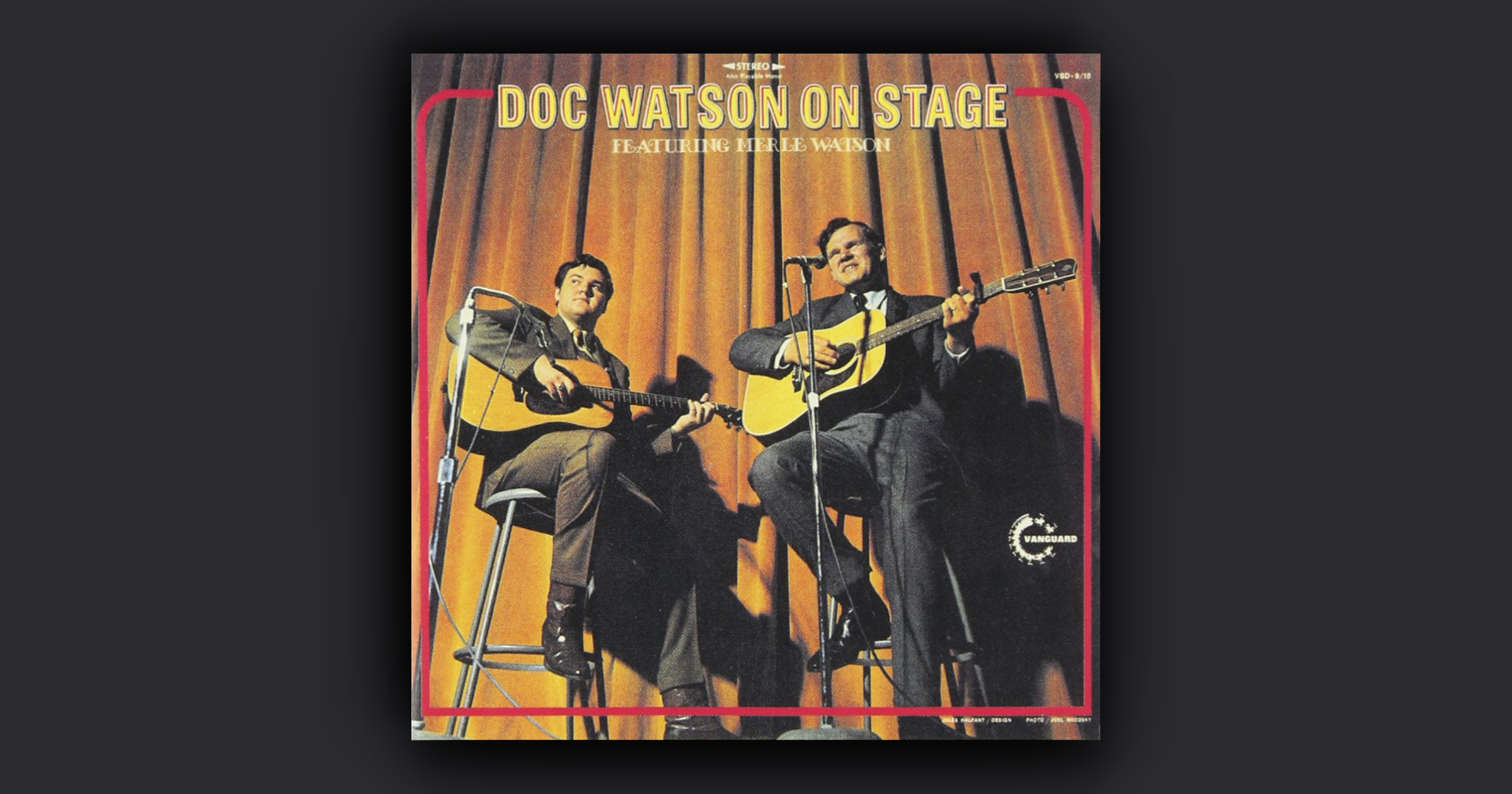
“I Am a Pilgrim” – Doc Watson on Stage, featuring Merle Watson, 1971

Watson had many fine accompanists over the years, but none better than his son Merle, who was always on Doc’s wavelength. Ever modest, Doc always claimed that Merle was the better player. He was, of course, wrong about that, but Merle was a great picker in his own right. Recorded live at Cornell University, this is an excellent version of the old spiritual that also appeared on Circle. “I Am a Pilgrim” would remain an evolving onstage set piece for Doc over the years. After Merle’s tragic death in 1985, Doc would customize the lyrics in performance: “I’ve got a mother, a sister and a brother and a son, they done gone on to that other shore.”

“Blue Smoke” – Doc Watson at Gerdes Folk City, 2001

Another track drawn from one of Watson’s early-period excursions up to New York City, this was recorded during 1962-63 engagements at the legendary Gerdes Folk City nightclub. And this cover of the instrumental by Merle Travis (for whom Doc named his son) is aptly named. When he really got to cooking, Watson could play guitar so fast he just about left a vapor trail.

“Every Day Dirt” (from The Watson Family, 1963)

Ralph Rinzler, the musicologist who first discovered Doc in the early 1960s, recorded this album live at the Watson family homestead in North Carolina. It captures some of what life must have been like growing up singing and playing with Doc; son Merle, wife Rosa Lee and father-in-law Gaither Carlton are among the relatives present. “Every Day Dirt” shows off just how personable a vocalist Watson could be, although as always the real draw is the obligatory killer guitar-picking.

“The Cuckoo Bird” – The Watson Family, 1963

From that same recording, Doc plays guitar accompanied by his son Merle on banjo, covering the old Clarence “Tom” Ashley song that appeared on Harry Smith’s epochal Anthology of American Folk Music. Thanks to the familial radar that comes when blood relatives play together, the instrumental interplay is perfect. This is also a great example at Watson’s mastery of the art of call-and-response between his guitar and voice.

“What Would You Give in Exchange for Your Soul?” – Bill Monroe and Doc Watson, Live Recordings 1963-1980: Off the Record Volume 2

Watson’s modesty was such that his natural inclination was to regard himself as a sideman — even though he was rarely if ever not the best picker and singer in the room. But he plays the role of foil perfectly here, vocally as well as instrumentally, to Monroe’s rippling mandolin and high lonesome tenor on this live version of the first song The Father of Bluegrass ever recorded.

“Wabash Cannonball” – Doc Watson on Stage, featuring Merle Watson, 1971

Before he started playing guitar, Watson’s first childhood instrument was actually a harmonica, which he wore out so fast from playing it so much, his parents had to give him another one at Christmas. A new harmonica became a perennial favorite gift. This version of the venerable folk-music classic features Watson blowing a mean harmonica and his descending runs on guitar are also a thing of beauty.

“Your Lone Journey” – Steep Canyon Rangers’ North Carolina Songbook, 2019

We close with a bit of a wild card, in that it’s a performance by someone else. But it’s one in which the presence of Watson’s spirit looms large enough to be felt. “Your Lone Journey” is a song that Doc and Rosa Lee wrote, and it bids a poignant farewell to a loved one at the moment of death. It is performed here by Watson’s fellow North Carolinians Steep Canyon Rangers, recorded on the main Doc Watson Stage to close out the 2019 MerleFest.


Editor’s Note: David Menconi’s Step It Up and Go: The Story of North Carolina Popular Music, from Blind Boy Fuller and Doc Watson to Nina Simone and Superchunk will be published in October by University of North Carolina Press.