Artist of the Month: Billy Strings

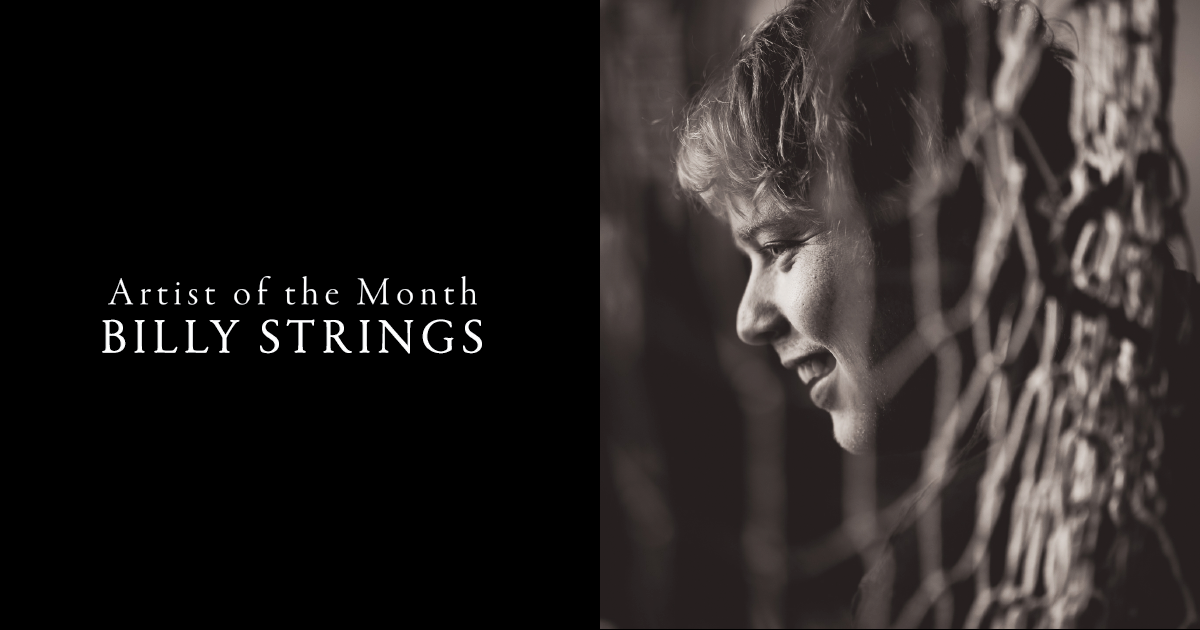
Billy Strings takes things up a notch for Renewal, a long-awaited collection of original songs produced by Jonathan Wilson. But is it bluegrass? Or is it rock ‘n’ roll? Perhaps more on the psychedelic side? Truly there’s no right (or wrong) answer to these questions. As Strings himself puts it, “I’ve learned, you’ve just got to let the song do its thing. So that’s what I try to do — write songs and let them come out however they do.”

Billy Strings is no stranger to the festival circuit, bluegrass or otherwise. His career trajectory over the last few years has netted him international acclaim, a handful of IBMA Awards — including Entertainer of the Year at this year’s IBMA Awards show — and even a Grammy for his 2019 album, Home. A Michigan native who now lives in Nashville, Strings says, “I called my last record Home, and then a few months later that’s where we all got stuck. Right now, we’re heading back into opening back up, and doing some more touring with real concerts and real shows. Hopefully we can renew everything. I think it’s an interesting word. It reminds me of how every morning is a renewed day and another chance.”

With Renewal, Strings seizes upon the opportunity to surprise his listeners and to expand his own musical horizons. By winning the Grammy, he discovered a newfound confidence to consider every creative path that presented itself. Because he’s bringing in his touring bandmates Billy Failing (banjo, vocals, piano), Royal Masat (bass, vocals), and Jarrod Walker (mandolin, vocals, guitar), as well as guests John Mailander (violin), Spencer Cullum Jr. (pedal steel) and Grant Millikem (synth), Renewal is far more than just a singer-songwriter record, even if it exposes his own mindset more than any of his material to date.

“I listen to this album now and it’s emotional,” he says. “I could sit there and tweak it forever, but there’s a point where it’s like building a house of cards. Yeah, I could add an extra tower on top, but it might collapse. I’ve always doubted myself, and I still do, but this album makes me think, ‘Hey, you’re doing all right, kid. You just need to keep going.’”

Read our exclusive two-part interview with Billy Strings here, and enjoy our BGS Essentials playlist below.


Photo credit: Jesse Faatz

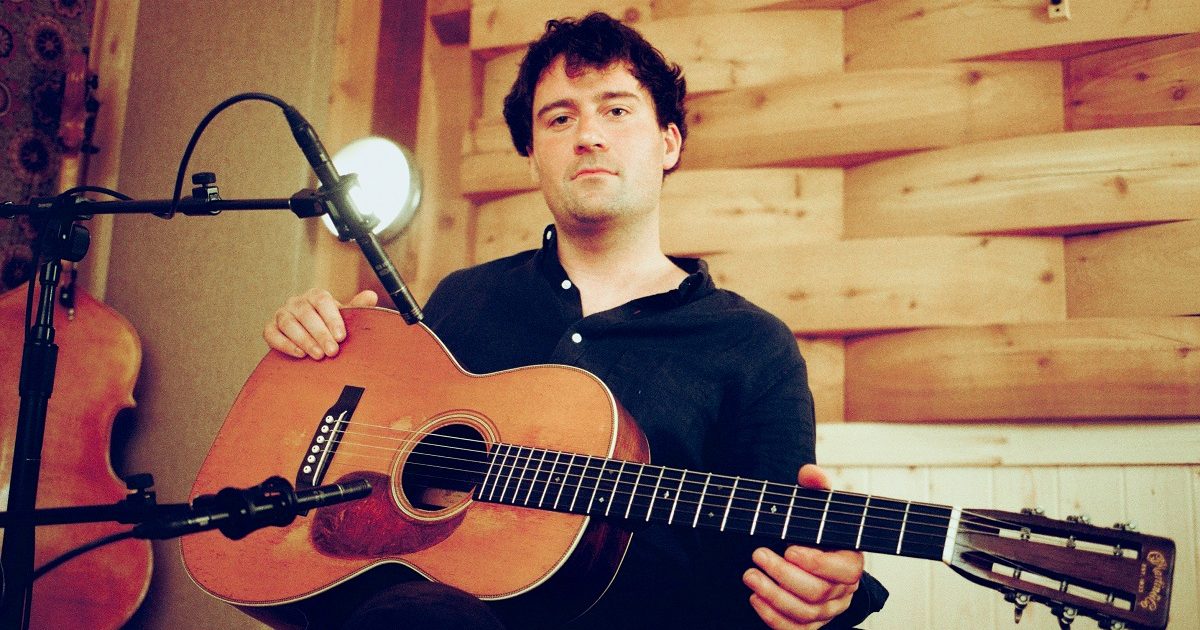
WATCH: Jordan Tice, “River Run” (Feat. Paul Kowert)

Artist: Jordan Tice
Hometown: Nashville, Tennessee
Song: “River Run” (Featuring Paul Kowert)
Album: Yesteryears
Release Date: October 1, 2021
Label: Padiddle Records

In Their Words: “‘River Run’ started with a little lick I had been carrying around in the key of D — a speedy little cascading thing that felt good to let roll off the fingers that I’d find myself playing in idle moments. I slowly built upon it while sitting around during lockdown and my dear friend, Paul Kowert, tied it all together with his wonderful bass part. To me, the song evokes the lightness and constancy of a swiftly moving river as it passes over rocks, rounds curves, and speeds and slows as its channel widens and narrows. Hope you experience the same sense of motion while listening and are able to glean a little bit of levity from it.” — Jordan Tice


Photo credit: Jacqueline Justice

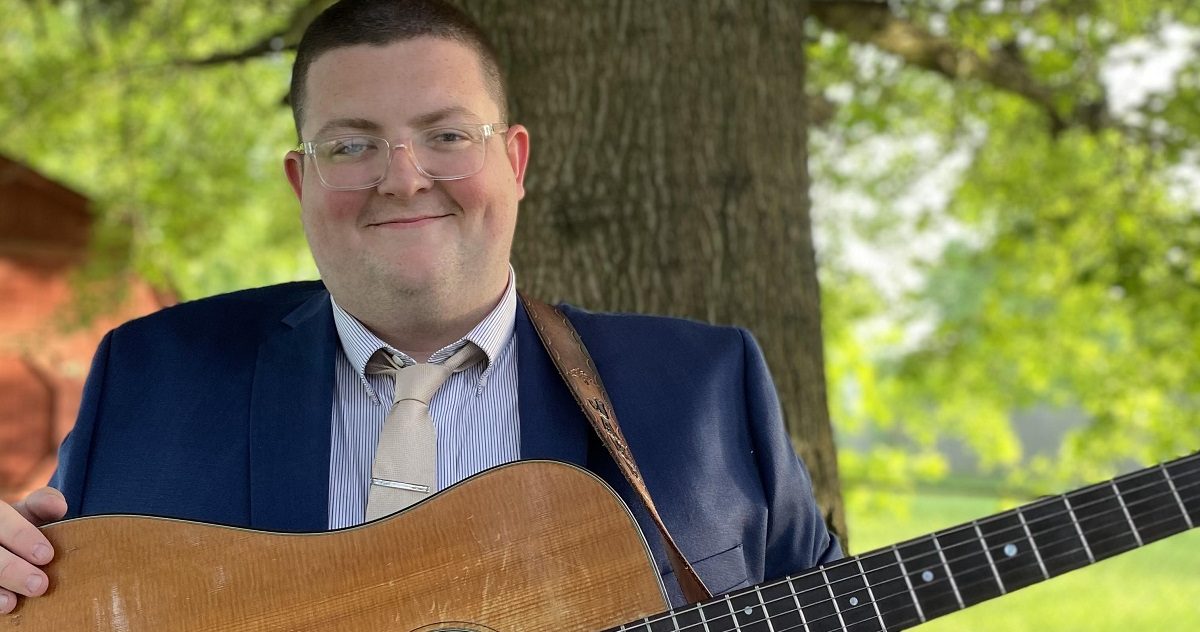
WATCH: The New Acoustic Collective, “Old Gray Coat” Feat. Wyatt Rice

Artist: The New Acoustic Collective
Hometown: San Jose/San Francisco Bay Area
Song: “Old Gray Coat” Featuring Wyatt Rice
Album: Art of Acoustics
Release Date: September 20, 2021

In Their Words: “Tony Rice’s ‘Old Gray Coat’ has a special place in The NAC’s repertoire. This specific project came about when artistic director of Bay Area nonprofit Music in Place, Aaron Lington, contacted us and wanted to include us in the list of amazing musicians featured in a remotely-filmed music video production during the COVID-19 pandemic. I began to give Aaron some suggestions on song ideas and he really enjoyed ‘Old Gray Coat’ by Tony Rice. I thought if The NAC was going to record ‘Old Gray Coat,’ I’d like to feature a special guest, Tony’s brother Wyatt Rice. To have the opportunity to collaborate closely with both our NAC members and Wyatt Rice as a special guest was a dream come true!

“The fun and challenging part of this project was that it was all distanced and used with a click track, which started with me tracking my rhythm guitar part. Afterwards, Wyatt recorded his parts and then The NAC featuring Alonso Sanchez (double bass), David Boyden (fiddle), and Nathaniel Grohmann (cello) layered their parts and solos from there. Overall, the creative partnership between The NAC and Wyatt Rice was particularly rewarding and we are all grateful to work with him along with Music in Place, a nonprofit with an amazing mission!” — Jason Keiser, The New Acoustic Collective


Photo credit: Music in Place

LISTEN: Cameron Knowler, “Done Gone”

Artist: Cameron Knowler
Hometown: Yuma, Arizona & Houston, Texas
Song: “Done Gone”
Album: Places of Consequence
Release Date: July 16, 2021
Label: American Dreams

In Their Words: “‘Done Gone’ exists as a mission statement for the album: examining early fiddle music etymologically, rendering it meditatively, with a slow tempo and low tuning. In some ways, this is meant to problematize the history of flatpicked guitar, wherein guitarists learn fiddle tunes from other guitarists as opposed to fiddlers. This version borrows from a number of early fiddle sources while paying homage to my hero, Norman Blake, whose guitar playing is a broad synthesis of early country music, while pushing far beyond the scope of the genre’s canon. Recorded on a late ’30s plywood guitar, I hope the listener is directed toward the inconsistent and unwieldy qualities of the instrument, a factor that shapes the performance just as much as my sources. This track is in conversation with an Easter egg found on the record.” — Cameron Knowler


Photo credit: Laura Lee Blackburn

LISTEN: Jake Eddy Feat. Bryan Sutton, “Billy in the Lowground”

Artist: Jake Eddy featuring Bryan Sutton
Hometown: Parkersburg, West Virginia and splitting time in Nashville
Song: “Billy in the Lowground”
Album: Jake Eddy
Release Date: July 10, 2021

In Their Words: “This was easily one of the most incredible sessions I’ve ever been a part of. Bryan and I really connected in the studio and had a great time. It’s so fun to approach an old tune like this with an open mind and just see what happens (especially with a great player like Bryan). This tune did not have any special meaning to me, at first. I knew that I wanted to include Bryan in some capacity so we got together and just started playing through some tunes. ‘Billy in the Lowground’ came up and we both were into it — so that’s what we played. I think the fact that it was unplanned adds to the excitement. At the end of the track you can hear some banter between us that sums up the session perfectly.” — Jake Eddy


Photo credit : Teran Storey

LISTEN: Andy Falco, “The Edge”

Artist: Andy Falco
Hometown: Sayville, New York
Song: “The Edge”
Album: The Will of the Way
Release Date: July 16, 2021
Label: Americana Vibes

In Their Words: “‘The Edge’ is one of the few songs on my forthcoming album that was written prior to 2020. The lyrics were co-written with Travis McKeveny, also from Long Island, who I’ve written with several times now including ‘2001: A Canyon Odyssey’ off the Dusters’ album Laws of Gravity. ‘The Edge’ is one of the few that I’m playing everything on the track except the drums/percussion (Dave Butler) and the harmony vocals (Jon Preddice and Erica Leigh). I recorded it as a demo, but I felt like the track had a certain magic to it, particularly in the end jam so I left most parts as they were, blemishes and all, including the end lead guitar which was done with just that one take. It’s a song about giving yourself to someone, and hoping they will accept you with all your faults, so I thought the little ‘flaws’ here and there represent the sentiment of the song.” — Andy Falco


Photo credit: Jay Strausser

Tim Stafford Shares Memories of Steve Gulley, Alison Krauss, and Tony Rice

Tim Stafford could be renowned for any one of his many contributions to bluegrass music over his prolific career, his talents as a musician and writer having been showcased in so many of its important creations. He is perhaps most well-known as a founding member of Blue Highway, one of the most influential and decorated bands in bluegrass. Prior to that, he formed Dusty Miller in the late 1980s, and Alison Krauss hired him in 1990 as part of her band, Union Station, with whom he recorded the Grammy-winning album, Every Time You Say Goodbye.

Stafford is also an accomplished author. In 2010 with Caroline Wright, Stafford issued Still Inside: The Tony Rice Story, the authorized biography of the flatpicking icon and Bluegrass Music Hall of Fame member. As a songwriter, Tim has placed more than 250 cuts and was named IBMA’s Songwriter of the Year in 2014 and 2017. He notably co-wrote IBMA’s 2008 Song of the Year, Blue Highway’s “Through the Window of a Train,” with Steve Gulley. Tim and Steve were frequent collaborators and released a duo album in 2010 called Dogwood. Ten years later, they created another album of co-written material, but Gulley passed away suddenly from cancer soon after it was completed, making the title, Still Here, all the more meaningful.

BGS: How does it feel to release this record? With Steve’s unexpected passing I imagine it must be a more heavy feeling than a typical record release.

TS: Yeah, I’m really glad it’s finally out. Steve was really looking forward to this record coming out. We were both excited about the songs and it ended up being his last recording, which was hard on all of us. And now it’s part of his legacy. After Steve passed, I talked to the label about maybe coming up with a different title besides Still Here, but we decided it was a very appropriate title because his music is still here. He would have been proud of it. I know that for sure.

How long had you known Steve?

I didn’t know him when I was younger, although he was around and playing. He was mainly playing up at Renfro Valley in Kentucky and he didn’t travel much until he joined Doyle Lawson & Quicksilver which would have been in the late ‘90s or around 2000. I was playing a festival somewhere with Blue Highway and he came up to the record table and we started talking like we’d known each other forever because we knew a lot of the same people. We just hit it off. He was the one that first suggested we write and it was either the first or second time we got together we wrote four songs in one day. And all four of them got cut. I felt like at that point we had something special. We seemed to have a wavelength that we could touch off of each other. That’s really rare. You don’t get that with a lot of people.

The subject matter in the songs on this record seems very personal, and often about people you know. I would imagine that it’s sort of therapeutic, maybe in the same way that journaling might be, to write about personal things like that. Is that how you feel about it?

That’s a good way to put it and I did used to journal. Some of them, like “Back When It Was Easy,” are just about general topics that we know about. Whereas “Long Way Around the Mountain” and “She Threw Herself Away” are about things that actually happened that we chronicled about friends. And sometimes they are big stories that you just can’t stay away from. “She Comes Back to Me When We Sing” is a story we’d both seen on Facebook about this guy’s mother who was in advanced stages of Alzheimer’s and didn’t know anybody until she sang with her son. And when that happened, she remembered all the words and she could remember everything. We thought that was a really inspirational story and deserved to be a song.

You’ve been writing for so long that it seems like you’ve been able to build the skill of telling a story through song, rather than narrating a timeline to music.

Yes, that’s where it’s at. That’s where the craft comes in that you only develop by doing it. I really didn’t know how to write a song when I started. But you learn little things along the way through trial and error. It’s like anything but it’s really difficult to learn how to do something like write a song out of a book — although I have a whole collection of them here. I have lots of books about songwriting like Jimmy Webb’s Tunesmith and Sheila Davis’ The Craft of Lyric Writing which is really good. You can learn tips, but you’re not going to learn how to write from a book. So it’s a matter of doing it.

I don’t remember exactly where I heard it, but I think I remember Jimmy Webb talking about writing “Wichita Lineman” and him saying that it was fully fictitious. But that he felt like, as a songwriter, he should be able to write about people he didn’t know. That he should be able to understand people well enough to write a story that was convincing without it having to be true. I could be misremembering that, though.

You may not be. I think that there’s actually a book out about that song, “Wichita Lineman,” that I finished here last year and I believe you’re right and he’s right. I think that being able to tell a story about somebody you don’t know is important. There’s a song that I wrote really early on called “Midwestern Town” that Ronnie Bowman recorded. That song is totally fictional. I didn’t know anybody like the character in that song. But I’ve had a lot of people come up and say that they did know someone like that or that it could have been them and that song made a big difference to them. It was a comforting song. You’ve got to be able to get inside people’s heads and think the way that they would. You have to know what your character might do in any given scenario. I can’t remember all the times I’ve been co-writing and said, “What would this guy do?”

Have you written songs as long as you’ve been playing guitar? When did you started writing songs?

I guess I wrote all the way back when I first started playing guitar, but I wasn’t really serious about it. I had written some songs before I played with Alison in the early ‘90s and we actually recorded one of them, but it never came out which was my fault. She wanted to put an instrumental I’d written called “Canadian Bacon” on Every Time You Say Goodbye, but I talked her out of it. I told her we needed to record “Cluck Old Hen” because we were so psyched about Ron [Block] being in the band and his playing on that. And I don’t regret that though it probably would have meant more money.

You were in Union Station from 1990 to ‘92, right? That was a very cool lineup of that band. How did you feel about it at the time?

I was blown away by it. I loved it and it was really cool that it worked out because the first time she talked to me about playing with her, it was back when I was in a group called The Boys in the Band. We played at SPBGMA and her band was there but her guitar player, Dave Denman, was leaving. She called me a few weeks after that and asked if I’d be interested. At that point, she had only recorded Too Late to Cry and I was really impressed with the songs, with John Pennell’s writing, and her singing. I had already committed to playing with a different group though so I had to decline.

About two or three years later I had started a group called Dusty Miller that she was a fan of. That band had Barry Bales and Adam Steffey in it. The three of us kind of grew up together playing music. We’re all from Kingsport, Tennessee. I actually gave Adam his first mandolin lesson, which is such a joke. [Laughs] Adam didn’t know anything about the instrument at all at the time. I tried to show him some stuff and I just kept thinking, “That guy’s never gonna get it.” And I barely knew how to play myself but I tried to show him “Bluegrass Breakdown” and he just couldn’t get it. He got with a different teacher after that and got real serious about it. The next time I saw him play, I was like, “What happened here?” [Laughs] It was like the most amazing thing I’ve ever seen in my life. I take absolutely no credit for that whatsoever.

Barry Bales was a student of James Alan Shelton. And James and I both taught at the Guitar Shop in Kingsport. That’s where I met Adam and gave him that lesson, and I met Barry down there, too. We all three ended up playing in The Boys in the Band. And then we started Dusty Miller. Alison liked that rhythm section so she offered the job to all three of us at the same time, and we took it. This was early 1990 and we played our first show in May — I think it was at the Station Inn. It was just incredible. We played some amazing places, but it was during the period of the band when we were all traveling in a van and staying in one hotel room.

I was playing with Alison when I met Tony Rice. We ended up playing a lot of shows together because he and Alison had the same agent and were on the same label. I never will forget the first time I really ever talked to Tony much. We were playing right before him at Winterhawk (which is now Grey Fox) and I broke a string on the last song we played. We got a standing ovation so I was backstage digging around, trying to find a string so we could do an encore. And Tony walks over with “the antique” and says, “Hey, man, here, play this.” I had a smile from ear-to-ear and Alison was smiling too.

What was it like getting to put that biography of Tony together? What led to that?

Well, a few years after that, after I left Union Station and started Blue Highway, I was still playing shows with Tony because Blue Highway had signed with Rounder, too. We were at a show with Tony and I said, “Man, have you ever thought about a biography?” And he said, “Well, actually, yeah, I have thought of that. But I’ll tell you what,” he said, “I think you’d be the ideal person to write it.” I said OK and started on it. That was about 2000 and it took 10 years to finish.

Three years into it, Caroline Wright came on board through Pam [Rice, Tony’s wife]. Caroline is a journalist and her mom was a member of the bluegrass community from New York state. Caroline lived in Hawaii at that time and had written a really well-done article about Tony in Listener magazine. I had started Tony’s book, but I was bogged down with it and wasn’t making a lot of progress and Pam suggested that Caroline come on board. We did four or five major, huge interviews with Tony that could have each been a book by themselves. And when we started transcribing them, we realized that Tony was so eloquent that we had to put it in Tony’s words. We couldn’t make it a narrative biography. That’s why it’s laid out the way it is. It’s chronological but in Tony’s words.

I’m really glad that we got to do it. Somebody would have done a book on him eventually, but I’m really glad that it came out before he left us. He’s one of those generational talents. I just don’t know that there’s going to be many people ever come along again who have an impact like that. He’s in the same league as Earl Scruggs, a top talent who created a language on the instrument.

So, it’s been a weird year, obviously. What have you been doing during this time?

I’ve been doing a lot of co-writing over Zoom. The other day I wrote my one-hundred-and-fourteenth song since the pandemic started.

Whoa!

Thomm Jutz and I’ve written 40 or so, just the two of us and, you know, you just get into the habit of doing it every week. I feel like Zoom is going to stick around and be the standard after the pandemic. I think it’s changed the way a lot of people think about co-writing. It makes you more disciplined and more productive. The technology just makes it easy. There’s no reason now for me to make a trip to Nashville, which is like four and a half hours, and get a hotel and all that when I can do all of it from home on my computer.

When you’re writing or doing work, are you the sort of person that has to change into regular people’s clothes to feel productive, or can you stay in your pajamas and be productive?

I think I’ve written at least a hundred of those 114 songs in my pajamas. [Laughs] I’m not going to dress up, I just want to be comfortable.


Photo credit: Ben Bateson
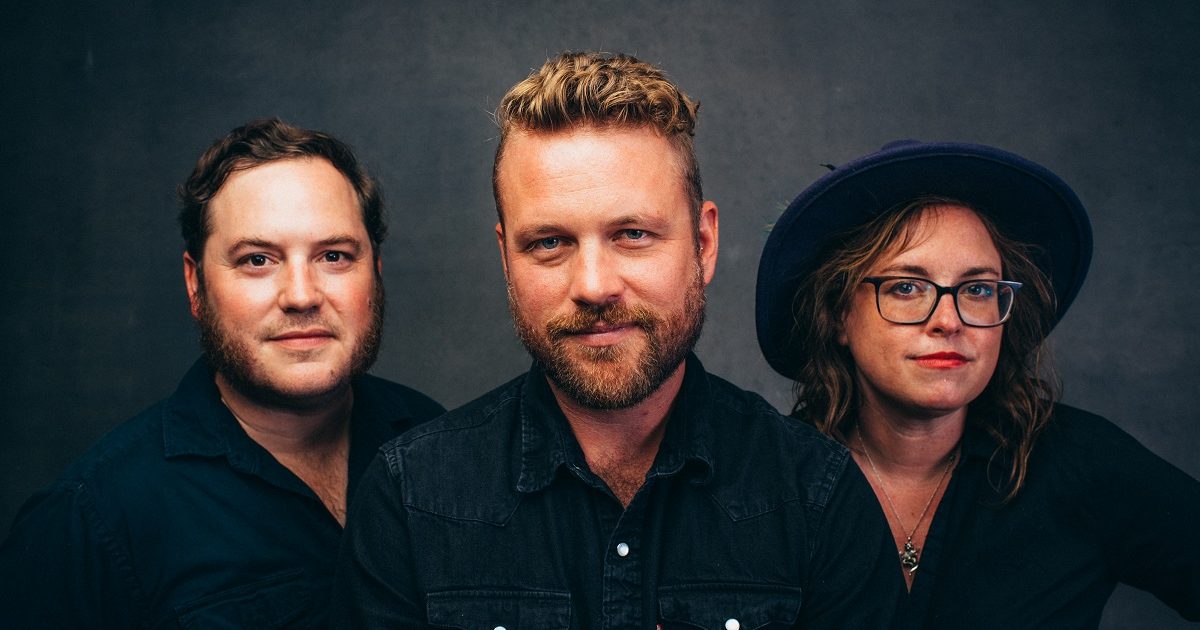
WATCH: Tommy Emmanuel, “Flatt Did It” (with Rob Ickes & Trey Hensley)

Artist: Tommy Emmanuel with Rob Ickes & Trey Hensley
Hometown: Nashville, Tennessee
Song: “Flatt Did It”
Album: Accomplice Series Volume 1 With Rob Ickes & Trey Hensley EP
Release Date: May 7, 2021
Label: CGP Sounds

In Their Words: “My feelings about the sessions are they were very spontaneous, and in fact, I suggested ‘Flatt Did It’ and ‘Copper Kettle’ as pieces on the day we recorded them. That’s how it came about. It was very spontaneous. ‘Flatt Did It’ is a tribute to Lester Flatt and some of his classic kind of licks. We had the film crew in there for the day and they just rolled the cameras. We actually just played and ignored them almost.” — Tommy Emmanuel

“Well, it’s always great to work with Tommy. He’s such a great artist, and such a great person. There are always a lot of sparks flying when we play together, and all three of us are into lots of different musical genres, so that’s always fun to explore different musical territories when we get together. This song comes from an album that Chet Atkins did with Doc Watson. I love to hear Tommy and Trey play together. There’s a great respect between the two of them. They are both so brilliant. It’s great to hear them feeding off each other. And this song is just the perfect vehicle for a Dobro, so I’m enjoying the whole thing!” — Rob Ickes

“Yeah, this one was Tommy’s idea, and it’s a tune from the Doc Watson and Chet Atkins duo record. Rob and I both have a bluegrass background, and this song was written with the great bluegrass icon Lester Flatt in mind. (Hence the title.) It really was a natural fit and recording it with Tommy was so much fun! Getting to pick with Tommy and Rob any time is always a blast! Working in the studio with Tommy was so much fun, which I think is evident throughout this EP. The great vibe in the studio that day is prominent in the recordings. It was really just the three of us hanging out and playing tunes…what could be more fun?” — Trey Hensley


Photo credit: Alysse Gafkjen

Chris Eldridge, Molly Tuttle, Chris Thile, Bryan Sutton – Toy Heart: Remembering Tony Rice

In the final chapter of Toy Heart’s three-part tribute to Tony Rice, host Tom Power speaks to several musicians who have been inspired by Tony Rice throughout their career, pickers and artists through whom Tony’s music will certainly live on.

LISTEN: APPLE PODCASTSSPOTIFYMP3

On episode 3 of Toy Heart: Remembering Tony Rice, MacArthur “Genius” and Punch Brothers frontman Chris Thile tells a story about a jam with Tony Rice backstage that changed his musical life. Chris “Critter” Eldridge (pictured), also of the Punch Brothers, talks about the time he spent living with and learning from Tony — not just about music, but about life. Guitarist and singer-songwriter Molly Tuttle speaks about Rice’s influence on her guitar playing and how she sees his music living on even through musicians like herself, who never knew him personally. Finally, in-demand Nashville guitarist, session player, and sideman Bryan Sutton talks about recording with Tony and how he learned to be himself thanks to Tony Rice’s example.

Editor’s Note: Hear Thile at timestamp 01:58; Eldridge at 33:17; Tuttle at 01:03:17; and Sutton at 01:21:09


Photo credit: Jeromie Stephens

LISTEN: Jon Stickley Trio, “Future Ghost”

Artist: Jon Stickley Trio
Hometown: Asheville, North Carolina
Song: “Future Ghost”
Release Date: February 5, 2021
Label: Organic Records

In Their Words: “‘Future Ghost’ was written during the beginning of the pandemic, shortly after finding out I was going to be a father. I was having so many conflicting feelings, and a little difficulty sorting them all out. I ended up thinking a lot about the cycle of life and how impermanent everything is. At one point I thought I saw a ghost in the hallway, and it looked like me. Somehow, the idea that I could someday be a ghost, haunting this house, gave me a great sense of comfort and motivation to make the most of my time. This song ended up really capturing that energy.” — Jon Stickley


Photo credit: Sandlin Gaither