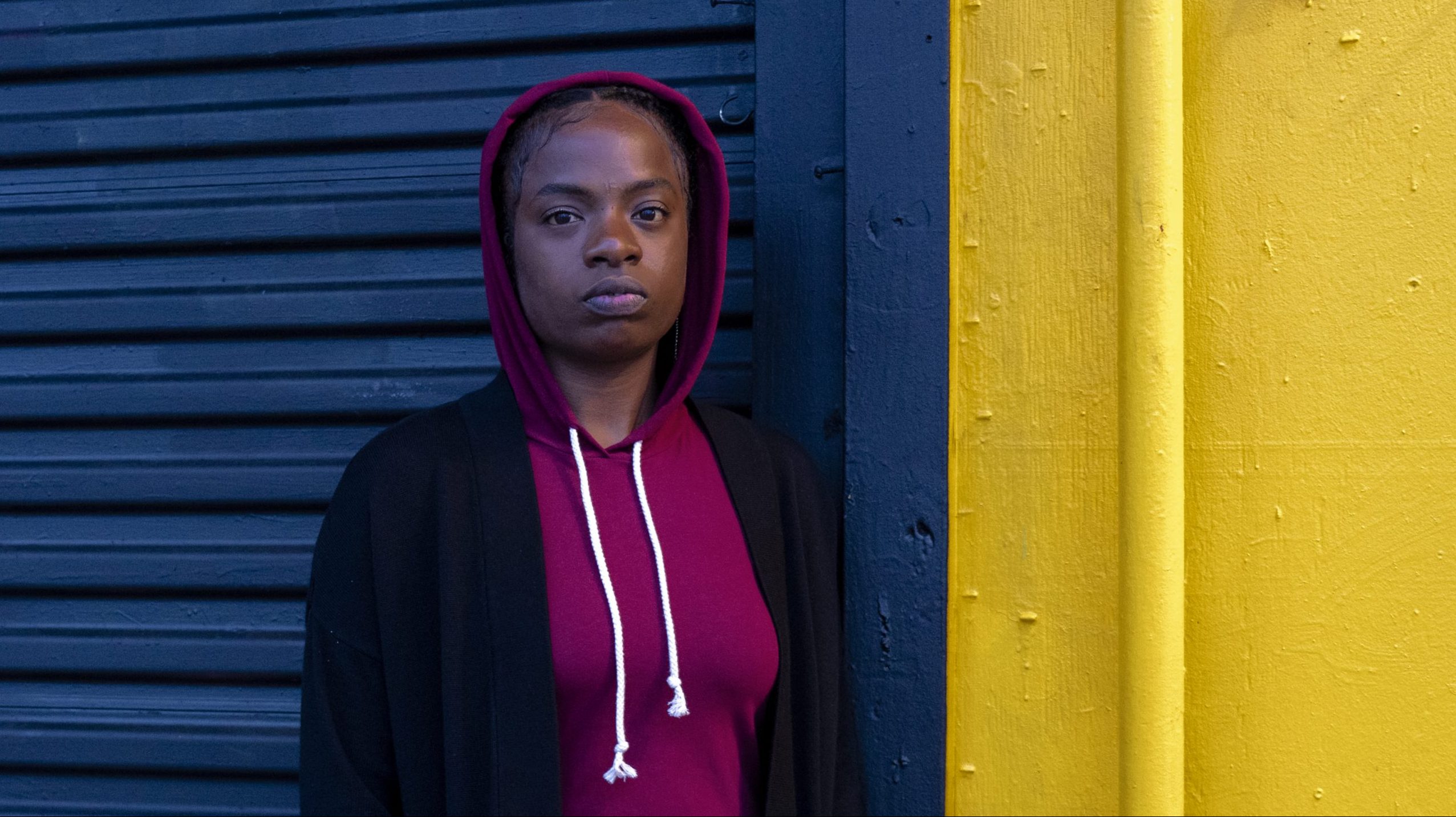
Fingerstyle Guitarist Sunny War Wants Punk’s Honesty Back in Music

Guitarist and singer/songwriter Sunny War doesn’t necessarily miss performing live, in-person shows — she’s not even sure she ever really liked playing shows that much in the “before COVID-19” times at all. But, as she connects with BGS over the phone in preparation for another pandemic-tailored event, her Shout & Shine livestream show on Wednesday, September 16 (live on BGS, Facebook, and YouTube at 7pm ET / 4pm PT) her general feelings regarding the pandemic and its far-reaching impact on the music industry are very clear: It’s all just really weird.

She, like many creators in the March-and-April maelstrom that swallowed up any/all meaningful work for an interminable period of time, became depressed, distant, and took some time to work her way back into a creative mode that feels respondent to our harsh everyday without being bogged down in it. A punk-influenced and inflected lyricist, she’s once again turning to her songwriting pen as an outlet. 

While her peers turn to that same outlet to process many of the myriad daily tragedies and injustices we’re all so attuned to in this global moment, War instead pauses. “I kinda don’t like protest songs from people who didn’t do it before,” she explains, calling to task the frantic and frenzied rush to pivot records, releases, and pressers into more “appropriate,” digestible bits for a newly awakened, activist reality — and consumer. 

(Watch Sunny War’s complete Shout & Shine performance above.)

But War’s identity, her selfhood, as evidenced through every note of her idiosyncratically finger-plucked songs and through her carefully chosen words in her lyrical poetry and our conversation, calls upon her to challenge that propriety. “[Democracy] actually is working” she explains, noting hypocrisy and/or tone deafness in our roots music communities. “It’s working, it’s always been working. It just hasn’t ever been in our favor.” 

BGS: I’m a banjo player, I came up through bluegrass, and there’s something about your right hand in your guitar playing that’s really entrancing and relatable to me. It conjures bluegrass and fingerstyle, but it is so unique to you, it’s idiosyncratic. Where did your style come from? What influenced your right hand technique, how did it develop? 

SW: I think it came from mimicking banjo, actually. My stepdad’s friend played banjo, so I was around a banjo player sometimes growing up. The first fingerpicking thing I learned was “Blackbird” by the Beatles and that was the first time I thought I sounded kinda good. When I was a kid, I thought, “Wow! This [fingerpicking] sounds way better than just strumming a chord.” I never really learned a lot of chords, I still just play a lot of chords in first position. I was just playing C and G and D open and I thought, “Well now I sound like I’m really playing something.” 

I didn’t listen to blues until I was in high school and then I was kind of imitating country, blues, and my stepdad’s friend on banjo. Later, I was trying to be like Mississippi John Hurt; and I kinda wanted to be like Chet Atkins. But I couldn’t ever figure that out. 

I see plenty of folks in the scene who idolize Derek Trucks or Joe Bonamassa or even Molly Tuttle and Billy Strings who are coming up. There are these guitar fans that just idolize and adore them. Have you seen guitar fans trying to capture what you’re doing with your playing?

Not really? I don’t know. There are some people on Facebook and Instagram who message [me] and want to talk about my guitar style, but they’re usually just into old-timey blues stuff. Then we just talk about that. Sometimes they ask who I listen to. But I think [the implication is], “You’re really close to maybe being like this person I know of.” 

I can think of a lot of shredders out there, but I do the same kind of riffs in every key that I play in. I feel like I can say I really do fingerpick well, but I know people that really do it and can play as well with their left hand as their right. I’m not quite there. [Laughs]

It’s hard to talk about music and performing right now without acknowledging the giant, COVID-19 elephant in the room. It’s interesting to me that this moment of pausing, of stopping everything, especially in the music industry, has given artists a chance to refocus or realign their priorities – have you been thinking about the future? Thinking about the present? How has the pandemic felt to you? 

The first three months I was just depressed and drinking a lot and not doing anything. Then recently, I’ve been trying to write. I’ve been jamming with my friend Milo, who plays a lot of lead guitar on two of my albums, and we’re going to make some demos together. I’ve also been thinking about going to school, trying to get into some kind of two-year program. Since music might not [come back], there might not be live music for two more years. I’m thinking about getting a job. [Laughs] 

It’s daunting to wake up every day like, “I’m going to keep doing this now, because I believe — I think — it’s going to happen in the future.” It’s a lot! 

Yeah, it’s like, “Maybe music is just not essential…” You know? [Sad chuckle] 

Then, with the whole Zoom thing and the livestream thing, I’m just not really into it. I’m not enjoying it at all, it feels weird. It’s just like, sitting in a room by yourself, trying to make a video, and then you think, “Should I look into the camera? Should there be talking in between?” You’re trying to imitate a set at a venue, but you’re just sitting by yourself. It just feels weird! I would rather just play by myself, without a camera. 

I liked playing shows [before] kind of, but I almost didn’t even like that. At least it felt like there was a reason for doing it. I was talking to my mom and we both realized we used to watch concerts before, too. Just then it was an actual concert on film. Even that would be better! If there were somehow an audience in the livestream… I guess that can’t be, but it’s just awkward [without them.] Seeing a band play off of the energy of the room is more what it’s about.

Well, for your Shout & Shine livestream performance we’ll have to ask our audience to be “loud” in the comments! Use that clapping hands emoji! [Laughs] Who would you like to see as a guest on Shout & Shine? Whose music is inspiring you right now and getting you through the day-to-day?

I like Tré Burt! Amythyst Kiah, too. 

Have you heard of Yes Ma’am? They’re from New Orleans – the singer sometimes plays solo, but also has a band. They used to busk on the street in New Orleans. It’s just really good, a great kinda folky string band. 

I like the new Run The Jewels album. I listen to Elliott Smith still, and a lot of ‘90s music. I like Black Pumas a lot.

What would you like to see from the music community, as far as a response to this moment in our culture’s history — not only the racial injustice and righteous rebellions against police brutality, but also how divided and polarized our musical community is now. It’s like half people who want music to “remain apolitical” and half folks who are like, “Music has always been political, where the fuck have you been all along?” What do you see as the urgent need of our community to reconcile all of this? I know that’s a huge question.

I think it just needs to become about honesty again. That’s something I would like to see. I’m not really that into “Americana” music, but even so I feel like [Americana] musicians are going to be faced with not being able to let these issues go unaddressed anymore. I think that’s interesting. At this point, you can’t just put out your weird corny love song that’s not even about anything that happened in your life, but is actually just something that makes sense pop-wise and hit-wise. You should have to really be honest. People don’t necessarily have to be “political,” they can just write about all the emotions they’re going through. We’re all dealing with the pandemic and with Trump and with police brutality — it’s a lot. Even if people don’t want to write a song about why we should get rid of the police, they could at least write about how scared they are. I don’t know, there’s a different, new kind of folk that could happen about just being freaked out and unsure of your future. I love shit like that. 

I kinda don’t like protest songs from people who didn’t do it before. It’s just not hitting right. I don’t want your protest music if you weren’t writing it before. Whatever issue is being highlighted, it’s always like, “Yeah, we’ve BEEN talking about that.” [Expectant pause] This has been the conversation. I’m into punk, I’ve always liked protest music. As far as folk, I do like its protest music, but I mostly like punk or really politically-charged hip-hop. It’s kind of annoying when say, a really poppy country person who’s never said anything about anything is writing a protest song. It’s just cashing in. It’s corny. It’s weird. 

And another thing, a lot of people who are going out to these Black Lives Matter protests and stuff, I still don’t feel like they would treat me any differently than they normally would. I saw people posing and taking pictures. This is a weird thing to just be a trend. 

Like Breonna Taylor now being a meme.

Yeah. It’s offensive, it’s too much. 

And how many times they show those videos [of Black people being murdered by police]. There’s a lot of murder porn going around! People are saying one thing, but showing someone die every day. I was kind of like, “You know, I don’t think they would show a video of a white person being killed, over and over again.” A lot of things happening right now are really dehumanizing and I don’t think people can see it unless they really, really think about it. Or maybe put themselves in that position. It’s murder porn.

I know what happened. I don’t want to see this over and over again. I don’t need to physically see it to be angry about it. Think of all the bad this is doing to our psyches on top of everything else, seeing people murdered every day. 

But, a lot of musicians are “activists” now, I guess. I just… don’t really know what that means. They were going to put out a song anyway. That’s what they do for a living. Obviously they can’t just put out the typical love song — that’s what people always write about, love. That would be “offensive.” Or, it wouldn’t be “appropriate.” So they all have to change and pretend to be “activists.” It’s just a reflection of what’s trending right now. 

I just want to know: Are they actually going to change in a year? I’m curious to know how long the Black Lives Matter profile pictures are going to stay up. 


Photo credit: Randi Steinberger
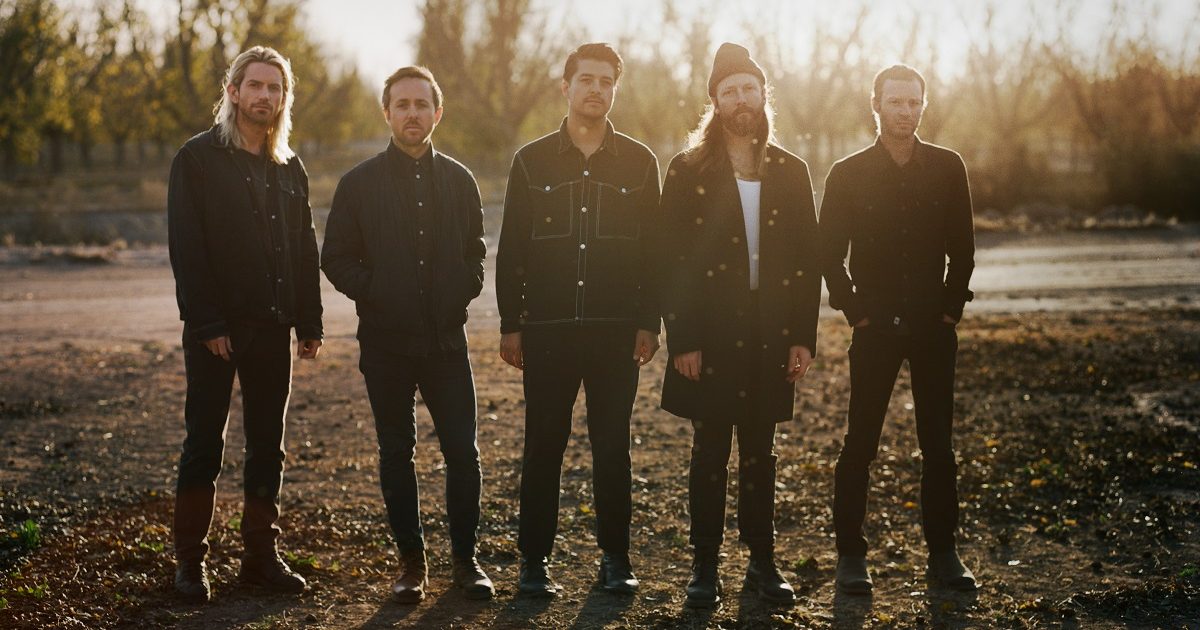
LISTEN: Delta Spirit, “What Is There”

Artist: Delta Spirit
Hometown: NYC, Brooklyn, Los Angeles, Austin, Montreal
Song: “What Is There”
Album: What Is There
Release Date: September 11, 2020
Label: New West Records

In Their Words: “’What is There’ is an acrostic poem that I wrote for the guys in the band, with each verse directed at a specific person. I wrote the song in the winter of 2018 while living in Oslo. We had just decided to give the band another go and I was feeling sentimental about the journey we had been on since 2005. We were all just kids trying to break into this business. Each of us had been burned by the major label system with other projects. Starting Delta Spirit with my best friends, traveling the world, and playing music that meant the world to us was such an improbable miracle, but then it felt inevitable. There were moments when we lost our way as brothers and as creative collaborators, but since the break, we have found new and better ways to communicate. And that feeling of inevitability is back.” — Matthew Logan Vasquez, Delta Spirit


Photo credit: Alex Kweskin

WATCH: Raye Zaragoza, “They Say” (Featuring Colin Meloy & Laura Veirs)

Artist: Raye Zaragoza (feat. Colin Meloy on harmonica and Laura Veirs on banjo)
Hometown: New York City
Song: “They Say”
Album: Woman in Color (produced by Tucker Martine)
Release Date: October 23, 2020
Label: Rebel River Records

In Their Words: “This song is about the dysfunction of American power structures. It’s about how the systems built to support the people don’t support all people. Especially during a pandemic, it’s been exposed how those lower on the socio-economic ladder are left without the basic resources everyone deserves.” — Raye Zaragoza


Photo credit: Cultivate Consulting

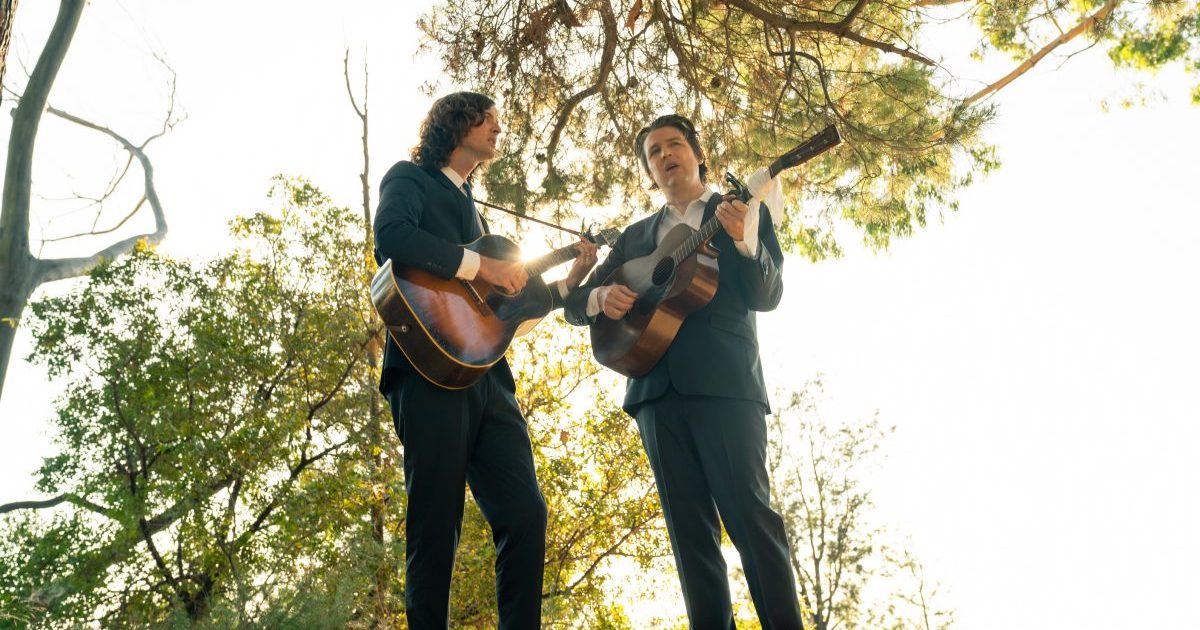
WATCH: The Milk Carton Kids, ‘Live From Lincoln Theatre’

Artist: The Milk Carton Kids
Album: Live From Lincoln Theatre
Release Date: Released on video in 2014; released on streaming services in 2020
Label: ANTI- Records

Editor’s Note: The Milk Carton Kids both filmed and recorded Live From Lincoln Center in Columbus, Ohio, in October 2013 during a tour in support of their Grammy-nominated album The Ash & Clay. Originally the video was edited and the audio mixed by band member Kenneth Pattengale in the band’s Sprinter van in the days following the show. Now it has been remastered by Kim Rosen, one of the band’s favorite collaborators.

In Their Words: “Live From Lincoln Theatre is the truest representation of what Joey and I have been up to for the last decade. The set list is like a greatest hits album of Milk Carton Kids songs. I’ve never played guitar in the studio quite the way that it comes together on stage. Our voices also communicate something extra for the occasion. And, of course, Joey doesn’t ramble about our master recordings, but there’s no stopping him once the lights are dim and the mics are hot. … In Columbus everything came together the way that it does when audience and performer are in fine form, the energy coalescing into the mystery that drives us musicians to do EVERYTHING we do.” — Kenneth Pattengale


Photo credit: Jessica Perez

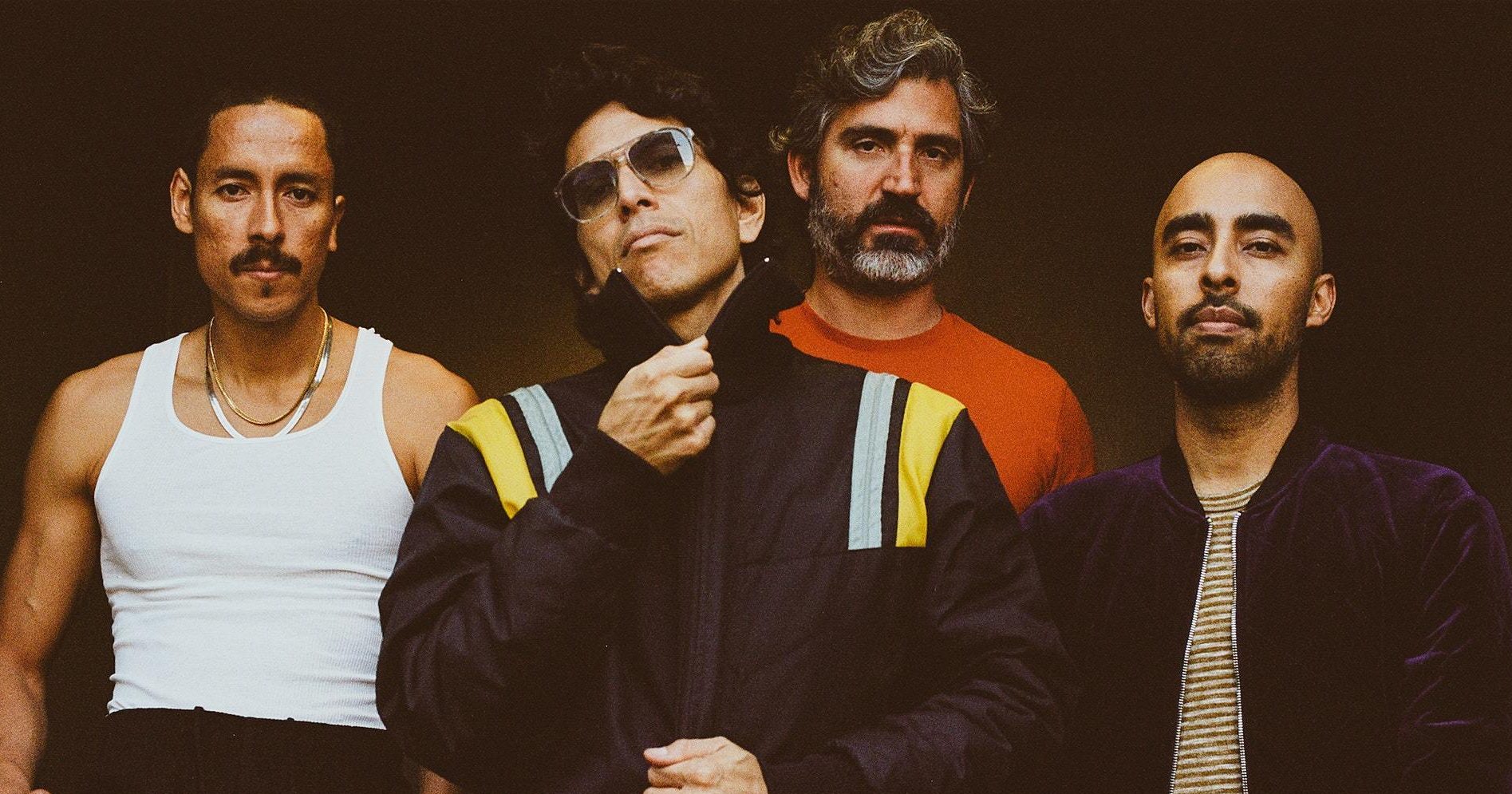
The Show On The Road – Chicano Batman

This week, The Show On The Road features a conversation with members of LA’s Latin roots-rock heroes Chicano Batman. The band came together in 2008 and is comprised of Eduardo Arenas (bass, guitar, vocals), Carlos Arévalo (guitars), Bardo Martinez (lead vocals, keyboards, guitar) and Gabriel Villa (drums).

LISTEN: APPLE PODCASTS • STITCHER • SPOTIFY • MP3

Host Z. Lupetin was able to catch up with Bardo Martinez and Eduardo Arenas while they sheltered in place at home in LA. In the past you may have seen Chicano Batman at music festivals like Coachella dressing up in matching Mariachi outfits or crooning in a colorful mashup of Spanish and English on previous standout records like the dreamy Cycles of Existential Rhyme and the rebellious Freedom Is Free.  

Their newest work, Invisible People, is their most personal, political, and downright danceable release to date. The traditional Mariachi outfits may be tucked away in storage, but their playful vibe remains, even as the musicianship and pop-tightness took a big jump forward.

After twelve years of expanding and fine-tuning their sound and finding a devoted national audience, Chicano Batman is no longer the oddball, upstart band. While they now focus mainly on English lyrics, they know as songwriters and performers that they’ve become role models for Los Angeles’s vibrant Latin-roots rock renaissance, acting as springboards to a whole new scene that may not have a genre or name yet.


LISTEN: Great Peacock, “Heavy Load”

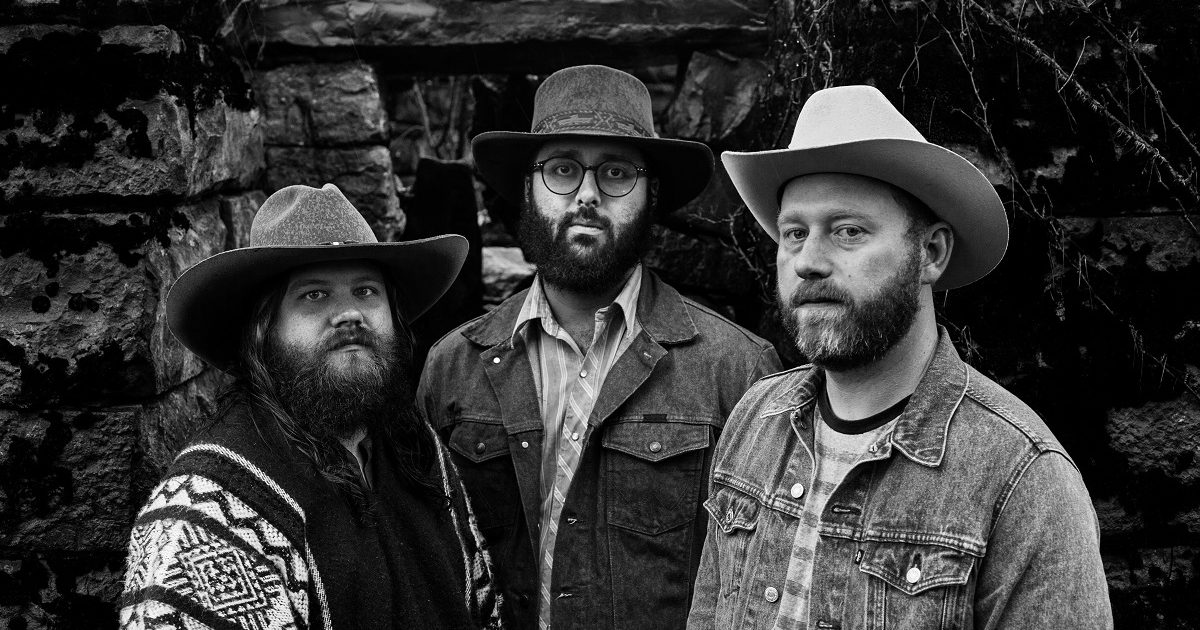
Artist: Great Peacock
Hometown: Nashville, Tennessee
Song: “Heavy Load”
Album: Forever Better Worse
Release Date: October 9, 2020
Label: Soundly Music

In Their Words: “I don’t totally know what this song means or is about. I just know that it makes me feel a lot of different emotions. We love so many things throughout the course of our life. Love is experienced and given and received in so many different ways for all manner of experiences, memories, places, things, and people. I think the real message of this song is that love isn’t always an easy thing, but you can’t give up on it. You have to give and receive it. I’m telling myself that in this song. I’m not singing to anyone else. I’m singing to me.” — Andrew Nelson, Great Peacock


Photo credit: Harrison Hudson

LISTEN: Hayes Carll, “Beaumont” (Acoustic)

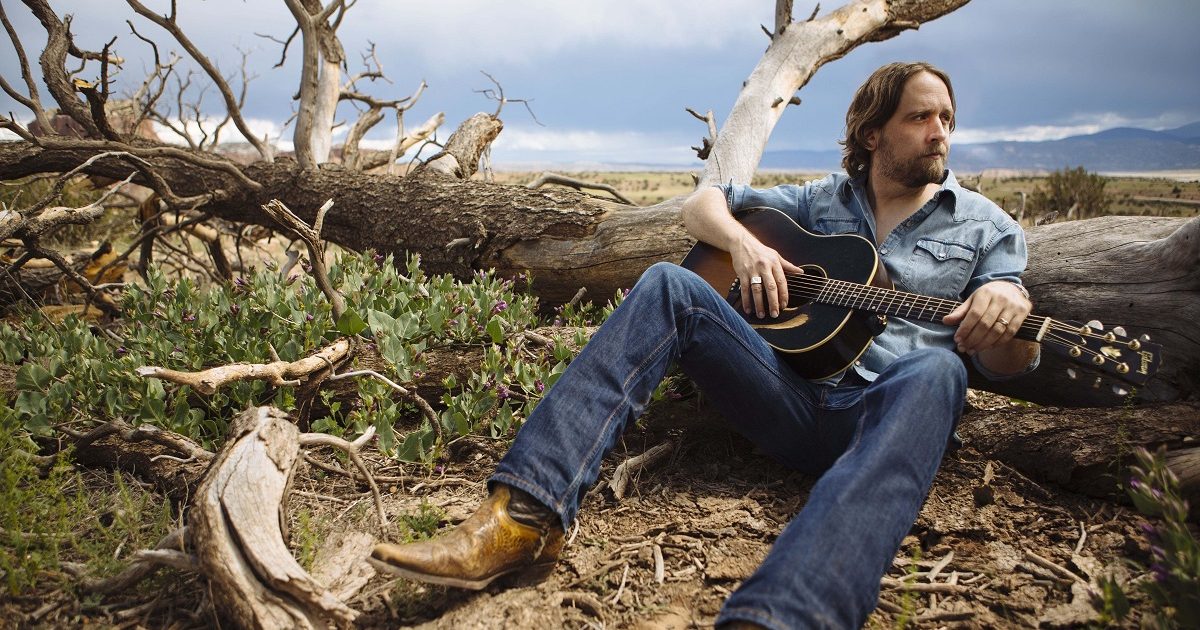
Artist: Hayes Carll
Hometown: Woodlands, Texas; currently resides in Nashville, Tennessee
Song: “Beaumont” (Acoustic)
Album: Alone Together Sessions
Release Date: September 4, 2020
Label: Dualtone

In Their Words: “I started out singing on the southeast coast of Texas. Beaumont was just an hour up the road from where I was living. I had a few gigs there. A few friends too. The town just kept finding its way into my work. Its physical proximity to Houston, combined with the cultural differences, made it an interesting origin point for the narrator in this song. He’s in the city but the perspective comes from a simpler place. I’m thinking about all the folks down there right now dealing with yet another hurricane.” — Hayes Carll


Photo credit: David McClister

‘Harmonics with Beth Behrs’ Debuts on BGS Podcast Network on September 8

The Bluegrass Situation is thrilled to announce the newest addition to the BGS Podcast Network: Harmonics With Beth Behrs. The eight-episode podcast explores the intersections of music, creativity, wellness, and healing. (Subscribe here.)

Hosted and produced by actress, comedian, and banjo lover Beth Behrs (The Neighborhood, 2 Broke Girls) each episode features a deep dive conversation into topics such as mental health, sound healing, songwriting as therapy, ancient musical traditions, and the power of the creative process on our physical bodies and emotional selves.

The first two episodes of the series premiere on Tuesday, September 8, kicking off with guests Glennon Doyle (New York Times bestselling author of Untamed) and renowned sound healer Geeta Novotny. Other featured season one guests include Brandi Carlile, Mary Gauthier, Mickey Guyton, Tichina Arnold, and Allison Russell.

Behrs says, “Songs are simple ways of telling stories, you can find a song to fit any mood you’re in. That’s because music bypasses the intellect and goes straight to the heart. I’ve always felt that healing is creative and creativity is healing. Maybe it’s magic? I want to feel closer to the magic. I want all of you to feel closer to the magic. Harmonics was born so we could explore the intersection between music, healing, creativity, and spirituality- and in doing so, makes ourselves feel a part of something bigger. Less alone. More connected.”

Amy Reitnouer Jacobs, co-founder and executive director of BGS, says, “Developing this show with Beth was a dream — we’ve wanted to do something together for a long time. During this time when we’re all refocusing our lives and constantly assessing the state of the world, creating a space where women could be honest and vulnerable about so many topics — such as maintaining creative processes under stress and maintaining mental and physical health at home — seemed more relevant and necessary than ever before. We’re honored to feature so many incredible talents from the roots music world, but I think the breadth of our guests will show our audience that so many of these themes are universal and relevant across the creative spectrum.”


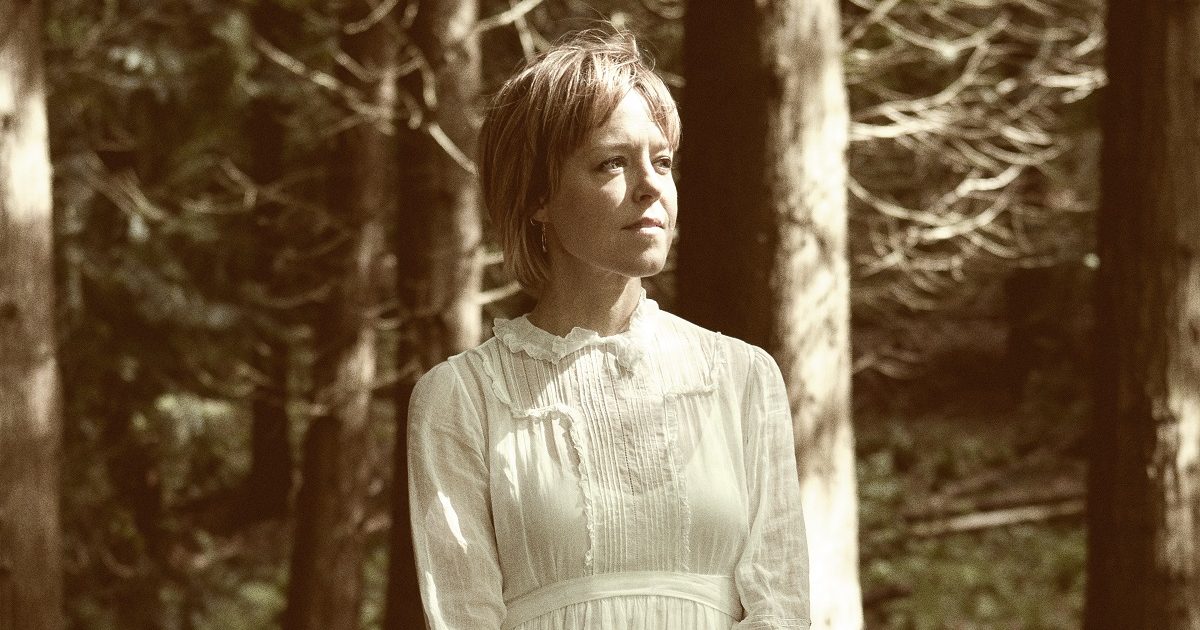
Amid Climate Crisis, Emily Barker Brings ‘A Dark Murmuration of Words’ to Light

Emily Barker is sitting at home in the southwest of England, as the country sweats through its worst heat wave in 60 years. There’s something not quite right about temperatures of 90 degrees F and tropical downpours flooding the sleepy villages. It’s that kind of creeping unease that’s reflected in her new album, A Dark Murmuration of Words — a moving meditation on the state of the world today, in which climate change is a recurring theme.

Barker, who recorded the songs last November, worried whether it might be too much for an audience reeling from the pandemic. “Before the album came out I was wondering: are people going to want to hear these difficult songs at a time like this? Or do they just want escapism?” In the end, she decided to release them anyway. “I know myself I’ve been needing the hard stuff as a source of comfort to feel that collective experience of all the emotions we’re going through.”

In fact, her music achieves the perfect tone for the many unsettling feelings that COVID-19 has forced us to confront. Barker’s wistful melodies bear the listener along even as her evocative lyrics take you into uncomfortable territory. “Strange Weather” grapples with the real-life conversations she has had with her musician husband Lucas about whether to bring a child into a world under threat. “Any More Goodbyes” sounds like a breakup song, says Barker, but is actually a hymn of love to vanishing species. And “Where Have the Sparrows Gone,” with its haunting chorus (“they’re where the woods were once”), takes us into a not-so-distant future where birds have abandoned London, and the city is in lockdown.

The album captures the emotions of anyone struggling to take in the frightening predictions of climate scientists and witnessing the desperate fight of environmentalists like Greta Thunberg to bring humanity to its senses before it’s too late. “Last year the climate crisis was very much at the forefront of all of our conversations and thoughts, wondering what we can do to adapt, and feeling helpless and guilty and angry and upset and all these things,” says Barker, who admits she that even as an optimistic person, she had moments, in 2019, of feeling “really, really pessimistic about it.”

Her response was to try and change her perspective to focus on her closer community. “Sometimes that’s how we cope,” she says. “I have to focus on my immediate community and the things I can change, the conversations I can have, because I can’t fix the world.” Hence the presence on this album of a tribute to Wangari Maathai, “The Woman Who Planted Trees.” The Kenyan activist’s simple individual acts of tree-planting grew an entire movement, empowering the women around her with forestry and beekeeping skills, and educating thousands of people on ecology.

Barker’s new community focus manifested in all aspects of the album’s production. “I wanted to bring in as many local artists as I could,” says Barker, whose band was made up of good friends from the UK’s thriving South West scene, including her husband. “And not only the musicians but the painter who did the art cover and the filmmakers who did the music videos. That fit with the ethos of the album but also with lockdown — we’ve got limitations now and it’s a good reason to make the work happen here.”

Stroud, the town where she lives, sits in a beautiful landscape surrounded by rivers, lakes and rolling hills. She and Lucas have just moved into a new house, and are being visited by electricians and workmen when we talk. The theme of home has been a recurrent one throughout her work, prompted by the fact that she left her country of birth 20 years ago. Having grown up in a small country town in Western Australia, she came to the UK as a backpacker in 2000, and has made her life there.

Several songs in the new album remain redolent of her love for her homeland, from the vast night skies she conjures in “When Stars Cannot Be Found” to the nostalgia of “Return Me” and “Geography,” the music to which she wrote with English rock band 10cc’s Graham Gouldman. “Eucalyptus after rain remind me who I am again,” she sings, and it makes you wonder whether having two homes rather than one is a blessing or a burden.

“It’s less easy in some ways,” Barker agrees, “because I always have this constant question of where should I be. I’m always missing at least one place. Sometimes two places! You can feel quite fragmented.” Every year she escapes the English winter to spend 10 weeks with her family down under. She had just returned before the pandemic hit.

Barker wasted no time, when lockdown began, in reaching out to her neighbours. She saw the “viral kindness” forms that Extinction Rebellion had created and posted help slips through doors on her street, asking if anyone needed someone to talk to, or their errands done. “We had five vulnerable people who were living on their own give me a call and we started doing a weekly shop for them. It was such a good way of meeting people and gave us a sense of purpose, especially with festivals and gigs being cancelled seemingly every hour.”

Purpose and mission are clearly important to Barker. At university, aware that her Australian education had celebrated colonialist settlers and taught her nothing of the oppression and injustice they had brought with them, she sought out a course taught by Indigenous historians. “That was the trigger for me looking into structural racism,” she says. “I never understood growing up why in my country town there were so few Aboriginal people — we never learned about that.”

Recent years touring the US with her friend and mentor Mary Chapin Carpenter led her to research more widely. It was Ava DuVernay’s film The 13th, about the Constitutional amendment that abolished slavery, but allowed it to continue in prisons, which inspired her song “Machine.” Written before the killing of George Floyd, her lyrics prove uncannily timely, sung from the point of view of one of the architects of a system that has oppressed Black people for centuries.

“I covered all my tracks in books on history, justified my actions through anthropology,” she sings. And then, as if anticipating the Black Lives Matter protests that have since taken hold, “a crack has appeared, it keeps me up at night… I’ve been a bully and a sinner now I’m on the way out.”

She has seen, in Australia, how the arts have influenced politics by bringing untold stories and narratives to light. Some of her favourites are Indigenous singer/songwriters Archie Roach and Gurrumul. “I feel like the story of how Australia was settled is really well-known now among your average citizen,” she says.

So there remains hope in her outlook, however challenging times may appear. As she changes her own behaviour — flying less, taking trains when on European tours — she looks for ways to help others confront theirs. “Environment and equality are very important to me,” she says. “And it’s finding the right perspective to write that from and being respectful of the people in society who are suffering.”


Photo credit: Emma John

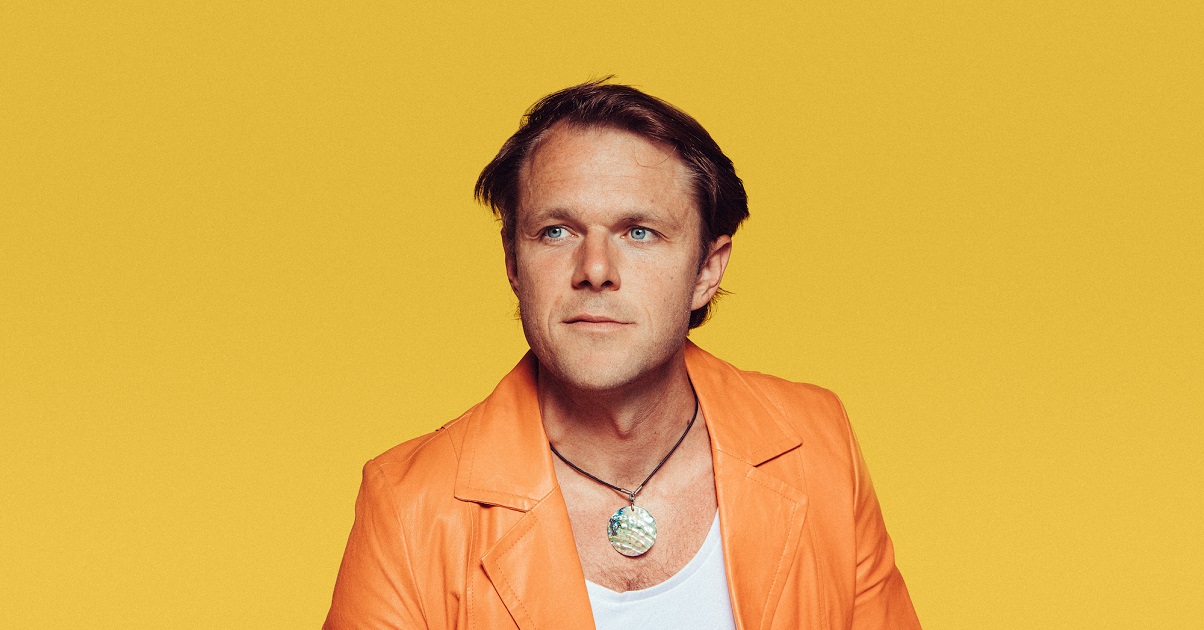
LISTEN: Josiah Johnson, “Woman in a Man’s Life”

Artist: Josiah Johnson
Hometown: San Francisco, California
Song: “Woman in a Man’s Life”
Album: Every Feeling on a Loop
Release Date: September 4, 2020
Label: ANTI- Records

In Their Words: “We are beginning as a culture to reckon with gender roles and expectations, different standards and power dynamics. As someone who can fall back on presenting pretty straight, but has known I’m queer for a long time, I have been in process shedding my internalized homophobia and claiming my sensitivity, nurturing nature, my yin qualities as strengths. So when I sing ‘I’m a woman in a man’s life,’ it holds empowerment for me.

“I’ve learned to love my process. I’ve learned to love when I’ve taken the long way and where I get to admit mistakes. Humility and uncertainty are welcome. Being seen for who I am and where I’m at is my priority. And I am exactly where I am supposed to be. The result of that new courage bears out in how I’m able to be a better friend to the people I love. That’s the gift.” — Josiah Johnson


Photo credit: Sela Shiloni