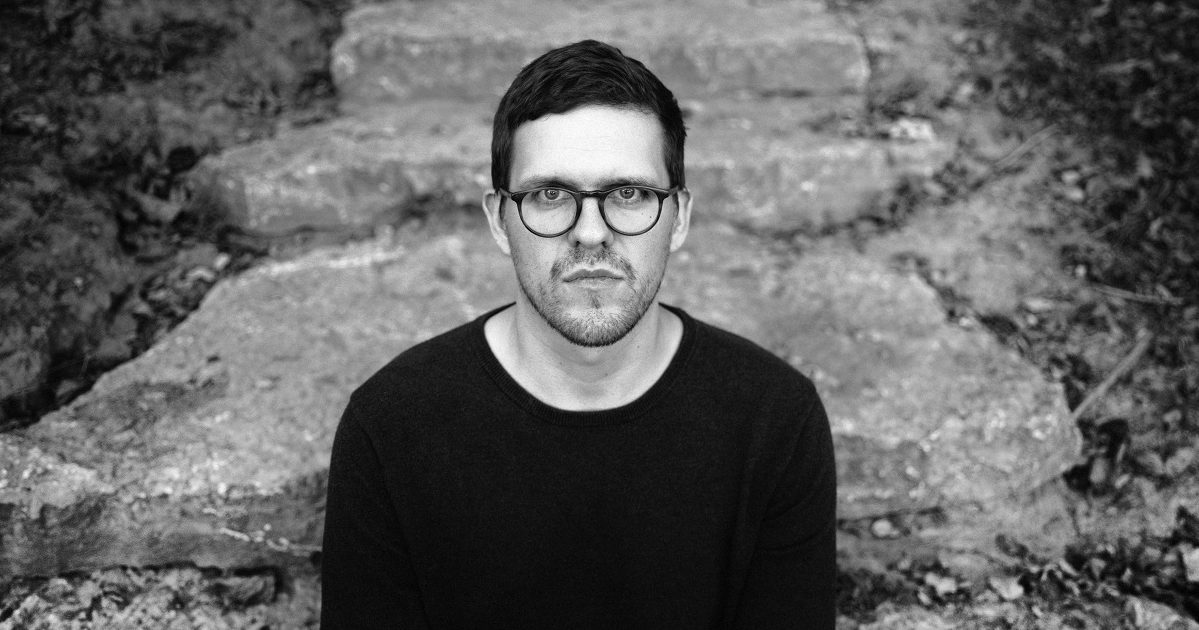
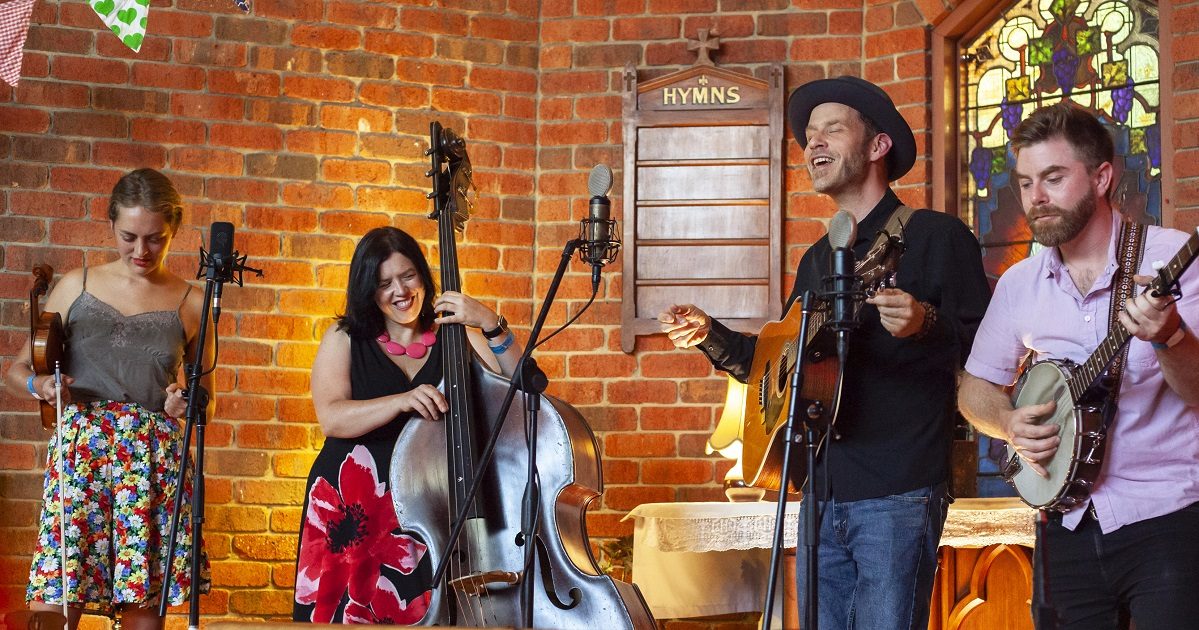
LISTEN: Shovels & Rope, “C’mon Utah” (Acoustic)

Artist: Shovels & Rope
Hometown: Charleston, South Carolina
Song: “C’mon Utah” (Acoustic Version)
Album: By Blood Deluxe Edition
Release Date: August 28, 2020
Label: Dualtone

In Their Words: “Presenting the campfire version of this traveler’s journey atop a magical horse named Utah, who leads him on a quest through the southern Midwest back to his family from whom he’s been separated by a heinous, authoritarian evildoer.” —Michael Trent & Cary Ann Hearst, Shovels & Rope


Photo credit: Mike Crackerfarm

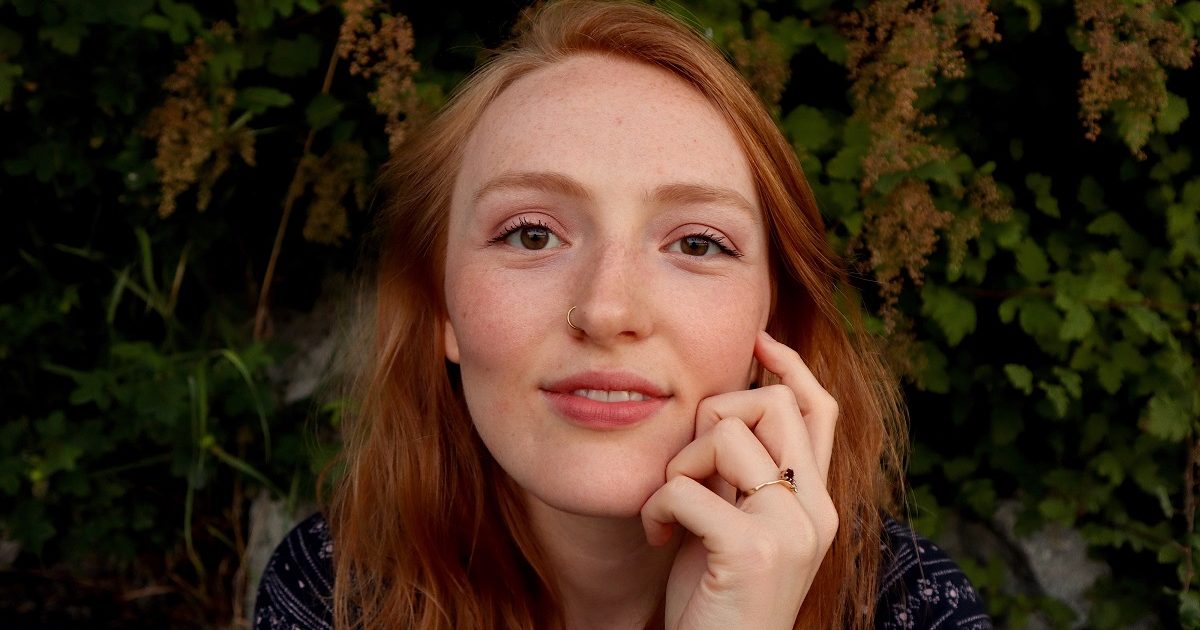
LISTEN: Evelyn Cools, “Yosemite”

Artist: Evelyn Cools
Hometown: Sint-Niklaas, Belgium
Song: “Yosemite”
Album: Misfit Paradise
Release Date: August 14, 2020
Label: Head Bitch Music

In Their Words: “Although I have lived in cities most of my life, nature has always been my main source of inspiration, grounding, and happiness. Yosemite National Park in particular has had a huge impact on how I perceive the natural world and our role as humans in protecting it. I wrote the song ‘Yosemite’ as a sonic representation of what it feels like to drive through the park, starting out slow and peaceful, and building toward the overwhelming moment when the valley opens up to you as if out of nowhere. It is the truest ode to nature I have written so far, and a conversation starter for the preservation and protection of natural lands. To date, it is one of my favorite songs to listen to, play at home, and perform at concerts, and I hope it resonates with all those who yearn for a deeper connection with our planet.” — Evelyn Cools


Photo credit: Tye Edwards

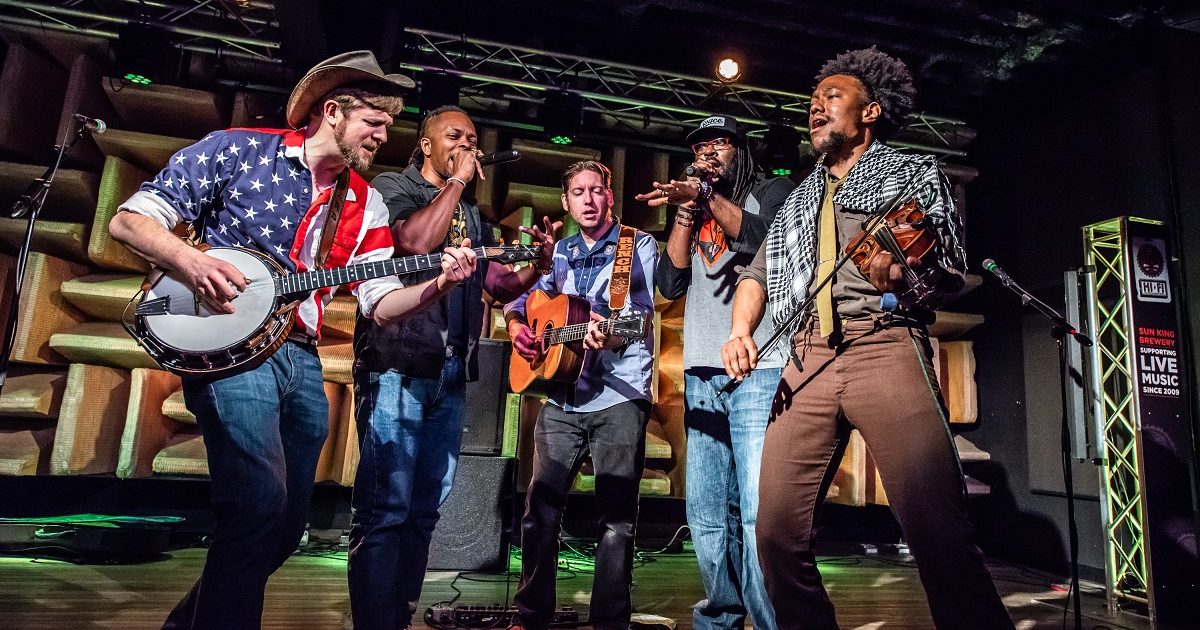
BGS 5+5: Gangstagrass

Artist: Gangstagrass
Homebase: Brooklyn, New York
Latest album: No Time for Enemies
Personal nicknames: Rench the Mastermind, Dolio the Sleuth, R-SON the Voice of Reason, Danjo, B.E. Farrow

What rituals do you have, either in the studio or before a show?

Back in the Before Time when we were on tour, before getting on stage we huddle up and put our fists in the center, and one of us will start giving a pump-up speech — equal parts church revival preaching and championship game coach pep talk, with some swearing thrown in, and then shout “Gangstagrass!” while we lift our fists up, very much like a little league team huddling before a game. Before that, Dolio the Sleuth does 300 push ups to get the adrenaline going, R-SON creates an R2-D2 replica out of toothpicks and glue, and I set up a poison capsule triggered by a Geiger counter next to a radioactive atom so that we play the entire set in a quantum state. But our huddle is always a good little energy focuser to bring us together for a moment before we step on stage. — Rench

Which elements of nature do you spend the most time with and how do those impact your work?

Earth. I’m a country boy, born and raised in a tradition of pulling nourishment from and communing with the outdoors, so I spend a lot of time in my garden. It helps to keep me grounded and centered, and serves as a sacred space, a place where I can take the gifts of sunlight, soil, and water to raise and enjoy my private Eden. That spiritual centering allows me to focus my pen into channeling the energy I want to deliver unto others … and whenever I can: water. Because I’m from a place on the Gulf, I feel my most comfortable when near a body of water. I tune in to the rhythm of the waves or the trickle of the currents and it turns to music in my mind. — Dolio the Sleuth

What other art forms — literature, film, dance, painting, etc — inform your music?

Comic books. All day. It’s rare to find a verse of mine that doesn’t have at least one comics reference. The comics universe is full of interesting characters and references that allow for it to fit and be used a hundred different ways for a hundred different meanings. The best part is when someone in an audience catches one of those references. It makes me know that they’re paying attention and digging what I’m saying. — R-SON the Voice of Reason

What was the first moment that you knew you wanted to be a musician?

I grew up listening to my dad play in a bluegrass band, so music was always in the house. I think I wanted to be a musician as early as I could want anything. — Danjo

If you had to write a mission statement for your career, what would it be?

Special butterflies fly to special places so always follow the oddest path. — Farrow


Photo credit: Melodie Yvonne

LISTEN: The Weeping Willows, “Wheels Won’t Roll”

Artist: The Weeping Willows
Hometown: Melbourne, Australia
Song: “Wheels Won’t Roll”
Release Date: August 14, 2020 (Single)

In Their Words: “Penned in 2019, ‘Wheels Won’t Roll’ is our ‘accidental isolation song’ about feeling stuck in a rut (we owe 2019 an apology!) Early last year we were spinning our wheels, struggling to move forward, crippled by self-doubt and writer’s block. But despite all that, we longed to be back out on the open road… ‘Wheels’ is our folkie homage to the great Australian song, ‘Rock and Roll (I Gave You the Best Years of My Life)’ written by Kevin Johnson, made famous by Mac Davis.” — Laura Coates and Andrew Wrigglesworth, The Weeping Willows


Photo credit: Lachlan Bryan

LISTEN: Half Gringa, “Transitive Property”

Artist: Half Gringa
Hometown: Chicago, Illinois
Song: “Transitive Property”
Album: Force to Reckon
Release Date: August 28, 2020

In Their Words: “‘Transitive Property’ is, in my mind, the song most illustrative of the themes of this record. It’s a song about the aftermath of cutting someone out my life that I didn’t know I’d have to. It’s also a reflection of how the state of this country and my own grief felt like places I didn’t recognize or understand. The main guitar riff is a great example of how I write guitar parts. Sam Cantor (the other guitarist in my band) and I play parts that are really intertwined. There isn’t really a lead/backing guitar dynamic when we play; it shifts a lot. I came up with this riff thinking that he could harmonize on it. ‘The Architect’ on the last record, Gruñona, has a guitar part where he did that, and I liked it so much I wanted to do more of that.” — Isabel “Izzy” Olive, Half Gringa


Photo credit: Rachel Winslow

LISTEN: Jordan Lehning, “The Quarry Song”

Artist: Jordan Lehning
Hometown: Nashville, Tennessee
Song: “The Quarry Song”
Album: Little Idols
Release Date: August 7, 2020

In Their Words: “Once I realized ‘The Quarry Song’ would [not] act [as just] a standalone song about a breakup, but as a chapter to a bigger story, I was able to zoom out and understand more about the potential for the rest of the record. Treating the record as a film with scenes and arcs was incredibly informative to the pacing and sequence of the final product. In particular, there are interludes between the songs. ‘The Quarry Song’ is preceded by ‘Hey Boy,’ where the two main characters are lying in their own beds at their respective homes pining over one another telepathically. But after that song, during the interlude, we can hear her emotions shift. A longer interlude than exists in the rest of the record occurs. She pushes and pulls her emotions apart, and after some time has passed she reluctantly agrees to meet our hero one last time in ‘The Quarry Song.’” — Jordan Lehning


Photo credit: Laura E. Partain

WATCH: Phöenix Lazare, “Warm Soles”

Artist: Phöenix Lazare
Hometown: Salt Spring Island, BC, Canada
Song: “Warm Soles”
Album: Warm Soles
Release Date: August 7, 2020
Label: Lazare Music Inc.

In Their Words: “‘Warm Soles’ is very dear to my heart. I wrote this song in the heat of the COVID-19 quarantine, inspired by a songwriting challenge I created on Instagram attempting to stay creative. A wedding dress conversation with my grandmother one morning sparked something in me to paint a picture in words of how I imagine my future wedding day — being newly engaged, I had been doing a lot of daydreaming. I wrote the song in one day, recorded the idea with my travelling home studio setup, and sent it to my friend Louis Remenapp in Nashville who co-produced and engineered the track. ‘Warm Soles’ is truly a dedication to my fiancé, who keeps my laughter loud and my feet on the ground.” — Phöenix Lazare


Photo credit: Hownd

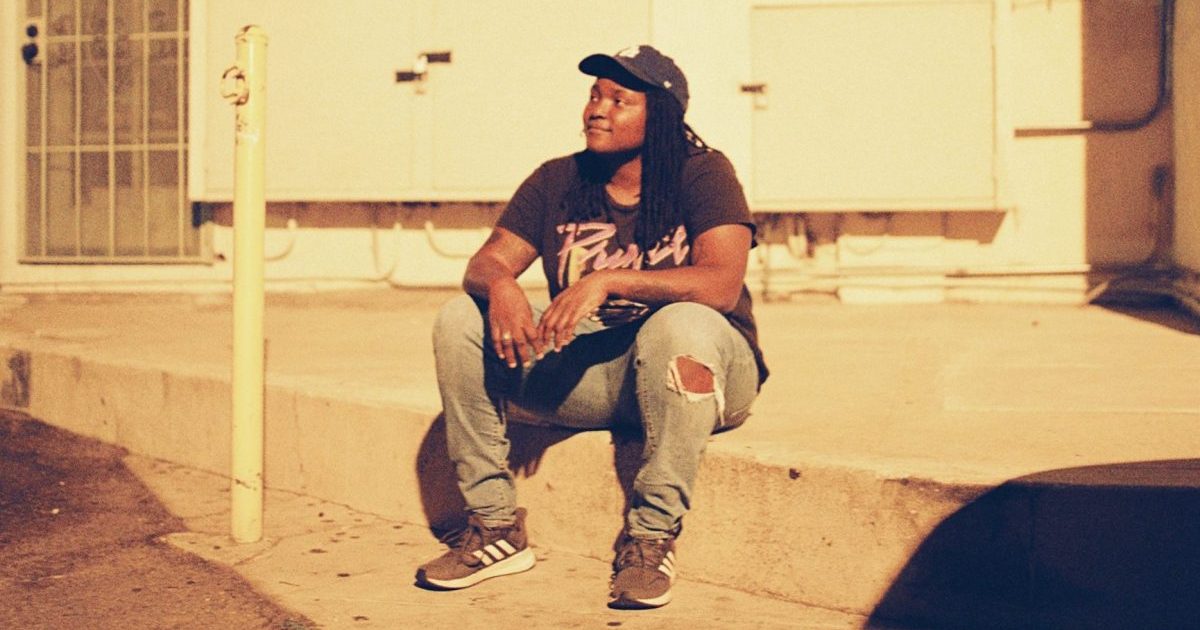
By Defending Her Own Happiness, Joy Oladokun’s Determination Pays Off

It was far from a given that Joy Oladokun would settle on her present path as a singer-songwriter of pensive folk-pop. She absorbed an array of musical models earlier in life — those that culturally linked her family to their Nigerian roots; reflected the rural pride of her peers in agriculture-rich Arizona; united her evangelical congregation in upward-aimed worship; and offered various styles of self-expression, emotional catharsis or social critique.

But on her texturally varied second album, in defense of my own happiness (vol. 1), much of which she self-produced, she sketches the distance between where she stands, sorting out her sources of pain, anxiety, and pleasure, and what she’s chosen to leave behind. Throughout, she’s exploring knotty interiority with warm yet watchful vulnerability. Oladokun paused her daily songwriting schedule to talk with BGS about how she made her way here.

BGS: After your parents immigrated to the U.S., did they maintain an attachment to traditional or contemporary Nigerian music and share it with you?

My parents came here in the ‘80s, so the Nigerian music they listened to growing up is definitely still a part of their everyday life today. I think one of my first introductions to the guitar was this Nigerian artist named King Sunny Adé, just these crazy, cascading, arpeggiated guitar riffs. They’re not as in touch with contemporary Nigerian music, but Nigeria had a pretty rich and interesting musical history.

You’ve said in past interviews that you grew up in an Arizona farming town that prized folk and country music. What role did that music actually play in community life?

There is not a music scene to speak of in Casa Grande, Arizona, that is for sure. My high school was big into Future Farmers of America. Lots of big trucks and dairy farms, that vibe is the vibe of my town. Some of the country I wasn’t very interested in, but I had a short fascination with ‘90s country. I mean, Martina McBride, Alan Jackson, Brooks & Dunn, it’s a lot, but in a good way. Everyone around me was listening to ‘90s country.

And my dad, for some reason, has an affinity for country-gospel music. He has all these records of Johnny Cash or Charley Pride, all these different people singing old country-gospel standards. So there’s this dusty, Southwestern country sound that I also grew up around that I think is the country that I gravitate to now, more than the big trucks and farms.

Along with hearing King Sunny Adé’s playing, you’ve said that seeing concert footage of Tracy Chapman with acoustic guitar in hand really caught your attention. What was it about those moments that moved you to pick up the instrument yourself?

I was always a really shy and reserved kid, and pretty smart, but had a hard time focusing or applying myself for long amounts of time. I think what I found in myself when I saw the guitar and decided to learn, and what my family saw in me, was a determination that hadn’t been applied to anything else ever.

I just know that the gift of self-expression that it’s given me has been pretty lifesaving. King Sunny Adé and Tracy Chapman, those are two very different expressions of how to use the guitar and how to make music, but they both took the inner workings of themselves and the world around them, and they expressed it through the music they made. I think that’s pretty dope and especially appealing to a kid who has a hard time talking.

Since you were so shy, how did you wind up playing music in front of a congregation?

If you wanted to get me to do anything as a kid, convince me that it would make God happy, or if I didn’t do it, God would be upset. That’s a pretty good motivator to any kid, but especially for me. I think I was so driven because I was so enmeshed in Christian culture. I was driven by this narrative of, “You need to do something big with your life and you can’t just spectate. You have to participate.” I honestly think had I been a little atheist in middle school, or had language been different, I maybe wouldn’t have ever done it or stepped on a stage. But I think it was the, “I feel this duty to use my gift for something bigger than myself.”

What did it take for you to leave behind what you thought might be a lasting career path in praise & worship music?

I often laugh at how much my adult life parallels my mother’s. Growing up, she would always tell this story about how her dad really wanted her to be a teacher. She spent a year or so teaching school and freaking hated it. So she became a nurse and she still does that to this day. I think I honored the thing that is spiritual in myself by working at a church and by falling in line and doing the thing for as long as I did. When I realized, “OK, I’m queer. There’s no getting around that. And I maybe don’t believe these things politically or theologically that I sometimes said on a day-to-day basis.”

I just got to a place where it became more important for me to live a life of integrity on all fronts than to keep up appearances or do what I thought God or my parents or my old boss wanted me to do. When I left, I made the decision pretty much on my own. And in circles like that, that is a no-no. I think the reason I did step into it by myself, though, is because I have to live this life. I would rather pursue something that feels more authentic to me. And once that decision was made, then the career decision was easy. I honestly tie it back to hearing my mom every day since I was born tell the story of how she made that decision for herself.

These days you’re signed to the Nashville office of a publishing company, operating in a world with its own customs and practices when it comes to being creative and collaborative. How’d you adjust to things like co-writing?

I honestly don’t think the worlds are that different, or maybe just people are the same. I do write a considerable amount by myself, so co-writing was maybe the biggest leap that I’ve made into discomfort. To me, even if I have a bad session, there is something that can be learned or gleaned or laughed about from it. If someone has a bad ego during a write it’s, “OK, I’m not going to work with that person again.”

You chose a loaded title for this album, in defense of my own happiness (vol. 1). What were you getting at?

Every time I post something on Instagram or Twitter or Facebook that someone from my past dislikes, I hear about it. I didn’t realize that that was a strange practice until I was talking to my girlfriend. She was like, “That’s so bizarre that people you worked with five years ago still feel the need to tell you that they’re disappointed in you, or say that they’re praying that you’ll become straight again one day.”

It is the source of a lot of my anxiety, to be honest. I don’t regret anything that I am or anything that I’m doing, but there’s this part of me that wants to defend that who I am is good. So many of the songs we ended up picking for the album speak to that. I think the idea of in defense of my own happiness is, it’s maybe an open letter to all these people.

Also it’s a letter to myself saying, “You deserve this life. You deserve to have a girlfriend who loves you and live in a beautiful house, and you deserve to be working a job that you enjoy. You’ve made mistakes, but none of that disqualifies you from what you found.” The album is literally just, “Please let me live.”

As much as I hear you insisting on your right to happiness on the album, I can also hear you sitting with your melancholy, and not hurrying past it.

I don’t know that there’s any other way to actually be happy or healthy without acknowledging how you’ve been hurt in the past, who you’ve hurt in the past, acknowledging the things that you don’t understand or the things that scare you, and sitting with them. I’ve been doing a lot of meditation, because it’s 2020 and the world’s on fire. I was reading a quote about how emotions and our thoughts, we should entertain them as friends, as opposed to treating them as these things that we can’t control. I do feel like melancholy is like a friend that I entertained on this record.

That definitely applies to your song “Who Do I Turn To?” Tell me about the choice you made to phrase the chorus as one long, uncomfortable, unresolved question.

I credit the open-endedness of it to Natalie Hemby, who I wrote the song with. I am a big fan of open-ended things, but I think I wanted an answer. I wanted to write a protest song. I think Natalie could see in my face just the heaviness and the sadness. I was, like, four months old when the LA riots happened, and the fact that we’re still marching for the same thing in 2020 is so bizarre. It’s so heartbreaking. Black people have been showing up for themselves from the beginning of time, countless Civil Rights leaders and movements.

Even to this day, you can point to people like Angela Davis that are alive and doing the work. But we are a minority group, so we cannot be the only people doing the work to protect and honor our lives, especially in this climate. It became open-ended because it’s like, “You keep saying that it’s not your fault, but you let your grandpa make racist remarks while I’m at dinner.” There’s all these little actions and behaviors that play into it. Leaving it open-ended just allows people to think and reflect.


Photo credit: Shannon Beveridge
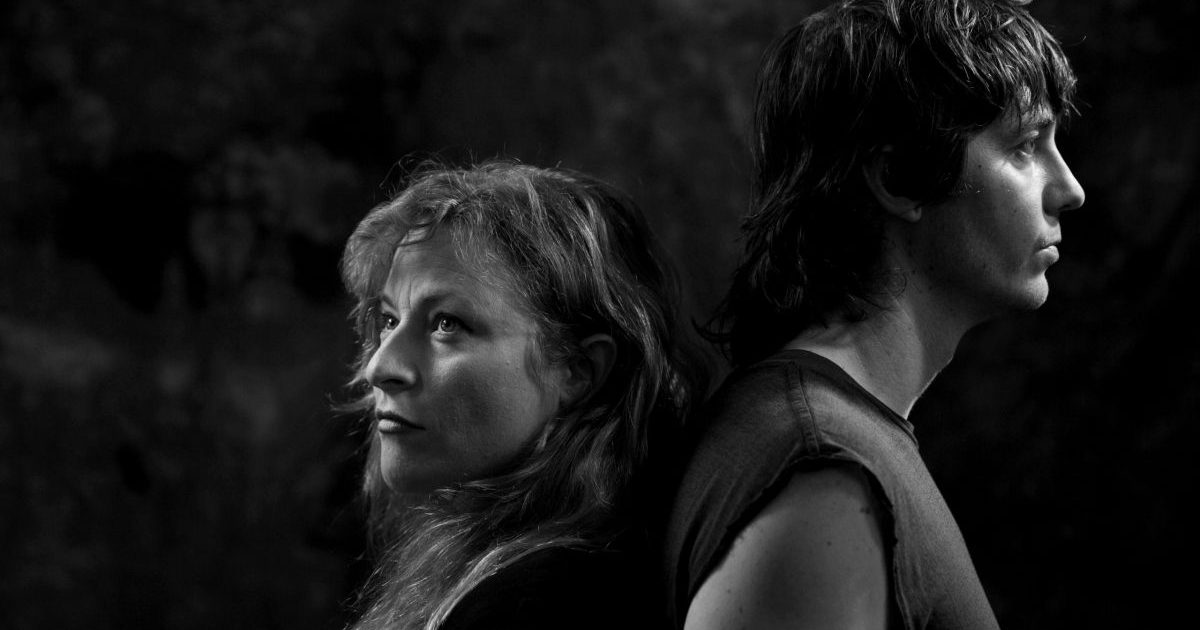
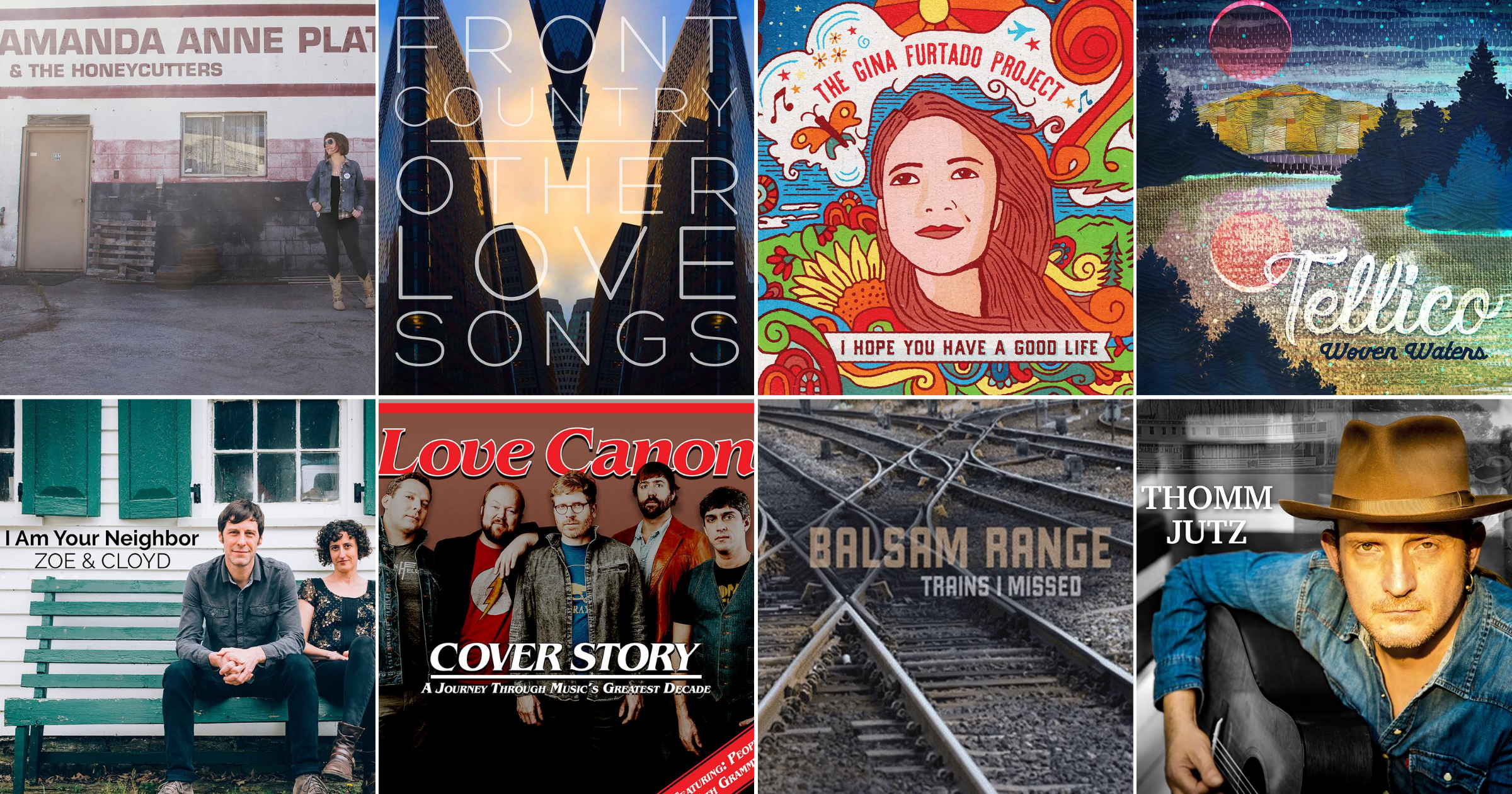
MIXTAPE: An Organic, Mountain Home Playlist

There’s never been a time when working people haven’t needed to lean on one another — and to look beyond the present day — just to get by, but the present moment often seems especially fraught. Nothing speaks better to each present moment than music, whether it’s making space for respite and healing or providing encouragement and inspiration for the struggle.

Here at Mountain Home Music Company and Organic Records, our artists speak in unique, distinctive voices, yet each of these mostly southern artists have been unafraid to offer up songs that address the universal themes and social challenges of our times— whether they’re looking inward or to the outside world. — Ty Gilpin

(Editor’s Note: Find the entire playlist below)

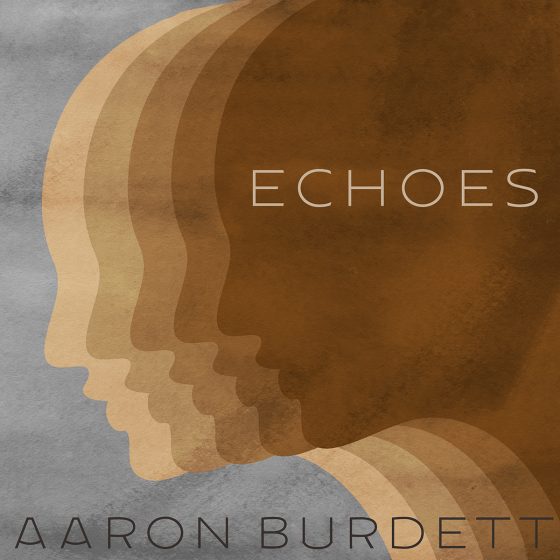
Aaron Burdett — “Echoes”

“Echoes” is a product of this era, a processing of my own thoughts and feelings. I have questions about my surroundings and myself. It’s about current conditions but also about elements of our humanity that are centuries old. Uncertainty defines much of life in the year 2020 and I believe in recognizing and honoring it. Answers will not arrive until the right questions are asked. — Aaron Burdett

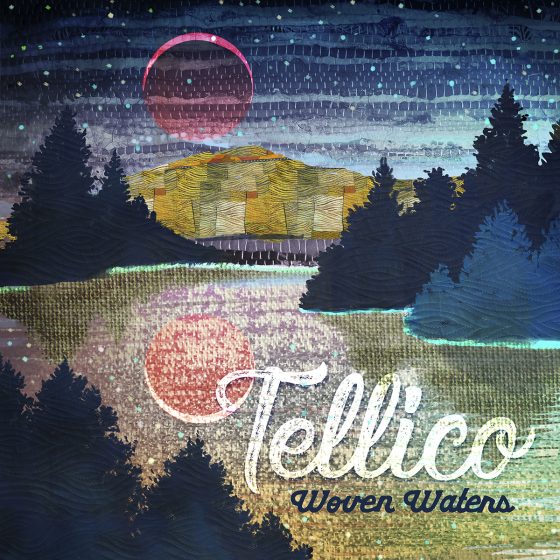
Tellico — “Courage for the Morning”

I was thinking about how people’s actions can inspire others, from the great revolutionary leaders to the everyday efforts of ordinary people. So, if you sing along to this song, you will be saying to yourself “I will walk, I will sing, I will bring a little courage for the morning.” That is something each one of us can take to heart and really think about: What is it that I can do to help another person in this world? — Anya Hinkle, Tellico

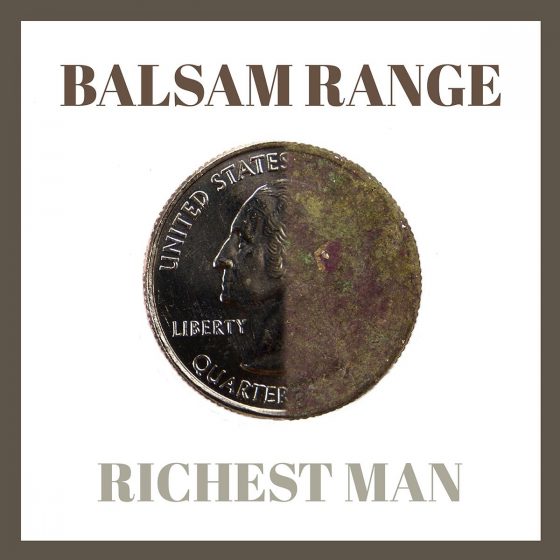
Balsam Range — “Richest Man”

Who has not thought about being the Richest Man? But what defines being rich? To have a life without regrets is easier said than done. The sacrifices made for gain can seldom be undone. The things lost and those won will only show with time. — Buddy Melton, Balsam Range

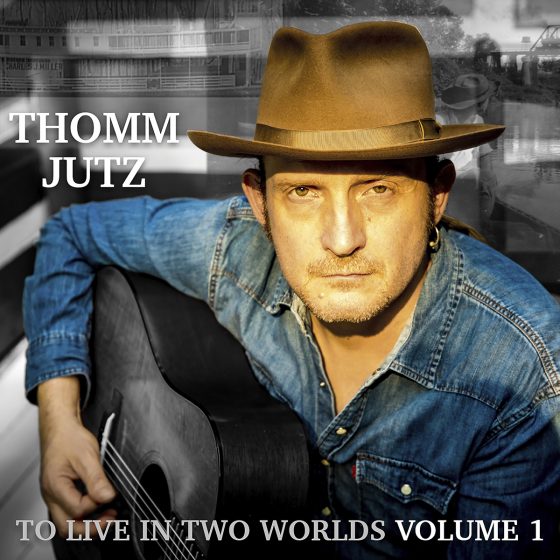
Thomm Jutz — “What’ll They Think Up Last”

When you enter John Hadley’s Fiddle Back Shack you are immediately in the moment and in a different world. I can’t think of any other house like his. Hadley is one of the most stunningly great creative minds I know — so is Peter Cooper. We gathered at Hadley’s funky Madison, Tennessee home one Sunday morning, talking over coffee. Hadley said something like “I wonder what they’ll think up last…” yeah, me too. — Thomm Jutz

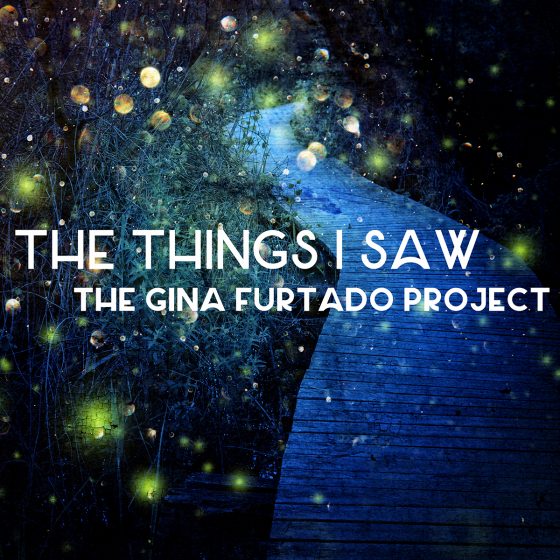
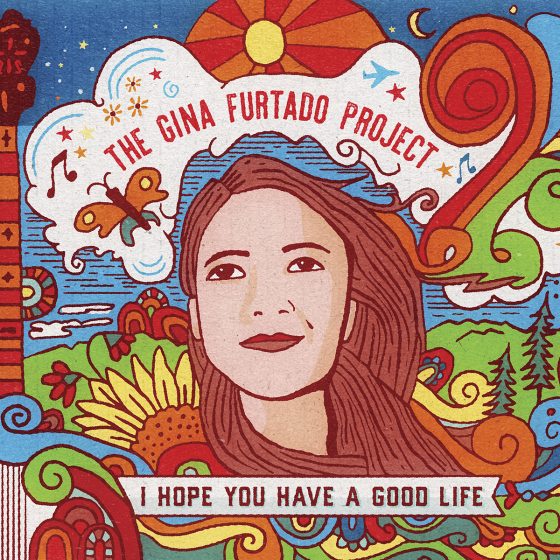
The Gina Furtado Project — “The Things I Saw”

All throughout my childhood, I went to the river when I needed comfort of any kind. No matter what happened in my life, good or bad, the river was always the same. The plants and critters and smells and sounds became like old friends; always welcoming and beautiful in every way. I imagined a secret society whose mission was to fight hatred with love.

I’ve taken that little vision into my adult life, and enjoy trying to spot members of this secret society (and trying to be one myself!) They can be flowers, animals, sunsets, people you pass on the street — any person or thing that refuses to let darkness and negativity take over, and instead chooses to exude pure and unstoppable love. — Gina Furtado

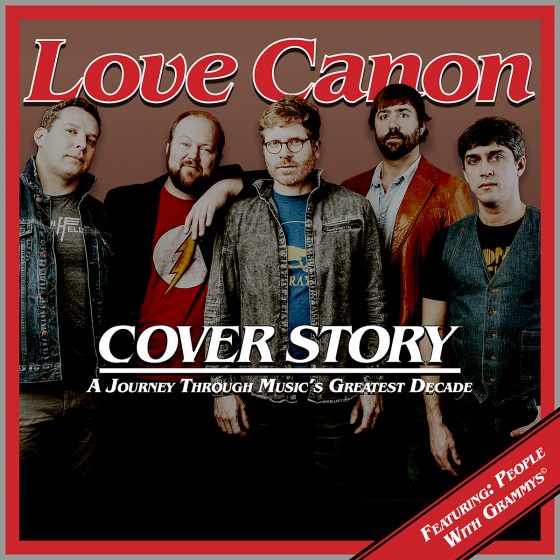
Love Canon — “Things Can Only Get Better”

Love Canon has made a career from expertly covering classic ’70s and ’80s pop songs with acoustic instruments. In this Howard Jones hit, they found an anthem for trying times. — Ty Gilpin

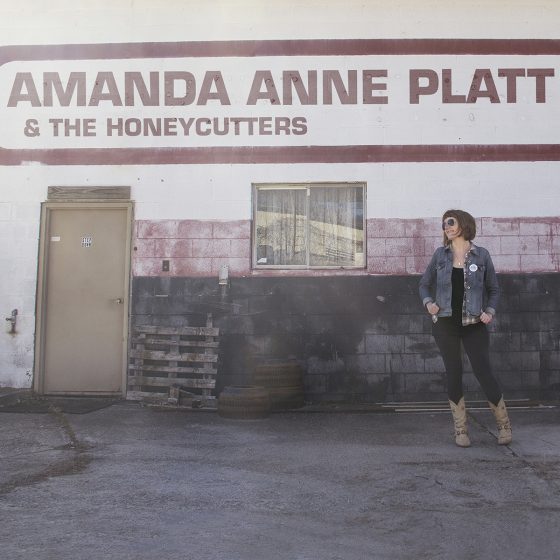
Amanda Anne Platt & the Honeycutters — “Brand New Start”

Asheville-based, Americana-leaning outfit the Honeycutters have built an increasingly storied career through their sensitive, skilled musicianship and the distinctive songwriting and voice of Amanda Platt. “Brand New Start” is about a scenario we could all use right about now. — Ty Gilpin

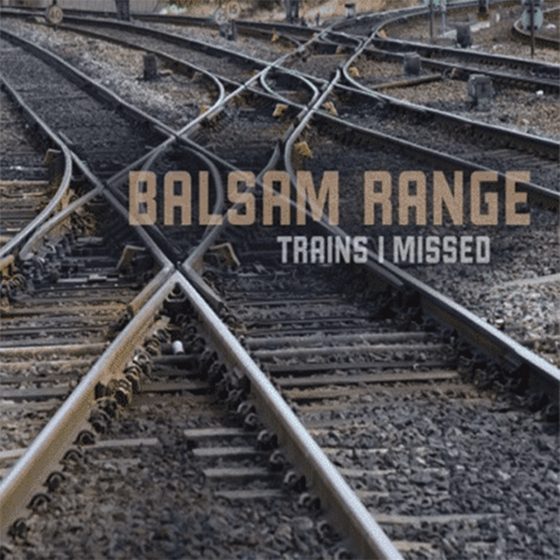
Balsam Range — “Trains I Missed”

Do we recognize when opportunities missed are really fate taking us in a better direction? How many times have you found yourself missing one train and taking another to right where you’re supposed to be? — Ty Gilpin

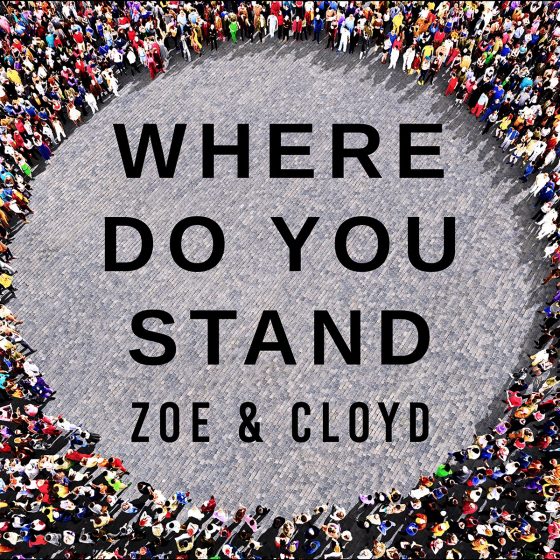
Zoe & Cloyd — “Where Do You Stand”

“Where Do You Stand” is a commentary on the state of our national discourse. Often, it’s the farthest ends of the political spectrum that make the news and it seems like inflammatory rhetoric is the only thing that gets heard these days. I’d like for us to remember that we’re all connected and are more alike than we are different, no matter who tries to convince us otherwise. For us to move forward, we have to find common ground on which to build a path toward a sustainable future. — John Cloyd Miller, Zoe & Cloyd

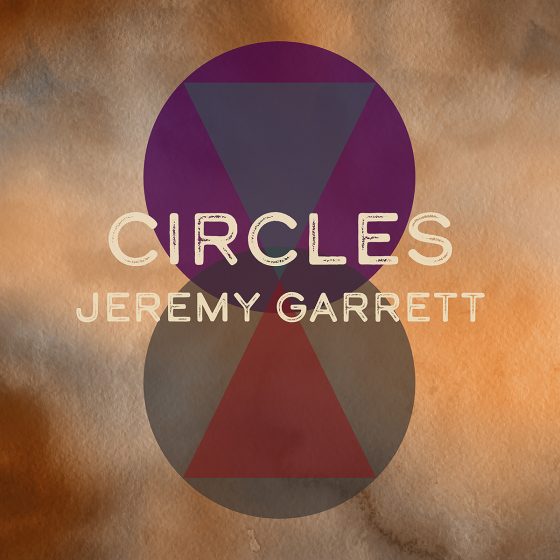
Jeremy Garrett — “Circles;” “What Would We Find?”

“Circles” is a song I feel like many people can relate to. Sometimes you feel like you’re going in circles, but there is always light on the other side if you can just keep going and perhaps change your vantage point.

For “What Would We Find?” we were riding out through the Black Hills and it struck me how it looked as though, if you could take all the timber away and expose just the rocks and barren land, what would you find? It seemed as though there were hidden layers of possible treasures in the rocks under the timber — perhaps like relationships can be sometimes. I only had the idea and a basic melody, and had the opportunity to write with one of my heroes, Darrell Scott.  — Jeremy Garrett

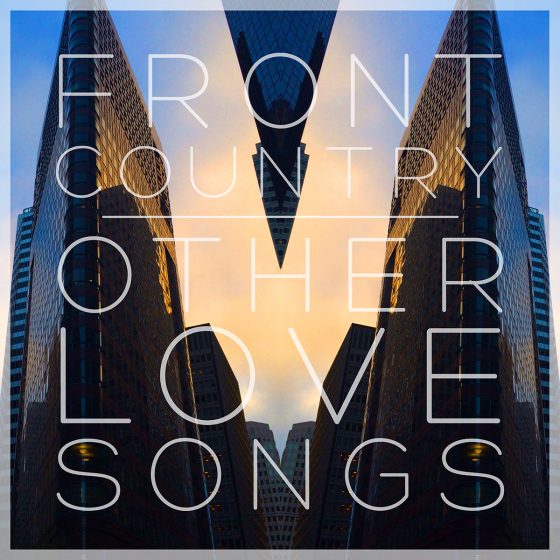
Front Country — “Good Side”

Almost a capella from a group that has never shied from issues of social justice. Hailing from the west coast but now residing in Nashville, Front Country has consistently campaigned for marginalized members of our community. This powerful message is both personal and universal. — Ty Gilpin

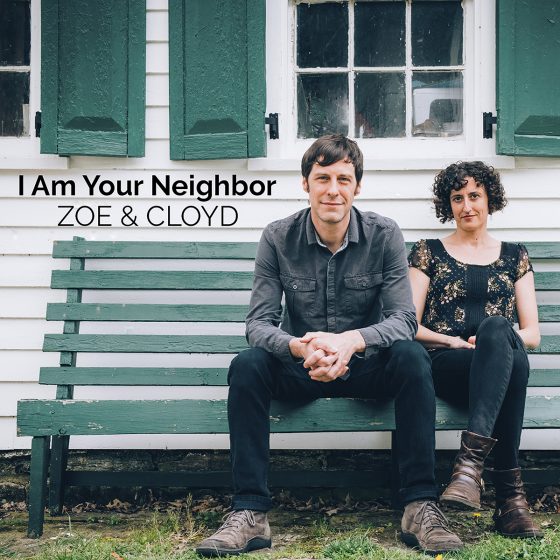
Zoe & Cloyd — “Neighbor”

“Neighbor” is a song meant to inspire us to act with empathy, and to remember our shared humanity. It’s important to recognize our similarities rather than fear our differences. — Natalya Zoe Weinstein, Zoe & Cloyd

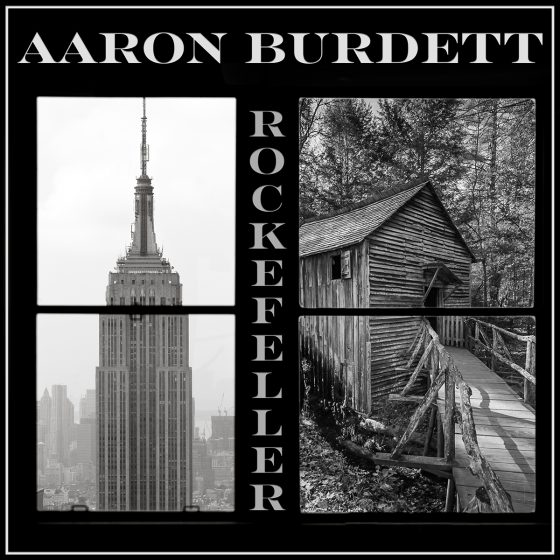
Aaron Burdett — “Rockefeller”

“Rockefeller” is, on the surface, just a fun song about wishing for more than you have and being envious of others. Dig a little deeper though, and the song brings in hints of income and economic inequality. But then the chorus is all about making do and being content with what you do have. So it’s a song with a few layers to jump back and forth between. — Aaron Burdett

The Gina Furtado Project — “Try”

The societal pressure to be a certain way can be overwhelming. ‘Try’ just came to me one day when I felt particularly defeated. We win some, we lose some; we do admirable things and less than admirable things. That is what it is to be a human, and as long as you know you try, it’s not a big deal either way. — Gina Furtado


SPONSORED CONTENT: Occasionally, BGS brings you content curated by featured partners and sponsors.

LISTEN: Scott Cook, “Rollin’ to You”

Artist: Scott Cook
Hometown: Edmonton, Alberta, Canada
Song: “Rollin’ to You”
Album: Tangle of Souls
Release Date: August 7, 2020

In Their Words: “On August 7, I’ll be releasing my seventh album, Tangle of Souls. It comes packaged in a 240-page, clothbound hardcover book, the apotheosis of a long-running, possibly unhealthy obsession with liner notes. This is the first of those songs I wrote — yodeling and laughing to myself in a rented room in Chicago — and it planted the seed of an idea that led to making a string band record. The aesthetic is often the first thing I have in mind, before I even know what the album wants to be about, and this time around I wanted a string band, with a fiddle, because the fiddle is the electric guitar of acoustic music.

“I’d been touring a fair bit in Australia with Liz Frencham, a killer upright bass player with a studio in her backyard, and on one of those tours we got to talking about making a record. I brought over fellow Albertan and longtime collaborator Bramwell Park to play banjo and mandolin, and Liz connected with an Aussie fiddler named Esther Henderson, who I’d never met. I named the band ‘Scott Cook and the She’ll Be Rights’ after an Aussie expression meaning ‘it’ll be OK’ or ‘don’t worry about it.’ (You might say it’s somewhere on the spectrum between nonchalance and negligence.) We arranged the songs along that tour and cut the record at the end of it, then I spent the next year or so writing the liner notes. 🙂 ” — Scott Cook


Photo credit: Kate Baker