One to Watch: AJ Lee & Blue Summit

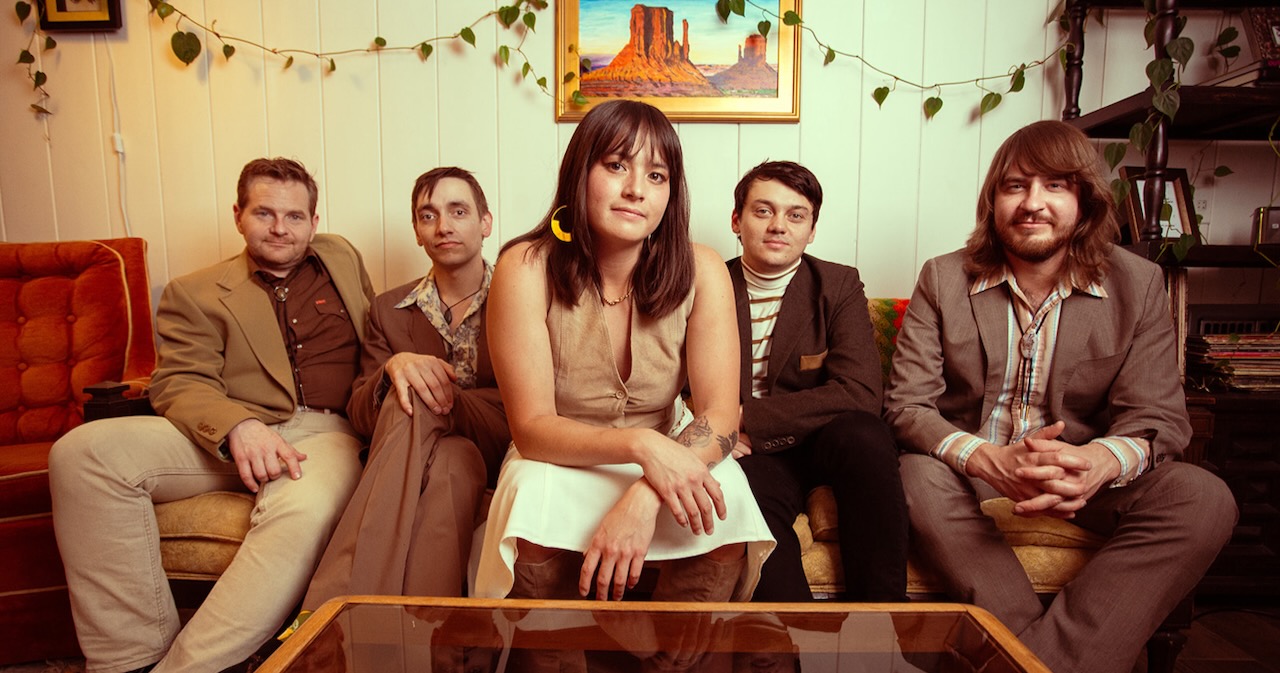
With citrusy melodies full of zest and spark, AJ Lee & Blue Summit demonstrate that California bluegrass is alive and well. Based in the Bay Area, they first took to the stage in 2015. Though the group has morphed in shape and size over time, they have delivered musical excellence for nearly a decade.

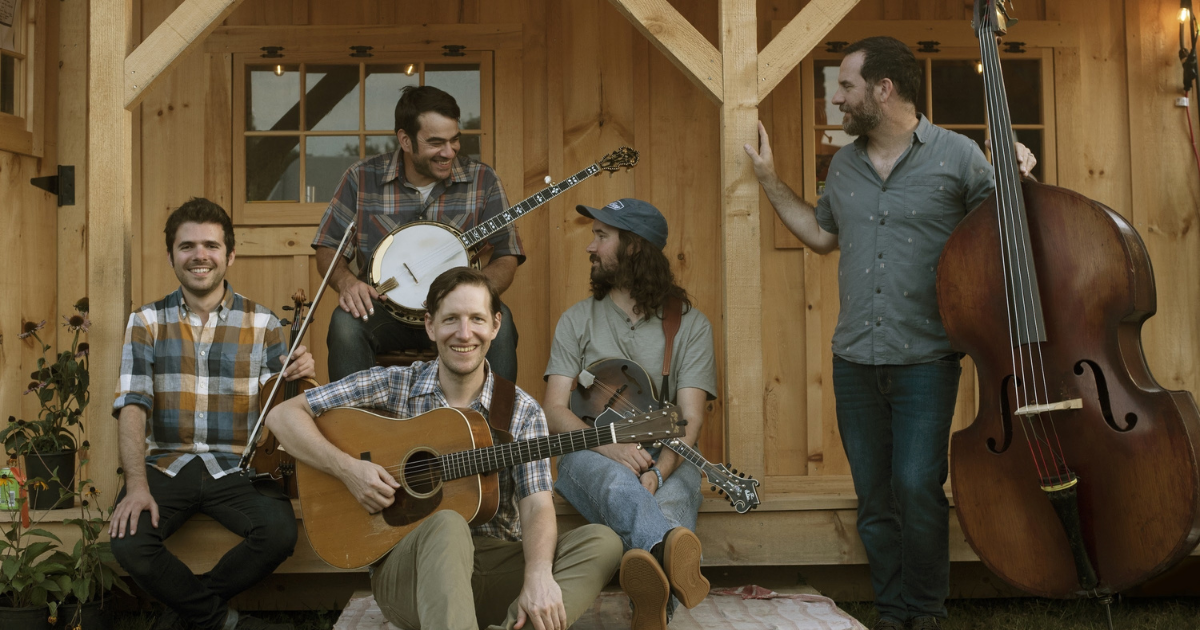
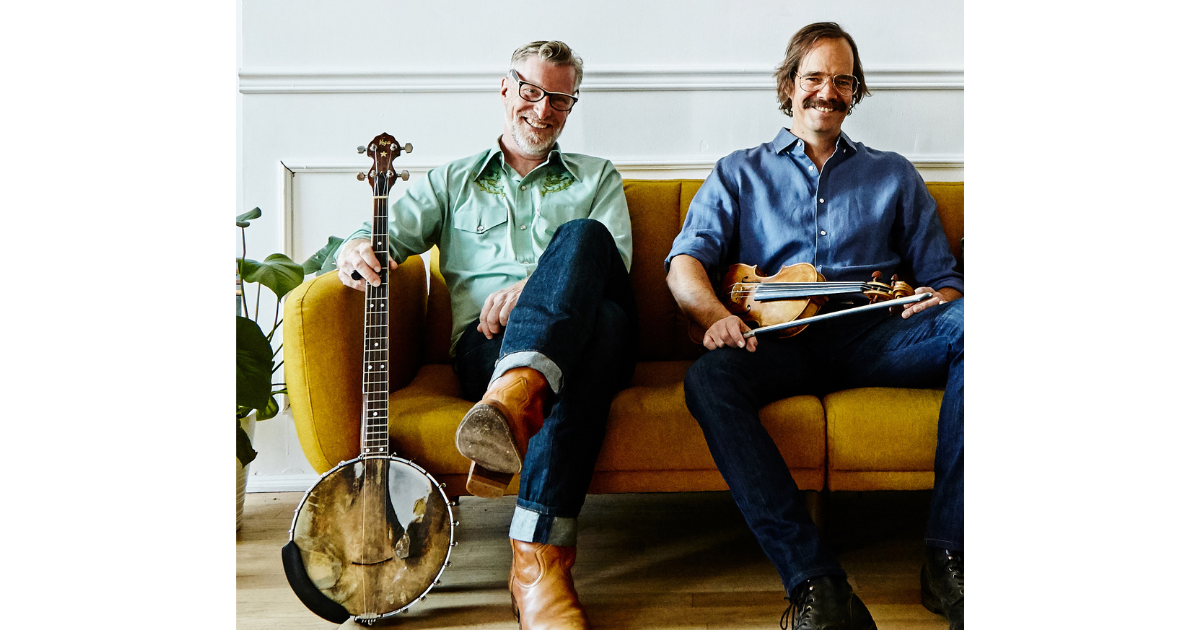
Currently, the band is composed of four tremendous musicians – AJ Lee (vocals and mandolin), Scott Gates (guitar and vocals), Sullivan Tuttle (guitar and vocals), and Jan Purat (fiddle) with a couple of rotating bassists. AJ’s velvety vocals blend seamlessly atop the many textures and tones this uncommon instrumental lineup can accomplish.

With their third studio album set to be released sometime this year, AJ Lee & Blue Summit set sail for their tour across North America earlier this month. Their emotive, erudite songwriting is brought to life by the band’s natural compatibility.

What is the nature of your musical chemistry? How would you describe it?

Scott Gates: Well, we all grew up going to California bluegrass festivals, and that gives us kind of a through-line. We all grew up with similar mentors and similar principles, so we all have similar ideas of what bluegrass is and what it isn’t, and how to bend those boundaries.

What do you think makes the bluegrass scene in the Bay Area distinct from other bluegrass scenes?

SG: Yeah, I think that there’s more homogeneity in a lot of other bluegrass associations across the country. You know, Tennessee is known for its singers. North Carolina is known for its banjo players, and they turn out some serious musicians. But something I’ve noticed with a lot of Tennessee singers is that many of them sound the same. And it allows for incredible blend and unity in sound, but California tends to reward individual individuality. When somebody has a really unique voice, they’re exalted.

Jan Purat: In the Bay Area scene, there’s a surprisingly large interest in bluegrass that dates back a long time. There’s this really thriving jam scene with lots going on. People in California as a whole tend to really nerd out on bluegrass from from the mid ’40s to the ’60s, that era of the Stanley Brothers, Bill Monroe, Flatt & Scruggs, and such. A lot of reverence for traditional sound and energy, I think, is a big part of why people really gravitate towards it. And in California, trying to channel that kind of fiery energy that you find in the more traditional stuff is definitely part of the sound, as opposed to more of the second gen and third gen newgrass circuit.

A pretty cool aspect of the California scene has been discovering that amazing lexicon of music, especially as the one band member that got into bluegrass a little bit later. I came into it during my college years, but the rest of these guys all grew up together. I met Scott busking when he was like 19, and I met AJ and Sully shortly after I first started going up to Grass Valley, around when I was 22. I started out with second-generation exposure to bluegrass, like John Hartford and similar acts, but going to the festivals and getting turned onto all this amazing music from earlier definitely feels like a big part of why I fell in love with the California bluegrass scene.

So you all share similar roots – on the flip side, what would you say the biggest difference in your respective musicianship is?

AJ Lee: Well, we all like to listen to different things, even though we’re in the same band and we unify on bluegrass. I listen to a lot of indie punk on Spotify, and I know Sully listens to some dark metal. Jan is a little bit more cultured, and Scott likes hip hop. So, there are a lot of bases covered, but we also can all appreciate what the others listen to, which is also unifying in a way.

JP: Yeah, although we love bluegrass, after a certain point we play it so much, but we don’t always listen to it that much.

AJ: I don’t think I’ve actually had a listening session of bluegrass for maybe five years.

Fair enough! What is your collaboration process like with songwriting and figuring out arrangements?

AJ: Since the early days, I’ve been the primary songwriter. I do a lot of my own original material, but since Scott’s joined, he’s brought a lot of his original material to the table as well. And I think nowadays, the songwriting process is more like a collective band arrangement. I’ll bring an unfinished song to the band and someone will say something like, “There’s a part here that I’m not really too sure about. I think it needs this,” and then together we’ll come up with something. Unlike before, when we would mostly just play all of my finished songs, now it’s more of a collective Blue Summit songwriting style.

SG: And we’ve got to give credit to the original guitar player, Jesse Fichman, who definitely helped arrange and put together some serious parts for AJ’s earlier originals.

AJ: Yeah, for a while Jesse was really the only one that I would ever write with. So he had a lot of hand in the first album.

So the first two albums are pretty different in style and tone. Can you talk about what we should expect for your third?

Sullivan Tuttle: Well, the first one had a lot of electric and a lot of drums, basically on half of the songs. And then the second one was all acoustic, all the way through. This one’s maybe somewhere in between. It’s mostly acoustic, but with a little pinch of other things.

JP: Yeah, Lech Wierzynski from the California Honeydrops produced it, so there’s definitely some of his influence. He brought in a cover for AJ to sing and it ended up being really successful and a really good choice. It’s a bluegrass instrumentation take on an old school soul song – some new territory that I haven’t really heard too many bands do. So it’s pretty exciting. And it’s just super nice working with a producer for the first time. He’s also an amazing hang, and one of the funniest people and a great buddy. It was awesome to work with him.

SG: I would say that variety is the main name of the game. When we craft a set list for a show, our goal is to bring as much to the table as possible, so that we don’t have songs that sound similar or the same over and over and we’re not fighting ear fatigue at all times. So we try to bring as many different sounds and approaches and genres together as possible. And I think this album reflects that, more so than any of the others.

Okay, here’s a silly question for you. If we were in an alternate universe, and you guys were all still a group of some sort, but it wasn’t a musical group – you’re connected by some other thing, premise interest, etc. – what would it be?

ST: Could see like a Scooby-Doo type of scenario where we all investigate things together. [AJ, Jan, and Scott emphatically agree.]

JT: We’ve got our next Halloween costume now! I know I have to be Shaggy, it’s fine.

[Laughs] I can definitely see it. I’ve heard that you have famously had to navigate some tricky traveling situations. What’s your favorite one to tell people about?

JT: Rockygrass is a good one to talk about, because it was the second time that we had to do an all-night drive from somewhere like New York City or Boston to an entirely different city like six hours away. Our Boston flight kept getting delayed, so we drove all the way to Philly overnight and got the last flight out. It was brutal. We did not sleep a wink and barely got to Rockygrass in time to play our set on the main stage. And it was our first time playing the main stage there. We were just so haggard, but apparently it was good! I had no perspective because I was so sleepy, but people liked it!

ST: I think that was my favorite, because we actually made it. Other ones didn’t have a happy ending.

Wow. You all must be really great traveling companions.

AJ: Well, we have the perfect travel attire that a lot of people tend to notice.

What is it??

AJ: I think Scott is gonna take the lead on this one. [Scott dons an incomprehensibly fashionable and utilitarian navy blue robe.]

SG: It’s a towel. It’s a blanket. It’s a robe. It’s a pillow. It’s everything that you might possibly need on the road. It keeps you warm. It keeps you dry. You can sleep at noon facing the sun.

AJ: We all have one. And everyone is always asking, hey did you guys come from a pajama party?

Okay, I feel like the Scooby-Doo thing is making more and more sense. You’re coordinating and you’re tackling obstacles!

So the two guitars situation – how did that come to be? And how do you go about arranging with two guitars?

ST: We just formed the band with two guitars – me and Jesse Fichman. When we started, I was already used to playing with two guitars because I played in the family band with my sister, [Molly Tuttle], and we usually had two guitars for that, other than when she played banjo. So it felt pretty natural, to me at least. And then when Jesse left, Scott joined, and we already had all the parts arranged for two guitars. We wanted to keep him on guitar even though he also plays mandolin. When one guitar solos you still have the rhythm guitar behind it. And as long as we’re not both just slamming away on rhythm the whole time, it works out.

It does! No complaints here. So do you guys hate banjos?

AJ: No, we actually really like banjo! Just not in our band.

SG: It’s kind of nice having it this way, because it means that when we’re at a festival, and we have a buddy that plays banjo, then we can just invite them up to play with us. There’s definitely a banjo slot for certain songs, and we can interchange that whenever we want.

AJ: I would also say that when seeing other bluegrass bands without banjo, it feels kind of refreshing to not have that sonic space filled. It gives the music opportunities to go other directions if you wanted to. And the banjo can scratch an itch, for sure, but you can’t scratch for too long or it’s going to make a rash!

So you’re our One to Watch, but who are you watching? Are there any artists, creatives, musicians, etc. that you’re appreciating especially right now?

AJ: Crying Uncle!

SG: Yeah, best band at IBMA. Hands down!

AJ: Yes, definitely the best thing I saw at IBMA. Also, another young band that’s great is Broken Compass Bluegrass. They’re up and coming as well.

JT: I like Viv & Riley – really great music. And their old time band, The Onlies, is great as well. I hope that project continues.


Photo Credit: Natia Cinco
Acoustic America: Musical Instrument Museum’s Exhibit Gathers Iconic Instruments

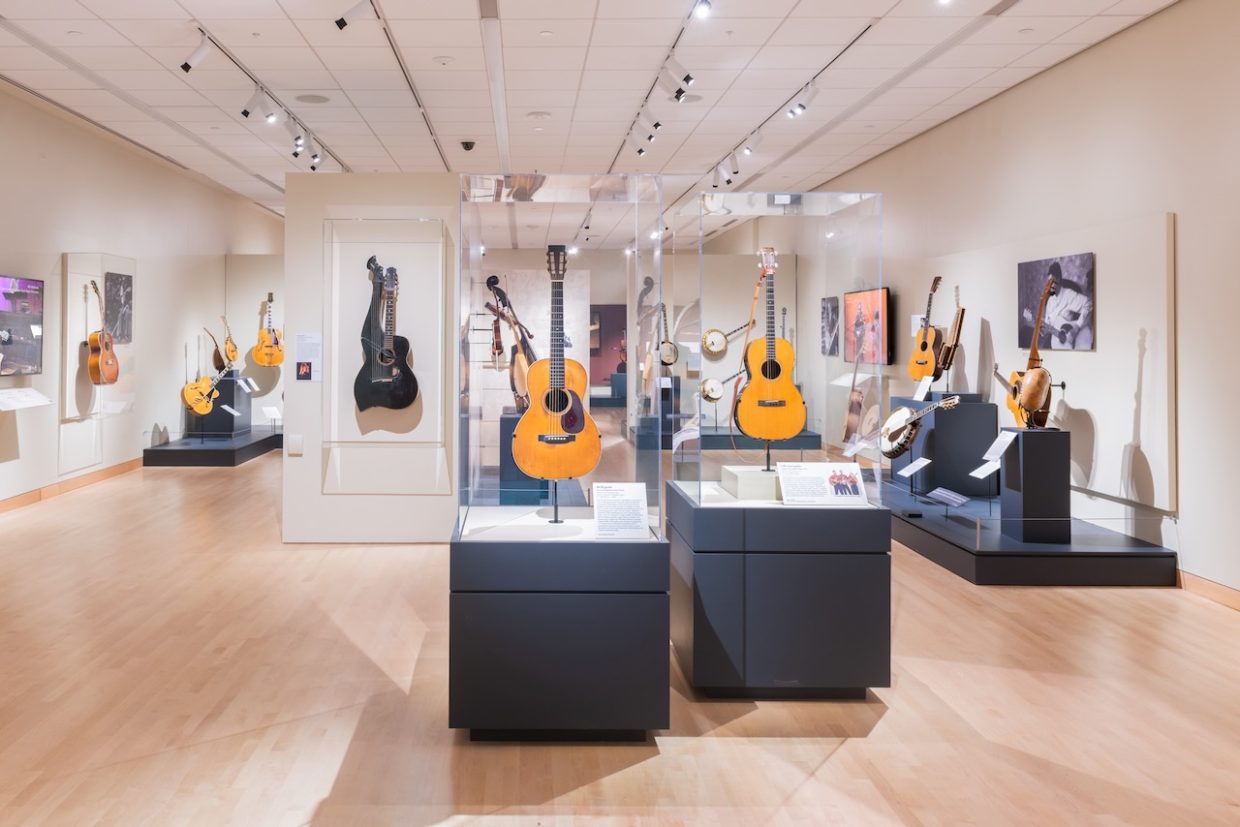
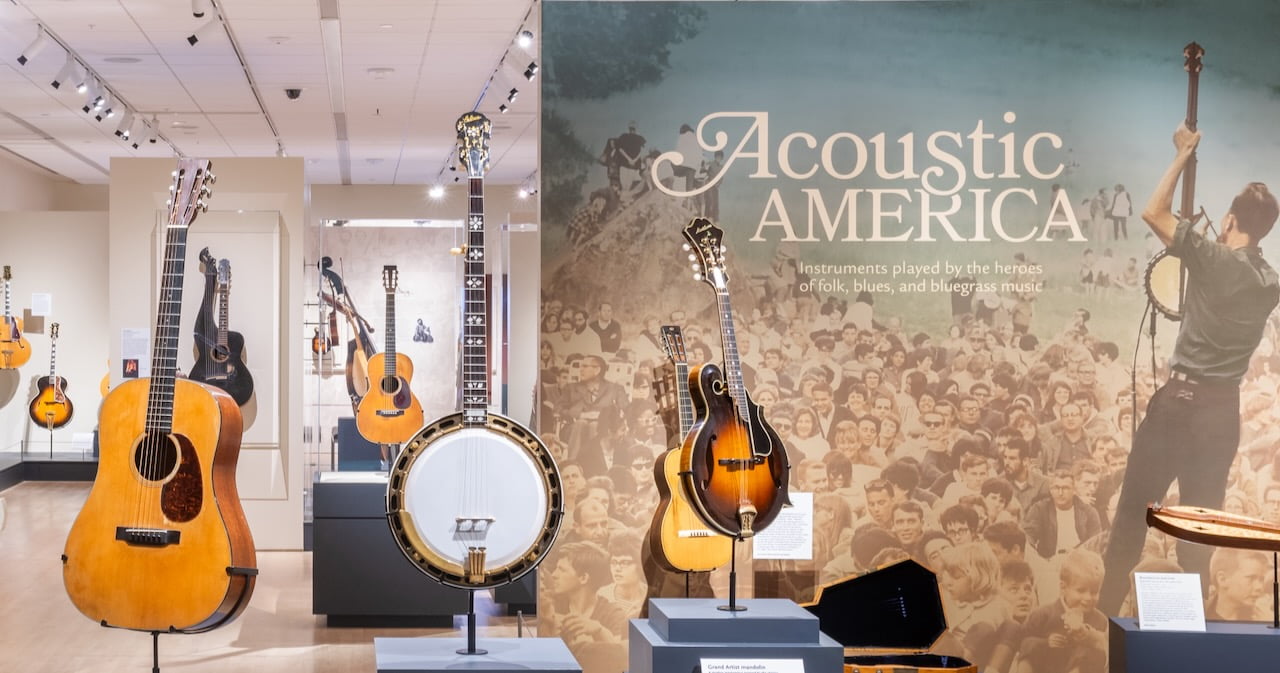
In early November, the Musical Instrument Museum in Phoenix, Arizona unveiled a brand new exhibition, Acoustic America, which celebrates iconic instruments of many heroes of folk, blues, bluegrass, and more. The exhibit is presented in partnership with our Dawg in December Artist of the Month, David Grisman and his record label Acoustic Disc, and showcases a remarkable collection of instruments that the museum states, “Have redefined music not only in the United States, but around the world.” This includes more than thirty instruments on loan from the Dawg himself.

“MIM is honored for this opportunity to collaborate with David Grisman and feature so many prized instruments from his collection,” says MIM senior curator Rich Walter, via email. “And after many years of loving his music, it has been a joy on a personal level for me, too. His influence as a mandolinist, composer, and bandleader is huge, and he absolutely changed the course of acoustic music as we know it today.”

The Acoustic America Gallery at the Musical Instrument Museum in Phoenix, AZ.

Guests of the museum will be able to view storied and legendary instruments formerly owned and played by such luminaries as Earl Scruggs, Elizabeth Cotten, Mississippi John Hurt, John Hartford, Lloyd Loar, and many more. “Beyond the legacies of the individual artists and the beauty of these historic instruments,” Walter continues, “Seeing this collection together in one space is really striking because it reflects a broader American narrative. Exceptional individuals from diverse backgrounds crossed paths and connected their talents in ways that gave us distinctive new traditions that continue to inspire people around the world.”

To celebrate the new exhibition and Dawg in December, we’ve partnered with MIM to bring you these photos of select instruments from Acoustic America. Make plans to visit the Musical Instrument Museum in Arizona now! Tickets are available at MIM.org.

(Editor’s Note: Instrument information provided from the Acoustic America catalog.)

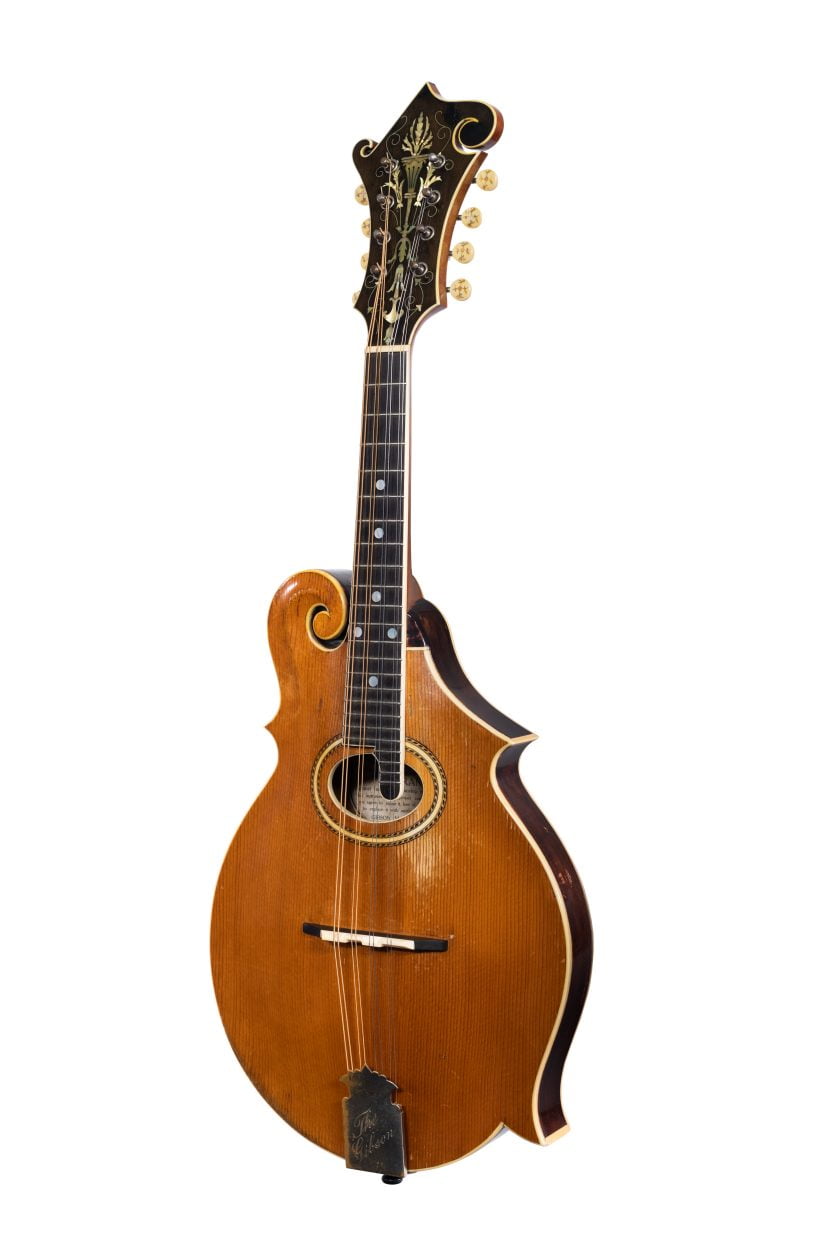
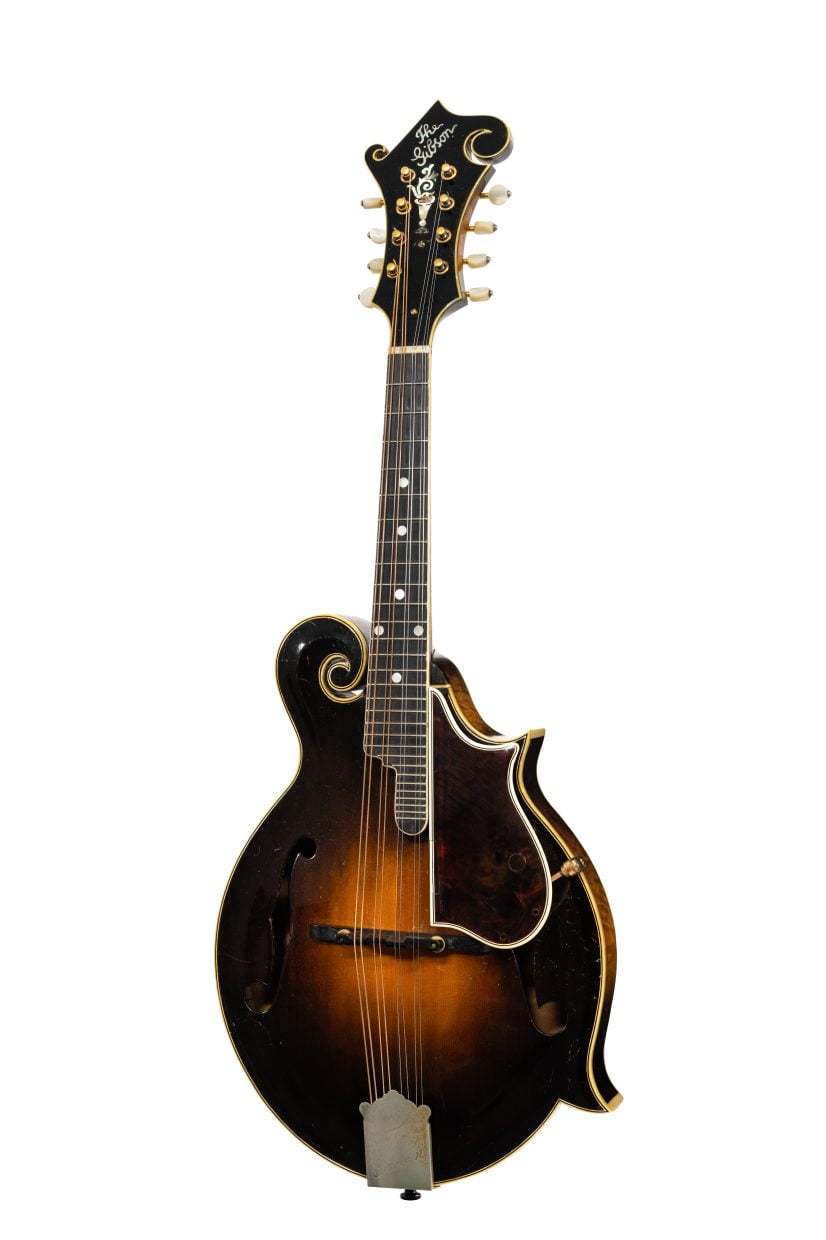
1910 Gibson F-4 Mandolin: Owned and played by David Grisman. Loan courtesy of David Grisman.

The F-4 model was Gibson’s premier mandolin until late 1922, when the F-5 was introduced. In addition to the characteristic oval sound hole and carved scroll, this early example features a three-point body style (note the points protruding from the body), elaborate torch and wire peghead inlay pattern, and special Handel tuning buttons with colorful inlays. David Grisman featured this mandolin on the cover of his first solo album, The David Grisman Rounder Album, and has recorded with it on other projects, including Tone Poems with Tony Rice and Not for Kids Only with Jerry Garcia.

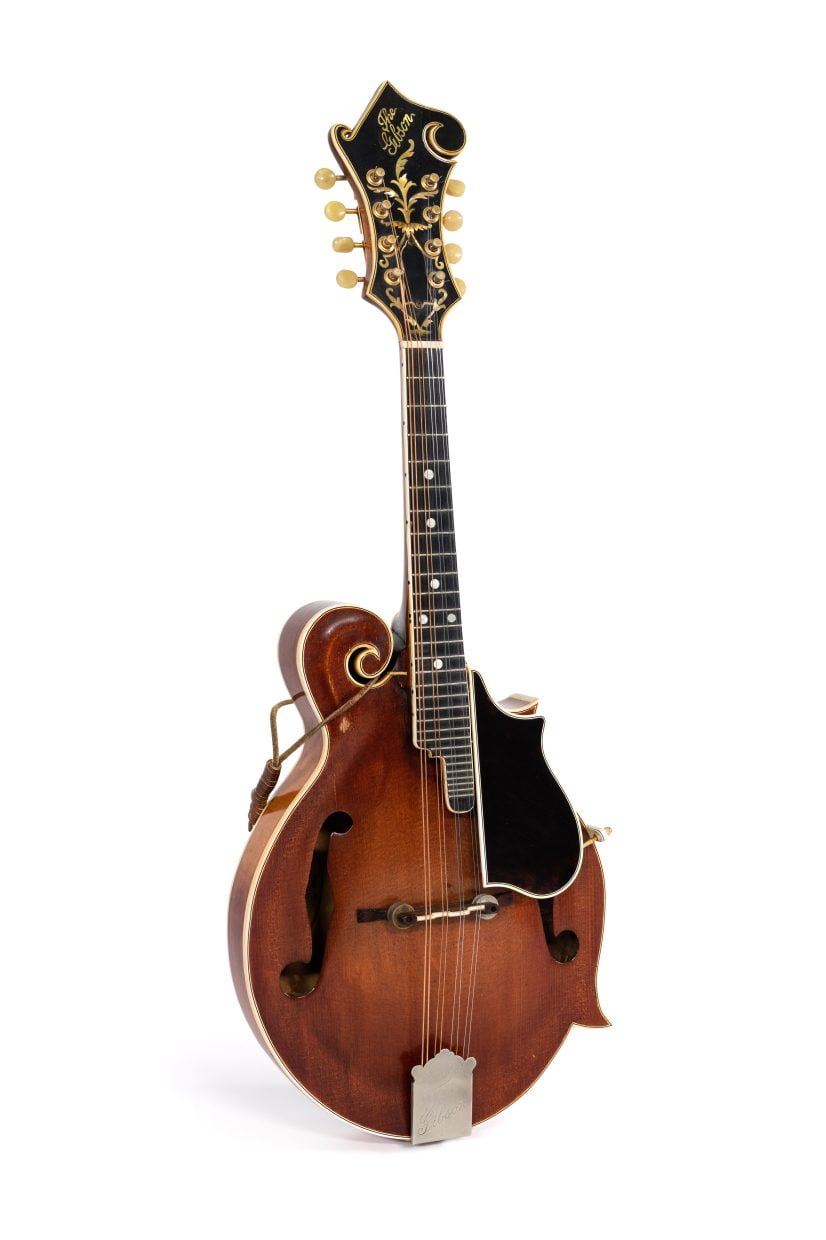
1954 Gibson F-5 Mandolin: Owned and played by Ralph Rinzler. Loan courtesy of David Grisman.

Manager, talented musician, and legendary folklorist Ralph Rinzler (1934–1994) was one of David Grisman’s earliest and most influential mentors. Sharing a hometown of Passaic, New Jersey, Rinzler introduced Grisman to important recordings of folk music and inspired him to play the mandolin. Rinzler played this F-5 mandolin with the Greenbriar Boys, who were the first non-Southern bluegrass band to win at the Union Grove Old Time Fiddler’s Convention in North Carolina. He also managed the careers of Doc Watson and Bill Monroe and was instrumental in creating the first dedicated bluegrass festival in Fincastle, Virginia, in 1965. Two years later, Rinzler founded the Smithsonian Folklife Festival to celebrate and support living cultural heritage from around the world.

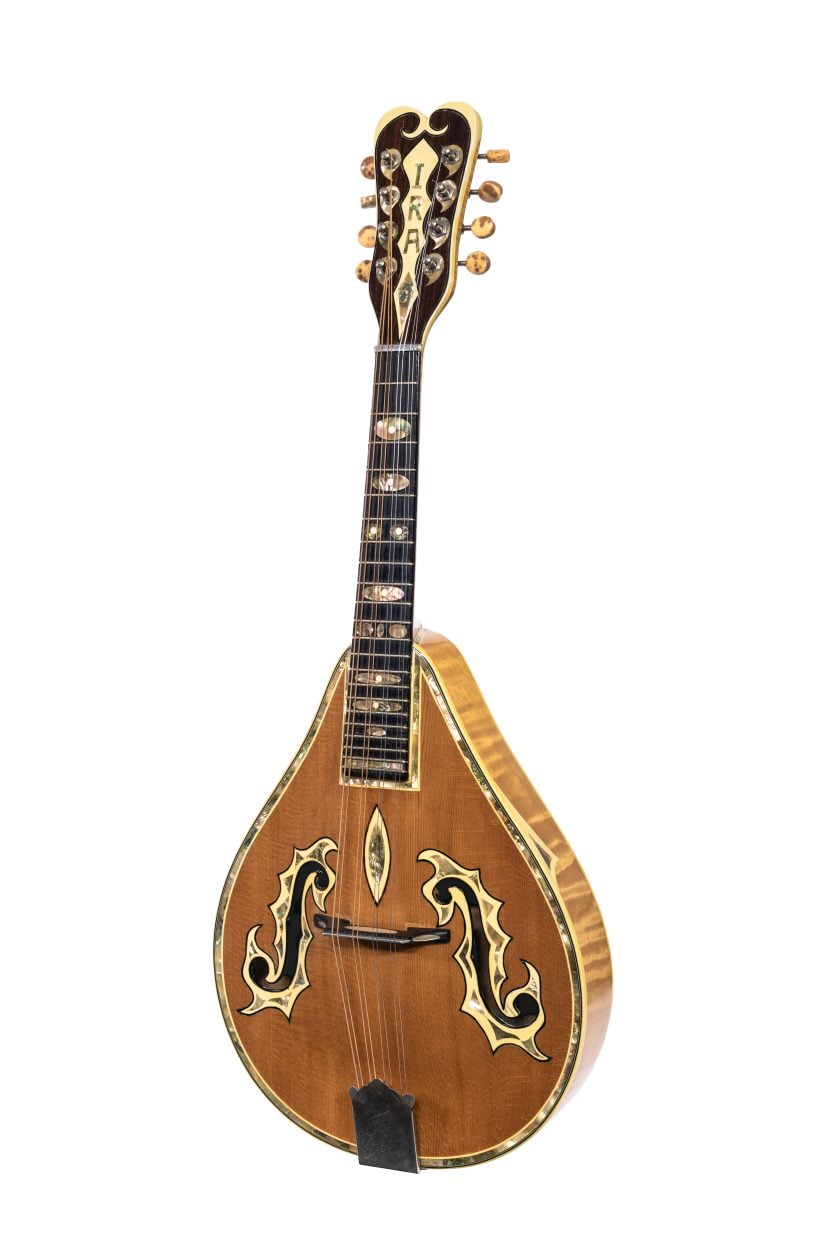
1947 Martin 2-15 Mandolin: Owned and played by Ira Louvin. MIM Collection.

Few brother duet acts in country music were as influential as the Louvin Brothers. Ira and Charlie Louvin were born in Alabama in the 1920s, and their high harmony singing and Ira’s tasteful mandolin playing helped them define a sound popularized through radio broadcasts, commercial recordings, and appearances on the Grand Ole Opry – where they debuted in 1955. Ira customized this one-of-a-kind mandolin in the flashy style of professional country artists and played it extensively, including on the Grand Ole Opry stage. This special piece of mandolin history was also owned by David Grisman for many years.

1924 Gibson F-5 Mandolin: Lloyd Loar’s personal F-5 mandolin. MIM collection.

This mandolin — serial number 75315; label dated February 18, 1924 — was the personal instrument of famed Gibson acoustic engineer Lloyd Loar. Loar was impressively inventive and patented designs for keyboard actions and electric instruments, among many others, but the F-5 Master Model mandolin is arguably his most iconic and enduring success. The interior of this mandolin is fitted with an original Virzi Tone Producer. F-5 mandolins with Loar’s signature on the label are the most valuable and sought-after in the world, and Loar F-5s from the batch signed on this date are known to be among the best-sounding. Perhaps it is not surprising that Loar kept this remarkable mandolin for himself!

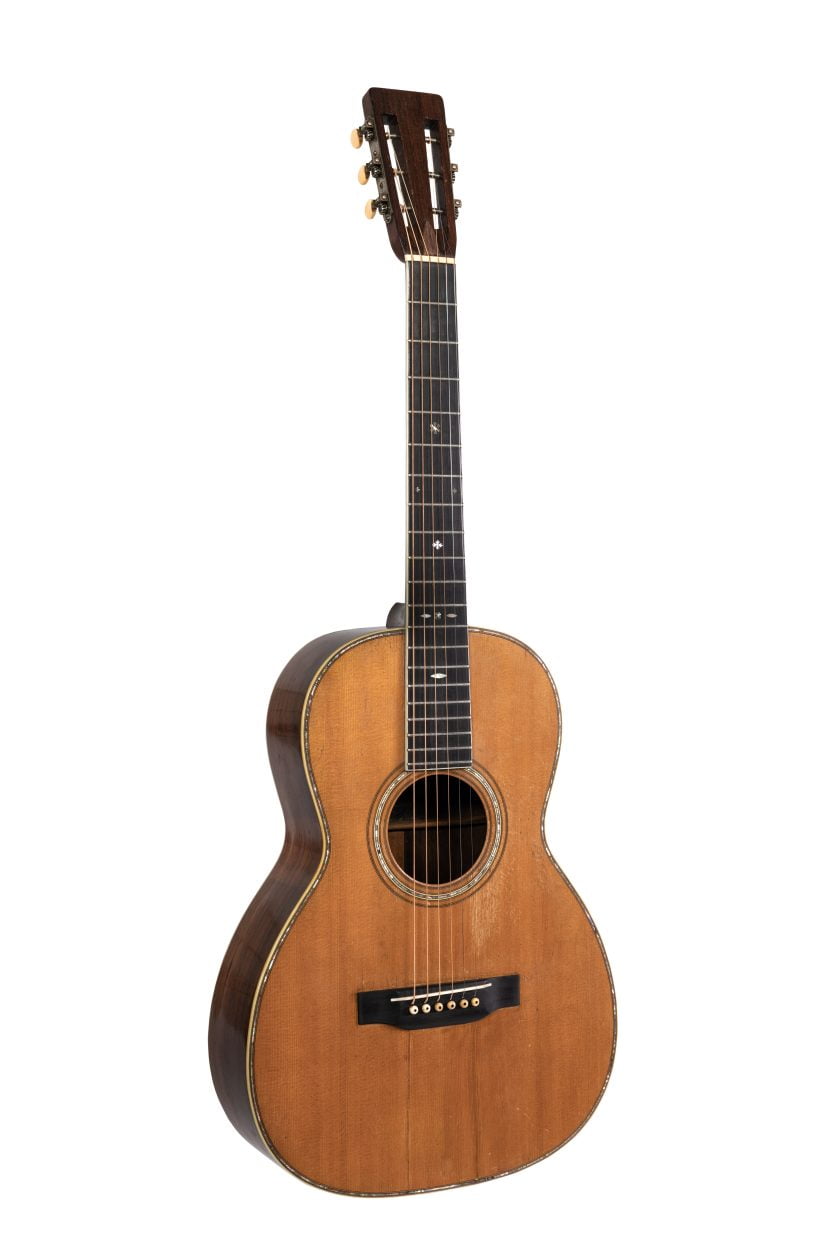
1928 Martin 00-40H Guitar: Played by the New Lost City Ramblers. Loan courtesy of Darrell Scott.

This guitar was played extensively by the New Lost City Ramblers, who were pivotal to the national revival of Southern folk music in the 1950s and 1960s. Founding members John Cohen, Tom Paley, and Mike Seeger were dedicated to authentically reproducing folk traditions for new audiences. The group recorded several albums for Smithsonian Folkways and helped discover, document, and showcase talented artists such as Elizabeth Cotten, Dock Boggs, and Snuffy Jenkins. Prewar pearl-trimmed Martin guitars are among the most desirable acoustic instruments in the world.

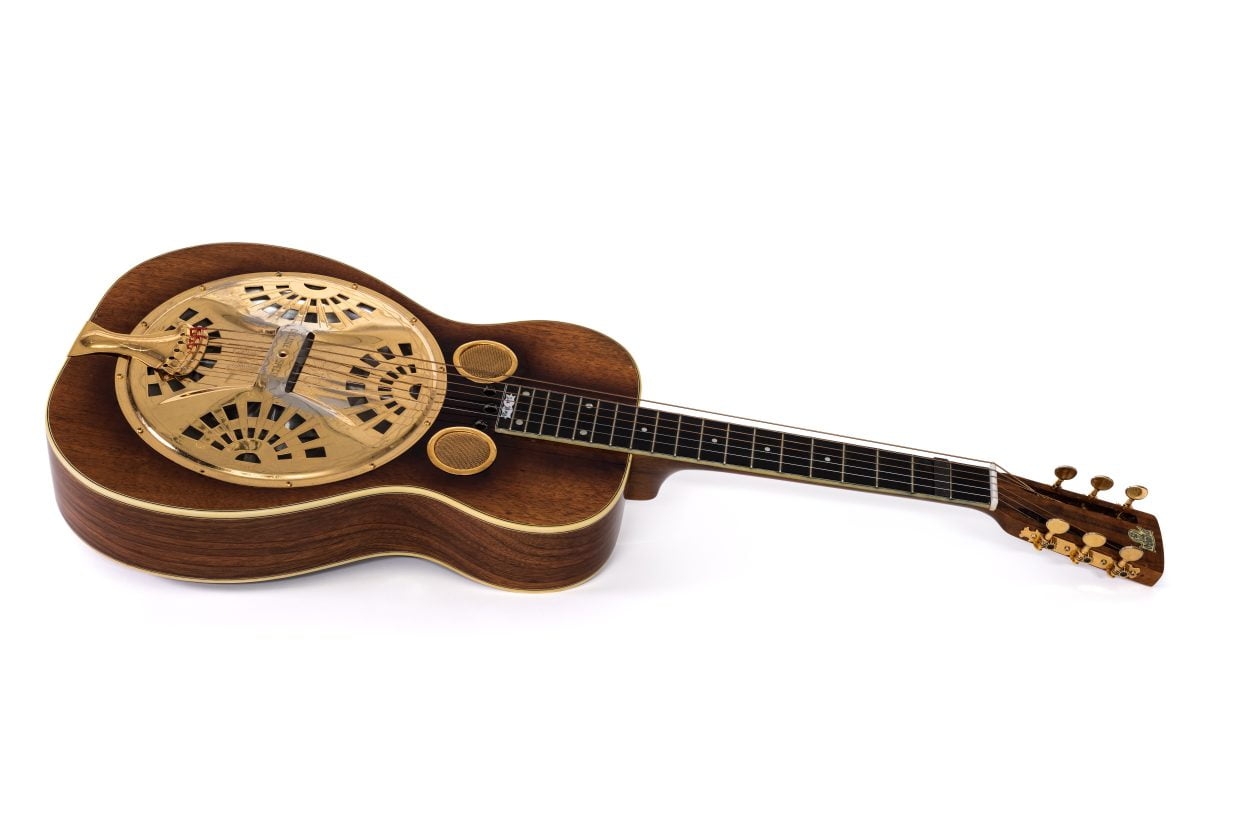
1929 Dobro Model 125 Resophonic Guitar: Owned and played by LeRoy Mack. Loan courtesy of LeRoy McNees.

In 1961, the Kentucky Colonels, led by brothers Clarence and Roland White, performed on The Andy Griffith Show, under the alias “the Country Boys.” The Kentucky Colonels were one of the most exciting and influential bluegrass bands of their era, and their national television appearance would have been much of the United States’ first memorable exposure to bluegrass. Dobro player LeRoy McNees (AKA LeRoy Mack) played this Model 125 resophonic guitar during the show and for many years afterward. After the guitar was damaged at an airport, McNees restored and outfitted it with gold-plated metal hardware.

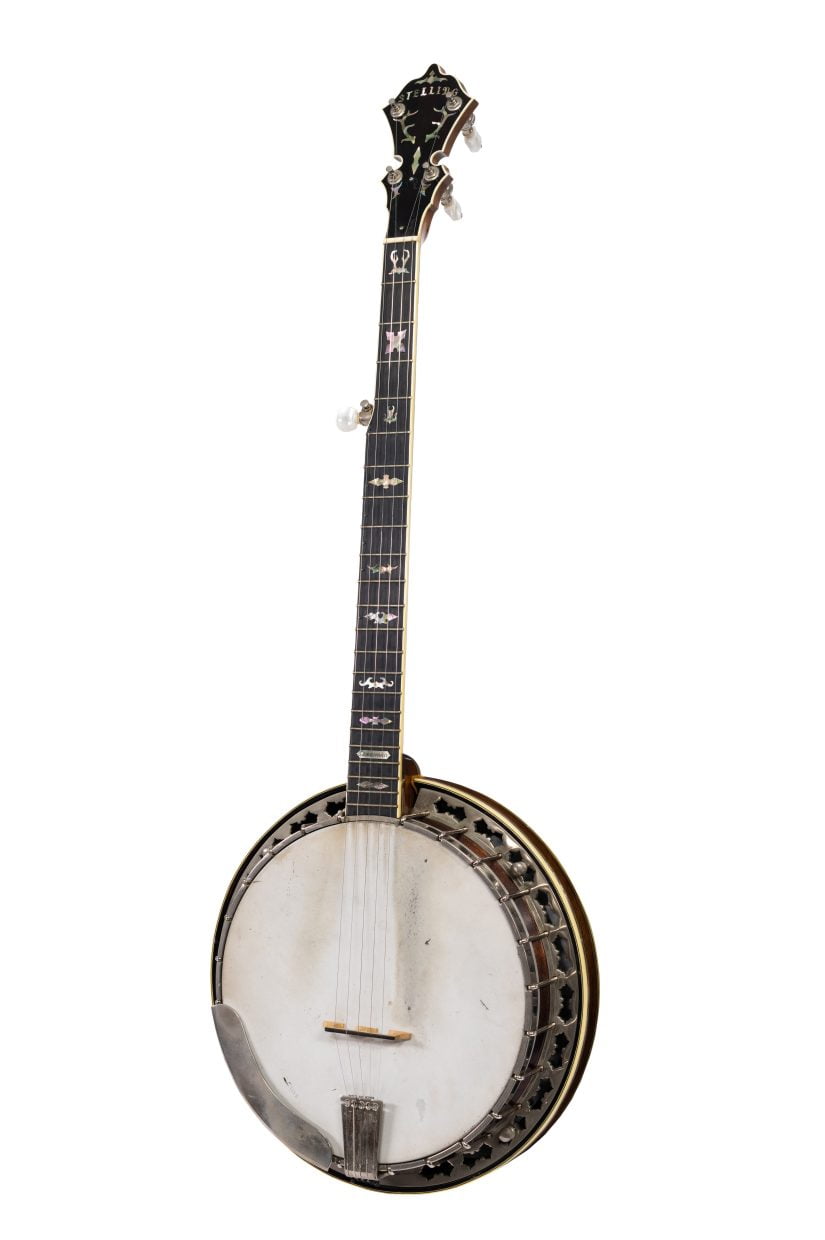
1975 Stelling Staghorn Banjo: Owned and played by Alison Brown. Loan courtesy of Alison Brown.

A young Alison Brown spent her entire savings on this then-new banjo built by Geoff Stelling, hoping to emulate the crisp, solid tone of Alan Munde, an influential older banjoist who played a similar Staghorn model. Brown played this banjo on her first album, 1981’s Pre-Sequel, and she later played it with Alison Krauss’s successful band Union Station. One of the most gifted banjoists in the world, Brown was the first woman voted Banjo Player of the Year by the International Bluegrass Music Association (in 1991). She has also won multiple Grammy awards, founded her own record label, Compass Records, and was inducted into the Banjo Hall of Fame in 2019.

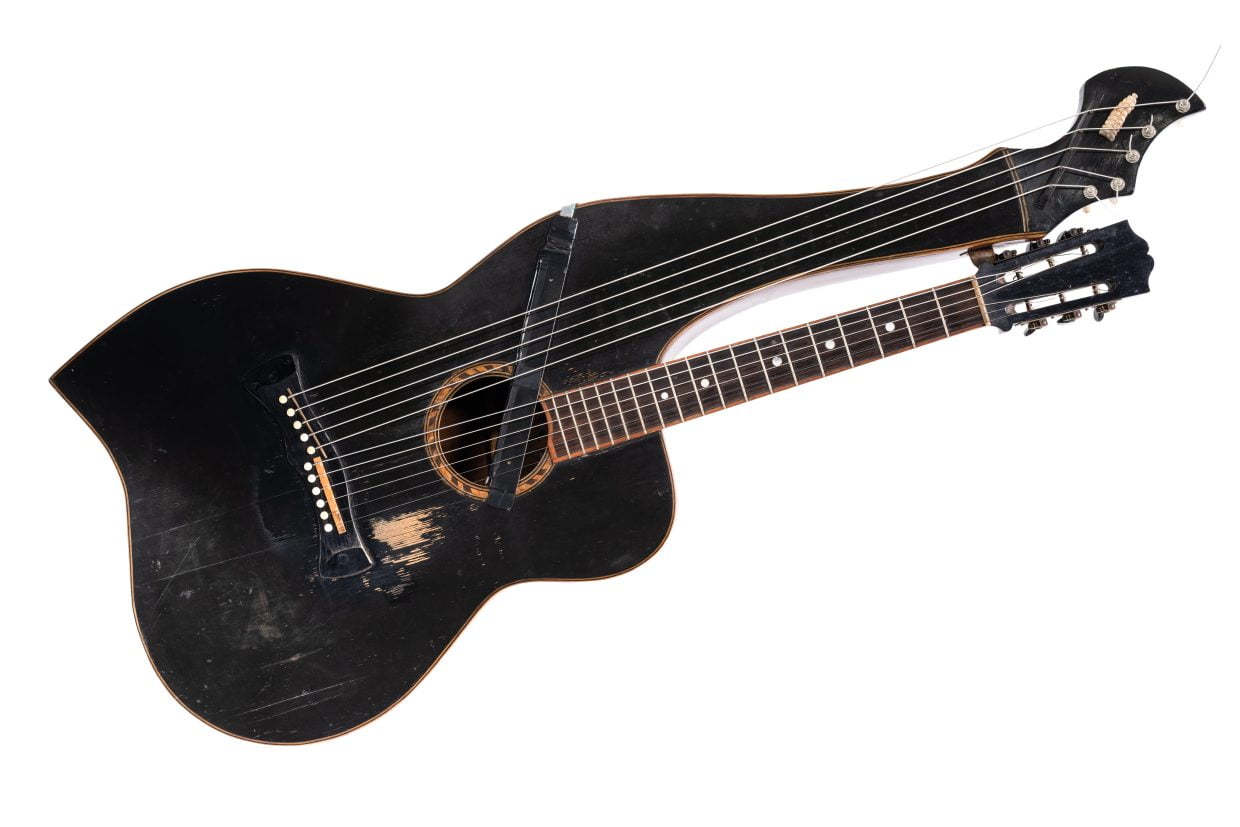
1913 Knutsen harp guitar: Owned and played by Michael Hedges. Loan courtesy of Taproot, LLC.

Guitarist and composer Michael Hedges (1953–1997) used a range of innovative and unconventional playing techniques — such as alternate tunings and percussive tapping on the strings and soundboard — to expand the possibilities of what a solo artist could do. In rediscovering the sound of vintage harp guitars with dedicated sub-bass strings, Hedges reimagined the guitar as a full-spectrum compositional tool. His 1984 album Aerial Boundaries illustrated his astonishing talent and helped define the contemporary new age acoustic music of Windham Hill Records. Hedges nicknamed this favored harp guitar “Darth Vader,” and his use of harp guitars revived interest in these long-obscure instruments.


All photos courtesy of the Musical Instrument Museum, Phoenix, Arizona.

Musical Alchemy with Rachel Baiman on The Travis Book Happy Hour

(Editor’s Note: Singer-songwriter and multi-instrumentalist Rachel Baiman is also a BGS contributor. View her author archive here.)

Rachel Baiman’s indie-folk and Americana vibe – rooted in Chicago and rich with fiddle tunes – unfolds as she shares her transition to singer-songwriter. Influences ranging from Courtney Barnett to John Hartford and other roots music make their way into her live performances. Rachel is part of a generational scene in Nashville that I’ve been watching with awe for the last five to 10 years. A unique voice, multi-talented and articulate, she’s not afraid to sing and speak what’s on her mind. She writes semi-regularly for BGS, shining some light into the darker corners of the music industry, addressing inequality, and challenging all of us – creators and fans – to do better, dig deeper, and expect more. In this episode we discussed everything from climate change concerns to hopes for a more equitable future. We had a great time on the happy hour and I’m sure you’ll dig it.

LISTEN: APPLE • SPOTIFY • STITCHERAMAZON • MP3

This episode was recorded live at 185 King St. in Brevard, North Carolina, on August 8, 2023. Huge thanks to Rachel Baiman and Riley Calcagno.

Timestamps:

0:06 – Soundbyte
0:57 – Introduction
2:09 – Bill K. introduction
2:57 – Travis introduction
3:33 – On “Bad Debt”
4:52 – “Bad Debt”
9:52 – “Shame”
12:35 – On Mullets
14:24 – “She Don’t Know What to Sing About Anymore”
18:18 – “When You Bloom (Colorado)”
22:25 – “Won’t You Come and Sing for Me”
26:10 – Interview
43:45 – “Twin Fiddles”
47:30 – “Bitter”
51:15 – “In Tall Buildings”
54:53 – Outro


Editor’s note: The Travis Book Happy Hour is hosted by Travis Book of the GRAMMY Award-winning band, The Infamous Stringdusters. The show’s focus is musical collaboration and conversation around matters of being. The podcast is the best of the interview and music from the live show recorded in Asheville and Brevard, North Carolina.

The Travis Book Happy Hour Podcast is brought to you by Thompson Guitars and is presented by Americana Vibes and The Bluegrass Situation as part of the BGS Podcast Network. You can find the Travis Book Happy Hour on Instagram and Facebook and online at thetravisbookhappyhour.com.


Photo Credit: Natia Cinco
BGS 5+5: Lonesome Ace Stringband

Artist: Lonesome Ace Stringband
Hometown: Toronto, Ontario, Canada
Latest Album: Try to Make it Fly

(Editor’s Note: Answers provided by Lonesome Ace Stringband banjoist Chris Coole.)

Which artist has influenced you the most … and how?

Although I think the answer for each of us individually would be different, I think the most obvious single influence on us as an ensemble would be John Hartford. Specifically, the last several albums he made with the “John Hartford Stringband” (which featured Bob Carlin and Mike Compton, among others). Their approach to playing old-time fiddle tunes, especially on the albums Wild Hog In the Red Brush and Speed of the Old Long Bow, was based on a highly improvised and reimagined way of playing backup that Hartford called “Windows.” Although it wasn’t a conscious decision, and we don’t follow the approach to the letter, I think the spirit of those albums really influenced the way we play and perform old-time music, especially (instrumental) fiddle tunes.

What other art forms — literature, film, dance, painting, etc. — inform your music?

As a band, I think the art form outside of music that has had the biggest impact is the crank (prank) phone call. For years we’ve been listening to the Jerky Boys. We are old enough to remember the late ’80s and early ’90s when underground Jerky Boys cassette tapes were passed around organically and treasured by all who were lucky enough to possess them. About five years ago, the guys from The Henhouse Prowlers introduced us to Longmont Potion Castle, who has been anonymously releasing psychedelic crank calls since the ’80s (he’s still at it). You might think I’m being tongue in cheek when I say that these influence us as a band, but the attention to detail – especially in regard to language – and the level of improvisation are both relatable to music and inspiring. Most importantly though, it’s a great reminder that we live in a crazy world, and it’s best not to take yourself or anyone else too seriously.

What rituals do you have, either in the studio or before a show?

We like to get our heart rates up before a show if possible and maybe a bit of stretching. This often involves us having an aerobics dance party to ’80s pop and new wave. “Betty Davis Eyes” by Kim Carnes is a favorite, as is “Dance Hall Days” by Wang Chung. [John] Showman favours doing some version of the “Mountain Climber” while Max [Heineman] and I are usually doing jumping jacks, dancing on the spot, or some sort of hippie clogging. Seeing three middle-aged men dancing around in the green room to The Pretenders or Blondie seems to warm the hearts of promoters and venue staff and there are probably bootlegged videos of us doing it circulating around.

If you had to write a mission statement for your career, what would it be?

The title of our new album is Try to Make it Fly. That is a line from one of the songs called “Sweeter Sound.” I’d say that song encapsulates what our mission as a band is. We are all in our 50s and have been playing music professionally (mostly full time) since we were teenagers. That song is about not giving up, even when everything might seem to be pushing you in the other direction. It’s about keeping sight of what’s important – community, friends, family, art – and letting the quality of those things in your life be the gauge of your success. With where we are in our lives and careers, that seems to be the only way forward.

Since food and music go so well together, what is your dream pairing of a meal and a musician?

There’s a song on the new album called “Smoke on the Shoulder” which is basically a recipe for smoking pork shoulder. We all love to cook and appreciate good food. We rarely miss a chance to stop at a good BBQ joint when tour routing allows. With this in mind, I’m going to say the food would be smoked brisket and pulled pork with sides of coleslaw, beans, and macaroni. The musical accompaniment to this meal would be provided by, none other than, George Jones.


Photo Credit: Joel Varjassy 

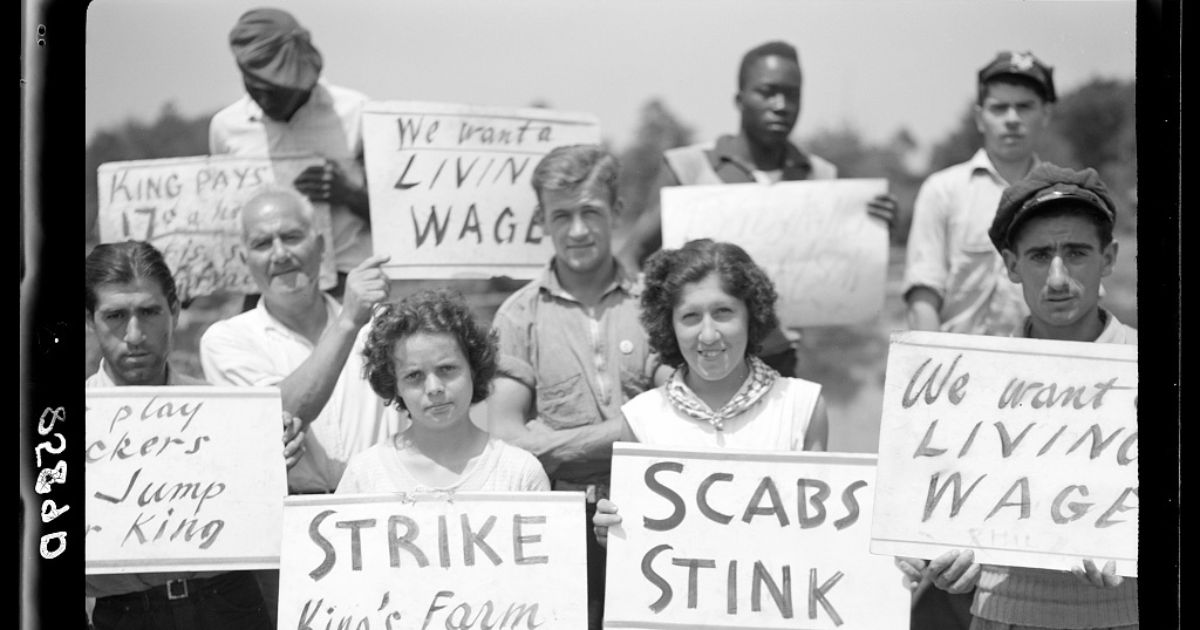
Bluegrass & Roots Songs to Strike To

Hot. Strike. Summer!!

It was just announced that hundreds of thousands of Teamsters driving for shipping and logistics company UPS will avert a strike after their negotiations came through, but even so, dozens of strike authorization votes are happening all across the U.S. as workers the world over watch WGA and SAG-AFTRA strikes, Amazon and Starbucks unionization drives, and smaller pickets like that at dinner theater Medieval Times. Union membership and public opinions toward unions are at highs not seen since the ’60s, and millennial and Gen-Z workers are joining unions, striking, and picketing at astronomical rates.

It’s important to remember that, although bluegrass in its modern iteration can often feel staunchly conservative, militantly patriotic, and delusionally nostalgic for “old-fashioned values,” it’s a genre that was born from the creativity of working class and impoverished Southerners, Appalachians, and immigrants – and it has always had a pro-worker, leftward bent. Singers, pickers, songwriters, and performers like Hazel Dickens, Ola Belle Reed, the Country Gentlemen, the Johnson Mountain Boys, Mac Wiseman, Earl Scruggs, and so many more were ardent supporters of the working class and hostile towards corporations, mines, and management. There are truly countless, never ending pro-worker, pro-labor songs to choose from in the bluegrass, old-time, and roots-music canon.

Bluegrass and old-time music, though entangled in a dense constellation of roots music and occupying space adjacent to folk music and the folk revival, were anti-corporate greed since before they had names, before Pete Seeger, before the folk revival itself. That legacy is important to place at the very center of bluegrass, a genre of music that was born out of industrialization (see also: Industrial Strength Bluegrass) as mountain folk, Appalachians, and Southerners migrated out of their rural homeplaces to urban industrial centers. Bluegrass was born from radio stations, railroads, from company towns and workers’ barracks. Whether rubber or auto plants in Ohio and Michigan, factories in Chicago, cotton mills and tobacco warehouses in North Carolina, or anywhere else in the region, as poor folks bled out of their ancestral homes to find work and upward mobility, they brought their music and their community mindsets. As bell hooks puts it in Belonging: A Culture of Place, the mountains and rural spaces are where mutual aid and anarchy are concrete, everyday practices, not just philosophies or concepts.

With those people and their music came a penchant for workers’ and labor rights, suspicion of management and company stores and towns, and a vehement, righteous anger at the injustices suffered by working class Southerners no matter where they migrated. It’s easy to find pro-Union songs, songs in support of workers’ health and agency, lyrics that espouse conservation and environmentalism in old-time, bluegrass, and string-band traditions. So easy, in fact, we quickly amassed a 4+ hour playlist featuring some of our favorite songs (bluegrass and beyond) for marching the picket line, raising a fist, and redistributing the power – and wealth – back to the world’s 99%.

Scroll to find the full playlist of Bluegrass & Roots Songs to Strike To. Below, enjoy a few selections from the list.

“In Tall Buildings” – John Hartford

John Hartford describes the doldrums of daily work as almost no one else can. (John Prine gets close with, “How the hell can a person/ Go to work in the mornin’/ And come home in the evenin’/ And have nothing to say?”) At the end of our 30-some years working, what will we have to show for ourselves besides a suit, haircut, and no more life left to give to our “retirement?” Plus, as any career musician can tell you, planning a life around retirement isn’t exactly a good option to begin with.

“Ain’t Gonna Work Tomorrow” – Wilma Lee Cooper

Ain’t gonna work tomorrow, cause it’s STRIKING day! Wilma Lee Cooper will, at long last, join the Bluegrass Music Hall of Fame this September. A bluegrass forebear who saw broad commercial success before the genre had a name or an understood identity, she regularly landed tracks with decidedly bluegrass aesthetics on Billboard‘s early country charts.

“Lazy John” – Bruce Molsky

Under capitalism, laziness is a radical act! Be like Lazy John! If you’re working all week in the noon-day sun just for 16 cents, yes, it’s strike time.

“Cotton Mill Man” – Jim & Jesse

As we remember the life and legacy of Jesse McReynolds, who recently passed, it’s striking that although he and his brother Jim performed largely cover songs and tracks written by others, they were still able to express with great subtlety their own points of view through the material they chose. Like “Cotton Mill Man” and Prine’s “Paradise,” which was a hit for the duo, their catalog of recorded and performed material is dense with class awareness.

“Black Waters” – Jean Ritchie

A truly timeless classic that remains as relevant today as in the time of its writing, as clean water protections across the U.S. have been repeatedly gutted since 2016 – and before. Our country continues to show where its priorities are, beating down protests and demonstrations even as popular and supported as Standing Rock, in order to force us to acquiesce and give up protection of our waters. The lyrical hook is even more poignant to someone, like myself, living in Tennessee Valley Authority territory in the Tennessee River Valley – where coal ash and pollutants are still regularly dumped into our waterways. These tales, these experiences, are best told directly from their sources, as in Ritchie singing this song.

“Carpal Tunnel” – Tristan Scroggins

One can find many a recording of “Carpal Tunnel” from across the years, but mandolinist Tristan Scroggins, in his mid-twenties, pointedly places this track in the present, delivering the lament in stark a capella accompanied only by body percussion. He deftly ties the lyric to embodiment and agency and reminds all of us – especially in an age governed by devices causing carpal tunnel writ large – we’re all merely one injury away from bankruptcy. Musicians know this fear intimately, as many a livelihood has been threatened by tendonitis and carpal tunnel.

“Tear Down the Fences” – Ola Belle Reed

A perfect encapsulation of solidarity across our differences – differences constructed by the ruling class to keep us quibbling amongst ourselves while they amass their wealth. This sort of community awareness often feels like a pure byproduct of the internet’s version of globalization, but even a woman banjo player from a tiny town in rural Western North Carolina understood that “all we have is each other,” way back before the worldwide web. It feels obvious to state. It shouldn’t seem remarkable, except that we’ve accepted the narrative that such compassion and ideas couldn’t possibly be born from rural spaces or the South.

“Blue Collar Blues” – Joe Mullins & the Radio Ramblers

From the shop steward of Industrial Strength Bluegrass himself, Joe Mullins, a classic working-man-blues-style bluegrass number about that paycheck to paycheck life. An all-too-common reality for so many pickers! Though that might be more accurately described as blueGRASS collar blues.

“Dark as a Dungeon” – The Country Gentlemen

Bluegrass mining songs are just as iconic in the bluegrass songbook as train songs, cheatin’ songs, murder ballads, and singing about moonshine. This version of “Dark as a Dungeon” by the Country Gentlemen is one of the best examples of the form – many of which made it onto our full playlist.

There are so many more bluegrass, old-time, string band, folk, and Americana songs for striking. Check out our full playlist below and let us know: What is your favorite pro-worker roots song?


Playlist selections by Justin Hiltner, Shelby Williamson, Jon Weisberger, and Amy Reitnouer Jacobs.

Photo Credit: By John Vachon in 1938. “Untitled photo, possibly related to picket line at the King Farm strike. Near Morrisville, Pennsylvania.” Courtesy of the Library of Congress.

Alison Brown: Record Label Founder and Bluegrass “Lifer”

When a craftsman pauses to reflect, students of all skill levels benefit from the lesson. Alison Brown’s latest album, On Banjo, released May 5 on Compass Records and is a masterclass; it’s also a study on where the instrument has been and where it’s going.

Brown is a Compass co-founder and a GRAMMY Award-winning artist and producer. A self-described “lifer” in the bluegrass community and an IBMA “First Lady of Bluegrass,” she eagerly explores what the five-stringed instrument can do outside typical genre parameters. The new record is packed with star-studded duets with comedian Steve Martin, mandolin player and fellow First Lady of Bluegrass Sierra Hull, and fiddle legend Stuart Duncan.

The result is a varied, rich track list we couldn’t wait to ask Brown about.

BGS: Let’s walk through some of the tracks and collaborations on On Banjo. What kind of music inspired the duet with Anat Cohen?

AB: Anat Cohen is a clarinetist; she was born in Israel and lives in New York, but she’s well-known in jazz circles for Brazilian choro. I actually watched lots of videos of Anat on YouTube.

I reached out. I said “I know we don’t know each other, but would you consider doing this?”

What’s it like working with a famous comedian like Steve Martin in a musical context?

I’ve had the good fortune to go out and do some shows with him and Martin Short. There’s inevitably some time to jam in the dressing room, so it’s fun to play with Steve in that context, too.

Steve’s a great banjo player with a really beautiful touch and a delicate, sweet tone. He loves playing in double C tuning. Banjo players usually tune to a G, but you can drop the fourth string to a C and tune the second [string] up to a C. It’s an old tuning that clawhammer guys use a lot.

The way “Foggy Mountain Breaking,” came about is I wrote the A section. It was during the pandemic. I asked Steve, “Do you wanna write a B part?” He sent me a perfect B section 24 hours later. We figured out a bridge together. It’s named after a lyric in a John Hartford song and is obviously a riff on “Foggy Mountain Breakdown.”

How does it feel to work with younger bluegrass talents like Sierra Hull? Is it gratifying to have a feminine duo on that track?

I wrote that tune hoping Sierra would be up for learning and recording it with me. I’m a huge fan of her mandolin playing; she’s another one with such a delicate touch. Her fingers just really dance over the fingerboard.

It required her to play every fret on the first string of the mandolin and she did it flawlessly. She said she’d never had a chance to work on such complicated music with another woman. So it’s a really special thing. It’s always a delight to play with Sierra, but to do a duet with her was like chocolate and more chocolate.

How do you balance two strong, independent main instruments like banjo and fiddle together, such as with Stuart Duncan?

Banjo and fiddle are just so complementary. They say a banjo and fiddle make a band, and they do.

I’ve known Stuart since he was 11 and I was 12. We go way back. And on this tune I want to give a tip of the hat to Byron Berline and John Hickman. Growing up in Southern California when we did in the ’70s, those two were the guys that everybody worshiped at the feet of. I wanted to try and capture some of that spirit, and I wanted to do it with Stuart.

Who is this album for, and what do you hope listeners take away from it?

That’s the existential question of the banjo player. And it is a bit of a challenge when you take the five-string banjo and go somewhere else with it. Earl Scruggs perpetuated a style and brought it to the masses that was just so electric. Most people think that’s all the banjo does and they don’t worry about its history before that. There’s a lot of voices inside the instrument; the bluegrass one has become the loudest one most recently.

It’s so interesting because at the beginning of the 1800s the banjo was found on plantations. Then white people appropriated that music in minstrel shows, performing in blackface. It’s deep in terms of what it says about our history and America’s original sin.
It went from being a Black instrument to being a white lady’s instrument. The Black voice of the instrument and the female voice of the instrument were both disenfranchised. There are gorgeous old photos of women in the 1890s holding banjos, and there were female banjo orchestras. I’m excited to see that re-emerging.

You started Compass Records with Garry West almost three decades ago. What’s on the horizon, and what are your goals?

All the labels were run by business people, not musicians. We said, “Why can’t musicians run a label for other artists?”

The other part is really wanting to build a label that can have a cultural impact and Garry and I are both invested in roots music. I’ve been a member of the bluegrass community since about 10 years old. I’m a lifer. The whole economy of the record business has been turned upside down and stirred and shaken eight times. We want to make sure this music not only survives but thrives into the future.

You mentioned growing up in SoCal. How is bluegrass there different from Appalachia?

There would be Eagles’ songs in set lists. It was wide open. When I first came east with Stuart and his dad, we drove around and did the festivals in 1978 or so, but it was rooted in the first generation bands’ repertoire.

On that trip we entered a band contest in Oklahoma and we played something we learned from a Richard Green record. It was a funky fiddle thing in E. I remember somebody coming up afterwards and saying “We don’t appreciate you knocking the music.”

What did you learn while making On Banjo?

The deep dive to find new melodies, and that process of discovery of the instrument, is the process of self-discovery. You get to the end and it teaches you something new about yourself.


Photo Credit: Russ Harrington

As the Newest Supergroup in Bluegrass, Mighty Poplar Goes Back to the Classics

At your average live music event on the folk and bluegrass circuit, the stage isn’t the only place where great performances are happening. There’s the campfire and parking lot picking scene at the big outdoor festivals, of course. But a lot of it goes on out of sight backstage, too, when musicians who don’t often see each other come together to play with and for each other. A close approximation to listening in on that is Mighty Poplar (Free Dirt Records), the self-titled first album by the group of the same name.

The bluegrass world’s newest supergroup, Mighty Poplar is a five-piece band centered around three virtuoso players from the Punch Brothers orbit — banjo player Noam Pikelny, guitarist Chris “Critter” Eldridge and original Punch Brothers bassist Greg Garrison, currently in the band Leftover Salmon. Out front as primary vocalist is Watchhouse mandolinist Andrew Marlin, with well-traveled fiddler Alex Hargreaves (currently knocking ’em dead in Billy Strings’ touring band) filling out the lineup. Over the years, various subsets of this quintet would cross paths out on the road and jam, generally falling back on the old numbers everyone knew as a common language. That’s how Mighty Poplar began to coalesce.

“There’s a pretty complex web of relationships between all five of us that began with a lot of hanging out,” says Pikelny. “There’s this beautiful thing about bluegrass, the amazing music and all the shared songs. There’s a great social component that can exist with the music if you let it, and it became a reason to get together and have fun.”

While none of Mighty Poplar’s members come from acts you’d really call “bluegrass,” you could say they’re all at least bluegrass-adjacent. And none of them have ever come down as top-dead-center old-school bluegrass as on Mighty Poplar. The album’s 10-song tracklist draws material from A.P. Carter, Bob Dylan, John Hartford and Leonard Cohen, with songs made famous by the likes of Hazel & Alice, Uncle Dave Macon and Bill Monroe fiddler Kenny Baker.

Monroe, the Father of Bluegrass, also figures into the proceedings in terms of inspiration for the ensemble’s name. Proposing Mighty Poplar as a moniker was Marlin, someone who definitely knows his way around names involving wordplay (witness the original name of Watchhouse: Mandolin Orange).

“I was listening to a Bill Monroe and Doc Watson live recording where they were about to kick off ‘What Would You Give in Exchange for Your Soul?’” Marlin recalls. “Bill said he and Charlie recorded it in ’19-and-36’ in Charlotte and it had been ‘mighty poplar down through the Carolinas.’ We had a huge text thread already going about band names, where my phone was always going BING at 2:30 a.m. So many names we considered, but everybody thought Mighty Poplar was a good awning to stand under.”

While Mighty Poplar is only now coming out in the spring of 2023, the album has actually been in the can for a couple of years. It might never have happened without the Coronavirus pandemic shutdown of 2020-21, which took everyone’s regular bands off the road for an extended period of time.

In isolation, everyone felt drawn toward bluegrass as the musical equivalent of comfort food. So they took this on as a pandemic project, convening with engineer Sean Sullivan at Nashville’s Tractor Shed for a brisk three-day session in October of 2020.

“There was a sense that we were getting away with murder, traveling across the country and podding up while everything was closed up,” says Pikelny. “There were logistical hurdles and we had three days, so we had one shot to get it all at once. So we worked out as much as we could ahead of time, even the sequence. The concept, if there was one, was that this was the closest thing to a real-deal, traditional, classic bluegrass project any of us have done in a long time, maybe ever.”

As lead vocalist on six of the album’s 10 songs, Marlin is the primary out-front voice of Mighty Poplar. But he felt like he had to step up his game on the instrumental side, to keep up with his bandmates.

“It was intimidating, but not because those guys are intimidating,” Marlin says. “As a musician, I’ve had to figure out how to feel like I can express myself in front of people I look up to. But that’s on me for projecting my own shit onto them, because they don’t wear that. So ‘Grey Eagle,’ an instrumental fiddle tune Alex brought forth, I was kind of sweating that one in the studio. That kicked off at 150 beats per minute and everybody else is just looking around, casually exploring the nooks and crannies of the tempo while I’m popping a vein and kind of being drug behind the horse. But I managed to keep it together. Ultimately all those guys still love a great song as much as anyone. There’s something about simple songs that leave it up to the player to bring whatever they want. I love it when the song’s not telling you how to play it, and I feel lucky that they were down to explore that approach.”

Song choice was pretty casual, mostly in favor of material from a bit off the beaten path. Even with a Hall of Fame list of songwriters, they focused on less-well-known songs from the repertoire of each — Dylan’s take on the A.P. Carter tune “Blackjack Davy” rather than “Will the Circle Be Unbroken,” or Hartford’s Mark Twang riverboat song “Let Him Go On Mama” rather than “Gentle On My Mind.”

“It all happened pretty organically,” says Eldridge. “In the initial text volley about what to do, there were a lot of songs we would’ve been happy to cut. It’s hard to say why we landed on these particular songs other than that they felt right. I would not say there was an overarching concept beyond good songs that felt right.”

While they considered including some originals, ultimately they decided to stick with covers, mostly of older vintage (the most recent song on it is Montana singer/songwriter Martha Scanlan’s “Up on the Divide,” from 2012). In that way, Pikelny looks at Mighty Poplar as a classic folk record.

“In other genres, people might call this a ‘covers album,’” says Pikelny. “But if you record solo Bach compositions, that’s not ‘Bach covers.’ It’s repertoire, reinterpretations of classics to pass down. It was born of a desire, almost a need for all of us, to gather around a bluegrass project. And it was such a joyous process. It felt like coming home for Thanksgiving or Christmas and being around family you’ve not seen in a while, in the home you grew up in with a turkey in the oven. It was that kind of comfort, the warm fuzzy feelings of gatherings like that.”

It went so well, in fact, that they were in no hurry to get around to the detail work of mixing and mastering the record after they finished tracking. Pikelny says they felt almost paranoid about not wanting to touch it, for fear of messing up a good thing.

“We’ve been sitting on this for so long because it felt like such a special session,” Eldridge says. “So effortless and deeply joyful. Magical, even. We didn’t want to let it go because it felt like all we could do was ruin it. But I kept coming back to it, listening now and then and thinking, ‘I really like this. We have to share it, plus it’s a good excuse for us to get together again.’ It’s ironic that we’ve not actually played it live yet, and we’re already kind of getting the next batch together.”

Indeed, Mighty Poplar’s first real touring commences in May. With Hargreaves busy playing arena-sized venues with Strings for the foreseeable future, John Mailander will stand in for him on the first leg of touring. And all the principles are cautiously optimistic that Mighty Poplar’s first album won’t be its last. Pikelny likens their hoped-for trajectory to Tony Rice and J.D. Crowe’s Bluegrass Album Band, which periodically convened to make albums and tours through the 1980s and into the ’90s.

“Bluegrass Album Band was never a full-time group for any of those guys, it was a very sustainable side project whose records served as homecomings,” says Pikelny. “They’d go off to do whatever else and then come back for another edition. It’s a celebration of our love for bluegrass. As long as it stays as effortless as this felt, I think we’ll keep doing it when we can.”


Photo Credit: Brian Carroll

LISTEN: Rachel Baiman, “Self Made Man”

Artist: Rachel Baiman
Hometown: Oak Park, Illinois; now in Nashville
Song: “Self Made Man”
Album: Common Nation of Sorrow
Release Date: March 31, 2023
Label: Signature Sounds

In Their Words: “In 2019 John Hartford’s family released a posthumous collection of songs that he had never released. I was immediately enamored by a song fragment called ‘Self Made Man.’ The message of the song in conjunction with the whimsy of musical presentation spoke to me and I couldn’t get it out of my head. I decided to try and flesh out the song with additional verse lyrics, and a chorus and bridge melody.” — Rachel Baimain


Photo Credit: Natia Cinco
On a Loving Tribute Album, Sam Bush Salutes John Hartford’s Songwriting

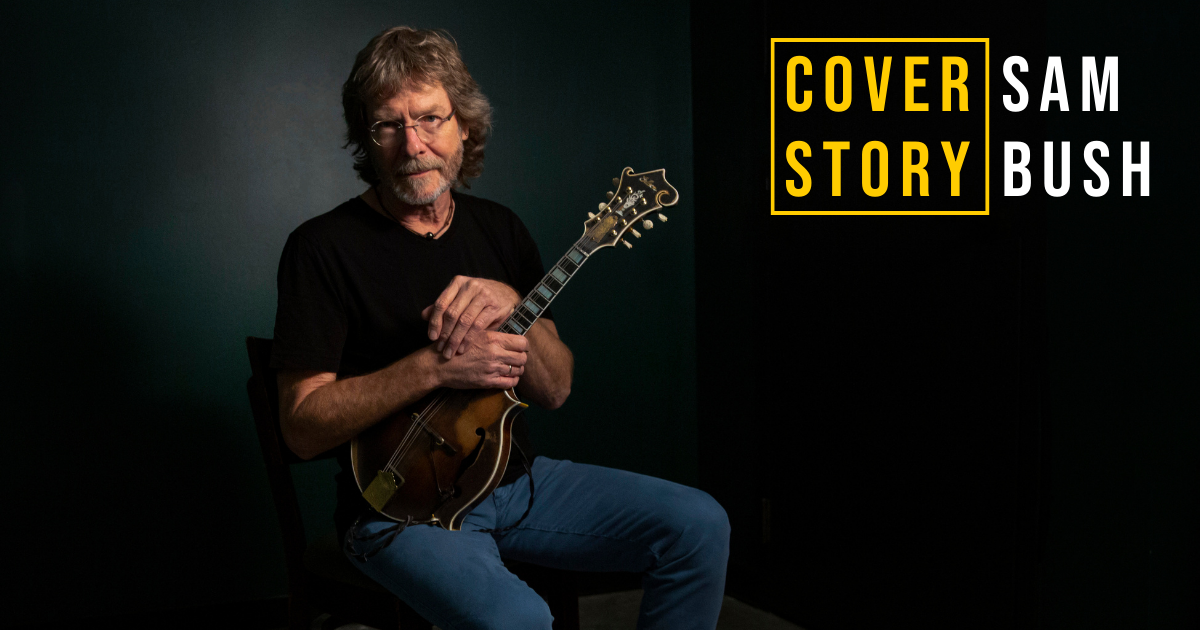
Sam Bush is well-known for his innovative style, virtuosic playing, and exciting performances that have made him pivotal to bluegrass music. Yet he is quick to point to John Hartford as the pioneer of so-called newgrass. Bush has covered many of Hartford’s songs throughout his career (such as New Grass Revival’s rendition of “Vamp in the Middle” or the legendary “Steam Powered Aereo Plane”), and during our conversation I learned that both Hartford’s influence and the friendship they shared was much deeper than I knew.

Bush’s new album, Radio John: The Songs of John Hartford (released on Smithsonian Folkways), is not only a musical love letter but a peek into the relationship between two of bluegrass music’s biggest innovators. The track listing seeks to highlight Hartford as not only a brilliant, if not esoteric, songwriter but also as a creative composer, a humorist, and talented banjo player who approached music and life with a sense of wonder and whimsy. What’s not contained in the covers can be found in the one original song, “Radio John,” which weaves many of the facets of Hartford’s life into lyrics. By playing nearly every instrument on the album himself, Bush has created a loving tribute to a dear friend.

BGS: Looking back at your careers through the lens of history, I’ve always thought of you two as contemporaries who were kind of shaping music together. But reading your liner notes, I realized how much John influenced you. In what ways do you think John’s music influenced yours?

Sam Bush: That’s happened a lot to me over the years where I’ve been fortunate to get to meet some of my heroes and then end up playing with them and becoming pals that way. John was totally influential on me and the New Grass Revival. I grew up north of Nashville outside Bowling Green, Kentucky. We got Nashville television stations out on the farm (when my dad would climb up on the roof and adjust the antennas). At the time, I didn’t realize what a fortunate situation it was that I got to watch all these great players and singers on TV. Living close to Nashville I never realized until I got out and started traveling for a living that friends of mine around the country hadn’t seen these country TV shows like I had.

I was watching The Wilburn Brothers Show one day when this guy came on singing, playing Earl Scruggs-style rolls on the banjo while he was singing. I’d never seen anybody do that. My first thought was, “Why don’t you get a guitar?” But then later to find out, well, he is a great guitar player. I didn’t catch his name. But my dad and I, within a few weeks, went to Nashville and were in the Ernest Tubb Record Shop, and I found an album called Earthwords & Music by John Hartford. I looked at that picture on the cover and said, “That’s the guy. That’s the guy I saw.”

And so I brought it home and that album included “Gentle on My Mind” and a couple of others that actually are on this record. What it was that drew me to John was the banjo picking. But once I got the record, it was the way he wrote songs. Then I was struck by hearing John play along with a rhythm section of drums and electric bass and piano and maybe orchestration right off the bat. If you listen to the way I make records to this day, I will sometimes use electric bass, a drummer, and I enjoy the rhythm section mix of the bluegrass instruments. In that way, John was one of the first performers I might have heard mixing up bluegrass instruments with drums and electric bass. I mean, Flatt & Scruggs did that later on in the ‘60s.

It’s only in the last few years, like 10 years, maybe 20 years, that I’ve really started paying attention to lyrics and songs. I started as an instrumentalist, so I sang a lot of choruses and learned the words so I could sing along. But even back then I could tell John’s songs were different. They were the ones whose words I did pay attention to. Back then, John’s main direction was songwriting and singing. The RCA records were very influential in that they weren’t bluegrass at all. His progressiveness was really attractive to me.


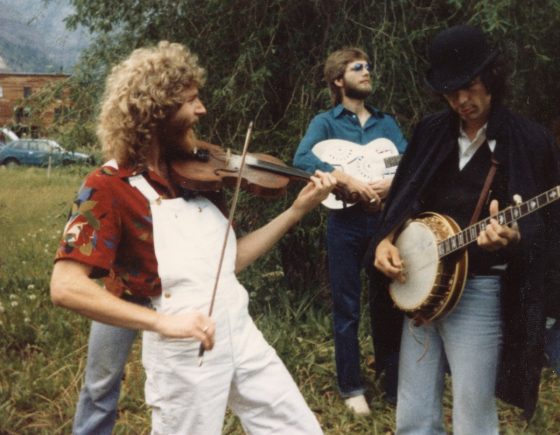
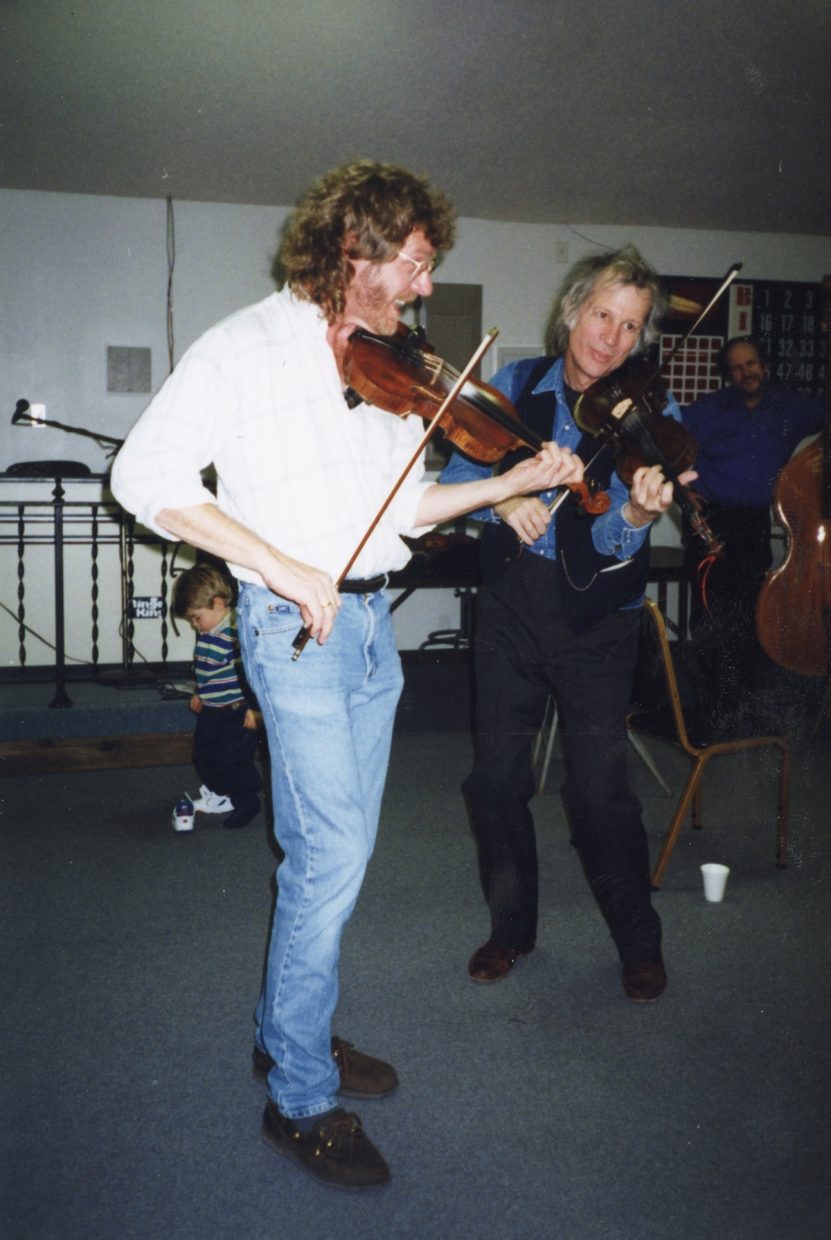
Sam Bush with John Hartford. Photo: Lynn Bush


It makes a lot of sense that there wouldn’t have been anything at that point in time that sounded anything like that.

No, because he was putting out records like this even before the Dillards made Wheatstraw Suite. I became a big fan of his. I would pay attention and see him pop up on The Smothers Brothers Show and later learned that he was one of the comedy writers. Of course, we got to see him on Glen Campbell’s show. They’d have a little acoustic picking segment in each of Glen’s shows and that was really fun for me. I bet there’s a video on YouTube somewhere of Glen and John Hartford doing “Great Balls of Fire,” bluegrass-style. Well, I was taping that and later the New Grass Revival learned that arrangement and that’s the one we performed. Courtney [Johnson, the banjo player in New Grass Revival] pretty much played the same chromatic run that he learned from John Hartford off of my tape of them doing it on TV.

I was really paying attention to him at that point and keeping up with him, buying his RCA records when I could find them down at Ernest Tubb. It got to where John was selling seats and doing good in larger places. John played at the basketball arena at Western Kentucky University where I grew up in Bowling Green. I think I was a senior in high school when John played there and all I know is that I couldn’t get there fast enough. But I had to march in the marching band at halftime for our football game at school. I wanted to get there so badly, I jumped in the car practically straight off the football field. It was really muddy and it started raining on us. I got there just when they were bringing the lights down for John Hartford and ran on in with my muddy band uniform.

That particular group that he had then was what he later told me he called the Iron Mountain Depot Band. Iron Mountain Depot was one of his last records, if not his last one, for RCA. The band was John, a keyboard player, bass, drums, and a twelve-string guitar. The next time he had a band style situation, it was what we call the Aereo-Plain Band with Tut Taylor, Norman Blake, and Vassar Clements. So that was a big change in direction for him.

What did you play in the marching band?

I played drums. Junior year, bass drum, and senior year I made it to snare. I guess I played “drum,” not “drums” plural. I played drum in the marching band and I played bass violin in the concert band. I got serious about bass and took lessons. I would take the bass fiddle home every night and practice and take it back the next day. All the kids would say, “Here he comes, carrying his bass.” I would later use the bass in professional applications here and there, as I did on this record.

Right, about that: I listened to the record before I read the liner notes —

I’m hoping that you liked it (laughs) you know what I mean? It’s supposed to sound good before people read the liner notes.

That’s the thing. I listened to it and I was trying to figure out who was playing, and then I read that it was you playing all of the instruments. I know that you play fiddle and mandolin, obviously, and I’ve seen you play lots of guitar, but I’ve never heard you play banjo or bass.

Yeah, nobody has. This totally blows my cover. But I picked up the five-string somewhere around 13 or 14 and started messing around with it. My parents had my granddad’s old Blue Comet five-string banjo. My mom played the guitar, and my dad played the fiddle. So, I got interested in banjo and I remember the first instruction book when I was a kid was the Pete Seeger book. After that, the next one I found was a Sonny Osborne book. That was really cool because I was a big fan of the Osborne Brothers.

And after that the Earl Scruggs book came out in the late ‘60s, and Alan Munde at this point was preaching Earl Scruggs to me. He’d say, “Fancy licks are fine, but they don’t mean anything if you can’t play like Earl.” I don’t think I took Earl for granted, but he was just one of those guys that I saw on TV my whole life. But when you start hauling down and trying to learn every note out of that book like Earl does it, it’s the great humbler. That’s when you find out the genius of Earl Scruggs. So, I’ve always played the banjo. Back when Courtney Johnson was in New Grass Revival, I’d get up generally every day and go to his camper. He made very strong coffee and we’d drink coffee and play guitar and banjo and we’d switch. Sometimes I’d play banjo and he played guitar, but usually more me on guitar, and we would learn things together. We learned John Hartford licks together and Alan Munde phrases and Bill Keith things that we could figure out together and go through the Scruggs book.

At that point I played a lot of banjo. When Béla Fleck and Pat Flynn joined New Grass Revival, the situation wasn’t the same. Sometimes Béla and I’d swap a little bit, but we didn’t have a dobro in the band anymore, so there wasn’t much reason for me to play guitar. I used to be a much better flat picker, but that’s the great thing about recording, I could just keep working on it until I got it. But just circling back to thinking about banjo picking, that’s one of the reasons I went ahead and played it myself, in that I watched and played with John a lot over a period of years, and I knew how he made the forward rolls and stuff. I am trying to play the banjo like John on the record. The other instruments sound more like myself but banjo and guitar, of course, I was trying to emulate certain things and phrases that John did.

I was impressed by how much it sounded like John Hartford-style banjo, especially on that instrumental, “Down.”

Well, thank you. Playing it all by yourself is fine, but it better sound good, because when you’re driving along in your car, if it’s not sounding good, it doesn’t matter who all played on it or what they went through. That’s the proof. Does it sound good to me? And these Hartford songs are kind of this way. When I have a reaction to music, it’s like, “Did I feel something as I listened to it?” These songs, they make me feel something.

And if anything, I’m hoping maybe through this record people can go back and dig through some of his early song work on RCA because probably a lot of people don’t know those records at all. As he aged, it was interesting to me that he got more traditional, got more old-time in his thinking, whereas when we met, we’d listen to Birds of Fire by the Mahavishnu Orchestra going down the road and try to figure out how to do some of those notes. There was just a heck of a lot of variety in his work. Later in life, he’s writing all these fiddle tunes, while early in his career, it was the songs.

This was a pre-pandemic project that is now being released post lockdown. Making a solo album where you play all of the instruments is the sort of thing that you would expect to have happened during that period of isolation.

We had it started down in Florida. [My wife] Lynn and I try to go down to Florida once a year if we can. Once the middle of November hits, there really isn’t much work, so I like to drive down to the beach, take a variety of instruments, and some kind of recording machine. Well, in typical fashion, I have this recording machine that I was not succeeding with. I was spending much more time messing with the stupid machine than I was getting to play my instruments.


Sam Bush and John Hartford. Photo: Lynn Bush


I was jamming with our friend Donnie Sundal one night, and he asked, “What are you up to?” I said, “I’m trying to record some stuff by myself, but there’s a latency and I can’t seem to overdub in time. Something’s wrong.” And he said, “Oh, I bet I know what to do. I’ll stop by tomorrow.” So, Donnie stops by and his car is full of equipment. He brought a total ProTools rig, mics, preamps. He even brought another electric bass for me in case I didn’t have mine with me.

Once I started cutting these songs with Donnie digitally it was like, “Oh, now this is recording studio quality here.” I was originally only meaning to make tapes of these John Hartford songs to show the guys in the Sam Bush Band and then maybe we’d record them. I was not that far along in my thinking. I was really just at the beach so I could sit and make up tunes. But the joyful thing was to kind of sit and play John Hartford songs. As I started thinking about these tunes and everything, and when I started overdubbing them by myself digitally, I thought, “Well, maybe this could be a solo record.” And then, of course, we got shut down.

Rick Wheeler was the soundman and road manager for me and the band back then. Rick’s got an overdubbing room at his house. During the lockdown, we’d test and felt safe to be together and that’s when I got serious about working hard on the vocals and putting the banjo on. I tried putting some banjo down in Florida by myself, and I didn’t like any of it. A couple of the tunes I had to totally start over on.

Thanks to the generosity of Béla Fleck, I had some great-sounding low banjos to choose from. And the low one that I played the most was a Gold Tone. He had all wound strings on that banjo, which agreed with my lack of finesse with a right hand. He also loaned me one of John Hartford’s banjos, the one that he would tune to low D. But that one had thinner strings on it, and I didn’t feel I had the finesse to succeed on John’s banjo. It was set up in a lighter way whereas Béla’s was set up heavier for my claw to be able to get a better tone out of.

I started putting these tunes together, and I started thinking about that phrase “Radio John.” When New Grass Revival’s first album came out, there was a poem written about us, and it’s signed, “Radio John from Topanga Canyon.” Well, it was Hartford, but I think there was some kind of contractual thing where he could not use his name, John Hartford, on other albums or something. So, he just signed things as “Radio John,” which was his DJ name as a kid.

I started thinking about “Radio John” and wanted to write a song. I got together with John Pennell, Alison Krauss’s original bass player who wrote a lot of great songs that Alison recorded. We started writing this song over the phone during lockdown. We started making a list of all the things that we would try to mention in the song, and, man, we didn’t come close to being able to get all of the things that John was good at. I didn’t touch upon his beautiful calligraphy handwriting, and we couldn’t figure out a way to work 4×6 index cards into anything, but we just wanted to honor his many talents. Steamboat captain, singer, dancer, picker, writer.

I knew I wanted to involve the band and have Chris Brown on drums and it needed a better banjo picker than me. As it turned out, that was Wes Corbett’s first recording with our group. Once again, thanks to Béla’s generosity, Wes played John’s low-tuned banjo on “Radio John” and pulled beautiful tone out of it. I’m really happy with the way the song turned out and glad that the band could do it.

That’s such a great story and it’s such a beautiful project because of your personal connection to these songs.

Lynn phrased it the best when she said, “It’s your love letter to John Hartford’s music.” But making a record and playing everything yourself is not even close to being as much fun as playing with other people. I’m glad I did it once but the nostalgia for John is the joyful part of it, for sure. What’s funny is that after all these years, I made this record as a tribute to John and it’s probably my most acoustic record. Besides the electric bass. John’s old records had Norbert Putnam on electric bass, and then, of course, on Aereo-Plain, Randy Scruggs was playing electric bass. That sound kind of blended in with Hartford music for me.

Yeah, I can hear that. The tunes “Down” and “John McLaughlin,” definitely have an electric bass feel.

Yeah, oh, and speaking of “John McLaughlin,” there’s a certain way John played his banjo rolls there. Boy, when I’m listening back to the original version that I played on with John, I had forgotten that he had an octave low banjo that was tuned all the way down to A. God, that’s low.

That’s part of the fun with this record; getting to listen to your versions of these songs and then go back and listen to John’s versions. It’s interesting how much of the similarity you’ve captured while still making them unique.

That’s always the trick of trying to pay tribute to something while giving it another slant for people to hear. When I was recording, I was trying really hard to think of John’s phrasing and how he would sing it, and I did, for the most part, succeed. But now when I go back and listen to John’s version, I go, “Well, I don’t really sound like John but that’s good.”

That’s sort of like what I was saying earlier, about you and John as contemporaries while your music was also being influenced by him.

That’s the fortunate part of where I’ve been in that we became contemporaries. I was fortunate to get to know one of my heroes and play with him.


Photo Credit: Jeff Fasano

LISTEN: John Showman & Chris Coole, “Long Hot Summer Days”

Artists: John Showman and Chris Coole
Hometown: Toronto, Ontario
Song: “Long Hot Summer Days”
Album: Much Further Out Than Inevitable – A Fiddle and Banjo Tribute to Some Music of John Hartford
Release Date: December 2, 2022

In Their Words: “This is one of 14 tracks from our new John Hartford tribute album. I’d always loved Hartford’s original version of this song, but a few years back, I heard my friend Maddie Witler play this song while we were on tour in Germany. I was taken by how she’d interpreted the melody and made it a bit more bluesy (at least in my memory). I tried to bring some of that into my cover of ‘Long Hot Summer Days.’ It’s played on a gourd banjo, which definitely helps bring the ‘skank’ a little. This is just one more example of Hartford’s masterful ability to use word imagery to turn a song into something more like a movie.” — Chris Coole

Photo credit. Jen Squires