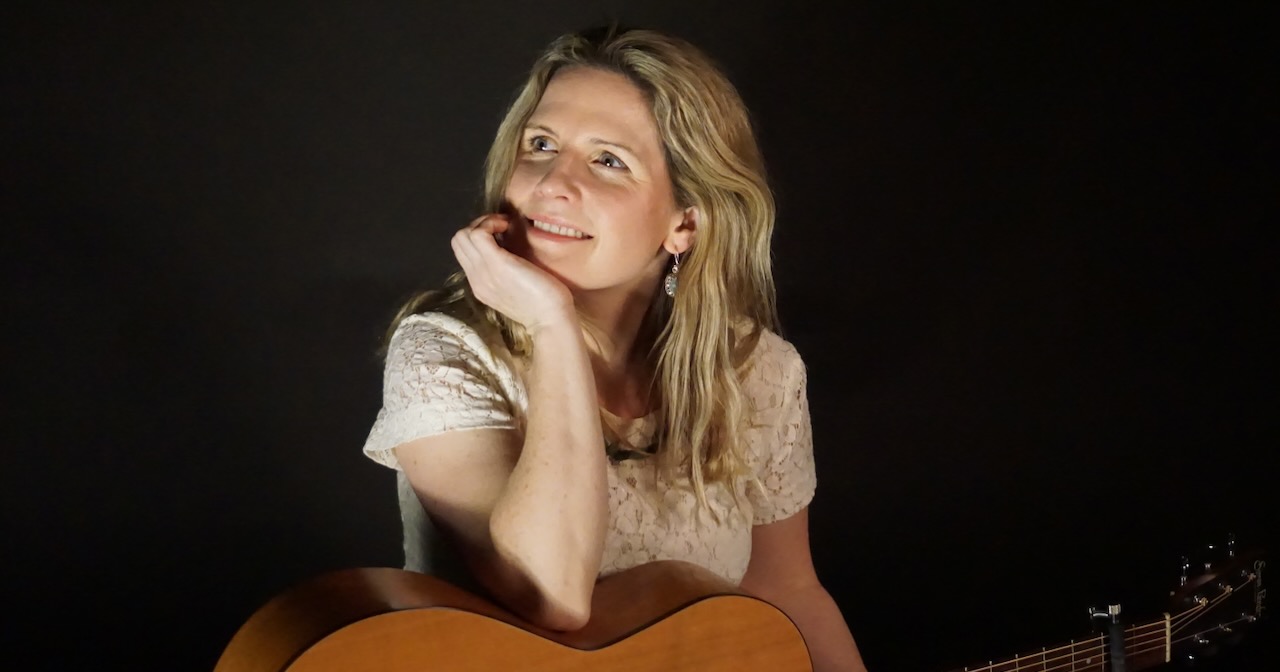
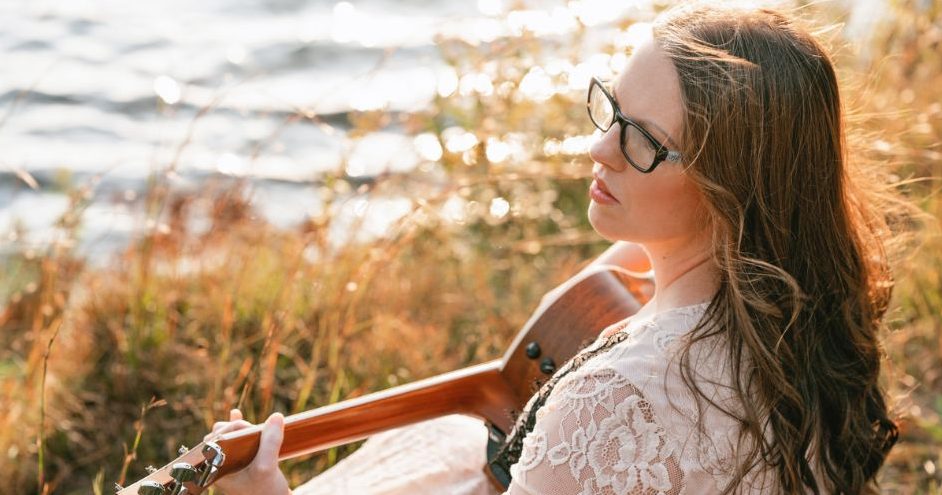
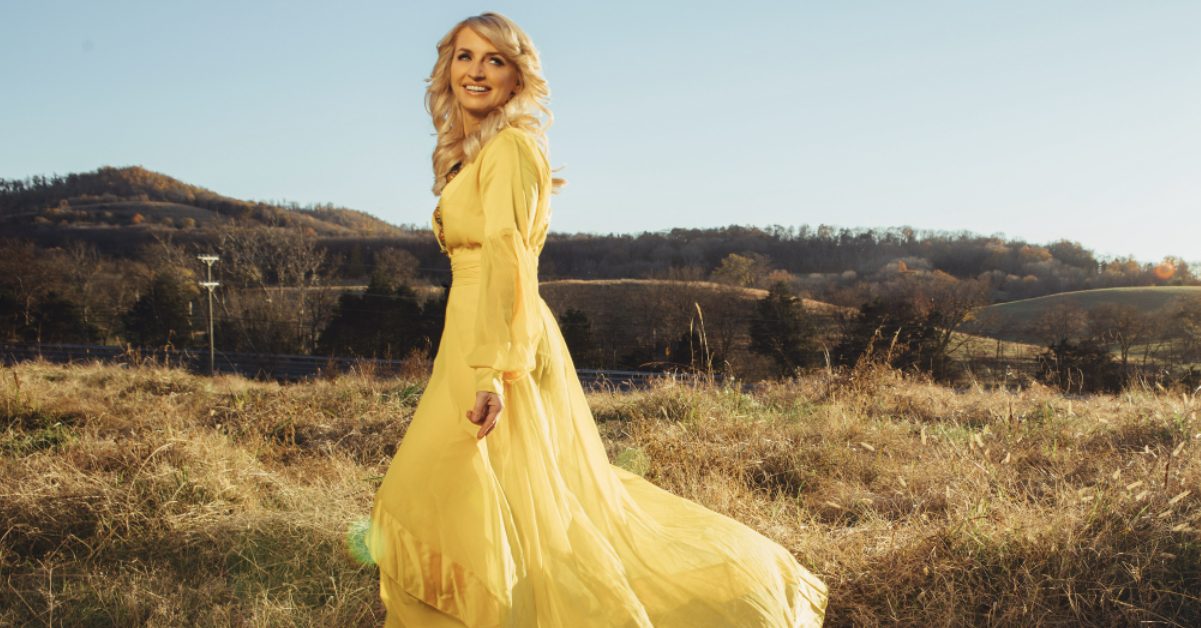
I moved around a lot as a child – from Ireland to Indianapolis to Puerto Rico to Seattle to Spain and more. It was so wonderful to experience different cultures and connect with new people. And I think these experiences caused me to have a restless soul. I am always looking for new people to meet and new experiences to have. I am always searching for meaning in life and for authenticity and joy. This Mixtape is for people struck by a seemingly endless sense of wanderlust who are enjoying the journey as we try to figure out this thing called life. – Katherine Nagy
“All Done” – Katherine Nagy with Austin Johnson
I wrote this song as I started living life the way I want to live. We only get one shot and I don’t want to have regrets. So the people-pleaser in me is “done pleasing everybody else, I can only be myself.”
“Starting Over” – Chris Stapleton
Sometimes I just want to pick up and start over again, like I did so many times as a child. A new house, new roads, new people, new experiences. I daydream about “starting over.”
“Into the Mystic” – Van Morrison
He is a fellow Irishman and I have always admired the passion of delivery and arrangements he uses in his songs. This classic has long rocked my gypsy soul.
“Angela” – The Lumineers
I have driven a Volvo since I was 16 years old, so I love the lyric about the “Volvo lights.” And so many times I’ve gone for long drives with the windows down listening to great songs that resonate with me the way this one does.
“Gypsy” – Stevie Nicks
I just adore Stevie and her essence. She is magical and whimsical and so in touch with her heart and art. I have always loved this song and related so strongly to it for years.
“Send me on My Way” – Rusted Root
This was one of the most fun concerts I have been to. It was at the House of Blues in Chicago. I was young and free as I danced all night enjoying the vibes of their music.
“Midnight Train to Georgia” – Indigo Girls
If the Indigo Girls are on the train – I am coming! Love their harmonies and beautiful melodies. This is a favorite and I perform it at my own shows.
“I Still Haven’t Found What I’m Looking For” – U2
Me neither, Bono! (another fellow Irishman) I am still searching over here. I’m always writing to process life and try out new things. Life is a journey of searching, and I’m not sure we ever find what we are looking for – wish I knew.
“Mockingbird” – Ruston Kelly
I am a sucker for beautiful guitar work and pedal steel. The intro to this song gets me every time and it just keeps getting better with the harmonica. It makes me want to go on a road trip. Plus, I love birds!
“The Time I’ve Wasted” – Lori McKenna
Let’s not waste time doing things or being with people that do not bring us joy. Life is too short, and “time goes by and when it’s gone it’s gone.” Live your life authentically – be brave.
“Shine” – Dolly Parton
I love Dolly and I love ’90s music, so this cover is just amazing and resonating with me. And I always want heaven to shine its light down!
“The Architect” – Kacey Musgraves
Kacey is an amazing writer. I love her music. This little gem of a song is so profound, as it’s trying to understand this beautiful life. Is there a higher power and what’s the masterplan?
“Keeps Getting Better” – Katherine Nagy
Stay optimistic and stay checked-in with life. Stay true to your heart and surround yourself with people that love you. If you do, it will just keep getting better.
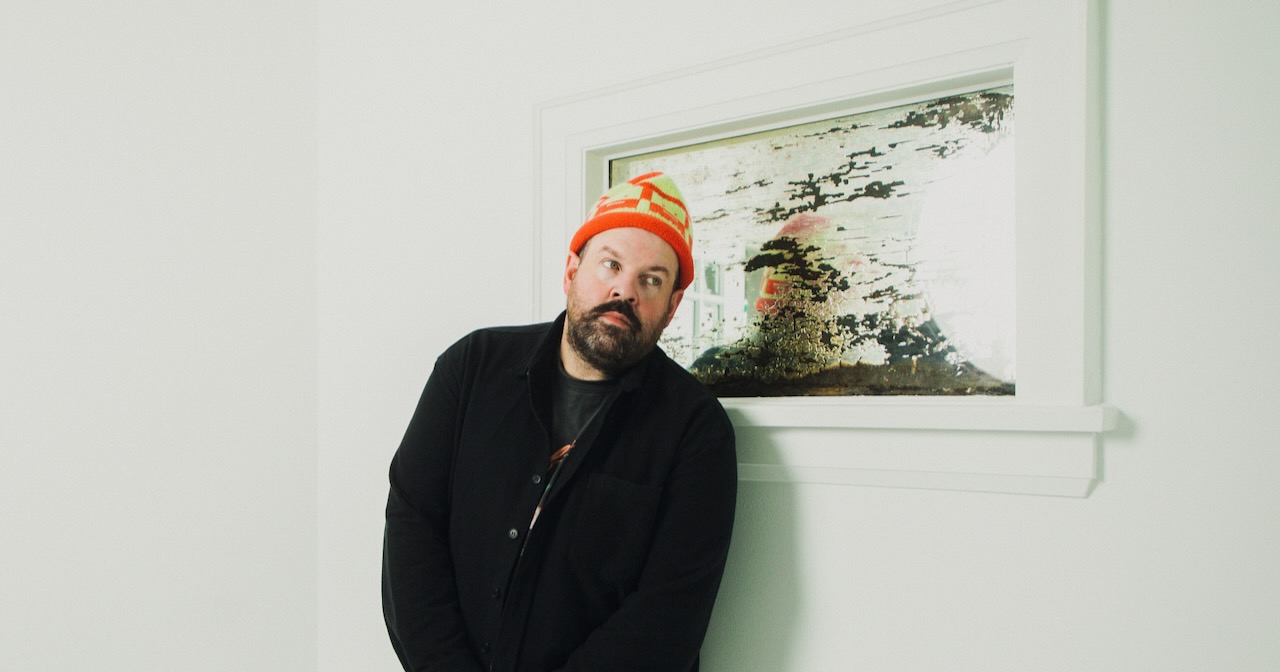
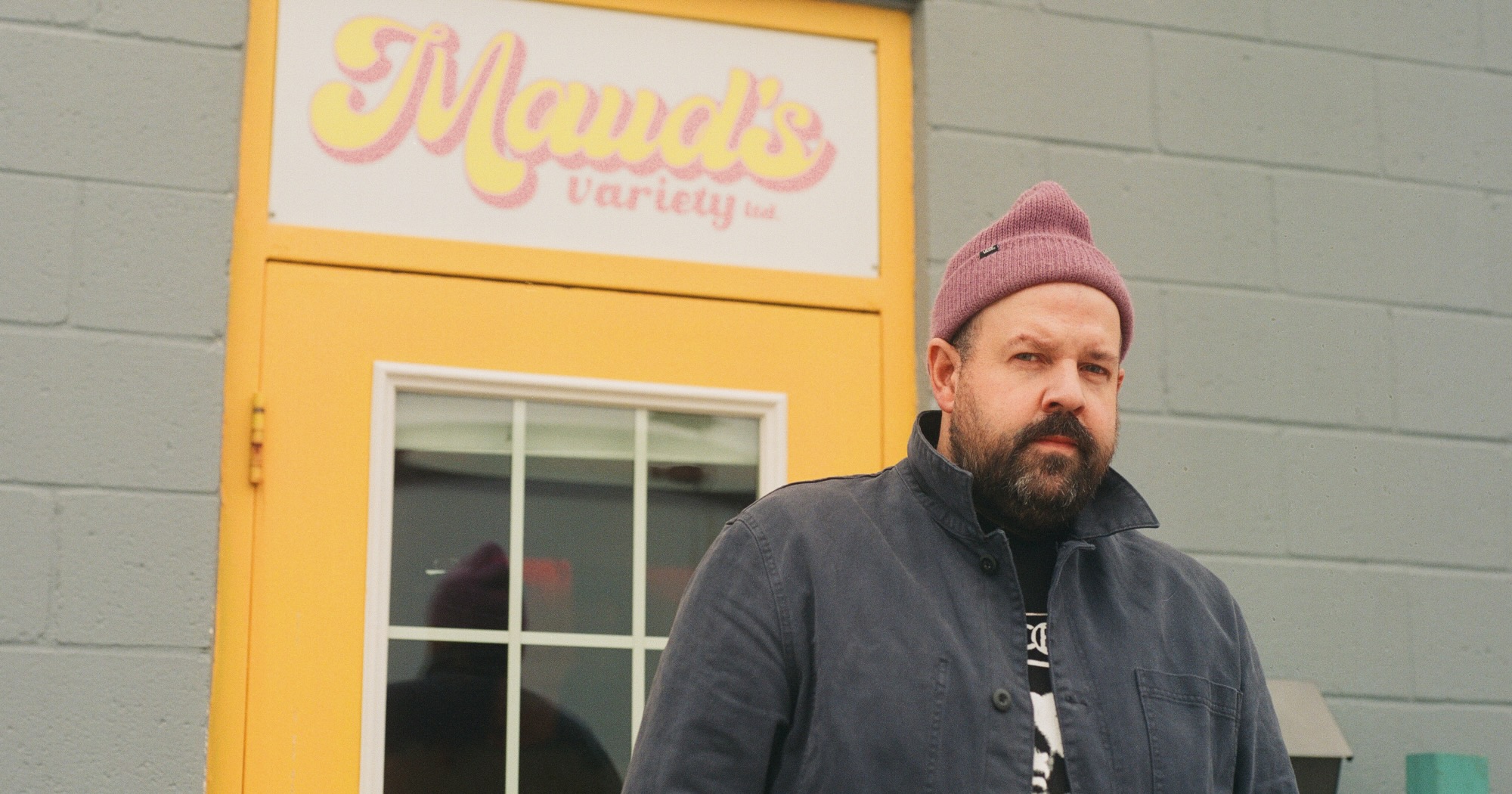
Donovan Woods is not really the solid, secure man you might think you know through his thoughtful, deceptively soothing songs.
But he’s working on it.
“A lot of my songs are much more magnanimous than I am in real life,” said Wood, 43. “So I often am wrangling with that feeling of people thinking that I’m a very morally superior person, when in fact, the reality of me is not very close to that.”
Woods, a burly, bearded, soft-spoken Canadian who has been consistently releasing quality albums and touring since 2007 (except for the COVID years), recently released his new album, Things Were Never Good if They’re Not Good Now. It’s a typically solid offering from a writer who writes deeply personal songs, some of which work as mainstream country hits, like “Portland, Maine” for Tim McGraw.
Though modest and self-depreciating, Woods knows he’s come up with something special with “Back for the Funeral,” a song on the new album that captures the stage of life when the only time you see old friends is when one of them has died.
“After the service we’ll all meet up at the bar,” he sings. “Where my dad used to drink, now he just drinks in the yard/ And we’ll laugh about all the young dumb dreams we had/ And we’ll pretend we’re all only sad/ Because we’re back for the funeral.”
The song, written with Lori McKenna, is one of those that doesn’t seem like a new one. It feels familiar, like it’s always been there. McKenna had the title and it turned out Woods lived through the experience a few months earlier, when he returned home to Ontario to attend two funerals.
“Not all those details are exact, but I’m trying to get at that weird feeling of when you go home and you’re able to see it all at 30,000 feet for some reason, because you’re in the throes of grief,” he said.
In our exclusive BGS interview, we spoke about grief and mental health, poetry and Music Row songwriting, and more.
So I understand the new songs were influenced by therapy you underwent for your mental health. Is that true?
Yes. I’m as liberal as they come, but I think I still have this toxic masculinity in me. I do think that expressing need threatens my masculinity and it’s such a deep, ingrained thing in me. It’s embarrassing to admit, but I still do have those hang ups.
What kind of therapy did you have?
I had probably what would be considered a midlife crisis. … I felt like I was losing touch with my life slightly. I was unwell and I could tell [it was true] by the reaction of people in my life who weren’t particularly thrilled with me. I did some addiction therapy, I did some standard stuff and I did some couples therapy with my wife.
Like a lot of men, I wasn’t admitting when I was sad or when I was upset or when I was unhappy, because we love this image of this stoic individual that we’ve all grown up adoring — this unaffected, unflappable man. You’re trying to be that, because you think that’s the right thing to be for your family. I let that get away from me. I had become two guys, my internal self who knew that I was upset or hurt or I need something, and then this forward-facing person that I created, which was sort of a lie. I had to reunite those two things again, and I found it really difficult.
Your rather gentle singing sometimes belies the depth and the hurt in your lyrics. Is that an artistic choice you’re making?
That’s kind of just how my voice is. In the days before microphones, I don’t know that I would have been able to have this job. I don’t talk that loud or sing that loud, either. Singing is more like self-soothing to me than it is communication. I do it because I like it. It makes me feel good. When I’m stressed, I do it. It’s like being nice to myself.
Your lyrics are effective even separated from the music. Have you done any poetry or prose writing?
I appreciate that. My heroes are the people who are actually singing poets, like Paul Simon and John Prine. I feel like that’s what a singer-songwriter is at the core. … I will write poetry for myself now and then. I have tried to write short stories and I’m not good at it. I don’t know how to do long things. The idea that it can be anything is terrifying to me.
You must like Mark Cohn too, based on your cover of his “Don’t Talk to Her at Night” on the new album.
He’s kind of a high-water mark in songwriting for a lot of writers, especially men. There’s an elegance in his writing that is so unreachable to me. His American earnestness is not available to me as a Canadian. I always think I have to be self-deprecating or not showy in my writing. I think it’s just like the mindset of a Canadian. My dad is a big fan, and I have listened to him my whole life.
Do you have a family background that pointed you toward becoming an artist?
I grew up in a really working class town [Sarnia, Ontario], where everybody’s dad works in these petrochemical plants around the border of Michigan. My dad worked in construction estimating jobs. … My friends all work in petrochemical plants, or they work in adjacent fields to those plants. One of them is a chiropractor, which actually is adjacent to the petrochemical plants too, because everybody has a bad back in the entire city. … I was not a wonderfully artistic kid. I was given a guitar by my mom and I took like, four or five months of lessons. I just really enjoyed writing songs, and did it for myself for a decade before I ever did it publicly.
Is it true your dad named you after the folk singer Donovan?
I am. He’s one of my dad’s favorite singer-songwriters, along with Fred Eaglesmith. I got to tell [Donovan] that once, too. I’ve never seen anybody be less interested in something.
Do you still live in Canada with your family, or have you moved to one of the music industry cities in the states?
I have three kids. I have one ex-wife and my wife that I’m married to now. I live in Toronto mostly, and I’m in Nashville sometimes to write.
Do you do the Nashville writing thing where you have appointments and try to write hits with other writers?
I still have a publishing deal in Nashville, so I’m there writing sometimes with other people. I do it less than I used to, but I still enjoy that very much. I love other songwriters. It’s pretty rare that I don’t like a songwriter. So I enjoy that, that afternoon of trying to finish something.
And that’s worked out for you sometimes with hits, right?
There’s a song called “Grew Apart” that was a hit for Logan Mize. When somebody else wants to record one of your songs, that’s about as good of a compliment as you can get as a writer. It’s always really flattering. I hope [more of] that happens. … I mostly fail at writing Nashville songs. I fail like about 95% of the time.
You’ll be heading out on tour this fall to promote the new album. Are you looking forward to that?
I am always on the road more than I would like to be. But I’ve had much worse jobs. I enjoy 85% of it.
Artist:Donovan Woods Hometown: Sarnia, Ontario, Canada Song: “Back For The Funeral” Album:Things Were Never Good If They’re Not Good Now Release Date: July 12, 2024 Label: End Times Music
In Their Words: “‘Back For The Funeral’ is a story that a lot of us end up experiencing. Big life events – deaths, births, divorces – seem to pull us out of the flow of time somehow. The days around these events can feel like a dream wherein the regular rules of our lives don’t apply. People fall back onto old habits or maybe construct a new temporary-self to shield them from grief or shock. What I like best about this song is that it reflects that dream-like feeling without sacrificing clarity. It feels the way those life-dividing days feel. I wrote it with Lori McKenna and Matt Nathanson. I’m about as proud of it as anything I’ve written. I hope it’s useful to people.” – Donovan Woods
Track Credits: Written by Donovan Woods, Lori Mckenna, Matt Nathanson.
Acoustic guitars, vocal, piano – Donovan Woods Synths, drum programming – James Bunton Bass – Mark McIntyre Strings – Drew Jurecka
Recorded in Toronto at Union Sound Company – Studio B, Small Dog Sound.
(Editor’s Note: This interview first appeared in full on Basic Folk. Listen on BGS or wherever you get podcasts. The following has been lightly edited for flow and clarity.)
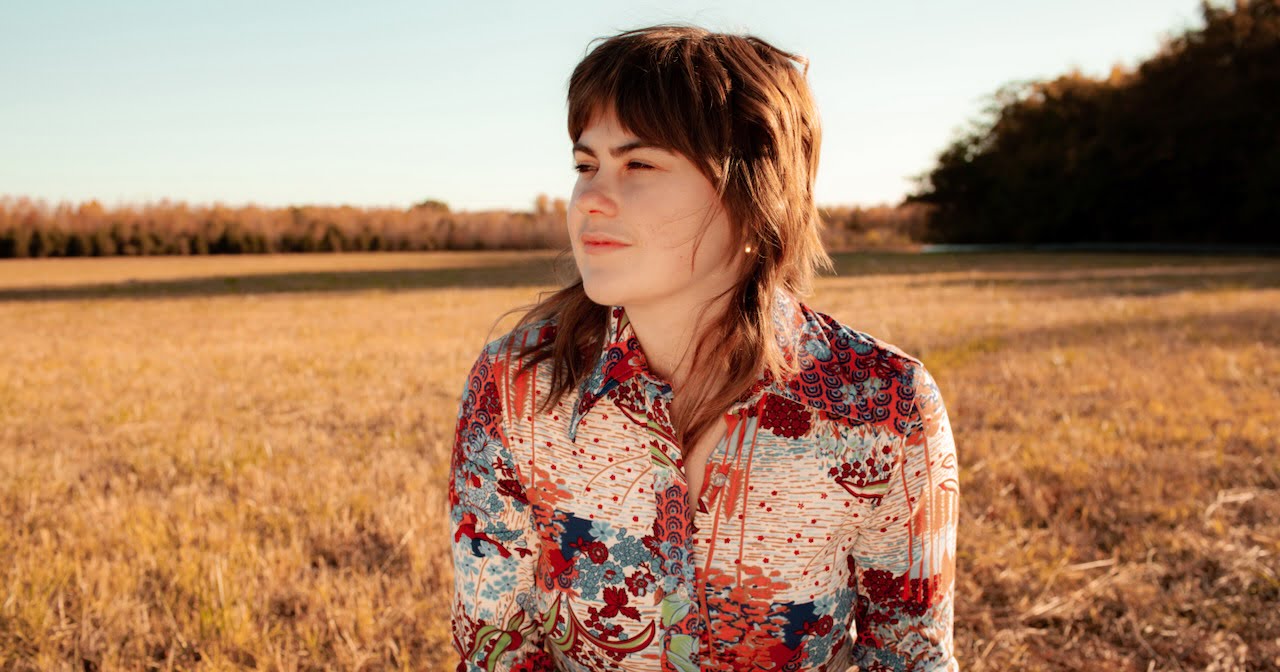
Jobi Riccio has only begun to scratch the surface of what they have to offer on their debut album, Whiplash. The songwriting is centered around self discovery and mourning past lives, laid alongside super-smart country and pop melodies. Our hero grew up an outdoor kid amongst the woods of Red Rocks Parks Amphitheatre in Colorado.
A strong bluegrass community encircled her playing from a very young age in a way that encouraged her to pursue music as a career. She spent time in Boston attending Berklee College of Music, nestled in the folk community centered around the historic venue Club Passim. March 2020 hit. Jobi had to leave her newfound community and found herself back in her childhood bedroom.
While wrestling with all the complications of finding herself and her place in the world, they were letting go of their childhood and the sense of grounding that came with it. Eventually, they made their way to Asheville, North Carolina to work on Whiplash.
In the studio, she took her time making the album and discovered that indeed, she had a strong sense of vision for the music. The trust of her collaborators allowed her to trust in herself and create an album that is turning heads and making Jobi Riccio one of the most exciting young songwriters of 2023.
BGS: Thank you so much for being on Basic Folk.
Jobi Riccio: Thank you for having me.
Alright, let’s start. I wanted to talk about identity and give you the opportunity to talk about your identity, like how do you identify pronouns, orientation, any of that stuff that we want to address.
JR: Yeah, I use she/they pronouns. I identify as queer and identity has been something that feels like it’s been important and very complicated for me. It feels like something that I have spoken about and made a part of my career, and now I’m kind of feeling, a little bit, like it’s become too much of a focus in my career, actually.
It’s funny, because I was listening to your other podcast that [you do], I can’t remember–
Yes! I was like, you’ll know the person to plug – and I’m so sorry to Why We Write.
It’s based on actually something that Lizzie No was saying. I just really resonated with something that she said, which was it’s about who is asking those questions of me. It can feel like a fine line. It’s kind of “cool” right now to be a queer artist or a Black artist or an artist of color in the folk space.
When you’re with your community, that feels one way, or with people who are truly great. And then when you’re with people who it just seems like they need to check that box. It’s so obvious and it’s so painful and it feels like a betrayal of yourself. And [Lizzie] put it a lot more eloquently than all that, but if we’re really going down the discussion of identity, it’s important to me that I am open with my identity, but I also feel like there have been times where it’s been so hyper-focused on. In a way that it’s like, “Did you even listen to any of my songs or did you know what I mean?”
I really enjoyed that answer. Doing these interviews, sometimes I feel like I’m gonna ask and I think that the interview is gonna go one way or a question is gonna go one way and it goes the complete opposite way. I just get to enjoy the ride.
You are from Morrison, Colorado, which is outside of Denver – the same place as Red Rocks Parks and Amphitheatre. You were an outdoor kid. How do you think your early experience in nature has impacted the person you became?
I think that it’s something that I really value and need and it’s a processing tool for me, being out in nature. It’s almost equivalent to songwriting and writing in my journal. It’s honestly super hard here in Nashville, because I don’t feel like I can get that, in the way that I used to be able to walk to a hiking trail five minutes from my house. I was absolutely supremely spoiled with outdoor access as a kid. [I didn’t] know any better. Like, there’s going to come a time where you’re going to live somewhere the nearest mountains are two and a half hours away. That is rough. It’s something I have to really intentionally build into my life now.
I think that nature heavily informs me as a person. Musically, I feel like it shows up in my lyrics [and] images from home, talking about coyotes and cactus and etc. I feel like it’s so intrinsic to who I am as a person.
So nature ruined you.
For real. The nature ruined me. Colorado ruined me.
There has always been this strong draw to music for you – country radio, your parents and sister’s collection of music, and also making music on your own. Can you set the scene for what music looked like in your house? And when did you get a grasp on your own taste in music?
My parents definitely – we had like a home stereo and a big collection of CDs and I spent a lot of time just sort of putzing around my house as a little kid, opening cabinets, and looking at things and opening the encyclopedia and reading. I don’t know if anyone else feels like a really intrinsic part of childhood was just looking at things.
The CD collection in like, a big wicker basket was definitely a huge one for me. They felt like little gifts. I could open up the CD and then there was this extra thing I could pull out and there were liner notes and lyrics and I could read along. That was really big for me, because I was always really interested in lyrics.
My dad’s a huge Bruce Springsteen fan. We love the Boss and sometimes we can’t understand the Boss. And like, his lyrics are wonderful, too. I really feel like that was pretty formative to me, looking through my parents’ CDs and my sister’s CDs as well. My oldest sister had like a clear, hot pink, very early 2000s lockbox thing that she kept her CDs in. I very vividly remember going into her room and stealing CDs – The Killers, Coldplay, A Rush of Blood to the Head was a big one for me, Sheryl Crow, Tuesday Night Music Club, Yellow Ocean Avenue. Then like Emmylou Harris, Bruce Springsteen, Linda Ronstadt, the Eagles, James Taylor.
There is a strong bluegrass community where you’re from. You found it at an early age, playing mandolin when you were like eight or nine years old. Since then you’ve sought out musical community, so what did you learn from that first musical community?
The bluegrass community was a big part of feeling supported for me in music. I was always a kid who sang and was like, the girl with a good voice in like my elementary school class or whatever, but I didn’t see myself as a musician until I really started playing mandolin. I had a teacher and he was super supportive and was like, “You’re really great at instruments, too.”
I feel like the bluegrass community in my hometown took me seriously even though I was a little kid running around at RockyGrass – and by “a little kid” I mean 16. I didn’t go to my first bluegrass festival until I was a teenager. I would go and sit and jam with adults and be taken seriously. I really looked up to [those who were] offering their support to me, that was immeasurable to [growing] my own self confidence at that age.
I mean, I was so insecure at like 15, 16. The first year I ever went to RockyGrass, which sort of became my home festival, I didn’t even go out and play with anyone. I just sat in my camper with my mom, because I was so scared and so nervous and having trouble with confidence. The next year, I was out like playing every night ’til like 2 or 3 a.m.
That’s a huge shift!
Yeah. I feel like community and music– I mean, no musician is an island. We’re nothing without the musicians who came before us and those who’ve supported us. Sometimes I look back on that time and wonder if I hadn’t gotten that nod in that jam from that older kid who was really good, who I thought was awesome; or from that artist who I worshipped, who told me I had a beautiful voice; or I had shared one of my songs with them, and they were encouraging of me writing. I wonder if I would have taken it this far?
Then I got to be in a really beautiful community space working at Club Passim in college, too. That also further helped bolster my confidence, especially playing solo. Because – as you know, as also somebody who worked there in a much different capacity – it’s very much like a solo listening room, singer-songwriter space.
I play solo [a lot] now on tour, because I can’t afford to bring out a band. I feel like I really garnered some valuable skills watching other people like Mark Erelli and Lori McKenna play solo at Passim and also having to do that myself, learning how to speak about the songs I had written and not be painfully awkward, but doing that in the loving embrace of that room.
You’ve talked about Sheryl Crow and The Chicks as having a huge impact on you. You picked up the mandolin after you first heard Nickel Creek – can you talk more about the influence Chris Thile and Sara and Sean Watkins had on you?
So, I first heard Nickel Creek on the radio on KBCO, which is like the AAA station.
Hell yeah, that’s a huge station. That’s where AAA was born!
Where AAA was born, famously, yes! That was my local radio station that I listened to as a kid. And they would play “Smoothie Song” by Nickel Creek. This was around the same time that I heard the Home album by The Chicks. I was listening to Top 40 country music and also hearing mandolin here and there. It’s so strange, because I don’t play the mandolin anymore. It’s just something I’m not interested in now – it makes me almost kind of sad to think of how this was such a big part of my life.
Then I really pivoted – and it’s like, I’ll never say never, but yeah, I started playing mandolin when I was 15, I wanted to play mandolin when I was about eight or nine years old, because that was when we got Why Should the Fire Die on CD as a family. When I started opening up the CD and reading the booklet and listening – that album is so cool, because there’s a little bit of almost a pop-punk thing to some of the songs, like “Somebody More Like You.” That was so of-the-time and I loved it. I couldn’t get enough of that.
Being introduced to this new palette of instruments that I really hadn’t heard played in this way. I was familiar with bluegrass to some extent, but it like bluegrass for me and my like angsty little 12-year-old self. And, you know, everybody’s angsty selves at any age. That struck such a chord in me…
And Pavement’s super emo! “Spit On a Stranger,” right?
Yeah, that’s it.
I loved that album, too. They were all older than me, but I didn’t really know that either because, like, they’re pretty young on the CD case. They’re probably [around] my older sister’s age, who is now 28. They’re not that close in age to me, but I did feel a kindred-ness that I feel like a lot of roots artists talk about, hearing them and the Chicks and being like, “Oh, this is cool! This is of the moment.” They’re incorporating sounds that we like from other genres, which is really what I think I’m trying to get with the whole pop-punk thing, though I know that can be kind of a “dirty” word, like pop country. I don’t think it should be, I don’t think any genre word should be.
And I definitely had like a three month period where I was like, “I’m in love with Chris Thile. I’m going to marry him.” That was a little, you know, short lived, but it was strong. His high, angelic voice really spoke to my prepubescent soul.
That’s so sweet.
You’re like, “I don’t know what to say about that!”
Thank you for sharing. No, it turns out it was Sara Watkins the whole time!
Artist:Grace Morrison Hometown: Wareham, Massachusetts Latest Album:Maybe Modern
What’s your favorite memory from being on stage?
There are so many! I remember the very first time I was onstage with my guitar. I was 13, and had been playing for maybe six months. I had a seafoam green electric guitar (because that’s what Billie Joe from Green Day played) and I played “Who Will Save Your Soul” by Jewel. I recall the terror before I began, and then this “hard to put your finger on” zen that came over me as I got into the song and was blinded by the lights. That moment is what got me hooked. Shortly after I remember performing in a local coffeeshop and James Spader walked in (I only knew that he was famous because people told me) and threw $20 in the tip bucket. I still have it. Then there was my little stint singing backup for Eddie Money. He had a cup of water on stage during rehearsals, and my guitar pick flew from my fingers directly into his cup of water. I may have been a tiny bit nervous he’d notice and get mad at me… he did not notice.
But most recently, I felt completely elevated at my album release show. Since 2020 I’ve played exclusively solo after years playing in bands. When we recorded my new record, the drummer John Chipman suggested we hold the album release show in Austin at the Saxon Pub. I’d been sick so I was pretty concerned about my voice before we started playing. But then I started strumming “Broken Things.” And Rich Brotherton started playing guitar. And I swear, when the chorus hit and the full band came in it was like being high. I hadn’t had that feeling playing music in a LONG time. Every worry went away. All that existed was that moment in that song. It was like my favorite lyric from Walt Wilkins’ “Trains I Missed” — “the moments I find myself right where I’m supposed to be.” Performing for me is like a constant search for THAT feeling.
What other art forms — literature, film, dance, painting, etc. — inform your music?
READING!!!! I was having a conversation with my publicist Rachel about what we’d do with a million dollars. She was thinking about adventures. I just said, “There are SO MANY books I want to read.” It’s possible she thought I was kidding, or that that was a bit but it’s the truth. There isn’t much I love more than reading. I’ve probably read every book on King Henry VIII because I’m a nerd (my motto is “revel in your nerditude.” I’ve got shirts that say it!). Reading not only gives me any adventure I could want, but it helps my brain quiet. It’s after reading that I write my best music whether it’s due to the quiet it gives my mind, or the inspiration of a feeling or story. And for me it’s the best way to find words. I think words or phrases or ideas I’ve read get buried in my brain, and I view songwriting like being a coal miner. I go into my creative mind with my little hard hat and see what I can chisel out.
Which elements of nature do you spend the most time with and how do those impact your work?
I’m a cranberry grower and brown-thumbed gardener. Harvest, in late fall, is the most exhausting thing I can think of. I love those bone-tired days. We harvest as a family, and we’re all out on the bogs picking up bags and putting them down for hours. There’s something about manual labor that can get you out of your own way. So often you’ll go to write a song and because you expect perfection from yourself it’s hard to get a word on the page — you’re judging things before they get started. The monotony of harvest doesn’t allow that critical part of your mind to exist. It’s too busy picking cranberries. I’ve written some good songs during those harvest days. I think Willie Nelson has a similar opinion on writing while you drive. My brown-thumbed gardening is similar. I say brown-thumbed because I cannot for the life of me get lupine to grow. It’s the flower I want so apparently the flower I can’t have. But I love getting my fingers in the dirt. Digging holes and planting bulbs. I always find myself singing while planting — “Garden Song” and “Waters of March” mostly. It bring me back to the simple joy of songs.
How often do you hide behind a character in a song or use “you” when it’s actually “me”?
I can’t think of a song I’ve written where I’m hiding behind a character. Music has always been the one realm in which I’m not afraid to be myself. I spent most of my life being timid, never ever telling people what I really thought or felt, with the exception of music. I think it saved me. We all need a place to say “no, that doesn’t work for me” or “you really hurt me when you did xyz” or “you are the sexiest thing I’ve ever seen” or “I’m better without you” so thank God for song. I HAVE done the opposite. Since, as mentioned, I am a nerd — I worked at a Renaissance Faire. And I got into character. Like really into character. It was there that I started thinking about writing modern songs about ancient things. I wrote an album of songs about King Henry VIII and the women in his life. And I very definitely allowed myself to sing as the ghost of Anne Boleyn.
Since food and music go so well together, what is your dream pairing of a meal and a musician?
Easy. A charcuterie board and Lori McKenna. My friend started a new business in 2020 – “Taylor Made by Taylor” custom charcuterie boards. The excitement of her delivering a board was one of the things that got us through the pandemic. And something about eating charcuterie makes me feel classy. Much like listening to Lori McKenna. I’ve written with her, and she’s such a classy, down to earth, genius songwriter. I get lost in every one of her songs. You’d probably need a martini or glass of wine in this dream listening scenario I’m imagining. And her song “Old Men Young Women” would have to be included. And this one time I wouldn’t put an ice cube in my wine. Because, you know, I’m trying to be classy.
Artist:Vance Gilbert Hometown: Arlington, Massachusetts Song: “Black Rochelle” Album:The Mother of Trouble Release Date: May 5, 2023
In Their Words: “It’s a true story. The cruelest kids are often the kids who have been treated most cruelly. One of the easiest and hardest songs ever to write. I am proud that I heard that melody so clearly in my head even as the words were cutting my chest wide open. Lori McKenna again foils with background vocal perfection.
“As for the video itself, the videographer Jon Sachs and I decided it would be most effective to do it in one pass, the only video break during Joey Landreth’s heartbreaking solo over the bridge. Don’t let anyone ever tell you that lip-synching is easy, or that real life feelings don’t happen with the sing-along-to-self. It was like double illumination, and I was shocked at how it struck me.
“Part of my job as a singer-songwriter is to be a vessel of sorts, the story coming through me, while it’s the listeners’ job — if I’ve done my part with any facility at all — to be moved. I was trying not to indicate or show all kinds of feels in my face to the camera. That said, I did all I could to keep it together, because I had to. When the concept finally came alive with the music and selected images, the brokenheartedness really was replaced by a sense of accomplishment at a story well-told.” — Vance Gilbert
Artist:Mark Erelli Hometown: Melrose, Massachusetts Latest Album:Lay Your Darkness Down Personal nicknames (or rejected band names): Oh man, I don’t really have any! The only nicknames I had were in elementary school, where kids would taunt me with adjectives that rhyme with “Erelli.” I’m sure you can come up with all the permutations on your own. I’ve always been a solo artist, so I don’t have any rejected band names, either. I feel like I’m letting a lot of people down with this particular answer!
Which artist has influenced you the most … and how?
At heart, I’m just a really big music fan, so I’ve thought a lot about my influences and how they’ve changed over the years. I think most of us start out trying to follow in the footsteps of our musical heroes, typically bigger, established artists from a different time. I was no different in my early years but, truthfully, the longer I do this, the less those early heroes tend to matter to me in terms of conscious influence. And the music business that helped those artists become so influential is gone for good. So the artists that have deeply influenced me for a long time now are my friends, peers I have worked alongside, seeing firsthand how they manage their art and their careers.
It’s hard to pick the friend that has had the most profound influence, but I have learned more than I can really articulate from Lori McKenna. We met in 1996 when we both lost the same songwriting contest, came up through the Boston scene together, I’ve produced some of her albums, and played in her band since 2005. I’ve had a chance to see the choices she’s made throughout every stage of her storied career—before she even had a ‘career’—and I find her journey to be extremely inspiring and educational. Lori’s consistent friendship and generosity have been a real north star for me, and she’s a big part of my new album Lay Your Darkness Down, having written a wonderful song together and singing harmony on the title track.
What’s your favorite memory from being on stage?
About a decade ago, I opened for Darrell Scott one night in Portland, Maine. I had played the room several times on my own, but I campaigned for the gig just so I could meet Darrell and let him know I’d been a big fan of his for years. I was convinced I’d come on a bit too strong at soundcheck, endlessly proclaiming my love of obscure independent records that he’d played on in the ’90s, but I was later humbled to see that he was watching my set.
When he took the stage for his headlining set, he said, “We’re gonna do something a little different tonight. Instead of just me up here playing one long solo set, I’m going to do a short set, we’ll take a quick break, then Mark and I will come back up together, trading songs until we feel like stopping, like an old-fashioned Nashville guitar pull.” He hadn’t mentioned this plan to me before he went on, so I was just floored. But that’s what we did. I think we played for 90 minutes or so, the whole night of music approaching three hours of music in total, a marathon that no one had even asked for! To have a musical hero invite me into a space where we were both completely in service to the songs, supporting each other as equals, was just an incredible gift. I’ll never forget it.
What rituals do you have, either in the studio or before a show?
Two words: vocal warmups. This is not a sexy ritual, but I cannot stress enough how regularly warming my voice up for 15-20 minutes before a show or a recording session has changed my life. I’ve always been a decent singer, I guess, but since I’ve been warming up regularly before shows I find that I can sing at the level of proficiency I strive to perform at, for longer, and with far less emotional distress about being able to keep it up night after night. The whiskey you think you need before you go on stage is not doing you any favors, it just makes you care less about how you sound. The vocal warmups I do have helped make singing a more physically enjoyable experience for me, and the sooner you start the more it’s going to help you. I know, I didn’t listen either when I was in my 20s and 30s and people told me to warm up my voice. But if I could go back and change one thing it would be to have started this ritual far earlier in my career.
What’s the toughest time you ever had writing a song?
I think the toughest part of ‘writing a song’ isn’t really the writing itself, it’s the observations, experiences, and realizations that ultimately lead me to the point where I feel compelled to sit down and write about something, to try and make sense of it. The songs on my new album Lay Your Darkness Down were largely written in the wake of being diagnosed with a degenerative retinal disease (retinitis pigmentosa) that is slowly causing me to go blind. The songs that weren’t directly inspired by my RP diagnosis were written against the backdrop of a global pandemic, and the profound hits to what serves double duty as my livelihood and spiritual practice.
Those were just extremely tough times, and for a while songwriting just felt like a very ineffectual tool for dealing with them. Thankfully, the practice gradually came back to me, and it ultimately became something that helped me process what I was going through. I have to thank friends like Mary Bragg, Anthony da Costa, Matt Nathanson, and Lori McKenna, who all co-wrote remotely with me over Zoom during the pandemic and helped me sidestep some of the loneliness and isolation I was feeling. The writing is often fun and exciting, it’s living a life worth writing about that’s the tough part.
How often do you hide behind a character in a song or use “you” when it’s actually “me”?
I think I do this an awful lot. I will frequently consider myself to be writing a song from the perspective of a character, only to find out at some point after the fact that there is perhaps an uncomfortable amount of “me” in the song’s protagonist. This realization can take years, and I think it’s just a simple truth that the songs often get there before I do, and they wait patiently for me to catch up. Even when I am writing from a first-person perspective, I’m often portraying myself and my motivations as I’d like them to be, and maybe not as they actually are. I often use songwriting to envision what’s possible, instead of cataloging things as they are. In that way, I like to think that my songs can be inspiring and stir hope, not just for others, but for me too.
Artist:Jaimee Harris Hometown: Hewitt, Texas Latest Album:Boomerang Town (out February 17, 2023)
Which artist has influenced you the most … and how?
Emmylou Harris. I got my first guitar on Christmas Day. That holiday season, every moment I wasn’t at school or at church I was sitting by the stereo putting “Light of the Stable” on repeat. I was mesmerized by Emmylou’s voice, the production, the melody, and the harmonies. I learned later in life the backing vocals are Dolly Parton, Neil Young, and Linda Ronstadt. Not only have I been tremendously influenced by Emmylou’s voice as a lead singer and a harmony singer, but also by the songs she cut. They opened me up to songwriters who laid out the road map of my own songwriting journey.
What has been the best advice you’ve received in your career so far?
It’s a tie for these two golden bits of wisdom that have been passed down to me by my partner, Mary Gauthier, who is much farther along in her career than I am.
1. Do not sign anything unless they’re writing you a check. 2. Don’t take the Ambien until the plane takes off. (I think this one came from Ralph Murphy)
What’s your favorite memory from being on stage?
The most powerful experience I’ve had sharing my music wasn’t on stage. It was sharing my songs in a circle at an incredible place in Tulsa called Women in Recovery. WIR is an alternative to prison for women facing convictions for non-violent crimes related to substance abuse. Oklahoma incarcerates more women per capita than any state in the country and this place is trying change that brutal statistic by offering twelve step recovery meetings, educational resources, therapeutic resources, and housing solutions. I had no idea that a song I wrote in early sobriety, “Snow White Knuckles,” would go out into the world and be of service in such a powerful way. It’s opened doors for me to play in prisons and recovery centers all over the world. That song has a power so far beyond me. I’m deeply grateful to continue to have the opportunity to share it and follow it into spaces where it can be of service.
Since food and music go so well together, what is your dream pairing of a meal and a musician?
I’m a huge fan of Michael Fracasso. In addition to being a tremendously gifted songwriter, Fracasso is a fabulous chef. I’ve been extremely fortunate to receive a return invitation to a holiday party in Austin where tons of great songwriters (like my friend Darden Smith) and musicians (David Pulkingham is always a highlight for me) come together to swap songs campfire-style. Michael always puts together a beautiful meal for everyone and sings with us. It’s extraordinary.
How often do you hide behind a character in a song or use “you” when it’s actually “me”?
After being a songwriter for 13 years, I went to my very first songwriting workshop in 2017. I couldn’t possibly recommend it more. I wish I’d done it sooner! It helped me to consciously access methods I’d previously been using subconsciously and taught me a lot about where to laser beam my focus in the editing/rewriting process. I co-teach with my partner, Mary Gauthier, often now. This topic comes up often. When we’re working with a student’s song, Gauthier points out that when a listener hears “I” in a song, they’re not thinking about the voice delivering the song. They’re thinking about themselves. I believe this is one of the most powerful tools of songwriting – singing “I,” brings the listener into the experience of the narrator, which creates an opening for empathy to glide through.
Artist:Bre Kennedy Hometown: Nashville Song: “Before I Have a Daughter” Release Date: September 23, 2022 Label: Nettwerk
In Their Words: “‘Before I Have A Daughter’ is a really special song to me. It’s the next single off my upcoming EP that I’m releasing in the next few months. I wrote this song with one of my absolute favorite songwriters, Lori McKenna, during our first conversation upon meeting and writing together. A simple ‘getting to know each other’ chat led to a question, ‘Do you have kids?’ To which I responded, ‘Not yet … before I have a daughter …’ and this song helped me process that phrase. This is a coming-of-age song for me about growing up and into the woman I am, about finding acceptance and beauty in the mess of life and about celebrating how far I’ve come through my failures and growth to acknowledge that in my desire to want to make a good life for my future self … I have already started making one.” — Bre Kennedy
Artist:Kimberly Kelly Hometown: Lorena, Texas Song: “Person That You Marry” (written by Kimberly Kelly, Brett Tyler, and Lori McKenna) Album:I’ll Tell You What’s Gonna Happen Release Date: July 8, 2022 Label: Show Dog Nashville in Partnership with Thirty Tigers
In Their Words: “I didn’t write everything on the album, but I’m very proud of writing this one. A close friend was at lunch with someone going through a divorce who said this: ‘You know the person you marry, but not the one you divorce.’ I told my friend, ‘If you don’t write that, I will!’ And I did. This was my first write with Lori, and I wanted to impress her, so I threw out, ‘I knew you in love, but this is war/You know the person you marry, not the one you divorce.’ We started talking and, unfortunately, there has been a lot of divorce in my family. Lori and I were going in that direction, but when we got to the second verse, Brett steered it back to talking about when they did love each other. That was a revelation and makes it so much sadder. A song I needed to write.” — Kimberly Kelly
This website uses cookies to improve your experience. We'll assume you're ok with this, but you can opt-out if you wish.AcceptRejectRead More
Privacy & Cookies Policy
Privacy Overview
This website uses cookies to improve your experience while you navigate through the website. Out of these, the cookies that are categorized as necessary are stored on your browser as they are essential for the working of basic functionalities of the website. We also use third-party cookies that help us analyze and understand how you use this website. These cookies will be stored in your browser only with your consent. You also have the option to opt-out of these cookies. But opting out of some of these cookies may affect your browsing experience.
Necessary cookies are absolutely essential for the website to function properly. This category only includes cookies that ensures basic functionalities and security features of the website. These cookies do not store any personal information.
Any cookies that may not be particularly necessary for the website to function and is used specifically to collect user personal data via analytics, ads, other embedded contents are termed as non-necessary cookies. It is mandatory to procure user consent prior to running these cookies on your website.