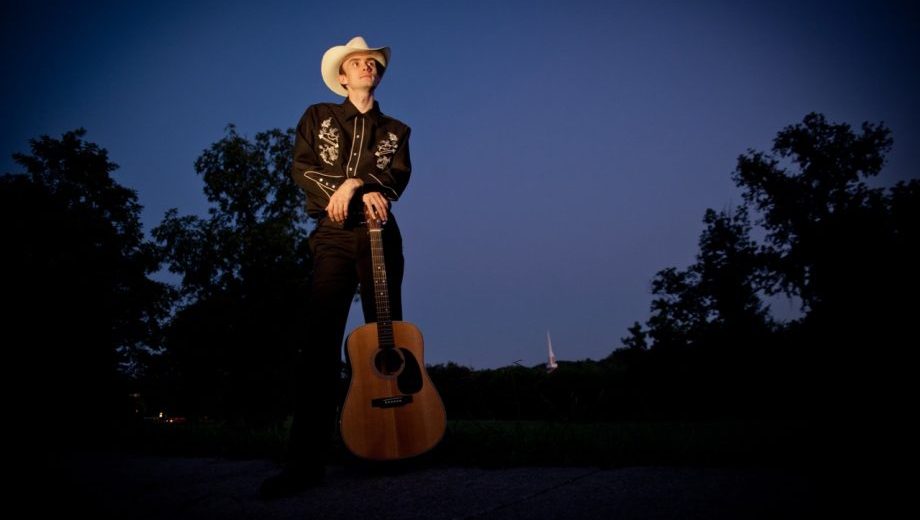
LISTEN: Joe Hott, “Sweet Loving Lies”

Artist: Joe Hott
Hometown: Augusta, West Virginia
Song: “Sweet Loving Lies”
Album: West Virginia Rail
Label: Rural Rhythm Records

In Their Words: “‘Sweet Loving Lies’ was written by Glen Duncan, Adam Engelhardt, and myself. A lot of the songs we write have a Stanley Brothers feel, but with this song, the way it was written and put together it has a strong original Carter Family feel, lyrically. I was so excited when we came up with the line ‘Spring flowers were bloomin’ when you came to me.’ It really set the tone for the song and you could just hear Sara Carter singing that line as only she could. The original Carter Family has been a big influence on me over the years and to have a song that resembles them on this new album is amazing. ‘Sweet Loving Lies’ is a great old school song that I know the fans will enjoy.” — Joe Hott


Photo credit: Stacie Huckeba

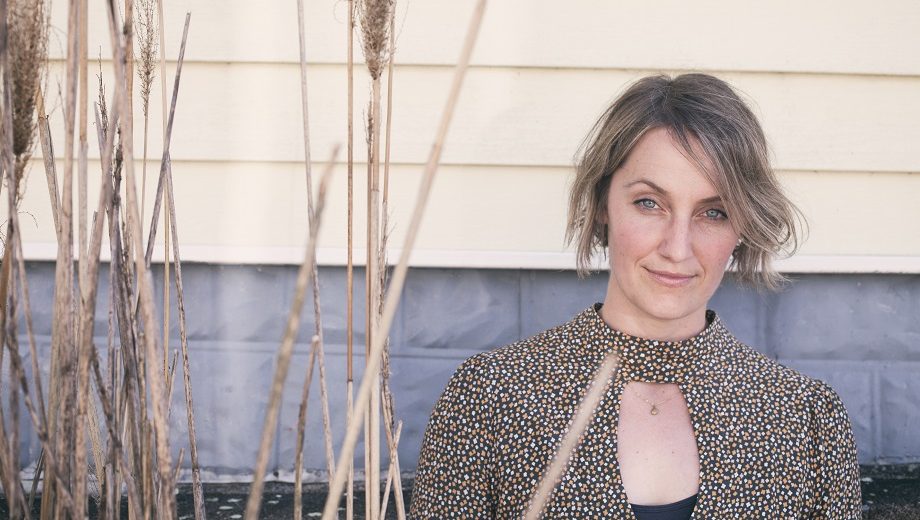
Joan Shelley’s Love of Kentucky, Captured in Iceland

Singer/songwriter Joan Shelley’s voice has a warmth and purity that can still the choppiest minds. Her fifth album, Like the River Loves the Sea, is a calm offering in noisy times. She says she didn’t set out to make an album with any kind of theme or message, but she found herself writing songs that often reflected her love of her native Kentucky.

For many years, Shelley chased the idea of leaving Kentucky, maybe relocating to someplace in Europe or a big city on one of the coasts. She grew up on a small farm outside of Louisville, a swarm of animals, siblings, and step-siblings to play with, a creek and woods to play in.

On her song, “The Fading,” Shelley borrows a phrase often attributed to Mark Twain about Kentucky’s sluggish pace of life: “And, oh, Kentucky stays on my mind/ It’s sweet to be five years behind/ That’s where I’ll be when the seas rise/ Holding my dear friends and drinking wine.” And yet when the time came to record this album, Shelley travelled far from Kentucky to Iceland, with frequent collaborators, guitarist, Nathan Salsburg, and producer and guitarist, Jim Elkington.

BGS: How did you end up in Iceland?

Shelley: I have a friend who’s a complete fan of Iceland. It just started to simmer in my imagination. This could be poetically in between Europe and the U.S., this ancient musical tie on the newest earth that’s in the ocean. I was, like, I want to go essentially to a different planet and make a record and see how that air feels and how that environment works.

When you go someplace like that to record, are you bringing all your instruments with you? Or are you letting the place influence the music?

We each brought a guitar. I was like: I’ll use their banjo; I’ll use their drums; we’ll use their tambourines, everything. In Iceland, there was no banjo. We couldn’t find a banjo. So someone had a resonator guitar and I had to retune that to a banjo tuning that I was using for the song, “Coming Down for You.” You know, funny limits that you encounter like that, even though it’s frustrating at the time and you’re kind of panicked, then you feel for the next step. I love that.

So were you running around Iceland looking for a banjo?

We asked musicians who had been there and musicians know musicians. It’s a pretty creative community. There are a lot of artists and songwriters. And a lot of synthesizers and not a lot of banjos. When you talk about a Kentucky-to-Iceland record, like, you’re in this black hole where you cannot find a banjo.

You became interested in music later in your childhood, but you’ve always had a strong connection to the outdoors that’s apparent in a lot of your songs.

Music came later but when I think about my time in nature as a kid, I would always wander off on my own. I remember distinctly sitting under trees and singing to the day, kind of being a little kid and making up melodies.

Were you singing with an instrument?

No, just singing. Like, bird education. Melodies only. No one had instruments. My mom used to and that’s how I found the guitar. It was in the attic.

Tell me about that.

I was a freshman in high school and I wandered up to the attic which had all the good stuff in it and I kind of dusted off my mom’s guitar that she had up there. And there was a chord chart up on the wall too. She was one of those people who would say, “I just want to get better at this someday.” But it was always someday. So I taught myself from the chord chart on the wall.

Do you have a certain go-to guitar when you’re in the process of writing songs? 

I have a Collings guitar which is a pretty fancy bluegrass guitar. It’s good for fingerpicking. I got it from my cousin who passed away. She died really young of cancer. At first I wasn’t taking it anywhere because I didn’t want it to break but then it hit me — no, she’d want to go everywhere! It’s good to be reminded of how lucky I am to have gotten this far and seen what I’ve seen. It’s amazing.

Do you remember when you first heard mountain music or when you first felt like it spoke to you? 

I would say the first song that ripped my stomach out and onto the ground below me was a Dillard Chandler song, a ballad. All his unaccompanied ballads on that Dark Holler record are just gorgeous.

Nathan Salsburg, your collaborator, is also curator of the Alan Lomax archives. Did he help lead you down that well of old-time music?

He exposed me to Dillard Chandler. I wanted to hear the female singers. I was hungry because I know they just don’t get represented in the recordings of the great musicians. When you look at old-time music, and bluegrass too, it’s male-dominated. So I was like, give me everything you got. And he collected some for me to listen to, like Aunt Molly Jackson, Little Jean Ritchie.

What do you hope people take away from this record?

Once I was done editing the songs that would go on the record, I almost called it Haven, because it’s the first song on the record. We need that calm, that haven, whether it’s in terms of relationships or the environment or political noise. I have to remember how to be quiet and lead my thoughts back to being quiet.

Even when I’m talking about love in the songs, there’s a deeper level we can agree on. Let’s get back to the deeper level. At this point in my life, and at this point in our country, this was the record that I was like: I’m going to stop telling myself I’m going to move somewhere. I’m going to be here. I’m making that choice to bring what I love about the rest of the world to Kentucky.


Photo credit: Amber Estes Thieneman

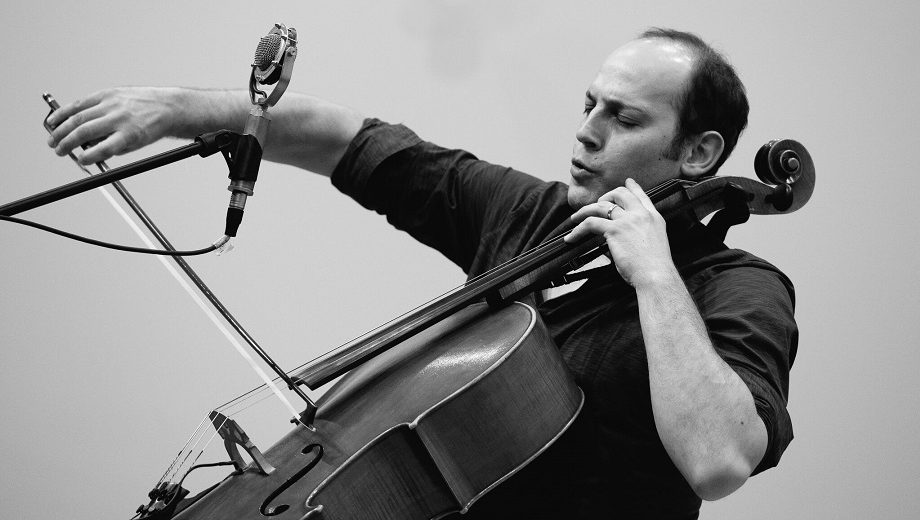
LISTEN: Mike Block, “Walls of Time”

Artist: Mike Block
Hometown: Overland Park, Kansas.
Song: “Walls of Time & Glory in the Meeting House”
Album: Walls of Time
Release Date: November 8, 2019
Label: Bright Shiny Things

In Their Words: “I really enjoyed mashing this bluegrass song up with an old-time fiddle tune. We used sections of the fiddle tune to replace the improvisational breaks in the bluegrass song, and Bruce Molsky even used a special instrument with sympathetic strings to capture an otherworldly sound. He also detuned to play in a different key than usual. My favorite aspect of the arrangement was getting the harmony vocals to toggle back-and-forth between major and minor in the choruses. We tried to give it a dramatic arc by massively re-harmonizing the final chorus before kicking up the tempo for the final fuddle tune break. I hope everyone enjoys this unique approach!” — Mike Block


Photo credit: Michelle Gendreau

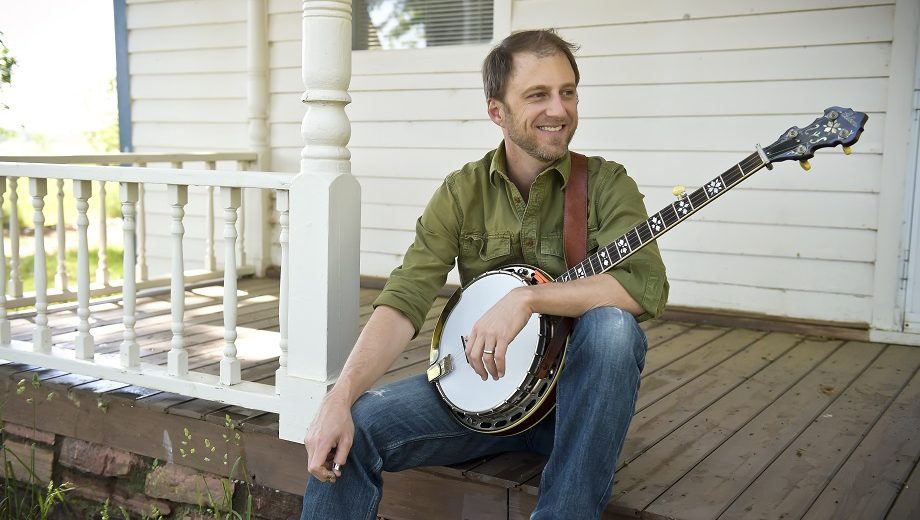
LISTEN: Chandler Holt, “Cover More Ground”

Artist: Chandler Holt
Hometown: Longmont, Colorado
Song: “Cover More Ground”
Album: Cover More Ground
Release Date: November 9, 2019
Label: Robust Records

In Their Words: “This tune just fell into my lap one day. I was messing around with the melody on the guitar and the chorus lyric just popped out of thin air. It took me a while to get the recurring melody to fit for the banjo but once it did the song really started to take shape. Singing while playing banjo and making it cohesive is always a challenge. There’s a reason you don’t see it a whole lot. I love going down that rabbit hole and I’m always surprised where I end up.” — Chandler Holt


Photo credit: Lewis Geyer

Nick Hornbuckle, “Cleo Belle”

There’s a sort of primitive beauty within the patchwork techniques that have informed and filtered into each individual instrumentalist’s approach to the five-string banjo. Styles rapidly morph and change, aided by the instrument’s relative youth (when compared, in roots music, to all but perhaps the resonator guitar) and its absolute refusal to nestle into any one distinct vein of pedagogy. Scruggs-style, clawhammer and broader frailing, ragtime, picking (i.e. with plectrum), strumming, and even more avant garde approaches such as Greg Liszt’s four-finger banjo all lend themselves to the machine in their own alluring ways. 

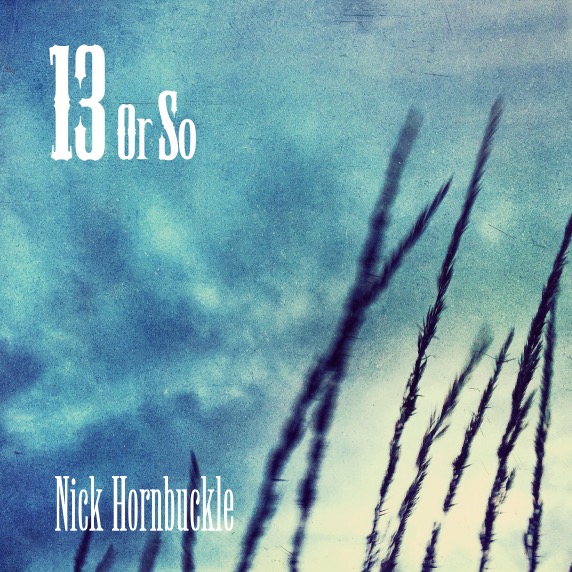
Enter Nick Hornbuckle, banjoist at large and member of John Reischman’s Jaybirds, who’s just released his second solo album, 13 or So. Hornbuckle’s right hand method defies categorization even by the rule-eschewing standards mentioned above. His two-finger style is decidedly distinct from the eponymous Appalachian, old-time frailing approach, combining aspects of clawhammer, Scruggs-style, and the ethereal, impossible-to-replicate quirkiness of just making your hands do what the music requires without being exactly sure how that works. I.e., playing the banjo. 

The resulting aesthetic, which anchors each of the twelve original tunes on 13 or So, falls somewhere within an equilateral triangle whose vertices would be Mark Johnson (of clawgrass fame), Steve Martin, and Noam Pikelny (if he had one finger tied behind his back). “Cleo Belle,” as all of Hornbuckle’s compositions, confounds with its combination of sheer musical athleticism and acrobatics — while remaining absolutely intuitive and organic. With his crew — on “Cleo Belle” that would be Trent Freeman (fiddle), John Reischman (mandolin), Darryl Poulsen (guitar), and Patrick Metzger (bass) — Hornbuckle wholly incorporates vernacular musical vocabularies while still pushing string band boundaries into more art music or chamber music spaces. The arrangement reminds that the western-most communities of bluegrass and old-time acolytes in this country have truly, effortlessly combined the best parts of each, while retaining that rustic, back-porch timelessness that makes the banjo beguiling to all of us.

LISTEN: Nora Brown, “Buck Creek Girls”

Artist: Nora Brown
Hometown: Brooklyn, New York
Song: “Buck Creek Girls”
Album: Cinnamon Tree
Release Date: October 25, 2019
Label: Jalopy Records

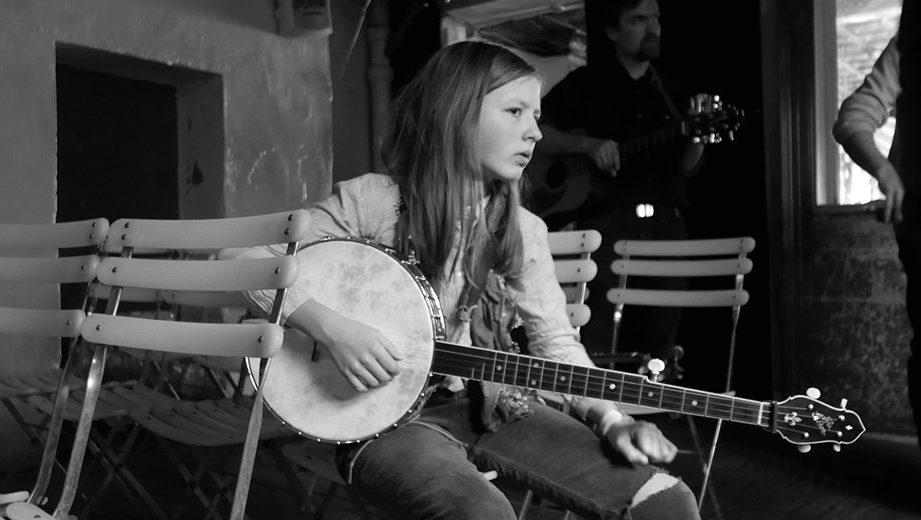
In Their Words: “‘Buck Creek Girls’ is a square dance tune from Kentucky that goes by different names depending on the source you get it from. Though [it doesn’t have] many words, the tune has a driving tempo and surprises the listener with each turn of the A to the B part. I learned this tune from the late John Cohen in his living room, from his interpretation of his recording of Banjo Bill Cornett. It’s exciting to listen to this tune because it seems like every time I hear it there is some note or emphasis I missed. For me, the tune never gets old because there’s always something new about it.” — Nora Brown


Photo credit: Benton Brown

Old Crow Medicine Show’s Ketch Secor Learned This From ‘Country Music’ (Part 2 of 2)

In Ken Burns’ documentary opus Country Music, a weaving path from the hollers of Appalachia to Garth Brooks’ theatrical stadium concerts was laid out for all to see. But mapping that trail has always been a complicated, cumbersome task.

The sheer number of influences at play required 16 hours of footage for Burns to tell the story – and lots of help from the artists themselves. One of those artists was Old Crow Medicine Show’s Ketch Secor, who gladly jumped in to tackle the unwieldy narrative of his favorite subject.

Secor had a two important roles to play in the series. Most obviously, he related a lifetime’s study of country’s earliest touchstones and how they combined into something uniquely American. But the outspoken frontman was also tapped in the beginning of Burns’ process as a behind-the-scenes consultant, helping guide the project’s tone and ultimately delivering one of its final and most powerful lines.

“It’s almost like [country music] needs to be exhumed, and new life breathed into it,” Secor proclaimed. “The part that is the songs of the people, the hopes and aspirations of the people — the pain and suffering of the people — that needs to remain embedded in country music. If it isn’t there, I’m out.”

Backstage at the Grand Ole Opry House on the night the series premiered, Secor explained what the project meant to a history buff like himself, and how Burns unwittingly played a role in Old Crow’s founding.

BGS: Old Crow Medicine Show’s music has always shined a light on the past. What made you interested in that to begin with?

Secor: I was always interested in history, and I really attribute that to Ken Burns – I saw The Civil War when I was 11 years old. I lived in the Shenandoah Valley, and I wondered why the kids went to Robert E. Lee High School and why we played Stonewall Jackson, why the name of the shopping mall and the subdivision and the motel was what it was — it was all the war. It was everywhere, and we took some field trips but I didn’t really understand it. I could feel this echo, though. Seeing that movie on PBS really helped me to take this tour of my own backyard and see how history was alive. I credit that to him.

Knowing how deeply you care about country music’s history, what did you think when you found out Burns was going to present it?

I thought immediately, “Thank God. Finally somebody is going to tell our story and get it right.” I don’t trust any of these people to our story [gestures to photos Opry stars dotting the dressing room walls] because they’re all right in the middle of it. Everyone here has a very, very different story, and everybody has “The True Story” — but only their truth. Country music is richer than any one truth, so it takes an outsider’s perspective because of Nashville’s tendency toward this clan-ishness, the good ol’ boys network and these sorts of forces.

I mean, we’re the genre that has told its own history ever since it started. The radio charts today are full of songs about the good old days — and they’re talking about the ‘90s. That’s the good old days now. But it doesn’t matter, whatever the good old days were, the ethos here is that times ain’t like they used to be, they used to be better. That’s what they’ve been selling from the start, but they can’t tell our history without making it a commodity. So it takes this outsider, and you can’t ask for a better outsider than America’s most beloved documentarian, because he was the outsider who told us how jazz was born and flourished, how baseball was created, the Roosevelts, the National Parks, the Brooklyn Bridge. Country music is just as important as all that.

What did they actually ask of you?

I talked about slavery and the plantation system, the penal system — because incarceration was a great cultural conversationalist. It kept people locked up in isolation, which is one of the keys to making country music so rich. How long did the Scotch-Irish people live in Appalachia before being disturbed? Well, the great disturbance comes in Bristol in 1927. The record companies came in and said “Whaddya got?” And what they had was so specific to one region that it might sound different one holler over.

Then I talked about the Opry, and then I tried to talk about more New Age-y hip-fangled things, but they didn’t use any of that [laughs]. The other way I’ve been involved is by being an advisor to the film, so I read all the early scripts for the past eight years. But it was great, they just asked me, “How would you tell the story? Where was the birth? Who was important to mention?”

This has been in the works for eight years?

Yeah, he conducted like 140 interviews, and of that maybe 50 or 60 of his interviewees have died. See, the other thing about Ken is he knows when it’s time to tell a story, and by doing the story when he did, he was able to get Little Jimmy Dickens, Merle Haggard, numerous artists who wouldn’t be here — George Jones is in this film.

Did you get surprised by anything?

Oh yeah, a trove of knowledge is in this documentary, I learned a ton. And lots of things made me cry. What I learned primarily was a real self-reflective thought of, “Oh my God, this is my life.” I think almost all of these folks on the wall are in the movie, and when they watch they’ll be crying, too, because they’ll see themselves in the Bristol Sessions. They’ll see themselves at the earliest days of the Grand Ole Opry, they’ll compare themselves to the Outlaw movement and the traditional movement of the ‘80s, the development of the star system, and contextualize their own career.

You talked about isolation. We’re in this weird moment where country is more popular than ever, but rural life is changing fast. It’s easy to connect with people all over the world. How does the film address that?

One of the things that’s great about the film is that it stops around 1996, because Ken Burns isn’t a journalist, he’s a documentarian. He’s not making a movie about today, and here’s why: Historians say you’ve gotta have a generation pass before you can tell what happened. I just think it’s gonna go a lot deeper than anybody could say right now.

Like if you told the story of why Randy Travis mattered in 1986, it would be a lot different. And also the forces that are at play in country music, they need time to gestate for us to understand what they’re saying. Who’s gonna last? Who are we going to be talking about in 25 years? Blanco Brown? Chris Stapleton? Who’s gonna have their picture on this wall in 25 years? I don’t know.

Editor’s Note: Read Part 1 of our interview with Old Crow Medicine Show’s Ketch Secor.


Photo credit: Crackerfarm

Laurel Premo, “Polly Put The Kettle On”

If you haven’t been paying close enough attention you may have missed the fact that the absolute cutting edge of American roots music these days — some of the most exciting art to be born out of this latest renaissance in Americana, bluegrass, and folk — is old-time. Artists like Rhiannon Giddens, Allison de Groot & Tatiana Hargreaves, Victor Furtado, Amythyst Kiah, Jontavious Willis, Dom Flemons, and so many more are utilizing this moment to demonstrate that old-time music is expansive. It has relatively low barriers to entry, it’s representative, it’s queer, it’s Black, it’s Indigenous, it demands egalitarianism, it’s woven into the fabric of all genres downstream of it, and most importantly, it’s ceaselessly relevant. In our attention economy, which requires all of this and more from any pastime worth its merit, old-time delivers. 

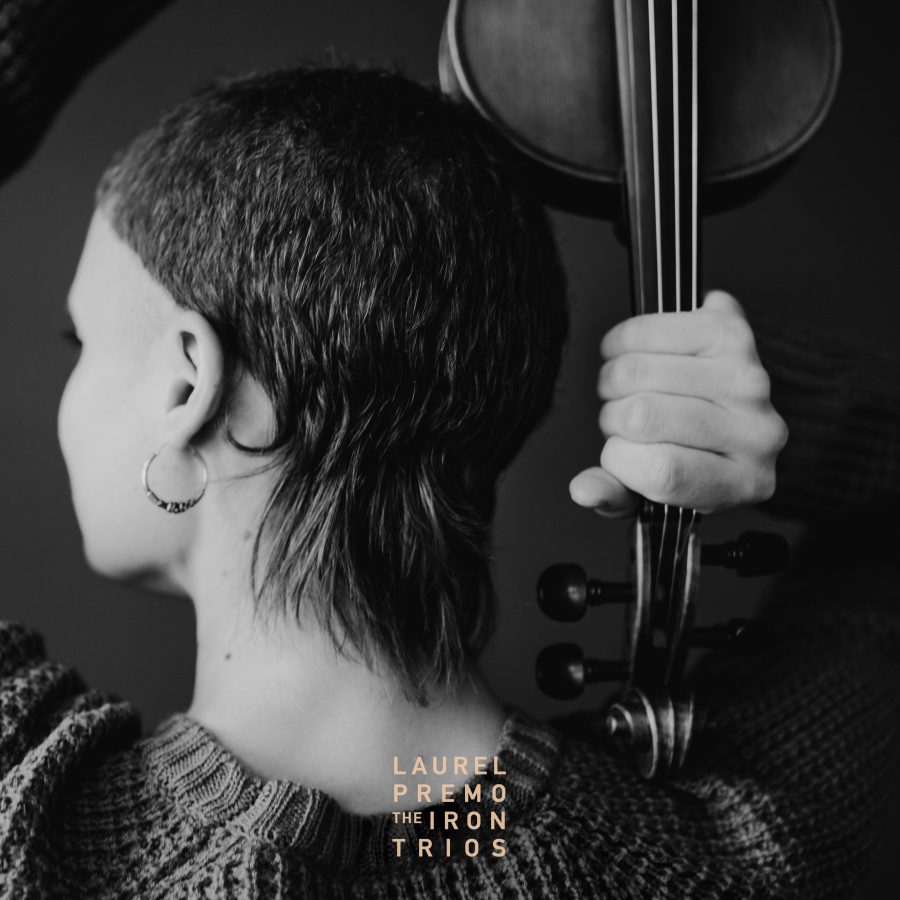
A new album from fiddler, composer, and multi-instrumentalist Laurel Premo perfectly reinforces these points, in content, intention, and certainly execution. The Iron Trios is a collection of nine more or less traditional old-time fiddle tunes and two Premo originals, the majority of which are played by a trio: fiddle, upright bass, and electric guitar. For an album demonstrably unconcerned with even the basic premise of the construct of “authenticity,” it accomplishes that squishy term impeccably and effortlessly. 

Yes, with electric guitar. Tunes such as “Old Time Sally Goodin” and “The Original Grey Eagle” nod to string band settings that beg us to play these games surrounding legitimacy and “authenticity” while turning them all on their ears. With bassist Evan Premo, guitarists Owen Marshall and Joshua Davis, and an appearance here and there by fiddler Aaron Jonah Lewis, Premo takes old-time fiddle, melodies, and rhythms into spaces usually dominated by electronics. 

It’s trance, it’s dreamscape, it’s meditative, it code switches with ease, sometimes sounding like a film score, or a square dance, or public radio at one in the morning (“Echoes” with John Diliberto, anyone?), or modern chamber strings, or the soundbed for an abandoned-warehouse-turned-cooperative-art-space. At the same time, it refuses to be any more complicated than good, old-time fiddle music. And that simple fact is another compelling reason why old-time is truly the most exciting space in the Americana, folk, and bluegrass realms today.

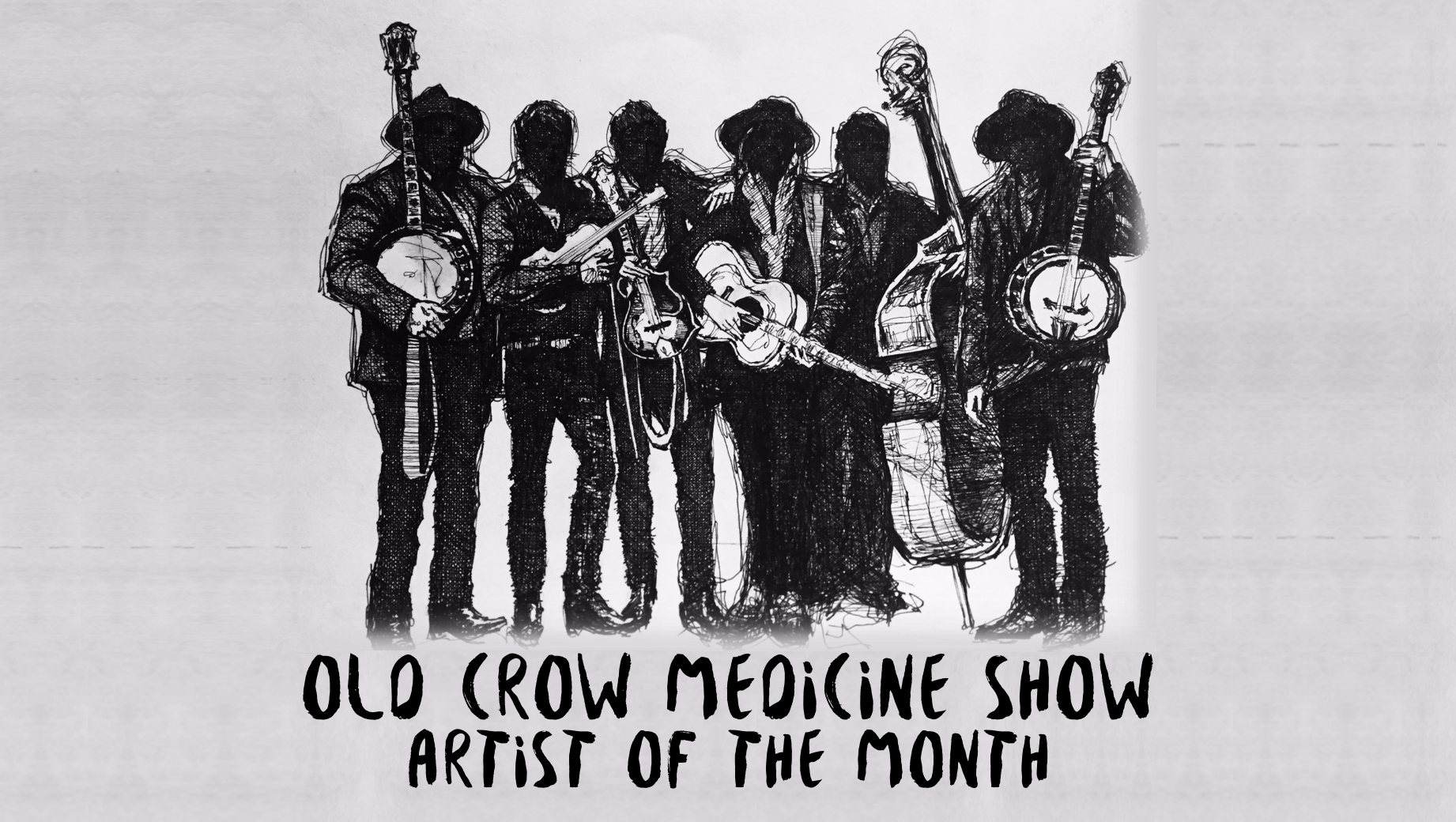
Old Crow Medicine Show: “Time to Start Doing Exactly What We Feel Like Doing” (Part 1 of 2)

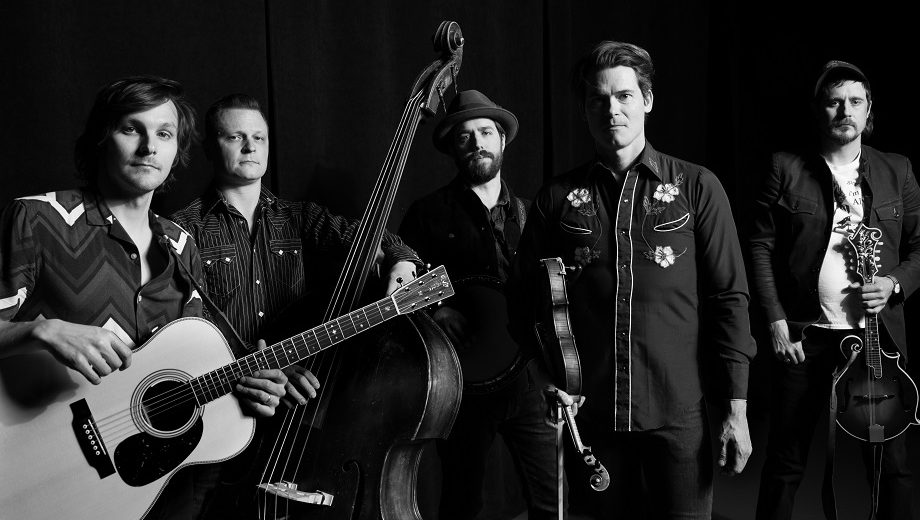
I can still remember the first time I saw Old Crow Medicine Show live. It was a sweltering summer night in Nashville around 2008 (back before the bachelorettes and Bird scooters) and they played from a massive barge moored at Riverfront Park. The thing was huge — far too big for six skinny street musicians to budge — but I swear it moved while they stomped and hollered, the Cumberland rolling by lazily behind them.

I was familiar with the band and already loved the unapologetic mix of tradition and edgy intensity, but that live show was revelatory. It gave me a new appreciation for the sense of community Old Crow was trying to forge, so it’s always surprised me that they didn’t record live albums. That has finally changed with this month’s release of Live at the Ryman.

Backstage at the Grand Ole Opry House on another hot summer night, front man Ketch Secor spoke with BGS about the project, why Old Crow is just now getting around to a live album, and what their style of music needs most right now.

BGS: Part of the idea of this album is that Old Crow has played the Ryman over 40 times. For a band that started out busking in the Northeast, how does it feel wrap your head around that?

Ketch Secor: Actually, I wish I had a real count because Lord knows I’ve played there more than 40 times. I think that’s how many times we’ve headlined, but if you add them all up I bet it’s a triple-digit number. We’ve been openers there for Dolly Parton back in 2002 for, like, a daytime show. We’ve done a lot of film and television there, all kinds of awards shows. It always felt like the place to shoot for — it’s the moon, the Ryman Auditorium, and we were always a shoot-for-the-moon kind of band because we figured “Well, we’re not supposed to be here anyway, so we might as well try and go as far with it as we can.”

You self-released one live album in 2001, and then nothing else until now. Why did it take 18 years to do another, since the live show has always been the foundation of what you guys do?

Oh, I think because we’ve always tried to put out a new studio record every couple of years, and here at the 21-year mark it’s probably time to start doing exactly what we feel like doing.

You haven’t been doing that the whole time?

Nah, not with those studio records. There’s a lot of stuff you’ve gotta do. Yeah, we always did it “our way” in the fact that we always played our own music. But just being in the music business means doing it everybody else’s way.

So you had to make a few compromises here and there?

Oh yeah, there was a lot of playing the game in ways that never seemed to pan out, but it never stopped us. That was just the way it was, and we were impressionable, so that’s what we did. We did it the way we were advised to do it.

Can you elaborate a little?

Like playing Napster. Doing shows for radio programmers in L.A. who never played us. Trying to make videos for CMT that were never in rotation, ever. …Opening up for Carrie Underwood at [Country Radio Seminar], it’s like, “What were we doing there?” Those guys, they might have liked it, but they were never gonna play it. And I don’t care if they like it, I want them to fucking play it, or I don’t want to play that show.

So now that you feel freed up to do it your way, what’s that look like?

Live at the Ryman. Here we are singing a Merle Travis song! Here we are singing our songs or selling popcorn and tickets and people brought their buck-dance shoes! I mean, we’ve set beer records at the Ryman. I’d rather sell beer at the Ryman than sell records! …I’d rather sell beer at the Ryman than digital streams! What’s the fun in that?

“Tell it to Me,” “Methamphetamine,” those are interesting songs to present because rural America has a new drug problem going on with opioids. Why is it important for you guys to sing songs like that, especially at the Ryman?

Well, “Tell It to Me” was recorded in Johnson City in 1928 I think. The band that brought that song to the studio had been an original backing band for Jimmie Rodgers… Anyway, I’m just saying this because if you like country music, you should probably know that drug songs have been part of the canon since recording studios first illuminated a red light bulb and said, “You’re on.”

I don’t think people do know that. We’re just now starting to get radio songs with pot references that people don’t flip out over.

Yeah, I mean it was blow in the ‘20s and now it’s pot in the 2010s. And then “Meth” is a really different kind of song because it’s more topical. We recorded it a long time ago but it seemed important to bring it back and revamp it, make it more intense, and Charlie Worsham plays some really great electric guitar on it. It just feels like it’s knocking on your door, like a hurricane.

Tell me about doing “Louisiana Woman, Mississippi Man” with Margo Price.

We were down in Oxford, Mississippi, doing a show with Margo. She was opening up for us down there near Ole Miss, and we were looking for a song that seemed to fit, so we tried that one. Our duo thing felt really good, and I feel like I’m a little bit in the Conway range — and she’s definitely in the Loretta range — so it worked out pretty good. We heard the playback we thought it sounded great so we wanted to put it out. I saw her at the grocery store the other day and she said she loved it.

Why did you include a song like “C.C. Rider,” which has Lee Oskar playing harmonica?

I really love his band War. We did “Lowrider” onstage at the Ryman, too, maybe that will come out on Volume 2. But what I really loved about that moment on the Ryman recording is that it has twin harps. You know the old guys don’t have their pictures up here [gestures at photos of Opry stars on the dressing room wall]. …But the story of the twin harp playing of the Crook Brothers — Herman and Louis Crook — lives a long time, because Herman and Louis lived, like, into their 90s. What they were great at was two harmonicas playing in unison.

That’s interesting. In your music you’re often looking to the past for inspiration, but what do you think is the future of string bean …. er, string band music, Americana?

You just answered it, man. We need a new Stringbean. Nobody’s acting like that and that’s what’s missing. Who’s gonna be the clown? What happened to the kind of entertainment that’s self-effacing? Everybody on this wall loves the clowns, but none of them are. They’re “the vocalists” and we’re supposed to take them seriously. I’d love to see this genre — whether it’s country or Americana or whatever — just not take itself so damn seriously. Let’s just have a grand ole time. Let’s poke some fun at each other, and especially at ourselves. I’d love to see that.

Editor’s Note: Read part 2 of our interview with Old Crow Medicine Show’s Ketch Secor.


Illustration: Zachary Johnson

Dori Freeman: From Appalachian Roots to ‘Every Single Star’

Dori Freeman has been hurt and felt torn. We know because she’s told us so, always with unblinking frankness in crisp pop songs with deep Appalachian roots. But even if we couldn’t understand her words, we’d hear the pain in her soprano, which rings out with melancholy strength only gained from living.

In her new album Every Single Star, the Galax, Virginia, native pushes her blend of familial mountain grit and mid-century-inspired polish even further into its own creative territory. Never one to shy away from truth, Freeman writes about motherhood, expectations, and relationships from a distinctly female perspective.

BGS: In the songs on Every Single Star we seem to hear real contentment. While there’s still some conflict, especially when it comes to having to be away from your daughters, there is peace, too. Was writing these songs a different experience than writing your first two albums?

Dori Freeman: Definitely. I had recently been married when I started writing a lot of the songs on this record. It was the first time I’d been in a happy, stable relationship, which obviously will have an effect on the themes in the songs you write. I was in a different headspace. For the previous two records, I was in different phases. Whether it was getting over a particularly difficult relationship or looking back on that and thinking what I didn’t want to have. With this one, I was with someone that I really love. So the songwriting was different.

I did a lot of imagining scenarios, which I didn’t do as much with the first two records. Those were based more on very direct experiences. On Every Single Star, the songs about my daughter are very direct and personal, but some of the other ones, like “Of Me and You” — that was a song that I wrote for a friend of mine who’d had a relationship that didn’t work out so well. I’ve had to look for different sources of inspiration this time around. When you’re happy, it definitely makes songwriting harder. [Laughs]

I’m happy you have that problem.

It’s a great problem to have. [Laughs]

Do you have a favorite memory of playing one of these new songs live over the past several months?

Nothing too specific stands out, but one of my favorite songs on the record is “All I Ever Wanted.” One of the things that’s nice about performing that song is almost every time I’ve done it, I’ve had women come up to me afterwards and say how much they enjoyed the song. That was the intention: to write a song fully from a woman’s perspective that other women could relate to. So it’s nice to have girls come up and tell me they liked it.

You’ve said you admire Peggy Lee and the mid-century aesthetic. What is it about the ’50s and ’60s sound that you like?

Peggy Lee is one of my favorite singers of all time. I don’t know what it is. I think for one thing, they still recorded in a more live situation, in a bigger room, so everything sounded a lot fuller on records back then. I also like the style people sang in in that era. My dad played a lot of that music for me growing up. Actually, he just made a record with mandolin, playing a bunch of swing tunes, so he’s really drawn to that music too. I think that it’s that I always listened to it, and I can’t help but have it influence what I do.

You grew up in such a musical family. When you were a kid, did y’all just sit around and play music together?

Yeah, definitely. I was always in choir in school. I didn’t really start to play guitar and sing in front of people by myself until I was about 15 or 16, but even when I was little, I would go jam at parties and festivals with my dad and grandpa, and then sit around and watch people play music.

As I got older, I started to perform with my dad and grandpa on stage. They used to have a little show on Friday nights at the frame shop that my family runs. So that’s one of the first places I really got some good practice performing in front of people. We still do shows together. We still play together as a trio with my husband as well, who plays drums with us now. So yeah, it’s still very much a family thing.

You’ve said that people don’t really talk about motherhood in the music industry. Are there specific experiences you’ve had or witnessed that made the great motherhood omission personally more evident to you?

Yeah, I can think of one in particular, when my daughter was not quite a baby, but not quite 2 years old — so she was still pretty little and motherhood was still a pretty new thing to me. It was also around the same time I was putting out my first record, so it was hard to manage all those things and to figure out how to balance them. I was at a music conference. I won’t say which one. They had this thing where they wanted a bunch of women to get together and talk about problems they faced in the industry as women. So people were raising their hands, going around, and sharing their experiences.

There was a lot we’d all been through, with sexism and dealing with men being inappropriate in a whole variety of ways. That is obviously a huge issue too. But I remember raising my hand and saying, “You know, it’s hard being a mom on tour, especially if there’s no green room, or you don’t have a babysitter to look after your child while you’re playing and then figuring out logistics — you can’t just stay anywhere after a show.”

I just remember crickets in the room. It got overlooked so quickly — everyone moved on. No one really seemed to care. And this was in a group of women. I think most of them, if not all of them, probably didn’t have children. I can understand why it didn’t seem important. But it was not a good feeling to share something personal and important to me and have it seemingly immediately overlooked and dismissed.

I can imagine. You’ve said it was cathartic to write songs about your daughter for this album. What kind of healing do you experience when you write songs about her?

I feel like she becomes more a part of what I’m doing, especially when she’s not physically present. If I can perform on stage and sing songs that are about her, I feel like she’s involved in some way. That makes me feel better because sometimes I’m on the road for four or five days at a time, which I know is not that long, but when you have a child — especially a young one — it starts to feel like a long time after a while.

It was really important for me with this record to write a couple of songs about her, and also to make sure that people knew when I was performing them on stage that they were about her. I always introduce the songs as being about my daughter. I want the audience to know she is an important part of my life. I want to feel like my daughter is involved, even when she’s not there. I guess it helps me feel better about missing her.

It helps you, but it also seems like talking about it openly — just saying, “This song is for my daughter” — could go a long way toward normalizing motherhood in music. Many women artists are also mothers.

Absolutely. I feel like in most industries, it’s hard to be a working mother, but being a musician brings a very specific set of challenges. One of the questions I get so often — and it’s one of my least favorite questions — is, “Do you travel with your daughter?” or “How come your daughter’s not with you?”

I just think, “Well, do you bring your daughter to a board meeting? Do you bring your child on your business trips?” I realize that music seems like fun and not a lot of work, but it is a lot of work. It’s a job, as much as I love it. So it doesn’t always make sense to have my child there, and I don’t think it’s fair to be judged for that.

You’ve stepped confidently into this tradition of strong Appalachian women — strong Appalachian women artists, in particular. Instead of me assigning a definition to what that means, how would you describe the particular strength of an Appalachian woman?

Oh gosh. That’s a tough one. I can give you one example: When I think of a strong, Appalachian woman, I think of my great grandmother. She was from eastern Kentucky and had seven or eight siblings that were younger than she was. She raised them from the time she was 13 on. When she was an adult, she went right into having her own children. She took care of everything. She did the housework. She raised the children. She killed the chickens to cook. It was classic, what you imagine when you think of Appalachia 70 years ago.

If her life had been different — if she’d grown up somewhere else or maybe with more opportunity or more money — she would have pursued music in some way. I know she really loved music. She loved to sing and play guitar. She taught my grandfather how to play guitar.

I feel like in a roundabout way, she has some part in my choice to be a musician. My grandfather has been such a big influence on me musically, and if it wasn’t for her passing on her love of music to him, then it wouldn’t have made its way to me. Even though she couldn’t pursue those things in her own life, she wanted to make sure she passed them on so that someone eventually could.


Photo Credit: Kristina LeBlanc