LISTEN: Wood & Wire, “Left My Girl Behind”

Artist: Wood & Wire
Hometown: Austin, Texas
Single: “Left My Girl Behind”
Release Date: November 15, 2019
Label: The Next Waltz

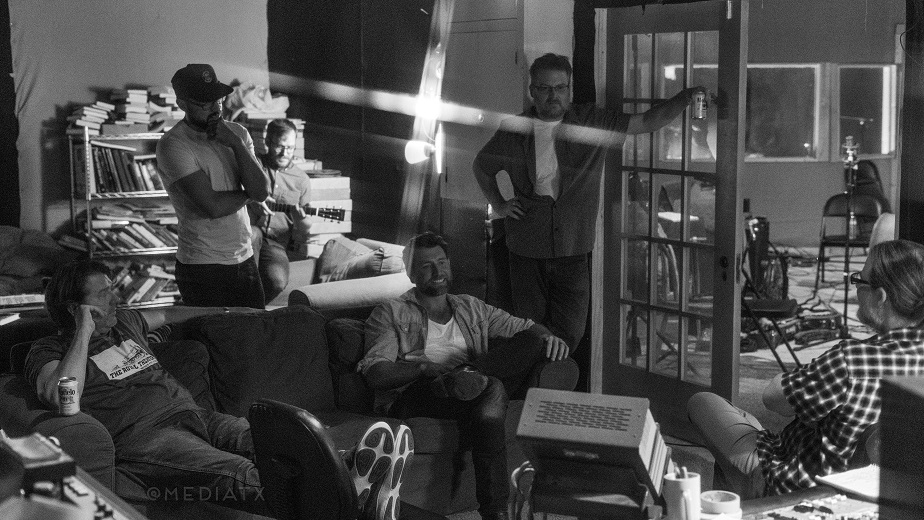
In Their Words: “This is a traditional tune that we learned from Levon Helm — one of our favorite artists of all time. It’s also called ‘The Girl I Left Behind.’ Outside of bluegrass, we all have different (maybe even more prominent) musical influences. It’s those collective outside influences that really drive our sound. The result is us writing and playing tunes with grooves and feels that people wouldn’t expect from an ensemble like ours. The way Levon did this tune, with a funky backbeat groove, really speaks to us and it’s just a blast to play.

“It’s always our preference to record as organically as possible, working on vibes and performance. We don’t use a click track and we like to move with each other musically. Out at the bunker with Bruce [Robison], the team, and no computers, that’s the only way it goes down. We’ve been performing this one for a while so it was pretty simple — get in there and play the song like we’ve always played it.”


Photo credit: Spencer Peeples

LISTEN: Rosanne Cash, “Time” (Tom Waits Tribute)

Artist: Rosanne Cash
Hometown: New York City
Song: “Time” (Tom Waits tribute)
Album: Come On Up To The House: Women Sing Waits
Release Date: November 22, 2019
Label: Dualtone Records

In Their Words: “What an honor to sing a song like ‘Time.’ Many years ago, I recorded it just for myself, just for the pleasure of singing those words. Maybe I seeded the notion in the deepest part of the creative ether, the place from where these songs travel through Tom. For whatever reason and from whatever source, I’m just thrilled to be a part of this album. There is no other songwriter in the world, past or future, like Tom Waits.” — Rosanne Cash


Photo credit: Michael Lavine

WATCH: Darrell Scott Reminds “It’s A Great Day To Be Alive”

Song sorcerer and musical mage Darrell Scott is celebrating autumn with a refreshed rendition of his ever-popular song, “It’s A Great Day To Be Alive.” In a nod to his acoustic roots, Scott recorded a bluegrass version of the hit, which has been covered by many artists in country, Americana, and bluegrass. In October, he released the official music video — depicting fall festivities like hay rides, a corn maze, and other images of the season — which, as he tells it, was actually inspired by a surprising collaboration.

“I found that a local Nashville corn maze (Honeysuckle Hill Farms) wanted to put my image and song ‘It’s a Great Day to be Alive’ into its corn maze design this fall,” he explains. “And since I had never made a video for the song, and since the song’s message is as needed as ever, we decided to make a video with great help from family and friends. I love the result.”

Feel the warmth of autumn through this music video; watch right here on BGS.


Photo courtesy of the artist.

Don’t Be the “Second One To Know” about Chris Stapleton’s New Video

The idea of success, especially as it relates to being a musician, songwriter, and/or performer, has always been a wily, shifting idea. What are the benchmarks we use to determine someone’s level of notoriety? What are their claims to fame? Owning a tour bus? Having your first number one hit? Being the musical guest on SNL? Having a highway named after you? Or perhaps a proclamation from your local public figures designating a [Named After You] Day?

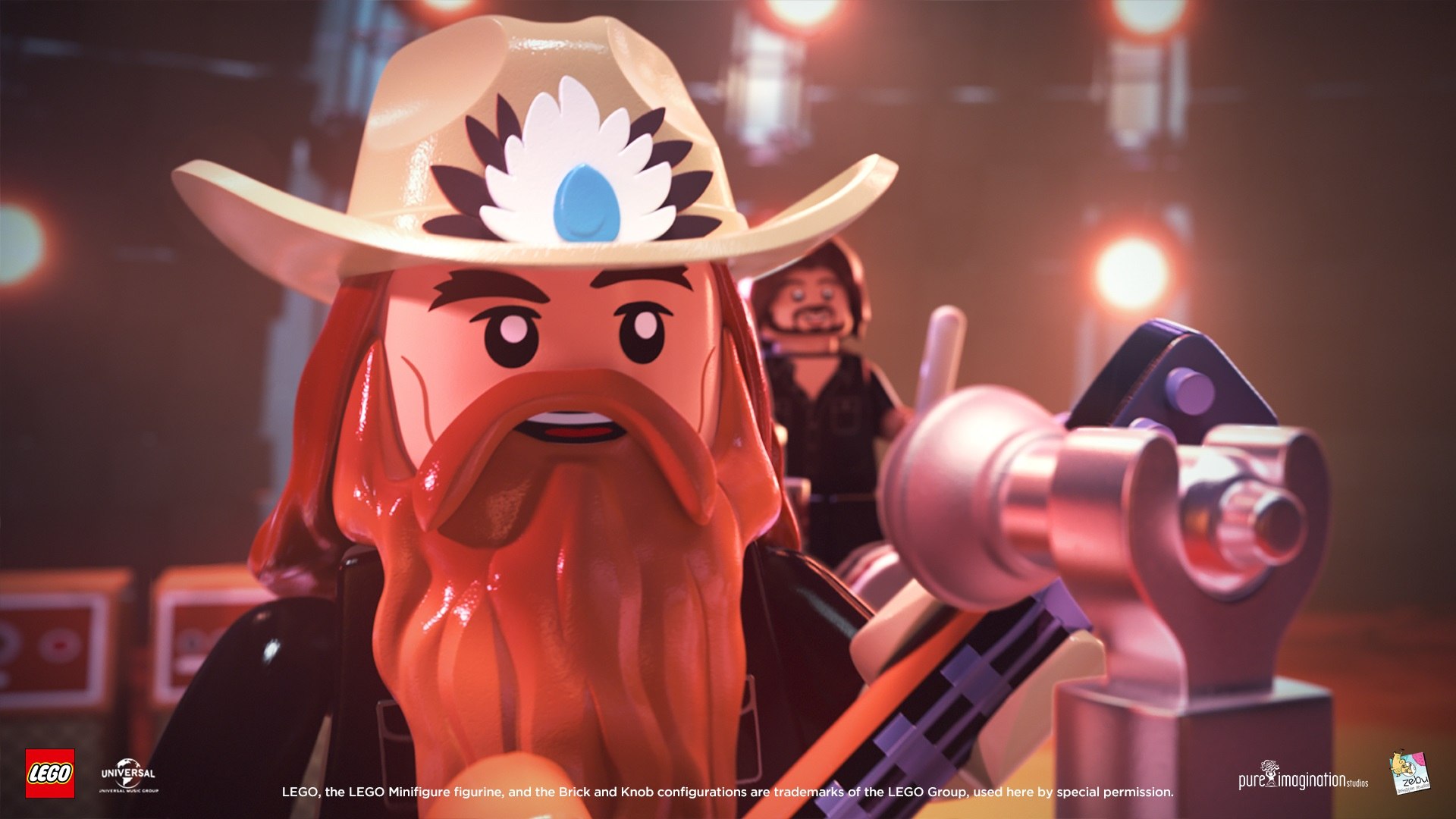
Well, for everyone’s favorite bluegrass powerhouse vocalist turned mainstream country star and global sensation Chris Stapleton, success isn’t measured only by a cameo appearance on HBO’s Game of Thrones. How about having LEGO figures modeled after you, your wife, your band, your stage set, and your otherworldly, music-hating fantastical arch-enemies?

LEGO Group and Stapleton collaborated on the brand new music video for “Second One To Know,” creating a fully realized toy brick universe replete with Stapleton’s signature hat, Morgane Stapleton’s omnipresent tambourine, strikingly accurate LEGO versions of instruments, gear, crew, family members, and even a cameo by bassist J.T. Cure’s cat! (A cat-meo? A cat-meow?)

It may seem a little off the wall for an artist who, while ceaselessly compelling, is generally reserved and counterintuitively subdued — despite his music and window-shaking voice being anything but. But the video is whimsical, painstakingly detailed, expertly crafted, and damn, it’s entertaining. Watch LEGO + Chris Stapleton’s “Second One To Know” right here, on BGS.


Still courtesy of the artist.

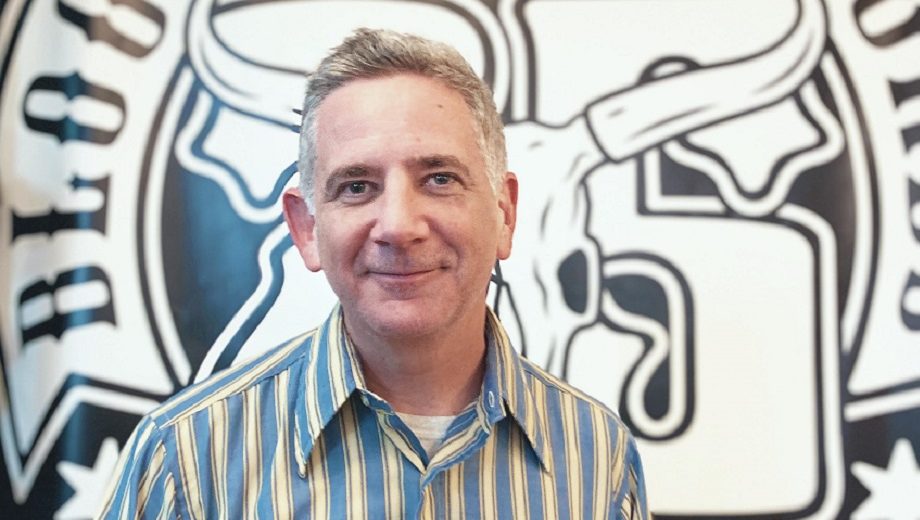
Bloodshot Records at 25: An Insurgent Interview with Co-Founder Rob Miller

Bloodshot Records’ 25th anniversary party is taking place in Chicago this Saturday, and they’re gonna party like it’s… 1994.

Long before the term Americana was coined, this fledgling Chicago label was issuing records by Robbie Fulks, Old 97s, and other road-worn musicians who built their careers on a mix of country and punk that the label initially termed “insurgent country.” That description didn’t last but the label forged on, with compelling artists and songwriters like Jason Hawk Harris, Sarah Shook & the Disarmers, and Luke Winslow-King now on the roster.

Bloodshot Records co-founder Rob Miller fielded some BGS questions by email. Check out the newest release, Too Late to Pray: Defiant Chicago Roots, at the end of the interview.

BGS: Launching a record label is a pretty big risk, then and now. Was there a specific moment that convinced you, “OK, the time is right to do this”?

RM: Au contraire! Risk never, ever crossed my mind. When you don’t have a business plan, an expectation of success — let alone longevity — or any idea what you are getting yourself into, ignorance and naiveté are powerfully liberating. The whole idea was, at the very least, a release from the drudgery of drywalling shitty condos in Wrigleyville and Old Town.

The three original partners ponied up a couple of grand from our day jobs, put together our first release, For a Life of Sin, and the day the CDs came back from the manufacturer, POOF!, we were a “label.”

I can’t imagine doing something as ridiculous as that now.

What do you remember about those first few conversations with your friends and your peers when you shared your plans to launch Bloodshot?

Practically nothing. It was a very blurry time. It was at a time in all our lives when all was action and creating and the moment without much thought to consequences. We were just so excited at the prospect of shining a light on this weird little scene in Chicago that I doubt anyone could have talked me out of doing it. The real world had not yet muscled itself to the table and I’ve managed, in many ways, to keep it at bay all these years. Oh, and then there was the tequila. As I said, very blurry.

Why did the phrase “insurgent country” fit the Bloodshot Records vibe, do you think?

It’s something Eric Babcock (one of the original founders) and I came up with one day drinking beer in my backyard — never let two English majors get drunk when there’s a thesaurus within reach, by the way.

We were looking for a catchy way to describe what we were doing, something that spoke to the outsider aspect and added an edge to the frequently off-putting “C” word. At the time, there wasn’t much critical language or reference points surrounding the melding of roots and punk. So, before someone else hung a dreadful tag on us like cowpunk or y’alternative, we thought it would be wise to TELL them what to call us.

Print media was so prevalent as this label was getting off the ground. What role did music journalists play in making Bloodshot a success?

Wait, we’re a success? Who knew? Where’s my pony, dammit!

Having spent my formative years reading fanzines and indie publications, persuading glossy mags or acclaimed daily newspapers to pay any sort of attention to us never crossed my mind. We did then, as we do now, focus on the grassroots. We work from the bottom up, rather than wait around for some “tastemaker” to tell the world it’s OK to like us or our artists. It was in those locally-based outlets where people could write about us with passion and without concern for circulation or broad appeal.

However, there are times when our tastes and popular culture intersected (Neko Case, Justin Townes Earle, Ryan Adams, Old 97s, Lydia Loveless, among others) and the wider world and folks higher up the media food chain paid attention to us. Usually that would take the form of a “trend” piece along the lines of “the new sound of country” or “Whiskey-soaked barn-burning punks” or some such shit. They’d be reactive and reductive, but tried to sound bold and cutting-edge by calling out some hot, fresh underground movement.

And that’s all great, but it doesn’t influence what we like or how we go about what we do.

Don’t get me wrong, or think me the King of Cynics (I am merely a prince), there were some insightful and humbling pieces in places like Rolling Stone, GQ, Village Voice, New York Times and the like. In NYC 1996, we had an afternoon barbeque on the Lower East Side with the Old 97s, Waco Brothers, and others. It was during CMJ and since they wouldn’t let our bands into the festival, we put on our own party (a precursor to our longstanding shindig at the Yard Dog Gallery during SXSW). I went outside to check on the line that snaked down the block and saw a couple writers from Rolling Stone and the legendary Greil Marcus trying to get in. Yikes. Things like that helped lend an air of legitimacy to our strange little crusade.

Who were some of the earliest champions for the label?

Fans, largely. Weirdos like ourselves who quickly responded to what we were trying to do. People who were fed up with the co-opting of the underground, of Lollapalooza, of Martha Stewart “grunge-themed” parties; people who were looking to classic country for the freshness, excitement, and freedom that they used to find in punk; people who were discovering that Johnny Cash, Loretta Lynn, and Hank Williams were 1000 times more interesting and relevant than the Stone Temple Pilots or the Red Hot Chili Peppers would ever be; people who were starting up, or involved in already, their own scenes in their cities who saw us as willing collaborators.

Fortunately, many of these collaborators also worked in the biz, as writers, DJs, promoters, record store owners, distributors, and club owners. We were able, in pretty short order, to stitch together an ecosystem of people who genuinely dug what we were trying to do and could help spread the word to the benefit of all. It was very much a community spread out across the country.

How has the Chicago music scene factored into the Bloodshot Records story?

There isn’t so much a Chicago music “scene,” as there is a Chicago “hustle.”

When I moved to Chicago, I was floored by the vast array of music available to me on any given night. So many clubs, so many bands, so many neighborhoods, so many options. Given our position in the middle of the country, most touring bands stopped here. Rent was cheap. Labels arose in a non-competitive environment which fostered a vibrant, organic and sustained creative burst. Since Chicago is a working town, rather than a company town like NYC, LA, or Nashville, there was an incredible amount of freedom to create and perform without fear of upsetting the “industry” or making a jackass of yourself and failing during your “shot” in front of A&R goons from a major label.

Do what you do. Try new things. We didn’t break rules so much as we never knew what the rules were in first place. Club owners took chances on our bands early on and became fans and advocates, the media cared and wrote about what was happening at the street level, and there were plenty of record stores and left of the dial radio lending encouragement. Coming from a place that lacked such a supportive infrastructure, I never, ever take it for granted.

I firmly believe that Bloodshot would not have thrived anywhere else.

At the time the label launched, vinyl pressings of new releases were very rare. How did the label respond when you all realized that vinyl was making a comeback?

Very true. Early on, other than a series of 7” singles, we didn’t do any vinyl. Occasionally, a European company would license a title and press up 500 LPs or so, but otherwise, it was a dead format. That pained the record nerd buried deep in my DNA.

So, we were quite happy to help with the resurgence of LPs. At first, we’d tentatively press up 500 or 1000 of only the releases we expected to do quite well; LPs are expensive, time-consuming and temperamental to manufacture, and unsold LPs take up a lot of space in our tiny warehouse. AND no one was sure if this was a quick blip or a passing fancy, so all the extant pressing plants were log-jammed for months at a time. But now, with new pressing plants finally opening up, virtually every release has a vinyl component to it and we’ve re-released music never before available in that format as well.

I think people who, by and large, grew up with downloads and streaming respond to vinyl because of its tactile and totemic connection to the music and the artist. As the saying goes, you can’t put your arms around an MP3. It makes the LP a very durable and loveable format.

What do you remember about Bloodshot’s first website?

Funny, I was just talking to an IT person about this the other day. When we moved into our current office 20 years ago, we had one modem for the entire office. If someone needed to get online, they would run through the office telling people to get off the phones so they could log on. We wrote letters and used faxes. We even called people on the corded telephones and talked to them — how very quaint.

If we wanted to edit our site, we’d have to compile a list of changes, and fax them over to our “programmer.” We did that usually every two weeks or so. From where we sit now, it feels so distantly and hilariously primitive, like I was the chimp smashing bones with a femur when the obelisk appears in 2001: A Space Odyssey.

Every once in a while, someone will say something like “I googled that DSP” or “the Wi-Fi crashed and I can’t download the WAV files” and think, good Lord, what would such utterances have sounded like back then? They would have locked you up or tossed you off the bus for being a loony.

In this era, having a record label isn’t essential to release music. However, from your perspective, what are some of the benefits of having label support?

Several years back, the conversation did turn rather aggressively towards “why even bother having a label?” True, the monolithic aspect of THE LABEL has been wholly and, in many cases, rightfully demolished by the internet.

However, artists are artists. They should create and perform. They should not be burdened with the time-sucking (yet necessary) banalities of promotion and business.

That’s where a “team” like us comes in — perhaps that’s a more relevant term than “label.” We can take all those nagging organizational bits off their plate and build the brand. We keep the trains running on time (I refer, of course, to European and Japanese trains, not Amtrak). And, let’s face it, many possessing the — how shall we say? — artistic temperament do not also possess the logistical grace to tackle all the infuriating minutiae that make the whole machine run. No one asks me to write a catchy melody or craft meaningful lyrics delving into the human condition. No one should ask the artist to make sure the digital service providers are given the proper metadata or set up an in-store performance in Fort Collins Colorado.

What excites you the most about the next 25 years?

Ivanka 2040?

The death of the Death of Irony?

Jet packs?

(Hopefully) outliving Henry Kissinger.

Florida and Mar-A-Lago sinking into the sea once and for all?

Making sure the soundboard at the old folks home is powerful enough for Jon Langford’s shouting to be heard over the Matlock re-runs?
LISTEN: Mary Bragg, “Our Lady of the Well”

Artist: Mary Bragg
Hometown: Nashville, Tennessee
Song: “Our Lady of the Well”
Album: Think About It EP
Release Date: March 6, 2020
Label: Mary Bragg Music/Tone Tree Music

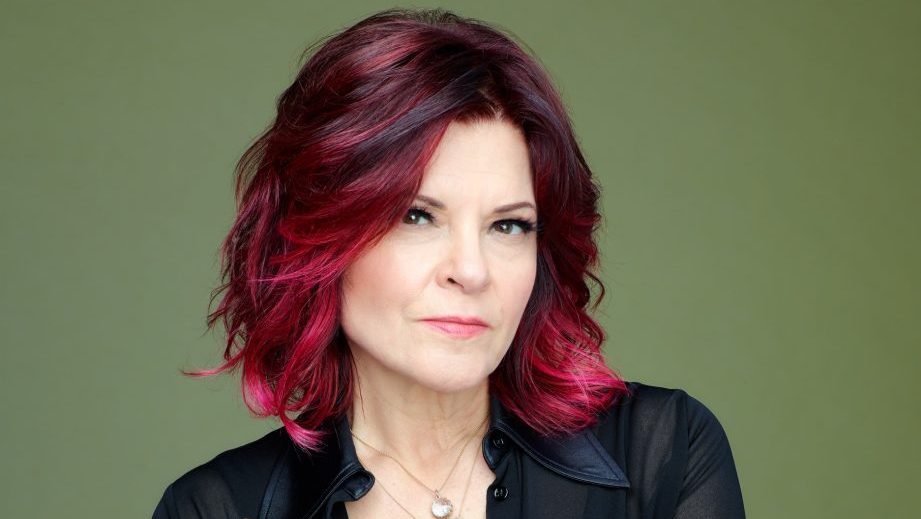
In Their Words: “As a writer, one of the things that keeps me sane is that healthy part of the process which is to sometimes get out of your own head and away from your own stories. I’ve started looking for songs to learn that speak to me, and this one in particular, written by the great Jackson Browne, felt painfully timely, as it beautifully expresses some of the feelings I’ve been having about the world we live in, decades after it was written.

“I felt connected to the song after going to Mexico for the first time and experiencing the lovely people and culture there, where, just like in the States, ‘the families work the land as they have always done,’ and ‘your children will be born; you’ll watch them as they run.’ I decided to record it as a creative extension of my new album, Violets as Camouflage, with a similarly simple treatment, musically, with the focus on the story and the voice that’s telling it.” — Mary Bragg


Photo credit: Holly Lowman

WATCH: Jake Morley, “No Drama”

Artist: Jake Morley
Hometown: London, UK
Song: “No Drama”
Release Date: November 8, 2019
Label: Sandwich Emporium Records

In Their Words: “‘No Drama’ is a little hymn to the pleasure of calm spaces. I was feeling a deep longing for them as my wife was pregnant with our first child and this song just tumbled out. Not that there isn’t a place for conflict and action, but everyone needs somewhere safe to retreat to.

“Risk is what makes live performance so interesting, but it felt like everything just fell into place with this take. John Parker and I have been playing together for many years and I love the understanding we have. Really hoping you like the video and am so grateful to my friends at The Bluegrass Situation for helping me share it.” — Jake Morley


Photo credit: John Williams

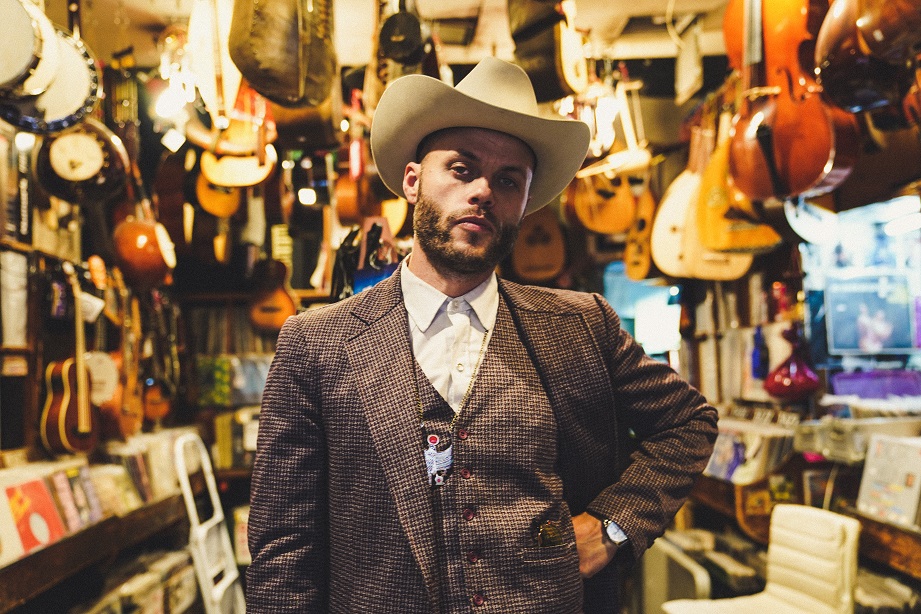
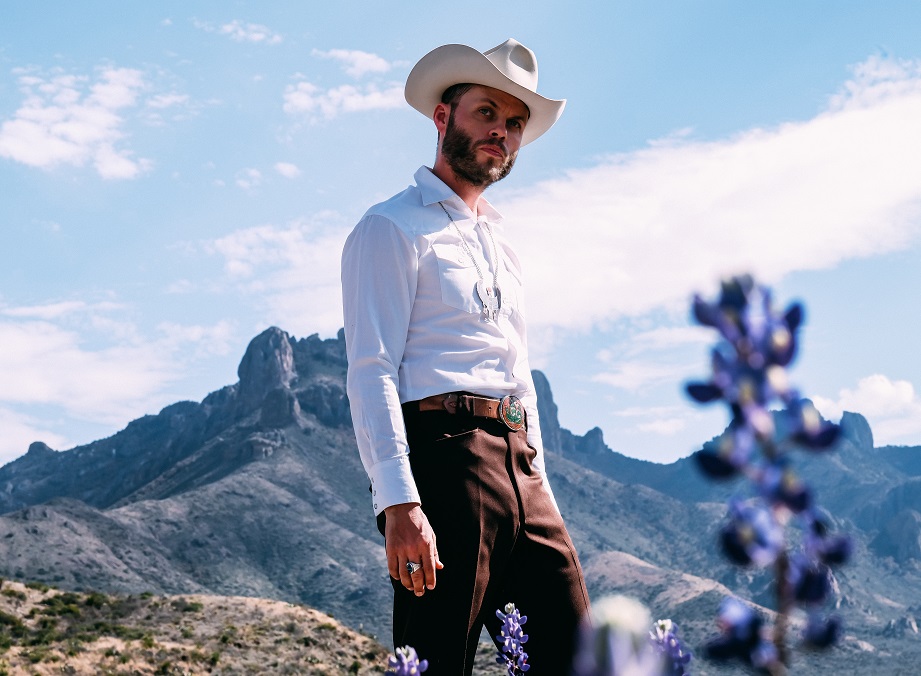
From Texas to the World, Charley Crockett Spreads Traditional Music of ‘The Valley’

“I’m from San Benito, Texas…”

That’s the first line of “The Valley,” the autobiographical title track of Charley Crockett’s newest album and perhaps the best entry point into his true-to-life twist on traditional music. Not only do those lyrics reference the rougher times of his story so far, the jaunty arrangement underscores his fascination with blues and classic country music — but without treading the same fertile ground as everybody else. BGS caught up with Crockett by phone on his way to the Pacific Northwest.

BGS: At the end of the song “The Valley,” your closing line is, “May your curse become a blessing. There ain’t nothing else to do.” Tell me about the message you were trying to convey with that line.

CC: Man, I think people are born into struggles that we don’t have a lot of control over. I know for me, I dealt with different adverse situations that I never saw them coming and got forced into at a young age. Just with my own story I had a lot of issues over the years with getting in trouble and family stuff, siblings going to prison and losing my sister to some of the vices of the modern world. My mother was struggling, working 80 hours a week, to take care of me, and that whole deal.

I parlayed all of those hardships together into making music, so quite personally I’m saying, hey, you can take those really hard things and turn them into something, because if you don’t, what’s the alternative? I had a guy tell me years ago on the street, I asked him how he was doing, and he said, “I’m doing great today. I have to be doing great ‘cause what’s the alternative?” That stuck with me for my whole life.

I thought, man, it really is all about how you see it. That line before it is, “And now you know my story, I bet you got one like it too.” I never really run across very many people that didn’t feel like they were fighting some kind of adversity. I feel like you got to take the lemons and make it into lemonade.

Do you consider yourself an optimist?

Oh, I’d say so, most definitely. I met a guy in Denmark, when I was over there recently, who had an Indian curry joint there in Copenhagen. We ended up going two days in a row. The first day I went in there and we had cowboy hats on, and he knew real quick we were doing music and the whole loud-mouthed Texan thing or whatever. We played up and had a good time in there, and he got my name and stuff, and we left.

We ended up going in the next day to eat again because we liked his curry so much. I come in there and he said, “Charley, man, I want to apologize to you. I looked you up and I read about your story.” He’s like, “I really judged you as being somebody that maybe hadn’t been through much, because you seem like you were so happy-go-lucky and so optimistic.”

I thought that was so strange, that because of my positivity, he thought that maybe I was privileged or something. I guess he read my circus of a biography and realized that I was a lot different than that. And that really struck me. It was sad to me in a way. I thought if everybody in this life wore their hardship on their sleeve and let it get the best of them, it would be really sad. But what’s really amazing about people, overall, is the resiliency in people.

Who were some of your early champions when you decided to take this music path?

Well, in the beginning, my mother was the one who got me this old Hohner guitar out of a pawn shop when I was 17, and told me that I could do this. Even when I sounded terrible. I remember saying, “Mama, I tried to write these songs. Am I any good?” Then she said, “Well, son, people will believe you when you sing.” [Laughs] She wasn’t going to lie to me and tell me I was good. She told me what I needed to hear and I understood what she was saying. She was talking about honesty. She was talking about integrity. She was talking about sincerity. That’s what I believe in.

On “The Way I’m Living (Santa Rosa),” you’re singing about Mendocino County, and that it’s taught you a few things. Was there a specific moment in California where you had an epiphany, or that something really struck you?

Yeah, man. I hitchhiked and rode trains and hoboed around for a really long time. I had hitched out there to Northern California when I was 22 or 23. I ran into cool people up there that would pick me up on the side of the road and let me sleep in their barns or in their pastures, and do work trade and all kinds of stuff. Even my record, A Stolen Jewel — my first one that I ever put out on myself — those people gave me the money to make that record and print 5000 copies of it.

I got them printed up in San Francisco, just a couple of hours south, and I drove in a truck that I’d gotten from those farmers up there that let me work their land. Then I drove back down to Texas and I handed them out on the street in DFW and Austin. That was how I first started getting my first publicity. I got written up in the Dallas Observer and the Fort Worth Star-Telegram, and I got a local guy to start booking me at Texas bars.

So yeah, the line is “Mendocino County bring me lots of joy. It’s opened up the eyes of this wanderin’ Texas boy.” And that’s exactly what happened. It was the first place that I’d ever been in my life where people said, “Man, all you got to do is help out on this farm and play music for us and you can live here in exchange. And we’ll feed you too! And we’ll take you out to the open mics at the brew pubs.”

I’d go to a gathering on people’s farm where you’d play music around the campfire and I’d never known anything like that, besides being down and out on the side of the highway in more shady situations. But then in Northern California, it was the first place where somebody in my position, my modest, kind of undeveloped artistic abandon, that people were like, “Hey, I see you as an artist and I respect you and your music. There’s something about you.” That’s why I have so much love for Mendocino County and continue to be a part-time member of that community there. Those people have always treated me like I had value.

Do you like bluegrass music?

Big time, man. Jimmy Martin, Ralph Stanley, I wear that stuff out. Actually I packed a banjo and brought it into my show. We have a bluegrass section in the show, right in the middle of the set, where we do a five-song bluegrass deal around the one mic. It’s just a lot of fun!

What do you hope people take away from the experience of coming to see you play?

I hope the people that have come out before to see me will see that I’m true to what I promised — that I’m getting better every year. I’m really about the classic stuff and I think when you’re really rooted in the tradition, you’re never going to stop growing.

When I was playing in San Antonio the other night, I played “Nine Pound Hammer” on the banjo for these kids. … This mother had her two young children at the very front of the stage and they were hollering for “Nine Pound Hammer” as I got off stage after the encore, and I ended up playing it for them sidestage, because they were so sweet. These kids were young. The little girl was probably 8 and the boy was probably 10 or 11 at the oldest, and they knew every word to “Nine Pound Hammer.” That was really cool to me to see these young kids, who had no context of how old that dang song is, excited about something out of the nineteenth century like that.

I guess that’s one thing you could say, but for me it’s like I wear tradition on my sleeve and I think what’s radical in music today is to bring tradition up front. I think that’s what people like about me. Not that I’m some kind of preservationist, but that I’m doing tradition as a man of my times. I think that people can hear the tradition and they can also hear something new in what I’m doing. I hope that’s what people hear when they come out to see me.


Photo credit: Lyza Renee

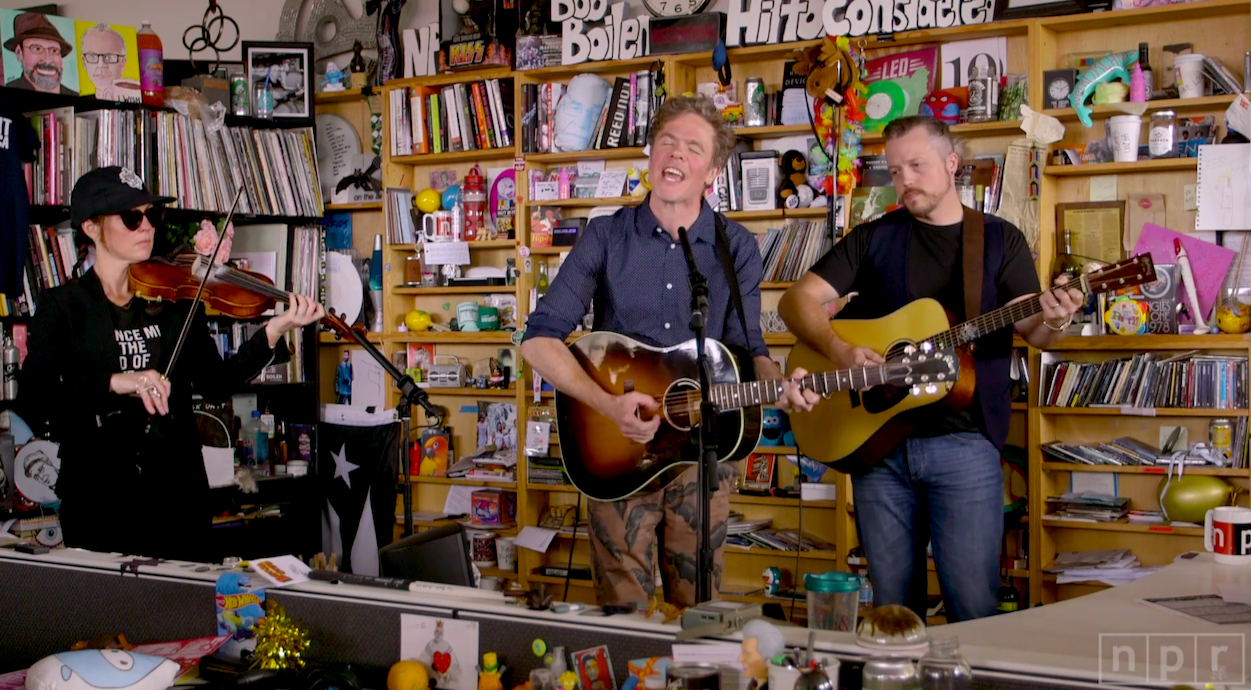
WATCH: Josh Ritter Brings Jason Isbell, Amanda Shires to Tiny Desk

A collaboration for the ages, Josh Ritter teamed up with Jason Isbell and Amanda Shires to work on his newest record, Fever Breaks. This top-tier trio stopped by NPR’s Tiny Desk to perform some of the more poignant and concise songs from the record — songs that some may even be labeled protest songs.

Each of them icons in their own right, these three musicians are no strangers to BGS. Earlier this year, Ritter was featured as an artist of the month, Isbell taught us a thing or two about protest songs, and Shires has enjoyed some accolades this year for her involvement in supergroup The Highwomen. A roots music trifecta, watch as Ritter, Isbell, and Shires grace the Tiny Desk here.


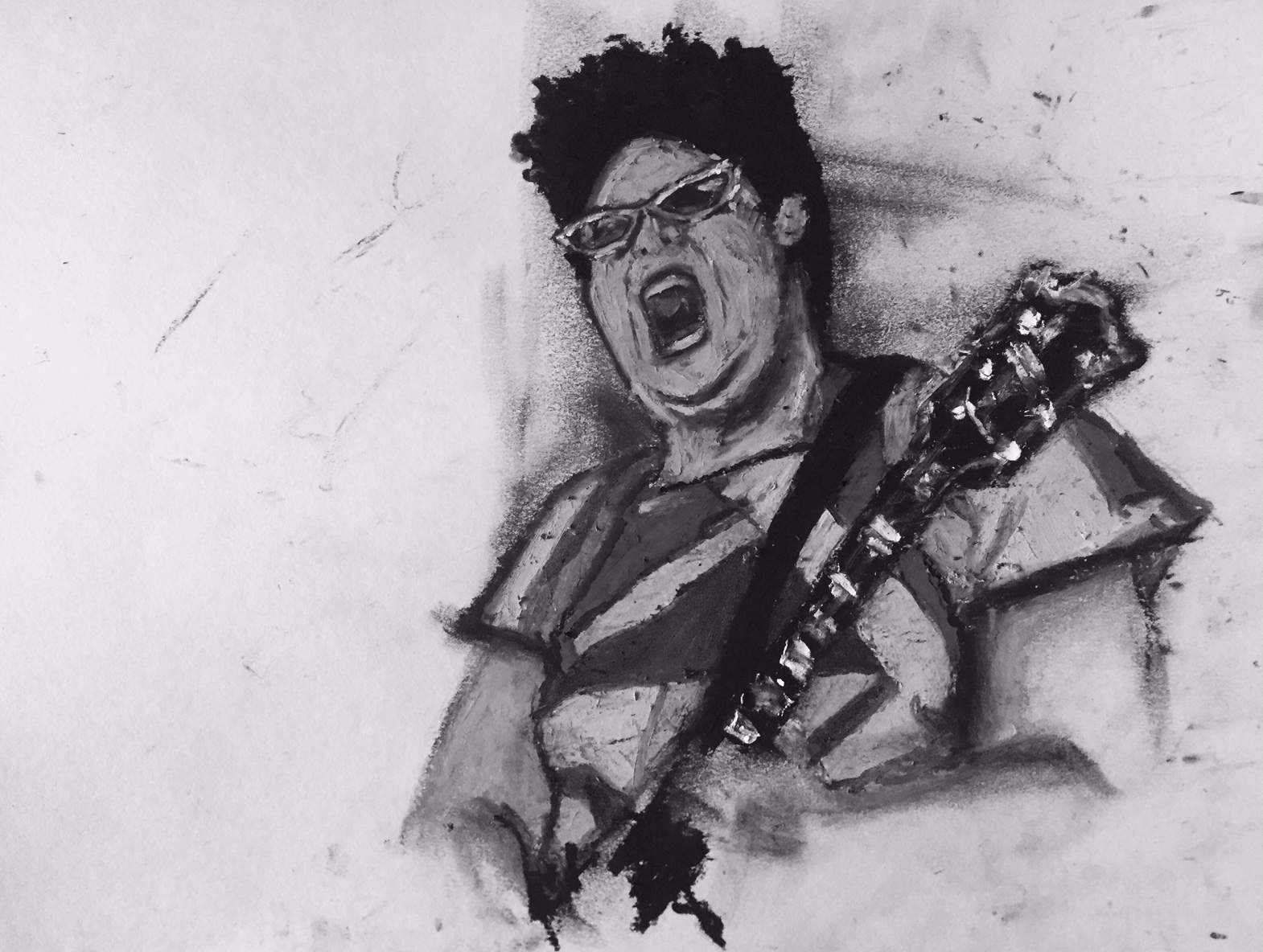
Artist of the Month: Brittany Howard

Brittany Howard embarked on a road trip to recalibrate after stepping away from Alabama Shakes, the Grammy award-winning band known for anthems like “Hold On.” Those relentless highway miles gave her time to rest before roaring back with Jaime, one of the year’s most compelling new albums — and her first as a solo artist.

The acclaimed project is named for Howard’s late sister, who died as a teenager from a rare cancer, but these songs are all about Brittany Howard, and namely her experiences with racism, sexuality, religion, and other touchy topics that are rarely addressed by artists at the peak of their mainstream popularity.

Not to say it’s all heavy — for example, the breathtaking “Stay High” may be the album’s sweetest moment. The production, which is also credited to Howard, is especially remarkable, as Jaime feels like a unified statement, even as the inspirations run the musical gamut. And of course her electric guitar prowess is ceaselessly stunning.

In her first tour dates behind the record, the Alabama native skipped the Shakes catalog in favor of material on Jaime, along with tracks from her other bands. But for our BGS Essentials, we put ’em all in there. Enjoy this hand-picked playlist from our BGS Artist of the Month, Brittany Howard.


Illustration: Zachary Johnson