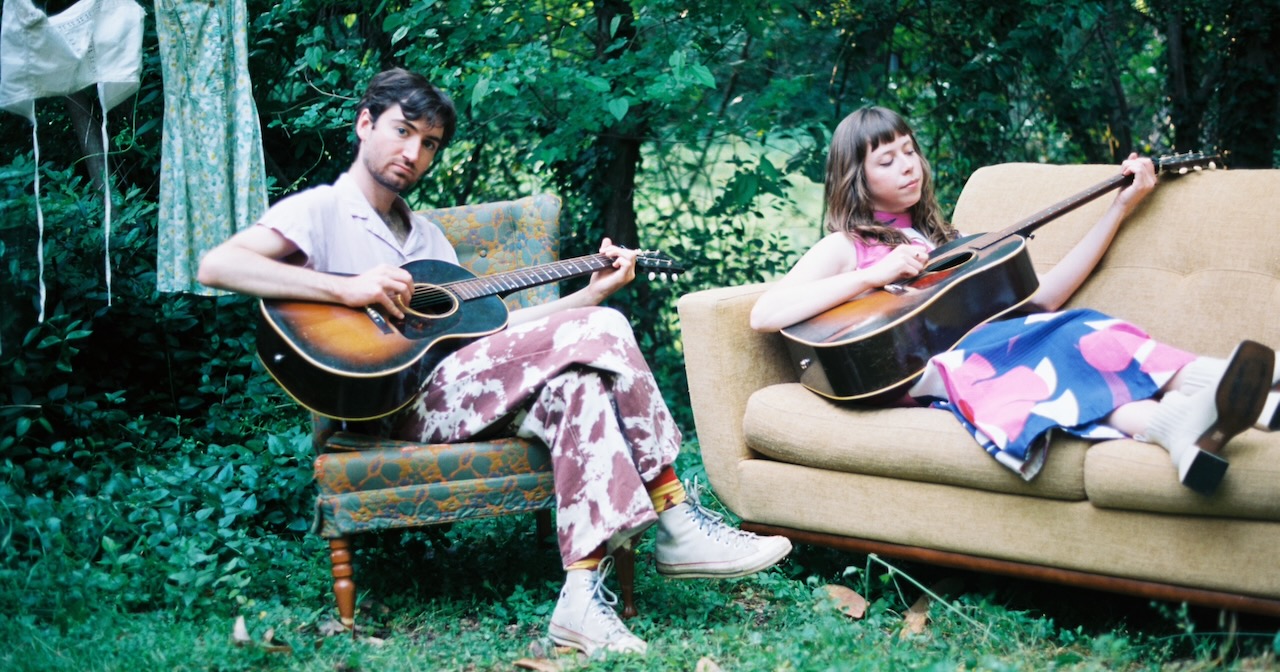
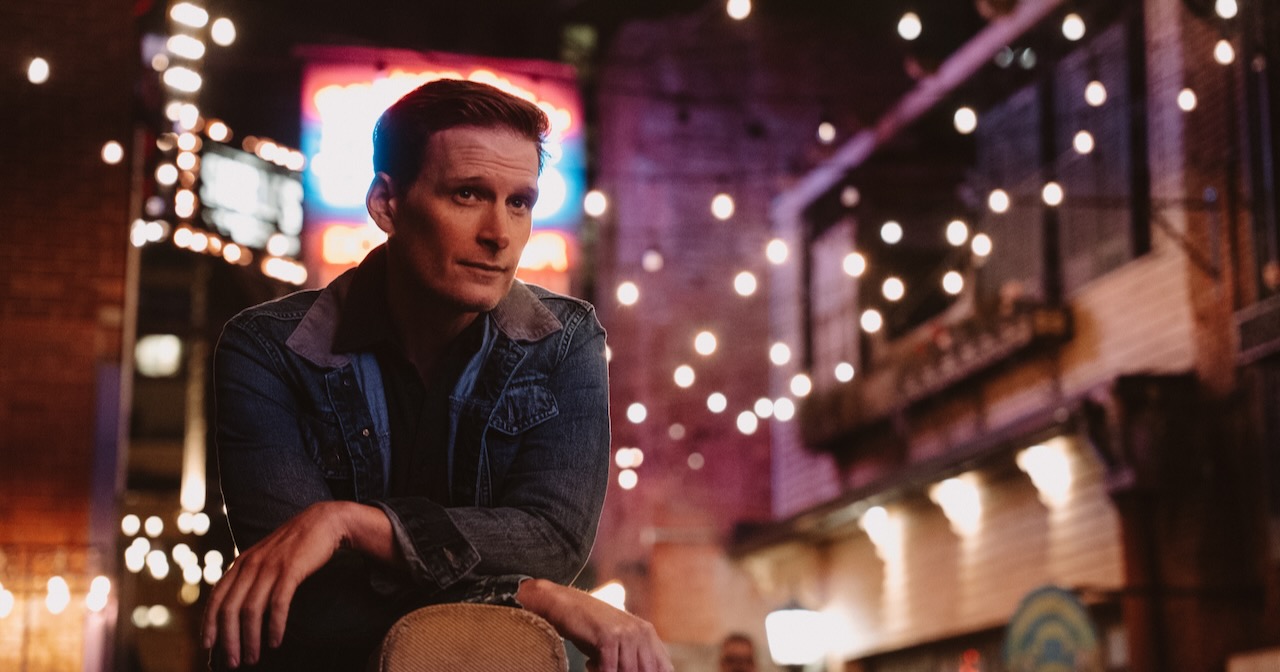
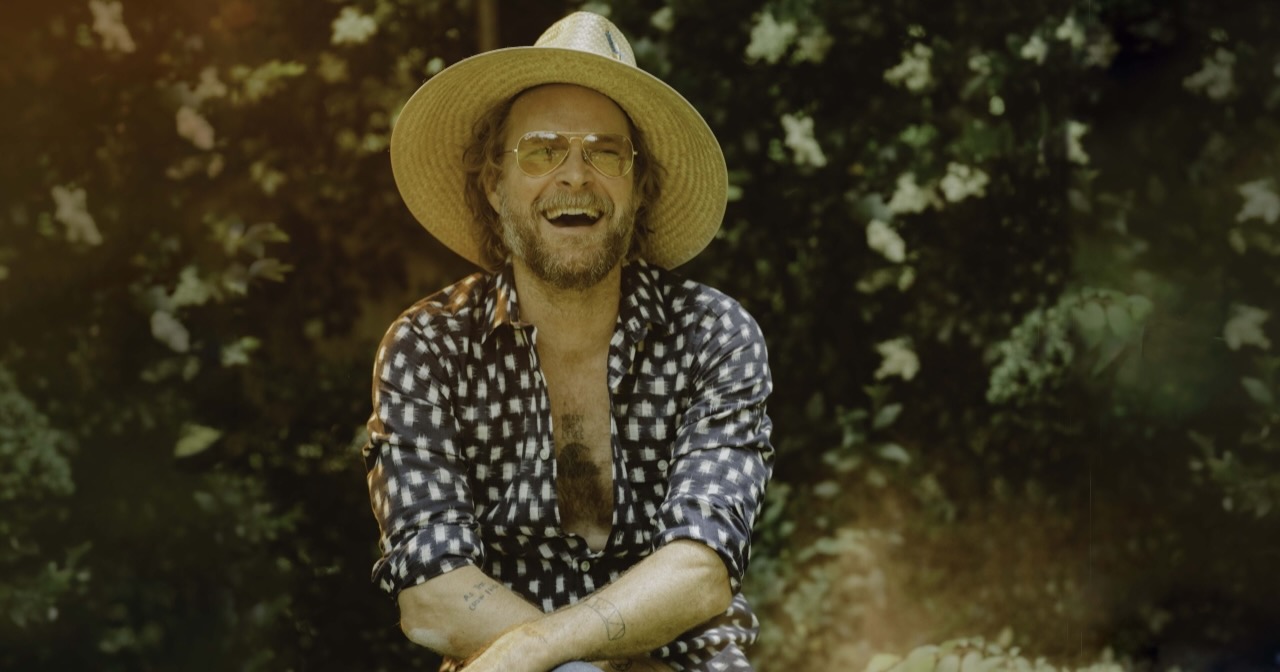
Artist:Matt the Electrician Hometown: Austin, Texas Song: “Do You Believe In Love” Album:Do You Believe In Love/Walking on a Thin Line Release Date: October 6, 2023
In Their Words: “Growing up in Sonoma County in the early ’80s, Huey Lewis & The News were a really big deal, they were hometown heroes. And though the album Sports contains the bulk of their hits, and was much beloved to be sure, the first hit from the album Picture This was huge! ‘Do You Believe in Love.’
“It popped back into my head a few months back, and I couldn’t get it out. I became obsessed like I was 11 years old again. And I wanted it to be covered. And I wanted it to be a covered by a bluegrass band. But I couldn’t convince anyone I knew to do it. So I just had to do it myself. And so, purely for the fun of it, I enlisted the help of some of my favorite pickers here in Austin, Texas: Tony Kamel (guitar, vox), Trevor Smith (banjo), Noah Jeffries (fiddle), and Andrew Pressman (bass), and I went into the studio, and recorded both ‘Do You Believe In Love’ – and a version of ‘Walking on a Thin Line’ from Sports as a B side for the ‘digital 45.'” – Matt the Electrician
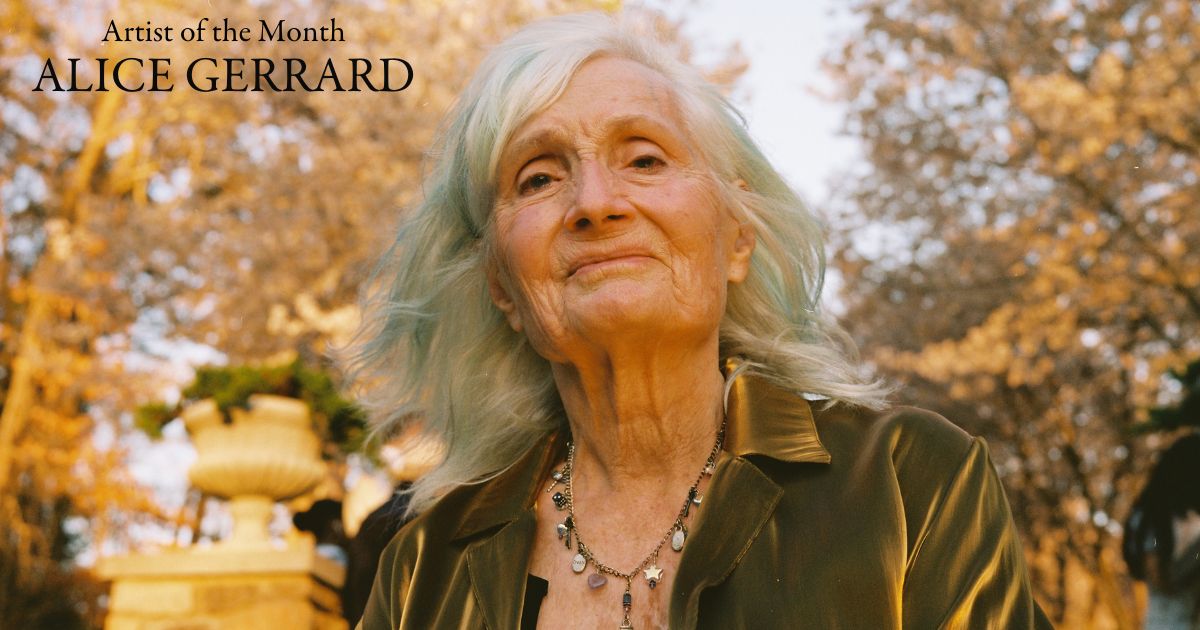
At 89 years old, old-time music community leader, Grammy nominee, and Bluegrass Music Hall of Fame inductee Alice Gerrard continues to place her music making and creativity decidedly in the present. While every lyric she utters and every note she picks feels effortlessly timeless, storied, and burnished – by her lived experiences and by days, weeks, and months of toil – her songs are ultimately forward-looking, leaning into the future with intention and wisdom. They also feel paradoxically light and joyous while at the same time they stand at the nexus of “what used to be” and “what will come.” Gerrard holds this position with equal power, agency, and insight.
Her latest album, the upcoming self-produced Sun to Sun, out October 20 on Sleepy Cat Records, captures the ineffable of the particular center-of-the-Venn-diagram that she inhabits, as a song collector, a knowledge bearer, and a folk music synthesizer of the world’s woes and struggles for justice. As witness to more than a handful of iterations of the modern movement for equal rights and racial, gender, and economic justice, Gerrard is able to challenge the systems and powers that be in grounded, measured, and realistic ways – ways that never limit possibilities for the future. (A remarkable trait in a creative who uses “old-timey” media and formats as her primary form of expression.)
“Remember Us,” the album’s stunning lead single, is – as Gerrard says via press release – an ode to “all the departed whose shoulders we stand on, whose work and lives we benefit from, who came or were transported against their will to this land.” Sung in stark a capella by Gerrard, Tatiana Hargreaves, and Reed Stutz, the track feels pulled directly from the gospel singing traditions of the American South that each stem from Black and formerly enslaved musical traditions. It speaks into community spaces the names, lives, and souls of so many Black, Brown, and Indigenous folks who lost their lives at the hands of empire and the police state.
“Old Jim Crow” makes the apropos point that segregation and racial apartheid in our country were not that long ago nor that far away, calling the partisan gerrymandering, political divisiveness, and waves of hatred befalling the U.S. exactly what they are: a new kind of the Old Jim Crow. “Keep It Off the Seat,” a Gerrard-penned modern classic, was inspired by the North Carolina General Assembly’s transphobic HB2 measure from 2016 – that also inspired our showcase, Shout & Shine, at IBMA in Raleigh and eventually saw Gerrard singing “Keep It Off the Seat” from the Shout & Shine stage in 2017 with Cathy Fink, Marcy Marxer, Hargreaves, and more. At her live shows, she encourages her audience to sing along during the rousing chorus: “Who cares where you pee? Just keep it off the seat!”
These themes and through lines would be notable in any bluegrass and old-time forebear’s catalog, but here, among Gerrard’s lifelong discography, they are certainly not outliers but continuations of a career that has always been committed to telling untold stories, singing unsung songs, spotlighting and amplifying invisible voices. Gerrard’s age, her position as a roots music elder, reinforces the importance of these subjects, and leaves subtle, existential fingerprints over the entire album. We know Gerrard’s commitment to singing and standing in truth, but in these songs and in this collection, we feel that commitment more than see it, we sense it just as strongly as we view it.
Sun to Sun was tracked in Durham, North Carolina – Gerrard’s home turf for decades, now – with a collection of collaborators and musicians pulled directly from her immediate community. Hargreaves, one of the most prominent fiddlers in the old-time and bluegrass scenes of late, has worked for Gerrard for a number of years as an archivist and assistant of sorts and features heavily on the album; Stutz, an in-demand multi instrumentalist who also straddles the fences between folk, bluegrass, old-time, and Americana, plays guitar and banjo. Other credits include first-rate sacred steel player DaShawn Hickman, Hasee Ciaccio on bass, Marcy Marxer guesting on guitar and cello banjo, Gail Gillespie, Nick Falk, and soulful songwriter, singer, producer, etc. Phil Cook – who collaborated with Gerrard on her 2014 album, Follow the Music – as well.
It makes perfect sense that a community builder such as Gerrard, who has always prioritized the most human aspects of roots music in her creative output, would be able to construct a collection of songs that feels pointed and convicting, but also organic and natural. Sun to Sun approaches heavy topics with ease, as a pair of good friends over a cup of tea on the porch can seemingly solve all of the world’s problems with passion, joy, and unbridled care for the forgotten and invisible among us. Gerrard calls on her folks, her musical and personal communities as well as her listeners and fans, to join with her in the journey she has begun and that we must continue, from sun to sun to sun to sun.
To celebrate Alice Gerrard’s selection as our October Artist of the Month, we’ll be diving back into our archive of Sitch Sessions, interviews, posts, and stories that highlight her incredible music – and her exemplary activism through that music and across the decades. In the meantime, enjoy our Essential Alice Gerrard playlist below, plus two of our BGS favorite Sitch Sessions of all time that feature Gerrard (viewable above), and watch for our Artist of the Month feature to come later in October.
Artist:P.J.M. Bond Hometown: Amsterdam, the Netherlands Album:In Our Time Release Date: October 6, 2023 Label: Concerto Records
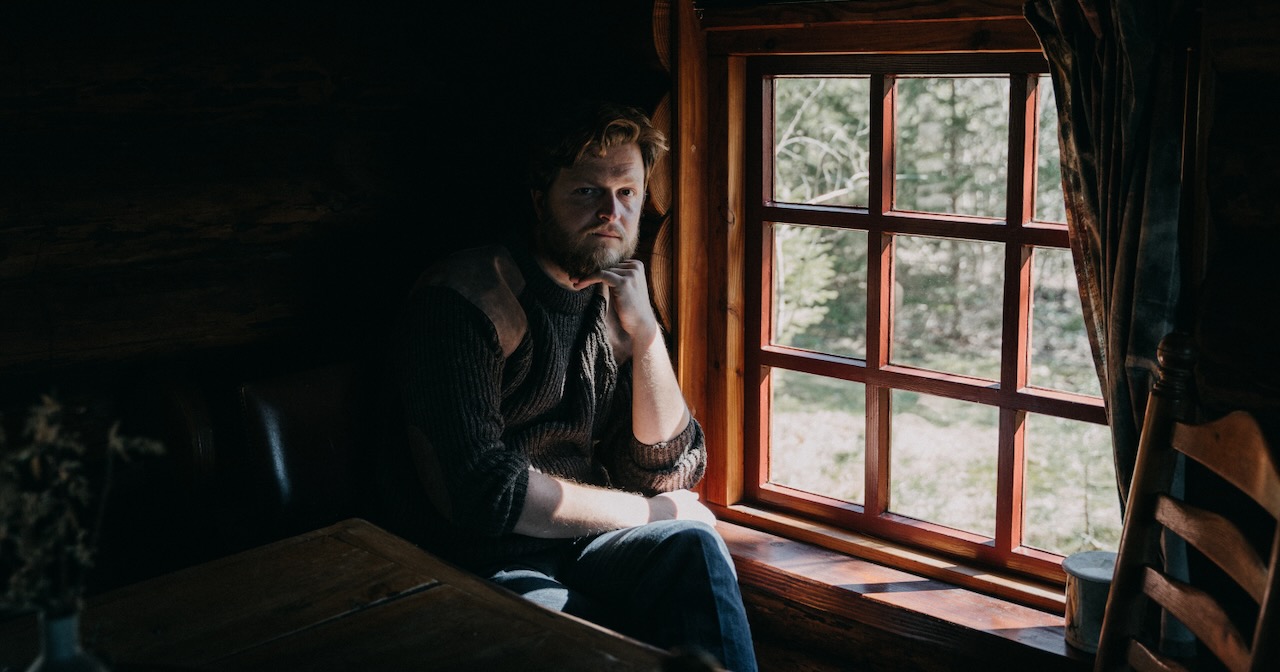
In Their Words: “In Our Time is an interdisciplinary indie-folk album based entirely on Ernest Hemingway’s short-story collection from 1925. While obtaining my Literary Studies MA at the University of Amsterdam, I started to dream of making a record based on a work of literature. Lightning struck when I reread Hemingway’s In Our Time and discovered a musical potential that had never been unearthed before: there’s nature and bullfights, the unspoken horrors of war, beauty beside chaos, fire and rain, and just so much youthful exuberance contained in Hemingway’s writing. And so I locked myself in a log cabin to write and record the songs, one for each of the stories from Hemingway’s marvelous work of fiction. I am extremely proud of my own In Our Time, and I am convinced that lovers of both Americana and American literature may rejoice and appreciate this album. Listen to it on a long hike, or drive, or on a rainy Autumn day over a cup of tea (or glass of whisky).” – P.J.M. Bond
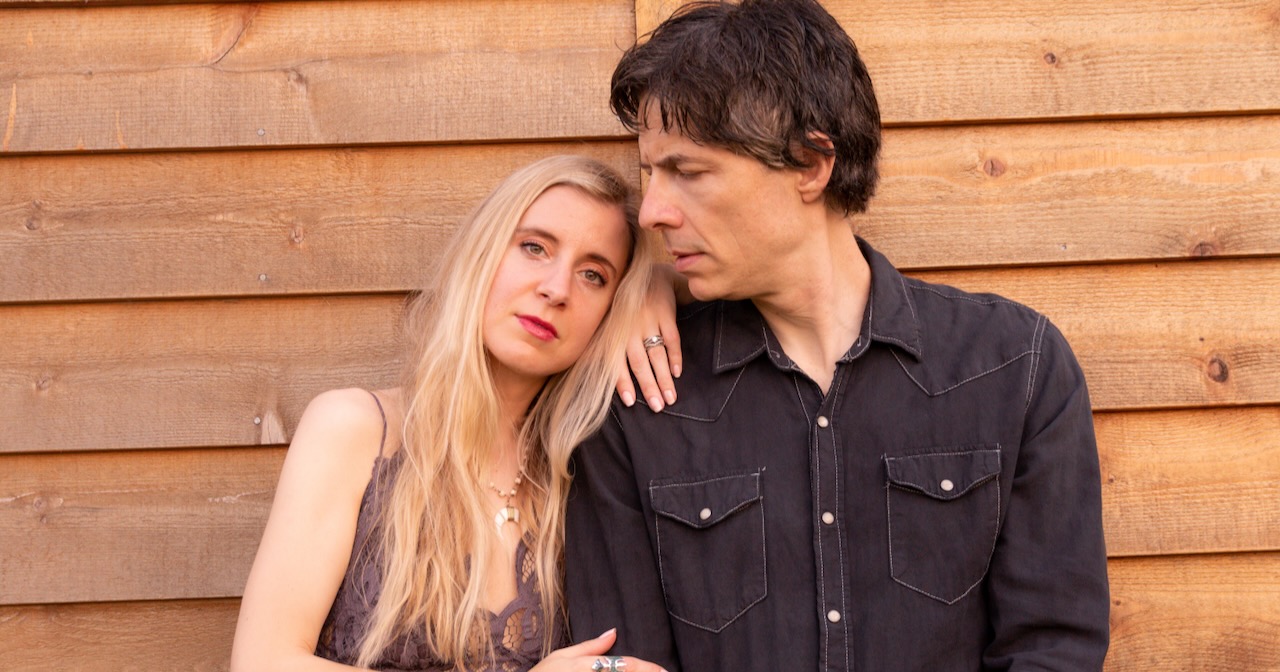
Artist:Swearingen & Kelli Hometown: AJ Swearingen – Bethlehem, Pennsylvania; Jayne Kelli – Lapeer, Michigan; Current hometown – Nashville, Tennessee Song: “This Old House” Album:Build Myself Up From The Ground Release Date: October 27, 2023 Label: Gone Rogue Music
In Their Words: “It’s about endurance, hope, the passage of time, saying goodbye if you have to, and the longing for stability when your life is changing so fast you can’t find any stable ground. The song is literal and metaphorical. The house we were living in was sold out from underneath us, I lost my father, we had health challenges, and were free-falling. It was a crazy year. Sometimes when everything in your life is painfully uncertain, you have to dig your heels in and hold your ground. My mother still lives in the same house I grew up in. It’s old, but it’s an anchor in the family. I hope she can hold onto it. I think everyone can relate to that.” – AJ Swearingen
Comprised of singer-songwriters and instrumentalists Vivian Leva and Riley Calcagno, Viv & Riley are an up-and-coming musical duo that defy definition. Their new album, Imaginary People, is a masterful blend that weaves together their shared reverence for traditional Appalachian music alongside indie-folk, pop-leaning adornments. The result is an emotionally potent 10-track album that covers a vibrant range of personal and universal truths — from the bittersweet nostalgia of visiting a beloved childhood hideaway decades later, to the poignant curiosities that accompany reckoning with climate grief.
Based out of the dynamic music scene in Durham, North Carolina, this duo is currently on tour across North America. With their insightful explorations of the past and creative probings of the future, Viv & Riley uncover rich and complicated explorations of what it means to be alive in this precise moment.
So how did the two of you first start making music together?
Vivian Leva: Well, we first started making music together when we first met in 2016, the summer after we both graduated high school. I grew up in Lexington, Virginia, and Riley grew up in Seattle, Washington, and we just happened to meet at a camp in Port Townsend, Washington. It’s one of those camps that has weeks back to back — there was a vocal week that I was teaching with my mom, and then Riley came to teach fiddle the following week. We happened to overlap by a few days, and Riley was there with his band The Onlies. The first night we met, we played music together all night! After that, I joined the band, and we also started playing together as a duo and writing songs.
Riley Calcagno: The origin of our sort of band, our duo, came later that year, in the fall. We had been communicating and texting some music back and forth, and then Viv invited me down to Asheville to play a gig with her and her dad. I was a fan of her dad, James Leva, for his fiddle and singing, so we did that gig. But we thought it’d be also fun to try out some duo material while we were down in the same place, even though we had never played songs just the two of us. We emailed a venue in Asheville called Isis Music Hall, which was a prominent venue there at the time. Somehow they slotted us in, on a Wednesday night, into this big hall that they had — 200-person capacity, maybe bigger. We had never played music together going into that, but we put together some material and we enlisted some friends to play with us. It was a bold move! Talk about faking it until you make it. Only about 15 people came out to the show, and I’m sure it sounded terrible. But it was fun!
That sounds amazing. So how would you describe your musical chemistry? What is it like playing together?
VL: Well, I think our initial musical chemistry initially came from our shared background in old time music and traditional music. That first night that we met, we played a lot of fiddle tunes, old music, and traditional songs. So it kind of began from a place of excitement about being exactly the same age, having never before met, and somehow both being raised around this same music that we have a shared respect and love for. So that was the initial spark of actually finding another young person who’s into the same niche genre and community. But since then it’s totally stretched into other realms. We are both so open to other kinds of music, and we have very similar tastes and aesthetics. It’s very easy to create music together because we come to it from a similar place.
RC: One of our dynamics in making music together has also been sharing our individual strengths with the other person. When we first started playing together, I couldn’t really sing harmony or find a harmony part. Vivian was very patient with me and helped me learn, and I still feel like I’m getting better all the time. That’s exciting!
VL: I just play guitar, and Riley plays every other instrument. He’s a great fiddler, guitar player, banjo player, mandolin player— instrumentally he brings so much to the table. And I feel I bring a lot of singing and songwriting-focused material to the table. We stretch each other, fill in the gaps for each other, and learn from each other.
What a beautiful thing! So what do you each feel like the biggest difference in your respective musicianships is?
RC: Viv is a very natural musician. She grew up traveling around with her parents as they toured, sitting in on harmonica at her dad’s gigs when she was only three or four. I also was born and raised around music, but it was a bit more formalized, whereas Viv’s music just comes very naturally and it’s not forced in any way. She does what she does super well and consistently and steadily, and I’m a bit more erratic. I take chances and get obsessed with things and take big leaps that sometimes fall flat. Every time she steps on stage, Viv can knock out a great performance, and I feel more streaky.
VL: But he tries lots of different things! And like he mentioned, Riley has a more formal background in music. He took lessons, he learned how to read music, he knows music theory, he did classical violin. So I think a big difference is that he technically knows what’s going on, whereas I don’t have the language or skills that he has. I’m definitely more intuition based than technically based.
You really balance each other out! So your new album, Imaginary People, just came out on September 15, and I’m wondering how your songwriting, as it appears on this album, has shifted since you first began as a duo.
RC: Well, in the past, before we started writing music for this record, we were living in different places so it was a lot of collaboration from afar. A lot of the songs on our last record came from texting voice memos back and forth. And you know, it’s not utterly different to work on them in person, but some of these new songs came out playing them together in the moment.
VL: Another big difference is Riley has started writing way more. So I think there’s more of an equal voicing on this record than in the past. There’s more of his perspective in it. And I think now that we’re living in the same place it’s also allowed us to write about a more diverse range of things. We’ve written a lot of intense emotional, romantic songs in the past, but in this recent past couple of years, we’re more interested in other things, like our shared experiences about other parts of life.
RC: And it’s also partly stylistic. Our last record was pretty much a country record. During that time, I was listening to a lot of classic country music, and this time we were listening to a wider range of things. Having a broader array of influences definitely helped us push the narrative forward.
What are you each proudest of on the album?
VL: I think what I am most proud of isn’t a specific track or anything — mostly it’s this feeling that I unlocked something. I think I let go of some fears in the process of making this record. I felt more free to just say yes to trying new things and became less concerned with things like what genre it was going to be considered, or if the people who liked our last record would like this record… and so on. I stopped worrying about categories like, “This doesn’t sound traditional enough,” or “This isn’t country enough,” or “That’s too rocker or indie.” Instead, I was able to adopt the mentality of “Hmm, that sounds interesting, let’s try and just do what feels fun!” I think I’m most proud that I was able to do that. It felt amazing to take things a little lighter and to roll with ideas that felt a little outside of the mold.
RC: When you start making music, being young musicians, you get immediately labeled. It’s not something that I think either of us necessarily anticipated, but when that first record got classified, people said it was Appalachian and classic country. And then the next one was classic country and Americana. Like “Hits-the-Spot Americana,” whatever that means. And I think there’s an urge for musicians, when you get labeled as something, to keep reproducing it. There’s this toothlessness to the modern Americana music label— it’s the creation of music that is literally meant to sound like other music under a category. I don’t have a problem with genre or specifications, I think it’s oftentimes useful, but it’s [useful] when you’re trying to reproduce sounds so that you can cater to an audience, it’s like you’re trying to sell something in a market that’s already been created. I think that can be the “dampification” of art. And while I think there’s been so many amazing things created within the Americana industry, I also think it often leads to less creativity and less interesting music.
Coming out of our last record, we had some buzz in the Americana world, and it would have been easy for us to make another “Hits-the-Spot Americana” record. But I don’t think that we did that, and I feel proud of that. Like Viv was saying, we didn’t just do what we were supposed to do. You know, there’s synthesizers, but there’s also a fiddle track, and personally, I think it all works together. So maybe if you’re an Americana devotee, you’re not going to love this album, but that’s okay with me. I think there’s a power in making an album that the machine doesn’t really know what to do with. The machine can make up albums and spit them out, but I feel proud that this one isn’t something that can just be spit out because of how we combine traditional and non-traditional music. For example, there were super organic moments where we all stood around one mic and sang together, coupled with other moments where we had things locked in, produced, and added synths because a particular song called for it. Making those two things coexist in the same ecosystem was definitely a challenge, but listening to the record, I think it all makes sense together.
It’s an album full of teeth! Now, before we wrap up, I have to ask: you’re our One to Watch, but who are you watching right now? Any creatives, musical artists, or otherwise that are inspiring you right now?
RC: One is our neighbor in Durham, North Carolina, Alice Gerrard. She’s almost 90, and she’s putting out a record on this indie label from the area called Sleepy Cat. She’s collaborating with a bunch of young people and their art for the record, like making these amazing videos. It’s a really cool thing! People around here are really conscious and thoughtful about aesthetics and sound and ethos. Everything is done with integrity, so it’s a cool scene around here in that way. Alice makes amazing music, I’m really excited for her upcoming record — I think we’ll all be glued to it once it comes out. Another one is our friend who we wrote two songs with on our previous record, “Love and Chains” and “Time Is Everything”— often people’s favorite songs of ours. I just had the honor of producing his upcoming record under his band’s name, Preacher & Daisy. I love the music, so I definitely want to give them a bump! The fun thing is that all this music is sourced locally from the Durham, North Carolina area, where we’re based.
VL: Some folks I’m enjoying listening to right now, not that they’re not already being watched, are: KC Jones, Canary Room, Dori Freeman, Alexa Rose.
Artist:Arielle Silver Hometown: Finding the answer to that question has been a lifelong quest. My childhood was spent in Florida, NYC, and New Jersey. Boston raised me from late teens through most of my twenties, but I did a few stints in PA, TN, and NC. Something brought me to Los Angeles a while back, and it’s now been my hometown longer than anywhere else. I’m rather attached – and detached – from a lot of places, but I think I love LA and Boston the most. Song: “Soft On the Shoulder” Album:Watershed Release Date: October 6, 2023
In Their Words: “Inspired by the Laurel Canyon music of the ’70s and the cultural activism that came about after the murder of George Floyd, ‘Soft On the Shoulder’ is a song largely about self-culpability. I was reflecting on the place of music amid cultural change and its place in political activism and social engagement. I was also thinking about the ways that I – as a white-presenting woman – have unwittingly participated in systemic wrongs. While initially inspired by thoughts sparked by the BLM movement, this song applies to any personal or cultural circumstance where we are asked to examine our long-held beliefs and consider another person’s perspective.
“Having grown up listening to records, cassettes, and CDs, I am very album-oriented. I felt that ‘Soft On The Shoulder,’ which opens the Watershed album with the words, ‘It starts with a witness…’ and is threaded with the mantra ‘love more, fear less,’ captures the compassion and reflective nature of this entire collection of songs.” – Arielle Silver
Artist:Sarah King Hometown: currently Ripton, Vermont; formerly Columbus, Georgia Song: “Hey Hey What Can I Do” (Led Zeppelin cover) Release Date: September 1, 2023 (single) Label: Ringleader Records
In Their Words: “Recording ‘Hey Hey What Can I Do’ was a bold, last-minute decision in the studio to celebrate and share some self-love: It was the first song I learned to play by ear on guitar, and I kept the original pronouns as a nod to some of the wonderful women I’ve dated in the past. I am now married to a man, but owning my queerness through music felt like the right choice.
“When it came time to craft a video, I knew Loni (of Whiskey Ginger Goods, who also designs my logo and merch) was the perfect director. She’s excellent at capturing women feeling themselves, and those beautiful in-between, emotional moments that can really tell a story. During my summer tour in Montana, we set aside some time to film both the bar and bedroom scenes. Combined, the video leads us through the seductive, and at times silly, story of a woman in love with another woman who won’t be true. As the heartbreak unfolds, the video gets more unhinged, until I just flop on the bed, tired of trying. I loved recording the song and video, and I hope everyone who watches has a blast listening, too!” – Sarah King
Track Credits:
Sarah King – vocals, guitars
David Baron – piano, organ
Johnny Stanton – bass Jeff Lipstein – drums
Produced, recorded, and mixed by David Baron at Sun Mountain Studios, Boiceville, New York Renee Hikari – assistant engineer David Baron – mastering engineer
Photo Credit: Arielle Thomas Video Credit: Filmed & directed by Whiskey Ginger Goods, Bozeman, Montana
Artist:Patrick Davis Hometown: Formerly Camden, South Carolina; now Nashville, Tennessee Latest Album:Couch Covers (2020); Carolina When I Die (upcoming)
(Editor’s Note: Hear the premiere of Patrick Davis’s latest single, “Wrong Side of the Tracks,” below.)
What’s your favorite memory from being on stage?
One of my favorite memories on a stage took place 15 years or so ago, back when the great Guy Clark agreed to play a round in a small Nashville venue with me and my friend Jedd Hughes. Guy and I were writing that week and I told him about the show and then asked if he would want to join and somehow he said sure. There was no higher compliment I could have received than Guy agreeing to sit beside me and Jedd and trade songs and stories for an evening. It was like he accepted us – maybe not as equals, but at least as somehow worthy. It was, and still is, a rather incredible memory. Guy has been gone for a while now, but I will forever carry that night with me.
What has been the best advice you’ve received in your career so far?
When I first arrived in Nashville an old writer sat me down and said, “Patrick, if you have a plan B you should take it, because the music business is a harsh place and if you are not 100% fully committed you will not last.” And after 20+ years I have to say he was right. I have seen many folks come through the music world and if they have any outs, the odds of them sticking with it, which is what it takes to succeed, are almost zero.
If you had to write a mission statement for your career, what would it be?
Never give up, never ever give up. (And yes, I know this is a Jimmy Valvano quote… but it should be every musician’s motto as well.)
Since food and music go so well together, what is your dream pairing of a meal and a musician?
I would love to have simple fish & chips with a few Guinness in the corner of a proper pub in the UK or Ireland with Eric Clapton, or maybe Keith Richards or hell, Paul McCartney. Just talk and see where it goes. Those guys are the last of a dying breed and I would love to hear some stories, maybe gain a little wisdom, a song idea, or even just a good buzz.
What was the first moment that you knew you wanted to be a musician?
I heard “Tangerine” by Led Zeppelin and immediately asked my guitar-playing father if he could teach me how to play that intro. It forever changed my life – the second I realized that I too could play an A-minor and make it sound at least somewhat similar to what Jimmy Page was playing, I was hooked!!
Artist:Humbird Hometown: Minneapolis, Minnesota Song: “North Country Girl” Release Date: September 29, 2023 Label: Nettwerk Music Group
In Their Words: “This is a song written from the deep heart of winter in Minnesota. After singing Bob Dylan’s classic ‘Girl From the North Country’ for years, I started to wonder what she would say if given the chance. I realized by the end that she and I had a lot more in common than I’d thought – namely, a love of stark landscapes and fresh water. A lot of folk songs talk about leaving all the time. This one is the opposite. What happens when you choose to stay?” – Siri Undlin, Humbird
It’s become commonplace in our culture for certain public figures to claim they speak for wide swaths of humanity – not just themselves and their families, but their community, nation and even beyond.
Then there’s Mike “M.C.” Taylor, guiding-light frontman of the North Carolina Americana band Hiss Golden Messenger. In speaking to the world through his songs, Taylor often approaches transcendence. But as for who he’s speaking for on this musical journey, well, that’s never in doubt. There’s a reason that pretty much every song Taylor writes is in first-person singular.
“It’s just what I find myself doing,” Taylor says when asked about writing in first-person. “I’ve never thought about it before, but it must be something I do without consciously thinking about it. This particular record really makes sense to me in thinking that way because it’s so autobiographical. Not all the scenarios are purely true, or belong to me. But it’s as autobiographically as I’ve ever written on a Hiss Golden Messenger album.”
The album in question is Jump For Joy (out now on Merge Records), the latest entry in what is fast becoming a sprawling Hiss Golden Messenger discography going back more than a decade. As listenable as it is plain-spoken, Jump For Joy is another earthy shot of country-soul love. It brings to mind some of The Band’s best work from their prime, conveying not just a journey of realization but how hard a trip like that can be.
Taylor’s longtime bandmate, Chris Boerner, describes him as “a deep, complicated human being.” And if he has a reputation as zen master, it don’t come easy. “The Wondering” finds Taylor asking his muse if he could “write just one verse that doesn’t feel like persuasion.” And the very first words Taylor utters on the album-opening, “20 Years and a Nickel,” are, “There’s no such thing as a simple song/I’m convinced of it, I should know.”
By way of explaining where that sentiment comes from, Taylor references an old legend about the late Spanish painter Pablo Picasso being interrupted by a fan at dinner one night and asked to dash off a quick drawing on a napkin. So Picasso quickly sketched a goat and named his price for it: $100,000. Stunned, the man asked how less than a minute of sketching could possibly be worth a price that high. Picasso took the sketch back and replied that it hadn’t taken 30 seconds, but 40 years.
“In my experience, I’ve come to realize that no songs are simple,” Taylor says. “Regardless of how long it takes – whether you get lucky and it’s one of those songs that comes in 15 minutes, or three years – I have come to believe that the same amount of complexity goes into both. Even when I’m trying to write a ‘simple’ song, which that one was, it bears the weight of my having worked at it for 30 years. Every seemingly simple line carries that many years and versions of itself beneath the surface.”
At the same time that Jump For Joy is as autobiographical a set of lyrics as Taylor has ever written, the album also has the most outside input of any work in the Hiss Golden Messenger catalog. It has an ensemble feel with a loose-limbed swing to the rhythms, and some genuinely unexpected sonic flourishes. Most notably, “Shinbone” is hung on a synthesizer riff that sounds like it came straight from Talking Heads, circa Speaking in Tongues.
“Mike is definitely responsible for all the lyrics and themes, and he’s the main driving force harmonically,” says Boerner, the group’s lead guitarist as well as Taylor’s main in-the-studio co-pilot. “The rest of it is a lot more contributions from the rest of the band than previously. It’s really something we made together, and I feel like you can hear it. I hope that comes across.”
Scattered across the album are three little atmospheric interludes Taylor inserted late in the process, each of them less than a minute in length. They’re highly idiosyncratic, almost functioning as in-jokes with old field recordings layered in. One of them, “Alice,” features the legendary folk maven Alice Gerrard (whose Grammy-nominated 2014 album Follow the Music was produced by Taylor) counting one to eight so quietly you’ll miss it if you’re not paying attention. She is credited in the liner notes with “counting.”
“I was just looking for a way to let this album breathe a little bit,” Taylor says. “I still try to make long-playing records where you start with side one, track one and let it roll all the way to the end of side two. With that intention comes a desire to let there be a little space between the songs with singing. Like pausing to take a breath. It just felt right.”
Those catch-a-breath in-joke moments serve as respite, too, because Jump For Joy finds Taylor’s thematic leanings as heavy as ever. “Jesus Is Bored (A Teenager Talks to God)” has a reference to the “Starvation Army.” The album-closing “Sunset on the Faders” asks, “Is this how the poets learn to die?” And “Nu-Grape” likens songwriting to stone-cutting.
“When I’m not being zen about it, I do feel like songwriting is that way,” Taylor says. “When I start thinking of it in terms of permanence and lasting forever, it can even feel like gravestone-cutting. When I think in those terms and start feeling like I need to get it exactly right, that kind of pressure is not going to improve the work. So ‘Nu-Grape’ is at root about the impossibility of permanence. A celebration of the attempt to step lightly.”
Indeed, Jump For Joy is actually an apt overall title because, for all the heaviness, it still feels like an attempt to buck up against the long odds of life on planet earth. Times are tough, but redemption is still possible. Or as Taylor puts it in the title track, “Nothing’s a given, in the Book of the Dead or the bed of the living.”
“Each new day seems to contain ever more challenges that can feel insurmountable,” Taylor says, “whether it’s politics, climate, or whatever else. How do I choose to express my energy? Do I look inward and get small? That’s the way I perceive (2021’s) Quietly Blowing It now, turning inward. This one is trying to do something that’s harder for me, which is to be more public-facing. Gather what strands of hope and joy I can and use those to guide me forward even when pessimism feels easier. I have kids, so my perspective on the way the world feels stretches beyond my lifetime. I want to learn to be the person saying, ‘It’s tough out there right now, but there’s still something about humanity that’s worth fighting for.’”
Photo Credit: Graham Tolbert
This website uses cookies to improve your experience. We'll assume you're ok with this, but you can opt-out if you wish.AcceptRejectRead More
Privacy & Cookies Policy
Privacy Overview
This website uses cookies to improve your experience while you navigate through the website. Out of these, the cookies that are categorized as necessary are stored on your browser as they are essential for the working of basic functionalities of the website. We also use third-party cookies that help us analyze and understand how you use this website. These cookies will be stored in your browser only with your consent. You also have the option to opt-out of these cookies. But opting out of some of these cookies may affect your browsing experience.
Necessary cookies are absolutely essential for the website to function properly. This category only includes cookies that ensures basic functionalities and security features of the website. These cookies do not store any personal information.
Any cookies that may not be particularly necessary for the website to function and is used specifically to collect user personal data via analytics, ads, other embedded contents are termed as non-necessary cookies. It is mandatory to procure user consent prior to running these cookies on your website.