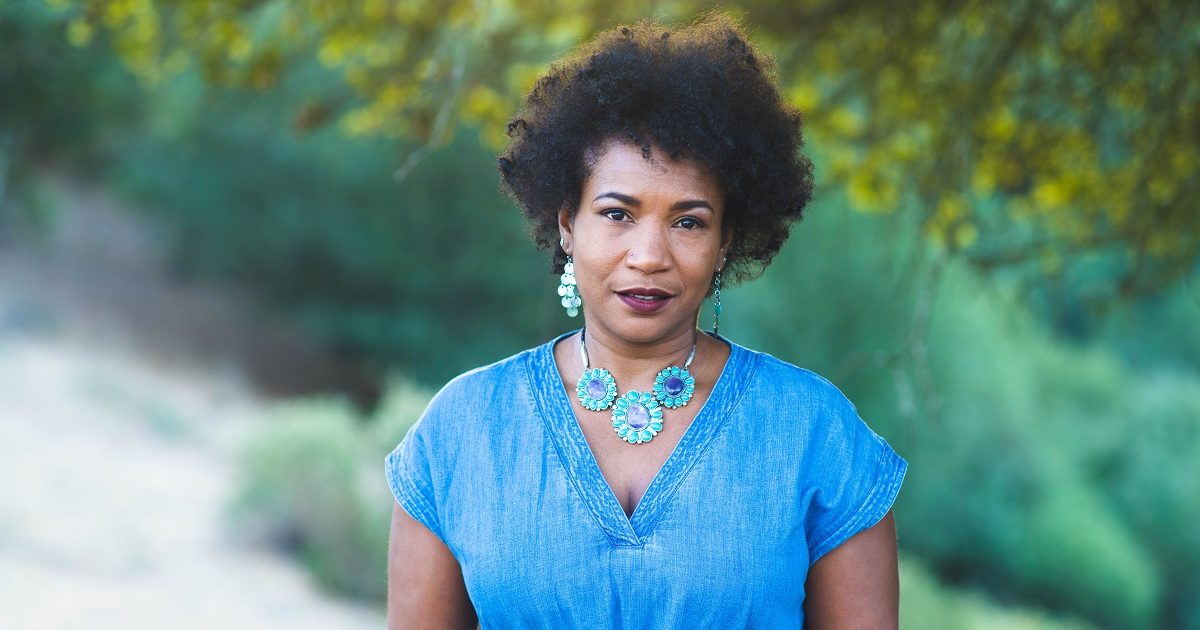
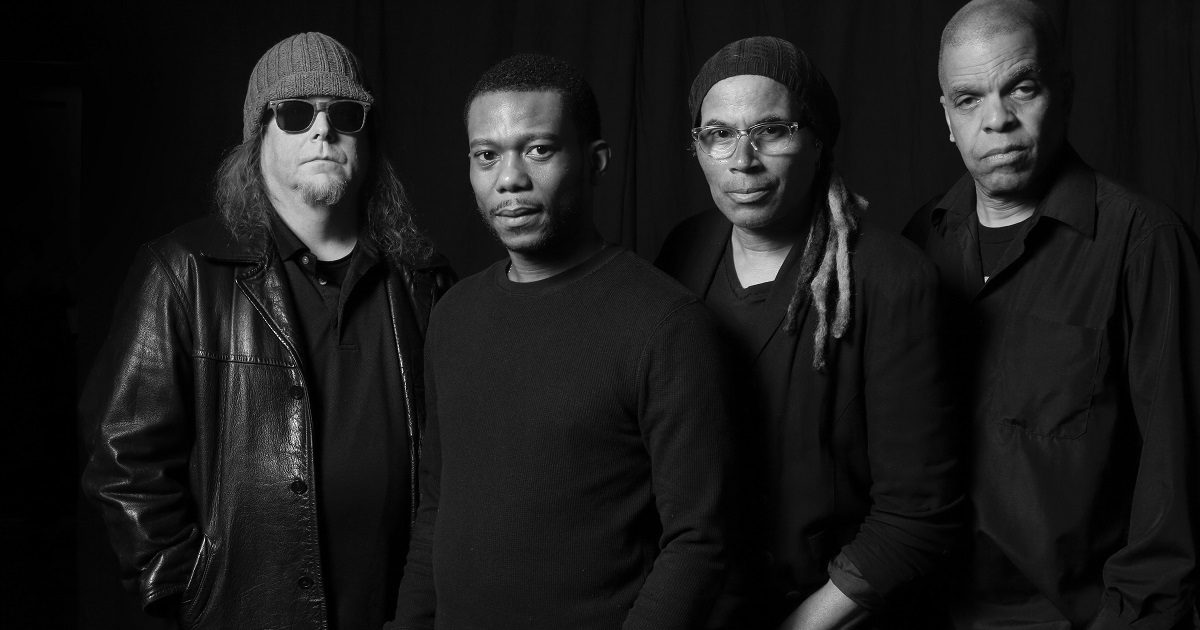
LISTEN: Leslie Jordan feat. Brandi Carlile, “Angel Band”

Artists: Leslie Jordan featuring Brandi Carlile
Hometown: Chattanooga, Tennessee, and Ravensdale, Washington
Song: “Angel Band”
Album: Company’s Comin’
Release Date: April 2, 2021
Label: Platoon

In Their Words: “Brandi Carlile deserves to be accompanied by more than a single band of angels, not only for being a singular artist of our time, but also for living an exemplary life full of love and devotion to everyone she meets. … Singing these songs, it felt like I was recapturing the joy of what this music meant to me as a kid but without all the baggage. When I was growing up, I wanted so badly to be a good Christian, but I knew that the church would never accept me for who I was. It’s liberating now to come back to these hymns, completely at peace with myself, and sing without any hint of the guilt or shame I felt in my youth.

“My dear friend Travis Howard and I would get together on Sundays to sing these old hymns just because we loved them. Somewhere along the way, my business partner, Mike Lotus, took a real interest in what we were doing and started looking up and learning about every old Baptist hymn he could find. I think he realized, like we did, that the songs held something brilliant about the human condition and were a deep comfort to anyone who heard them, religious or not. He started posting our performances online, and the response was just incredible.” — Leslie Jordan


Photo credit: Miller Mobley

WATCH: The Wild West, “Better Way”

Artist: The Wild West*
Hometown: Los Angeles, California
Song: “Better Way”
Release Date: February 26, 2021
Label: Blackbird Record Label

In Their Words: “When the idea of ‘Better Way’ formed, society was and still is struggling with the differences that divide us. If one does not take the time and compassion to honor differences and look at the commonality that unites us, it’s blinding and tears us apart. Lyrically the idea of being born with love and born without hate is at the root of ‘Better Way.’ Finding the way back to that innocence, compassion and understanding brings a hopeful lens for the future if we can hold onto it and lift each other up. This group of women does exactly that for each other.” — Manda Mosher

*The Wild West: Tawny Ellis (vocals, lap steel, omnichord); Amilia K Spicer (vocals, guitar, mandolin, keys); Pi Jacobs (vocals, guitar); Manda Mosher (vocals, guitar, harmonica); Heather Anne Lomax (vocals, guitar); Deb Morrison (vocals, bass guitar)


Photo credit: Jason Willheim

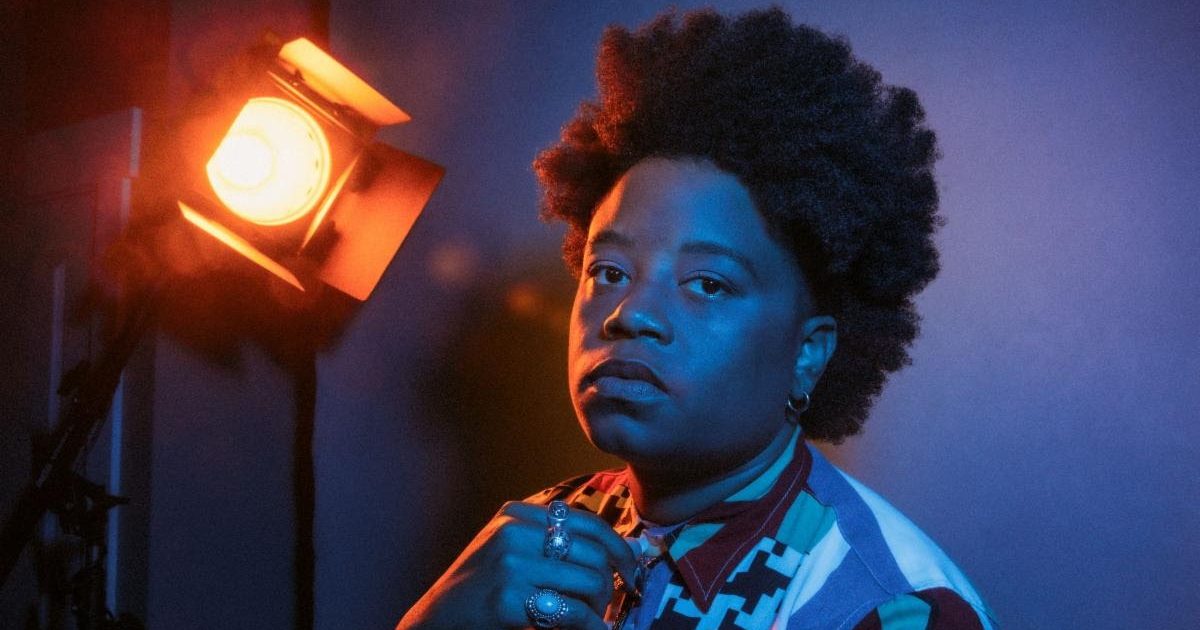
WATCH: Amythyst Kiah, “Black Myself”

Artist: Amythyst Kiah
Hometown: Johnson City, Tennessee
Single: “Black Myself”
Release Date: February 19, 2021
Label: Rounder Records

In Their Words: “‘Black Myself’ is the first song I’ve written that was confrontational. I’d always made it a point to sing songs that anybody could relate to, but this was something that had been welling up inside me for a long time. The reception of the song so far has given me hope that there are people out there who are ready to confront the shared trauma of racism, to look within ourselves and see how we might be perpetuating racist beliefs, and to do what is needed to create equality for all people.” — Amythyst Kiah


Photo credit: Sandlin Gaither

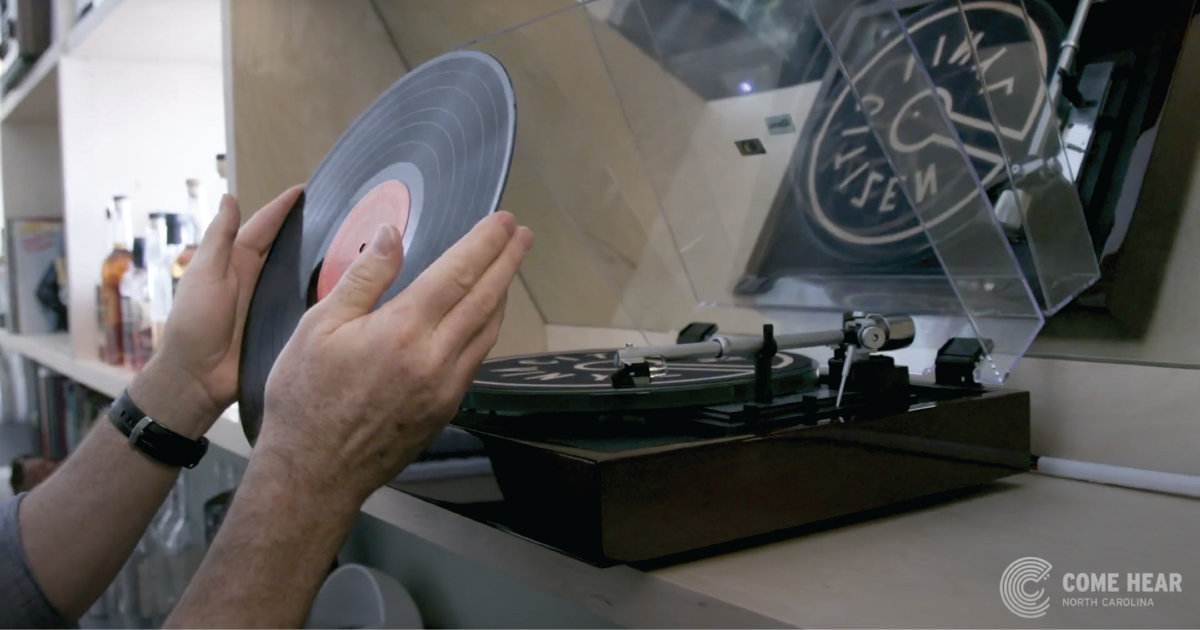
Go Behind the Scenes of Citizen Vinyl, North Carolina’s First Record Press

If you want to make an LP in NC, there’s a brand new vinyl destination: Citizen Vinyl, North Carolina’s first record press. Here’s some history about this landmark from North Carolina’s music campaign, Come Hear NC:

“Asheville, N.C., has long been viewed as a special place, funneling new sounds from the mountains to the world. In its heyday, the Asheville-based WWNC was one of the most popular radio stations in the country, and from its studios new bluegrass sound was presented for the first time to broad audiences across the country. It’s possible that Jimmie Rodgers (who lived in Asheville for a while) played ‘Carolina Sunshine Girl’ there, and the fiddles and banjos that have for so long rung out from the hollers and valleys of Western North Carolina found a way to the airwaves from the station’s studios.

“The building’s halls are full of history. Jim Lauderdale said of playing in places where great music has been made, ‘You get the feel about great music, it’s still livin’.’ No longer a radio station, it now houses Citizen Vinyl, North Carolina’s first record press. Mandolin Orange, based out of Chapel Hill, will be first off the press with a new double LP. Their music, full of guitar, fiddle, harmony, and a little twang, would have been right at home in one of WWNC’s old recording sessions.”

Check out the exclusive tour of the Asheville-based facility below:

Discover more about Citizen Vinyl and Come Hear NC here.


Photo courtesy of Come Hear NC

The Local Honeys: Rooted in Appalachian Folk, Communicating to the World

In normal times, you might find Kentucky-hearted duet the Local Honeys touring the UK or out on the road with folks like Colter Wall and Tyler Childers. But, like so many, the past year has been a paused their movement, allowing space and time to experience life in a way that most busy artists rarely get to.

Many caught wind of the group after a viral New York Times article in late 2020 about our nation’s cultural depression. But like other defendants of Appalachian people and culture, Montana Hobbs and Linda Jean Stokley, who make up the pair, have been outspoken via their music for a long time. Their new double-sided single continues a demand of accountability from big industry. “It’s a modern anthem of the American working class,” said Stokley.

BGS caught up with the Local Honeys to talk about these two songs — “Dying To Make a Living” and “Octavia Triangle” — as well as the message in their music.

BGS: In the before times, you’ve led pretty busy schedules, including multiple international tours. What have you been up to since the pandemic began?

Montana Hobbs: Well, I can tell you what we’ve be into. We’ve been in our jammies a lot! But you know, we’ve experienced probably a similar story to anybody else that has been in the gig industry. We’ll all remember it as a point in our lives and a point in our careers that was kind of sedentary, if you will. I think our story is not much different, we’ve had more time at home to focus on things that we don’t get to do on the road – like exercise, cook at home, read. At the new year we both decided that we weren’t gonna think so much about what this past year has been, but think more about what this new year is going to be for us.

Linda Jean Stokley: In 2019 we went on about five separate concert tours. So the beginning of 2020 was our last tour, we were all over the UK as well as greater Europe, on our own headlining tour but also supporting Tyler Childers. That was a huge tour, and it really took a lot out of us, so it was kind of welcoming to have a little bit of a break after that. But over this past year, we have done a few cool things. We went on the Tyler tour, we got signed to La Honda Records — that’s a pretty big deal for us. We love everything that they do, and have been constantly inspired by them. Our management and being with a label have proven so helpful, even during this time, to have someone like our manager that is so good about keeping our spirits up. Another thing that we’ve done this past year is put out a Western AF video, and that was a highlight. We didn’t get to do much, but what we did was really welcomed.

In a time of so much uncertainty, what inspired this new release?

LJS: We recorded those in October of 2019, and we’d been working on trying to change up our sound a bit, to make our sound bigger but not non-traditional, kind of neo-traditional. So we were thinking in 2020, how are we gonna release these songs? Then in October 2020, our friend Jimmy McCowan, who’s on one of those tracks, suddenly passed away from a heart attack. So, we talked to La Honda and asked if we could finally get these out. That’s kind of what spawned the release of this A-side/B-side single.

These songs show two perspectives on life in the coal mines: working like hell to provide for your family, while enduring personal struggles both medical and mental. What are you trying to tell the rest of the world about these Appalachian issues?

LJS: In July of 2019, there was a blockade in Harlan County, [Kentucky], and over a thousand miners in central Appalachia were out of work, because of the Blackjewel mining company. They went bankrupt, and they didn’t tell anybody. They didn’t tell any of their workers until the day of. In the middle of the day, they said, “this is your last day.” That is completely illegal. It was strange that it had to happen in Harlan County, which is so synonymous with all these bloody labor wars. To have something like this happen with one of the largest coal companies in the nation just shows that they can get away with all kinds of unlawful behavior. These people, their checks bounced. Of course that’s going towards their mortgage or rent, but it’s also going towards their medical costs, because there are so many disabled miners. We started thinking about this song more and more. We sang it a little bit, but didn’t have a need to sing it necessarily because we didn’t have anything to say. When we were on tour a lot, we would tell the story of what was going on, and put song and emotion into what’s happening, to get people to listen.

MH: To add on that, the song became more relevant to us in this time frame. It was a song that we were familiar with, via the band Foddershock, but also Rick & the Po’ Folk, Rich Kirby and his traditional band, and Pierceton Hobbs [who released his own version in 2020]. Basically, we felt like when you’re given the stage to speak on things like this, you might as well take advantage of the time and the attention that you’ve been given. Make that time worth it, and get a message that you feel is important across. When we would go over to England, which is also a very post-coal society that we didn’t know much about, we had firsthand connections where they told us stories of tragedy, how their grandfathers were miners, and so on. It made the whole history of traditional music come full circle for us, to where we had the opportunity to sing a song, but we also had the opportunity to tell a story of where we’re from and what’s happening where we are. Which is what traditional music was in its first iteration. 

I know that you both, along with other musicians, visited the miner’s blockade. What was that like?

MH: We went and visited the miner’s blockade in August. We just went down there and hung out with these people, they had their entire families on the train tracks. They had little encampments set up. People like Brett Ratliff, Rich Kirby, Tanya Turner at the time worked for Appalshop, went down there with us. Son, it was so hot. It was very much like third world conditions in what’s supposed to be the greatest country.

The week before, we were at Cowan Creek Mountain Music School in Whitesburg, Kentucky. Jim McCowan has been a member of the faculty there probably as long as the school has been around. This guy in my class asked, “Have you heard the song that Jimmy’s mother wrote?” We were both very close to Jim, he was a very bright light. So I sat on a picnic table with him and said, “I heard that you do a song your mother wrote.” And I’m one of those people that’s a real sneaky recorder with my phone, and I have about a 10 or 15 minute clip of him playing this song called the “Octavia Triangle.” He had such a beautiful delivery of the song.

We were thinking of something that would pair well with “Dying To Make a Living,” which is economic hardship, being pushed under the rug. Even though this work is essential, they’re being treated less than they’re worth. So then I thought that “Octavia Triangle” completely highlighted what it is to actually live, and work, and die, and love, in the coalfields. This was a true story that happened in Pike County, Kentucky. Who’s to blame other than these harmful practices which we still practice today?

As a fellow musician from Central Appalachia, I feel like Foddershock (who wrote “Dying”) rarely get the attention or recognition they deserve. Do you have a favorite album, or a starter pack for those who have never heard the band?

LJS: I absolutely love Foddershock, I’m always trying to find their CDs. I’m waiting on WV [Hill] to send me some recordings. Obviously, I think “Dying to Make a Living” is one of the best places to start. I would also say “Eat Possum & Prosper” is one of my favorite tracks of theirs. And I really love “When Coal Was King.” There’s one that’s called “Live in a Trailer.” “Cahoots,” as well. 

Do you have any new goals or ideas to try for when things turn around and we can all get back on the road?

MH: Hmm… we are ready and willin’! Open for suggestions, open for bookings… But like I said before, this is a time that we will all remember as a pause in our lives and a pause in history, even though it’s been a hell of a lot of history put into one year. We’ve been granted this time to kind of work on things, we’ve been writing a lot. It’s always been something we’ve done and tried to practice, but now it seems like it’s at the forefront of our minds. We want to be seen as not just traditional musicians, not just old-time musicians, but we wanna be known as songwriters as well. Carrying on that storytelling, and showing how I feel about what’s going in the time and place I’m from. That’s one of the biggest connectors in music in general, it’s saying you’re not alone. Like when we went to Wales, even our song “Cigarette Trees,” which is about strip mining, people would come up to us and say, “They do that here too, and we don’t like it either.”

LJS: We’re finding so many relatable things to talk about when we tour in the UK specifically. Touring has really given us a way and a platform to connect with all these people around the world that are dealing with similar situations. Every time we go anywhere, we talk to people about the whole idea of ‘saving Appalachia,’ and trying to tell people that no, we have to pay attention to the causes of poverty and suppression that are happening within our state and within the entire southeast region. We don’t need saving, and we don’t need developing — we need somebody to actually understand what is going on in our area. We’re looking forward to reconnecting with people.


Photo credit: Zachary Martin

Meet the Lineup of Cabin Fever Fest

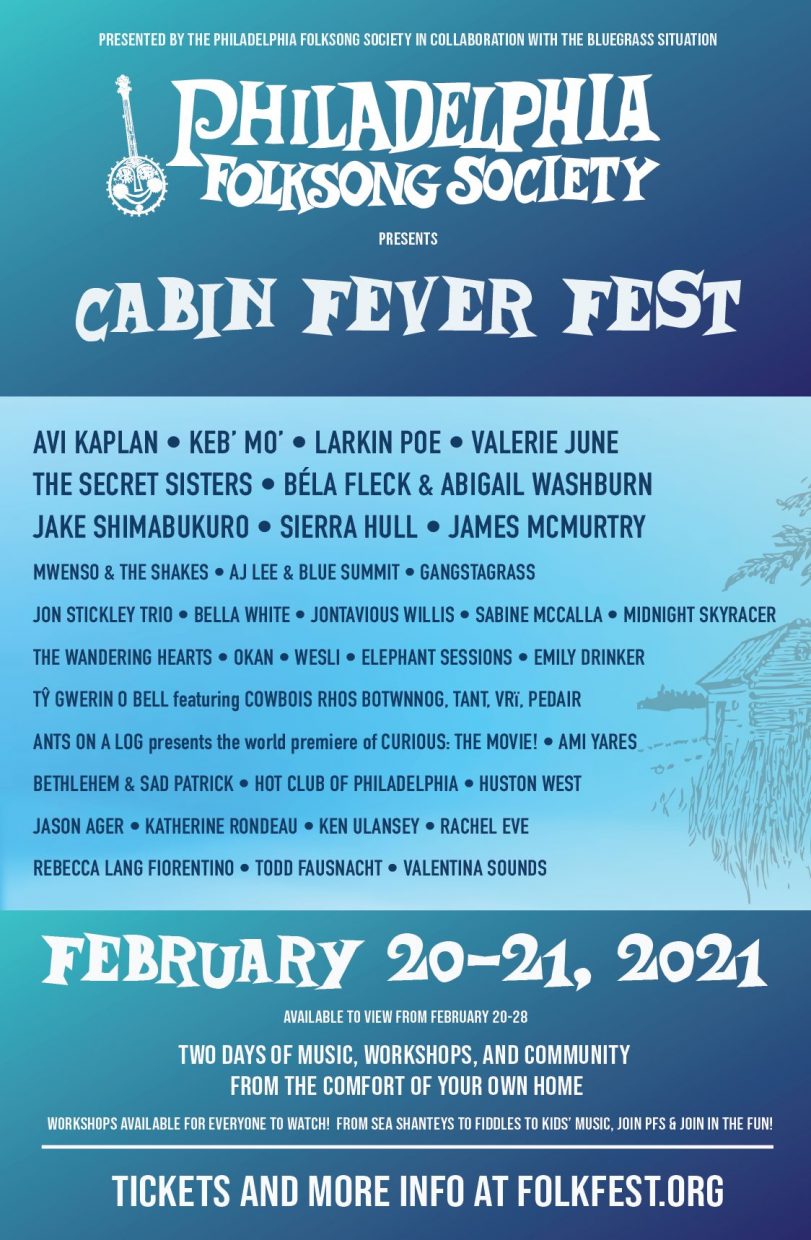
BGS and the Philadelphia Folksong Society, who are presenters of the oldest continuously run music festival in North America, are proud to join together to virtually present Cabin Fever Fest on ​February 20 & 21.​ This fully digital, interactive musical experience will include multiple streaming stages, performances by international stars and local favorites, music workshops and lessons, and more. (See the full lineup below.)

Tickets to Cabin Fever Fest are available now, full weekend passes are available for just $45 for PFS Members and $50 for Not-Yet-Members. Your ticket gives you full access to the event from February 20 until February 28, to watch at your leisure and convenience.

To get excited for the launch of the festival this Saturday, we wanted to introduce our BGS audience to some of the amazing folks on the lineup. Hopefully you’ll find a few favorite artists and performers — new and old — to catch this weekend on Cabin Fever Fest, presented by BGS and the Philadelphia Folksong Society!

Avi Kaplan

We first turned our attention to former Pentatonix low-end Avi Kaplan when he released his first rootsy foray, I’ll Get By, last February. In our interview last year, he spoke about his time with the internationally-renowned a capella group, growing up on bluegrass, and how is journey back to folk took shape. We were excited to have Avi on Whiskey Sour Happy Hour episode 3 last spring and we’re so excited to have him on Cabin Fever Fest, as well!

Buy your tickets to Cabin Fever Fest now!


Keb’ Mo’

By now a longtime friend of BGS as well as a stalwart of the Americana-blues scene, Keb’ Mo’ has been our Artist of the Month, has been on our podcasts, our live lineups, and our year-end and holiday playlists, and now will join us and our Philly Folksong Society friends for Cabin Fever Fest! Whether he’s sharing a stage with Taj Mahal or swapping licks with Rob Ickes & Trey Hensley, Keb’ Mo’ is an extraordinary picker and collaborator.

Purchase your tickets to Cabin Fever Fest here.


Larkin Poe

Bluegrass family band turned modern blues-rock shredders Larkin Poe are a constant favorite on the pages and social media channels of BGS — and we totally see why! They combine fiery, impassioned energy with bluegrass technique and virtuosity for a brand of southern rock and blues that appeals to all kinds of roots music fans. They’ve kept up a constant “touring” calendar despite COVID-19, and we’re so grateful to have them join our virtual festival.

Buy your tickets to Cabin Fever Fest now!


Valerie June

A cosmic, mystical force on banjo, with her songwriting pen, or within the pages of her poetry notebook, Valerie June is another Whiskey Sour Happy Hour alumnus joining us on the Cabin Fever Fest lineup. Her upcoming Jack Splash-produced album, The Moon and Stars: Prescriptions for Dreamers, is generating quite a bit of buzz in folk circles — the single, “Call Me a Fool” features Stax legend Carla Thomas! — so of course we’re looking forward to her Cabin Fever performance!

Purchase your tickets to Cabin Fever Fest here.


The Secret Sisters

What would a folk festival be without sibling harmonies!? The way The Secret Sisters — Laura Rogers and Lydia Slagle — blend their songwriting styles, their production and arrangements, and their voices is so effortless — while laser-precise, deliberate, and painstaking.

Buy your tickets to Cabin Fever Fest now!


Béla Fleck & Abigail Washburn

Lockdown shows from Nashville’s self-professed banjo house (and basement) have kept all of us going through the past year or so — or at least, all of us at BGS and Philly Folksong Society! We’re tickled they’ll be bringing more of their humorous, engaging, double-banjo content to Cabin Fever Fest.

Purchase your tickets to Cabin Fever Fest here.


Jake Shimabukuro

Perhaps the world’s foremost ukulele virtuoso, Jake Shimabukuro represents quite a few American roots music traditions often left to the wayside in folk circles. Shimabukuro has performed with many bluegrass, old-time, and Americana greats including Sierra Hull, Cathy Fink & Marcy Marxer, Alison Brown, Béla Fleck, and more. His prodigious approach to the ukulele — an instrument with skyrocketing popularity at the moment, especially among Gen Z — will surely wow new and old fans alike, no matter your entry point to roots music.

Buy your tickets to Cabin Fever Fest now!


Sierra Hull

Speaking of Sierra Hull! One of our all-time favorite mandolin maestros, this thoughtful composer/songwriter will headline one day of our BGS stage. Every chance we get to work together, we take it! We can’t wait to see what new, astounding cover songs — like her Whiskey Sour Happy Hour rendition of “King of Anything” — fantastic musical acrobatics, and bluegrass nuggets she’ll pepper throughout her performance.

Purchase your tickets to Cabin Fever Fest here.


Mwenso & the Shakes

Our Philly Folk Fest friends turned us onto local favorites, Mwenso & the Shakes, and we’re awfully glad they did. Led by Michael Mwenso, the troupe of global artists present music that’s entrancing, entertaining, and as they put it, “A formidable timeline of jazz and blues expression through African and Afro American music.” Their debut album, Emergence [The Process of Coming Into Being], is available wherever you get music now. We can’t wait to hear from Mwenso & the Shakes!

Buy your tickets to Cabin Fever Fest now!


AJ Lee & Blue Summit

Based in Santa Cruz, California these fixtures in the Northern California bluegrass scene are making a splash on a national scale, despite the pandemic throwing a wrench in their ascension. Blue Summit’s music is modern, crisp, and precise with a songwriting heart that feels fully realized and mature, despite their relative youth as a group. Lee’s vocals and originals spearhead the ensemble, reminding of Alison Krauss and her former bandmate Molly Tuttle, too. BGS has been waiting for the opportunity to get Blue Summit on a lineup and Cabin Fever Fest was the perfect opportunity!

Purchase your tickets to Cabin Fever Fest here.


But wait, there’s more!

Check out the full lineup and schedules for Cabin Fever Fest below and don’t forget to head to the CFF website for more information — discover workshops, get your Philly Folksong Society membership, find FAQs, and more!

Saturday, February 20, 2021

(all times EST)

CAMP STAGE presented by the Philadelphia Music Co-op

11:00AM Katherine Rondeau
11:30AM Jason Ager
12:00PM Hot Club of Philadelphia
12:30PM Rebecca Lang Fiorentino
1:00PM Ami Yares
1:30PM Bethlehem & Sad Patrick

CAMP STAGE presented by the Bluegrass Situation

2:30PM The Wandering Hearts
3:15PM AJ Lee & Blue Summit
4:30PM Jontavious Willis
5:45PM Jon Stickley Trio
7:00PM Sierra Hull

MARTIN STAGE / MAIN STAGE

3:30PM Emily Drinker
4:15PM OKAN
5:30PM James McMurtry
6:45PM Mwenso & the Shakes
8:00PM The Secret Sisters
9:15PM Keb’ Mo’
10:15PM Avi Kaplan

Sunday, February 21, 2021

CAMP STAGE presented by the Philadelphia Music Co-op

11:00AM Ken Ulansey
11:30AM Huston West
12:00PM Rachel Eve
12:30PM Todd Fausnacht
1:00PM Ants On a Log Presents the World Premier of CURIOUS: The Movie
1:50PM Valentina Sounds

CAMP STAGE presented by Eisteddfod Amgen

 2:30PM Tŷ Gwerin o bell featuring Cowbois Rhos Botwnnog, Tant, VRi, Pedair

CAMP STAGE presented by the Bluegrass Situation

4:30PM Midnight Skyracer
5:15PM Sabine McCalla
6:30PM Bella White
7:45PM Gangstagrass

MARTIN STAGE / MAIN STAGE

3:30PM Wesli
4:45PM Elephants Sessions
6:00PM Béla Fleck & Abigail Washburn
7:15PM Jake Shimabukuro
8:30PM Valerie June
9:45PM Larkin Poe

*Cabin Fever Fest’s schedule may be subject to change without prior notice.

Purchase your tickets to Cabin Fever Fest here.


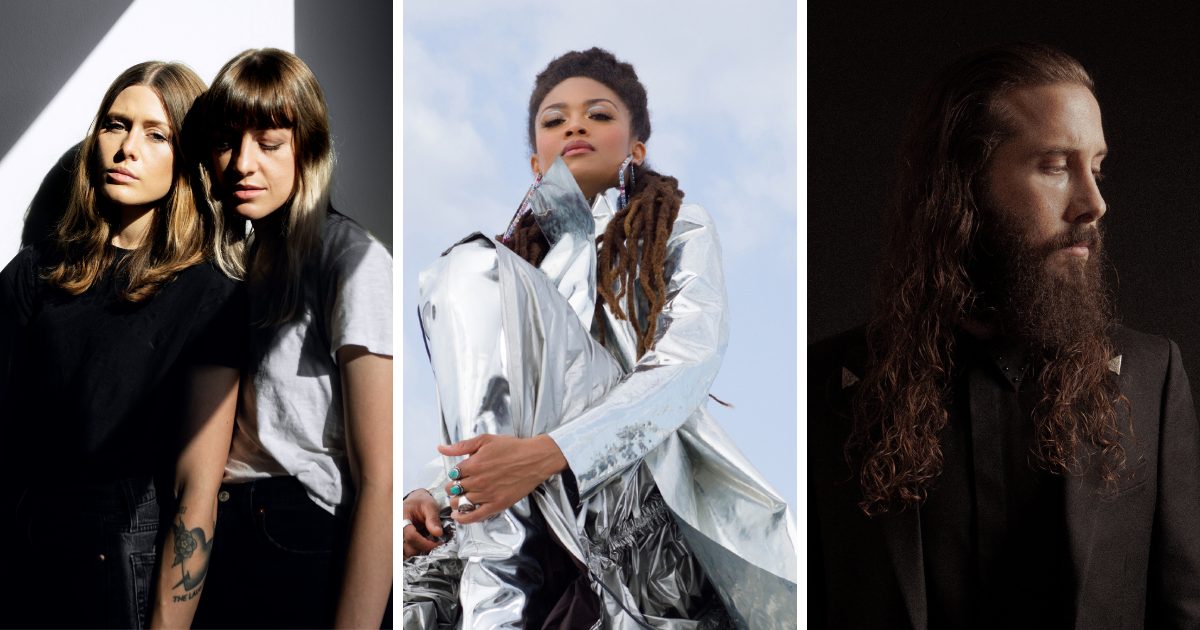
Photo credit (L to R): Larkin Poe by Josh Kranich; Valerie June by Renata Raksha; Avi Kaplan by Bree Marie Fish.
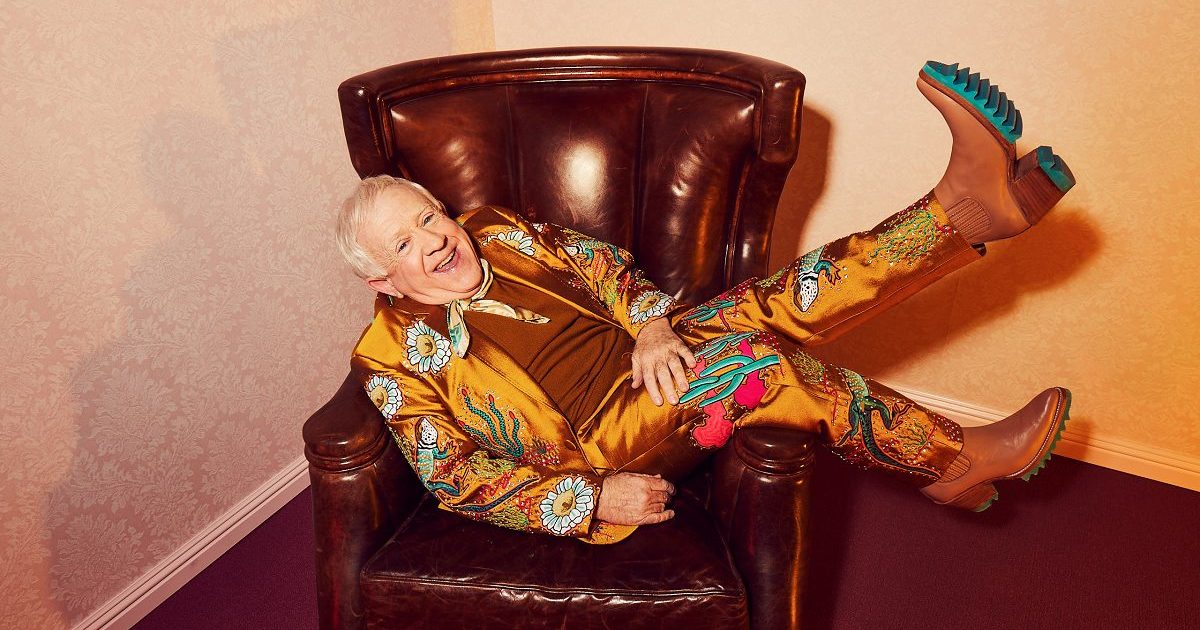
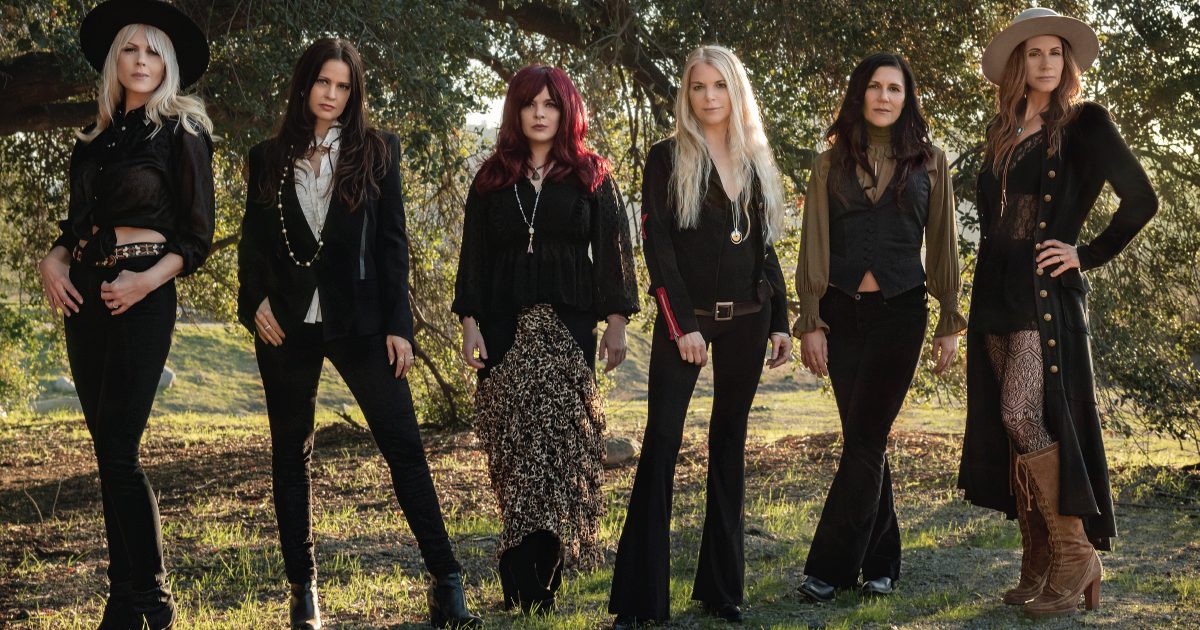
WATCH: Lily B Moonflower, “Midnight Song”

Artist: Lily B Moonflower
Hometown: Lawrence, Kansas
Song: “Midnight Song”
Album: Moonflower
Release Date: February 12, 2021
Label: Lost Cowgirl Records

In Their Words: “I was inspired to write this after many nights of dancing barefoot on the honky-tonk floor. After the live music was over, the neon lights were humming and I was humming along to their song. This created a dream state of mind where I started to form the idea for the song and the whimsical music video that goes along with it. The collaboration for the music video came together seamlessly and I think it’s very open to interpretation, but from my point of view, it’s representative of the magic that is created when community comes together through music and love.” — Lily B Moonflower


Photo credit: John Knepper Photography

WATCH: Miko Marks, “Hard Times”

Artist: Miko Marks
Hometown: Flint, Michigan
Song: “Hard Times”
Album: Our Country
Release Date: March 26, 2021
Label: Redtone Records

In Their Words: “This is our arrangement of an 1854 song by Stephen Foster. Those who know about Foster’s involvement with minstrel shows earlier in his life may wonder why I would include a song of his on my album. Much of his success came through the appropriation of Black culture and music, and for me this felt like an opportunity to take a song of his and reclaim it through my own voice as a Black artist. It was also a way for me to pay tribute to Mavis Staples, whose arrangement of this song is absolutely gorgeous. The lyrics also have particular significance that I think everyone can relate to because of the hard times we’ve been going through this year. I love the melody and the mood. It’s sweet, sad, and hopeful all at the same time.” — Miko Marks


Photo credit: Beto Lopez, Mooncricket Films

LISTEN: Greg Sover Band, “Feelin’ Sumthin'”

Artist: Greg Sover Band
Hometown: Philadelphia, Pennsylvania
Song: “Feelin’ Sumthin'”
Album: The Parade
Label: Grounded Soul

In Their Words: “‘Feelin’ Sumthin” is a song I wrote because I wanted to make people feel good. Beyond the upbeat music that you can dance to, the main goal was to make the listener feel somewhat spiritual. That’s why I chose the gospel/country and blues sound. I remember having this melody in my head and the words feeling something kept coming up. I added my resonator guitar in open E tuning with a little distortion to add the edge.” — Greg Sover


Photo credit: Jeff Fasano Photography

The Station Inn Earns an Exhibit at the Country Music Hall of Fame and Museum

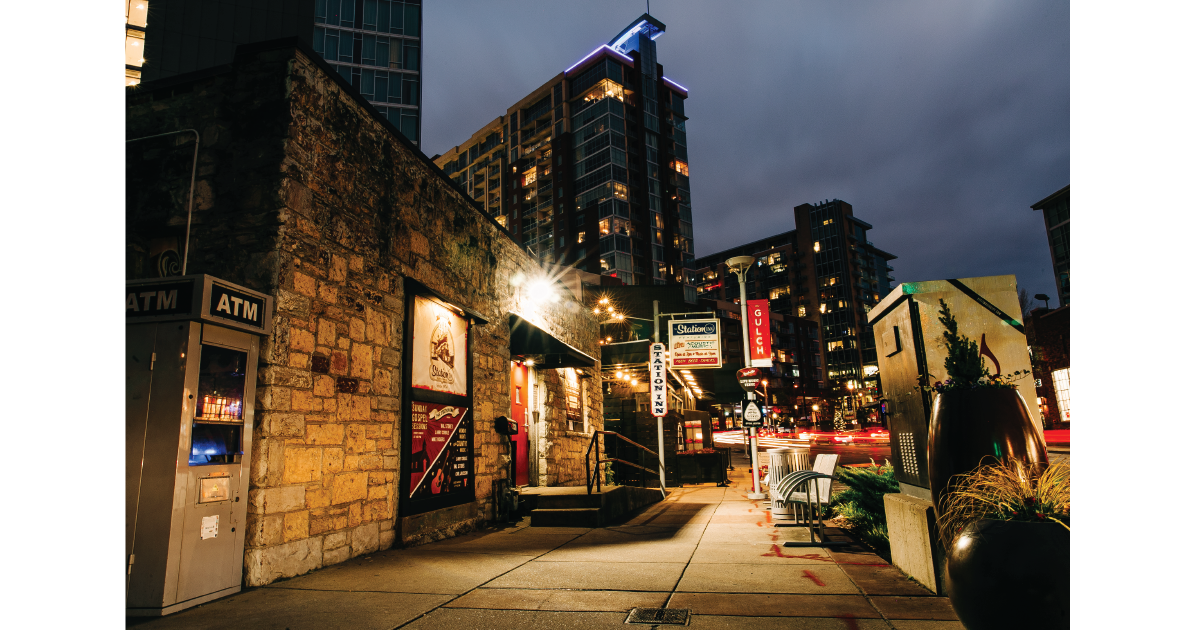
The humble appearance of the Station Inn could never give away the enormity of its legacy and importance to bluegrass music. Nestled between skyscrapers in an ever-growing city, a single story cinder-block building with its windows painted shut sticks out as a relic from the past — when the Urban Outfitters across the street used to be an empty field of waist-high grass.

For nearly 50 years “the World Famous” Station Inn has played a pivotal role in bluegrass as both a venue and community hub, drawing people to Nashville and making connections that had a major impact on the music. Through the rest of 2021, The Country Music Hall of Fame and Museum will honor and present the history and legacy of the venue in their exhibit The Station Inn: Bluegrass Beacon.

“The main reason that we wanted to do this exhibit is because the Station is such a vital and important part of not just Nashville music history, but of American music history,” says Peter Cooper, one of the curators of the new exhibit. The Station Inn has a larger-than-life reputation in the bluegrass community, but this new exhibit endeavors to highlight both the importance of the venue’s history and its welcoming atmosphere.

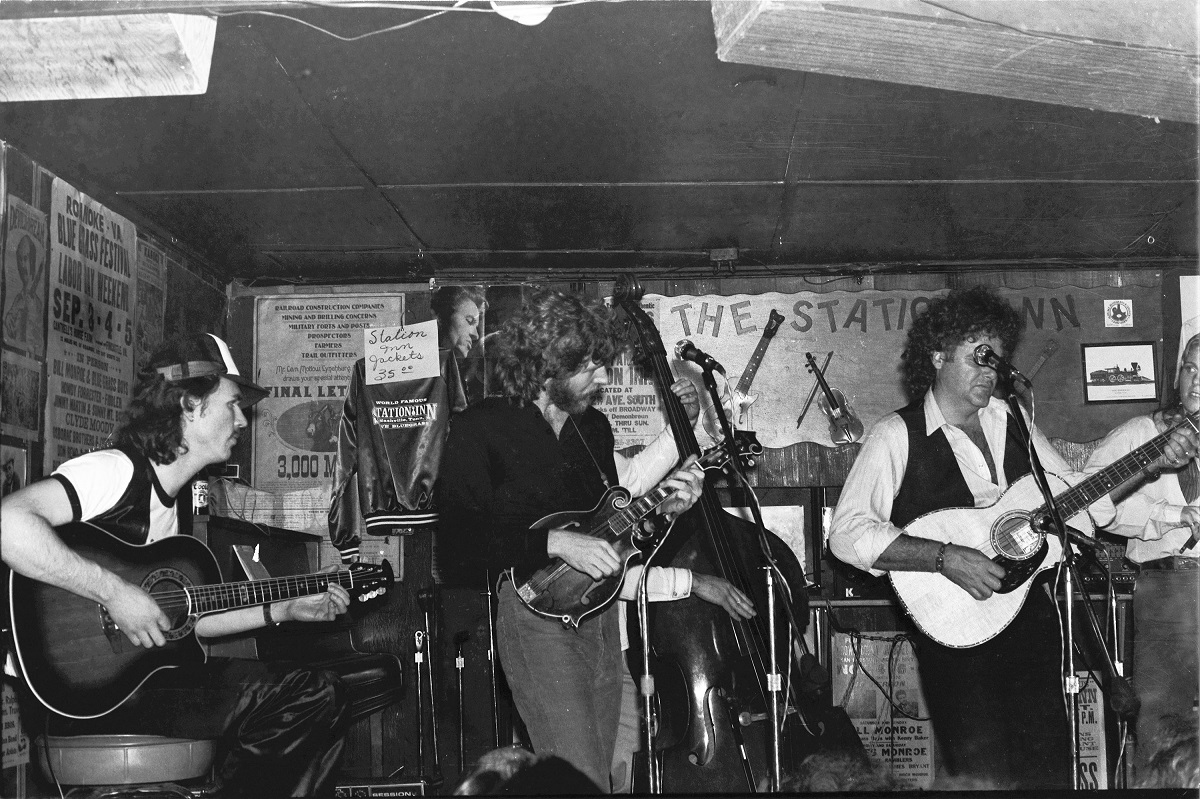
During the mid-1980s, adventurous singer-songwriter and musician Peter Rowan assembled all-star groups he dubbed “Crucial Country” for a series of shows that created a buzz amongst progressive roots music fans and players. In this photo, Rowan (right) is joined by Mark O’Connor on guitar and Sam Bush on mandolin. Photo: Charmaine Latham

It was founded in 1974 by a group of bluegrass musicians and singers — Bob and Ingrid Fowler, Marty and Charmaine Lanham, Jim Bornstein, and Red and Bird Lee Smith — who wanted to provide their fellow musicians and fans with a venue where they could play and hear bluegrass music. At that time the Station was more of a clubhouse where the owners functioned as the house band and guests would come up to jam. They moved to the current location in 1978; three years later, the club was bought by J.T. Gray, who at the time was driving Jimmy Martin’s tour bus.

Gray, who would go on to be inducted into the Bluegrass Hall of Fame in 2020 and was given a lifetime achievement award by the Southeast Regional Folk Alliance, began booking national touring acts to perform. It would be easy and accurate to show why the Inn is significant by pointing to the artists who have played there, including Bill Monroe, the Stanley Brothers, Vince Gill, Alison Krauss, and essentially any other important name in bluegrass. But the clubhouse atmosphere always remained. Countless (as in absolutely too many to count) threads of bluegrass history, both well-known and overlooked, can all be traced back to chance meetings at the Station Inn. J.T. Gray fostered a welcoming atmosphere that led to many locals and visitors from out of town to meet there, including mandolinist Mike Compton.

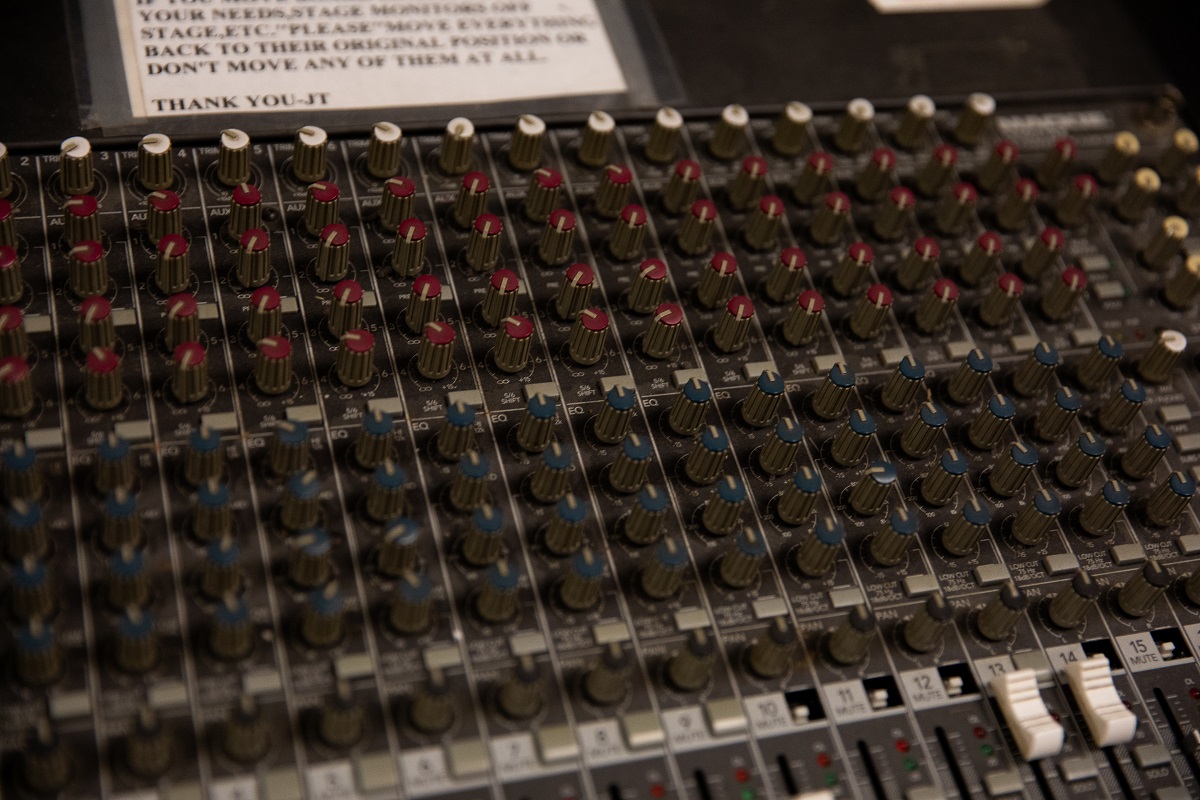
The venue’s sound-mixing console described by Gray as “the first piece of modern sound equipment we ever bought”

“I rode up [to Nashville] with Raymond Huffmaster, a bluegrass guy from Meridian, Mississippi, where I’m from, because I’d been hanging around him trying to learn how to play,” Compton says. They visited the bluegrass spots in town including the Station Inn, and Compton recalls after heading home, “Pat Enright got in touch with me and said they were starting a band and asked if I wanted to join. So I moved [to Nashville] in 1977 and moved in with J.T. Gray.”

Mike and Pat would continue playing together and later go on to form the legendary Nashville Bluegrass Band, which became a staple act at the Station Inn. A predecessor to that award-winning band was performing at the Station the first time future bluegrass star, Kathy Chiavola, came to town in 1979.

“When that door opened, the room was packed and I saw a vision of heaven,” she says, recalling that first night. “I heard these two voices, Alan [O’Bryant] and Pat [Enright], in their prime. And I lost it. I said, ‘OK. I’m moving here.’ There was a notice on the Station Inn bulletin board that a band of women playing bluegrass were looking for a roommate.” That band turned out to be the Bushwhackers, which featured bluegrass pioneers Susie Monick and Ginger Boatwright. Chiavola eventually joined the Bushwhackers playing bass and singing lead and harmony until Doug Dillard moved to Nashville. As the banjo player from the Dillards (who were famous for playing the Darlings on The Andy Griffith Show), Dillard put a band together and asked Ginger Boatwright to join, and about a year later asked Chiavola, too. Both the Bushwhackers and the Doug Dillard Band would frequently perform at the Station.

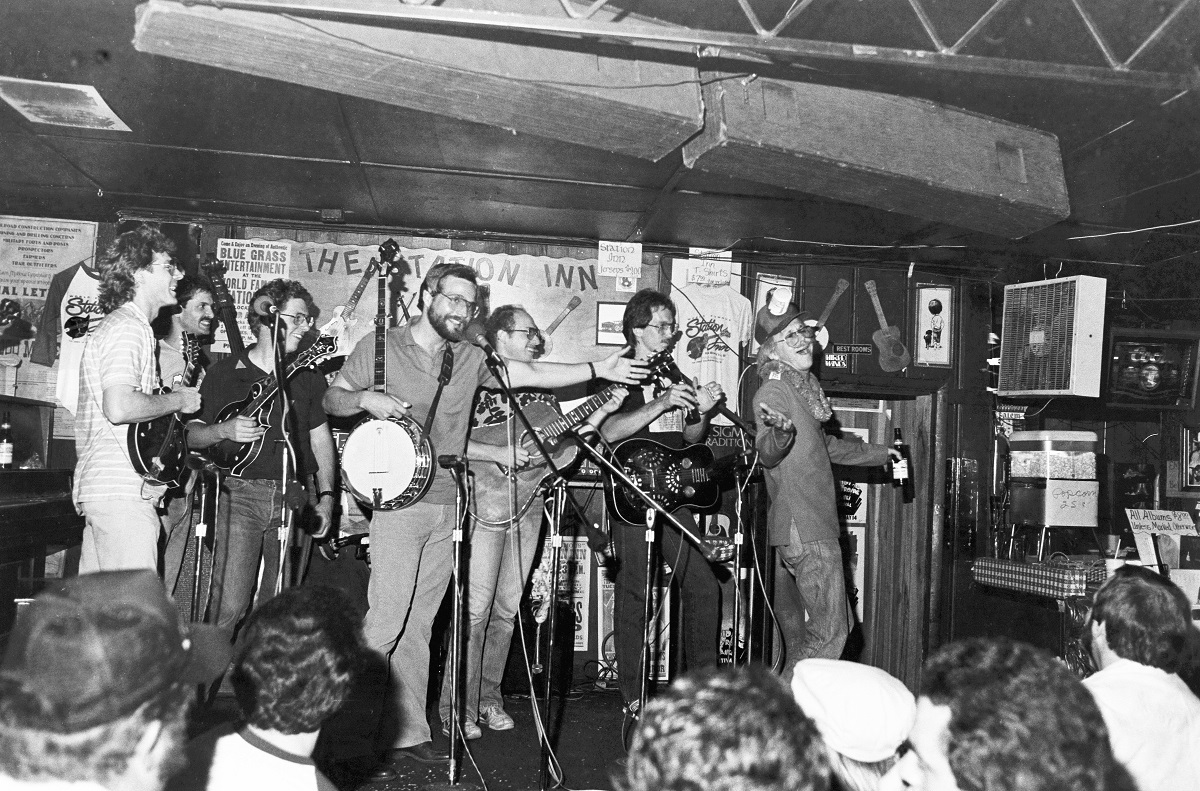
Vocalist, bones player, and madcap entertainer Ed Dye (far right) was a colorful presence at the Station Inn during the 1980s and early 90s. He assembled the Nashville Jug Band with a cast of stellar Nashville musicians from rock, jazz, and bluegrass backgrounds, and hosted wildly unpredictable shows. In this photo, he takes the stage with (from left): Sam Bush, Mark Schatz, Tim O’Brien, Alan O’Bryant, David Grier, and Jerry Douglas. Photo: Charmaine Lanham

Chiavola eventually moved into a duplex next to bluegrass bassist Mark Schatz. Together, they would often play the Station Inn with Charlie Cushman, Stuart Duncan, and Bobby Clark as part of a band called The Satellites. Other times, Chiavola would perform at the Inn with an ensemble called the Lucky Dogs which featured Jerry Douglas, Béla Fleck, Edgar Meyer (who had just moved to town), and sometimes Sam Bush or Mark O’Connor.

“It was beyond belief,” she says. “Sometimes I remember being on stage at the Station and listening to those guys play. I thought it was the most heavenly sound — I can’t even describe it to you. It was perfect music with so much feeling. You could hear a pin drop. It was so beautiful.”

Schatz, on the other hand, often performed at the Station with Mike Compton as part of John Hartford’s band. Hartford had moved back to Nashville to form a string band after a successful songwriting career in L.A. That California connection later landed him the contract to help with the music for the Coen Brothers’ massively successful O Brother, Where Art Thou? Compton’s 1927 Gibson A-Jr. model mandolin, which he played with the Nashville Bluegrass Band, in John Hartford’s string band, and on the O Brother soundtrack, is included in the new exhibit.

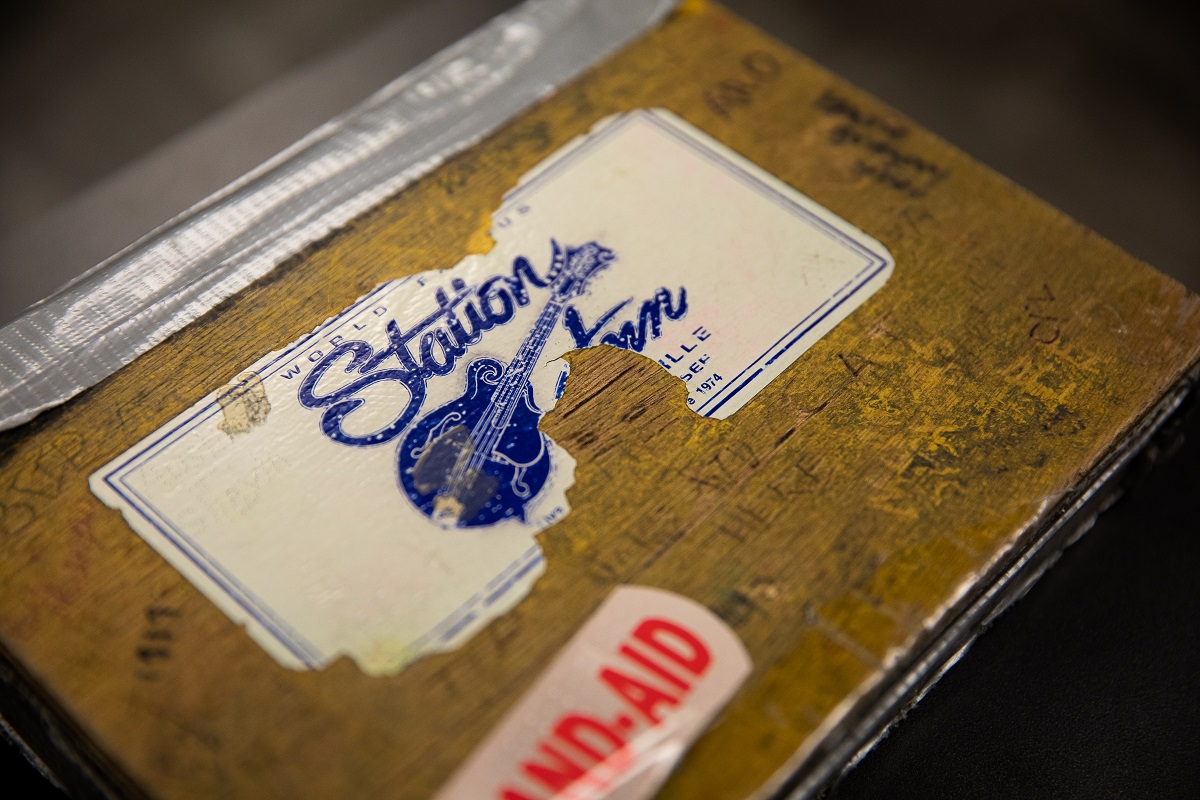
A cigar box used for many years to collect admission fees at the club entrance

Also on display is a small wooden box that was used to collect admission for years, along with some history about former Station Inn employee and local folk icon, Ann Soyars. “Ann embodied what the Station is about,” Cooper says. Soyars worked the door and was “small but fierce.” She was known to throw out rowdy college football players for being too loud, but also welcome regulars and newcomers alike. “Ann’s inclusion in the exhibit is indicative of what we’re trying to do, which is to help people understand not just the facts of the matter, but the spirit of the matter. The Station Inn is an example of musical community building in the most positive way. It’s like Cheers for ‘grassers.”

In addition, the exhibit features other artifacts from both the building and the musicians who have performed there including a fiddle played extensively by Tammy Rogers with the SteelDrivers, Mike Bub’s Kay M-1 double bass, which he played with many groups at The Station Inn — including Weary Hearts (Chris Jones, Butch Baldassari, Ron Block), the Del McCoury Band, and the Sidemen (Terry Eldridge, Jimmy Campbell, Ronnie McCoury, Gene Wooten, Ed Dye, Kristin Scott Benson, and Larry Perkins). Seats from a tour bus used by Lester Flatt, which serve as seating in the venue, are on view as well.

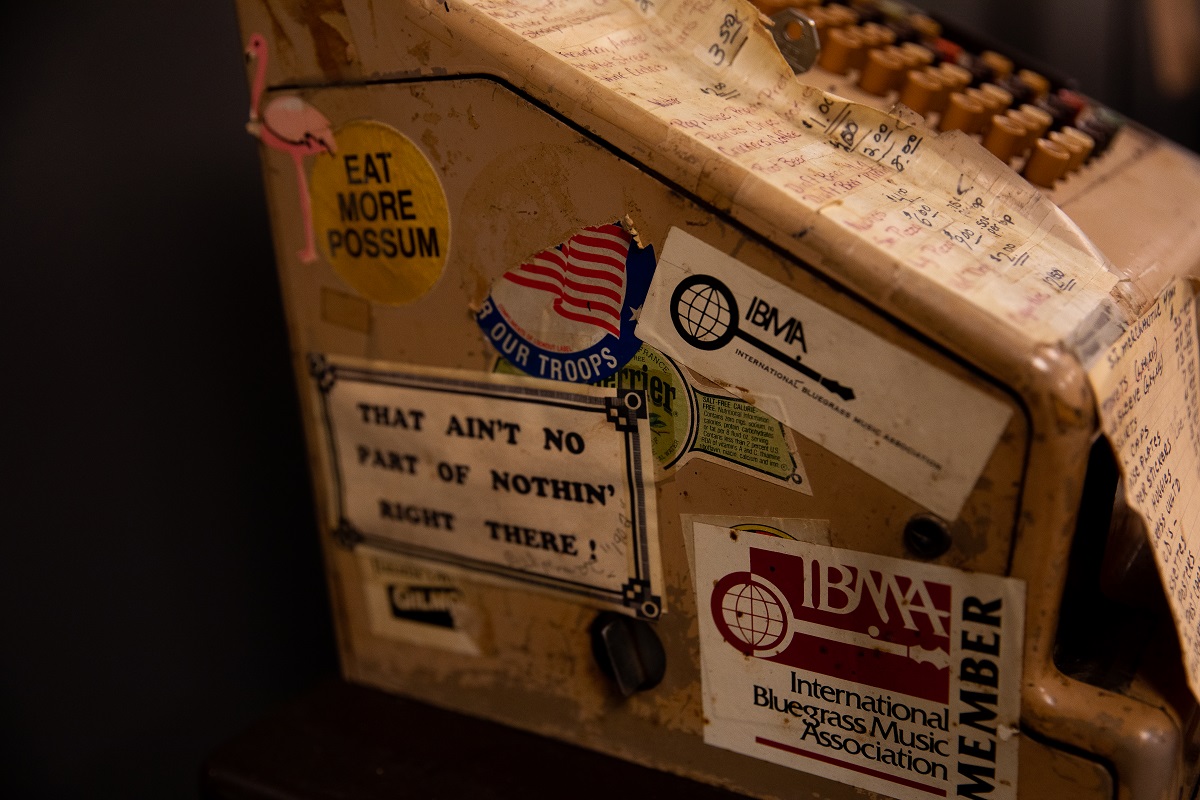
The Station Inn’s cash register

Generations of performers’ children have grown up in the Station’s green room and backstage and have gone on to perform on stage as adults. Newspaper has been put down on the bar to admire someone’s new puppies. Great care has been taken to lovingly craft the perfectly reheated pizza. Beers are shared by locals and honored guests after the doors are closed to the public. (And I have hidden fancy decaf coffee and a pour-over in the back that I take out when I visit.) To this day the Station Inn is a community gathering place where friendships, bands, and lifelong loves of bluegrass are formed. It embodies not only the authenticity of the music but of the community. And often, everyone knows your name.


Editor’s Notes: The Station Inn has endeavored to safely present live music throughout the pandemic. They have reopened to live audiences at a limited capacity and live stream performances through their web portal stationinntv.com.

The Country Music Hall of Fame and Museum will present The Station Inn: Bluegrass Beacon until January 2, 2022. The museum is currently open to the public at a limited capacity.

Photo of Station Inn and artifacts: Emma Delevante for the Country Music Hall of Fame and Museum
Other photos: Charmaine Lanham