Small World: Joni Mitchell at 75

A few years back a video started circulating online, a black-and-white clip of a 1965 TV appearance on a local Canadian show of a young woman from Saskatoon, Joni Anderson by name. She performed two songs: a distinctive original “Born to Take the Highway” and a version of John Phillips’ cowboy ballad “Me and My Uncle,” her demeanor tipping between self-possessed and shy. And then, a few times, she looked sideways into the camera, eyes big, sparkling and mysterious, as if she was saying, “Oh, you just wait. I have some things to show you.”

But even she — you know her as Joni Mitchell — could not have had any idea of all the things that were to come as she would become one of the most individualistically creative and influential music artists of our era, someone who defined, redefined, and refused to be defined by what it means to be a singer-songwriter.

One simply cannot sum up the scope of her life in the arts. Yes, arts plural, as she has long said that she considers herself a painter first and a musician second. But in music, her reach is matched by no other’s, starting early on as she drew as much on theater music and classical forms as on anything that one could call folk, no matter how much she used her mountain dulcimer.

Her first albums were marked by invention all her own, starting with her indecipherable guitar tunings. By the early ‘70s she was tapping top jazz musicians, from slick Tom Scott and the L.A. Express to world-exploring Weather Report to worlds-creating Charles Mingus, to expand her already vast musical world, a decade before Sting did the same. Soon she was reveling in African and Afro-Latin sources, from the Burundi drummers to Don Alias, Alex Acuña and Airto Moreira, for some of her most distinctive work, also years before Talking Heads or Peter Gabriel did similar, not to mention Paul Simon’s Graceland.

And in the larger picture, she still stands as one of the most impactful documentarians and enactors of modern womanhood, placing female perspective in prominence where male views had dominated. Her willingness to reveal herself, with her flaws and vulnerabilities visible, was and remains a courageous act.
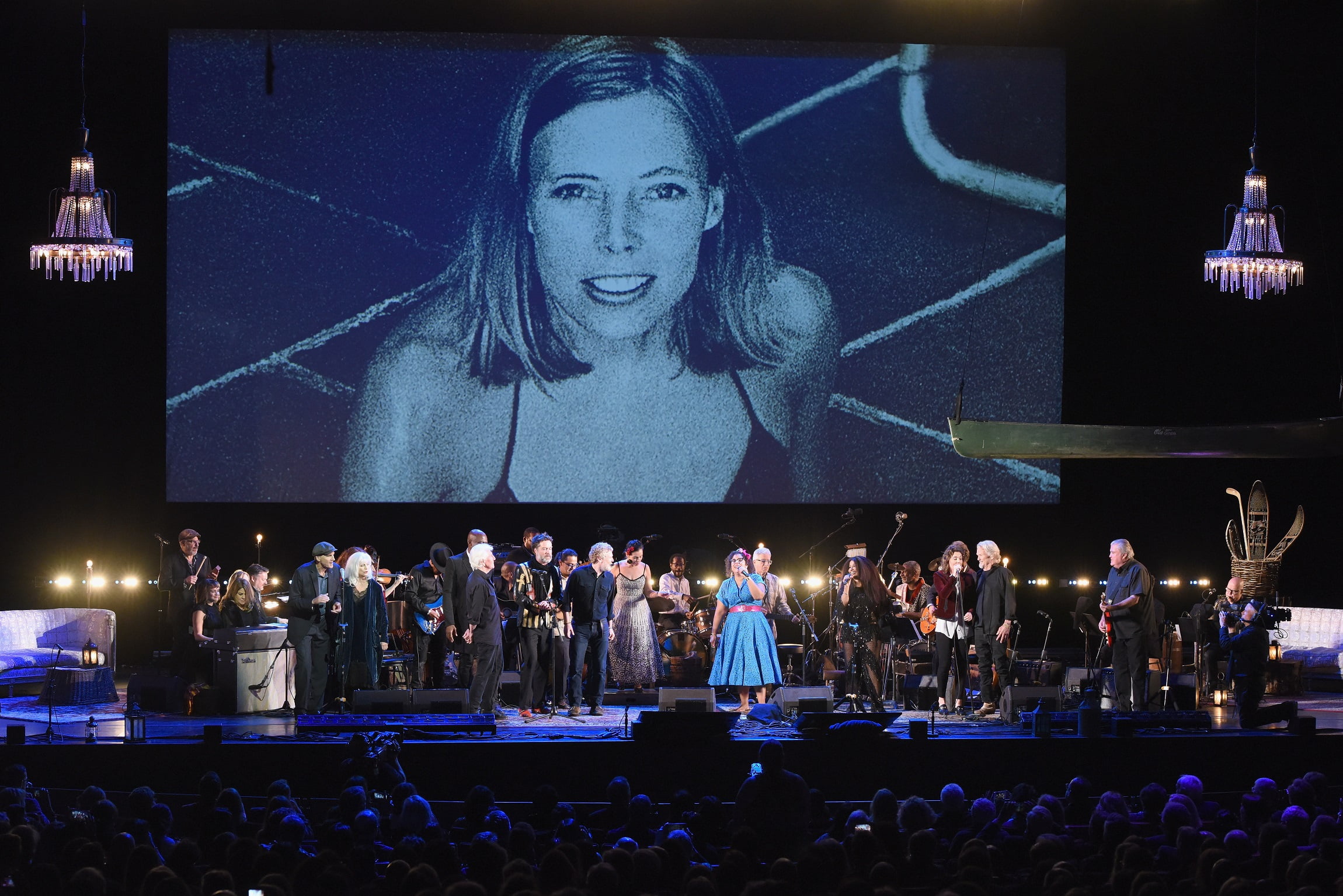
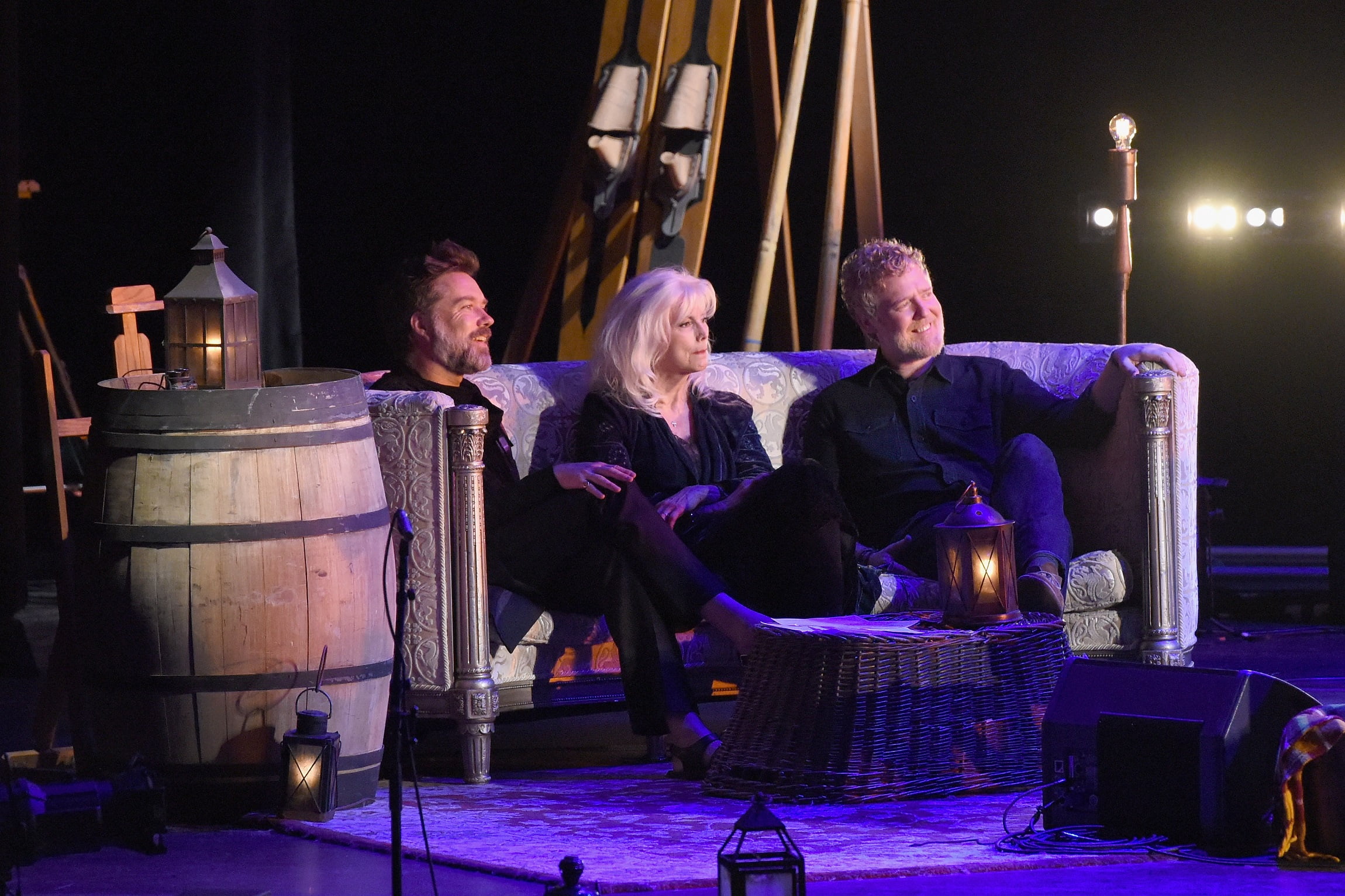
(L-R) James Taylor, Emmylou Harris, Graham Nash, Seal, Rufus Wainwright, Glen Hansard, Louie Perez, La Marisoul, Chaka Khan, Brandi Carlile and Kris Kristofferson perform at Joni 75: A Birthday Celebration Live At The Dorothy Chandler Pavilion.

Hence, the seemingly impossible task facing JONI 75: A Birthday Celebration Live at the Dorothy Chandler Pavilion, the two-night, all-star celebration of Mitchell’s milestone birthday presented by the Music Center last week in downtown Los Angeles. How can you capture a singular artist in just a few hours? And how can the particular singularity of this artist translate in full flower through other artists? Mitchell herself — her talents, vision and methods — is inextricable from her music. Mitchell is her art, and vice versa.

Several performances on the second night (her actual birthday) embraced and embodied that concept, and in the process transcended mere tribute: Diana Krall’s performances of “For the Roses” and “Amelia” had the audience members in hushed reverence in their course and had stolen their breath by the end. Seal tapped his inner Nat King Cole to transform “Both Sides Now” and “A Strange Boy” into heights-scaling soul-pop-jazz.

Following an audio clip of Mitchell talking about her passion for exploring the richness of America’s ethnic syntheses, three members of Los Lobos, two of the ensemble Los Cambalache, and singer La Marisoul of La Santa Cecilia — three groups crossing generations of musical leadership in L.A.’s Mexican-rooted heritage — teamed with the stellar house band for “Dreamland,” using the percussion-drive of Mitchell’s 1976 original as a mere starting point. For this grouping, with Los Cambalache’s Xochi Flores on the dance-percussion zapateado, the song was transformed into a Mexican folk song, to the point that “La Bamba” was spliced seamlessly into its middle. (Oh, and Chaka Khan, who did vocal counterpoint with Mitchell on the original, came on stage to spar delightfully with La Marisoul!)
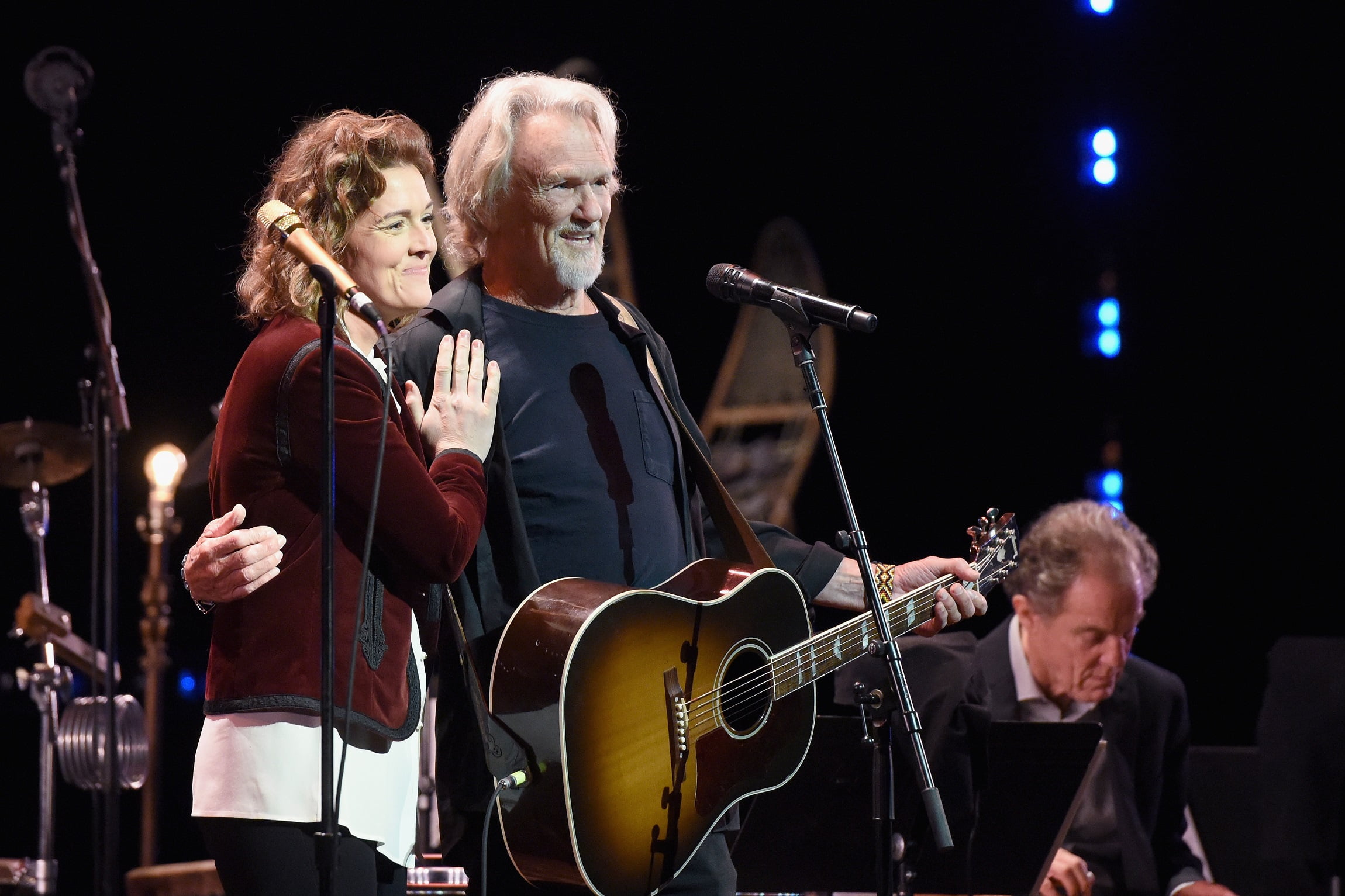
Brandi Carlile (L) and Kris Kristofferson perform at Joni 75: A Birthday Celebration Live At The Dorothy Chandler Pavilion.

Brandi Carlile was just as arresting sticking to the Mitchell blueprint on her version of “Down to You,” which she did following a charming if ragged “A Case of You” in duet with Kris Kristofferson. On the red carpet before the show, Carlile explained her process.

“I try to do it just like she does it,” she said. “Because, out of respect, out of reverence and out of the fact that I don’t think it can be done better than she does it.”

But as an artist, doesn’t she want herself in anything she does?

“Anybody but Joni,” she said, definitively.

Even Emmylou Harris admitted to the daunting prospect of covering Mitchell. Though “an interpreter for most of my career,” she noted, also on the red carpet, that she had only ever recorded one Mitchell song, “The Magdalene Laundries,” for a 2007 Mitchell tribute album.

“We’re all feeling the little bit of pressure,” she said. “You don’t want to take too much of Joni out of this, but on the other hand we have to make it our own. You’ll see most of the artists did an amazing job.”

Harris performed that song (a lament for “women enslaved in convents in Ireland”) at Joni 75, perfectly striking the balance she cited, and also for these shows added the similarly dark “Cold Blue Steel and Sweet Fire” to her Joni repertoire. Others found their own balance to varying degrees. Norah Jones brought some twang to “Court and Spark” and “Borderline.” Glen Hansard injected his Irish exuberance into “Coyote” and “The Boho Dance.” Rufus Wainwright, a fellow Canadian, added his mannered drama to “Blue” and took “All I Want” to Broadway. Khan in her two spots brought soul-jazz to “Help Me” and “Two Grey Rooms.” James Taylor managed to make “River” and “Woodstock” sound as if they were his own songs, without losing any of Mitchell’s presence in them.
Through it all, the house band, led and arranged by pianist Jon Cowherd and drummer Brian Blade (the latter a veteran of Mitchell’s bands), expertly covered the full range of the music, shining and soaring in particular on the chamber-orchestral middle section of “Down to You.”

Graham Nash, rather than doing a song by Mitchell, did one about her: “Our House,” his portrait of their Laurel Canyon domesticity from so many years back, the crowd singing along on the chorus and sharing the bliss.

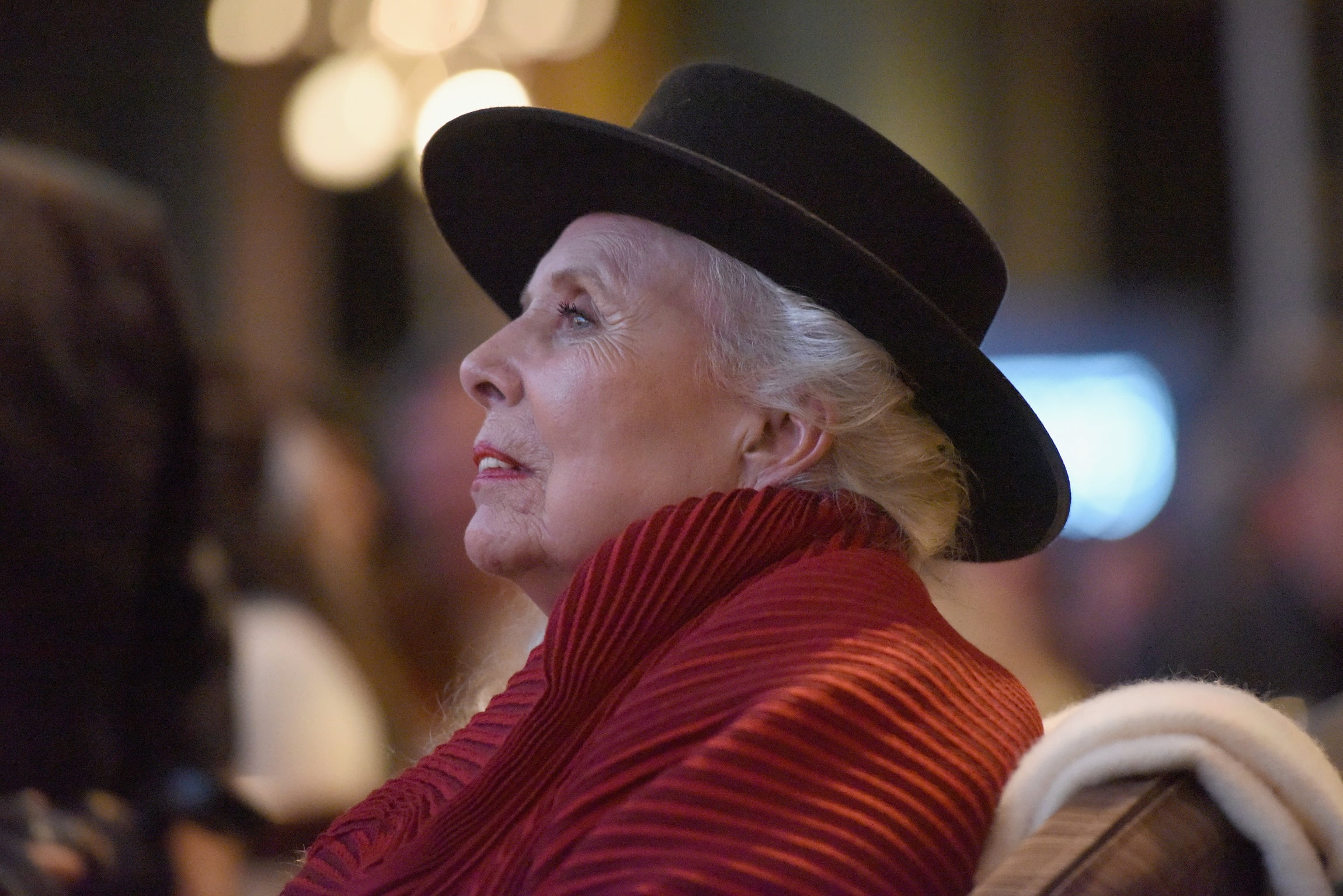
Mitchell herself was in attendance on the second night, hobbled but hearty more than three and a half years after suffering a brain aneurysm. The crowd sang “Happy Birthday” to her twice — once as she took her seat before the show, and again when she came on stage for a curtain call, a cake brought out and the assembled cast and crew reprising the all-hands closer, “Big Yellow Taxi,” Mitchell sporting a huge smile, mouthing the words and even dancing a bit.

Did Joni 75 capture the entire scope and depth of Mitchell’s magnificence? Of course not. With her Canadian roots spotlighted in the stage decorations (a canoe suspended overhead, skis leaned at the back, a couple of barrels framing the set), the evening summed up her global embrace of music and art, and the global embrace of her music and art.

(Editor’s Note — Check out this writer’s Spotify playlist, Epiphanies: A Joni Mitchell Deep Dive.)
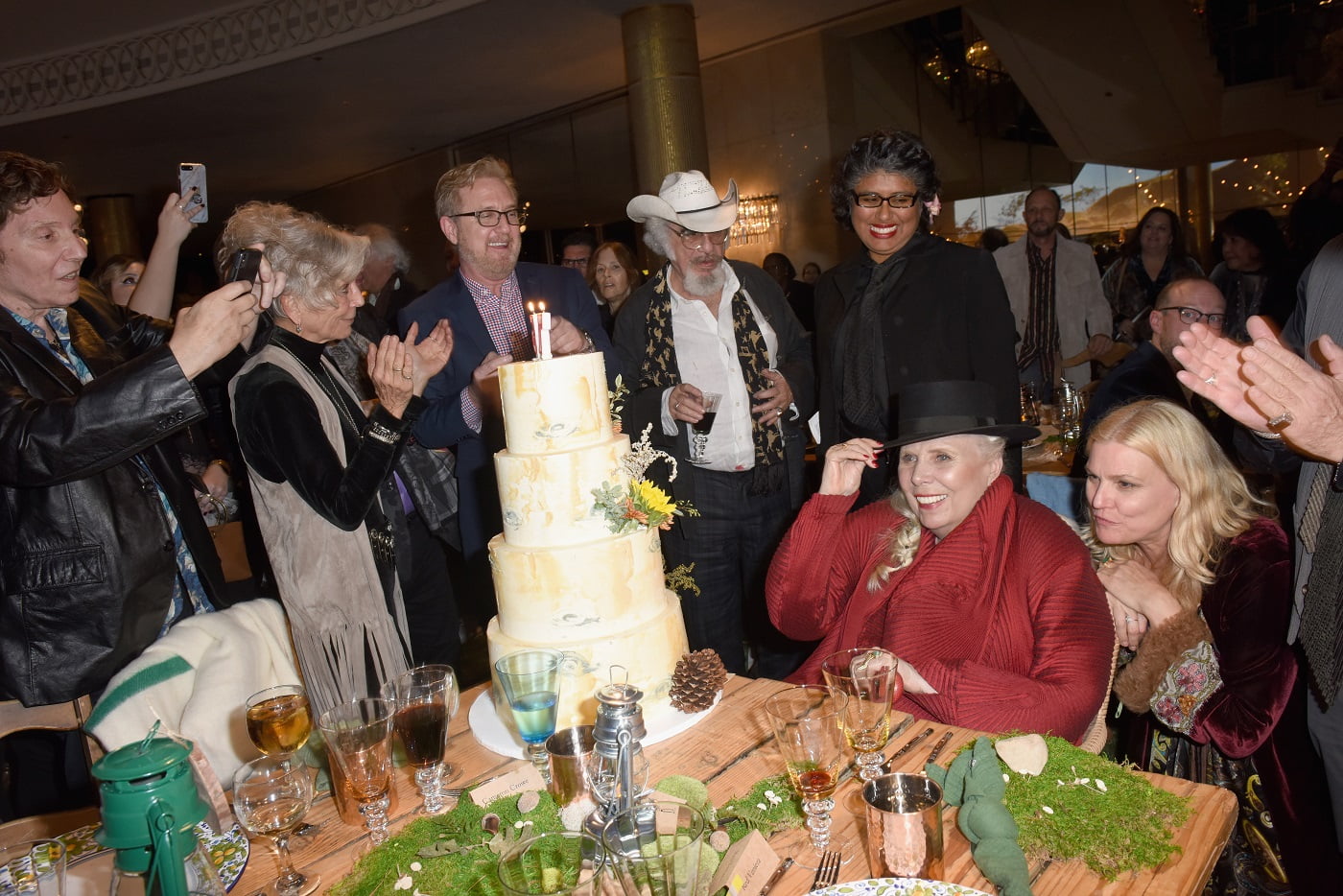
Joni Mitchell (seated) attends Joni 75: A Birthday Celebration Live At The Dorothy Chandler Pavilion.

All photos: Vivien Killilea/Getty Images for The Music Center
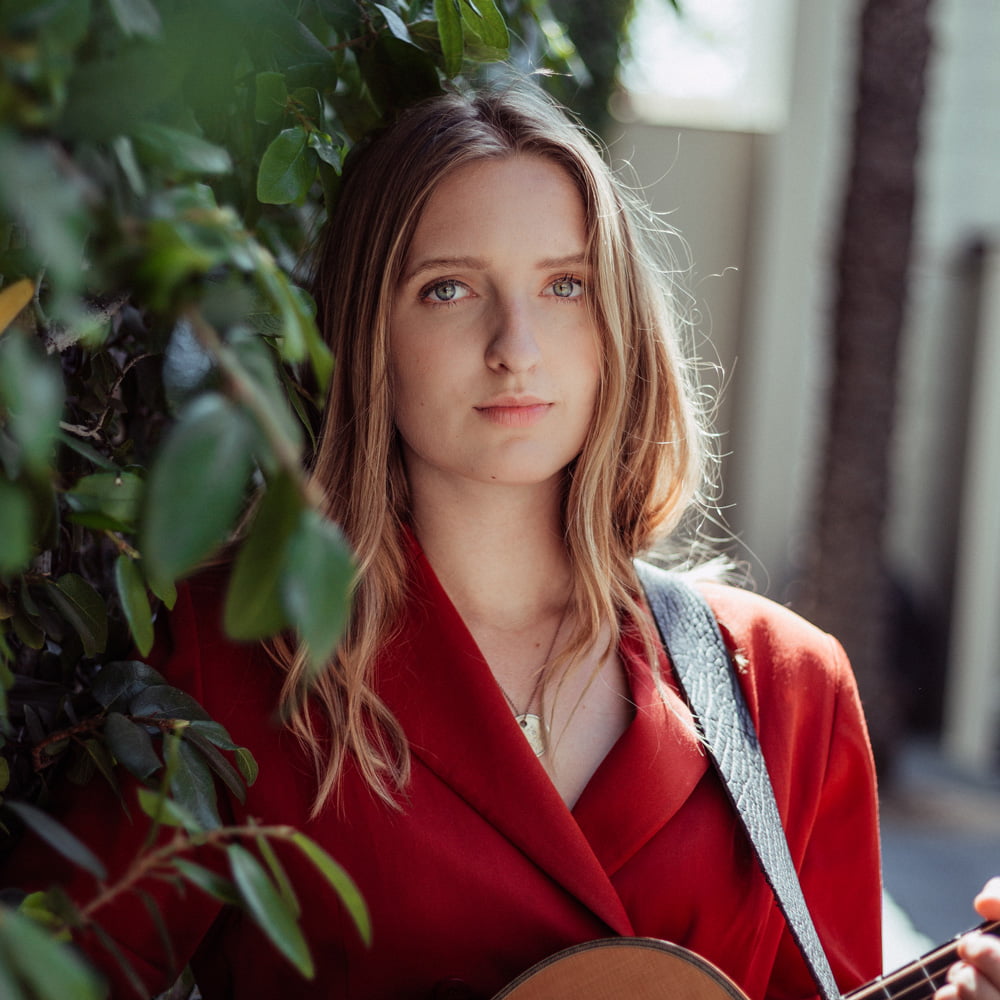
MIXTAPE: Madison Cunningham’s Songs I Hear in Purple

It was difficult to narrow it down to just 12, but here are some songs that were turning points for me as an artist. Songs that made me first realize, and then remember, why I love music. I also hear songs and keys in color. Although it might sound strange all twelve of these songs have aspects that sound purple to me. Enjoy!

Jeff Buckley – “Grace”

My friend Izzi Ray told me about Jeff Buckley over lunch about four years ago. Being late to the game, as I usually am, I didn’t listen to a single song of his until a couple years later. I’ll never forget how astonished I was at his voice. Then come to find out what an innovative guitar player he was. It haunted me for months. Specifically “Grace.”

Radiohead – “Paranoid Android”

“Paranoid Android” was one of the first radio songs I listened too. I’m constantly inspired by how freely Thom Yorke creates and sings his melodies. This is one of those melodies.

Emmylou Harris – “Deeper Well”

“Wrecking Ball” was a life-changing record for me and continues to be in my top 10 favorites. The lyrics of “Deeper Well” make for a perfect song in my opinion.

Fiona Apple – “Fast As You Can”

I’ve never felt cooler than when I walk down the side streets of Los Angeles listening to this song blaring in my headphones. It’s also my airplane turbulence song. It shed a completely new light on songwriting, and songwriting tempos for me. I’ve always felt it was hard to say something important in a fast song. Fiona proved me so wrong.

Joni Mitchell – “Both Sides Now”

Joni was the first person who made me really want to be a songwriter. She set the bar so unreachably high that she made so many of us want to do our best even if we came just short of it. This song is one of few that make a timeless statement that could be sung by a 19-year-old and an 80-year-old.

Bob Dylan – “Just Like a Woman”

Here’s another example of a song that I think is absolutely perfect. Not a word or note wasted.

Ry Cooder – “Tattler”

Ry is another one of my guitar heroes. “Tattler” is my favorite song by him.

Nina Simone – “Feeling Good”

Nina Simone can’t play or sing a wrong note. All of her mistakes were in key somehow. Any song she plays instantly pulls me in. No other rendition of “Feeling Good” matches the sorrow, and power of this one.

Maurice Ravel – “String Quartet in F Major”

This is maybe one of my favorite pieces of music. I heard Chris Thile play it on Live From Here for the first time and it lifted me out of my seat.

Brian Wilson – “Don’t Talk”

This one makes me tear up almost every time. The melodies and voicings on this tune are such a beautiful mystery to me. And the lyrics convey the power of not saying anything and resting in the arms of the person you love

Rufus Wainright – “Poses”

On my way back from the Sundance film festival it started to snow. My friend Mike and I made a wrong turn; as we found our way back he turned this song on. When it was over I asked him if he’d mind if we played it again.

Juana Molina – “Lo Decidi Yo”

Juana is one of my favorite guitar players/writers. She’s truly one of a kind. I listened to one song by her called “Eras” on repeat for four years straight until I uncovered the rest of her record. Here’s one of my belated discoveries.


Photo credit: Paige Wilson

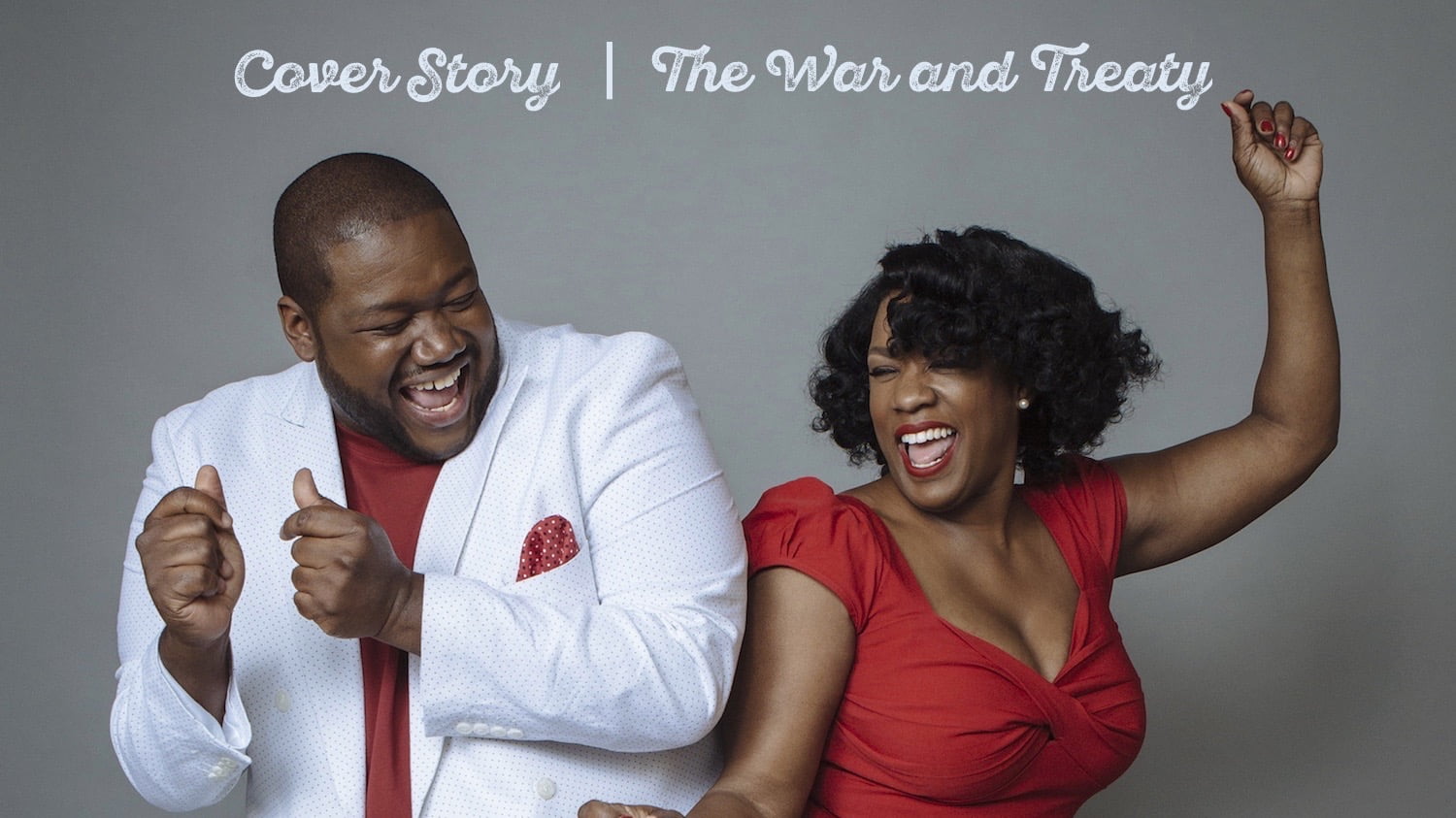
The War and Treaty Bring Their Love to ‘Healing Tide’

More often than not, it seems, the telling of the story of the War and Treaty begins with the war, specifically a piano in the basement of one of Saddam Hussein’s palaces. It is a tantalizing tale, and we’ll get to that.

But this time, let’s start with the Treaty: the moment Michael Trotter Jr. and Tanya Blount first met and two formidable talents took hold in life and in music.

“We have probably two different accounts,” Michael says by phone from Nashville, Tanya audible in the background, laughing as she agrees with the prediction.

Spoiler alert: There is to be much laughter in the ensuing chat, from giggles to hearty peals, and much weighing in from whoever doesn’t have hold of the receiver. And some tears and choking up too. It’s a real delight, everything up-front and on the table, just as anyone who has seen them perform would expect, and every bit of it captured in their new debut album, Healing Tide, a wonder of gospel-soul-country-rock-folk carried on their from-the-heart vocals, both of them capable of gale-force belting and whispered-breeze tenderness, sometimes, somehow, both at once.

It’s a love story through and through, evidenced in song titles along: “Love Like There’s No Tomorrow” (the album’s foot-stomping gospel invocation), “Are You Ready to Love Me?,” (swampy Southern soul), “Here Is Where the Loving Is” (fiddles and guitars and Emmylou Harris!) among them. And a belief that love is contagious, that it can repair the world — the boisterous title song (a bit of Ike and Tina and a lot of Delaney & Bonnie, perhaps), the steamed-windows twinkle of “Jeep Cherokee Laredo.” And in “One and the Same” they have given us unity anthem for the ages. All of the ages. And in album-closing “Little New Bern,” Michael wrote a vivid ode to Tanya’s large, loving family and the former plantation land where it began and at which all the cousins still gather with her grandparents (73 years of marriage!) every summer.

But back to that meeting: “I remember going to Laurel Lakes Park for an event, the Love Festival, Aug. 28, 2010,” he says of a day of music in Laurel, Maryland, near where each lived at the time, at which they were both scheduled to perform. “I was led under this awning and I saw this most beautiful woman I ever saw in my life.”

A “wow” is heard in the background, as if she’s never heard this before.

“And she did what any beautiful woman would have done with a slouch like me. She ignored me,” he says. “We introduced ourselves and she thought nothing of me. I thought everything of her. So I got on stage and performed, and then after I saw this woman running across the field in heels toward the stage, and it was her. She just wanted to know about my songwriting. The rest is history.”

Tanya grabs the phone: “He’s kinda telling the truth,” she allows. “Mine is the part where he says I ignored him. I was out there with some friends and a young lady working with me at the festival kind of whisked me away and said, ‘I want you to meet Michael.’ Which kind of came as he said it. It may come off as I was ignoring him. But I wasn’t. I was trying to do two things at once.”

As to her reaction to his songs, well, on that she agrees wholeheartedly.

“Oh my goodness! I lost my mind!” she says. “After he finished performing I ran over and bought six of the CDs he had and was a crazy person handing them out to people — ‘This is the best thing I’ve heard!’ He was amazing.”

And then?

“We exchanged numbers — and he would have a different account here,” Tanya says. “He lost my number! Threw it in the trash can. So I proceeded to call him and ask him if he could write songs for my brother and I. We were working on a project. I invited him over to the house. He wrote 10 songs in about two hours. He had songs ready, came over and sang them to me and we became friends, inseparable friends. And after I had a birthday party, that was September of 2010, and from there, the next day, we never separated. He moved into my house the next day.”

Michael’s take?

“You know? That’s accurate.”

Okay, then. Now let’s skip ahead to March this year, when the couple, having made their home in Albion, Michigan, found themselves in Nashville, being produced by Buddy Miller at his house — “We wanted to give Buddy Miller a chance to be discovered,” Michael says, barely containing silly giggles. “Just wanted to help him out” — and surrounded by such stellar musicians as drummer Brady Blade, fiddler Sam Bush, pedal steel and banjo player Russ Pahl and multi-instrumentalist Jim Hoke, realizing the love-filled vision they’d been honing tirelessly in the intervening years.

Oh, and there’s Emmylou Harris climbing the porch stairs, not only to add her voice to “Here Is Where the Loving Is At,” but to deliver a batch of birthday brownies to Michael one day.

“Another lady who might need to be discovered,” Michael says, not succeeding at holding back the giggles, before adding, “Everyone knows her for her singing, but people don’t know she makes the BEST BROWNIES EVER.”

The sound is a realization of an array of influences and passions, some shared ones including Aretha Franklin, Ella Fitzgerald, Nat King Cole, the gospel icons the Gaither Singers and James Cleveland. A big influence when they started performing together, Michael says, was the Civil Wars — he sheepishly notes running into that act’s John Paul White and, tongue-tied, blurting out that his act was called the Civil Wars. But what the War and Treaty draw on together is distinctly their musical DNA.

“We really have different backgrounds,” Tanya says. “My mom was from Panama. I grew up listening to Calypso and opera. My dad was from New Bern, North Carolina, and we also listened to Christian music, gospel, but also secular music — Whitney Houston. A plethora of sounds growing up. My dad loved western, so some country songs. We would have a guitar player in church, or sometimes just foot-stomping and clapping. ‘Love Like There’s No Tomorrow’ comes from that. Michael comes from a Seventh Day Adventist background and grew up listening to incredible harmonies and some of his writing comes out of that. His uncle Zilbert Trotter plays organ like no one I ever heard before. We took all that and married it together and it came together with the help of Buddy Miller as a beautiful piece of art.”

Though they’d made a well-received EP, Down to the River, spawning some viral videos to match the word-of-mouth from their dynamic concert performances, this was a whole other world for them, with new expectations, intimidating ones.

“When you get those musicians in the room, they know that no matter what accolades they have, they say, ‘Lead us,’” Michael says. “I had to learn to lead. Buddy Miller is not going to let you escape that responsibility. You come in and have a vision, he’s going to hold you to it. He’s a sweet man, but he has a way to make sure you stay authentic. He’s not going to do take 17, take 18. We did two takes of everything. We had it in the first one. Did the second one because Buddy felt guilty that we had it in the first one.”

He continues, “They all wanted to see where I wanted to go — show us what you’ve got. The intimidation factor was sky high. I don’t consider myself of the caliber of those giants, but then you have to believe you belong there. I remember playing my minor 7ths and diminished chords and this and that and they were laughing, had to explain to me what I was doing. Russ Pahl said, ‘How does it feel to have millions of dollars of education, and never gone to school a day in your life?’ I said, ‘Feels pretty good, Russ.’ He popped me on the head with a wad of paper and walked away.”

The closest he had ever gotten to a music education was under the most unusual circumstances, which brings us back to Saddam’s piano. Michael, having enlisted in the Army in 2003, was sent to Iraq, scared and unprepared. He found himself in a platoon stationed in one of Hussein’s abandoned palaces. A captain heard him sing, heard the inspirational power of his voice and took him to the basement where there was a piano and told him to go at it, learn to play, make music. Not long after, the captain was killed and Michael was asked to sing at his service, the first time he ever sang a song he wrote in public.

But as he talks here, that wasn’t the part of the Iraq story he wanted to tell.

“No one knows this,” he confides. “This is special. I was singing in Baghdad once, and it was probably two in the morning, singing to the troops. And they were singing and clapping with me. And one of the soldiers on guard duty said, ‘You all gotta come see this!’ And when I looked over the gate, the Iraqis with their tea were sitting down at the gate, listening to me sing. And they were clapping and patting their thighs with me. That’s the power of music, the power of songwriting. The war stopped for at least 30 minutes.”

That’s the kind of thing he remembers as his and Tanya’s life accelerates, as success builds and the demands grow — not least being having to spend more time away from their child.

“I’ve cried on the road and broken down,” Michael says. “We travel with our son, but time has now come where we have to leave him with someone for two or three weeks at a time, all for the call of the mission and honoring our life.”

That mission. That call.

“I’m singing with my wife, songs I wrote for us, and we’re on the road and helping bridge humanity in our way. Toughest thing we have to deal with is leaving our son. But no one’s calling us derogatory words.”

He cites a couple of rough epithets that in past have been hurled at many from various directions.

“No one is doing that. There are no signs that you have to drink from the black water fountain. That’s not happening,” he says. “We are blessed that we have not faced it that way. We have a multi-cultural band that reminds folks of what we have overcome. I’m not here to promote the black race or white race, but am genuinely invested in unifying the human race. I do believe there ain’t no better thing in life. I’m almost coming to tears just thinking about if Dr. King’s dream can be a reality daily. We make sure at every concert that everyone hugs each other and tells each other they matter, black or white, foreign or domestic. We are all human beings.”

As the song says, with equal grace and power, we are all “One and the Same.”

Tanya puts it simply and profoundly: “This project is an act of love.”


Photo credit: David McClister

BGS 5+5: Carolina Story

Artist: Carolina Story
Hometown: Nashville, Tennessee
Latest album: Lay Your Head Down
Personal nicknames: Emily (Sweetheart of the Rodeo, Emmy, Merly); Ben (Kingfish, Burly)

Which artist has influenced you the most … and how?

Ben: Neil Young. When I was a boy, my dad and I would ride the backroads in the country outside of my hometown of Pine Bluff, Arkansas. I remember hearing CSNY’s 4 Way Street live album and being completely mesmerized by the sounds of the acoustic guitars and the harmonies. Once I heard Neil doing “Cowgirl in the Sand,” that was it. Then, as I began to discover more of his work, I became fixated on his harmonica playing, chord structures, his songwriting and his unique voice.

Emily: Brandi Carlile. I first heard Brandi’s voice over ten years ago and the moment I did I became enamored of her. It was The Story album and every song, the melodies, the harmonies and the specific tone of her voice that struck me. She was one of the first artists for me that you can hear her emotion as she sings. She’s never just singing the words. She’s feeling them and because of that you feel it too!

Which elements of nature do you spend the most time with and how do those impact your work?

If we’re not writing, touring or working you can usually find us out in Kingston Springs, Tennessee, at Harpeth Moon Farm (the family farm run by Ben’s sister). When we’re not lending a hand in the fields, we are usually in a canoe on the Harpeth River. An underlying theme in a lot of our songs is to keep going against the odds and to never stop growing. The influence and imagery of the river coupled with sowing actual seeds and seeing them blossom into their final form inspires our writing.

Since food and music go so well together, what is your dream pairing of a meal and a musician?

Ben: My dream would be to have been able to spend all day fishing with fellow Arkansan and hero, Levon Helm. After we caught all the fish we could stand, we would have a big fish fry, drink ice cold beer and tell stories while laughing a whole lot.

Emily: I am all about breakfast. Any kind of breakfast. I have to eat something breakfast-related before I can move on to lunch. I also would like it accompanied by a strong cup of coffee and Emmylou Harris. She is an artist that I wish would not only want to chat about her and the Gram Parsons days but also give me some harmony pointers. She picks the most unique harmonies.

What was the first moment that you knew you wanted to be a musician?

Ben: It was the summer of 1997. I was 11 years old. Third Eye Blind’s self-titled album impacted me in a big way during those months. I probably started three or four “bands” that summer without any of us knowing how to play a lick. Once I heard “Smells Like Teen Spirit” by Nirvana just before 6th grade started that year, I talked my parents into getting me a guitar and the rest is history. I started my first actual band in 7th grade and never really looked back.

Emily: I have several tape cassettes of me at around 9 years old pretending to be a radio announcer and singing songs on my pretend radio station. They are pretty classic when you go back and hear them! But it was 5th grade, a year later, when my vocal teacher during class had each of us take turns singing a solo. She was taken aback and gave me my first concert solo. It was a song about Amelia Earhart. I still remember all the words. It was then that I realized that I wanted to take it more seriously.

What’s your favorite memory from being on stage?

In June 2014, we made our Grand Ole Opry debut. Emily was 7 months pregnant with our son, Wilder at the time. To be able to stand in that sacred circle surrounded by family and friends where our heroes once stood is something that we will never forget.


Photo credit: Laura E. Partain

Give Me the Wintertime: 10 Bluegrass Songs for the Cold

If we really have no choice but to endure winter (other than high-tailin’ it toward the equator), we might as well give in, cozy up, and spin some wintry bluegrass songs. Cold rain, cold snow, cold wind, cold hearts … some folks like the summertime when they can walk about, but wintertime … well, it’s a season that happens, too.

Tony Rice — “Girl From the North Country”

The north country = where the wind blows cold on the borderline. It feels like Tony sings about winter and its themes quite a lot. It just fits.

Emmylou Harris — “Roses in the Snow”

Not to throw around the term “iconic,” but this one is iconic. We’re familiar with the idea that love is like the seasons, but this time, love is like a greenhouse. It can grow roses in the snow! It’s a refreshing twist on a concept that usually ends up with the flower of love frozen over and wilted in the cold.

Larry Sparks — “Snow Covered Mound”

The only conscionable reason to highlight any recording of this song besides Ralph Stanley’s is … Larry Sparks. His voice captures winter and its grief perfectly. It will send a shiver up your spine.

The Osborne Brothers — “Listening to the Rain”

Some places aren’t lucky enough to enjoy the austere beauty of snow in the winter months, getting rain, and gray, and mud, and gloom instead. Of course, cold rain with a heapin’ helpin’ of lost love sounds about right.

Ronnie Bowman — “Cold Virginia Night”

IBMA’s 1995 Song of the Year leans into the cold heart metaphor. It is beautiful. And catchy. And still reverberating off the walls and in the halls of every former IBMA convention host hotel.

Jim Mills — “Sledd Ridin’”

If you gloss over the strange spelling of “sledd,” you’ll find this rollicking banjo tune feels like a day spent on the snowy neighborhood hill. Time for hot cocoa.

Reno & Smiley — “Love Oh Love Oh Please Come Home”

In a dynamic twist, the woman has left the man alone, at home, with their baby, while the snow has covered up the ground.

Del McCoury — “Rain And Snow”

It’s a murder ballad. It’s a lover’s lament. It’s sung in an astronomically high register. And it’s pretty sexist. It’s bluegrass to a T. It also happens to be a goddamn classic. Del McCoury does it right.

J.D. Crowe & the New South — “Ten Degrees and Getting Colder”

Somehow the saddest part of this song isn’t that he’s traded off his Martin. This song is a masterpiece and distillate of the troubles of a working musician: The coldest months are always the hardest months.

Bill Monroe — “Footprints in the Snow”

Once again, we are reminded that the father of bluegrass not only originated the genre, he’s responsible for a good many of its themes, too. In this case, winter isn’t an analog for heartbreak; it’s a silver lining, guiding the song’s speaker to his love via her footprints. You can’t trace footprints in the summer!


Photo by The Knowles Gallery on Foter.com / CC BY

3×3: Luke Elliot on Keitel, Kombucha, and Comfort Food

Artist: Luke Elliot
Hometown: Lawrenceville, NJ
Latest Album: Dressed for the Occasion
Personal Nicknames: Fido

One of the coolest hotels I’ve ever been to. See you soon, #Tucson! @hotelcongress

A post shared by Luke Elliot (@lukeelliotmusic) on

What song do you wish you had written?

I think about this a lot, but if I had to choose one right now, it might be “Running Scared” by Roy Orbison.

Who would be in your dream songwriter round?

Emmylou Harris, for sure.

If you could only listen to one artist’s discography for the rest of your life, whose would you choose?

Probably Bob Dylan’s. I go through it over and over and always find something new.

How often do you do laundry?

Um, about once a week.

What was the last movie that you really loved?

I just saw Bad Lieutenant the other day. I love Harvey Keitel.

If you could re-live one year of your life, which would it be and why?

I would rather not.

Chicago was amazing! See you all at @vaudevillemews, Iowa! Some tickets are still available. Click link in bio.

A post shared by Luke Elliot (@lukeelliotmusic) on

What’s your go-to comfort food?

Pork roll

Kombucha — love it or hate it?

Never tried it

Mustard or mayo?

Mustard

Covering Milestones: A Conversation with the Wailin’ Jennys

When the Wailin’ Jennys got back in the studio to record their new album, Fifteen, which celebrates the group’s anniversary together, Nicky Mehta, Ruth Moody, and Heather Masse didn’t have much time. Five days, to be exact. Between the fact that all three women are mothers now and live in different cities, planning and preparation have given over to spontaneity and trust. But their approach on this latest LP — a set of covers — doesn’t sacrifice any of the considerate care that has always infused their siren-song harmonies. If anything, they’ve used the studio to capture the magic they radiate during their live shows.

There’s a confidence brimming from every song, whether it’s their reverent, respectful, or resplendent
takes on Dolly Parton’s “Light of a Clear Blue Morning,” Emmylou Harris’s “Boulder to Birmingham,” and Tom Petty’s “Wildflower,” respectively. The trio seems poised and ready to create original music at some point — schedules permitting — but in the meantime, they’ve jumped back into the waters, and are enjoying the stirring act of raising their voices at a time when the messages they’ve come to deliver need sharing more than ever.

What it is about this creative relationship that keeps bringing you all back together?

Nicky Mehta: It’s sort of never been discussed that we would ever take a break and not keep working together. I think it’s always been assumed that we would continue on as long as it felt satisfying to all of us. I think this is a type of project that none of us have access to outside of what we’re doing, so it’s a unique thing for all of us to be doing. That’s what keeps us coming back. We also have such an amazing audience that are really faithful and have seen us through a lot of hiatuses, and I think we want to come back to them, as well.

Heather Masse: I think people have been as receptive. I feel like the live shows, people are there with you and fully present and still really excited about it.

Ruth Moody: I agree. I think we’ve been so lucky with our fanbase. We have taken three hiatuses. Each time it was for each of us to have babies, procreate. [Laughs] And each time our agent was like, “It’s too long to be off the road,” and every time we came back, our audiences have been there and continued to grow over the last 10 years — 15, but specifically 10 since Heather joined the band. Who knows why, but we have been lucky in that way.

As you ebb and flow from this project, how do you see yourself fitting within the growing number of female trios in North America? There are many more names on that list now, beyond folk even.

NM: I think that’s something that I’ve observed, as well. It’s crazy how many trios are out there now, which is great, and everybody’s doing something different. What they focus on, in terms of style of music, is different. We’ve always made decisions about breaks in the road from a place that’s really necessary for each of us, personally. I don’t think we’ve ever worried too much about that because there are things we have to do and so we’ll see what happens after. Once you’ve taken one break and things successfully resume, there’s less trepidation about that. It sort of feels as though there are a lot of trios out there, but it hasn’t felt like there’s some huge competition.

Your harmonies have a touch of the familial about them, and yet you’re not related by blood. How do you explain that magic?

RM: We’ve been really lucky with our blend. We all grew up singing and singing harmonies, and so it’s something we do instinctively — blending with other voices — so that helps to have the ability to listen and blend. But even then it’s not always a slam dunk, so I think we’ve been really lucky that our voices do blend and the ranges are compatible. We switch around depending on who’s singing lead, but we’ve been lucky that that’s been the natural fit.

HM: When I first met the ladies, they were playing in Philadelphia at World Café, and I was sort of auditioning, and the only place that we could sing was in a handicapped women’s bathroom that we found. I was astonished when we all started singing together that it felt like I was singing with my sisters. We just got lucky. It is like we’re sisters, so it’s nice.

I can’t even imagine what the echo would’ve sounded like in that bathroom!

HM: It was really special. I think it was a particularly flattering echo.

You covered Dolly Parton’s “Light of a Clear Blue Morning” for the Canadian film The Year Dolly Parton Was My Mom some years back. Her version has a praise and worship style about it, but yours feels more hymnal. How did you strike upon that interpretation?

RM: That was a good example of being pushed a little bit to do something. The director of the film really wanted us to do that song because the whole soundtrack is Dolly Parton. She wanted us to do it and she wanted it to be a cappella. Who knows if we would’ve gravitated in that direction, but that was cool that we got those instructions, and it really set our focus in that way. I think the best way of making something effective — if you’re going to do a cover — is to approach it in a different way. Especially in the beginning, before it gets into the groove, it does have a more plaintive, hymnal feeling. I think that did make it different from the original.

You triple the vocals on the line “Everything’s gonna be alright,” before going back into harmonies. To me, as a female listener, it feels so necessary to hear that from other women, especially with everything going on these days. What kind of message do you hope to be offering still?

NM: I think we all share the wish to heal and comfort people with what we do, and I think that we all do our own thing, in terms of staying on top of what’s going on in the world and addressing it in different ways. But in terms of what the band does is to reach out to people and support and have the music give people relief and hope and the feeling like, eventually, things will be okay. A lot of our audience, they work in fields where they’re addressing a lot of these issues all the time, and I think it’s nice for them to be able to come to a concert and feel that there’s understanding and there’s still love out there and there’s still hope.

The Tom Petty cover feels apt, although I realize you recorded before his passing. Why “Wildflowers,” in particular, besides the fact that it’s a great song?

HM: I think there’s a way in which, when we hear a song or we bring a song to the band, we sort of know if it’s going to be a Jennys song or not, if it’ll work with our configuration and the way we arrange things. I can’t remember if I brought it up — it felt like something that was on all of our lists of songs to cover — I know that, in my mind, I always thought of it as being a great Jennys cover. It’s hard to describe what the qualifications would be for a Jennys song, but it has a lot of openness and the message is really beautiful, and the melody is very beautiful.

RM: A lot of tenderness, too. It leads itself so well to harmony, which is always a factor for us.

True, you wouldn’t want to pursue a song that doesn’t give you that space.

RM: Yeah, exactly.

It’s a beautiful rendition. So I know recording this album happened quickly because of your differing schedules, but oddly enough, it feels like one of your most grounded albums. What contributed to that sense of confidence?

HM: We only had five days, but we have years of being together and working together that kind of went into it. Even though we knew it would be a bit frantic with a lot of challenges, we knew that we had the foundation. This album was, essentially, for the fans, because they have waited so long for a new record, and so, in spite of not having a lot of time and being mothers, we wanted to make this happen. We thought an appropriate way to approach the album would be to do it live off the floor, and to do a more pared-down recording that mirrors our live performances. That probably helped us feel comfortable and confident in the studio because we’re doing what we, essentially, do on stage.

RM: I think becoming a mother, also, you just have such a different perspective on everything. We didn’t have a lot of time, and normally I feel we can get a little up tight and be perfectionists about stuff. And we were able to let some of that go a little. It’s the perfect album for feeling more grounded and more natural, because we didn’t have time to go back and redo things or try new things out. We just kinda did it and had to be okay with whatever happened, because we didn’t have the time to do anything else. Sometimes there’s a real magic to that.


Photo credit: Art Turner

LISTEN: The Wailin’ Jennys, ‘Boulder to Birmingham’

Artist: The Wailin’ Jennys
Hometown: Winnipeg, MB / Accord, NY / Victoria, BC
Song: “Boulder to Birmingham” 
Album: Fifteen
Release Date: October 27, 2017
Label: Red House Records

In Their Words: “I have loved this song for as long as I’ve loved songs — it’s such a poignant and heartbreaking tribute to a lost love. The fact that Emmylou [Harris] wrote it after Gram Parson’s death makes it all the more meaningful. I’ve always wanted to try it with the Jennys, but the melody really weaves around, which can be challenging for creating harmonies. I love what we ended up with. The high part, in particular, ventures way out of Nicky’s normal range, but she nailed it. This was one that felt magical when it was going down — we performed it a few times, but in the end we chose the first take.” — Ruth Moody


Photo credit: Morten Fog

Canon Fodder: Lucinda Williams, ‘Lucinda Williams’

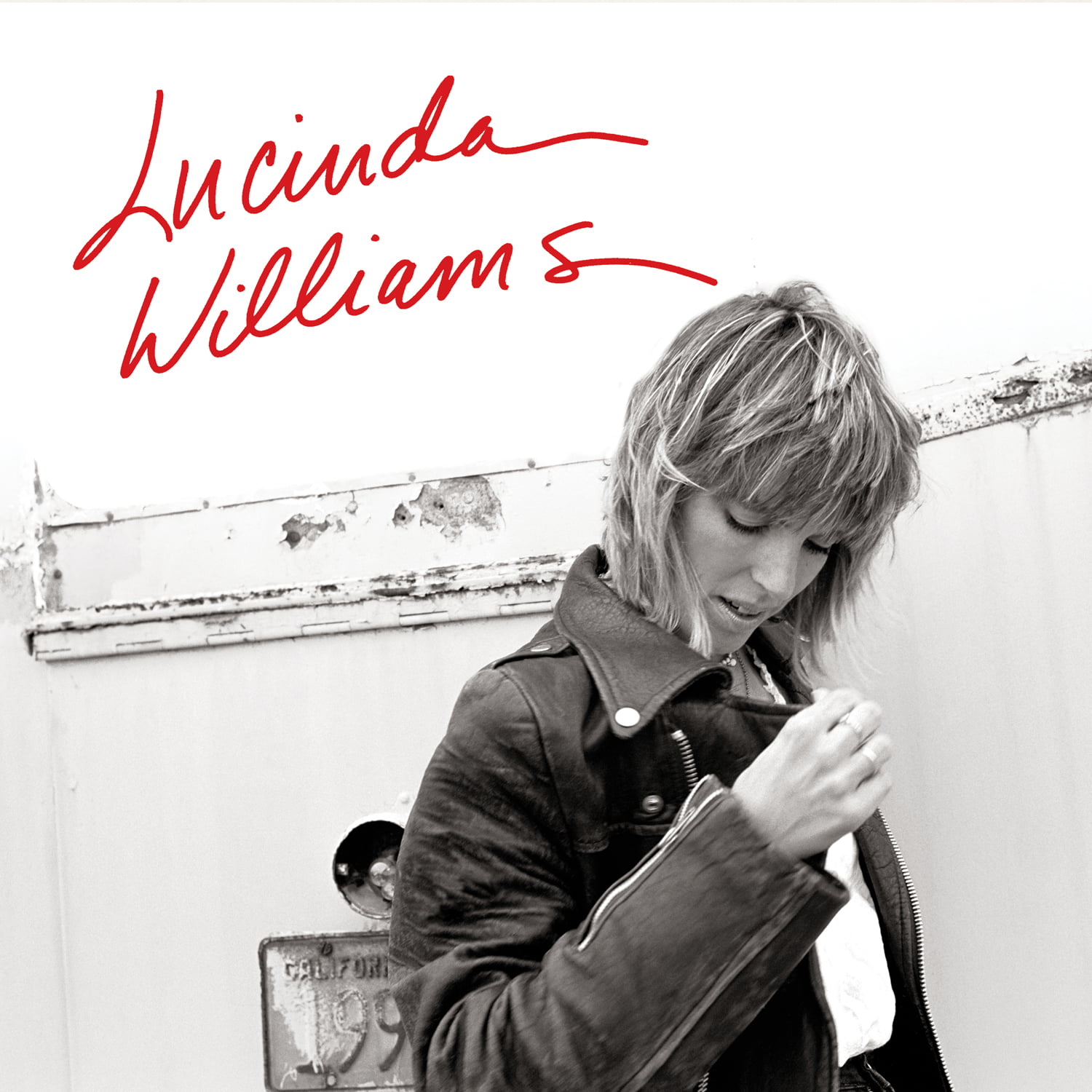
Because she spent so much time between albums — eight years between her second and third, six between her fourth and fifth — Lucinda Williams has been assigned a reputation as a perfectionist, as though country music must be approached with the sonic exactitude of prog-rock. But the near-decade interim separating 1980’s Happy Woman Blues and 1988’s Lucinda Williams doesn’t indicate a maniacal pursuit of a specific vision, although these songs are as close to perfect as just about any country album of that decade. Instead, the Louisiana-born, Los Angeles-based singer/songwriter spent those years redefining her sound away from acoustic blues to something closer to country-rock, moving out of Texas for Southern California, and trying like mad to sell herself to a record label. Recording Lucinda Williams took less than a month. Getting somebody to give a shit took significantly longer.

As Williams has said, in the 1980s, she was perceived as too country for rock radio and too rock for country radio. Lucinda Williams continually writes and rewrites its own rules, with each song presenting a slightly different definition of what “country” and “rock” might be. “I Just Wanted to See You So Bad” opens the album with a bouncy drum beat and a bright guitar lick, with Williams rushing through that title phrase, jumbling the words together as though mid-sprint. It’s full of hope and intense desire, both echoed on the story-song “The Night’s Too Long” and the list of demands “Passionate Kisses.” The blues still informs her songwriting, albeit in different forms: “Am I Too Blue” adheres to the country blues setting, but “Changed the Locks” is something new for Williams, a low-down urban blues tune surprisingly lascivious in its harmonica riff and humorous in its lust and self-delusion. “I changed the lock on my front door so you can’t see me anymore,” she testifies. “And you can’t come inside my house, and you can’t lie down on my couch.” Few singers — including Tom Petty, who covered the song in 1996 — could draw so much sexual promise out of the word “couch.”

Like Wilco’s Yankee Hotel Foxtrot, Lucinda Williams has become symbolic of the old art-versus-commerce debate, a manifestation of the grievous oversight of major labels and radio programmers, held up as evidence that the business of music, by default, ignores good music in favor of marketable product (as though there’s no overlap). Released in fall 1988, the album became a cause célèbre in Nashville, particularly among female musicians: Patty Loveless covered “The Night’s Too Long” in 1990, Mary Chapin Carpenter enjoyed her biggest hit with “Passionate Kisses” in 1991, and Emmylou Harris sang “Crescent City” on Cowgirl’s Prayer in 1993. You could almost reconstruct the tracklist with excellent covers.

Generally perceived as much more conservative than the audience or the artists it ostensibly serves, in the late 1980s, country radio was only just shifting away from the gauzy nostalgia of neo-traditionalists and the last sputterings of legacy artists and moving toward the hat acts who would define the genre into the next decade. In the fall of 1988, when Lucinda Williams finally made it to record store shelves, Dwight Yoakam, Rosanne Cash, Tanya Tucker, and the Oak Ridge Boys all enjoyed number one country hits. Noted country eccentric Lyle Lovett enjoyed two gold records in 1988 and 1989. Mainstream country music has become a thread-bare strawman for alt-country and roots audiences, but it wasn’t just the industry’s prudishness that kept Lucinda Williams off the charts and the playlists, despite that story’s persistence over the years.

It wasn’t something in the lyrics, either. There were rumors that radio executives objected to the prurience of the line, “His back’s all soaked with sweat,” sure to send housewives into a tizzy, but “The Night’s Too Long” was soon a single for Loveless. Williams’ voice was cited as a potentially alienating factor, one that blurred its syllables around the edges, slurring its speech after too many cold Coronas in some lost honkytonk. Williams replaces the recognizable twang with something more idiosyncratic, something more rooted in geography, something that was, at the time (and definitely still is), as foreign to country radio as ouds and zithers. Lovett’s deadpan drawl and Yoakam’s Bakersfield barb were similarly iconoclastic, but they were guys in an industry that preferred women more easily manageable and malleable (which is not to dismiss the self-possession of Williams’ female contemporaries, but more to speak to the considerable feat of their success).

Ultimately, Lucinda Williams just wasn’t designed for radio. It wasn’t meant for the mainstream. It has become exactly what it was supposed to be: a cult record, a foundational document, the wellspring of a new strain of music that would eventually be labeled alt-country. The Jayhawks might have debuted two years earlier, and Uncle Tupelo might have named the magazine, but this album — more than any other — revealed the limitations of Nashville and its neglect of very large swathes of country music listeners. Williams staked out all new territory. She had had a fairly itinerant life, born in Lake Charles, Louisiana, but raised elsewhere. She’d lived in Arkansas with her father, the poet Miller Williams, then Texas, where she made two albums of tentative country blues that even her most avid fans don’t spin much anymore. Most of her 1980s were spent in Los Angeles, which is perhaps the most significant aspect of Lucinda Williams.

That city was a mecca for country music as early as the Great Depression, when itinerant Southerners and Midwesterners moved west looking for work. Singing cowboys proliferated throughout the 1930s and 1940s before they were eventually replaced by crooners and rock stars. The term “country-rock” was coined in Southern California, thanks to Gram Parsons and the Beau Brummels (who recorded the overlooked Bradley’s Barn with Owen Bradley in 1968). Around the same time, Bakersfield became a powerful force in country music; roughly two hours north of Los Angeles, the town supported more than its fair share of roadhouses and honkytonks, where country music was played on electric guitars with strong backbeats and where Buck Owens and Merle Haggard cut their teeth.

Williams might have appreciated those artists, but at least on her self-titled album, her sound never borrowed much from those scenes. Instead, Lucinda Williams sounds bound to a city that, in 1988, would have still been viewed by those back east as a den of crime and ersatz glamour — cocaine and liberalism, yuppies and punks. The city’s punk scene had somehow made room for twang, with X spiking their punk with rockabilly (and sharing stages with Dwight Yoakam) and Lone Justice sneaking out of the underground with “Ways to Be Wicked.” As Williams told Spin in 2016, “There was an actual really cool thing going on out in L.A. in the mid-‘80s, [acts] like the Long Ryders, the Lonesome Strangers, the Blasters, Rosie Flores, and X. I was just opening for bands, and a lot of labels were noticing me and would come to my gigs, but nobody would sign me; they all passed on me, even the smaller labels like Rhino and Rounder.” It took an English label to finally sign her.

To call Rough Trade a punk label would be to minimize the breadth of its catalog, which included a remarkable mix of industrial (Cabaret Voltaire), punk (Stiff Little Fingers), post-punk (the Pop Group), pop (the Smiths), and things in between (Panther Burns). The label opened an American office in 1987, with a mission to sign more U.S. acts. Still, Williams was a departure for the label — a risky bet that paid off. Lucinda Williams peaked at 39 on the Billboard album charts and spawned two EPs in 1989. Her next album would be released by an imprint of Elektra Records, the one after that by Mercury.

The portrayal of Williams as somehow outside the industry — as an alternative to the mainstream — persists today, perpetuated by the woman herself. Williams has continually distanced herself from what she described to Billboard as the “straighter country music industry of Nashville.” In response to that interview, Chuck Klosterman calls her out in Sex, Drugs, & Cocoa Puffs and predicts “Lucinda Williams’ music won’t matter in 20 years. Oh, she’ll be remembered historically, because the brainiacs who write pop reference books will always include her name under W. She’ll be a nifty signpost for music geeks. But her songs will die like softcover books filled with post-modern poetry, endorsed by Robert Pinsky and empty to everyone else. Lucinda Williams does not matter.”

As with so many Klosterman statements, it’s provocative, entertaining, and demonstrably untrue. Fourteen years later, Lucinda Williams still matters — as a songwriter routinely covered by artists in a range of genres, as an industry cautionary tale, as an alt-country figurehead, as an artist boldly reinventing herself on her most recent albums. And Lucinda Williams matters perhaps even more — not because we’re still talking about it 30 years later, but because no one is really from Los Angeles. At its heart, this is an album about small-town transplants in big cities, about Southern ex-pats far from home, and few artists have taken up that musical sensibility as confidently or as comfortably as Williams, an LA native displaced in L.A.

“The Night’s Too Long” makes the theme literal, describing a young woman who sells her belongings to move to where things are actually happening. Williams gives her a name, a job, and a hometown in the song’s first line: “Sylvia was working as a waitress in Beaumont.” She moves away to “get what I want,” which might as well be the laundry list of demands on “Passionate Kisses.” Home and travel and loneliness and melancholy suffuse these songs. “Crescent City” recounts a trip back to Louisiana, where she — maybe Lucinda herself, or perhaps Sylvia — hangs out with her family, listens to zydeco, takes rides in open cars. “Let’s see how these blues’ll do in a town where the good times stay,” she sings, as Doug Atwell’s fiddle solo winds its way through those familiar backroads and across that “longest bridge” over Pontchartrain. It’s a poignant song for any listener who doesn’t live where they grew up. It’s the sound of rediscovering the joy and reassurance of home, a theme that ultimately transcends genre, industry, and even performer.

MIXTAPE: Allison Pierce’s Sweet Home Alabama

I love being from Alabama. I love that, no matter where I am in the world, people light up when I say that’s where I’m from. Apart from being a beautiful word, its history is rich and full and deeply tragic. Whether it is the power in the earth itself or what happened upon the earth there, it has given birth to many wonderful musicians, and I am very grateful to have shared the same air with these greats. — Allison Pierce 

Hank Williams — “Move It on Over”

Hank has written so many good songs, it was hard to pick my favorite, but I have really great memories of dancing around the house with my sisters to this one. So “Move It on Over” wins the top spot.

Nat King Cole — “Stardust”

Nat King Cole, born in Montgomery, same birthplace as my mother, is one of my favorite singers of all time. His voice is smooth and effortless and full of quiet emotion, and what feels to me like love. “Stardust” is one of my favorite songs ever written, and Nat’s version falls into the top 10 favorite recordings in history for me. I consider it a great gift to humankind.

The Commodores — “Sail On”

I was a big Lionel Richie fan as a kid, and I was very aware that he was from Tuskegee, a town about 15 minutes from Auburn where I spent a large part of my childhood. Lionel, and other members of the Commodores, were frequent visitors to the health food store where my dad worked, and being within two degrees of separation from them was very exciting to my 7-year-old self. “Sail On” remains heartbreakingly hopeful to me to this day. It just doesn’t get old. Turn that shit up.

Emmylou Harris — “Easy from Now On”

Of all the wonderful artists from Alabama, I am most proud to share the same state and city of birth (Birmingham) with this magical woman. “Easy from Now On” is hands down my favorite and rips my heart open every time I hear it. 

Allison Pierce — “Fool Him”

I hope no one minds that I include some of my own music in this playlist (one more to follow), but I am from Alabama so I consider it fair play (wink wink). 

Drive-By Truckers — “Goddamn Lonely Love”

Well, this is just a great song, y’all. And nobody can deny it.

The Pierces — “It Will Not Be Forgotten”

I was in this band with my sister for 18 years, though we have been singing together for longer than that. I remember the first time we harmonized together in our living room in Birmingham when I was six and Catherine was four. From the very beginning, it became an important part of our lives. Singing with my sister has guided and shaped my life in countless ways and, as challenging as it sometimes was working that closely with a sibling, I am eternally grateful for the experience.

Candi Staton — “Young Hearts Run Free”

What a voice and what a song. Thank you, Miss Staton.

Dinah Washington — “What a Diff’rence a Day Made”

I have enjoyed Dinah’s voice and songs for years, but I’ve gotta be honest, I only just discovered she was from Alabama and I’m very happy to add her to the list!

Jimmy Buffett — “Why Don’t We Get Drunk and Screw”

You know, Jimmy, it’s a really great question. Why don’t we?

Lionel Richie — “All Night Long”

I’m not going to pretend that I did not dance around my room to this as a child using a hairbrush as a mic. 

Catherine Pierce — “You Belong To Me”

Maybe I am biased, but I think that my sister is one of the best songwriters to come out of Alabama. And I know that my mother agrees, so it must be true.