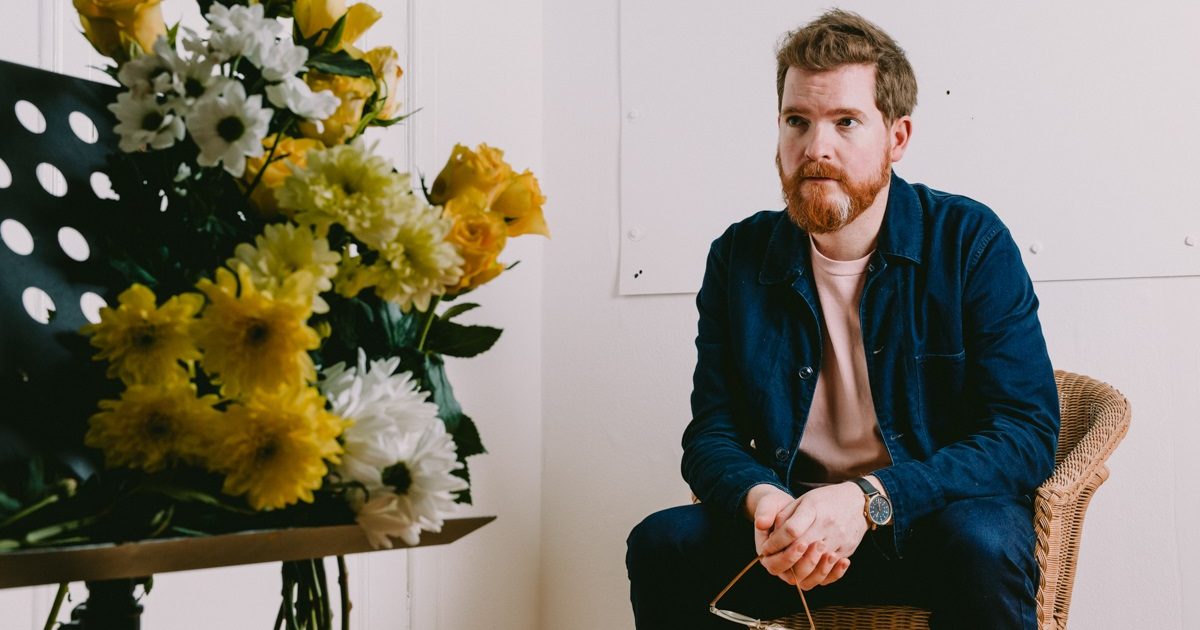
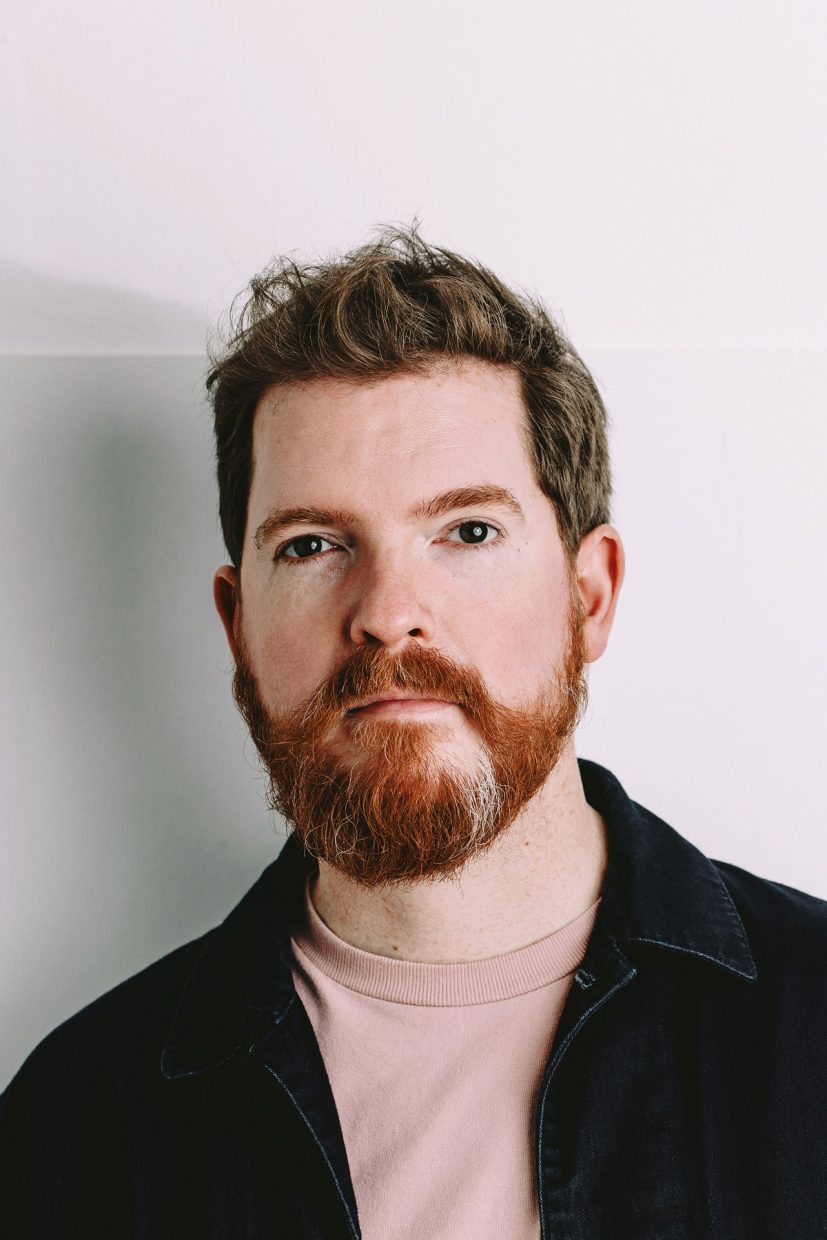
Artists:Cat Clyde & Jeremie Albino Hometown: Toronto, Ontario, Canada Song: “Hello Stranger” (The Carter Family cover) Album:blue blue blue Release Date: May 21, 2021 Label: Cinematic Music Group, Majesticsilk (CAN)
In Their Words: “It’s amazing to think the first recording of this old folk song was done about 80 years ago. It feels sad, but also beautiful. Playing with the perspectives brings out the vulnerability in the song. We’re all strangers really — but great connection can come from this knowing and an openness can unfurl that may not be there with someone you are already close to.” — Cat Clyde & Jeremie Albino
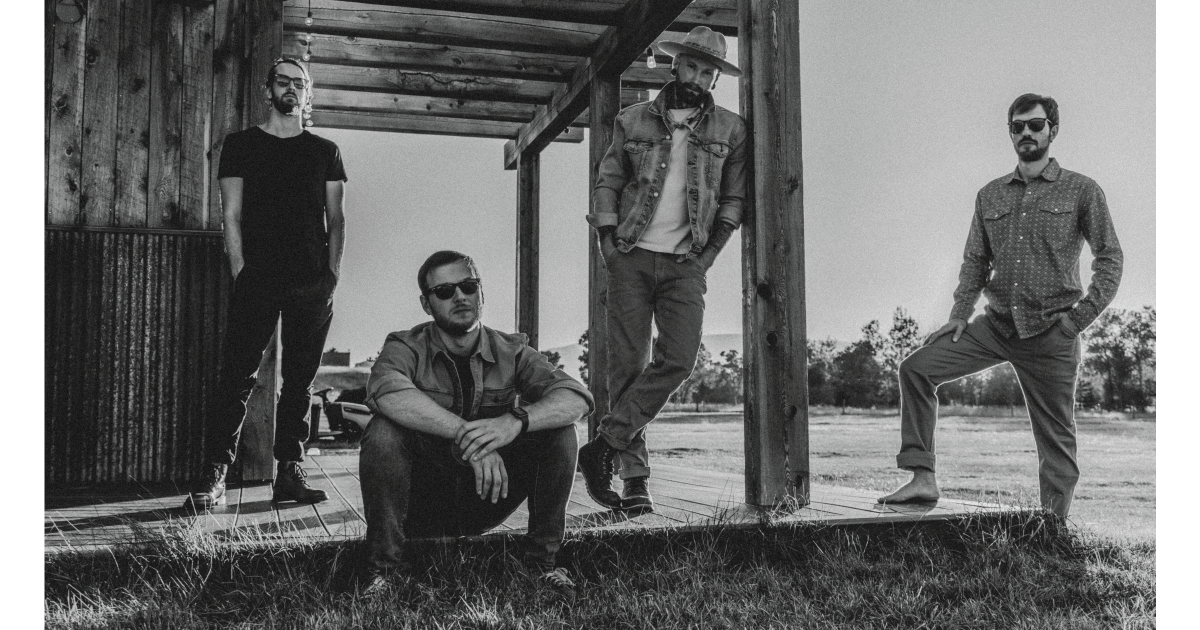
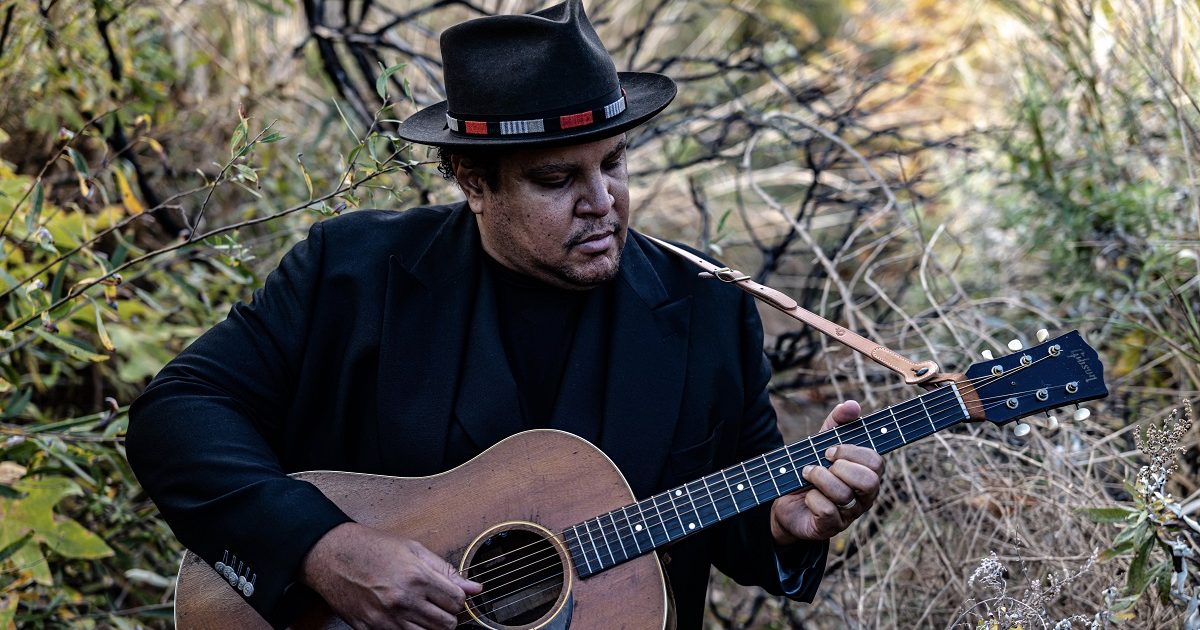
Artist:Satsang Hometown: Red Lodge, Montana Song: “Malachi” Album:‘All. Right. Now.’ Release Date: June 4, 2021 Label: SideOneDummy Records
In Their Words: “The day my son Malachi was born, they said his bilirubin count was bad and they suggested we keep him under this crazy blue light throughout the night. My wife and I couldn’t do it. While my wife slept, I held him on my chest overcome with joy and thinking about what he could be and what I could be to him. His mom woke up in the middle of the night and I handed him over, and as they slept I just watched the two of them. I pulled out my notebook and wrote down what would become this song.” — Drew McManus, Satsang
There’s a particular knowledge that is born only from a road-worn trek, like literature’s hero’s journey, where a protagonist adventures in pursuit of higher knowledge or power, someone like Captain Ahab or Tom Joad.
Kaoru Ishibashi, the musician known as Kishi Bashi, packed a camper during the pandemic and left his home of Athens, Georgia, wandering northbound through the American frontier that’s woven throughout the Western narrative. With newfound time and his daughter in tow, this journey was a personal exploration of Ishibashi’s own identity through the sprawling American terrain.
His trip took him to places like Heart Mountain in Wyoming, a World War II Japanese internment camp — a location he has visited many times during research for his upcoming documentary, Omoiyari: A Songfilm by Kishi Bashi, where he visits similar sites throughout the United States searching for the history that still persists today. The journey also carried him through the Ozarks and the Dakotas, and to small Montana towns like Emigrant — population 271 — just north of Yellowstone, and ultimately across the great expanse of the States to Oregon.
BGS chatted with Kishi Bashi about how this trip is intrinsically tied to his new EP, Emigrant.
BGS: What was the concept behind creating Emigrant? What drew you to creating the theme around the EP?
Kishi Bashi: I’ve been spending a lot of time in Montana the last several years — especially this year, since I had so much time. I took the camper out, took my daughter out, and we did this huge trip cross-country all the way to Oregon; we spread it out over a period of months. I got to enjoy nature in a way that I hadn’t in the past, to kind of imagine what it was like back then. A lot of rural places are pretty much intact; it pretty much is what it was like 100, 200 years ago. In Montana, it’s really cold, so there’s a reason not many people live there — but that’s changing. Emigrant is a town in Montana north of Yellowstone where a friend of mine had a cabin. I borrowed it from her family, and I stayed there for a few days and fleshed out a lot of the EP.
How is the title tied to the name of the town?
To be an emigrant is to leave somewhere in search of a better place to live. I found myself really searching my own identity, my own place in this country — as a minority or even as a musician in these COVID times — trying to find what makes me happy or what makes me a person. The symbolism was really great. [Emigrant] was a frontier town for a lot of people. It was literally the frontier of this violent place, both naturally from the weather, and it was a really cutthroat environment. I was also watching a lot of Deadwood before that — it’s up around there. It may not be historically accurate, but the vibe is definitely accurate. It was that frontier, settler, colonialism type thing. It was a really harsh place to live.
How did you plan your route? What were some of the lessons taken from the road trip?
With my daughter, we started in Athens, so we went up north, and there was a lot of driving. It was a good history lesson for her because we went to the Black Hills in eastern Wyoming — actually, that’s where Deadwood takes place — and how it was Sioux territory. We went to Mount Rushmore, and it was pretty unimpressive. There’s a Crazy Horse Memorial they’re building, which looks interesting and amazing. I was getting her to understand that this is a very complicated, nuanced, but violent history that existed in these lands.
I had the realization that if you live in a city — a town that’s been modernized over and over and over — you don’t feel what it was like back then. That paved road you stand on was a dirt road at one point. Before that, it was just a trail. You don’t really get to see that unless you go out to Montana or some rural area. We basically went straight up through Tennessee, Arkansas, South Dakota, and then cut over through Wyoming.
It sounds like this road trip was an American history lesson. Did you purposefully choose locations around Indigenous or Asian American histories?
Heart Mountain [in Wyoming] — where the internment camp was — I had been there many times. And my daughter as well; she has been there a couple times in the summer, because we’re filming there a lot for this documentary I’m doing. You can’t avoid Native American spaces in this place. It was interesting to see that a lot of the reservations were closed to outside travelers because their health infrastructure was so shoddy, and that people around them were bringing in COVID irresponsibly. That was heartbreaking to see; they were really desperate to keep it out.
Tell me about “Town of Pray.” Was it inspired by the actual town of Pray, Montana?
More by the name; the town of Pray is such a stoic name. I was reading this book — do you know who Jeremiah Johnson is? He’s this folk hero [also called John “Liver-Eating” Johnson], I think a real person, pioneer, Montana mountain man. I don’t know if you know the legend, but it’s such a violent place to exist. He had a Flathead [now known as the Confederated Salish and Kootenai tribes] wife, and she was murdered by the Crows. Then he went on a murderous rampage against the Crows, and then they respected him, and he joined forces against a different tribe. We have a very narrow narrative of what history is. When you see this violent history, it just makes me grateful that I don’t have to, like, kill other people to thrive, which may have been the case if you lived around there back then. You’re always watching your back. You’re always susceptible to trauma.
What are some lessons you hope listeners take away from this EP? Or lessons you learned through making it?
If people have the opportunity to go out and visit nature, get outside of your comfort zone and explore this country. And even more social justice issues, if you wander into any of these small towns, like in Montana — Bozeman used to be like 20 percent Chinese. Now it’s like zero. There’s a reason a lot of towns are white. After they built the railroad, they drove everyone out of town. Wonder why this country is not being shared by everyone?
You included two covers on your EP, [Dolly Parton’s “Early Morning Breeze” and Regina Spektor’s “Laughing With”]. Why were those chosen, and how do they tie into the overall theme?
One of the reasons was I definitely wanted to showcase female songwriters, because I looked at the Rolling Stone top 100 songwriters, and there were like two women in there — like Madonna and Dolly Parton. And it’s embarrassing. So I made an effort to do that. Of course, I love Dolly Parton just like everybody else. I always liked that song, and I thought it fit the vibe. The Regina Spektor song — I used to play for her; I was in her band — I always thought she was underrated, especially amongst musicians and as a songwriter. Lyrically, she’s brilliant, and she’s a huge inspiration for me. For the next generation of people who may not know her music, I wanted to point out that I have the deepest respect for her songwriting by covering her song.
Why lean into the folk or bluegrass genre for this EP?
It’s something I always wanted to do. This is also a disclaimer: I’m not a bluegrass musician. I don’t have much of a bluegrass situation amongst me, but I’m bluegrass adjacent. I went to Berklee College of Music and I studied with Matt Glaser, who’s an Americana teacher. But I played jazz violin. Gypsy swing, that’s my thing. I always loved bluegrass music, but I never felt, culturally, it was something I could attach myself to. I had this whole stigma, like imposter syndrome, of not being from a rural place. I’m a city dweller. It took me a while to own up to a fiddle tune.
As I became more comfortable with my own identity of being an American musician — an Asian American musician — I was like, “What if I just want to play something folky?” It was something I always wanted to do. So there are a lot of fiddle elements, especially in “Town of Pray.” If you think about “What is American music?” There’s jazz, there’s blues. Fiddle tunes come from a lot of Irish and Scottish roots in the mountains. American music is this huge conflagration of all these different cultures melding into each other. I think that’s the beauty.
And where’s my place in that? I’m an Asian guy playing a European instrument — violin — playing jazz, which is from the South with African American contributions. I always felt like I didn’t have a real identity as an American, so that’s probably why I felt so comfortable singing bluesy stuff, or putting a fiddle tune in there — just because I want to.
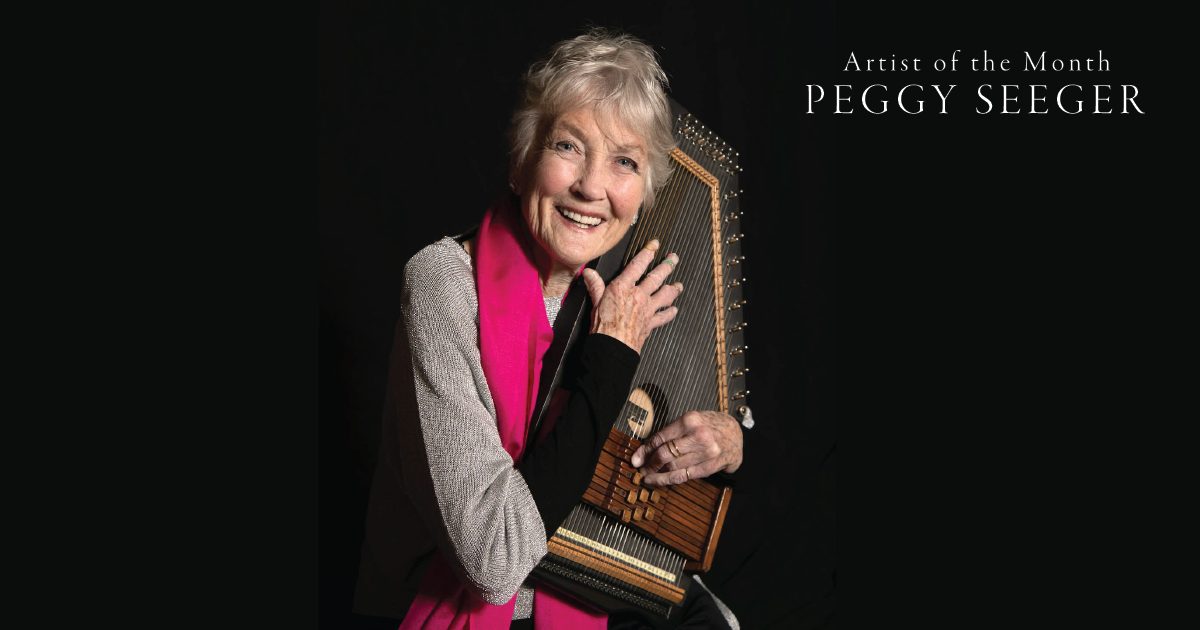
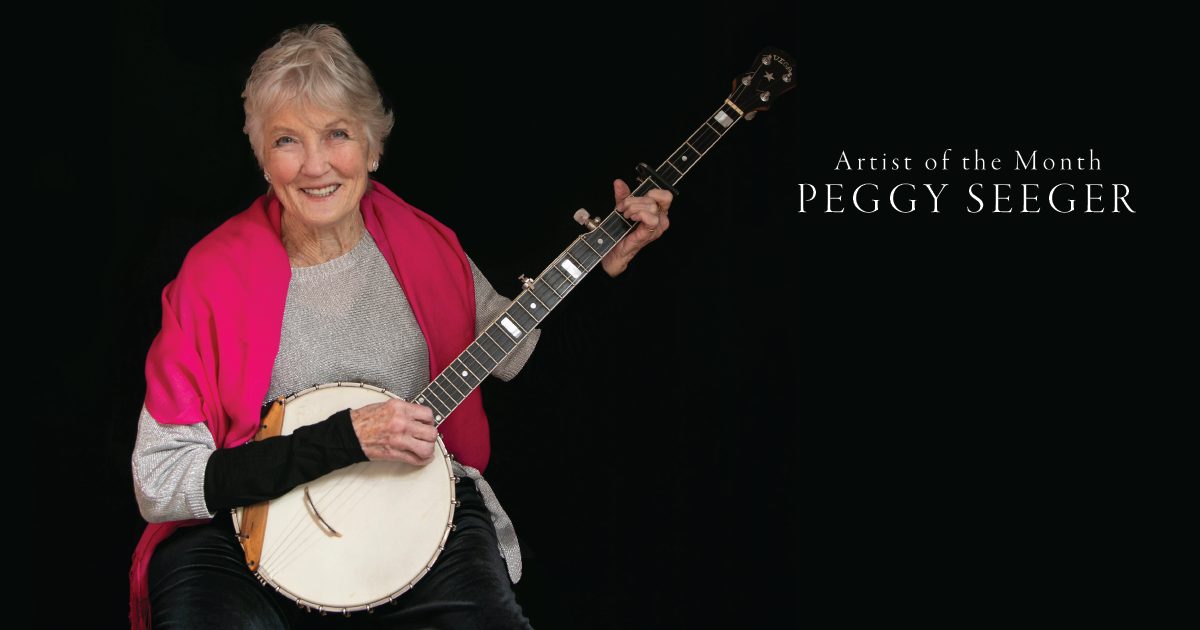
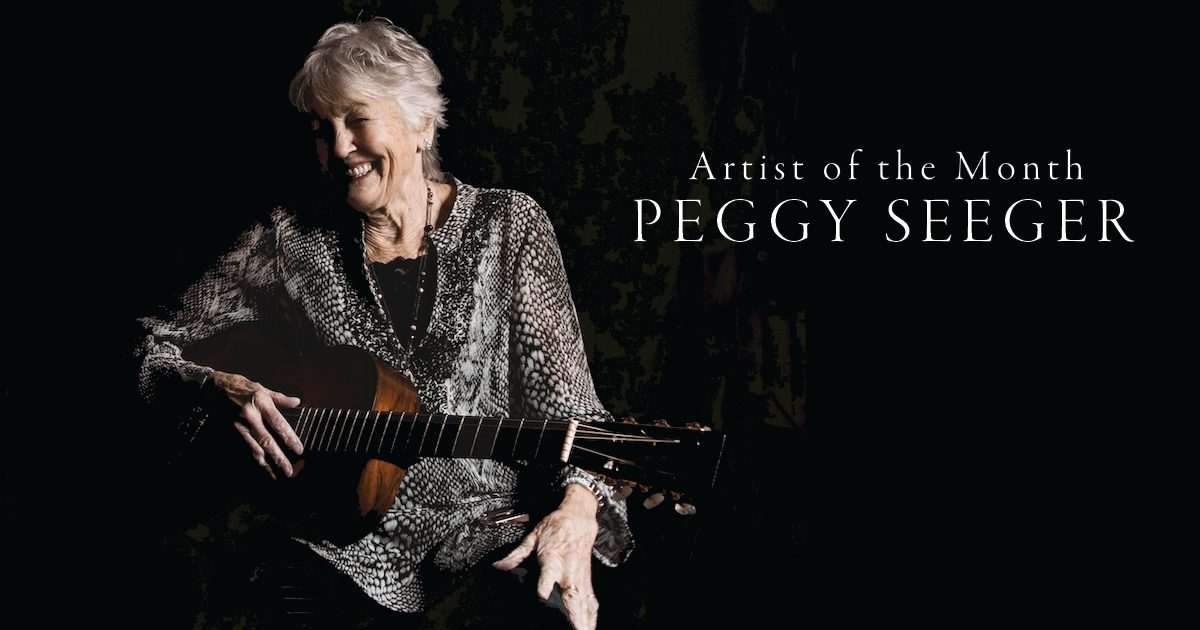
At 85 years old, Peggy Seeger stands as one of the most accomplished figures in folk music. She has recorded 25 solo albums, plus dozens more with her late husband, Ewan MacColl, along with collaborations with her siblings and generations of other folk musicians. She is a multi-instrumentalist who has edited and compiled folk music anthologies, and she ran a well-known magazine featuring contemporary songs for 20 years. All that while touring, writing more than 200 songs, raising three children and serving as an immoveable force for peace and human rights. And hers was the face that inspired MacColl to write “The First Time Ever I Saw Your Face.”
From her home in England, Seeger spoke to BGS about her new album, First Farewell, and what that title really means.
BGS: You wrote “How I Long for Peace” 20 years ago, but it’s really appropriate now. Can you talk about it?
When we decided to make a new CD, my son Calum had me sing to him any song that I hadn’t recorded. Because I lived in the United States for 16 years and wasn’t touring England, I wrote quite a number of songs that my kids never heard. “How I Long for Peace” was one of those. And when Calum heard it, he loved it. So, it went on the album, and so many people are commenting on it. It’s kind of like a hymn, and it has a very singable chorus, and it ties up nations and politics with climate change and the plunder of the planet. When I sing it, I feel such a longing in my heart. I feel the violence of the world. We’ve just had a horrendous murder here. In this country, a young girl who was walking home by herself disappeared. She was found two counties away in a woods. And there’s been a tremendous uprising here on the part of women. But it’s not until men uprise against this that it’ll ever be changed.
Can you talk about the project’s title, First Farewell?
I remember my brother Mike, who was with New Lost City Ramblers — once they broke up they had an annual farewell concert every year. I thought that was marvelously funny. So, I thought First Farewell will make people think. But it’s based on the two farewells that you give at the airport. You know, if you stay to wave goodbye to the person at our airport, you hug, and then they go through where only passengers are allowed. And they walk about 40 yards away, and then they turn to the right. So, the first farewell is the hug, and there is a second farewell where they wave goodbye just before they turn that corner.
In lots of ways at my age, I’m saying farewell to a lot of things, almost daily. When you’re my age, you see your body doing this, doing that, and you feel you’re slowly decaying. And it gives you a new feeling of togetherness with nature. I really have more of an attachment to nature and the birds and the daffodils and the trees than ever I did before. And I’m doing a lot of listening to books about nature. I’m beginning to feel that humanity is this very, very powerful paper-thin sandwich filling between what happens above the earth and below the earth, and we are just this kind of bacteria that is sitting along the edge of the earth. [Laughs]
Because I do feel that nature is calling us. Nature realizes that we are a danger. The same way as we’re trying to get rid of COVID, nature’s trying to get rid of us. And power to her if that’s her best way of teaching us anything, because we don’t learn at all. We just repeat everything that we’ve done before. But the first farewell is the recognition that I am near the goalpost. And within sight of the goalpost. I’ve been running like hell. But I run more slowly now.
Why did you move back to the United States in 2006, and then why did you return to Great Britain?
A tumultuous love affair brought me here permanently in 1959. I became a British subject in 1959 and settled down here. After Ewan MacColl died, 30 years ago, I had a new partner, a woman, my best friend, the only person that I’ve been head over heels in love with. And after four or five years, I had an incredible urge to go to America to find out who I had been before I came here – because I was a child when I moved here. And I immediately became totally involved in England. I grew up in England from age 24 and 54. That’s when I really became an adult. (I shouldn’t say that, because I’m not an adult yet.)
In 1994, I got this terrific urge to go back to America. I wanted my partner to come with me, but she couldn’t. So, I said, I’ll go and see what it’s like. It was the first time I’d lived on my own ever in my life. I toured America endlessly for 16 years. Then I began to realize that I really, really, really missed my kids. So, I just felt that urge to come back here. And now that I’m back here, I’m so glad I came back.
My children live in three corners of London. I can reach any of them in two hours. We talk on the phone, and I’m part of my family that I created again. My American family is very big, but very scattered. And the ones that I was really attached to are all gone. So, what made me move back was a gut feeling of where I belonged. And it’s so wonderful that my children are helping. They’re making it possible for me to keep going.
What do you see as the bright spots in today’s political and social movements? What gives you hope?
On all of the really big issues, what’s happening is small grassroots groups. People who want something done, want something changed, want something different are realizing that the government says it will take care of it — but it doesn’t. So, small groups are forming everywhere, saying, “We have to do this ourselves because our government is not doing it.” I’m part of a group like that here where I live, near the edge of Oxford. And Oxford has just spread and spread and spread and spread until it has incorporated one beautiful old village and then another old village. Then they become surrounded with new housing. And they have taken away the green land, taken away the beauty of the old villages.
I live in an old village called Iffley. Its church was built in the 1100s. And since 1964, 16 of its green spaces have been sequestered for housing. Plunk, they put 20 houses here; plunk, they put 50 houses there. Well, there are four acres left, two ancient fields that have not been touched for 1000 years. And our council wants to put 50 houses on them. I’m part of a group that is acting out of incandescent rage at this. If the housing is put in, it will be the end of our village – the end of it. I’ve always tried to be part of a small group that does something locally.
Parting words?
I’d like to thank you for the attention you gave to Laurie Lewis, because she is so good. She’s wonderful. I love that kind of music. I really, really do. And it’s something that I really miss over here, joining in on the radio with all of that wonderful singing that you can sing along with. I do miss the whole American scene, I do. But I’m a Gemini and I’ve chosen one of my twins, so I live here.
What I would like to say is that I have been very privileged in my life, extremely privileged, unlike a lot of people who need to struggle to make their names recognized. My name was recognizable due to my brother Pete, and my mother, my father. And I came at the end of other musicians who had smoothed the path out for me. I have had every possible advantage: two wonderful life partners, both of whom contributed to my career, and who have pushed me on and helped me. And children who don’t hate me! [Laughs] And a country that I kind of understand.
And enough money that I’m not in need in my old age. “First Time Ever I Saw Your Face” brings in a reasonable amount of income. People still hear it all over the place with some very funny covers. Oh, my god, it’s been covered over 400 times that we know of. There’s a rap version. There’s a country and western version. There’s a gospel version. There’s what I call a barbeque quartets version. There’s one with Scruggs banjo on it. I am just so fortunate, and I’m thankful that I’m being given an old age that makes me visible and worthwhile.
Peggy Seeger began her life surrounded by brilliant and groundbreaking musicians: a mother who was an internationally known composer; an ethnomusicologist father; half-brother Pete, legendary for both his songs and his political courage; brother Mike, musician and song-catcher. In the latter years of her career, she is making music with what she calls her “created” family — her three children who share her delight in songwriting and performing.
Like Pete, Peggy was an outspoken leftist who was blacklisted in the 1950s, and she has never stopped speaking her mind through lectures, interviews, and her music. On the occasion of her newest release, First Farewell, we were honored to speak with her from her present home near Oxford, England. Here is the first of our two-part interview with BGSArtist of the Month, Peggy Seeger. You can read part two here.
BGS: Listening to your new recording, I was struck by how beautiful your voice is. Do you have to work at keeping it that way?
Seeger: I don’t feel it’s beautiful. It’s so reduced from what it used to be. What’s happened is I’ve moved down into the lower ranges where it’s more vibrant. And there I can, for some reason, feel more emotionally connected. I practice every day. I actually sit down and sing as if I’m giving a concert every day. It’s like any muscle: if you keep it to keep it working, you won’t lose it. And I walk every day. And I walk quite fast, so sometimes I get out of breath. You need to build your lung capacity. I’m pleased that you think it’s beautiful. I never thought it was.
What prompted you to create this new album?
My children have realized that there’s nothing else that I enjoy as much as singing. I don’t have any other way of expressing myself. I don’t cook well. I do make sourdough bread. … Five years ago, they asked me what I wanted for my 80th birthday, and I said I want to tour with my two sons. They said they would do a week of touring – and it worked out to be 16 days. But they said we needed an album to tour with. So that was when we recorded my previous album called Everything Changes, and I realized how strong it is, working with an entire family network.
Everyone in my created family one generation down is involved: my two sons, my daughter and two daughters-in-law perform all that I need: a manager, a minder, accompaniment, co-writing, graphics. It’s all there, including doing the recording. If you’re a singer for a living you need to put out a new recording periodically. And so that’s what we did [with this new project]. We took a couple of songs that were quite old. “The Tree of Love” I made up about 10 years ago; “How I Long for Peace” I made up 20 years ago and never recorded. “Gotta Get Home by Midnight,” that was created strictly to be an encore. Now, that’s about the most egotistical reason! We had about 20 songs, and we just chose what was best for this album.
Can you talk about the song “The Invisible Woman”?
That was written with my son Neill. When he came to work with me on a song, we just looked at each other and said, “What should we write about?” And neither of us jumped at anything. So, then we started talking about our joint lives. He’s 61. And he said, “You know, Mum, I’m beginning to feel invisible.” It worked out that young women weren’t interested in him anymore. You know, in actual fact, they are. It’s just that he doesn’t necessarily sense it. So, I said, “Try being an 85-year-old woman, if you want to be invisible.” Because, you know, as older women, the baby factory is shut. We’re redundant as far as productive units are concerned. So, what have we got to offer? We’re not looked on as wise. We’re shunted off, and we have been ever since we’ve been living under a patriarchal system.
Do you visualize any specific incidents from your life when you think about that song?
Well, of course, I am both visible and invisible. I’m visible in in my career, although folk music is a fringe music. It’s not way up there like classical music, and it’s not so broad or in-your-face as pop music. So, I am visible in that field. But the minute I walk out in the city, or when I’m just a member of the public, I’m invisible. Occasionally a nice man will ask if I want help crossing the street. I became aware of this once when I was walking with my daughter. She was absolutely dressed to the nines. She would have been 20 or 25, so I would have been in my 60s. And we kept passing men who would do this: They’d look at me and they’d see my hair and then they’d look immediately to her and go like that [rolls her head up and down and up]. Their eyes were on her. They were not on me. Yeah, I’m very grateful for that. I’m tired of being under male scrutiny. From age 15 to about the age of 45, I put up with the groping and being pushed up against a wall. And I’ve had it! They don’t do that anymore. I’m an old woman and I don’t mind at all.
I imagined folk music as being, in a way, above gender discrimination.
Folk music is no way free of gender discrimination. It is packed with it. Full of it, hugely full of it. In the music, women are dismissed. We are victims. In some of the folk songs we were sent off for nagging our husbands. We were battered and beaten in some of the songs. Women were left with children in their arms. We were endless victims. I have a three-hour lecture on the position of women in folk songs. And it is despairing. And some of it is so outright misogynistic.
There was a song Pete used to sing, and he thought it was funny. At one point, before I became a feminist, I thought it was funny.
Oh, I had a wife and got no good of her, Here is how I easy got rid of her, Took her out and chopped the head off her Early in the morning.
Seeing as how there was no evidence For the sheriff or his reverence They had to call it an act of Providence Early in the morning.
So, if you have a wife and get no good of her Here is how you easy get rid of her Take her out and chop the head off her Early in the morning.
It was so vicious that it was funny. You couldn’t believe that anybody would sing about this. So, if we really look at a lot of the content of the songs, women are just handed from man to man and were killed by a lot of the men. And a lot of the folk songs actually document real murders, like “Ellen Smith” and “Omie Wise” and “Pretty Polly,” and the other ones like Laura Foster in “Tom Dooley.” Endless murders — especially after we get pregnant. I still love the songs unfortunately. To me, they’re historic pieces. And they talk about what we’re battling now.
Your album sounds like you’re acknowledging loss, and at the same time, acknowledging contentment. Is that a fair characterization?
Well, people in my family who lived to the age of 85 generally live into our 90s. So, I’m looking at maybe another, hopefully, 10 or 15 years of life. And the recognition and acceptance of that makes a whole new frame of life. You live differently with that. I have mental snapshots of my past. I have oceans of them. So, the pictures in my head and what I’ve learned and experienced just flow back and forth with the tides.
That’s where songs like “Dandelion and Clover” come from. I didn’t set out to make a song about memory with “Dandelion and Clover.” All of a sudden, the thought of a little boy coming to our kitchen door just flew into my head. He died when he was 8. He had a seizure on the schoolroom floor. He and I used to sit out in the field — there was a four-leaf clover field. We’d sit out there and talk about marriage and having babies when we were 8. And then the tragedy of him dying … but I didn’t feel it was a tragedy because I knew he was going to come back and marry me because I was told that’s what he would do.
In writing we try to marry up opposites or marry up correlated subjects, as in the song “Lubrication.” Or marry up diverging thoughts as in “How I Long for Peace,” contrasting peace with acts of violence and profit and greed. And to put those into a quiet, peaceful song.
What has it meant for you to be, as you say, in lockdown?
Nothing, because I’m a hermit anyway. I miss going into town, I miss going to the hairdresser. I miss going shopping, because other people shop for me, although now I’ve had two vaccine shots. So, I think I’m going to start shopping for myself again. But I’ve always been a hermit, I’m happy with my own company. My partner lives in New Zealand and I haven’t seen her for two years, because of COVID. And we’re not compatible for living together. So, I live on my own. I take care of myself. I keep busy. My god, I keep busy. There’s so much to do. And I talk to nice people like you.
Artist:Noel Paul Stookey Hometown: Blue Hill, Maine Latest album:Just Causes Personal nicknames: Paul of Peter, Paul & Mary
What’s your favorite memory from being on stage?
Standing at the Lincoln Memorial with Peter Yarrow, Mary Travers, and 250,000 others listening to Dr. Martin Luther King Jr. deliver his ‘I Have a Dream’ speech at the 1963 March on Washington. As Mary said that day, “…we are watching history.”
What was the first moment that you knew you wanted to be a musician?
Was there ever a “first moment?” Music has been a part of my life for as long as I can remember though I never seriously thought I would earn a living as a “professional.” I was attracted to the medium as a form of expression and never as commerce.
What rituals do you have, either in the studio or before a show?
Now THAT’s an interesting question! I always try to have beer and coffee backstage at a performance, because (borrowing a page from Alice in Wonderland‘s toadstool discipline), I will have a sip of beer if I’m jittery or wound too tight from all the coffee I’ve consumed during soundcheck OR a cup of coffee if the beer I’ve sipped has caused me to relax so much that I’ve lost focus. I suppose it’s a self-medication of sorts.
How often do you hide behind a character in a song or use “you” when it’s actually “me”?
Songwriters deal in metaphors. I don’t “hide” behind a character as much as employ characters to present different perspectives in what is often an invented situation — witness “The Connection,” a song that uses four scenes to reveal a relationship between drug use in the USA and the funding of the Taliban terrorist group, or “Jean Claude,” a story song questioning the meaning of freedom for an 83-year-old French man who, as a teenager, had his best friend taken away to a Nazi concentration camp.
What other art forms — literature, film, dance, painting, etc — inform your music?
I’m a folkie. All it takes is a circumstance; a piece of life revealed in real time to become inspiration for a song. We write for the betterment of the human condition. And, if that occasionally is termed “art,” then so be it.
Peggy Seeger is saying goodbye to recording and the road with First Farewell, which she’s considering her likely final album in a career spanning seven decades. A folk legend in her own right, Seeger comes from a sterling musical pedigree, and she’s ensuring that lineage continues by enlisting her sons Neill and Calum MacColl to join her on the album.
Seeger’s reemergence is marked by “The Invisible Woman,” immersed in a perspective that anyone of a certain age can understand. Upon its release, she noted, “My older son Neill MacColl was hesitant for ages about co-writing with me. He turned up at my home one day, laid his 6’1” self along my two-seater sofa and laconically offered a possible subject for a song. ‘The Invisible Woman’ strolled in gradually, wearing clown shoes and lace underwear. We ended up with a song that expressed an uncomfortable new feeling that was creeping up on us both, but that echoed the folk songs that I’d sung to him since birth.”
For dedicated fans of folk music, Seeger remains an important figure in a family that shaped the modern folk era. Her mother, Ruth Crawford Seeger, is a notable composer who was the first woman to be awarded the Guggenheim Fellowship Award for Music. Her rather, Charles Louis Seeger, did pioneering work in ethnomusicology at the University of California in Los Angeles, while her brother Mike Seeger and half-brother Pete Seeger carved out their own indelible careers in the folk framework. Peggy, though she was a child, may also be credited with discovering singer-guitarist Libba Cotten, who worked in the Seeger home.
At 85, Peggy Seeger stands as a folk icon in England and America, and if First Farewell is her swan song, she’s still making herself heard on topics ranging from suicide and loneliness, to social media and modern slavery. Fans in the UK can expect multiple tour dates to support the eloquent project. Our two-part, exclusive interview is available now (Read part one here. Read part two here.) and we hope you enjoy our Essential Peggy Seeger playlist, as well.
John Smith is resilient. You have to be, when you’ve spent your 15-year musical career — by choice — unsigned to a record label. When you’ve arranged every gig, every tour, every album release yourself. When you’ve invested your own money in everything you’ve done. As Smith himself puts it he’s been “planning for the worst” his entire professional life.
So when catastrophe hit a year ago, he was ready, in his words, to roll with the punches. The pandemic had already necessitated the painstaking and anxiety-inducing cancellation of all his gigs and tours. His mother was diagnosed with cancer at a time he couldn’t visit her. His wife lost a pregnancy. “It was devastating,” says Smith, from his home in North Wales. “But all you can do is try and make sense of it and the way I do that is write songs.”
The result is The Fray, an album of searing honesty and lithe beauty whose songs amplify the emotions and experiences of so many of us this year — the reassessed relationships, the self-reflection, and the ultimate search for hope. It is, perhaps, something of a change of pace for the British singer-songwriter, who describes it as his most honest album yet.
“In the past I’ve been drawn towards mythic perspective and character-based songs and more fantastical references,” he nods. “This one I just wrote about me and what I was feeling.” In doing so, he has created a work of extraordinary emotional nuance. As he puts it: “There’s lots of color and dark and light in everyday life. ‘How do I get to bed tonight without cracking up?’”
The songs are deeply tender — “She’s Doing Fine” and “One Day at a Time” are poignant responses to the grief of losing a baby — but they’re not as spare as Smith’s 2019 folk record, Hummingbird. This one is a cashmere blend of guitar, piano and horns, with eloquent contributions from friends in the US and elsewhere. Sarah Jarosz and Courtney Hartman lend their ethereal voices to “Deserving” and “Eye to Eye,” respectively. Milk Carton Kids contribute, alongside Smith’s longtime collaborator Lisa Hannigan, to the rousing title track “The Fray,” which tips the hat to the West Coast stylings of Jackson Browne’s Late for the Sky, one of Smith’s favorite records.
For Smith, it was a delight to be able to sing and play with his friends, even if they couldn’t be in the same space. “I normally see Lisa, for instance, very often, and I haven’t seen her for a year. So in the absence of being backstage at the same festivals, drinking and laughing, I thought let’s all get on the same track, then it’s like we’ve all seen each other.”
It had been six months since he had played with anyone else at all. When the pandemic first began to spread, Smith was touring in Australia, about to play the Blue Mountain Festival near Sydney. “I woke up in my hotel room to a text saying that the festival had been cancelled,” says Smith. “I looked at local news reports and it was obvious everything was going to get pulled and they were shutting down the borders between Australian states — it was just time to get out of there.”
Having got himself home from literally the other side of the world, Smith undertook the soul-crushing work of cancelling all his gigs, including what would have been his first-ever headline tour in the US. “It had taken years to get to that point,” he adds, ruefully. But managing his own brand has made Smith resourceful and he quickly worked together an album of unreleased recordings (Live in Chester) and took them on a “virtual world tour,” playing dates in different time zones.
“That all went really well and after the last of those gigs, that evening, my wife started feeling really bad and we had to get her to hospital and she spent a week there. And within a few weeks of that I’d found out my mum had cancer. So suddenly everything in my life was upside down.”
New songs simply fell out of him, he says. Some came from ideas he’d worked up with others, such as the opening track, “Friends.” The chorus had been written with fellow singer-songwriter Paul Usher, before the UK went into lockdown; four months later, it found a new meaning. “When I sat down and listened back to the voice memo on my phone I started singing it and wrote all the verses in one go.”
Other songs were inspired by particular instruments. He bought a classical guitar and quickly wrote “She’s Doing Fine” on it. A ‘57 Telecaster replica he acquired — “just a piece of swamp ash with a neck on it really” — inspired a riff which stayed under his fingers for five weeks before it was followed with any words. The finished product was “Hold On.”
Britain’s strict lockdown laws, which have included stay-at-home orders with only an hour a day allowed for exercise, were partially lifted in the late summer and fall, giving Smith the opportunity to get inside a studio. He and Hummingbird producer Sam Lakeman both isolated ahead of the session, and so were able to work together freely and without masks. The other musicians, too, self-quarantined before they arrived: “We didn’t have anyone involved we didn’t trust completely,” he says.
Smith laid down his own tracks in the first couple of days — the bare bones of guitar and vocals — so that the sound could build organically with each additional contribution. “Since recording all together live logistically wasn’t possible, I had to take a slightly different route,” he says. “We went with a lot of first takes and kept a few mistakes in there and tried to allow it to breathe spontaneously and didn’t overthink it… I’ve been guilty of that in the past.”
There’s a lovely moment at the end of “Friends,” as the song finishes and is punctuated with a little applause. It feels, for just a brief moment, like you’re in the room with the band. Smith laughs and explains its origins: “I’d put down the vocal take and it sounded so good in the headphones I just started clapping. And Sam shot me a look as if to say: ‘You know we’re going to have to do that again now.’” But it was such a joyful and spontaneous sound, they decided instead to ask the other musicians to clap at the end of their takes, too.
The other contributions — from Hannigan, Jarosz, et al. — were recorded at their homes and sent in digitally (“You can catch a lot of horrible stuff over email,” smiles Smith, “but not COVID”). They include electric guitar from Bill Frisell, one of Smith’s heroes, whom he approached via their mutual friend, Joe Henry. It is clear, from Smith’s tone, that having Frisell play on “Best of Me” is one of the best things to have happened to him in a very long time.
The future remains as uncertain as ever. “I’ve just moved some gigs for the third time,” says Smith. “It’s going to be a while before I’m going out and physically playing these songs.” It’s typical, he says, with good humour — he’d lined up some great venues to play in, and with the social distancing requirements significantly reducing their capacity, he would even have been able to say he had sold them out.
But Smith is not one to dwell on what-might-have-beens. Instead, he’ll be launching The Fray with a collection of livestreamed gigs, knowing that they have proved successful for him before. He has been reading a lot, recently, into business and economics and financial strategies – as he very sensibly observes, “it’s important for any musician to understand how money works because there’s going to be less of it going around.”
Smith has always been one to live the simple life, and with full lockdown resumed in Britain since the start of 2021, there has been ample opportunity to do so. There is no doubt that The Fray’s themes of getting by in the day-to-day will resonate broadly. After all, never before have so many humans experienced such similar circumstances all at the same time. “Extraordinary, isn’t it?” says Smith.
Chris Pierce has cultivated a significant following in the Los Angeles area and beyond, usually writing soulful and emotional songs that have populated fifteen years’ worth of albums and appeared in TV shows like This Is Us. But in 2020, accompanied by little more than his 1949 Gibson J-45 (“Blondie”) or his 1973 Martin D-18 (“Doriella”), the California native recorded the album American Silence with a mission of social activism against racial disparities.
Pierce gained a love of language from his mother, an English teacher who taught at-risk youth. She introduced him to the lyrical writings of Shel Silverstein and Dr. Seuss, as well as essential writers like Langston Hughes and Walt Whitman. The economy of words in all of those authors is immediately evident in original compositions like “American Silence” and “It’s Been Burning for a While,” where Pierce gets his point across directly, and with power. His convictions are never more optimistically presented than in the album’s closing anthem, “Young, Black and Beautiful,” which details the experience of maturing from a cute little kid to a perceived threat.
Calling from Los Angeles, he had a lot to say about American Silence, which is poised to become one of the most resounding folk albums of 2021.
BGS: To me, “American Silence” is like a message from a folksinger to an audience. What was on your mind when you wrote the song?
Pierce: History and resilience, and that cycle of bad things happening and people becoming aware of those things. Jumping on the train of, “Let’s try to end this,” and doing what we can to create awareness about a problem. And then kind of fading away. That song, for me, I was thinking about being young and cuffed on the streets, and stopped for things, and how being a Black kid – and now a Black man – can sometimes feel like a crime in itself, just walking around.
I wanted to write a song that addressed complacency, and remind people like myself, and Black people, and anybody’s been oppressed, to never give up. And also, to remind songwriters and artists that it’s important to not give up on reaching out to people, even though it’s sometimes hard. It’s important to keep that fight going in whatever way you can. And it asks those folks: “Hey, you come to my shows, you say you support, but if something were actually happening to me and you saw it, would you do something? And are you willing to do something in your everyday life that would create a more positive experience for people who aren’t like you?” That’s the short answer. [Laughs]
What has been the response so far?
It’s been getting good response from folks who have had my albums through the years. I’ve been getting emails and notes, and I’ve gotten to speak for a couple of schools, which is great. I’ve been invited to speak at events and play songs, and I think it’s doing a little bit of what I wanted it to do — which is to open up the continued conversation. And through a song, let it be another reminder to not let this moment, and these horrific things that happen, and how appalled you are by them, fade into the distance.
Does it change the vibe in the room when you walk in with a guitar?
Yeah, you know, I’m not a petite individual. I’m 6’4” and I’m a big man! And I’m a Black man, and I think walking into a room with a guitar raises a few eyebrows, to where folks will want to listen to a few lines and open their hearts, and to hear what I have to say. It’s being a gentle giant — a man of stature and size, and having this sensitive heart. In a lot of ways, the core of who I am is somebody who really wants to make music and make a difference and spread love. To get into a room with a guitar and sing about our history, and some of the ways I think we could change for the better, is thrilling for me. I’m really looking forward to walking into more rooms soon to play live. I miss it so much!
“Sound All the Bells” is a call to action, too, but it’s also very personal. What’s that like for you to put those experiences in a song and then share it with people?
All of the songs from this album came out of me last year, and for me it was a moment of clarity. Here I was, at home, trying to be safe and responsible, and in a lot of ways being still forced my heart to open to some of these compartmentalized feelings that I tucked away over the years to survive – and face them in a way that I’ve never faced them before. …
“Sound All the Bells” is almost like a timeline through different experiences that I’ve personally gone through, but it also offers the message of, “You know, I consider myself one of the lucky ones, for getting broken ribs and thrown in jail and stabbed and shot at – I’m still here, to sing songs.” So, I want people to really consider that perspective, in hope that it encourages them to do something about it.
One of the lyrics is about seeing a cross burning in your yard when you were 5 years old. That’s a powerful image.
Yeah, throughout the years I’ve had little flashes of memories about that. And a couple of years ago, I was sitting at lunch with my mom, in the town where that happened. We were talking about how things have changed over the years, and she started walking me through exactly what happened, and what she and my late father felt, being the first interracial couple in the neighborhood and the pushback from that. That wasn’t the only instance of hate that they encountered. And once I came along, there was this protectiveness from both of them, having a young child.
When that happened, from my mother’s perspective, it was something that [told them] they had a choice. And their choice was to be strong and to carry on and stay in the house, and try to be an example of love and acceptance. And that’s what they did. I’m so proud of them. It’s one thing to go through that when you’re a kid, but it’s another thing to imagine young parents having that happen. I feel like, in a lot of way, that example of their strength and resilience carries on into who I am, and the kind of music I make. And just the fact that I keep going is part of that moment.
On this record, it’s essentially just you and the guitar. Why did you choose that approach?
A big part of it was the pandemic and wanting to be safe and responsible, and not add to the problem of people getting sick and dying. It made me want to set up a session like this. And the other thing was, I wanted the listeners to not have anything in the way, and to let the words sink in. I have some extremely talented friends and folks that I’m around that are incredible at their instruments, but instead of picking up the phone and calling them, which was very tempting, I just said, you know, let me sit down with a guitar and sing these truths. Sing them in a way that means something to me and see if that translates.
“Young, Black and Beautiful,” feels like an encore to me. You’re closing the album with a message of encouragement, and I think the strength of your voice is part of that, too. Why did you want to end the album with that song?
The song in general was inspired by reading a friend’s Instagram post. She was talking about her Black son and how he was getting to the age that instead of folks on the street saying, “He’s so cute,” it’s turning into folks feeling threatened by him. That got me thinking about my own history, and what happens in that pivotal moment as a Black child that people are starting to look at you differently. You start hearing doors lock and you see purses clenched, and people walking to the other side of the street.
I wanted to offer something that went along the lines of the old term from the ‘60s, that Black is beautiful. It doesn’t mean that other things are not beautiful! It’s just a reminder that Black is beautiful. It’s about Black self-love, and I feel like it’s a song that I have benefitted from hearing when I was that age. I also wanted it to feel like an anthem that people could sing along to.
And at the end, I wanted to hold the word “Black” as long as I could, to give an example that you should never be ashamed of your Blackness. Sing it loud! And give folks as many examples as you can of your authentic self. And walk on through all these things that you’ve experienced, and that I’ve experienced, and find a new purpose in each days, knowing that your authenticity makes you beautiful.
Artist:Tania Joy Hometown: Uxbridge, Ontario Single: “Planks and Marietta” Release Date: February 16, 2021
In Their Words: “’Planks and Marietta’ is a song I needed to write about the difficult relationship between me and racism. I’ve always needed to talk about it, but I rarely have. George Floyd brought it all back, and now after a very dark period I am able to start the conversation, even if it’s only with myself, in ‘Planks and Marietta’. The title taken from a racist incident that occurred at two cross streets in my hometown, is a call out to many others in many towns all over the world. It’s my protest song about all of the little stories that get swept under the rug until they can no longer be ignored.” — Tania Joy
Photo credit: Tracy Walker Photography
This website uses cookies to improve your experience. We'll assume you're ok with this, but you can opt-out if you wish.AcceptRejectRead More
Privacy & Cookies Policy
Privacy Overview
This website uses cookies to improve your experience while you navigate through the website. Out of these, the cookies that are categorized as necessary are stored on your browser as they are essential for the working of basic functionalities of the website. We also use third-party cookies that help us analyze and understand how you use this website. These cookies will be stored in your browser only with your consent. You also have the option to opt-out of these cookies. But opting out of some of these cookies may affect your browsing experience.
Necessary cookies are absolutely essential for the website to function properly. This category only includes cookies that ensures basic functionalities and security features of the website. These cookies do not store any personal information.
Any cookies that may not be particularly necessary for the website to function and is used specifically to collect user personal data via analytics, ads, other embedded contents are termed as non-necessary cookies. It is mandatory to procure user consent prior to running these cookies on your website.