Crystal Gayle Goes Deep into Classic Country

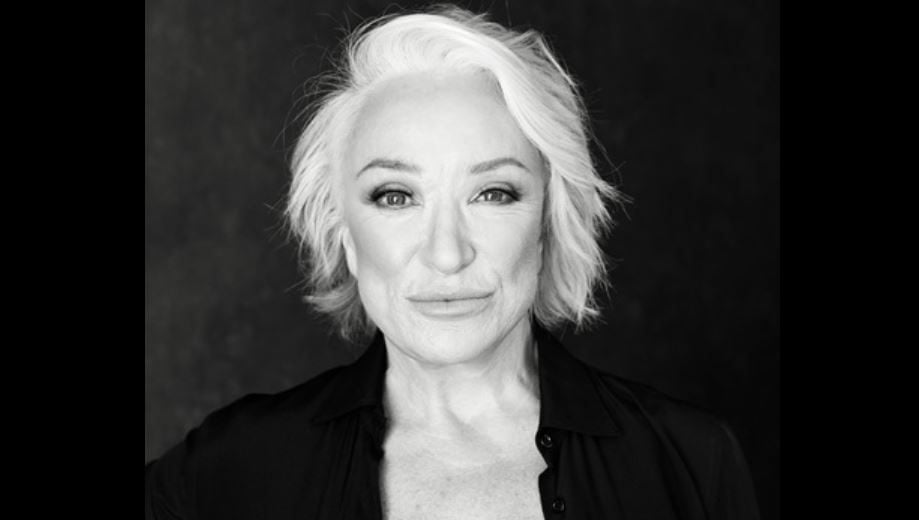
It’s a little startling when Crystal Gayle pops into the hallway of her Music Row office and cheerfully waves for this writer to come on back. Along with being a charming and welcoming host, she’s also one of country music’s most identifiable entertainers, a Grand Ole Opry member, a Grammy winner, and a genuine class act.

She’s also a recording artist again, ending a 16-year absence with You Don’t Know Me, a collection of country classics that honors her heroes, as well as her sister, Loretta Lynn, and Loretta’s late husband, Mooney Lynn. It was Mooney, she says, that ushered her into the spotlight as a teenager, and that memory prompted Gayle to begin the album with “Ribbon of Darkness,” a Marty Robbins hit in 1965.

“‘Ribbon of Darkness’ was my first song on the Opry,” she recalls. “I was probably 16 or 17, and my sister Loretta was sick and Mooney talked them into letting me get on stage and sing a song in her place. It was just a thrill! Of course, later on when I started out, I opened for Marty Robbins. Marty was so incredible. I got to work with Jack Greene, Stringbean, Grandpa Jones, Bill Monroe. … My album is filled with songs that mean something to me. This is a part of my life that a lot of people don’t know about.”

Gayle co-produced the album with her son, Christos, and continued the family connection by recording “Put It Off Until Tomorrow” with both of her singing sisters, Loretta Lynn and Peggy Sue. She also unearthed “You Never Were Mine,” a tearjerker written by her late brother Jay Lee Webb. Surrounded by fan gifts and photos from throughout her career, Gayle visited with BGS about her earliest days in Nashville, how she found her own voice, and why she’s still fond of her own country classic, “Don’t It Make My Brown Eyes Blue.”

BGS: What was it like for you as a new artist in 1970, meeting Jack Greene, Marty Robbins, and all of these stars?

CG: I was in awe of everybody, but of course when Loretta would come through town — because she was singing as I was growing up — she would be with maybe Ferlin Husky. I remember loving that. Or the Wilburn Brothers. They were incredible! I loved the harmony that they did. I could sit and listen to their music all day long, I just loved it. Of course I was a fan as well, but you have to give them their space. [Laughs] I learned that from Loretta.

I’m curious about Mooney. How did he influence your career?

Mooney really believed in my ability of singing. He loved my voice and he actually got my contract with Decca Records, but the best thing about it, he got a very short contract. It was the long ones that can ruin a lot of artists, because now they’re on this label, they’ve got so many years left, and they can’t do anything and [the label isn’t] helping them at all. They are not pushing the records.

So I was very lucky when my contract was up and Owen [Bradley] called me in. It was like, “Well, you’re going to do this, this, this, or we say bye.” I said, “Okay, bye.” [Laughs] I mean, it was hard. It was a hard time and I really thought at that time, “I’m just going to go back to Indiana and do what I’m doing.” I was married and my husband was going to Indiana University. Then when we moved to Nashville, he went to Vanderbilt in law school.

But I was just lucky. I was in the right place at the right time because before I left town, I was fulfilling my [appearance] obligations and I ran into Lynn Shults, who was with United Artists. We were just talking and he says, “Well, what label are you with now?” I said, “No one.” He said, “Will you come and talk to me Monday?” So things fell into place. And they put me with Allen Reynolds.

To say the least, that worked out.

Oh it did.

There was one song here I didn’t recognize – “I’ve Seen That Look on Me a Thousand Times.”

That was a song that our engineer Eric Prestidge loved. He said, “You’ve got to listen to this.” It was a song that I thought, “You know, a girl doesn’t really sing this… And I’m going to do it.” And I loved that it was a Harlan Howard song.

Several times on this record, it’s a woman singing about the drinking and the cheating. What is it about those flawed characters that makes you want to step into those shoes?

I’ve always said that if I had all the heartache I’ve sung about in my songs, I’d be in poor shape. So you’re a little bit of an actress or an actor. I’ve worked so many little clubs and bars on the way up — and even in high school I’d work the little places I could get into without getting anybody in trouble — that you saw the heartache. You saw the people that these songs really was their life.

So you can get into that and sing about it. “Just One More” was one of Mooney’s favorite songs and when they’d come through and stop at Mom’s house, I’d have to sing a cappella — he had me learn “Just One More.”

How old were you?

I was probably in sixth or seventh grade. [Laughs] “Just one more and then another…”

A drinking song from a 12-year-old.

“I’ll keep drinking, it don’t matter….” [Laughs]

You’ve included “Hello Walls,” written by the great Willie Nelson. As a co-producer, what kind of vibe were you going for?

I was actually going to go for the style that Faron Young did, and have the type of harmonies with the “hello, hello” … and we didn’t [use that idea] because I let other people influence me. They said, “No, you can’t, you’ve got to change it a little.” But I did my own harmony on that particular song. You know, I opened for Faron. I used his band and we did some dates together.

I remember rehearsing with him and the group. They were incredible guys, and very, very special to me. They’d watch out. I was that young girl that — all of them, even Conway Twitty — if I was on their shows, they were going to watch out for me because as the little sister of Loretta, they knew that she’d kill them if they didn’t!

Here you are, this young woman, 20 or 21 years old, starting out with these middle-aged guys who are stars. I wondered how they treated you.

Everyone treated me great and I think it really showed a lot of respect as well for my sister. And you know, I’m not someone that’s going to come out there and be that floozy, too. I think the way you present yourself is a part of it. But no, they were all very, very, very good.

And with Faron, when I wanted to do “Hello Walls,” I had completely forgotten that Willie Nelson had written the song and I’m starting to sing it, and I said, “Of course, the phrasing.”

Your phrasing is distinct, too. At what point did you find your own voice, do you think?

I think working with Allen. He would say, “Now sing this song, do it different ways, and then listen back and see which you like the best.” See, he let me listen to my voice and not just go in and sing the song. Because I was a belter. I remember going in the first time and Charles Cochran’s playing the piano and I’m singing at the top of my lungs. Allen grins and he says, “Can you sing it a little bit lighter?” [Laughs] … Allen was laid-back like me, and was not forceful, but he did pull out things within me. He’d say, “Do you like this song? Because you’re going to be the one singing it. You better like it.”

What a gift, instead of a producer just telling you what to do.

Oh, it was incredible. I was used to people telling me everything but Allen knew it was going to be me out there pounding the road and he wanted me to have the songs that I felt really comfortable with. I get asked the question, “Do you ever get tired of singing ‘Don’t It Make My Brown Eyes Blue’?” I don’t, because that song — Richard Leigh wrote it — is so well-written. I’ve always said it says so much in so little. I love it that it’s not all these words I have to think about to sing. There are so many songs out there where it’s like, “OK, what verse is next?” But this song just flows, and I think that’s one of the reasons that it was as big as it was.


Photo courtesy of the artist.
Tanya Tucker Remains a Songwriter’s Muse (Part 2 of 2)

Tanya Tucker isn’t known as a songwriter, although “Bring My Flowers Now” from her newest album, While I’m Livin’, shows she can hold her own. Across four consecutive decades of charting singles, she relied largely on the Nashville songwriting community — and in turn, she’s served as a muse for them. Among her forty Top 10 country hits are classics like “Delta Dawn,” “Strong Enough to Bend,” and “Two Sparrows in a Hurricane.”

Now, her life is the inspiration behind the songs of While I’m Livin’, produced by Brandi Carlile and Shooter Jennings. A bulk of the material was written specifically about Tucker by Carlile and her musical comrades Tim and Phil Hanseroth (a.k.a. The Twins). At her producers’ insistence, she also cut material formerly recorded by Miranda Lambert (“The House That Built Me”) and Waylon Jennings (“High Riding Heroes”).

In the second half of our Artist of the Month interview, Tucker talks about the songwriters she’s known, the mysteries of songwriting, and the left-of-center producer that she credits with her career. (Read the first half of the interview.)

BGS: I read that you had Loretta Lynn in mind while writing “Bring My Flowers Now.”

Tucker: Yeah, I was on the way to Christmas in Texas on the bus. And she called me, or I called her, and we’re always talking songs. She says, “We gotta write something together. You gotta come on over here and write. Me and you gotta write a hit.” And I said, “Well, I got this idea, let me sing a little bit to you. I’ve had it for years, but I just can’t find anything to go with it.” And I sang her the chorus and she goes, “When you come back through here, you gotta stop in here. We’ll finish that song. I love that idea.”

So I went out to California in the meantime, and I guess I’d sung it for some reason to Brandi — and I’m sure I sung a few ideas to her. But then she brought it up the last day of the sessions and we cut it right after we finished writing it. And then it became the title, so yeah, that’s pretty cool.

Yeah, it’s such a minimal production on that song.

That was always her thing. She told me, “It’s time that we hear your voice and it’s been so covered up, and so in the mix. And it’s time for people to hear the real Tanya Tucker, and you don’t need a lot of crap over it and a lot of production.” She’s very into that — very raw, real, flaws and all.

I wanted to ask you about Tom T. Hall because he’s popular among our readers, and he’s in the Bluegrass Hall of Fame now. He’s written a lot of bluegrass hits.

Oh! I had no idea. I’ve been thinking about him a lot lately. We text, I text him. Johnny Rodriguez and I were together the other day, talking about how Tom T. brought him to Nashville to play guitar. And how I toured with him. I used his van when I was a kid. That was always hard because some people didn’t like you using their van. But he was very cool with it.

I was 14. We had dinner one night and even back then he said, “You know, you gave me a great idea for a song.” So I guess I’ve always come by it naturally. Now songwriters hang out around me, just knowing any minute something’s gonna come out of my mouth. I can’t tell you how many big songs that were my idea. But I didn’t write it, so that’s the way it goes.

I’m a great idea person. I’m a great hook person. But it’s just like “Bring My Flowers Now,” I had the chorus but I could not find the meat. I had the bread, but no meat. And if you don’t have that, then you might as well hang it up. Sometimes it takes a catalyst to get that out of you. Gary Stewart was that way with me. … He could somehow get things out of me. I’ve known some people that can just be in a room, while you’re in the room writing, and just bring it out without even realizing it.

I don’t know what it is. Writing a song is very hard to explain in words how it happens. It’s almost like you have to explain it after, “Well that happened. Curiously, it happened this way.” I don’t really think about it much. Harlan Howard always told me, “Oh, you’re a writer trying to get out of a singer’s body.” Max D. Barnes was a good friend of mine and he said, “If you just sit down and focus for a few minutes, I bet we would write at least three standards.” At least three. So I’ve had the greats say things like that to me — and mean them.

You’ve been listening for great material from the very start of your career.

When I was a kid, one day I said to Billy Sherrill, “I’m getting a little irritated. You know, you write all these songs for Tammy Wynette and you ain’t never written one for me.” And he goes, “Well, let me tell you why.” Either he knows how to build a fence real quick or he was really being honest, and he said, “It’s because I have never written a song that’s as good as you are a singer.” And I went, “Oh, well that was really cool. I’m not sure I believe that shit.” But he did finally write me one and I did record it. It wasn’t a single. It was called “I Guess I’ll Have to Love Him More.”

I used to fight with him about recording some songs. “Almost Persuaded” — he goes, “Nah nah nah, we don’t need to do that.” And I’d go, “WE’RE GOING TO DO THAT!” I had someone tell me the other day, “God, I loved the way you sang ‘Almost Persuaded.’” It was a totally different change from the boy to the girl. But he never did want me to cut any of his songs and I had to fight him to do it. Sure miss old Billy. I give him all the credit. Without him, I don’t think any of this would have happened.

He set the stage for you.

Well, he listened to me. They’re walking out of there going, “What the hell?! This guy’s lost his mind listening to this kid.” Because I turned down “Happiest Girl in the Whole USA.” I said, “Love the song, it’s great, but it’s not my song.” And then when he played “Delta Dawn,” with Alex Harvey on guitar/vocal, and I went, “There you go. That’s my song.” And he listened. I didn’t record anything that I didn’t want to with Billy.

He was a little left-of-center and I’ve always said that anybody that gave me a chance in life was… maybe dealing with more decks of cards, a little off-center. Because anybody logical, who had a watch, was on time, never gave me a shot. It was always those people that were just a little crazy…

I’m so proud to have known some of those boys. Oh my god, all my boys at CBS [Records] were really great. When Billy signed me, the record label thought he was crazy, too. But they couldn’t mess with him too much because he had all the hits on the charts. They thought he was kind of strange, actually very strange. And he was. He wasn’t a normal kind of guy. At all. So, those kind of people, I have a soft spot for because they’re the ones that gave me my chance, my shot.

Your fans are going to hear this and might say, “Well, this is different.” What do you hope they hear in this record?

Well, I hope they like it. “The Wheels of Laredo” is a good song, but it’s not “Only two things in life make it worth living.” It didn’t grab me like that, but it’s grabbed everybody. I’m amazed that they like it as much as they do. People have come out of the woodwork, they’re sending me videos of them listening to it in Canada and in the pool, Buck Brannaman riding in the arena to it — and it’s just like, “Whoa, what is it about this song?”

I really don’t know. I can’t put my finger on it, but I’m glad it’s happened. I bet it’s like what Elvis felt when they gave him “Hound Dog” – “What the hell?! I ain’t singing this: ‘You aint’ nothing but a hound dog, cryin’ all the time.’” Like, “OK, no…” And then he cuts it and it’s a big ol’ smash. Makes you second guess yourself a little bit.

So I really don’t have any explanations of how all this happened and why. I look at all that stuff up there [plaques on the wall]. It’s not all the stuff I’ve done, but it’s a lot of my work and my catalog and my albums. But I never would’ve imagined this album would do what it’s done. Really. I have no answer for it, I have no explanation.


Photo credit: Danny Clinch
Illustration: Zachary Johnson

22 Top Country Duos

Country music was made for duets. Not only because those tight, tasty harmonies are a foundational aspect of the music, but also because country accomplishes heartbreak — and every other make and model of love song — better than almost any other genre. (Thought quite possibly better than all other genres.) It just makes sense to have two singers, one to play each role in a lost, soon-to-be-lost, or (rarely) divine, never-perishing romance. But the format isn’t restricted to lovers or their placeholders, it can just as seamlessly fit heroes and acolytes, parents and children, siblings, peers, fellow pot smokers, and on and on.

Take a scroll through these twenty-two country twosomes:

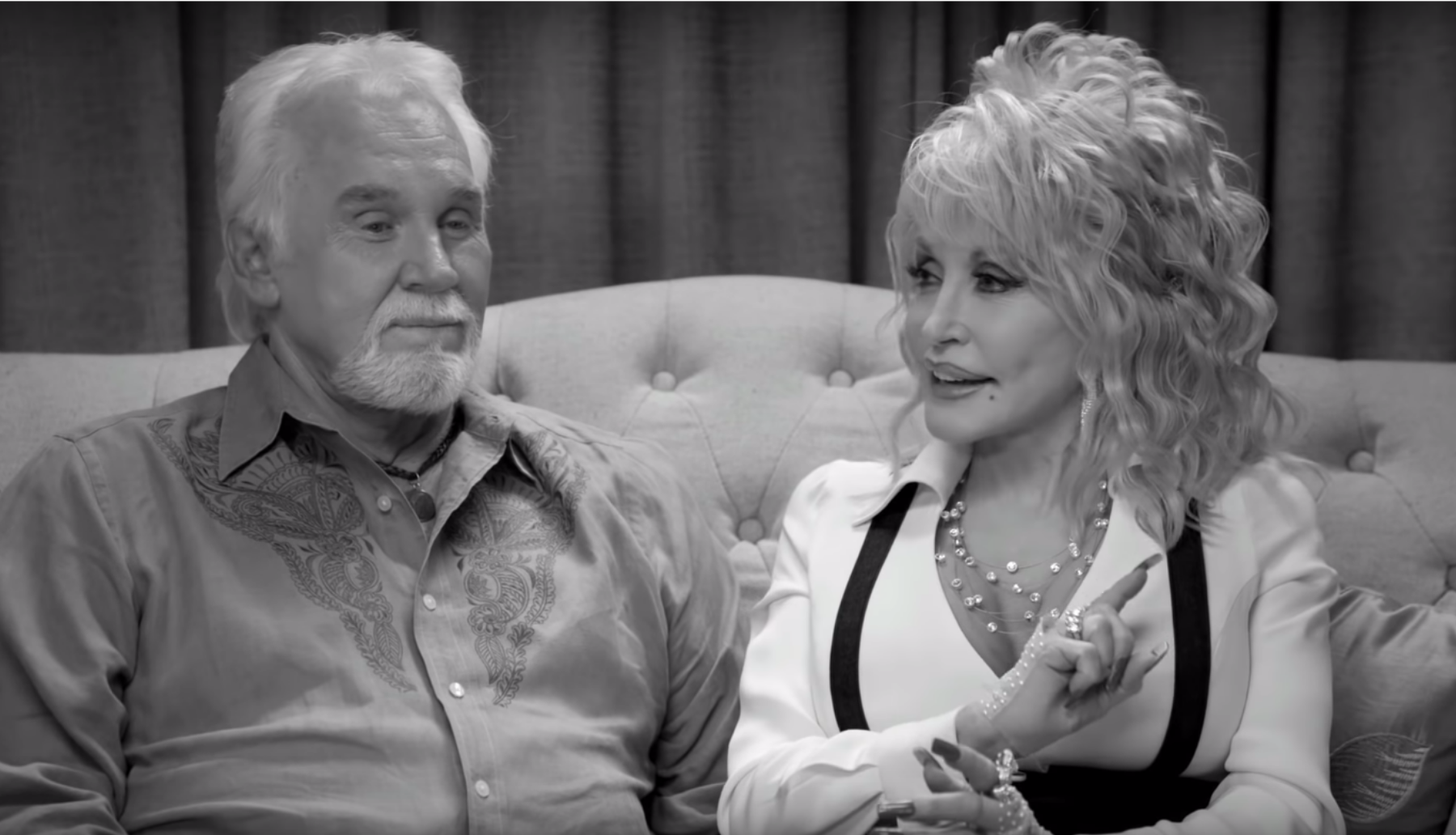
Kenny Rogers & Dolly Parton

We couldn’t have this list without these two. They should be the start, middle, and end of any definitive list of country duos. So we’ll just make the easy choice and kick it all off with Kenny and Dolly — that extra intro about their friendship and the years they’ve known each other? Swoon.

Loretta Lynn & Conway Twitty

After saying what we did about Kenny & Dolly we knew this pair needed to come next — so as to not rile anyone. Out of countless duets we could have chosen, how could any top “You’re The Reason Our Kids Are Ugly?”

Willie Nelson & Ray Charles

For inexplicable reasons people tend to forget Ray Charles’ incredible forays into country. His collaborations with Willie are stunning for the extreme juxtaposition of their voices and styles — they feel and swing so distinctly and differently, but all while perfectly complementary. “Seven Spanish Angels” ranked a very close second to this number in our selection process.

Glen Campbell & John Hartford

The most-recorded song in the history of recording? It’s said “Gentle On My Mind” holds that honor. And goodness gracious of course it does. Here’s its writer and its popularizer and hitmaker together.

Lee Ann Womack & George Strait

Together, Lee Ann and George were beacons of the trad country duet form, especially in the ’90s and early 2000s. This one from the jewel in the crown of Lee Ann’s discography, Call Me Crazy, is crisply modern, but with decidedly timeless vocals.

George Jones & Tammy Wynette

A broken, country fairy tale of a love story, George and Tammy’s relationship was infamously fraught, but damn if that didn’t just make their duets ever more… ethereal. Which doesn’t justify that Tammy Wynette kinda pain, to be sure, but it does remind us that if country can do anything better than all other genres, it can be sad.

Reba McEntire & Linda Davis

One of the best country songs, duets, and music videos EVER MADE. Theatrical and epic and a little silly and downright catchy and Rob Reiner and… we could go on forever.

Tanya Tucker & Delbert McClinton

Tanya is back with a brand new album and its well-deserved level of attention has been helping to re-shine the spotlight on her expansive career. Forty top ten hits across three decades. Who does that? Here she duets with Delbert McClinton on their 1993 hit, “Tell Me About It.”

Alan Jackson & Jimmy Buffett

Hey, if this has to be stuck in our heads for the rest of the month, it should be stuck in yours, too. Fair’s fair. It’s only half past [whatever time it is], but we don’t care.

Johnny Cash & June Carter Cash

One of the most recognizable duos in the history of the genre, immortalized not only in their discography but in a film adaptation of their love as well, Walk the Line. We all know “Jackson” as familiarly as the ABC’s, so here’s a slightly lesser-known beaut. (Keep watching til the last verse for an adorable bit from June.)

Eric Church & Rhiannon Giddens

Country is at its best when it surprises us. This collaboration is certainly, on the surface, unexpected, but the message of the song isn’t the only way these two artists can relate to each other. Over the course of their careers they’ve both fought their way from the fringes to the centers of their respective scenes. More of this, please.

Dolly Parton & Porter Wagoner

Dolly got her start with Porter Wagoner on his television show in the 1960s. They can certainly be credited with pioneering, popularizing, and epitomizing the country duet format. One of her most famous hits, “I Will Always Love You,” was written for Porter as she lamented leaving their act to go totally solo. (We’re a little glad she did.) You can tell they sang this song just a few gajillion times together, give or take.

Pam Tillis & Mel Tillis

Father/daughter duos in country aren’t as common, but they certainly aren’t unheard of. Pam and Mel are a perfect example. (The Kendalls are another.)

Patty Loveless & Ralph Stanley

Patty Loveless received the first ever Ralph Stanley Mountain Music Memorial Legacy Award in 2017 at Ralph’s home festival, Hills of Home, in Wise County, Virginia. Patty and Ralph were longtime friends and collaborators during his lifetime and even through her mainstream country success she referenced bluegrass and Ralph as influences — and she cut a few bluegrass records as well.

Alison Krauss & James Taylor

It’s. Just. Too. Good. Like butter. Like a warm bubble bath. Like floating on a cloud. Two voices that were meant to intertwine.

Charley Pride & Glen Campbell

These two were made to sing Latin-inflected harmonies together, weren’t they? Charley Pride gets overlooked by these sorts of lists all too often. But dang if he didn’t crank out some stellar collaborations, too!

Gram Parsons & Emmylou Harris

“Love Hurts” and boy, if Gram and Emmylou don’t make you believe it heart and soul and body and being. The definitive version of this Boudleaux Bryant song? Perhaps.

Willie Nelson & Merle Haggard

Icons being icons. And friends. And amazingly talented, ceaselessly musical comrades. You love to see it. (We could’ve/should’ve chosen “Pancho & Lefty.” We did not.)

Vince Gill & Amy Grant

There are quite a few reasons why the Ryman Auditorium basically hands this husband and wife duo the keys to the place each December. Basically all of those reasons are evident in this one. It’s fitting that this video came from one of those Christmas shows, too.

Dolly Parton & Sia

Dolly literally outdoes herself, re-recording “Here I Am” for the original soundtrack for her Netflix film, Dumplin’, after she first cut the Top 40 country single in 1971. Clearly she and Sia have much more in common than an affinity for wigs; their soaring, acrobatic voices seem so disparate in style and form until you hear them together. Listen on repeat for the best therapeutic results.

Robert Plant & Alison Krauss

[Insert entire Raising Sand album here, because how could we ever choose?] Lol jk, here’s “Killing the Blues.”

Carrie Underwood & Randy Travis

Cross-generational, meet-your-hero magic right here. Little did we know what was in store for Carrie Underwood then. But the way Randy looks at her up there, you can tell he knows she’s goin’ places.

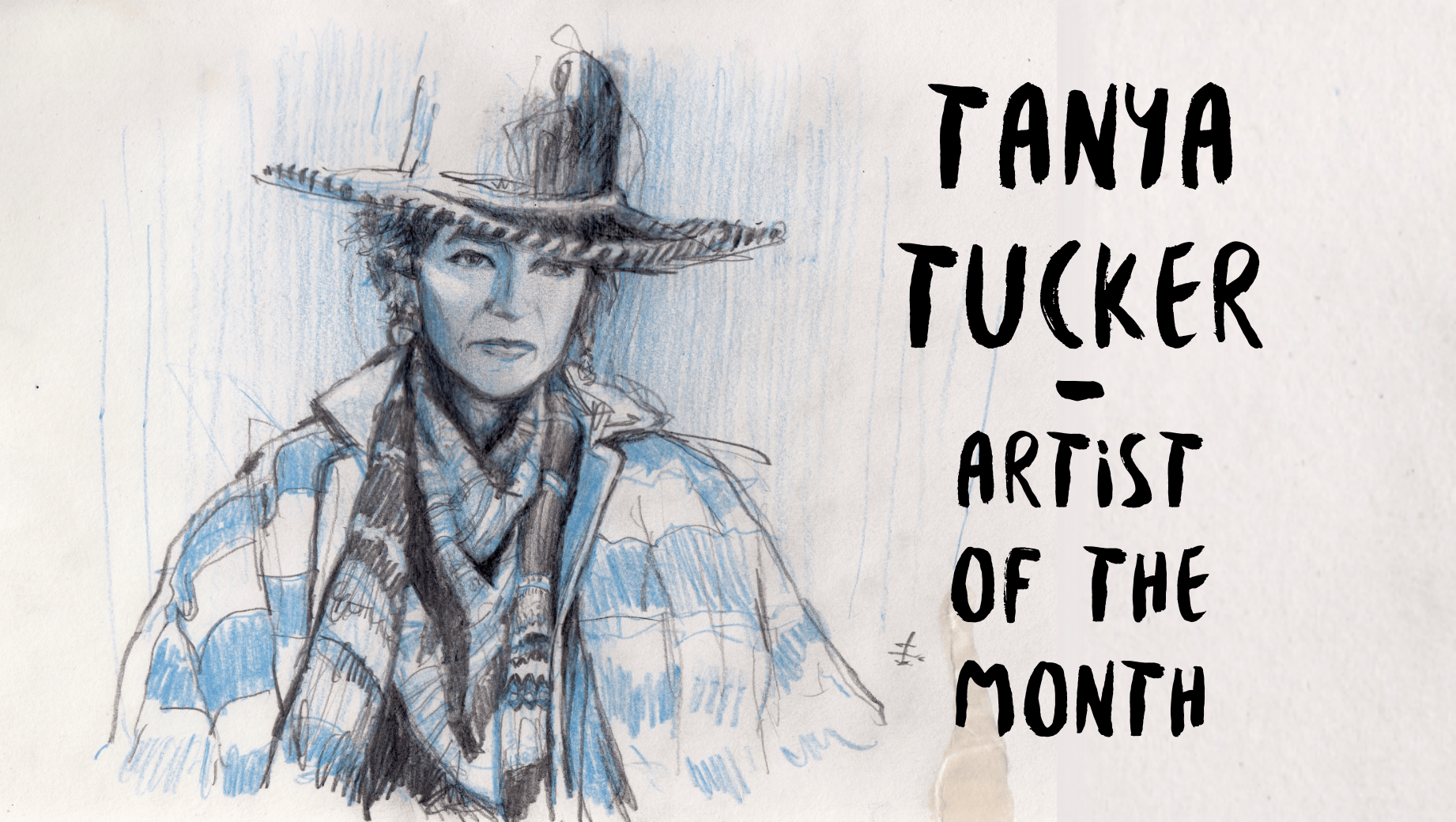
Artist of the Month: Tanya Tucker

Tanya Tucker is just as surprised as you are that she’s made a brand new record, While I’m Livin’. In an upcoming two-part interview with the enduring country artist, she talks about working with her producers — and new best friends — Shooter Jennings and Brandi Carlile, her friendship with icons like Tom T. Hall and Loretta Lynn, and the shock at seeing the overwhelmingly positive response so far to the new music.

From signing to a major label as a teenager, to rebounding with an award-winning career in her 30s, Tucker placed milestone singles at country radio throughout the ‘70s, ‘80s, and ‘90s, and she’s earned her reputation as one of the most important female country artists of her generation. Enjoy some of her most significant musical achievements in our Essentials playlist.


Photo credit: Danny Clinch

MIXTAPE: Wild Ponies’ Favorite Duos

Ah, the mixtape. Playlists. Songs. BGS asked us to do a mixtape and we decided it would be fun to ‘mix’ it up with a bunch of our favorite duos. A lot of them we just pulled off of our Wild Ponies Friends and Neighbors playlist. The hard part was narrowing it down. We threw in a few ringers who aren’t really our friends or neighbors — but we wish they were. There are so many ways to present music. We love a great big band, a power trio, a solitary soul with an acoustic guitar…

But there’s really something special about two voices working together, spiraling into that rare space that makes the whole room levitate. There’s a push and twist. If you’re at a show you can see it in the performers’ eyes when it locks in and happens. But if you can’t be at the show the next best thing is to close your eyes and just listen to the music. If you sit real still you might even be able to levitate at home, just a little. It’s worth a try. — Doug and Telisha Williams, Wild Ponies

Stacey Earle and Mark Stuart – “Next Door Down”

Oh, y’all, where do we even start with Stacey and Mark? We would not be making the mixtape or probably even be in Nashville without the support and love of these two. We picked “Next Door Down” from Simple Girl, because it was this release that began our love affair with Stacey and Mark. I’m pretty sure we can still play each and every song on that record!

Gillian Welch & David Rawlings – “Annabelle”

Well, our first dog was named Annabelle, after this song. That’s just how much we love Gillian, Dave, and this record.

Buddy & Julie Miller – “Keep Your Distance”

We’re so excited about Buddy and Julie’s new record, but we reached back in time a little on this one. When I listen to this song (by Richard Thompson?), Buddy and Julie’s influence on Wild Ponies’ sound is so evident.

Porter Wagoner and Dolly Parton – “Put It Off Until Tomorrow”

Oh, Porter and Dolly, one of the original duos. Each of them is such a talent, but together, there is magic — a third, indescribable element that elevates the song,

John Prine and Iris Dement – “In Spite of Ourselves”

Come on, John Prine AND Iris Dement. Our love for both of these superstars runs deep, but the blend of their quirky authenticity is stunning.

The Louvin Brothers – “My Baby’s Gone”

There’s nothing like family harmony. We were lucky enough to get to know Charlie Louvin later in his life, and the stories he shared about singing with his brother were slightly terrifying and beautiful. All the years after Ira’s death, Charlie could still hear Ira’s voice and his part every time he sang. The way that they could seamlessly switch parts and cross each other’s lines is something that maybe only those that share blood can accomplish.

Wild Ponies – “Hearts and Bones”

Singing this song live each night has become a favorite spot in our set. There’s something in the intimacy of our vocals — even just the “ooohs.” It almost feels like we’re sharing something that the audience shouldn’t be allowed to see.

Robby Hecht and Caroline Spence – “A Night Together”

Robby and Caroline are both amazing singers and songwriters. Two of our favorites in Nashville, right now. This duet record is absolutely stunning. I hope there’s another coming.

Conway Twitty and Loretta Lynn – “Easy Loving”

This song was released before I was born, but feels like the soundtrack to my childhood. I think I can even smell the chicken casserole cooking in the oven.

The Everly Brothers – “All I Have to Do Is Dream”

This is what every duo wants to sound like. Period. Anyone who tells you different is either lying or they’ve never actually heard this track.

Freddy and Francine – “Half a Mind”

I’m so happy that Lee and Bianca (aka Freddy and Francine) are in Nashville now. Their show and sound is amazing! Don’t those tight, powerful harmonies make you want to move?!

The Sea The Sea – “Love We Are We Love”

I challenge you to pick out who is singing what part with these two. Chuck and Mira’s voices blend so beautifully together, that it’s easy for me to get lost somewhere in the space between.

The White Stripes – “In the Cold, Cold Night”

Bad. Ass. The White Stripes make me want to break all the rules. This is such a cool track, because it’s mostly just Meg’s voice and Jack’s guitar. I guess not technically a duet, but it still feels like one. So intimate and creepy.

Anana Kaye – “Blueberry Fireworks”

Anana and Irakli are just weird and cool. Their writing is so big and theatrical. I love what they do. You should really go see them live — you can’t look away. They’re so good.

Waylon Jennings & Willie Nelson – “Pick up the Tempo”

Similar to the Conway and Loretta tune, this sounds like my childhood, only this time the smell is my daddy’s truck instead of chicken casserole.


Photo credit: Rob Hanning

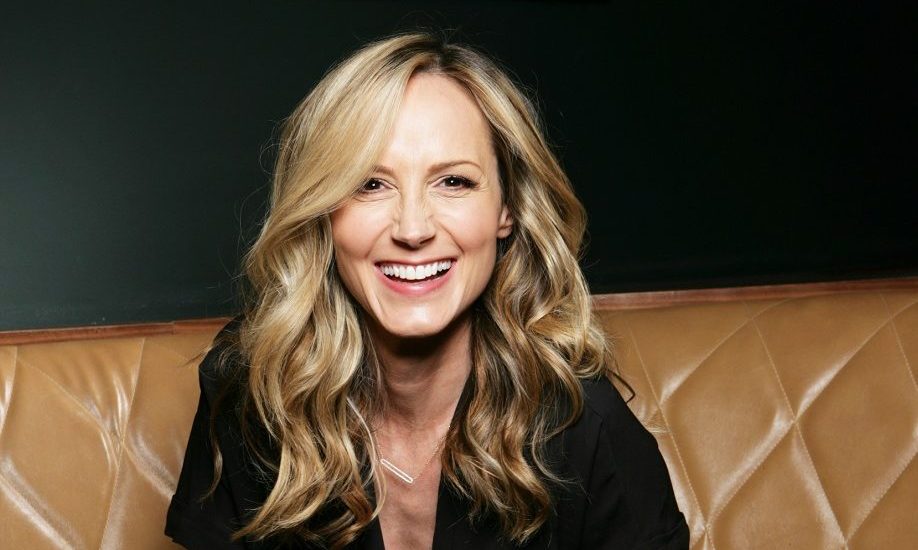
BGS 5+5: Chely Wright

Artist: Chely Wright
Personal nickname: Chels

What other art forms — literature, film, dance, painting, etc — inform your music?

I don’t mean to sound like I’m too cool to acknowledge that books, films, and paintings affect me (of course they do), but I think the single biggest influence on the work I do comes from human interaction and my observations of it. I absorb communication (spoken and non-linguistic) between people — whether it’s firsthand or from the sidelines — in the ways that one might go to the Met to see their favorite Degas. I do think, at times, that the way people interact is a form of art, because the composition matters and because it requires context and begs for interpretation.

What was the first moment that you knew you wanted to be a musician?

When I was just a little kid, I’d sit in front of stacks and piles of my parents’ vinyl record collection as my mom would curate the playlist of the day. Buck Owens, Loretta Lynn, Emmylou Harris, Bobbie Gentry, Conway Twitty, Hank Williams Sr., Elvis, and The Beatles… those were some of the artists in heavy rotation in our household. I remember being four years old and all I wanted to do was listen to those records. I was learning to read at that time too and my mom would help me as I sounded out the words written in the liner notes. I recall saying to my mom, “I want to do this. I want make my own records.” To which she replied, “You can.” And in that moment I really believed that I could and that I would.

If you had to write a mission statement for your career, what would it be?

Mission Statement: Find joy in every part of the work. The music. The people. The solitude. The airports. The chaos. The struggle. The triumph. The songs. Find The Joy.

Which elements of nature do you spend the most time with and how do those impact your work?

I try to walk a lot wherever I am. I’ve always cherished the experience of putting my feet down on dirt, gravel, pavement, and stone in places where I’m pretty sure I’ll never walk again. There’s something profound about it for me. Like most folks, I do my best thinking on my walks. Usually, on these walks, I don’t think about melodies or lyrics, but rather, I think about characters. The characters I consider (mostly fictitious) have free reign of my imagination for 1-2 hours to share their monologues or dialogues with me. I remember being a kid on my paper route and doing the same thing. I don’t know why I enjoy it, but I do.

Since food and music go so well together, what is your dream pairing of a meal and a musician?

I’m not a big foodie and I’ve never answered questions about the intersection of food and art with any style or substance, to be honest. I can say this though– if you give me a night of Rodney Crowell and Joe Henry together on stage, I’d be pretty damn happy with a peanut butter and jelly sandwich.


Photo credit: Matthew Rodgers

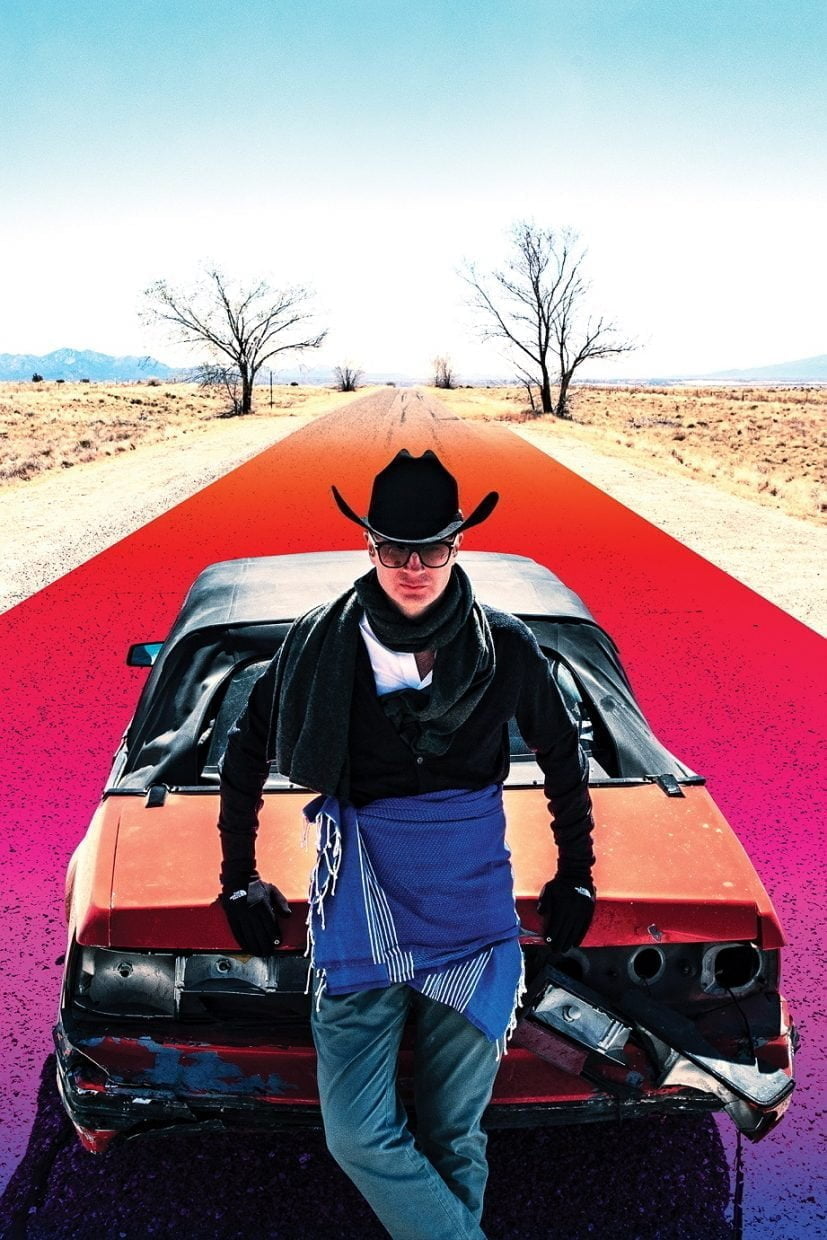
Nicolas Winding Refn Brings Rare Country Music Films to UK’s Black Deer Festival

Since he made a name for himself with the 2011 neo-noir film Drive, director Nicolas Winding Refn has become synonymous with sleek, glossy visuals and pristine synthetic pop. That makes him an unlikely figure to participate in this month’s Black Deer Festival, the new boutique, UK weekender celebrating Americana and country music.

But the 48-year-old Denmark native has demonstrated his interest in US culture throughout his career, starting with an obsession with cult exploitation and horror movies that spawned a coffee-table book of posters (The Act of Seeing, 2015). Then there’s the archive of some 200 movies that he’s restored under the banner of his byNWR project – three of which are to get a rare public screening at Black Deer. They include a 1965 concert film featuring George Jones and Loretta Lynn, as well as a musical country and western comedy he describes as “like a Carry On movie, shot in the South.”

Based in Copenhagen, Refn is a frequent visitor to the States, where he once lived as a child. It explains the light transatlantic twang to his near-perfect English. But the fascination with American culture began before that, he suggests. “I think it started back when I was eight years old,” Refn recalls, “and my mom was in New York, basically assessing if this was a place we were gonna move to. So, she had been away for a couple of weeks, and she sent me a package with a 45 of Willie Nelson’s ‘On the Road Again.’ Ever since then, I’ve always had an infatuation with that kind of country and western, and the more that I started learning about it, the more I started getting into it.”

Refn’s taste in Americana and country should be apparent from the films he’s selected for Black Deer. The first is Forty Acre Feud (1965), featuring comedy turns and musical performances from a host of stars from Minnie Pearl and Skeeter Davis to Ray Price. “It’s one of those strange country and western films that was specifically made for the Southern market,” says Refn. “It’s from an archive of a director called Ron Ormond. We happen to own his entire library in the collection. He made these very peculiar Southern-oriented drive-in movies. They very rarely even made it to the north in America. They’re very, very much part of a specific kind of illusion of America.”

Refn is as fascinated by the director’s backstory as the film itself. “The interesting thing about Ron Ormond is that he and his wife June ran a mom-and-pop exploitation business down South, and they would fly around in a private plane to collect revenues from the various drive-ins. Then they had a near-fatal crash that made them very religious, and they turned their bag of tricks to the whole religious crowd in the South, and started making films like If Footmen Tire You, What Will Horses Do?, which was produced by a guy called Estus Pirkle, who was a real hardline pastor. It’s quite an infamous religious propaganda movie about Communism spreading through the US.”

Perhaps the more conventional of the three titles is Ray Dennis Steckler’s Wild Guitar (1962), in which a young rock ’n’ roller gets into the music business and falls foul of a manipulative manager. “That’s a really interesting flick,” says Refn. “It’s a great kind of document of Los Angeles in the early ‘60s. It was shot by Vilmos Zsigmond, a famous cinematographer that went on to win multiple awards for his work with much bigger directors, like Steven Spielberg. But as a film it’s actually quite a groovy coming-of-age, kind of cautionary tale about rock ‘n’ roll. It has some great rock songs in it. In fact it has everything in it: dames, music, good photography, gangsters, guns, fights, love, and mayhem.”

Rounding off Refn’s three choices is Cottonpickin’ Chickenpickers (1967), one of only two films directed by the lesser-known Larry E. Jackson. “It’s an amazing, low-grade It’s a Mad, Mad, Mad, Mad World kind of thing — with fantastic country and western music in it. And they play the whole songs until the end. It’s quite surreal in a way. It’s a bit like a Jacques Tati movie, I guess. It’s more like a comedy really. It’s just a really, really fringe comedy of a certain era that’s gone. It’s very innocent and kind of quirky in a way. But the music is just absolutely outstanding, and the way that the musical numbers are introduced is just fantastic.”

Each of these films, with their ragged edges and primal, analogue sounds, will come as a surprise to those who only know Refn from his recent English-language work and see him as a pioneer of the digital era. “I always say you have to love and embrace all kinds of music,” he observes. “For me, a lot of it is about, ‘Is it sincere? Is there something within it?’ I think if you always approach music like that, then in a way there’ll be something in all genres that touches you.”


Photo credit: Kia Hartelius (portrait); Scott Garfield (with car)

14 Songs for Roller Skating in Buffalo Herds

No matter where you may stand on the Lil Nas X viral sensation “Old Town Road” and the associated media firestorm, Twitter debates, and raging country-purity authenticity signalling, we should all be able to agree on one thing: country music has always been a welcoming home to musical memes. Sure, that term may be more recent, a product of the internet age, but ever since the dawn of country as a format silly, tongue-in-cheek, self-deprecating, hilarious, and downright foolish songs have been just as integral a part of the genre as heartbreak, cheatin’, booze, and trucks.

We thought it’s high time we celebrate the knee-slappin’, gut-bustin’ history of country music’s meme-ready songs from across the decades. Here are fourteen of our favorites — yes, just fourteen. We can assure you there are dozens and dozens more where these came from.

“A Boy Named Sue” – Johnny Cash

The man in black, one of the most iconic personas in the history of country music, famous for his grit, his stoicism, and his rough-hewn voice wasn’t even “above” recording a song steeped in satire. Hopefully in 2019 life is getting easier for boys named Sue.

“What a Waste of Good Corn Liquor” – Tennessee Mafia Jug Band

Originally recorded by Country Music Hall of Fame and Bluegrass Hall of Fame member Mac Wiseman, this disconcertingly happy-sounding song tells a story with a moral: moonshine will melt you. Don’t spoil the moonshine.

“The King Is Gone (So Are You)” – George Jones

A song about Elvis, Fred Flintstone, drinking, and heartbreak. This one ticks all of the boxes. Even the “use yabadabadoo in a song” box.

“Did I Shave My Legs For This?” – Deana Carter

Country, after all, is all about the relatability of the human condition. Jilted would-be lovers everywhere have felt your pain, Deana. We truly have.

“Don’t Let The Stars Get In Your Eyeballs” – Homer & Jethro

The original Weird Al Yankovics of country and bluegrass, Homer & Jethro wrote (and re-wrote) scores of songs with wacky, eye roll-inducing, laugh-out-loud funny lyrics, ad libs, and arrangements. Check that steel solo!

“I’ll Oilwells Love You” – Dolly Parton

No, Whitney Houston did not cover this one. But that would have been magnificent.

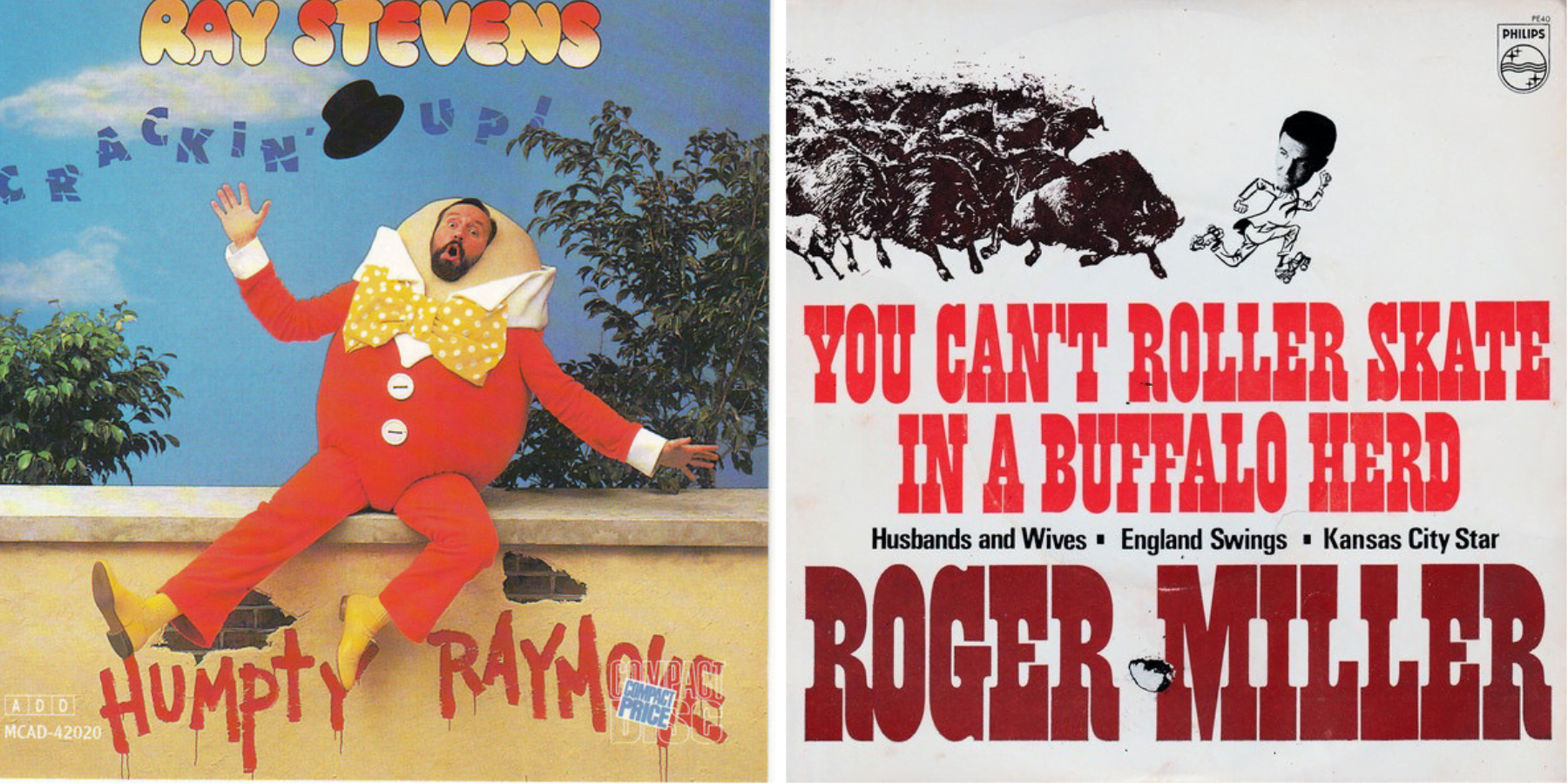
“You Can’t Roller Skate In A Buffalo Herd” – Roger Miller

One of country’s humorous kings, Roger Miller recorded a host of silly songs over the course of his career. We chose this particular number because of its evergreen wisdom. Of course.

“You’re The Reason Our Kids Are Ugly” – Loretta Lynn & Conway Twitty

But you know what? Looks ain’t everything. And money ain’t everything.

“I’m My Own Grandpa” – Willie Nelson

Get out a piece of scratch paper and sketch this family tree as you go. Does it seem a little… circular? Yeah… that’s the problem.

“Would Jesus Wear A Rolex” – Ray Stevens

A modern country parable. Again, an artist with plenty of silly and sarcastic songs to choose from — and Ray Stevens is being inducted into the Country Music Hall of Fame this year. Sounds pretty country to us…

“Cleopatra, Queen Of Denial” – Pam Tillis

Yes. More country songs with outright puns as their hooks, please. And of course, we’ve all been there, Pam. Denial is a popular destination.

“Illegal Smile” – John Prine

On the opening track of his debut album Prine immediately set the tone for his entire career with some of the most nonsensical and witty lyrics ever set to song. “Well done, hot dog bun, my sister’s a nun.”

“I’ll Think Of A Reason Later” – Lee Ann Womack

If you’ve never driven down the road shouting along with this one, we highly recommend that you do — as soon as possible. The song’s main character has a remarkable sense of self-awareness for being so viscerally incensed. If you really hate someone — who may or may not have ended up with your former significant other — it may be your family’s redneck nature.

“My Give A Damn’s Busted” – Jo Dee Messina

Look, if you’ve gotten to the end of this list and you haven’t enjoyed yourself, or maybe you don’t get the point, or maybe you think this is just useless clickbait… whatever the case may be, this song counts as our response. “Nah, man. Sorry.” (Isn’t country the best?)

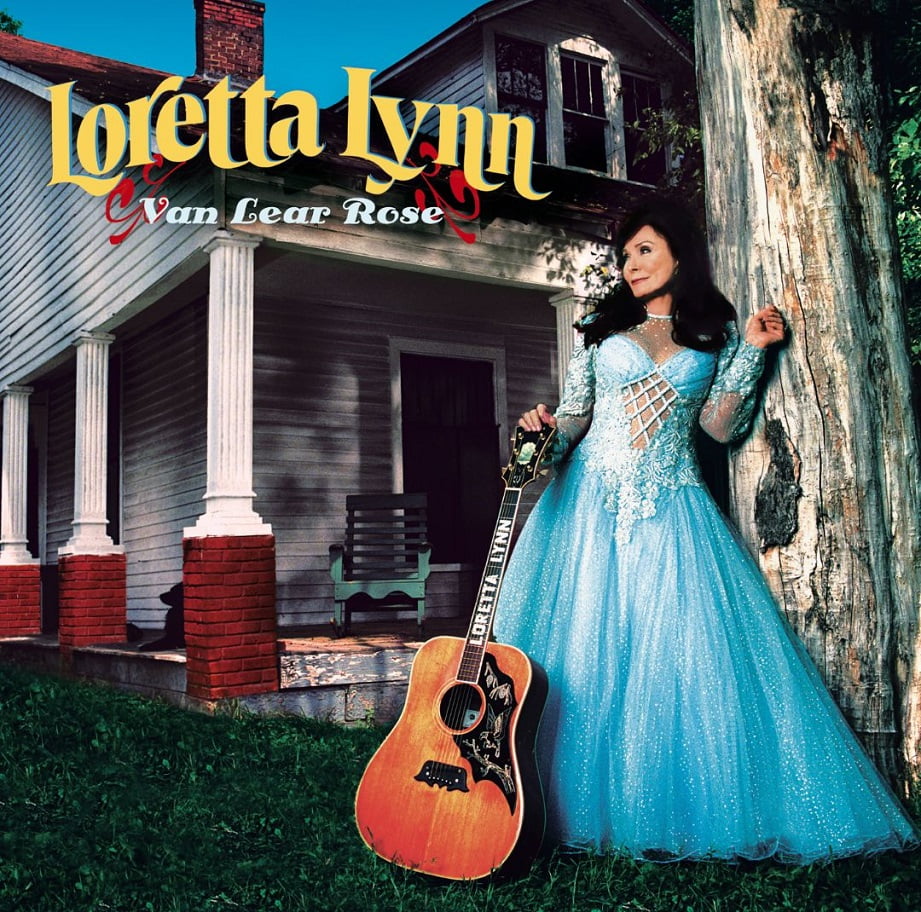
Canon Fodder: Loretta Lynn, ‘Van Lear Rose’

I want to tell you about one of the saddest songs I’ve heard. “Miss Being Mrs.” is a short, acoustic plaint near the end of Loretta Lynn’s 2004 blockbuster Van Lear Rose, famously produced with fanboy aplomb by Jack White. “I lie here all alone in my bed of memories,” she sings quietly, as though she had no other audience than herself. “I’m dreamin’ of your sweet kiss. Oh, how you loved me.” As White strums out a gentle and deeply sympathetic guitar theme, Lynn moves her wedding ring from her left hand to her right, confessing she misses her husband, misses the warmth of his body in the bed next to her.

Lyrically, it’s a tearjerker, with a set of lyrics as direct and as melancholy as Lynn has ever written. The predicament she describes is familiar but insoluble: something that will never change, something she must simply endure until the morning. Anyone can relate to the song, whether their partner has gone off to the great beyond or simply away on a business trip. Longtime fans, however, will easily identify the song’s subject as Oliver Lynn, better known as Doolittle or simply Doo and best known as her husband of 48 years. “Miss Being Mrs.” is a powerful bit of punctuation to their very public, very tumultuous marriage, which informed so many of her songs. The fact that she misses him so much subtly shifts the story of their marriage away from his indiscretions and underscores the many years of support and security, not to mention the large family they created together.

Mostly, though, “Miss Being Mrs.” sounds so epically sad because it’s Loretta Lynn singing it. Lyrics and backstory aside, she delivers those lines with tenacity and grace, as though she understands that her grief over Doolittle’s death in 1996 had given way to a lingering want. It’s a song about sex (a subject she never shied from addressing), about love, about security, and ultimately about the realization that all of that is gone–nothing but a memory at this point in her life. That is not necessarily a part of the song as it is written, but it is the dominant theme of the song as it is sung.

Even into her seventies, Lynn remained one of the finest vocalists ever to top the country charts, and there are so many moments that remind you what a formidable presence she is. On “Mrs. Leroy Brown” she kisses off an unfaithful husband with news of his overdrawn bank account: “”I just drawed all your money out of the bank today/ Honey, you don’t have no mo’.” It’s the way she says those last two syllables — with mock concern and very real glee — that sells the song as an empowerment anthem for wronged women everywhere. On “Story of My Life” she enumerates her sixth pregnancy with a hearty chuckle, as though she’s the gossip next door rather than the country superstar that she is.

Fan that he is, White produces Van Lear Rose to emphasize her performances over everything else. He assembles a loose band that includes members of the Cincinnati band the Greenhornes and would later record with White’s side projects the Raconteurs and the Dead Weather: Bassist Jack Lawrence and drummer Patrick Keeler prove an agile rhythm section, and of course White himself is an inventive guitarist. There are moments when that original conception of the album comes through, especially on the rockabilly rave-up “Have Mercy,” which is as much a showcase for his riffing as it is for her singing. He only sings on one song, the drunk-lovin’ story-song “Portland, Oregon,” where they play a pair of lovers who bond over pitchers of sloe gin fizz. He’s 28 and she’s 72, yet Lynn sounds like she’s about to eat him alive.

“This is gonna shake ‘em up,” Lynn would say in the studio, clutching White’s hand as they listened to a song they had just recorded together. She predicted great things for her 39th studio album, and she wasn’t wrong: It peaked at number two on the country album charts and nabbed two Grammys, including Best Country Album and Best Country Collaboration with Vocals. More than that, she knew she was doing something very different, something that her fans might not expect from her. They recorded the album in just under two weeks, recording on an eight-track recorder to keep things elemental, straightforward, “as real as possible,” White told CMT, “because that’s what Loretta Lynn is.” It was her first album of originals in decades, and it would take her more than a decade to follow it up with the underrated Full Circle in 2016 and Wouldn’t It Be Great in 2018.

Van Lear Rose did and didn’t shake ‘em up. It was Lynn’s best-selling album in decades, scoring rave reviews from publications that didn’t always cover country music. It was a bigger hit outside of Nashville than inside. It didn’t shake up the industry, but almost nothing does these days. What it did was shake up the expectations we have of older country artists. Van Lear Rose arrived exactly ten years after Johnny Cash released American Recordings, still the benchmark for late-in-life country comebacks. But each volume in that series sound grimmer and more mortally resigned than the last, such that the final albums sound like deathbed confessions. It’s a powerful series of albums, albeit a bit dreary. Lynn isn’t having any of that. She was 72 when she made Van Lear Rose, a year older than Cash when he died, yet death is barely on her mind.

Instead, her truest subject–on this and any other album she’s ever released–is life. Specifically, her own life. The coal miner’s daughter has always made hardscrabble art from her own autobiography, which nary a hint of self-pity or dread. She’s far too irrepressible a personality to let songs like “Little Red Shoes” or “Story of My Life” become grim farewells. They’re not poignant because we know they’re being sung by a woman with more years behind her than ahead. Rather, they’re poignant precisely because that’s how she sings them.

MIXTAPE: Wood & Wire’s Grammy-Nominated Faves

Welcome to our guide to The Grammys! You may (or may not) be surprised to learn that our musical tastes span far beyond the beautiful world of bluegrass music. Below you’ll find some of our favorite tracks from the Bluegrass category along with many other tracks from various nominees. This took us a while and was nearly impossible to narrow down. We could have easily made this list a lot longer. For now, enjoy some highlights and we’ll see you in L.A.! — Tony Kamel, Wood & Wire

(Editor’s Note: Wood & Wire’s
North of Despair is nominated for a Grammy in the Best Bluegrass Album category.)

The Travelin’ McCourys – “Southbound”

We’ve been fortunate to get to play some shows with these guys over the last few years. They’re great people and awesome bluegrass pickers but this album showcases their versatility beyond just bluegrass while remaining undeniably true to the bluegrass style.

Kacey Musgraves – “Slow Burn”

Kacey received four nominations, including Album of the Year, for her album Golden Hour. Whether you consider it country or not it doesn’t really matter. From front to back the album is absolutely flawless.

Kendrick Lamar & SZA – “All the Stars”

This song is so catchy and so good you’ll want to start it over again once it ends. It also has landed four nominations including Record of the Year.

Brandi Carlile – “The Joke”

A poignant and powerful song by an incredible singer/songwriter. Don’t stop with this song because the entire album is amazing.

Zedd, Maren Morris & Grey – “The Middle”

Are you someone who doesn’t listen to pop songs that much? Forget about all of that and give this song a listen. It’s a perfect pop song.

Marcus Miller: “Trip Trap”

Bassist Marcus Miller is the Boss, the GOAT and a very bad boy. His unbelievable album Laid Black (up for best Contemporary Instrumental Album) is Marcus in peak form, start to finish. Don’t take our word for it, listen to the opening (live) track “Trip Trap.” You’ll find that Marcus is talking to you on that bass. Turn it up.

Mike Barnett: “Mary and the Soldier”

When we saw this title on Mike’s album, we were eager to listen to his interpretation. His fiddle playing is so tasteful, and his arrangement is so musical, we truly feel that the purity and passion of this traditional music has been understood, matched and advanced. And who better to sing than Tim O’Brien? Mike joins us in the Best Bluegrass Album category with his record, Portraits in Fiddles.

Margo Price (Feat. Willie Nelson) – “Learning to Lose”

By now, you all know who Margo Price is. It’s funny that she’s up for Best New Artist considering how long she’s been doing her thing–and what a wonderful thing it is. Willie Nelson is also up for a few and we figured it would be nice to share this beautiful song they recorded together, featuring a classic Willie guitar solo on his beloved classical guitar Trigger.

Julian Lage – “Splendor Riot”

Known for his guitar chops and background in jazz this album is truly unique. At times country or R&B it also sometimes sounds like a rockin’ indie album…Only instrumental.

Childish Gambino – “This is America”

The song alone is a monumental work and a powerful commentary on American society. It is also nominated for best music video for a good reason. Go watch the video.

Cedric Burnside – “Death Bell Blues”

Start to finish, this record is incredible. This guy has channeled some of the absolute greats in his delivery and recording style, including his father (blues drummer Calvin Jackson) and grandfather (the great R.L. Burnside). But make no mistake, Cedric has his own groove and own style. Benton County Relic is up for Best Traditional Blues Record and man it’s a doozie.

Special Consensus (w/ 10 String Symphony, Alison Brown, & John Hartford) – “Squirrel Hunters”

Greg Cahill and crew really crafted a gem of a record with Rivers & Roads. It’s chock full of some of the best playing we’ve heard. However, it’s hard to resist choosing this version of one of our favorite fiddle tunes, in which the band (plus our friends Rachel Baiman & Christian Sedlemeyer, as well as Alison Brown) built the recording around a previously unreleased track of our one of our favorite musicians of all time, John Hartford. Just awesome to hear it brought to life this way.

Sister Sadie – “Raleigh’s Ride”

Aside from being amazing singers, these ladies sure can pick. This is one kick-ass instrumental! We’re thrilled to share this category with them.

Los Texmaniacs – “Mexico Americano”

Shout out to some of our fellow Austinites. This heartfelt song speaks for itself. Their record Cruzando Brothers is up for Best Regional Mexican Music Album and it’s awesome.

Lady Gaga – “Shallow”

Not much to say here. We love Lady Gaga. Quite the vocal performance.

Brad Mehldau Trio – “De-Dah”

This trio has achieved acclaim in the jazz world and beyond for their compositions and performances. Though Brad himself is nominated for his solo on this song the band is jammin’ right there with him the entire time.

Punch Brothers – “All Ashore”

Of course Punch Brothers are amazing musicians but what’s more impressive is their limitless ability to take the bluegrass quintet to new realms.

Post Malone – “Psycho”

Post Malone grew up in Grapevine, Texas, and released his first major hit on SoundCloud. This is his second album which showcases his vast blending of musical styles and influences.

Others that we love: Mary Gauthier, Loretta Lynn, John Prine, Fantastic Negrito, Travis Scott, St. Vincent, Loretta Lynn, Leon Bridges, The Wood Brothers… so, so many more.