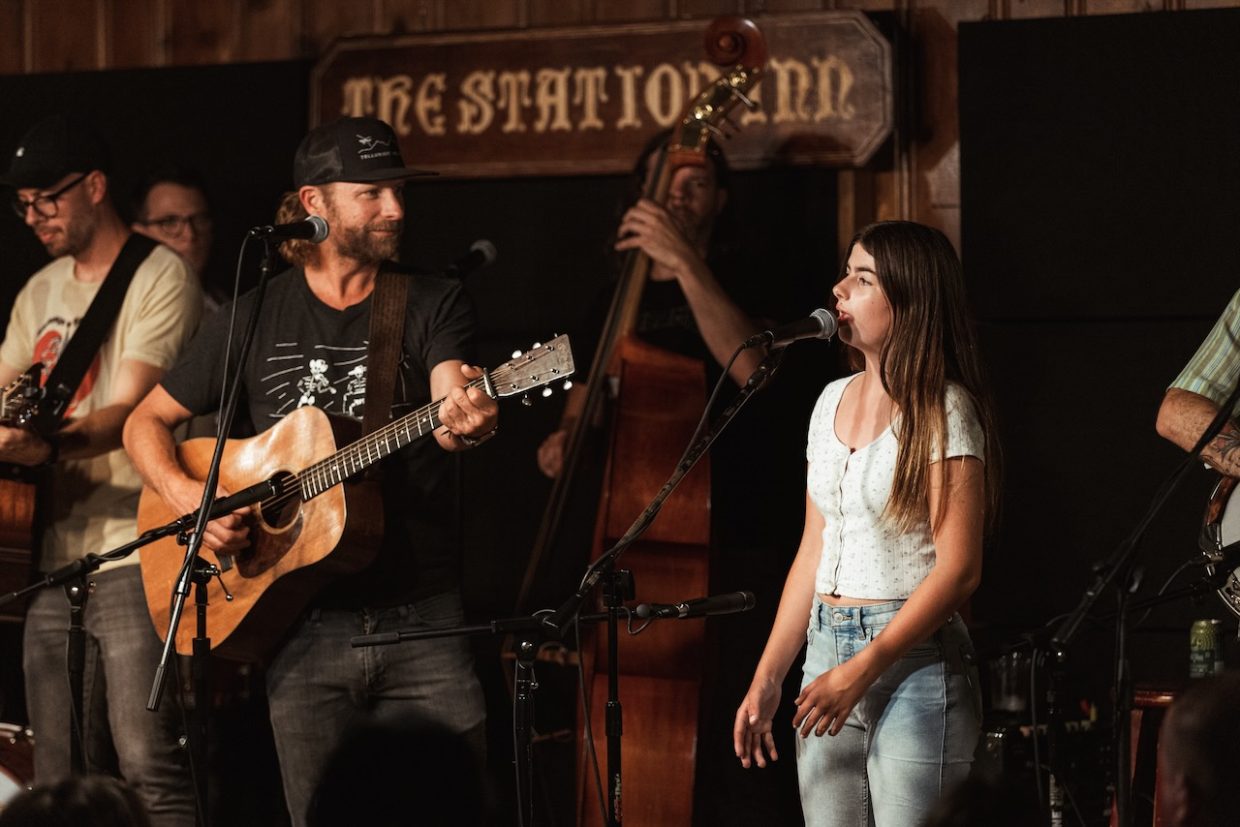
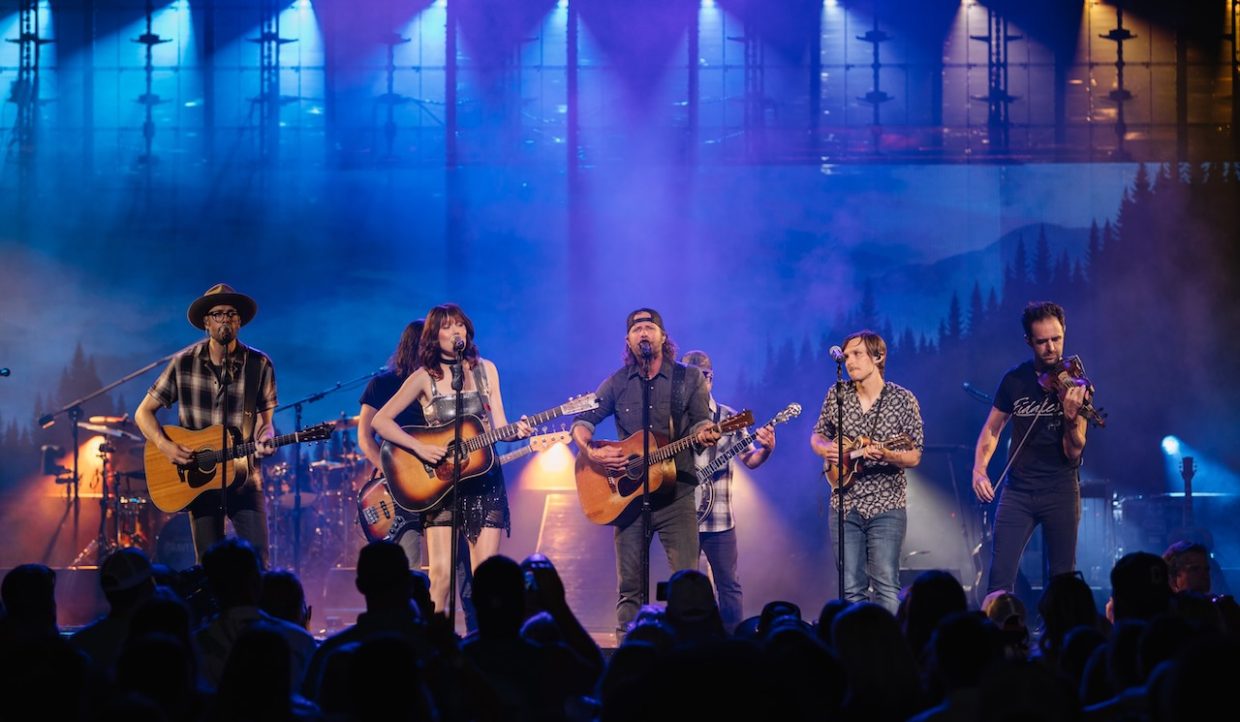
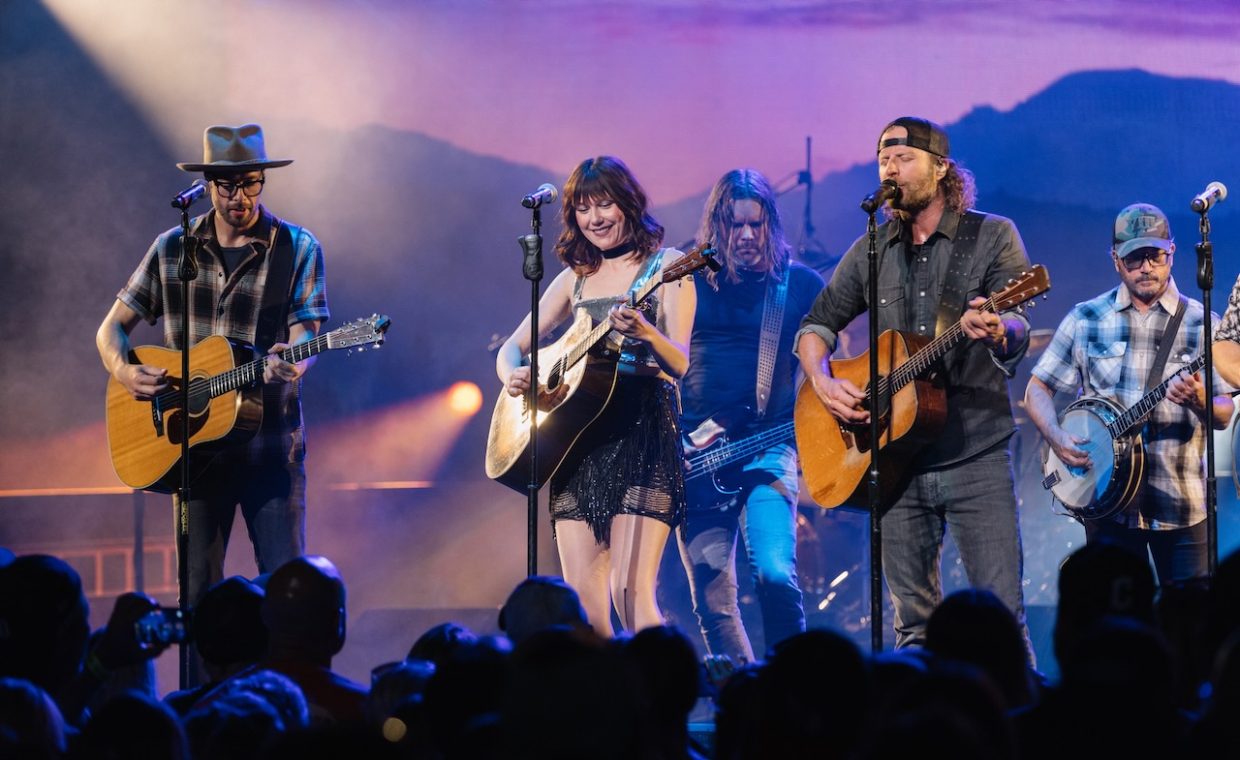
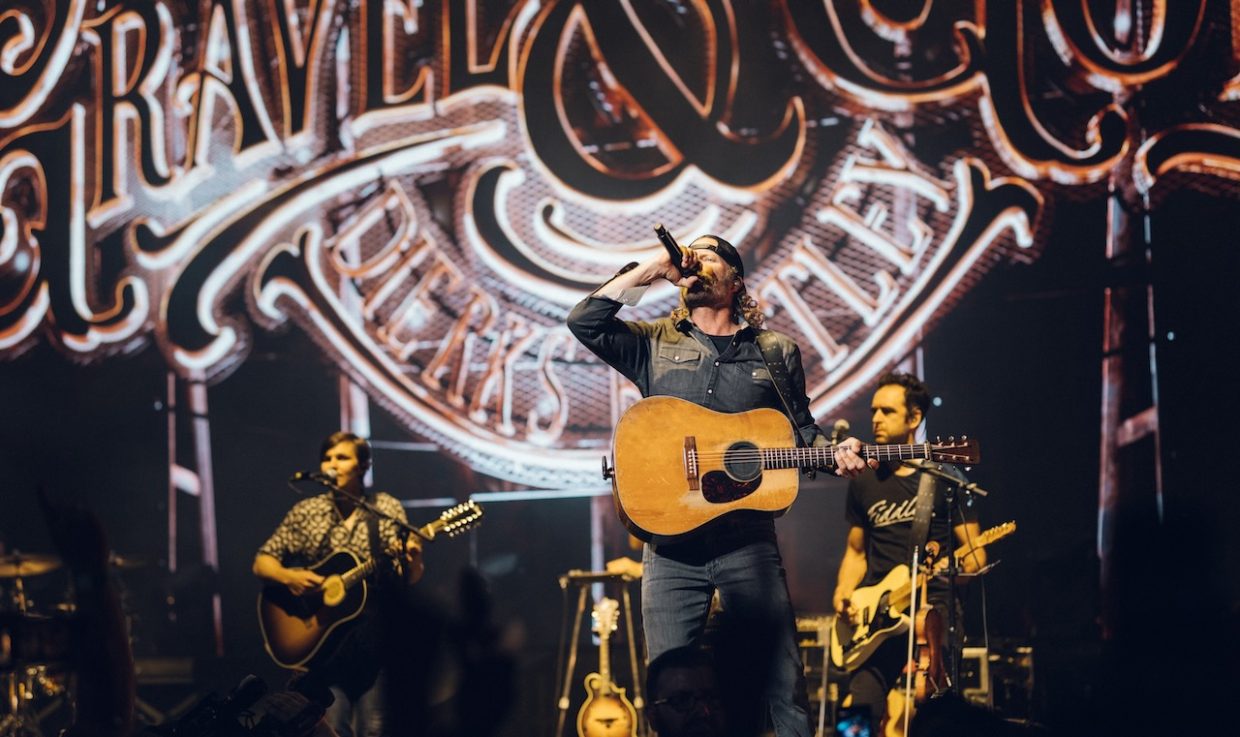
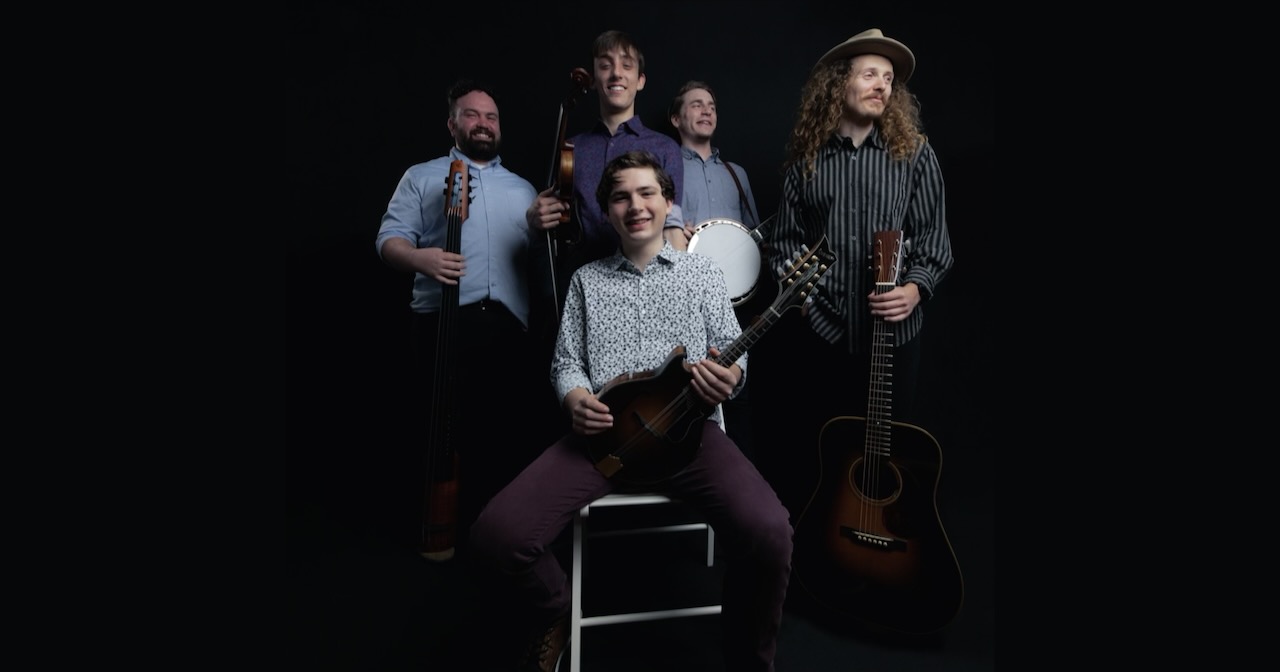
WATCH: Barbaro, “Gardens”

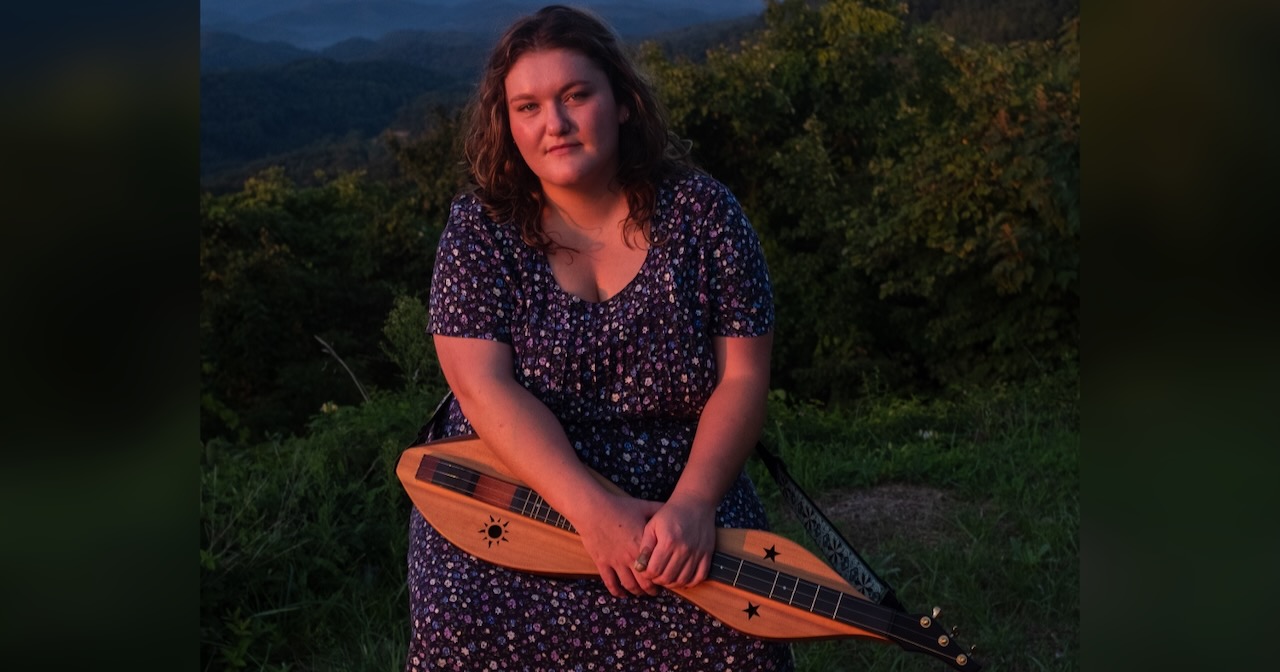
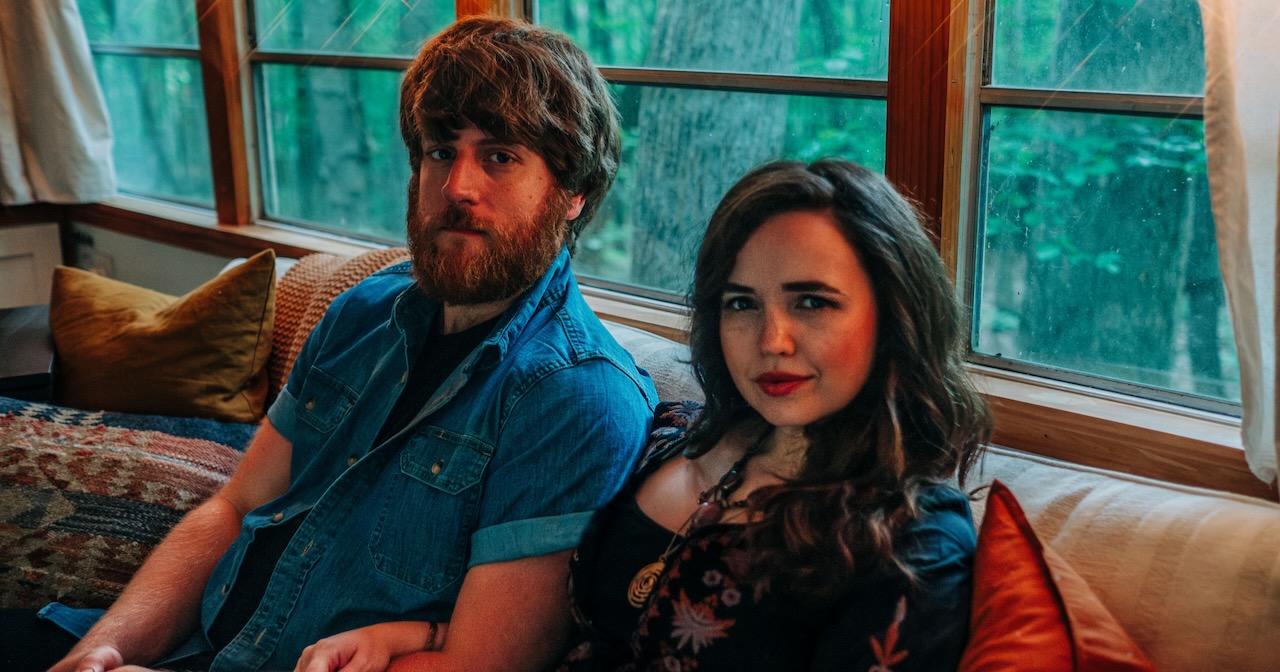
Artist: Barbaro
Hometown: Minneapolis, Minnesota
Song: “Gardens”
Album: About the Winter
Release Date: October 20, 2023
Label: StorySound Records

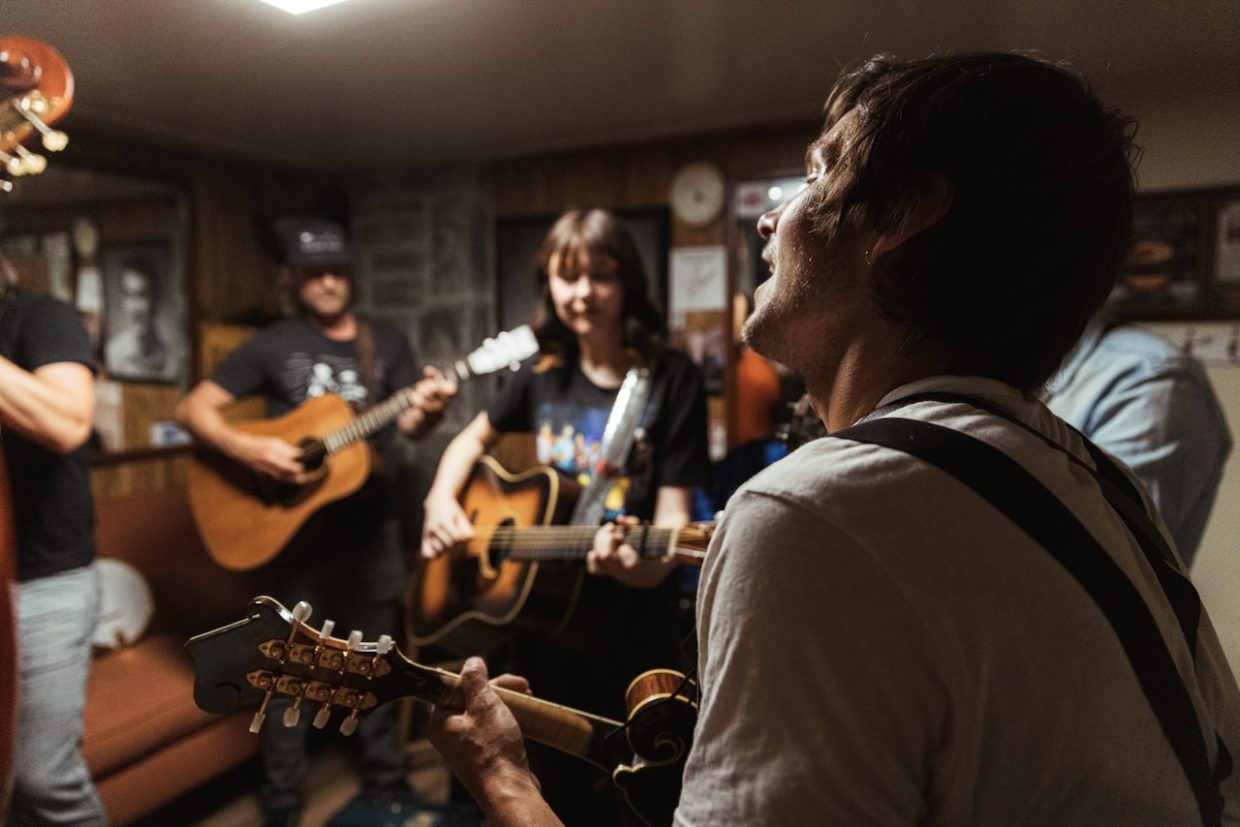
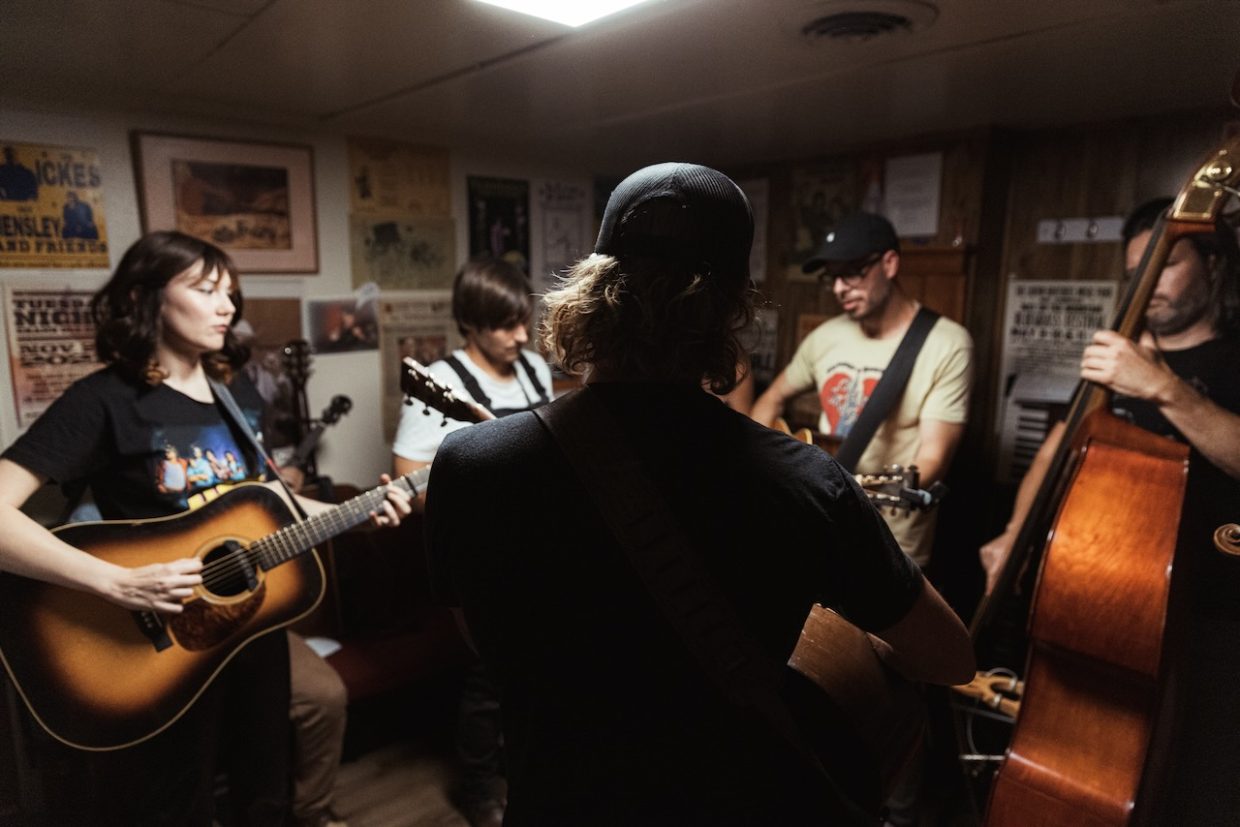
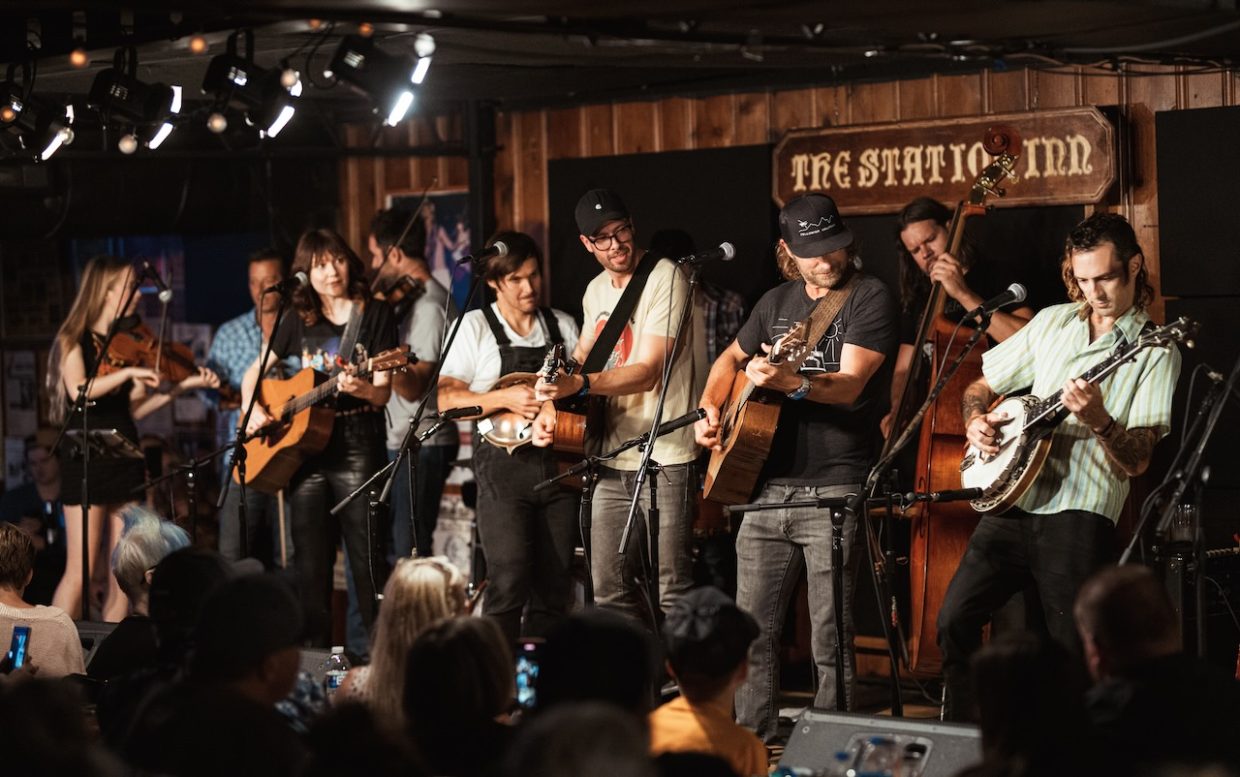
In Their Words: “This tune is one of those that was written quite easily in one sitting, but took the band a while to finalize it. Looking back at voice memos, we started working on this one about three years ago. There was a clear vision for the composition, but took us a little to realize how each instrument can be used to accomplish it. The goal for the song was to be a long crescendo from start to finish. It starts with just guitar, then adds bass, then adds a simple counter melody on the banjo, then fiddle, etc. We like to think of it like building with Lego blocks, every six bars you add a new piece, a new color, until a nice little mosaic presents itself. It’s a really simple song, same three chords looping over and over again, the same melody plays following every verse. Because of this, the goal was to change the way these parts were played every go around, whether playing muted, more percussive, or playing each note with more sustain.” – Barbaro


Photo Credit: Wolfskull Creative

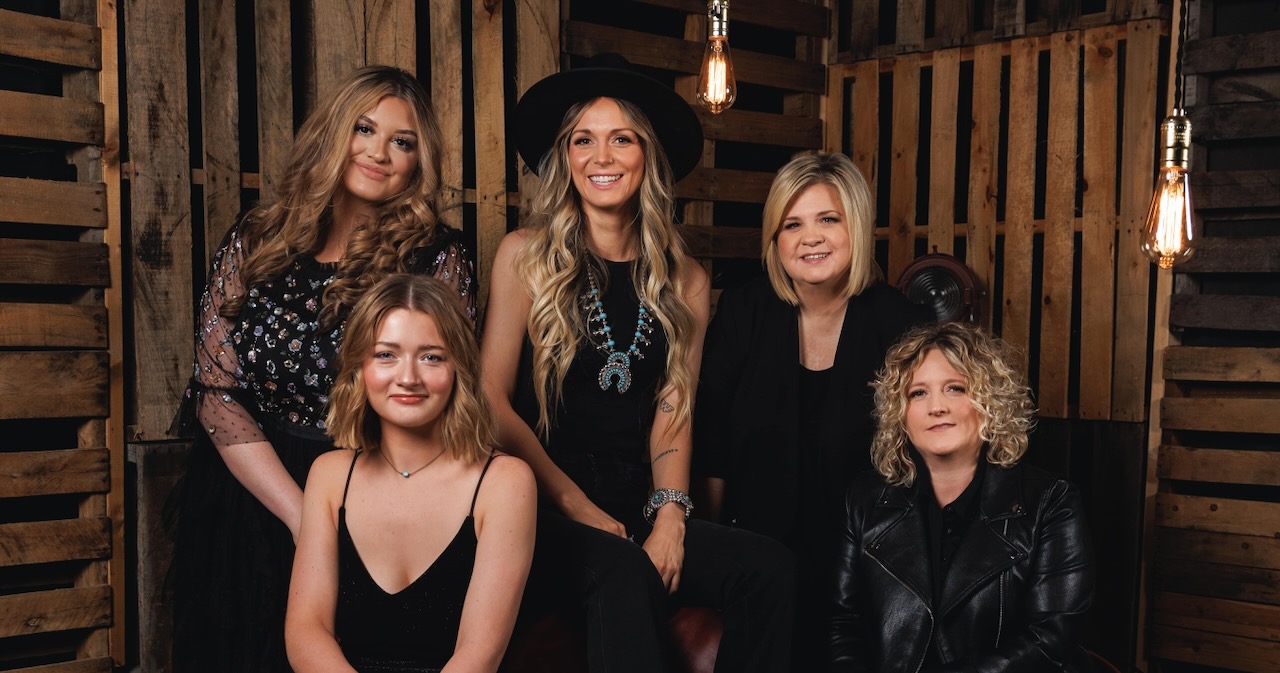
MIXTAPE: A Little Bit Gospel, A Little Bit Bluegrass, and Everything in Between

My sophomore album, A Cowgirl Rides On, set to be released October 20, 2023, is a true reflection of my heart and what keeps me going bluegrass, gospel, western, Jesus, horses, love, and even a little bit of heartache. The songs written for the record were hugely inspired by the songs I included on this playlist. All of these artists and songs are ones I hold near and dear and have moved me in some big way.

I became strong in my faith as a Christian in my early 20s, which is around the same time I began performing and writing a ton. Being introduced to gospel and bluegrass had a big impact on me, and it continues to deeply connect me to my faith.

It’s been a longtime dream to release a record that feels a little bit bluegrass, a little bit gospel, and everything in between. Here are the songs that guided me there. I hope you find so much joy in them and that they become the soundtrack to your long drives, or to enjoy over your Sunday pancakes, or during the times you just need a little light. – Victoria Bailey

 “Waiting At the Gate” – Ricky Skaggs & Kentucky Thunder

This song is one of my alltime favorites. This whole album, Soldier of the Cross, is pure gospel gold. I actually cover this song on my upcoming record, and it was one of the most fun songs for us to record in the studio. Ricky Skaggs is just simply the best.

“Wayfaring Stranger” – Emmylou Harris

This Emmylou Harris album is really the pinpoint of when I fell in love with country music. Many have covered this classic song, but Emmylou’s version of Wayfaring Stranger is my favorite by far. Her voice and the tone of this song are so haunting and beautiful… nothing compares. 

“The Seeker”– Dolly Parton
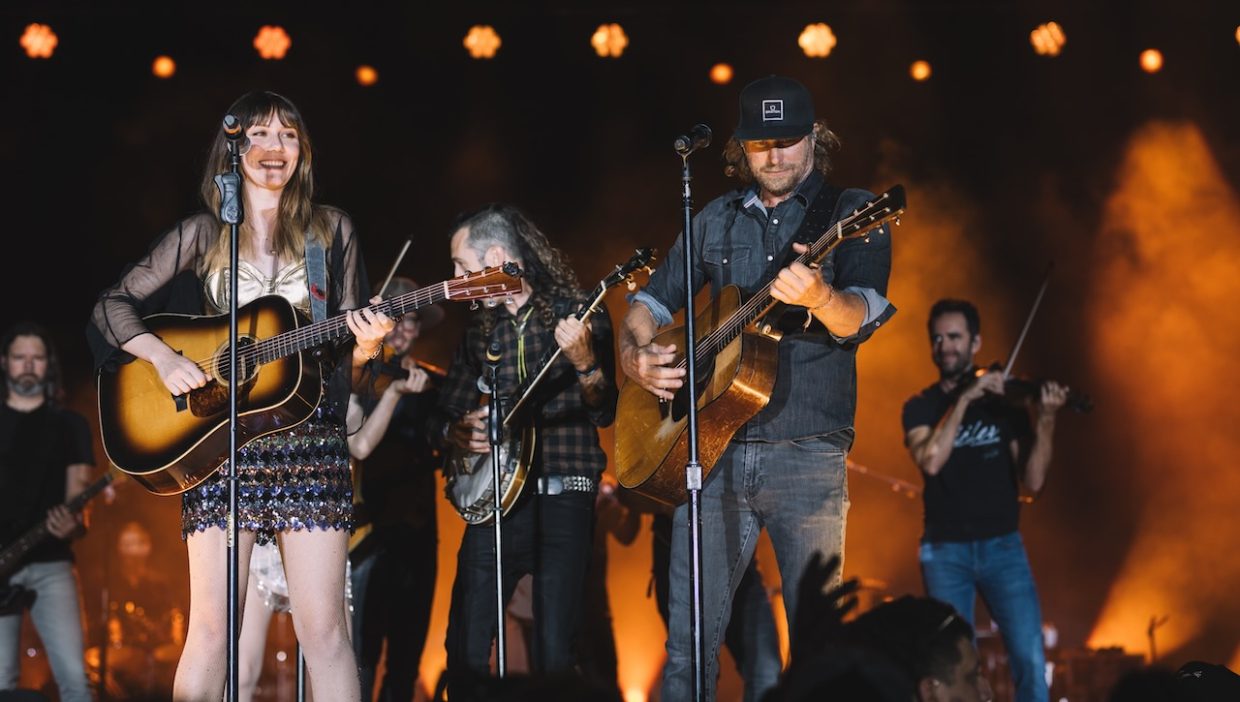
Oh, Dolly… what would a playlist be without her? Dolly is undeniably the best and has inspired me in so many ways, but especially her love for Jesus and how she ties in a little bit of the gospel to most of her records. This song really gets me moving and grooving around my house. 

“I Just Want to Thank You Lord” – Marshall Family

These harmonies are so good, and they really inspired how I wanted the harmonies to sound on my own record. I also wanted it to feel just as timeless and simple as this song by the Marshall Family. This song ends up being on most of my roadtrip playlists. 


“The Fields Have Turned Brown” – Ralph Stanley

Ralph Stanley is a huge inspiration to me and such an important figure in bluegrass music and in the banjo world. The banjo is one of my alltime favorite sounds, and I included a lot of it on my new record. It just takes you to a good place. 

“Wild and Blue” – Alan Jackson

I turn to this album quite often. What a combo! Alan Jackson and bluegrass/gospel. It’s just so good. 

“Snake Trails” – Victoria Bailey

This is by far my favorite song on the record. It is gospel song I wrote while riding my horse, Weasley, through the canyon one day. It brings me back to that place every time I sing it. It was one of the first written for the project and really sets a tone for the rest of the record. It was inspired by my horse and finding peace and connection to my faith being out on the trails. 

“I Must See Jesus” – Snooks Eaglin

This song always gives me the same feeling as when you just finished a really good movie. My whole heart swells, and it brings me to a really special, peaceful place. His voice is incredible, and you can hear all the passion and honesty and faith in his delivery. 

“End of the Line” – Moonsville Collective

These guys are like family to me and have inspired me endlessly over the years, watching them play and the way they are beautifully representing bluegrass/Americana music. This song, written by Corey Adams, is one that has always hit home hard for me at many times in my life. It is truly one of my favorite songs ever written, and it was an honor that I actually got to cover this song on my upcoming record. 

“I’ll Fly Away” – Gillian Welch, Allison Krauss

When my producer, Brian Whelan, and I sat down to talk about making this record, we referenced the O Brother, Where Art Thou? soundtrack often. Not only is this movie legendary, so are all of the musical performers on the soundtrack. We loved the style of the recordings. Live, all in one room together, where you can hear all the cracks and the love, and its exactly what we tried to emulate for my own record. Recording live was such a special part of making A Cowgirl Rides On.

“Where the Soul of Man Never Dies” – Ricky Skaggs & Tony Rice

Doesn’t get much better than this duet. This is often a Sunday soundtrack for me. 

“Long Journey Home” – Billy Strings & Terry Barber

Billy Strings is such an amazing representation of modern bluegrass. His sound is timeless, and his guitar playing and songwriting match up to some of my bluegrass heroes. I’ve always loved this song, and he covers it so well. 

“Angel Band” – The Stanley Brothers

This song just always pops in my head any time I hear the word bluegrass. It is so classic and pure, and the harmonies pull on all the heartstrings. 

“Just Like Leaving” – Bella White

I have been a longtime Bella White fan, and she is such an important female artist in keeping the bluegrass sound alive. The rest of the record is incredible as well. 

“Green Green Grass of Home” – Merle Haggard

You can’t have a playlist without Merle. This song always brings me to tears and really is a beautiful representation of Merle’s songwriting and voice. 


Photo Credit: Stefanie Lee Johnson

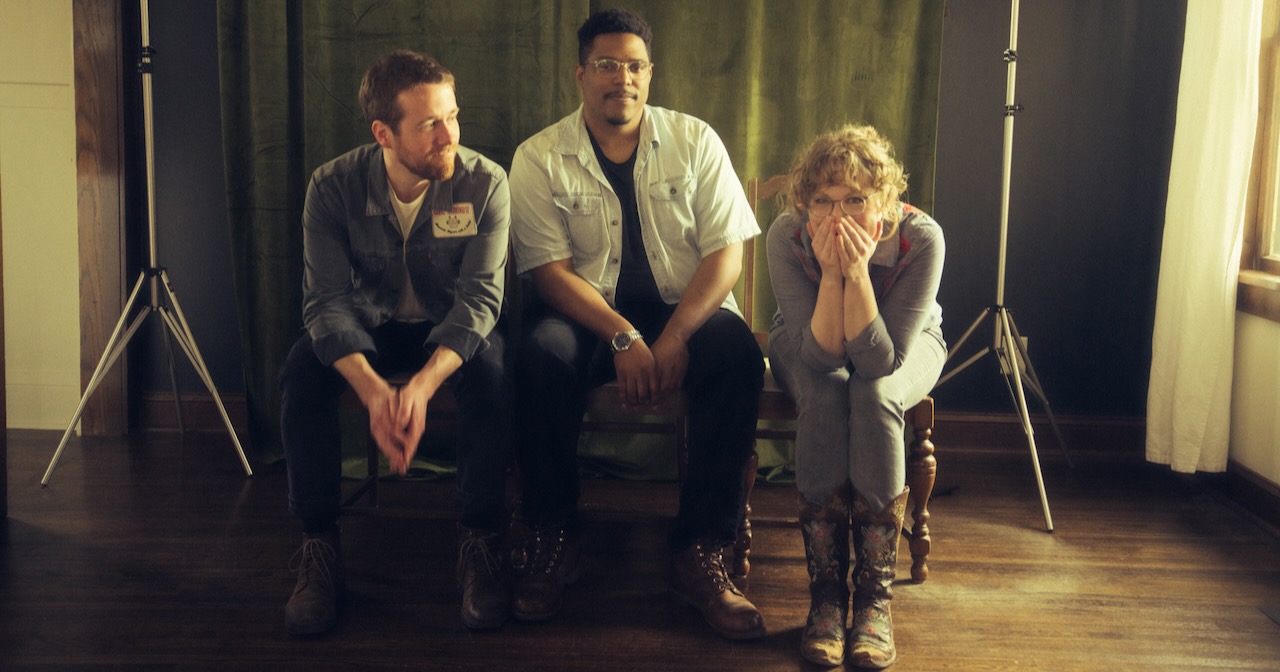
WATCH: High Fidelity, “The Mighty Name of Jesus”

Artist: High Fidelity
Hometown: Nashville, Tennessee
Song: “The Mighty Name of Jesus”
Album: Music In My Soul
Release Date: September 15, 2023
Label: Rebel Records

In Their Words: “‘The Mighty Name of Jesus’ is an incredibly special song to me. It came to me at a time in my life when I was struggling with mysterious health issues, and all I had to get me through was my faith in the Lord. Early one morning, I woke up with it playing in my head like a recording. I knew I could easily fall right back asleep, and I actually started to, but I thought, ‘I better just grab my phone to record this.’ I was so sleepy that I actually forgot that it existed for a few days! When I finally remembered something about it and listened to the voice memo, I was a bit in shock. It was like listening to a song for the first time, only it was me singing it! I had gotten three verses and two distinct choruses that morning. As I wrote out the words, the fourth verse came to me, so I wrote it out, too. I could talk on and on about the amazing things with this song. I hope it is an incredible blessing to everyone who hears it!

“Much like the making of this song, there are so many special things I could talk about in the making of this video! Location after location fell through right up until the morning of the video shoot when the weather threatened to rain on our only day available for shooting. Love Circle was a location that came to me while desperately praying for ideas and direction, and it turned out to be absolutely amazing. The unique weather that day combined with our videographer Warren Swann’s artistic touch created an indescribable texture quality to this video that almost feels like Technicolor. It’s hard to believe that this is the first video High Fidelity has shot in our hometown of Nashville proper. The city has changed so much through the years, but we still love and care deeply for it. To be able to perform this song of healing and deliverance right there in our hometown with our beautiful city skyline behind us was beyond special. As the ‘songwriter,’ I feel so incredibly blessed to have received a song like this and to get to perform it with High Fidelity — I hope it can be a blessing and encouragement!”  ̶  Corrina Rose Logston Stephens


Photo Credit: Amy Richmond

Listen to an Exclusive Excerpt From Steve Martin’s Pushkin Audiobook

It’s hard to ascribe a single title to Steve Martin. Throughout his nearly 50-year career in entertainment, Martin has been a stand-up comedian, leading man, art collector, TV star, bestselling author, and writer of a Tony-nominated Broadway musical. And then, of course, there’s his love affair with the banjo. Since childhood, Martin has been deeply connected to the instrument, and over the years he’s performed with everyone from Earl Scruggs to the Steep Canyon Rangers to Kermit the Frog.

Adding to that multi-hyphenate lineup, Martin has now released a new audio-only autobiography detailing his lengthy career with friend and co-author Adam Gopnik (longtime contributor to the New Yorker). So Many Steves: Afternoons With Steve Martin, New Yorker contains a year’s worth of conversations between Martin and Gopnik and was published in May of this year by Pushkin, a podcast and audio production company.

In ten chapters, the two men dive into a wide set of life experiences with the kind of vulnerability and humor reserved for old friends, with chapters ranging from Martin’s teenage years working in Merlin’s Magic Shop at Disneyland to selling out arenas on his stand-up tours. But perhaps most exciting to bluegrass fans will, of course, be the chapter in which Martin details playing “Foggy Mountain Breakdown.” In the early 2000s, Scruggs himself asked Martin to perform on a 75th anniversary album. When Martin showed up at the studio of his idol, however, he was at a loss. “It was so fast,” Martin proclaims, “I couldn’t believe it.”  Practicing for the record kickstarted the second chapter of his musical life, at a time when he’d almost completely walked away from the instrument. 

As a special exclusive, BGS readers can stream the an audio excerpt from So Many Steves (below) for a limited time. The full audiobook is available to download via Pushkin or stream on Audible, Apple Podcasts, and Spotify. Discover more here.


Lonnie Lee Hood and Amy Reitnouer Jacobs contributed to this writing.

WATCH: Birds of Play, “Breathe”

Artist: Birds of Play
Hometown: Telluride, Colorado
Song: “Breathe”
Album: Birdsongs of the American West
Release Date: August 25, 2023

In Their Words: “‘Breathe’ was written as a response to witnessing my wife navigate a somewhat tumultuous time, rife with hard questions about meaning and purpose and her place in life. I was also wrestling with some of the same sentiments at the time and wrote this song as a friendly reminder to us both of the impermanence of all of our states and experiences and how much agency we have to reground with a simple breath. We worked this song up specifically for this album as it was one of the only songs in this group that we hadn’t played before recording Birdsongs of the American West. We’ve only started to play this live during our most recent tour around the PNW and it’s been really moving to see how deeply it’s resonating with our audiences.” – Alex Paul


Photo Credit: Sarah Schwab

Reissued Recordings Highlight the Final Years of the Original Kentucky Colonels

Bob Warford remembers a lot about the vibrant Southern California bluegrass and old-timey scene of the 1960s. But he doesn’t remember exactly how he came to be a member of what proved to be the final lineup of the Kentucky Colonels, the near-mythic group anchored by brothers Roland White on mandolin, Eric White Jr. on bass and, at times, guitar magician Clarence White.

“My life was getting complicated at that time,” Warford, a banjo player, recalls. “I knew Clarence slightly. Roland slightly. I knew Eric. Maybe it was Eric who suggested me for it.”

He had grown up in the college town of Claremont, about half an hour east of Los Angeles, where he fell into bands — the Reorganized Dry City Players and the Mad Mountain Ramblers among them — with such future notables as David Lindley and Chris Darrow. After starting college further east at the University of California Riverside, he was in a band that played festivals and on the popular “Cal’s Corral” TV show (hosted by flashy Western-fashioned car dealer, Cal Worthington), appearing on the latter alongside the Gosdin Brothers, the Hillmen (featuring future Byrds star Chris Hillman) and others.

In any case, at the end of ’66 or beginning of ’67, in the home stretch of his undergraduate work and with plans for grad school on his way to becoming an attorney, Warford was asked to join the Colonels for a series of gigs at the famed Ash Grove club in Hollywood over the course of a few months. And in that February, in the midst of the Ash Grove run, the band was recruited to go in the studio for sessions to be featured on the pilot of a radio show titled “American Music Time,” hosted by and featuring  married couple Dave and Lu Spencer and with crowd sounds added to give the impression that it was done in front of an audience.

It seems to have aired that March, though Warford can’t confirm that. It was, however, released on an album in the late 1970s — without the Spencers’ parts or the crowd noise — with the title 1966. On June 30 of this year it was reissued by label Sundazed and doubled in length with previously unreleased recordings of the Country Boys, the pre-Colonels band the White brothers had in the late ’50s and early ’60s.

“These were not done with any high-tech situation,” Warford recalls of the two (or maybe three) sessions held for the radio show. “Everything was played live. We didn’t do a large number of songs.”

There are some bluegrass regulars (“Soldier’s Joy,” in short versions bookending the original release, Earl Scruggs’ “Earl’s Breakdown,” two Osborne Brothers tunes), some adaptations from country (Merle Haggard’s “The Fugitive”) and such. The performances are strong and lively, especially so considering that this was a reconstituted lineup of the band which had not played together a lot. In fact, before this run of gigs, the last official gig had been in October, 1965. Three of the five members were now new. Roland White was still there, and Eric was back, too, after having split from the ensemble some years before. Founding dobro player Leroy (Mack) McNees and banjoist Billy Ray Latham had moved on, as was ace fiddler Scotty Stoneman, who had played with the band in ’65.

“One thing this shows is that with or without Clarence, the Colonels was a good bluegrass band,” says folk music journalist and historian Jon Hartley Fox, who wrote the liner notes for the new 1966 release. “It’s sort of looked back on now maybe as the vehicle for Clarence. But they were a really good band in their own right. I think Roland White has historically been undervalued. Roland was a really good band leader. When it’s just Roland and Eric from the original band it’s still got the spirit and the same feel. The band was way more than Clarence and four other guys.”

As for Clarence, he’d begun his shift to a focus on electric guitar, picking up some major session work, which would lead to him playing on the Byrds’ country landmark Sweetheart of the Rodeo album and then later joining the band. But at that point, he was around some of the time, too. The band Warford joined now was filled out by fellow newcomers Dennis Morris on guitar and Bobby Crane on fiddle — though Morris’ last name might have been Morse and Crane’s first name may have been Jimmy. There’s a lot of uncertainty around this time, not least the status of the band itself, which was fine by Warford.

“I was still in college and was going to start grad school,” he says from his home in Riverside, where he settled into a successful law career. “For me, I wasn’t looking at anything long-term. I was thinking, ‘This is fun and these guys are really good players and we can do this while we do it.’ I didn’t have a view that it was about to end or that it could continue.”

As it turned out, it was about to end. The radio sessions would prove to be the last official recordings by the band. It also, in some ways, captures the last glimmer of that vibrant Southern California roots-music scene.

“If people think it’s tough to make a living playing bluegrass now, which it is, in 1967, especially in California, it was impossible,” says Fox. “If you look around the rest of the country, it was lean times for bluegrass.” Still, the Colonels had earned status.

“Even without Clarence in the band, they would’ve been the leading bluegrass band in California,” Fox says, crediting Roland White for keeping the Colonels alive as a band. “And in the national consciousness they were still one of the biggest things going. They really showed a kind of drive and ambition that a lot of people admired.”

But as time went on, that meant less and less — big fish, shrinking pond. Even at its peak a few years earlier, the scene in the area was not a way for musicians to get big paydays. But once the Beatles arrived and Dylan had gone electric, it was a different world. Locally, nothing captured the change more than Chris Hillman turning in his mandolin for an electric bass and co-founding the Byrds. Bluegrass just didn’t have much of a draw.

In 1961, the band, still known as the Country Boys, had what could have been a big break when it was hired to appear twice on The Andy Griffith Show. Unfortunately, it turned out to be an opportunity that fizzled. The producers wanted to have them back, “But the family moved and they couldn’t find them,” Fox says. “So they put an ad in the paper.”

And answering the ad was, yes, the Dillards, who auditioned and were hired, playing members of the mountain family the Darlings, ultimately performing 13 songs over the course of six episodes from 1963 to 1966 and gaining a national profile.

“In retrospect, I think the Dillards were much better suited to that show,” Fox says, citing again the Dillards’ bigger flair for showmanship. “The Colonels never had a show really,” he says. “They got up and played music.”

“The Dillards were such a mowing-down machine,” says Grammy Award-nominated reissue producer and annotator Mary Katherine Aldin, who worked at the Ash Grove starting in 1960. Through that latter role, she worked closely with the Colonels and later won the 1991 NAIRD Indie Award for producing and annotating the collection The Kentucky Colonels, Long Journey Home and wrote the liner notes for The New Kentucky Colonels Live in Holland 1973. Getting festival bookings became increasingly difficult, she says.

“It was, ‘We already have a bluegrass band, don’t need more,’” she says of the frustrations, and of course the one they already had was the Dillards, more often than not.

An exception was the Newport Folk Festival, and the Colonels did play there in 1964. But any momentum from that appearance was hard to sustain. By the time Warford joined, options had become fewer and fewer, not just on the festival level but on the local circuit that had been at least a steady, if unglamorous, platform.

“Now that I think about it, other than the Ash Grove, which was always a venue for folk and blues and old-timey stuff, there used to be pizza parlors and stuff with bluegrass bands on the weekends,” Warford says. “I don’t recall any still around then.”

The Ash Grove did remain the prime location for the music, regardless, with such future stars as Ry Cooder, Jackson Browne, and Taj Mahal citing it as a place where they could meet and learn from their heroes. The Colonels’ and the club’s legacies were very much entwined, right from the start. The White brothers, with their family having moved from Maine to Burbank on the Eastern part of L.A.’s San Fernando Valley, started playing the Ash Grove shortly after it opened on Melrose Ave. in Hollywood in 1958 with folk and blues fanatic Ed Pearl at the helm.

A year before that, the band was known as the Three Little Country Boys, with Roland on mandolin, Eric on banjo, Clarence — barely in his teens — on guitar, and sister Joanne sometimes on bass. Soon they won a radio station competition and changed the name simply to the Country Boys, with Eric taking over the bass and banjoist Billy Ray Latham and dobro player Leroy “Mack” McNees added to fill out the lineup, though that would change, too, when Eric left and Roger Bush was recruited.

“It was 1959 when I joined them,” Bush says now. “Got a phone call one day from Leroy Mack, said he was playing with Billy Ray and Roland, and the brother Eric played bass fiddle. That is it. The whole little band. They were working, played a radio show and TV show with the car salesman who had live music. Playing at the Ash Grove, had a deal with the owner, if he could call us when somebody didn’t show up and we could come fill some time, we would have the full run of the building during the day to rehearse with the full sound system. Then [we played] every Saturday morning.”

The family dynamic had its tensions, it seems, and the breaking point that led to Bush’s entry was sartorial.

“Roland tried to put everyone in white bucks,” Bush says. “They got up one morning at home, the White family, there was a note hung on the bass fiddle from Eric that said, ‘I quit.’ They opened the back door and there was his white bucks that had been on fire. Leroy called me up, I said, ‘You know, I’ve never played the bass fiddle, but wouldn’t mind giving it a whirl. We did a show, a school or college. That was my first show. I hadn’t gotten together with them but one time. We did the first song, nobody stepped to the microphone. They looked at me and said, ‘Go talk to them.’ That was the beginning of me being the talker in the band. They didn’t call me Flutter-Lip for nothing. I was always the talker.”

This is the time period represented in the album’s expanded tracks. The recordings, raw but lively, show an exuberant, youthful ensemble with vibrant performances of mostly traditional material (“Head Over Heels In Love With You,” “Shady Grove,” “I’ll Go Steppin’ Too,” “Flint Hill Special”) and a modicum of hokum to boot (“Polka on the Banjo,” “Shuckin’ the Corn,” “Mad Banjo”).
Fox stresses that these early recordings were before Clarence broke out as a star attraction.

“He wasn’t playing lead yet,” he says. “He didn’t really start playing any lead until Roland went into the army in 1962.”

For the older brother, that produced something of a crossroads-level shock on return. “Roland talked about how surprised he was coming home from Germany, and here was Clarence playing fiddle tunes [on guitar],” Fox says. “But his rhythm playing on the old stuff is great.”

It was around this time that they recorded an album and, at the urging of mentor Joe Maphis, took on the name the Kentucky Colonels, regardless of the geographical disconnect. The album, The New Sound of Bluegrass America, came out in 1963. Clarence’s flat-picking shined, making him, for many, the band’s star attraction – even more so with the instrumental album, Appalachian Swing!, with fiddler Bobby Slone added to the lineup, released by prominent LA jazz, world, and folk label World Pacific Records.

Katherine Aldin witnessed this transformation and Clarence’s emerging stardom up close at the Ash Grove: “One thing about them – Clarence, even in those days, overshadowed everyone in the band,” she says. “So you’d get a whole flock of people who would come in and sit at the foot of the stage. There was a long metal bar with single seats in a V shape around the stage. The Clarence fanatics would get there early and sit there and glue their eyes on Clarence’s hands for 45 minutes and when they were done, just go away. He would suck the air out of the room. The other guys were really good too and wonderful human beings. But Clarence was head and shoulders above the rest of the world.”

His presence went beyond his skills. “Clarence would sit in the front room — there was a concert room and front room,” Aldin explains. “And he would sit in the front room between sets and any kid who came up to him, he would show them anything. And there were a lot of kids. He would show them a lick, or let them play his guitar, or if they brought a guitar he would play with them.”

But momentum was hard to sustain. Mack left the group in ’64 (he’s only on a few of the Swing! tracks) to work in his dad’s construction business, then Slone left and fiddle star Stoneman came in and for all intents by the end of ’65 the band was inactive until that short, final ’67 stretch.

“I think the band just kinda ran out of work to do,” Bush says.

The members went on to other jobs, in and out of music. Clarence famously became an in-demand session player with his switch to electric guitar and supported by James Burton, one of the top guitarists on the scene and a veteran of Ricky Nelson’s band (and later the leader of Elvis Presley’s TCB ensemble).

“James Burton had heard Clarence and started offering him session work — ‘I’ve got more work than I can do.’” says Diane Bouska, who married Roland White in the 1980s and performed with him until his death in April 2022 at age 83. “So Clarence started doing electric guitar session work.”

Clarence found himself working on Nelson sessions, as well as the Monkees and as lead guitarist on the album Gene Clark with the Gosdin Brothers, the first project for Clark after leaving the Byrds. Then Chris Hillman, still in the Byrds, brought him in to play on a couple of songs for the band’s Younger Than Yesterday album, which led to more work with the group (including on Sweetheart of the Rodeo) and ultimately full membership in the last version of the band.

As such, Clarence wasn’t around much for the 1967 Ash Grove shows or the radio sessions captured for this reissued album, though Fox says that he seems to be on at least one of the songs. Shortly after that, Roland was hired by Bill Monroe and moved to Nashville. He and Bush did reconnect in the early ‘70s in the proto-newgrass band Country Gazette, which also featured fiddler Byron Berline, an LA mainstay who had played a handful of dates with the Colonels.

Clarence made his place with the Byrds, showcasing his dazzling skills on a B-bender — a Fender Telecaster modified by him and Gene Parsons, the band’s then-drummer, with a lever attached to the strap allowing him to bend the namesake string to simulate the sound of a pedal steel. He also continued doing sessions for Joe Cocker, Randy Newman, the Everly Brothers, Linda Ronstadt, Jackson Browne, and Rita Coolidge, among others, as well as returning to his acoustic roots in Muleskinner, a progressive bluegrass-swing group with mandolinist David Grisman, fiddler Peter Greene, banjoist Bill Keith, and guitarist Peter Rowan, a precursor of the groundbreaking David Grisman Quintet.

Then in 1973, Clarence, Roland, and Eric came back together as the White Brothers (sometimes billed as the New Kentucky Colonels) for shows in the U.S. and Europe. Following a show in Palmdale in the Southern California, Clarence was hit and killed by a drunk driver as he and Roland were loading equipment into their car. He was just 29.

It is hard to extricate the Colonels’ legacy from that of Clarence.

“The main thing was Clarence White’s guitar playing,” says country star Marty Stuart in an email. Stuart is arguably the leading authority on all things Clarence White, not to mention the owner of the original B-bender, which he played alongside Byrds founders Hillman and Roger McGuinn on the 2018 tour marking the 50th anniversary of the Sweethearts album.

“To me they are still influential because of the level of musicianship and they remain as the beloved founding fathers of the Southern California bluegrass scene. I had dinner with Gene Autry one time and he said, ‘I didn’t say I was the best singing cowboy, but I was about the first and the rest don’t matter.’ I would place the Colonels as field correspondents, national ambassadors for the world of bluegrass music in Southern California when barely anyone else was there to help out. They also introduced bluegrass music to an entirely new generation of listeners that old timers might not have gotten to.”

But there’s more to it than just Clarence. McNees, who wrote several of the few original songs the band did in the early days, found that out when he learned that modern country-rock band Blackberry Smoke had done a version of one of them, “Memphis Special,” on the 2003 album Bad Luck Ain’t No Crime.

“I didn’t know anything about it,” he says from his home in Thousand Oaks, north of Los Angeles. “I got a phone call [a while later] from an accounting firm to make sure I was the writer. Lo and behold, a couple weeks later I got a real nice check for royalties not being paid and after that another. After that I became an acquaintance of the singer [Charlie Starr]. Then they were coming to Los Angeles to play the House of Blues. I couldn’t go so my son went for me. I said, ‘Ask where they got the song.’ He came back and told me, ‘Well, he said that when he was nine years old he was watching The Andy Griffith Show and saw these guys playing bluegrass and asked his father to buy our album for him. Glad he did.”

And glad it wasn’t one of the Dillards’ episodes.

Is it any surprise that there is still enough interest in the Kentucky Colonels to merit this new release? Marty Stuart has one crisp, pointed word to answer that question.

“No.”


Album cover illustration by Olaf Jens, courtesy of Sundazed.

LISTEN: Caroline Owens, “No More Blue Moons In Kentucky”

Artist: Caroline Owens
Hometown: Denton, North Carolina
Song: “No More Blue Moons In Kentucky” featuring Darin & Brooke Aldridge
Release Date: August 4, 2023
Label: Skyline Records

In Their Words: “I knew from the moment I heard this song that I wanted to record it. I’ve always been a sucker for a sad song, and this one hits me right in the heart every single time. It’s one of those songs that I know I will have to mentally remove myself from before I sing it; it hits that deep.

“I was fortunate to have my musical heroes, Darin & Brooke Aldridge, featured on this track – a lifelong dream of mine, and an absolute blast to work with in the studio. And as always, many thanks to my record label, Skyline Records, for their belief in me.

“I know I speak for all artists when I say that it takes a village to do what we do. And I am thankful for that village, and to everyone who has supported the release of ‘No More Blue Moons.'” – Caroline Owens


Photo Credit: Anna Haas Photography

Artist of the Month: Mipso

If one were to chart North Carolina string band Mipso’s career over the past decade on a line graph, you’d see a steadily rising, ever-growing musical output and an ever-burgeoning audience for their brand of grounded-yet-dreamy folk pop. This journey through roots music has paralleled their peers – bands and artists like Watchhouse, Billy Strings, Molly Tuttle, and Della Mae – but they’ve outlasted more than a few similar ensembles that have fallen to the wayside over those years. Strikingly, even while enjoying near constant growth since they coalesced in 2012, the band has eschewed higher echelons of the Americana star-scape, choosing instead to scale their business and their art intentionally and deliberately.

Theirs is a sound and musical aesthetic ready for the “big time” – they’ve garnered hundreds of millions of streams – but Mipso (made up of Wood Robinson, Libby Rodenbough, Jacob Sharp, and Joseph Terrell) seem very happy with where they’ve landed since their consecutive popular and critically-acclaimed releases Coming Down the Mountain (2017), Edges Run (2018), and 2020’s Mipso. Each album saw the group gain traction, gain fans, and gain notoriety. Still, they aren’t defined by their ambitions; and their ambitions don’t seem to ever be conflated with conquering anything. Instead, this is a band building something.

Mipso’s sixth studio album, Book of Fools (due out August 25), certainly speaks to this phenomenon. The group feels perfectly at home with one another; they’re a chosen-family band – together, they’ve been through their college days, their road-dogging era, their “I think this might not just be a pipe dream…” successes, landing with a crystalline point of view that’s expansive, complicated, and rich, but doesn’t feel like it has anything to prove. There’s no desperation here – to claw back pre-COVID reality, to tour arenas, to brand and merchandise their way to an empire. As songwriter, guitarist, and singer Joseph Terrell puts it in a press release, “Book of Fools feels more relaxed, more confident, more us – like we’re wearing our favorite clothes and telling our favorite story and it feels exciting again.”

“The Numbers,” the second single from Book of Fools, winks to this measured, black-and-white view of their own jobs and careers – versus “real jobs,” let’s say – and the economic access that’s never been a hallmark of either roots music or the generation to which Mipso’s members belong. By prioritizing building art and community over bottom line, Mipso demonstrate a class consciousness that places themselves and their music in alignment with workers, laborers, and the every-person, making the message behind “The Numbers” palpably genuine.

“I looked around at this cruel place where we live,” Libby Rodenbough explained via press release, describing the U.S. and the stock market, “And I felt forlorn that the NASDAQ offers anybody any kind of comfort. How do I know things are bad? Because I feel it, and I see it.”

Who are “The Numbers” supposed to comfort? And what exactly are they supposed to indicate? Mipso utilize their post-modern string band trappings – in a similar fashion to Nickel Creek or Crooked Still – to explore these ideas in ways that the forebears of bluegrass and old-time did as well, in their own time and within the social and political issues of their own days.

Genre-wise, Mipso may have traveled a great distance from their bluegrassy early days as a string band quartet dripping with North Carolinian roots music traditions, but again their journey, in this regard especially, does not feel overtly aspirational. These are not sounds and production values adopted in order to sell out bigger rooms or fill bigger stages. The music of Book of Fools  (and really any LP in their catalog since Dark Holler Pop) is as intentional as the messages within it, so one can feel and enjoy the old-timey touches that underpin these fully-realized sonic landscapes.

Mipso hasn’t lost touch. They haven’t lost sight of how real the stakes are outside of their own experiences – and within them. While they may not be building a business model reliant on “sheds” and arenas and radio hits and dynamic ticket pricing to be “successful,” you can feel the gratitude they have for their own daily lives and careers, even while they apply critical lenses through which to talk about the social and political issues they and their community face.

It’s exciting, encouraging, and energizing, to appreciate an album that isn’t merely a rung on a career ladder, but is meant to be its own constituent journey – both for Mipso and their listeners. Book of Fools speaks to a trajectory that is neither predictable nor totally quantifiable and isn’t merely about consumption or facilitating an ever-deepening appetite for consumption. That this could be said about almost any release by this prolific foursome speaks to exactly why we’re so pleased to name Mipso our August Artist of the Month.

Watch for our Artist of the Month feature to come later in August and for now, enjoy our Essential Mipso Playlist.


Photo Credit: Calli Westra

LISTEN: Alice Gerrard, “Remember Us”

Artist: Alice Gerrard
Hometown: Durham, North Carolina
Song: “Remember Us”
Album: Sun to Sun
Release Date: October 20, 2023
Label: Sleepy Cat Records

In Their Words: “Most of (I would say all) my music has grown from and been influenced by the music of the elders who came before me; by their lives and their experiences. Their daily hard work, whether forced or not, left its mark on everything, and their music reflected and told the story of their lives and their worlds. When I started writing this song, I was thinking about this and about enslaved men, women, and children who were forced onto ships and brought to this country, and how so many were lost. All are gone now but, as I say in the song, [their] ‘Toil and tears touch all you see… we are gone but still our truth remains…’

“We would do well to know the truth, to remember, and to carry on.” – Alice Gerrard


Photo Credit: Libby Rodenbough

Bluegrass & Roots Songs to Strike To

Hot. Strike. Summer!!

It was just announced that hundreds of thousands of Teamsters driving for shipping and logistics company UPS will avert a strike after their negotiations came through, but even so, dozens of strike authorization votes are happening all across the U.S. as workers the world over watch WGA and SAG-AFTRA strikes, Amazon and Starbucks unionization drives, and smaller pickets like that at dinner theater Medieval Times. Union membership and public opinions toward unions are at highs not seen since the ’60s, and millennial and Gen-Z workers are joining unions, striking, and picketing at astronomical rates.

It’s important to remember that, although bluegrass in its modern iteration can often feel staunchly conservative, militantly patriotic, and delusionally nostalgic for “old-fashioned values,” it’s a genre that was born from the creativity of working class and impoverished Southerners, Appalachians, and immigrants – and it has always had a pro-worker, leftward bent. Singers, pickers, songwriters, and performers like Hazel Dickens, Ola Belle Reed, the Country Gentlemen, the Johnson Mountain Boys, Mac Wiseman, Earl Scruggs, and so many more were ardent supporters of the working class and hostile towards corporations, mines, and management. There are truly countless, never ending pro-worker, pro-labor songs to choose from in the bluegrass, old-time, and roots-music canon.

Bluegrass and old-time music, though entangled in a dense constellation of roots music and occupying space adjacent to folk music and the folk revival, were anti-corporate greed since before they had names, before Pete Seeger, before the folk revival itself. That legacy is important to place at the very center of bluegrass, a genre of music that was born out of industrialization (see also: Industrial Strength Bluegrass) as mountain folk, Appalachians, and Southerners migrated out of their rural homeplaces to urban industrial centers. Bluegrass was born from radio stations, railroads, from company towns and workers’ barracks. Whether rubber or auto plants in Ohio and Michigan, factories in Chicago, cotton mills and tobacco warehouses in North Carolina, or anywhere else in the region, as poor folks bled out of their ancestral homes to find work and upward mobility, they brought their music and their community mindsets. As bell hooks puts it in Belonging: A Culture of Place, the mountains and rural spaces are where mutual aid and anarchy are concrete, everyday practices, not just philosophies or concepts.

With those people and their music came a penchant for workers’ and labor rights, suspicion of management and company stores and towns, and a vehement, righteous anger at the injustices suffered by working class Southerners no matter where they migrated. It’s easy to find pro-Union songs, songs in support of workers’ health and agency, lyrics that espouse conservation and environmentalism in old-time, bluegrass, and string-band traditions. So easy, in fact, we quickly amassed a 4+ hour playlist featuring some of our favorite songs (bluegrass and beyond) for marching the picket line, raising a fist, and redistributing the power – and wealth – back to the world’s 99%.

Scroll to find the full playlist of Bluegrass & Roots Songs to Strike To. Below, enjoy a few selections from the list.

“In Tall Buildings” – John Hartford

John Hartford describes the doldrums of daily work as almost no one else can. (John Prine gets close with, “How the hell can a person/ Go to work in the mornin’/ And come home in the evenin’/ And have nothing to say?”) At the end of our 30-some years working, what will we have to show for ourselves besides a suit, haircut, and no more life left to give to our “retirement?” Plus, as any career musician can tell you, planning a life around retirement isn’t exactly a good option to begin with.

“Ain’t Gonna Work Tomorrow” – Wilma Lee Cooper

Ain’t gonna work tomorrow, cause it’s STRIKING day! Wilma Lee Cooper will, at long last, join the Bluegrass Music Hall of Fame this September. A bluegrass forebear who saw broad commercial success before the genre had a name or an understood identity, she regularly landed tracks with decidedly bluegrass aesthetics on Billboard‘s early country charts.

“Lazy John” – Bruce Molsky

Under capitalism, laziness is a radical act! Be like Lazy John! If you’re working all week in the noon-day sun just for 16 cents, yes, it’s strike time.

“Cotton Mill Man” – Jim & Jesse

As we remember the life and legacy of Jesse McReynolds, who recently passed, it’s striking that although he and his brother Jim performed largely cover songs and tracks written by others, they were still able to express with great subtlety their own points of view through the material they chose. Like “Cotton Mill Man” and Prine’s “Paradise,” which was a hit for the duo, their catalog of recorded and performed material is dense with class awareness.

“Black Waters” – Jean Ritchie

A truly timeless classic that remains as relevant today as in the time of its writing, as clean water protections across the U.S. have been repeatedly gutted since 2016 – and before. Our country continues to show where its priorities are, beating down protests and demonstrations even as popular and supported as Standing Rock, in order to force us to acquiesce and give up protection of our waters. The lyrical hook is even more poignant to someone, like myself, living in Tennessee Valley Authority territory in the Tennessee River Valley – where coal ash and pollutants are still regularly dumped into our waterways. These tales, these experiences, are best told directly from their sources, as in Ritchie singing this song.

“Carpal Tunnel” – Tristan Scroggins

One can find many a recording of “Carpal Tunnel” from across the years, but mandolinist Tristan Scroggins, in his mid-twenties, pointedly places this track in the present, delivering the lament in stark a capella accompanied only by body percussion. He deftly ties the lyric to embodiment and agency and reminds all of us – especially in an age governed by devices causing carpal tunnel writ large – we’re all merely one injury away from bankruptcy. Musicians know this fear intimately, as many a livelihood has been threatened by tendonitis and carpal tunnel.

“Tear Down the Fences” – Ola Belle Reed

A perfect encapsulation of solidarity across our differences – differences constructed by the ruling class to keep us quibbling amongst ourselves while they amass their wealth. This sort of community awareness often feels like a pure byproduct of the internet’s version of globalization, but even a woman banjo player from a tiny town in rural Western North Carolina understood that “all we have is each other,” way back before the worldwide web. It feels obvious to state. It shouldn’t seem remarkable, except that we’ve accepted the narrative that such compassion and ideas couldn’t possibly be born from rural spaces or the South.

“Blue Collar Blues” – Joe Mullins & the Radio Ramblers

From the shop steward of Industrial Strength Bluegrass himself, Joe Mullins, a classic working-man-blues-style bluegrass number about that paycheck to paycheck life. An all-too-common reality for so many pickers! Though that might be more accurately described as blueGRASS collar blues.

“Dark as a Dungeon” – The Country Gentlemen

Bluegrass mining songs are just as iconic in the bluegrass songbook as train songs, cheatin’ songs, murder ballads, and singing about moonshine. This version of “Dark as a Dungeon” by the Country Gentlemen is one of the best examples of the form – many of which made it onto our full playlist.

There are so many more bluegrass, old-time, string band, folk, and Americana songs for striking. Check out our full playlist below and let us know: What is your favorite pro-worker roots song?


Playlist selections by Justin Hiltner, Shelby Williamson, Jon Weisberger, and Amy Reitnouer Jacobs.

Photo Credit: By John Vachon in 1938. “Untitled photo, possibly related to picket line at the King Farm strike. Near Morrisville, Pennsylvania.” Courtesy of the Library of Congress.