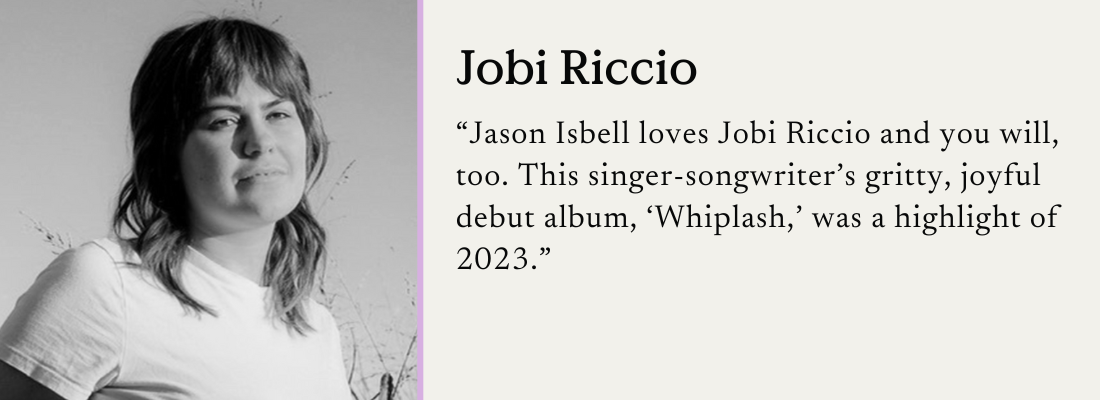
Three Chords and… Authenticity?

(Editor’s Note: Sign up here to receive Good Country issues when they launch, direct to your inbox.)

In country and roots music, authenticity is treated like the most valuable currency of all. Maybe that’s because the genre has always been caught between the fiction that this music is frozen in amber and the reality that it has always borrowed liberally from current musical trends in order to have commercial value. The earliest popular country music was an amalgamation of regional music from rural white artists, music stolen wholesale from Black and Indigenous artists, and plenty of nods to prevailing pop (i.e., urban or non-rural) trends – looking back at the places young laborers and listeners that had been drawn to cities came from, and the exciting present and future they found themselves in once they arrived.

Can anyone or anything truly be considered “authentic” in America, a country whose identity is built on masking fundamental historical truths?

While artists like Zach Bryan are hailed for their “authenticity,” the vast majority of the current class of mainstream country and Americana artists grew up in suburbs, in postmodern America, in the internet age, and are graduates of major colleges – like Nashville’s Belmont University or Boston’s Berklee College of Music. Their experiences are also authentic, of course, to each individual artist – just as Bryan’s initial motel room demos are electrifying for the soul he brought to them. But these origins bring up questions around how country and Americana construct “authentic” narratives, especially to market roots music.

Still, it’s noticeable that certain types of creators are automatically considered “authentic” country artists – and they often match the complexion of the first generations of country singers, when “race records” and “hillbilly music” were originally split and whose most famous individuals wore cowboy cosplay on stage.

We want to tip you off to some real Good Country music: Music that portrays life in its complexity and a deep appreciation for one’s roots, whether they lie in the Bronx, rural Arkansas, or anywhere else on this rich blue marble we live on. Because authenticity in country doesn’t necessarily equate to rurality, to back roads and red dirt and farm trucks; real country music is real not because it’s built to be “authentic,” but because it’s honest.


Hurray For the Riff Raff

Hurray For the Riff Raff’s Alynda Segarra is from a little bit of everywhere, but the Bronx is where they grew up and the punk houses of the Lower East Side raised them. Between their jazz artist father and picking up a guitar as they rode the rails, Segarra’s approach to folk music began with a traditional bent and has since exhaled into an expansive approach, as with their astonishing 2022 album Life on Earth. Their upcoming album The Past Is Still Alive finds Segarra focusing more on twang, but their philosophical core has always remained the same: breathing life into unspoken pain and empowering people that society would like us to forget.


Amythyst Kiah

Amythyst Kiah’s music is a powerful force. Inspired by the blues and old time music, Kiah uses her art to prop the furnace doors open to make way for blasts of grief and abandonment. Kiah grew up in Chattanooga, Tennessee and picked up the guitar while attending an arts magnet school. She fell in love with old time music at East Tennessee State University and never looked back.

I first saw Kiah in 2016 at Karen Pittelman’s Queer Country Quarterly, her first show in NYC. Karen introduced her by remarking, “trust me, she’s going to be famous.” When Kiah belted her powerful alto, we all knew we were in the midst of greatness. Kiah’s most recent work on Wary + Strange (2021) takes us in a more experimental direction, but her exploration of alienation – like a toy in her hands – informs her music no matter what she’s plugging into her pedalboard. Kiah’s “Black Myself,” originally recorded with supergroup Our Native Daughters, fiercely proclaims her love for herself and her ancestors.


Willi Carlisle

Willi Carlisle has seen a thing or two in his travels across the lower 48. Carlisle cut his teeth musically in DIY and punk rock, but his search for queer role models and love for poetry drew him to New York City. With disgust for the elitism of the poetry scene there – and their mockery of his roots in the Midwest – Carlisle went searching for a life of words in folk music.

Carlisle has a knack for painting complex portraits of down-and-out characters, refusing to be drawn into simple narratives of left and right, red and blue. His stunning “When the Pills Wear Off” from the upcoming Critterland demonstrates Carlisle’s ability to turn the personal into the political – and back into the personal again. This is not the blind invective of JD Vance, but the realization that only empathy can build bridges between people who think they have nothing in common.

(Editor’s Note: Willi Carlisle is BGS’s February 2024 Artist of the Month.)


ISMAY

ISMAY (née Avery Hellman) has spent their whole life around folk and bluegrass music – their grandfather is one of the founders of the Hardly Strictly Bluegrass festival. As a contestant on Apple TV+’s short-lived My Kind of Country competition series, ISMAY is very much a representative of roots music’s vanguard. With their sparse arrangements and winsome vocals, ISMAY’s music feels like deconstructed folk music. They understand the core elements of the sound thanks to a lifetime immersed in it, and they create something wholly unique from its constituent parts, as we hear on “Point Reyes.” There, ISMAY’s contemplative vocals are orbited by a gauzy cloud of pedal steel and gentle finger-picking. ISMAY’s upcoming album Desert Pavement speaks to their sense of place: all of their music is enamored by nature. “Golden Palomino” illustrates ISMAY’s love for their rural California upbringing, guiding us to realize how much our natural and inner worlds inform each other.


Buffalo Nichols

You’d be hard-pressed to find a more devastating songwriter or guitar player than Buffalo Nichols. Nichols, like many teenagers before him, picked up a guitar and played his way through the hip-hop and hardcore scenes in his Milwaukee hometown. He found himself drawn to blues music as he began to dig into his mother’s collection and connect with Cream City’s West African community. Nichols and musical partner Joanna Rose made a mark on the Americana scene with their duo Nickel and Rose, shining a harsh light on the ignorance on full display in the community’s supposedly liberal refuge on the song “Americana.”

With his most recent solo album The Fatalist, Nichols brings all of his experience to bear on a remarkable collection of songs that combine elements of all of his musical loves. On his rendition of the classic “You’re Gonna Need Somebody On Your Bond,” Nichols’ guitar becomes an extension of his own body with lightning-fast licks. Buttressed by electronic drum samples and a haze of synths, Nichols shows that music is at its most vital when it is rooted in the past and embraces the future.


Ally Free

Ally Free is one to keep your eye on in 2024. They write in their bio that they see music as the universal language that can bring people together, and that’s clear on their versatile 2019 album Rise. From the nu metal-inspired chugging of “Fool’s Gold” to the craftsman’s approach to “Fast Train,” Free isn’t embarrassed to draw from any inspiration to make a damn good song. Free’s rich alto gives their music depth: from their performances, it’s clear that this is someone who has lived a lot of life. Free is one of the newest members of the Black Opry and has taken a few steps out of their Huntsville, AL hometown to playing more shows around Nashville. Here’s hoping that means the rest of us get to hear more from this remarkable performer soon.


William Prince

William Prince’s voice carries a warm, earthy timbre that is wholly unique. Prince grew up on Peguis First Nation (in what is now Canada) and is well-versed in the travails of people living under oppression. But that experience is translated into patience and warmth, a gentle perseverance that can only come from a keen observer. Prince’s stark breakout album Reliever (2020) has given way to the warm Stand in the Joy (2023), which details the travails and victories we most often find in daily life. “Tanqueray” is a gorgeous example of Prince’s dynamic, a story of two improbable lovers finally coming together to make it work.


Sabine McCalla

Sabine McCalla is readying for a breakout 2024. McCalla’s music is steeped in the sounds of New Orleans, which she has made her home. McCalla has performed with others, but her performance on Offbeat Magazine’s OnBeat Session from September 2023 shows us she’s ready to step out on her own. For now, we have her 2018 EP Folk, which sports arresting songs that feel timeless. Maybe it’s the gentle groove in her music that feels like the stately flow of the Mississippi River – discordant with the immediacy of her lyrics that protest violence and oppression, as demonstrated by “I Went to the Levee.”


Margo Cilker

Look – Margo Cilker is literally a cowboy, okay?? Isn’t that what you imagine when someone mentions “country music” and “authenticity” in the same breath? But Cilker’s music glorifies a life of searching, not a mythologized America of white picket fences, so you can also picture the quintessential Nashville executive saying, “We like cowboys, but no, not like that.”

Cilker’s latest album, critical darling Valley of Heart’s Delight, is nostalgic for her family orchard in California’s Santa Clara Valley – but not without a heavy dose of reality. “Mother Told Her Mother Told Me” caution the listener not to become too attached to any one place – and the cost of leaving it behind. Cilker’s impassioned “With The Middle” cuts to the core of her work – a weighing of the contrasts between pleasure and pain and yearning to find common ground between the two.


Brittany Howard

Brittany Howard transcends pretty much everything – except the act of exploration with wild abandon. Having gained notoriety as the lead singer of the retro soul band the Alabama Shakes, Howard seemingly will not rest until she’s drawn with every musical crayon in the box. In her recent interview with NPR’s Jewly Hight, Howard cracks that she grew up in a trailer and would still be perfectly content to be working the land somewhere. But her music has led her elsewhere, perhaps everywhere. Howard has teased a few songs off her upcoming album, What Now, with the title track featuring hooky grooves and propulsive energy, but it’s “Red Flags” that astounds with its jarring drum loop, woozy vocals, and disorienting production that demonstrates how much mastery Howard has gained in her craft as an artist and storyteller.


Samantha Crain

Few artists in the last decade have shown the same growth and versatility as Samantha Crain. A part of the rich Tulsa music scene that has given us John Moreland, John Calvin Abney, and M Lockwood Porter, Crain follows a road all her own. Under Branch & Thorn & Tree (2015) found Crain exploring the pride and trauma of her Choctaw heritage through folk-inspired music. In 2017, Crain broke her own mold with the quirky indie-pop album You Had Me at Goodbye (2017.) Since her 2020 album, A Small Death, Crain has been playing in the spaces in between, utilizing woodwinds, pedal steel, pianos, and guitar to create a woozy soundscape as her spacious, gravelly voice helps us stay anchored in the real.


Nick Shoulders

Nick Shoulders rounds up the list with his commanding All Bad. While Shoulders’ music leans traditional sonically, it’s anything but. The Fayetteville, Arkansas singer begins his album with phaser blasts and a menacing invitation to a “conversation,” and that conversation is explicitly about all the “country” stylings that deserve to be thrown in the trash heap – and the many, many qualities we need to hold on to and claim for ourselves: grit, honesty, love, and togetherness. “Won’t Fence Us In” and “Appreciate’cha” speak to this theme most clearly, but the way Shoulders approaches the classic country canon with loving irreverence reminds us that we never have to be weighed down by tradition.


Sign up here to receive Good Country issues when they launch, direct to your inbox.

Photo Credit: Margo Cilker by Jen Borst.
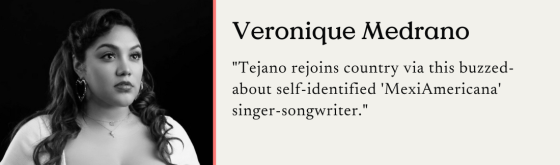
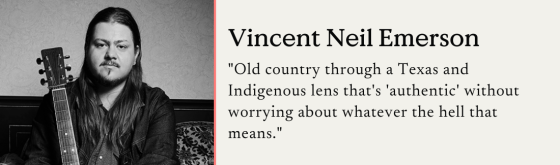
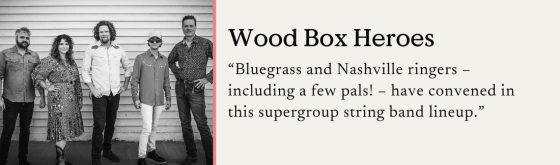
Ed’s Picks: Tejano, Country, Bluegrass, and More

(Editor’s note: Each issue of Good Country, our co-founder Ed Helms will share a handful of good country artists, albums, and songs direct from his own earphones in Ed’s Picks. 

Sign up here to receive Good Country issues when they launch, direct to your email inbox.)


Sign up here to receive Good Country issues when they launch, direct to your inbox.

When You Listen the Land Speaks

(Editor’s Note: Sign up here to receive Good Country issues when they launch, direct to your inbox.)

An often nameless, faceless character present in all country music is land. In a genre commonly referred to as country & western, land is a constant presence, whether foreground or background, evoked or painted, longed-for or spurned. Another nameless, faceless character that comes hand-in-hand with country and its relationship to land is colonialism – white supremacy, genocide, and imperialism advanced by music that claims to simply center nostalgia, rurality, and an “old fashioned” way of doing things.

This kind of revisionist history in country music – a sanitization of this nation’s past and present, in order to fit into widespread myths, around which this genre and our national identity is built – is no less pernicious simply because it is common and pervasive. It’s important to not only acknowledge country’s relationship with land, but to also attempt to deconstruct the ways that these roots genres perpetuate colonialist ideals and norms.

Can Good Country exist if it must deny the history of the land it professes to love? Can Good Country exist if it must deny that there would be no “country & western” without Indigenous people? These are questions that we feel are essential to ask, right out of the gate, even if their answers are not so simple. Good Country hopes to be a place that can represent all kinds of country music, but it cannot do that if we accept, uninterrogated and unexamined, that country’s relationship to the land must be good, moral, wholesome, and just.

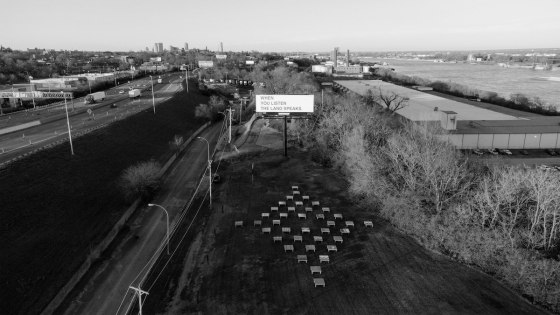
At the heart of the second edition of Counterpublic – an artistic activation described on its website as “a civic exhibition that weaves contemporary art into the life of St. Louis for three months every three years…” – just south of downtown and the towering Gateway Arch, sits Sugarloaf Mound. From April to July 2023, Counterpublic included twenty-five public art installations at a variety of locations, including Sugarloaf Mound, a sacred site for the Osage People and the last intact mound in the city. In earlier eras, the area was home to many thousands of Indigenous people – and the largest city in what would become the United States, Cahokia.

Adjacent to Sugarloaf Mound was the first Counterpublic installation and site, a collaborative piece that wove together sculpture, land, and music by mother-and-son artistic duo, Anita and Nokosee Fields. Anita Fields (Osage/Muscogee) is a fine artist who works in many media, but especially clay and textiles. Nokosee Fields (Osage/Cherokee/Muscogee) is a critically-acclaimed and in-demand old-time fiddler, equally at home in country and Americana as in old-time and string band traditions, and with a great deal of expertise on Indigenous fiddlers and Indigenous fiddling.

Their piece, WayBack, which was curated by Risa Puleo, is synopsized as such:

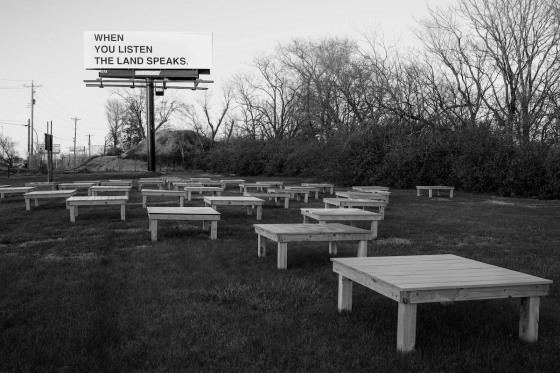
“Created in collaboration with her son Nokosee Fields (Osage/Cherokee/Muscogee), Anita Fields’s (Osage/Muscogee) WayBack invites visitors to gather in physical relation to each other, to Sugarloaf Mound, and to Osage ancestors, history, and legacy. When the Osage Nation purchased part of Sugarloaf Mound in 2007, the sacred site was reabsorbed into the Nation through the auspices of property, extending Osage territory from the site of their displacement in Oklahoma back to their ancestral homeland. Atop this site, forty platforms are installed, modeled after those found at Osage events in Oklahoma. Each platform is embellished with ribbons that reference Osage cosmologies of balance between sky, water, and earth. Nokosee Fields’s composition for wind instruments invites further consideration of the earth from which the mound was constructed, the sky that unfolds above the platforms, the sound of the Mississippi River on the banks below the quarry and the wind that flows through the surrounding trees that transform first into breath. After the exhibition, the platforms will travel from St. Louis to Tulsa where they will be distributed to Osage community members completing the link between the current home of the Osage Nation and its ancestral homelands.”

“Middle Waters,” the labyrinthine composition by Nokosee that acted as soundtrack for the installation, its platforms, and the adjacent mound (listen via the Counterpublic site here), perfectly illustrates how adept country music – and its textures, styles, and traditions – can be at capturing the ineffable, spiritual qualities of land and our relationships with it. Fiddle, field recordings, wind instruments, voices, and more intermingle in a piece that feels as organic and grounded as Anita’s sculptures.

Now, after the installation’s closing, each of the forty platforms constructed by Anita and displayed at the Counterpublic site will be moved to what’s now called Oklahoma, to be distributed to members of the Osage community and to have a continued life, further illustrating how art, music, and land gain all of their meaning from the communities that interact with and rely on them.

On the occasion of Good Country’s inaugural issue, we spoke to Anita & Nokosee Fields about WayBack, “Middle Waters,” the Counterpublic exhibition, and how humans, land, music, and art intersect and combine.

Could you just take me into the inspiration and the conception of WayBack and how you started working together and collaborating on the piece, not only with each other, but also with the land and with the site? Um, maybe Anita, do you want to start?

Anita Fields: Sure. Over two years ago now I was contacted by Risa Puelo, who was one of the curators chosen for the Counterpublic triennial in St. Louis. [Risa] asked if I would like to join and explained their purpose, what they were doing, and what their groundwork was for the triennial. She said, “I know your whole family are artists, so if you would like to invite somebody from your family to participate with you, that would be absolutely fine.”

But let’s begin with what their goal was, and that was to talk about the difficult histories of a place. St. Louis is certainly one of those. The reason that I was asked to join was that, for the Osage People, St. Louis, Missouri – and even further than that – is our ancestral homeland. It’s a large area, including St. Louis, Missouri, Arkansas, and even further than that in the beginning, migration from almost the East Coast to the Ohio Valley, to where our written and documented history begins in Missouri. So that was our homeland and there are documented villages there, still, and lots of history there, because after Lewis and Clark’s expedition we held the trade there. After Lewis and Clark, we started interacting real heavily and marrying with the French, partially because the French were trying to hold onto political power through the fur trade.

That is our history there [in St. Louis]. And then of course came displacement. A series of treaties started moving us out of that area, ‘til we came into Kansas. We had a reservation there and then we sold that reservation and with that money we bought what is our reservation today from the Cherokee Nation in Oklahoma. That’s it in a nutshell, and of course it’s way more complicated than that.

Nokosee and I don’t live in close proximity to one another, so I was like, “Oh my gosh, is this going to be able to work over the phone and Zoom? That’s going to be kind of difficult!” Then an opportunity arrived for me to go to Bogliasco, Italy for a month-long residency. I asked if I could bring a collaborator, and that’s where we landed for a month – on the Mediterranean, in this beautiful, beautiful, beautiful place, on the coast of Italy, not very far from Genoa. We schemed and dreamed and planned. And it was very difficult trying to arrive at a place where we were both happy.

Nokosee, I wonder how, as a songwriter and composer, you began approaching this? How did you take your musical vision and dovetail it with the physical vision, with the sculpture, and with the place? What was the process like as you sat down in Italy to start creating together?

Nokosee Fields: When we were both in Italy, I had a little field recording kit that I had been using. I would just roam around the grounds recording things. There’s the ocean right there, there are all these really intense waves happening, a lot of sounds to be had. There was also a poet, Robin Robertson, who was a fellow there at the foundation and I asked if he wanted to do any collaborating, because we had a lot of time there – it was a testament to the importance of having space and time to have creative thoughts. Which, I feel it’s really rare. For a lot of artists, you have to hustle a lot. We were there for one month, I was getting very regular sleep, I was eating three nourishing meals a day, and getting some exercise. And again, it’s also in this beautiful location, and we were surrounded by really smart artists. It was just a very stimulating, nourishing, and calm environment. I was able to actually have some visions and clarity. And I was able to indulge a lot of things – where, you know, most of the time I’m just barely piecing things together to make money or to pay rent.

It began with [Robertson] reciting a poem, then I started layering him reciting this poem with the waves and different sounds from around the grounds, manipulating them. I like the idea of using really intricate, small, detailed, fine sounds – using a really sensitive mic – and then turning that into something else. Or, pitching it, layering it on top of people’s voices or singing, or maybe something a little more recognizable.

For me, the space and time to have all of that creative flow happening – it took what felt like a month of just space to finally get somewhere with something. It was eye opening, a testament to needing space and time, because we kinda flip-flopped back and forth on what we were gonna do. I wouldn’t say we were struggling, it was just that we were in this new place and jet lagged. Our project was not hands-on, because it was just all conceptual, so it was a little difficult to land on something.

I do want to talk about the site, because – obviously I’ve only seen the photos – there’s an interesting juxtaposition of this kind of dreamlike soundscape for the piece with “Middle Waters” and then the site itself feeling somewhat shoehorned into modernity. You have the river there you have the highway here and of course there’s a billboard incorporated into the piece, as well. Anita, can you talk about how you wanted to play around with that juxtaposition with this sacred site that now is somewhat entrapped by modernity and by settler culture?

AF: There’s always a backstory surrounding my work, and how I came to be. I was born on the reservation and spent a lot of time with my grandmother, who was full blood, and I’ve chosen to be very close to my culture, even as an adult. As much as I could, I did what my grandmother did for me for my children, to make sure they have a place there, [in my culture]. In my own work, as I became older and older, I would be inspired by things that come from our worldview, which is a very complex worldview, but it’s very beautiful.

We still have those values. As a modern person, those values are still in place – you know, where I’m from. You can witness them in how we interact with one another, a lot of times. I think that is a very beautiful thing to know that what my ancestors left for us you can still recognize. A lot of my work surrounds that kind of thought, that there is another way of looking at the world that is not just a tunnel vision of, “We’re all like this and we’re going to go to the mall forever.”

And that’s our worldview; it’s way deeper than that. Through art, that’s a beautiful place to be able to tap into those kinds of thoughts and values. So I wanted, because that is our original homeland and that is such an important site, I wanted to be able to bring in this sense that we’re reclaiming that space again, marking it as ours, and [saying] this is who we are. I want people to know this is who we are.

Those wooden platforms are actually found throughout [our culture]. I’ll describe it to you this way, because this is the way I write about it: They have been around for a very long time. My earliest memories of them are when I was a young person, a young girl going around with my grandmother, and I would see them outside of large Osage homes or outside of our dances.
At camps, people have family camps, and these platforms would be there and you’d see older people putting their blanket down and sitting on it and then maybe somebody giving them a glass of lemonade or a Coke. And then they’d light up a cigarette and they’d be just visiting and laughing away with a relative or a friend.

And it always looked very calming and peaceful to me. Those are the kind of memories too that I often tap into. But it’s also much deeper than that. What I was seeing there was, yes peaceful and calming, that was happening, but I was also witnessing survivors who had gone through a lot just for us to be able to be here. There are always these links.

What better place to be able to bring those [platforms], because that is the place that we had to survive from, to move from St. Louis. I’m always interested in giving people a glimpse into who we are. It’s not my job to talk about ceremony or rituals or any of that kind of thing. But I want people, again, with that thought in mind, I want people to know who we are and that there’s a different way of looking at the world and it comes from very complex, intelligent thinking and is based on observing nature and the cosmos. These values and these systems are still here for us today.

With the platforms, we started by going to Google Maps, downloading maps and images, and the site was kind of big, so it wasn’t working with one platform. And we just kept going, “Guys, that platform is gonna drown in that big space!” It’s beautiful to be able to work with a great curator because between our conversations with all of us we decided, if the money can be found, maybe we can have more – it began there. That is how those arrived and then we topped them with designs that are familiar to us as Osage People. We painted those on there, designs that are used in our ribbon work clothing – which comes directly out of our interaction with the French, when we started trading for ribbons and needles and threads and thimbles and that kind of thing. This kind of interaction with the French and our time there totally changed our culture forever.

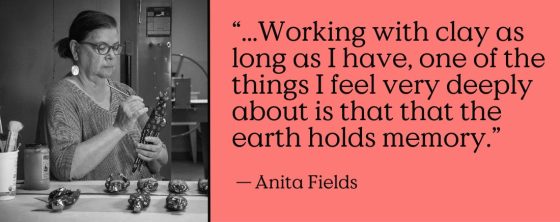
…You know, with working with clay as long as I have, one of the things I feel very deeply about is that the earth holds memory. That has been revealed to me, just because of how clay is made over time. I’m certain it holds the memories of who was there, wherever in the world.

I mean, in Italy, a couple of times when we would travel to these places and then we would read about the history, I felt that there, too. No matter where you’re at there are always the similarities to what has happened in history – “the conqueror” and “the conquered” – these stories are all threaded together and similar. I couldn’t see WayBack without sound in any way, shape, or form. It just wouldn’t have the punch that I was looking for.

I did want to ask, where are we at in the lifespan of the piece? I know that the plan is to distribute the platforms to Osage community members back around Tulsa. I just wonder where you’re at in that process?

AF: Yes, it was temporary and as soon as Counterpublic closed, I think it was within two weeks, they were picked up and shipped back to Tulsa to the [Tulsa Arts] Fellowship. The Fellowship is storing them for me. Then I got a call from the First Americans Museum in Oklahoma City, which is I think in its second year. They have a beautiful courtyard plaza and they have built a mound-like area where you can witness the solstices. The curator was at the Counterpublic closing and she said, “I want to bring these to First Americans Museum, what’s the plan for these as soon as this is over?” Well they took half of them and then half of them stayed here, displayed at a place called Guthrie Green in Tulsa for about a week. Yesterday, the ones from First Americans Art Museum were delivered to the Osage Nation. I want to distribute them to the Osage community. In my mind I’m like, “What am I going to do with 40 platforms when they return? What’s going to happen with these and who owns them?” And actually that was [curator Risa Puleo’s] suggestion: Is there any way these could be returned to the Osage community?

People are excited about it, those that know about it. Not a whole lot of people know. I’m trying to keep it [quiet] ‘til I get it all figured out, but they’re excited about it. I’m excited about it, too, because that is another way to make art accessible. To bring it back to where you come from. Because those folks are totally my inspiration, and I say this at every turn, whenever I have the opportunity. You’re my inspiration. Your grandmother, my grandmother, every interaction I’ve seen throughout my life. This is my inspiration.

Nokosee, I wonder, do you see a similar way of bringing “Middle Waters” to the people? Do you see a lifespan for that piece beyond this installation? Or do you think it’s a moment in time and it’s onto the next work?

NF: Yeah, I think it’s just a moment in time. I might edit it, but I’m pretty pleased with it. If anything, it’s more of a reason to want to do more sound installations, sound art kind of things. I’ve been wanting to transition to that kind of work. As much as I’ve enjoyed touring – and I’ll probably do it for as long as I can – I find it to be pretty taxing. It’s tons of fun, but I think I need something that’s a little more cerebral, a little more isolated, a little more supported, and also a place for my voice and creativity. I feel like I’m kind of waking up from an obsession where I just got into traditional American music, traditional fiddle. Now that I’m steeped in that world and I feel like I’m really a part of it, I also feel like there’s a lot of it I just don’t really care for.

This sounds really uppity, but making traditional fiddle music feels kind of separate from [country], it’s just melody. I like the foundational aspects of music and the research and tone, things like that. And I like it because it’s not really tied to lyrics, it’s not putting on a type of personality, like lyrical content [does].

That, to me, is often just perpetuating settler mythology about old-time music. There are a lot of things that could be said about old-time music that are also problematic. Instrumental music is where I really jive and get into stuff, but I’ve also had to constantly interface and participate in lots of country music or lyrical music that has content that, to me, just feels like propaganda with really rudimentary, basic understandings of the land.

It feels like a type of erasure. It’s just kind of designed that way – maybe not maliciously – but it’s just so deeply woven into how things work in this country. …I find a lot of country music today, a lot of the younger, popular stuff, it feels like it’s about convincing white people that they’re white or something. There’s this pseudo-woke take on country music, which I think is fine, it’s just not radical enough for me or something. It’s like it’s just enough for people to kind of maybe get their outlaw fix.

It still doesn’t work for me and I still find it very rudimentary and actually not very confrontational or very deep, as far as what’s actually going on in the world or on this continent.


Sign up here to receive Good Country issues when they launch, direct to your inbox.

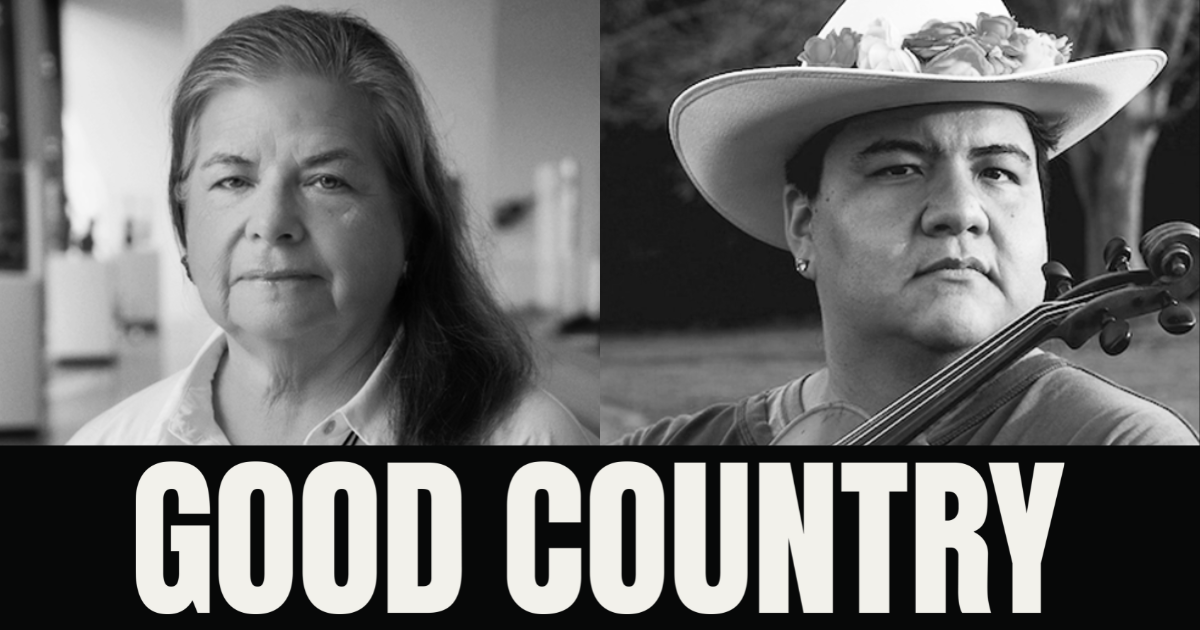
Lead Image: Anita & Nokosee Fields via Counterpublic.
Image of Anita Fields: Courtesy of the Artist.

Headline text from Anna Tsouhlarakis, “The Native Guide Project: STL.” Billboard and digital signage. Curator: New Red Order. Counterpublic 2023, Sugarloaf Mound Site.

Ed’s Picks: Country From All Corners

(Editor’s note: Each issue of Good Country, our co-founder Ed Helms will share a handful of good country artists, albums, and songs direct from his own earphones in Ed’s Picks. 

Sign up here to receive Good Country issues when they launch, direct to your inbox.)


Country’s Genderf*ck Tradition

(Editor’s Note: Sign up here to receive Good Country issues when they launch, direct to your inbox.)

Country music’s gender politics have always been, well, kind of fucked up. The genre itself is rooted in class-based declarations of authenticity and individualism, all while negotiating assimilation into urban life. Like any other large group of people, country music artists are by no means monolithic, and the genre’s approach to gender – especially femininity – is diverse. But for all the treacly love songs and mincing breakup songs, the ones where country divas’ lives are at the mercy of men, there are songs that flip that dynamic right on its head.

Stephanie Vander Wel’s Hillbilly Maidens, Okies, and Cowgirls illustrates how this dichotomy has existed since the genre began. Country music has always sold the story of rugged individualism, and that sense of individualism has paved the path for women who present themselves as more rugged than the “Pollyannas” they’re expected to be. That tradition continued well into the classic country era; Loretta Lynn’s “The Pill” and Tammy Wynette’s “D-I-V-O-R-C-E” masterfully display centering women’s agency, while couching that drive in humor and a catchy tune.

It’s no coincidence that if you ask someone on the street to name a country music artist, they’re most likely to list a woman. Dolly, of course, or the ‘90s run of divas like Shania, Faith, or The Chicks. As has been oft-discussed, this generation of country stars tapped into the ‘90s exuberance for individual freedom while questioning the traditional ties that bind us to our scripted gender roles. Faith Hill’s “Wild One” and, of course, The Chicks’ “Not Ready to Make Nice” portray a femininity that is self-confident: there will be no more shrinking behind men in too-large ten-gallon hats.

Marissa Moss and Dr. Jada Watson have extensively documented the decline in women’s presence on mainstream country radio since the aughts. But that doesn’t mean women are shutting up, and we are starting to see queer women, as well as nonbinary and trans artists, use their inspiration from the ‘90s to continue using country music to challenge gender norms. Roberta Lea’s “Too Much of a Woman” is brash, rejecting any sexist norms that would expect her to dim her light. Jessye DeSilva’s “Queen of the Backyard” and Paisley Fields’ “Periwinkle” are touching tributes to young people who know they don’t fit in and never will. Desert Mambas’ “Buzz Cut Blues” is a nod to Leslie Feinberg’s legendary no novel Stone Butch Blues, making good on country music’s promise of non-normative gender performance with a meditation on moving through the world as a transmasc person.

Throughout the century’s worth of country music canon, there is one throughline: this genre that celebrates outlaws and misfits must always celebrate women, femmes, non-men, and others who are doin’ it for themselves.


Photo of Dolly Parton from the Michael Ochs Archives.

Sign up here to receive Good Country issues when they launch, direct to your inbox/a>.

You’re Looking At (Feminine) Country

(Editor’s Note: Sign up here to receive Good Country issues when they launch, direct to your inbox.)

Eight years ago, in 2016, the harp-playing half of Brooklyn-based folk duo Devil & the Deep Blue Sea, found herself filing away songs for a solo project.

“There were certain songs… [that] would tell me who Lizzie No was going to be,” she explained in a recent phone interview.
“There were songs that felt very personal, very femme, and a little more country and a little more pop than would be appropriate in my band. Those songs started getting categorized into the ‘new solo project’ category. And then, I just had to come up with a name, you know. Like, I needed my Sasha Fierce alter ego, to be able to stand in myself.”

The name she landed on, Lizzie No, was a doozy. Considering the femininity she noticed her new songs projecting, the decision to include the word “No” in her name was no small thing. Women, especially feminine women – especially Black feminine women – have a special relationship with the word. It was important to No that her solo singer-songwriter persona reflect the energy she wanted to project, the space she wanted to carve for herself and her songs.

“I think there’s a real difference between singing songs that you wrote in the context of a band versus being a solo artist and having people literally look at you, in your physical body, and associate the songs with you and yourself. So I needed an identity, a performer identity, that would be able to encapsulate the confidence and the directness, and yes the femininity, that I wanted to present with these songs that I was writing.”

The idea of mindfully presenting femininity is nothing new, of course. Women in all professions must decide how they’d like to present; how many minutes or hours they will spend before each workday putting on their face and dressing to impress. But, there is a special place in the history of country music for artists taking the stage while female.

It was far less than a century ago that female country singers were expected to travel with a husband, brother, or other male family member as their escort. Women country singers were expected to eschew ambition and to primarily be a pretty face with a pretty voice.

All that started to shift when Mother Maybelle and the Carter Sisters made their Grand Ole Opry debut in 1950 – the first all-female band on that storied stage. In fact, well aware of how women were perceived and received by the country music establishment, Mother Maybelle nonetheless insisted her daughters become masterful on their instruments, develop independent business acumen, and forge a career on the stage.

For the 74 years hence, women who can and do shred have been of great interest to country music critics and fans alike.
Author and critic Marissa A. Moss dove deep into this subject with her 2023 book, Her Country: How the Women of Country Music Busted Up the Old Boys Club. Meanwhile, on social media, fans and artists alike routinely return to the evergreen topic of how much airplay women get (or, rather, don’t) on country radio.

To consider what it means to show up wholly oneself while feminine in country music can feel like engaging with a Groundhog Day loop through tired, generations-old expectations. Granted, the options for women have broadened a bit since the Carter Sisters showed up in their gingham checks and transcended what one might have expected from pretty women who sing and play. (A new documentary by Kristen Vaurio on Paramount+ about the youngest Carter Sister, JUNE, is well worth a stream.)

The modern answer to the Carters’ quietly subversive embodiment is a cadre of demonstrably feminine women like Allison Russell, Margo Price, and Amanda Shires. Recent Grammy winner Russell comes off like a clarinet-wielding, angel-voiced supermodel, self-made from equal parts awful trauma and infectious joy. Price appears as a cross between Willie Nelson and Cher, riding her biting narrative lyricism on the vehicles of magic mushrooms and low-cut, glittery fringe. Shires saunters about in spiked heels and leotards, a finer fiddler/poet than you’ll find anywhere else on God’s green earth.

That each of these women is stunningly talented as a lyricist, multi-instrumentalist, and performer, is inarguably the most important thing. But the messages they convey by leaning hard into how they wear their gender, remind us that women in country music no longer need to amplify the pretty and take the brilliance behind the scenes. There’s more than enough space for both/and.

It wouldn’t be a leap to suggest this is thanks in part to a rising tide of queer country artists. Lizzie No, Russell, and others – Jaimee Harris, Brandy Clark, Jaime Wyatt – prioritize songcraft as equivalent to crafting persona. Other queer artists like Paisley Fields subvert the masculine/feminine binary with candid expressions of personhood that transcend traditional femininity while remaining sonically adherent to traditional country music.

All of this raises numerous questions, including: What does 21st century femininity bring to the cis-het boys’ club of country music? Shouldn’t women get country airplay while also being free to show up as the full human they are?

Lizzie No is a good example of a walking answer to both questions.

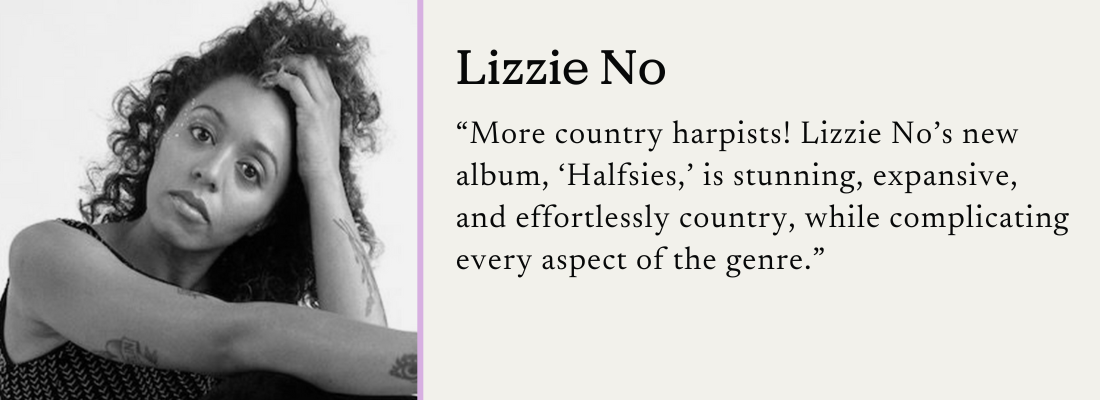
A rising country singer whose music lands warmly – a stew of Dolly and Emmylou, a twinge of Kris, just a pinch of Sleater Kinney – her new album, Halfsies, is a mostly-country and occasionally rock and roll rumination on the intersections of love, identity, and freedom. While it may resonate for plenty of men and folks who don’t identify as feminine, it is, in other words, about the numerous conundrums and longing-for-transcendence of womanhood.

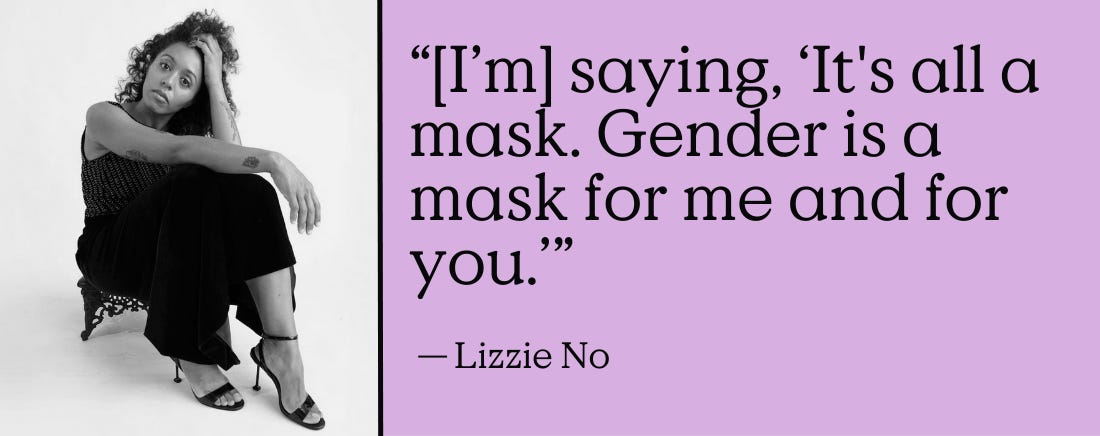
“There’s a patriarchal anxiety around performance and illusion, and we associate that with femininity,” No says. “[I’m] actually leaning into that and saying, ‘It’s all a mask. Gender is a mask for me and for you.’ That’s a big part of how I’ve constructed my identity as Lizzie No. I am one thousand different things and [you shouldn’t] try to narrow it down musically, or in terms of gender.”

She goes on to affirm that the way she constructed her performer persona is similar to drag. Considering country music is most often associated with Nashville (where No recently relocated from New York City), it’s worth considering that this new wave of feminine people in country music has risen at the same time as a push-back against drag performers in the same state and across the country. The tension between these two phenomena is mostly political and definitely charged.

When indie band Yo La Tengo played a show in Nashville shortly after the state passed its anti-drag bill, their decision to wear dresses onstage was a funny, tongue-in-cheek protest. An overt resistance, an assertion of allyship. This is different from when someone like nonbinary country singer Paisley Fields steps out in a sheer top and jewelry, or a dress. The former is clowning on politicians; the latter is throwing on something comfortable to engage in vulnerable, intensely personal creative expression. The former is playing to its indie rock audience, replete with left-leaning, ironic hipsters; the latter is forging a path of their own in the country music world, where femininity is a little more… complicated.

“The first thing that comes to mind when it comes to femininity in country music is just how misogynistic of a genre it is,” Fields said in a recent interview.

For example, they added, “The first time I wore a dress [onstage], I noticed the way people treat me is very different. Even if I’m just in a more, like, sort of flamboyant or more feminine look—maybe hot pink pants or something – I’m treated very differently. If I’m wearing a dress, it’s almost a little scary.”

Over the past couple of years, since coming out as nonbinary, Fields has been exploring what it means for a person assigned male at birth to express authentic femininity on a country stage. Indeed, they are just as likely to appear in the jeans-boots-hat costume of a country man as they are in a sparkly net top and purple chaps – an outfit nobody would look twice at, were it donned by Margo Price or Lizzie No. In the process, they’ve firmed up their own convictions around country music’s relationship with femininity.

“It would be better for a woman to be masculine [in country music] than for a man to be feminine,” they say. To clarify: “Some of the most successful women in country music are obviously very feminine and embrace their femininity, like Dolly Parton and [Shania] Twain. But there is this sort of like, tough as nails [persona], which I guess is perceived a lot of times as masculine.”
Granted, this tough-as-nails persona is often an outcropping of the mountains these women have needed to climb in order to make it onto the big stage.

In her 2022 memoir, Maybe We’ll Make It, Price detailed a few shady encounters with Nashville songwriters and executives who saw her as a young, hopeful girl who deserved to be exploited. That she survived these instances and earned success with her music on her own terms, in the end, perhaps lends itself to a tough-as-nails persona. But it is one that comes from being a woman with well-marked boundaries in a misogynistic boys club. When she rode into the 2022 Stagecoach Festival in a crop top and glitter skirt, on horseback, she knew she’d earned the right.

This balance of toughness and femininity (often used in a context where it’s synonymous with “weak” or “fragile” or “naïve”) is indeed not a stretch, but rather the innate characteristic of a woman with a strong moral center and the desire to get hers.

Lizzie No explains perhaps better than this writer can.

“I feel my most feminine when I am in some way using my physical body to achieve political ends,” she says. “To me, that’s my ideal of femininity. It’s like the women who lured Nazis to their death by being hot. When I want to post about taking down the government, you know, I will always use a bikini pic. … Because it’s like, hey, look over here, you’re going see my midriff and you’re going to learn about how capitalism has alienated us from ourselves.”


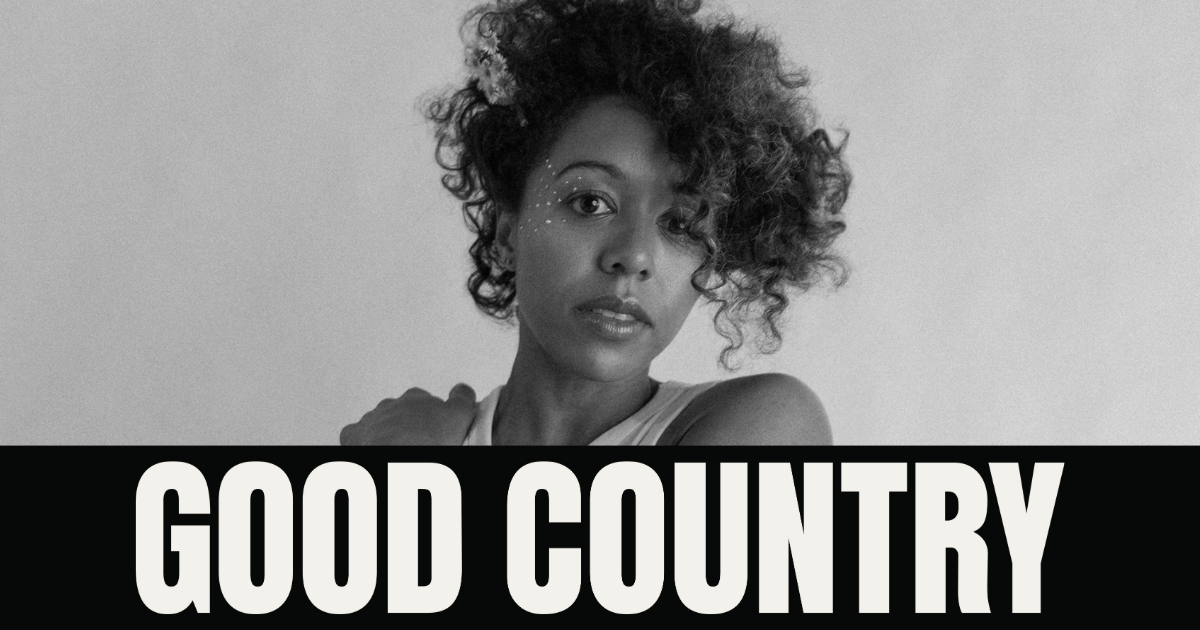
Photos of Lizzie No by Cole Nielsen.

Sign up here to receive Good Country issues when they launch, direct to your inbox.

Moving & Returning

(Editor’s Note: Sign up here to receive Good Country issues when they launch, direct to your inbox.)

I bet in the next few years, an expert taxonomist will come by and tell us exactly what country music is – and that this definition will create endless arguments. In the last few months, this argument about what exactly country music is has been growing louder. Jason Isbell has been fucking around with Nashville for decades, playing the field between rock, country, southern rock, country rock, and classic country. (He has recently said that he considers himself a rock singer). Adeem the Artist, the infamous cast iron pansexual, says that they are a folk singer. Willi Carlisle, a folk up-and-comer, has released Critterland, a certainly country album. On the other hand, Maren Morris released two singles last fall which were about burning Nashville to the ground, yet they’re perhaps the most country songs of her career – in terms of how she tells stories, how the bridges work, her vocal tones, and even some of the instrumentation. It seems lately, country is both everything and nothing.

Amanda Fields’ 2023 project deepens this ongoing problem. The album, What, When and Without, is a complex artifact of her own wrestling with genre, history, and biography. It slides into that complex sorting of genre and feeling that is key to Nashville right now. Fields calls this a country album – lushly produced, thick with strings, and dense with vocals, reminding one of an updated countrypolitan record – but sorting out what that means comes with a history of playing and listening.

Fields has a reputation on the bluegrass circuit, often an insular genre with an insistence on a certain kind of purity. She recognized how those questions of purity often don’t pay the bills, and her first major recordings were on a series of bluegrass cover records, called Pickin’ On – recorded by prominent bluegrass studio musicians, there are dozens of them, the artists covered include the expected (Bob Dylan, Johnny Cash), the unusual (Blink 182), to the fully flummoxing (Modest Mouse). Though Fields did not play on all of these records, she talks about them as an integral understanding of herself as part of a musical team: “When I look back on my experience within the ‘genres’ I’ve taken part in, I think about the groups of people I worked with… When I worked on Pickin’ On, I got that gig because of who I was hanging out with and playing music with at the time. I sang ‘gospel’ when I was growing up, because that was the community within my proximity.”

Proximity is a complex question for Fields. She has close ties to the bluegrass community, and there is something intriguing about the idea that genre is a social category – one about who one is near, or what the audience and the performer agrees to participate in. Yet there is a kind of roving that occurs here too; for Fields, roving is both a history of moving around geographically and, as she says here, moving from music that she considers bluegrass or gospel or country.

Fields moved around a lot as a child. Though she was born in Appalachia and currently lives in suburban Nashville (right next to Loretta Lynn’s old house), the line between these two legendary destinations was not direct.

Asking Fields about these roots – expecting a standard line in response – she honestly describes the complexity of her raising: “I’m originally from the mountains and it was my anchor growing up, but my dad moved us around a lot. He was one of those people who felt there was more to life than what was available to us living in that area, so he took job opportunities that carried us away from the mountains. I didn’t like that, because I was always longing to be ‘home’ with the rest of our family. I lived for summers and holidays when I got to be in Virginia and East Tennessee. Playing and listening to country and bluegrass music was my way to experience home when I couldn’t be there physically.”

This moving and returning is a common note for country musicians. Listening to her talk about the juxtaposition of moving, returning, being forced to leave, and finally finding home in an idea more than a place, I am reminded of Tanya Tucker or Merle Haggard. Tucker’s early childhood had a father who moved her from Arizona to Las Vegas to finally Nashville, chasing an acting and singing career. She broke out as a singer who fused a desire for rock and for country. It is similar to Haggard’s talk of moving – to California with his family as a consequence of economic disenfranchisement – and spending the rest of his career chasing economic stability. That idea was perhaps best written about in his tragic ballad “Kern River,” with its opening line, “I grew up in an oil town, but my gusher never came in.” (A Fields original from well before What, When and Without, “Brandywine,” strikes a similar note.)

This connection to Tucker, Haggard, and other classic country singers suggests that Fields landed not necessarily in a place, but as she says, in a music which has tight connections to place. What, When and Without, a classic country album, is infused with this kind of nostalgic listening.

Asked about her relationship to figures like Loretta Lynn or Haggard, she answers carefully: “Most of the music that really stirs my soul is older. I listen to all my friends’ new music and I’m always hunting something fresh to connect with, but on a day-to-day basis, I’m usually listening to the same stuff I’ve always loved. I’m talking Tammy Wynette, Loretta Lynn, Conway Twitty just about everyday. Classic country is what excites me (especially when I discover something I haven’t heard) and those familiar sounds and voices help me regulate my body’s nervous system.”

The album, rooted in those sounds, contains a deep knowledge of genre. Its ability to move between old school country, bluegrass chops, and deep, modern desire is one of its strengths. Figuring out how to sound both modern and historical is something Fields achieves with some skill. If her commitment to genre has a loose, rootless quality – or at least one which floats and lands depending on aesthetic or social need – then how she considers time has a similar quality.

Maybe her early commitment to bluegrass, a genre who remembers more than it forgets, and faces backwards as much as it faces forwards, and which was complicated by how hungry those covers were, suggests one way of bridging eras. But, her recent work, crafting contemporary studio craft with the careful polish of Studio A aesthetics is another. Asking her about memory and nostalgia, she again answers carefully: “One thing that was very intentional with the album was the pace. I think that going slowly is nostalgic in a way, because society and industry move so fast nowadays. I usually walk slowly and I talk slowly compared to most of my peers. My body responds to tempo and dynamics and I wanted to invite the album’s listeners to slow down with me.”

The slowness of the album can be heard in how she starts many of the tracks. There is often an instrumental intro where one waits a significant time for the vocals to be introduced and on occasion there are gaps, where her vocals recede and the band takes over – though the band itself is also quiet. There is a quality, listening to the work, of a kind of courtly two-step, the band asking Fields to dance, and vice versa.

The very first song, “What A Fool,” begins with brushed drums, and has a quite lovely open-ended moment where the pedal steel becomes central. On “I Love You Today,” the old-fashioned cheating song, heartbreak is introduced via an elegant, western swing sound, not outside of Lovett at his best. The last song, “Without You,” plays drums as solid and regular as a heartbeat. It’s another heartbreak song.

The pedal steel is crafted by Russ Pahl, who has been playing for decades. He has been nominated by the Academy of Country Music for his work on the steel guitar three times and for specialty instrument once, between 2004 and 2021. Before that, aside from being an in-demand studio musician, he was part of legendary Great Plains, another band who was excellent at moving between genres, across time, and throughout modes.

Talking to Fields about Pahl, she noted how good he was at not only playing, but matching vibes in the studio: “He came across very quiet and contemplative in the studio and I think he ‘got’ the vibe right away. After a song or two, he said, ‘…this ain’t Zip A dee Doo Dah.’ And it wasn’t. It was an album created in the midst of global pandemic [and] a time of great suffering for society and for myself personally.”

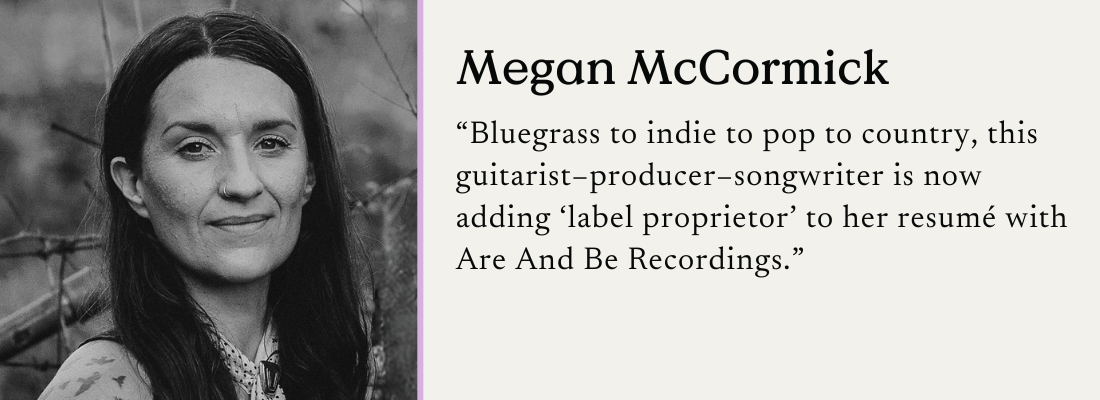
What, When and Without sounds like Fields has had some rough times, even outside of the lockdowns (regardless of how dense the record sounds, there is a yearning in the vocals that have a certain lockdown edge); but there is also an irony in this loneliness. Megan McCormick, who co-wrote on and produced the record and plays in Fields’ band, shows great intimacy throughout the project – there is a reason for this, McCormick and Fields are personal as well as professional partners. They sound good together, and the track where McCormick sings backing vocals, “Moving Mountains,” is the highest energy, most open of the entire record. It’s a great love song – but it’s a love song which calls to Mother Maybelle Carter as an avatar of country music, as a figure outside of space and time, which can tell the narrator how to love after years of heartbreak.

When asked about McCormick, Fields is still a little coy, but her commitment to their lives and sounds is made clear: “She really has a special gift and believing in her as a producer, as well as trusting her intuitions and abilities, has allowed me to grow as an artist. She’s my toughest critic, because that’s what I’ve asked of her. She’s also my constant cheerleader. We thrive when we get to travel together and both enjoy that feeling of being untethered that you get when you’re on the road.”

One can hear some of the untethered quality in Fields’ work, the road as untethering as much as time or genre, but the closeness that she has with McCormick is another kind of tethering, be it a consensual one.

Throughout the album, there is a quality of choosing which traditions are valuable, which are worth keeping, and which ones might have outlived their usefulness. When she talks about her childhood as a Pentecostal, she says: “I am very spiritual, still, and that energy I saw in church growing up is no different than the energy I feel when I’m composing music or playing music with other people with whom I am ‘tuned in.’”

She is definitely tuned with McCormick, their close contribution seen in how they work together – the harmonies without necessarily the negative consequences of some of that church life. She continues: “Those are universal aspects of the human experience that transcend dogma, class, and denomination and that’s what I carry on and value from my experience in church.”

One can see the universal quality in Fields’ work, and it contains interesting juxtapositions. A rootlessness across genre or time, which lands on something contemporary sounding; or a heartbreak record which rests on multiple commitments to one person; or even a religious tradition which widens and deepens.

Maybe we don’t need that taxonomy. An audience knows what a country record is.


Sign up here to receive Good Country issues when they launch, direct to your inbox.

Photo Credit: John Brown

Open Mic: Tommy Prine Finds Artistic Acceptance at the Grand Ole Opry

(Editor’s Note: Open Mic is a new series from BGS with a simple premise – to remove all the filters between artist and audience and give musicians and creatives an Open Mic. With each installment, we’ll hold space for musicians to say whatever they’d like on any topic they like in any format that moves them most. It’s about facilitating real conversations and genuine insight with our roots music community.)

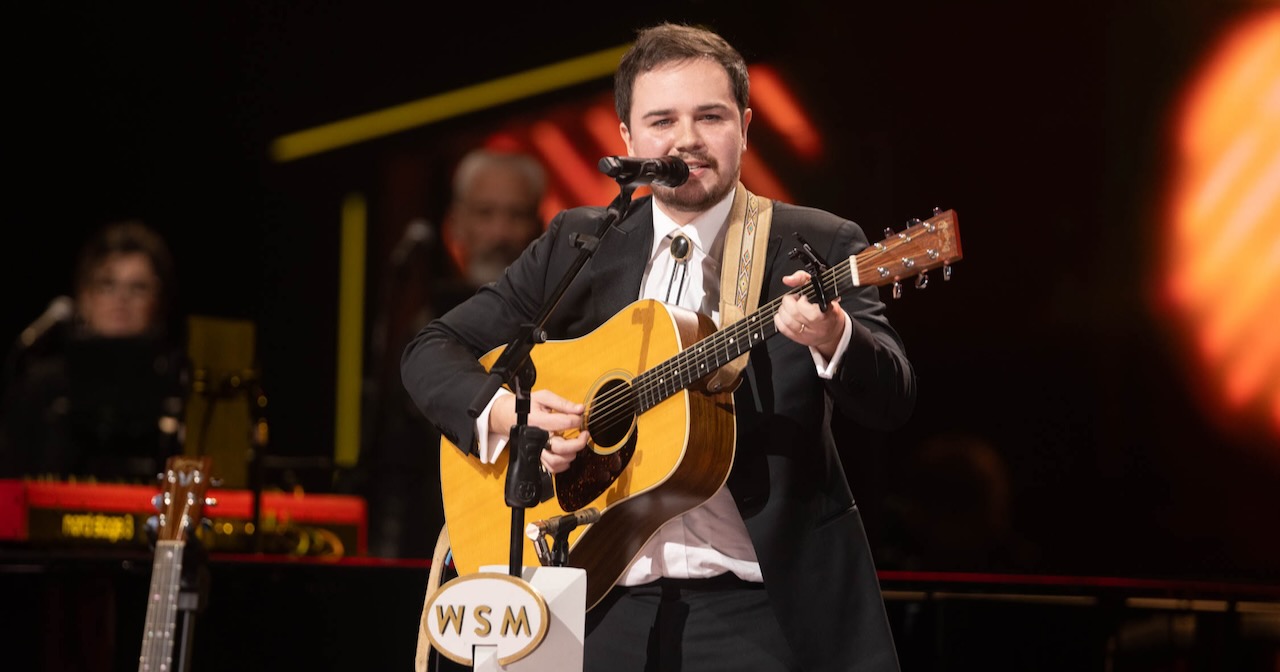
For our first edition of our new series, we set up an Open Mic for Americana newcomer Tommy Prine, an emerging singer-songwriter who walks a unique tightrope. The son of folk legend John Prine and an artist with a creative vision all his own, his work both builds on an established tradition and breaks free from the past – a contrast in full view at his December 2023 Grand Ole Opry debut.

Here, Prine reflects on his winding and not-at-all anticipated path into the artistic world – and into the ability to stand on his own creative feet.

Tommy Prine: “I have learned many things over the last few years, but the most important lesson I have learned is that no one gets anywhere without a lot of support.

“My wife, Savannah, is the embodiment of support. We decided in 2020 that we were going to give this music thing a shot, and by ‘shot’ I mean throwing every ounce of our hearts and spirit into making it work. She has taken on so many roles and worn a thousand hats (still does) during this music journey and it amazes me everyday how graceful and effortlessly she navigates the strange world that we operate in.

“My mom, Fiona, has been the guiding hand through so many new and scary events ultimately enabling me to gain the needed self-confidence to be an artist. She also played that role in raising me, and I owe a whole lot to her for any and all success in my life.

“My dad, John, set a standard of manhood that I will always strive to attain; gentleness, respect, and a lot of listening. As I walk the path that he walked, I learn more about him each day and his lessons unfold time and time again. Thank you for a lifetime of love and teachings, Dad.

“My brothers, Jody and Jack, have seen me in every shape and form I have ever taken on and been nothing but loving and understanding. They both have taught me so much about patience, wisdom and any and all cool music/movies. Without them I would be an entirely different person with different interests, and I couldn’t be prouder to be their little brother.

“My friends, who have been there with me since I was just a kid who played guitar by himself with the doors closed, all of you have influenced me to be a better and smarter man, and have never missed an opportunity to support me. For these reasons, I consider myself the luckiest man alive, and I feel undeserved of such incredible and loving company.

“When I reflect on my Opry debut, the word that comes to mind is acceptance. Acceptance into the community of artists that I admire so much, and acceptance of the life path that I chose which led me to the Grand Ole Opry. Growing up in Nashville, the Grand Ole Opry stage is the stage that you tell yourself, ‘One day, I’ll get there.’ When those thoughts crossed my mind as a teen, all it ever felt like was a dream. An unattainable dream barricaded by years of the most vulnerable and terrifying work I could imagine.

“Part of me knew who I had to be in order to get there, and the other part of me found that to be impossible. My journey in music has provided the personal growth I always wanted – and if all else fails, at least I found out who I really am. When an artist gets the opportunity to step into that circle, they light their own torch. On December 8th, 2023 I lit my own torch, and I intend to carry it to the end of my road.”


Photo Credit: Courtesy of the Grand Ole Opry, shot by Chris Hollo

See All of the Roots Music Winners from the 2024 GRAMMY Awards

On Sunday night, the music industry gathered in Los Angeles at the Crypto.com Arena for the 66th Grammy Awards. While Miley Cyrus and Taylor Swift took home the evening’s biggest honors, the primetime broadcast and pre-awards telecast saw many roots musicians honored for their musical achievements.

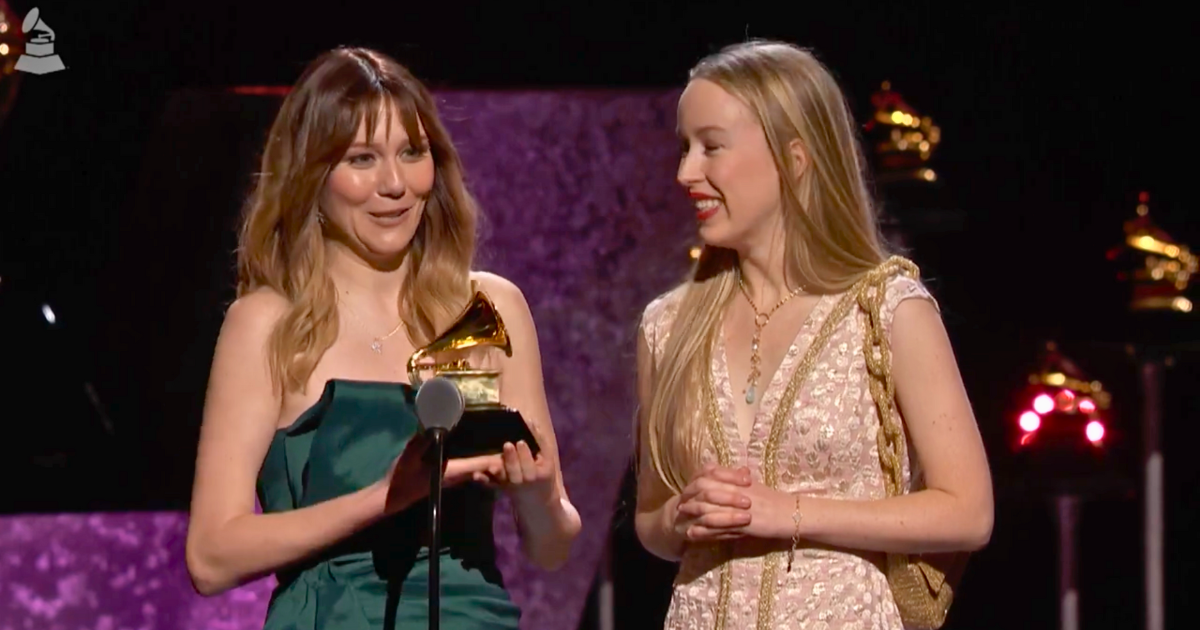
This year’s Best Bluegrass Album nominees were a stout collection of records including Radio John: Songs of John Hartford by Sam Bush, Lovin’ Of The Game by Michael Cleveland, Mighty Poplar by Mighty Poplar, Bluegrass by Willie Nelson, Me/And/Dad by Billy Strings, and City Of Gold by Molly Tuttle & Golden Highway, who took home the trophy for the second year in a row.

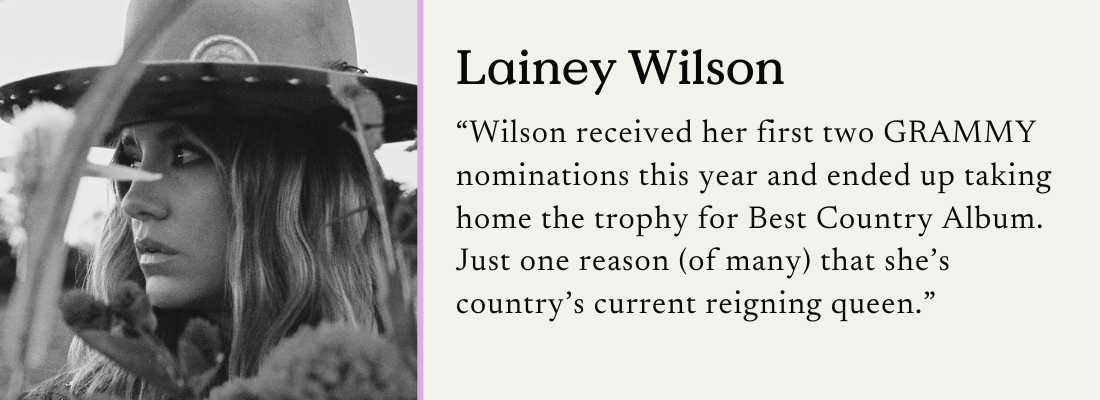
In other categories, Allison Russell took home her first Grammy Award after eight nominations – for Best American Roots Performance for “Eve Was Black.” Lainey Wilson won Best Country Album for Bell Bottom Country, Bobby Rush took home the trophy for Best Traditional Blues Album (his third Grammy), and Joni Mitchell won her tenth Grammy for Best Folk Album. Meanwhile, the number one country song for now more than 17 weeks, “I Remember Everything” by Zach Bryan and featuring Kacey Musgraves, was awarded Best Country Duo/Group Performance.

Below, find a full list of this year’s Grammy Award nominees and winners in the Country & American Roots Music fields, as well as selected categories from the greater nominations list featuring roots musicians within and adjacent to our BGS family.

Record Of The Year

“Worship”
Jon Batiste

“Not Strong Enough”
boygenius

“Flowers”
Miley Cyrus

“What Was I Made For?” [from the motion picture Barbie]
Billie Eilish

“On My Mama”
Victoria Monét

“Vampire”
Olivia Rodrigo

“Anti-Hero”
Taylor Swift

“Kill Bill”
SZA

Album of the Year

World Music Radio
Jon Batiste

the record
boygenius

Endless Summer Vacation
Miley Cyrus

Did You Know That There’s A Tunnel Under Ocean Blvd
Lana Del Rey

The Age Of Pleasure
Janelle Monáe

GUTS
Olivia Rodrigo

Midnights
Taylor Swift

SOS
SZA

Best New Artist

Gracie Abrams
Fred again..
Ice Spice
Jelly Roll
Coco Jones
Noah Kahan
Victoria Monét
The War & Treaty

Best Rock Performance

“Sculptures Of Anything Goes”
Arctic Monkeys

“More Than A Love Song”
Black Pumas

“Not Strong Enough”
boygenius

“Rescued”
Foo Fighters

“Lux Æterna”
Metallica

Best Country Solo Performance

“In Your Love”
Tyler Childers

“Buried”
Brandy Clark

“Fast Car”
Luke Combs

“The Last Thing On My Mind”
Dolly Parton

“White Horse”
Chris Stapleton

Best Country Duo/Group Performance

“High Note”
Dierks Bentley featuring Billy Strings

“Nobody’s Nobody”
Brothers Osborne

“I Remember Everything”
Zach Bryan featuring Kacey Musgraves

“Kissing Your Picture (Is So Cold)”
Vince Gill & Paul Franklin

“Save Me”
Jelly Roll With Lainey Wilson

“We Don’t Fight Anymore”
Carly Pearce featuring Chris Stapleton

Best Country Song

“Buried”
Brandy Clark & Jessie Jo Dillon, songwriters (Brandy Clark)

“I Remember Everything”
Zach Bryan & Kacey Musgraves, songwriters (Zach Bryan featuring Kacey Musgraves)

“In Your Love”
Tyler Childers & Geno Seale, songwriters (Tyler Childers)

“Last Night”
John Byron, Ashley Gorley, Jacob Kasher Hindlin & Ryan Vojtesak, songwriters (Morgan Wallen)

“White Horse”
Chris Stapleton & Dan Wilson, songwriters (Chris Stapleton)

Best Country Album

Rolling Up The Welcome Mat
Kelsea Ballerini

Brothers Osborne
Brothers Osborne

Zach Bryan
Zach Bryan

Rustin’ In The Rain
Tyler Childers

Bell Bottom Country
Lainey Wilson

Best American Roots Performance

“Butterfly”
Jon Batiste

“Heaven Help Us All”
The Blind Boys Of Alabama

“Inventing The Wheel”
Madison Cunningham

“You Louisiana Man”
Rhiannon Giddens

“Eve Was Black”
Allison Russell

Best Americana Performance

“Friendship”
The Blind Boys Of Alabama

“Help Me Make It Through The Night”
Tyler Childers

“Dear Insecurity”
Brandy Clark featuring Brandi Carlile

“King Of Oklahoma”
Jason Isbell And The 400 Unit

“The Returner”
Allison Russell

Best American Roots Song

“Blank Page”
Michael Trotter Jr. & Tanya Trotter, songwriters (The War & Treaty)

“California Sober”
Aaron Allen, William Apostol & Jon Weisberger, songwriters (Billy Strings featuring Willie Nelson)

“Cast Iron Skillet”
Jason Isbell, songwriter (Jason Isbell and the 400 Unit)

“Dear Insecurity”
Brandy Clark & Michael Pollack, songwriters (Brandy Clark featuring Brandi Carlile)

“The Returner”
Drew Lindsay, JT Nero & Allison Russell, songwriters (Allison Russell)

Best Americana Album

Brandy Clark
Brandy Clark

The Chicago Sessions
Rodney Crowell

You’re The One
Rhiannon Giddens

Weathervanes
Jason Isbell and the 400 Unit

The Returner
Allison Russell

Best Bluegrass Album

Radio John: Songs of John Hartford
Sam Bush

Lovin’ Of The Game
Michael Cleveland

Mighty Poplar
Mighty Poplar

Bluegrass
Willie Nelson

Me/And/Dad
Billy Strings

City Of Gold
Molly Tuttle & Golden Highway

Best Traditional Blues Album

Ridin’
Eric Bibb

The Soul Side Of Sipp
Mr. Sipp

Life Don’t Miss Nobody
Tracy Nelson

Teardrops For Magic Slim Live At Rosa’s Lounge
John Primer

All My Love For You
Bobby Rush

Best Contemporary Blues Album

Death Wish Blues
Samantha Fish And Jesse Dayton

Healing Time
Ruthie Foster

Live In London
Christone “Kingfish” Ingram

Blood Harmony
Larkin Poe

LaVette!
Bettye LaVette

Best Folk Album

Traveling Wildfire
Dom Flemons

I Only See The Moon
The Milk Carton Kids

Joni Mitchell At Newport [Live]
Joni Mitchell

Celebrants
Nickel Creek

Jubilee
Old Crow Medicine Show

Seven Psalms
Paul Simon

Folkocracy
Rufus Wainwright

Best Regional Roots Music Album

New Beginnings
Buckwheat Zydeco Jr. & The Legendary Ils Sont Partis Band

Live At The 2023 New Orleans Jazz & Heritage Festival
Dwayne Dopsie & The Zydeco Hellraisers

Live: Orpheum Theater Nola
Lost Bayou Ramblers & Louisiana Philharmonic Orchestra

Made In New Orleans
New Breed Brass Band

Too Much To Hold
New Orleans Nightcrawlers

Live At The Maple Leaf
The Rumble Featuring Chief Joseph Boudreaux Jr.

Best Roots Gospel Album

Tribute To The King
The Blackwood Brothers Quartet

Echoes Of The South
Blind Boys Of Alabama

Songs That Pulled Me Through The Tough Times
Becky Isaacs Bowman

Meet Me At The Cross
Brian Free & Assurance

Shine: The Darker The Night The Brighter The Light
Gaither Vocal Band

Best Global Music Performance

“Shadow Forces”
Arooj Aftab, Vijay Iyer & Shahzad Ismaily

“Alone”
Burna Boy

“FEEL”
Davido

“Milagro Y Disastre”
Silvana Estrada

“Abundance In Millets”
Falu & Gaurav Shah (featuring PM Narendra Modi)

“Pashto”
Béla Fleck, Edgar Meyer & Zakir Hussain Featuring Rakesh Chaurasia

“Todo Colores”
Ibrahim Maalouf Featuring Cimafunk & Tank And The Bangas

Best Music Video

“I’m Only Sleeping”
(The Beatles)

“In Your Love”
Tyler Childers

“What Was I Made For”
Billie Eilish

“Count Me Out”
Kendrick Lamar

“Rush”
Troye Sivan

Best Instrumental Composition

“Amerikkan Skin”
Lakecia Benjamin, composer (Lakecia Benjamin featuring Angela Davis)

“Can You Hear The Music”
Ludwig Göransson, composer (Ludwig Göransson)

“Cutey And The Dragon”
Gordon Goodwin & Raymond Scott, composers (Quartet San Francisco featuring Gordon Goodwin’s Big Phat Band)

“Helena’s Theme”
John Williams, composer (John Williams)

“Motion”
Edgar Meyer, composer (Béla Fleck, Edgar Meyer & Zakir Hussain featuring Rakesh Chaurasia)

Best Arrangement, Instrumental or A Cappella

“Angels We Have Heard On High”
Nkosilathi Emmanuel Sibanda, arranger (Just 6)

“Can You Hear The Music”
Ludwig Göransson, arranger (Ludwig Göransson)

“Folsom Prison Blues”
John Carter Cash, Tommy Emmanuel, Markus Illko, Janet Robin & Roberto Luis Rodriguez, arrangers (The String Revolution featuring Tommy Emmanuel)

“I Remember Mingus”
Hilario Duran, arranger (Hilario Duran And His Latin Jazz Big Band featuring Paquito D’Rivera)

“Paint It Black”
Esin Aydingoz, Chris Bacon & Alana Da Fonseca, arrangers (Wednesday Addams)


Photo: Molly Tuttle & Bronwyn Keith-Hynes via the Recording Academy

Artist of the Month: Willi Carlisle

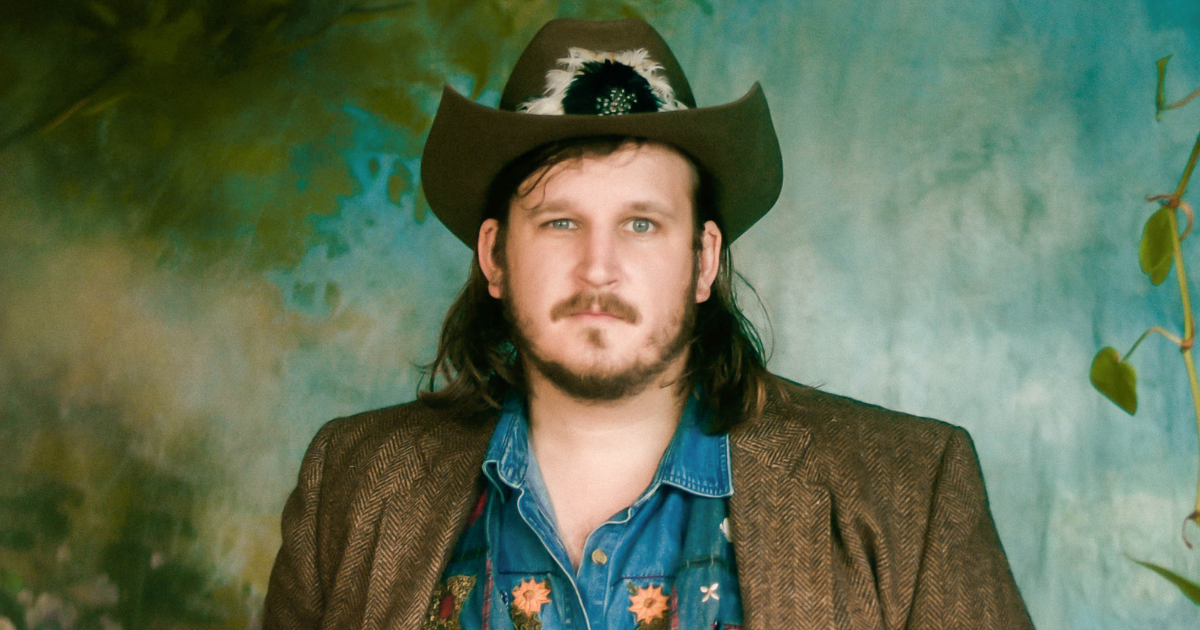
It’s not hard to imagine Willi Carlisle’s latest album, Critterland, as a decrepit-but-lovable roadside attraction, but here, the side show has decidedly taken center stage. Carlisle, a folksy, pastoral poet and songsmith, has invited all of us inside the big tent he pitched with his last record, Peculiar, Missouri, and to celebrate all of the beautiful ugliness we find in the spotlight. Produced by Darrell Scott, Critterland finds redemption in proudly – and holistically – owning and just as often subverting expectations around rurality, authenticity, community, and belonging. It’s a deft and artful confluence of schtick and performance, vulnerability and obscurity, artifice and genuineness, that could only be accomplished by a creative like Carlisle.

In Ryan Lee Cartwright’s book, Peculiar Places: A Queer Crip History of White Rural Nonconformity, the author and academic makes an astonishing case for the American societal and imperial construction of the “rural idyll,” and thereby, the co-construction of its antonym: the rural “anti-idyll.” The rural idyll is our general understanding of how rurality and the American dream intersect; of goodness and work ethic and respectability, of insiders and good ol’ boys and our kinda folks. The anti-idyll is the amorphous, intangible opposite of those white supremacist and capitalistic constructs.

Critterland is a joyous and liberated inhabitation of the latter concept, reveling in queerness, counter culture, other-hood, and so many kinds of rural, agrarian, and American anti-idylls. What are queer folks, poor folks, Black folks, brown folks, disabled folks in the country – and in country music – besides, first and foremost, antithetical representations of the American dream? The overlooked, enshadowed folks who inhabit the American anti-idyll… who is singing music for them? Who is inviting those very folks to step into the spotlight?

Willi Carlisle is certainly one. Tracks like “When the Pills Wear Off” and “The Money Grows on Trees” synthesize broad, generational, socio-economic realities that are often discussed, understood, and intellectualized – but rarely with their subjects first in mind. Carlisle is clearly making these songs for the people most impacted by their content; any translation they have in more zoomed-out contexts or to wider audiences is simply an added bonus. Others, like “Dry County Dust,” “Two-Headed Lamb,” and the titular “Critterland” seem to wink at the rural cosplay worn by all songwriters and music makers in roots music, but again, winking first to those who already understand it was always cosplay, from the very beginning.

Whether inhabiting the character of his onstage persona, which often but not always aligns with the human himself, or merely reflecting the pantheon of folks in his own life and communities, there’s a quality to Carlisle’s music and to Critterland that’s saying, “This music is for our kind of people.” And in the words of another backwoods poet, Jimmy Martin, “It takes one to know one, and I know you.” That could almost be the entire thesis statement of the album.

Darrell Scott’s production – and his own multi-pronged relationship to the anti-idyll – makes the clumsiness and haphazardness of this set of songs feel fully like a feature and not a bug. This is Critterland, after all, these side show animatronics are on their last legs and that’s why we love them. This sort of charm is certainly carried over from Peculiar, Missouri – which has delightfully variable production styles across the tracks – and really from all of Carlisle’s releases to date. (Including, if not especially, his hugely popular sessions with Western AF.)

Critterland, in the end, may not be the most magical place on earth, but it doesn’t want to be. And, it’s still a place you’ll end up returning to again and again. Because Willi Carlisle’s big tent is really, actually big enough for all of us. On our best and on our worst days and on all of the many days in between.

BGS will spend all of February celebrating Willi Carlisle as our Artist of the Month. Watch for an in-depth feature by music journalist and author Steacy Easton coming soon and, for now, enjoy our Essential Willi Carlisle playlist. Plus, don’t miss Willi and Critterland in the debut issue of Good Country, a new bi-weekly email newsletter from BGS.


Photo Credit: Madison Hurley