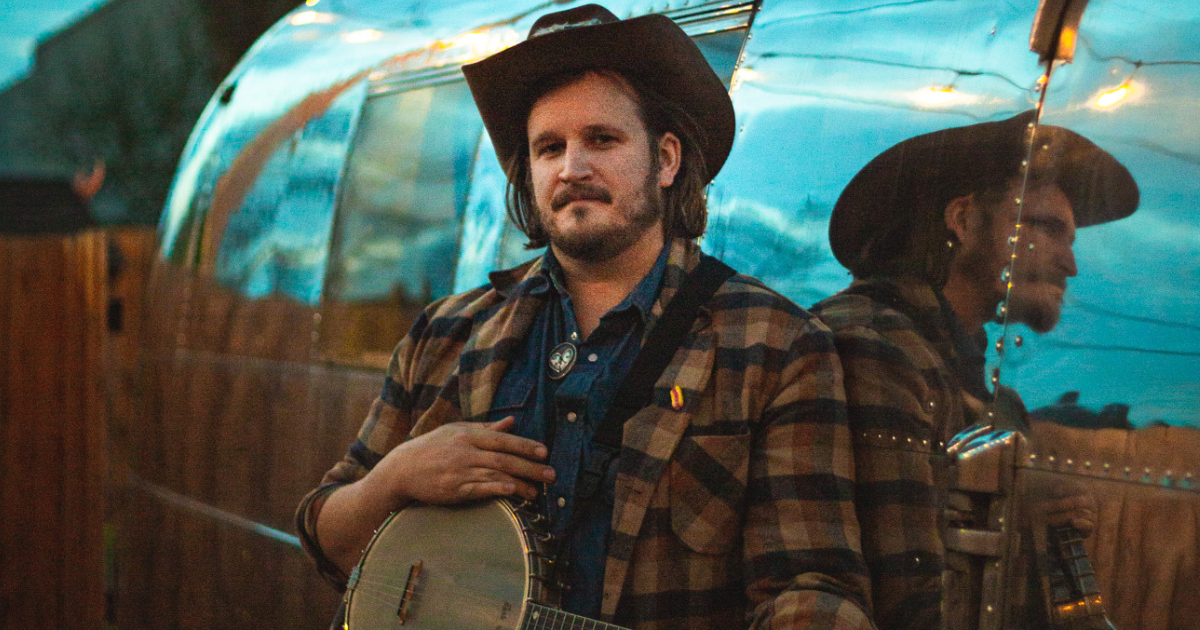
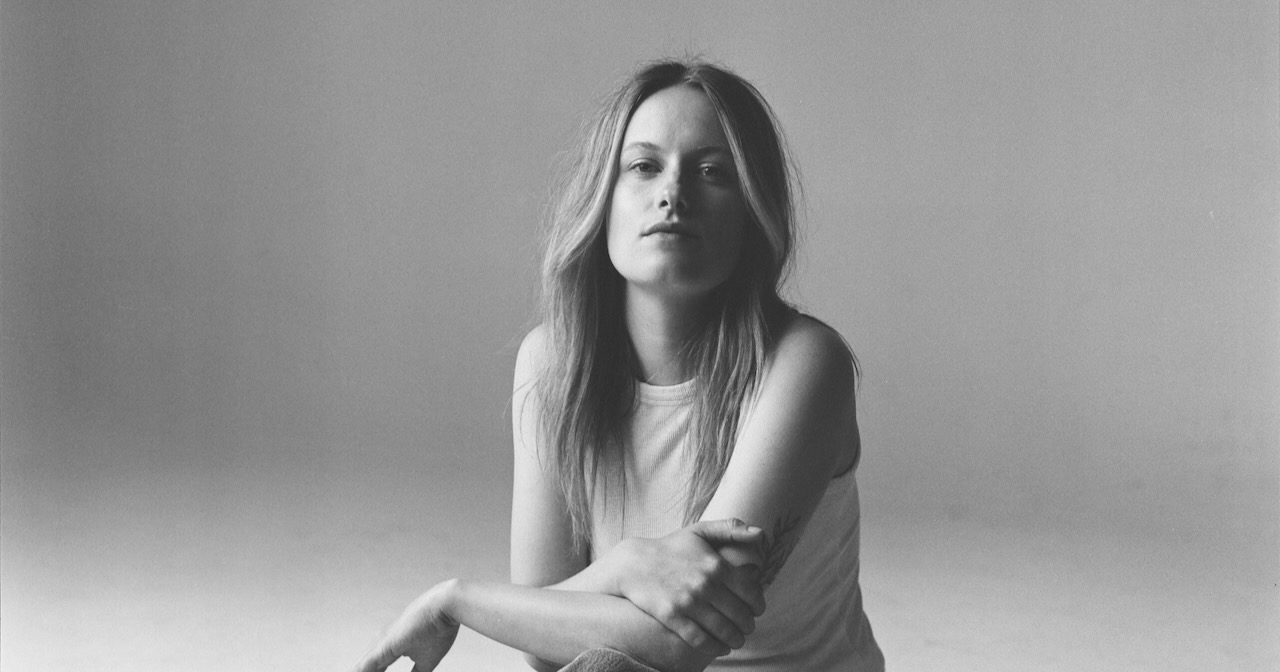
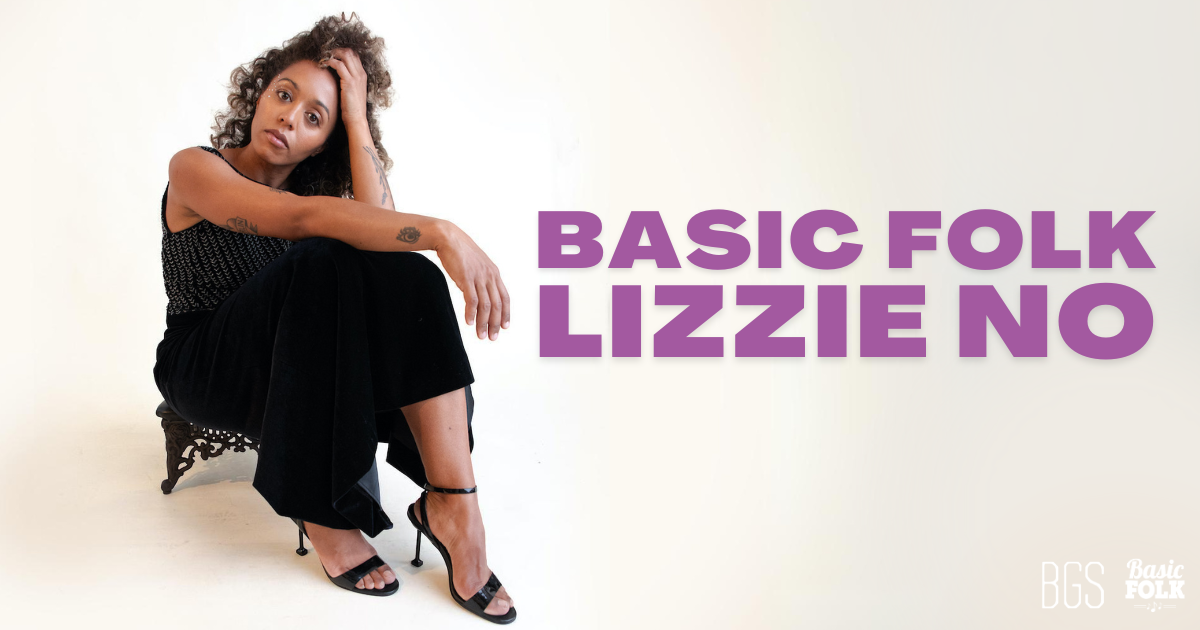
Lizzie No: The GOAT on Gender, Tiaras, and Leveling Up (Basic Folk)

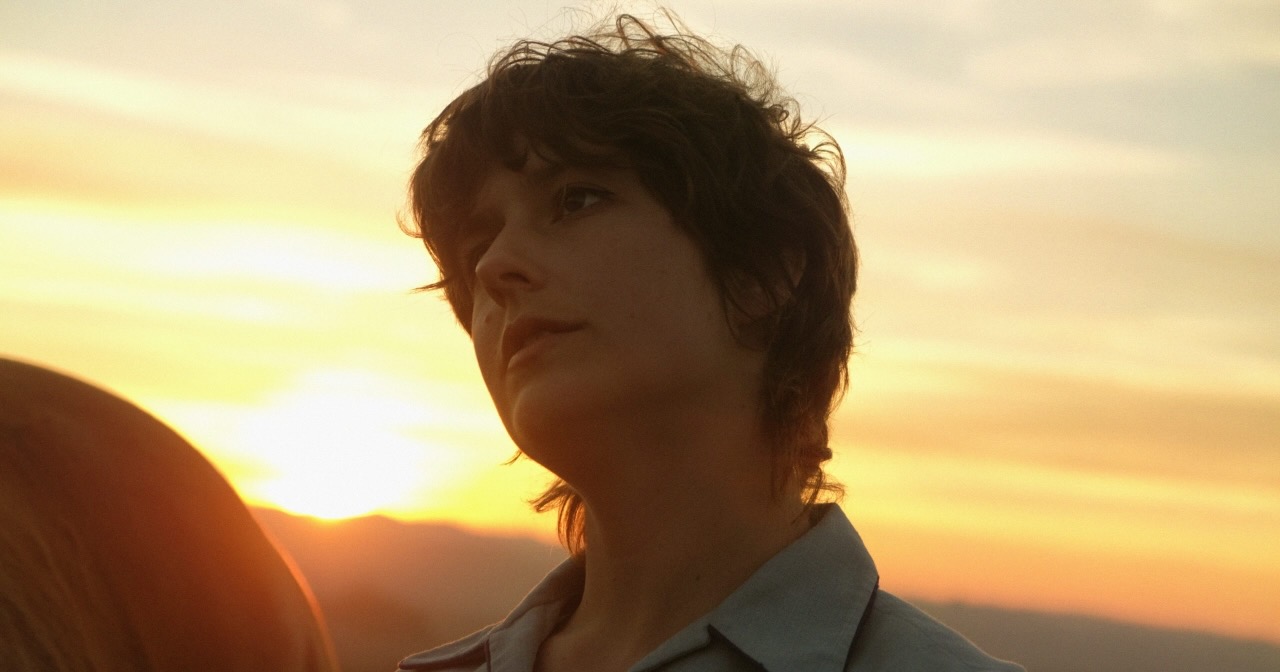
Bestie Lizzie No has just released their career-defining new record, Halfsies, and we are 100% here for it on our 250th episode! Lizzie, who co-hosts Basic Folk, put her entire being, identity, and creativity into this project. There’s a lot going on with their main character, the avatar Miss Freedomland, and we’re getting to the bottom of it in our conversation.

Our hero’s journey begins even before the main character is born. Her inception grew out of disdain for childhood beauty pageants – which Lizzie’s mother actually won back in the early ’60s at a now defunct amusement park called Freedomland. And, there are photos of Little Catherine Quinlan with a look of disgust on her five-year-old face. Lizzie grew up with this story and as she got older, she began to think hard about societal expectations and the stock put into women and children’s emotional expression through their faces. Lizzie also grew up hearing and saying the word “No,” hence the stage name.

LISTEN: APPLE • SPOTIFY • STITCHER • AMAZON • MP3

Enter Miss Freedomland! (Also the name of Lizzie’s new record label.) She has been tasked with a journey to become free, which will require inner healing, exploration of self-identity, and giving up performance of gender that just feels wrong. The album starts with our main character trying to level up (because, yes, this is a video game) with her own self-expression, revisiting past traumas and shedding the baggage and hot garbage that got her trapped in the first place.

In our conversation, we go track by track through this showstopper of a record and even get some solo live performances. I hope you enjoy exploring Lizzie’s world as much as I did. These songs are brilliant and the concept executed remarkably. Thanks to Studio 9 in North Adams, Massachusetts for the use of their beautiful studio!


Photo Credit: Cole Nielsen

MIXTAPE: Growing Up Hardly Strictly with ISMAY

I consider myself to be amongst the luckiest of music lovers. Growing up, I saw some of the most incredible roots artists from backstage while holding my Jack Russell terrier and playing with my cousins. When I was 8 years old, my grandfather Warren started a free bluegrass festival in San Francisco called Hardly Strictly Bluegrass. These artists shaped me since they were the first ones I watched perform, but the connection went on to become even deeper. When my grandfather passed away in 2011 I started performing music, and the larger community of Hardly Strictly was where I found my encouragers and mentors.

This is a compilation of the artists who I heard from and listened to as a child, and those whose songs I learned when I first became a musician. – ISMAY (AKA Avery Hellman)

“Dark Turn of Mind” – Gillian Welch

Just after high school I spent time working on some small homesteads with a farm labor trade for room and board. This was the same time that The Harrow & the Harvest by Gillian Welch came out – a literary masterpiece. Every time I listen to this record it reminds me of those homesteads and my borrowed car with a faulty battery. It brings me back to the day I arrived late to a new farm in West Virginia while my roommate was still sleeping and how odd it felt to be in a house with a stranger. I got up in the morning to make sourdough toast with an egg wondering what that person who was asleep in the loft of that ’80s wood cabin would think of me.

“Concrete And Barbed Wire” – Lucinda Williams

In the ’90s I was fortunate that my mom had great music taste. She took us around in a magenta suburban car and played Lucinda Williams. She said us kids used to sing along with silly accents to the words “concrete and barbed wire.” It took me another 20 years to fully appreciate Lucinda Williams and the masterful lyricist she is. Over the last four years, I’ve been working on a documentary about her, and it’s been so rewarding, because Lucinda’s music is the kind that gets better the more you know it.

“Dallas” – The Flatlanders

My grandfather was not a professional musician for most of his life, but in the final years he played in a bluegrass band with his friend Jimmie Dale Gilmore. What a kind man Jimmie is, with a voice that reminds me of a dove fluttering away. Because of this relationship he had with my grandfather, I heard about this record Jimmie made with his band The Flatlanders that was lost for 40 years. It was raw and made me feel like I was under a tin roof in Texas. It’s said that this tape helped mark the birth of alt-country.

“The Times They Are A-Changin'” – Odetta

A few years ago I was asked to perform at an event that compared and contrasted Bob Dylan and Leonard Cohen. I’m more of a Cohen person, so I had more trouble finding a Dylan song that felt like it would fit my feel. That was when I came upon this remarkable Odetta cover and I was inspired. She changed the whole feel of the song to make it her own. In 2008, she performed at Hardly Strictly Bluegrass just two months before she passed away, it was one of the final times she ever performed.

“St. James Hospital” – Doc Watson

I know that most people know Doc for his flatpicking, but I’ve always been much more drawn to the fingerpicking style of guitar in general. “St. James Hospital” feels like a fascinating departure from the more well known Doc Watson performances, and I love hearing him playing in a less linear fashion. This shows he can do it all. In the music that I’ve recorded I sometimes feel a bit out-of-the-norm and nowhere-to-belong, but this song feels similar to one I recorded called “A Song in Praise of Sonoma Mountain.” Hearing “St. James Hospital” makes me feel less out-on-a-limb in roots music.

“Permanent” – Kenneth Pattengale & Joey Ryan (The Milk Carton Kids)

As I started playing music I found this record by The Milk Carton Kids before they had that name, and played under Kenneth Pattengale & Joey Ryan. Listening to this song now, it is still unreal that it was all recorded live at a concert. It was deeply inspiring to see artists like Gillian Welch and Dave Rawlings generating a new live sound that was somehow very modern and yet felt like a continuation of original folk music. As if the ’80s and ’90s had never happened! What a gift. Then, seeing The Milk Carton Kids take that torch and carry it on was so exciting for me as a 19 year old.

“Boulder to Birmingham” – Emmylou Harris

I listen to Emmylou every year on Sunday night at Hardly Strictly Bluegrass. Her silver hair and steadiness feel beyond time. I can’t believe she is still here, with that same strong presence since I was just 8 years old. As a performer she has a strong sense of worthiness to the audience, a sense of mutual respect for the relationship between listener and performer. I hope that I can hold just a bit of her steadiness within myself.

“Restless” – Alison Krauss & Union Station

I was in 6th grade and didn’t much enjoy recess out on the playground. I brought my CDs over to an empty classroom, and sat in the back listening to Alison Krauss & Union Station. Sometimes I’d show these CDs to my friends. This was before I figured out that it was cooler to be listening to rock music. But I loved that music, and the songs were amongst the first I tried to learn in singing lessons.

“The Silver Dagger” – Old Crow Medicine Show

Old Crow Medicine Show was playing at Hardly Strictly as they rose up in mainstream culture. I appreciate the edge that this recording preserves. There’s even a moment where it sounds like someone might have dropped something or hit their instrument on another (01:35). I wish more recordings kept imperfections preserved within them.

“Pretty Bird” – Hazel Dickens

Part of the reason that my grandfather started Hardly Strictly Bluegrass was because of his love of Hazel Dickens. They were from very different backgrounds, but they became friends and saw the common humanity in one another through music. She played every year until she died. This is my favorite song of hers. What is beautiful to me about Hazel’s take on bluegrass is the imperfections and raw emotion. She brought her whole self to the song.

“Harlem River Blues” – Justin Townes Earle 

I can still picture Justin on the stage with his impeccably curated suits. Back around 2018, I opened a show for him in Santa Cruz, California. He drove up to the venue in a red convertible, which I thought was the coolest thing ever. Just a guy and his ride. He was very kind to me and I wish I had more chances to see him play again. May his music never fade away.

“Tiniest Lights” – Angel Olsen 

When I was 20, I went into a record shop in Ohio. The guy there said they only really carry more obscure records. No problem, I thought, I was here for Captain Beefheart and PJ Harvey. But when I asked, he said those artists were too well known. He pointed me towards Angel Olsen and I heard something in songwriting I had never heard before. My world opened up, and I knew there was so much more that was possible after listening to “Tiniest Lights.” She performed at Hardly Strictly in 2015 and her voice was as real and penetrating as the recordings.

“If I Needed You” – Lyle Lovett

What’s better than Lyle Lovett playing a Townes Van Zandt song?? We listened to Lyle a bunch when I was a kid. No, I’m not from Texas, but I do love those Texas songwriters.

“Long Ride Home” – Patty Griffin

The first time I performed at Hardly Strictly (although somewhat tangentially) was at an artist after party. I chose this song, because it had a fun fancy guitar line I could play with my beginner fingers. Someone who was performing came up and said they thought I was talented. I think that might have changed my life right there. It was the first time anyone had come up to me and said I was good enough to do this as a job, not to mention amongst professional musicians.

“Are You Sure” – Willie Nelson

Willie played Hardly Strictly in 2003 and I remember that big black bus sitting behind the main stage. I can’t even imagine the thrill of the audience members, his fans are as dedicated as they come. I heard this song at a recently released film that is fantastic called To Leslie.

“Little Bird of Heaven” – Reeltime Travellers

This band was part of that wave of old-time style artists that came at the same time as Hardly Strictly. The vocals are so unexpected, but real and honest. One of their band members became a mentor of mine and helped me get my start in the music business and I am forever grateful.

“Essay Man” and “The Golden Palomino” – ISMAY

These are two songs from my latest release, Desert Pavement, that would never have happened if it weren’t for Hardly Strictly. I am trying to find my way with my own version of folk, and can’t help but be inspired at what a rich trove of artists I have to draw from.


Photo Credit: Aubrey Trinnaman

You Gotta Hear This: New Music From Tray Wellington, Corb Lund, and More

We love a week absolutely filled to the brim with music – and we don’t just mean because we’re attending Folk Alliance International and hosting a private showcase room in Kansas City this week!

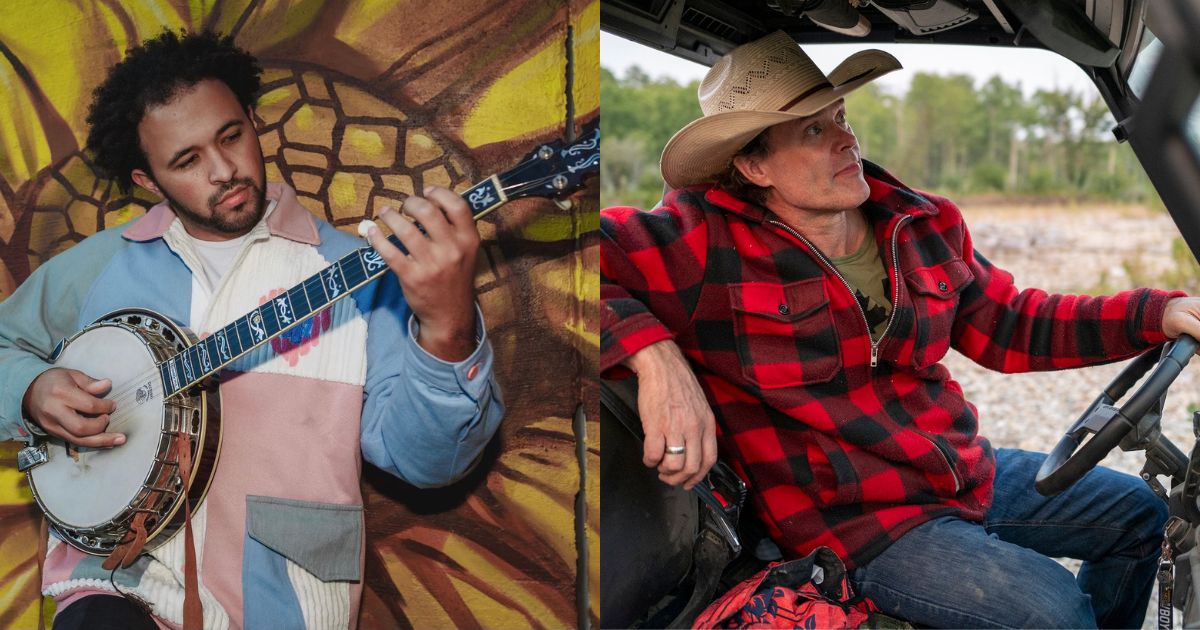
This week, there were just too many exciting releases and new songs to feature, so buckle up for seven excellent premieres – cause You Gotta Hear This! From a John Hiatt cover by modernist banjo player Tray Wellington to a brand new music video from country neo-traditionalist Corb Lund, from Amelia White to the Roe Family Singers, there’s something for every taste and from every style of American roots music.

Tray Wellington, “Lift Up Every Stone”

Artist: Tray Wellington
Hometown: Raleigh, North Carolina
Song: “Lift Up Every Stone”
Release Date: February 23, 2024
Label: Mountain Home Music Company

In Their Words: “For me, ‘Lift Up Every Stone’ encompasses a sense of encouragement to fight through the hard times in life. When I first heard the John Hiatt version of this song, I loved the use of imagery to convey the lifting atmosphere. It was also a chance to try something new musically, which for anything I record, I want to be challenged more and more — and this was the perfect way to step outside of my comfort zone.” – Tray Wellington

Track Credits:
Tray Wellington – Banjo, lead vocal
Drew Matulich – Guitar, electric guitar
Katelynn Bohn – Bass
Josiah Nelson – Mandolin, fiddle
DaShawn Hickman – Pedal steel guitar
Wendy Hickman – Lead vocal, harmony vocal


Corb Lund, “El Viejo (For Ian)”

Artist: Corb Lund
Hometown: Alberta, Canada
Song: “El Viejo (For Ian)”
Album: El Viejo
Release Date: February 23, 2024
Label: New West Records

In Their Words: “We dedicated the record to our late friend, Ian Tyson, and the title track is a tribute to him. ‘El Viejo’ was our friendly nickname for him and it means ‘the old man.’ I’m pretty proud of the song, and the video, which uses a lot of cool old stock footage of him. Hope the record is as satisfying to listen to as it was for us to make. I left it all on the field for this one.” – Corb Lund

Video Credits:
Noah Fallis – Director, Director of Photography
Jamie Campbell – Producer
Brendan Schmidt – Camera Operator, Editor
Ethan Wournell – First A/C
Blair Bourque – Key Grip
Alyssa Howland – Gaffer
Archival footage of Ian Tyson courtesy of Neil McGonagle


Amelia White, “Love I Swore”

Artist: Amelia White
Hometown: Nashville, Tennessee
Song: “Love I Swore”
Album: Love I Swore
Release Date: February 23, 2024
Label: Thirty One Tigers

In Their Words: “The title track of Love I Swore is a dark and stormy love letter. I wrote it on the streets of Glasgow and Edinburgh in deep summer on tour when the sky stayed light until midnight. The ghosts of what I wished a love was and how it seemed to be slipping away were talking, and I wondered if a bird that had left the cage would be happy coming back? Kim Richey (producer) called in Eamon McLoughlin to slay our hearts with violin as the track builds. This honestly is one of my favorite guitar lines that has ever come out of me, and I hope all you troubled lovers find some strange comfort here.“ – Amelia White


Stephanie Sammons, “Faithless”

Artist: Stephanie Sammons
Hometown: Dallas, Texas
Song: “Faithless”
Album: Time and Evolution
Release Date: May 3, 2024

In Their Words: “What inspired this song was an old friend from high school who died from suicide in 2022. I kept up with her on social media. She would post pictures of her dog and her kids. Her posts seemed joyful and even funny from time to time. How could I have known she was suffering so immensely? If only I would have known! It was heartbreaking. I felt so helpless.

“And then there are the painful feelings with regards to my younger sister, who has had a rough time just doing ‘life’ in general. Even though we’re only 14 months apart, I was absent and oblivious to what she was going through during her darkest days. I’ve wondered, why does she continue to battle demons and dark places and I don’t? And why did it take me so long to realize how her anger was pain turned inward? I have guilt about not being there for my sibling.

“Because of the pain I have seen others endure and I have felt, this song explores my deep questions about faith. I’m asking myself, what do I have faith in? ‘Faithless’ is reflecting on the indiscriminate nature of suffering, generational trauma, and what ultimately happens to our souls when we depart this world.” – Stephanie Sammons

Track Credits:
Written and published by Stephanie Sammons

Stephanie Sammons – Vocals, acoustic guitar
Mary Bragg (producer) – Background vocals
Josh Kaler – Guitars and pedal steel
Jordan Perlson – Drums, percussion
Jon Estes– Bass, piano, organ


The Roe Family Singers, “Little Trouble”

Artist: The Roe Family Singers
Hometown: Minneapolis, Minnesota
Song: “Little Trouble”
Album: Sisters And Brothers
Release Date: February 2, 2024
Label: Bonfire Music Group

In Their Words: “I’ve long been interested in the folk process; specifically, the idea that newer folk songs borrow melodies and lyrics from earlier songs and repurpose them. ‘Little Trouble’ started life by borrowing part of the melody from the traditional song ‘Little Birdy,’ and reimagines some of the lyrics, too, updating them to deal with modern concerns like urban versus rural, social media, political scare-mongering and manufactured moral panics, and a culture held together through pharmacology.” – Quillan Roe


Wolf Jett, “Tavira”

Artist: Wolf Jett
Hometown: Santa Cruz Mountains
Song: “Tavira”
Album: Time Will Finally Come
Release Date: February 23, 2024

In Their Words: “Imagine leaving your cushy pharma job and rent-controlled apartment in SF to travel by bicycle and busk through southern Spain for a year. One day, you lose your wallet skinny-dipping near the Portuguese border and then you come upon the village of Tavira. Upon first glance, the cobblestone streets and whitewashed buildings seem unremarkable, until you cross the Roman bridge over the canal, break open your guitar case, and start playing. Next thing you know, a large crowd gathers around, dancing and cheering, and you make more tips than you’ve seen all month. A French expat offers for you to stay on his farm to help with the fig harvest, and next thing you know you’re closer to Eden than ever. This is a love song to Portugal and the wonderful times I spent there.” – Chris Jones, lead singer and songwriter


Pi Jacobs, “Coyote”

Artist: Pi Jacobs
Hometown: Los Angeles, California
Song: “Coyote”
Album: Soldier On
Release Date: April 26, 2024
Label: Blackbird Record Label

In Their Words: “The song began one day when a coyote stalked my dog on a walk, following us home, and even jumping our fence that night. It was a terrifying experience, but the metaphor it brought to mind was even more menacing. My best friend had been fighting cancer and every time we thought it was gone, it would spring back up, just like this dang coyote. The image was so powerful, that when I told the story to my co-writer, Ted Russell Kamp, the song just about wrote itself! But even with this bleak backstory, the song sounds ‘happy,’ and I’m happy to report that both my dog and my friend are alive and well. Take that coyote!” – Pi Jacobs

Track Credits: Written by Lisa Marie Jacobs and Ted Russell Kamp

Recorded in Los Angeles at Carriage House & Forty Below Records
Eric Corne & Pi Jacobs – Producers
Eric Corne – Engineer
Mark Chalecki – Mastering engineer
Pi Jacobs – Guitar, lead vocal, backing vocal
Adam Hall – Dobro, banjo
Zack Hall – Upright bass
Butch Norton – Drums, percussion
Philip Glen – Mandolin

Video Credit: Taylor Hungerford, Director / Silver Spark Printworks


Photo Credit: Tray Wellington by Heidi Holloway; Corb Lund by Noah Fallis.

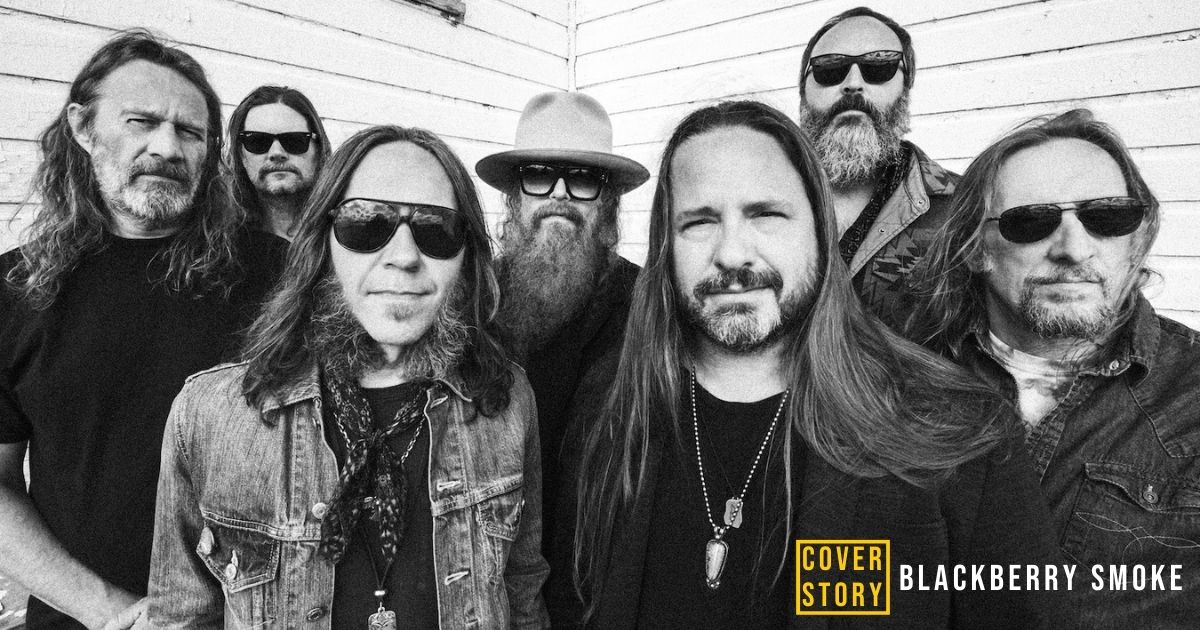
Blackberry Smoke’s New Album Offers a Crunchy Continuation of String Band Traditions

With 23 years behind them, Blackberry Smoke are still one of the best examples of Southern rock in the modern era – but what does that even mean, right?

Led by singer, guitarist, and primary songwriter Charlie Starr, the band does indeed have roots pointing straight to hard-driving ‘70s icons like Lynyrd Skynyrd, the Allman Brothers Band, and more. That’s true, but they also pull inspirations from farther back. And to Starr, Southern rock, at its core, is a continuation of the Appalachian tradition: “String band music and storytelling.”

With their latest album, Be Right Here, some of that old-time tradition shines through the cracks of a warm, distorted wall of sound, with heartfelt song craft and acoustic-guitar melodies front and center. Meanwhile, the band continue to prove crunchy, doubled guitar solos, thundering drums, and anthemic vocals never go out of style.

BGS spoke with Starr before Be Right Here was released, to see what has changed (and what will always stay the same) for one of the most dynamic Southern rock bands in history – a history they know all too well.

I thought I’d kind of start just seeing how you’re feeling at this point. You’ve been burning up the road for over two decades now, which seems crazy to me. How do you feel about where you’ve have been, and where you are now?

Charlie Starr: I mean, I’m tired. [Laughs] No, I feel good. We all do. It doesn’t seem like it’s been that long. It’s surreal to think it’s been 23 years. I don’t feel like I’m old enough to say that I’ve been doing anything for 23 years other than breathing, but I’m proud of what we’ve accomplished. It feels good.

Blackberry Smoke is one of the best pieces of evidence that Southern rock is still alive and well. But I was just wondering, do you think there’s still more to say in that? Is the form still inspiring to you?

Totally. Just listen to any song from those amazing early Skynyrd records or Allman Brothers or Marshall Tucker Band records, Blackfoot – all those bands are so different, and it really was just geography that tied ‘em all together. They all had their own fingerprint. And I think that we do, too.

I was listening to Patty Loveless in an interview and she was talking about bluegrass – which I grew up playing and I dearly love also – and she was talking about how those first generation bluegrass bands, like Bill Monroe and the Blue Grass Boys, Flatt & Scruggs, and the Stanley Brothers, they came from this rich musical heritage of the mountains where they grew up in Kentucky, Virginia, Tennessee, North Carolina. And what they were drawing from was acoustic string band music and storytelling.

Well, now, fast forward all this time, and modern bluegrass musicians not only have that, but they also have Led Zeppelin and the Beatles and the Rolling Stones and all this. There’s so much more. So I kind of look at it in a similar fashion with “Southern rock” bands, because those guys were listening to not only what I just mentioned, with the hillbilly country music and string band music, but also the British invasion and then traditional country and the Beach Boys. As time moves along, there’s just more and more that gets poured into the soup. So to answer your question in a very long-winded way, I think that it can go on forever.

So you’re kind of the third wave of popular Southern music, taking all that was done before and adding in the new influence, too.

Yeah, if we were a tribute band that just dressed up like some old ‘70s band and played their songs, then it would suck. But since we have the freedom to explore our own musicality, it can never end.

The new album is called Be Right Here. What was the spark that got this one going?

In my case, it’ll usually be a little explosion of songs. I’ll know that album time is coming, and so I’ll get to work on writing a batch of songs. It doesn’t always come quickly but it usually seems to work out, which I’m happy to say, because it kind of falls on me – which I don’t complain about that at all. I dearly love to write songs and I’m glad that it’s my job. There are worse jobs to have. Writing songs for Blackberry Smoke is much easier than working in a body shop, which I did for years.

At this point, 23 years on, are you still writing about the same stuff?

Well, I guess stories can all be new, stories of love and loss and frustration and women and men and drinking – or not – whatever. But if you look at popular music as a whole, there are new subjects that enter our culture, like cell phones and the internet and Facebook. I don’t know if I’ve ever used the word Facebook in a song. I probably won’t. But no matter what comes along technology wise, time stays the same. It’s still moving at 60 seconds per minute, and that’s not going to ever change. And human beings behave really the same way.

That said, the internet’s changed everything really. Not entirely, but it’s added a new accent to everything we do. I think John Mellencamp said it best, he goes, “I’m not sure if we’re supposed to hear this many voices at all at once.” That complicates life, really. It might push me back into my hermit hole a little more. As a songwriter even, it pushes me to the old ways more, melodically and musically. I don’t think anything really new can be said. We’re just trying to find an interesting slant on the way we say it.

You teamed up with Grammy-winning producer Dave Cobb for the second time, and he’s famous for live recording and loving first takes. Does that work well for a band like you guys, who are very live-show oriented?

It does. And in this case, it’s very interesting. We went back to RCA Studio A again, and he said, “This time I’m going to put the drums and amps and you guys all in the big room, so we’re all going to be in a little cluster.” And I was like, “Really?” As soon as we started playing together, it was like, “Oh man, okay, this is working. We don’t necessarily need all the separation.”

Some producers would be like, “Hell no. There’s no way I’d ever make a record like that.” It can be too sloppy. But Dave was like, “Well, we’re capturing this one sound. Let’s capture it all in the room, like a ‘60s record or even a ‘50s record.” So that’s what we did.

Tell me a little bit about “Dig a Hole.” It was the first track written, the first track on the album and the first one released, with a theme of choosing your own path – for better or worse. Is that kind of what you have done as a band?

We have. It’s been our only choice, really, because nobody’s ever come around with a different idea. [Laughs] It’s funny, I put together a [track list] and sent it to Dave, and I had “Hammer at the Nail” first. And Dave goes, “Are you insane? ‘Dig a Hole’ is first. Why would you think that ‘Hammer at the Nail’ should be first?” I said, “Because it’s faster.” And he said, “I don’t give a shit about fast. ‘Dig a Hole’ is like you guys are winding up to kick somebody’s ass!”

“Azalea” leans more into the folky aspect of what Blackberry Smoke does. It’s got that acoustic shimmer of a classic-rock ballad. Where does that come from for you?

Man, I just love that kind of acoustic music. Again, that kind of stuff was my upbringing, and I’ll never turn it loose. That song lyrically was about fatherhood, because here we are now, our children are all growing up. I’ve already seen one go to college, graduate, now get married, so it’s like, “Well you hold on tight, but you don’t want to smother ‘em.” They have their own path to forge, so all you can do is try to be there for ‘em.

I’ll leave you with the big picture. After 23 years, what you hope people take away from this particular record?

I just hope they dig it. I mean, I don’t know if I expect people to experience it in a different way than I do or not. I don’t know. But I do get a lot of enjoyment right now listening to it.


Photo Credit: Andy Sapp

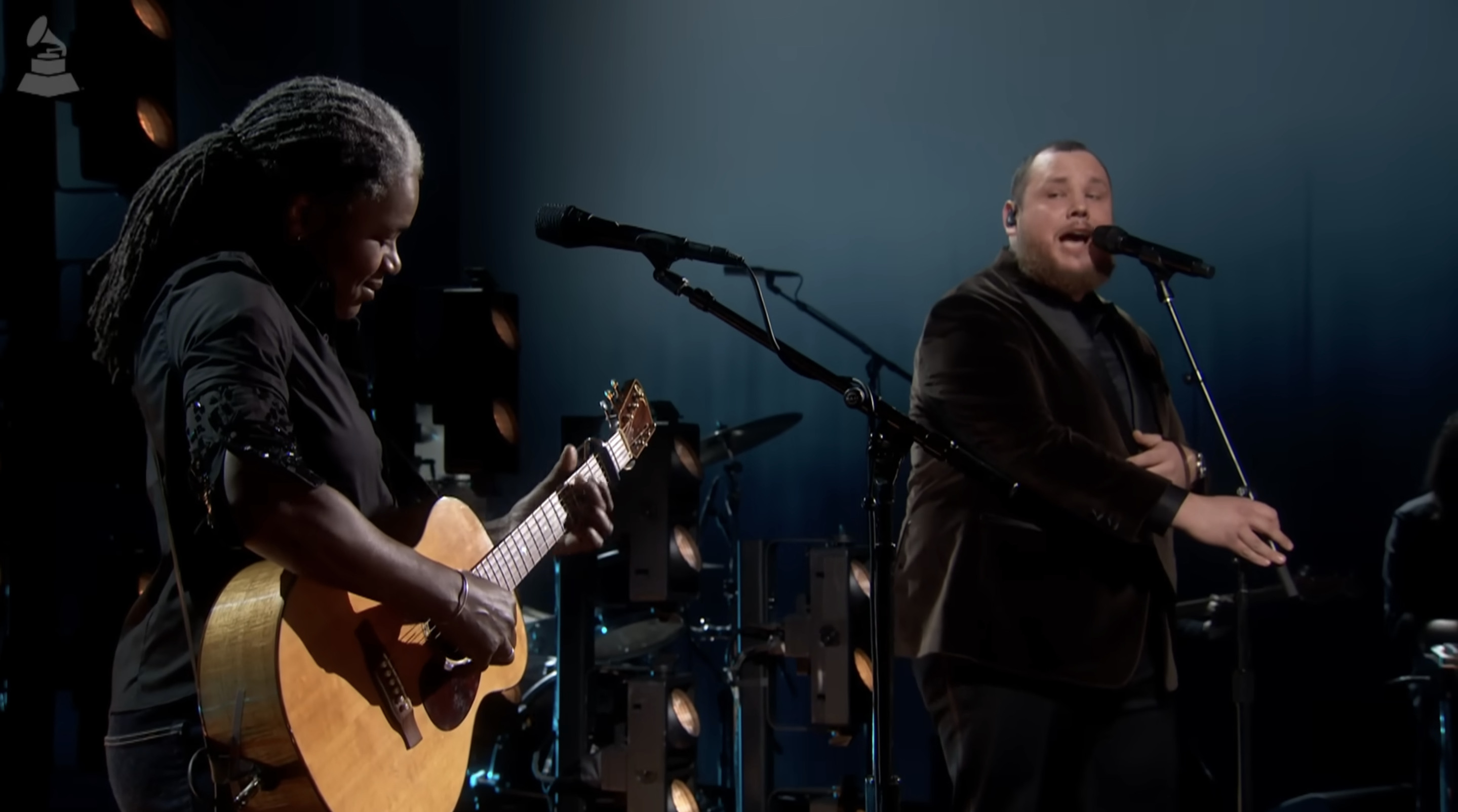
Watch Tracy Chapman and Luke Combs’ Stunning Performance of “Fast Car”

Since the Grammy Awards ceremony on February 4, the country and folk music worlds have waited with bated breath for the Recording Academy to share a stand-alone video of Tracy Chapman and Luke Combs’ stunning collaboration on their mutual, cross-generational hit, “Fast Car.” Late last week, the Academy made our dreams come true – you can now watch the performance in its entirety. (View above.)

The song was a highlight of the Grammys’ primetime telecast and, to its global audience and more than one commentator, signaled a sense of unity and come-togetherness that many feel is woefully lacking in the current zeitgeist, news cycle, and pop culture content machines. Chapman seemed to glow while Combs quite obviously basked in her limelight, content in sharing the stage and the iconic song with one of his childhood heroes. Chapman, something of a recluse in the past two decades, occupied the enormous Crypto.com Arena stage with a quiet confidence and an undercurrent of joy. An electric energy emanated from her guitar strings as she picked the unmistakable melodic hook. Then, on the song’s soaring chorus, the two sang in unison, finding power and common ground in a lyric that has now been sung, heard, and enjoyed by millions more – and entirely new generations.

In the audience, celebrities and musicians like Taylor Swift, Michael Trotter of the War and Treaty, Brandi Carlile, and many more sang along boisterously, indicating the staying power of the song and its lyrics – and the long-lasting adoration held by so many for Chapman.

“Fast Car” will continue to resonate long into the future – and not just on road trip playlists. It’s a perfect, sonic example of the angst endemic to the American dream, of queer placemaking and history-telling, and of all the ways a story so specific, granular, and microscopic could feel entirely universal and relatable. There’s a reason why so many listeners have needed reminding that Combs didn’t, in fact, write the song himself – no matter who we are, where we come from, or who we love, we all so easily see ourselves reflected in “Fast Car.” We’re each hungry for that reflection; “Fast Car” is satiating and then some.

For a brief moment during the Grammys’ 66th Awards Ceremony, we were all contented, joyful passengers in Chapman and Combs’ cosmic “Fast Car.” Let’s each take time to continue to inhabit that moment, as we navigate the traffic of our busy, distinct, distracting, and often divided lives.


Willi Carlisle Is a Lyric Poet In the Most Classical Sense

The first time I saw Willi Carlisle was in Buffalo, New York, in the tiny basement of an old protestant church that Ani DiFranco bought. There couldn’t have been more than thirty or so people there – a queer couple or two holding hands, a mom and a dad plus their kid, a cluster of 20-year-olds too hip for their own good. I see twenty or so shows a year – neighborhood guitar pulls, little club gigs, shows in big theaters, and every so often an arena. Willi was world class, one of the best I’ve seen. He told stories in between the songs, tracing an anti-Vietnam song well into the 17th century, or talking about Mexican ballads and the power of the concertina, or about how a hometown story is both archetypal and plain, universal and contained to a very specific time and place.

As the Buffalo concert suggested, Carlisle is at his best when limning complex networks of historical figures, news, what is called “traditional music,” contemporary poetics, and the natural world. He is a lyric poet, in the most classical sense.

This fact could be seen especially in a track from his new album Critterland, “Two-Headed Lamb.” It’s an adaptation of a Laura Gilpin poem, which Carlisle translates and extends. I’ve always thought that the poem was a bit too glib, a bit too self-assured of its own moral ending.

Carlisle talks about the whole cycle of growth, how it is not a singular freak birth in a generic field, but how the freakish quality of a two-headed calf and the weirdness of that birth functions within a cycle: The farmer who finds it, persimmons growing out of season, a coyote picking at the corpse of a ewe, even “robins singing in an old growth tree.” As a creator, the song becomes an act of interpretation – a poem becomes a song, a song not quite a cover, a critique of a poem that might not work, but the working of the poem depends on an audience.

When asked about the poem, Carlisle responds:

As I explored Gilpin’s poem with friends and strangers, it’s been no surprise that “Two-Headed Calf” seems well-known in both rural and trans communities and their significant cross-section. And why not? It’s a poem about a creature too beautiful for this world, [whose] magisterial dimorphism and tragic death conjures real-world magic. Someone born feeling as if they have no gender, two genders, the wrong gender, might feel this magic themselves. So would someone who’s pulled an ailing calf from the womb of their beloved milk cow with a rope or their bare hands.

That’s a generous reading, a reading done in community – one that expands what an audience could mean, one that is as cyclical and as wide as open as could be. It’s generous to Gilpin, as well.

This whole act of semi-translation also explains the concept of Critterland, which Carlisle describes in our wide ranging conversation as a place where “…we have to dismantle the house, make something different. I think what we inherit (our bodies, songs, tools, houses) makes us the living proof of the suffering of our forebears. We’ve got their noses, their colonial holdings, their drinking problems.”

In a culture, we take and hold onto what is useful for us and the results of that taking we try to build more carefully.

In the list of animals that Willi names in the title track – “Yeah, the sparrow on the wing taught mе to find you/ And the opossum knows his own mind more than I do” – there is hope in being able to craft houses and buildings like the scuttling of everyday creatures. If the possum and the sparrow can (and may I add, the racoon, the crow, the squirrel, every city or country creature) then we can, too. Which is why the best of Carlisle’s songs are ones which mention small spaces – a mother singing “In the Sweet By and By” in the kitchen, or the devastating song “The Arrangements,” with its complex, sometimes compassionate, sometimes ruthless processing of a father who drank too much and loved too little, or in “The Great Depression,” a verse that limns Carlisle’s ancestors:

From the needle-prickin’ mothers who were never taught to read
To the barefoot hungry soldiers that enlisted at 16
Oh in my dumb debasement, I still find great relief
That on the lam and on the dole they counted themselves free…

Those are local examples, small, and there is some argument within them. Like some great folk singers, Carlisle’s sense of local spaces, his skill at deep readings of landscape, is a primary example of his excellence. I think of him as an Arkansas singer, but he has to earn a living – part of that possum life. Carlisle travels constantly, touring half the year or more to make enough money to be somewhere he feels home.

He explains it thusly: “One of the hard facts about touring so hard is that I haven’t really lived in Arkansas for more than a few months a year in six or seven years now. Hell, currently I’m living in southwest Missouri, just over the border. I don’t feel excluded from my life back home, usually, when I’m on tour. “

It’s another network, a cycle of creation, and intimacy. In a song called “Higher Lonesome,” is there something monastic there? Setting up lonely feelings to a higher power? Is he quoting the 1950s Texas technicolor film? Is it a song about drinking?

It’s all of those things and none of those things. He mentions his community and where they are in the world:

…By the time the ride is over, I’m sure I’ll ask to ride again
See the snowfall in Wyoming, strung out on Johno’s coke
Keep a mailbox in Nebraska, so I know the Lord knows
She can write a letter once a year and say that we’re still close
I can put my cents on Benjamin hear the songs he wrote…

The privacy of this song marks the depth and complexity of another, the last work on the record “The Money Grows On Trees.” It’s a 10-minute recitation, a story told in intense, Appalachian Gothic detail, about corruption and a young drug dealer gone wrong.

If any texts could be considered lonely, even in the midst of Carlisle’s careful noting of connections, these are. For example, when in another song, he sings to a “Jaybird” – another of those scuttering creatures, that eats off what is left. He says to the jaybird, that “he’s doing just fine, his head is a wreck and his chest is on fire.” This line, with neither denial nor irony, is a kind of Beckettian notice about continuing on despite the ongoing, struggling moments.

The whole album speaks of a (dis)regulation of feelings, slipping into the natural ebbs and flows of the titular Critterland so the work can continue. In the album, and in his live shows, a cobbling together happens as a kind of hope, but a hard-won kind.

Or, to give Carlisle the last word:

I don’t believe in despair – it would make me hate things, and I cannot bear to do that. So, alas, that means the only other option is the hard one: hope. Here in the first world we have unimaginable resources and power, so much more than we need. We could, realistically, reduce climate change, enshrine human dignity, end global poverty, and celebrate untold freedoms in our lifetimes. Why wouldn’t we? I’m naive, surely. Maybe I’m an idiot, and maybe I’m just obsessed with getting “what’s mine.” Music is a business, after all.

The work is the thing – to pay the mortgage, to tell stories that need to be told, to adapt stories that have been forgotten, to cry or laugh, to mourn, to change people’s minds politically, to seduce or to be seduced.

Carlisle’s practice, in an aching two-step, does this with tradition. There’s a reason why he’s a square dance caller, and there’s a reason why, for him, the dance goes on.


Photo Credit: Jackie Clarkson
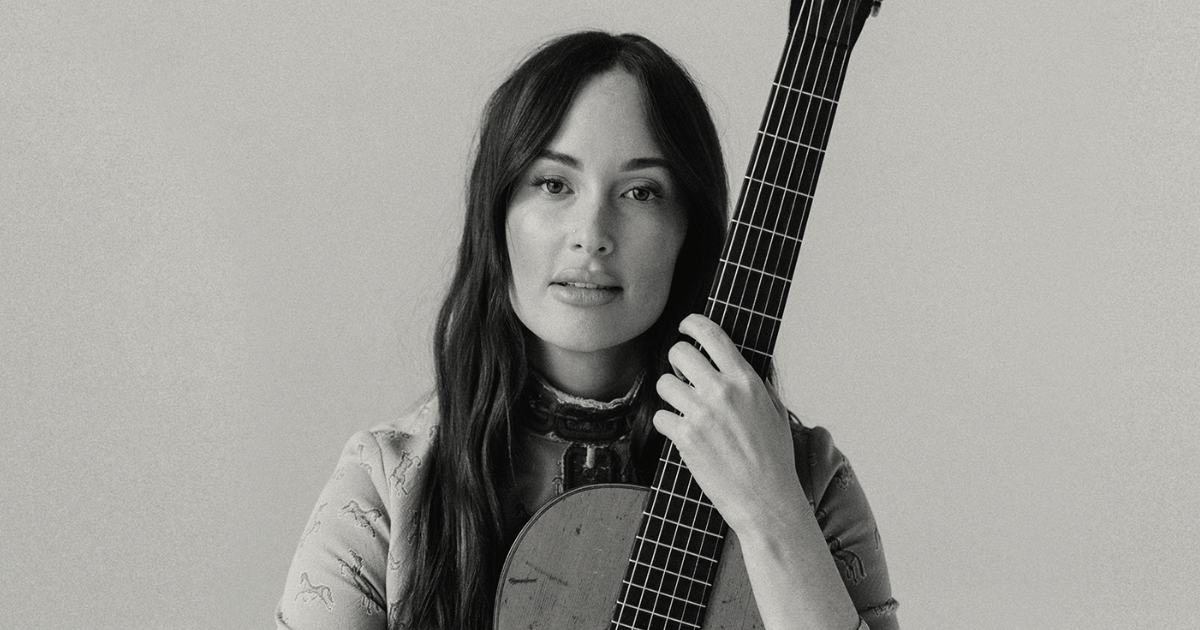
Hear the Title Track of Kacey Musgraves’ Next Album, Deeper Well

During the primetime Grammy Awards broadcast on February 4, country experimenter/challenger and singer-songwriter Kacey Musgraves announced her next full-length album with a 30-second ad that dripped with pastoral, “cottage core” imagery. Among more than a handful of recent, high profile album announcements – Lana Del Rey announced her upcoming country album just prior to the Grammys; Taylor Swift announced her next album during the ceremony; Beyoncé teased and confirmed her own country foray during the Super Bowl – Musgraves’ messaging felt very pointed, direct, and a bit disaffected. Given her track record and the lyrical content of the album’s title track, “Deeper Well,” it’s not surprising that Musgraves continues to follow her own arrow, wherever it points.

“I’m saying goodbye / To the people that I feel / Are real good at wasting my time…” she sings, and yes, it’s another free and unconcerned middle finger to Music Row, Nashville, and their puritanical country gatekeeping, but it’s so much more than that, too.

In the music video for “Deeper Well” (watch above), which seems pulled directly from a recent Star Wars film or a modernist, fantastic adaptation of Brontë or Austen, Musgraves inhabits a cozy and fearsome solitude. It’s reflected in the lyrics, as well, as the notorious stoner speaks of giving up on “wake and bakes” and giving up all of the flotsam and jetsam that’s gathered in her life since her enormously popular and successful album, Golden Hour, her prominent divorce, and the “controversy” that swirled around genre designations for her critically-acclaimed though nearly universally snubbed follow-up to Golden Hour, 2021’s star-crossed.

It seems that Musgraves is making music with even more intention, even more of herself, and even less concern with industry gatekeepers and mile markers. It also seems that, sonically and otherwise, Deeper Well will draw on the devil-may-care attitude of Same Trailer, Different Park and Pageant Material, while still guiding her audience and fans – by reaching them, directly – toward the same redemption and rebirth that she’s clearly found while making these songs. The production here listens like a combination of boygenius, Nickel Creek, and more of East Nashville and Madison than of Music Row and Broadway. But of course! This is Kacey Musgraves, after all.

There’s a slowing down apparent here, not only in the time that’s elapsed since star-crossed, not only in the imagery of the announcement and the first video, but also in Musgraves’ ambitions and how they fit into the overarching constellation of her work. Ambition has never been the focal point of her music, but it’s always been present; Musgraves is as deliberate and strategic as any woman (is required to be) in country music – like Swift, or Brittany Howard, or Ashley Monroe, or Maren Morris – but she’s leveraging her agency and her position as the CEO of her own outfit to continue to step away, bit by bit, block by block, mile by mile, from the parts of the music industry she’s never cared for.

As it turns out, her fans have never cared for the industry either, whether they know it or not. So, Deeper Well, is poised to – yet again – further broaden and expand the universe of Kacey Musgraves, even while her own, personal world seems to have deliberately shrunk… for the time being.


Photo Credit: Kelly Christine Sutton

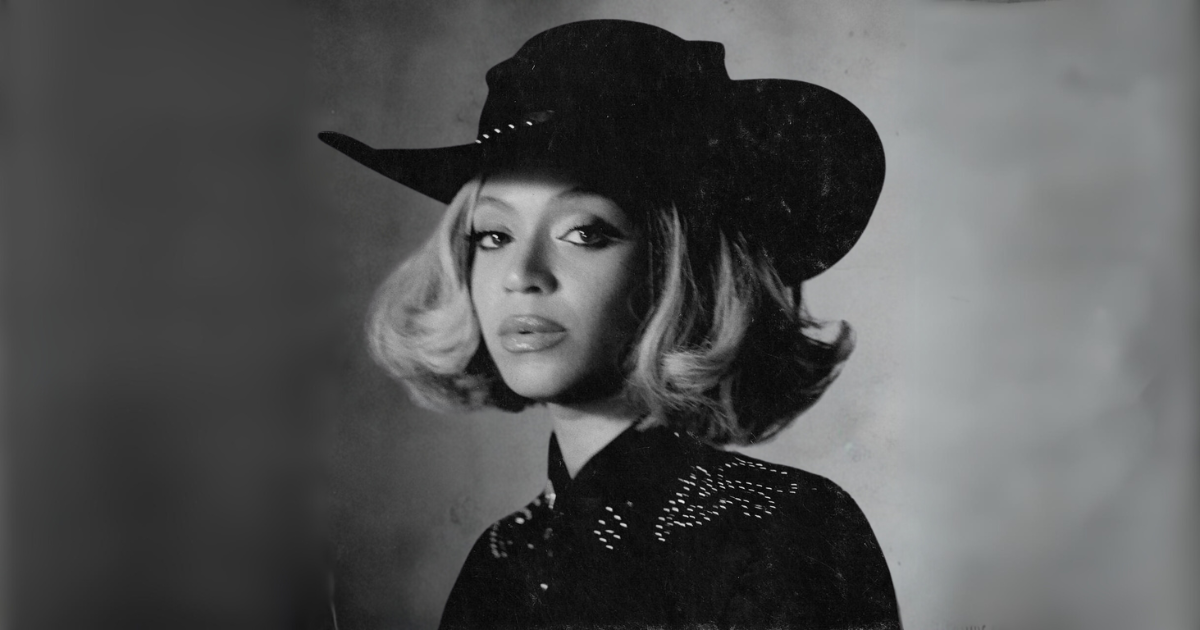
Yes, That Is Rhiannon Giddens Playing Banjo on Beyoncé’s New Track

During a series of high profile Verizon ads during yesterday’s Super Bowl, Beyoncé announced that her upcoming Act II following 2022’s incredibly popular dance album, Renaissance, will find the globe-crossing singer/creative powerhouse returning to country. As music journalist Marissa Moss points out in a brand new post for the country newsletter she co-founded, Don’t Rock the Inbox, Beyoncé Knowles-Carter’s relationship to the genre is nothing new – as far back as 2007 the Texas born-and-raised artist rode a horse as she entered the iconic Houston Rodeo, an internationally known, marquis event in her hometown. Across the decades, Knowles-Carter has constantly utilized her music to remind her audience of her Americana roots, with songs, tracks, and production values that regularly reference country and roots music idioms. At the Grammy Awards on February 4, she wore a modernist couture cowgirl get up – a motif that has been peppered throughout the visuals for Renaissance and its world tour. As Lana Del Rey had just announced her next album, Lasso, would be country, the world wondered – why is Beyoncé wearing a cowboy hat?

But Beyoncé’s relationship to country goes deeper, still. In 2016, as Moss and many other journalists and industry insiders pointed out in reaction to last night’s announcement, Knowles-Carter appeared with The Chicks (at that time still referred to as The Dixie Chicks) in a fiery medley performance during the CMA Awards. The trio joined Beyoncé on her countryfied Lemonade track, “Daddy Lessons,” before morphing into a barn burning all-skate on the Chicks’ Darrell Scott-written hit, “Long Time Gone.”

These new songs, which were initially unveiled exclusively on the streaming service Tidal, are built on the “Texas Bama” terroir that all of Knowles-Carter’s music is intentionally rooted within. “Texas Hold ‘Em” begins with a full, warm, fretless old-time banjo, playing a looped, intricate melodic hook. If your ears perked up during Act II‘s teaser video upon hearing the five-string, you are correct – the banjo and viola on the track were performed by the one and only Rhiannon Giddens and were tracked with Demeanor, Giddens’ nephew, another roots music innovator and genre blender, acting as engineer.

It is beyond apropos for Beyoncé and her team to tap Giddens here, someone who has also built a career and prolific musical output on holding together seemingly disparate influences, textures, tones, and styles. It speaks to Knowles-Carter’s aptitude for not only trying on and exploring new or relatively unfamiliar idioms, but also inhabiting them wholly, intricately, and intuitively. It seems obvious to state, but Beyoncé is no roots music carpet-bagger or opportunist putting on “poverty tour” cosplay just to bolster her bottom line.

Though the production style and arrangements here are decidedly interconnected with Renaissance, the beats and underscoring beneath and around the clawhammer banjo and finger-picked acoustic guitar don’t feel entirely like Avicii’s “Hey Brother” or similar, more heavy-handed attempts to intermingle string band music with house, disco, and dance. Ultimately, these two tracks feel less like a “stomp & holler” money-grab/chart-grab and more like post-modernist line dancing music, carrying forward the placemaking and space-holding of her 2022 album. This is music about gathering, moving, and polishing the floorboards with a pair of cowboy boots.

As MacArthur “Genius” and New York Times columnist Tressie McMillan Cottom points out in a NYT blog entry on the new tracks, the most country-sounding aspects here don’t originally stem from “country” at all: “‘Texas Hold ’Em’ sounds like a Maren Morris-style bop, with many of country-pop’s current themes,” says Cottom. “There is a good reason for that. Those themes are very R&B and hip-hop coded: harmonies, danceable hooks, trap percussion and call-and-response.”

In the mind of this writer, though, “16 Carriages,” the proverbial B-side to the more glitzy and grabby “Texas Hold ‘Em,” is the most remarkable of the two singles currently available from Act II. It’s a Beyoncé train song, one that straddles the divide between urban and rural, city folk and country folk, hillbilly music and rhythm and blues. This is a deft balancing act, one that collectives like the Black Opry and artists like Mickey Guyton, Brittney Spencer, Black Pumas, Buffalo Nichols, Julie Williams, and yes, Giddens, have been demonstrating to the roots music industry and its fans for years and years, now. Such a balance can easily go awry, but as we know, Beyoncé so rarely goes awry – even in a would-be treacherous foray into this well-guarded and gatekept genre.

@black_was_genius Replying to @🌚 you asked, i responded. #beyhaw #blonde #takeover ♬ original sound – Tressie McMillan Cottom

These two songs, but “16 Carriages” especially, illustrate how important it is to view music such as this not as aberrations from a country music norm, but as distillations and representations of what has always been possible in country. Especially if we let arbitrary, moralistic, and bigoted “rules” and expectations fall away and we let artists – whether the most famous in the world or the busker on the street corner – be who they are, unencumbered and empowered by their identities, in all of their idiosyncrasies and complications. Beyoncé’s Act II will showcase that we really do all belong in country, whether your hat and boots are literal shit kickers or are overlaid in hundreds of disco ball mirrors.


Photo courtesy of Tidal.

BGS 5+5: Abby Hamilton

Artist: Abby Hamilton
Hometown: Nicholasville, Kentucky
Latest Album: #1 Zookeeper (of the San Diego Zoo)

Which artist has influenced you the most?

It’s always been Johnny Cash and June Carter Cash. My mom used to have us stop before a Myrtle Beach or Gatlinburg vacation growing up to have us pick out a book. At 12 years old I resented this greatly. But, as luck would have it, I landed on a June Carter Cash biography, Anchored in Love. Realizing I had known this music my whole life, I saw so much of myself in her story and it led me down one of the richest love affairs of discographies I’ve ever experienced. The music and life stories of Johnny Cash and June Carter have always been a north star for my writing, performing, and presence as a person and a writer. I adore them. It also opened the doors to the world of country and folk music.

What was the first moment that you knew you wanted to be a musician?

Speaking of Johnny Cash, I remember being in college and discovering that Kris Kristofferson had written “Sunday Morning Coming Down,” not Johnny. I had no idea people could be songwriters and not the artist. It was like this huge “aha!” moment in my life. I never really felt like I was good at anything growing up. Not very high achieving in school and not super passionate about anything. Until that moment. I thought to myself, “If I can write songs, I will be happy. No matter who sings them.” And that’s what happened!

When I started writing here in Kentucky, I quickly realized everyone who made music here wrote their songs. A beautiful legacy from these parts, but it made me shift my attention to performing them. Thinking maybe, “If I sing these songs, someone might want to sing them, too.” This lead to a beautiful and unexpected journey with performing and falling in love with singing and my band. Don’t know how I got here really, but that’s the most I know.

Since food and music go so well together, what is your dream pairing of a meal and a musician?

Man, I think I’d take a bowl of Vodka Pasta and Bruce Springsteen. Those two always hit. And make it spicy.

What has been the best advice you’ve received in your career so far?

There’s so many things. I’m lucky to be surrounded by so many friends, family, and influences who know me and tell me the truth. The biggest thing has always been staying true to myself. Protect my tribe and be honest with those closest to me. CLICHES I know. But, it’s true.

Which elements of nature do you spend the most time with and how do those impact your work?

Anytime I’m in Eastern Kentucky on a dewey spring morning, I’m writing like a fiend. TRULY. If I can catch a sunrise and see the spiders making webs in the grass in the morning, I’ve always finished a song. Something that feels like a retreat from the real world always inspires me. No matter the season.


Photo Credit: Alysse Gafkjen

Same Twang, Different Tune

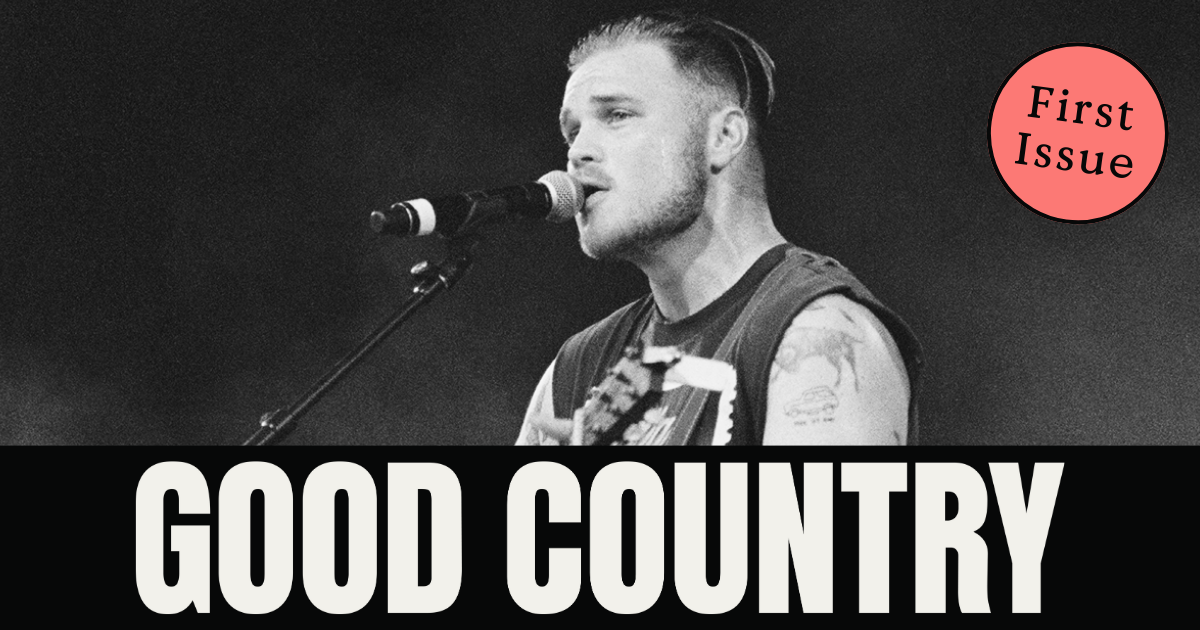
(Editor’s Note: Sign up here to receive Good Country issues when they launch, direct to your inbox.)

Few words stir up conflict in country music circles the way “authenticity” does. While debates over authenticity rage within every corner of the arts, the tension is especially potent in country, whose unofficial tagline is, after all, a commitment to honest simplicity: “Three chords and the truth.” While “truth” can be a broad umbrella to work under, within country music it tends to encompass a longstanding commitment to sharing the stories and experiences of everyday people, in particular those of the rural working class.

Accordingly, an adherence to and celebration of the very concept of authenticity – nebulous as it may be – is as baked into country music culture as an anti-establishment sentiment is inherent to punk music. Listen to country radio, though, and you might have a hard time finding it, particularly as the bro country of the mid-teens, though finally waning in popularity, still dominates the majority of terrestrial country airwaves.

It’s 2024, though, and it’s way past time to declare that country radio is irrelevant. Glance at Billboard’s Hot Country Songs chart, which includes sales and streaming data alongside airplay, and you’ll see the top spot isn’t occupied by one of the usual radio favorites like Luke Bryan, Morgan Wallen, or even Luke Combs, the latter of whom has notably found a way to straddle the line between commercial success and critical acclaim.

Rather, at the time of this writing the number one country song in America is “I Remember Everything,” a duet between the relatively new artist Zach Bryan and one of the genre’s more adventurous stars, Kacey Musgraves. As a song, “I Remember Everything” isn’t necessarily groundbreaking. Bryan’s and Musgraves’ voices play nicely off one another, with his achy grit contrasting sweetly with her smooth twang. The production is simple, underdone even, and lyrically the track travels well-trod territory: romantic heartbreak.

So, what, then, has kept “I Remember Everything” firmly situated in that top spot for 14 straight weeks (and counting)?

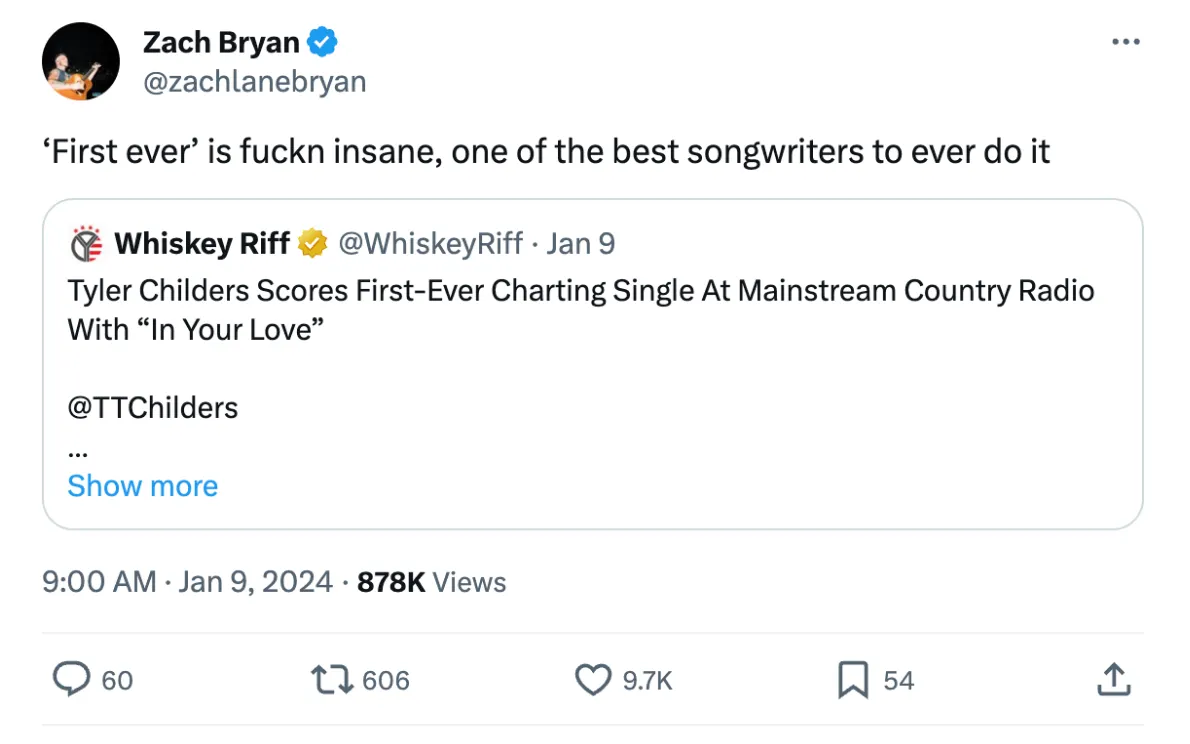
If you’ve paid even the least bit of attention to country music in the last couple of years, you’ve no doubt encountered Zach Bryan and his genuinely singular approach to the genre. With his raw sound, confessional lyrics, and decidedly DIY approach to business, Bryan radiates the kind of authenticity that fans crave. He joins a host of other recently established and emerging artists – including but not limited to Tyler Childers, Lainey Wilson, Colter Wall, and Billy Strings – who found success by foregoing the traditional route to country stardom, one that typically involves following an out-of-date formula honed over time by profit-driven record labels.

Zach Bryan debuted with DeAnn in 2019, finding an audience online thanks to the viral success of “Heading South” on DeAnn’s follow-up Elisabeth. He quickly built a fanbase on TikTok and YouTube before releasing his 2022 breakout LP, American Heartbreak, which had more opening week streams than any other country album that year. In the lead-up to American Heartbreak, Bryan, who served as an active-duty member of the U.S. Navy for eight years, was honorably discharged in 2021 so he could pursue music in earnest.

In addition to topping charts, American Heartbreak set itself apart from the rest of the year’s crop with its unadorned production, heavily narrative songwriting, and sheer ambition – the record clocks in at a lofty 34 tracks, with less filler than one would anticipate. The album’s biggest single, “Something in the Orange,” earned Bryan a Grammy nomination for Best Country Solo Performance and, for a time, landed him atop Billboard’s Top Songwriters chart.

That record, along with a handful of EPs and loosies released in between, teed Bryan up for his 2023 self-titled LP, a much more focused effort (a mere 16 tracks!) that found Bryan firmly situated as a real-deal country star, one who can tap the likes of Musgraves, the War and Treaty, Sierra Ferrell, and the Lumineers to come join the proceedings. While it no doubt shows the depth of his rolodex, that guest roster also points at the breadth of Bryan’s influence, as each artist comes from a different part of the broader country/Americana ecosystem.

And while he considers himself a country artist, Bryan’s roots are more indebted to the folk-rock revival of the late-aughts and early teens, when acoustic acts like Mumford & Sons and the Lumineers grew so big as to cross over into Top 40, eventually helping spur an explosion in popularity for Americana and roots-adjacent music. It’s fitting, then, that the Lumineers feature on Zach Bryan, joining on the track “Spotless” so seamlessly it isn’t always easy to tell who is singing: Bryan or Lumineers frontman Jeremiah Fraites.

It’s on these collaborations, in particular, that you can hear Bryan’s joy at being able to do what he loves. His vocals are raw, but never phoned in; in fact, sometimes he seems to be straining so hard to communicate a particular emotion that you worry his voice will give out. It never does.

In other words, Bryan is a fan’s musician, one who geeks out about his favorite artists the way his own fans do about him. In a post about the duo the War and Treaty, who joined Bryan on the standout Zach Bryan cut “Hey Driver,” he writes, “I can tell you the first time I heard War and Treaty live and I looked to the person next to me and said, ‘Are you hearing this?’ I talked to them later that night and they were the kindest couple I’d ever met.” In the same post, he says of the Lumineers, “I can tell you about how when my Mom went on home I got the Lumineers tattoo on my tricep after hearing ‘Long Way From Home’ for the first time and how Wes [Schultz] and Jeremiah are some of the most welcoming humans I’ve ever met.”

This post points to a major piece of both Bryan’s appeal and the air of authenticity that surrounds him: His direct line of communication with his fans. He manages his social media accounts himself and is no stranger to getting vulnerable in his messaging, often posting progress updates on new songs he’s working on or taking a moment to express gratitude for his success. For fans, it’s almost like there are no barriers between them and Bryan, which reinforces the relatability at the core of his music.

The beating heart of Zach Bryan, for me, is “East Side of Sorrow,” a song that grapples with hope and religious faith by connecting the grief Bryan felt after losing his mother to his time being shipped overseas while serving in the Navy. Despite – or perhaps because of – these vivid references to specific experiences, like being “shipped… off in a motorcade” and losing his mother “in a waiting room after sleeping there for a week or two,” the song is deeply emotional and relatable, a wrenching but empowering anthem encouraging the hopeless to try to keep it moving. These days, you’d be hard-pressed to find someone who couldn’t use such a message, this writer included – Apple Music tells me it was my most-played song of 2023.

It would be – and for a lot of folks, already is – easy to accept Bryan’s every word, to believe that his hardscrabble songs about “rot-gut whiskey” and manual labor are honest reflections of the life he’s lived and the person he is. Then there’s the cynical interpretation, that Bryan’s anti-marketing is, actually, still marketing, that a young musician could only know so much of the realities of the struggle of the working class, that it’s the same twang to a different tune. Bryan has, after all, had a few bumps along his road to fame, including some less than flattering encounters with police that negate his humble personal.

But the truth, as it so often is, is likely somewhere in the middle. With such personal material, it’s easy to trace one of Bryan’s songs to its point of inspiration – “East Side of Sorrow,” for example, is undoubtedly ripped right out of his lived experience. And Bryan isn’t afraid to admit the gaps in his experience, like when on “Tradesman” he sings, “The only callous I’ve grown is in my mind.” Compare that to, say, the sheer tone deafness of a song like Blake Shelton’s “Minimum Wage” and Bryan’s instances of stretching the truth feel trivial.

Bryan is only the latest in a long line of country artists for whom authenticity is both a blessing and a curse. Genre giants like Johnny Cash and Waylon Jennings are often held up as unimpeachably authentic pillars of the genre, despite weathering their own brushes with the authenticity police earlier in their careers. And these debates, which tend to center white, straight, cisgender men, aren’t nearly as hostile in their scrutiny as they are for marginalized artists, against whom the idea of authenticity is typically wielded as a gatekeeping weapon.

Wherever you fall on Zach Bryan, it’s hard to deny that the gravel-voiced, baby-faced boy from Oklahoma has changed the very fabric of contemporary country music. What he does with that power moving forward could break the genre open for good, making space for artists with unusual paths, atypical backgrounds and a disregard for the flavor of the week. If Zach Bryan is who he says he is, he may very well do it.


Sign up here to receive Good Country issues when they launch, direct to your email inbox.

Photo Credit: Louis Nice