Tag: Della Mae
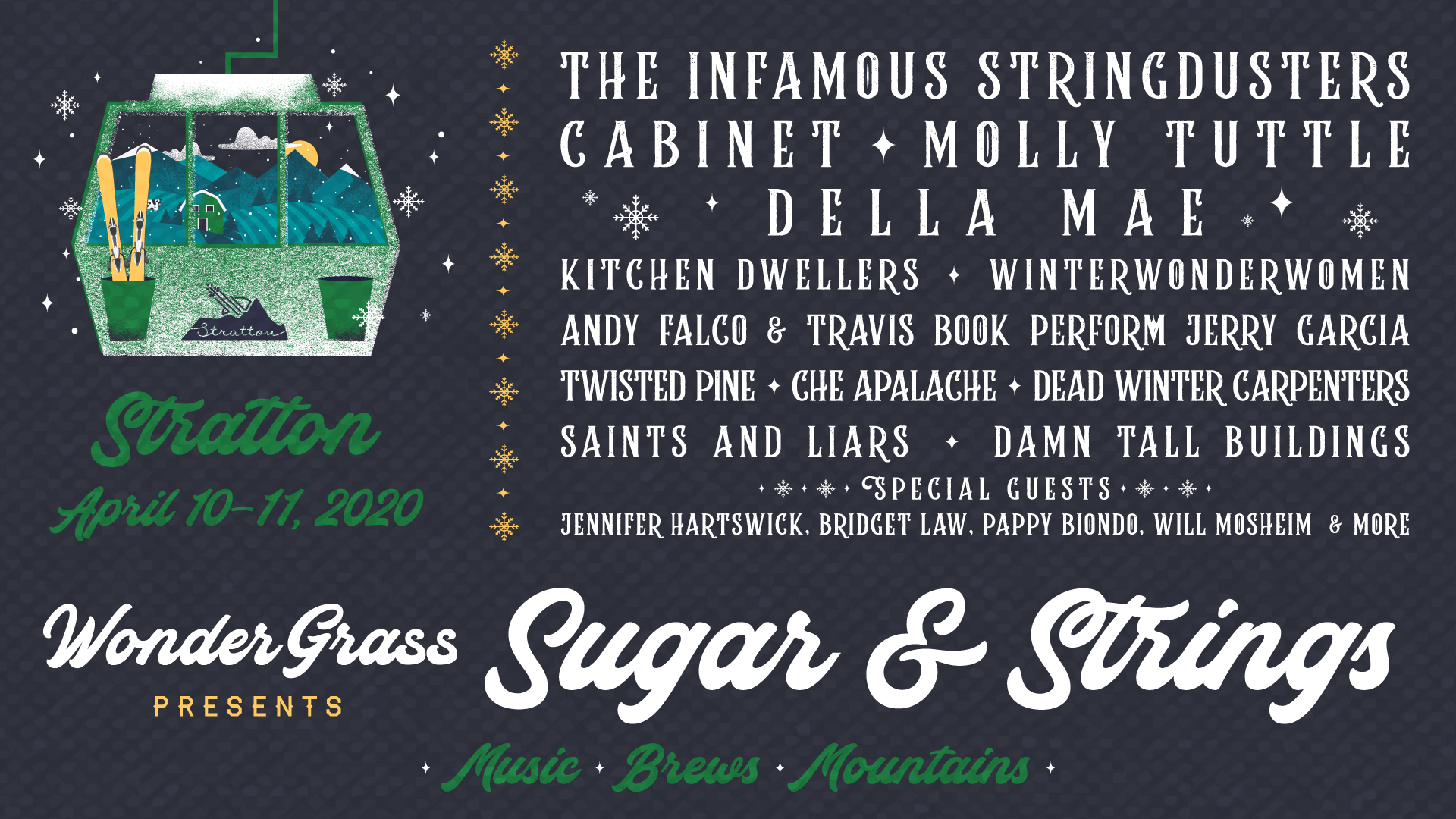
GIVEAWAY: Win tickets to WinterWonderGrass (Squaw Valley, CA) Mar 27-29
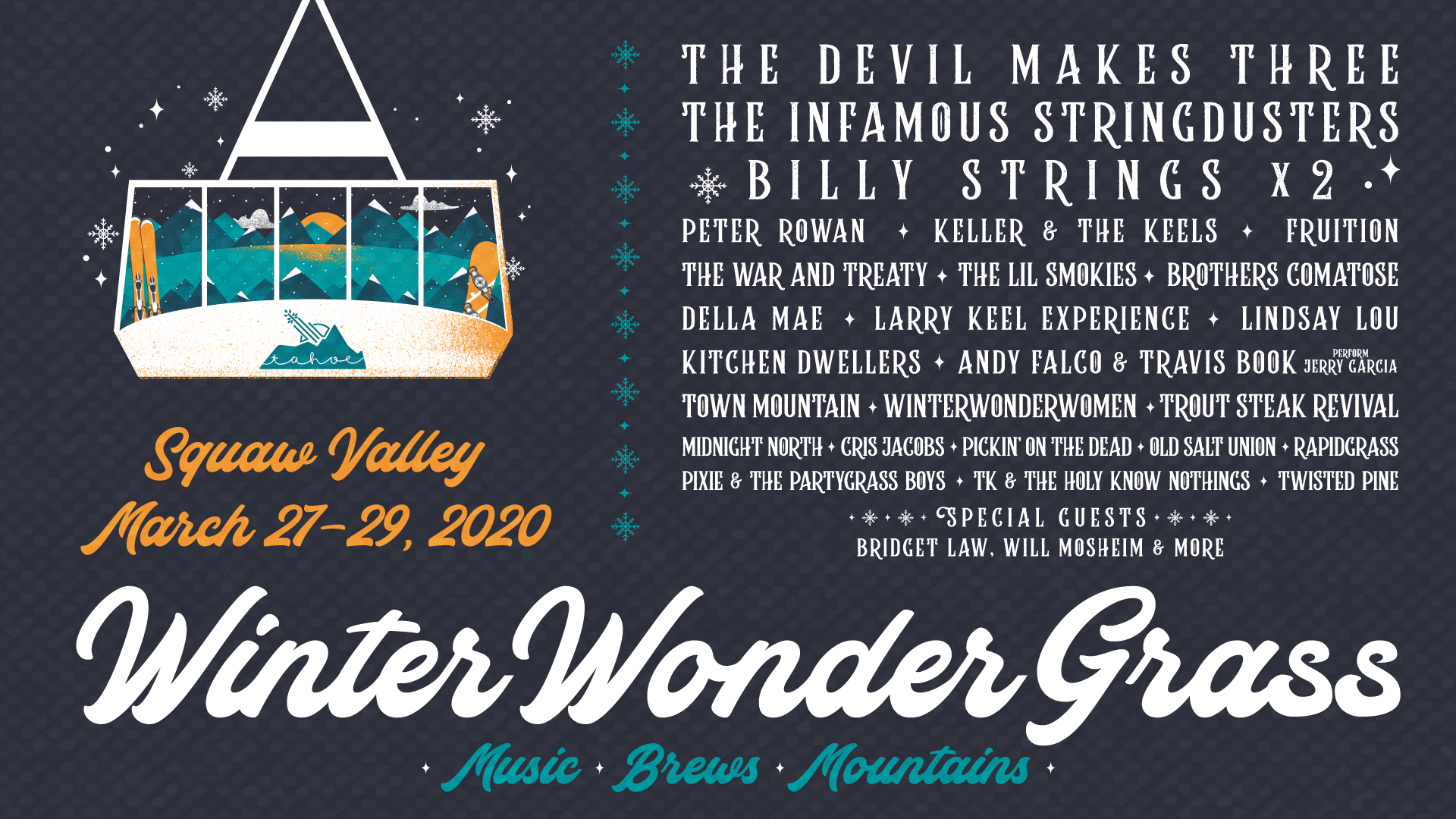
GIVEAWAY: Win Tickets to WinterWonderGrass (Steamboat Springs, CO) Feb 21-23
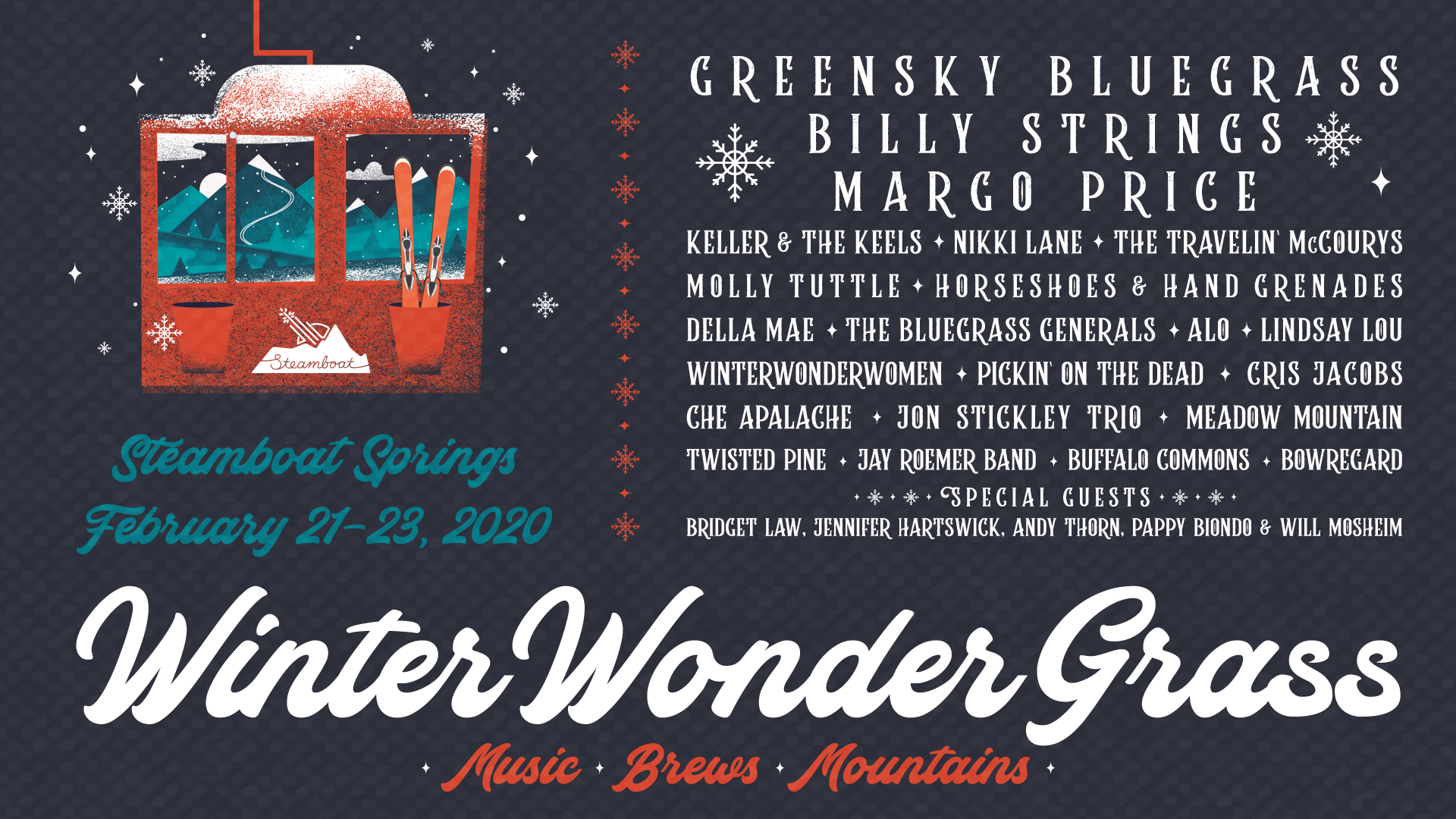
10 Bands Returning with New Music in 2020
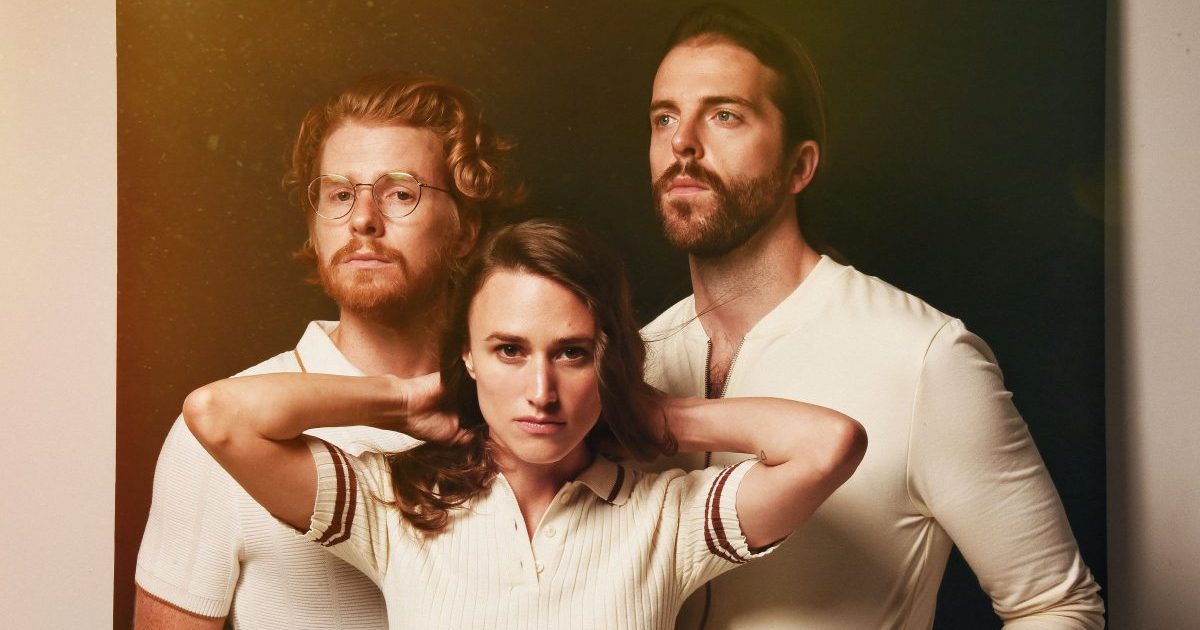
Roots music is already taking hold this decade, with ten notable bands preparing to release their newest albums in the months ahead. From award-winning bluegrass bands to prominent Americana ensembles, here are ten projects BGS believes are worth your attention.
The Ballroom Thieves, Unlovely (February 14)
This band’s undeniable energy has endeared them to crowds at Boston Calling, Newport Folk, Moon River, Mountain Jam, and Calgary Folk. However, folk music is just one part of their approach. The political messages are especially evident in Unlovely, while a new relationship between band members Callie Peters and Martin Earley informs the songwriting as well. Listen for Darlingside on the title track.
Della Mae, Headlight (January 17)
Prodigiously talented as instrumentalists and empowered by their mission of women’s rights, Della Mae make a statement on Headlight, especially in their support of those women whose claims of sexual abuse have been questioned. This time out, their sound is bolstered by keys, drums, and electric guitar. The trio of Jenni Lyn Gardner, Kimber Ludiker, and Celia Woodsmith will be touring in the U.K. this month.
Drive-By Truckers, The Unraveling (January 31)
The modern political climate informs Drive-By Truckers’ The Unraveling, with titles like “Armageddon’s Back in Town,” “Thoughts and Prayers” and “Babies in Cages.” Patterson Hood and Mike Cooley battled writer’s block for their first album in four years but it’s easy to figure out who ultimately inspired this set of songs, which were recorded in Memphis with producer David Barbe and engineer Matt Ross-Spang.
Dustbowl Revival, Is It You, Is It Me (January 31)
Dustbowl Revival decided to shake things up on Is It You, Is It Me. First of all, the Los Angeles-band wrote the songs in a two-week window in the studio, rather than fine-tuning them on the road. Second, the musical inspirations stretch further than usual, with pop vibes and percussion getting ample space. With Z. Lupetin and Liz Beebe on lead vocals, and produced by Sam Kassirer, this is one of the most exuberant records you’ll hear this year.
The Haden Triplets, The Family Songbook (January 24)
After an uncle discovered a songbook from the Haden Triplet’s grandfather, a radio star in the 1930s, the LA ensemble carried the material to the studio. The Family Songbook echoes that earlier era, while its covers range from the Carter Family to Kanye West. Their brother Josh Haden wrote “Every Time I Try.” A stunning musical blend comes naturally to the siblings, as their father was jazz bassist Charlie Haden.
The Lil Smokies, Tornillo (January 24)
While this roots band has origins in Montana, the Lil Smokies recorded Tornillo in a Texas town of that name – the site of Sonic Ranch Studio. While clearly influenced by bluegrass, the Lil Smokies capably transcend its borders. Their instrumental and vocal skills are evident in “Worlds on Fire,” yet bandleader Andy Dunnigan writes abstract lyrics that are just open-ended enough to put your own experiences inside.
The Lone Bellow, Half Moon Light (February 7)
Everything that has propelled The Lone Bellow into the hearts of live music fans is found in abundance within Half Moon Light. The passionate delivery, the poetic lyrics, the propulsive melodies – all accounted for. This time the trio teamed with The National’s Aaron Dessner, who produced the album at his studio in upstate New York. A three-month U.S. tour kicks off Feb. 12-13 at the Troubadour in Los Angeles.
The SteelDrivers, Bad for You (February 7)
The lonesome growl of the SteelDrivers is now delivered by Kelvin Damrell, a raspy singer and guitarist who makes his debut recorded appearance in the lineup on Bad for You. (No pressure, but their 2015 album won a Grammy for Best Bluegrass Album.) Founding member and fiddle player Tammy Rogers co-wrote 10 of the 11 new songs and sings harmony, too. Their spring tour launches February 6 in Bristol, Tennessee.
The Wood Brothers, Kingdom in My Mind (January 24)
Even when they’re writing about heavy topics, the Wood Brothers bring joy into their music. Kingdom in My Mind offers a mature perspective with a timeless groove, although the album came together by chance after building their own studio in Nashville. After listening back to some jam sessions, they discovered they could carve out some new tracks. Tunes like “Little Bit Sweet” capture that unmistakable magic.
Wood Belly, Man on the Radio (January 31)
A bright spot on Colorado’s bluegrass scene, Wood Belly worked with producer Sally Van Meter to further tap into their harmony-driven sound and arrangements. “Can’t Get Behind” (with special guest Jeremy Garrett) is about needing acceptance, although the band has found exceptional allies already with an IBMA Momentum Award nomination and a win in the 2018 Telluride Bluegrass Band Competition.
Photo of The Ballroom Thieves: Shervin Lainez
Courtney Hartman Steps Into a Solo Career With ‘Ready Reckoner’
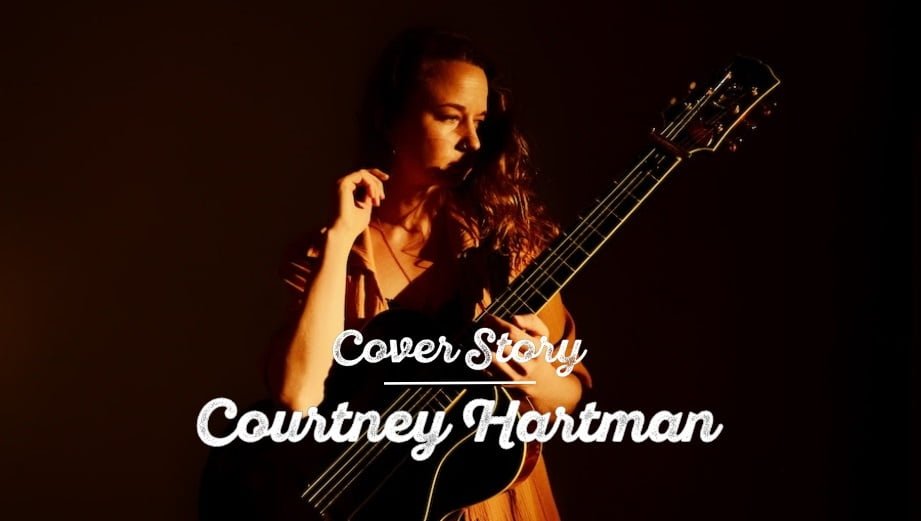
Courtney Hartman told only a few people about her plans. She bought a transatlantic plane ticket, packed a small bag of clothes, and flew to Spain to hike the Camino de Santiago. It’s a 500-mile hike along old pilgrimage routes in rural Spain, an arduous journey that often prompts a spiritual journey. During that 40-day trek she would step off the trail, pull out her specially-made, travel-ready guitar, and sing a few bars into her phone. Eventually those voice memos — those notes to herself, journal entries chronicling her trip — coalesced into songs that ended up on her solo debut, Ready Reckoner.
It is not, however, an album about walking or wanderlust. Rather, it’s about motion: the physical movement that propels oneself along a path, but also the spiritual motion it takes to gain a deeper understand of your place in the world — in particular, your place in the world as an artist. Drawing from the music she made as a member of Della Mae, Ready Reckoner forays into new territory: folk and pop, of course, but also jazz, avant garde composition, drones, even musique concrète. It’s often dark but just as often hopeful, as Hartman traces the both subtle and sublime changes that she is still going through.
BGS: What took you to Spain?
Hartman: I think anybody that I met on the trail had a similar story. There was something that started popping up on their radar[s] over and over until they couldn’t ignore it anymore. That’s what happened with me. I had friends who had gone over there and I was listening to several albums that were influenced by that region of Spain.
Also, two of my writing heroes are Anne Lamott and Mary Oliver. While I was teaching writing at different summer camps, I would talk about how they talk about writing and walking. In the books they’ve written, they talk about how good it is to go out and walk. That would be my assignment to students: Go take a walk in the woods and do some writing.
At one point I realized that I was giving this assignment, but I’d never done it myself. I wanted to know if that was something I could do, if that was a way of creating that would resonate with me. And then a cheap flight to Spain popped up and I bought. I had 24 hours to cancel and I didn’t. So I went!
How did you prepare musically and creatively for such a trip?
I called Dana Bourgeois, who has built a number of guitars for me. I said, Dana, I’m doing this thing and I haven’t told anybody. What do you think would be the sturdiest, most lightweight, best-sounding guitar I could take? And he said, well, what if we build you something? So they did. They weighed out every single component of the guitar and then I had somebody build a guitar sling for me. And then I walked and I wrote. I took me forty days. There’s something about the repetition and the movement, let alone being out in the open.
What did you learn from that experience?
I learned so much, but one of the things that kept occurring to me is that you’re carrying the weight of your belongings with you every day. It didn’t matter if I wrote anything or played anything that day. I still had to carry the weight. There was a point when someone helped me go through my bag and decide what was necessary.
You think you’ve really narrowed it down, and then you’re like, okay, I guess I’ll get rid of this extra layer of clothes. But every night I would think, no I need this or I need that. I need this because I’m afraid of what might happen without it. So I learned that our needs and fears are linked. But I didn’t need that extra layer of clothes, even though I thought I did. When that snow came — that’s what I was afraid of — I made it through.
Did that change your perspective on music?
I want to say that I need to be writing songs or I need to be making music, that they’re my life source. But I don’t need to write or play. Those are extra gifts. I would survive without them. I don’t want to. Don’t ask me to. But I think letting go allowed me to hold them a little more loosely or with a bit more gentleness, instead of clinging to them or gripping them too tightly.
Often, writing meant stepping away from the trail. It meant taking my guitar down or taking my pen out or singing voice memos. I have hours and hours of endless mumbling. You step away from the people you’re walking with, and you might not see them again for a few days or even a week. Or maybe never again. It’s very much like life that way.
That experience seems to inform this album in ways that are very explicit. Even just the sound of footfalls on “Too Much.”
About half the album came directly from songs I wrote on the trail. But it’s not a walking record. It’s just a shot of where I’ve been the last year. I worked on it while I was staying in a little wagon in Oregon for a couple of days, just trying to finish putting together takes and sequences. I would walk and listen. But the album pretty evenly spread out between songs I wrote before, during and after walking. The first track I wrote was “January First,” and I wrote all the other songs later that year. I don’t know that it always works that way.
Tell me about the album title. Why did those words resonate with you?
I was obsessed with the word reckon. I was reckoning with myself and my work, reckoning with the relationship to the music I was making, reckoning with whether I should even be doing it at all. That word felt like it had a lot of motion, so I looked it up and found that a ready reckoner was at one point the name of a hard-copy calculator. A merchant might have a ready reckoner, which is essentially a book of tables. I found one from 1905 for sale and ordered it on Amazon, as you do. I keep it in my guitar case. It’s this tiny, beautiful book with all these weird calculations for things. I felt like these songs were trying to calculate something, trying to get to a formula or an equation.
There was some trepidation on your part about recording this record and taking on the role of co-producer. How did you reckon with that?
Shahzad Ismaily, my co-producer, could have easily taken the wheel and produced this record himself, and I think I would have felt good about that. But he believed very strongly that that was not his role. He wanted mostly to be engineering. He was pushing me to make the decisions that needed to be made and to listen more deeply. Just by stepping away he became a guiding hand. I didn’t want to be producing this record but I’m grateful that he was able to ease me into that place.
And I realized that I really love it. It’s such a different space. I’ve produced one other record for a band since then, and I want to do more. There aren’t a lot of women in that role. The studio can be a very intimidating place for women who are trying to explore and learn and admit what often feel like deficiencies, but if I’m able to do that in the future, I hope I can make that space feel comfortable and gracious and open.
I remember I was so afraid to record this album, so when I went into the studio the first day, I was reading through some of my walking journals. I opened the first page, and I was writing about feeling terrified. It was the same feeling I had about going into the studio, but it’s exactly what I needed to hear at that moment. We learn the exact thing in so many ways over and over. Or we don’t learn it at all. Maybe that’s the thing. Maybe I didn’t learn anything.
Photo credit: Shervin Lainez
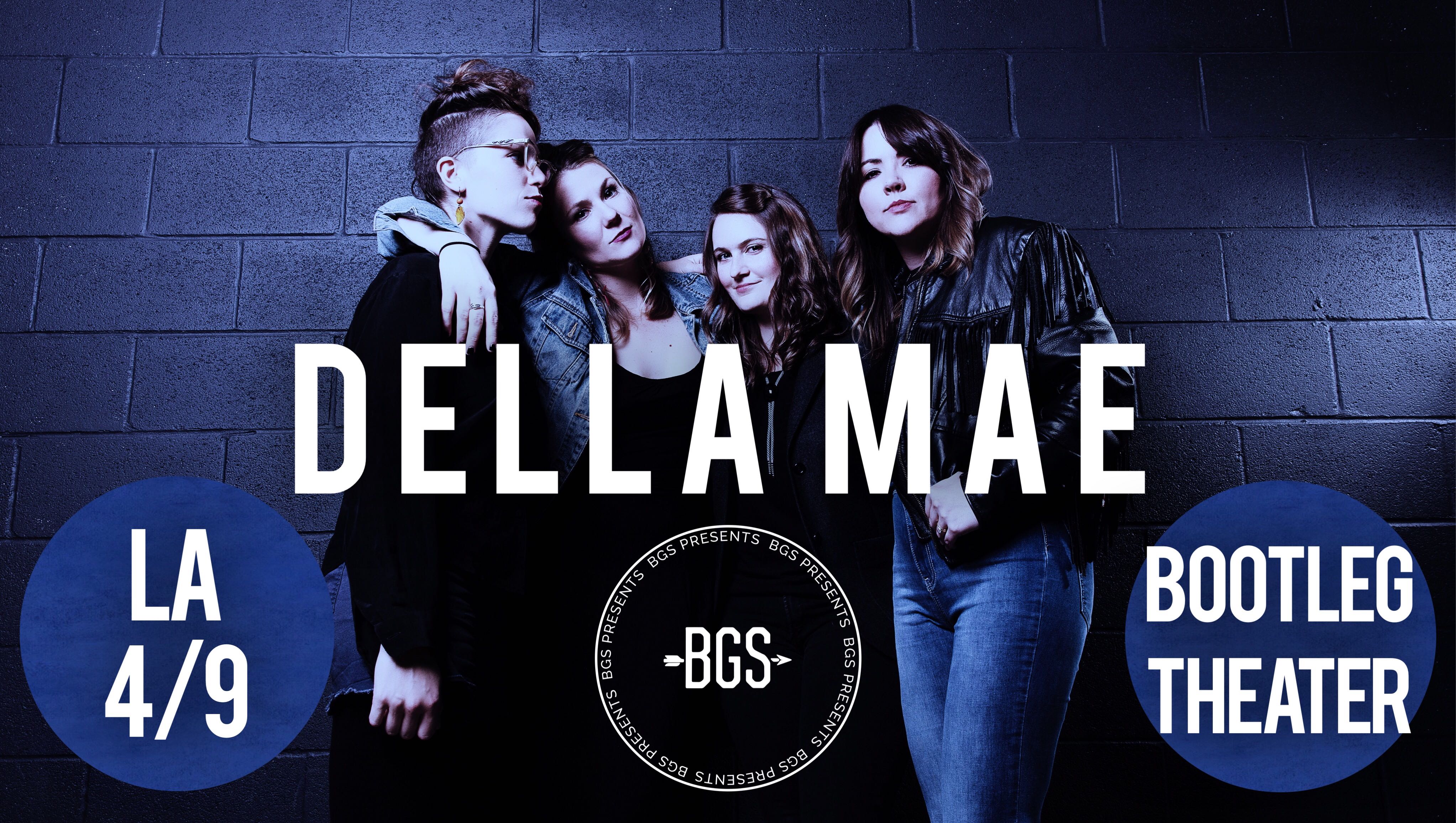
GIVEAWAY – Win tickets to Della Mae at Bootleg Theater (LA) 4/9
Dolly Parton Proudly Shows Her Bluegrass Influences

No genre of American music has been untouched by the influence of Dolly Parton and bluegrass is surely no different. Given Dolly’s homegrown, East Tennessee roots and her pickin’ chops on many of bluegrass’s signature instruments, her connection to the genre perhaps runs deeper than any other style she’s accomplished — besides good ol’ classic country, of course.
In April 2020, Dolly announced six albums – including Little Sparrow, one of her bluegrass forays – from her back catalog would be made available on digital streaming services for the first time. In an episode of 2019’s Peabody-Award winning podcast, Dolly Parton’s America, a portion featuring the London debut of Parton’s 9 to 5 musical details that many of Parton’s inner team regard her 1999 release, The Grass Is Blue, as one of her best – critically and otherwise. We even featured The Grass Is Blue in an episode of The Breakdown. Trio and Trio II, Heartsongs, and even the genre-mashing White Limozeen all contain heavily bluegrass and string-band inflected songs – the influence of her home turf and its musical accompaniment are evident throughout her artistic output.
Live and from the studio, through cover songs, collaborations, and in casual jam circles, Dolly and her songs have fully infiltrated bluegrass. It’s no surprise she speaks of it often, simply referring to the music as she did in her youth (and all throughout her career): as “Mountain music.” To celebrate Dolly in December, here are a few of our favorite Dolly/bluegrass cross-pollination moments:
“Sleep With One Eye Open” — Dolly Parton
Her 1999 all-bluegrass album, The Grass Is Blue, was named one of our 50 Most Greatest Bluegrass Albums Made by Women — and for excellent reason. It may very well be the one of the best bluegrass recordings born in the past few decades (check out that roster of pickers!!) and it brought bluegrass to Dolly’s greater audience — Norah Jones went on to cover the title track. Dolly even made an appearance at the International Bluegrass Music Association’s award show in 2000, as the project won Album of the Year. Dolly’s bluegrass skills are no better displayed than on this perfectly-executed cover of an all-time bluegrass classic.
“I Feel the Blues Movin’ In” — Trio
Both Trio albums (Dolly Parton, Emmylou Harris, and Linda Ronstadt) could arguably be categorized as bluegrass, but Trio II ticked quite a few more of traditional bluegrass’s boxes, especially with this cover of a Del McCoury original. To this day he’ll announce the song on stage as being the best, “Because Dolly Parton sang it!”
“Heartbreaker’s Alibi” — Rhonda Vincent & Dolly Parton
Dolly and the Queen of Bluegrass collaborate on this 2006 release from Vincent’s All American Bluegrass Girl. Vincent and Dolly have gone on to work together on a handful of other projects, as well. Something about that bluegrass vocal blend… Mmmm.
“Jolene” — Alison Krauss with Suzanne Cox and Cheryl White
And of course, covers of Dolly’s countless songs have filtered into the bluegrass songbook across the years. Alison Krauss leads an all-star band on this cover of perhaps Dolly’s most iconic song, “Jolene,” for the 2006 Kennedy Center Honors show.
“Islands in the Stream” — Love Canon with Lauren Balthrop
And it’s not just Dolly’s more country and bluegrass adjacent songs that have found themselves homes in bluegrass set lists and cover projects. Charlottesville, Virginia-based, bluegrass-meets-the-80s band Love Canon covered the iconic Dolly and Kenny duet “Islands in the Stream” for a BGS Sitch Session.
“Muleskinner” — Bill Monroe and Dolly Parton
They both had hit versions of this song, after all. Though this writer might be partial to the version that gleefully shouts, “I’m a lady muleskinner!” It’s badass no matter how you cut it, really. The Big Mon and Dolly, doing it right. And there’s something just so beautiful about Dolly Parton cueing the Kenny Baker into his solo.
“Little Sparrow” — Dolly Parton
2001’s follow up to The Grass is Blue, Little Sparrow continued Dolly’s bluegrass explorations, but with folk and transatlantic sounds joining the mix.
“Viva Las Vegas” — The Grascals with Dolly Parton
The Grascals take the CMA Fan Fest stage in Las Vegas with Dolly Parton singing an absolute classic with a good ol’ dose of bluegrass fire.
“Banks of the Ohio” — Dolly Parton
Not all of Dolly’s bluegrass forays have been… well, bluegrass. Here, she adds her theatrical, dramatic touches with a fresh-written preamble to the classic lyrics of “Banks of the Ohio.” Her soft spoken-word, the sumptuous strings, and a soaring, Dolly-vocal-run-filled arrangement give this staple a special hue that’s 100% herself.
“Why’d You Come in Here Lookin’ Like That” — Della Mae
Della Mae has plenty of experience covering Dolly, even once being the house band for a Dolly Parton tribute show in the UK. Once again, they’re pulling a cover that comes from outside Dolly’s bluegrass-y songs, and it’s fantastic.
“Just a Few Old Memories” — Dolly Parton
A legendary combination. Dolly Parton sings Hazel Dickens. What more would we ever need?
Well… Hazel’s in the Bluegrass Hall of Fame. Maybe it’s time Dolly ought to be inducted, too. After all, you just took a split second scroll over her major influence on bluegrass and vice versa — and her bluegrass outreach, as well. The case is made for itself. Dolly for the Bluegrass Hall of Fame!
LISTEN: Della Mae, “Bourbon Hound”
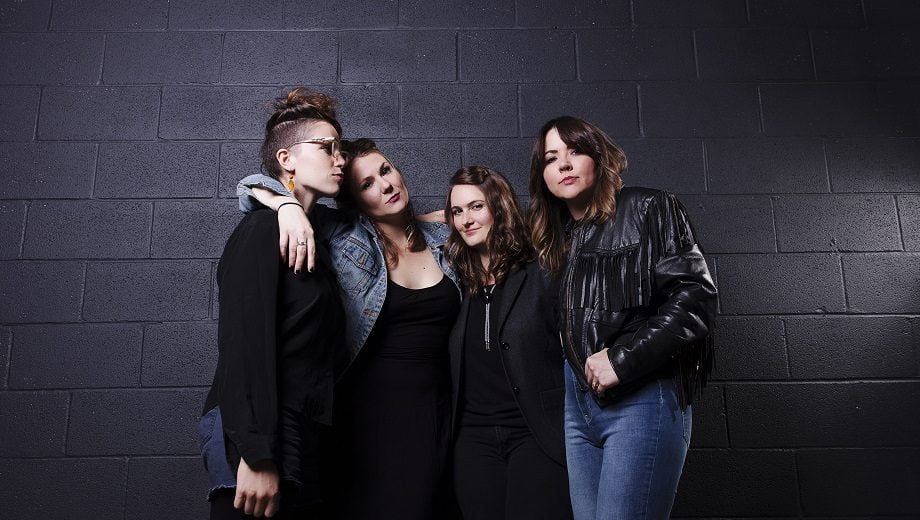
Artist: Della Mae
Hometown: Nashville, Tennessee
Song: “Bourbon Hound”
Album: The Butcher Shoppe EP
Release Date: March 1, 2019
Label: Rounder Records
In Their Words: “I was brainstorming a topic to write a song about, and as a last ditch effort started naming all the types of bourbon in my cabinet at home to come up with ‘Bourbon Hound.’ Della Mae premiered it in the Grey Fox dance tent and it immediately became a fan favorite. The recording features Molly Tuttle on high vocal harmonies and Avril Smith on guitar.” — Celia Woodsmith, Della Mae
“With the shows we’ve played this year and the EP we just recorded, we’re really getting back to the mission statement of Della Mae. This band was created to showcase women in roots music. It’s been so great to play with our original guitarist, Avril Smith, again, and to work alongside Molly Tuttle on this track and others on the forthcoming EP.” –Kimber Ludiker, Della Mae
Photo credit: Ryan Nolan
MIXTAPE: Mona’s Monday Night Bluegrass Session
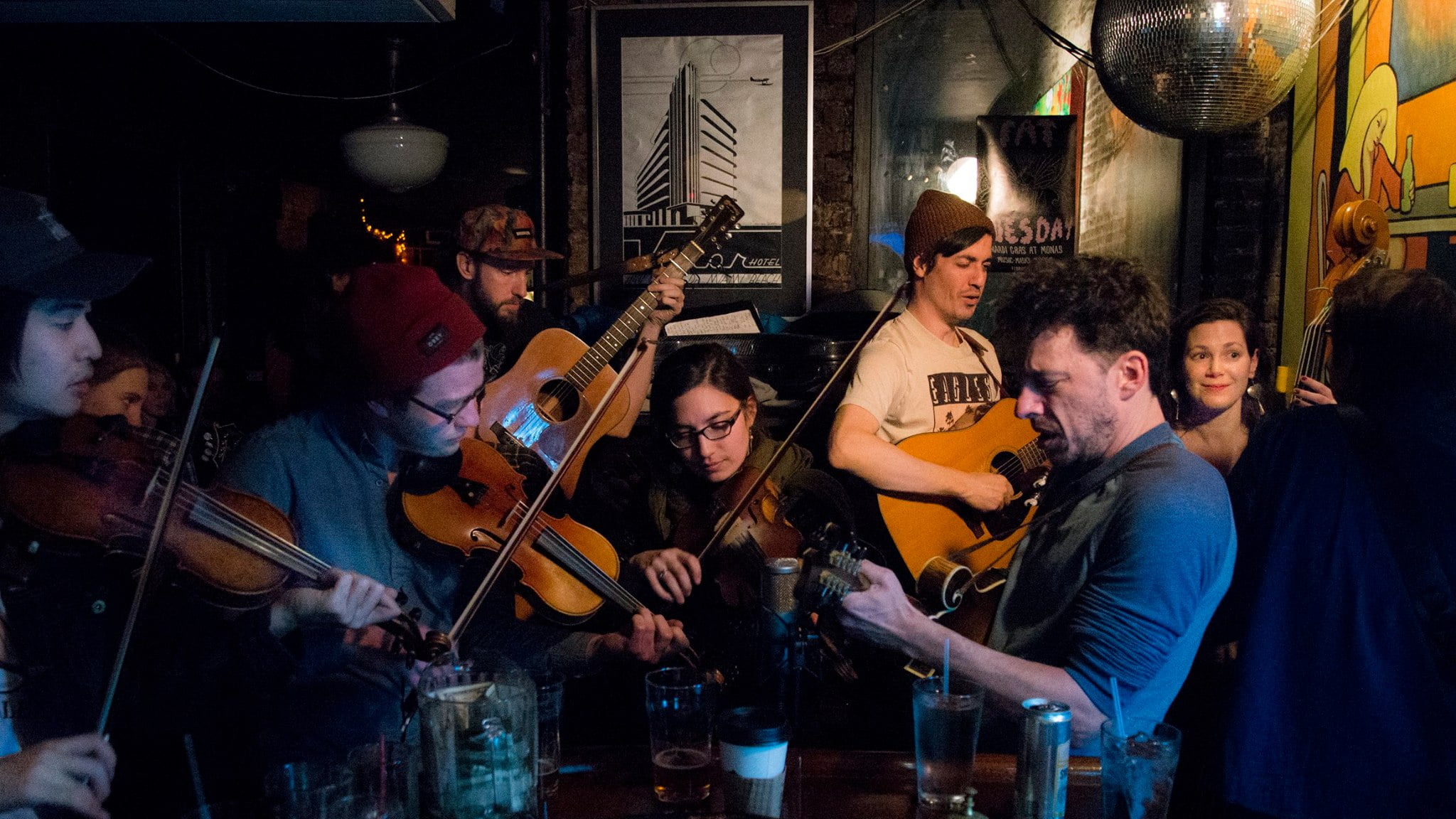
Behind a plain facade on a quiet block in Manhattan’s East Village is the unassuming hub of the New York City bluegrass scene — Mona’s Bar. More or less equidistant between the Alphabet City housing projects and the rock clubs and poetry cafés surrounding Tompkins Square Park and the Lower East Side, Mona’s occupies a space between worlds. Equal parts punk-era dive bar and neighborhood weirdo artist hang-out, it’s off the radar just enough to attract music fans looking for the real thing away from the high-priced and uptight venues which clutter the cultural landscape in NYC.
“There’s definitely a real kind of magic here. Maybe there’s a UFO buried in the foundation,” jokes guitarist and singer Rick Snell. A veteran sideman and session musician, he’s been the host of the Monday Night Bluegrass Session here since it started over five years ago. What began as a late-night hang for the professional musicians in town looking to wind down and pick a few tunes after their gigs has blossomed into the de facto center of the scene for bluegrass, old-time string music, and old-school country in NYC.
“Word got around some time ago that this was a chill place to hang and pick, get a beer, meet some really interesting people,” says Snell. “We’ve been very lucky to have so many great players pass through the doors over the years.” These days, the Session often features local names alongside some of the best-known players in traditional music — members of Punch Brothers, Yonder Mountain String Band, Kentucky Thunder, and others have all passed through the doors, at one time or another. The current weekly house band includes fiddler Duncan Wickel and Jeff Austin Band bassist Max Johnson.
We asked Snell to make a playlist of some favorites that have spent some time here in years past.
Della Mae — “Good Blood”
I first became a fan of Della Mae at the GreyFox Bluegrass Festival in upstate New York. These gals definitely know how to keep the dance tent going ’til way past curfew. We’ve had Jenni Lyn and Zoe on the gig a few times; they’re absolutely top-notch players.
Mike Barnett — “It’ll Be Alright”
Mike was a mainstay in his time in New York, but when Ricky Skaggs calls, it’s time to pack your bags and move to Nashville. He sounds right at home in Kentucky Thunder. Here’s Mike singing with one of our favorite vocalists in New York — I’m with Her’s Aoife O’Donovan.
Lake Street Dive — “Mistakes”
They’re so fun! It’s almost an afterthought to mention how deep Lake Street is tapped into American roots music. We’ve been big fans of these guys and gals for years. Any time we’ve gotten a bass in Bridget Kearney’s hands at Mona’s, it’s just been some of the heaviest groove playing you’re ever going to hear.
Lonesome Trio — Appalachia Apologia
These guys really have a special place in my heart. Jake, Ed, and Ian are great writers and pickers in their own rights, but there is something really special about their chemistry which shows their life-long musical friendship. I’ve always loved this witty little tune.
Six Deadly Venoms — “Where the Soul of Man Never Dies”
I wanted to shamelessly include the Venoms — I’m their guitarist and singer on this track — because the Mona’s Session was originally built around the musicians in this group, and these guys served as the house band for the first few years. Again, there is something in the music here which only happens as a result of the real love and friendship we have.
Steep Canyon Rangers — “Looking Glass”
These guys have an amazing story: a band of killer North Carolina pickers meets Steve Martin at a party, gets asked to be his backing band, wins a Grammy, changes the world, etc. No big deal. Nicky Sanders has been a good friend to the Session over the years, and we’ve been lucky to pick with him a bunch at Mona’s. Some great fiddling on this track.
10 String Symphony — “Mad Girl’s Love Song”
While it is tempting to get lost in the technical beauty of their singing, their unique sense of harmony, and their musical instincts which seem so in tune even down to the smallest levels, at the end of the day, their songs are just so damn moving. We love Rachel and Christian.
Matt Flinner Trio — “Head Smashed in Buffalo Jump”
Matt came through when he was producing an album in town. Matt’s just one of the most interesting and prolific composers on the scene, and his trio’s music du jour project is really cool. Also, we’re super fans of Ross Martin who is a founding member of the trio and just one of the best guitar players anywhere.
Jacob Jolliff: “Hopped the Trash Car” (not on Spotify)
Jake’s awesome technical abilities are usually the first thing anyone notices in his playing, but there’s really something unique in his ideas and his vision which I consider his strongest suit. Here’s a guy to watch in the coming years; we’ve already seen great things from him both in Yonder Mountain String Band and his own project. And I expect much more amazing music in the future.
Photo credit: Aidan Grant
9 Times Clawhammer Banjo Was ALMOST as Good as Scruggs-Style
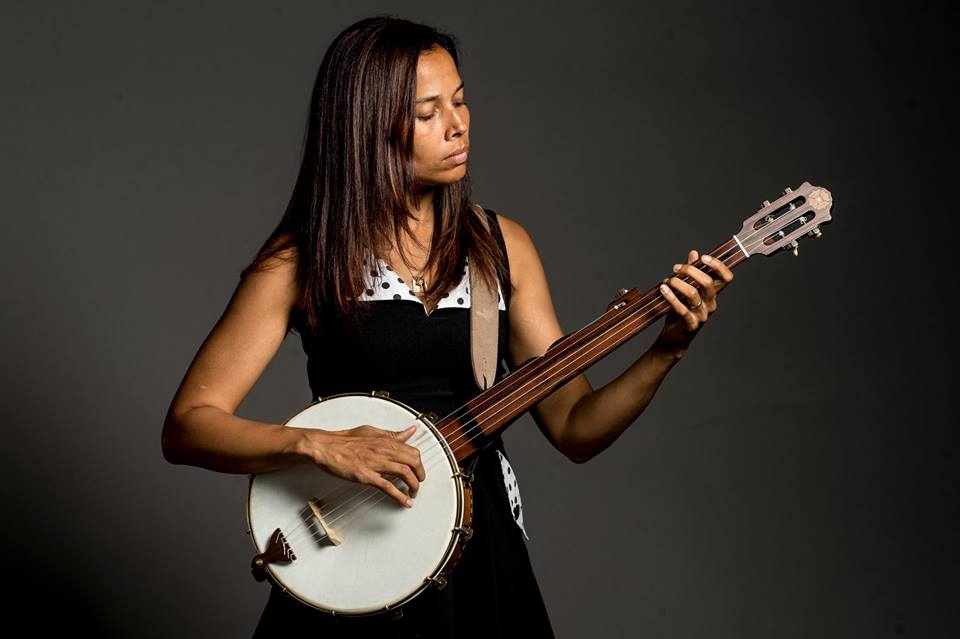
Scruggs-style banjo is cooler than clawhammer, like, nearly all of the time … except, perhaps, these nine times when clawhammer came as close to surpassing three-finger’s coolness as it ever has.
Rhiannon Giddens — “Following the North Star”
Like the time Rhiannon pulled clawhammer banjo’s African roots out of the instrument with every string pluck. And those bones! I mean, c’mon.
Bruce Molsky — “Cumberland Gap”
Or the time Bruce Molsky sat on a folding chair, stageside, in the middle of a muddy field, and proceeded to be a badass. As far as solo acts go, he is one of the most entertaining; he entrances audiences with just his voice and an instrument.
Allison de Groot with Jack Devereux and Nic Gareiss — “Black-Eyed Suzie”
Or the time when the core of every string band (fiddle + banjo) was augmented by a percussive dancer and, for a split second, we all forgot that bluegrass is a thing and Scruggs-style is the pinnacle.
Uncle Earl — “The Last Goodbye”
Or any time Abigail Washburn picks up an open-back. Seriously, if your banjo playing stacks up against Béla Fleck’s, you’re working on higher plane. Higher than most three-finger stylists? Maybe …
Adam Hurt — “John Riley the Shepherd”
Then there was the time when we all learned that banjos could be this haunting. Something about a natural-hide, fretless, gourd banjo almost wipes resonator, tone-ringed, flanged banjos clear out of the mind … almost.
Giri & Uma Peters — “The Cuckoo”
Okay, this is actually objectively better than Scruggs-style banjo. Not only because our friend and hero Uma Peters is incredibly young, but she’s also massively talented. Look at that right hand form! This video went viral on Facebook — it has more than 160,000 views currently — and it’s surely because her sweeps are staggering.
Della Mae — “This World Oft Can Be”
There’s also the time Della Mae showed the world (which oft can be a down and lonesome place to be) that clawhammer banjo is, in fact, bluegrass — not just a lesser form of real (aka three-finger) banjo. Yeah. We said it.
Mark Johnson, Emory Lester, Steve Martin — “Forked Deer”
Finally, there was that time Mark Johnson (winner of the Steve Martin Prize for Excellence in Banjo & Bluegrass in 2012) traded solos with Steve Martin on Letterman. We’ll take banjo on national television in any form, three-finger or clawhammer.