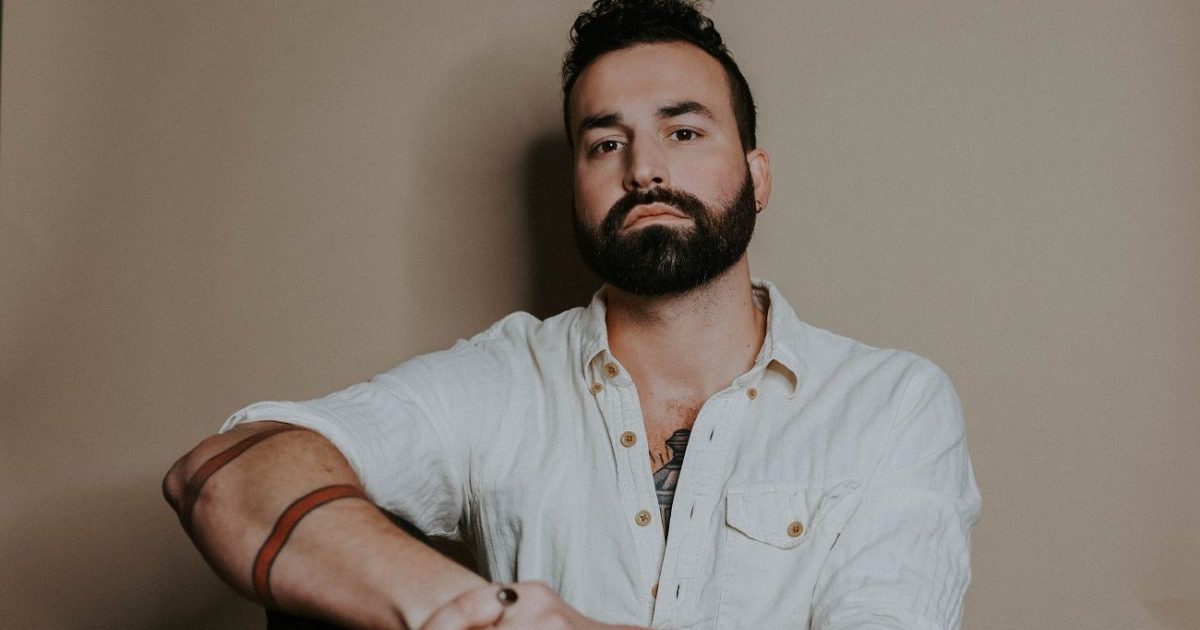
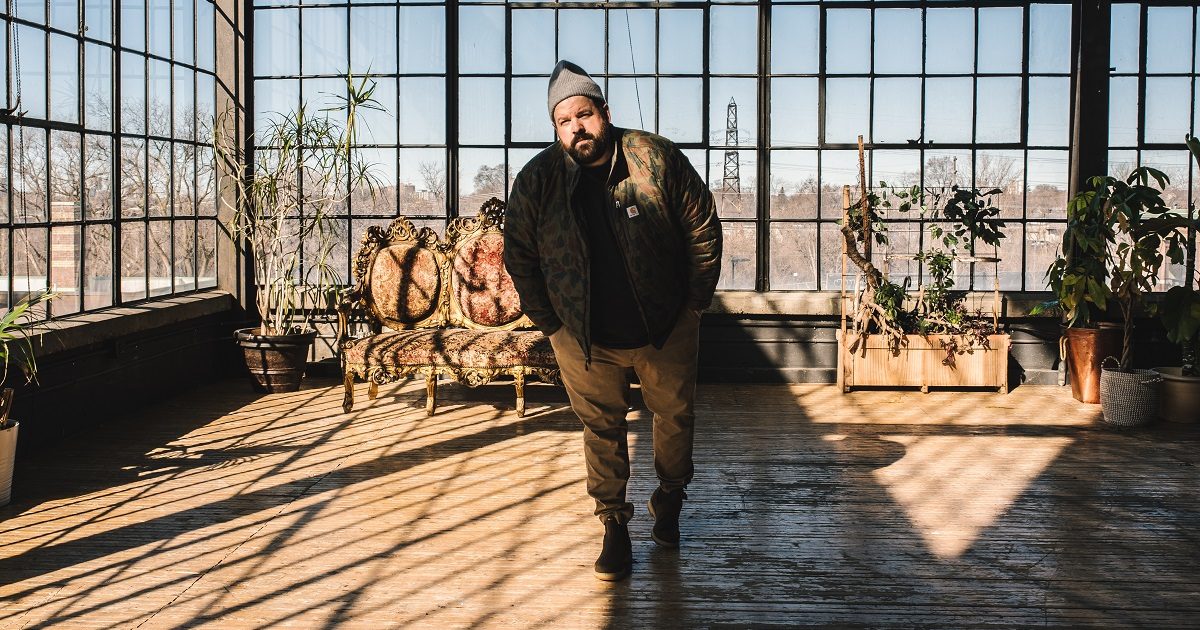
Artist:Zack Joseph Hometown: Nashville, Tennessee (via upstate New York) Song: “Keeping Me Sane” Album:Keeping Me Sane Release Date: April 16, 2021
In Their Words: “I wrote ‘Keeping Me Sane’ while I was in the midst of a serious long-distance relationship. When loneliness and uncertainty would take hold, I’d turned to my vices to cope (whiskey & Coke, beverage of choice) and to serve as a distraction from my overactive imagination. It would feel like I was going insane — something I think most of us can relate to in navigating new relationships. In this instance though, the knowledge that my partner was out there thinking about me was enough to pull me through and keep the crazy at bay… or, ‘keeping me sane,’ if you will. While this song was recorded well before the COVID-19 pandemic hit, its meaning has only been amplified. Every person on this planet has now experienced the loneliness and struggles of being separated from a loved one. Let this song serve as a reminder that someone out there is thinking of you — a little something to carry you through these tough moments until you’re reunited.” — Zack Joseph
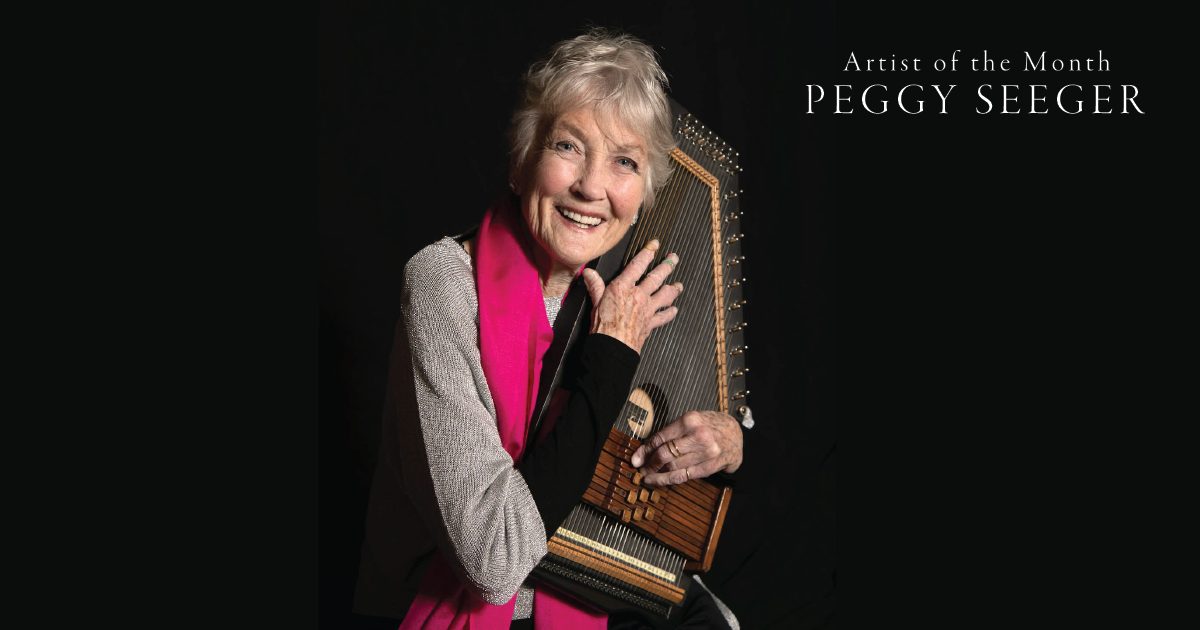
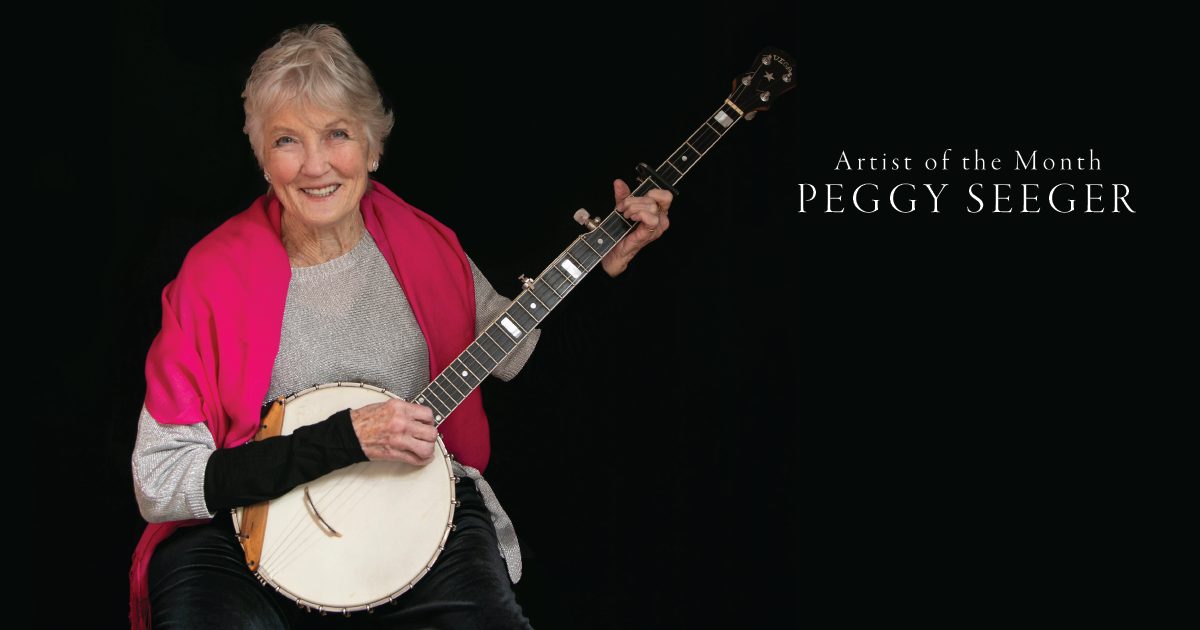
At 85 years old, Peggy Seeger stands as one of the most accomplished figures in folk music. She has recorded 25 solo albums, plus dozens more with her late husband, Ewan MacColl, along with collaborations with her siblings and generations of other folk musicians. She is a multi-instrumentalist who has edited and compiled folk music anthologies, and she ran a well-known magazine featuring contemporary songs for 20 years. All that while touring, writing more than 200 songs, raising three children and serving as an immoveable force for peace and human rights. And hers was the face that inspired MacColl to write “The First Time Ever I Saw Your Face.”
From her home in England, Seeger spoke to BGS about her new album, First Farewell, and what that title really means.
BGS: You wrote “How I Long for Peace” 20 years ago, but it’s really appropriate now. Can you talk about it?
When we decided to make a new CD, my son Calum had me sing to him any song that I hadn’t recorded. Because I lived in the United States for 16 years and wasn’t touring England, I wrote quite a number of songs that my kids never heard. “How I Long for Peace” was one of those. And when Calum heard it, he loved it. So, it went on the album, and so many people are commenting on it. It’s kind of like a hymn, and it has a very singable chorus, and it ties up nations and politics with climate change and the plunder of the planet. When I sing it, I feel such a longing in my heart. I feel the violence of the world. We’ve just had a horrendous murder here. In this country, a young girl who was walking home by herself disappeared. She was found two counties away in a woods. And there’s been a tremendous uprising here on the part of women. But it’s not until men uprise against this that it’ll ever be changed.
Can you talk about the project’s title, First Farewell?
I remember my brother Mike, who was with New Lost City Ramblers — once they broke up they had an annual farewell concert every year. I thought that was marvelously funny. So, I thought First Farewell will make people think. But it’s based on the two farewells that you give at the airport. You know, if you stay to wave goodbye to the person at our airport, you hug, and then they go through where only passengers are allowed. And they walk about 40 yards away, and then they turn to the right. So, the first farewell is the hug, and there is a second farewell where they wave goodbye just before they turn that corner.
In lots of ways at my age, I’m saying farewell to a lot of things, almost daily. When you’re my age, you see your body doing this, doing that, and you feel you’re slowly decaying. And it gives you a new feeling of togetherness with nature. I really have more of an attachment to nature and the birds and the daffodils and the trees than ever I did before. And I’m doing a lot of listening to books about nature. I’m beginning to feel that humanity is this very, very powerful paper-thin sandwich filling between what happens above the earth and below the earth, and we are just this kind of bacteria that is sitting along the edge of the earth. [Laughs]
Because I do feel that nature is calling us. Nature realizes that we are a danger. The same way as we’re trying to get rid of COVID, nature’s trying to get rid of us. And power to her if that’s her best way of teaching us anything, because we don’t learn at all. We just repeat everything that we’ve done before. But the first farewell is the recognition that I am near the goalpost. And within sight of the goalpost. I’ve been running like hell. But I run more slowly now.
Why did you move back to the United States in 2006, and then why did you return to Great Britain?
A tumultuous love affair brought me here permanently in 1959. I became a British subject in 1959 and settled down here. After Ewan MacColl died, 30 years ago, I had a new partner, a woman, my best friend, the only person that I’ve been head over heels in love with. And after four or five years, I had an incredible urge to go to America to find out who I had been before I came here – because I was a child when I moved here. And I immediately became totally involved in England. I grew up in England from age 24 and 54. That’s when I really became an adult. (I shouldn’t say that, because I’m not an adult yet.)
In 1994, I got this terrific urge to go back to America. I wanted my partner to come with me, but she couldn’t. So, I said, I’ll go and see what it’s like. It was the first time I’d lived on my own ever in my life. I toured America endlessly for 16 years. Then I began to realize that I really, really, really missed my kids. So, I just felt that urge to come back here. And now that I’m back here, I’m so glad I came back.
My children live in three corners of London. I can reach any of them in two hours. We talk on the phone, and I’m part of my family that I created again. My American family is very big, but very scattered. And the ones that I was really attached to are all gone. So, what made me move back was a gut feeling of where I belonged. And it’s so wonderful that my children are helping. They’re making it possible for me to keep going.
What do you see as the bright spots in today’s political and social movements? What gives you hope?
On all of the really big issues, what’s happening is small grassroots groups. People who want something done, want something changed, want something different are realizing that the government says it will take care of it — but it doesn’t. So, small groups are forming everywhere, saying, “We have to do this ourselves because our government is not doing it.” I’m part of a group like that here where I live, near the edge of Oxford. And Oxford has just spread and spread and spread and spread until it has incorporated one beautiful old village and then another old village. Then they become surrounded with new housing. And they have taken away the green land, taken away the beauty of the old villages.
I live in an old village called Iffley. Its church was built in the 1100s. And since 1964, 16 of its green spaces have been sequestered for housing. Plunk, they put 20 houses here; plunk, they put 50 houses there. Well, there are four acres left, two ancient fields that have not been touched for 1000 years. And our council wants to put 50 houses on them. I’m part of a group that is acting out of incandescent rage at this. If the housing is put in, it will be the end of our village – the end of it. I’ve always tried to be part of a small group that does something locally.
Parting words?
I’d like to thank you for the attention you gave to Laurie Lewis, because she is so good. She’s wonderful. I love that kind of music. I really, really do. And it’s something that I really miss over here, joining in on the radio with all of that wonderful singing that you can sing along with. I do miss the whole American scene, I do. But I’m a Gemini and I’ve chosen one of my twins, so I live here.
What I would like to say is that I have been very privileged in my life, extremely privileged, unlike a lot of people who need to struggle to make their names recognized. My name was recognizable due to my brother Pete, and my mother, my father. And I came at the end of other musicians who had smoothed the path out for me. I have had every possible advantage: two wonderful life partners, both of whom contributed to my career, and who have pushed me on and helped me. And children who don’t hate me! [Laughs] And a country that I kind of understand.
And enough money that I’m not in need in my old age. “First Time Ever I Saw Your Face” brings in a reasonable amount of income. People still hear it all over the place with some very funny covers. Oh, my god, it’s been covered over 400 times that we know of. There’s a rap version. There’s a country and western version. There’s a gospel version. There’s what I call a barbeque quartets version. There’s one with Scruggs banjo on it. I am just so fortunate, and I’m thankful that I’m being given an old age that makes me visible and worthwhile.
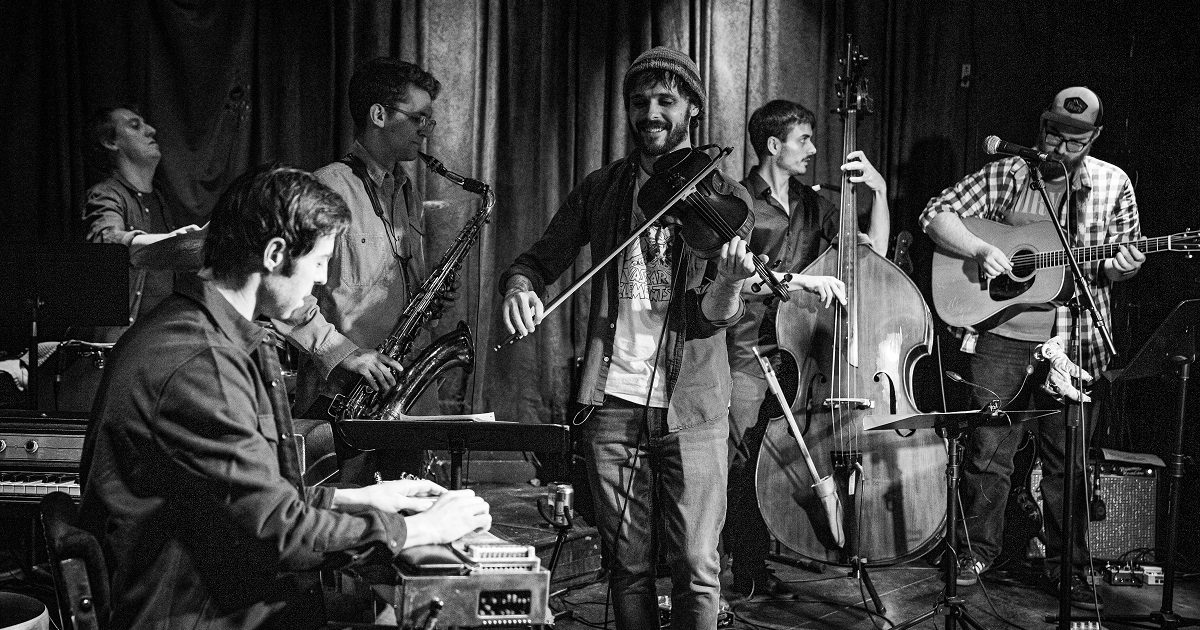
Artist:John Mailander’s Forecast Hometown: San Diego, California Song: “Returning” Album:Look Closer Release Date: May 7, 2021 Label: 9 Athens Music
In Their Words: “‘Returning’, the first track on our new album, came together on the first day of our session. To me, the track reflects some of what we were collectively feeling, playing in the same room together after so many months of isolation. We were all masked and spaced out the whole time, but the rediscovery of that connection and joy shined through. This track is kind of loosely a continuation of where our last album, Forecast, left off, but it also feels like a new beginning as each musician’s voice enters one at a time and joins together again. The animation was made by Anna Jane Lester. I think it’s a perfect visual accompaniment to the song, the way it moves forward with persistence through the changing seasons.” — John Mailander
Peggy Seeger began her life surrounded by brilliant and groundbreaking musicians: a mother who was an internationally known composer; an ethnomusicologist father; half-brother Pete, legendary for both his songs and his political courage; brother Mike, musician and song-catcher. In the latter years of her career, she is making music with what she calls her “created” family — her three children who share her delight in songwriting and performing.
Like Pete, Peggy was an outspoken leftist who was blacklisted in the 1950s, and she has never stopped speaking her mind through lectures, interviews, and her music. On the occasion of her newest release, First Farewell, we were honored to speak with her from her present home near Oxford, England. Here is the first of our two-part interview with BGSArtist of the Month, Peggy Seeger. You can read part two here.
BGS: Listening to your new recording, I was struck by how beautiful your voice is. Do you have to work at keeping it that way?
Seeger: I don’t feel it’s beautiful. It’s so reduced from what it used to be. What’s happened is I’ve moved down into the lower ranges where it’s more vibrant. And there I can, for some reason, feel more emotionally connected. I practice every day. I actually sit down and sing as if I’m giving a concert every day. It’s like any muscle: if you keep it to keep it working, you won’t lose it. And I walk every day. And I walk quite fast, so sometimes I get out of breath. You need to build your lung capacity. I’m pleased that you think it’s beautiful. I never thought it was.
What prompted you to create this new album?
My children have realized that there’s nothing else that I enjoy as much as singing. I don’t have any other way of expressing myself. I don’t cook well. I do make sourdough bread. … Five years ago, they asked me what I wanted for my 80th birthday, and I said I want to tour with my two sons. They said they would do a week of touring – and it worked out to be 16 days. But they said we needed an album to tour with. So that was when we recorded my previous album called Everything Changes, and I realized how strong it is, working with an entire family network.
Everyone in my created family one generation down is involved: my two sons, my daughter and two daughters-in-law perform all that I need: a manager, a minder, accompaniment, co-writing, graphics. It’s all there, including doing the recording. If you’re a singer for a living you need to put out a new recording periodically. And so that’s what we did [with this new project]. We took a couple of songs that were quite old. “The Tree of Love” I made up about 10 years ago; “How I Long for Peace” I made up 20 years ago and never recorded. “Gotta Get Home by Midnight,” that was created strictly to be an encore. Now, that’s about the most egotistical reason! We had about 20 songs, and we just chose what was best for this album.
Can you talk about the song “The Invisible Woman”?
That was written with my son Neill. When he came to work with me on a song, we just looked at each other and said, “What should we write about?” And neither of us jumped at anything. So, then we started talking about our joint lives. He’s 61. And he said, “You know, Mum, I’m beginning to feel invisible.” It worked out that young women weren’t interested in him anymore. You know, in actual fact, they are. It’s just that he doesn’t necessarily sense it. So, I said, “Try being an 85-year-old woman, if you want to be invisible.” Because, you know, as older women, the baby factory is shut. We’re redundant as far as productive units are concerned. So, what have we got to offer? We’re not looked on as wise. We’re shunted off, and we have been ever since we’ve been living under a patriarchal system.
Do you visualize any specific incidents from your life when you think about that song?
Well, of course, I am both visible and invisible. I’m visible in in my career, although folk music is a fringe music. It’s not way up there like classical music, and it’s not so broad or in-your-face as pop music. So, I am visible in that field. But the minute I walk out in the city, or when I’m just a member of the public, I’m invisible. Occasionally a nice man will ask if I want help crossing the street. I became aware of this once when I was walking with my daughter. She was absolutely dressed to the nines. She would have been 20 or 25, so I would have been in my 60s. And we kept passing men who would do this: They’d look at me and they’d see my hair and then they’d look immediately to her and go like that [rolls her head up and down and up]. Their eyes were on her. They were not on me. Yeah, I’m very grateful for that. I’m tired of being under male scrutiny. From age 15 to about the age of 45, I put up with the groping and being pushed up against a wall. And I’ve had it! They don’t do that anymore. I’m an old woman and I don’t mind at all.
I imagined folk music as being, in a way, above gender discrimination.
Folk music is no way free of gender discrimination. It is packed with it. Full of it, hugely full of it. In the music, women are dismissed. We are victims. In some of the folk songs we were sent off for nagging our husbands. We were battered and beaten in some of the songs. Women were left with children in their arms. We were endless victims. I have a three-hour lecture on the position of women in folk songs. And it is despairing. And some of it is so outright misogynistic.
There was a song Pete used to sing, and he thought it was funny. At one point, before I became a feminist, I thought it was funny.
Oh, I had a wife and got no good of her, Here is how I easy got rid of her, Took her out and chopped the head off her Early in the morning.
Seeing as how there was no evidence For the sheriff or his reverence They had to call it an act of Providence Early in the morning.
So, if you have a wife and get no good of her Here is how you easy get rid of her Take her out and chop the head off her Early in the morning.
It was so vicious that it was funny. You couldn’t believe that anybody would sing about this. So, if we really look at a lot of the content of the songs, women are just handed from man to man and were killed by a lot of the men. And a lot of the folk songs actually document real murders, like “Ellen Smith” and “Omie Wise” and “Pretty Polly,” and the other ones like Laura Foster in “Tom Dooley.” Endless murders — especially after we get pregnant. I still love the songs unfortunately. To me, they’re historic pieces. And they talk about what we’re battling now.
Your album sounds like you’re acknowledging loss, and at the same time, acknowledging contentment. Is that a fair characterization?
Well, people in my family who lived to the age of 85 generally live into our 90s. So, I’m looking at maybe another, hopefully, 10 or 15 years of life. And the recognition and acceptance of that makes a whole new frame of life. You live differently with that. I have mental snapshots of my past. I have oceans of them. So, the pictures in my head and what I’ve learned and experienced just flow back and forth with the tides.
That’s where songs like “Dandelion and Clover” come from. I didn’t set out to make a song about memory with “Dandelion and Clover.” All of a sudden, the thought of a little boy coming to our kitchen door just flew into my head. He died when he was 8. He had a seizure on the schoolroom floor. He and I used to sit out in the field — there was a four-leaf clover field. We’d sit out there and talk about marriage and having babies when we were 8. And then the tragedy of him dying … but I didn’t feel it was a tragedy because I knew he was going to come back and marry me because I was told that’s what he would do.
In writing we try to marry up opposites or marry up correlated subjects, as in the song “Lubrication.” Or marry up diverging thoughts as in “How I Long for Peace,” contrasting peace with acts of violence and profit and greed. And to put those into a quiet, peaceful song.
What has it meant for you to be, as you say, in lockdown?
Nothing, because I’m a hermit anyway. I miss going into town, I miss going to the hairdresser. I miss going shopping, because other people shop for me, although now I’ve had two vaccine shots. So, I think I’m going to start shopping for myself again. But I’ve always been a hermit, I’m happy with my own company. My partner lives in New Zealand and I haven’t seen her for two years, because of COVID. And we’re not compatible for living together. So, I live on my own. I take care of myself. I keep busy. My god, I keep busy. There’s so much to do. And I talk to nice people like you.
Artist:Donovan Woods Hometown: Sarnia, Ontario, Canada Latest Album:Without People (Deluxe)
What other art forms — literature, film, dance, painting, etc. — inform your music?
I read a lot of fiction and journalism and I’m always writing down little passages in hopes of merging their feeling into lyrics in some way. I’d like to think that painting informs me, because I love it so much. I’m entranced by it, but I can’t think of any songs of mine which are directly influenced by paintings. Maybe I’ll try. I’ll try!
What’s your favorite memory from being on stage?
We played in London, UK a few years ago, we’d never had a real ticketed show there and we surprisingly sold it out. Brits are just better at being in crowds. Everyone sang, yelled and made us feel really great. So lovely to have that many people really present and enjoying the songs that far from home.
What was the first moment that you knew you wanted to be a musician?
I think when I started to write songs that people liked. I would send them to friends and they would say, “I would actually listen to this!” and I was very encouraged. I was already in my 20s. It took me a long time to figure it out. It’s never particularly easy to me. I think this notion of “god being in the room” or whatever is really compelling but he doesn’t seem to come into the room for me. It’s just me and my brain trying to figure it out. The closest I come to “god in the room” is I get to write with Lori McKenna sometimes.
Which elements of nature do you spend the most time with and how do those impact your work?
Swimming. I think swimming in bodies of water is the actual meaning of life. I walk a lot while listening to mixes. I feel like that’s the only way I can tell if it’s actually good. My wife likes to go camping. I don’t much like it.
If you had to write a mission statement for your career, what would it be?
I do what I want. It’s bratty, but that’s really it.
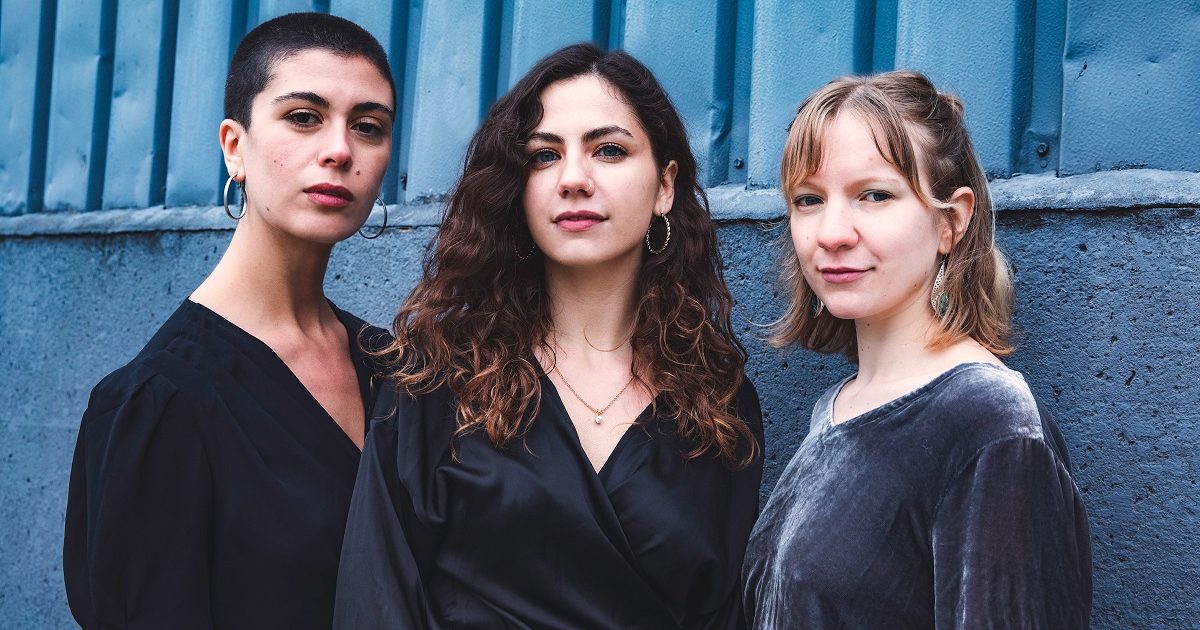
Artist:The Ladles Hometown: New York, New York Song: “Pages” Album:Springville Sessions Release Date: April 16, 2021
In Their Words: “‘Pages’ talks about the experience of reading through an old journal and being confronted with your past self. In each entry, all your hopes and good intentions, your mistakes and your blind spots are laid bare in equal measure. It’s not a particularly comfortable experience, because you have the benefit of perspective and you know how it all works out. That confused and misguided relationship does fall apart. You did say the wrong thing and will have to apologize for it. However, I found that reading my own words from that time helped me to offer myself more compassion and understanding. It was a reminder that at any given moment, we only know what we know, and we’re all doing the best we can.” — Katie Martucci, The Ladles (guitar, vocals)
The Schinus molle — more commonly known as the California pepper tree — can grow up to 45 feet high and 50 feet wide, producing small yellow flowers and rose-colored berries, and bringing shade to everything within reach. For Nickel Creek originator Sara Watkins, the pepper tree brings about memories of family, youthful fun, and inspiration for her latest record, Under the Pepper Tree. Produced by Tyler Chester, the 15-song album is a personal project for Watkins, including songs from her own childhood alongside a few original compositions. Reuniting Nickel Creek, I’m With Her, and a range of guest performances, she tackles favorite songs such as “Pure Imagination” (from Willy Wonka and the Chocolate Factory) and “Blue Shadows on the Trail” (from The Three Amigos).
BGS caught up with Watkins from her California home to talk about the inspirations behind Under the Pepper Tree, and the experience of making a record like this during the COVID-19 pandemic.
BGS: Was the making of this album a different experience from those you’ve done in the past?
Watkins: Yeah, and not just because we did it during COVID. That was a huge appeal in working with Tyler Chester — he can play so many instruments so well. His musicality comes out on each instrument really well. Other than that, I knew early on that it would be necessary for the songs to weave together. As I was collecting these songs, realizing that so many of them are kind of dreamy and mellow, I wasn’t dealing with the typical balance of “up” songs, “down” songs, “sad” songs, “happy” songs, the way those things can affect the sequence of a normal album. Because of the nature of this material, a lot of the songs had a similar dreamy quality, so I thought by connecting them all, that would let the album kind of drift along, and hopefully sweep you up in a way that might not happen if they were all just 15 individual tracks.
Before going in to record the project, we did a bit of a practice swing, just to see how the sequence might work together. We made some changes to the sequence and adjusted the transitions accordingly, so that everything went together as well as possible. This is the first time I’ve sequenced an album before going in to record, and I really enjoyed the result and how it affected the process throughout. It’s definitely something I’m going to bring with me into my future projects, even if I don’t do it exactly the same way. I’m going to consider it very seriously before starting records.
How did getting to be home during the pandemic influence your day to day, and outlook on this album?
If affected it completely. I don’t think I would have made this record without the experience of just being home, and realizing that I needed some kind of rhythm, needed something that would tell me that today was passing. I’m new to being home, the way that all musicians are. That, combined with having a toddler now, was a new experience. The first couple years of being a mom I was on tour, and the rhythm of tour life is built into the work, the way that most people’s jobs provide a rhythm for their life. I think a lot of [musicians] were discovering that we needed to create those rhythms, by taking morning or evening walks around the neighborhood, by spending more time making meals or cooking, or doing whatever it is that helps cycle you in to the next part of the day.
I was digging through my old record collection, and I would listen to five a day, and decide whether or not I wanted to keep them or whether I was done with them. A big part of me creating Under the Pepper Tree with vinyl in mind was because of this wonderful freedom that it gave me to put on a record and not have to make a choice for a while. I could just listen to it and not have to worry what song came up in the algorithm next, or decide whether or not I wanted to skip ahead. That freedom of just making one choice and being able to go about the rest of the things that I needed to do, it felt really liberating, like a kindness that I could do to myself.
That also played into why I wanted to make this album with record listening in mind. It works great on digital too, but I imagined it being an A and B side. If you only listen to side A, you can get a full arc and it can send you into dreamland. And if you want to listen to it altogether, that’s another experience.
Like with Nickel Creek on “Blue Shadows on the Trail,” were any specific guests important to certain songs?
“Tumbling Tumbleweeds” with Aoife [O’Donovan] and [Sarah] Jarosz, my I’m With Her bandmates, was just as important, because I really wanted both of those bands on this record. I feel like this album in a lot of ways celebrates this time in my life, and the music that I grew up with. For me also, it was an incredible way to get those two bands together on an album, because they’re both so meaningful to me, and have played such huge roles in my life, and in my growth and development as a person, as a mom. So it was incredibly meaningful to get to have them on it.
All of the players on the record mean a lot to me, but I really also loved having Davíd Garza on this record, who is a dear friend. In particular, he plays this beautiful solo on “Moon River.” There’s a song on Emmylou Harris’ record Roses in the Snow when Willie Nelson comes in with a guitar solo, and then it sounds like he just goes away. When I first heard that record — I think it was in my early 20s — it was pretty informative to me about how a lot of times musicians can be known for one or two things, but they might not often get asked to just be a musician on somebody else’s record. I just love that [Harris] didn’t get Willie to sing on it, she got him to come in and play a guitar solo. That was really eye-opening for me, and changed the way I thought of playing with people.
On “Moon River,” I specifically had that moment in mind where Willie comes in and plays a solo and goes away, and so Davíd graciously agreed to be my Willie Nelson on this song, and he does a wonderful job.
Having a couple of original tunes on the record, what was your process behind writing something that incorporates naturally with these classic songs?
I felt like there should be a spot for fiddle on this record. I knew that I wanted to have an instrumental on here, and I knew that I wanted to write it. It was important to have a little break in the lyrics. It was great to expand my childhood story with the title of the [instrumental], “Under the Pepper Tree.” That has very personal weight to me. A lot of instrumental titles are pretty arbitrary in my experience, but this was an opportunity to share a little bit about my own childhood.
There’s a tree that I spent a lot of time growing up with, playing in and imagining in. There are several very important pepper trees in my life. One of them is at my aunt’s house, where my grandma used to live. There were two huge family reunions under that pepper tree. I just remember running around with my cousins, playing tag, listening to my aunt’s laugh, all that stuff. It’s a really beautiful thing, and I think that had a natural place on the album.
The other song [“Night Singing”] was a poem that I wrote, that eventually fell into a guitar part. Originally, I thought that this record would be a lullaby record, but my goal for the record changed. It was to make something a little more deeply transitional for people of all ages. But “Night Singing” is a true lullaby, for my daughter, for myself, and for my friends.
Do you have any specific plans you’re looking forward to taking on when we climb out of this pandemic?
This fall, my brother [Sean Watkins] and I are going to do some touring behind our Watkins Family Hour album brother sister, which came out a year ago now. We weren’t able to tour it, but a lot of the dates we had for last fall have been rescheduled for this fall, 2021. We have some dates on the books starting in August, which is kinda hard to believe! So this fall we’ll be able to do some in-person shows, and I’m really looking forward to it.
I feel very stopped up in terms of creativity, because we wrote the brother sister record, recorded it, and put it out, and haven’t really been able to celebrate it with an audience. Then I put together Under the Pepper Tree, recorded that, released it, and I haven’t been able to do shows for it. There’s been writing for other projects, but I honestly feel a little bit stopped up creatively. I think I just need to perform some of these songs, and get them out of my body, so that I can put more stuff in. As alienating as this whole thing has felt for us, and as isolating as it has been, there has been to some degree a shared experience, and the universality of that has been reassuring at times for me.
Sara and Sean Watkins, as Watkins Family Hour, are coming to Colorado in March 2022! Grab your tickets here.
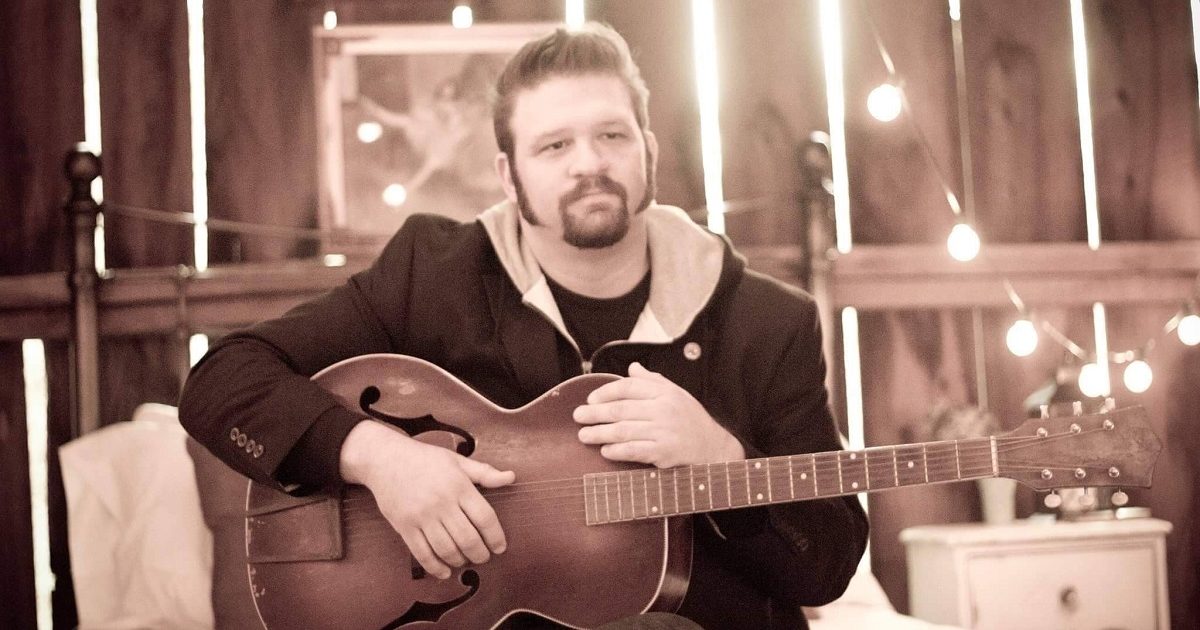
Artist:Andrew Adkins Hometown: Fayetteville, West Virginia Song: “This Old Knife” Album:April in Your Eyes – A Tribute to the Songs of John Lilly Release Date: April 16, 2021 Label: Diamond Ranch Records
In Their Words: “I’ve always admired John Lilly as a person and as a songwriter. The first or second time I saw him perform, he played ‘This Old Knife’ and I was in love. I literally stuck my hand in my pocket and held the knife that my father gave to me. When asked to be a part of this album, I knew exactly what song I wanted to sing, because I’ve sang it so many times since I first heard it that night.” — Andrew Adkins
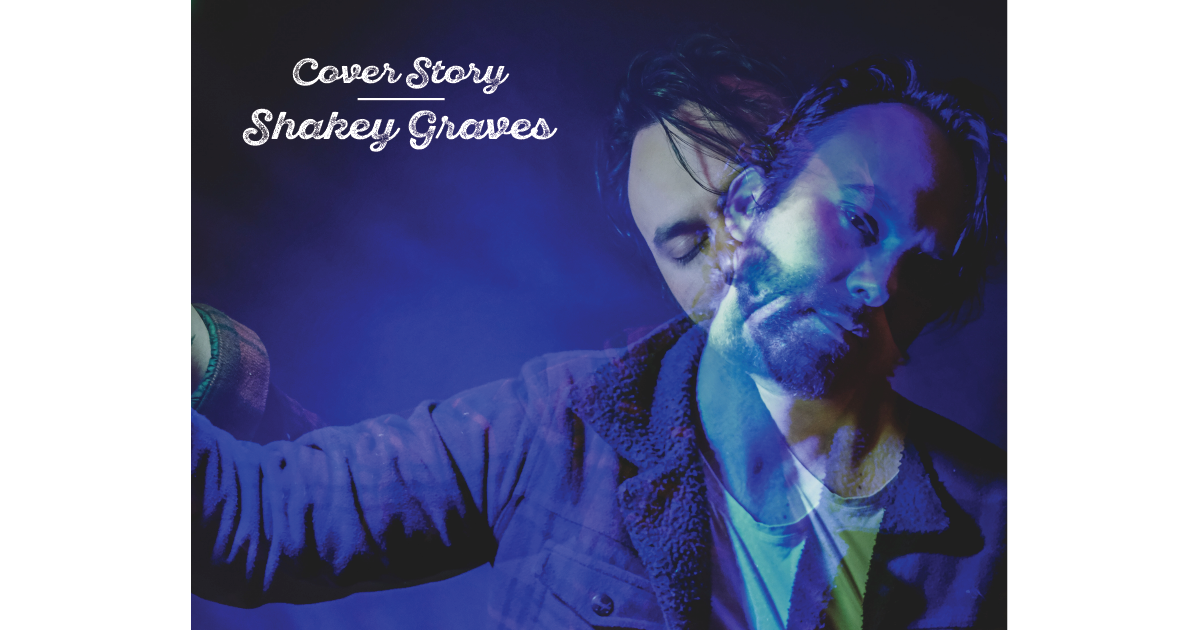
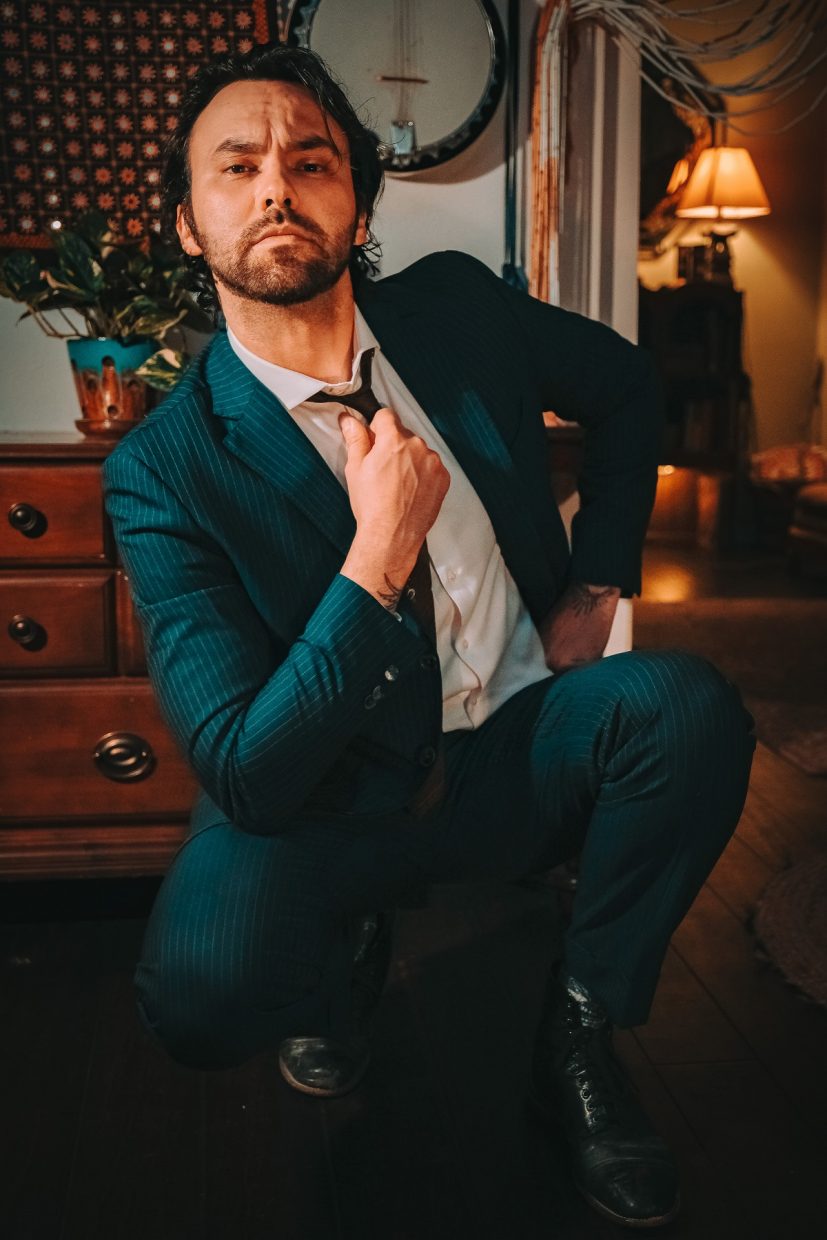
The very first fans to discover Alejandro Rose-Garcia — the musical mind behind the moniker Shakey Graves — admittedly didn’t have much information to go on.
“When I first snuck this record out, it was just a photo of me with a cow head,” recalls Rose-Garcia of his self-released 2011 debut, Roll the Bones. “All it said was Shakey Graves is a gentleman from Texas. It didn’t say whether I was a band or a solo artist. I didn’t promote it. I just let it be and believed in it.”
The album’s no-frills, garage-folk sound attracted a loyal following, varying between down-tempo, ominous poetry about hunting seals in Alaska; lighter, more carefree numbers about driving through Appalachia; and even the lone cover song, an edgy take on a Springsteen classic. In the decade since Roll the Bones’ quiet release, Shakey Graves emerged from the shadows, releasing two full-length albums via Dualtone Records as he built a strong live-performance resume, first as a charismatic busker and later as top billing on festival stages around the world. Still, until recently, Roll the Bones remained available only as a pay-what-you-want release on Bandcamp, its recognition a de facto litmus test for Shakey Graves superfans even as it’s sold more than 100,000 downloads.
“I always had the backs of the people who had the back of this record,” says Rose-Garcia. “Anyone who’s like, ‘Man, I just love that first record so much,’ I’m always like, ‘Me too! We have that in common. That’s our secret we share: me as someone who made it, and you as someone who found it.’”
This month, millions of new listeners have the opportunity to share that secret as Roll the Bones X, a re-issue of those original recordings, hit streaming services and sees a proper vinyl release complete with the bonus companion LP Odds & Ends, a 15-track collection of previously unheard Shakey Graves material from the same era. BGS caught up with Rose-Garcia to talk about the impact of this release on his development as an artist, how the songs’ meanings have evolved (or not) over the years, and his most cherished online feedback.
BGS: This album has been available for years on Bandcamp. What inspired you to release Roll the Bones in this new, wider way — and with so much additional material alongside it?
Rose-Garcia: It’s been really important to me that I put the record out for pay-what-you-want just on Bandcamp for all these years. It wasn’t on any digital streaming platforms. That was a pretty stubborn point I had, but I feel like I got to hold my ground with that. Now, I want more people to be able to hear it if they want to. My time of being so precious with it has run its course. When we put out “Roll the Bones” as a single, people kept being like, “Wow! Cool remix, but I really prefer the original.” [Laughs] The first version of “Roll the Bones” people usually hear is the live Audiotree version, so it’s a pretty common thing to hear. People say, “Cool, but it doesn’t hit quite like the OG!” I’m like, “Well, this is the OG…” Still, I’m also flattered that some people think that I just recorded it — that somehow it still sounds modern enough.
At the point that I put this out, nothing had really happened for me, musically, at all. [Laughs] I believed in myself, and I really liked this record when I made it: I was very proud of it, and I still am. Of all the records that I’ve made, it’s probably the only one that I go back to and listen to every once in a while. I can hear myself not answering to anybody and kind of shouting into the void –being like, ahh, well if this doesn’t work out, then maybe I’ll just live under a bridge somewhere! Now it’s the future, and in a way, it did work out. Nothing ever works out exactly the way you think it will, for better and for worse, but this sweet little bedroom folk record seems prescient somehow. It wants to come out, so I’m just gonna go ahead and let it.
As you mentioned, you’ve recorded different versions of several of these songs over the years. Fans can see when a song evolves in how you play it: They can tell when you strip it down or tweak a lyric or add new harmonies or whatever. But is there anything on this record that has evolved in its meaning to you, over the last ten years?
I remember reading fan theories about “Roll the Bones” — random people being like, “I’m pretty sure that this is what this song is about” — and I can neither confirm nor deny anything.
When I was 17, 18 or so, I had a manic episode and went to a mental institution for a little bit. I’d basically had this big matrix moment where I was like, oh-my-God-nothing’s-real-everything’s-real-oh-shit. A lot of those things ended up not being reality, but there were other things, too. I was like, I’m gonna be a musician! I’m gonna save the world! I started drawing that skull logo, with the arrow through it. My family and friends, for a little while there, were like, “Well, maybe you’ll just be crazy forever, and you won’t do anything.” And even I was sort of like, “Maybe I’ll be crazy forever and none of this is anything.” But now, in the future, there are people who have that [skull logo] tattooed on their bodies. And when I play that song, I can still hear a little bit of the crazy and the mystery that I found, that kind of started me on this thing.
So the song is still pretty mysterious, even to you.
I feel confident as the owner of that song, but I still don’t know what it means. [Laughs] So it’s maybe the opposite of your question: That’s been a constant. But this record did freeze-frame a lot of stuff. “Built to Roam” was a song about me wanting so badly to just escape around the United States, and it was a wish that came true. That’s just what happened to me: For the rest of my life, until this whole pandemic, all I did was travel around and live my dreams. I’m almost like, is this whole record just like a big spell that I put on? Some sort of big prayer-slash-witchcraft deal? Like, this is what I want for myself — and then it came true?
Another one that maybe answers your question more directly, is “To Cure What Ails,” the last song on the [original] record. I wrote it about the first girl that I had ever been in a serious relationship with, and you know, it fell apart in the middle of the writing of it. Half the song was me being like, “You suck!” And midway through the song, I kind of started writing this fantasy: “Maybe I’ll circle back around you’ll be there. I can’t help it. Maybe this is how it’s gonna go down.”
And now when I hear that song, I mean … I haven’t seen that person in so long. She’s the last person I would want to just magically appear. [Laughs] But what I actually hear in that song is that throughout whatever the rest of the album’s talking about, in the end, all of it is just about that need we all have to be loved — by anyone, by somebody, even just for a second. Even just being loved by yourself. “All roads lead to you,” that whole thing? Sometimes I hear that and I don’t even think of another person anymore: I think of it as you finding yourself one day.
What do you hope new listeners will take away from this album?
Playing music comes hand in hand with crippling anxiety about everything: “Am I doing the right thing?” What I hope people hear is a kid who felt the same way and put something out that he didn’t ever think anybody was gonna listen to. I don’t want to overthink it. My favorite review that I’ve seen of it so far was just some dude on Bandcamp that was like, “I listened to this record while tripping on acid in the back of my friend’s van, and it changed my life.” That’s all I want you to do: Do something stupid and put this on in the background, and let it become part of the story of your life.
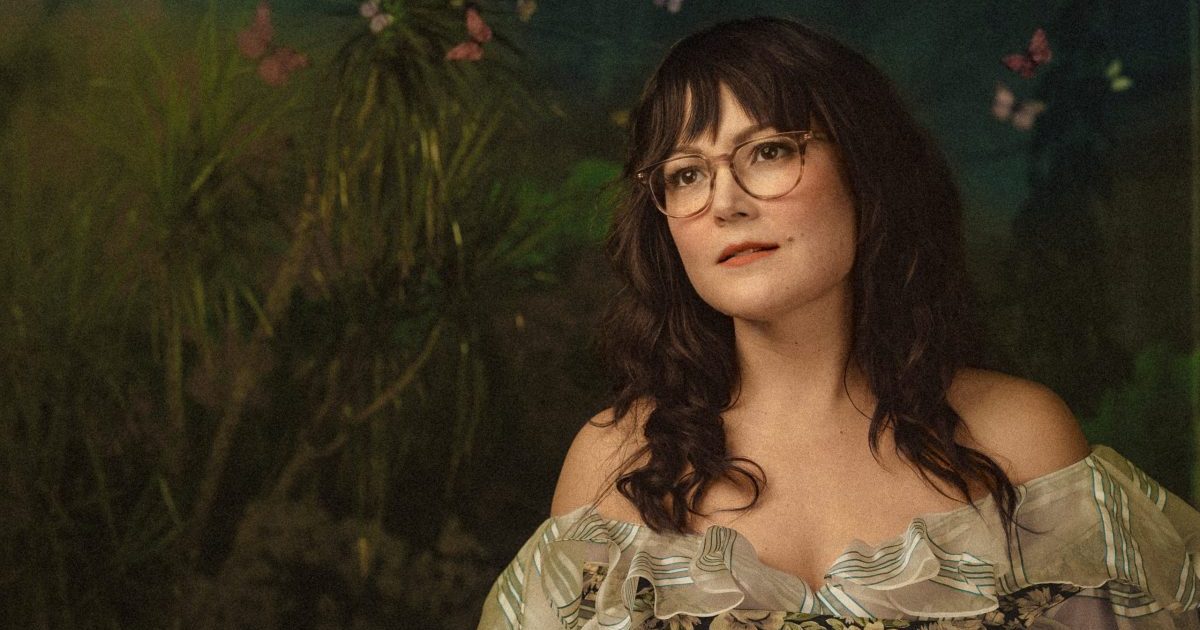
Artist:Bridget Rian Hometown: Long Island, New York; currently residing in Nashville, Tennessee Song: “Trailer Park Cemetery” Album:Talking to Ghosts (EP) Release Date: July 9, 2021
In Their Words: “While driving through rural Florida on a road trip, I saw the trailer park cemetery that inspired this song. Something about how death was so close to the living was fascinating to me. At the time I was also reading a book that mentioned kids meeting in a cemetery to party and it reminded me of my reckless teenage years. ‘Trailer Park Cemetery’ is much more a commentary on life than it is death. It’s about how I want to be close to the living and don’t want to miss out on opportunities, even in death. I think I have this fear of being forgotten, of not making a difference with my life, and this song was a way to kind of express that.” — Bridget Rian
Photo credit: Libby Danforth
This website uses cookies to improve your experience. We'll assume you're ok with this, but you can opt-out if you wish.AcceptRejectRead More
Privacy & Cookies Policy
Privacy Overview
This website uses cookies to improve your experience while you navigate through the website. Out of these, the cookies that are categorized as necessary are stored on your browser as they are essential for the working of basic functionalities of the website. We also use third-party cookies that help us analyze and understand how you use this website. These cookies will be stored in your browser only with your consent. You also have the option to opt-out of these cookies. But opting out of some of these cookies may affect your browsing experience.
Necessary cookies are absolutely essential for the website to function properly. This category only includes cookies that ensures basic functionalities and security features of the website. These cookies do not store any personal information.
Any cookies that may not be particularly necessary for the website to function and is used specifically to collect user personal data via analytics, ads, other embedded contents are termed as non-necessary cookies. It is mandatory to procure user consent prior to running these cookies on your website.