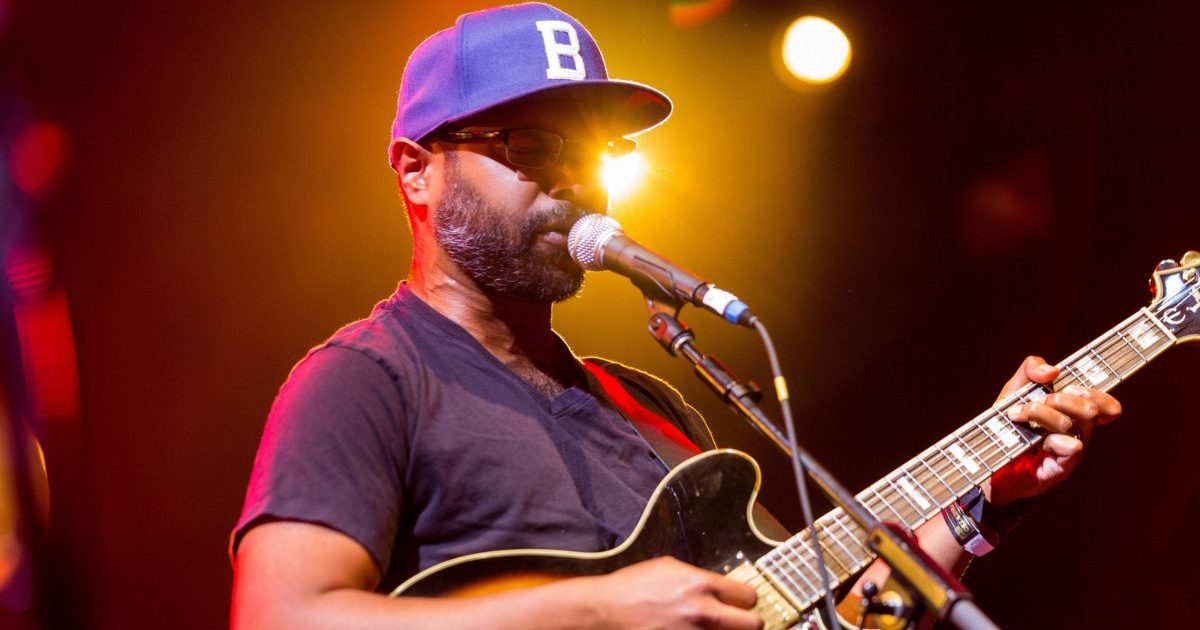
Artist:Bhi Bhiman Hometown: St. Louis, Missouri Song: “Magic Carpet Ride” Album:Substitute Preacher II Release Date: April 30, 2021 Label: BooCoo Music
In Their Words: “‘Magic Carpet Ride’ is such an instantly recognizable, iconic rock song, but I never realized the lyrics were actually about Aladdin and his magic lamp. The lyrics are super playful and I began playing it for my daughter, who I’ve been homeschooling during the pandemic. Country blues artists like Mississippi John Hurt, Rev. Gary Davis, Lightnin’ Hopkins, and Blind Blake have played a big part in my evolution as a guitarist. And it’s still one of my favorite styles to play because it just feels so good. So I took a song basically everybody knew and made it feel like an old country blues song that Steppenwolf merely covered. And I think this version is so soothing to hear, especially as a parent in these times, when everything is uncertain, and we wish we could just float above it all.” — Bhi Bhiman
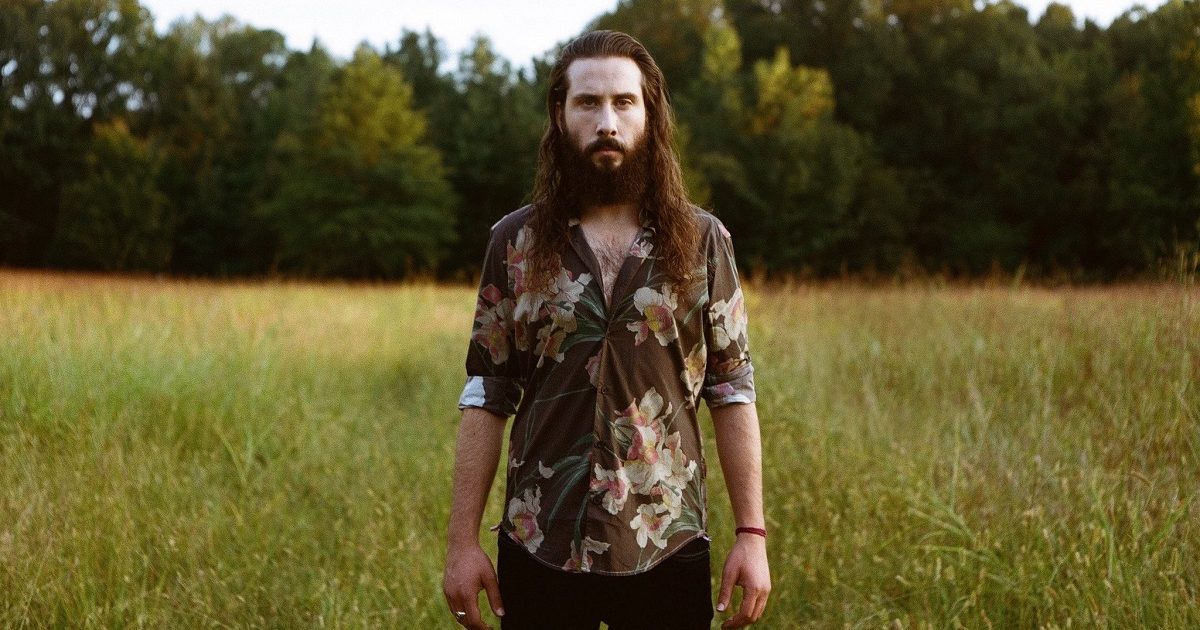
Artist:Avi Kaplan Hometown: Visalia, California Single: “Song for the Thankful” Release Date: April 9, 2021 Label: Fantasy Recordings
In Their Words: “‘Song for the Thankful’ is about finding gratitude in every aspect of life. The good and the bad, in darkness and in light. There’s beauty to be found in all of it and I hope that anyone who listens can find gratitude in their life regardless of what end of the spectrum they are currently in.” — Avi Kaplan
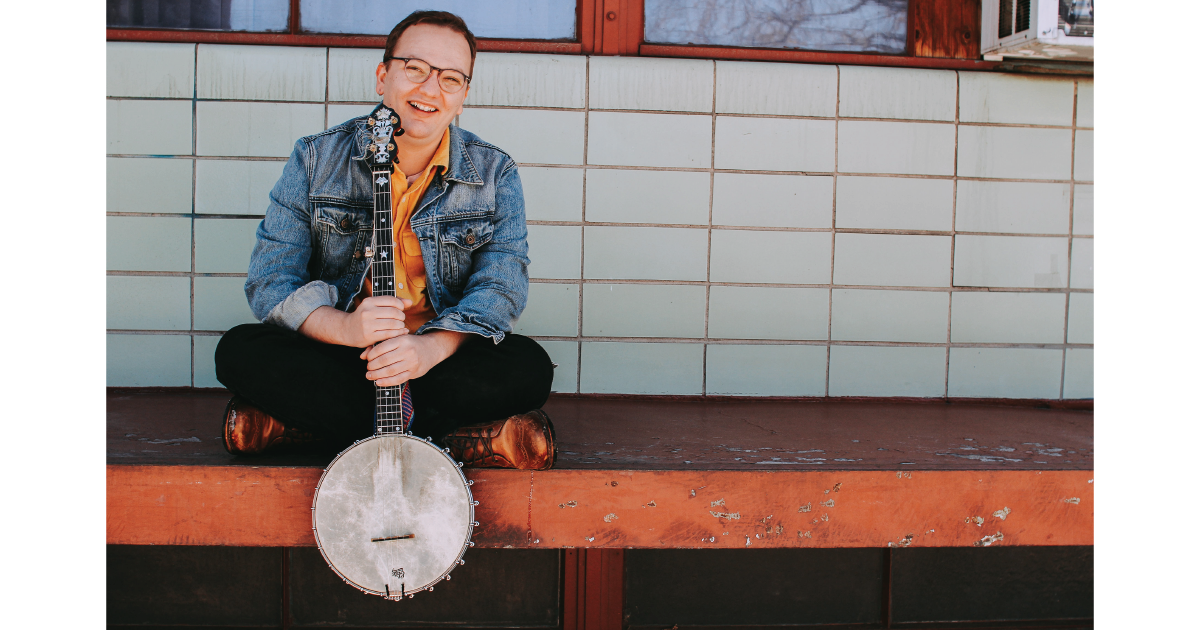
Artist:Sam Armstrong-Zickefoose Hometown: Colorado Springs, Colorado Song: “Heart of Mine” Album:Spark in Your Smile Release Date: July 5, 2021
In Their Words: “I wrote this song about how it feels to not fit in and the things we do to get a sense of belonging. I imagine we can all get to feeling like we are on the outside looking in or that we are stuck between two worlds. For me I felt like I had to hide my queerness for a long time, but once I was out I felt like an impostor in queer spaces. Luckily, I have been supported by many of the people in my life and keep meeting more folks I can relate to (in part thanks to organizations like Bluegrass Pride). This song is brought to life by Joe D’Esposito on fiddle, Jean-Luc Davis on bass (both from The Railsplitters), Colton Liberatore on drums, Maggie Liberatore on harmony vocals and Aaron Youngberg on synthesizers.” — Sam Armstrong-Zickefoose
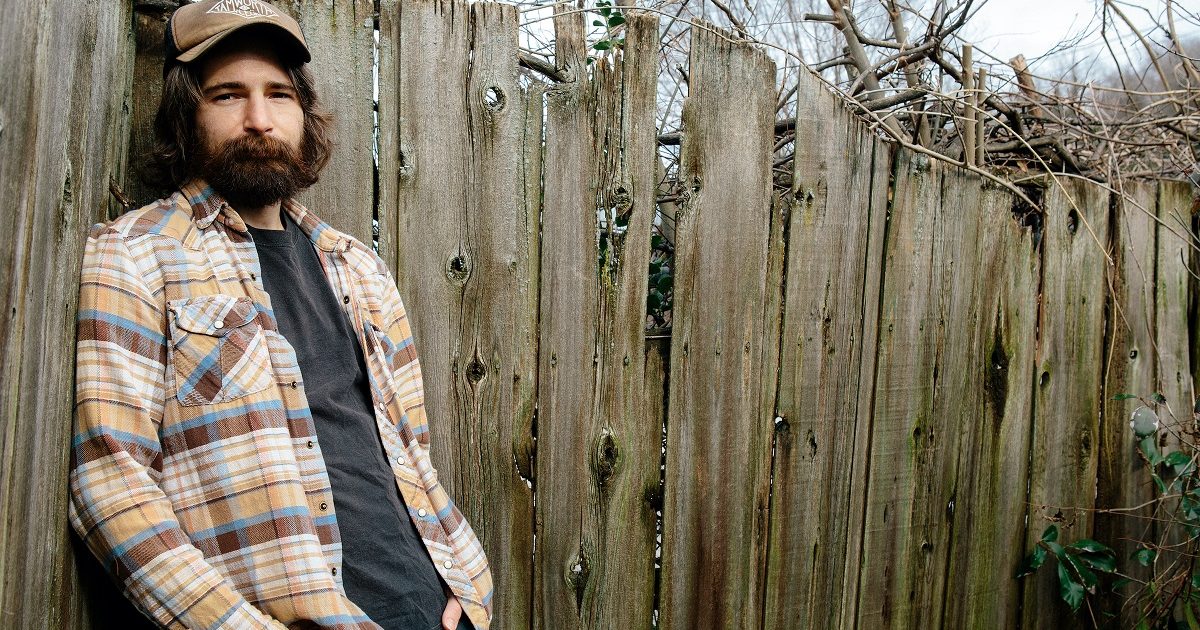
Artist:Casey Noel Hometown: Greensboro, North Carolina Song: “Page 52” Release Date: March 26, 2021
In Their Words: “This song is my favorite I’ve written to date. It was my way of processing what I did and didn’t want out of a romantic relationship. Having experienced a relationship where I was completely blindsided at the ending of it I reflected on how often I feel people want love but yet don’t want to work at it. I think many people have very warped definitions of love. It truly is so much more than a feeling and I want to be with someone who fully understands that. Hopefully this song resonates with others and helps them to not feel alone in their own experiences.” — Casey Noel
Artist:Lady Nade Hometown: Bristol, UK Song: “Willing” Album:Willing Release Date: June 18, 2021
In Their Words: “I wrote ‘Willing’ as a message of acceptance, loyalty and friendship. I’ve often tried to fit in, which has meant I lost myself for a while, I’ve been working really hard in the last couple of years to be aware of that. Realising being individual is what being human means, these feelings are particularly poignant for everyone after this prolonged period of separation we’ve all been through. The video was filmed in my hometown in Bristol along the route of the BLM protests last summer. I end the video at the base of the statue of Slave Master Edward Colston, which was dismantled during those protests. The way the video and song came together portray the message of self, as well as community.” — Lady Nade
Artist:John R. Miller Hometown: Hedgesville, West Virginia Song: “Faustina” Release Date: April 23, 2021 Label: Rounder Records
In Their Words: “I wrote ‘Faustina’ a few years ago as a salve when I needed one; one part road-ode, one part a nod to long hours spent in search of mystics and saints while navigating cycles of addiction. I love John Clay and Jonathan Beam’s comfortable groove here on drums and bass respectively, Adam Meisterhans’ backdrop of electric guitar flourishes, and Russ Pahl’s effortless-sounding pedal steel ebbing throughout the song.” — John R. Miller
The duo Mandolin Orange have surprised fans with a new video and a name change to Watchhouse. Band members Andrew Marlin and Emily Frantz shared on social media, explaining how their former band name didn’t necessarily encapsulate their personal songs.
They wrote, in part, “This past year has been the first time we’ve stayed still since we were 21, and the pause gave us the opportunity to sit with ourselves and set intentions. We have long been burdened by the dichotomy between our band name and the music we strive to create — if you’ve heard the songs, you know they are personal. Now that we can see a future where music is a shared experience again, we’re defining the space we share with you on a stage or in your headphones, and making it one that welcomes our creativity and anyone who wants to listen.”
FRIENDS! Our band is now called Watchhouse 💖. Same music, same us. We’ll tell you more about it: pic.twitter.com/0Klwh0WtBS
— Watchhouse (formerly Mandolin Orange) (@watchhouseband) April 21, 2021
The band’s most recent project has been 2019’s Tides of a Teardrop, although Marlin released two instrumental albums earlier this year. To coincide with the announcement revealing Watchhouse, the band released a new video for the song, “Better Way,” produced by Josh Kaufman and released via Tiptoe Tiger Music / Thirty Tigers. Take a look:
It’s a national holiday. Patron saint, Willie Nelson. And perhaps his heir would be Kacey Musgraves? Or Billy Strings. Or Margo Price. Or Snoop Dogg. We’ve got options.
Bluegrass and country may be upheld as the pinnacles of wholesome, “American values” music, but in reality artists have been putting the GRASS into bluegrass since as long as that term has been in popular usage. (And damn, does it look good on a sweatshirt, too.)
We hope you ascend to new heights this 4/20, and while we’re at it we hope you enjoy these 16 high lonesome roots songs perfect for the occasion.
Roland White – “Why You Been Gone So Long”
Roland White, his late brother Clarence, and the Kentucky Colonels are known for “Why You Been Gone So Long,” and in 2018 Roland re-recorded the number on his IBMA Award-nominated album, A Tribute to the Kentucky Colonels, with a star-studded cast of friends.
Also known for his monthly shows at the World Famous Station Inn in Nashville (pre-COVID), every time Roland sings the line, “Nothing left to do, lord, so I guess I’ll go get stoned,” the crowd erupts with laughter. To this writer, though, that line feels less like a hilarious non-sequitur from a septuagenarian bluegrasser and more like sage wisdom. I guess I will go get stoned!
Selwyn Birchwood – “I Got Drunk, Laid & Stoned”
As modern bluesman Selwyn Birchwood put it in our premiere of this track, “This song proves that you can party to blues music.” That may seem like an obvious fact to a blues fan, but the uninitiated deserve to know the blues isn’t just about what you’ve lost, it’s about what you gain – through the music and otherwise. As Birchwood concludes, “‘I Got Drunk, Laid and Stoned’ is the epitome of what I feel is missing in a lot of blues music right now. You’ll find all of the rawness, edginess, and boundary pushing that I love…” That is the blues.
Ashley Monroe – “Weed Instead of Roses”
No matter the occasion, when you’re reaching for flower… buds – reach for weed. Ashley Monroe makes a compelling case that men are certainly not the only ones in country who can live up to the outlaw moniker. Guthrie Trapp chicken pickin’ along is the cherry on top of this cannabis bop.
John Hartford – “Granny Wontcha Smoke Some Marijuana”
For all those who’ve ever imagined hotboxing a steam-powered aereo plane, here’s a lazy, loping sing-along that kicks into barn-burning — or, grass burning? — country meets honky-tonk meets bluegrass. You’ll be calling it “mary-joo-wanna” now too.
David Grisman & Tommy Emmanuel – “Cinderella’s Fella”
If you’re here, you must be celebrating 4/20, so you might know about Cinderella – a potent, hazy strain that Dawg attributes to his late friend Jerome Schwartz in Petaluma, California. If Cinderella were a princess instead of a strain of cannabis, Grisman would certainly arrive at her door with glass slipper in hand. Instead, we assume he fits her with a glass bowl instead? This performance by Grisman and Tommy Emmanuel is sweet, tender, and jaw-dropping. Classic “Dawg music.”
Courtney Marie Andrews – “Table For One”
Everyone self medicates, whether they’re aware of it or not, it’s just that touring musicians — by the very nature of their jobs — face their self medications, “crutches,” and vices everywhere they go. Courtney Marie Andrews, a lifelong Americana nomad, captures the depression and melancholy of touring perfectly in this haunting song, which reminds the listener that you don’t really want the life of the person on stage, no matter how glamorous it might seem. If the sometimes foggy dissociation of weed smoking were bottled and infused into a song, it would be this track.
New Lost City Ramblers – “Wildwood Weed”
Have you ever asked yourself the question, “What if Mother Maybelle smoked pot?” With this song — a Jim Stafford hit — The New Lost City Ramblers kinda did!
New life side quest unlocked: smoke weed from a corncob pipe.
Kacey Musgraves – “Follow Your Arrow”
It’s April 20th and your arrow is pointing directly at your bong. F*CK, water pipe. Follow that arrow, babies! Do you! Light up a joint. (Or don’t.)
Nah, do.
Charlie Worsham feat. Old Crow Medicine Show – “I Hope I’m Stoned (When Jesus Takes Me Home)”
We’ve loved Charlie Worsham and the bluegrass bona fides underpinning his brand of modern country for quite a while, but it’s extra perfect when he sits in and otherwise collaborates with the fellas in Old Crow Medicine Show. Heaven’s golden streets? Overrated. What about its fields of pot?! I mean… it will have amber waves of cannabis, will it not? It’s called “heaven.”
Margo Price – “WAP”
She’s partnered with Willie’s Reserve to release her own branded strain of weed, “All American Made,” and she’s infamous for smokin’ and tokin’. But in this Daily Show withTrevor Noah spot featuring comedian Dulce Sloan, Price is called upon to prove the point that if “WAP” were a country song, the universe would still be as upset at its radical centering of female pleasure and agency. (She’s right, of course.) Thank GOD for Sloan and Noah making this point, because it’s given us this country-rendition of Price singin’ “Need a hard hitter, a deep stroker/ a Henny drinker, need a weed smoker.” Perfection.
Chris Stapleton – “Might As Well Get Stoned”
Look, you can’t mess with the hits. This list wouldn’t/shouldn’t exist without this song on it. Chris Stapleton, perhaps the biggest crossover artist — crossing over from bluegrass to mainstream, of course — in roots music since Alison Krauss proves his allegiance to whiskey and weed in this jam from his smash major label debut, Traveller.
It’s like he took Roland’s advice! Might as well…
Peter Rowan – “Panama Red”
Peter Rowan’s career has been well-peppered with southwestern and Latin folk-flavored bluegrass, but did you know he wrote “Panama Red”? This live recording is suitably trippy for 4/20, with a slight atonal warble as if the record were slightly warped on the turntable and the pickers holding on for dear life to Peter’s delightfully languid phrasing — that somehow drives as much as it lays down for a weed-induced siesta. Everybody’s acting lazy…
Billy Strings – “Dust In A Baggie”
He means kief, right? Right??
Guy Clark – “Worry B Gone”
How every “worried man” in Americana, country, and the blues still has a job when “worry B gone” exists is perplexing, isn’t it? Granted he was not a medical professional, but Guy Clark’s endorsement surely must stand for something. Don’t give me no guff, give me a puff!
Willie Nelson – “Roll Me Up and Smoke Me When I Die”
Did you know that funerary and embalming processes are actually incredibly harmful to the environment and often non-sustainable? But this style of cremation must be ideal. Do it for the earth. Think green. HaHA!
John Prine – “Illegal Smile”
Love that plant peeking from behind John Prine like a shoulder angel. Let’s all do Prine proud and don illegal smiles today, how about it?
With that in mind, let’s not celebrate today without also striving towards decriminalization, decarceration, and the expungement of criminal records for anyone currently imprisoned on marijuana charges. Illegal smiles no more!
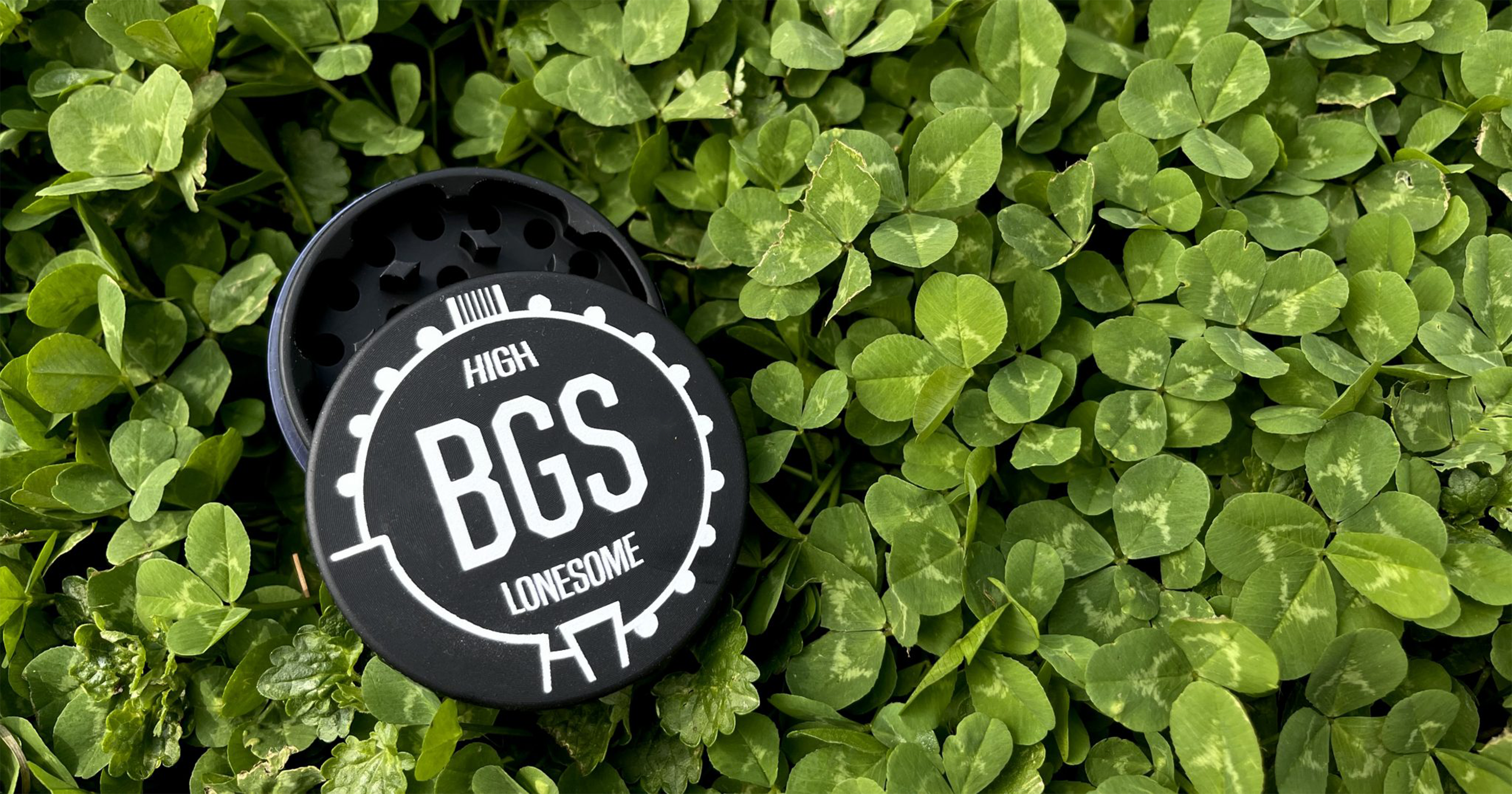
Pictured: Limited edition BGS herb grinder. Want one? Let us know in the comments and we might add them to the BGS Mercantile!
Welcome to the BGS Radio Hour! Since 2017, this weekly radio show and podcast has been a recap of all the great music, new and old, featured on the digital pages of BGS. This week, we bring you new music from Sara Watkins featuring her old bandmates from Nickel Creek, newly released tracks from Shakey Graves’ archive, and so much more! Remember to check back every Tuesday for a new episode of the BGS Radio Hour.
Sara Watkins recently sat down with BGS to talk about the set of film classics that defined her childhood, and are featured on her new album. With songs like “Pure Imagination” and “Moon River,” this album isn’t just for kids, even if it was first imagined as a collection of lullabies. Instead, it’s a meditative look at these songs which have impacted more than just one generation. And who could forget this classic from the 1980s classic comedy Three Amigos?
Here’s a song about the experience of reading through an old journal and being confronted with your past self — not a particularly comfortable experience. However, for Katie Martucci of The Ladles, it’s a reminder that at any given moment, we only know what we know, and we’re all doing the best we can.
When asked to be a part of a tribute album to singer-songwriter John Lilly, Andrew Adkins knew exactly what song he wanted to sing: one that he’d had a remarkably personal connection to the first time he heard it.
It’s hard to believe that Shakey Graves’ debut album Roll the Bones came out 10 years ago. Since the album’s quiet 2011 release, he’s emerged from the shadows, releasing multiple albums and garnering a substantial following. In celebration of the decade since, Shakey brings us Roll the Bones 10, a deluxe edition which also features 15 unheard songs from the same era as the original album.
Inspired by a trailer park cemetery seen while driving through Florida, this song is more a commentary on life than it is death. Bridget Rian says she has a “fear of being forgotten, of not making a difference” with her life – and this song was a mode of expressing this fear.
Folk legend Peggy Seeger is our Artist of the Month for April here at BGS, and we’re so grateful to have been able to speak with her on her new album First Farewell, her lifelong career in folk music, her hopes for social justice and peace, and much more.
Bluegrass instrumental supergroup Garrison, Gordy, Hargreaves, Walsh have set their fun, rollicking instrumental tune “Sports” to a zany, hand-drawn music video by banjoist Danny Barnes.
Canadian singer-songwriter Donovan Woods recently joined BGS for 5+5 on reading lots of fiction, a memorable London show, writing with Lori McKenna, and more.
Boulder’s The Sweet Lillies bring us their version of a tune originally released by The Stray Birds, a song they chose because they were deeply inspired by its stunning vocal harmonies, its beautiful and meaningful lyrics, and its old-timey structure.
Those who frequent bluegrass festivals in the south may already be familiar with the young savant Giri Peters. Giri and his sister Uma quickly gained popularity in the last number of years for their impeccable musical skills, not to mention at such a young age. Giri, originally known as an up-and-coming mandolinist, has continued to grow as a songwriter and solo artist. His most recent single is a testament to his musical and artistic growth, and brings much promise of an exciting career ahead.
“Human beings are messy emotional creatures,” says June Star’s Andrew Grimm. “Sometimes when we struggle to communicate in relationships it’s because there’s the voice we speak with and that voice in our head. ‘I Don’t Wanna Know’ bounces between a professed love to another person and a confessed loneliness on the inside.”
Miles Gannett heard the melody and some lyrics of this song, including the lines “Thunder River, tumbling down; catch your babes before they drown” in a dream — and it kind of creeped him out. He sat with it for a couple of years before it all came together in this final semi-apocalyptic song.
Photos: (L to R) Shakey Graves by Magen Buse; Sara Watkins by Jacob Boll; Peggy Seeger by Vicki Sharp
The long-running radio series eTown is famous for its finales, but upon reaching its 30th year, the focus is shifting to an upcoming all-star virtual b’Earthday concert on April 22 and the program’s deserving induction into the Colorado Music Hall of Fame. Of course there’s also an eagerness from everybody involved — staff, artists, and audience alike — to get back to staging shows at the beloved eTown Hall, a repurposed church that stands as a centerpiece of Boulder’s cultural community.
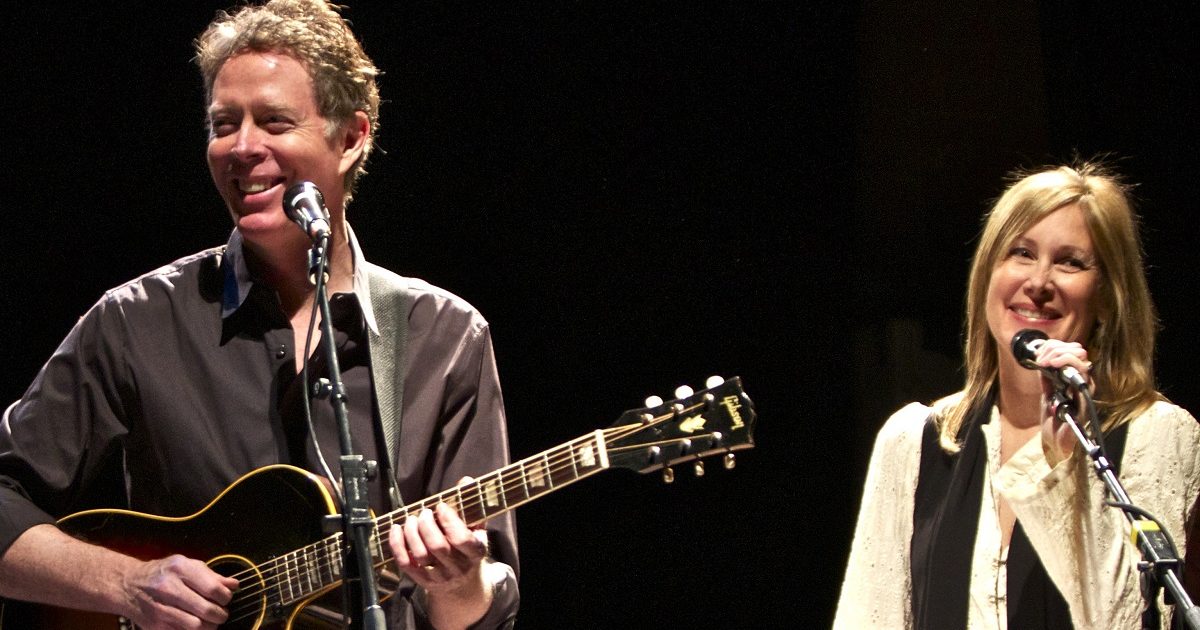
Community is key to Nick and Helen Forster, the founders of eTown. Their marriage has proved to be as sustainable as the environmental causes they support, and by never wavering from musical integrity, they have created a destination for musicians and music fans of every stripe. Helen carried a love of theater to eTown following her work with the early years of Telluride Bluegrass Festival. Nick Forster, who found acclaim in the band Hot Rize just before eTown launched, can recall browsing through microfilm in the library to do research for his guest interviews. Now, thanks to the internet, the whole world can feel part of the eTown tribe.
Calling in from Boulder, the Forsters filled in BGS about their ongoing creative venture, the common thread that all eTown artists share, and the warm family feelings behind the scenes.
BGS: What was the musical landscape of Colorado like back 1991?
Nick: In ’91, there were a lot of things that had come into their full power, including Telluride Bluegrass Festival, which is where Helen and I met. There was a pretty vibrant music scene in both Boulder and Denver, but if there was such a thing as the sound of Colorado, it was something around that lineup of the Telluride Bluegrass Festival or RockyGrass or Folks Fest. A loosely defined Americana vibe, with a little bit of a hippie slant. Colorado has always had that progressive, acoustic [feel]. … From John Denver on down, there has been a sense of Colorado being a place where a natural approach to music makes sense.
Helen, what drew you to bluegrass music?
Helen: You know, everything back then in Telluride was so organic that if you didn’t have a radio station, you got together and you started one. The festival started because these guys came back from the Walnut Valley Festival in Winfield, Kansas, and they loved it and said, “Why don’t we do this here?” So they did a Fourth of July celebration and a couple hundred people came. I think there were two or three local bands, and from that it grew into become an actual festival. By the second year of that, a couple of the founders had pulled out and I jumped in to just help, I guess. …
When I first got to Telluride, there were very few places to go, other than the bars. And there were some local bluegrass bands. That’s how I first discovered bluegrass. I was in my early 20s and we’d all jam into these basement bars and listen to the bluegrass. It caught my heart. It’s a beautiful form of music and I was so impressed with the talent and the ability of the players. Not only to play, but to jam. It was almost like jazz, in a sense, and it caught my attention then.
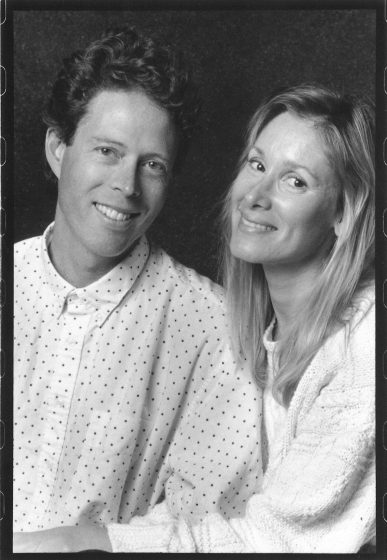
Nick and Helen Forster, 1991. Credit: Laura Lyon
Nick, around this time you had made your mark in Hot Rize, which was the first IBMA Entertainer of the Year back in 1990. So, with your background as a performer, how did you make touring artists feel at home at eTown?
Nick: I was in a unique position being on the road with Hot Rize for years. I had an understanding of what it was like from an artist’s perspective. We’d been lucky enough to play on the Grand Ole Opry, Prairie Home Companion, Austin City Limits, Mountain Stage, and all these shows. I was really enamored with live radio in front of an audience. And when I thought about all the gigs I played with Hot Rize, there were four things that I usually remembered: How was the sound? Was there a decent place to stay? Was the food good? And did the crew have a good attitude?
So, we started with that at eTown, recognizing that we were trying to do two different things. One, we were trying to help these artists basically promote their new records, because everybody who came to eTown was out there with a new record. But we also wanted to have the mission of why we were doing eTown be something they would connect with. And to be inspired by, or at least informed by. So the piece of our show that included conversation about climate change or community or sustainability was another thing that most musicians were really into. Musicians who were traveling have a good world view. A lot of them are avid readers and up to date on world affairs. This was not a giant leap for them to connect with the mission-related part of it.
Tell me about the spirit of collaboration at eTown. What do you like about having more than just the two of you putting a show together?
Helen: It’s interesting, because when I was a little kid, I was doing a lot of theatre. I came from that model that it’s not just the performers; it’s the stage manager, and the props mistress, and the person who manages the set changes. Everybody works together. It’s like a team experience when you do theatre, and having the great crew that we’ve had, I think it’s a great testament to eTown and the model that we created there of being open and [receptive] to our guests. …
That’s what a lot of artists would mention: “My gosh, what a breath of fresh air! We’ve been on the road dealing with disgruntled monitor mixers, then we come here and it just feels like family,” like you’ve been welcomed in. And quite frankly, since we closed the eTown Hall temporarily, now for over a year because of COVID, we all miss each other. Nick organized a Zoom call a couple of months ago so we could catch up and see each other. I know that our crew is really anxious for the hall to re-open so we can all come together again. It’s like a big, extended family.
What are you looking for when it comes to booking artists for eTown?
Nick: We’ve always tried to aim for music that is soulful. That’s music that has integrity, good songwriting, not too many bells and whistles. Not stuff that is overproduced, so you can feel the personality of the songwriter and the singer come through. Our booking philosophy was always, from the very beginning, about featuring some diversity. But for the first 600 or 700 shows that we did at the Boulder Theatre, that’s 800 or 900 seats that we tried to fill. So, sometimes it helped when we had people with name recognition as one of our guests.
We always tried to have one artist with name recognition and one artist that was emerging, and beyond that, maybe one band and one solo. Or one person is playing Americana music, and the other one is playing Celtic or Hawaiian or Afro-Cuban music. The diversity of artists was really important to us, particularly because of our finale. The end of the show was always a joint effort between our musical guests and a lot of times they didn’t know each other. They didn’t have a lot of common ground.
I come from the bluegrass world where, yeah, you’re just going to pick and jam and find a song and play. But particularly for songwriters who have been hiding in their bedrooms writing songs for three years, and then they come out and say, “I don’t know any other songs….” But the finale was always, in some ways, not just an opportunity to have something in real time. It had to be created that day, with those people, under pressure, to find a song, find a key, arrange it, split the words up, and rehearse it, then perform in a few hours later. It was pretty intense! But the other part of it was, eTown’s goal has always been about using music as a way to build community, and to remind people that our community is larger than we might think it is.
Over the last 30 years, music and technology have changed so much. When it comes to eTown, what would you say has remained the same?
Helen: There’s been an agreed goal of maintaining a certain amount of integrity and a certain amount of quality in the ultimate product that we have been putting out all these years, which is the radio broadcast and now podcast. Whether it’s the technical sound end of it, all the way to the content itself. I think that’s what’s kept it going as long as it has. There is this underlying devotion and striving toward excellence.
Lead photo of Nick and Helen Forster by Tim Reese
This website uses cookies to improve your experience. We'll assume you're ok with this, but you can opt-out if you wish.AcceptRejectRead More
Privacy & Cookies Policy
Privacy Overview
This website uses cookies to improve your experience while you navigate through the website. Out of these, the cookies that are categorized as necessary are stored on your browser as they are essential for the working of basic functionalities of the website. We also use third-party cookies that help us analyze and understand how you use this website. These cookies will be stored in your browser only with your consent. You also have the option to opt-out of these cookies. But opting out of some of these cookies may affect your browsing experience.
Necessary cookies are absolutely essential for the website to function properly. This category only includes cookies that ensures basic functionalities and security features of the website. These cookies do not store any personal information.
Any cookies that may not be particularly necessary for the website to function and is used specifically to collect user personal data via analytics, ads, other embedded contents are termed as non-necessary cookies. It is mandatory to procure user consent prior to running these cookies on your website.