The BGS Radio Hour – Episode 203

Welcome to the BGS Radio Hour! Since 2017, the Radio Hour has been our weekly recap of all the great music, new and old, featured on the pages of BGS. This week, we’ve got music from CeeLo Green to Loretta Lynn! Remember to check back every week for a new episode.

APPLE PODCASTS, SPOTIFY

Loretta Lynn feat. Margo Price – “One’s On The Way”

Loretta Lynn’s original cut of this song made it to No. 1 on the charts in 1971. When Margo Price teamed up with Lynn to celebrate the latter’s 50th anniversary of “Coal Miner’s Daughter,” Price chose this song specifically, suggesting how legendary it was for Lynn to have sung about women’s rights and birth control in the country music of the ’70s. It’s still legendary today.

Todd Snider – “Turn Me Loose (I’ll Never Be the Same)”

“Turn me loose, I’ll never be the same!” is a phrase that rodeo cowboys used to yell when they were ready – something Snider first heard from Jerry Jeff Walker, but fitting himself perfectly. He asked the cosmos to provide a rock to put is foot on, and so the story goes, the new album from Todd Snider: First Agnostic Church of Hope and Wonder. 

DL Rossi – “Tumbling”

From Grand Rapids, Michigan, DL Rossi brings us a song from his upcoming album, Lonesome Kind. It’s a kind of youthful innocence, warming up to the harsher realities of life. And while we can’t opt out of our hurtful experiences, as Rossi suggests, we can share them to encourage one another.

Aaron Burdett – “Arlo”

North Carolina-based singer and songwriter Aaron Burdett compiled this song by noting quotes that his friend Arlo would say, collecting them for over 10 years. Arlo isn’t necessarily the character in the song, Burdett says, but character, someone who always has a bold thing to say.

CeeLo Green – “Slow Down”

CeeLo Green brings us a video for “Slow Down” from his latest album, CeeLo Green is… Thomas Calloway. From the writing of the song, to the recording and then making of the video, it was a completely expressive process for Green, who called it an “out of body experience.” Ironically titled, the song pulls the listener even closer into the climactic height of the record.

Natalie D-Napoleon – “Gasoline & Liquor”

Driving through the rural Mojave, D-Napoleon passed a sign that read “Gasoline and Liquor.” While she knew it would be a song, she thought it sounded like a man’s song, one written via passing lines back and forth with her husband. The video reflects the landscape of the “Wild Wests” of both the American desert and Western Australia, the places between which this artist splits her time.

Danny Paisley and the Southern Grass – “Date With an Angel”

Danny Paisley is the current reigning prince of Baltimore-D.C.-area bluegrass, a scene with rich history dating back to the 1950s. This week, Paisley and his band the Southern Grass bring us a song from their upcoming release, Bluegrass Troubadour. 

Aoife O’Donovan feat. Kris Drever – “Transatlantic”

Aoife O’Donovan is no stranger here at BGS, or anywhere in the roots community for that matter! Her work with artists like Crooked Still, I’m With Her, and the Goat Rodeo Sessions proves why that is. This week on BGS, she teams up with Scottish artist Kris Drever to bring us a message that we’ll all be together again.

Brigitte DeMeyer – “Salt of the Earth”

BGS caught up with Brigitte DeMeyer from San Francisco this week on a 5+5 – that is, 5 questions, 5 songs. We talked musical inspirations, songwriting techniques, and her mission statement: being herself.

Will Orchard – “Rita”

For Boston-based Will Orchard, this song is about trusting impulses, and the constant questioning of whether or not those feelings are valid. Written on tour in two parts separated by almost year, Orchard was able to combine them with the perspective of time, earning a place on his newly released album, I Reached My Hand Out. 

Helena Rose – “What’s Killing You is Killing Me”

Helena Rose wrote this song while struggling to tell a loved one how she felt about their addiction. Rose offers this song to others who have loved ones battling addiction, giving hope to the struggle, and showing that there is a light at the end of the tunnel.

Valerie June – “Smile”

As March has slipped away and we welcome April, we bid farewell to our March Artist of the Month, Valerie June. This song comes from her latest album, The Moon and the Stars: Prescriptions for Dreamers.

The Bones of J.R. Jones – “Bad Moves”

In celebration of his latest album, A Celebration, we caught up with the Bones of J.R. Jones for a 5+5, talking about performance memories, art forms, and songwriting techniques. Jones’ curated playlist brings us everything from Nina Simone to Bruce Springsteen to the White Stripes.

John Smith – “Friends”

The pandemic was hard on us all, no doubt, but for Wales-based John Smith, it just kept bringing the punches. Trying to make sense of it all, Smith brings us The Fray, his latest album in a 15-year career, teaming up with artists and friends like Sarah Jarosz and Bill Frisell.


Photos: (L to R) Margo Price by Bobbi Rich; Aoife O’Donovan by Rich Gilligan; Todd Snider by Stacie Huckeba


These Artists Take Irish Banjo Beyond Four Strings

Editor’s note: Tunesday Tuesday is changing slightly in 2021. What began in 2017 as a bi-weekly tune feature and short review will now be expanded into a monthly roundup of interesting, engaging, and groundbreaking instrumental music and the themes we trace within it. 

One of the most thoughtful and virtuosic clawhammer banjoists around, Allison de Groot (Molsky’s Mountain Drifters, The Goodbye Girls) has released a brand new video with fellow Canadian, guitarist Quinn Bachand. The two old-time musicians found themselves with free time hunkering down on British Columbia’s coast last fall and joined together on a gorgeous rendering of a couple of tunes — not rousing old-time or bluegrass fiddle melodies, though. Instead they chose a pair of Irish jigs: “Tom Billy” and “Trip to Athlone.” 

“I love working up fiddle tunes outside of the American old-time repertoire,” de Groot relays via email. She arranges old-time and bluegrass with a striking, clean precision and unmatched rhythmic pocket for a frailing banjo player — facets of her playing style which might not seem to lend themselves to the often staccato or triplet-heavy or frenetic flurries of licks and trills in Irish music. 

“When I’m playing in a new style,” she goes on, “I try to capture aspects of what makes the music special to my ear while still embracing the unique qualities of clawhammer banjo.” And on “Tom Billy” and “Trip to Athlone,” she does just that, impeccably so. De Groot is a player that at times can perfectly disappear into her source material, but her obvious embrace of clawhammer’s idiosyncrasies is what makes these Irish forays so entrancing.

 “Adapting jigs to the five-string banjo is not a historically new endeavour, but there is lots of room to explore clawhammer banjo in this setting. I find a lot of freedom in that space!” That freedom is perhaps the most charming aspect of this set of tunes — second only to the joy always apparent in de Groot’s picking. 

Though perceptibly rare, other banjo players have indeed been enticed by that very same freedom (de Groot is right that it’s not a new endeavor). The five-string banjo, especially post-Earl Scruggs, is an instrument with intrinsic qualities of innovation, acrobatics, and thinking outside the box. The physical instrument itself and the lore driving the mystique behind it lend it perfectly to Irish and Celtic folk music. 

Ron Block, longtime member of Alison Krauss’s band, Union Station, and an award-winning multi-instrumentalist, has long been an acolyte of five-string Irish banjo. On a 2018 duo release with Irish songwriter and picker Damien O’Kane entitled Banjophony, the pair explore not just the mind-bending beauty created by a five-string banjo’s interpretations of traditional Irish musical vocabularies, but also the ways in which the five-string and four-string instruments bump into each other — often delightfully — in these contexts. The linear-laid-out four-string banjo and the more bouncy, melodic five-string each naturally settle into their roles in this dialogue, like old-time and bluegrass’s primordial band structure of fiddle and banjo, but with more aggression and dissonance — and a heavy dose of the stark sort of beauty that grows from the spine-tingling friction between such gregarious and bold instruments.

Irish music fully embraced the banjo — the four-string iteration of the instrument, most often tuned in fourths (C, G, D, A) — by the mid-twentieth century, closing a transatlantic feedback loop that began in Africa, landed the banjo’s precursors in the Americas brought by enslaved Africans, and then transported the instrument in its modern form back across the Atlantic to Ireland. This conclusion occurred after the four-string banjo (and any/all banjos with varying counts of strings) skyrocketed to the height of fame in America’s popular music of choice throughout the nineteenth century: minstrelsy.

Its punchy volume, its bubbly, single-string triplets, the low buzzing of the wound strings were each folded into the greater sound of Irish folk so naturally, from the purest traditional instances to the most daring punk affectations. The banjo’s subversive, trailblazing tendencies are ripe for exciting forays and experiments. One such experiment is banjo player, builder, and inventor Tom Saffell’s behemoth Infinity 8-String Banjo.

In this 2007 video with acoustic Irish-bluegrass band Plaidgrass, Saffell demonstrates how the Infinity 8-String Banjo combines Irish banjo approaches on both four-string and five-string instruments. The two lower, wound strings, while droning or being picked, round out the natural high-end of five-string banjos, bringing in some of the punch and gravel we know and love in Irish banjo. Meanwhile, the higher strings — with one additional above the typical D first string — equip Saffell to efficiently execute Irish turns of phrase with a simple bluegrass roll of the right hand. 

Whatever it is about Irish banjo playing that just works, these pickers demonstrate there’s an entire world to be discovered not just in other genres that may be seen as outside of the norm for our instruments, but even more so in the space created between those genres. That’s as close to a definition of American roots music as we might get, the “melting pot” quality we all know and love, evident and flamboyant in each of these examples of Irish banjo on more than four strings. 


Photo credit: Patrick M’Gonigle  

WATCH: Scythian, “Galway City”

Artist: Scythian
Hometown: Front Royal, Virginia
Song: “Galway City”
Album: Roots & Stones
Release Date: October 13, 2020
Label: Konenko Records

In Their Words: “We take a yearly trip to Ireland with our fans and have taken over 600 of them over the last seven years. There is one place we never miss — Galway City — and it never disappoints. So many magical nights. We wrote a song in tribute: a bunch Americans pulling up to the jewel of Ireland and falling in love with its cobblestone streets, cozy pubs, nooks and crannies, and coastal air. We hope ‘Galway City’ brings people back to happy days drinking and laughing with friends.” — Alex Fedoryka, Scythian


Photo credit: Brendan McLean

WATCH: Cinder Well, “Queen of the Earth, Child of the Skies”

Artist: Cinder Well
Hometown: Santa Cruz, California, but now Ennis, Ireland
Song: “Queen of the Earth, Child of the Skies”
Album: No Summer
Release Date: July 24, 2020
Label: Free Dirt Records

In Their Words: “This tune is an American version of an Irish set dance called ‘The Blackbird.’ I derived my own interpretation from a 1947 field recording of West Virginian fiddler Eden Hammons. Hammons used an interesting fiddle tuning, DDAD, which I also used here. Erynn Marshall draws the connection between the American and Irish versions of this tune in her book Music in the Air Somewhere: The Shifting Borders of West Virginia’s Fiddle and Song Traditions.

“Being from America and living in Ireland, I have been really interested in fiddle tunes that are found in both traditions. When I found this tune, I set out to reimagine it, led by this idea that if this tune has been making its way around the world for hundreds of years, why not keep interpreting it? I aimed to do this with all the songs, both original and traditional on No Summer, to get to the core of them and express them in the most relevant and honest way possible.

“This video was shot in the back room of Lucas’s bar in Ennis, Ireland, amongst empty tables, but where, in a different time, you have a nice quiet pint next to a fire.” — Cinder Well


Photo credit: Jim Ghedi

WATCH: Lisa Lambe, “Dust and Sand”

Artist: Lisa Lambe
Hometown: Dublin, Ireland
Song: “Dust and Sand”
Album: Juniper
Release Date: April 3, 2020
Label: Blue Élan Records

In Their Words: “The inspiration for this song came from a treasured place: Omey Island, a tidal island on the western edge of Connemara County Galway in my homeplace Ireland. From the mainland you can barely see this place. The island is now abandoned but remains a place of devotion with its holy well. It is quiet and beautiful. ‘Dust and Sand’ is an ode to nature. It’s a song that reflects the space in between, and the lyrics are about being in that in-between place. A bit like the now…. Hope it brings you peace and a sense of place.” — Lisa Lambe


Photo credit: Dora Kazmierak

LISTEN: Seamus Egan, “Two Little Ducks”

Artist: Seamus Egan
Hometown: Philadelphia, Pennsylvania
Song: “Two Little Ducks”
Album: Early Bright
Release Date: January 17, 2020
Label: THL Records

In Their Words: “This mandolin-driven track is inspired by my love of Baroque music. I spent many hours as a teenager sitting in the front room of the great Irish musician and folklorist Mick Moloney’s house in Philadelphia, listening to mandolin concertos and trying to learn them by ear. I was never very successful in that endeavor, but my love of Baroque, and in particular, mandolin music endured.

“This track is also a nod, in its own way, to an old De Dannan track called ‘Arrival of the Queen of Sheba to Galway,’ from their 1983 album, Song For Ireland. This was their interpretation of the Handel piece, The Arrival of the Queen of Sheba. Hearing that track was a watershed moment for me. It opened my ears to what could be possible with Irish music. It was like getting permission to look outside the tradition and see what you could find and bring back with you. It was incredibly liberating. Joining on this track is Kyle Sanna on guitar and Owen Marshall on bouzouki.” — Seamus Egan

The Show On The Road – Sam Lee

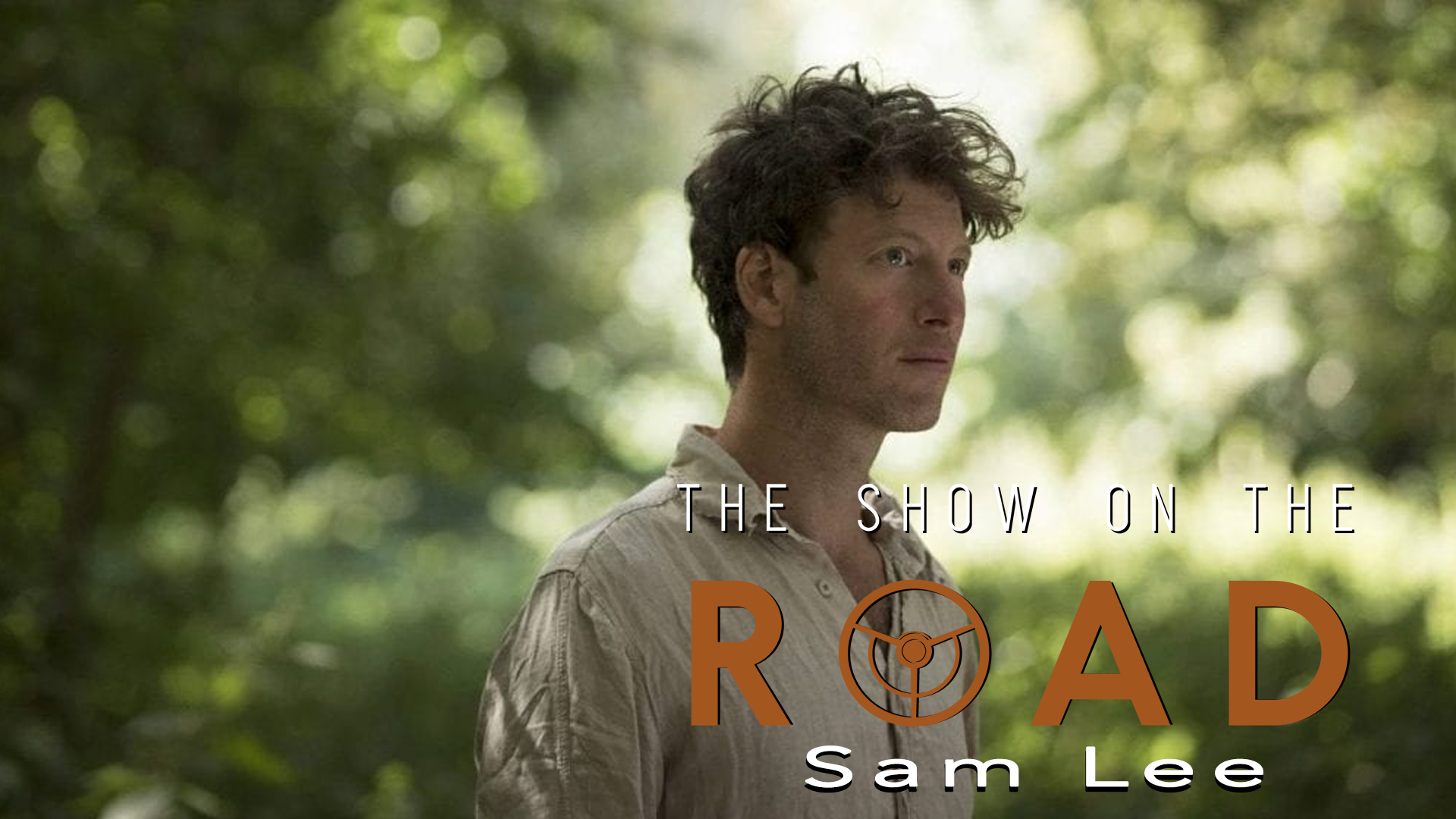
This week on the show, Z. Lupetin speaks with renowned British song collector, sonic interpreter, roots music promoter, and deeply intuitive folk singer Sam Lee.

LISTEN: APPLE PODCASTS • MP3

Lee came to music almost by accident after a former life as a wilderness survivalist and nature advocate. Since, he has become one of the leading voices in Great Britain, saving the treasured endemic music cultures that rapidly disappear each year. His gorgeously delicate and meticulously researched debut, Ground Of Its Own, shot him from hopeful academic to nationally recognized folk star — partly by being nominated for the prestigious Mercury Prize. Lee has relentlessly worked to save and rejuvenate the ancient melodies and songcraft of Irish and Scottish traveller tradition, Romany rhythms and stories, and connect those traditional melodies to a youthful pop culture that is yearning to know where it came from and where it is going next.

His Nest Collective, an “acoustic folk club,” gathers artists, authors, dancers and theatrical renegades and puts on shows and events across London – making Sam a rare double threat – as both an artist and a promoter of other artists.

His newest release, Old Wow, drops January 31, 2020.

STREAM: Cathy Fink & Marcy Marxer, ‘WAHOO!’

Artist: Cathy Fink & Marcy Marxer
Hometown: Silver Spring, Maryland
Song: “High on a Mountain”
Album: WAHOO!
Release Date: October 11, 2019
Label: Community Music, Inc.

In Their Words: “The ukulele has as many Americana and roots music voices as the player has, and that’s what we’ve explored on WAHOO! From the Turlough O’Carrolan Irish piece ‘Morgan Megan’ to a bluesy version of Ola Belle Reed’s ‘High on a Mountain,’ we’re pushing the ukulele into places that are new and exciting and love creating unique combinations with uke and cello banjo, uke and guitar, baritone and tenor uke, uke and electric guitar, songwriting and vocals. Somehow, all of our musical worlds come together on this little four string piece of magic.” — Cathy Fink & Marcy Marxer


Photo credit: Irene Young

Six of the Best: Dervish’s Cathy Jordan Chooses Her Favorite Irish Tunes

What would the world be without Irish tunes? A lot quieter, that’s for sure. Ireland’s musical tradition has enlightened, infiltrated, and inspired all corners of the planet – and American roots music owes it a huge debt.

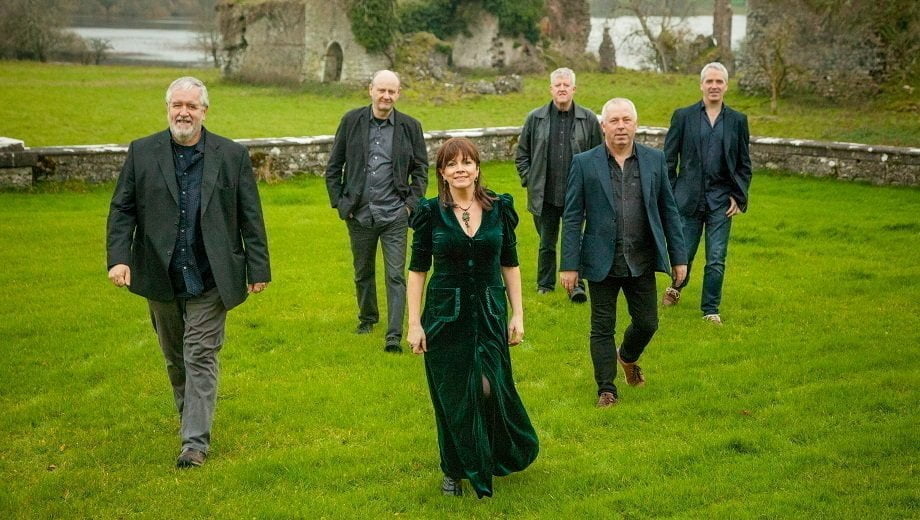
Irish folk group Dervish have just released their first studio album in a decade, a loving tribute to the songs from their home country that have travelled the world. The Great Irish Songbook is studded with guest stars – from David Gray to Steve Earle, Kate Rusby to Andrea Corr, not to mention an appearance from Hollywood actor Brendan Gleeson.

But what are the band’s favourite Irish songs? We asked singer Cathy Jordan to choose six of the best.

“Whiskey in the Jar”

“This is an incredible example of a song that has journeyed around the world and been adapted to the particular environment it found itself in. It was originally written about a Co. Kerry-based military official who was betrayed by his wife, but adaptations also turn up in the American South, the Ozarks, and the Appalachians. On our album we did a version with The Steeldrivers, but we’re also big fans of this one by iconic Irish rock band Thin Lizzy.”


“Ye Rambling Boys of Pleasure”

“This is such a beautiful song of unrequited love: a young man regretting love lost because of immaturity. The song forms the basis of a poem written by the famous W.B. Yeats (he was trying to recall a ballad he’d once heard a peasant woman sing to herself in Sligo). The poem is commonly known as ‘Down by the Sally Gardens’ and was itself later put to music — I sing a version with Kate Rusby on The Great Irish Songbook.”


“Nothing But The Same Old Story”

“Written by Paul Brady, this song captures what life was like for Irish immigrants heading to England to find work during The Troubles in Northern Ireland. Their lives involved a mixture of exhausting work, discrimination, and distrust, while longing for a normal life and to go home. The song first appears on Paul’s album Hard Station in 1981.”


“The May Morning Dew”

“The heartbreaking story of a woman who recalls her old friends, family and loved ones as she walks by their deserted dwellings in post-famine times. It’s sung here by one of my favourite Irish singers, Dolores Keane.”


“Rainy Night in Soho”

“To me, Shane McGowan of The Pogues wrote one of the most amazing love songs of all time with this one. [It’s a] love that survives through years of friendship as well as hardship. Oh, to have the last line written about you: ‘You’re the measure of my dreams, the measure of my dreams.’ This version is sung by another great Irish singer and songwriter, Damien Dempsey.


“Mná na hÉireann” (Women of Ireland)

It’s fitting that Kate Bush, one of the most poetic of all pop artists, recorded this song. It was written by 18th century Ulster poet Peadar Ó Doirnín; the music was added by composer Seán Ó Riada in the mid-20th century. Ó Riada was really important in the revival of traditional Irish folk and the words to this song are as powerfully Irish as you can get.


Photo credit: Colin Gillen