Lucinda Williams: A Folk Singer’s Heart and A Rock Star’s Swagger

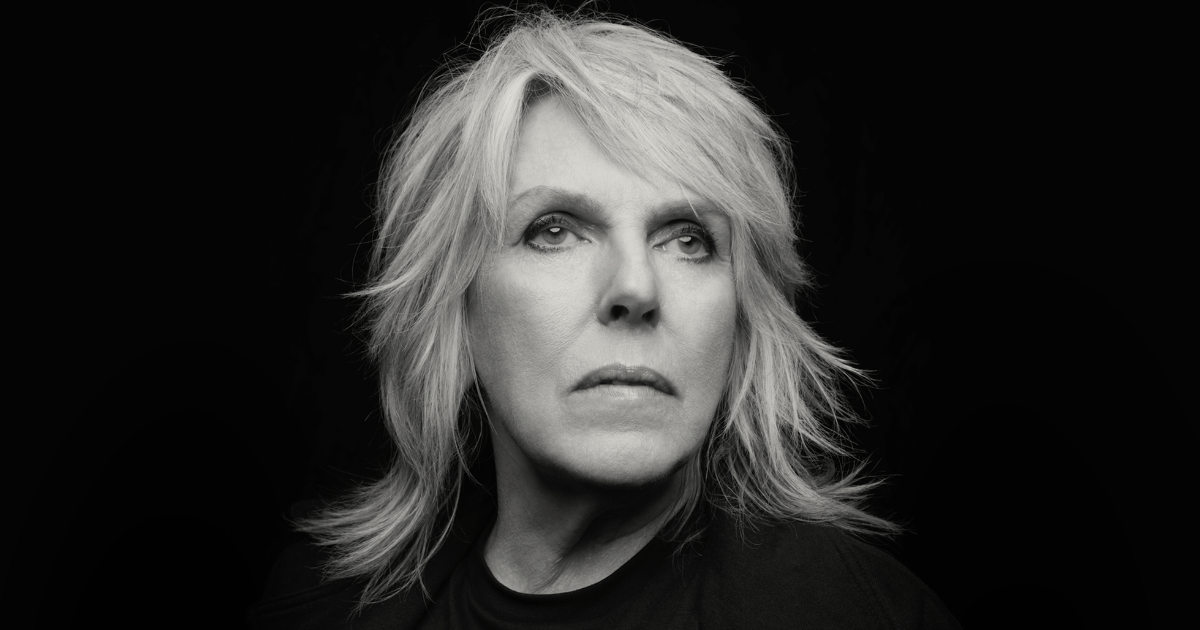
With a folk singer’s heart and a rock star’s swagger, Lucinda Williams gets it right on World’s Gone Wrong. Produced by Ray Kennedy and Tom Overby and released January 23, 2026, the topical album shows no love for the current president; instead, Williams turns to the musicians in her band, R&B legend Mavis Staples, and even a Bob Marley classic to put her own beliefs front and center.

As protesters take to the streets across America, Williams is reaching people where they live by maintaining an impressive tour schedule, just as she’s done for the last four or five decades.

BGS caught up with Williams for an Artist of the Month interview by phone, in motion and outspoken.

First off, I just want to say I love the electric guitar on this record.

Lucinda Williams: Yeah, I’ve got two of the best in my band, Doug Pettibone and Marc Ford. Marc was in the Black Crowes before and Doug’s been with me for a while. The two of them just play off of each other. They’re really great when you see the band live.

Thanks for saying that. I’ll pass that on! I’ve always managed to find really good guitar players to work with me. It’s important to me, having a good guitar sound in the band, both live and on the record.

This record’s got that live energy, which is hard to capture on an album. What were the sessions like putting this album together?

Wow! You’ve said all the right stuff that I want to hear! I love you! [Laughs] But like you said, it’s hard to get the recording to reflect that. That’s why I’m so excited that came across, but I always record live for the most part. … We’re all situated in that part of the studio where we’re recording, but the vocals are isolated, just for the sake of convenience, so we don’t have to worry about the [tracking band] bleeding in, in case there’s a mistake. But it has that live feel, because we’re not putting down certain things and then coming in later. The drummer is not coming in separately and putting the drum track down, that kind of thing. We’re putting down the basic track all at the same time, together.

I would be playing guitar normally, but since I had my stroke about five years ago, I’m struggling with it. That hasn’t come back all the way yet, unfortunately. Which makes it even more challenging, because normally I would set up the vibe and the feel on acoustic rhythm guitar, and then the guys would follow me and fall in behind me. So, now one of the other guitar players has to fill in for me. And even though they’re both great guitar players, nobody’s going to do a rhythm thing exactly like I do. That’s a little bit of a challenge right now, but we managed to pull it off somehow.

You’ve had so many musicians that have worked with you over the years. When it’s time to hire somebody in the studio or in your band, what qualities are you looking for?

Probably just being aware of different styles of music. I can’t read or write music, so for me to have to discuss something to another musician, I usually use a reference of another artist. And I might say, “I want to play this song kind of like Clifton Chenier,” like a zydeco thing. And if they don’t know who that is, it’s hard for me to describe it musically. So, the easiest and best way is just [bringing up] the sound of another style of music and using an artist to describe that.

What was on your mind as you were writing the song, “The World’s Gone Wrong”?

Well, what do you think? What’s going on right now, every single damn day. There’s some other crazy piece of news surrounding the so-called King of the United States. Or he wants to be king. He wants to name the Kennedy Center after himself. That stuff builds up in your mind, and after a while it’s therapeutic to sit down and write a song about it. Just get it out of your system. … I just remember, every single day there’d be something on the news, in the newspaper, on TV or somewhere online. You couldn’t get away from it. It was pervasive. It was just on my mind a lot, of course, and still is.

This might be venturing out a little bit, but it seemed like a love song too, because these two people in the song are leaning on each other.

Yeah, I’m glad you brought that up. I’m glad you saw that in there. I think it’s an interesting way of dealing with the political unrest, by painting a picture of a regular, everyday couple and what they’re going through. So you can express it that way.

I’ll shift it over to “Low Life,” because I feel like I’m sitting at that bar with you when I listen to that song. And I also like those bars where you can be anonymous and no one really knows you. When you’re out on tour, do you look for places like that?

Yeah, the guys and me will look for a cool little place to maybe go hang out after the show. It’s hard to find one, though, where they won’t know who we are, because then they’ll want to come up and talk and stuff. A lot of times the guys will go somewhere and I’ll be like, “I want to go! Take me! Take me!” And they’ll go, “Lu, you’re not going to want to go, because it’s going to be swamped with fans and everybody’s going to want to talk to you,” and all that. Then I get all disappointed because I can’t go. [Laughs] So I’d just stay on the bus.

We end up hanging out on the bus more often than not. That becomes our little bar. I like to fraternize with the band guys after we do a show. I like to bond with them a little bit on the tour bus.

I noticed you’re going on the road with the band Heart in March. When that offer came through, what made you think, “Yeah, I’ll do that.”

Well, turns out they were fans of my music, which I wasn’t aware of, and I guess their people reached out to my people… or my person [laughs] and wanted to take me out with them. Ann and Nancy Wilson are just two of the nicest people ever, real down to earth. We went out and already did some shows with them not too long ago. It seemed like with their fans and my fans, there was kind of an overlap there. It seemed to work musically as a bill.

I don’t think enough has been said about Nancy’s playing. I caught a documentary a while back on the music scene in Seattle back in the day, and with Heart a lot of people don’t realize they were there then, right when Nirvana was around. They were a little bit different, but I hadn’t realized how proficient Nancy was on the electric guitar and I was just sitting there watching it like, “Oh my God!” And Ann’s voice – they’ve got what it takes, that’s for sure.

You’re back out on the road, you’ve got this new album, and I’m sure there are a lot of other things in the works. What are you enjoying most about this stage of your career?

Being able to go out and do shows with artists like Heart. I got to go out and do shows with a tour featuring Bob Dylan and Van Morrison. I got to go out and do shows with the Allman Brothers. I’ve met so many fantastic, legendary artists over the years who like my music. And some might be a surprise. I was surprised, actually.

Like, Joey Ramone was a fan. David Byrne is a fan. Robert Plant is a big fan and I’ve done quite a few shows with him. So that’s been a big boost. Those probably have been the highlights of my career, being able to connect with those kinds of artists. The people I listened to when I was starting out and looked up to.

It was interesting to hear you include “So Much Trouble in the World” on this record. What did you like most about Bob Marley’s original version of that song?

First of all, I feel like that song was ahead of his time and it still rings true today. It’s still so fresh and could have been written yesterday. It’s still relevant. People still love the song. It’s got a great melody. Nobody can do it like Bob Marley did, though. I was a little self-conscious about that when we cut that song, because I was thinking, “What are people going to think? Me covering a Bob Marley song?” Like, “What does she think she’s doing?” But it’s a great song to play live. And like I said, it’s so much about what’s going on right now.

Having Mavis Staples on that recording is such a treat. What did she bring to the track?

She just added a whole extra level of soul, and thought, and everything. And we didn’t tell her what to sing or how to do anything. We didn’t give her parts to do or anything like that. We just showed her where the vocal booth was. You know, “Here’s the microphone,” turn it on, and she just let it rip. We’re so grateful to have her on there. And every single person I’ve done an interview with has mentioned her. Like, “What’s this about Mavis Staples on the record? How did you get her in the studio?” and all this. Everybody’s so excited to hear her on there.

I also wanted to ask you about “Too Far to Turn Around.” It feels like something we could sing at a protest march, but it’s kind of like a meditation, too.

Yeah. Thank you so much. I love hearing you say that, because that’s what I had in mind when I was writing it. Exactly that. I was thinking about songs like “We Shall Overcome” and everybody singing it together and holding hands. Because I experienced that myself back in the ‘60s. When I was a teenager, I used to go to all these marches and demonstrations. And music was the thing that kind of brought people together back then.

Those kinds of songs like “We Shall Overcome” were being sung and Bob Dylan was writing all those amazing protest songs like “Masters of War,” which I used to sing. I’d get my guitar, go to these things, and sometimes they’d ask me to sing. I’d do those kinds of songs, like Joan Baez and all. I mean, there was just a gamut of great folk singers. That’s what they used to call us! I kind of wish that would come back. Just call it folk music. The people’s music.


Continue exploring our Artist of the Month coverage of Lucinda Williams here.

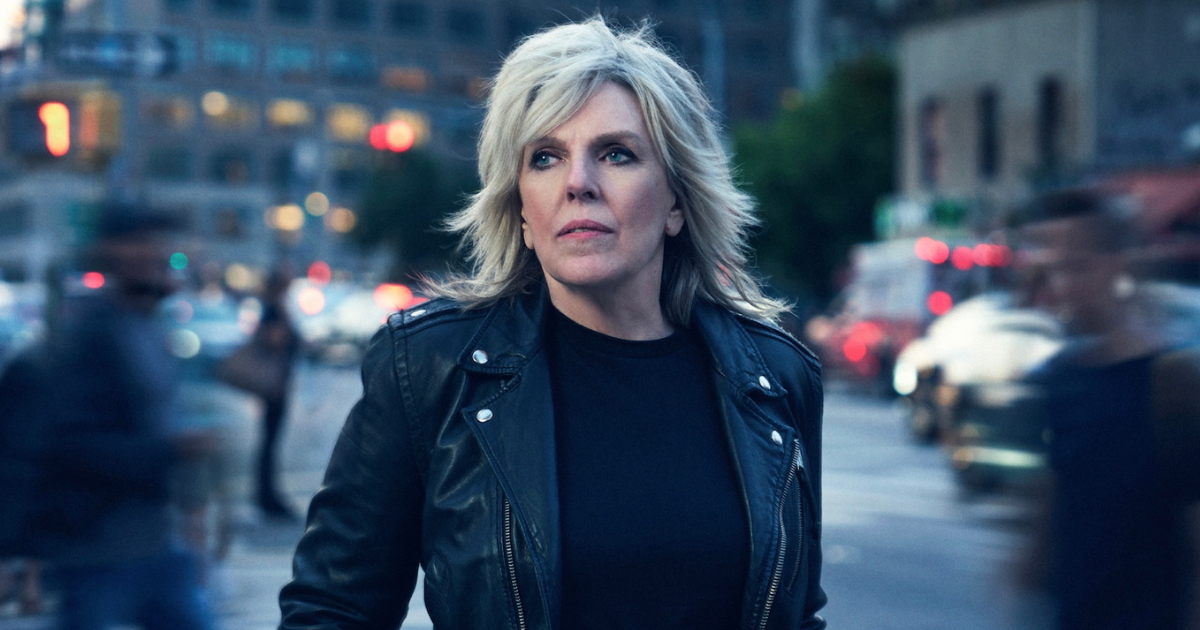
Photo Credit: Mark Seliger
Artist of the Month: Lucinda Williams

Among the 78 bands performing for thousands of fans at San Francisco’s 25th annual Hardly Strictly Bluegrass, our nation’s foremost Americana festival, in October of 2025, one of the largest audiences had gathered for Lucinda Williams. She took the main stage in the afternoon clad in a leather suit, studs on the hem of her pants. The groove from the band and her lyrics landed with resonant pounding, like the drop of a heavy set of books on a table. After more than 50 years of performing, her sound still hits.

Lucinda Williams grasped brilliance in 1998 with Car Wheels On A Gravel Road, but this was not some isolated incident. She has pursued the craft of album-making expertly for her entire career, and fans flock to her because there is always something more to scratch up. The singularity of her writing rings at a higher frequency today in our shallow digitized world. I see her current position in our culture to be similar to that of poet-songwriter Leonard Cohen in his final chapter. When she sings, we listeners get to grasp at something real, and we crave what Lucinda offers; intimate corporeal love, the palette of Southern backroads alongside broken-down juke joints, honest bewilderment at the state of the world while still loving it.

When I was 26, I set out on a road trip to trace Lucinda’s origins. Being a songwriter, I wanted to determine what I could do to strive and bloom, like she did. So I left California driving my 1995 Ford F-250. From Texas to Tennessee, I dug up characters from Lucinda’s early days. I was most interested in finding people who had worked with her in the beginning of her career.

In Jackson, Mississippi, I spent a day at Malaco Studios where Lucinda made her first record Ramblin’ On My Mind. While listening to outtakes, I happened upon the first-ever originals she recorded but never released. In those reel-to-reel tapes that had been sitting untouched in a concrete vault, I heard a voice from four decades ago that was clear and bold. Wolf Stephenson was the engineer from that session and he told me that in 1978 Lucinda was a resolute and present woman: “[In] day-to-day life, she was just as footloose and like she was on stage. And really there wasn’t much difference in sitting here talking [with her] or being on stage, very natural.”

In Austin, Texas, I was shocked to learn that well-known guitarist Charlie Sexton had played with Lucinda when he was just 11 and she was 26. At the Hole in the Wall where a booker once cancelled Lucinda’s gig because there were “too many girl singers that month,” Charlie and I discussed how he has learned from Lucinda as a writer. He reflected on his early impressions of her and told me, “…There’s no doubt that Lucinda was always going to be unique… I mean, she’s like a regional writer in a way… she’s the Flannery O’Connor of that era of singer-songwriter.”

Lucinda’s parents raised her in an extraordinary community. Her father Miller Williams was a professor, a translator, and a poet. He and his wife were descendants of humble traveling Methodist ministers with meager finances, but by the time their first daughter Lucinda was a teen, the family sat in the company of Nobel Prize-winning authors. Miller’s genuine passion for literature gave him the conviction to invite figures like Charles Bukowski and indeed Flannery O’Connor into his circle of friends and acquaintances. He hosted literary parties in the family’s Arkansas home. After drinks were served, Miller read some of his new poems out loud, and a young Lucinda sat and strummed her latest songs. Writers of the highest caliber listened at attention. Some of these writers gave Lucinda feedback. Perhaps just as important was that these writers also imparted genuine encouragement to Lucinda and told her that in spite of all of the suffering and uncertainties involved in being an artist, it was still a worthwhile pursuit in life.

Along my road trip I also discovered how committed Lucinda has been to her art over the decades. I spoke at length with some of the musicians and engineers that worked on Car Wheels On A Gravel Road. I learned from Lucinda’s recollections that when you have that itching worry that a sound just isn’t right on an album, you have to wrestle with the process to find the right timbre, the right soundscape that will thrill you. I found that a songwriter has to embrace change, even if they’re unsure of the career consequences. I found that artists can’t just make the same album over and over again. Well… they can, but they probably shouldn’t. A songwriter has to keep seeking out that sound, that story that pulls at their soul’s musical corners, like Lucinda did.

Lucinda’s latest release, World’s Gone Wrong, is a continuation of the directness I’ve known her for. She conveys her truth with her language of simplicity. So often in our era, bathed in a slurry of news and trends, opinions from artists can feel glued-on. But that’s not the case with Lucinda. She conveys her frustrations with the state of the world from a genuine and honest place and, when she sings, I believe her. As with so much of her writing, in her latest album I feel like I’m reading a book, inhabiting the imagined place of the viewer and the subject.

The characters in Lucinda’s songs are alive, bleeding, imperfect, and desirously wanting. We benefit from the chance to continue paying attention to the words she writes.

If you’d like to learn all about how I retraced the roots of Lucinda Williams, check out Finding Lucinda, my podcast released in partnership with the BGS Podcast Network. You can also watch the documentary film Finding Lucinda on AppleTV, Youtube and more.

Stay tuned as BGS and Good Country celebrate Lucinda Williams as Artist of the Month throughout March. Enjoy our Essential Lucinda Williams playlist below and check out an exclusive interview with Williams here. Plus, we’ll be diving into the BGS archives for all things Lu and exploring our favorite covers of her songs by other artists, too. Follow along right here on BGS and on social media for more.


Photo Credit: Mark Seliger

Brennen Leigh’s Modern Retro Country

Brennen Leigh says she’s been a goner for country music since she was a teenager. But when it comes to her discography, she hasn’t been gone for long. Don’t You Ever Give Up On Love (released October 3) is the musician’s fourth album in five years, and it continues a creative streak that matches her love of traditional country arrangements with clever, well-crafted songwriting.

Recorded in Dayton, Texas, where Leigh now lives, Don’t You Ever Give Up On Love is a mostly up-tempo collection that should appeal to anyone who loves country from its golden eras. Catching up with Good Country, Leigh talks about the turning point in her love of country, her fondness for bluegrass, and how she really feels about one of Nashville’s most famous phrases.

I was curious about the title track, “Don’t You Ever Give Up On Love.” It’s got such a positive feel. Why did you choose that one to put on the cover of your record?

Brennen Leigh: I love the title of it, for one, and for two, I wrote that with a dear friend named Elijah Ocean. He’s a great writer and a player and we kind of came up through the mud together, I’ll say. He told me, “I just was thinking about you as I was writing it.” And not even about me singing it, but me as a person. He sent me the first verse – and I’m a procrastinator and I won’t read people’s texts and I won’t return phone calls – but he knows I love him, he doesn’t care. That’s how songwriters are. But about a month later, when I finally went and listened to it, I said, “Elijah, I hope you haven’t finished that, because I would love to participate.” He said, “Yeah, of course, that’s why I sent it to you.”

So I finished it. And it’s just two verses. That’s the whole song. I love that thing about songwriting, and specifically country music, where it’s just a quick statement and out. So many of the best songs are just a verse and a chorus, or even just a verse. We wrote it in the midst of recording this album and then we recorded it down in Dayton. And it’s like, well, that’s an obvious choice for the album, because it is so positive. I really like performing it.

It’s encouraging, too. Have you had a good response from the crowd with that song?

Yeah, I’ve had a lot of positive feedback from people. On the surface, it’s a love song and it’s a relationship record, but to me, it’s really more of a “Don’t ever give up on yourself” message. Because people come and go, sadly, in our lives, and for me, it’s more a story of resilience.

I think it’s similar to the song “Dumpster Diving,” where it gets the point across in a pretty cool way. You filmed that video for “Dumpster Diving” at the Sagebrush in Austin, right?

We did, and it was hot! It was like 90 degrees in April or something. We brought one of our favorite videographers, Oceanna, down from Nashville, and I just kind of threw her into this situation in Austin, but she rolled with it. She really has a wonderful eye. And we dressed me up and put me in a dumpster. [Laughs]

Then some of the other videos for this project look like ‘60s Nashville country. I love the vintage eyeglasses and that cool yellow-and-orange shirt in the “You’re Finally Hurting” video.

Those are my real glasses! [Laughs] I really have a prescription in them to drive with. And the thing specifically about the “Tell Me” video was that we wanted to make it look like we were the Nashville A-Team in the ‘60s. We were just going to work, like country business casual or Western business casual. Like, how an Anita Kerr or Chet Atkins would show up to work in kind of fancy dress, but casual. Read their charts, put the song down, and smoke a cigarette. You know, we weren’t smoking, but that’s kind of the idea.

“Tell Me” is a simple title, but that song says a lot. What was on your mind as you wrote it?

I was imagining calling somebody in a sweaty panic, like, “Oh, I heard something, I’ve got this feeling, and I need you to confirm my suspicions.” And not getting the answer that you want, but sort of trying to demand this answer. I love country songs that are one-sided conversations. There are so many good ones throughout history. For some reason, the one that is popping into my head is “I Met a Friend of Yours Today.” You’re feeling like a little bit of a psycho, like you’re losing your mind a little bit, and you confront somebody. That’s the sort of song that that is.

People often say country is “three chords and the truth.” Do you like that phrase?

I do like it, but I think in a way it’s not 100 percent accurate. We’re splitting hairs here, but for me, a lot of my writing is at least semi-fictional. Maybe I’m doing myself a disservice as an artist by saying that. But fans want to believe, and I think the listener wants to believe, that this is my story, and this came from me tossing in desperation on my bed and grabbing my notebook.

Well, you know, I’m a songwriter and it’s my job to make up stories. While this record has some truth on it, some of these stories are just straight made up! That doesn’t mean that there’s not feeling behind them, or that I haven’t experienced something similar, but I’m also a private enough person that I’m not going to just air things of a certain nature for the public. I do have lines that I won’t cross. Now, I’ll say some of these are true, word for word, and some of them are not. But that’s what imagination is for.

I think the song is not for me, it’s for the listener. So, if somebody gleaned something that they feel personally in one of these songs, I love that. And probably, as a Western swing person at heart, I should say we have a few more than three chords. But I do really appreciate and love that sentiment of like, “This is just no BS, I’m gonna sing this.” I mean, I like that saying, and I think at its heart, it’s pretty true.

How old were you when country music kind of sparked your interest?

I grew up hearing it around the house, but I was maybe 14 before I went headlong into it.

Was there a song or an artist that pulled you in?

There was one summer when my brother and I were already budding musicians. We were already playing gigs. He was heavily into Robert Johnson. I had gotten into that stuff, too, and I liked oldies. I liked ‘50s and ‘60s rock and roll and soul music, like Buddy Holly and Bessie Smith, and I liked some show tunes. We got into country one summer, courtesy of our parents’ record collection.

Then we got a free ticket – via donating a canned good to the radio station – to see Dwight Yoakam. I think I was turning 15, and I kind of flipped my lid. It was our county fair in Fargo, North Dakota and it was probably September or August – and it was probably 40 degrees. I stood there for that whole concert and went, “Wow!!” [Laughs] Then one friend gave me a box set of Hank Williams and that was huge. I already had heard him, but that Bear Family box set is like six or eight discs. I dubbed it onto tapes and that’s all I listened to.

Somebody else gave me a Smithsonian Folkways set that had Bill Monroe on it and it had Lucinda Williams on it, because it was more of a folk label. It was like, “Wow, there’s all these tentacles to country music.” And my family was into it, too. So, I was pretty well immersed, except geographically. I wasn’t around any live music, but I was around a lot of good recorded music.

Are you a fan of bluegrass?

Oh, yeah! Very much, and I grew up with it. My favorite guitar player is Norman Blake. I get asked all the time, “When’s your bluegrass record?” I would love to do something. I just need to get the songs together, because the bluegrass community, they’re the best fans in the world. Bluegrass fans are so loyal, and they know what they like and they don’t care what you look like. It’s a great culture and it’s diverse, and that’s a beautiful thing. So, yeah, that’ll happen.

You know, I wish there were two of me and I had double time. I’ve been loving East Nash Grass and Thunder & Rain. I love the Kody Norris Show. They’re so poised and so good. I’ve been feeling the influence to do something with bluegrass again, because it’s been a long time.

We can maybe wrap it up with this. What are you looking forward to the most coming up?

I just got off a three-week album release tour that was great fun. Before that, I was everywhere. [Laughs] So, to be completely honest, I’m looking forward to being home for a bit. But I’m also working on another project that’s even weirder than all the other ones I’ve ever done. I don’t want to say too much about it, but it feels like a spiritually important album for me to do. I’ve also got some songs in the can with my other band, Wonder Women of Country. We have a couple singles we’ve recorded and I think we’re going to be out together some next year, too.

You’re so collaborative and you’re not just off doing your own thing. It’s like a luxury to have such a great, rich community around you.

Well, thank you. And it is a luxury. Honestly that’s how I’ve gotten by and kept it sane, because I know it’s not about me. I know it’s about the art, and the art can be more fun than when you involve others sometime. Also, I’ve noticed a lot of the good things that have happened in my career are because I’ve worked with other people on musical collaborations. It’s just so much stronger together.


Photo Credit: Lyza Renee

Finding Lucinda: Episode 13

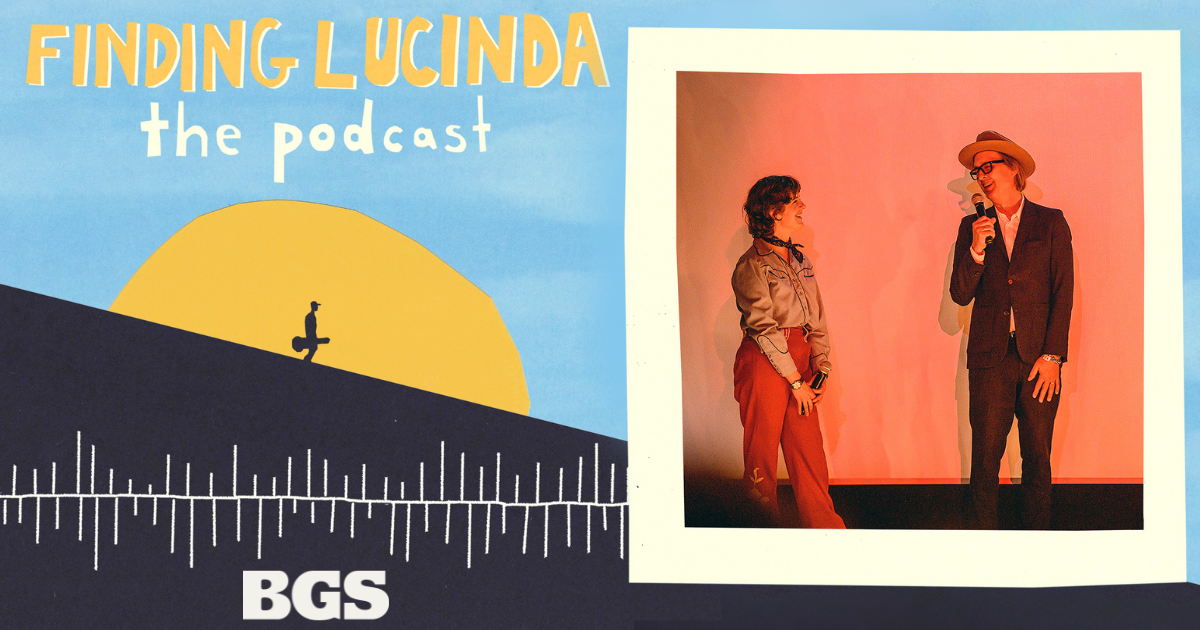
In this episode of the podcast, Ismay sits down with Finding Lucinda director Joel Fendelman. They discuss how Joel approached the making of the documentary and concepts like developing the language of a film to build trust with the audience, the artist’s experience of not being where you thought you should be at a certain age – including how to constructively confront that – and the idea of trusting others in collaborations. They also talk about how there is overlap in the craft of filmmaking and music-making, including ideas like contrasts and consistency.

LISTEN: APPLE • SPOTIFY • AMAZON • MP3

With roots in Miami, Austin, and New York City, Fendelman has written, produced, and directed a number of award-winning narrative and documentary films. An award-winning filmmaker, he is dedicated to telling stories that reveal the underlying connections between us all. His documentary Man on Fire received an IDA Documentary Award and premiered nationally on PBS’s Independent Lens (2018–19 season). He went on to direct North Putnam, which won the Indiana Spotlight Award at the Heartland International Film Festival. In 2016, his short film Game Night premiered at the Tribeca Film Festival and won Best Super Short at the Savannah Film Festival. His second narrative feature, Remittance, earned multiple festival awards, including Best Actress and Best Screenplay at the Brooklyn Film Festival, and is distributed worldwide. His debut feature, David (2011), won the Ecumenical Prize at the Montreal World Film Festival. His most recent short film, The Spiritual Advisor, is premiering at DOC NYC 2025 and is being distributed by Rolling Stone Films.

Produced in partnership with BGS and distributed through the BGS Podcast Network, Finding Lucinda expands on the themes of Ismay’s eponymous documentary film, exploring artistic influence, creative resilience, and the impact of Williams’ music. New episodes are released twice a month. Listen right here on BGS or wherever you get podcasts.

Finding Lucinda, the documentary film that inspired and instigated the podcast, is now available to purchase, rent, or stream via video on demand. (Watch the film, listen to the soundtrack, or find a screening near you here.) Both the film and podcast showcase never-before-heard archival material, intimate conversations, and a visual journey through the literal and figurative landscapes that molded Lucinda’s songwriting.

Credits:
Produced, recorded, and mixed by Avery Hellman for Neanderthal Records, LLC.
Music by Ismay,
Special thanks to: Rose Bush, Liz McBee, Mick Hellman, Jonathan McHugh, Sydney Lane, Jacqueline Sabec, Rosemary Carroll, Lucinda Williams, and Tom Overby


Find more information on Finding Lucinda here. Find our full Finding Lucinda episode archive here.

Watch Finding Lucinda, listen to the soundtrack, or find a screening near you here.

Finding Lucinda: Episode 12

After the conclusion of their journey, Ismay tours the nation with screenings of Finding Lucinda, inviting local artists to play Lucinda Williams songs in the round. Following a show at Chico Women’s Club in California, Ismay interviews Chuck Prophet, a celebrated musician who co-produced the film. The pair discuss the origins of the project, what surprised them about making this documentary, and how Lucinda has influenced their songwriting and careers. They also discuss Chuck’s time opening for Lucinda in the early 2000s.

LISTEN: APPLE • SPOTIFY • AMAZON • MP3

Produced in partnership with BGS and distributed through the BGS Podcast Network, Finding Lucinda expands on the themes of Ismay’s eponymous documentary film, exploring artistic influence, creative resilience, and the impact of Williams’ music. New episodes are released twice a month. Listen right here on BGS or wherever you get podcasts.

Finding Lucinda, the documentary film that inspired and instigated the podcast, is now available to purchase, rent, or stream via video on demand. (Watch the film, listen to the soundtrack, or find a screening near you here.) Both the film and podcast showcase never-before-heard archival material, intimate conversations, and a visual journey through the literal and figurative landscapes that molded Lucinda’s songwriting.

Credits:
Produced, recorded, and mixed by Avery Hellman for Neanderthal Records, LLC.
Special thanks to: Rick Anderson, Gavin Jones, Joel Fendelman, Rose Bush, Liz McBee, Mick Hellman, Chuck Prophet, Jonathan McHugh, Sydney Lane, Jacqueline Sabec, Rosemary Carroll, Lucinda Williams & Tom Overby.


Photo Credit: Peter Dervin

Find more information on Finding Lucinda here. Find our full Finding Lucinda episode archive here.

Watch Finding Lucinda, listen to the soundtrack, or find a screening near you here.

Tending to Fires,
Getting to Truth

New days and clean slates keep coming for singer-songwriter Caitlin Canty. She is sharpening her skills, raising a family, and continuing to build a body of work that reflects resilience, quiet strength, and resolute honesty. Her new record, Night Owl Envies the Mourning Dove, is a testament to her evolving artistry – an album that turns natural solitude, domestic change, and hard-earned wisdom into a collection of songs that sound both grounded in the earth and untethered from time.

Canty was born in Proctor, Vermont, in 1982 and grew up surrounded by rural landscapes and the gentle rhythms of small-town life. Raised by a schoolteacher mother and a housepainter father, she found song in ordinary moments – singing in chorus and playing trombone in school before receiving her first guitar and VHS-tape lessons at age 17. After earning a biology degree from Williams College she moved to New York City, where she worked for the Emmy-nominated series Live from the Artists Den while pursuing music on her own terms.

Her early releases – including Golden Hour (2012) and the breakout Reckless Skyline (2015) – drew acclaim for her “casually devastating voice” and “hauntingly urgent” Americana ballads. She won the Telluride Troubadour songwriting competition in 2015 and began touring extensively across the U.S. and Europe, collaborating with artists like Peter Bradley Adams and Jamey Johnson, and earning praise from Rolling Stone, NPR, and No Depression for her gritty lyricism and radiant poise.

In recent years, she and her husband, musician Noam Pikelny, moved back to Vermont, settling on a mountaintop near her childhood home. There, Canty continues to record, tour, and write – with the same battered 1939 Recording King guitar that has accompanied her throughout her career.

One of the album’s most tender tracks, “Don’t Worry About Nothing,” carries the voice of a mother consoling and encouraging against the endless churn of small anxieties. It is at once lullaby, sermon, and reminder: that one bad thing does not mean the whole world has collapsed.

“There is a mom’s voice and perspective to focus and worry about the things that do matter,” Canty explained. “But also how little worries and little jealousies can work against us… Tornadoes, awful things, [they] remind you how short life is and what’s actually important.”

The song’s origins stretch back to a small mishap – her young son’s toy castle tumbling down – but its weight comes from deeper, darker places. In March 2020, a tornado tore through her East Nashville neighborhood, missing her home by mere yards. Not long after, the pandemic upended the world. The castle was a metaphor, she realized, for the way everything can crash at once, yet perspective offers a way forward.

For Canty, who released Reckless Skyline a decade ago, the test of time has reshaped her relationship to both music and ambition. “My real goal is to be writing more and better songs,” she said. “My real goal is to be connecting with more people through those songs, playing with musicians that I adore, and getting on good stages. Not worrying about courting people, but to do right by the music.”

Doing right by the music has meant widening her scope. Night Owl Envies the Mourning Dove reaches for longevity, not trends. It sits comfortably in a lineage of songwriters who, like Canty, trust the songs to outlive themselves. “I look to musicians who have had longer careers, like Dolly Parton,” she said. “She is singing songs that she wrote in her 20s. There are so many who have a gorgeous output of songs that are their lifelong friends. It’s not about when they were written or how people liked them then.”

Canty doesn’t wait around for the muse. To her, waiting for inspiration is “a fool’s errand.” She compares songs to photographs – fleeting impressions that must be captured before they fade. “You take a picture and you remember it as notable and beautiful and there is something about it that makes you want to share it. That type of inspiration sparks a song. It happens countless times a day.”

But the challenge, she says, is to honor the purity of that first flash. “You are lucky if you have the time from start to finish to complete the song and make the world go away. The fewer co-writers the better, including myself. If you open it up again in two weeks, or a year, you have different eyes… and that brings too many people and opinions into the room rather than one solid voice.”

Some of her most recent songs arrived in just such a spark – like during a violent rainstorm in Vermont. Alone in her cabin as thunder cracked over the mountains, Canty felt a song arrive like lightning. Hungry, shivering, and unable to leave, she turned to the page. “That’s when it is about honoring your craft and keeping your calluses hard,” she said. “Writing songs and tending to those fires.”

Much of the new album reflects Canty’s sense of place. After years of calling Nashville home, in Vermont the woods, weather, and solitude shape her work. Songs like “Electric Guitar” hum with what she calls “domestic noise” – the sound of home life creeping into the music. “Examining what home means is another strong thread in a lot of these songs,” she said. “There is a lot of domestic noise in ‘Electric Guitar’ of a life settled and tied to the home front.”

The landscape also plays a role. Birds, trees, and storms become metaphors for transformation and survival, grounding her reflections on motherhood and the passage of time.

Every songwriter brings along artists who came before them and for Canty, one such artist is Lucinda William and her landmark album, Car Wheels on a Gravel Road. Canty first heard it in college while working as a server to make ends meet. Living in a big house with wide kitchen windows, she found herself singing along to those raw, unvarnished songs. “The sound, the songwriting, the singing – it all was a high-water mark for me,” Canty recalled. “It had the mystery of how something so simple could be so powerful. Why is this message of another person hitting my heart and staying embedded? How do I do that?”

Since Reckless Skyline, Canty has been described as gentle, quiet, restrained. But she resists those labels. “I don’t think that that is what this record is,” she said. “There might be fingerpicked and more solitary numbers, but a lot of the songs are more electric and grittier, and closer maybe to Reckless Skyline or Car Wheels in that regard.”

There’s grit beneath the quiet, steel beneath the lull. That mix – of softness and resolve – has become her artistic fingerprint. At the core of her music lies a devotion to truth.

“I could never act,” Canty admitted. “As a kid, I loved band and singing. Music is getting to truth and getting yourself out of the way of a song. If it’s the truth, then I feel comfortable singing it.”

That truth may be wrapped in storms or in stillness, in the clatter of home or in the electric hum of a live stage. But it is always there – steady, unpretentious, and deeply human.

With Night Owl Envies the Mourning Dove, Caitlin Canty has crafted more than an album – it is a meditation on resilience, a love letter to songwriting itself, and a statement of intent. She is not chasing spotlights or trends, but tending her fires, shaping her craft, and writing songs that might someday be her lifelong friends.

“My real goal,” she repeats, “is to be writing more and better songs… to do right by the music.”

For Canty, that’s enough. And for those who listen, it is everything.


Photo Credit: Noah Altshuler

Outlaw Country That’ll Make You Smile

Holding the attention of a roomful of moderately smashed bar-goers is no small feat, let alone with a traditional Irish folksong. But last May, country singer-songwriter Dylan Earl ended his set at Brooklyn’s Skinny Dennis standing on top of the bar and singing an a cappella version of “Wild Mountain Thyme.”

“Will you go, lassie go/ And we’ll all go together/ To pull wild mountain thyme/ All around the blooming heather,” Earl implored in his warm baritone, towering above the room in worn jeans, boots, and a sleeves-cut-off T-shirt from his Arkansas-based label, Gar Hole Records. In spite of all the alcohol collectively consumed by the listeners who packed the venue to its beer-tinged walls that evening, the room was just about as quiet as a divey honky-tonk can be.

By ending his set with the kind of folk song which, passed down through generations, comprises one major lineage of country music – indeed, “Wild Mountain Thyme” is based in a much older Scottish folk song – Earl invoked a deep vernacular tradition and history often left out of modern country. Earl’s music attracts labels like “old-school” and “classic country,” and his voice certainly lends itself to those comparisons, but his own compositions convey a whole lot more. Rejecting the banality of tired Southern stereotypes, Earl writes punk-hearted, poetic music rooted in a love of people and place; music which is both socially and class-conscious and captures wide-ranging cultural unease and indignation with nuance and wit.

On his fourth studio album, Level-Headed Even Smile (released September 19), Earl makes clear that his is not a return to a bygone era so much as a carrying on of a long tradition of speaking truth to power and of imbuing dimension and worth into the lives of overlooked characters and issues too easily reduced to absolutes.

“I’d rather be an outlaw than in with the law/ All this authority worship is the strangest thing I ever saw,” he sings in “Outlaw Country,” a thesis statement of sorts for the album and Earl himself. Earl wrote “Outlaw Country” out of frustration at how many people made assumptions about his beliefs and morals because of his appearance – and because he plays country music with a whole lot of Southern twang. Earl wanted to make it clear where he stands.

“I finished high school in a very rural part of Arkansas; I identify with the Deep South, but I don’t identify with its most prevalent fucking right-wing rhetoric… I still want to remain approachable to those people I completely disagree with, because I think that’s an important part of making art, is creating discourse,” he says. “I want to try to approach these people and try to have that conversation. Be like, ‘Listen here, brother, I’m just like you, but you don’t have to be a racist piece of shit. It’s way more fun in life to be happy and be inclusive. Your soul will be happier because of that.’”

Lately, outlaw country morphed from its subversive roots into a shorthand for wicked good independent country or a slightly more specific alternative to Americana. While both wicked good and independent, Earl’s version also rekindles contempt for the establishment that fueled the original outlaw country movement:

I’d rather be a bootlegger than a bootlicker
A side stepper than a homewrecker
And I don’t get a pick me up
From putting other people down

It’s clear to see by the air I breathe
Working class solidarity
Is the only way
We’re gonna stamp that fascist out

Sardonic and irreverent, “Outlaw Country” is an anthem for anyone who ever believed in love and community over corruption and power. But rather than a callback, Earl’s music is of and for the next generation of ne’er-do-wells and dreamers living on the fringes, hoping for something better.

Earl grew up in Lake Charles, Louisiana, where he split his time between separated parents. Chafing at the craven habits of money and influence that he witnessed from his father, a powerful local lawyer, Earl preferred the warmth and love he felt in the house his mother shared with his grandmother. (Despite a rocky childhood, Earl’s now building a relationship with his dad.)

“I was living in poverty on one side and then I was living in opulence on the other side, and the poverty side is where I wanted to be, because that’s where all the love was,” Earl says. “I’m so lucky to have that, to be able to have identified where love was at a young age and identify where my soul felt good.”

Earl’s mother showed him how to seek joy and adventure, filling life with road trips and camping weekends. When he was just five years old, Earl’s mother plopped a map in his lap and taught him to navigate. Perpetually tight on money and resources and mired in an enduring custody battle with his father, she nonetheless taught him how to get away from it all, instilling in him a curiosity about the world. On the road, they stopped to check out historical markers, explored parks and rivers and the Gulf Coast, and watched giant boats come in while picnicking along the Intracoastal Waterway.

“That developed a sense of wonder and being like, ‘I don’t fucking need money to feel this type of happiness, to feel this sense of joy and adventure and love of life, just life in its purest form,” Earl says, choking up. (He firmly believes more men should cry, and that it helps him be more humane.)

“Her sense of adventure, her true passion for living, it’s amazing to me; it still is amazing to me.”

The album’s title and thematic heart – level-headed even smile – are derived from that approach to living life fully. For Earl, it’s an essential mechanism of coping and connecting. Remain engaged in the world and aware of all its horrors and tragedies, he says, but then, when it gets to be too much, know when and how to take a break:

Some nights I’m crying on the backroads
Rolling my smoke backwards
Trying to keep a level-headed even smile
Don’t you know I might take a while to get there
Just hoping I get anywhere
Trying to keep a little level-headed even smile

“At some point we’ve got to unplug from the fucking screen and just go explore things that are fucking real, like the trees around us, or the grass, or the water, or the sun or the moon, and try to get in touch with that more primal sense of ourselves,” Earl says. “That is where we can really most quickly and most efficiently achieve happiness, it’s getting in touch with the simplest form of ourselves.”

Beside the love from his mother, Earl describes himself as a depressed kid who struggled in school and wanted desperately to escape his hometown and father and stepmother. At 15, he convinced his father to send him to boarding school which, in part because of Hurricane Katrina’s devastation of Louisiana, ended up being in rural Arkansas. At the Subiaco Abbey and Academy, Earl studied with monks who’d taken a vow of poverty and offered rigorous, benevolent study, kindness, and care. Though he’s an atheist, Earl counts the monks, whom he visits regularly, as mentors, connecting with them still through shared spirituality.

“We all fucking showed up pissed off as hell. And we found love and we found love amongst each other; we found love from those monks and found nature,” Earl says, reverently, of his time at Subiaco. “It saved my fucking life. The whole thing; I found joy and happiness for the first time in my life.”

Level-Headed Even Smile is dedicated to Earl’s late friend, William, who was the first to befriend him at Subiaco. “He helped me clear my heart,” Earl says. As he sings of those halcyon days on “Two Kinds of Loner,” “We were two kinds of loner/ A misfit and a wayward son…”

Armed with the sense of wonder his mom taught him, liberated by the fallow morals of youth, and subsumed by the ready escapism afforded by their surroundings, Earl and William learned every back road. They’d steal beer from the back of William’s dad’s Crossroads Tavern and drive for hours exploring the backwoods and levees along the Arkansas River.

“William was the first to show me the country air. Hanging out with him, something about getting in that truck after class, taking off down Lile Ridge Road, cracking a beer, putting on whatever weird music he was listening to at the time, that was the first sense of fucking true freedom I ever had in my life,” Earl says.

Stopping just shy of wistful, “Two Kinds of Loner” is a bittersweet, intimate portrait of the desperately important work of becoming oneself as a teenager – and of the raw beauty in forming kinship through human connection rather than blood relation:

Down where the kudzu meets the bodark
And the darkness first let go of me
High in a cab of a buddy I had
He showed me the county air
I used to not care about nothing
Because no one seemed to care for me

After high school, Earl attended Hendrix College, a liberal arts school which lived up to its name situated in Conway, Arkansas. A few years earlier, Earl borrowed his father’s old guitar – a Yamaha FG 180 Red Tag, which he still plays today – and learned enough chords to make himself useful around a bonfire and impress the local girls. Encouraged by one of the monks at Subiaco, who noticed him straying from lesson plans, Earl started writing his own music.

When he got to college, he landed feet first in a robust DIY music scene. Together with a group of friends – including Gar Hole Records cofounder and label manager Kurt DeLashmet – Earl played a circuit of local house venues: White House, Blue House, Brick House, and occasionally Shit Mansion, where both also lived for a time. To this day, their two-day, 28-band Butt Ranger music festival thrown by friends at the White House remains one of Earl’s favorite shows.

“We were drunk off our fucking asses on plastic bottle whiskey and snorting Adderall and fucking ripping cigs and shit like that. It was fucked up. It was so awesome. It was just blood and piss everywhere,” Earl says. He recalls the floor at White House buckling so deeply that by the end of the night all his gear, including his oversized amp, wound up in a pile in the middle of the floor. Volume was of primary concern, tone and other nuances distinctly secondary. “What a fucking beautiful, carnal, amazing culture to be a part of,” he says.

Two songs on Even Smile come from those early days playing music first in college and, afterwards, in Little Rock, where Earl and his band Swampbird moved. (Earl lived in Little Rock for a few years then moved to Fayetteville, where he still lives.) Both songs are paeans to the chaotic moil of early adulthood rendered heady and hazy by too much booze and too little grounding: “Broken Parts,” which he first recorded with Swampbird, and “Little Rock Bottom,” about his time in Arkansas’ capital city.

“I don’t really quite realize it until I am talking about it, how much of my life and my story is wound up into that album,” Earl, who’s now in his mid-30s, admits. The album feels like a fitting way to process and close that chapter of life. “I do feel like I’ve left it on the table and I’ve left it all out on the field, so to speak.”

In total, Even Smile is a loving, layered depiction of both Arkansas specifically and the south in general. Among his many influences, Earl includes Arkansas gonzo poet Frank Stanford (who also attended Subiaco and whose burial there Lucinda Williams memorialized in her song, “Pineola”). Stanford’s realism and wild abandon creep into Earl’s songwriting sensibilities; they share a love of the South and its complexities and a reverence for and dedication to illuminating those stories.

Alongside a few cheeky disquisitions on life on the fringes – including road dog ode “Get In The Truck” – throughout the album Earl relishes the beauty of his home territory. Perhaps nowhere more so than on “High On The Ouachitas,” an extended soliloquy on the wild beauty of the mountain range, his chosen retreat for a reset and solace:

When I’m high on Ouachita
High as I ever saw the Arkansas
With goldenrod and reindeer lichen
Twist flowers in bloom
There’s just no place
I’d rather waste my afternoons
Than high on Ouachita

“I love it so fucking much, because I know all of the nuance and I know all the beauty that’s deep underneath all of the stereotypes. And just how fascinatingly complex our communities are,” Earl says. “It’s fucking beautiful. You have two and a half million acres of national forest. So we have the cleanest drinking water in America; we have endless amounts of outdoor recreation; the food is fucking kick ass; the people are the sweetest ever.”

Earl rounded out Level-Headed Even Smile with two very on-theme cover songs: beloved Arkansas folksinger Jimmy Driftwood’s “White River Valley,” a love letter to Arkansas’s pastoral beauty, and Utah Phillips’ peripatetic wanderer’s lament, “Rock Me to Sleep,” which concludes the album. Together they bracket the glib “Lawn Chair,” written with Cameron Duddy and Jonathan Terrell.

Earl jokes when playing the song live that it might be the worst song he’s ever written. And superficially it sounds like the kind of redneck anthem that might confirm the uneducated listener’s worst stereotypes about uncouth Arkansans: “It’s a whipass life just being me/ It don’t cost much to be the free/ I got my lawn chair/ And I’m sitting on top of the world.” Yet the song is also a sly rebuke against taking everything too seriously. Convivial in its roughness, it’s a gleeful, carefree reminder of the many ways to keep a level-headed even smile.

“If I’m feeling bogged down and feeling depressed, oftentimes it has nothing to do with the task at hand, it’s just that I’ve been absorbing how terrible the fucking world is and it makes me incapable of interacting and interfacing with my immediate world, because I’m so fucking caught up in that goddamn bullshit… and it is not allowing you to reach your full potential as a biological piece of anatomy that is somehow living on this planet,” Earl says.

“[A level-headed even smile is] an attempt to focus on your humanness and try to reattach yourself to the earth and detach from the problems of the earth; and just go out and find your smile. Go find your joy amongst all the fucking evil.”


Photo Credit: Justin Cook

Finding Lucinda: Episode 11

For the finale of their road trip, Ismay finally gets to meet the center of this entire narrative – Lucinda Williams. Their goal is seeking guidance about what to do with their self-doubt. Ismay discovers that Lucinda had one major difference in her origin story that is the key to understanding why she never gave up herself. Ismay and Lucinda also discuss items from the archives that Ismay has gathered along their route to Nashville. Ismay performs the song, “Spin,” from the archives for her and is surprised by Lucinda’s reaction.

LISTEN: APPLE • SPOTIFY • AMAZON • MP3

Produced in partnership with BGS and distributed through the BGS Podcast Network, Finding Lucinda expands on the themes of Ismay’s eponymous documentary film, exploring artistic influence, creative resilience, and the impact of Williams’ music. New episodes are released twice a month. Listen right here on BGS or wherever you get podcasts.

Finding Lucinda, the documentary film that inspired and instigated the podcast, is now available to purchase, rent, or stream via video on demand. (Find ways to watch here.) Both the film and podcast showcase never-before-heard archival material, intimate conversations, and a visual journey through the literal and figurative landscapes that molded Lucinda’s songwriting.

Credits:
Produced and mixed by Avery Hellman for Neanderthal Records, LLC.
Music by Ismay.
Artwork by Avery Hellman.
Nashville Recording: Recorded at Room & Board Studio.
Sound Recordist: Rodrigo Nino
Producer: Liz McBee
Director: Joel Fendelman
Co-Director & Cinematographer: Rose Bush
Special thanks to: Siobhan Maher Kennedy, Ray Kennedy, Mick Hellman, Chuck Prophet, Jonathan McHugh, Sydney Lane, Don Fierro, Rebecca Jordan Williams, Jacqueline Sabec, Rosemary Carroll, Lucinda Williams, and Tom Overby.


Find more information on Finding Lucinda here. Find our full Finding Lucinda episode archive here.

Finding Lucinda is available to watch via purchase, rental, or video on demand. Find out how to watch here.

Finding Lucinda: Episode 10

Ismay wakes up the day after interviewing Mary Gauthier ready to attend a live performance by Lucinda Williams at the Ryman Auditorium. In order to finish out their journey, Ismay hopes to interview Lucinda right before her show and find a conclusion to their road trip. However, it turns out that due to unforeseen circumstances the interview is no longer possible. So, Ismay attends the show anyway and has to make a decision about whether to continue following Lucinda or to move forward. Plus, they meet up with engineer and producer for Car Wheels On A Gravel Road, Ray Kennedy.

LISTEN: APPLE • SPOTIFY • AMAZON • MP3

Produced in partnership with BGS and distributed through the BGS Podcast Network, Finding Lucinda expands on the themes of Ismay’s eponymous documentary film, exploring artistic influence, creative resilience, and the impact of Williams’ music. New episodes are released twice a month. Listen right here on BGS or wherever you get podcasts.

Finding Lucinda, the documentary film that inspired and instigated the podcast, is slated for release on September 9, 2025. Both the film and podcast showcase never-before-heard archival material, intimate conversations, and a visual journey through the literal and figurative landscapes that molded Lucinda’s songwriting.

Credits:
Produced and mixed by Avery Hellman for Neanderthal Records, LLC.
Music by Ismay.
Artwork by Avery Hellman.
Nashville Recording: Recorded at Room and Board Studio.
Sound Recordist: Rodrigo Nino
Producer: Liz McBee
Director: Joel Fendelman
Co-Director & Cinematographer: Rose Bush
Special thanks to: Mick Hellman, Chuck Prophet, Jonathan McHugh, Sydney Lane, Don Fierro, Jacqueline Sabec, Rosemary Carroll, Lucinda Williams, and Tom Overby


Find more information on Finding Lucinda here. Find our full Finding Lucinda episode archive here.

Pre-order the documentary film via Apple TV here.

Finding Lucinda: Episode 9

Ismay travels across Nashville to the Station Inn to meet with legendary folk singer-songwriter Mary Gauthier. This episode of Finding Lucinda is different from those in the past – rather than interviewing a character from Lucinda Williams’ history, Ismay speaks to Mary because of their shared experiences as fans and devotees of Lucinda’s music.

Mary reveals that her most well known song was in fact directly derived from techniques Lucinda uses in her songwriting. This conversation turns out to be incredibly revelatory, as wisdom Mary imparts allows Ismay to discover that what they initially thought this journey was all about may in fact be completely upended.

LISTEN: APPLE • SPOTIFY • AMAZON • MP3

Produced in partnership with BGS and distributed through the BGS Podcast Network, Finding Lucinda expands on the themes of Ismay’s eponymous documentary film, exploring artistic influence, creative resilience, and the impact of Williams’ music. New episodes are released twice a month. Listen right here on BGS or wherever you get podcasts.

Finding Lucinda, the documentary film that inspired and instigated the podcast, is slated for release on September 9, 2025. Both the film and podcast showcase never-before-heard archival material, intimate conversations, and a visual journey through the literal and figurative landscapes that molded Lucinda’s songwriting.

Credits:
Produced and mixed by Avery Hellman for Neanderthal Records, LLC.
Music by Ismay
Artwork by Avery Hellman.
Nashville Recording: Recorded at The Station Inn.
Sound Recordist: Rodrigo Nino
Producer: Liz McBee
Director: Joel Fendelman
Co-Director & Cinematographer: Rose Bush
Special thanks to: Mick Hellman, Chuck Prophet, Jonathan McHugh, Sydney Lane, Don Fierro, Jacqueline Sabec, Rosemary Carroll, Lucinda Williams, and Tom Overby.


Find more information on Finding Lucinda here. Find our full Finding Lucinda episode archive here. Pre-order the documentary film via Apple TV here.