WATCH: Anthony D’Amato, “When I See You Again”

Artist: Anthony D’Amato
Hometown: Blairstown, New Jersey
Single: “When I See You Again”
Release Date: July 3, 2020

In Their Words: “I originally wrote this song as a closer for the Social Distance Happy Hour, the weekly livestream series I launched when touring shut down. A lot of my catalog tends to explore darker themes, and it felt like I needed something more hopeful to end the shows with, something to remind folks of how sweet it will feel to hug their friends or go to a concert without worrying about spreading a deadly disease. While I was in the process of mixing the tune, I came across a really striking photo of two kids getting ready for school during the 1918 Spanish flu outbreak. They’re both wearing masks and staring straight into the camera, and I knew right away that it needed to be the cover art. The video is similarly built out of historic footage from the Prelinger Archives and I hope it can serve as a reminder to folks that, as unprecedented as our current situation feels, we’ve been here before in many ways, and it’s up to us as a society whether we want to listen to the science and learn from the past or bury our heads in the sand and repeat our mistakes.” — Anthony D’Amato


Photo credit: Vivian Wang

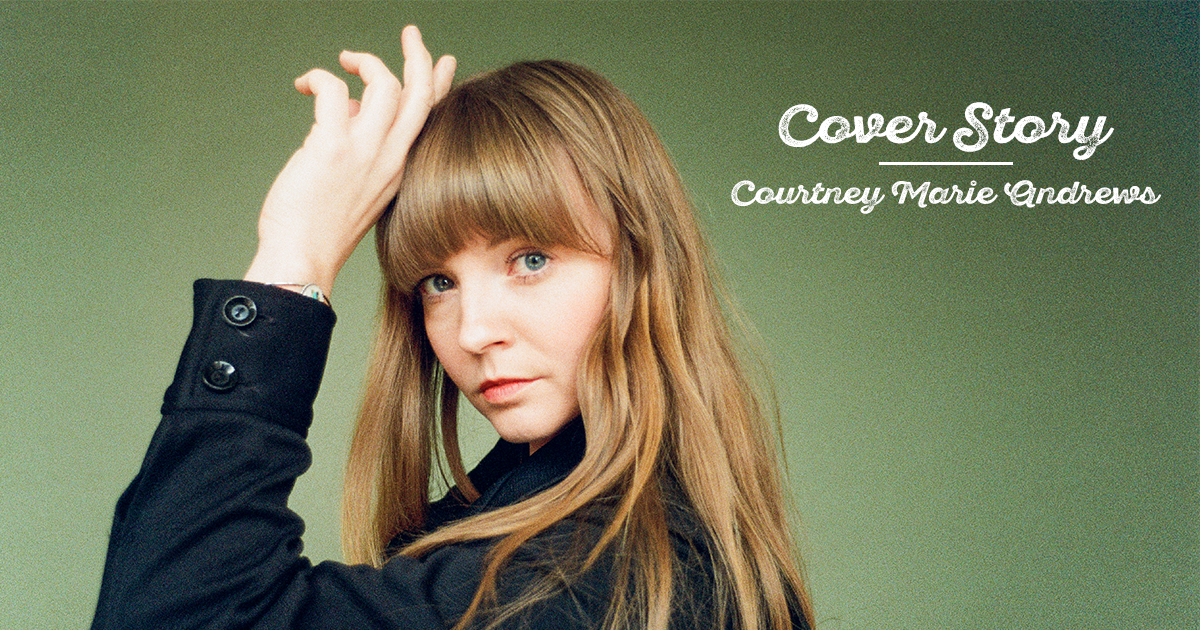
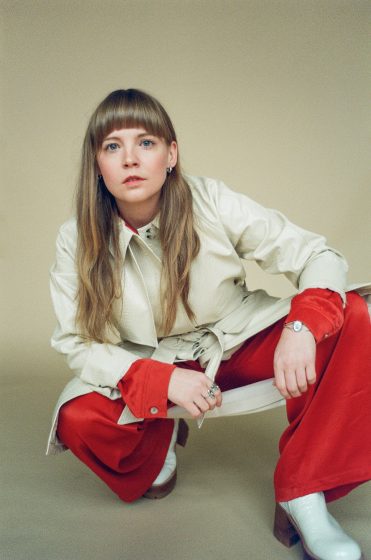
Courtney Marie Andrews Blossoms Within the Solitude of ‘Old Flowers’

As she releases an emotional and illuminating new album, Old Flowers, Courtney Marie Andrews finds herself facing the exact scenario in which she began the creative process: solitude.

Over the course of months writing the material that would become the 10-song LP, the only alone time she enjoyed was while crafting songs, tinkering with melodies, or teasing out narratives from her own subconscious, interrogating herself as a writer, as a narrator, and as a human. But instead of personally carrying her crop of new material out into the world, she’s tasked (like so many of us right now) with sharing these tender buds while she remains in place.

Listening to Old Flowers in this light is like receiving an artful and tenderly dried bouquet. Even as she reflects on the life-changing experiences of the last few years, this album feels made for this moment, bolstered by the sharp, intelligent compassion evidenced on every track and in every lyric. For our Cover Story, we connected with Andrews by phone and began our conversation, as we all do these days, commiserating over shared though separate isolation.

BGS: So much of your songwriting feels like mantra writing to me, particularly some of the choruses on this record. They feel meditative, especially in the ways they repeat and reinforce themselves — whether in the lyrical hooks, or just the themes in the lyrics. Where does that meditative quality come from in your songs?

Courtney Marie Andrews: It’s funny, when I was writing this record I felt like I was in my own personal “quarantine.” It was my first time being alone in over nine years, it was my first time living alone, I moved to Nashville, I was making new friends. I felt, in my own way, that I had found this island. There’s definitely an in-place feeling to the record more than my other records.
It’s really insightful that you said my songs are like mantras, because sometimes, as the narrator [of these songs], I am sort of giving myself therapy. Especially on this record. It does feel like a mantra, particularly on songs like “Carnival Dream,” where I just say over and over again: “Will I ever let love in again? / I may never let love in again.” It’s sort of me accepting that that may be the case.

Another line that may stem from the same idea: “I’m sending you my love and nothing more.” It’s as if you’re reminding yourself of that boundary, rather than the person you’re singing to. Do you agree? That’s the light bulb that went off in my head.

I’ve never thought about it that way, but yeah, it is a boundary. It’s absolutely a boundary. It’s the closing line for the record for a reason. It’s the closing chapter of this saga.

Like you said, writing the record, you were alone for the first time in a long time. I wonder how it feels to reckon with that solitude again with these same songs. Solitude that may feel similar, even if it has a completely different cause.

When I first wrote them, it was like these epiphany moments. More than May Your Kindness Remain I see this record as songs born out of necessity, to get these feelings out. I felt grumpy! The first year was just getting them out, overcoming that first obstacle — especially when you’re in a relationship with someone that long. There’s so much to process you can’t even see what’s in front of you. Now, when I’m listening to the songs in isolation I’m learning more about me as a narrator. More about, “Where do I stand in all of this?” and “Where do I stand now?” 

Last year, the only time I allowed myself to be alone was when I was writing songs. Otherwise I was mostly just trying to distract myself constantly with work, or music, or friends, or drinking. You know, everything you do to distract yourself. This learning about the narrator in these songs — that narrator being myself — has been my current isolation process.

Normally what we’d be talking about right now is how these songs change as they bounce off of audiences, as you’re feeling people besides yourself take ownership of them. Obviously that is still happening, it’s an inherent part of how humans consume music, but the way we relate to that phenomenon is so different now. It’s happening through live streams, through screens, across so much distance. What’s tangible to you about that difference?

As any human probably feels right now, I feel this is very nuanced, has many sides, and I have many days where I feel one way and many days where I feel another. Especially in regards to quarantine and being so uncertain of everything that’s to come. I will say, if I’m being 100 percent frank, so much of knowing people’s true feelings about my songs and how they’re connected to them, for me, is in performing. And talking to someone at the merch table or in the audience. It just feels so much more real. It feels like an AI [artificial intelligence] right now! [Laughs] I know that people are connecting to it, I’ve gotten so many lovely messages about the songs, but it just doesn’t feel as real. 

I will say, in the very beginning, when everybody was live streaming — musicians immediately took to those platforms — I was super inspired by that and by how quickly we can all adapt to “new norms.” I think it’s beautiful that our community feels so passionate about it that we found that outlet. And I’m so grateful that we have that outlet during this, but there’s nothing quite like being in a room with people and singing the songs. As far as my hope about it, I do have hope that this isn’t going to be the remainder of our lives, you know? I really do. If there’s anything I’ve learned by going through really dark, dark depressing moments is that right on the other side is usually the most beautiful moment. It really is. 

How, if at all, has your mission in music changed or adapted in the past few months? Or has it been re-centered? 

I feel like, if anything, it’s made my conviction for what I’ve always intended for my music truer. Since the very beginning I had many opportunities where I could’ve done this for different reasons, but I didn’t do them, because they weren’t what I felt my internal mission was. That internal mission has always been guided by connection — real, human connection. The very first shows I played where I was busking, if we got money that was a bonus. It was shocking, because to me it was more about, did somebody in the audience cry? Did I make somebody feel something? If anything, I’ve always been trying to get back to that. Especially in quarantine and COVID times. With everything that’s going on I feel even stronger about that conviction. And I feel silly for the moments where I’ve been afraid and done otherwise, in small ways. 

I wanted to ask you about “If I Told.” One word can be so pivotal, that “if” changes the entire tenor of the song. And it’s almost a swallowed lyric, too. The song — which is about the telling not the if — is so expressive and does a great job of detailing the phenomenon of having something you simply HAVE to tell someone. it’s just festering, but you still don’t feel that you can. But, literally speaking, there shouldn’t be an “if!” Why is there an if? [Laughs]

When I was writing a lot of these songs, especially the ones where I had left the relationship and started dating again and was meeting people — “How You Get Hurt” and “If I Told” are both rooted in that — I kept saying, “Oh my god these are millennial love songs.” I think the reason that they are is the “if.” I would say this is a big difference between Boomers in the ‘60s and us, culturally. We are all afraid to say it. To just say it. We feel so much, so much, if not more than [these other generations]… but we are all so afraid! Afraid to connect with each other. We’re afraid of rejection. Or afraid of what might reflect in it, because we are so self-aware. Maybe it would hurt us too much? More than anything!

It’s even more fascinating to me now, hearing this answer and knowing “How You Get Hurt” and “If I Told” come from that same period of time, where you’re opening that part of your life back up. That’s the moment when you’re like, “All right. I’m starting out fresh. New foot forward.” You can set the precedent that you’re now, going forward, communicating openly. But, again, you take that first step and right back into the old habit of, “If…” What do you see as a solution for that self-editing? How do we be radically vulnerable and eschew shame? I think our generation needs it so badly right now.

If I’m being completely honest, for me, personally, the problem was the lack of time. The lack of self-reflection. It was being catapulted from this nearly decade-long relationship with this person I essentially grew up with into these new, highly romantic situations. [It was] not having any time for me to rediscover who I was again. I’ve never been more ready to date in my life and to tell someone I love them than when I spent three months at home! [Laughs] With myself! Not drinking, not going out every night–

[Laughs] Every single one of us like, “Aw, shit I wish I didn’t want a boyfriend SO bad right now.”

I know! I know! [Laughs] Honestly, it’s because I’ve finally accepted myself! I think we all have problems, because we’re all so self-aware and have so much shame; there needs to be more conversation around imperfection because we’re all deeply flawed. We’re all human. It’s okay to forgive yourself and it’s okay to be wrong. Accepting those imperfections is something we all need to come to terms with. I think our culture, especially with social media, has a perfection problem. 

Your songs are thoughtful and nuanced and emotional, with this quiet vulnerability, but your voice and the aesthetic of the music are usually so powerful. Especially in the way your vibrato comes through, you feel this sheer force. How did you strike that balance on Old Flowers? Here I don’t think it’s as prevalent as the past couple of albums, but it feels more deliberate and careful. 

Old Flowers, for all intents and purposes, was meant to be an intimate conversation. When I sang it, I wanted it to be that conversation you have where you aren’t blowing up at each other, threatening to jump out of the car. It’s the quiet conversation you have months later, when you’re catching up, and it’s delicate. You feel strange and disconnected, but still so close to this person you know so well. I think, in regards to my voice, on this record I was very intent on making it a quiet conversation, vocally. 

I’ve always been such a big fan of performative singers, singers who perform as the character, as the person they’re singing about. Aretha did it, Joni does it, Billie Holiday did it, Linda Ronstadt does it, all of these great singers. I’ve always really been drawn to that. You don’t sing every word this straight, same way, you put care into every word. You sing with the story in you. If you don’t sing with the story inside you, then how can anyone relate to it?


All photos: Alexa Vicius
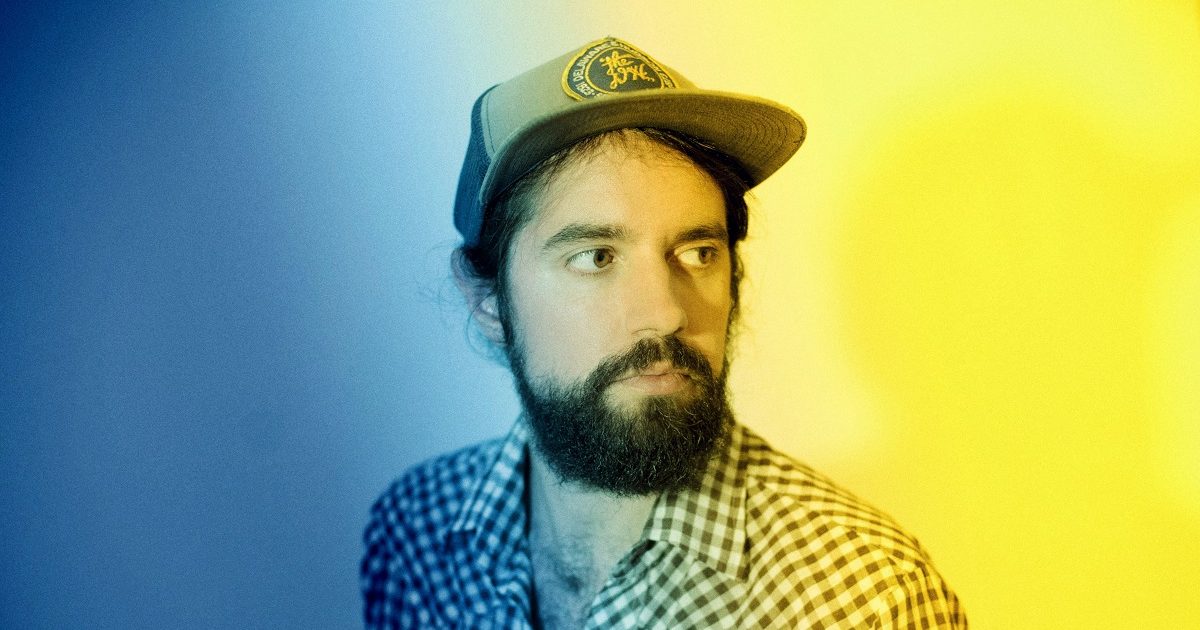
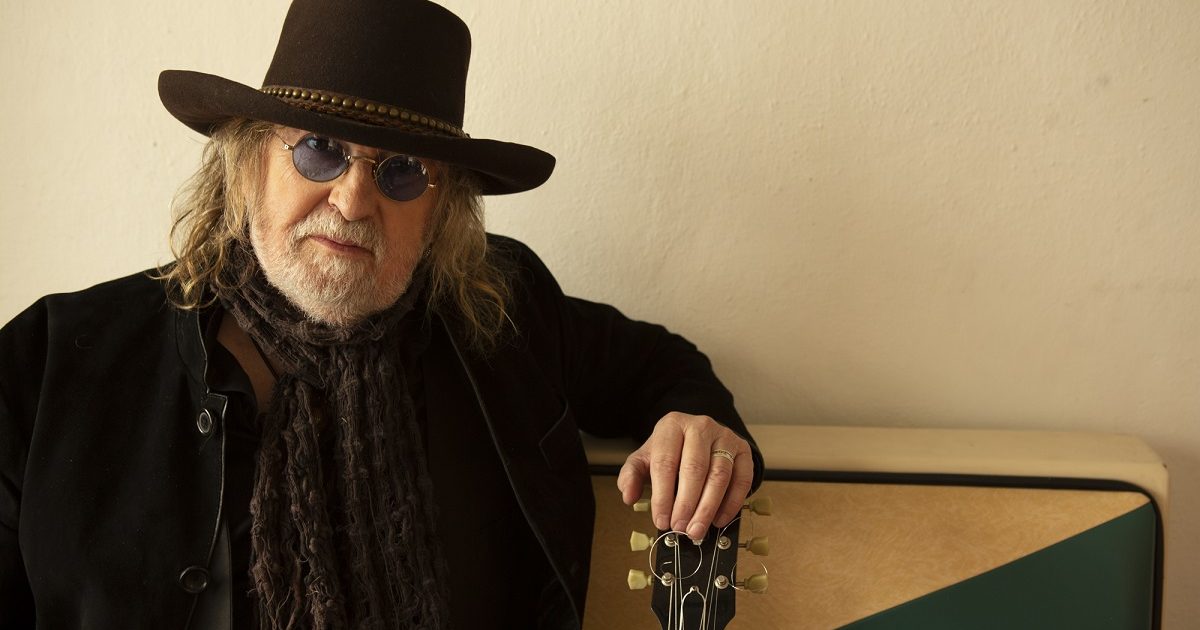
LISTEN: Ray Wylie Hubbard, “Hummingbird” (Feat. Peter Rowan)

Artist: Ray Wylie Hubbard
Hometown: Wimberley, Texas
Song: “Hummingbird” (feat. Peter Rowan)
Album: Co-Starring
Release Date: July 10, 2020
Record Label: Big Machine Records

In Their Words: “My son, Lucas, gave me a Gibson Hummingbird guitar and one morning as I was playing it in our log home living room, there was a hummingbird zooming around my wife Judy’s feeder and the muse said, ‘Here ya go. It’s obvious…write it.’ So I did in about 20 minutes! As played it for the first time, I wondered who should play and sing on it and the only name that popped up in my head was…Peter Rowan! So I sent it to him and asked if he would play on it. I’m guessing he probably played his licks on a Martin D-18 but whatever it was, it was perfect and I am so grateful he said yes.” — Ray Wylie Hubbard


Photo credit: David McClister

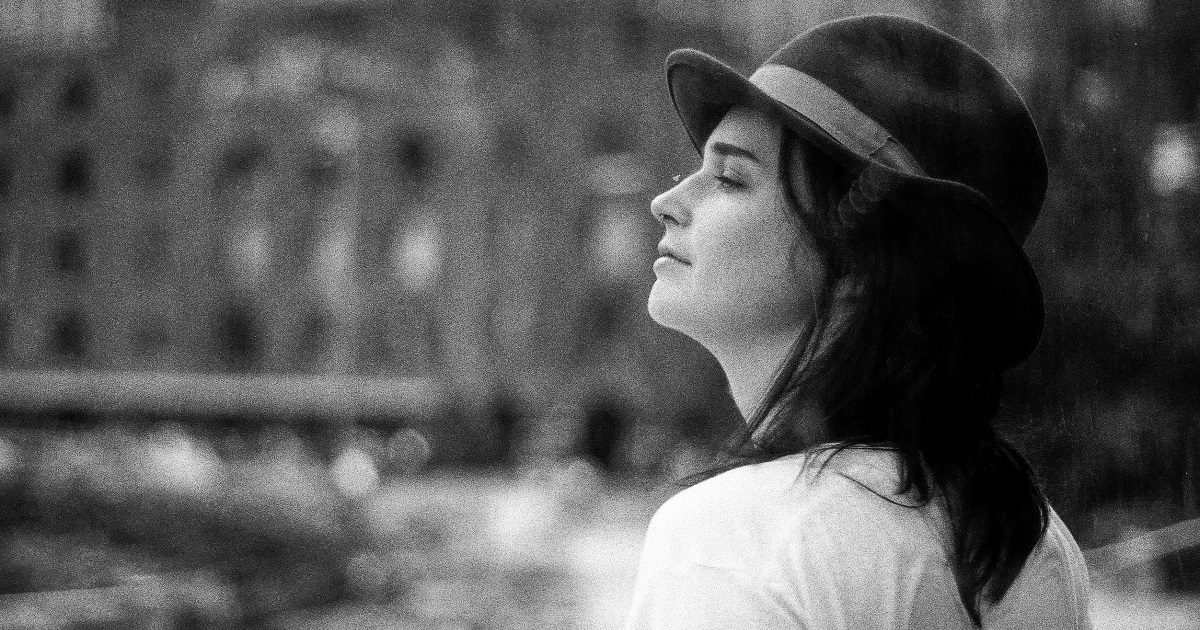
LISTEN: Sam Rae, “Strangest Thing”

Artist: Sam Rae
Hometown: Charleston, South Carolina
Song: “Strangest Thing”
Album: Ten Thousand Years
Release Date: August 7, 2020

In Their Words: “The two words life and death live under the same roof, but if they were a texture or a rhythm they would be much different, both with their own groove. The content of this song sifts through my thoughts on life and death and present thought, which weave in and out of the record. ‘Strangest Thing’ is a gesture, like the tipping of one’s hat, prompting us to pull our eyes and minds out from behind the blindfold and remember what’s important.” — Sam Rae


Photo credit: Sophia Lou

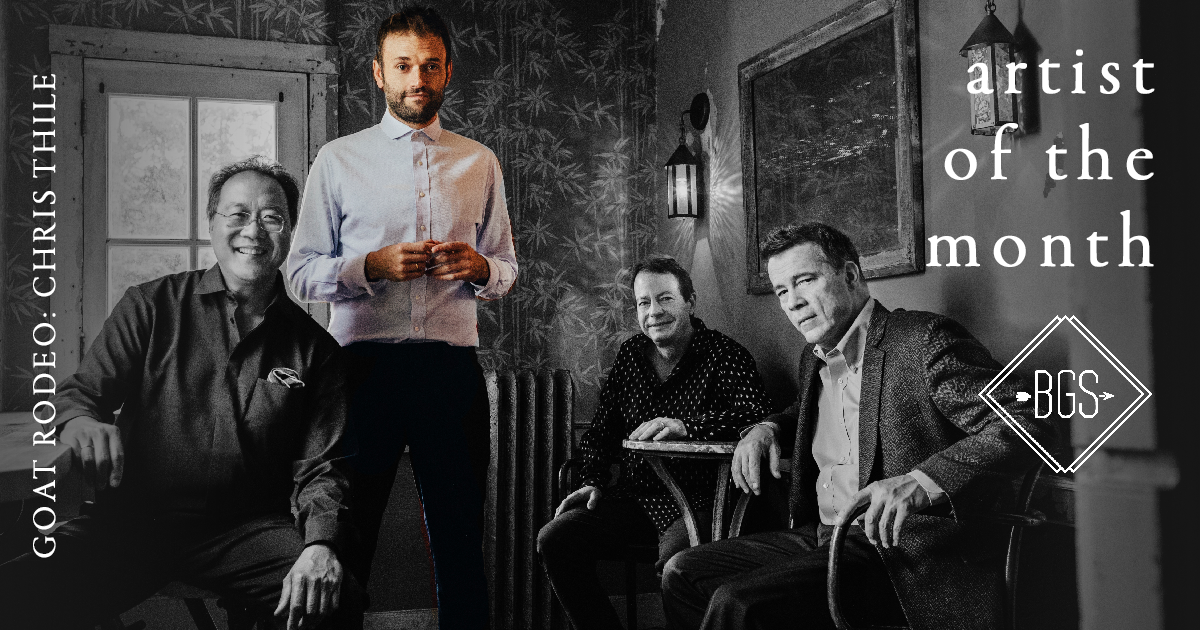
Chris Thile Keeps His Goat Rodeo Bandmates From Falling Out of Trees

For more than a quarter of a century, Chris Thile has been constant force in the American music scene — and he’s still shy of 40. The musical polymath always seems to have some project going on: whether as a duo (pairing most prominently with both Michael Daves and Edgar Meyer), a trio (Nickel Creek), quartet (Goat Rodeo), and quintet (Punch Brothers). And he has won Grammys in all of those groupings.

Last summer, Thile rendezvoused with his Goat Rodeo brethren — fiddler Stuart Duncan, cellist Yo-Yo Ma, and bassist (and fellow MacArthur “Genius Grant” honoree) Edgar Meyer — to record their long-anticipated sophomore effort, Not Our First Goat Rodeo, which came out in June. What Thile finds is so special about this collaboration is that it features musicians who are, he says, “excited by, and invigorated by, discomfort. Like a good stretch. I think this project is defined by the willingness of its participants to stretch outside of their perceived comfort zones.”

This Artist of the Month interview is the third of four installments as BGS salutes the incredible and iconic musicians of Not Our First Goat Rodeo.

In a BGS interview a couple years back, you said, “I think any album worth listening to is a concept record.” Was there a concept or an overarching theme behind the new album?

Thile: I don’t know if I would, at this point in my life, back myself up on that no worthwhile album has been made without a concept. If indeed I said that I would walk that back just a touch. But the vast majority of records that have made a serious impact on me have had some sort of perceptible topics of conversations, governing principles, or thematic glue. With instrumental records, the themes start to become the play of contrasts and similarities between the individual participants, and the characteristics they assume in concert with one another.

The two actual lyrical vocal songs [on Not Our First Goat Rodeo] — there’s one other vocal song that has no lyrics — are both meditations on work/life balance. They both zoom the lenses in on the less-written-about parts of the relationships. We tend to write songs about the beginnings and ends of relationships, but we don’t necessarily write songs about the middle. Because the beginnings and ends can be so explosive. Hopefully, if your relationship is successful, your relationship will be in the middle until one of you dies.

Certainly the five of us together often talk about work/life balance. How our families are. How we are doing in context of our families, and how our families are doing in the context of our various endeavors. Lyrically that was something that Aoife and I talked about writing in the midst of those kinds of discussions and thoughts. Instrumentally, the themes are more abstract, but no less present. This project has a built-in [structure] of Stuart, Yo-Yo, Edgar, and me bouncing off of each other. Like, what’s it going to sound like when you smear those four people together? And when you get Aoife into the mix, it becomes a whole other thing.

Is writing lyrical songs for Goat Rodeo different compositionally than in other songwriting situations?

It is different. Since the project is so instrumentally focused, it’s ultimately an instrumental project that happens to have a couple of vocal moments in there. We came up with the music together, then Aoife [O’Donovan] and I went off, having discussed the various things we wanted to write about. But when we are writing that music, it is still kind of like instrumental music that happens to have some vocals on it. “The Trappings” being slightly more like you might expect a vocal song to be. “We Were Animals” came right in sort of the middle.

“Every Note a Pearl” was very much an instrumental, then we wanted some more instruments that could slide around. Also, we wanted some more stuff [happening] while Edgar was pizzicato and Stuart playing tenor banjo and me on the mandolin. We wanted Yo-Yo to have some friends in Sustaining Instrument-land. So, we felt, “OK, Aoife and I can help with that.” But we were never tempted to add words to that one. Because the project is driven by instrumentalizing, the vocals are more balanced in terms of where the interest is coming from. Often, if there are vocals in a piece of music, we are focusing on the vocals, and in this music we are not necessarily playing to those expectations.

The voices then are like fellow instruments?

Yes, absolutely. And they’re not given a place of greater prominence than any one instrumentalist is.

Can you talk about Aoife’s unique contributions to Goat Rodeo projects?

When we first did the project, it was an all-instrumental project. And then, I think it was Yo-Yo’s idea. During our practice, he said, “Chris, you sing. Why don’t you sing a little bit?” And I said, “OK.” It was pretty organic. It was like, “Wouldn’t it be lovely to have another singer on these ‘singing songs’?” Aoife and I had never done anything officially together. It had always been at music festivals. Late-night jam sessions. Those type of things. I think both of us had so much fun singing together that I instantly thought of Aoife and I sent everybody recordings of her. Everyone was into it and off we went. It was still with the full knowing that it was an instrumental record.

That fits in with the group’s general philosophy of not conforming to any genre or expectations — to include anything into the music that makes it work.

That’s absolutely right. Nothing’s off limits. If one of us is interested in something, then it’s like, “Hell yeah!” I love that this record can go from something like “Every Note a Pearl” to “Not for Lack of Trying,” and the idea we’re going to be playing around with sliding slowly from one diatonic chord that is well within diatonic harmony to another — but we’re going to pass through all the points along the way, just very slowly. As if the music is melting/spontaneously generating.

And that’s a thing we’re going to pursue — we’re going to see what happens when we chase a thought. More so [on this album] than the first one, actually. This time through the composition process, more was on the table. We had already pursued our first instincts. It was time to really open up to what the possibilities were — having a foundation to begin with in the form of the first record.

Goat Rodeo features four exceptional musicians and it feels like you all try to bring out more in each other.

I love the ways in which it challenges me. I think it challenges each one of us. Maybe the defining characteristic of this ensemble is that what might stretch one of its members might be the absolute comfort zone of another. What might stretch Stuart as far as he’s ever been in one direction is a walk in the park for Yo-Yo. And vice versa. What might be absolutely stretching Yo-Yo to the point the farthest reaches of his exploration is like falling off a log for Stuart.

I love that aspect of this project. Something that’s super easy for me would be hard for Edgar. And something that’s super easy for Edgar would be hard for me. It runs through the whole ensemble like that. So you always have a guide. One of us can always teach the rest of the class about stretching ourselves as musicians.

Even within a piece.

Oh absolutely. Who’s the master of a given concept can switch throughout the course of a piece. And the learner can instantly become the master. And the master can become the learner, with the idea that we all get better at it as we go along. I love hearing the sound of when one of us is out on the limb right now but one of us totally has it. Don’t worry, that person is going to make sure you don’t fall out of the tree. Because you know that they will return the favor.

What is one recording that ranks as a G.O.A.T. (greatest of all time) for you?

My world was totally blown open by Kendrick Lamar by How to Pimp a Butterfly. I think that is an extraordinary work. Talk about an album hanging together structurally. I think that is just a master class in developing one theme. I still have so much to learn from that record. That’s on the list. That’s definitely up there with the greatest records ever. It’s still opening my ears. The way I understood it when I first heard it is completely different from how I understand it now. One of the big differences is that I understand how little I understand about it. I think the best records do that. They open up your worldview — not just your musical view.

(Editor’s note: Read the remaining installments of our Artist of the Month interview series here.)


Photo credit: Josh Goleman

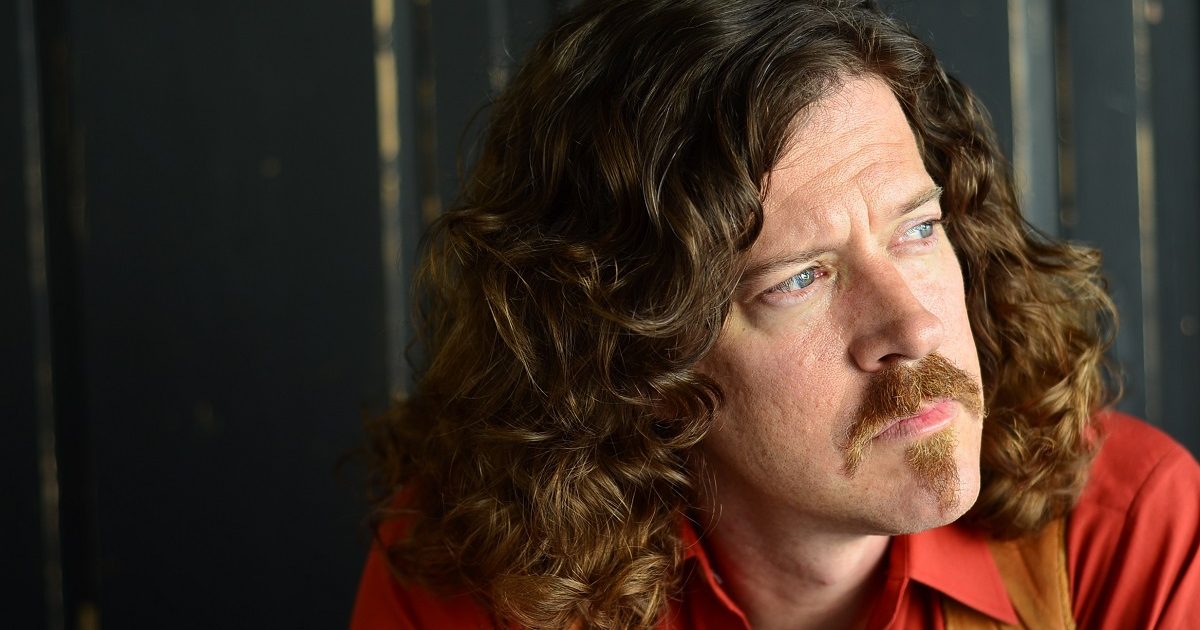
LISTEN: Ted Russell Kamp, “Stick With Me”

Artist: Ted Russell Kamp
Hometown: Originally Hartsdale, New York; now many, many years in Los Angeles
Song: “Stick With Me”
Album: Down in the Den
Release Date: July 24, 2020
Label: PoMo Records

In Their Words: “This is a classic folk song I wrote that was inspired by the music of Nanci Griffith and John Prine. I wrote most of it on my own and then finished it with a good friend and very respected Nashville songwriter Dylan Altman. At the time, we were writing for the same Music Row publisher in Nashville so we did a lot of writing together.

“I married my college sweetheart, but met her just at the tail end of college. Before we knew each other, she had taken a summer-long road trip from New York to Seattle and back with her ex-boyfriend. He didn’t treat her all that well on the trip and later broke her heart. She was very cautious with wanting to start a budding relationship with me when I started falling for her and this song was based on the feelings for her I had at the time. She was running from life and I was trying to find her, comfort her, and let her know I was the one for her. It focuses on the running and our very human attempts to comfort the people we love and our wishes to work through barriers of insecurity and loneliness. Especially in crazy times like these, being compassionate and loving and creating deeper relationships is our way to a better life.

“I recorded this song while I was on tour in Europe six or seven years ago. (It’s one of the oldest songs on the record). The basic tracks were done on a day in between gigs in Finland, and the band on the recording is the band I still play with every time I go back to Finland to tour: Tommi Viksten and Tokela on guitar and Janne Haavisto on drums and percussion. All of these players are deeply respected and talented in their own country and they are on par with some of the best musicians I’ve ever played with. We cut the track live at E Studio in Helsinki. I then sang my final vocal take and added Hammond organ later that day. When I got home to the US, I asked my friend, Eric Heywood (Son Volt, Ray LaMontagne, the Pretenders) to play pedal steel and that’s the recording.” — Ted Russell Kamp


Photo credit: Karman Kruschke

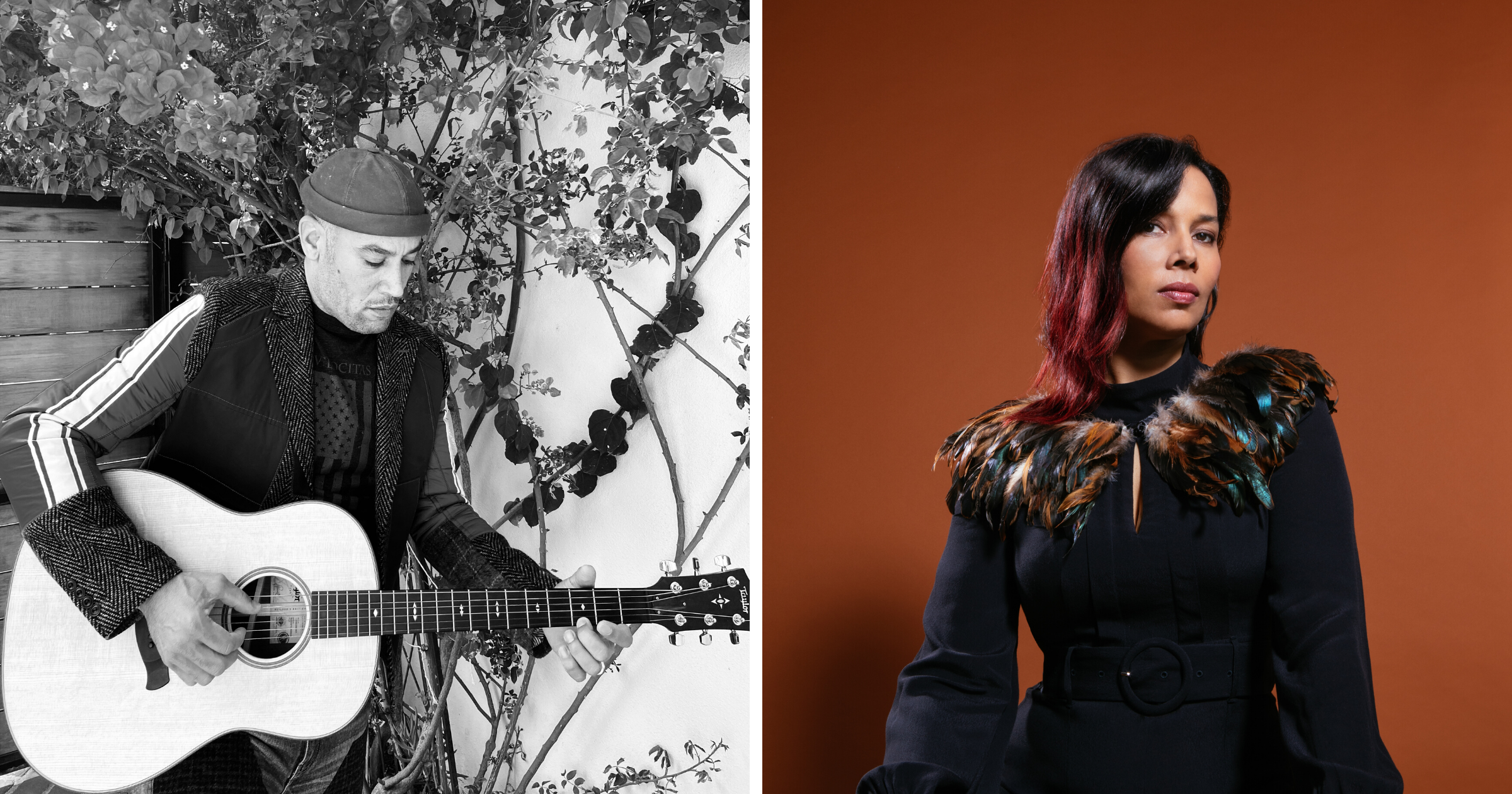
LISTEN: Ben Harper & Rhiannon Giddens, “Black Eyed Dog”

Artists: Ben Harper and Rhiannon Giddens
Single: “Black Eyed Dog” (by Nick Drake)
Release Date: July 21, 2020
Record Label: ANTI-

In Their Words: “Rhiannon and I are both black purveyors of American roots music, and while this is not an anomaly, it is an exception within a subculture. We have unquestionably tapped into the same creative well of influence, carrying on the tradition through our own individual instincts and perspectives. … I’ve always wanted to cover ‘Black Eyed Dog,’ but the song was intimidating in its haunted perfection. Only through collaborating with Rhiannon would I have ever attempted it. When I step back from it, this collaboration should’ve happened long ago, but I’m thrilled that it’s finally here.” — Ben Harper

“I’ve been hearing and hearing about Ben Harper for a long time, but had never gotten to meet him until recently at an event in LA and I was immediately struck by a kindred spirit. Didn’t have as much to do with the kind of music we play, although we share many, many commonalities as black folk playing roots music, but more to do with the spirit that we access when we play it. I felt that spirit in him right off and knew if we ever got the chance, we could make something beautiful together.” — Rhiannon Giddens


Photo of Ben Harper: courtesy of the artist.
Photo of Rhiannon Giddens: Ebru Yildiz

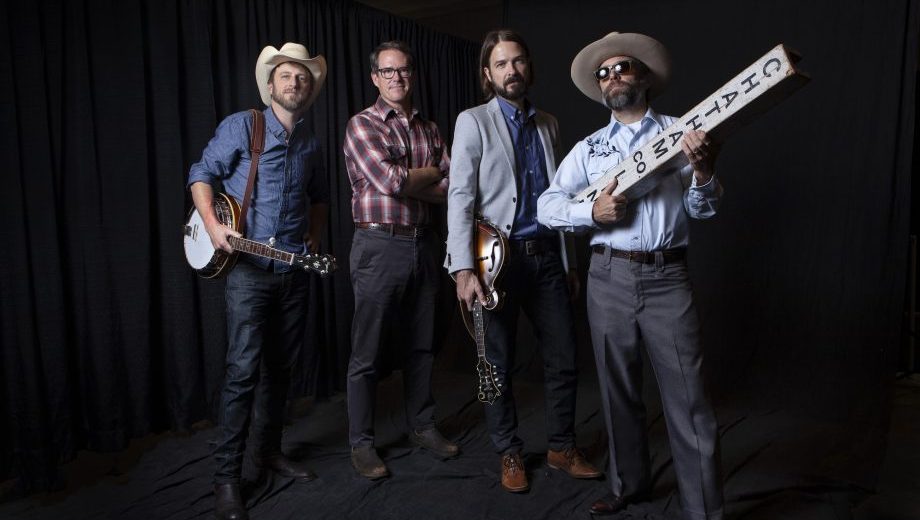
The String – Chatham County Line

With an old-school look and feel, Raleigh, North Carolina’s Chatham County Line started at the dawn of the new millennium in a surge of passion for bluegrass music. Now at 20 years old, they’ve made only one very recent personnel change and refreshed their concept as a post-modern string band with drums.


LISTEN: APPLE PODCASTS

Their new album, Strange Fascination, displays far-reaching vision and a warm, cohesive sound, riding on the unique songwriting voice of Dave Wilson. Wilson and co-founding multi-instrumentalist John Teer join host Craig Havighurst for a retrospective conversation, featuring music from their past and present.

On These 10 Recordings, Willie Nelson and Black Musicians Share a Creative Vision

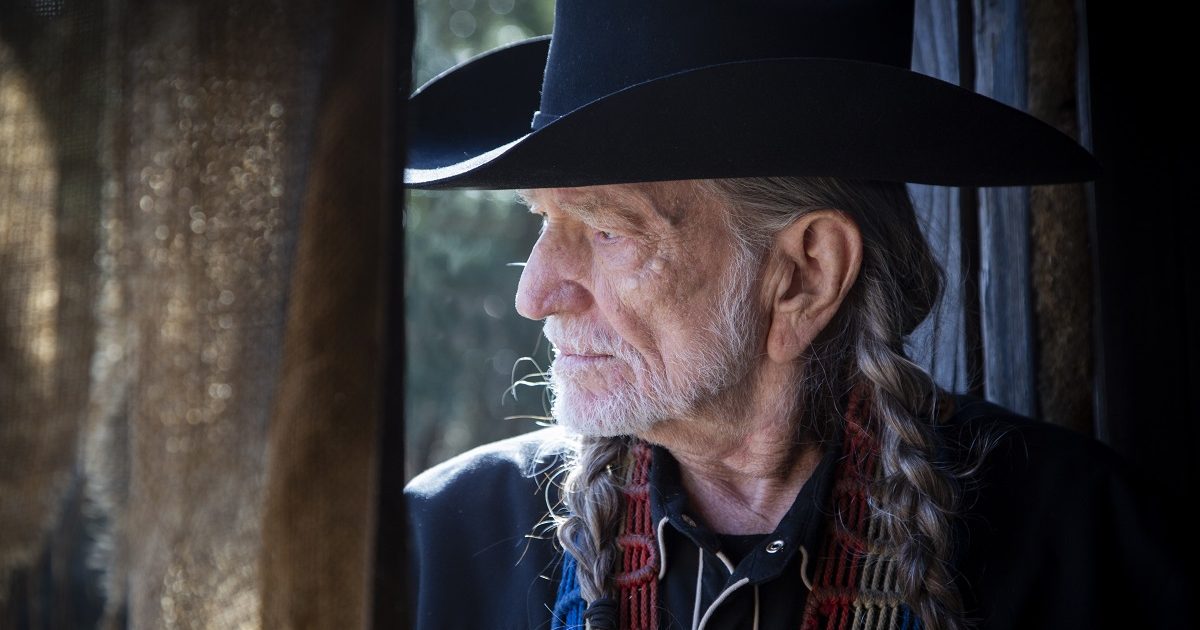
Willie Nelson has long been not just an American musical treasure, but an iconic figure with far more appeal across racial and generational lines than often recognized. At 87, he’s achieved a perfect marriage of artistry and commercial success few have in any idiom. While certainly a country legend, and the only person in the genre to ever achieve a Top 10 hit in seven different decades, he’s also collaborated with an astonishing number of artists across a wide swath of musical styles and approaches. He’s penned numerous anthems that have been covered by jazz, blues, R&B, soul, rock and pop vocalists, and this month he released his 70th studio album, First Rose of Spring.

Nelson’s never been afraid to stand up for social justice, even when those words weren’t part of the popular vernacular. Early in Charley Pride’s career, Nelson actually gave him a kiss on stage in Louisiana, quieting an audience that was allowing some of its more verbally racist louts to heckle Pride on stage. He’s always included Black musicians in Farm Aid concerts, had one of his biggest albums ever (Stardust) produced by a Black man (Booker T. Jones, who raved about Nelson in his autobiography) and has maintained a friendship with Snoop Dogg since long before Lil Nas X appeared on the scene. He also enjoyed a very close relationship with Ray Charles, who Nelson lamented he could never beat at chess.

He’s in the same company with people like Duke Ellington, Louis Armstrong, and Bill Monroe, whose output, personality and consistent brilliance has endured despite changes in production, audience preferences, and many other variables that can negatively affect the careers of popular musicians. Part of the reason for that longevity is Nelson’s undeniable skill in multiple areas. He’s penned a host of songs that are every bit as epic as those from the pre-rock canon he often samples. Had he only written “Crazy,” “Funny How Time Slips Away,” or “On the Road Again,” that would have been enough for one lifetime. He’s also a very credible singer, highly effective in pacing and telling a story.

Nelson has consistently embraced and operated in other genres by neither sacrificing his musical individuality and integrity, nor seeming to pander or simply attempting to seem hip. Actually, he’s the epitome of that term, though in a vastly different way from someone like Miles Davis, who was known as much for fashion and fine cars as musical innovation. The fact that Nelson has appeared in more than 30 films just adds weight to his universal appeal.

Trying to pick the best of Nelson’s numerous collaborations with great Black singers and musicians is a tricky thing. One could easily select 10 one day, then come back and tab a different 10 another time. But these are some (far from all) personal favorites. They are ranked in order only by year, nothing more. We picked a mix of singles and LPs, but it’s just a small sample of the many wonderful things he’s done. By no means would we claim this is the definitive list for Willie Nelson’s collaborations with African American artists, but it’s a good sampler and an indicator of how widespread his impact and willingness to work with various musicians actually extends.

SINGLES AND ALBUM CUTS

“Man With The Blues” with Buckwheat Zydeco
From Five Card Stud (1994)

The greatest zydeco master since Clifton Chenier teams with Nelson for a smoky, delightful romp that sees Buckwheat Zydeco also find a comfort zone vocally and instrumentally. As is always the case, Nelson easily works himself into the arrangement, and the two sound right at home in this setting.


“Night Life” with B.B. King
From Deuces Wild (1997)

The King of the Blues sounds happy and engaged on one of Nelson’s earliest compositions, providing some taut guitar licks and outstanding lead and harmony vocals while Nelson doesn’t try to match the improvisational edge, instead easing into a nice zone that’s part complimentary, part quite different in style and sound, but ideal for the situation.


“Still Is Still Moving to Me” with Toots & the Maytals
From True Love (2004)

Toots brings some Jamaican soul and lots of energy to this collaboration, while Willie seems a bit more energetic as the song works its way through. This is one of many performances that earned this LP the Reggae Grammy, and Nelson had such a great time he made a follow-up of his own and paid Toots and company back by having them guest on it.


“Busted” with Ray Charles
From Genius & Friends (2004)

I know “Seven Spanish Angels” was a number 1 hit and more people remember it fondly, but this late redo of an early Charles hit has equal doses of warmth, reflection and edge in both voices. Charles was certainly not at his vocal peak, but he found a way to make his treatment effective, while Willie as always proves the ideal partner in multiple ways.


“Family Bible” with The Blind Boys of Alabama
From Take the High Road (2011)

The album title indicates precisely what Nelson does here, singing with verve and fire while the Blind Boys bring some of their characteristic Golden Age gospel energy and intensity to this rendition that’s alternately wistful, memorable and poignant. This composition dates back to Nelson’s late ’50s catalog, while he was trying to get heard as a songwriter.


“Grandma’s Hands” with Mavis Staples
From To All the Girls (2013)

Mavis Staples has one foot in the church and the other in the street with her customarily powerhouse voice setting the tone. Nelson manages not to get overridden or canceled out in the process as they do their own special version of the Bill Withers hit, which the Staples Singers cut for their 1973 Stax LP, Be What You Are.


“Last Night I Had the Strangest Dream” with Charles Lloyd and the Marvels
From I Long to See You (2015)

The great Memphis jazz man Charles Lloyd and his newest group provide the backing for what comes off as a cross between a nightmarish vision and a marvelous revelation, sung in emphatic fashion by Nelson and punctuated by Lloyd adding some nifty licks underneath and the Marvels adding some musical punch.


ALBUMS

Country Man (2005)

A follow-up to his appearance on Toots’ LP the year before, Nelson goes full bore into reggae territory. Some of it works, some of it doesn’t, but all of it is performed with enthusiasm and joy. Nelson vocally handles the skittering reggae rhythms well, and on the disc’s best songs surpasses what he did on True Love.


Two Men and the Blues (2008)

Wynton Marsalis as a youthful prodigy had a lot of negative things to say about a lot of things back in the ’70s and early ’80s, and country music wasn’t spared in his broadsides. But fast forward all these years later and his gorgeous trumpet solos (both full and muted) made a great musical partner and support system for Nelson, who by now was so familiar with pre-rock, blues, and even traditional jazz tunes and rhythms that it was super smooth sailing from first note to the end. Also recommended: the DVDs Live From Jazz at Lincoln Center with Wynton Marsalis (2008) and Willie Nelson & Wynton Marsalis Play the Music of Ray Charles (2009).


Here We Go Again: Celebrating the Genius of Ray Charles (2011)

Marsalis and Norah Jones joined Nelson to pay homage to his friend Ray Charles, doing wonderful renditions of both hits and more obscure Charles tunes before a rousing audience. Nelson sounded especially energetic throughout, while Marsalis, who’s often been accused of being more technically expert than emotionally powerful, delivered crushing solos and accompaniment, and Jones was equal parts alluring and engaging. As always, Nelson comes across as sincere and genuine, a marvelous mix of down-home sensibility and attitude.


Photos: Pamela Springsteen

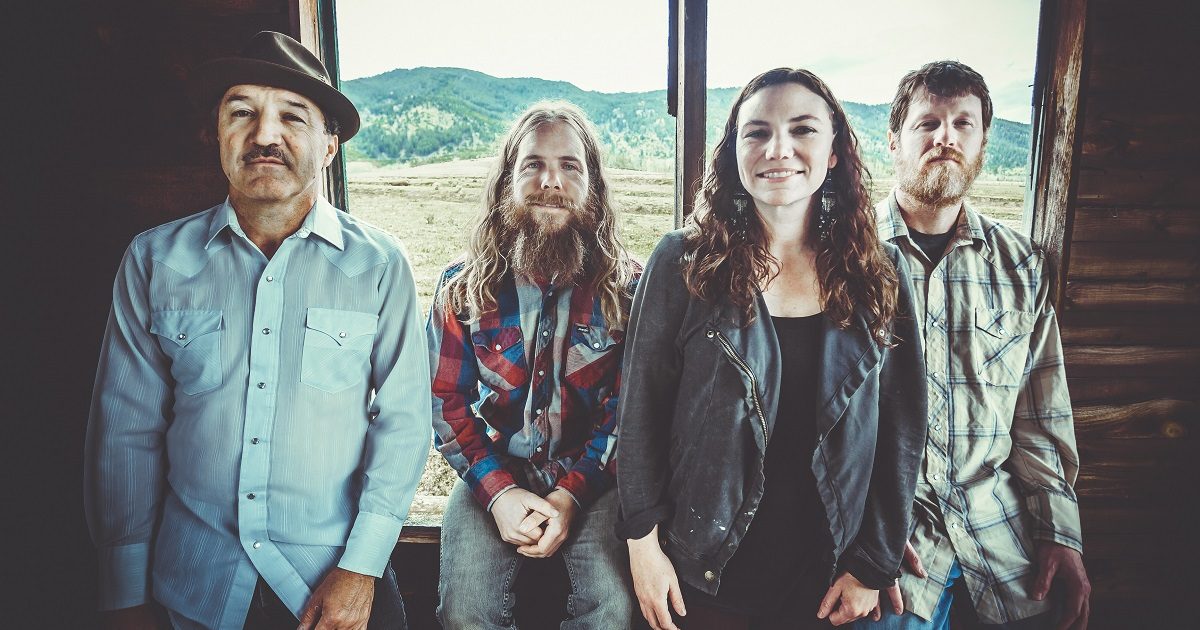
LISTEN: The Two Tracks, “All Women Are Healers”

Artist: The Two Tracks
Hometown: Sheridan, Wyoming
Song: “All Women Are Healers”
Album: Cheers to Solitude
Release Date: August 14, 2020

In Their Words: “‘All Women Are Healers’ was inspired by the title of a natural healing book that has been in my collection for years. The song speaks as a supportive women’s anthem highlighting the importance of women in the world. I feel incredibly lucky to have had the chance to work with Will Kimbrough producing this record and Sean Sullivan engineering at The Butcher Shoppe in Nashville, just months before the studio was forced to close their doors because the property is being redeveloped. The history in that room was thick. We recorded our past two albums there and would have recorded every future one in that studio — it was such a low-key comfortable atmosphere to create in. I also appreciate Will for connecting us with an incredible woman for the mixing phase of the album, Trina Shoemaker. She is one of the best in the Americana industry right now and it is refreshing to see women in these often male-dominated roles. It’s good to see the current progressive shifts in awareness of the social standards and prejudices women still deal with across the world.” — Julie Szewc, The Two Tracks


Photo credit: Dean Owens