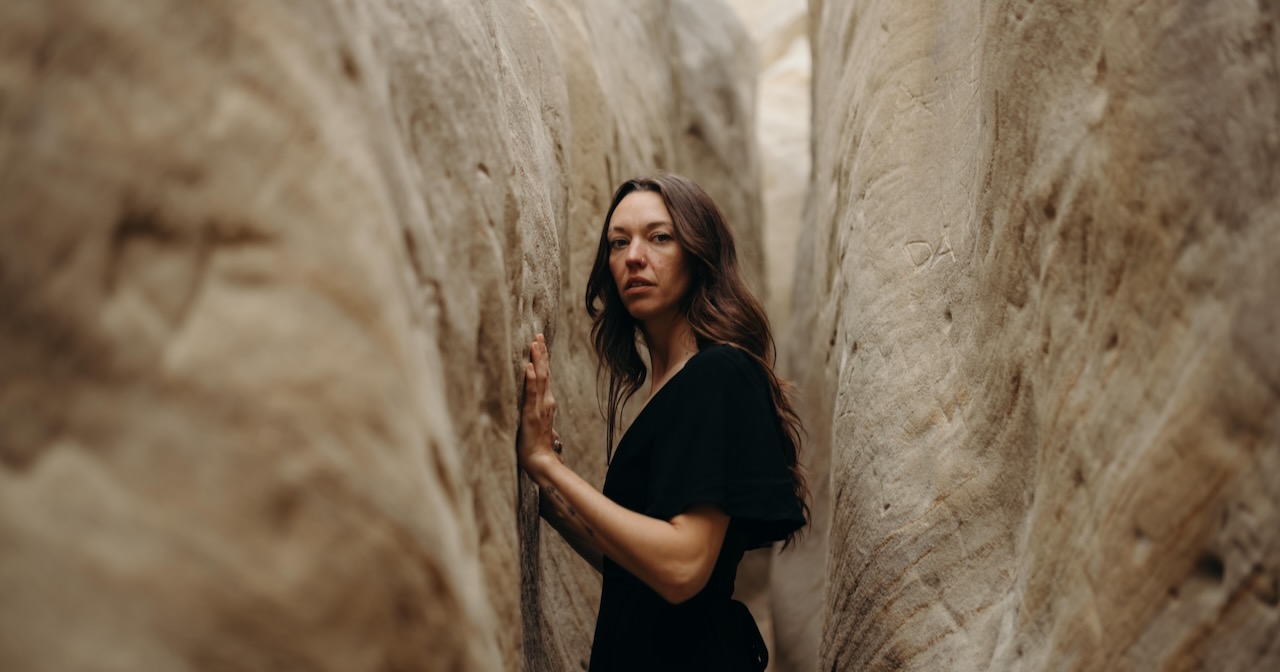
BGS 5+5: Jason Hawk Harris

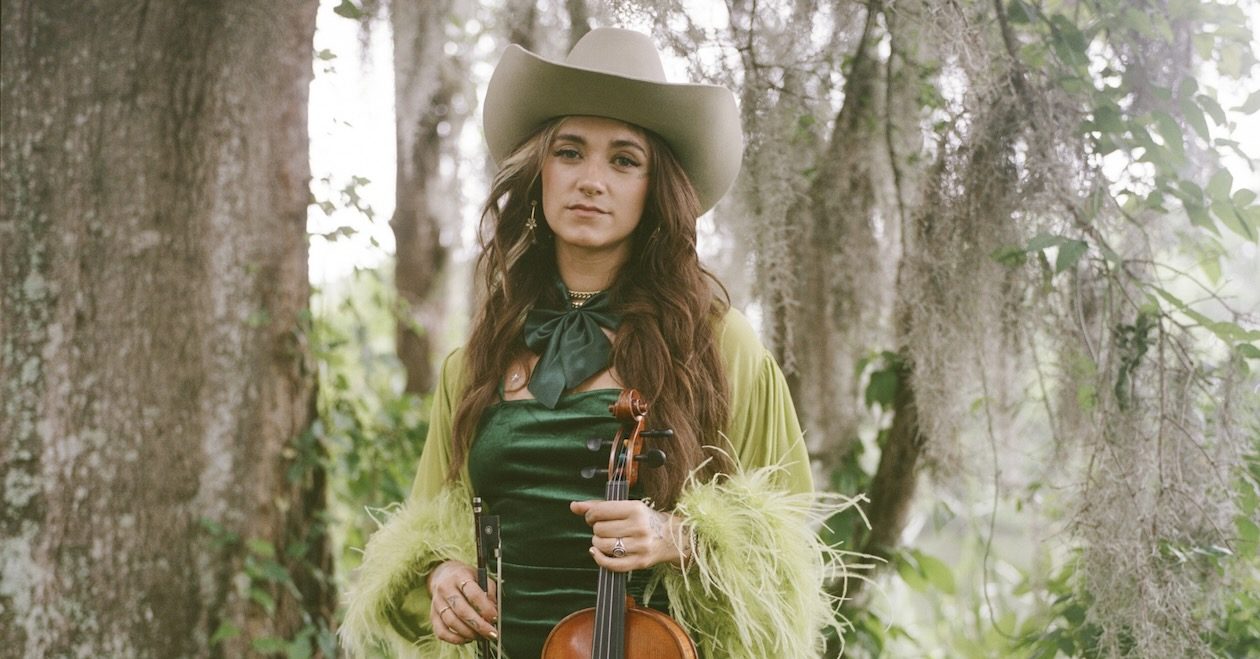
Artist: Jason Hawk Harris
Hometown: Houston, Texas
Latest Album: Thin Places
Personal Nicknames (or rejected band names): “J,” “Jase”

What’s your favorite memory from being on stage?

I was playing at the Milk Bar in San Francisco with the Show Ponies once. The crowd was responsive to what we were playing in a way that I’ve never experienced before or since. We would get louder, and they would move like a wave of silk. We’d get quieter and they would be still as candles. It was a really wild moment that I’ll never forget. It’s a small, divey place, but even still, it’s like walking into a church for me these days, because I always remember that show.

What other art forms — literature, film, dance, painting, etc. — inform your music?

Lyrically, literature is a big influence on me. My favorite authors are those who write in the magic realism vein. Salman Rushdie, Gabriel García Márquez, Carmen Maria Machado, Haruki Murakami, and Charles Williams are some of my favorites. I like the genre (magic realism) because it seems to view the physical and spiritual plane of existence as one in the same. The world has always made more sense to me when I think of it in those terms. Empiricism holds no interest for me, personally. The nature of existence has always seemed bigger to me than what I can touch, taste, smell, hear, or see.

What was the first moment that you knew you wanted to be a musician?

I wish I had a more hip answer to this, but I don’t. When I heard Simba sing the song “I Just Can’t Wait to Be King” in the Lion King, I knew I wanted to sing in front of people for the rest of my life. I was 6 when I first saw it and that song absolutely enthralled me. I think there were earlier moments than that while watching my parents sing in church, but that song was a very formative moment for me. I remember my parents having to ask me to sing something besides the one song from Lion King.

What’s the toughest time you ever had writing a song?

“Jordan and the Nile” legitimately took me five years, from first spark to final mix. The refrain came to me in about 10 seconds, but everything else came at a crawl. I wrote around 40 verses and they all seemed wrong in one way or another. Then, when I’d finally finished the verses and felt good about them, I started arranging. It’s usually the lyrics that take me a while. The music almost always comes easy. Not the case with “Jordan.” I must’ve trashed everything and started over on this song at least five times. It was labor, but I’ve never been happier with a final product than I am with that song.

If you had to write a mission statement for your career, what would it be?

Don’t let the cynicism of the streaming age inform the music you write. This is, and has been, my mantra for a while now. I think in this day and age, musicians are under constant pressure to write music that people “like” instead of writing something that we think is good. The temptation is stronger than ever. Being placed on a Spotify sponsored playlist can make you thousands of dollars in a way that other avenues of income won’t. I have personal experience with this. The Show Ponies, the band I was a part of for seven years, were placed on a playlist back in 2013. We still receive monthly checks and we haven’t played a show in over four years. It’s powerful, but I don’t want a tech company deciding what music I make is or isn’t worthwhile.


Photo Credit: Daley Hake

Watch a Brand New Video From Americana Firebrand Sierra Ferrell

With a brand new, to-be-announced album coming in 2024, Americana singer, songwriter, and “musical vagabond” Sierra Ferrell has released “Fox Hunt,” a galloping, gothic track with a storybook-style animated video. (Watch above.) It’s one of her most sonically mainstream single releases to date, reminding of groups like the Lumineers — a shimmering polish on the deeply patina-ed, gritty sounds drawn from her West Virginia raising.

Ferrell is one of the fastest rising stars in American roots music, with a tour schedule and dance card filled to bursting. Listeners place her in musical constellations with such high energy and “back to basics” artists like Billy Strings, Molly Tuttle, Zach Bryan, Margo Price, and more – many of whom she calls friends and collaborators. But Ferrell, in a twist of homophonics, brings a feral and untethered mastery into her music, a quality that continually has fans begging for more. Her performance of femininity – and as often, her subversion of it – recalls other mountain music mavens like Dolly Parton, Ola Belle Reed, Wilma Lee Cooper, and Loretta Lynn, but with their often aspirational facades – qualities of each of their professional brands – exchanged for a devil-may-care attitude that’s just as deliberate and intentional. It’s as much an extension of Ferrell’s agency as any of the women who came before her donned their own rhinestones, big hair, and striking make-up as representations of their individuality.

2024 will undoubtedly find Sierra Ferrell notching many more career milestones as her ever-growing audience will be hanging on for every rollicking, frolicking note.


Photo Credit: Bobbi Rich

WATCH: Ynana Rose, “Strawberry Moon”

Artist: Ynana Rose
Hometown: I was born in Mendocino, California, and grew up in rural Northern California and Southern Oregon. I’ve lived in San Luis Obispo, California, for the last 20 years.
Song: “Strawberry Moon”
Album: Under a Cathedral Sky
Release Date: October 20, 2023 (song); November 3, 2023 (album)

In Their Words: “‘Strawberry Moon’ is an old–time song of forbidden love and every time I play it I give thanks for being born in the here and now – where I can choose how to be and who to love. This is the first song I wrote for my album and I play it at every show. It came together so easily in the studio: Co-producer Damon Castillo and I knew just how to bring it to life. Tammy Rogers (of The SteelDrivers) and Scotty Sanders add fiddle and Dobro to the already meaty mix of upright bass, drums, and electric guitar. The audio for the video is spare, just guitar and vocals – sound engineer/producer Graham Ginsberg and I were really aiming for a haunted, yearning kind of a vibe. It’s a story that feels true, so I sing it that way.” – Ynana Rose

(Editor’s Note: You may also stream the studio version of “Strawberry Rose” below.)


Photo Credit: Barry Goyette

LISTEN: Heather Anne Lomax, “Be the One”

Artist: Heather Anne Lomax
Hometown: Los Angeles, California (via Kansas City, Missouri)
Song: “Be the One”
Album: The Doman Tracks
Release Date: November 3, 2023
Label: Blackbird Record Label

In Their Words: “‘Be the One’ is just a hopeful song about spending the rest of your life with a soulmate. Sometimes that happens for the lucky ones and sometimes not, I suppose. It was written at a time when I had thought a previous relationship was blossoming again in my life. This person and I had dreamed about growing older and sitting on a porch swing together, reminiscing about days past as the sun was setting. Michael [Doman, producer] wanted to make sure this had real movement and buoyancy and added the pounding of the bass drum throughout the song – I believe Jason Hiller did this with a handheld mallet. The three of us, Michael Doman, Jeff Sebens and I, laid down the song’s foundation of jangly guitars that kept the track afloat down a river of momentary joy.” – Heather Anne Lomax

Track Credits: Written by Heather Anne Lomax

Vocals – Heather Lomax
Guitars – Heather Lomax, Michael Doman, Jeff Sebens
Bass/ Kick Drums – Jason Hiller
Backing vocals – Michael Doman

Produced by Michael Doman.
Recorded at Electrosound Studios.
Jason Hiller – Engineer, mixing
Mastered at Pen Station Studios by Peter Barker.


Photo Credit: Shots By Morrison

Cover Story: Hogslop String Band Went From “We Are Not A Band” To the Opry

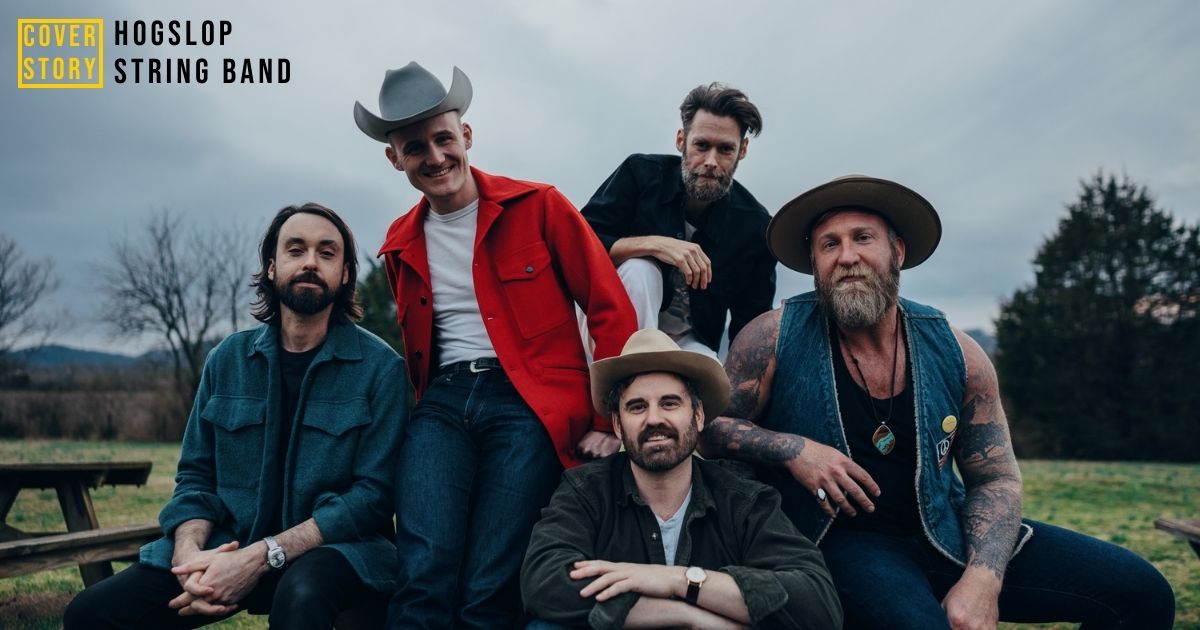
Few bands have benefitted from the same type of steady, organic growth as the Hogslop String Band. Originally formed in 2009 as a pickup band for a square dance, the group played together for 10 years before releasing their first album. In that time, their camaraderie strengthened – as did their songwriting, performance style, and fanbase.

Following their 2019 self-titled album, the group – Gabriel Kelley, Daniel Binkley, Kevin Martin, Will Harrison, and Pickle – has been hard at work on their next record (expected spring 2024). Produced by Kelley at his own Mobile Traveler Studios in Bells Bend, 10 miles west of Nashville, the record illuminates the purely original sound that the Hogslop String Band has found over nearly 15 years of making music together.

BGS caught up with Gabriel Kelley and Daniel Binkley to talk about the new music, the formations of the band, and where it’s all headed.

You formed in 2009, but it was 10 more years before your first album came out. What has the journey been like, coming from such casual origins to debuting on the Opry in 2022 and looking ahead to releasing your sophomore record?

Gabriel Kelley: We sure did. We were, to be honest, just a rag-tag bunch of buddies. Most of us had grown up playing old-time music or found it in our early years. For a very long time, our motto was a little more on the punk rock side: “We are not a band” is what we said for the first 10 years of the band. It was just a way to get together and have a good time. It wasn’t until a few years ago that we started taking it more seriously. One thing that’s cool about our Opry debut – and Binkley can fill you in – is that his family has been a part of the Opry since the ’20s.

Daniel Binkley: My family has been in Nashville forever – my great-grandfather, Amos, he had a band called the Binkley Brothers’ Dixie Cloghoppers, and they were a part of the very first Opry cast in 1926. Backstage they have a placard for every member and I found my family back there. That was a very special moment for me. They mentioned it during the broadcast, and we actually ended up playing one of the Binkley Brothers’ songs on the Opry.

For a band with a foundation in traditional music, i.e, fiddle tunes, where do you find the balance between introducing your own original material and digging from the old-time repertoire?

DB: Old-time music is sort of the school that we come from. So when we write original stuff, it’s gonna come through that lens. Once you run it through the “hogslop filter,” it’s gonna sound like hogslop. There’s just something about that foundation, and our knowledge of each other as musicians, that makes it come together – whether it’s traditional tunes or original material.

GK: We absolutely don’t ever want to lose the component of old-time string music and we’re currently in a time where that music seems a lot more accessible and is getting thrown under the big umbrella that everyone is calling Americana. We don’t do a show without old-time tunes in there. A lot of the other music we take influence from – blues, rock and roll – they were actually getting inspiration from early country and old-time music. So for us, it all goes in the same bucket.

You’re definitely known for that high energy string band sound, but this new album has quite a range of pace. How do you stay true to that sound while incorporating softer material like “Mississippi Queen?”

GK: We’re very much a live band and in that setting it’s about that high energy, rowdy thing. We love that, but amongst us in the band, three to four of us are songwriters and have very different approaches to songwriting. We’re very lucky to have Daniel in the band, he’s one of my favorite songwriters and has an ability to write some of that intimate, close to the chest material, like “Mississippi Queen.” And you need that delicate stuff just as much as you need the fast, hard hitting, and fun stuff. We feel that it’s very important to show audiences (and ourselves) that we have those dynamics.

DB: A lot of our shows at festivals are late night, midnight shows and it’s almost more like a punk-rock show. But there are also theaters or other venues where you can really showcase more of that dynamic. Kevin Martin has a few tunes on the album and he writes totally different that I do. He’s more rock and roll and I guess I’m the softy. It’s nice to have a little variety – especially on a record.

What’s special to you about this upcoming album, compared to music you’ve released in the past?

GK: Personally, watching this band shift and develop over 15 years has been pretty wild. This is the first record of the band’s that I’ve produced, and what’s special to me is (and I’m not saying that we’re reinventing the wheel), I’ve never heard quite the blend of genres that we’ve thrown together. It’s cool that Hogslop is still shifting and mutating and we’re still discovering that. And that we’re embracing our songwriting – everything on this record is our own material, and I’m really proud of that.

DB: I agree with all of that! One thing I’ll add that was a major game changer – and this is thanks to Gabe – was the ability to take our time in the studio and not be under the time constraints that’d you’d be under paying for studio time somewhere.

What else is on the horizon with the release in 2024?

GK: We’ll be in the studio most of November, and then we’ve got the Ryman show [supporting the Mavericks] on December 1. As different as this new music is, we’re really woodshedding and figuring out our live show. It sounds like our ‘24 is gonna be busy – we’re mainly a festival band, so that’s where we’re headed.


Photo Credit: Josh Goleman

Watch the Zany Music Video for Willi Carlisle’s Just-Announced Album, ‘Critterland’

Arkansas-based country and old-time troubadour Willi Carlisle has announced his upcoming, Darrell Scott-produced album, Critterland, with a delightful stop-motion music video. (Watch above.) Set for release January 26, 2024 on Signature Sounds, the collection once again draws on Carlisle’s apt self-positioning as a sort of rural, countercultural, folklorist guru, crafting poetic yet down-to-earth songs that feel all at once fantastic, resplendent, whimsical, and– well, trashy. It’s a dichotomy not unknown to American roots musics, but rarely is this paradoxical construct inhabited so intentionally and subverted so artfully. It’s a language Carlisle isn’t just fluent in, it oozes from his spirit and lives in his bones.

On “Critterland,” Carlisle positions himself not as an omniscient narrator, but well within his own communities – musical and otherwise – as he examines how the “big tent” of his prior album, Peculiar, Missouri, could be put into action. And, in doing so, he demonstrates how varied, broad, deep – and sometimes ugly – open arm, open heart policies can be. But in that mundane, in that bittersweet, there is endless beauty.

With that thought in mind, Darrell Scott as producer and collaborator here isn’t merely a solid choice, but a nearly perfect one. You hear his touches in the confidence Carlisle has stepped into – with hundreds and hundreds of shows under his belt – with his soaring, passionate vocal on “Critterland,” raising its possums and raccoons and armadillos to saint-like status. Because, after all, aren’t all living beings divine? Don’t we all have something to contribute to our own, particular critterlands? Carlisle says so, and makes a compelling case.

This 2024 album will be a must-listen.


Photo Credit: Madison Hurley

MIXTAPE: Mick Flannery on Melody and Meaning

Most songs stay in one musical scale or “key.” In this key there are 6 chords which are widely used. The 1 chord is the root chord, usually used to end the song and give a definite feeling.

Chords 2 and 3 are sad sounding minor chords in most cases. Chord 4 and 5 often give a feel of expectation to the ear, willing the melody back to the root (1) chord. The 6 chord is a relative minor to the root, often sad sounding.

In my opinion, some of the most successful moments of empathy occur when the feel of the chords and melody marry in harmony with the meaning of the lyrics. The lyrics themselves can also provide a musical feeling, the choice of vowels can marry to emotions, the consonants selected can give a nod to drum-like rhythm. I will try to give some examples here. – Mick Flannery

Bob Dylan – “Changing of the Guards”

Dylan uses a mixture of metaphors for social struggle and revolution in this epic song. The frequent use of the root chord and its relative minor at the end of phrases helps to add weight to the lines. This gives the song a definite feel, as he is ending on these strong chords as opposed to chords 4 or 5, which suggest a question unanswered.

Bob Dylan – “Baby, Stop Crying”

An example of melody marrying to feeling. The line, “Please stop crying,” is expressed with a longing in the melody concurrent with the meaning of the words. Also, “You know, I know, the sun will always shine” has a comforting feel in the melody with the word “shine” being on the root chord, helping it to sound definite and consoling.

Adele – “Someone Like You”

The top of the chorus in this song works very well between meaning and melody. The word “nevermind” is dismissed in quick order, as it would be in common parlance, giving a natural, talkative feel. The internal rhyme of “mind” and “find” gives a rhythmical feel to the line as a whole, allowing the listener to imagine a snare sound on the “I” vowels. The use of this internal rhyme makes the song universally easy on the ear, even to non-English speakers.

Lana Del Rey – “Video Games”

“It’s you, it’s you, it’s all for you, everything I do…” This whole line is placed on a 5 chord, which gives a feeling of something needing to be resolved, so the listener doesn’t know if the narrator is placing her trust in the right place.

“I tell you all the time” lands on a 4 chord – again, an expectant feel – making the listener wait for the line, “Heaven is a place on earth with you” landing on the 1 chord. This gives a definite note to the feeling, but narratively the listener is still left unsure if the feeling is requited, owing to the amount of time spent on uncertain footing in the melody.

Arctic Monkeys – “Fluorescent Adolescent”

The quick, rap-like nature of the verses are aided by the use of short vowels (“I” “E”) and short-sounding consonants like “T” and “K.” The line, “Flicking through your little book of sex tips,” almost sounds like a rhythm played on a high-hat, because of the choice of words.

Tom Waits – “Martha”

The chorus here leans on long vowels to intone nostalgia, “Those were days of roses, poetry and prose and… no tomorrow’s packed away our sorrows and we saved them for a rainy day.” The choice of words echoes a longing and almost sounds like a groan of regretful realization, as per the theme of the song.

Blaze Foley – “Clay Pigeons” 

In this soft and low intoned song, Foley utilizes “T” and “K” with short vowels to inject a spot of rhythm in the line, “Gonna get a ticket to ride.” The line, “Start talking again when I know what to say,” lands on a 4 chord which has an unresolved feel, marrying well to the meaning of the line, wherein we hear that the narrator has not yet reached a certain point.

Anna Tivel – “Riverside Hotel”

“Someday I’m gonna laugh about it, looking down from heaven’s golden plain,” moves from the 4 to the 1 and then 4 to 5. “Someday” marries nicely with the unresolved feel of the 4 chord. Ending on the 5 leaves the listener waiting for a resolve, which comes on the root chord in the line: “But for now I’ve found some piece down by the water, just to watch a building rise up in the rain.” This line uses a root chord on “for now” which gives a reassuring, steady feel concurrent with the sentiment.

Anna Tivel – “The Question”

The title of this song in itself sets the listener up for an unresolved feeling. The use of long “A” sounds (razor, saved, saving, hallelujah waiting, raise, etc.) leading up to the line, “A prayer that never mentioned,” works very well, as it sounds like an expectant chant. On the last words, “The glory of the question and the answer and the same,” the word “glory” lands strongly on the sad sounding relative minor chord, while the line ends on an expectant 5 chord. This gives a juxtaposition, the narrator has seemingly answered a question, but also left it open to further thought because of the use of this uncertain chord underneath.

Eminem – “Lose Yourself”

This song is a masterclass in internal rhyme. The lines of the verses are so phonetically intertwined that they begin to sound like the components of a drum kit. This is easy for the human ear to digest even in an unknown language. The fact that the lines make perfect sense narratively is the “icing” achievement.

Tom Waits – “Hold On”

Long vowels in the chorus marry to the meaning of patience and perseverance. In meditation, long vowels are used in calming chants, which is echoed here in the repetition of  “Hold on.” This feel is broken up slightly by the words “take my hand” where Waits accentuates the “T” and “K” to give a burst of drum-like rhythm.


Photo Credit: Susie Conroy

WATCH: Steven Gellman, “Little Victories”

Artist: Steven Gellman
Hometown: New Market, Maryland
Song: “Little Victories”
Album: All You Need
Release Date: October 6, 2023
Label: Hidden Poet Music

In Their Words: “Sometimes it’s the little things in life that we need to celebrate. Dedicated to anyone struggling just to get out of bed in the morning, or go about daily activities. ‘Celebrate the small.'” – Steven Gellman


Photo Credit: Renee Ruggles

Buddy & Julie Miller, ‘In the Throes’ of a Joyful Creative and Life Partnership

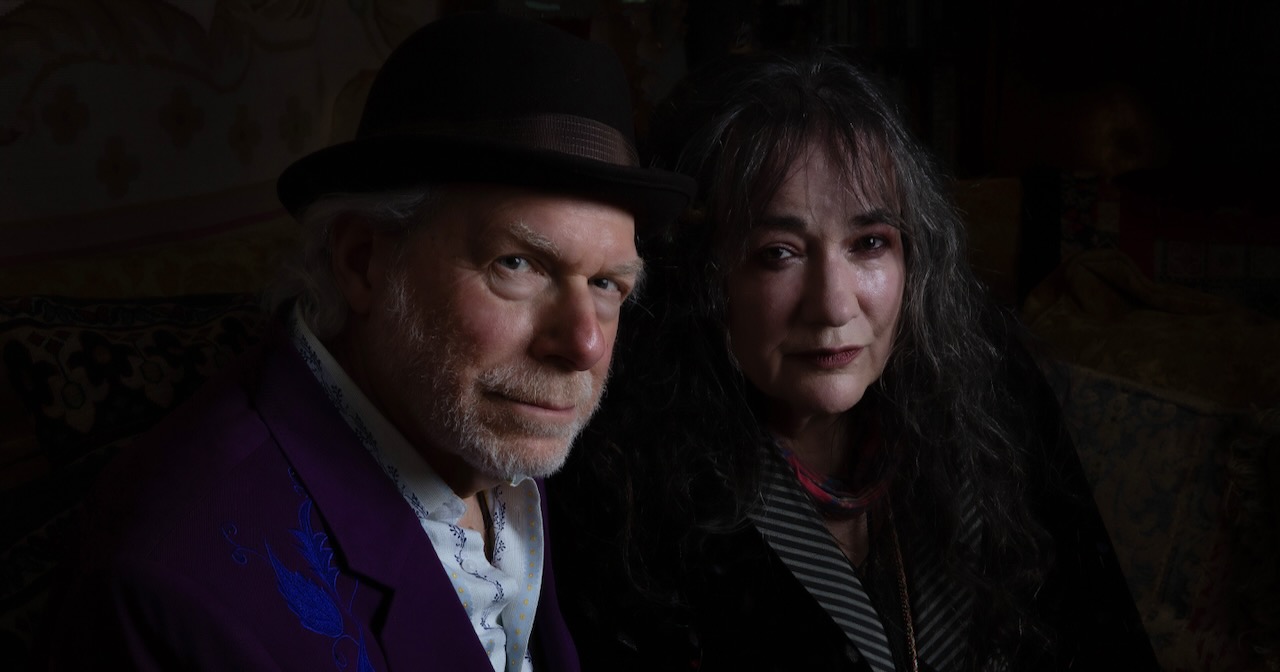
Deep in the throes of their multi-decade romantic and creative partnership, Buddy & Julie Miller continue to open their world to listeners with their fourth studio album, In the Throes. Entirely cooked within the walls of their home from song ideation to production, we get to hear their joyful admiration for each other alongside the frustrations of living, loving, and making music as a pair. There is still a youthful exuberance in the simplicity of the rhymes and meter that manages to capture subtle and profound aspects of life.

BGS caught up with the couple via phone at their home in Nashville to hear about the new album and their storied lives as co-creators.

What is the process of working together leading into production? How do you know when you have a Buddy & Julie Miller record?

Buddy Miller: Well, There have been records where we went into it thinking, let’s make a record. This one, we didn’t. We backed into it accidentally. We were wanting to do a gospel record with our friend Victoria Williams and our two friends Larry Campbell and Teresa Williams. Julie had written all these songs and then COVID hit. Victoria has M.S., and she lives in Joshua Tree. We realized, this isn’t worth killing Victoria for this record. We kind of put a hold on that and we had that song on the record called “We’re Leaving,” and it just kept going over and over in my head, and I loved it. Julie was just writing a ton of songs. I wanted to pilfer that song and use it as a cornerstone for this record. That’s the genesis of it.

Julie, I hear that these songs came from a profoundly creative writing time for you. What does your life look like when you are in the midst of a prolific creative output time?

Julie Miller: I don’t focus on it. It is more like, I’ll be going to the bathroom or walking to the kitchen or something, and I’m just humming something and it just kind of rumbles up in me. It comes out and my brain just says, “Oh, we are doing a record now, let’s think!” It turns on and starts thinking of subject matter. It is a real accidental sort of situation. I’m sure it is more purposeful than I realize. I am kind of closed off once it is hitting. I don’t talk to a lot of people for a while once I’m writing except for Buddy. I’ll get some musical thing in my mind and I can tell him how it goes, and he can play all the notes. He’s like my right-hand man.

Do you have a language that is only your own?

JM: Not exactly, not like that, but we understand each other. I understand him anyway. [Laughs]

Has that evolved a lot over time, how you communicate musically?

JM: Yeah, I’m more intuitive overall than he is. He is just really incredible. And I kind of prompt him on something I’m thinking, and he carries it away. I couldn’t imagine trying to work with anybody else. I just wouldn’t want to do it. He’s my team. We are really locked together on it.

In terms of the songs about relationships on this record, how autobiographical are they? You can feel the reverence and the frustration of being in a creative relationship.

BM: I was kind of a jerk to be in a band with, I think. I probably took things for granted. I would be insensitive enough on stage. I messed up our thing. She stopped playing. And then I took every gig that would come along, which was a lot. I didn’t expect it. At the time, I was playing with Emmylou, but then I got a lot of other production and tour offers. I left Julie at home for years. And that made her relationship with music and me something that needed to be repaired. So we started repairing it with the record before this.

And we spent a lot of time hanging out together and enjoying making the music together. By the time we were working on this, she was on a roll writing songs, and I just loved capturing them.

That’s really inspiring. Let’s be honest, when people hit walls in relationships or creatively, sometimes they quit. But pushing through it and finding healing through music, it’s awesome.

BM: Yes, and it happened through the music and spending time together. And me not taking any more outside work.

You can feel that. How autobiographical is this record?

JM: Well I guess every record is somewhat biographical. But there are certain songs that are pretty autobiographical, just emotions that I’ve been through that I turn into a song. I mean, “You’re My Thrill,” I was feeling it. I was feeling it about Buddy. And “In the Throes,” too. But “Don’t Make Her Cry,” now that was Bob Dylan. I can’t take credit for that line.

That’s a fun co-write!

JM: Oh yeah! I didn’t think I’d live that long. He and Regina [McCrary] are friends and they had this half a song sitting and he said, “Give it to Buddy.” And Buddy didn’t know what to do with it. But I knew what to do with it! I knew just what to do. I’m amazed now, when I look back, that I had the gall to do it. I had no fear or hesitation at all, just like it was anybody else. When I think about it now, I think, “What was I thinking!?”

This album feels like it was cut live, like I’m in the room with you when I’m listening. It seems rare these days that producers let the whole room into the record. I was wondering if you could talk about where you cut it and what the process was like for this one?

BM: The process was a little different, but we’ve made all our records at home. Back in our teeny weeny apartment in LA, Julie had a deal early on where they didn’t quite get the music and it wasn’t a good fit, but the person who signed her took her in the studio and quickly realized that they liked our home demos better. But we just had a little porta-studio. He gave what was left in the budget to buy a tape machine and a couple of mic pre-[amps] so we could do it ourselves. It was very kind of him, and it started us on our way of working together. We started on a four-track cassette, and then we graduated to a little reel-to-reel that had eight-tracks. But we have always made our records at home. Julie has always been super involved in every aspect, just the two of us.

Julie, what is recording like for you? Do you like the process?

JM: I do with Buddy. I don’t without Buddy. With Buddy I can yell. We have a studio downstairs, and we have one directly upstairs. There are pocket doors that open into the studio upstairs and so I sit on the bed and he sits in the actual producer’s chair with all the instruments around and we just play. I’ll have an idea to have him play and then he’ll play something and I’ll go, “Wait! Listen to that! Play that again!” We just play off of each other a lot. He lets me have as much leeway on the songs as I want, but then where I leave off, he is more than there to take it up. He blows my mind. I just can’t believe how fortunate I am to have someone like that to work with. But it is a joy. I don’t really like recording singing that much. It is tedious. It used to be easier. It is harder singing now.

Can I ask you what is harder about it?

JM: Well, I just don’t do it as much. I have this condition called fibromyalgia. It is a pain condition that affects your muscles. It goes into my jaw and under my tongue, and if I use it very much, it gets stiff and paralyzed. It is a good thing we do it at home. I have this concoction made out of tomato soup and hot sauce. Emmylou would have lemon and Altoids, and I have hot sauce and tomatoes.

Well, for what it is worth, one of the notes I made about this record was how exuberant and youthful your voice sounds.

JM: Thank you! I’ll chalk it up to immaturity.


Photo Credit: Jeff Fasano
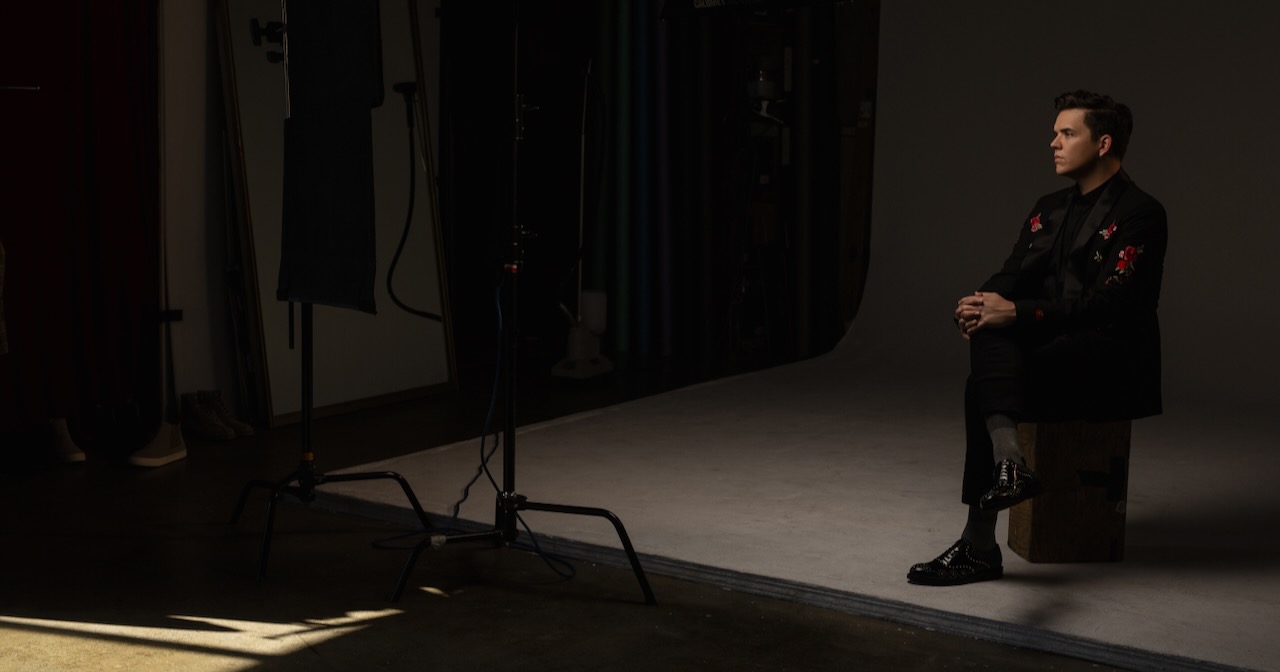
STREAM: Ira Wolf, ‘Rock Bottom’

Artist: Ira Wolf
Hometown: Montana
Album: Rock Bottom
Release Date: October 13, 2023
Label: Nettwerk Music Group

In Their Words: “When I began writing Rock Bottom, over a year had passed since the onset of the pandemic. Every piece of my life had been affected. It felt like I had lost everything that once gave my existence meaning: My career as a touring musician, my nomadic way of life, my passion, my sense of community, and finally, my person. I was alone for the first time in almost five years after calling off my wedding and leaving an unhealthy relationship that had wreaked havoc on my mental health. As I sat by myself in the van amidst the red rocks of the Utah desert, I couldn’t fathom how things could deteriorate further from where they stood, amidst the depths of sorrow that paradoxically offered some solace. ‘If this is rock bottom, at least I’m on solid ground,’ I mused, finding a semblance of stability in the sentiment. I knew healing would take time, and writing and recording these songs helped me process an immense amount of grief in the way I needed – slowly, viscerally. It helped me feel everything, say everything, forgive everything, and in doing so it helped me find a way back to myself.” – Ira Wolf


Photo Credit: Kendall Rock