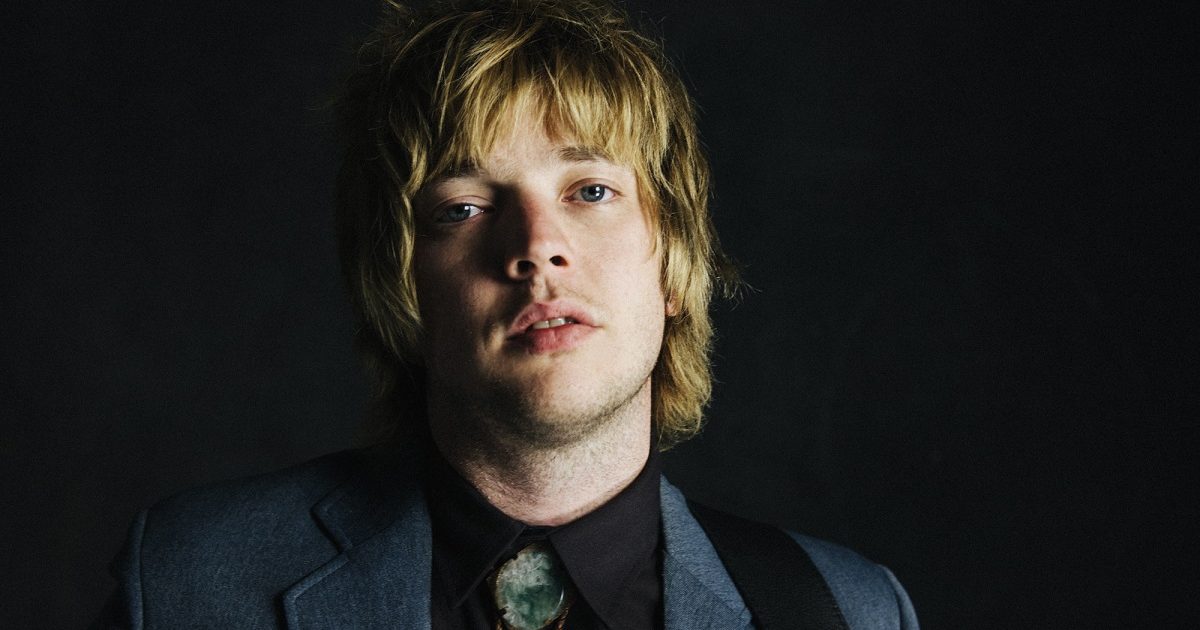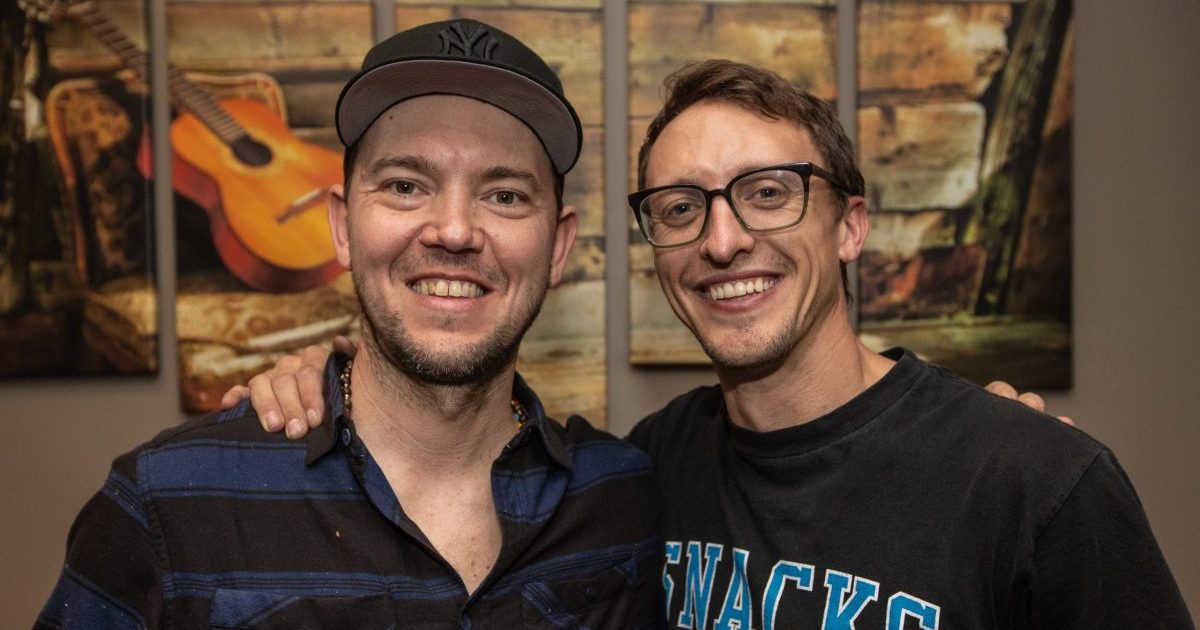
LISTEN: Ethan Setiawan, “Uncrossed”

Artist: Ethan Setiawan
Hometown: Goshen, Indiana; now Portland, Maine
Song: “Uncrossed”
Album: Gambit
Release Date: March 31, 2023
Label: Adhyâropa Records

In Their Words: “‘Uncrossed’ is my attempt at writing a somewhat friendly fiddle tune. It came out of my experience creating my first record, Flux. It sums up most of what was going on in my head in 2017. I can look at most of those tunes and point you back to a Matt Flinner tune or a Béla Fleck tune that I drew inspiration from, but it feels more like a school project to me, something that I set out to do with a specific goal in mind, whereas Gambit feels more like my own artistic statement. What I love about the album is that the sum of it is greater than its parts. It starts with an introductory meditation, and it moves through a Swedish tune, a real jammy number, some more jazz, and new age-influenced pieces, as well as the old-time and bluegrass elements. It’s not one thing, it’s a whole record.” — Ethan Setiawan


Photo Credit: Louise Bichan

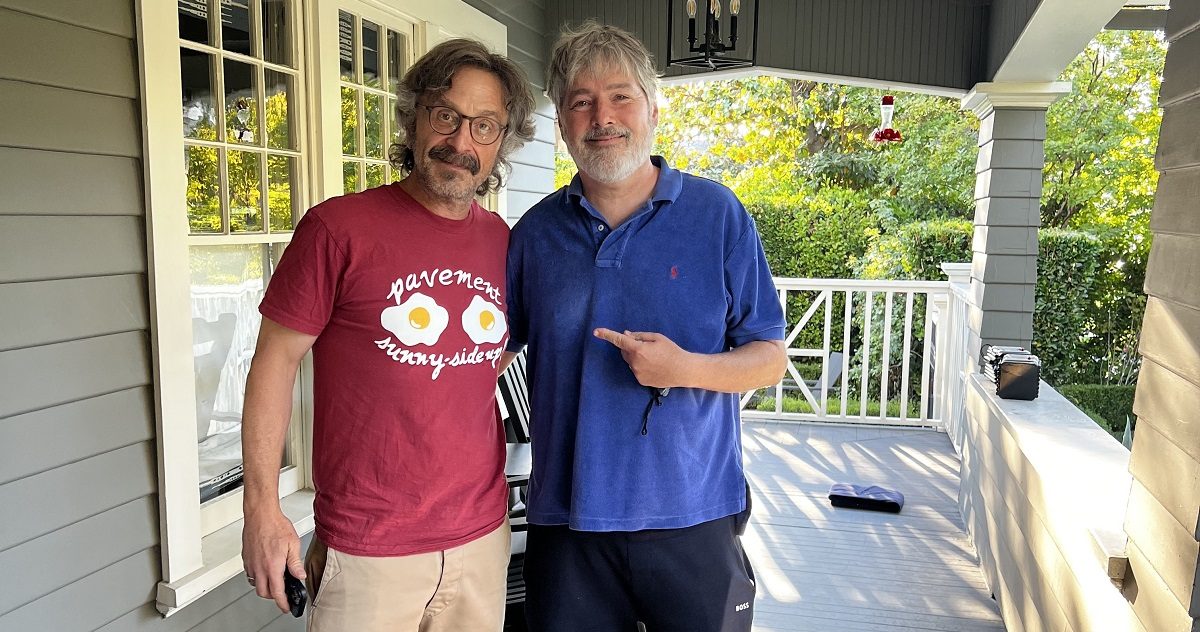
Béla Fleck Talks Banjo, Bluegrass Gatekeepers on ‘WTF With Marc Maron’

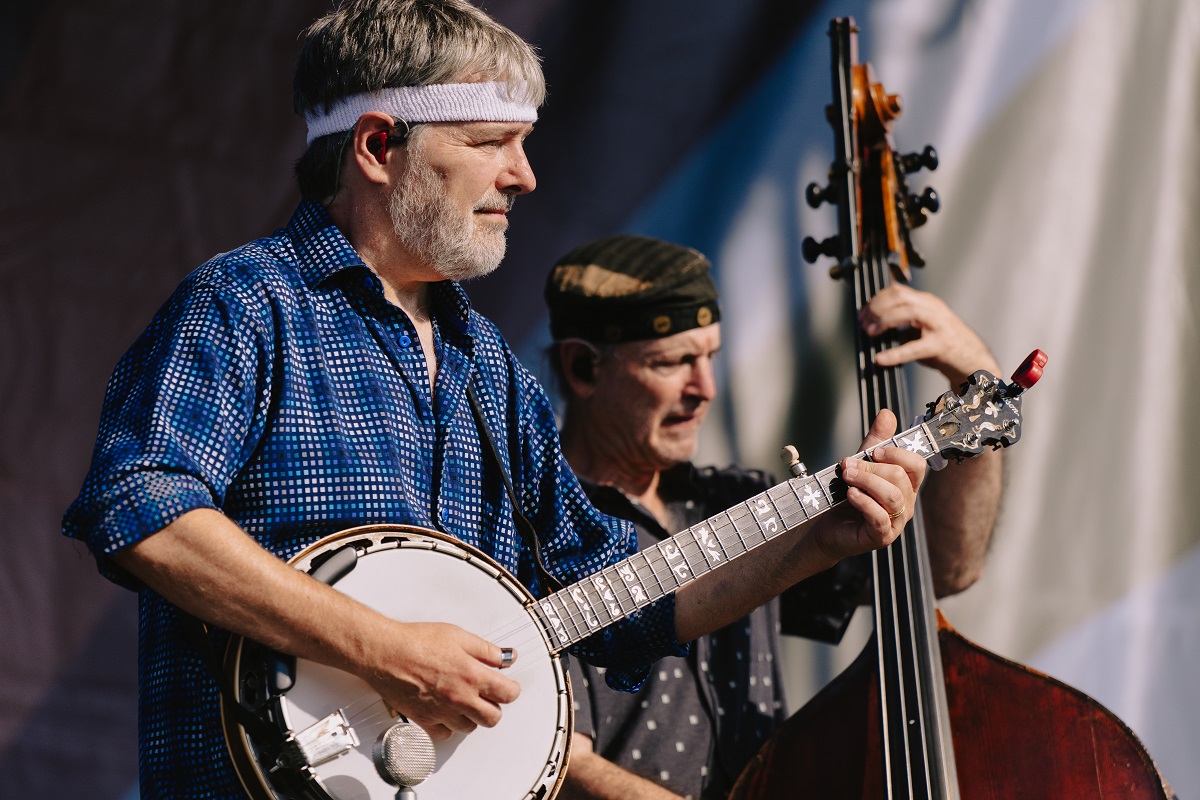
Since the 1970s, Béla Fleck has put his own mark on nearly every kind of music, from bluegrass and classical, to jazz and Latin, not to mention the exceptional albums with Indian and African roots. That can make him a hard guy to interview because there’s just so much to cover. Fortunately, accomplished podcast host Marc Maron is up for the task.

In this wide-ranging interview that lasts roughly an hour, Fleck talks about growing up in New York City, and meeting his birth father much later in life. Leaning heavily on Fleck’s origin story, the conversation explores the musician’s earliest experiences with the banjo, and as the visit continues, it’s clear that he is a lifelong advocate for the instrument, insisting since he was a child that people should take the banjo seriously. The conversation also touches on the important musicians that inspired him along the way, such as Earl Scruggs, Tony Trischka and Tony Rice. (Fleck describes playing on Rice’s album Cold on the Shoulder as “one of the greatest experiences ever.”)

In the fast-moving conversation, one fleeting moment gives further insight into Fleck’s approach to music. About halfway into their visit, Fleck addresses Maron’s self-confessed limitations on guitar. “Fast fingers is not necessarily the only goal,” Fleck responds. “It’s supposed to be an expression of you, and who you are. That’s what music is.”

Near the end, Fleck admits that he avoided bluegrass for a long time as his career progressed, reveals a couple of his upcoming projects, and talks about his family life with wife Abigail Washburn and their two kids. Whether you’re a lifelong fan or new to bluegrass, you’ll want to hear the full conversation between Béla Fleck and Marc Maron below.

Béla will be on the road throughout 2023, including a duo run in the northeast with Abigail Washburn October 14–30, and co-bills with his My Bluegrass Heart band and Punch Brothers. Dates and tickets can be found here.


Photo Credit: Amy Reitnouer Jacobs

Billy Strings, Béla Fleck, Dolly Parton Win IBMA Bluegrass Music Awards

Three of the most innovative artists in roots music — Billy Strings, Béla Fleck, and Dolly Parton — were revealed as IBMA Bluegrass Music Award winners on Thursday night (September 29) in Raleigh, North Carolina.

Billy Strings received the coveted Entertainer of the Year Award for the second year in a row, along with Song of the Year honors, at the 33rd Annual IBMA Bluegrass Music Awards Presented by Yamaha. In addition, Béla Fleck claimed awards for Album of the Year, Instrumental Group of the Year, Instrumental Recording of the Year, and Banjo Player of the Year. Dolly Parton’s recent recording of the gospel classic “In the Sweet By and By,” featured on the 2021 Country Faith Bluegrass album, won Gospel Recording of the Year and Collaborative Recording of the Year honors.

Other familiar musicians to win awards include Sierra Hull, Bronwyn Keith-Hynes, Cody Kilby, Doyle Lawson & Quicksilver, Del McCoury, Justin Moses and Molly Tuttle. Rick Faris was named New Artist of the Year. Jason Moore, a member of Sideline who died of a heart attack last November at age 47, was named Bass Player of the Year. Previously announced inductees into the Bluegrass Music Hall of Fame are beloved instrumentalist and vocalist Norman Blake, broadcast pioneer and recording artist Paul “Moon” Mullins, and eclectic, influential singer-songwriter Peter Rowan. Hosted by Ronnie Bowman and Dan Tyminski, the show was held at the Duke Energy Center for the Performing Arts.

The recipients of the 2022 IBMA Bluegrass Music Awards are:

ENTERTAINER OF THE YEAR: Billy Strings
(Editor’s Note: Read our BGS Artist of the Month interview with Billy Strings.)

SONG OF THE YEAR: “Red Daisy,” Billy Strings
Written by Jarrod Walker/Christian Ward

ALBUM OF THE YEAR: My Bluegrass Heart, Béla Fleck
(Editor’s Note: Read our BGS Artist of the Month interview with Béla Fleck.)

INSTRUMENTAL GROUP OF THE YEAR: Béla Fleck My Bluegrass Heart

INSTRUMENTAL RECORDING OF THE YEAR: “Vertigo,” Béla Fleck featuring Sam Bush, Stuart Duncan, Edgar Meyer, and Bryan Sutton

VOCAL GROUP OF THE YEAR: Doyle Lawson & Quicksilver
(Editor’s Note: Read our BGS interview with Doyle Lawson.)

NEW ARTIST OF THE YEAR: Rick Faris
(Editor’s Note: Watch the BGS video premiere of “Deep River.”)

COLLABORATIVE RECORDING OF THE YEAR: “In the Sweet By and By,” Dolly Parton with Carl Jackson, Larry Cordle, Bradley Walker, and Jerry Salley

GOSPEL RECORDING OF THE YEAR: “In the Sweet By and By,” Dolly Parton with Carl Jackson, Larry Cordle, Bradley Walker, and Jerry Salley

FEMALE VOCALIST OF THE YEAR: Molly Tuttle
(Editor’s Note: Read our BGS interview with Molly Tuttle.)

MALE VOCALIST OF THE YEAR: Del McCoury
(Editor’s Note: Read our BGS interview with Del McCoury.)

BANJO PLAYER OF THE YEAR: Béla Fleck

BASS PLAYER OF THE YEAR: Jason Moore

RESOPHONIC GUITAR PLAYER OF THE YEAR: Justin Moses

FIDDLE PLAYER OF THE YEAR: Bronwyn Keith-Hynes

GUITAR PLAYER OF THE YEAR: Cody Kilby

MANDOLIN PLAYER OF THE YEAR: Sierra Hull


Photo Credit: Joshua Wilkins Black

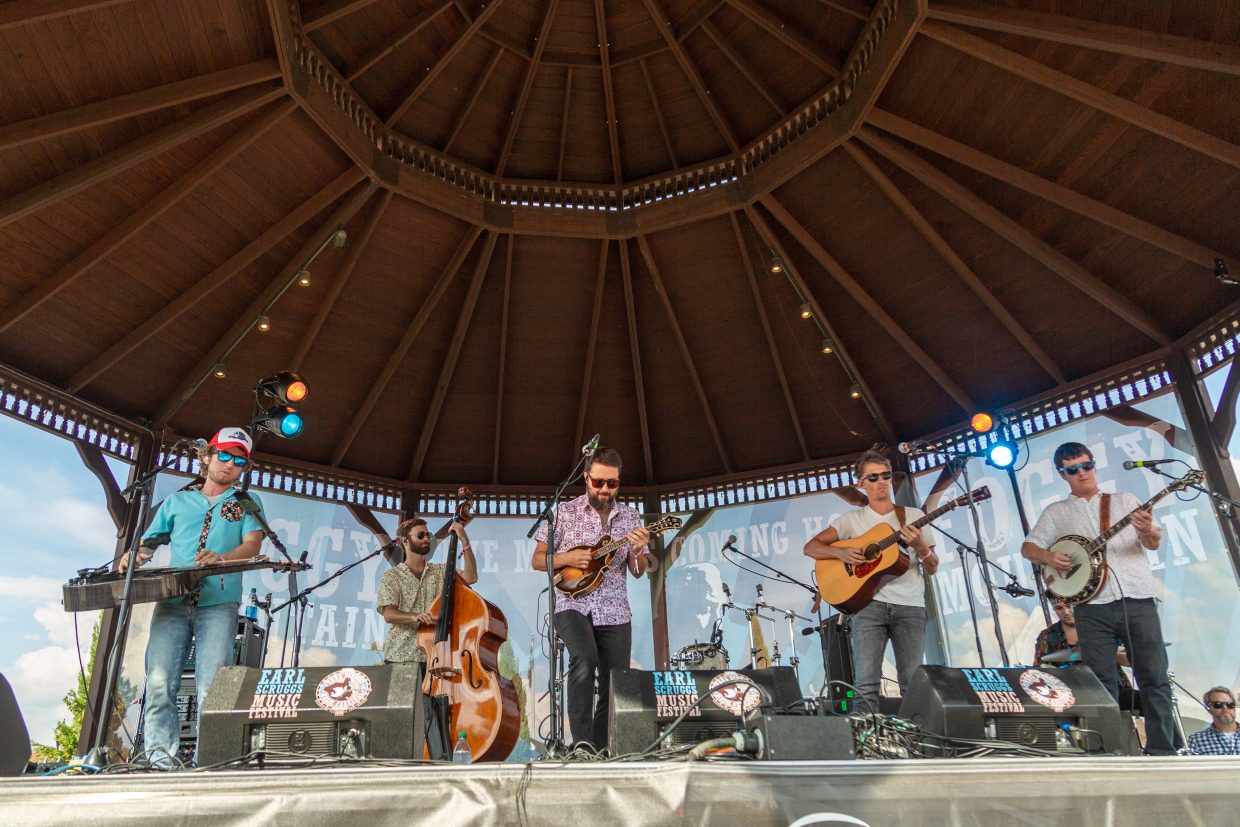
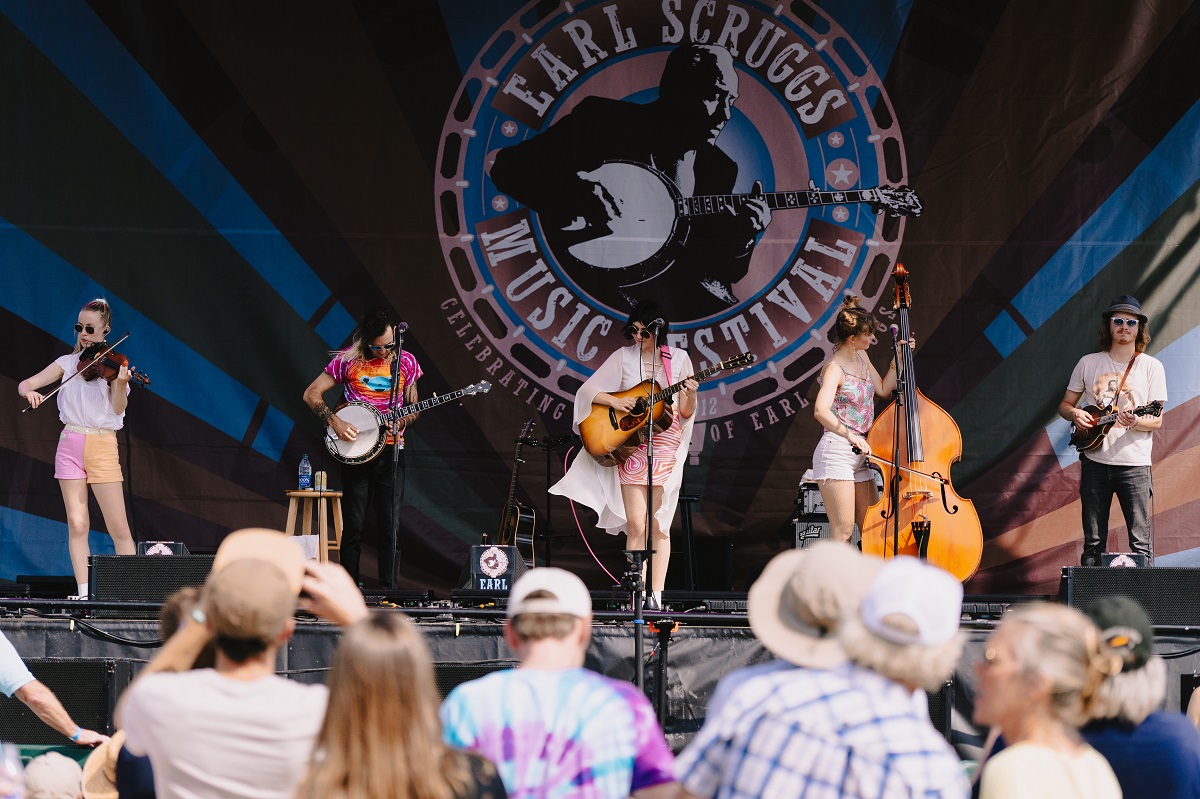
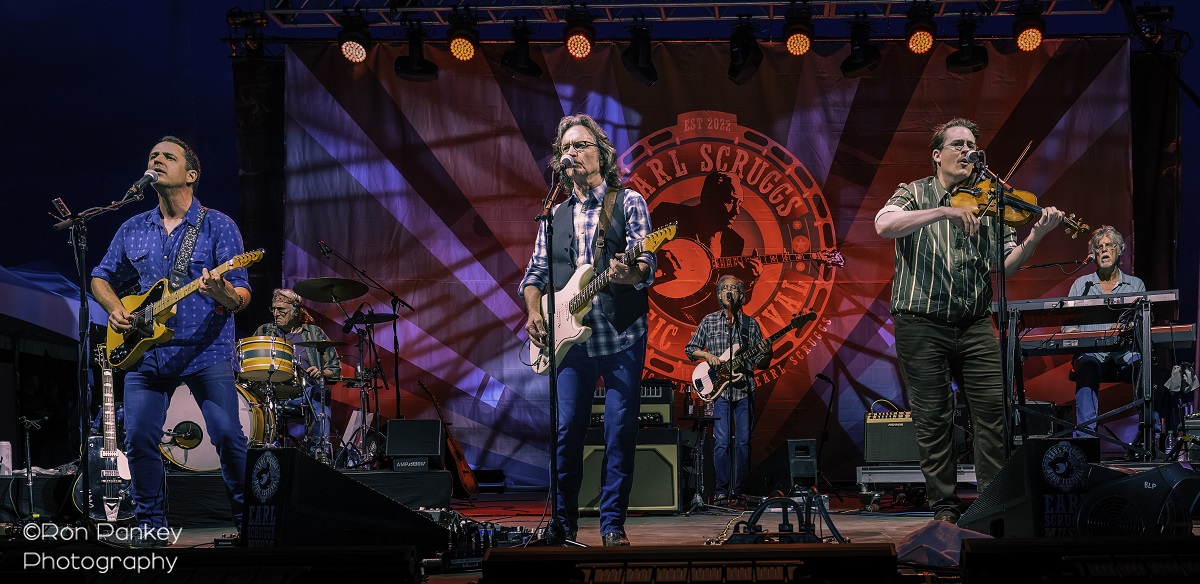
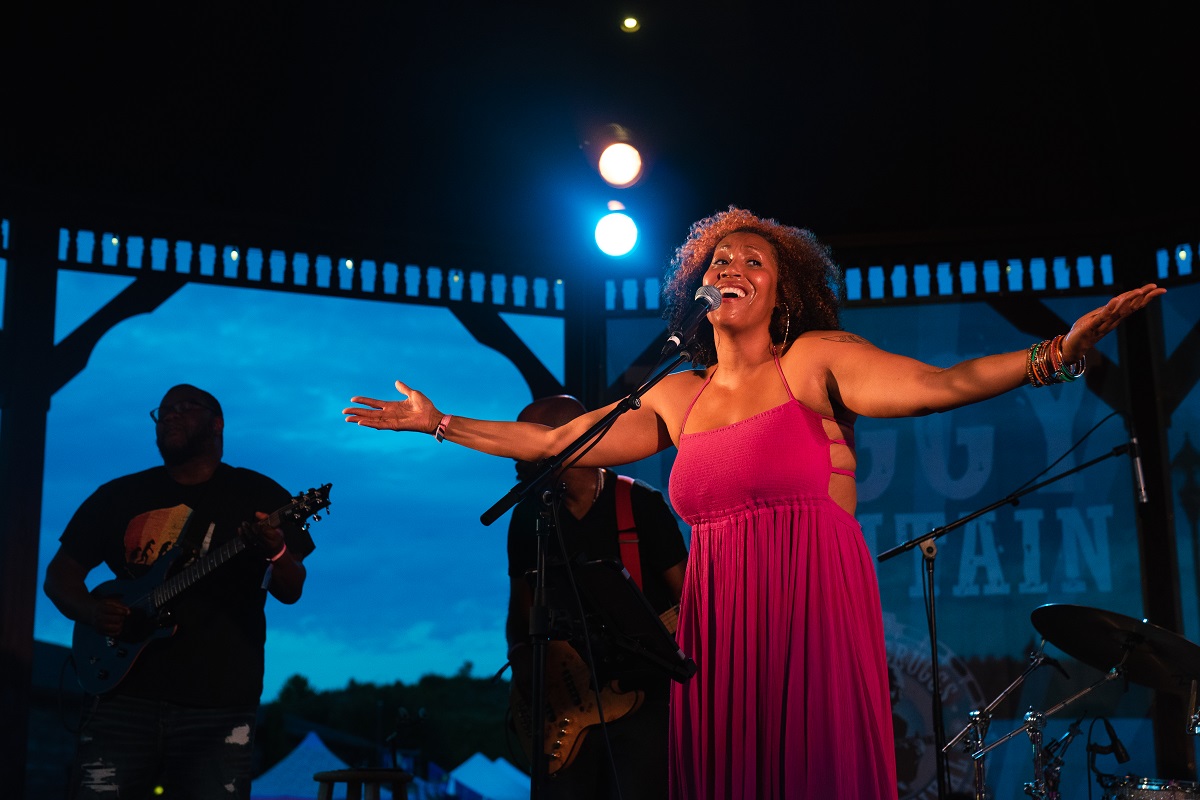
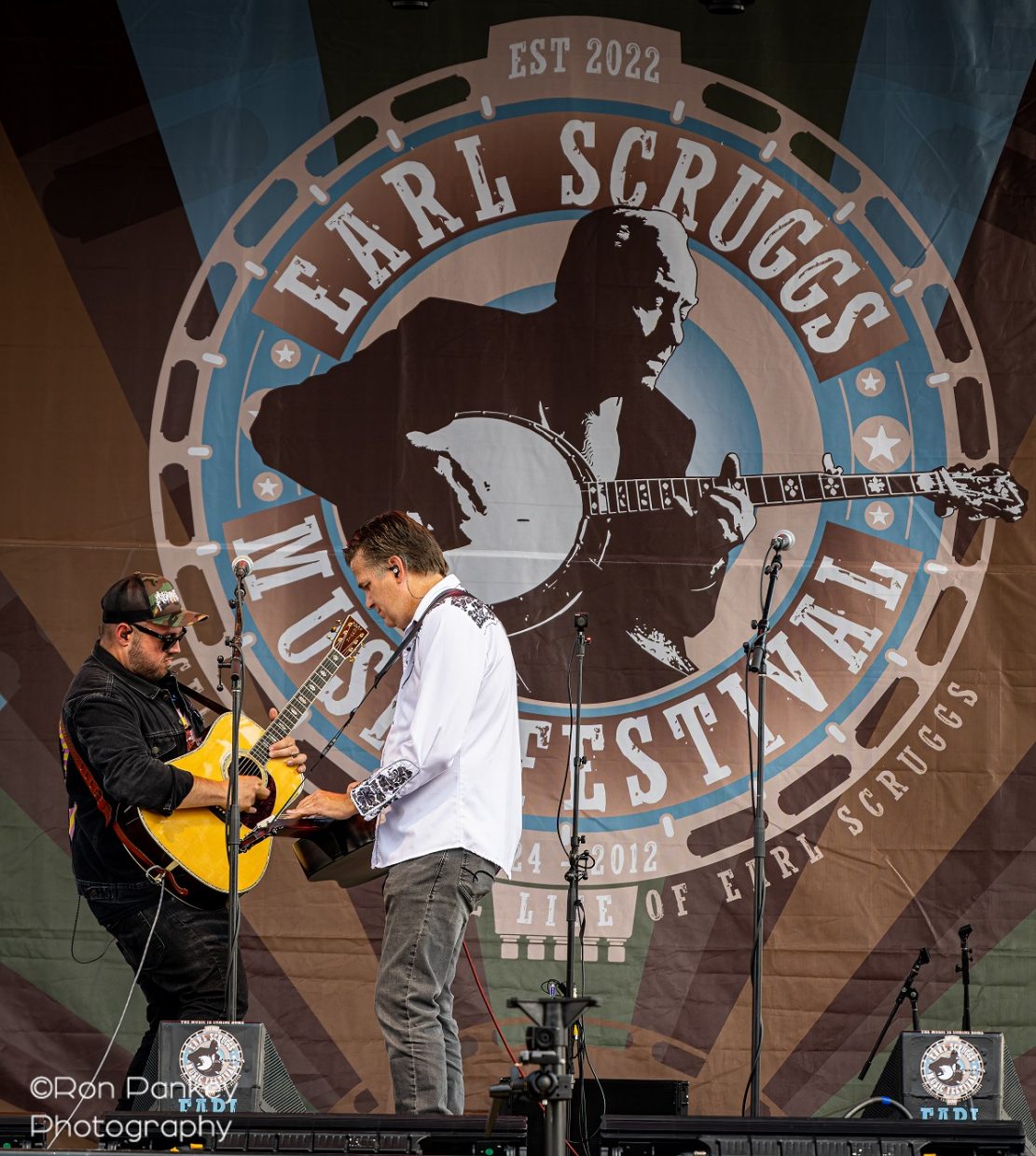
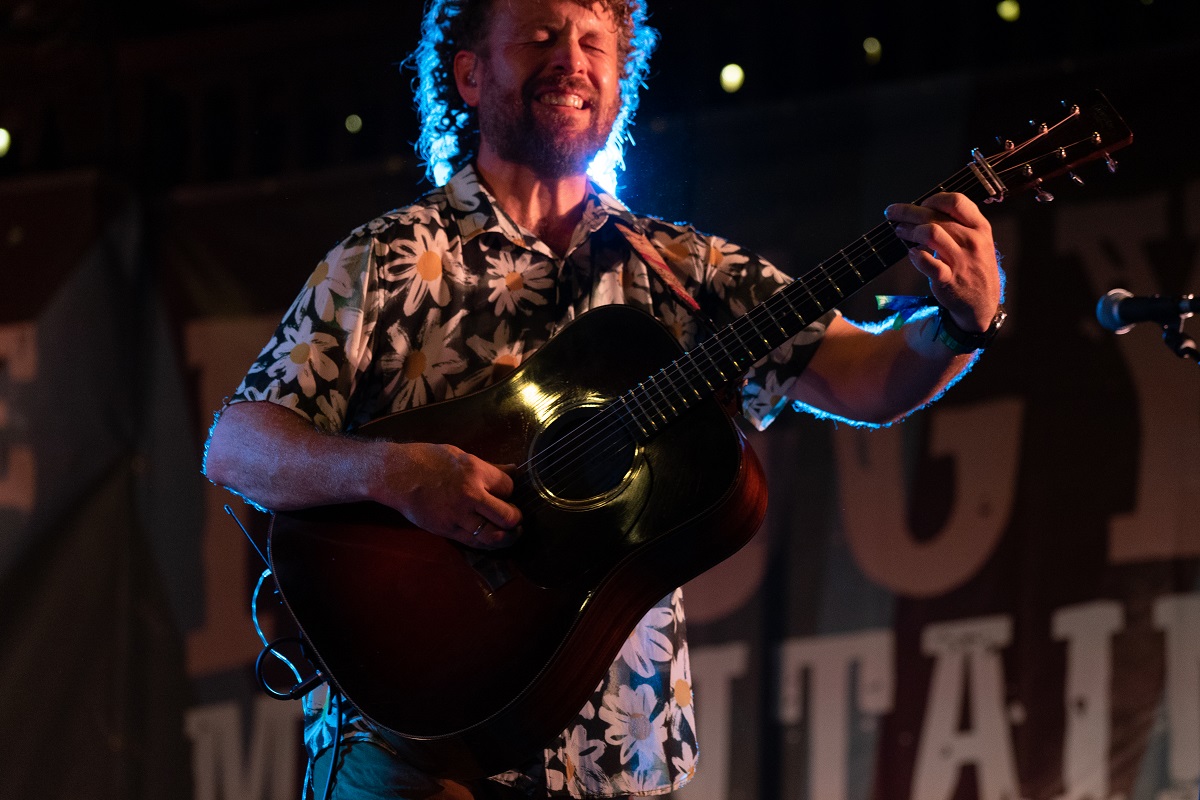
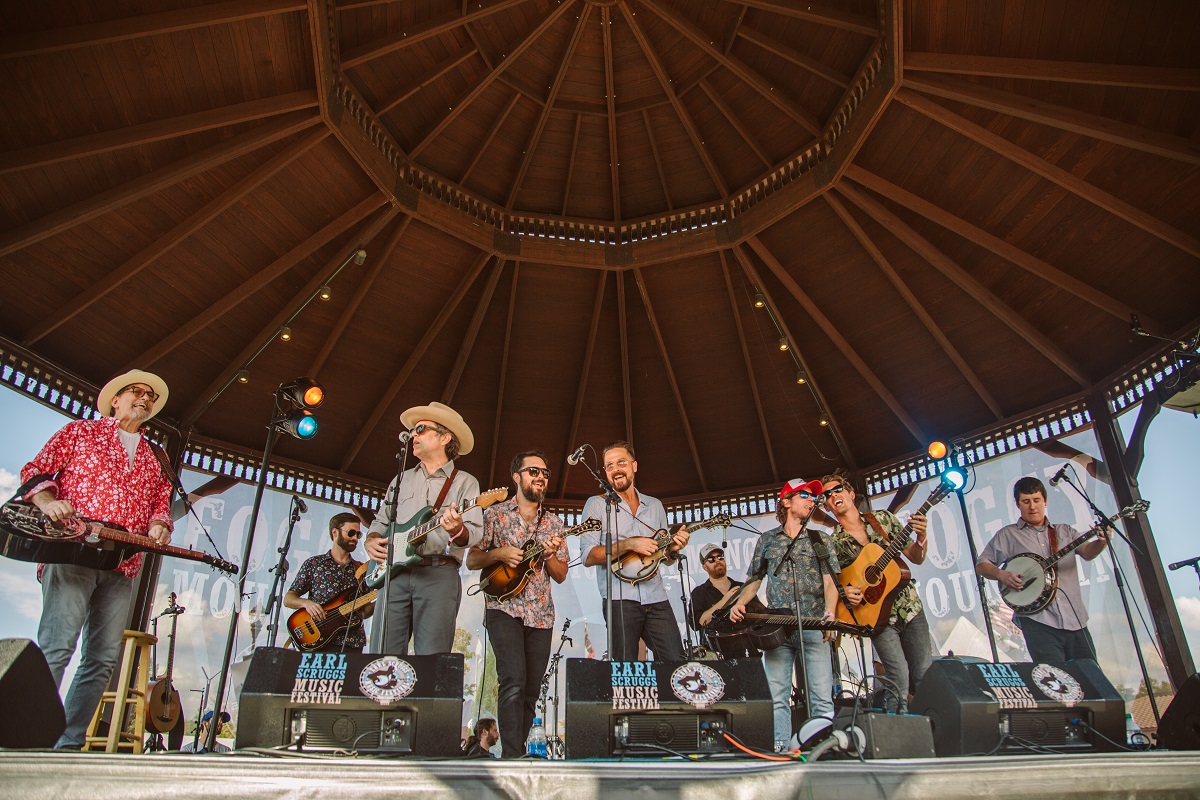
Photos: Sam Bush, Béla Fleck, and More Perform at Earl Scruggs Music Festival

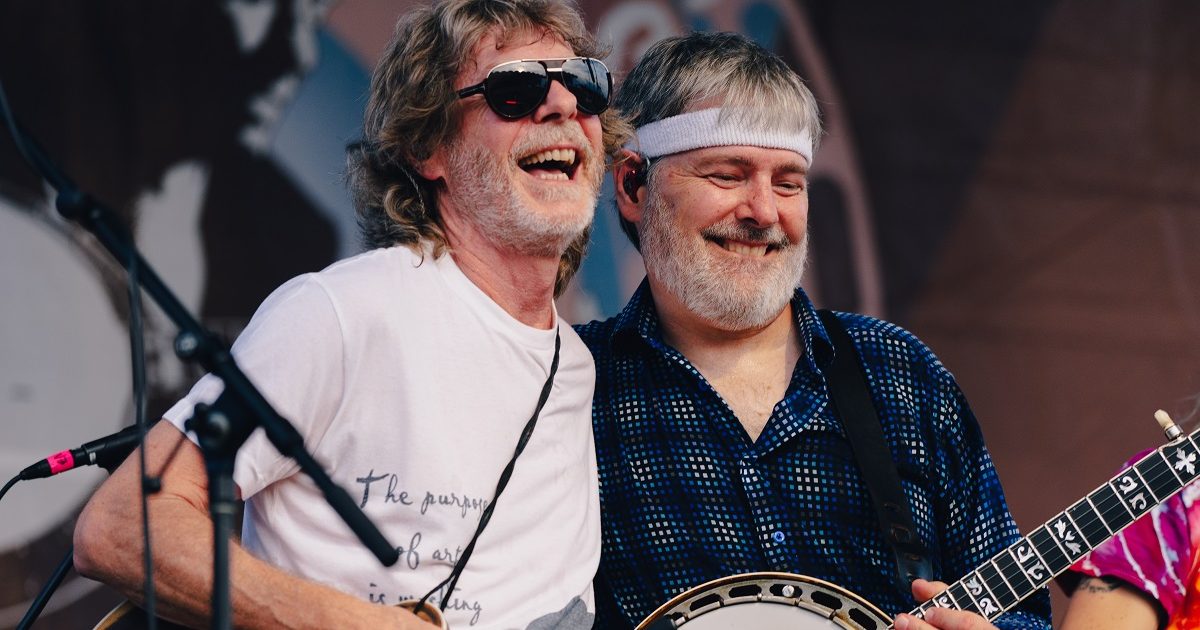
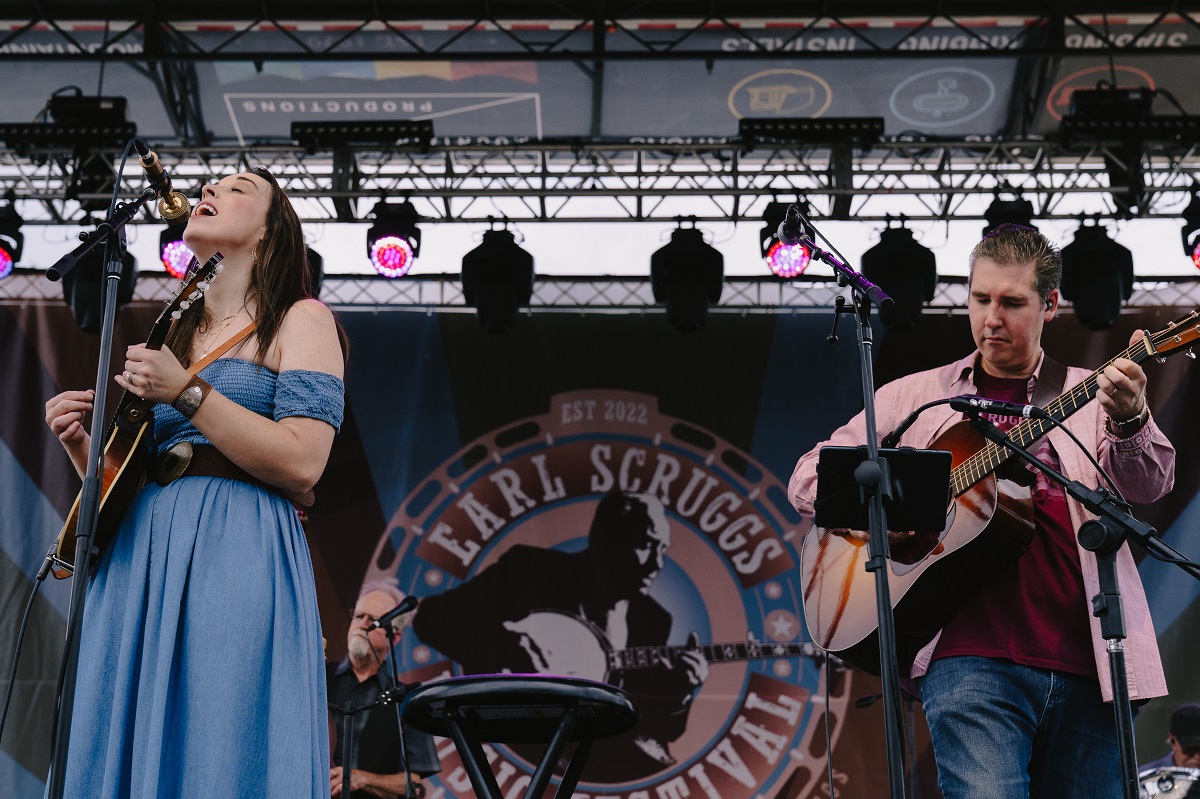
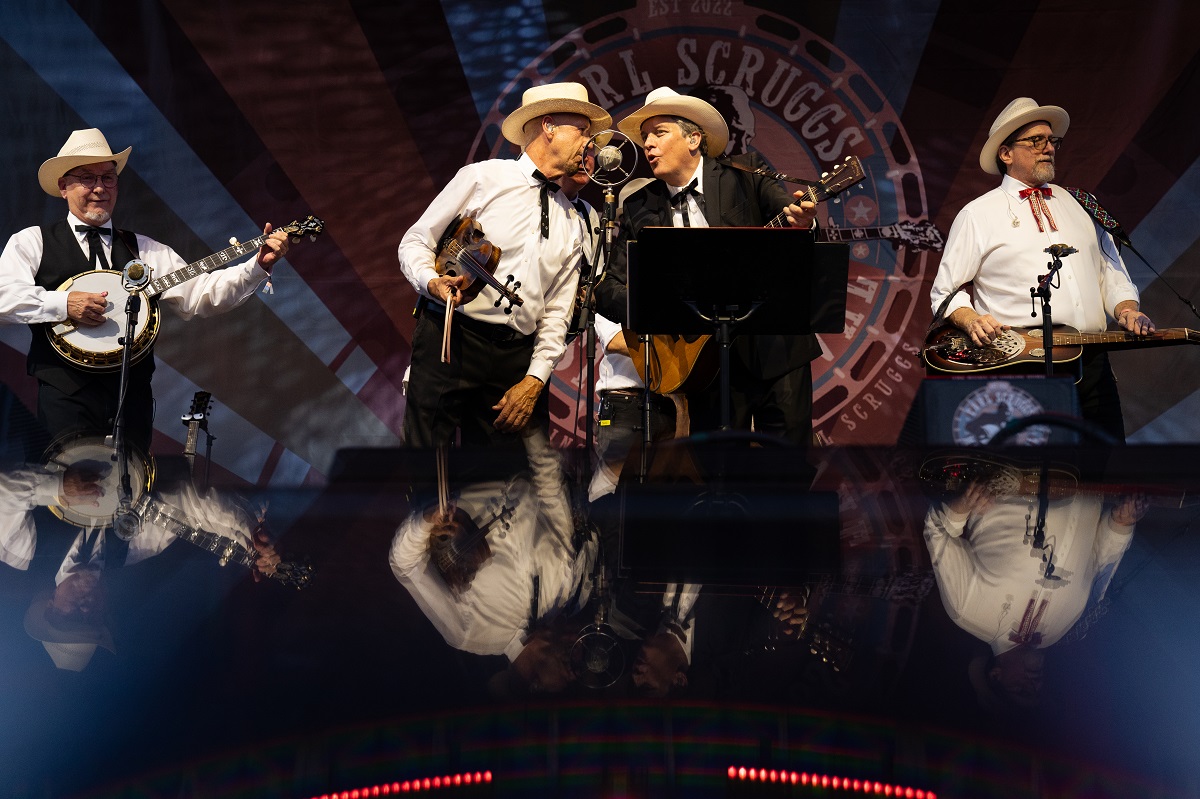
Banjo hero Earl Scruggs received a rousing tribute near his North Carolina hometown over Labor Day weekend, bringing together bluegrass stars like Sam Bush, Béla Fleck, Molly Tuttle & Golden Highway, and many others. The inaugural event took place Sept. 4 to 6 in Tryon, about 30 miles from the Earl Scruggs Center in Shelby. Scruggs, who died in 2012, was raised in the small Flint Hill community nearby, and remains one of the most pivotal figures in bluegrass.

Enjoy photos from the inaugural Earl Scruggs Music Festival below. (Photos by Eli Johnson unless otherwise noted.)

Darin & Brooke Aldridge


Alison Brown


Becky Buller


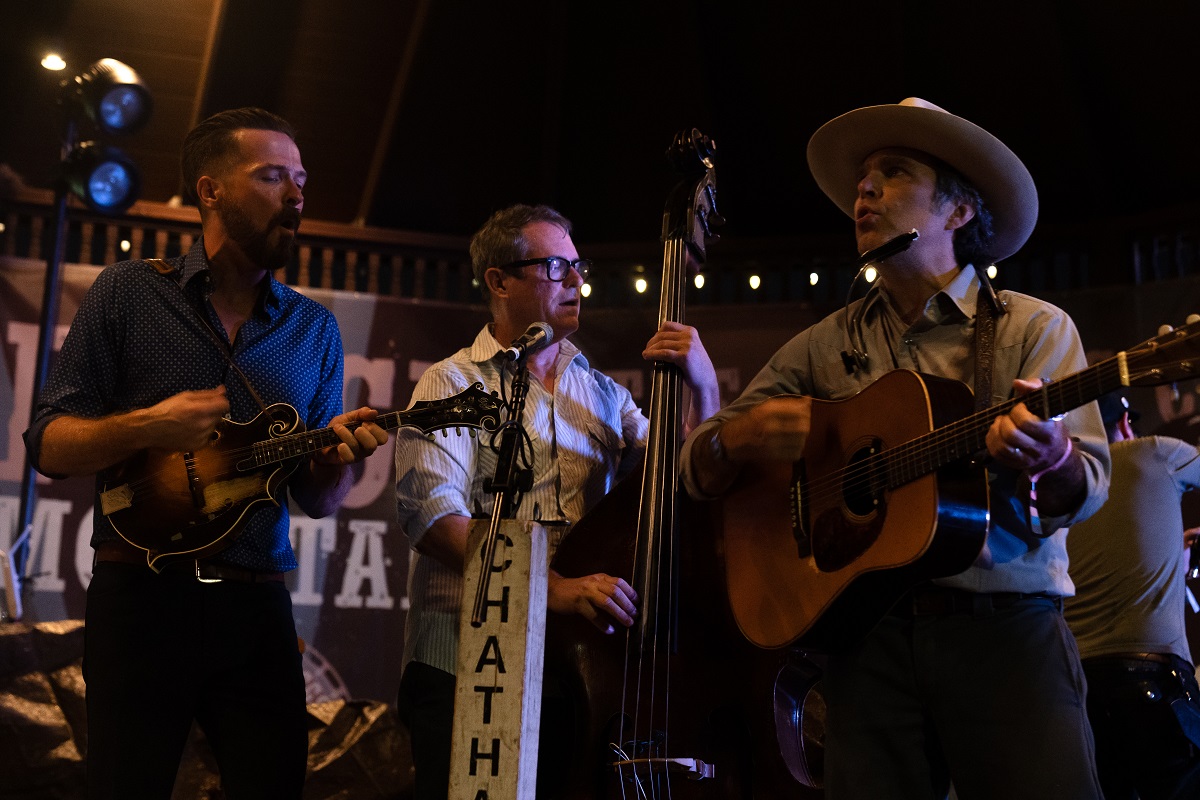
Chatham County Line


The Earls of Leicester


Fireside Collective
Photo by Tori Marion


Béla Fleck with Mark Schatz


Andy Thorn of Leftover Salmon


Molly Tuttle & Golden Highway


Nitty Gritty Dirt Band
Photo by Ron Pankey


Rissi Palmer


Rob Ickes & Trey Hensley
Photo by Ron Pankey


Jon Stickley


Town Mountain


Unspoken Tradition


Fireside Collective hosts a collaborative performance of the 1972 album Earl Scruggs Revue: Live at Kansas State played in its entirety, sponsored by The Bluegrass Situation
Photo by Toni Marion


Wes Corbett’s Banjo Needs: 10 Songs That Make Him Happy

Wes Corbett is a banjo player who wears many hats. The self-described “musically omnivorous bluegrass musician” is a true multi-hyphenate: 5-string aficionado (having released his solo album Cascade back in 2021), producer, former professor at Berklee College of Music, and musician with the likes of Joy Kills Sorrow, Molly Tuttle, and most recently Sam Bush Band.

Before hitting the road again with Sam Bush, the Washington native shared an exclusive playlist for BGS of “Wes Corbett’s Banjo Needs,” or as he puts it: the official home of all the songs that take him to his “happy place.”

“Fortune” – Adam Hurt


“Sliding Down” – Béla Fleck, Edgar Meyer, Mike Marshall


“Saint Elizabeth” – Kaia Kater


“The Hunt” – Kristin Scott Benson


“Milford’s Reel” – Noam Pikelny


“Your Love Is Like a Flower” – Flatt & Scruggs


“Come Back Darlin’” – The Bluegrass Album Band


“Poe’s Pickin’ Party” – Alison Brown


“The Over Grown Waltz” – Béla Fleck


“Goodbye, Honey, You Call That Gone” – Jake Blount


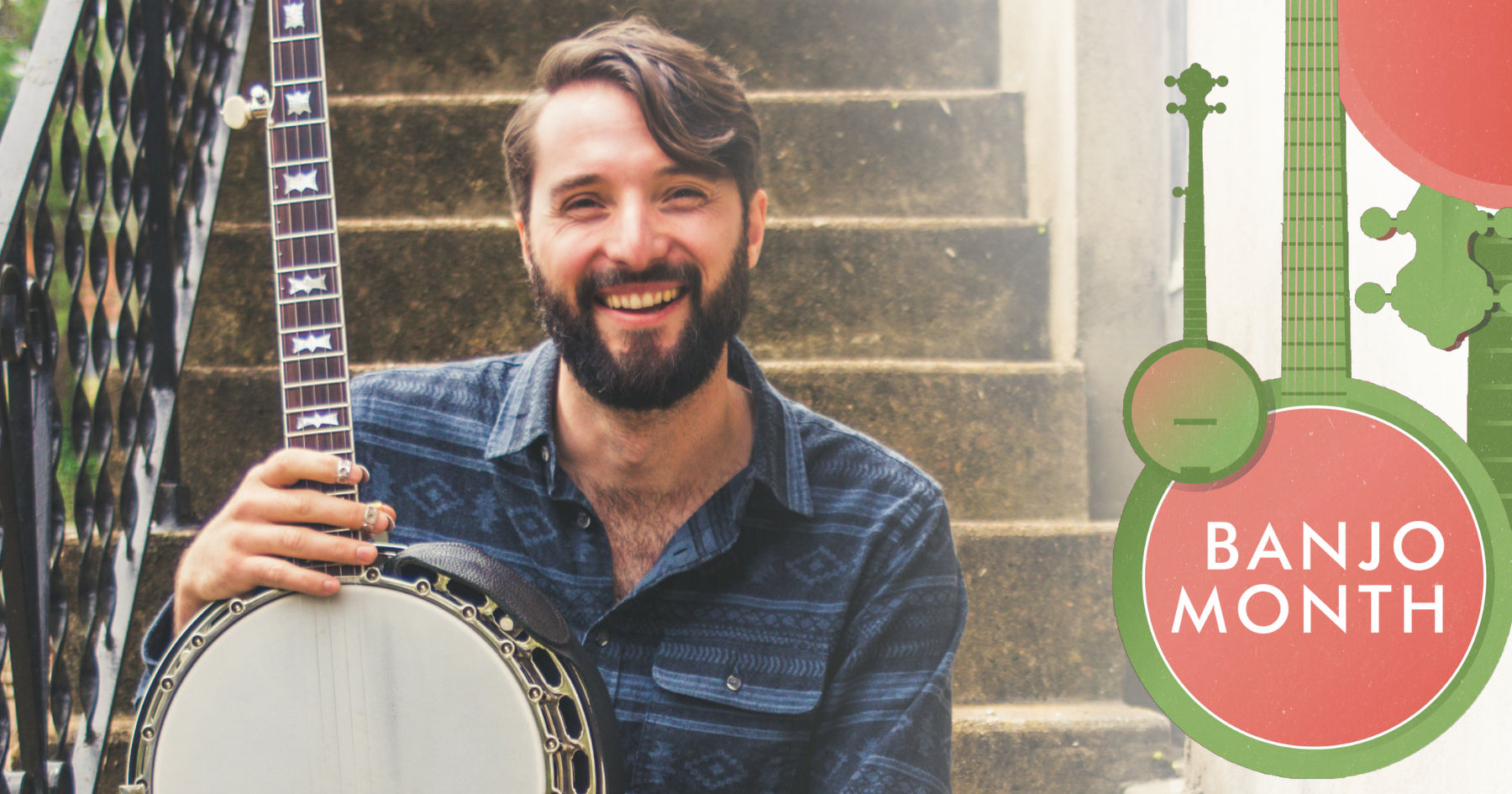
We’re giving away a Recording King Songster Banjo in honor of Banjo Month! Enter to win your very own RK-R20 here.

Chris Pandolfi and Drew Becker Embrace the Infamous Stringdusters’ Side Hustles

The Infamous Stringdusters have been together for close to two decades, and one big reason for their longevity is that everyone gets the chance to step out with side-hustles and solo projects. Even live sound engineer Drew Becker has one – a side business to market one of his inventions, a device that reduces volume on a vocal microphone when the singer walks away.

“That’s my baby,” Becker says, “and I hope to see one on every stage in the future.”

Multiple Stringdusters members are putting out solo albums this year, including banjo player Chris “Panda” Pandolfi, who also makes soundtrack music. But his primary extracurricular project is a podcast, Inside the Musician’s Brain, currently in its third season on Osiris Media.

“It’s deep-dive interviews, musician to musician,” he says. “Béla Fleck was my last guest and Aoife O’Donovan was the guest before. Billy Strings, Trampled by Turtles, Sierra Hull, too. It’s an awesome outlet to take fans deeper inside the music.”

The band’s 2021 release, A Tribute to Bill Monroe, will compete in the category of Best Bluegrass Album Grammy Award in the ceremonies in Las Vegas on April 3. Meanwhile, to commemorate the release of their new project, Toward the Fray, we’ve been catching up with all of the Stringdusters – our BGS Artist of the Month for March – for a series of three conversations from the road. Read part one with Dobro player Andy Hall and guitarist Andy Falco. Read part two with fiddler Jeremy Garrett and bassist Travis Book. Here is part three with Becker and Panda.

BGS: Drew, how long have you been the Stringdusters’ live engineer?

Becker: Since 2008, the van and trailer days, and we’ve just been working our way up to where it’s logistically easier and more efficient. They were my first professional job outside the bar gigs I’d been working through college going to sound school. We’ve grown together technically through the development process, figuring out ways to put on better shows on a night-to-night basis. It’s a learning process, one puzzle piece at a time. You fix one thing, and that might create something else that needs improvement. I do sound for just the live thing. Early on, I’d hang with them in the studio, too, just because it was awesome and I wanted to absorb anything I could about the process. But studio and live are totally different teams and skill sets. Like spray-painting versus watercolor, both are painting and some of the tools might be the same. But it’s totally different skills.

Panda, we heard you’ve been dealing with banjo issues today.

Pandolfi: It went out during last night’s show! Something was wrong with the pickup within the instrument.

Does that happen often?

Becker: Not often, fortunately. For a pickup to melt down, like three other things have to go wrong before that. This is kind of the worst-case scenario, where it’s not totally dead. It works for soundcheck and maybe even a full show, then presents issues the first song the next night. You spend hours troubleshooting, it solves itself, fails again. Then you call every music store in Atlanta and drive 30 minutes to get the one pickup you need.

Panda: It’s kind of an anomaly. Electronics, nothing to do with the instrument. Part of the bluegrass world we’re in is having to amplify acoustic instruments to create a huge sound. These are instruments that weren’t necessarily designed for that, so it’s an imperfect science with limitations. It takes a lot of time and energy for us to perform bluegrass in big venues for big crowds and we’re always trying to do better at it. Some nights work, some don’t.


Do you have just one banjo you play all the time, or a lot of instruments?

Panda: I collect old Gibson banjos from the 1930s, the heyday. From 1929, when they settled on the modern flathead design most players use, to 1939 when metal had to go into the war effort, and they never regained their former glory. Anything from the 1930s is coveted and I have a bunch of those. Eight right now, I think. It’s always hovering between seven and 10 or 11. I’ll sell one, buy another. I’m not in it to make money, but I love them and know what I’m seeing when I look at one. I like to get them into the hands of younger players who may not be as versed in the marketplace but want these banjos because they’re special.

Who would you both cite as mentors?

Panda: My biggest inspiration is Béla Fleck. I did not know anything about bluegrass before I heard the Flecktones. That’s what introduced me to banjo. I worked backwards from there, to Earl Scruggs and Tom Adams. Those two and Béla are my top three influences. Tony Trischka, Bill Evans and Ron Block are good friends and mentors I call on for advice about music and life. I’m lucky to call those guys friends.

Becker: Early on, a lot of my mentors were in Nashville working with bands in our acoustic genre as we grew. Bands headlining festivals, their engineers mentored me. As I’ve grown in this genre, I’ve looked outside bluegrass to pick up lessons and techniques from rock or electronic music. Learn to understand PA systems and how to optimize musical spaces. It’s a challenge, figuring out how to amplify acoustic resonant bodies on a stage 10 or 15 feet from the PA speaker.

I’ve heard about the show-and-tell sessions with songs before recording. Is there a live-show equivalent to that before tours?

Panda: We go through a big process of arranging songs for the band to make them quintessential Stringdusters songs. The focus first is the studio, making the album. Then there’s usually a long lag time before they come out. They might sit there for a year before we play them live. Then we have to rediscover and relearn the material for the stage, learn what works and how to translate them. I make the set list, divvying up singers and instrumental features with transitions, so there’s a process of understanding how the new songs fit in with the whole other step that happens much later than the record. Drew will have to work to replicate things from the album, and it’s always evolving.

Becker: Throughout my 14 years, some records have come out with material they’d already been playing live for months. That’s not happened for a while. The last few, the band is off recording, and the crew might not even know about it. Then we get the new material and figure out how to pepper it in. I heard this record for the first time in January and it came out in February, so I was studying and taking notes, seeing where effects might translate directly and where we have to improvise. Like if it’s a double-vocal effect from one singer, something impossible to have anyone do live, how do we recreate that? It’s a fun process.

Panda, you do the set list every night?

Panda: I do, though not entirely alone. I’ll get requests, somebody hits me up with, “I really want to do that song tonight.” With a new album, a lot of that stuff comes in night after night. We exist in a world where fans come to multiple shows on a tour, so we never play the same song two nights in a row. That gives a baseline of variety. I’m granted a good amount of autonomy to make the set list and it’s something I put a lot of time into. I’ll consider what we played the night before, also what we played the last time we were in that town. This tour, we have an hour and change every night so it’s a matter of packing in heavy hitters as opposed to pacing out two sets over three hours. A lot goes into it.


Becker: I looked it up and the Dusters have played over 300 different songs since I’ve been with them. It’s quite a list.

Panda: Since our inception as a band, all four members have been very involved in the business and different aspects of making the operation go. Early on, set lists were something that had to get done and I jumped on it for reasons that make sense. I rarely sing lead, so my role is to be impartial in divvying it up between singers so there’s a good balance between voices.

Drew, are you going to the Grammys with the band?

Becker: Not this time. If I ever have an opportunity that makes sense, I’ll go. Maybe it will be worth it to do one time. I had as much fun watching the stream of them winning when I was visiting my parents in Florida. I got to jump up and down with them. That was great.

Panda: My parents have always been supportive but also a little skeptical, like every parent. That questioning feeling about music as a career is not just something you feel from parents; you feel that within yourself, too. We’re ambitious people working hard to achieve goals and the path is not always straight or linear. So, winning a Grammy was a great moment of validation and confidence, something that keeps you going and inspires you. I was proud of not just that album but all the trust and commitment and work it took to get there from the band, team, and crew. That was meaningful validation of a much longer arc of work than the one record. It was an amazing moment that helps fuel the mission you’re on, helps you stay committed.


Want to win tickets to see the Infamous Stringdusters at the Echoplex in Los Angeles? Enter our ticket giveaway.


Photo Credit: Trent Grogan / Mountain Trout Photography

BGS Class of 2021: Our Favorite Albums, Made With Intention

This collection of albums is not simply a “best of” 2021. That would be selling every single collection included herein far too short. These roots and roots-adjacent releases each stood as a testament to the music makers and communities that spawned them. Not simply in the face of a globe-halting, existentially challenging pandemic, but in the face of an industry, government, and culture that would just as soon have all of us pretend the last two years — and beyond — simply didn’t happen. 

These artists and creators refused to let the pandemic define their artistic output through it, while simultaneously acknowledging, processing, and healing from the pandemic through this music. Not a single album below is a “pandemic record,” yet every single one is a resounding, joyful balm because the intention in each is not simply a reaction to a global disaster or an attempt to commodify it or its by-products. Not a single one is an attempt to “return to normalcy.” They’re each challenging us as listeners, in both overt and subtle ways, to walk into our collective new reality together, wide-eyed and open-armed, and with intention.

Daddy’s Country Gold, Melissa Carper

It was a sly move on Melissa Carper’s part to give her album, Daddy’s Country Gold, a title that works on so many levels, nodding to the passing down of sounds, to her road nickname and to her ability to casually loosen postwar country perceptions of masculinity and femininity. In her songs and performances, her gestures are even more beguilingly subtle. Enlisting a fellow upright bassist to produce with her, the Time Jumpers’ Dennis Crouch, Carper claimed western swing and early honky-tonk eras as her playground, and the shrewd, crooning intimacy of Billie Holiday as her guide. Carper sings in a slight, reedy rasp, deftly phrasing her lines and curling her words to suggest the lasting nature of longing and fleeting nature of pleasure. She’s written a movingly clever ballad of broken commitment (“My Old Chevy Van”), elegantly pining tunes of both torchy and down-home varieties (“I Almost Forgot About You,” “It’s Better If You Never Know”) and whimsical fantasies of rural homesteading, sometimes making clear that she’s cast a female partner in those stories (“Old Fashioned Gal,” “Would You Like to Get Some Goats?”) Her artful knowledgeable nudging of tradition is a revelation. — Jewly Hight


Music City USA, Charley Crockett

Few artists in the last few years have us as fired up as Charley Crockett. His unapologetically individual sound and aesthetic shine through once again on his 2021 release, Music City USA. The irony, of course, is that the album sounds nothing like most of what comes out of modern-day Nashville. It’s an amalgamation of influences both old and new — blues and classic country and soul with a peppering of Texas-tinged Americana on top. Charley Crockett absolutely represents what the future of Music City sounds (and looks) like in our book. — Amy Reitnouer Jacobs


Home Video, Lucy Dacus

We must forgo the existential “Is it roots?” question at this juncture, simply because this stunning and resplendent work by Lucy Dacus refused to be excluded from this list. Perhaps the superlative album of 2021, in a year filled to bursting with objectively and subjectively superlative albums, Home Video is impossibly resonant, relatable, down-to-earth, and touching — despite its intricate specificity and deeply vulnerable personality. Dacus’ queerness, and the beautiful, humane ways it refuses categorization and labels, is the crack beneath the door through which the light of this gorgeous, fully-realized universe is let into our hearts. Her post-evangelical pondering; the challenging while awe-inspiring abstract, amorphous gray zones she doesn’t just examine, but celebrates; the anger of rock and roll paired with the tenderness of folk and the spilled ink of singer-songwriters — whether taken as a masterpiece of genre-fluid postmodernity or an experiment on the fringes of roots music, Dacus’ Home Video establishes this ineffable artist as a subtle, intellect-defying (and -encouraging), empathetic genius of our time. — Justin Hiltner


My Bluegrass Heart, Béla Fleck

It’s been over twenty years since the eminent master of the banjo, Béla Fleck, recorded a bluegrass record. My Bluegrass Heart completes a trilogy of albums (following 1988’s Drive and 1999’s The Bluegrass Sessions) and is as much a who’s who of modern bluegrass – featuring the likes of Billy Strings, Chris Thile, Sierra Hull, Bryan Sutton, Molly Tuttle, Michael Cleveland, Sam Bush and many others – as it is a showcase of Fleck’s still-virtuoso level talent.

But as much as My Bluegrass Heart is an album for a bluegrass band, we would be hard pressed to call it a bluegrass album (in the best possible way). As he has done countless times before, Fleck effectively breaks every rule and pushes every boundary by surrounding himself with fellow legendary rule breakers, creating something wholly beautiful and unique in the process.Amy Reitnouer Jacobs


A Tribute to Bill Monroe, The Infamous Stringdusters

Bluegrass loves a “back to bluegrass” album, no matter how far an artist or band may or may not have traveled from bluegrass before coming back to it. On A Tribute to Bill Monroe, the Infamous Stringdusters cement ‘80s and ‘90s ‘grass – “mash” and its subsidiaries – as an ancestor to the current generation of jamgrass. Or, at the very least, it cements that these two modern forms of bluegrass cooperatively evolved. It’s crisp, driving, bouncing bluegrass that’s as much traditional as it isn’t. Sounds like quintessential Stringdusters, doesn’t it? Their collective and individual personalities ooze through the Big Mon’s material, which is what we all want cover projects to do, in the end: Cast classics in a new light, into impossibly complicated refractions. And, in this case, infusing postgrass sensibilities back into the bluegrass forms that birthed them. — Justin Hiltner


Race Records, Miko Marks & the Resurrectors

One of the best bluegrass albums of the year most likely would not be “binned” as bluegrass, and that this album is titled Race Records demonstrates exactly why. Miko Marks returns to the primordial ooze aesthetic of country, old-time, blues and bluegrass — without a whiff of essentialism — and accomplishes a Bristol Sessions or ‘40s-era Grand Ole Opry sound that’s as firmly anchored in the present as it is elemental. Marks’ musical perspective has always highlighted her awareness that the death of genre, as it were, is nothing new, but a return to the traditions that birthed all of these roots genres, many of which can be attributed to the exact communities race records originally sought to erase. Marks & the Resurrectors joyfully and radically occupy songs and space on Race Records. The result is as light and carefree as it is profound; it’s devastatingly singular yet feels like a sing along. All quintessential elements of bluegrass and country. — Justin Hiltner


Dark in Here, Mountain Goats

John Darnielle sings at the velocity of a firehose torrent, and he writes songs with titles like “Let Me Bathe in Demonic Light” and “The Destruction of the Superdeep Kola Borehole Tower.” But rather than death metal, Mountain Goats play elegantly arranged folk-rock dressed up with saxophones and the occasional keyboard freak-out. Dark in Here, the best of five Mountain Goats albums released the past two years, coheres into tunefulness despite the clashing contrasts — especially “Mobile,” a gently gliding Biblical meditation on hurricane season, and also Darnielle’s prettiest song ever. Perfect for the whiplash jitters of this modern life. — David Menconi


In Defense Of My Own Happiness, Joy Oladokun

I don’t know if I’ve ever been so immediately captivated by an artist as I was when I first heard Joy Oladokun’s single, “Jordan,” earlier this year. On that song — and every other one on In Defense of My Own Happiness that I played over and over this year — her clear voice and searingly personal lyrics emerge as a calm, universal call to pursue something better, melting down her own painful past and re-molding it in the image of self-love, inner peace and … well, joy. Oladokun is indeed building her own promised land, and we’re all lucky to bear witness. — Dacey Orr Sivewright


Outside Child, Allison Russell

One might assume an album covering the subject of abuse could intimidate a listener with its potential heaviness. While Outside Child does indeed venture into the depths of those dark experiences, Allison Russell gleans profound lessons learned and treasures discovered from each and every detail of her experiences in her youth. The result is ethereal and uplifting — and a release of trauma through a bright musical experience swelling and overflowing with hope for the future. — Shelby Williamson


The Fray, John Smith

Most artists are pretty keen to play down the idea of a “lockdown record,” because they’re worried it will limit the music’s appeal or longevity. But the emotions John Smith pours into The Fray — born of that period when we were all taking stock of our lives, and wondering what to do next — will hold their currency for a long while yet. It’s honest, yes, but also pretty soothing on the ear, showcasing Smith’s fullest sound to date — both heart’s cry and soul’s balm at once. — Emma John


See You Next Time, Joshua Ray Walker

I wasn’t out after “Three Strikes.” Instead, I was all in. With the steel guitar weaving like a drunkard in a Buick, it sometimes seems like this Dallas musician’s third album is about to go off the rails, along with the lives of the people he’s created in these songs. It never does, though, and that’s a credit to Joshua Ray Walker’s commanding vocal and a willingness to bring his dry sense of humor to the country music landscape. From the pretty poser in “Cowboy” to the unsightly barfly known as “Welfare Chet,” these folks feel like true honky-tonk characters. — Craig Shelburne


Simple Syrup, Sunny War

“Tell me that I look like Nina,” sings Los Angeles singer-songwriter Sunny War in “Like Nina,” the keystone song of her fourth album, Simple Syrup. The Nina in question is, of course, Nina Simone. The look is the “same sad look in my eyes,” though in concert War often flashes a bright, disarmingly shy smile — that of a young Black artist demanding to be taken on her own, singular terms, not the terms of cultural expectations. She continues: She can’t dance like Tina, sing like Aretha, be styled like Beyoncé. But she can see injustice, seek love and respect, seek a sense of self, and sing about it, captivatingly, with her earthy voice and folk-blues-rooted fingerpicking, enhanced by a small cadre of friends led by producer Harlan Steinberger. Like Nina? No. Like Sunny War. — Steve Hochman


Sixteen Kings’ Daughters, Libby Weitnauer

There’s a new artist on the folk scene — Libby Weitnauer. Weitnauer is a fiddle player, violinist, singer and songwriter raised in East Tennessee and currently based in Nashville. Her debut EP and first solo effort, Sixteen Kings’ Daughters, was produced by Mike Robinson (Sarah Jarosz, Railroad Earth) and presents centuries-old Appalachian ballads that have been recast into a lush and unsettling sonic landscape. Weitnauer’s high lilting voice is reminiscent of Jean Ritchie, and she glides with ease atop eerie backdrops of electric guitar, bass, fiddle and pedal steel. A strong debut to say the least, and we’re excited to hear more. — Kaïa Kater


Urban Driftwood, Yasmin Williams

Watching Yasmin Williams play guitar can boggle your mind. She uses her full body to coax noise from the instrument, her fingers pounding on the strings, her feet clicking out counter rhythms in tap shoes, one hand even accompanying herself on kalimba. As impressive as her technique is, it’s less remarkable than her facility for compositions that are melodically direct yet structurally intricate. Urban Driftwood is a carefully and beautifully written album, and Williams’ songs lose none of their flair when she transfers them from the stage to the studio. Dense with earworm riffs and evocative textures, the album represents a crucial pivot away from the increasingly staid world of folk guitar, which has recently been dominated by white men indebted to the historical American Primitivism pioneered by John Fahey. Williams is opening that world up to new sounds and influences, insisting that her guitar can speak about our present moment in ways that are meaningful, moving, and subversive. — Stephen Deusner


Grammy Nominations 2022: See the American Roots Music Nominees

The Grammy Awards have revealed their nominees, and the American Roots Music ballot is especially diverse this year. Take a look at nominations for the 2022 show, which will air January 31 from Los Angeles on CBS. (See the full list.)

Best American Roots Performance

Jon Batiste – “Cry”
Billy Strings – “Love and Regret”
The Blind Boys of Alabama and Béla Fleck – “I Wish I Knew How It Would Feel to be Free”
Brandy Clark Featuring Brandi Carlile – “Same Devil”
Allison Russell – “Nightflyer”

Best American Roots Song

Rhiannon Giddens, Francesco Turrisi – “Avalon”
Valerie June Featuring Carla Thomas – “Call Me a Fool”
Jon Batiste – “Cry”
Yola – “Diamond Studded Shoes”
Allison Russell – Nightflyer

Best Americana Album

Jackson Browne – Downhill From Everywhere
John Hiatt with the Jerry Douglas Band – Leftover Feelings
Los Lobos – Native Sons
Allison Russell – Outside Child
Yola – Stand for Myself

Best Bluegrass Album

Billy Strings – Renewal
Béla Fleck – My Bluegrass Heart
The Infamous Stringdusters – A Tribute to Bill Monroe
Sturgill Simpson – Cuttin’ Grass Vol. 1 (Butcher Shoppe Sessions)
Rhonda Vincent – Music Is What I See

Best Traditional Blues Album

Elvin Bishop and Charlie Musselwhite – 100 Years of Blues
Blues Traveler – Traveler’s Blues
Cedric Burnside – I Be Trying
Guy Davis – Be Ready When I Call You
Kim Wilson – Take Me Back

Best Contemporary Blues Album

The Black Keys Featuring Eric Deaton and Kenny Brown – Delta Kream
Joe Bonamassa – Royal Tea
Shemekia Copeland – Uncivil War
Steve Cropper – Fire It Up
Christone “Kingfish” Ingram – 662

Best Folk Album

Mary Chapin Carpenter – One Night Lonely (Live)
Tyler Childers – Long Violent History
Madison Cunningham – Wednesday (Extended Edition)
Rhiannon Giddens with Francesco Turrisi – They’re Calling Me Home
Sarah Jarosz – Blue Heron Suite

Best Regional Roots Music Album

Sean Ardoin and Kreole Rock and Soul – Live in New Orleans!
Big Chief Monk Boudreaux – Bloodstains and Teardrops
Cha Wa – My People
Corey Ledet Zydaco – Corey Ledet Zydaco
Kalani Pe’a – Kau Ka Pe’a


Photo of Allison Russell: Marc Baptiste
Photo of Tyler Childers: David McClister
Photo of Rhiannon Giddens and Francesco Turrisi: Karen Cox

Tray Wellington Conquers World of Bluegrass With His Five-String Banjo

A few short weeks ago the streets of Raleigh, North Carolina, were once again filled with bluegrass lovers at IBMA’s World of Bluegrass conference and festival. Banjoist and Momentum Award winner Tray Wellington was everywhere to be found during the festivities — performing, hosting this year’s Momentum Awards luncheon, and playing a main stage set at the Red Hat Amphitheater. This is remarkable because if you had looked for Wellington at IBMA just a few short years ago, you might not have run into him except on the youth stage or in the halls, jamming.

Catapulted by his prior work with the talented young band Cane Mill Road, his studies at East Tennessee State University’s bluegrass program, and a stable of accomplished and connected mentors and peers, Wellington went from a newbie to a seasoned veteran faster than a global pandemic could subside — and during it. Efforts for better and more accurate representation in bluegrass have contributed to his momentum (no pun intended), but above all, his talent and his envelope-pushing approach to the five-string banjo are the root causes of his mounting and well-deserved notoriety. 

Last year, during World of Bluegrass, Wellington performed as part of our Shout & Shine Online virtual showcase. For 2021’s edition of the biggest week in bluegrass, we connected via phone after the conference to talk about these leaps and bounds in his career, the ever-increasing tempo of his music-making and performing, and what’s coming up next for the young picker. We also discuss why making the bluegrass community more inclusive is so important — and how his own progress in the industry over a few short years reinforces that point. 

BGS: You were so busy at IBMA this year! Let’s start there — can you talk a bit about the growth that you’ve experienced over the past few years? Because this year you were everywhere and doing everything in Raleigh!

Tray Wellington: [Laughs] Yeah, it was kind of a crazy week! It was a lot of new things, like you said, that I’ve never done before. But I think it really opened me up to a lot more ideas of what I can do in the music industry. I started out the week going to the business conference and then on Wednesday I hosted the Momentum Awards. And that was kind of a crazy thing for me, you know, I’ve never done anything in that regard, as far as hosting a whole awards show. I got asked to do it and I was kind of nervous about actually doing it. I remember getting up there like, “Dang! I can’t back out now!”

It’s a cool experience! Especially when people come up to you afterwards and tell you you did a good job. It makes you feel good about your progress over the last couple of years and I’m glad that people put faith in me and thought I would do a good enough job at it so they did ask me to do it. 

You’re going from being an instrumentalist, a sideman, and a technician of the instrument to being a frontman and a recording artist. I wonder how that shift has felt to you? How does it feel to be in charge and “guiding the ship?” 

It’s been a really weird experience. Before, when I was just being a sideman, I had a great time with that, because it did open me up to a lot of different types of music and getting to learn a lot of music. But that’s something I still try to do with my band now. I try to incorporate those ideas from my band members, because I did learn so much [when I was in other bands]. I think the most important thing in a band is hearing other people’s perspectives. I love the other band members bringing songs to me and being like, “Hey, can we do this?” Working up their music [is just as important] as working up my music and the arrangements for my stuff. 

There have been people who do great front work who choose all of the material for their bands — I’m not saying that doesn’t happen. I just think that when I’ve seen bands that really get along and take each other’s musical perspectives in, it’s been a much more natural and calm feeling. Versus the feeling of, “Oh, somebody messed something up!” That was something I felt more when I was a sideman, I was so serious. It’s good to be serious, but it’s also good to stay relaxed.

To me, you have a very traditional approach to banjo playing while at the same time, you don’t necessarily seem too concerned with what is or isn’t bluegrass. Can you talk about what musically guides you and inspires you as you’re playing more in the bandleader headspace? How do you want to sound and why do you want to sound that way? 

It’s interesting that you mention that, because most of the time I usually get feedback that I’m more of a progressive musician, like 95 percent of the time. So it’s interesting that you say that — I love everybody’s observations. I would say, when I was playing with Cane Mill Road I definitely had more of a traditional approach to the banjo. I still get a lot of my attack from that. When I’m thinking about music, though, I love all forms of music and I want to play all forms of music. That’s something I really try to do. I try to incorporate sounds from jazz — I studied jazz a little bit in college. That was a big thing for me, taking in those sounds and inspirations. As well as taking from other forms of music, because that’s the way the genre grows. 

I’ve been really getting away from trying to sound like anybody, necessarily. That’s been my big thing. I want to be one of those musicians that tries to make my own voice on the instrument overall and gives my own ideas to it. A lot of that came from studying different players, like Béla Fleck and Scott Vestal and Noam Pikelny. Not just studying them, but studying the old school kind of stuff as well. 

You just took IBMA by storm, you’re signed to Mountain Home Music Company — so much is coming down the pipeline for you it almost feels like too big of a question to ask, but I have to ask: What are you excited about? What are you looking forward to as you just finished this really busy, business-y week? 

There’s a lot of stuff going on! It’s something I’m still thinking about myself, like what is my next major step? What’s the next move? That’s something I think a lot about. I’m looking forward to getting out and playing music live again next year. I’m playing more music live this year, but not as much with the pandemic. It’s slowed everything down. I’m also looking forward to getting into the studio at Mountain Home and recording — well, finishing my album. We’ve got some stuff recorded, but we’re kind of in the process of planning and trying to finish that project. I think it’s going to be really fun. I’m really trying to get away — not to like, disagree with what you said earlier! [Laughs] — but I’m really trying to get away from people perceiving me as more of a traditional player. 

You’re trying to sound like Tray Wellington.

Exactly. I’m trying to branch away. I’m more drawn to the modern sounds, so when I present this new album I am wanting it to be more of an eclectic kind of thing. 

I’m also excited about this upcoming performance I did for CNN on W. Kamau Bell’s program, United Shades of America with Nikki Giovanni. We did it at the Highlander Center, which is a historical civil rights school [in East Tennessee]. We went up there and I got to sit with Kamau and Nikki and a lot of great organizers from the area and get to play music for them. It was super fun. I’m wanting to do more stuff there in the future. It’s such a historic place. It’s crazy, before this shoot I didn’t know what the Highlander Center was and I grew up an hour and twenty minutes from there. The government of Tennessee hates the Highlander Center for their work there. It’s such a taboo thing to talk about in East Tennessee. I had never heard of it. They gave me a whole tour of the place and told me a ton of the history and I was like, “I’ve never even heard of this!” They had a building burnt down like two years ago by white supremacists. 

I know!! And this is after the state and the KKK trying so many times to run them out. It’s shocking so few people know about it, but that’s all by design. I’m so glad to hear you’re connected there! Especially with the current movement for inclusion in this music, it makes so much sense to partner with an organization like the Highlander Center, which is based in the home region of these musics and has always been a leader in the fight for justice. 

Yeah, absolutely. With diversity and inclusion in bluegrass, there needs to be more focus on it. Because the typical bluegrass fan base is white people, no matter what walk you’re from. It’s a lot of white people and white men, just to be honest. I think it’s one of those things where, if you want to get outside people into the music you need to encourage people who are of diverse backgrounds that this music can be inclusive. That’s the way that you move towards more people doing it.  There have been a lot of factors that have contributed to this. The biggest problem I’ve seen is not a whole lot of nationwide outreach. There are a few great programs, like Jam Pak in Arizona by Anni Beach, she’s doing great work right now.

We just interviewed Fair Black Rose, of Jam Pak, for the other part of our special IBMA Shout & Shine coverage! 

That’s great work they’re doing there! It’s a band of all diverse people from all walks of life. That’s such a great thing to see. I listened to one of their sets and I thought, “This is such a great thing.” Even when I started music I didn’t see anything like that at IBMA. It was such an interesting thing, despite the pandemic and this being a pretty low-attended year of World of Bluegrass. This was the most diverse year I’ve ever seen. … I remember going to IBMA five or six years ago for the first time and looking around and being like, “I’m the only person of color here.”

It’s that way at a lot of bluegrass festivals I go to — which is crazy, cause if you think about it, this is the International Bluegrass Music Association. There are supposed to be people from all over, as well. I’m not talking bad about IBMA, but I think the biggest need is more outreach. To people of color, but the LGBTQ+ community, too. Sometimes it’s a difficult thing to do, it can be easier said than done, but definitely I think it can be done, because other music forms have done it. For years! And they’ve had very big success. I think it just takes that initiative and drive to do it. 


Photo courtesy of Mountain Home Music Company

From Death Metal to a Fishing Boat, How Billy Strings Finds Renewal (Part 2 of 2)

Billy Strings has had his foot on the gas since he was a teenager, bringing his prolific picking to hundreds of shows around the country each year and winning over a throng of devoted fans in the process. His bluegrass bona fides may be obvious from the outset — he’s quick to cite such greats as Bill Monroe, Doc Watson, and the Stanley Brothers as some of his first musical influences, and no honest spectator could deny his talent on the guitar and mandolin — but astute listeners will also note elements of rock, jam bands, and even heavy metal in his performances, especially as Strings bounds around the stage.

The Nashville-based, Michigan-raised musician’s latest album, Renewal, comes on the heels of an exceptional year: His Rounder Records debut, Home, won the 2020 Grammy award for Best Bluegrass Album. And even as much of the music industry was grounded from touring, his innovative approach to livestreams and digital performances moved the Pollstar Awards to dub him the Breakthrough Artist of the Pandemic. But that breakthrough was more than a decade in the making, and the forces that shaped Strings as a prodigious young picker are still at work today, pushing him creatively in the studio and on stage as well as calming him at home between gigs. Here, in the second half of our BGS Artist of the Month interview, Strings tells us about his upbringing, his latest influences, and the way he unwinds between shows.

Editor’s Note: Read the first part of our interview with Billy Strings.

BGS: Tell me about where you grew up. How do you see its impact on your work today?

Billy Strings: I was born in Lansing, Michigan on October 3, which is my grandpa’s birthday. My mother, who lived in Kentucky at the time, had gone up to Lansing to visit her dad on his birthday, and that’s when I decided to show up. [Laughs] So that’s why I was named Billy as well, because that was my grandpa’s name — I was his little birthday gift.

We lived in Morehead, Kentucky, for a couple of years before coming back home to Michigan, where I really grew up. I grew up in a little town called Muir, population 600. My dad is an incredible guitar player, so he taught me how to play. He was always showing me music when I was a little kid: Doc Watson, Bill Monroe, Lester Flatt, Earl Scruggs, Jimmy Martin, Larry Sparks, and stuff like that — a lot of good bluegrass. We’d hang out at this little campground and play music next to the river by the fire. That was my childhood, man, just sitting there picking by the river.

It was real good until I got to be a teenager and started to turn sour. I had to run off and figure out a new life. I took what my dad taught me when I was a little kid, and all of a sudden I realized that bluegrass is actually pretty sweet and people love this shit — that maybe I could do something with this; that it’s not just something that I do with my dad that I should be halfway embarrassed about.

Who are the artists that you feel really inspired by right now? And are those different than the ones that you feel like you were listening to a lot when you were a kid?

For the most part, it’s still Doc Watson — he’s the main nerve — and Bill Monroe, and Lester Flatt and Earl Scruggs, Ralph Stanley and Carter Stanley, the Stanley Brothers. But I listen to a lot of different shit. I listen to death metal, and lately, I’ve been getting into this music from Mali that Béla Fleck was showing me — some really amazing stuff. And Memphis trap: I’ve been listening to Young Dolph a bunch. There’s just an energy to it. I grew up around crack houses. I’ve seen that shit that they’re rapping about. It just gets me hyped: He’s talking about coming out of nothing and becoming a self-made millionaire. I listen to it before the shows sometimes to get myself hyped up.

You played in rock bands in high school — groups with music that might not sound a lot like what you’re doing today. Is there any lesson or anything from that time that you feel like you still turn to or still apply to the music that you make?

Yeah, performing live. I never learned how to perform in a bluegrass band. I learned how to perform in a metal band. I learned music by playing bluegrass when I was a little kid, but by the time I was doing it on stage it was in a metal band — we were headbanging and running all over the place — and I still can’t help but get into the music like that. I can’t just stand there and play.

You have been in Nashville now for a little while. Has anything that has surprised you about it, good or bad?

I really love Nashville. A lot of your favorite musicians, that’s where they live. You’ll see your favorite singer in the grocery store. I get calls for sessions, and it’s from people who I grew up listening to and who I’ve idolized for my whole life. Like Béla Fleck’s record just came out, and I played a handful of songs on that. I was so honored to play with David Grisman, and Chris Thile, Sam Bush, Stuart Duncan, and Edgar Meyer — all these cats that are just… well, I don’t feel like I’m really in that league. It really was an honor. And there’ve been several things like that! I went from listening to these cats on a record to being on a first-name basis with them… texting and being friends. It’s a trip.

What’s one thing that’s brought you joy recently?

Fishing. I love bass fishing. I grew up doing that with my dad as well, but I didn’t do it for a long time because I was so busy. When the pandemic hit, I started fishing again. I go out there in rain or shine. I just like it for the solitude. Last night, I was in front of thousands of people, and to come home and go out on my boat and be alone in nature — to check out the blue herons and the fucking ospreys, eagles, fish, everything doing its thing — it’s brought me a lot of joy, brought me down to Earth. I put my boat in at 5 o’clock in the morning when the sun is just coming up. I like being out there alone at that time of day. It’s just good for my mind.

And yet it’s so clear from your performances that interacting with listeners gives you a certain joy, too. What are the forms of feedback that you value most from your audience when you’re playing live?

Sometimes when we finish a solo, everybody starts cheering real loud, the whole place gets real loud. That feels good. But sometimes I look out there and I look around and I see individual people and I literally play to them. Last night, we played in Montana and I was looking around and there was this one dude just standing there with his beer just completely still. I didn’t even know if he was enjoying it or not. So I just walked up to the front of the stage and stared directly at him and I just started playing right to him. [Laughs] So he started laughing, and then he took a drink of his beer and started bobbing his head a little bit. I think he just started getting into it by the end of the show.

I’ll look for things like that. The audience is really in control of how I’m feeling up there. Sometimes, when they’re just on fire, I can’t help but have a good time. They feed us the energy, and we give it back to them. It’s reciprocal.


Photo credit: Jesse Faatz