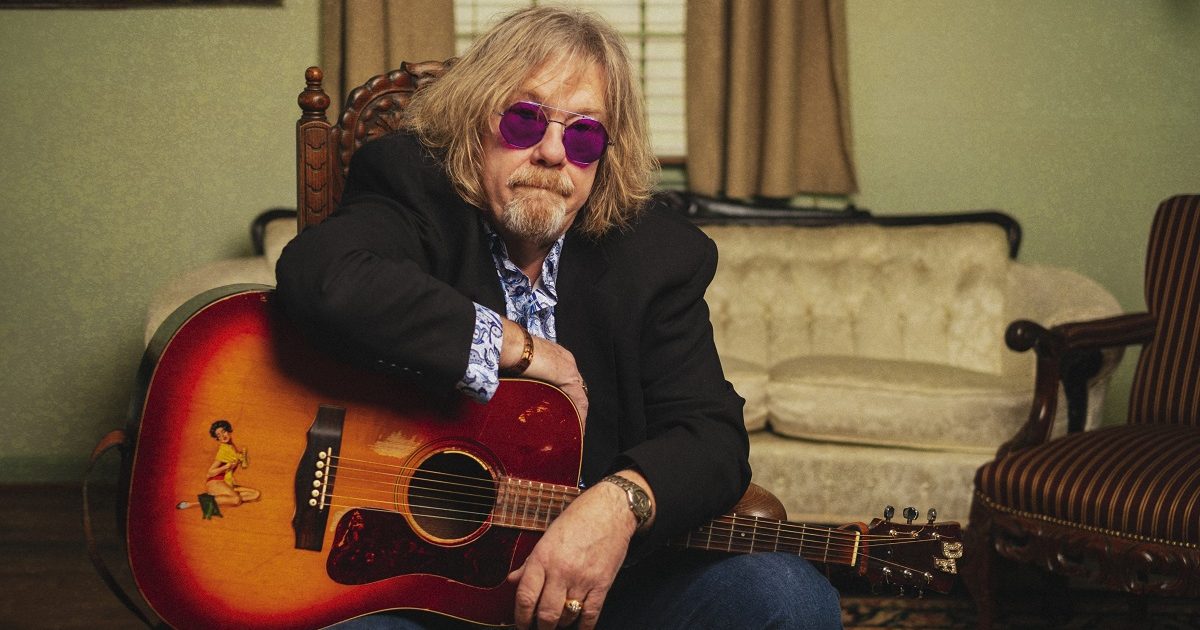
Better Late Than Never, David “Ferg” Ferguson Debuts ‘Nashville No More’

As the go-to producer for some of Nashville’s most enigmatic roots talents, David Ferguson is what you’d call a behind-the-board legend. The studio savant known simply as “Ferg” started out as a protégé of producer and eccentric tape-splicer Cowboy Jack Clement and went on to become Johnny Cash’s favored engineer during his late-career resurgence. More recently, Ferguson has been imparting his old-school wisdom on tastemakers like Sturgill Simpson and Margo Price, while on his own debut album Nashville No More, he puts decades of knowledge to work once more.

With 10 songs full of classic charm and creative whimsy, it’s a loose-feeling project of tunes Ferg’s been falling in love with (and recording for himself) for years, molded into an album during the pandemic doldrums. A rotating cast of Nashville A-listers like Kenny Vaughan, Sierra Hull, Justin Moses, Jerry Douglas, Stuart Duncan, Béla Fleck and Tim O’Brien helped him flesh it out, presenting gruff vocals with tender, honest reverence for the lost art of record-making. In the end, it sounds like a love letter to his life’s work – and maybe the last hurrah of a creative culture.

BGS: So we’ll start with obvious question: Why did you want to make your own record, after so many years of helping others make theirs?

David Ferguson: Well, I’ve really always been a musician at heart. But this one fell into my lap over the pandemic. I had to shut down my studio, the Butcher Shoppe, in Nashville because they sold the buildings. So I set up a control room and an overdub room at my house, then the pandemic came along and there wasn’t much work. I started digging around in my recordings from over the years, got ‘em out and started seeing what I could do. That’s kind of how it came together. I really was just putting it together for family. Like, I was just gonna give it to my mom.

That’s interesting, because I think some people might assume you’ve been wanting to do this your whole life, but it sounds more spur of the moment.

Yeah, it’s a little late in life for me to be launching a solo career. [Laughs] But it’s fun to have one coming out and I’ve got a lot of time on my hands.

It might be late to get started, but you’ve had good teachers. Working with people like Cowboy Jack and Johnny Cash, and more recently Sturgill and Margo, what have you learned about being an artist?

To try to be humble. Even doing interviews, it’s hard to talk about yourself. Somebody who enjoys sitting and talking about themselves, there’s something a little bit wrong with them. I think being humble is a great lesson. Johnny Cash was a very humble man, very humble. So I think that — and trying to be kind to people. And don’t take it for granted, because even if something does happen, it may never happen again. You gotta appreciate what you’ve got.

The people you’ve been known for working with, they’re all artists of very strong vision – ones who didn’t compromise their art. Why are you drawn to people like that?

That’s a good question. I don’t know that I am particularly drawn there, maybe it’s just kind of the way it happened. Stuff comes your way and you have to grab the opportunity if it comes. You’ve gotta be ready to make a fool of yourself if you have to, and learn to grow from mistakes. I made a whole lot of records on a whole lot of people that weren’t any good – tons of them! Not everything you’re gonna do is good. But you do your best for the amount of time or money you have.

I always tried to do my very best. I was a fast engineer and got it going quick, because I didn’t want to waste people’s money. It’s hard to come by, and to get to make a record in a studio is a special thing. It used to be a really special thing. Now anybody can make a record. You can make one in your own house. But back in the day when I started, being able to have the money and resources to go in and record an album was a big deal. I still look at it as a big deal.

I think that comes through on your record.

Thank you, man, I tried not to cut any corners. I could have, and used keyboard strings, things like that. But I had real ones. I tried to do it as real as I could do it.

Did you record this the way you would have back in the day?

Yeah. Everybody’s recording on the Pro Tools format, but I can still fire up a tape machine, I’m not afraid of it. It’s just not economically feasible anymore. And plus, people don’t realize, they always used to say, ‘Oh, tape machines sounded great.’ And it’s true. They did and they still do, but you still wind up with a 16-bit CD. Unless you’re listening to it off the tape machine or on a vinyl record, or some super high resolution format, it’s just not gonna make very much difference.

Tell me about the title you chose. You’re from Nashville and have seen how it’s changed. How did you end up with the title Nashville No More? The whole thing has a kind of weary feel to it.

[Laughs] You know it’s not really a bummer. A lot of them are actually love songs. Like “Chardonnay” is a love song to wine. And then “Looking for Rainbows,” it’s kind of a sad song about love. … Nashville No More means a lot to me, because the Nashville that I used to know is no more. I’m not saying that’s a bad thing, it’s just that things evolve, and Nashville has really evolved. The music has evolved into an unlistenable thing to me. Modern country music, to me, is really difficult to listen to. Top 10 radio, it’s not for me. And I know some of those people who are on those channels, those singers, and I really like ‘em. I’m not saying anything bad about their music or anything … I’m really happy for their success, but it’s not the kind of stuff I’m gonna listen to.

Margo Price is featured on “Chardonnay,” and that has such a lovely sway to it. Where did that track come from?

That was written by my friend Roger Cook, and some years ago I made a demo of him doing the song, and I found it like ‘Jeez, where has this song been? I love this!’ … I finished it up with some real players on it, re-sung a couple of lines here and there and then sent it to Margo, and she said, ‘God, I love that song so much.’ She graciously came over and hung out for the afternoon and sung on that and “Looking for Rainbows.” Margo’s a real sweetheart and she doesn’t live far from me. The other person on there is Harry Stinson. He sings harmony, too, and Harry is in the Fabulous Superlatives. Harry’s singing on “Four Strong Winds,” too. He can blend right in there.

I love that you start off with “Four Strong Winds,” which is such a tender song. The first thing you hear is this gentle piano and a loping drum beat. Why start with that sound?

The album was totally sequenced … and it started off just exactly the opposite of what it is now. It started off with number six being number one, and we swapped the A side and B side.

Really?

That’s an old record trick I learned from Jack Clement and Johnny Cash.

What’s the benefit there?

It just kind of takes the obvious away, and that’s good. I’ve done that on more than one record for the years, and I’ve seen Jack Clement do it a few times. It’s a strange thing, but I mentioned to the guys, “Jack used to sequence it out A and B, then a couple of days later he’d be like, ‘You know, B oughta be A, I think.'” And it works!

You end on “Hard Times Come Again No More.” What’s the message in that ending?

Like I said before, that would have been number five, and we swapped it around. But it just seemed like a natural song to go out with. Sierra and Justin were kind enough to show up on that, and I think she’s just a major talent. Probably one of the most talented people I’ve ever met. She’s got the touch, and she’s not one to nitpick stuff. If you say you’re happy, she says, “OK, let’s move on.” She won’t just wear you out with it.

What was it like trying to produce your own songs, though? Is it hard to be critical of yourself?

It’s nearly impossible. Anybody you talk to who sings or even talks for a living, there’s hardly anything more painful than listening to yourself back. It’s as painful to a singer and artist as it is to anybody — unless they have an ego the size of [spreads his arms wide]. But you get in a situation where you have to be critical, so I learned how to do it on this record. I figured it out.


Photo credit: Scott Simontacchi

The BGS Radio Hour – Episode 220

Welcome to the BGS Radio Hour! Since 2017, this weekly radio show and podcast has been a recap of all the great music, new and old, featured on the digital pages of BGS. This week we have John Prine’s final recording, a BGS exclusive performance from Americana duo Jackson+Sellers, a playlist in 3/4 time, personally curated by Dori Freeman, and much more.

APPLE PODCASTS, SPOTIFY

John Prine – “I Remember Everything”

The Americana Music Association was able to celebrate the works of its community in-person last week, for the first time since the beginning of the pandemic, with the 20th Annual Americana Honors & Awards held at the historic Ryman Auditorium. And one of the night’s biggest awards, Song of the Year, was given posthumously to none other than John Prine for his final recording, “I Remember Everything.” Watch below to see John perform the song himself, followed by a tribute from Brandi Carlile, Margo Price, and Amanda Shires at last week’s awards ceremony.

Martin Sexton – “Riding Through the Rain”

New York’s Martin Sexton spoke on performing at Madison Square Garden, his pre-show and pre-studio rituals, the influence of artists and performers from Black Sabbath to Looney Tunes, and more in a recent edition of 5+5.

Rod Gator – “Out Here in Echo Park”

Rod Gator wrote “Out Here in Echo Park” during his last year living in Echo Park, when every evening he’d walk down to the L.A. River and sit along the bank. Take a listen, and you might start missing Echo Park, too.

Jackson+Sellers – “Hush”

Jackson+Sellers’ debut album, Breaking Point, comes out next month, but until then, we’re listening to the song that brought the pair of songwriters together as a duo. Jade Jackson initially reached out to Aubrie Sellers about singing harmonies on a new song she had written, and the rest is history! On their partnership, Jackson says, “Collaborating with someone who’s so energetically strong, it gives you even more creativity and license to explore.” Watch the duo’s performance of “Hush” from our Yamaha Artist Sessions below.

Dori Freeman – “The Storm”

For a recent Mixtape, our friend and songwriter Dori Freeman crafted us a playlist celebrating waltzes –her favorite type of song — which always touch her heart in ways other songs don’t.

Kirby Brown – “Ashes and Leaves”

“Ashes and Leaves,” the latest from singer-songwriter Kirby Brown, is a meditation on acceptance: “Sometimes, we are the ones being left — by lovers, friends, family, etc. At other times, we are the leavers. Maybe this is one of the inevitable arrangements of life…”

Brad Kolodner – “Foggy Mountain Special”

Old-time musician and radio host Brad Kolodner was a recent 5+5 guest, speaking about his new album, Chimney Swifts, his earliest on-stage memories, the soul-nourishing experience of the Appalachian String Band Music Festival, and more.

Béla Fleck featuring Sierra Hull & Molly Tuttle – “Wheels Up”

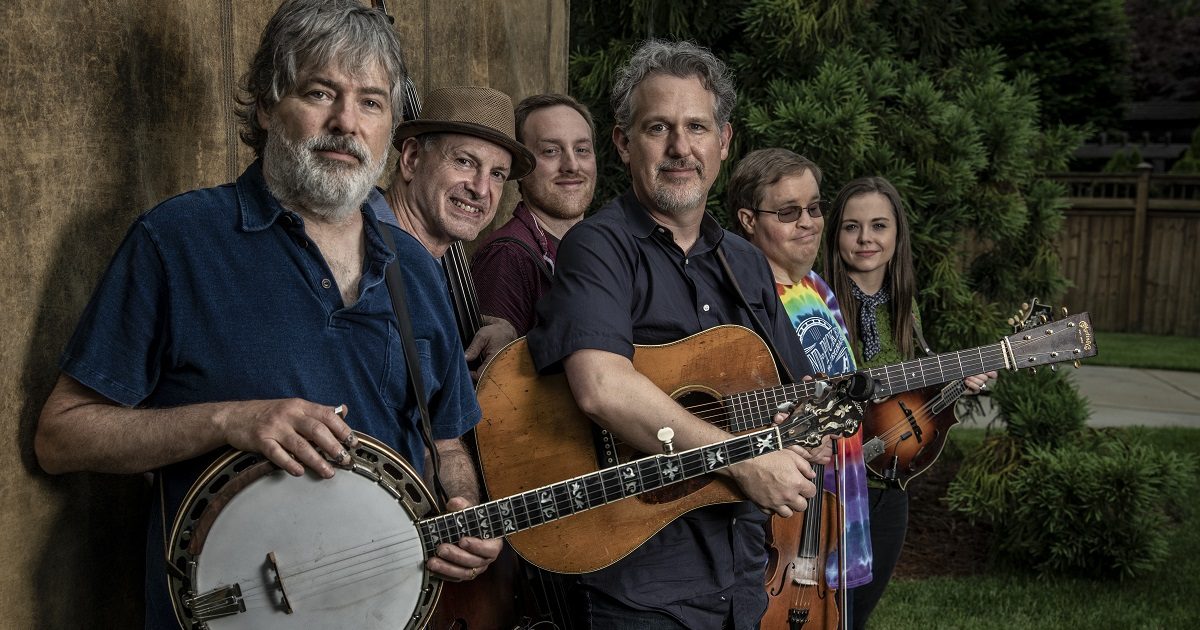
No matter how far afield he may roam, with his new album our Artist of the Month Béla Fleck wants the world to know his bluegrass heart will always call bluegrass home. And this rip-roaring number is about as bluegrass as it gets. The studio recording features the talents of Molly Tuttle and Sierra Hull, while this live performance below features Fleck’s current all-star live lineup: Sierra Hull on mandolin, Michael Cleveland on fiddle, Mark Schatz on bass, Bryan Sutton on guitar, and Justin Moses on dobro.

The Barefoot Movement – “Back Behind the Wheel”

“Back Behind the Wheel” is ultimately a song about hope and the idea of letting yourself feel what you need to feel, but not allowing that to be the end of the journey. “When it comes to this, I don’t know what it means to quit…”

Tammy Rogers & Thomm Jutz – “I Surely Will Be Singing”

“I Surely Will Be Singing,” a new release from songwriter Thomm Jutz and The SteelDrivers fiddler Tammy Rogers, was written at the beginning of the pandemic, as a hymn to nature and to the spirit of human resilience in the face of adversity.

The Secret Sisters – “Dust Cain’t Kill Me”

A new Woody Guthrie compilation from Elektra Records isn’t just a tribute album, it’s a reimagination. Home in this World: Woody Guthrie’s Dust Bowl Ballads features a host of compelling modern artists — like John Paul White, Colter Wall, and Chris Thile – offering their takes on Guthrie’s seminal Dust Bowl Ballads. One standout is The Secret Sisters performing “Dust Cain’t Kill Me.”

With such passion at the heart of it, Home in This World brings new life to music that has shaped American culture in the 20th and 21st centuries. “Woody Guthrie’s Dust Bowl Ballads is as relevant as ever,” producer Randall Poster states. “While profiteers exploit our natural resources, there is a growing sensitivity to the harsh farming practices that put our well-being at risk, and a concerted movement toward regenerative agriculture that can reinvigorate the soil and push back on climate change. I asked some of my favorite artists to help render these songs, hoping that this collection will reinforce the enduring power and prescience of Guthrie’s music and reveal the power of song.”

Caleb Lee Hutchinson – “I Must Be Right”

Caleb Lee Hutchinson teamed up with Trey Hensley on a new song, “I Must Be Right,” as he tells us: “I have been a fan of Trey for quite some time and was very excited to write with one of my favorite guitar pickers… It’s one of my favorite songs I’ve ever written as a result.”

Abby Posner – “Low Low Low”

Los Angeles-based musician and songwriter Abby Posner is joined by Constellation Quartet on a new video for “Low Low Low,” a beautiful, contemplative song about depression, anxiety, and learning how to live with the darkness within.

Colin Linden – “Honey On My Tongue”

“Roots music and blues do speak to a lot of people right now. Much of the healing and release you get from listening to this music… has shown itself to be so vital in these times… I hope the memories of every soul who has loved and been loved are like honey on our tongues,” says Linden of his track, “Honey on My Tongue.”


Photos: (L to R) Dori Freeman by Kristen Crigger; John Prine by Danny Clinch; Jackson+Sellers by Ashley Osborn

With Béla Fleck, Opera Star Jamie Barton Finds Her Way Back to Appalachia

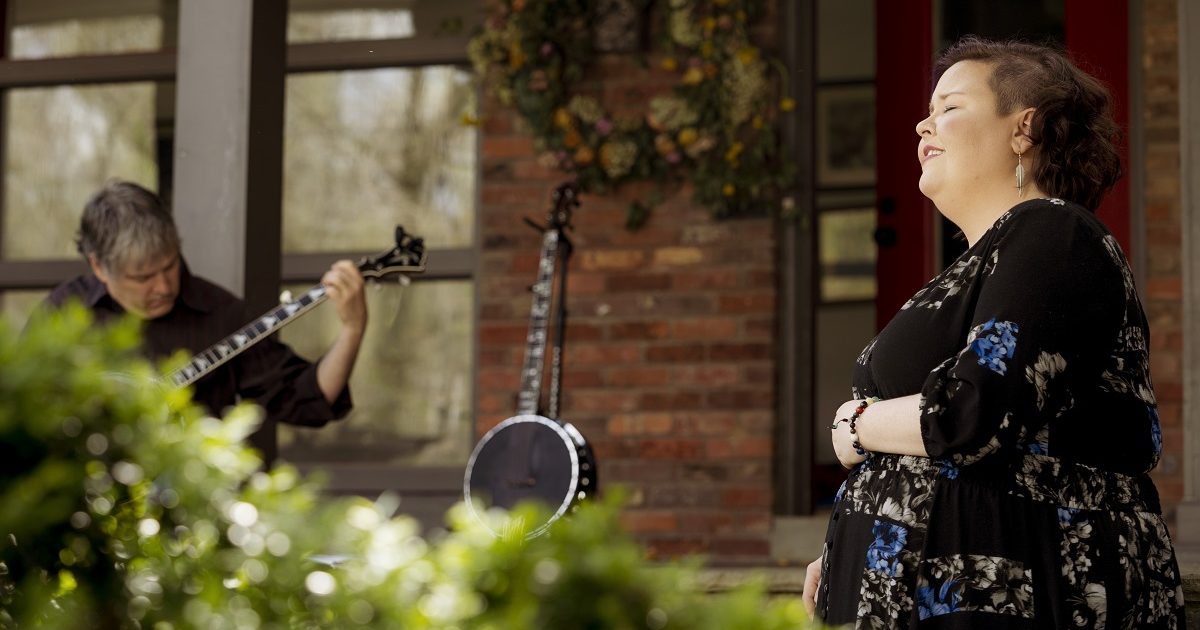
At BGS, we are well aware of the immensely talented folks that have come out of Appalachia. Countless celebrated pickers, singers, writers, and performers have come from the mountainous heart of the American east. Jamie Barton is one of those singers, but her inspiration and voice led her to an entirely different realm of music than her neighbors tend to find. Barton is an acclaimed opera singer whose mezzo-soprano voice and commanding artistry have paved the path for her work with top-level ensembles like the San Francisco Opera, the Chicago Opera Theater, and the Metropolitan Opera.

Originally hailing from the foothills of Appalachia in Georgia, Barton’s roots are in bluegrass, old-time, gospel, and classic rock ‘n’ roll. The singer retains her those roots off stage as well, regularly using her platform to champion issues of social justice, sexuality, and body positivity. The all-around badass that she is, Barton is featured in a San Francisco Opera featurette called In Song: Jamie Barton, in which she returns to her musical roots in performances with Béla Fleck, who knows a thing or two about Appalachian music traditions. Produced in partnership with Hardly Strictly Bluegrass, the short film is both heartwarming and eye-opening. And it’s always a treat to see two musicians of the highest caliber perform together. Take a look.


Photo credit: Taylor Ballantyne

The BGS Radio Hour – Episode 219

Welcome to the BGS Radio Hour! Since 2017, this weekly radio show and podcast has been a recap of all the great music, new and old, featured on the digital pages of BGS. This week we have a previously unreleased live performance from Emmylou Harris and the Nash Ramblers, as well as Béla Fleck’s return to bluegrass, a conversation on songwriting with Rodney Crowell, and much more.

APPLE PODCASTS, SPOTIFY

Béla Fleck – “Round Rock”

Our current Artist of the Month recently gathered an incredible crew of bluegrass power pickers for a live rendition of “Round Rock,” a tune that he included on his recent album My Bluegrass Heart, but that he had in his back pocket for nearly 20 years. He had been saving the piece for the right band to come along, and with this lineup, he has certainly found the players up for the task.

The Kody Norris Show – “Farmin’ Man”

Kody Norris’ “Farmin’ Man” is a true-life account of the American farmer – from the perspective of Kody himself, who grew up in a tobacco farming family in the mountains of east Tennessee. “I hope when fans see this they will take a minute to pay homage to one of America’s greatest heroes…”

Katie Callahan – “Lullaby”

Katie Callahan wrote “Lullaby” on the edge of the pandemic, before anyone could’ve imagined the way parenting and work and school and home could be enmeshed so completely. The song became a sort of meditation for her amidst the chaos.

Della Mae – “The Way It Was Before”

For Della Mae’s Celia Woodsmith, the process of writing “The Way It Was Before” was one of the toughest. [The song] “took Mark Erelli and I six hours to write (three Zoom sessions). Half of that time was spent talking, looking up stories, getting really emotional about the state of the world. We wanted to make sure that every word counted, so we took our time and tried to honor each of the characters (who are actual people). The pandemic isn’t even behind us, and yet I keep hearing people say that they can’t wait to get back to “the old days.” There’s so much about “the old days” that needs changing. After everything we’ve been through in the last 18 months, I found that writing a song like this felt impossibly huge. I may not have finished it if it hadn’t been for Mark.”

Ross Adams – “Tobacco Country”

The inspiration behind singer-songwriter Ross Adams’ “Tobacco Country” came from the idea of always staying true to your roots and remembering the people who helped you follow your path and dreams.
It’s a track paying tribute to the South.

Swamptooth – “The Owl Theory”

Savannah, Georgia-based bluegrass band Swamptooth wrote this jammy, energetic tune based on a Netflix series and true crime mystery with an unlikely theory that involves an owl. Read more from Swamptooth themselves.

Emmylou Harris & The Nash Ramblers – “Roses In The Snow (Live)”

A September 1990 performance by Emmylou Harris and the Nash Ramblers at the Tennessee Performing Arts Center in Nashville had been lost to time, but now, Nonesuch Records has released it as a new live album, which features a slew of songs that were not performed on the iconic At the Ryman record.

Jon Randall – “Keep On Moving”

“‘Keep On Moving’ started with a guitar lick and a first line,” Jon Randall tells us. “Once I put pen to paper, I never looked back. That’s exactly what the song is about as well. Sometimes I wish I could just get in the car, hit the gas and keep going. I think we all feel that way and probably hesitate to do so in fear of finding somewhere you don’t want come back from. What if there is a place where nobody gives a damn about where you come from and the mistakes you’ve made? That would be a hard place to leave.”

Fieldguide – “Tupperware”

“Tupperware” came to Canadian singer-songwriter Field Guide all at once in about 20 minutes. It’s a song about his early days living in Winnipeg, but it’s also more generally about the beautiful parts of life that aren’t meant to last forever, and coming to terms with that.

Rodney Crowell – “One Little Bird”

Courage and truthfulness. Those qualities permeate Rodney Crowell’s new album, Triage; in fact, it’s safe to say they’ve guided Crowell’s entire career. In our latest Cover Story, we spoke to Crowell about the new project, making amends, mortality, and so much more.

“I learned a long time ago,” he explains, “If it’s coming from my own experience, there’s a good chance I’m a step closer to true. And I can mine my personal truth, but confessional only goes so far. I’ve tried to walk that line; if I can carefully write about my own experience and put it in a broader perspective, then [for] the listener, it becomes their experience…”

Triage, as specific and particular as it gets, feels like it contains truth that belongs to each and every listener. “That’s why I feel like I have to be really careful; if I make it too much about my experience, then I start to tread on the listener’s experience.”

Suzanne Santo – “Mercy”

In a recent edition of 5+5, Suzanne Santo shared her thoughts on the emotional alterations of cinema, the gift of playing music for a living, taking long, rejuvenating walks, and much more.

Jordan Tice (featuring Paul Kowert) – “River Run”

Hawktail members Jordan Tice and Paul Kowert collaborated on an original tune, “River Run,” during lockdown. According to Tice, the song “started with a little lick I had been carrying around in the key of D — a speedy little cascading thing that felt good to let roll off the fingers that I’d find myself playing in idle moments.” The end result evokes the lightness and constancy of a swiftly moving river as it passes over rocks, rounds curves, and speeds and slows. “[I] hope you experience the same sense of motion while listening and are able to glean a little bit of levity from it.”

Skillet Licorice – “3-In-1 2 Step”

Skillet Licorice combined a few different old-timey, ragtime, swinging melodies into a sort of parlor song medley that feels like it came straight out of Texas, complete with banjo and mandolin harmonies.


Photos: (L to R) Rodney Crowell by Sam Esty Rayner Photography; Emmylou Harris by Paul Natkin/Getty Images, circa 1997; Béla Fleck by Alan Messer

Béla Fleck Explains How ‘The Beverly Hillbillies’ Set Him on a Bluegrass Path

Béla Fleck came to the banjo in quite possibly the oddest way imaginable — via The Beverly Hillbillies when he was a kid. Hearing Scruggs-style banjo on “The Ballad of Jed Clampett” while watching television, he was instantly smitten and fell in love with the sound. But he chose not to tell anyone.

“It would have made no sense to anybody else why I liked it so much, but it just took my breath away,” Fleck remembers. “It was this odd moment at my grandparents’ house, watching TV with my brother even though he doesn’t remember it at all. I never thought I could actually play that. It seemed impossible, not within human grasp.”

Afterward, Fleck got his mom to teach him enough guitar to play folk songs casually. He liked playing guitar, although it did not fire his imagination. But after his grandfather saw him playing guitar, he came upon a banjo at a garage sale and bought it for his grandson, who was 15 and about to start high school.

“Just this flukey thing,” Fleck says with a laugh. “’Here, you like stringed instruments, this was at a garage sale.’ I would never have had the nerve to buy one myself, and he bought it for me not even knowing my interest in it. Bringing it home on the train, I ran into a guy who asked if I knew how to play. I didn’t, so he tuned it in G, handed it back to me and I never put it down. Got a Pete Seeger book and got to work. It was a really profound thing and I became Type-A obsessed. Still am. I’m always thinking about it.”

That work ethic never changed, either. Bob Burtman was an early roommate of Fleck’s in Somerville, Massachussetts, in the late 1970s and recalls Fleck as the perfect roommate.

“Either he was off making money, or he’d be there endlessly practicing,” Burtman says. “He was so dedicated, you just knew how good he was gonna be. There was a mattress on the floor and he’d sit there playing scales for hours. Not typical scales, either — diatonic, weird Eastern European, just everything. Up and down, up and down. Word got around and people started hearing about him and dropping by to jam — people like Tony Trischka, Mark Schatz. I got to hang out and listen, which was fabulous. Béla soon moved on to bigger and better things, like his own apartment.”

Over the decades, Fleck has covered a lot of ground both literally and figuratively. He traveled to Africa to explore the African origins of banjo with the 2008 project Throw Down Your Heart and has also played jazz and classical as well as bluegrass with groups including New Grass Revival and his own Flecktones, winning 14 Grammy Awards. His most recent Grammy Award came in 2015, claiming best folk album for Béla Fleck and Abigail Washburn, made with his spouse and musical fellow traveler.

Strangely enough, however, he actually hasn’t done all that much straight-up bluegrass over the years. His latest album My Bluegrass Heart is a star-studded affair featuring notables old and new including Sam Bush, Michael Cleveland, Jerry Douglas, Billy Strings, Chris Thile, Molly Tuttle, and Sierra Hull. It’s just his third bluegrass album, and first in more than 20 years. But the timing does not feel coincidental.

“I always thought there’d be a time when I would want to do more bluegrass,” he says. “Growing up, it’s a great training ground before you spread your wings. Any great bluegrass musician has done that, pushed the edge, but they tend to want to come back when they realize how special the basic root is. Well, we had some family issues, my son got sick and we almost lost him. Once we knew he’d be okay, what to do then? Maybe it was feeling a lack of control, but I wanted to play music where I knew what to do rather than explore the unknown. I needed to connect with where I’d started, and the bluegrass community is one of the most beautiful things. You’re never alone when you play it.

“You know, I remember seeing Ricky Skaggs after he’d become a big country star, coming back to a bluegrass festival,” he adds. “He was this legit big star, and he played with eight bands that day. Bluegrass was still a part of him and servicing that part of himself and that community was important to him. That made a real impression. It’s important to me, too.”

Editor’s note: Read about more about our Artist of the Month, Béla Fleck, here.


Photo credit: Alan Messer

Béla Fleck: “It’s Clear to Me That Bluegrass Is Still My Defining Element”

Novelist Thomas Wolfe famously declared that you can’t go home again. But then again, Wolfe is not remembered as a musician who played bluegrass, a style that’s all about going home again.

So it is that Béla Fleck’s new album is a homecoming, and an ambitious one at that. A third installment in Fleck’s long-running bluegrass trilogy, My Bluegrass Heart (Renew/BMG Records) is his first bluegrass album of this century. It’s a double-disc effort with an all-star cast – from old hands like Sam Bush and Jerry Douglas to new stars including Sierra Hull, Molly Tuttle, Chris Thile, Billy Strings, and more – with a running time not much shorter than the first two volumes put together.

“It’s hard to get around,” Fleck says. “As much as I may pretend to be something else, I am bluegrass at heart and that’s okay. It’s something I’m proud of and have come to embrace more as time goes on. Part of that is aging – do something when you’re young and you may not want that to be what defines you. Bluegrass just seemed like too obvious a pigeonhole for a banjo player when I was starting out and there was so much other music I loved, too. But after a lot of exploring, it’s clear to me that bluegrass is still my defining element.”

The album title of My Bluegrass Heart is actually a riff on an unexpected source, the late jazz pianist Chick Corea, a sometime collaborator of Fleck’s. One of Fleck’s favorite Corea albums was 1976’s My Spanish Heart, an ironic title because Corea was of Italian rather than Spanish descent.

“He was a guy from Boston with a natural affinity for Latin music, which was central to who he was even though he did not have legit entry in terms of ethnicity,” Fleck says. “That resonates for me. I’m from New York, of Eastern European and Russian descent with no natural connection to folk or bluegrass. So I’m defining myself with music that’s not necessarily my heritage, but being an outsider helps you bring new things to the idiom. When I go off to study Indian music, I can come back and write this album’s ‘Vertigo,’ which has very Indian rhythmic devices. Finding a way to insert Indian music or jazz or classical into bluegrass is very satisfying.”

The roots of My Bluegrass Heart go all the way back to Fleck’s first bluegrass album, 1988’s Drive, which he made with a core group including Bush, Douglas, Stuart Duncan, Mark Schatz, and most notable of all the late great guitarist Tony Rice (to whom the new album is dedicated, along with Corea). That same cast appeared on the 1999 follow-up, The Bluegrass Sessions: Tales From the Acoustic Planet, Vol. 2.

Had Fleck had his way, the same crew would have convened for volume three, and it would have come out many years ago. But the holdup was Rice, the troubled but brilliant guitarist who died in 2020 on Christmas day after years of health struggles.

“Playing bluegrass with Tony Rice was such a profound, dramatic upgrade from anything I’d ever experienced before,” Fleck says. “I wanted to do it again and reached out a lot over the years, but there was no response. I was puzzled and disappointed. Hurt, even. But come to find out that a lot of his other friends were going through the same thing with him as he started to isolate. He was not confident about playing anymore, so he shut it down and withdrew. And at a certain point, I heard about some close musician friends of mine who were starting to have hand problems. I thought, ‘If I don’t do this soon, some people I want to play with might not be able to anymore.’”

To that end, Fleck convened the surviving cast from his first two bluegrass forays, while adding young guns like Strings and Tuttle as well as other longtime pals including Tony Trischka, David Grisman, and Michael Cleveland. There’s plenty of firepower throughout these 19 tracks, especially on “Slippery Eel” — the first-ever studio work featuring the pairing of Strings and Thile. Fleck did his best to come up with something that would challenge those two, but notes that, “Of course they made it look easy.”

All 19 tracks are instrumentals, with a conservatory feel akin to Punch Brothers (several of whom appear) or the Kruger Brothers. But there are vocals of a sort, between-song quips and jokes by various players.

“This is such a community record and I thought it’d be cool for people to know this bluegrass community through these voices,” Fleck says. “You know, Sierra Hull talking, Tony Trischka and Jerry Douglas laughing, Sam Bush being silly, David Grisman being David Grisman. I think people in the bluegrass world will know every voice. When I’d play the record for people, they would always tell me, ‘I hope you keep that stuff in. It really humanizes it.’ I’m really excited and satisfied with everything about this record. The community aspect, hearing everybody play and talk, makes me happy. It’s like a love letter to the bluegrass community. If there’s ever been any doubt I love this music, there’s this.”

Editor’s note: Read about more about our Artist of the Month, Béla Fleck, here.


Photo credit: Alan Messer

The BGS Radio Hour – Episode 218

Welcome to the BGS Radio Hour! Since 2017, this weekly radio show and podcast has been a recap of all the great music, new and old, featured on the digital pages of BGS. This week we have a vertigo-inducing bluegrass whirlwind from our Artist of the Month Béla Fleck and an all-star lineup, we take a listen to some energetic and ethereal — yet totally traditional — bluegrass banjo from Jeremy Stephens, we dive into the latest from Watchhouse’s new release, and much more!

APPLE PODCASTS, SPOTIFY

Watchhouse – “New Star”

We’ve watched Andrew Marlin and Emily Frantz go through quite a few changes throughout their career in music, but one of the most joyful to watch has been their journey as parents. Even with COVID-19 halting touring for more than a year, their young daughter Ruby has already been to 34 U.S. states and nine different countries!

After their pandemic hiatus, the family of three is back on the road again as Watchhouse, the duo formerly known as Mandolin Orange, touring their new self-titled album. And Ruby, now a toddler, has perhaps transitioned back to road life even more smoothly than her father, who admits he’s still “struggling to find my sea legs.” For a recent Cover Story we spoke to Marlin about their name change, their new album, creativity through the pandemic, parenthood, and oh so much more.

Bobby & Teddi Cyrus and Billy Ray Cyrus – “Roll That Rock”

Husband and wife duo Teddi & Bobby Cyrus are joined by Bobby’s cousin, Billy Ray Cyrus, on “Roll That Rock,” a grooving bluegrass gospel song that they wrote together. According to Billy Ray, “When I started singing ‘Roll That Rock’ my inner spirit said Bobby Cyrus will know exactly what to do with this. He did. He wrote the gospel truth and then sang the daylights out of it with Teddi and a killer bluegrass band reminiscent of Earl Scruggs and Bill Monroe.”

AJ Lee & Blue Summit – “Monongah Mine”

A new favorite of BGS, California-based bluegrass band AJ Lee & Blue Summit tell the story of the 1907 Monongah, West Virginia mining disaster in this new track.

Béla Fleck – Vertigo

20 years since his last bluegrass album, Béla Fleck just returned this past week with My Bluegrass Heart . Home is where the heart is, after all! All September we’re celebrating Béla as our #ArtistOfTheMonth! Hear tracks from the new project — featuring an all-star lineup — and more on our Essentials Playlist, including this song featuring Sam Bush, Stuart Duncan, Bryan Sutton, and Edgar Meyer.

Paul Thorn – “Sapalo”

In this track with an R&B groove, Mississippi’s Paul Thorn turns the contents of a YouTube video of James Brown high on PCP into a song of redemption. Yes, you read that right! As he puts it, “It’s about being optimistic with whatever time you’ve got left.”

Elder Jack Ward – “The Way Is Already Made”

Elder Jack Ward puts his God-given talents to work on a new album that’s full of joyful gospel and sacred soul — as evidenced on its title track, “The Way Is Already Made.”

“If you’ve got that God-given gift you can do it — your choice if you want to sing rock ‘n’ roll, blues, gospel — but I choose the right side.”

The Grascals – “Maybelle”

“Maybelle” is a song that sounds like it came from deep within the mountains — exactly what The Grascals were looking for. From the haunting words to the clawhammer banjo and fiddle, “Maybelle” will grab your attention.

Hiss Golden Messenger – “Sanctuary”

On a recent episode of The Show On The Road, host Z. Lupetin dials in to North Carolina to chat with Grammy-nominated songwriter MC Taylor, who for the last decade and a half has created heart-wrenchingly personal and subtly political music fronting Hiss Golden Messenger.

The Way Down Wanderers – “Everything’s Made out of Sand”

The Way Down Wanderers recorded “Everything’s Made Out of Sand” in one take, belting and stomping into one antique microphone. The song’s lyric, music, and sonic landscape all capture the inspiration they gathered from the temporary nature of all things.

Seth Mulder & Midnight Run – “Carolina Line”

Seth Mulder & Midnight Run recorded “Carolina Line” with an Osborne Brothers-inspired arrangement that represents many of their various musical influences.

Matthew Fowler – “Going Nowhere”

In a recent edition of 5+5, Matthew Fowler spoke on the bold authenticity of Glen Hansard, a memorable birthday show in his hometown, Orlando, putting himself in the “hot seat” of a song, and much more.

The Felice Brothers – “To-Do List”

The Felice Brothers chose the very first take of “To-Do List” as the keeper, capturing the loose, playful quality of the group just getting the tune under their fingers. “The song was originally a slow waltz with the lyrics: ‘Into the fire that burns them/that’s how the idiots run,’ but I didn’t know where to go from there. I had written down a to-do list on the adjacent page and began to sing it and it seemed to work well with the phrasing. I wrote down many pages of ridiculous things and chopped them up into the melody. This is how the song came into being.”

Mike Younger – “Killing Time”

The lyrics of Mike Younger Music’s “Killing Time” take comfort in the remembrance of past friendships forged in the fire of struggle. Younger believes that artists have nothing to lose by speaking their truth and doing so unapologetically through song. “I greatly admire those writers and creative people in general, who, through their work, have lent their voices to the struggle for equity in our society, like John Lennon, Woody Guthrie, Bob Dylan, Joni Mitchell, Nina Simone, Marvin Gaye, Bob Marley, and others.”

Jeremy Stephens – “Sockeye”

Banjo player and multi-instrumentalist Jeremy Stephens (co-founder of High Fidelity) has an old school, traditional approach to bluegrass that’s anything but backward. His new solo album, How I Hear It, includes several instrumentals that demonstrate this fact. “Sockeye” captures the energy and ethereal quality of Stephens’ live playing in a way many more sterile bluegrass albums, and purposefully more modern sounding records, can only aspire to.


Photos: (L to R) Béla Fleck by Alan Messer; Watchhouse by Shervin Lainez; Hiss Golden Messenger by Chris Frisina

WATCH: Béla Fleck, “Round Rock” (Live)

Artist: Béla Fleck
Hometown: Nashville, Tennessee
Song: “Round Rock”
Album: My Bluegrass Heart
Release Date: September 10, 2021
Label: Renew Records/BMG

In Their Words: “I’ve been saving this tune for a long time, looking for the right band to play it — but nothing seemed right ’til this project. Then it seemed real right! I think it’s at least 20 years old, but I certainly spruced it up as the recording dates loomed closer, writing a pair of bridges — and at the last minute, the night before the session — an intro and outro sequence with apologies to Ravel and Debussy. The title references the circular chord progressions, and with these two bands, it rocks!” — Béla Fleck

Editor’s Note: Filmed by Abigail Washburn, this video features Michael Cleveland, Sierra Hull, Justin Moses, Mark Schatz and Bryan Sutton. The album version features Cleveland, Jerry Douglas, Cody Kilby, Paul Kowert, and Dominick Leslie.


Photo credit: Alan Messer

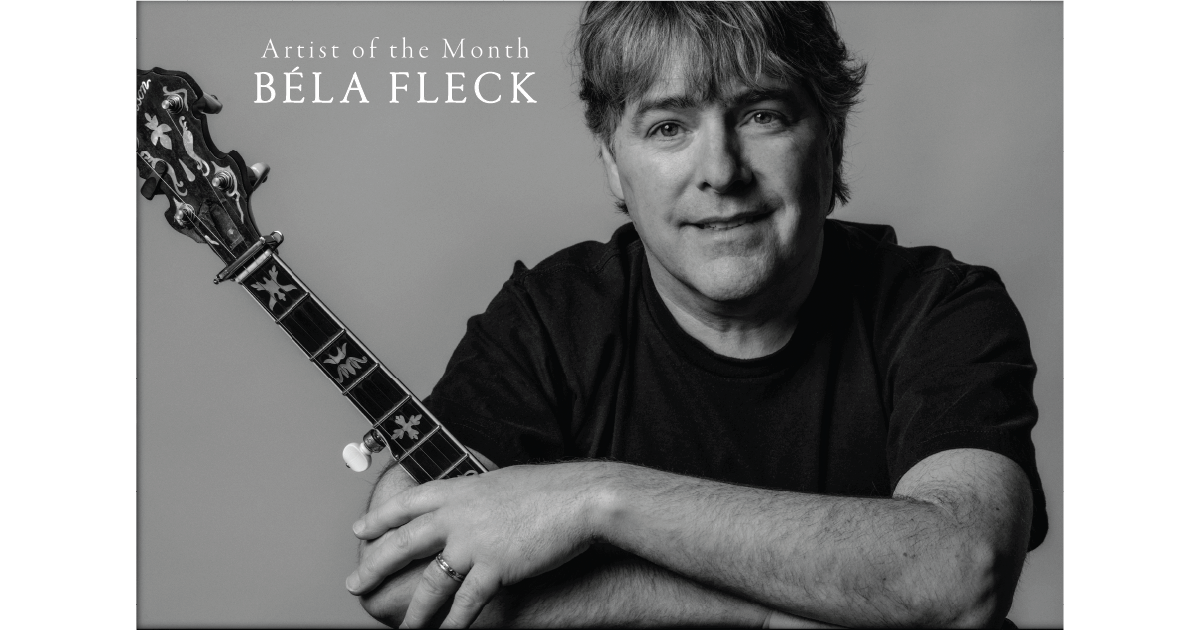
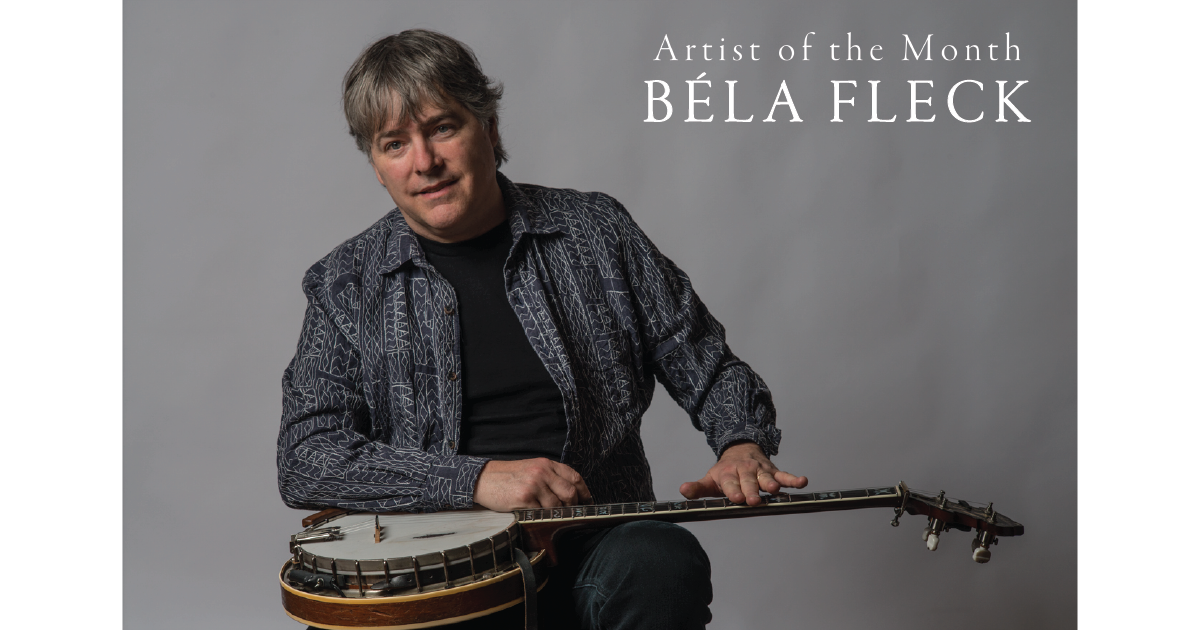
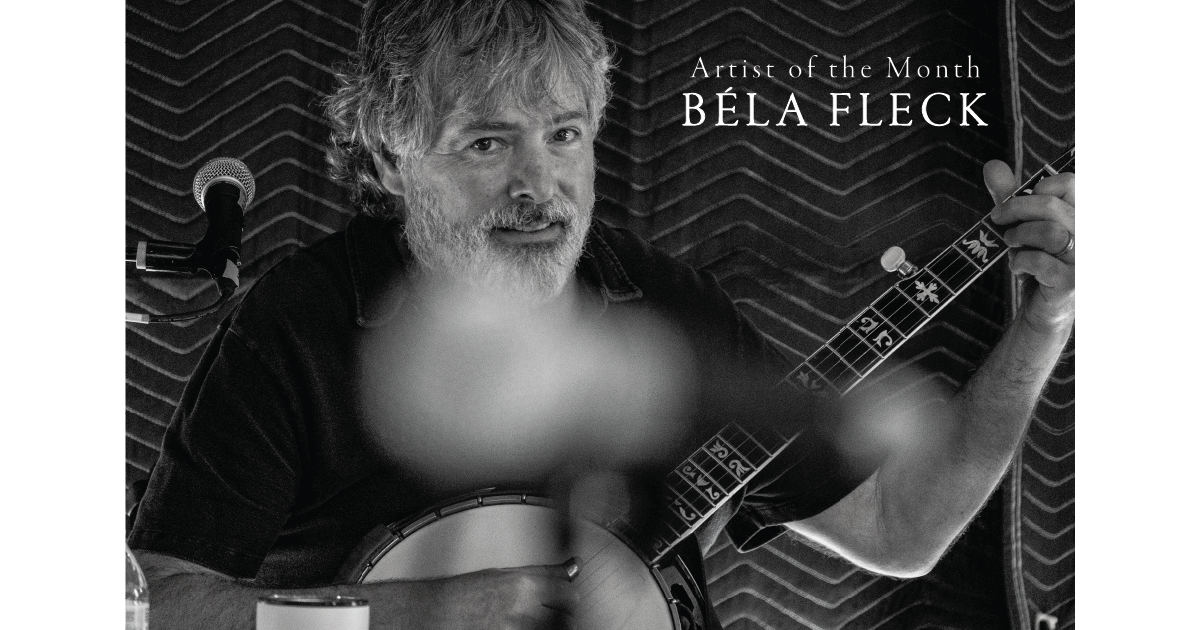
Artist of the Month: Béla Fleck

Banjo maestro Béla Fleck has always followed his muse, jamming with collaborators and crisscrossing continents for decades now. His newest album leads him back to familiar terrain, as My Bluegrass Heart is his first bluegrass record in 20 years. “They nearly always come back,” says Fleck, who composed and produced the album (set for a September 10 release). “All the people that leave bluegrass. I had a strong feeling that I’d be coming back as well.”

The reunion encompasses some of his closest comrades, too, like Sam Bush, Stuart Duncan, Mark Schatz, and Jerry Douglas. As a nod to the newest generation of acoustic all-stars, the project also includes guests such as Chris Thile, Molly Tuttle, Sierra Hull, Billy Strings, and Billy Contreras. Longtime allies like David Grisman, Edgar Meyer, and Tony Trischka get in on the action too.

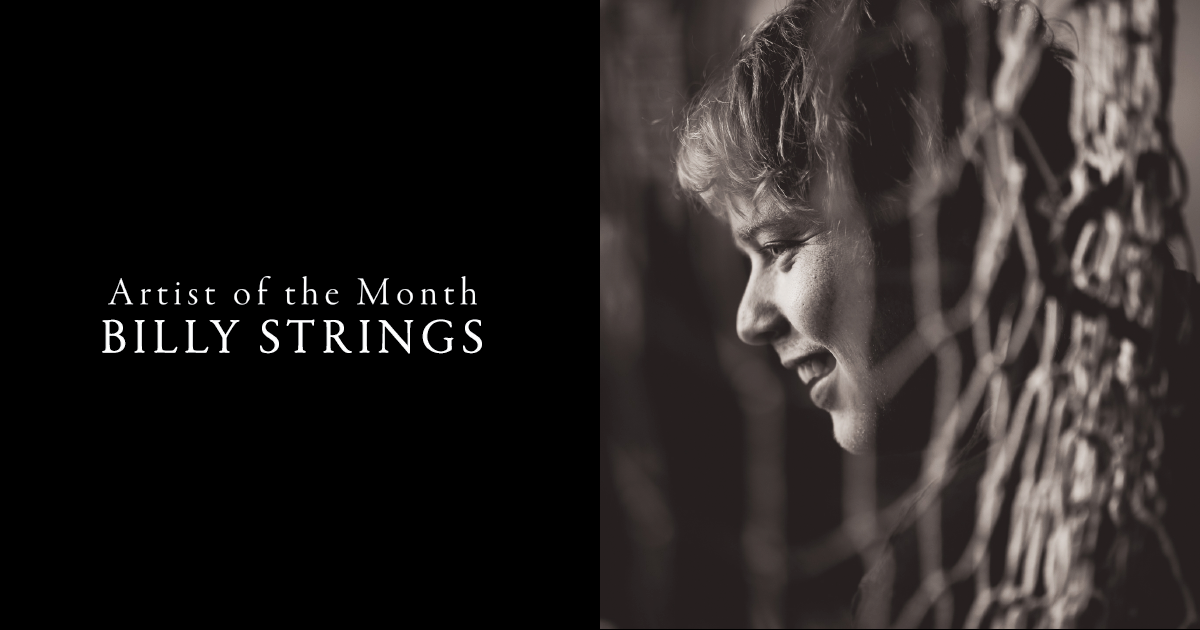
Speaking from his own bluegrass heart, Billy Strings says, “In my opinion, Béla Fleck is one of the most important musicians of all time. He bridges the gap between bluegrass, classical, jazz, world music, and everything in between. It seems like there’s no limit to what he can achieve on the banjo.”

But as with any project involving Béla Fleck, there’s bound to be some exploration. “This is not a straight bluegrass album, but it’s written for a bluegrass band,” he explains. “I like taking that instrumentation, and seeing what I can do with it — how I can stretch it, what I can take from what I’ve learned from other kinds of music, and what can apply for this combination of musicians, the very particularly ‘bluegrass’ idea of how music works, and what can be accomplished that might be unexpected, but still has deep connections to the origins.”

This month, Fleck will be touring in support of the album with Michael Cleveland, Sierra Hull, Justin Moses, Mark Schatz, and Bryan Sutton, concluding with a festival spot during IBMA World of Bluegrass on October 1. He’ll resume roadwork in late November and December joined by Sam Bush, Jerry Douglas, Stuart Duncan, Edgar Meyer, and Bryan Sutton. And it’s not too early to circle the calendar for January 7, 2022, when he’s headlining the Ryman alongside nearly every musician who makes an appearance on My Bluegrass Heart.

In the meantime, read our two-part Artist of the Month interview feature here and here — and enjoy our BGS Essentials playlist spanning his remarkable career.


Photo credit: Alan Messer

BGS 5+5: Gabe Dixon

Artist: Gabe Dixon
Hometown: Nashville, Tennessee
Latest Album: Lay It On Me

What was the first moment that you knew you wanted to be a musician?

I think I was 11. I already loved music and had been taking piano lessons for a few years, but that summer, I went with my parents to see a music festival in downtown Nashville, and I watched a set by Béla Fleck & The Flecktones — the original group, with Béla, Victor Wooten, Future Man, and Howard Levy. Until then, I had no idea that people could be that good at playing their instruments. They were so virtuosic and fun, and the crowd loved it so much. Later that evening, I remember standing in the front yard of our house in Sylvan Park, looking up at the sky and thinking, “I want to be a musician when I grow up.”

What rituals do you have, either in the studio or before a show?

I’m not a very religious person, but before I go on stage, I always take a moment to be grateful and to ask God to work through me so that something bigger than me — love, joy, goodness, light — will shine through me and into the hearts and minds of the people I’m playing for. Sometimes I do that in the studio too. But the stakes feel higher in a live setting, so I’m looking for all the help I can get!

What’s the toughest time you ever had writing a song?

For a handful of years, I was a “staff writer” at a publishing company, and the most difficult songwriting sessions were the “blind date” country sessions they set up for me — you walk in the room, meet the other person, and your job is to write a song for “the country market.” Often you’re just hoping some big country star will cut it, and you’ll make some money, and they almost never do. Those sessions often became an exercise in putting limitations on what I wrote in hopes that it would be what some generic country singer would like. I often heard, “That line makes him sound like a wimp. Jason Aldean would never sing that.” Or, “We can’t put that chord in there, it’s too fancy-sounding.” Some people are really good at that kind of writing, but for me it was pretty soul-crushing. The only songs of mine that country artists ever ended up wanting to record were ones that I wrote for my own albums. So I mostly just write for myself now.

How often do you hide behind a character in a song or use “you” when it’s actually “me”?

It happens more than I mean for it to. The classic writing advice is to “write what you know,” but, to a certain extent you can’t help it. Even when you are trying to write from someone else’s perspective. I did this with my song “All Will Be Well,” “All Will Be Well/even after all the promises you’ve broken to yourself” and also with “Flow Like Wine.” “Why the furrow upon your brow / I see beauty between the lines / oh love, don’t you worry about our love / Let love flow like wine” were written for my wife, but when I really examine it, I realize I was probably writing to myself too.

If you had to write a mission statement for your career, what would it be?

Bring forth compassion, love, and peace through music.


Photo credit: Shervin Lainez