These Members of the Roots Community Embraced Innovation Amid a Pandemic

The roots music community, like the rest of the world, faced an uncertain future as the pandemic essentially wrecked everybody’s plans in 2020. However, a number of musicians and industry leaders figured out a way to navigate the uncharted waters with grace and bravery. The Bluegrass Situation invited five members of the roots community to share their thoughts on how they harnessed their creativity and embraced innovation over the last 12 months.

Billy Strings, Winner of “Breakthrough Artist of the Pandemic” at the 2021 Pollstar Awards:

It was almost kind of a welcomed break, you know? I was tired, man. We had toured our asses off and I was like, I don’t know if I can do this anymore. Then all of a sudden, this stuff happened and we got a big break. And now I realize how lucky I was. Now there’s nothing I’d like more than to be stuck in some hotel room somewhere after a gig with some random folks at 3 o’clock in the morning, just hanging out and having a good-ass time.

For one thing I wanted to get the quality [of livestreaming] better than what I could do at my house. It started with just me on my couch playing, and the next thing you know we’re doing that tour where we’re playing the Exit/In and gigs around Nashville. It was kind of cool and eerie and weird. I’m just thinking, I know there are people out there watching us, but they’re not here and I can’t see them. When you’re used to playing for crowds, it’s like, man, this sucks! [Laughs]

We did debut a lot of songs at the Capitol Theater when we did our gigs there in February. We played like 16 brand new songs when we were over there. … People will go on fan pages and say, “Holy shit, did you hear that song?!” I don’t want to pay attention too much to that, because it just feels like you’re playing for the internet, but then it is good to get a good little gauge on what songs they’re digging.


Mercy Bell, Singer-Songwriter and Cast Member of the New Documentary, The Sound of Us:

I think a fallow season is really important for everyone, or we’re producing from an empty well. Not of creativity, I think creativity is always there, but contrary to popular opinion of the tortured and manic creator, even artists need to sleep and drink eight glasses of water a day. Like all of us, I spent 2020 trying to survive. I had a nervous breakdown. I lost my job. I had a heartbreak. I turned to art, pop culture, movement, exercise, my cats, meditation, to keep me going. …

There was a period of time I didn’t know if I’d make it. I was in a pretty dark place before I got some new treatment for my mental health. I was obsessively walking 14 miles a day, really scared, really not wanting to be alive, in quarantine far from my family, unemployment wasn’t coming through. Scheduling livestreams gave me something to look forward to. Playing music to my supporters, all over the world, it made me feel less alone. I don’t know how any performance will ever beat that. We really needed each other. Singing to people gave me a reason to keep going in the most literal sense. And my supporters also kept me fed! All those $5 tips kept groceries in my fridge. And then Netflix and podcasts, Cardi B’s “WAP,” and my cat kind of saved me. It gave me something to look forward to. That’s the power of art and pop culture, and pets. It cuts through to places we can’t get to. It got me through each day, one day at a time.

Without giving too much away, The Sound of Us spotlights a variety of musicians and the incredible impact their work (or lack thereof because of COVID) has. Some of those highlighted include folks working to bring music to underprivileged neighborhoods, into prisons and hospitals, working on researching lost works of art from the Holocaust and other genocides, and of course, how musicians were affected by institutional racism and the pandemic. When I saw the screening, I cried all my eye makeup off. It’s an incredibly emotional and profound documentary. I am so proud to have been part of it.


Robert Meitus, Co-Founder and VP of Industry Development of Mandolin.com:

Roots music fans tend to have a strong connection with artists and a desire to connect frequently and deeply. Additionally, the nature of roots music itself is built around intimacy, vulnerability and honesty, so that desire for connection really runs both ways. Mandolin’s vision has always been to build a space in the digital world where the noise of the industry fades away; one where a musician and their fans can connect not only through a concert stream, but through other unique experiences like interactive/online VIP events, soundchecks and workshops with artists.

Specifically, Mandolin started with a name that is itself an acoustic instrument and a workforce full of people who had worked a lot with roots music, including among others: myself, representing as an attorney artists such as John Prine, I’m With Her, and Keb’ Mo’; Jason Wilber, longtime guitarist for John Prine; and Larry Murray, formerly of the Luck Reunion. The name and connections naturally led us to develop the roots music connections in our first year, although Mandolin’s technology and services are certainly applicable to all music genres.

I have been a bit surprised at the almost uniformly positive views about integrating streaming into the live festival experience. It helps that cameras have been in place on and around stages for many years already, largely for the IMAG projections on the sides of stages, so musicians are used to this. COVID introduced livestreaming technology and practices to the music world at a much faster rate than would have been the case otherwise, and we have all learned how technology can connect us around the world and accommodate those that may be challenged to attend an event in person. The result is that, coming out of the pandemic, I believe bluegrass and other festivals will be more interested in the hybrid livestream for all sorts of reasons. This may be a bold claim, but I would expect that almost every festival — roots or otherwise — will have a virtual experience component. Think about it: with a phone in hand, every single fan is a digital fan, whether they are streaming at home or on the festival grounds.


Jackie Venson, R&B/Soul Artist and Guitarist from Austin, Texas:

I was pretty well-versed in livestreaming pre-pandemic. I had a series called Jackie Venson Live on Thursdays, which was an effort to help sell tickets to my album release at the Paramount in Austin, Texas, in 2019. I saw the potential in it when it first came out in 2014. I attempted to livestream a concert from Berlin, Germany, but the technology just wasn’t there yet so it was a really bumpy experience. I remember feeling really grateful that the technology existed when the pandemic was ramping up so that I could keep performing once there was no option for in-person shows. There was literally nothing else to do, and when there’s nothing to do I lose my mind and default to the first thing I can think of, which in this case was filling the performance void with livestream performances.

I used my Austin City Limits TV performance as a platform for Black Lives Matter because that episode will be rerun and it’s important to me that this message doesn’t die. The response overall was positive; of course there were some naysayers but that’s why we need to keep repeating the message. During the pandemic I received overwhelming support and positive feedback from the Austin music community. Everyone was on the same page and it seems as though things are changing for the better. I will absolutely continue to stream from home when possible, and I plan to livestream some of my shows from the road for those who want or need to stay home. I think livestreaming will be a staple in the world of live music. It makes live shows accessible to those who are unable to come out due to economic, accessibility, or other issues. (Read the BGS interview.)


Aengus Finnan, Executive Director of Folk Alliance International:

Everything was upside down last year, but the greatest challenge was envisioning and delivering an event we had never done, with half the staff, all new software, no roadmap, and little sense of whether anyone would want to gather online 11 months into a Zoomed-out pandemic. Being able to offer a sliding scale registration fee, including free, was absolutely necessary given how hard hit our community was, and despite that approach, we exceeded our modest revenue goals to cover the costs of the new online systems we used. The most rewarding element was definitely having new artists and industry join us for the first time, and to see a sharp increase in BIPOC and marginalized community representation across all panels. That happened because we were able to extend invitations to participate in more accessible ways. We were also thrilled to finally provide honorariums to all panelists this year, which we are committed to continuing.

Personally, it’s a joy to see FAI play a part in curating, commissioning, and compensating artists for meaningful new content and partnerships, which is the central aim of our Artist In Residence program — playfully renamed Artists in (Their) Residences this year for the pandemic. There were certainly some artists we approached who simply don’t do co-writes, some for whom the online process felt odd, and others who, while flattered, were simply too busy with other projects or recordings. But for the most part, there was instant interest, especially when they knew that one of their peers had selected or recommended them. The cross-border collaboration as part of a bigger collective project, reflecting on a traumatic year, with the added element of raising awareness for The Village Fund to support the community rang a lot of “count me in” bells.

We are already full steam ahead with a hybrid event this year, and we’re not looking back. Our focus will naturally be on ensuring that the in-person event is top-notch and delivers the experience we all know and love, but there are thousands of people who can’t attend each year, for myriad reasons, and providing online content, as well as live-streamed and interactive content enables more community engagement, participation, and inclusion, and builds bridges and connections that folks will use as an entry point leading to the growth of our genre and industry. While daunting, we’re excited about the opportunity to innovate what we do and offer, and who we can reach.


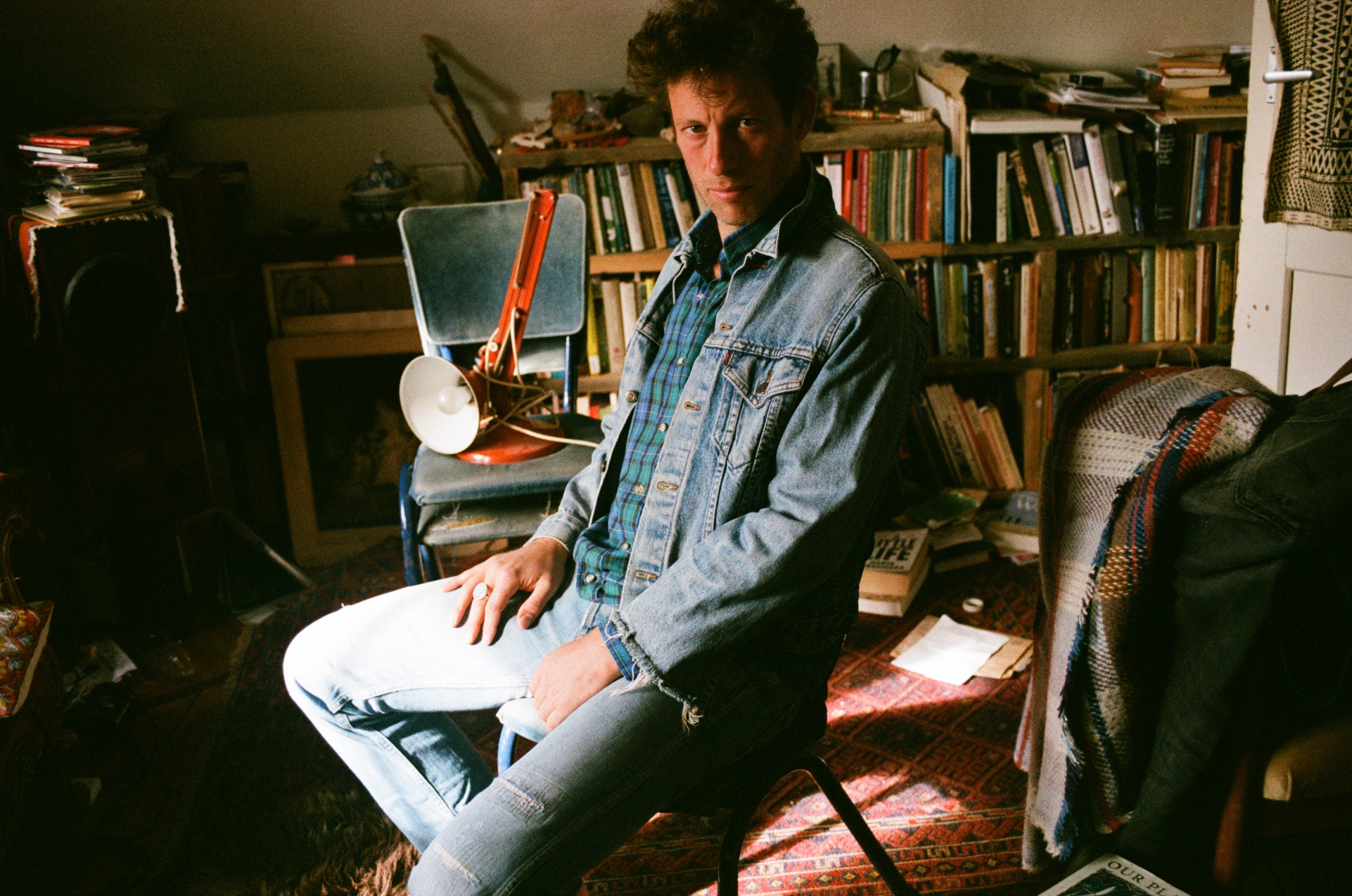
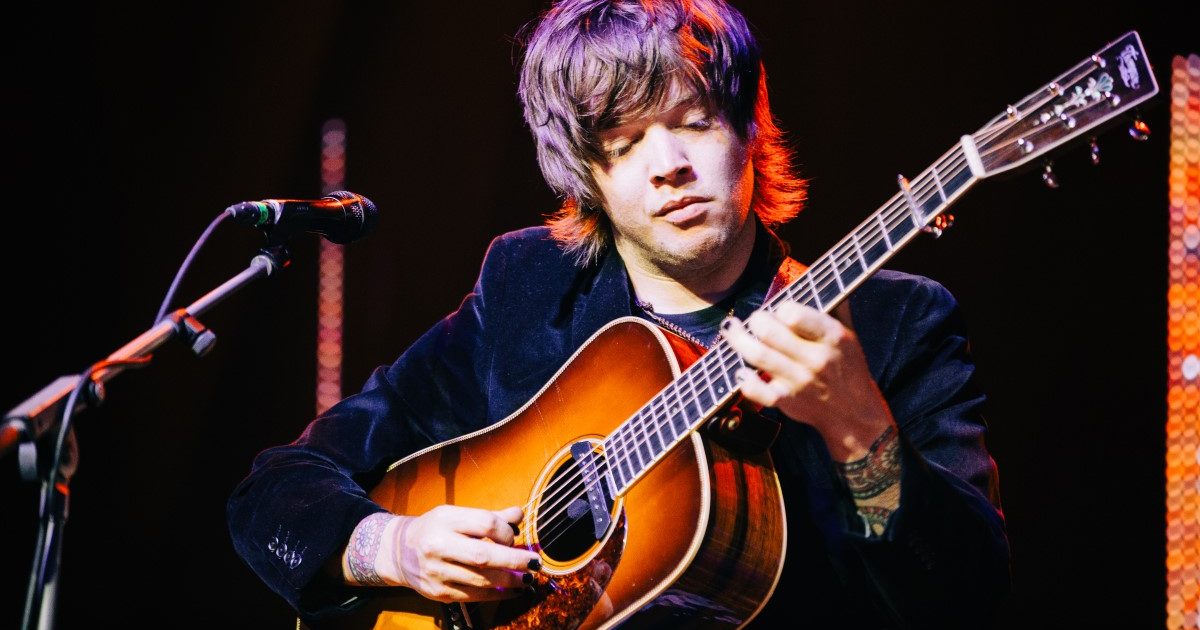
Photo of Billy Strings by Emma Delevante
Folk Hero Reggie Harris Faces a Moment of Reckoning ‘On Solid Ground’

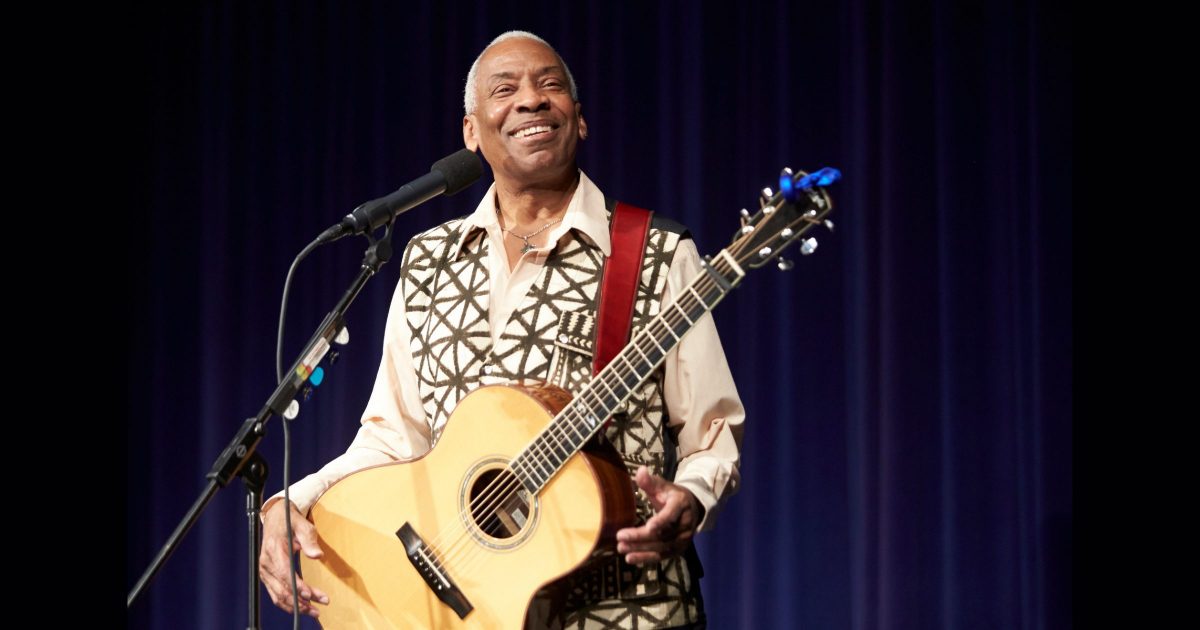
Reggie Harris is a songwriter, storyteller, educator, and folk icon. No, literally. This year, Harris was awarded The Spirit of Folk Award from Folk Alliance International — as well as W.E.B. Du Bois Legacy Award by the Du Bois Legacy Festival in Great Barrington, Mass. His career as a folksinger has spanned four decades, with musical collaborators and activist compatriots such as Pete Seeger, Dr. Kim Harris, C.T. Vivian, Cathy Fink & Marcy Marxer, Greg Greenway, David Roth, and many more. BGS is proud to host Harris on the sixth episode of our Shout & Shine livestream series on Wednesday, June 23 at 4pm PDT / 7pm EDT. (Tune in here via the video player below, our YouTube channel, or our Facebook page.)

The joy and hope evident in Harris’ 2021 release, On Solid Ground, stem from a rooted sense of perseverance and from his intentional decision to face each and every moment, in the moment, and to find hope within each. It’s why such heavy topics don’t feel gargantuan or burdensome as they make appearances and anchor songs on the album. Harris, watching the social, political, and racial reckonings that bubbled onto the sidewalks and streets of every city in America over the course of the last year, didn’t sit down or give up in the face of the unclimbable summit of translating that reckoning into song. 

Instead, Harris draws upon the wisdom, insight, and hope given to him by his own elders and communities throughout On Solid Ground. In choosing to keep himself open in each moment, Harris found himself receiving inspiration, nuggets of ideas and stories, glimpses of songs and arrangements in so many of those moments, simply because he was there, with a still heart and still soul, to receive them.

On Solid Ground feels solid and grounded, but also soars – unencumbered by whatever aspects of its content and lyrics might be perceived as pitfalls or minefields to so many. Harris, as only a folksinger-storyteller can, weaves a reality that can indeed rise to the occasion of this twenty-first century civil rights movement. We just have to choose to be present to usher in that reality — which, it’s important to note, will have an excellent soundtrack.

BGS caught up with Reggie Harris over the phone on May 28, Memorial Day weekend and the 100th anniversary of the Tulsa Massacre.

BGS: I wanted to start off with “It’s Who We Are,” which leads off the album. It makes the point that the political and social turmoil of the last few years aren’t really anything new, but rather are pretty natural outgrowths of who we’ve always been — as a culture and as a society. I wonder if you could talk a little bit about why you wanted to reinforce that point and kick off your album with that song? You’re making the point that this isn’t an aberration, this is who we are. 

RH: [Laughs] I do a lot of work, a lot of educational and historical performing — both in schools and around the country — and the question always comes up, with audiences of all ages, “How far have we come?” And, “Who are we?” These things happen around the country, incidents like George Floyd and Breonna Taylor, and also the incident in New York City with the Coopers — Amy Cooper and [Black birder, Christian Cooper]. People are constantly tweeting as if [these incidents] are one-offs, that each is an aberration. So I’d been working on writing a song for a while that basically says our nation was founded with white supremacy and racial issues from the very beginning. And we have been struggling with that. Obviously, we have made some progress over time, but we see that these things are so temporary — and the proliferation of them over the last two years particularly, and through the pandemic, really brought it to the fore. 

I kept looking at all of that, and I started writing that song– I’m not a writer that likes to just put things out there, constantly pointing out all the difficult and sometimes dangerous events. I love to tie into hope and I couldn’t talk my way through it. I wrote about twenty-seven verses. And it was getting more and more dark all the time! [Laughs] 

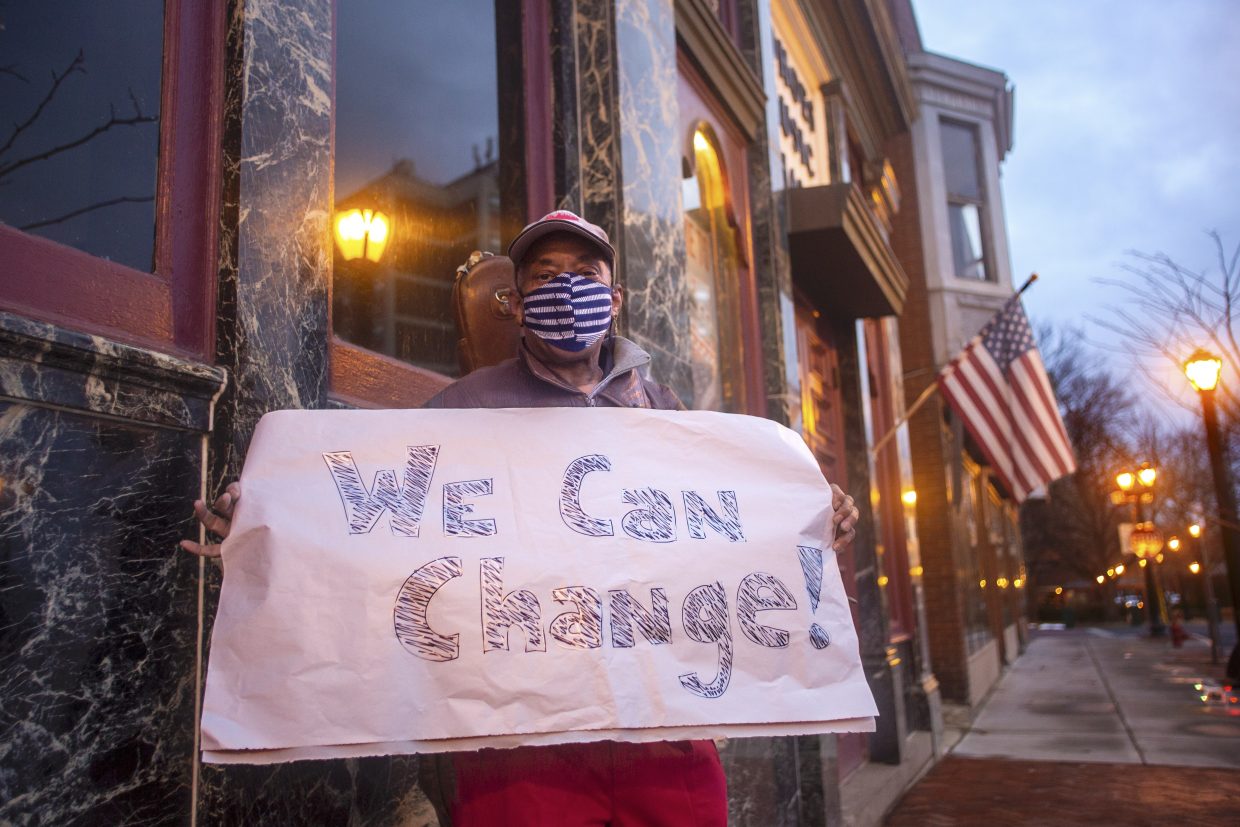
Even this week, we’re acknowledging the massacre in Tulsa, Oklahoma, a hundred years ago. All of those — there are so many of those incidents and events, I really wanted to say, “Yes. This is our legacy, this really is who we are.” But, there is something about what is happening, particularly with young people, particularly in the last year. So, when I saw people flooding into the streets all across the nation, in Portland, Louisville, and all these places I saw the diversity of faces and the diversity of ages. I thought, “You know, something has changed.” We’ve had a lot of false starts in our nation, but that became the critical point when I sing, “Yes, we can change! / Reshape the future of our reality.” We can define ourselves. Any way we choose to.

I have to admit, when I finished recording the song, I turned to Greg Greenway, my co-producer, and said, “I don’t know if I want to put this first.” [Laughs] We went back and forth and back and forth and finally — I was actually going to begin with Malvina Reynolds’ “It Isn’t Nice” and Greg turned to me one day and said, “No, this is the album statement. I think we gotta just put it out there.” And I said yes, and there you go! You need to have some courage in the work that you do. I’ve been looking to people like C.T. Vivian and John Lewis and all the sacrifices that people like Fannie Lou Hamer made. And all the amazing icons of civil rights history. 

As I was thinking about this point — that this is exactly who we are and always have been — I was listening to “Let’s Meet Up Early,” and there’s a lyric, “It ain’t no mystery… don’t try to act surprised.” 

[Laughs]

So this is a point you are making indelibly across the record! [Laughs]

Yes, well it is. And this came out of about three weeks of just sitting at home, watching the nation unravel. I wrote “On Solid Ground,” because that’s kind of where I live, you know, in the spirituals, saying that we can make it through this, we can persevere. But we can’t make it through it if we don’t acknowledge it. 

Exactly.

I’m glad you bring up perseverance, because something I find striking about the record is that even though the songs do feel that they carry strong messages and morals, and explicit calls for justice and equity — and perseverance — they don’t feel too heavy, they don’t feel burdened by the gravity of the issues they confront. Like, “Maybe It’s Love” is very whimsical and wry and sweet. And you just mentioned “On Solid Ground,” which is gorgeous, but really also fun, a cappella, bouncy and bubbly with cheer. How do you strike that balance, when you’re thinking about writing music that has a strong sense of conviction like this, but you do want it to also evoke hope and joy?

I feel very blessed to have come up in a community in Philadelphia and throughout that demonstrated having hope. The folks that I grew up with, in Philadelphia, my elders, and then as I progressed not only as a person, but as a musician I have had such amazing [role models]. If you look at the musicians — and all those folks in my community, they’d sing, “Ain’t gonna let nobody turn me ‘round!” And, “Oh, Freedom:” “Before I’d be a slave/ I’d be buried in my grave/” 

One day we will be free. And we’re going to keep working at this. 

We had C.T. Vivian at a conference I helped to put on in 2015 and he said, “We knew that we were working for something bigger than ourselves. We knew that we needed to have good leadership — and we did. We knew that we were working in the frame of love. For something, not against.” I try to keep those messages at the forefront of my writing, at the forefront of my performing. I know that a lot of white Americans have trouble embracing a lot of this because it brings up a lot of guilt, or it brings up this feeling there’s this huge thing you weren’t aware of. I just want to say to people: There are forces and systems that are trying to make sure you don’t know about this stuff. You’re not to blame for not knowing, but once you know — I think it was Maya Angelou that said, “When you know better you do better.” [Laughs] 

I look at that and my own role in this is just to pass along what was given to me. I came up in a community that understood the nature of perseverance, that understood the nature of hope and working towards hope realizing that you’re not going to get everything at once. But, you might get some of it and then you pass that along. I think the songs, for me, are conduits to giving away this gift that I’ve been given. As I write I just always try to remember that people always gave me hope – and they did it mostly through songs. 

As I was reading some of the song inspirations and contexts in the liner notes, I noticed you seem to really keep yourself so open to inspiration and new song ideas. You mention that “Come What May” came to you right after one of your regular livestreams and you began writing “Tree of Life” you were teaching. How do you keep your mind — and your heart — open to those kernels of inspirations, when new song ideas present themselves to you?

I’m not a writer who’s working at it all the time. I know friends of mine, folks who sit down every day and they either write a song or they tape something. I’ve never been that way, I really have kind of evolved into a person who’s eyes-wide-open in the moment. I’m very much focused on what’s happening around me and focused on noticing those opportunities. That’s one of the things that doing a lot of work with kids [has honed]. You really have to be present with kids. [Laughs] You come in with an idea of what you want to do, but if it feels at all like you aren’t including them or that you aren’t present, they’ll entertain themselves! I think I’ve developed a real sense of being in the moment, being charged with seeing those small windows of opportunity. Of course, I had a lot more of them in the pandemic! [Laughs] At home an unbelievably impressive amount of time. 

A lot of it is also balancing. I’m very careful not to watch the news early in the day. I think my liver transplant, in 2008, really shifted me, in a way. It changed the temperature of my observations in the world. I think that it’s really benefited my writing, because as I approach life living hour by hour, I notice things. I live out in the country, so I have time and atmosphere to hear myself think. Particularly with the time I started writing the album, right at the end of March [2020]. I’m kind of in my own element, I’m watching, carefully and selectively, what’s happening in the world, but I’m also in an environment where my heart and soul could get quiet. I love what happens when those two things occur. It allows me to then go to that other place and to find the message. 

A lot of times when you start to write a song, you think you know what you’re going to say. [Laughs] And the song has another idea altogether! It might be pulling things out of your subconscious you might have been working on for months — or years! It could be a thought I jotted down in my journal, or some phrase that I had been playing with. I think, for several of the songs, I was doing these online performances and it could just be the look in some peoples’ eyes as I sang a song. Or some comment someone would leave. Someone once said, “I wasn’t going to tune in, but you look hopeful.” I thought, “Wow, what a responsibility.” I try to carry that responsibility and be accountable for not making things… harder than the world. 


Lead photo: Courtesy of Reggie Harris
Inset photo: Anthony Salamone

WATCH: Charly Lowry & The Heart Collectors, “Navigating to Hope”

Artist: Charly Lowry & The Heart Collectors
Hometown: Charly Lowry: Pembroke, North Carolina; The Heart Collectors: Hinterland Byron Bay, NSW, Australia
Song: “Navigating to Hope” from Folk Alliance‘s Artists In (Their) Residence program
Release Date: June 1, 2021

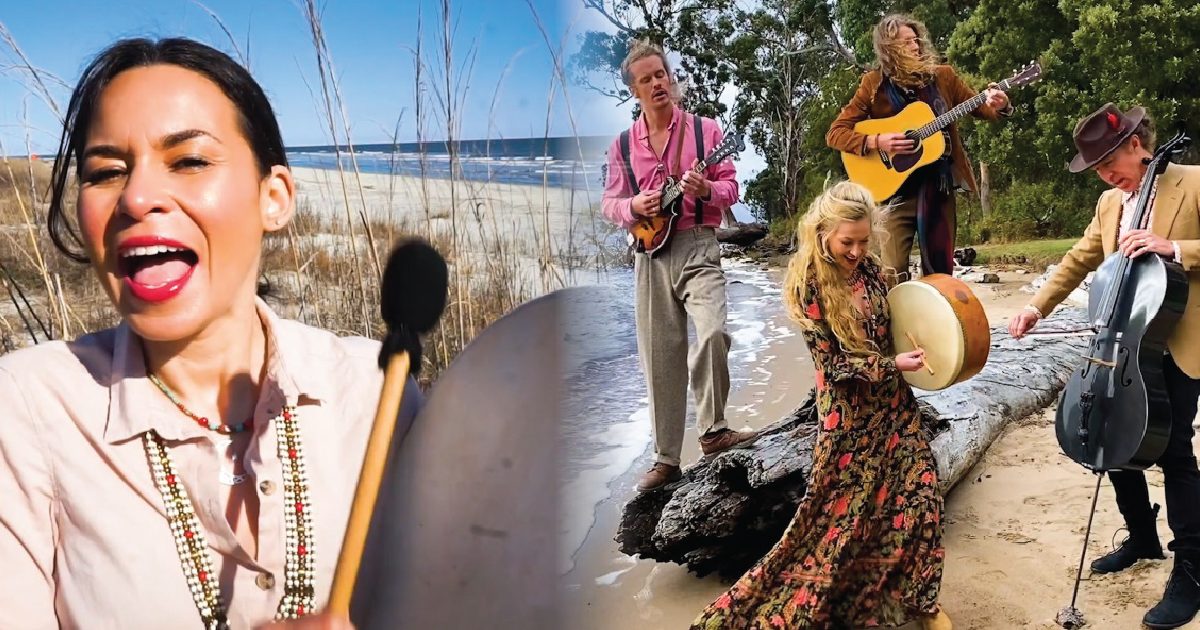
In Their Words: “It’s safe to say this global ordeal has proven that no one being has all of the answers; we are all navigating this plane the best way we know how. The Heart Collectors and I find ourselves on opposite sides of planet Earth, navigating to hope. We likened our experiences during this time to being aboard a ship, fighting against Poseidon’s watery fists and underneath dark, ominous skies. We do so with the understanding that we are in this together, and instead of accepting the defeat of a sinking ship, we remain steadfast in our voyage to find our lighthouse, our beacon of hope. This type of imagery was key in the songwriting process and aided us in delivering a message for the downtrodden. Whatever your case may be, we encourage you to seek your peace first, and then move your vessel onward and forward to hope for a new day, season, or way of being.” — Charly Lowry

“Coming together in collaboration from all points on the earth is an extraordinary experience, and one that makes our world so much bigger. Hearing and being present to the stories of people and cultures from one side of the world to another made us see how we literally are all in this together, we have all suffered this at once. Not in our life time has a global experience like this ever been the case, and it brings everything to a level. Things that seemed important became unimportant. The heartbreak of individuals suffering has a profound way of naturally breaking us open to be so much more capable than the usual way of dealing with existence. Finding each other and joining in this online type of creative common room has been the unifying strength to move forward, one step at a time.” — The Heart Collectors


Photo credit: Courtesy of Folk Alliance, Charly Lowry, and the Heart Collectors

When Springtime Comes Again: 12 Bluegrass Songs for Spring

We hope, wherever you’re reading this from, that snow, frost, and the cold are truly retreating, giving way to longer days, warmer weather, and the gorgeous, humid, cicada-soundtracked days of summer. But, before we get to full-blown bluegrass season – and, hopefully, our first live music forays since COVID-19 shut the industry down in early 2020 – let’s take a moment to intentionally enjoy spring with these 12 bluegrass songs perfect for collecting a wildflower bouquet, romping and frolicking in the meadow, and pickin’ on the back porch while the evenings are still cool. 

“Wild Mountain Flowers for Mary” – Lost & Found

A classic via Lost & Found, bluegrass certainly does not lack metaphors and analogies for love built around spring and the flowers re-emerging – see “Your Love is Like a Flower” below – but this somewhat melancholy track is an exceptional example of the form. And that banjo solo by Lost & Found founding member Gene Parker will stop you dead in your tracks.


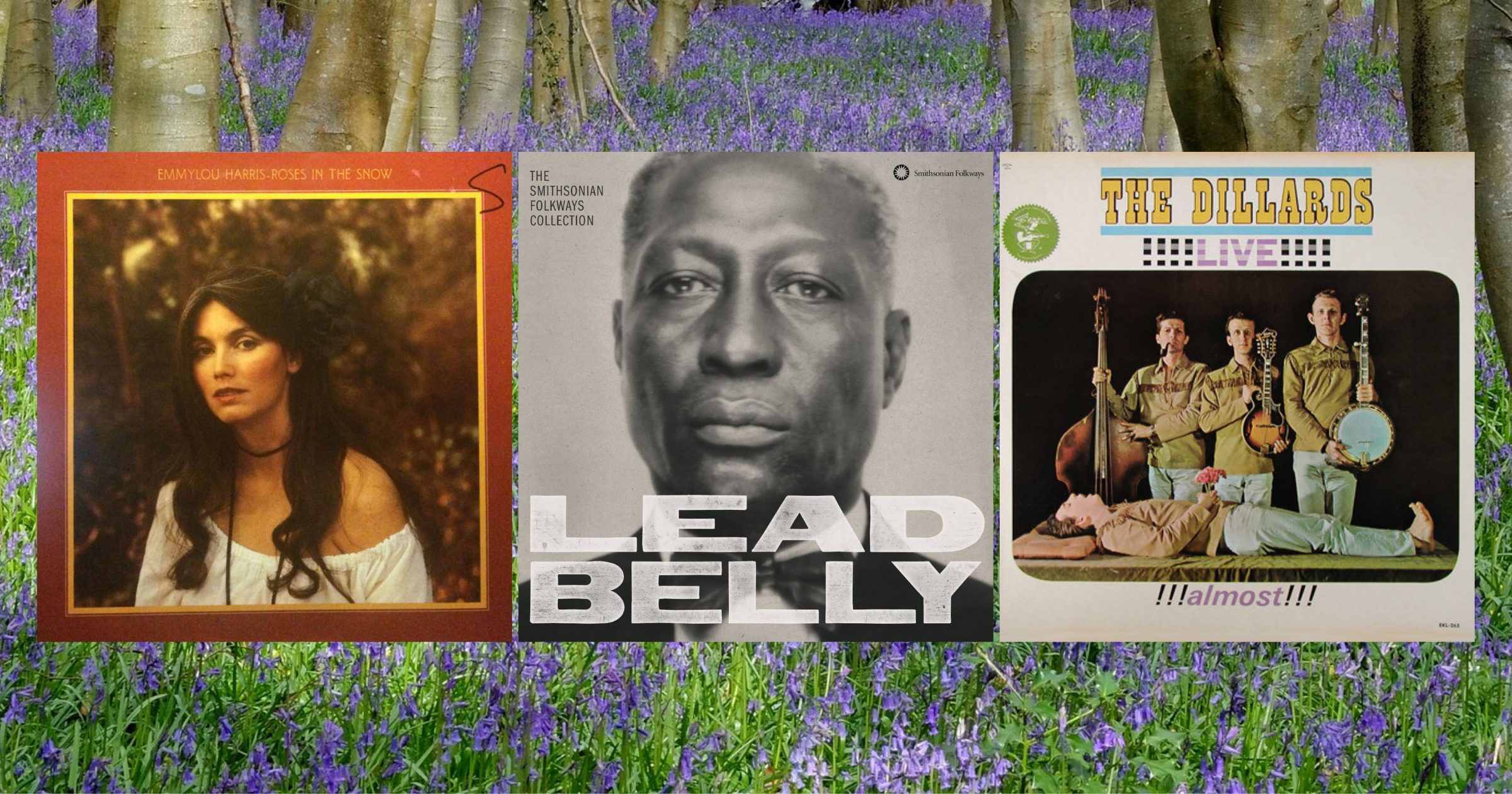
“There Is a Time” – The Dillards

Famous for the rendition sung by Charlene Darling of the ever-popular Darling family on The Andy Griffith Show, this haunting, seemingly timeless folky melody from The Dillards – who also played members of the Darling clan – cautions, “…Do your roaming in the springtime/ And you’ll find your love in the summer sun.” The suspensions in the banjo roll linger on the minor chord, echoing this sentiment and categorizing spring not by its own, shining qualities, but by the darkness in winter and fall. A true classic.


“Little Annie” – Molly Tuttle, Alison Brown, Kimber Ludiker, Missy Raines

A staple of impromptu pickin’ parties and jam circles, “Little Annie” is properly ensconced within the bluegrass canon, but is infused with new life in this application by Tuttle’s lead vocal, a slight queering of the lyric that’s perfectly at home in the hands of this veritable supergroup, assembled by D’Addario at Folk Alliance International’s conference in 2018. 


“Texas Bluebonnets” – Laurie Lewis 

Laurie Lewis is effortlessly, archetypically bluegrass even, if not especially, in applications that infuse other genres into the music, like this Tex-Mex flavored, twin fiddle arrangement of “Texas Bluebonnets” that truly never gets old. Yes, that’s Peter Rowan and Sally Van Meter guesting, and Tom Rozum jumping onto lead during the choruses so Lewis can utter the tastiest tenor harmony vocal. Stick around for the Texas double-fiddle break and do yourself a favor and bookmark the track for easy reference. You’ll be returning to it often, as this writer does. 


“The First Whippoorwill” – Bill Monroe 

The birds returning in spring are a sure sign of the seasons changing and the warm weather returning, though the whippoorwill’s role in folk music has always been as a bittersweet harbinger, never quite viewed without at least some semblance of suspicion, perhaps an acknowledgement of the whippoorwill’s mournful tendency of singing long into the dead of night. This recording of “The First Whippoorwill” is a tasty example of Monroe’s iconic high lonesome sound, with acrobatic breaks into entrancing falsetto woven into the harmonies. 


“Sitting on Top of the World” – Carolina Chocolate Drops

Whether you know this common blues, old-time, and bluegrass number from the Mississippi Sheiks, Doc Watson, John Oates, the Carolina Chocolate Drops, or any other of its many, many sources the fact still stands: Don’t like peaches? Don’t shake the tree. Demonstrably a song for spring, summer, and beyond.


“Roses in the Snow” – Emmylou Harris

Though BGS calls sunny southern California home – and BGS South is relatively temperate and mild in Nashville, TN – we know there are climes across this continent where spring promises snow as reliably as thaw. Emmylou Harris released her iconic bluegrass album in 1980 and its title track is another homage to love bringing warmth, newness, and growth even in the cold: “Our love was like a burning ember/ It warmed us as a golden glow/ We had sunshine in December/ And grew our roses in the snow…”


“Each Season Changes You” – The Osborne Brothers

Love is as fickle as the breeze! There’s a small irony in the song’s central conflict, that the singer’s love changes their mind as often as the seasons change – which, when taken whole, seems like a much more stable, predictable love than most? Even so, and done in so many different iterations, the central metaphor still holds, forever baked into the vernacular of these folk musics.


“One Morning in May” – Jeff Scroggins & Colorado

If you’ve been a bluegrass fan over the past five to ten years and you don’t immediately hear Greg Blake’s voice singing “One Morning in May” whenever it pops into your head, something must be awry. During Blake’s stint with Jeff Scroggins & Colorado, this spring-centered track was a highlight of their live show, a clean, modern rendering of what’s a properly ancient folk lyric. Lost love, war, nightingales, and yes, springtime – it has everything! 


“Your Love is Like a Flower” – Flatt & Scruggs

Perhaps the song that defines the form. Flatt’s languid, lazy phrasing seems to underline the leisure of spring that grows into the laziness of summer. The rhythm of love, tied to the seasons and the budding blooms. Another timeless sentiment, distilled into a favorite, stand-by bluegrass number.


“Springtime in the Rockies” – Lead Belly

You know the film and the country hit, but have you heard Lead Belly himself tell the story of hearing the tune from “Gene” coming by and playing him some music? Worth a listen and worth inclusion on this list, which would suffer if it didn’t include “When It’s Springtime in the Rockies” in one form or another!


“Spring Will Bring Flowers” – Balsam Range

Processing grief and loss through the ever- and unchanging seasons is a common thread through rootsy songs about spring. This more recent recording from powerful North Carolina bluegrass vocal group Balsam Range hearkens back to springy, ‘grassy numbers from across the ages – its intermittent banjo licks a call back to Jimmy Martin’s “world filled with flowers” in “Ocean of Diamonds.” 


Background photo by velodenz on Foter.com

BGS, Yamaha Guitars Partner on Folk Alliance Spotlight Showcase

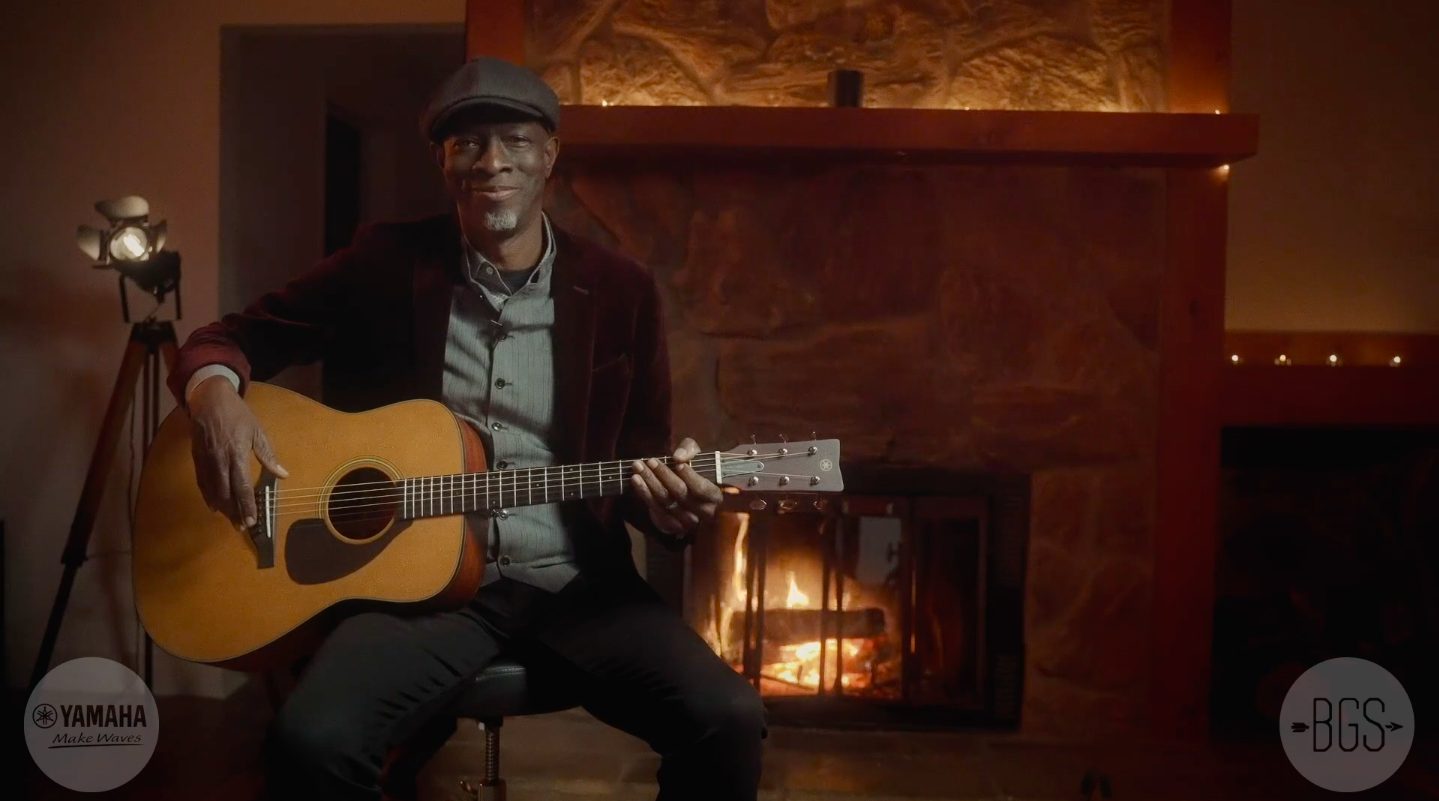
BGS is proud to announce our partnership with Yamaha Guitars for Folk Alliance International’s 2021 virtual conference, Folk Unlocked. Join us on Thursday, February 25, 2021 at 5:30pm CST for the Yamaha + BGS Spotlight Showcase, hosted by friend of BGS and acoustic blues and Americana veteran Keb’ Mo’.

Yamaha Guitars tapped BGS to collaborate on the curation of the Spotlight Showcase, which highlights Yamaha official artists, instruments, and gear as well as music from folk scene stalwarts and newcomers alike — from all across the continent and around the world. The hour-long virtual showcase features intimate, acoustic performances that certainly capture the atmosphere of connection and discovery that typically permeates FAI’s in-person conference.

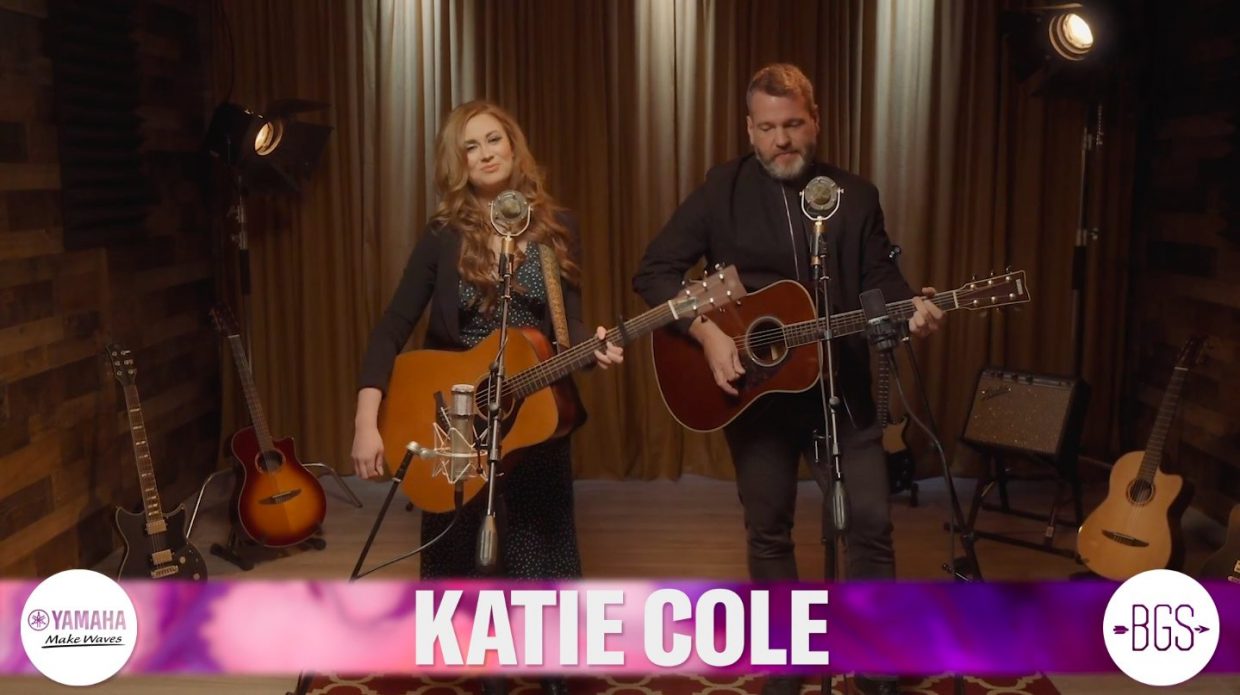
Yamaha official artist Katie Cole performs during the Spotlight Showcase.

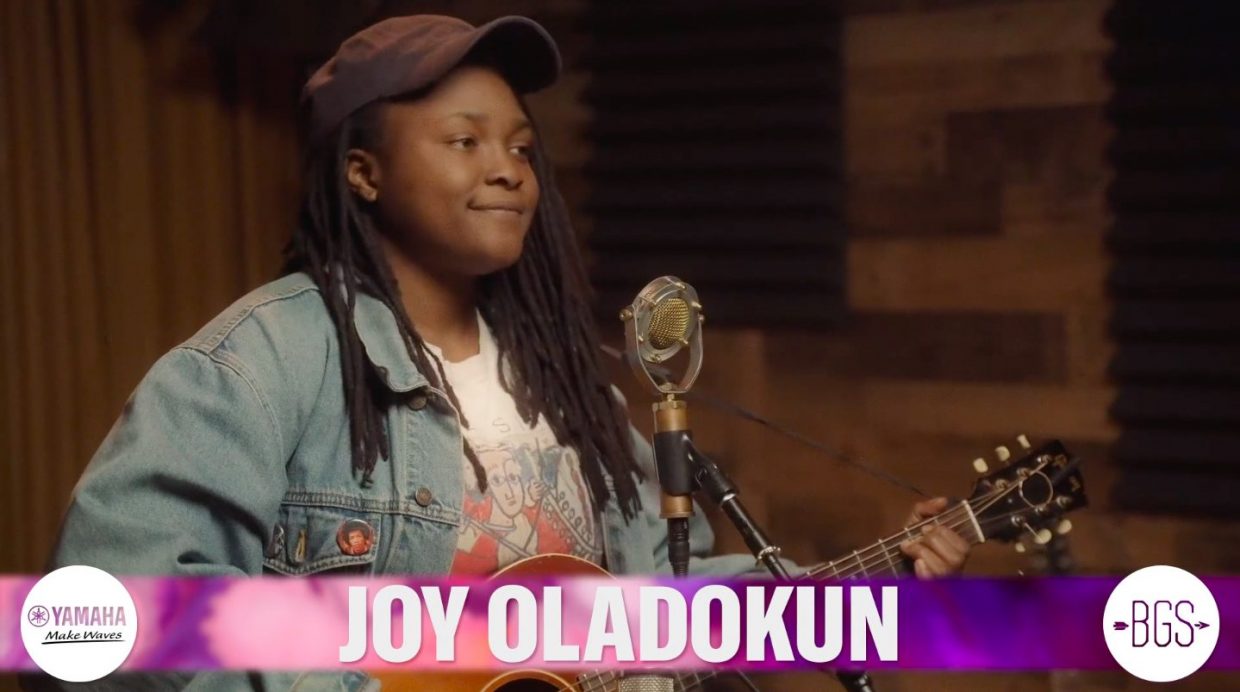
To lead us off, Australian singer-songwriter Katie Cole flavors the program with her pop-influenced alt-Americana material. A fresh face in bluegrass and old-time, Bella White sings her original Gillian Welch-meets-Hazel Dickens tunes with a warm honey yodel just breaking through her voice. You’ll also hear a captivating performance from Joy Oladokun, one of the buzziest names in the indie-folk world at the moment, and soaring tunes from American-Canadian folk duo Birds of Chicago, who headline the event with a trio set that feels as full band as a pandemic would allow. Our talented host, Keb’ Mo’, will treat our audience to a couple of selections as well.

In the coming weeks, BGS and Yamaha will release individual sessions from our Spotlight Showcase film! Stay tuned for more music and content from this exciting partnership.

Joy Oladokun is featured during our Yamaha + BGS showcase.

In place of an in-person conference this year, Folk Alliance International is hosting Folk Unlocked, a five-day virtual event for the entire international folk community to come together for panels, workshops, showcases, affinity and peer group meetings, exhibit spaces, networking, and mentorship. FAI are actively unlocking the doors and windows of the house of folk to be as broad and inclusive as possible, inviting those who have been loyally attending Folk Alliance International conferences for years while aiming to reach folk musicians and professionals who have never benefited from or attended FAI before.

Usually, the in-person version of this amazing event is only available to artists and industry professionals, but this year, thanks to the virtual nature of the conference, anyone can tune in from anywhere! Conference registration and Spotlight Showcase and Unlocked Showcase access are all available on a sliding scale, with the cost to attend being decided by each individual. In addition, donors to Folk Alliance’s Village Fund receive showcase access as well. There are so many ways to support Folk Alliance and attend our Yamaha + BGS Spotlight Showcase.

Get more information on Folk Unlocked and find out how to attend our Spotlight Showcase on Thursday, February 25 at 5:30pm CST here.


LISTEN: Sally & George, “Keepin’ Time”

Artist: Sally & George
Hometown: Nashville, Tennessee
Song: “Keepin’ Time”
Album: Take You on a Ride
Release Date: October 30, 2020

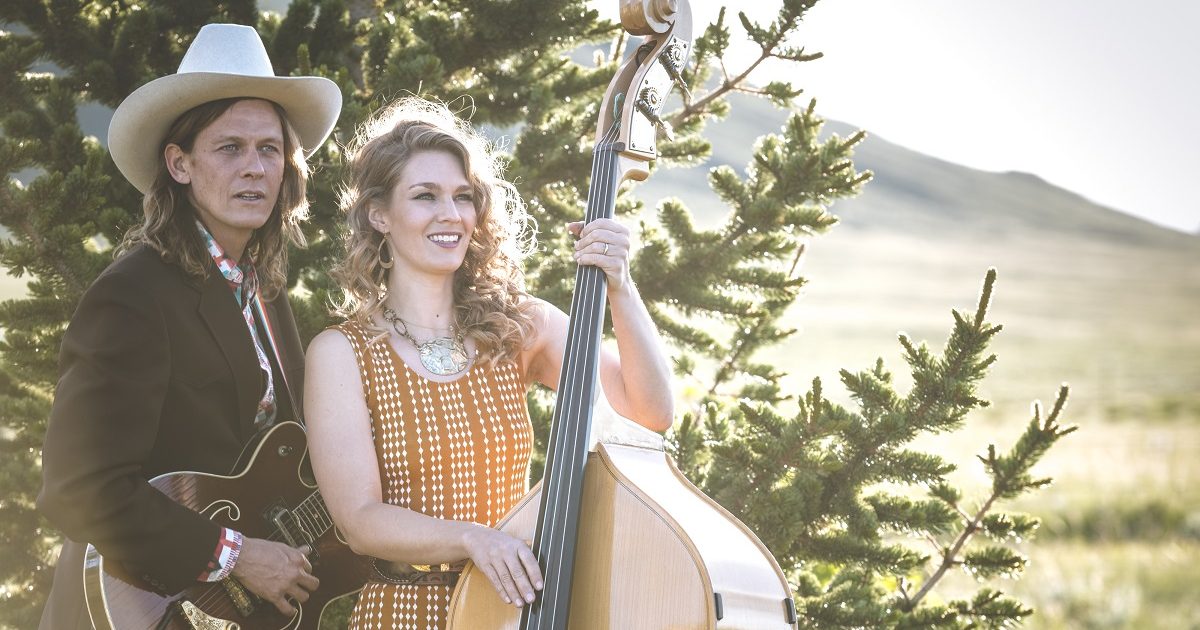
In Their Words: “Hailed as the Prince of Folk Alliance International, songwriter Robby Hecht helped bring ‘Keepin’ Time’ to life in a three-way Nashville co-write. Recorded live in Laramie, Wyoming, Shelby’s upright bass holds down the beat while Joel meanders around the fingerboard of his guitar. Lyrically, ‘Keepin’ Time’ harkens back to the early days of our relationship, when Joel toured full time with Sol Driven Train and Shelby kept a busy schedule globetrotting with Della Mae. Ironically, with our 2020 tours now cancelled and the world in varying stages of COVID lockdown, we have been together constantly since March. Like many couples experiencing a plunge into full time companionship, the challenge now lies in keepin’ time and space for self care.” — Shelby Means and Joel Timmons, Sally & George


Photo credit: Molly McCormick Photography

WATCH: Amythyst Kiah Plays “Black Myself” at Martin Guitar Museum

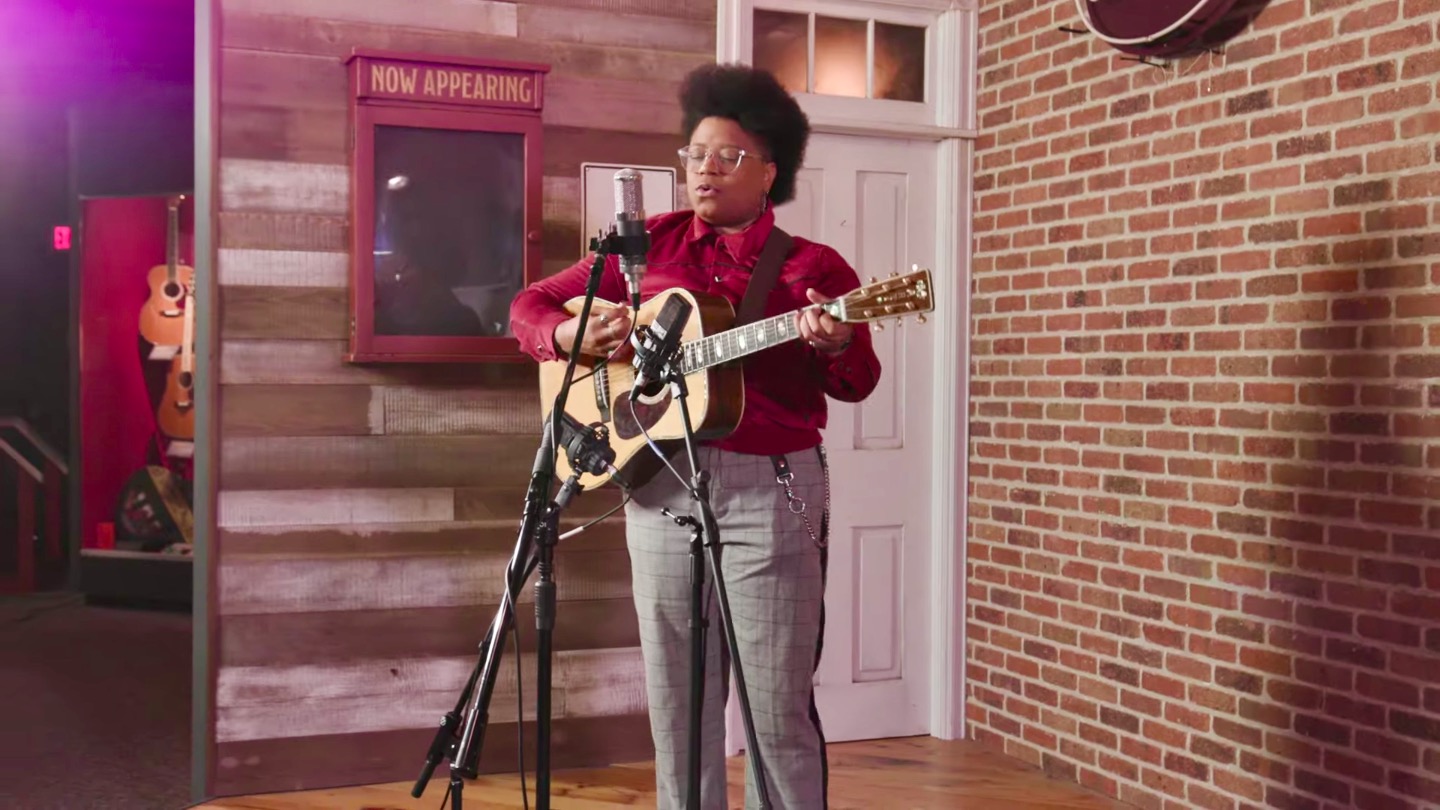
Grammy-nominated singer/songwriter Amythyst Kiah holds a direct line to the heart of emotion in each note she plays and every word she sings. Her powerful song, “Black Myself,” was the opening track on her latest release with Our Native Daughters, a collaboration that also features Rhiannon Giddens, Leyla McCalla, and Allison Russell. The lyrics’ unapologetic tone and fierce in-your-face quality earned Kiah a nod at the 2020 Grammy Awards, as well as Song of the Year honors at the International Folk Music Awards at Folk Alliance’s conference in January. Though maintaining a quite busy performing calendar, a full-length solo record is slated for release sometime this year. Until then, audiences will have to indulge in Songs of Our Native Daughters as well as this new video from the museum at Martin Guitars. Watch as Amythyst Kiah sings “Black Myself” behind a 1942 Martin D-45.

Sam Lee’s Garden Grows Songs and Fights Climate Change

A lush, resplendent, living and breathing album, Sam Lee’s brand new record, Old Wow, is something of a garden — and not simply because the opening track, “The Garden of England/Seeds of Love” sets such a tone. In this arboretum, Lee is collecting the most rare and fragile of cultivars — ancient folk songs. He is carefully tending them, gently fertilizing, grafting, hybridizing, and cross-pollinating them with bits of himself, bits of this global moment, and bits of this generation.

BGS contributor Justin Hiltner strolled down New Orleans’ Canal Street with Lee during Folk Alliance International to find a secluded, sunshine-y balcony for a chat about action, queerness, folk traditions, fatherhood, and much more.

My first experience with the new record was the video for “The Garden of England.” It felt so lush and verdant, it immediately made me think of your relationship with nature and the ecosystems you operate in, as well as your environmental activism. How strong of a presence do you think that part of your life — the activism, especially the environmental aspects — carries through the album? It’s visible in a lot of places overtly, but there’s an undercurrent in there, too. 

It’s funny, you use all of the words that I use, “How overt/covert” or “how implicit/explicit it should be.” Since the previous album I’ve gone through a very different journey of who I am, what I am meant to be doing, and why I’m doing music. I’ve come to the acceptance that actually, first and foremost, I’m an activist, not a musician. Music is the medium through which I disseminate, articulate my activism and my beliefs within that.

I’m very thrilled that I can do it in a way that is emotionally guided, as opposed to having to be statistically informed, or having the best persuasive political argument, which I’m terrible at. Through the mediums of song, ancient song, song that’s connected to the land by nature of its ancestry, I found I’ve got these really unusual resources and tools.

Something I like to ask musicians a lot is, how do we make this music relevant? How do we show people it’s not just throwback music or time capsule music? What I heard you describing is that you’ve found a relevance in these old songs for this current moment in geological time, due to the climate crisis, but also socially and politically. 

It is that, but I say it’s more about the essence of the songs. … I’m playing with tradition, but there’s a certain distillation process that I’m using within them, which like any distillation process is also highly adulterative and adaptive. I’m contorting them, but I’m also working with an unusual aesthetic, because that’s all we can do, be artists. I’m taking risks.

Like, with videos like [“The Garden of England”] and the one that’s just come out last week for “Lay This Body Down.” I’m going to use mainstream values and imagery and concept on some deeply ancient ideas in a way that doesn’t really happen very much.  And I’m not saying that’s because I’m pioneering! [Laughs]

I think it’s a vital thing to have to address, how does one tell these stories in ways that are going to be digestible by a new audience? One that actually would never encounter the tradition, in certain ways, because in the UK we live in a very musically segregated society. Most people aren’t thinking about music or that music can change identity, especially on such an ancient level. I’m having to test these things out.

Roots music and eroticism don’t really feel like they go together. “Lay This Body Down” feels so timeless and ancient, but the video for it has this level of eroticism and sensuality that feels current. I may be projecting my own queerness onto it, but I wanted to ask you how much of that eroticism comes from your queerness, or doesn’t it? 

You know, you might be the first person to ask me these questions. Generally music journalists where I come from are uninterested in that, or the ones that are wouldn’t come across me.

I didn’t approach it from a sense of wanting to work with queerness, I love working with dance. I come from a dance background 

And dance is very queer as is. 

It is, but why does it have to be? Because the irony is, and it shouldn’t make any difference, that all the dancers in that video are heterosexual. That doesn’t matter, but it was so wonderful working with men who were actually very comfortable with their heterosexuality, but also in their intimacy and physicality and their sense of body contact. Working and being in that space was so energizing. It wasn’t erotic, it was simply sensual. The funny thing is it comes across as erotic, as homoerotic, but in all honesty I think that’s the viewer’s perception.

 Maybe what I mean by “the video feels queer” or “dance itself is queer” is more accurately, “It leaves the door open for non-normative ideas and feelings.” Is that what you mean? The viewer can sense this because you left a crack open in the door of normativity for people to step through?

You’re absolutely right, and I’m very conscious of that. There’s a very Caravaggio-ness to this film. You couldn’t put any more arrows pointing [toward eroticism and homoeroticism.] I’m also fascinated with the queerness of folk song, particularly in the ambiguity when men are singing from the perspective of women and all those sort of rule-breaking things that were never rules in the first place.

I think it’s only the conservatism, in the sense of boxing what “is” and what “isn’t,” that binary-ness, that starts to do that. When you actually go back into history, those sorts of boundaries [weren’t as present], and I think that’s what I’m celebrating a little bit.

It’s a song about death, actually. These aren’t sexual beings, they’re mortal or immortal or transitionary. Their nakedness is as much about that shedding of materiality of the living and this idea of the trajectory from one realm to the other. They’re all expressions of myself… That’s what these movements are all about, for me.

 That sort of ambiguity you mention, “Sweet Sixteen” felt to me like it was pulling from that tradition — am I reading too much into that? Where did that song come from?

Interesting. It’s not [from that], in fact, for me it’s the most heterosexual moment of my entire career, that song. [Laughs]

Interesting! And right, I heard heterosexuality in it, but also — and again, perhaps this is my projection — more than that, too. 

This is the funny thing about making music, once you’ve put [the songs] out, you don’t own them anymore. They’re not yours. And never would I ever want to make music that was utterly explicit.

The song was a really hard one to choose to do and I don’t know why I did choose to do it. It’s actually more about me being a parent, because I’ve become a dad. In many ways I’m living in a heteronormative set up, even though it is unusual. We’re not together and we don’t live together and we never have, but the itinerant-ness of being a musician and leaving mum doing most of the care requires a little bit of me acknowledging that, through song.

This is my acceptance that I am a bit of that, packing my bag and heading off, away from the family set up. It also holds a little bit of my judgment upon that nuclear family thing, of husband and wife and child at home, and my terror of that. Which, I think has nothing to do with being gay. I think if I was straight I’d probably feel like that, too. [Laughs] It’s very much me trying to channel what a baby’s mother is thinking.

You carry on this tradition of folk singing unencumbered by music, a capella, but that to me, as someone who is a singer and musician, is kind of terrifying. The space that you play with, as a vocalist, on this record feels so vulnerable. What does it feel like to you?

I think I’m quite comfortable with vulnerability. Which is sort of a paradox, in a way, because the point of vulnerability is that it is uncomfortable. I think that space of exposure, for me, is a very exciting place. It’s not exciting because I get to see myself more, it’s because by being vulnerable you have to step outside the realm of protection, of comfort, of security. In that position you can do much more interesting things, finding perspective and placement and by that, a relationality to the world around you.

[Sometimes] you have to be an outsider, and that’s something that, by nature of who I am — by being gay, by being Jewish, by being the kid that never quite fit into any of the places that I was I’ve always been in that position. It’s a place I’ve always been drawn to, most artists are like that one way or another. I’m not particularly exceptional, I’m not saying I’m necessarily special, but that’s something that I’ve certainly been accustomed to.

When it comes carrying on the tradition, I did exactly the same. I went down the deepest root of folk music, but never went fully into those folk scenes. I was always an outsider in the folk world. I was always an outsider in these deep traditions, I was never part of the communities that I’m learning from. Yet, at the same time, you find yourself weirdly in the center of these places as well. This idea of, there is no center and there is no outside. Actually, these are all constructs only in our minds and we are all outsiders in the end.

When it comes to the music — and it’s funny, because I didn’t mix the album, though I was very involved in it — when [producer] Bernard Butler did that we were very aware of keeping the voice up front and center. Maybe there’s a little bit of ego and selfishness that he’s recognizing. That, as a singer, you need to be center. You are your voice. Not because I want to be up front, but maybe because I’m very clear about what I want to say in this record, so I think I have to mark my place in that respect.


Photo credit: Julio Juan

ANNOUNCING: BGS, IVPR, Bloodshot Records Partner for Folk Alliance 2020

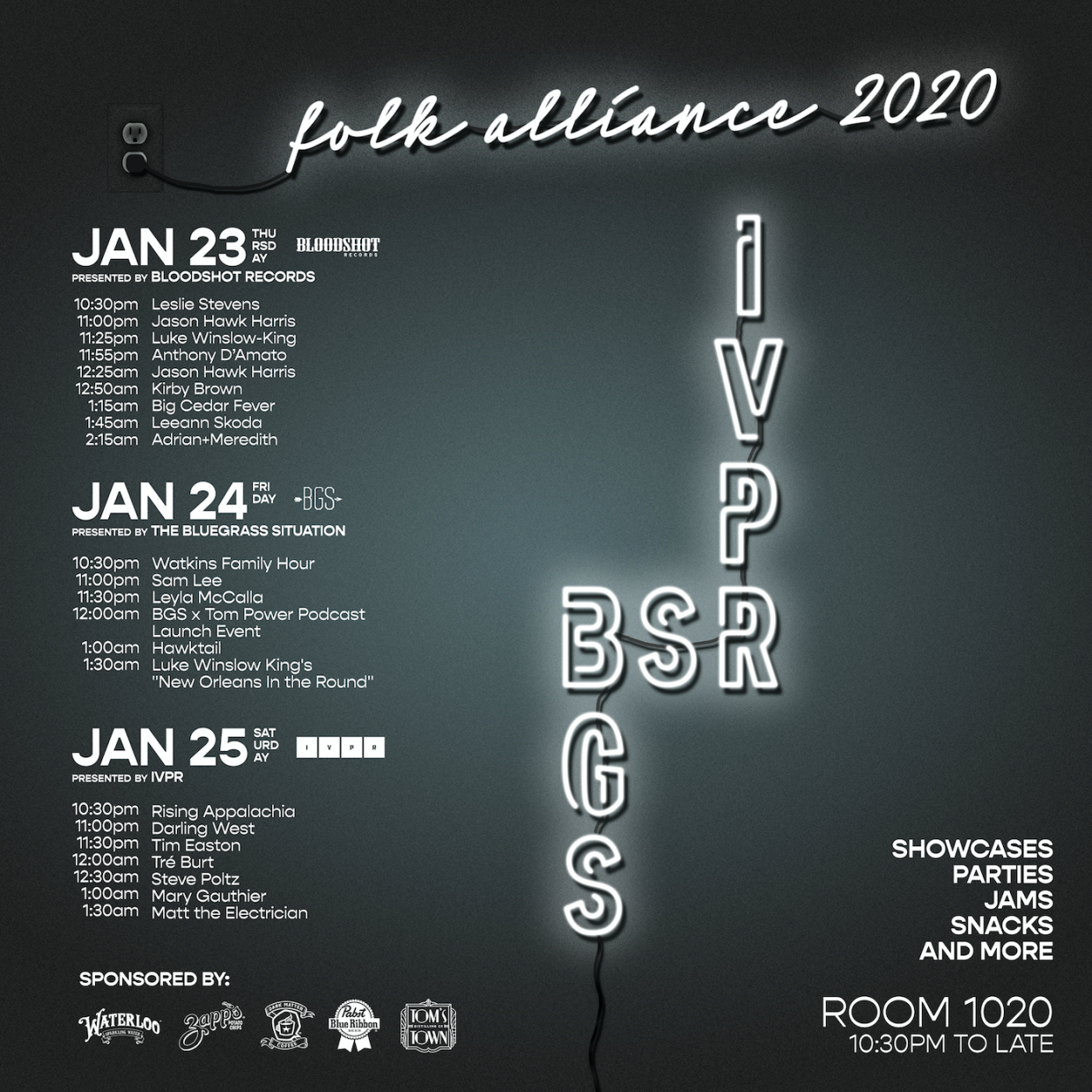
BGS is proud to announce we will once again be partnering with our friends at Bloodshot Records and IVPR at Folk Alliance International 2020 in New Orleans, Louisiana. In past years, folk, bluegrass, and Americana artists of all varieties have performed in rooms sponsored and co-sponsored by the three staples of the American roots music industry. Over time these lineups have perfectly balanced the truly unique atmosphere of discovery at FAI with showcasing the best of the best in folk music. As Folk Alliance moves to New Orleans for a singular year, BGS, Bloodshot, and IVPR are excited to fully incorporate this integral American music city, its sounds, its songs, and its local scene into their programming as well.

The full schedule for the Bloodshot + BGS + IVPR room at Folk Alliance International 2020 is available now! Make plans to join us each night starting at 1o:30pm, Thursday through Saturday, at room 1020 at the Sheraton New Orleans.

Find more info about attending Folk Alliance here.