Dolly Parton Carries Childhood Memories Throughout Her Career

Back through the years, I go wandering once again
Back to the seasons of my youth…

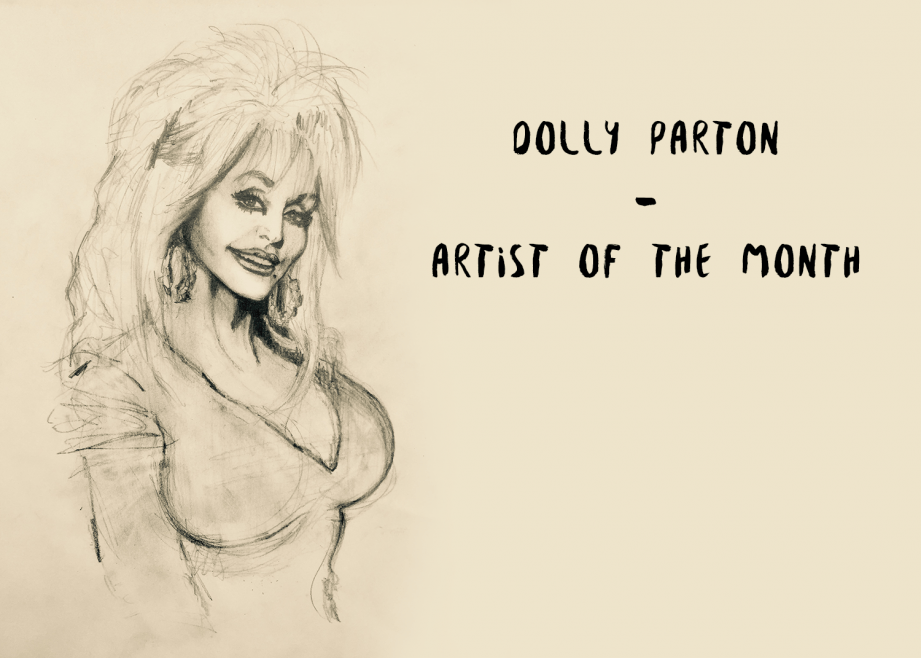
So begins “Coat of Many Colors,” which Dolly Parton frequently cites as the favorite song she’s written. That 1971 country classic is just one example of Parton’s ability to view the world through a child’s eye, whether she’s writing about her own life, placing a fictional young character in dramatic circumstances, or simply making a connection to a new generation of kids.

The newest example of this gift is Dumplin’ – a Netflix film where an overweight teenager finds solace in Dolly’s music. Leading up to the movie’s release, Parton released a duet version of “Here I Am” with Sia – an ironic choice, as the pop star is famous for singing with her back to the audience. But that anthem of self-declaration sets the tone for the Dumplin’ soundtrack, underscoring one of the reasons that a teenage girl would love Parton’s music in the first place. The heartfelt film is based on a young adult novel by Julie Murphy.

Seeing an early cut of Dumplin’ inspired Parton to write “Girl in the Movies,” a thoughtful song that finds her identifying with that very character — the “girl in the movies.” Parton told NPR that she wrote it for every little boy and girl. The song carries a strong message, she says: “Don’t just live in a fantasy of watching someone else live their lives. You star in your own role. You be the star of your own life.”

Parton has embodied that perspective for 60 years. In fact, 2019 is the 60th anniversary of the first time she released a song she wrote – in this case, “Puppy Love,” composed with her uncle Bill Owens. Parton was 11 years old when she wrote it, 12 when she recorded it, and 13 when it was released as a single on the tiny Goldband Records. She sang locally around Knoxville, Tennessee, and moved to Nashville on the day after she graduated from high school in 1964. Two years later and still chasing her dreams, she married Carl Dean, a lasting union that nonetheless yielded no children of their own.

Yet time and time again she incorporated a child into the storyline of her music. For example, in “Mommie, Ain’t That Daddy,” Parton sings from the perspective of a woman whose kids happen to see their father begging for money. In “Jeannie’s Afraid of the Dark,” Parton describes Jeannie as a child who feared burial; her duet partner Porter Wagoner then reveals that Jeannie dies. “Malena” is another doomed child who dies on the night of her birthday, finally receiving the set of wings she’d asked for.

By 1970, Parton had carved out a solo career in addition to her role on Porter Wagoner’s TV show. Her first No. 1 hit, “Joshua,” tells the story of an orphaned girl who hears about a mysterious man living a good ways down the railroad track. Curious, she seeks him out – and then promptly moves in with him. (“Why, you’re just what I’ve been lookin’ for!” she exclaims.) The poetic “Coat of Many Colors” arrived a year later, serving as a morality tale that still resonates decades later.

Parton employed that same autobiographical approach for “In the Good Old Days (When Times Were Bad),” a gem from My Tennessee Mountain Home. Reflecting on her childhood years, she sings, “No amount of money could buy from me the memories I have of them / No amount of money could pay me to go back and live through it again.” (Merle Haggard identified with the lyrics so much that he recorded a version, too.) Another of the compositions on that album is simply titled “I Remember” and finds her blissfully recalling those seasons of her youth. Of course, as she matured, so did her songwriting, most notably on poignant compositions like “I Will Always Love You,” “Light of a Clear Blue Morning,” and of course, “Jolene.”

Still, if you dig into her albums from this era, you’ll find songs like “Me and Little Andy,” about a poor girl and her dog who wind up on Dolly’s doorstep. She agrees to let them spend the night; by morning, the girl and the dog are both dead. Another one, “Mammie,” is about a midwife who raises a child after the mother dies at birth and then teaches the child to sing and play guitar — but Mammie herself doesn’t live to the end of song. “Silver Sandals” recounts the story of a disabled young girl who couldn’t walk; when she inevitably dies, Dolly and Porter imagine her happily walking up the golden stairs of Heaven.

On a brighter note, Dolly reminisces about a banjo picker she knew as a kid named “Applejack.” Almost like a precursor to Dumplin’, Parton composed “Shattered Image” about sitting on a bridge as a girl and throwing rocks into her reflection in the water. She compares the experience to the way people were shattering her public image as an adult. A 1979 album cut, “Nickels and Dimes,” is a co-write with her brother Floyd Parton, who died in December. While writing it, Dolly thought about how she’d open up her guitar case in downtown Knoxville as a young girl and busk in order to get enough quarters to buy hamburgers. By the time the song ends, she’s a star, but here’s how it begins:

“I used to stand on the corner and sing as a child
And I’d play my guitar and sing as the people went by
The sidewalks were crowded but I’d just sing louder ‘cause I didn’t mind
Spending my time, spinning my rhymes, and singing for nickels and dimes.”

Even beyond her musical output, Parton has kept a strong bond between herself and a younger generation. In 1986, she invested in a theme park in East Tennessee and rebranded it as Dollywood – a gift that keeps on giving, with new attractions added nearly every year. And it’s not all roller coasters. Parton’s mother sewed a replica of the fabled coat of many colors to display in the museum dedicated to Dolly’s life and career.

Nearly a decade later, Parton instituted the Imagination Library, where pre-school children receive a monthly book at no charge. To these lucky kids, Parton is known as “The Book Lady.” Meanwhile, “Coat of Many Colors” has been successfully transformed into a children’s book and an award-winning TV movie, in addition to being recorded by the likes of Eva Cassidy, Emmylou Harris, Joey & Rory, and Alison Krauss & Shania Twain.

When Parton was 70 years old, she secured a No. 1 country album with 2016’s Pure & Simple. One of the most charming songs on it is titled “I’m Sixteen,” where she sings, “It goes to show you’re never old / Unless you choose to be / And I will be sixteen forever / Just as long as you love me.” A year later she released her first-ever children’s album, I Believe in You.

As 2019 begins, Parton is in the spotlight again. On January 6, “Girl in the Movies” will compete for a Golden Globe award in the category of  Best Original Song in a Motion Picture. A month later, she will be recognized as the MusiCares Person of the Year at an all-star concert event, just a day before the Grammy awards. Along with celebrating her magnificent musical achievements, the presentation also acknowledges the fact that the Imagination Library has given out 100 million books since its inception. Parton is the first member of the Nashville music community to be honored at the annual MusiCares gala.

Way down in the fall, Parton will return to the Grand Ole Opry, celebrating the 50th anniversary of her induction in October. But her history to the Opry stretches about a decade before that. When she was 13, Parton and her uncle Bill Owens had lingered outside the Ryman to meet Johnny Cash. When he emerged, a starstruck Parton begged Cash to let her sing on stage – but it would take a while for this dream to be realized. In time, Opry star Jimmy C. Newman gave up his slot for her, although Cash handled the introduction that night. According to Parton’s autobiography, Cash told the audience, “We’ve got a little girl from up here in East Tennessee. Her daddy’s listening to the radio at home, and she’s gonna be in real trouble if she doesn’t sing tonight, so let’s bring her out here!”

Parton wrote about this career milestone in her book: “I know I had never heard a crowd cheer and shout and clap that way. And they were doing it all for me. I got three encores. This time I was prepared for an encore, but not three, not at the Grand Ole Opry. Someone told me later, ‘You looked like you were out there saying, “Here I am, this is me.”’ I was. Not just to that audience but to the whole world.”


Illustration: Zachary Johnson

Roland White: A Tribute to a Bluegrass Hero

To begin, a disclosure: Roland White is kind of a hero of mine for his perseverance, his originality, his sense of humor, his experience and much more. Also, he’s an employer of mine; I’ve been playing in the Roland White Band on most of its dates for close to 15 years now, and I’ve recorded two albums with him, including his new one, which I also co-produced. Lastly, and maybe most importantly, Roland’s a friend of mine. And he has a great story.

Played with Bill Monroe, the Father of Bluegrass? Check. Played with Lester Flatt? Check. Toured around the world as a member of the Country Gazette and then the Nashville Bluegrass Band? Check. Had a band with Béla Fleck? Check. Helped organize and make Jim Lauderdale’s very first album? Check. Fronted his own band since the turn of the century? Check.

That’s a lot of boxes, and any one of them could be turned into a meaty article. Here, though, I’m going to concentrate on the story of the group whose legacy inspired the new album, Roland White & Friends: A Tribute To The Kentucky Colonels; it’s the starting point for the larger Roland White story, illuminating the way it was for young bluegrass musicians in the 1950s and 60s and how Roland, his brother Clarence, and the rest of the Colonels were able to craft an enduring and influential body of music.

Shortly after he turned 16 in 1954, Roland’s family relocated from Maine to Southern California. He was already playing the mandolin by then, and younger brothers Clarence and Eric were playing guitar and banjo (tenor, not the bluegrass 5-string). They joined their sister, JoAnne, who sang, around the house and at local functions. Soon after moving to Burbank, the boys rather casually entered a talent contest, and in short order found themselves dressed in hillbilly clothes and, as The Three Little Country Boys, performing on a variety of local stages and radios shows — even, if briefly, on television. All of this before any of them had heard a lick of what was just beginning to be called bluegrass.

Roland recalls that it was in a comment from a visiting uncle in the middle of 1955 that he first heard Bill Monroe’s name — and naturally, it was in connection with the instrument they shared. “My uncle Armand asked me if I’d ever heard of Bill Monroe. He said, ‘He plays the mandolin, he’s on the Grand Ole Opry and,’” Roland adds with a grin, “‘he is fast!’” Not surprisingly, that piqued his interest — but to actually get hold of a record was, at the time and under the circumstances, something of a project, involving a walk into town to the music store, perusing a catalog, ordering it, waiting, and then picking up the little 45rpm disc of his choice: “Pike County Breakdown.” (It was actually the B-side of “A Mighty Pretty Waltz,” and yes, it was fast.)

What followed was a “conversion” experience of the kind that was happening around the same time to other people his age, give or take a few years — a cohort that includes the slightly older Mike Seeger and Ralph Rinzler; the slightly younger Del McCoury and Neil Rosenberg (like Roland and Clarence White, all members of the International Bluegrass Music Association’s Hall of Fame); and the slightly younger still Jerry Garcia, David Grisman, and Peter Rowan. What most of them had in common was some distance, geographic and sometimes sociological, from the Southeastern epicenter of the emerging bluegrass sound; what all of them had in common was a profound desire to hear and play more of it.

More records soon made their way into the White household, often mail-ordered from Cincinnati’s Jimmie Skinner Music Center, and so did a five-string banjo, which Roland learned to play in the Scruggs style. Eric moved over to bass, and the band, now just The Country Boys, began studying the picking and singing of Monroe, Flatt & Scruggs, Reno & Smiley, the Stanley Brothers, Jimmy Martin, and more. While they focused on the whole sound, there was room, too, for Clarence to study the lead guitar stylings of Earl Scruggs, Don Reno, and the Stanley Brothers’ George Shuffler, as well as the rhythm guitar playing of Flatt, Martin, and others. And though skilled banjo players were still rare — especially in California — by 1958, they’d met and recruited Arkansas native Billy Ray Lathum for the job, allowing Roland to devote himself once again exclusively to the mandolin.

1959 was a big year for The Country Boys. For one thing, they were joined by Leroy McNees — Leroy Mack, as he’s still known — whom they met first as a fan, but soon persuaded to take up the Dobro. Mack not only rounded out the band’s sound, but quickly became a valuable asset as a songwriter. For another, the band got its first bookings at the Ash Grove in Los Angeles, a key venue in the emerging folk revival, and one that also booked national bluegrass acts as they made their long journey out to the West Coast.

Indeed, the Ash Grove turned out to be an important place where folk audiences and bluegrass musicians could meet one another; as Roland put it, “Playing the Ash Grove opened the way for us to play to a totally new audience — a folk music audience that we had known nothing about. They dressed differently from the Country-Western audience (they were college students, professors, beatniks, doctors, and lawyers) and they paid close attention to the music.”

Not only did the Ash Grove provide the group a new audience, it gave them a different sound; the less raucous, more attentive audience and more sophisticated sound system allowed Clarence White to hear himself better than ever before. Within a matter of weeks, he began to take solos — plenty of practice time at home had allowed him to explore and build on what he’d been hearing on records — and The Country Boys started to build a unique sound that featured lead acoustic guitar in a way that reached well beyond their influences.

By 1961, The Country Boys — now a five-piece band — had built a good circuit for themselves, playing to folk audiences at the Ash Grove and on college campuses around Southern California while maintaining a foothold in the dynamic country music scene. Their prominence gave them an inside track that landed them an appearance on The Andy Griffith Show — just before Roland got his draft notice, a then-common occurrence. While he served for the next two years, the band continued without him, taking a couple of important steps, including the replacement of bass player Eric White with Roger Bush; a name change to The Kentucky Colonels; and recording their first LP in 1962. The project, which featured some of Leroy Mack’s most enduring originals, also debuted Clarence’s distinctive, increasingly powerful lead guitar work. Over in Germany, where he was stationed, Roland admits that “it floored me.”

By the time Roland was discharged from service in the fall of 1963, Mack had left the band, replaced by transplanted Kentucky fiddler Bobby Slone. With Mike Seeger’s then-wife, Marge, acting as their booking agent, the Colonels were booked for their first East Coast tour, playing folk clubs in the Boston area, New York, Washington D.C., Baltimore and beyond. In each, they made connections with local bluegrass musicians, ranging from melodic banjo pioneer Bill Keith to the members of the Country Gentlemen to David Grisman, and when they came east again in 1964 — a trip anchored by an appearance at the Newport Folk Festival — they did more of the same. Interestingly, though, and a sign of the distance that still separated the folk revival circuit from the country music one, they never got even as far south as Nashville; as Roland says, “there was nothing for us there.”

Sadly, while their focus on folk audiences had served to give them broader appreciation than they might have gotten while working in Southern California’s country music scene, it also meant that, as those audiences began turning their attention to more electrified folk-rock and newly emerging rock artists, the Colonels would see harder times. Though they continued playing into 1966, the group eventually disbanded, with Roland soon taking the guitar/lead singer job with Bill Monroe and moving to Nashville, and Clarence turning first to studio work, and then to electric guitar playing with the Byrds.

Even so, the magic that the Colonels had made continued to appeal to both Roland and Clarence, and in 1973, they reformed their original brother trio with Eric. Adding banjo man Herb Pedersen and dubbing themselves the New Kentucky Colonels, they embarked on an April tour of Europe and, though the banjo position remained unstable, they started to make plans for more touring and recording — only to have them come to an end when Clarence was killed by a drunk driver while loading out from a Palmdale, California club.

What did the band leave behind? Not much in the way of recordings, unfortunately. The Kentucky Colonels made hardly any in the studio — the album done while Roland was in the Army and an all-instrumental album, Appalachian Swing!, one of the most influential bluegrass recordings of the 1960s are the sum total — and while enough of their shows were recorded at the Newport Folk Festival, at California venues, and on that final European tour to fill a couple of albums, they’ve often been out of print or hard to find.

Yet it’s clear — and the new record makes the point with its wide-ranging roster of guests, from guitarists like Billy Strings, Molly Tuttle and Jon Stickley to banjoists such as Kristin Scott Benson (Grascals) and Russ Carson (Ricky Skaggs & Kentucky Thunder) and fiddlers like Brittany Haas (Hawktail), Kimber Ludiker (Della Mae) and Jeremy Garrett (The Infamous Stringdusters) — the legacy of the Colonels can’t be measured so simply. From songs like “If You’re Ever Gonna Love Me” and “I Might Take You Back”— both co-written by Leroy Mack, and recorded by scores of bluegrass artists — to guitar showcases like “Listen to the Mockingbird” and “I Am a Pilgrim,” their influence has been carried forward through the bluegrass generations, not only by Roland White, but by Tony Rice, Jerry Garcia, and a host of others who met and heard and jammed with them during those critical years in which they were playing the national folk music circuit.

And for Roland White, for whom those years were just the beginning of a storied career that has taken him, by turns, deeper into the heart of bluegrass and further out to broad-ranging audiences, the opportunity to revisit them in the company of new generations of musicians has been an exciting one. “I really enjoyed playing and singing with all these musicians,” he says. “They appreciate the old music that we made, but they brought their own touch to it, too. It’s good to know that these songs, and these sounds are in good hands.”


Illustration by Zachary Johnson
Photo by Russell Carson, Carson Photoworks

Mountain Heart: The Evolution of a Bluegrass Band

I met Josh Shilling on January 5, 2007, the afternoon of the day on which he’d later make his first appearance with Mountain Heart. On the Grand Ole Opry. Singing a song he’d written. At 23.

A lot has happened since then, but in the world of bluegrass, where one eye—at least—is always looking back, it’s worth looking back even further, because Mountain Heart had already been a hard-working, award-winning band for nearly a decade. I wrote the liner notes for their 1998 debut and I’d followed them ever since. When they invited me over to that pre-Opry rehearsal, I knew Mountain Heart as a ferociously talented band that knit together a diverse set of influences—diverse, that is, within a thoroughly bluegrass framework; a distillation and extension of important ‘90s musical trends carried forward and elaborated upon in a new decade.

It was obvious, though, that Josh was bringing something different to the band, even before he brought his piano—and as the years have passed, that’s become a central element. Some bands have different members pass through, yet retain a trademark sound; some keep the same personnel, but move from one sound to another. Mountain Heart has been unusual in that it’s done both—none of the founding members remain, and in many respects, neither does much of the original sound. Yet its evolution has been, if not preordained, organic and thoughtful, and a good chunk of the responsibility for that belongs to Josh, who’s both a musician’s musician and a performer who can connect with thousands at a time.

When we got together to talk about the group’s stunning new album, Soul Searching—the title track written by Shilling and the Infamous Stringdusters’ Jeremy Garrett—that passage of time was an obvious starting point.

You’ve been with Mountain Heart now for….

Eleven years.

I’d say there are a lot of more recent fans of the band who see Mountain Heart as coming out of bluegrass, and so they assume that you came out of bluegrass as well. But you had a whole other thing going before you ever started with the band.

Yeah. I grew up at the foot of the Blue Ridge Mountains—I lived right up the street from (banjo player) Sammy Shelor, I was 45 minutes from the Doobie Shea studio with Tim Austin, Dan Tyminski, Ronnie Bowman—all those guys were up there. So I was around bluegrass, and my dad loved it, but I was drawn to the piano, and so I would always just sit at the piano and figure out simple songs. And then I was drawn to Ray Charles, the Allman Brothers, Leon Russell and people like that. That’s what really pulled me into music. When I started playing live, my first bands were country bands, and then little rock bands, and then all of a sudden, within a year or two, I was in a straight-up r&b band, singing Stevie Wonder and Ray Charles. So that was where I kind of homed in on my vocal style and chops, and learned a lot of chords and all that.

When you go to adding that to a band like Mountain Heart, it really opens things up. I’m sure it freaked some people out ten years ago, but these days, we’ve been yelled at enough, and now I feel like our crowd is way more diverse, and younger. One of the things that’s allowed the band to exist for 20 years this year is turning the pages, bringing new faces. When I joined, it was [fiddler] Jimmy VanCleve, and [mandolin player] Adam Steffey, and [bassist] Jason Moore, and then Aaron Ramsey came right after me, who is just one of the finest players alive. And then we’re talking [guitarist] Jake Stargel, Cory Walker, Molly Cherryholmes, and Seth Taylor and Jeff Partin, and on and on and on. We constantly get incredible players, and I feel like the songwriting’s getting better each record, and that’s what’s allowed us to keep doing it.

Looking at it from the outside, it seems like one of the things that Mountain Heart does is, it takes these great bluegrass musicians, and lets them play other stuff besides bluegrass.

Not only that, I’ve seen a lot of these guys kind of find themselves, and we nurture that. The current guys definitely don’t try to control the way a musician plays. When Seth Taylor joined the band, his guitar hung down to his knees, and he played way out over the hole, and it was the most unconventional, not-Tony Rice-looking guitar style I’d ever seen. But we didn’t try to change that, and he went from amazing to just a force of nature over the course of a couple of years. When I first met Aaron, he was staring at the floor; you could tell that in his brain there was a metronome going, and he was just chopping [mandolin], staring at the floor, and that was it. And within a year or two, this guy was a rock star—he was out front, he was the show. And he still is a huge part of the show.

I’ve seen the band be that for everybody—we don’t try to control anyone, and we definitely do push each other. It’s awesome, the way we all kind of piggyback off each other. And there’s a competitive edge, to keep up with each other, but there’s also a respect in that band. Even on a bad night, everyone’s like, “you’re my favorite.”

So we have parameters, but we push those. We kind of know how the song starts and how it ends, and we all know the main melody and the arrangement. Like with “Soul Searching” or “More Than I Am”—live, they might have a two minute intro. It allows us to be expressive each night. But at the same time, if we go play the Opry, we can simplify and just play a three-and-a-half minute version of that song.

How long did you guys work on this new record?

Between the writing and the A&R and thinking through general ideas, this project started several years ago. But Seth and I had played a lot of these tunes into voice memos for probably a year and a half, and they would develop a little each time. Songs like “Festival”—it was a really slow song, and we all liked the message, but it was never good enough to put on a record. And then one day I imagined the bass line being like “Day Tripper” or “Low Rider”—this really bass-centered groove. So we tried that, and everybody immediately said yes, this is gonna work perfect.

So there were lots of times when we’d meet and talk through the songs, and then eventually we booked the studio time and went to rehearsal. We ran through the songs for two days as a band—singing lead through a PA and everything. Recorded everything, found the tempos we liked, wrote the tempos down, wrote the keys down, made signature notes on what we knew we were going to grab, and what instruments, and if we were gonna have percussion or drums. And then we went into Compass and cut all eleven songs and all the lead vocals in three days. Pretty much everything I sang on there was live, to the point where, when we went in to edit, you couldn’t edit anything.

We cut all of the band’s parts in three days, and then we had Kenny Malone play some percussion, Scott Vestal came down and played some banjo, Ronnie Bowman sang harmony on one, [fiddle player] Stuart Duncan came in one day. And so essentially, it took about three years of A&R and talking, about three days of recording, and then we literally catered the last few days, got some drinks and watched our heroes play along with our tracks.

It’s a band-produced project; we did the art work—we took a stab at it with a couple of different artists, and could not land on what we wanted. And Seth actually drew this herringbone frame on a piece of paper, took a picture of it and sent it to my wife, Aleah, who’s a graphic designer and develops software, and she pulled it into Photoshop—and a lot of this was made on a cell phone. So we all took part in the entire design, from the photography to the design, to the A&R, the writing, the mixing. Garry West was involved for sure as co-producer, and Gordon [Hammond] did a great job of mixing, Gordon and Sean Sullivan tracked a lot of this stuff, Randy LeRoy did a great job mastering.

We’re talking about the next one already, but we may do it all ourselves next time—make it a point that every piece of this is gonna be put together by hand in some form or fashion. I think these days fans like that; they’d rather have…already, with a lot of our presales and a lot of our CD orders, we send out drawings and stuff. I think people really appreciate those things.


Photo by Sebastian Smith

Curtis McPeake, “Leather Britches”

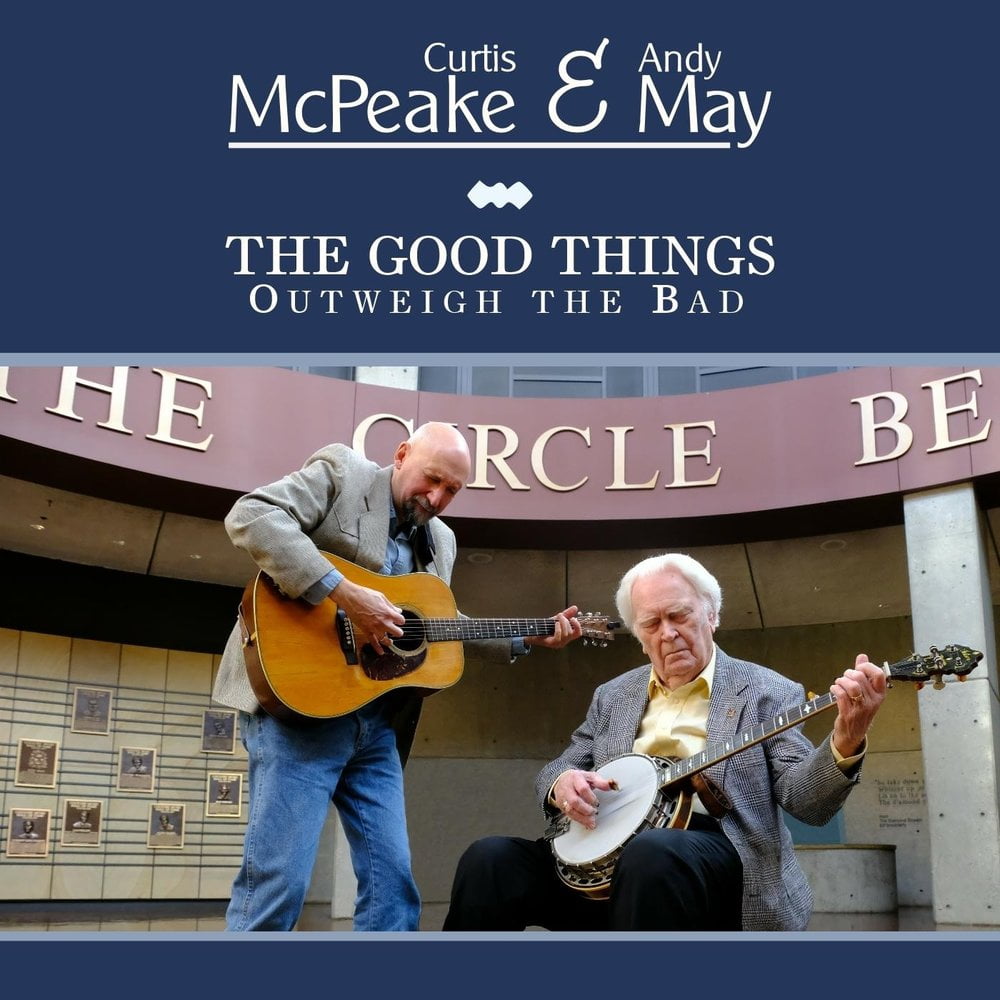
There’s a beauty in the timelessness of bluegrass. It facilitates spaces where the youngest prodigies and the most traveled, veteran virtuosos intermingle with ease. The genre is young enough that a few of its trailblazers are still among us, and stories of the legendary architects of the form are still told firsthand. The 90-year-old banjo player and recording artist Curtis McPeake is a testament to that timelessness. His career began seventy years ago; in his early days he performed and recorded with Bill Monroe and his Blue Grass Boys. He later became the only banjo player to ever be a member of the Grand Ole Opry house band and he was also an in-demand session musician, appearing on records by country stars like George Jones and Melba Montgomery. So the fact that McPeake has been named a recipient of one of 2018’s Distinguished Achievement Awards from the International Bluegrass Music Association should come as no surprise.

But, McPeake will not be accepting the award from retirement — he still picks the banjo as fine as ever, he also buys and sells instruments, and he continues to record and perform. Earlier this year he and his collaborator, multi-instrumentalist and songwriter Andy May, released a full-length album, The Good Things (Outweigh the Bad). On its final track, “Leather Britches,” you can hear that same timelessness in McPeake’s duet with Nashville stalwart fiddler Aubrey Haynie. They kick the tune with fiddle and banjo only, showcasing that classic pre-bluegrass format, Haynie fiddling fantastically far and wide while McPeake holds it all together with his three-finger roll, seventy years in the making.

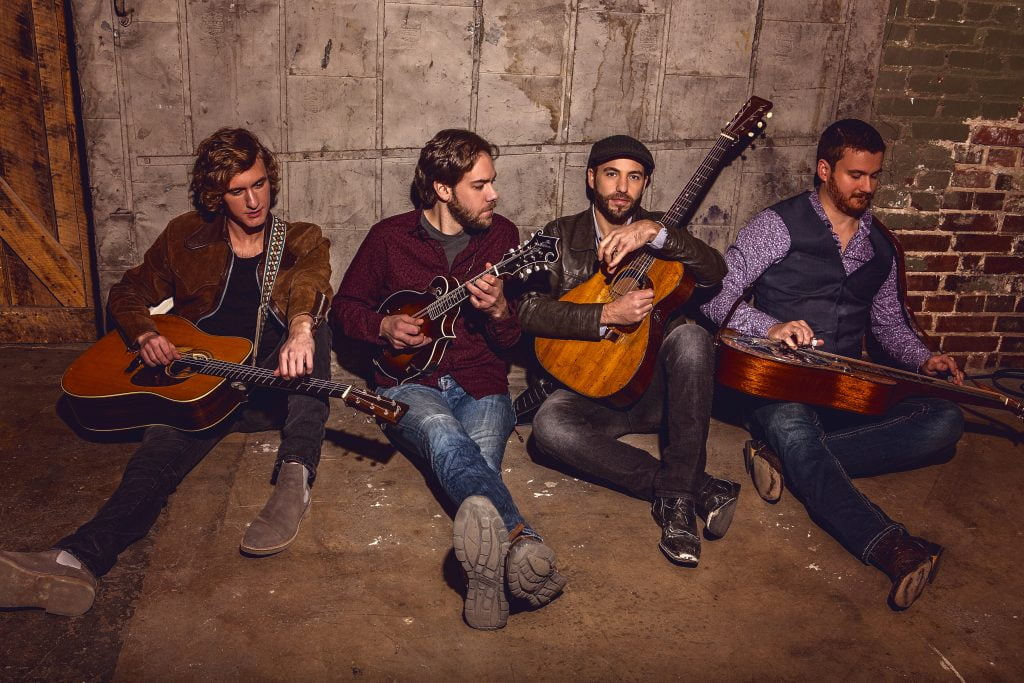
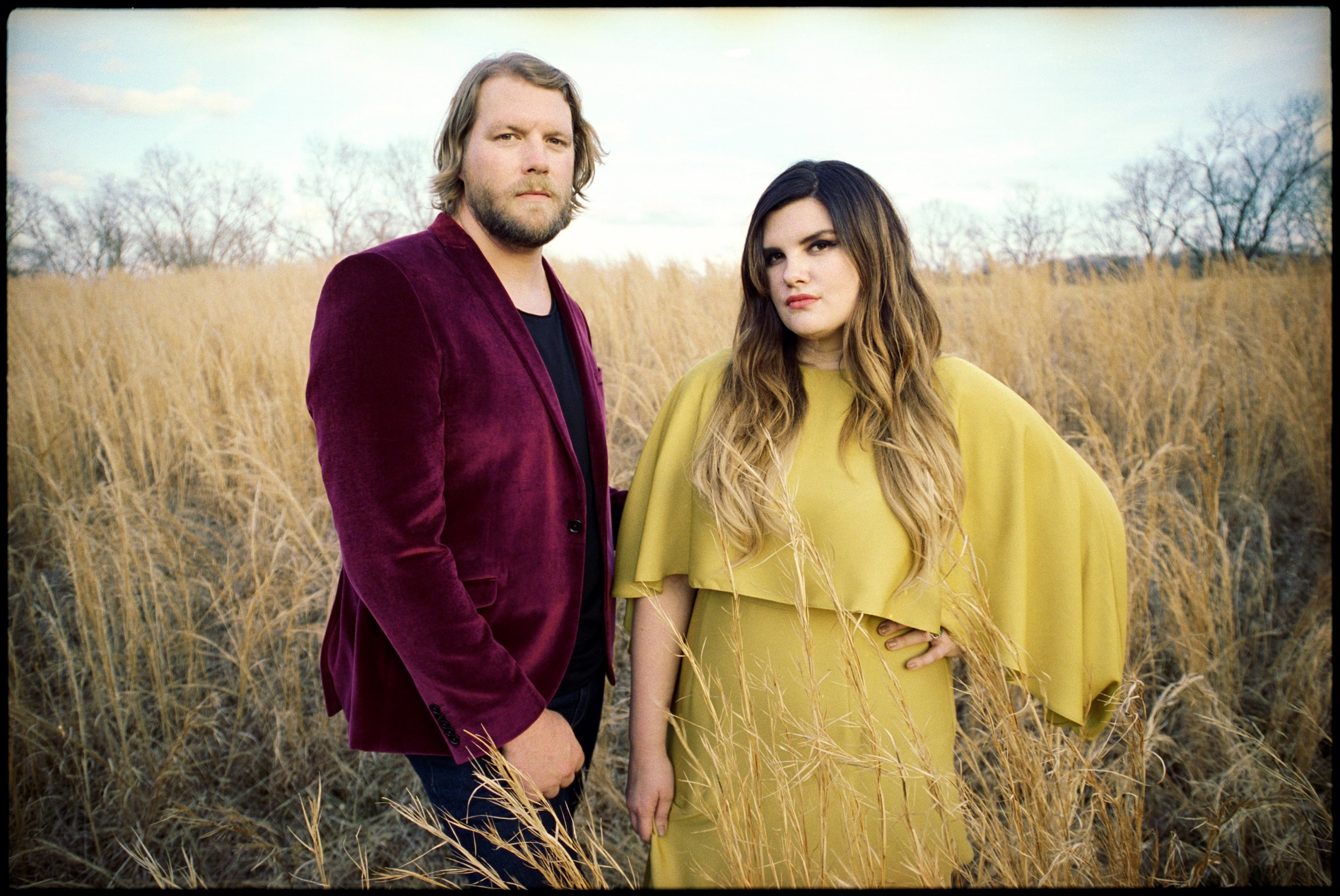
BGS 5+5: Carolina Story

Artist: Carolina Story
Hometown: Nashville, Tennessee
Latest album: Lay Your Head Down
Personal nicknames: Emily (Sweetheart of the Rodeo, Emmy, Merly); Ben (Kingfish, Burly)

Which artist has influenced you the most … and how?

Ben: Neil Young. When I was a boy, my dad and I would ride the backroads in the country outside of my hometown of Pine Bluff, Arkansas. I remember hearing CSNY’s 4 Way Street live album and being completely mesmerized by the sounds of the acoustic guitars and the harmonies. Once I heard Neil doing “Cowgirl in the Sand,” that was it. Then, as I began to discover more of his work, I became fixated on his harmonica playing, chord structures, his songwriting and his unique voice.

Emily: Brandi Carlile. I first heard Brandi’s voice over ten years ago and the moment I did I became enamored of her. It was The Story album and every song, the melodies, the harmonies and the specific tone of her voice that struck me. She was one of the first artists for me that you can hear her emotion as she sings. She’s never just singing the words. She’s feeling them and because of that you feel it too!

Which elements of nature do you spend the most time with and how do those impact your work?

If we’re not writing, touring or working you can usually find us out in Kingston Springs, Tennessee, at Harpeth Moon Farm (the family farm run by Ben’s sister). When we’re not lending a hand in the fields, we are usually in a canoe on the Harpeth River. An underlying theme in a lot of our songs is to keep going against the odds and to never stop growing. The influence and imagery of the river coupled with sowing actual seeds and seeing them blossom into their final form inspires our writing.

Since food and music go so well together, what is your dream pairing of a meal and a musician?

Ben: My dream would be to have been able to spend all day fishing with fellow Arkansan and hero, Levon Helm. After we caught all the fish we could stand, we would have a big fish fry, drink ice cold beer and tell stories while laughing a whole lot.

Emily: I am all about breakfast. Any kind of breakfast. I have to eat something breakfast-related before I can move on to lunch. I also would like it accompanied by a strong cup of coffee and Emmylou Harris. She is an artist that I wish would not only want to chat about her and the Gram Parsons days but also give me some harmony pointers. She picks the most unique harmonies.

What was the first moment that you knew you wanted to be a musician?

Ben: It was the summer of 1997. I was 11 years old. Third Eye Blind’s self-titled album impacted me in a big way during those months. I probably started three or four “bands” that summer without any of us knowing how to play a lick. Once I heard “Smells Like Teen Spirit” by Nirvana just before 6th grade started that year, I talked my parents into getting me a guitar and the rest is history. I started my first actual band in 7th grade and never really looked back.

Emily: I have several tape cassettes of me at around 9 years old pretending to be a radio announcer and singing songs on my pretend radio station. They are pretty classic when you go back and hear them! But it was 5th grade, a year later, when my vocal teacher during class had each of us take turns singing a solo. She was taken aback and gave me my first concert solo. It was a song about Amelia Earhart. I still remember all the words. It was then that I realized that I wanted to take it more seriously.

What’s your favorite memory from being on stage?

In June 2014, we made our Grand Ole Opry debut. Emily was 7 months pregnant with our son, Wilder at the time. To be able to stand in that sacred circle surrounded by family and friends where our heroes once stood is something that we will never forget.


Photo credit: Laura E. Partain

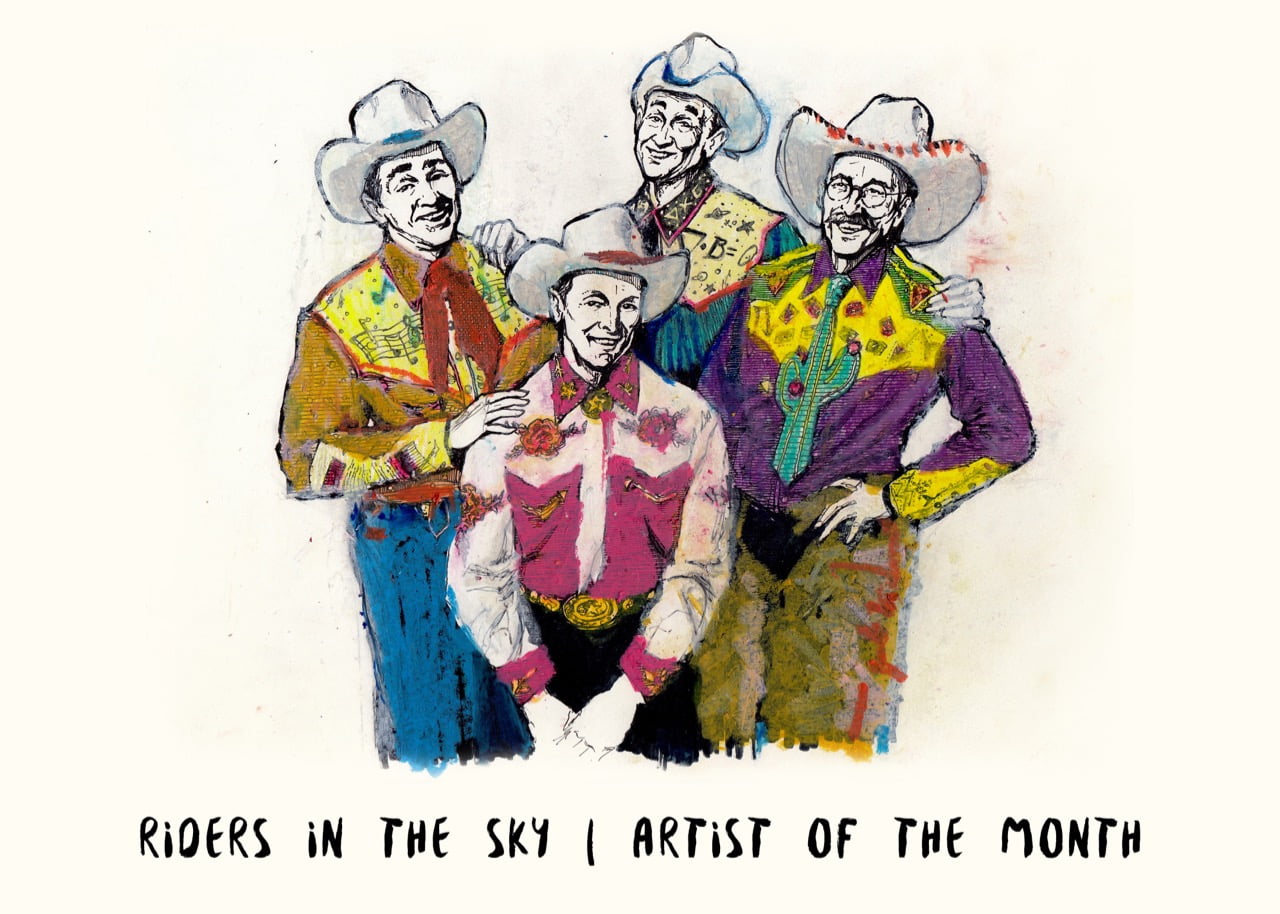
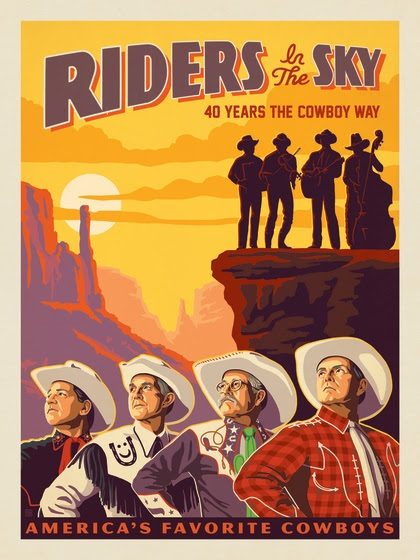
Riders in the Sky: Genuine Songs, the Cowboy Way

It started with Ranger Doug giving “A great big western howdy!”

It ended with Doug and compadre Too Slim harmonizing on “Happy Trails” and calling, “Head ‘em up! Move ‘em out! Hee-yaw!

Well, how else would you expect a conversation with the two founding members of Riders in the Sky to be framed? That’s the Riders in a nutshell right there, these troubadours being dedicated to both the preservation and continuation of the rich traditions of cowboy music and celebrating life on the range. It’s a nutshell they’ve honed and inhabited over the course of four decades as the premiere (perhaps the only) purveyors of the form — not to mention the associated comedy schtick (one of those Old West terms) and embroidered, be-chapped and tall-hatted finery.

They are currently celebrating that time span with a new album, 40 Years the Cowboy Way, their 35th full release, a survey of the wide range (pardon the expression, pardner) and extensive history of cowboy music, from paeans to the prairies and rivers, to campfire songs, to jigs and polkas, to gunfighter ballads. There’s also a tour, which will soon bring their total career concert count past a whopping 7,300! It’s a legacy they never dreamed of back on that day in 1977 when guitarist Ranger Doug (known to some as Doug Green) first sat in with a bluegrass band that featured upright bassist Slim (a.k.a. Fred LaBour). Well, best — and most entertaining — to let them tell the tale.

“He was just Deputy Doug then,” Slim recalls. “He’d show up in a hat, play a Bob Nolan tune.”

“‘Song of the Prairie,’” Doug interjects. “You loved it.”

“I said, ‘Where’d that come from,” Slim says. “He said, ‘Bob Nolan.’ I said, ‘Did he write any others?’ He said, ‘Yeah, about 1200.’”

That, Slim says, was his introduction to the music of the Sons of the Pioneers, the Western swing-and-harmony group that featured Nolan and cowboy-star-to-be Roy Rogers. Soon, with the addition of Windy Bill Collins, they dedicated themselves to the traditions of the singing cowboys — Gene Autry, Tex Ritter, Rogers of course — and the Western ideal. Well, at least for one show.
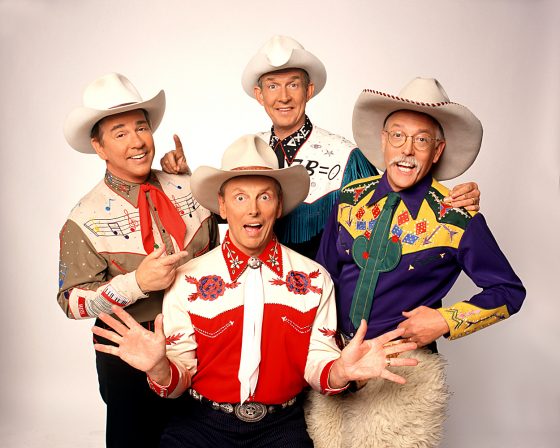
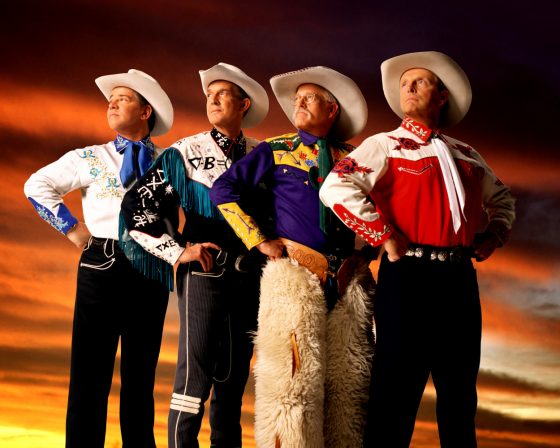
“I famously called Ranger Doug a couple days after our first gig and said, ‘I don’t know what happened back there, but America will pay to see that,’” Slim says. “It was so much fun, and it was music that had kind of gone from the landscape. The Sons of the Pioneers had albums in the cut-out bins and no one was doing what we were doing, so different and weird and entertaining.”

It was from one of those cut-out Sons albums, happened across by Slim, that the group took its name, and there was no looking back. With Collins leaving after a year (and replacement Tumbleweed Tommy Goldsmith staying just a year himself), Western swing fiddler Woody Paul (Paul Chrisman) came on board in 1978. Accordion wizard Joey Miskulin started working with them in 1988, becoming a full-timer soon after, squaring out the quartet we know today. Or as the Riders tell it:

“Woody joined us, bringing more original songs, a great tenor voice and that great fiddle style,” Doug says.

“And he can also fix the bus when it breaks down,” says Slim.

“That’s why we keep him,” adds Doug. “Not for his fiddle.”

“Not for his punctuality,” says Slim.

Doug continues, “Then about 10 years later we saw a guy on the side of the road with a sign that said, ‘Will Squeeze for Food.’ That’s how Joey joined us.”

Slim: “So that’s how we got a couple songwriters, a producer [Miskulin] and great players.”

“And Too Slim is being modest about his comedy skills,” Doug notes.

“I am objectively one of the second-funniest guys in America,” Slim says, with a modest level of modesty.

Soon the accolades, credits and, of course, fans around the world mounted up impressively: They were inducted into the Grand Ole Opry in 1982. They sang “Woody’s Roundup” in Pixar’s Toy Story 2 and contributed to the soundtrack of another Pixar film, Monsters, Inc., while their related albums, Woody’s Roundup: A Rootin’ Tootin’ Collection of Woody’s Favorite Songs and Monsters, Inc. Scream Factory Favorites each won them a Grammy Award for best children’s album. Also in animation, they were portrayed as a robot cowboy band in a 2003 episode of the animated Duck Dodgers, for which they sang the parts. In other media, they had their own Riders Radio Theater show and starred in a 1991 CBS Saturday morning kids show — kind of Pee Wee’s Playhouse on the prairie — which though not a hit, is pretty noteworthy nonetheless.

“About 10 years ago I said, ‘This has been way more,’” Slim says. “Two Grammys, getting to work with Pixar, the great venues and all the things we’ve done.”

Of course, even 40 years ago, this was already music of deep nostalgia. For that matter, when those singing cowboys and frontier heroes were doing it, it was already music evoking a bygone era — “the thrilling days of yesteryear,” as the Lone Ranger’s announcer put it.

How much of what they do is based on real traditions, how much on myth? Is there a core of reality to the music, or is it, in the parlance of pageantry, “folklorico?”

“That’s a complicated question,” Ranger Doug says. “The West had been glamorized and mythologized since the [James] Fenimore Cooper novels [notably The Last of the Mohicans in 1826], or [Owen Wister’s] The Virginian, at the turn of the 20th century. Buffalo Bill’s Wild West Show was created while the West was still wild! There’s a whole tradition of romanticizing the West. Just so happens that it works musically. The great poets like Bob Nolan and Stan Jones and Tim Spencer were able to make it into song. Roy Rogers and his flowery shirts and six-shooter, that was not the real life of the cowboy in 1867.”

But, Slim stresses, “There was music in 1867. Folk music. A lot of Celtic, Appalachian songs to it, the whole blues thing. And when jazz happened it took on that element. So it became a melting pot, a gumbo of music, wouldn’t you say, Ranger Doug?”

“I would,” Doug says. “And the Mexican music, too, not only the songs but in costuming.”

And, Doug adds, “There’s a tradition of singing among working men who are isolated, in the days before they were on their iPhones. Sailor shanties and lumberjack songs and miner songs. These existed. So no surprise that there were genuine cowboy songs as well.”

“Some of these survive, and we do them,” Slim says.

Doug cites a few classics: “The Old Chisholm Trail,” “Red River Valley,” “Streets of Laredo,” “Bury Me Not on the Lone Prairie.”

There’s one, a little more obscure today, featured on 40 Years the Cowboy Way.

“‘The Blue Juanita’ was written in 1844 and was written about a river in Pennsylvania, which was the West to a lot of people then,” Slim says.

“It’s about an Indian maiden, plying her canoe up and down the Blue Juanita,” Doug says.

They do know their stuff.

“I wrote the book,” Doug declares.

“He actually did,” Slim elaborates. “Singing in the Saddle, the whole history from Fenimore Cooper to Riders in the Sky. A lot of emphasis on the Golden Era, the ‘30s and ‘40s when cowboy music was huge.”

The new album covers much of that ground. Surrounding “The Blue Juanita” are some expected, familiar songs (“Cimarron,” “Mule Train,” even Marty Robbins’ 1950s hit gunfighter ballad “El Paso”), some originals evoking classic styles (Green’s “Old New Mexico”) and some corny comedy (“I’ve Cooked Everything,” a food-centric rewrite of the Johnny Cash hit “I’ve Been Everywhere,” sung by craggy camp cook Side Meat, who may or may not be a LaBour alter-ego).

There are also what for some might be unexpected turns, including the jigs medley of “Pigeon on the Gatepost” and “The Colraine Jig” and the spritely “Clarinet Polka,” co-written by Woody Paul and Joey Miskulin, who, by the way, had a long pre-Riders stint with “Polka King” Frankie Yankovic. Oh, and some yodeling. There has to be yodeling.

Then there’s a Too Slim arrangement of the old traditional song “I’ve Got No Use for Women.” Talk about bygone eras. They are highly conscious of the fact that times, and attitudes, have changed, not just from the days of the real Old West but since the days of the Hollywood Old West, neither of which may have cast Native Americans and other non-Caucasian ethnic groups in the best light, not to mention women. It’s a touchy subject.

“Do you want to take that one, Slim?” Ranger Doug asks, gingerly.

“Go ahead, Ranger Doug,” Slim replies.

“At least two of us have some political views,” Doug says. “But we don’t bring them forth on stage unless we slip. We’re there to entertain. As far as the image of the cowboy, some people like John Wayne and Jimmy Stewart and Gene Autry were arch-conservatives, and that stuck. I think of cowboys as environmentalists, people who appreciate good behavior and preserve the beauty of the West.”

“We are of our time,” Slim says. “And what we foster is a good feeling, an escape in a way. But also a reinforcement of timeless values of contentment, sincerity, being true to your word and humor. And I think that’s why people still come back to our shows. They like the feeling we engender on stage. But I’ve got ‘I’ve Got No Use for the Women’ on the album, and it’s an old song and I do it in character. But in the #MeToo generation, I’ll be honest, I’ve thought about it. But it’s a valid song and performance and I think it works great. But we all recognize that there was part of the West that had to do with genocide, the underbelly of American history. We’re aware of that.”

However fine a line they may amble in that regard, however the image of the cowboy and the old times may have changed, whatever the Riders have done has worked for 40 years, people do keep coming to see them — at Bonnaroo, where they just played as part of a special Grand Ole Opry show, something they’d tried to make happen for 15 years, to Tokyo, at a tattoo convention in Maine or in the village of Anaktuvuk Pass, Alaska, well north of the Arctic Circle. Asked about the most memorably strange gig they’ve done, they cite that latter one.

“The whole town came to see the show,” Doug says. “All 40 of them, all Native Americans — Eskimos. They all brought their boom boxes and recorded the show.”

Slim adds, “And after the show we watched the Northern Lights, and I had a bottle of Southern Comfort.”

Whether riding off into New Mexico sunsets or the sitting under the Northern Lights, it’s been some mighty happy trails.

…until we meeeeet… aaaa…. gain.


Illustration: Zachary Johnson

Another Ring in the Tree: A Conversation with Ketch Secor

Maybe it’s true in life, but it’s certainly true in writing about music that the longer you do it, the more often you hear echoes of the past — not only in the music itself, but in artists’ attitudes and, especially, in their stories. Hearing Old Crow Medicine Show’s Ketch Secor recount the odyssey that preceded the band’s settling in Nashville, it’s easy to be reminded of the contintent-spanning journey taken by Western swing ensemble Asleep at the Wheel some 30 years earlier. Like AATW, who eventually were embraced by all but the most benighted purveyors of authenticity — and with whom they recorded a blistering “Tiger Rag” in 2015 — Old Crow have made their way into the heart of hillbilly music’s most cherished institutions, signified by their 2013 induction into the Grand Ole Opry cast.

Yet the group’s ascension to Opry membership was hardly predictable, much less preordained. Old Crow’s stature in the country music world has been built on a determination to make their own sound that’s every bit as strong as their allegiance to the broad swath of hillbilly music music that forms its foundation. When Marty Stuart invited them to join the Opry, he mentioned an early description of the radio barn dance as a “good-natured riot,” and it’s a description that obviously applies to the band’s shows, too — a simultaneous looking back and looking forward that has made legit fans out of the likes of bluegrass Hall of Famer Del McCoury. With Volunteer marking the group’s 20th anniversary, it seemed like a good time to look back at how they got from there to here.

The press release mentions this is the 20th anniversary of the band.

That’s no joke, brother.

Does the band have a hard start date — a day you could point to and say, “This is the day the band was formed”?

Well, the band left — that’s the day the wheels turned, and we left our home — in October of 1998, because grape season was over, and we had money. We had picked enough, and raised enough, and washed enough dishes, and cleaned enough attics, and played enough nursing homes, and bought enough cartons of cigarettes to get across the border in style.

I was thinking about this because the occasion for this interview is the release of a new record and, 20 years ago, the record industry and the music industry looked a lot different than it does now. And you guys have become what you are during this period of tremendous change and turmoil.

For example, when we crossed that border and finally got waved through into Canada in the fall of 1998, one of the things we had packed was our boombox, so that we could dub our tapes. Because this band sold cassettes. In 1998, this band sold cassettes on the street corner for $10 — Canadian. That was crazy. We were selling them, too. Our tape was flying out of the box — we had a shoebox full.

Why was that?

Well, it was not the quality of the tape. The tape wasn’t very good. We recorded it with one microphone hung from the ceiling, on a four-track recorder. It sounded really, really shitty — low-fi, low quality. That tape was called Trans:Mission. It was the time to dream, with your body, the things that you wanted to have happen. It was the time to read Bound for Glory by Woody Guthrie and think, “I’m going to get on that boxcar, too, goddammit; I’m going to hobo. I’m going to thumb it, I’m going to flag the diesel down. I’m gonna go West.” A good time in life to take that risk, and drop out. Isn’t that what it’s all about? Isn’t that where all of the magic lies, in that moment of deciding that you’d rather wear a mask — and pick a really great one?

So you made your way to Nashville …

That happened three or four years later. Now, I had already been to Nashville before I got to Ottawa. I had been here with another band in 1997, and played on the street corner here. I was gonna busk! I’ve been busking Nashville for like 23 years, or something stupid like that.

What’s the value of busking? I mean, aside from the financial.

Well, we can’t all play like Del McCoury, or anyone in that band — particularly when we’re kids. But we had the passion. It’s the same passion. I was never gonna get as good at playing the fiddle as Jason Carter, but I had the same drive to play as hard as Jason plays. And I couldn’t get onto a stage anywhere because … well, one, I was drunk. I had taken this old-time loyalty oath that made me fiercely pro-old-time and anti-bluegrass, so I didn’t play well with others. I was rabble-rousing. And also, I sucked. So where was I gonna go, with all of that energy and drive, but none of that finesse? And I was somewhat unapproachable. I might have smelled bad. I might have had blood on my shirt, or on my mouth. That was part of the mask I wore, was unapproachability.

Being in Tennessee seems to be important to the band, at this point. Is that a fair statement?

Yeah. I think, as soon as we got to Tennessee, it got a lot more legit.

In what way?

It got legit because it got more focused on the idea that, all right, this band is the soap box. In the chapter previous to our move to Nashville as Old Crow — which is the chapter that runs from about 1999 to about 2000-and-a-half — in that chapter, we were probably as interested in farming and making whiskey and planting by the lunar signs as we were about playing live shows. And that was where learning about early hillbilly and country music was as much an engagement with the landscape of the music as it was with the actual performance of the music. When it got to Nashville, then it became about doing that in Nashville, which had a different musical landscape.

So, in our journeying, we start with the quixotic journey, which is the fire, the odyssey. And then we end up in this sort of hillbilly monastery up in east Tennessee and west North Carolina. And then we come to Nashville, and we end up in this crack house kind of mentality of revolving doors of freaky people, motel rooms, and rent money going out and booze coming in, and songs, and percolation, and Del McCoury, and the road. The beginnings of the way the road would look. It became more vocational and less about kind of artistic presence and disturbance. As buskers, we were as much protesters as we were entertainers.

You guys still feel that way?

Yeah.

How does it express itself? Musically?

Oh, there’s a ferocity to what we do, and an intensity. I mean, I’m feeling it right now, which is why I’m jacked up. But I’m jacked up always. I’m always jacked up, when I talk about the fiddle, and when I talk about John Hartford and Del McCoury. I’m always jacked up because that stuff’s just so powerful.

When I hear “volunteer,” especially in a music-related setting, I think of the Volunteer State — Tennessee. Is the title a reflection, in part or in whole, of the environment in which you’re in now? Or does it have some other significance?

What I think it means is that it hearkens to the pack mentality of our youth. The band really took this oath, this pledge, and we all volunteered to risk our lives, to sacrifice personal identities, personal goals, for collectivity. To be very much a band. The way that we lived together — it’s like we had all signed up, that we would do it come hell or high water. And it turned out it was both.

There’s an audience connected to old-time and bluegrass and country music — all the variety that gets presented on the Opry — by virtue of where they were born, who they grew up with, and the community they live in. And then there are whole other audiences who are drawn by maybe musical affinity, or some kind of cultural signifying. One of the features of our world in the last few years has been that the differences between all these people has become more apparent and the edges become a lot sharper. You guys are also heading for your fifth anniversary as Opry cast members. You play the Opry, which is still kind of a focal point for one community, and then you go out and tour and play for all these other audiences. It feels to me like that’s reflected in some way in this record. Is that true?

When we play the Opry, we’re mostly playing for tourists. But we’re also playing in a kind of center of all of hillbillydom. And when we play the “Wabash Cannonball” on the Grand Ole Opry, we sound more like the Woody Guthrie role than we do the Montgomery Gentry role, or even the Roy Acuff role. Roy is kind of the same as Woody. He’s a good example because, though politically, he’s certainly on the right — he’s from East Tennessee, he’s a Republican, he’s a conservative dude, he wants to shut down the Opry because he doesn’t want to share the same locale as the peep shows and the drug dealers, so he advocates moving it out. But he’s singing music that makes you want to desegregate a school, because that’s the power of the “Great Speckle Bird,” that’s the power of the “Wabash Cannonball.” They’re actually very front-line songs, really excited, rabble-rousing kind of proletariat sounds.

That’s the thing about country music: The people, en masse, who believe in the power of folk music, just by nature of having an underserved class being championed by a music — that’s a very expansive concept, one that can’t be pigeonholed in any particular political realm. We played the Budweiser stage last week, and most people were about 25 years old or younger. We’ll play gigs this summer where everybody’s 25 or older, 50 or older — we’ll see crowds from Delaware to Red Rocks and everything in between. We’ll play in Oklahoma to drunk leftists, and we’ll play in New York City to conservative lawyers. And everywhere we go, we will allow people to step into a world that has no political affiliation. That is the world of Old Crow, the entertainer. And the Old Crow who’s an entertainer, I always think of him as this top hat-wearing bartender that’s serving it up to the people, no matter what the color of the skin is, or who they voted for. Because the Old Crow, he doesn’t vote. He just pours.

So what’s the connection between Old Crow, the entertainer, and that volunteer collective that stepped up and took its oath? What you described as the fundamental nature of the band — of you coming together and making this choice to pursue something — seems to imply a certain kind of purposiveness that goes beyond being an entertainer.

The political party here is, live music is better. The revival tent, or the voting booth, or the campaign rally is one in which you believe that live music has the power to change the world. I like records fine, but we’re a live band. What we do is play the music that we play in the moment that you’re hearing it. If you’re on your phone getting a message from a friend, you missed it. Sorry, dude. If you go to the beer line, that’s cool, we’re going to keep doing it. You don’t have to hang on every word. But this is our tent here. It’s the live music hour. That’s what we do.

We’re having this conversation, in part, because you made a record. So if live music is where it’s at, and that’s one of the changes in the music industry over those 20 years, and that records no longer occupy the same position in the music world, what are you wanting to do with this record?

Put another ring in the tree upon which this Old Crow has been precariously perched these 20 years. It’s just another ring in the tree, another notch in the belt.


Photo credit: Danny Clinch

Mary Gauthier: Finding Each Other in Song

When singer/songwriter Mary Gauthier plays the Grand Ole Opry, she knows the crowd can sense that she doesn’t quite fit the mold. “I can tell that the audience can tell that I don’t look like Carrie Underwood,” she laughs. “I’ve got a gay look. I don’t mean to have a gay look, but I’m gay!” The stage where country music was born wouldn’t be the first place to come to mind when considering where an LGBTQ+ person might belong, but the Opry house’s response to Gauthier isn’t cold or forbidding; in fact, it’s the opposite. “I’m going to stand up there. [My queerness is] going to be obvious. Some people will accept it, but some people will struggle with it. I’m going to talk to them as if they’ve already accepted it, and I’m going to send love out to them. My fear of rejection will not supersede my intentional effort to connect and be loving.”

Connection and loving are core values, a strong and sturdy backbone, through Gauthier’s music and life. She’s faced abandonment, addiction, and otherness, but through the struggles of her own life, she realized that loving others, seeing others, listening to others, and putting empathy out into the world are surefire ways to find healing within. Her new album, Rifles & Rosary Beads, is a perfect continuation of these practices. Gauthier has co-written an album of absolutely poignant, heart-wrenching songs with veterans of the armed forces, all the while focusing on not just loving, seeing, and listening, but propagating these skills, as well. The record is a sorely needed standard for how to traverse the divides and chasms that seem to criss-cross our country, society, and globe. Whether they exist between gay and straight, civilian and military, or left and right, the only bridge we need is empathy.

There’s this cliché or this stereotype that LGBTQ+ people and the military are diametrically opposed, whether this comes from issues such as the trans military ban or Don’t Ask, Don’t Tell, so it might surprise people that you took on this project. It must challenge the assumptions of some people who might not expect a progressive, LGBTQ+ person to collaborate with veterans.

I think the idea of the straight white guy soldier is a dated stereotype. That’s really not who our military is any more. In my experience working with members of the military over the last five years, the soldiers I’ve worked with look like people you’d see walking down the street in Manhattan. Our military is very diverse. It’s made up of all segments of society, including gay, lesbian, and trans people, people of color, Hispanic folks, and a whole lot of women. So we need to update our visuals around what we think a veteran is.

Today’s military scans 55 percent Democrat. People don’t know that. It’s a younger military. The conflicts in Afghanistan and Iraq are being fought by a group of people that are much younger than what you would think. We have to match our visuals to the reality of who’s wearing those boots on the ground.

I’d like to speak to the unsuccessful and failed trans military ban. The reason that it probably became an issue is because there are quite a few transgender people in the military. I don’t know the numbers, but it’s in the thousands. These are people who are volunteering to serve and are serving well. Our justice system has done the right thing in upholding their right to serve. Judgment about whether or not someone is worthy of service has not a thing to do with sexuality or gender.

Yes! Absolutely.

It’s irrelevant. It’s parallel. It has nothing to do with any of the requirements around the ability to serve. The justice system and the judges are upholding the current law because it’s the right thing to do.

When I listen to the album, I wonder how those veterans’ feelings — of loneliness, of facing a forbidding world that can’t really understand, of walking through life and not seeing oneself or one’s experiences reflected back by society, of coming home to a place that they don’t recognize anymore, to people who don’t recognize them anymore — these feel like they relate pretty easily to the queer experience.

I never thought of that. I don’t know. I’d hate to generalize. [Pause] What I do know is that an awful lot of our veterans are experiencing trauma — traumatic brain injuries and PTSD. The trauma that they carry becomes a life and death issue for them. It doesn’t heal itself. It doesn’t get better over time. It holds its own. We’re dealing with somewhere in the neighborhood of 22 suicides a day by military members.

There may be a parallel between that and the trauma a gay kid feels, being beat up. It’s a different trauma, but trauma is trauma. There’s been, as we well know, a huge problem with suicide in our gay kids. Now in our trans kids. The way that we’ve dealt with it, the way that works to help ease people’s burdens, is to tell them that we love them. We see them. They’re valuable. They matter.

I feel that message when I hear you singing these songs. I feel that emotion. I feel you, yourself, living through each of these co-writes with each of these veterans. I love that this is a testament to the fact that the “divisiveness” we hear about every single day is not actually a barrier between all of us.

Here’s what I know for sure: We’re in an empathy crisis.

Yes!

And this empathy crisis, from what I can see, has created a divide. The divide, politically, is between the left and the right, but we’re also in a civilian-military divide. Civilians don’t understand or even know people who have served in our military, particularly in the wars in Afghanistan and Iraq. But this divide started in Vietnam, after our soldiers came back really rejected and treated so poorly.

I think the divide can be bridged through empathy. The way I know how to create empathy is through song — not preachy songs, not songs that tell people what to think, but songs that tell the story of what people are going through, so that we can see inside and know how they feel. This is the job of the artist and the job of art — to generate connection and empathy. That’s my belief.

So [when writing for Rifles & Rosary Beads] we stayed away from ideology. We stayed away from policy. We stayed away from lecturing. All politics is off-limits. These are songs that tell important stories. If you want to come up with policy after you empathize, that’s whole different discussion. In my years of writing with soldiers, I have never gone to politics ever, because it’s not going to get us a good song! It’s just going to be a rabbit-hole, and we’re not going to get where we need to go to get to a good song, which is connecting and feeling each other, knowing each other’s heart. Whether or not we agree with the politics that got us into the war — wars — is one thing, but I think we can agree that those who served, who are hurting, who are struggling, who are in pain, who need our hand, we can reach out to them.

That makes me think about roots music’s transportive quality. These genres came out of very downtrodden, forgotten places as a vehicle to take people out of the harsh realities of their everyday lives. I’m convinced that that quality of roots music really is available to everyone, whether we’re talking about someone who’s LGBTQ+ or these veterans.

There’s a couple of big thoughts in there. One is, roots music is the best place for story songs. The best music always comes from the worst pain, from the soul howling in pain. “Does anybody see me?” “Am I alone here in my sorrow?” The response to that call is, “No, you are not! We see you! We feel you!” This is why singing the blues together makes you feel better. There’s an alchemy that happens when you’re able to sing your sorrows inside a group, singing not alone.

At the end of the day, the important thing about writing with people who are dealing with trauma, particularly veterans, is giving voice to something that is very, very hard to talk about. It may even be ineffable. There may be no way to talk about it, but we can sing it. We know it, when we sing it. We feel it. That is, I think, one of the most important uses of songs — to reach the ineffable. Melody helps move meaning into people’s hearts.

On the song “Brothers,” I felt the Venn diagram between the LGBTQ+ experience and the military experience overlap the most. The line, “Don’t that make me your brother, too?” Coming from the perspective of a female soldier, it is such a distillate of what we’re trying to accomplish with empathy, reaching out to people who have opposing views. Where did “Brothers” come from?

It came from these two women’s experiences. They lived it. My co-writers lived it. They were of the first generation of females in our military sent to combat. At the time, all of the language was male. They served with valor and courage in a situation that was really, really hard for them. What the females went through is a whole lot like what people of color went through when the military was integrated. It was very difficult.

There was a moment, after [one of the women] got home, when one of their friends raised the flag on Facebook on Veterans’ Day for “all the men who served.” She was shot at. She was in combat. She would’ve died for her brothers. She felt very excluded by the sexist language. The statement [in the song], “Say it for me. Say it for your youth. Your sisters are your brothers, too,” is a howl. “Don’t you see me? What do I have to do to be seen?” Of course, every marginalized community has had that howl. “What do I have to do to get your respect? I’ve done everything within my power, and I’m still invisible. I am hurt and I want to be respected.”

Honestly, in the five years I’ve been doing this, the language has been changing. Now people in the military, when they speak of the kinship, I’m hearing more and more “brothers and sisters.” It’s expanding. The first generation of female combat veterans had it hard, but it’s changing because people like them are brave enough to stand up and say that it hurts. It’s not “servicemen,” it’s “service members.” It has to be updated. They’re going to get there, but it takes time and people get caught up in a culture that doesn’t see them.

I want to ask you about that. You were recently on Sarah Silverman’s Hulu show, I Love You, America, and the overarching message through the show, which is somewhat radical these days, is seeing people — seeing people for who they are, accepting people for who they are. You being a guest felt so natural, because this is kind of the backbone of what you do as an artist, as well. Like you said, empathy first, empathy through song. How do we spread this idea? How do we translate and illustrate this intensely personal and individual reality of being on the fringes of society to help others understand the importance of empathy, of choosing to see people?

It’s a big question. No easy answer. What we can do, for example, is what I’m doing. To come out, to be seen in the truth of who we are, and to challenge people’s prejudices through loving, through kindness and tenderness and love. I’m working with veterans because I love them. Because I love them, it would be very difficult for them to reject me because I’m gay. They’re in a place, most of them, where they’re so grateful to be seen and loved that they open their arms and bring me into their family. I couldn’t have imagined five years ago, starting this, that it would lead me here. There’s a place for going in the streets and protesting, but there’s also a place for what Sarah [Silverman] is doing, what I’m trying to do, what Brené Brown is talking about, what Father Gregory Boyle over in Los Angeles is tackling with the gangs. What we’re talking about is sitting down and listening.

We may not agree on a single thing, politically, so let’s not talk about politics. Tell me how you feel. Tell me how it was for you, coming back from the Middle East. Tell me what it’s like now. Where does it hurt? I’m listening. I’m not in judgement. I think that empathy and listening is a big damn deal. What maybe happens when we’re young — I’m older now, you know? — when we’re young, we want to be heard. I wanted to be listened to. I felt as though what needed to happen was people needed to hear me. I’m older now, maybe it’s emotional maturity, but I realized what might be even more transformative, instead of me demanding that I be heard, is that I sit down and listen to other people. To give them the empathy that heals me. This is cliché sounding, but what I get from this work far, far surpasses what I give.

I love that. It’s one of my favorite things about these conversations. If we’re open and vulnerable and real with each other, we will constantly be surprised by each other in the best way.

Yep. And we find each other.


Photo credit: Laura E. Partain

Best of: Grand Ole Opry

When I think of country music, I think of the Grand Ole Opry. As far as I’m concerned, the two are synonyms. What began as the WSM Barn Dance radio show in 1925 has grown into an entire entertainment experience (their YouTube even has style videos), and solidified Nashville as the Country Music Capital. With its rich history, it is no wonder that aspiring country and bluegrass musicians across the globe dream of making an Opry debut. Here are five performances from “country’s most famous stage” for your enjoyment:

Johnny Cash — “Ring of Fire”

Let’s start off with this throwback video of Johnny Cash performing one of his most famous songs, “Ring of Fire,” at the Ryman Auditorium in 1968. While Cash had a tumultuous relationship with the Opry — and was even banned from the show for a period of time in the middle of his career — there is no doubt that his music is always a treat to listen to.

Carson Peters & Ricky Skaggs — “Blue Moon of Kentucky”

While the Opry is an integral part of country music’s rich history, it also ensures a bright future for country music by recognizing young talent. In this 2014 video, then 10-year-old Carson Peters, joined by seasoned Opry member Ricky Skaggs, breathes new life into Bill Monroe’s “Blue Moon of Kentucky.”

Alison Krauss & Jamey Johnson — “My Dixie Darlin’”

Every time Alison Krauss and Jamey Johnson make music together, the result is magical. While Johnson holds down the lead vocals beautifully on this stripped-down rendition of the Carter Family classic, “My Dixie Darlin’,” Krauss’s sweet harmonies and fiddle playing are icing on the cake.

Merle Haggard — “Workin’ Man Blues”

Country music legend Merle Haggard never became an Opry member, but he did perform there many times during his long career. Here, Haggard sings his anthem for the working class, “Workin’ Man Blues,” on the Opry in 1977. Make sure to stick around untill the end to catch an amazing guitar solo!

Steven Curtis Chapman & Ricky Skaggs — “What a Friend We Have in Jesus”

Many musicians across various genres have recorded and performed the old Christian hymn “What a Friend We Have in Jesus,” but this rendition by Steven Curtis Chapman and Ricky Skaggs is my favorite, by far. Chapman and Skaggs deliver the song with a certain tenderness that pairs perfectly with the already comforting lyrics of the song.

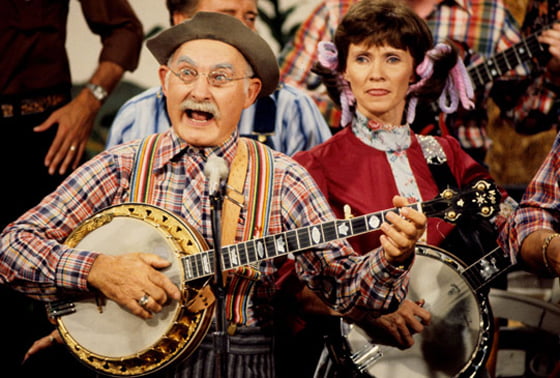
Hee Haw’s Best Banjo Moments

The first record I ever owned on vinyl was Roy Clark and Buck Trent’s Banjo Bandits. (Excellent record. Hokey, silly, bouncy, double banjo nirvana complete with bluegrass piano.) Roy Clark and Buck Trent eventually led me to Hee Haw, which gave me hours of entertainment and caused hundreds of that-joke-was-so-so-bad facepalms. The music, though, was first rate — and the ratio of banjos to literally everything else was exactly as high as it should be. Check out these amazing best banjo-y Hee Haw moments.

Jimmy Henley and Roy Clark — “Orange Blossom Special”

Jimmy Henley was a world champion banjo player at just 10 years old. Sure, “Orange Blossom Special” is an overplayed trick song, but dang, Jimmy could play fast and clean as a little kid.

Stringbean and Grandpa Jones — “Little Liza Jane”

Two of the classics of the Grand Ole Opry and Hee Haw — and they were neighbors, too, living in the same holler north of Nashville. Look at Stringbean’s face when he forgets they’re repeating the chorus the first time through it. Let us know if you happen to know who the unidentified dancer is.

Roy Clark and Bobby Thompson — “Bury Me Beneath the Willow”

The world needs more double banjo. Full stop.

Cathy Barton — “Redwing”

Now here’s some clawhammer! “Redwing” is a simple tune, but it’s executed expertly and tastefully. Cathy Barton still plays and teaches today, and she tours with her husband Dave Para.

 Grandpa Jones, Roni Stoneman, Buck Trent, Roy Clark, Bobby Thompson — “Pretty Little Bird”

How many banjos is too many banjos? There’s no such thing. Line ‘em all up in front of a haystack, and you’ve got a party.

Roy Clark & Buck Trent — “Dueling Banjos”

Leaving off right where we started, with the original banjo bandits, Roy Clark and Buck Trent pickin’ an absolute bluegrass banjo staple!