Crystal Gayle Goes Deep into Classic Country

It’s a little startling when Crystal Gayle pops into the hallway of her Music Row office and cheerfully waves for this writer to come on back. Along with being a charming and welcoming host, she’s also one of country music’s most identifiable entertainers, a Grand Ole Opry member, a Grammy winner, and a genuine class act.

She’s also a recording artist again, ending a 16-year absence with You Don’t Know Me, a collection of country classics that honors her heroes, as well as her sister, Loretta Lynn, and Loretta’s late husband, Mooney Lynn. It was Mooney, she says, that ushered her into the spotlight as a teenager, and that memory prompted Gayle to begin the album with “Ribbon of Darkness,” a Marty Robbins hit in 1965.

“‘Ribbon of Darkness’ was my first song on the Opry,” she recalls. “I was probably 16 or 17, and my sister Loretta was sick and Mooney talked them into letting me get on stage and sing a song in her place. It was just a thrill! Of course, later on when I started out, I opened for Marty Robbins. Marty was so incredible. I got to work with Jack Greene, Stringbean, Grandpa Jones, Bill Monroe. … My album is filled with songs that mean something to me. This is a part of my life that a lot of people don’t know about.”

Gayle co-produced the album with her son, Christos, and continued the family connection by recording “Put It Off Until Tomorrow” with both of her singing sisters, Loretta Lynn and Peggy Sue. She also unearthed “You Never Were Mine,” a tearjerker written by her late brother Jay Lee Webb. Surrounded by fan gifts and photos from throughout her career, Gayle visited with BGS about her earliest days in Nashville, how she found her own voice, and why she’s still fond of her own country classic, “Don’t It Make My Brown Eyes Blue.”

BGS: What was it like for you as a new artist in 1970, meeting Jack Greene, Marty Robbins, and all of these stars?

CG: I was in awe of everybody, but of course when Loretta would come through town — because she was singing as I was growing up — she would be with maybe Ferlin Husky. I remember loving that. Or the Wilburn Brothers. They were incredible! I loved the harmony that they did. I could sit and listen to their music all day long, I just loved it. Of course I was a fan as well, but you have to give them their space. [Laughs] I learned that from Loretta.

I’m curious about Mooney. How did he influence your career?

Mooney really believed in my ability of singing. He loved my voice and he actually got my contract with Decca Records, but the best thing about it, he got a very short contract. It was the long ones that can ruin a lot of artists, because now they’re on this label, they’ve got so many years left, and they can’t do anything and [the label isn’t] helping them at all. They are not pushing the records.

So I was very lucky when my contract was up and Owen [Bradley] called me in. It was like, “Well, you’re going to do this, this, this, or we say bye.” I said, “Okay, bye.” [Laughs] I mean, it was hard. It was a hard time and I really thought at that time, “I’m just going to go back to Indiana and do what I’m doing.” I was married and my husband was going to Indiana University. Then when we moved to Nashville, he went to Vanderbilt in law school.

But I was just lucky. I was in the right place at the right time because before I left town, I was fulfilling my [appearance] obligations and I ran into Lynn Shults, who was with United Artists. We were just talking and he says, “Well, what label are you with now?” I said, “No one.” He said, “Will you come and talk to me Monday?” So things fell into place. And they put me with Allen Reynolds.

To say the least, that worked out.

Oh it did.

There was one song here I didn’t recognize – “I’ve Seen That Look on Me a Thousand Times.”

That was a song that our engineer Eric Prestidge loved. He said, “You’ve got to listen to this.” It was a song that I thought, “You know, a girl doesn’t really sing this… And I’m going to do it.” And I loved that it was a Harlan Howard song.

Several times on this record, it’s a woman singing about the drinking and the cheating. What is it about those flawed characters that makes you want to step into those shoes?

I’ve always said that if I had all the heartache I’ve sung about in my songs, I’d be in poor shape. So you’re a little bit of an actress or an actor. I’ve worked so many little clubs and bars on the way up — and even in high school I’d work the little places I could get into without getting anybody in trouble — that you saw the heartache. You saw the people that these songs really was their life.

So you can get into that and sing about it. “Just One More” was one of Mooney’s favorite songs and when they’d come through and stop at Mom’s house, I’d have to sing a cappella — he had me learn “Just One More.”

How old were you?

I was probably in sixth or seventh grade. [Laughs] “Just one more and then another…”

A drinking song from a 12-year-old.

“I’ll keep drinking, it don’t matter….” [Laughs]

You’ve included “Hello Walls,” written by the great Willie Nelson. As a co-producer, what kind of vibe were you going for?

I was actually going to go for the style that Faron Young did, and have the type of harmonies with the “hello, hello” … and we didn’t [use that idea] because I let other people influence me. They said, “No, you can’t, you’ve got to change it a little.” But I did my own harmony on that particular song. You know, I opened for Faron. I used his band and we did some dates together.

I remember rehearsing with him and the group. They were incredible guys, and very, very special to me. They’d watch out. I was that young girl that — all of them, even Conway Twitty — if I was on their shows, they were going to watch out for me because as the little sister of Loretta, they knew that she’d kill them if they didn’t!

Here you are, this young woman, 20 or 21 years old, starting out with these middle-aged guys who are stars. I wondered how they treated you.

Everyone treated me great and I think it really showed a lot of respect as well for my sister. And you know, I’m not someone that’s going to come out there and be that floozy, too. I think the way you present yourself is a part of it. But no, they were all very, very, very good.

And with Faron, when I wanted to do “Hello Walls,” I had completely forgotten that Willie Nelson had written the song and I’m starting to sing it, and I said, “Of course, the phrasing.”

Your phrasing is distinct, too. At what point did you find your own voice, do you think?

I think working with Allen. He would say, “Now sing this song, do it different ways, and then listen back and see which you like the best.” See, he let me listen to my voice and not just go in and sing the song. Because I was a belter. I remember going in the first time and Charles Cochran’s playing the piano and I’m singing at the top of my lungs. Allen grins and he says, “Can you sing it a little bit lighter?” [Laughs] … Allen was laid-back like me, and was not forceful, but he did pull out things within me. He’d say, “Do you like this song? Because you’re going to be the one singing it. You better like it.”

What a gift, instead of a producer just telling you what to do.

Oh, it was incredible. I was used to people telling me everything but Allen knew it was going to be me out there pounding the road and he wanted me to have the songs that I felt really comfortable with. I get asked the question, “Do you ever get tired of singing ‘Don’t It Make My Brown Eyes Blue’?” I don’t, because that song — Richard Leigh wrote it — is so well-written. I’ve always said it says so much in so little. I love it that it’s not all these words I have to think about to sing. There are so many songs out there where it’s like, “OK, what verse is next?” But this song just flows, and I think that’s one of the reasons that it was as big as it was.


Photo courtesy of the artist.
Vince Gill Looks Back on His Bluegrass Years (Part 2 of 2)

In the second half of our interview with Vince Gill, the country legend reflects on his bluegrass history, explaining how he became interested in the music, what he learned by listening closer, and why it led to one of his most famous songs.

Editor’s Note: Read the first part of our Artist of the Month interview with Vince Gill.

BGS: “Go Rest High on That Mountain,” in my opinion, is going to live forever. And I think the bluegrass audience loves hearing Patty Loveless and Ricky Skaggs sing with you, too.

Gill: You know, I wouldn’t have been able to write that song if I hadn’t played bluegrass music and learned the structure of that music and how it works — and the emotion of it. Bluegrass music is so honest and so real. Some of those morbid murder ballads and the saddest of the sad songs are what I love most. Give me “Mother’s not dead. She’s only a-sleepin’. Patiently waiting for Jesus to come.” That’s about as good as it gets. “The Little Girl and the Dreadful Snake.” I could just go on and on and on.

All these tortured songs, but you know they’re real life. They’re not somebody going, “How can I slip one up on the world and make a bunch of money having a big hit record?” They’re so honest and real. And the fact that my past had so much to do with Ricky and Patty, they were the only two people that I would’ve consider it singing on that song.

I still love it when Patty comes to do the Opry.

There’s a really unique thing that happens when our voices sing together. It’s so… obvious. I sang on her very first record in the early ‘80s. I sang on her first hit record and she sang on my first hit record. So it’s my little sis.

Tell me about how you found bluegrass. Was there an entry point for you?

Yeah, I knew of it because my dad played the banjo a little bit. He never could figure out the three-finger, Scruggs-style banjo. He cussed Earl his whole life because he couldn’t figure it out. He played more of a folky banjo. Not drop thumb, not old-timey, but more of a frailing kind of banjo. So I was always around the music, as best I can remember, forever. There were obviously the Flatt & Scruggs things from The Beverly Hillbillies that were in everybody’s DNA. Then I was playing mostly in rock bands in junior high school and high school.

A kid named Bobby Clark was the one that really got me pointed towards bluegrass. He had a little band in Oklahoma City and his father was a repairman. I had broken the string on my dad’s banjo, messing around with it, and I didn’t know how to change it. So I took it to Charlie and he put a string on it pretty quickly and everything was fine. I wasn’t gonna get my butt kicked. Then I started talking to Charlie, and he says, “You play music, don’t you?” And I said, “Yeah, I love to play. I play electric guitar and play in rock bands and stuff.” He goes, “My son Bobby is a really fine mandolin player and plays bluegrass. You ever played any bluegrass?” I said, “No.”

They stuck an acoustic guitar in my hands and Bobby said, “We just had our lead singer leave the band and we’re looking for a singer.” So they did a pretty good job of raising me and teaching me and showing me how bluegrass worked. I played in their band for the last couple of years of high school. Then in another bluegrassy kind of band called Mountain Smoke. And I started playing all the festivals down around Oklahoma and Texas and Kansas. And ran into all the people that I’ve known in my whole life since I was 15, 16 years old.

Wasn’t that how you met Cheryl White [from The Whites]?

Yeah, I used to carry her bass around the festivals. I always had a thing for the girl bass players for some reason. There was another family band from Missouri called the Calton Family. Got sweet on Brenda. Then I got sweet on Cheryl. And she says I should’ve picked a harmonica player. [Laughs]

Those were such fun days and innocent. I loved the camaraderie that went on in that music. Not only with the people that came to the festivals, but the musicians. Everybody jammed together. There wasn’t a whole lot in it for anybody. Everybody was just kind of getting by. It was amazing, as I look back, what it did for me in the way that I respected other musicians and listened to other musicians. It was really important that I had a lot of that in my past. I haven’t forgotten it.

When I first heard bluegrass, I was just blown away by musicianship of it.

Yeah, I mean Stuart Duncan was as great as he was at 12 or 13. So was Mark O’Connor when he was 12 or 13. And Marty and Ricky and Jerry and on and on and on and on of these wonder kid pickers. Unbelievable. I kind of squeaked in because I could sing a little bit and figured out how play as I went. I kind of played whatever was left over in a lot of the bands I was in, and that was fine.

I saw you play mandolin on quite a few songs when you played Bluegrass Nights at the Ryman. What is it about that instrument that you really enjoy?

I think the mandolin is the most important drive of a bluegrass band. The banjo and that are the two most definitive sounds. In bluegrass, mandolin players are like the drummer, even more so than the guitar player to me. It’s that backbeat and driving it. Sam Bush was a great teacher of how you drive that music, you know? I loved the ferocity and intensity that he played with. When he played, that was powerful to watch as a 15- or 16-year-old kid.

That’s what I like. I like making it dance. I liked the importance of playing that instrument in bluegrass. I’m probably a much better guitar player in bluegrass than I am a mandolin player. But in some bands I had to play banjo. Sometimes I had to play, unfortunately, fiddle on a few things. Terrible! I played Dobro, I played everything. I played bass with Ricky’s band for a minute and then got to play some other instruments, but had a love for all of it. I still do. Probably I love it more now because it reminds me so much of my early days, and those first forays into learning about playing music.

Did Dobro come naturally to you?

It all kind of did. I mean, I put in the hours and I practiced hard. The neat thing was, you had such good people to learn from. I always had big ears and could always hear well and find what I was hearing in my head, figuring out how to play it.

There are so many brother duos that came up in bluegrass. Do you think that rubbed off on you with your harmony singing now?

Absolutely, yeah. I was trying to either be Ralph Stanley or Phil Everly or Ira Louvin or whoever. Don Rich and Buck Owens should’ve been brothers. I was a high singer so bluegrass was a natural fit. There have always been predominant high singers that were the focal point. Whether it was Ralph and Carter or whoever, man, that was a blend. You didn’t understand it when you were 15 or 16, what it was that made that blend so beautiful. It was the blood, you know. The DNA was the same.

I didn’t get to experience that until my oldest daughter was 18, 20 years old and we started singing together. I started calling her my little Everly because I’d spent my whole life trying to be Phil. You know, singing the high parts for everybody else, and blend perfectly, and every nuance they did, I’d do. And I’d just want ‘em to think I was related to ‘em. She wound up naming her daughter Everly because of that, because I called her my little Everly.

But yeah, I love sharing music. I love the collaboration of music more so than I like it by myself. It’s not as interesting by yourself, but when you get to play off somebody, and play with somebody, it’s very powerful.


Photo credit: John Shearer

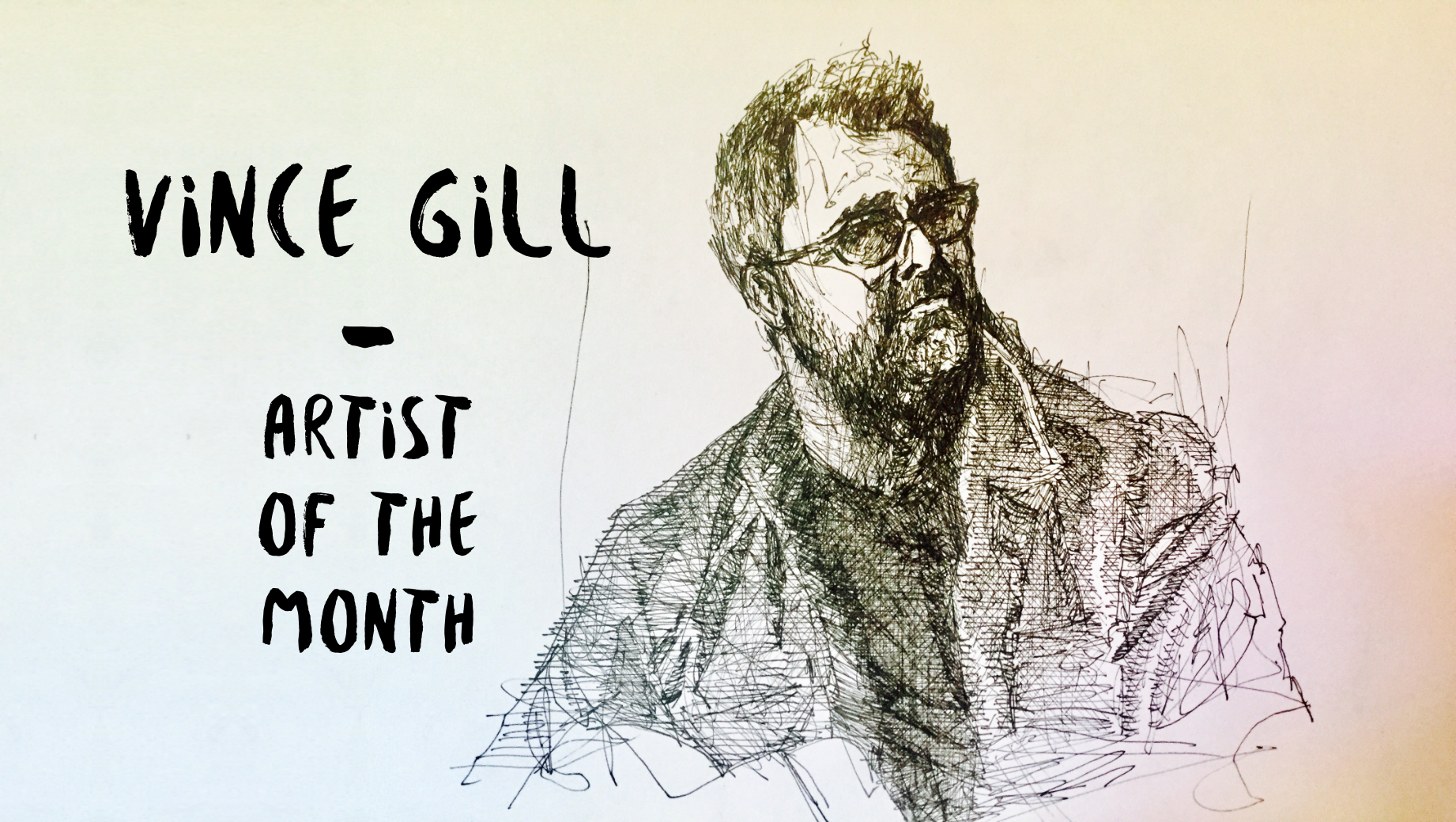
Artist of the Month: Vince Gill

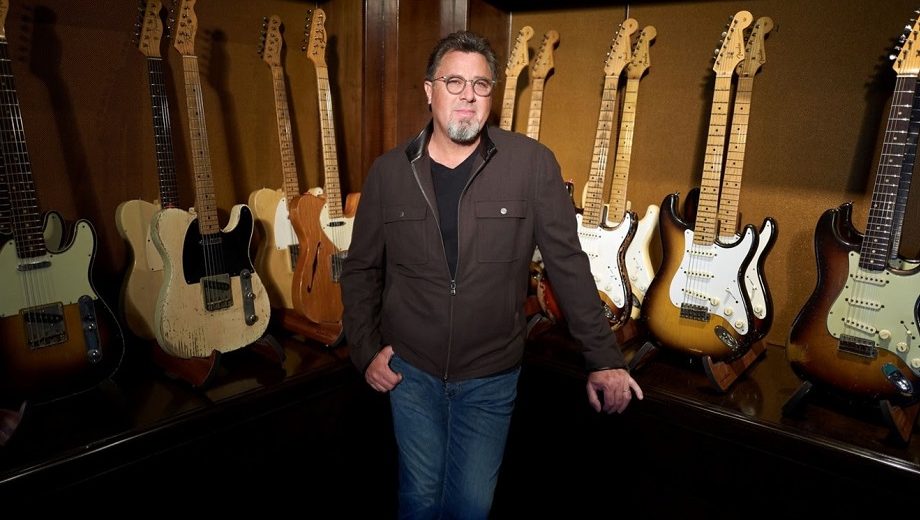
Who doesn’t love Vince Gill? His pristine tenor fits beautifully into bluegrass, country, Western Swing, and even classic rock, as he tours as a member of the Eagles. Still, the good-natured Opry star tells BGS that bluegrass remains close to his heart.

“You get the right band, the right drive and the right thing — I tell people it rocks as hard as the Rolling Stones. When it’s right — it’s really, really right — it’s like a freight train coming at you,” he observed during a visit in his Nashville home, just a few days after his annual summer appearance at Bluegrass Nights at the Ryman.

He continues, “It’s awesome — even in the middle of it. I don’t know that it translates far away like it does in a circle of it. We practiced over here the other night, and just being in this room and being this close to everybody was so much fun.”

Gill’s childhood memories shape a large part of Okie, his exquisite new album — an acoustic-oriented project that puts his voice and songwriting at the forefront. Look for our two-part interview this month with this member of the Country Music Hall of Fame, and in the meantime, enjoy our Essentials playlist.


Photo credit: John Shearer

A Minute in Nashville with Chuck Mead

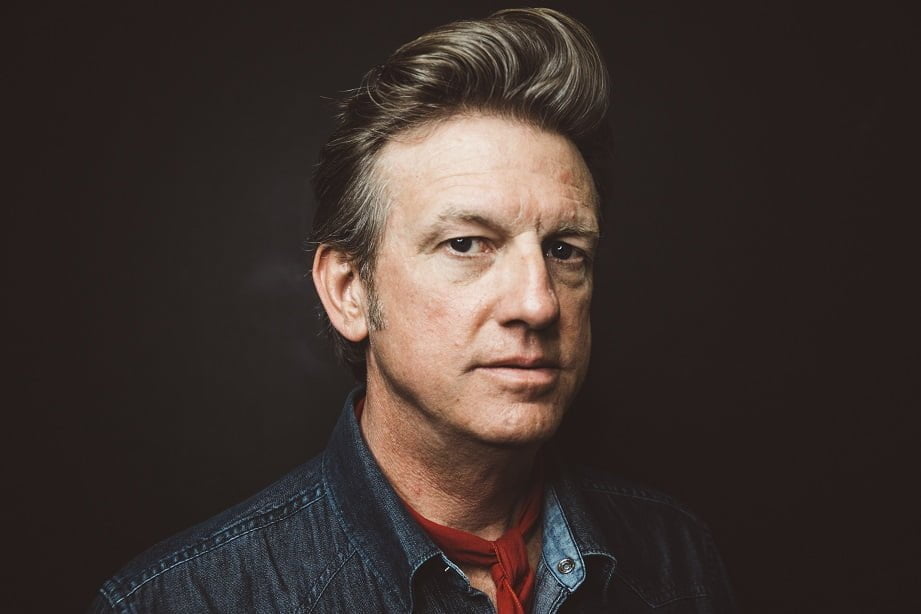
“I have a lot of people ask me, ‘Where do I go when I come to Nashville?’ and my answer is always, ‘Well, what are you into? Music? Food? Underground sex scene?’ I don’t know much about that last one there, but there sure is a lot to do in Nashville these days. Top-notch dining, a bunch of clubs and bars, and spectacular musicians of all types.” – Chuck Mead

https://www.instagram.com/p/ByyyGAIpkoN/?utm_source=ig_web_copy_link

Lower Broadway
You have to see Lower Broadway at least once during your visit. This is where honky tonks line both sides of the street and the people and music spill out onto the sidewalks. Robert’s Western World is the must-stop on the street. It’s my old stomping grounds where my old band BR5-49 got our start. Traditional honky tonk played the way it’s supposed to be — with heart. Layla’s next door is an excellent place to be as well.


https://www.instagram.com/p/By0V1Fuga-d/?utm_source=ig_web_copy_link

Ryman Auditorium
These honky tonks are all in the shadow of the Mother Church of Country Music, the Ryman Auditorium — another must-see downtown. And while you’re in that neck of the woods, see The Country Music Hall of Fame and Museum, where you can follow the progression of country music from the beginning right up to today’s stars.


https://www.instagram.com/p/Bxfqe7Njrxm/?utm_source=ig_web_copy_link

Honky Tonk Tuesday at American Legion Post 82
If you’re around on a Tuesday night, go to the American Legion Post 82. Just driving into the parking lot takes you to another world. Make your donation at the door (unless you’re a veteran), grab a nice cold, cheap beer, go dance your ass off to some really fantastic old school country music, and don’t forget to tip the band!


https://www.instagram.com/p/BxGDgXKHDJa/?utm_source=ig_web_copy_link

The Grand Ole Opry
It pretty much goes without saying that if you come to Nashville, a visit to the Grand Ole Opry should be on the itinerary. It’s the show that made country music.


https://www.instagram.com/p/Bmy9wCfgmhe/?utm_source=ig_web_copy_link
Third Man Records
But it’s not all hillbilly music – there’s Jack White’s Third Man Records for a killer record store experience and it’s always great to go see Thee Rock n Roll Residency at the Mercy Lounge whenever they’re in town.


https://www.instagram.com/p/BrnQWU5AT6y/?utm_source=ig_web_copy_link
Bolton’s Spicy Chicken & Fish
Nashville is pretty famous, food-wise, for its hot chicken. There are a few ways to go — Prince’s is the original and is great of course (if you order the hot – you have a stronger constitution than me.) But my favorite hot chicken in town is Bolton’s. I suggest a taste test!


https://www.instagram.com/p/BybYlmwhmn0/?utm_source=ig_web_copy_link
Margot Cafe
If you’re looking for a world-class dining experience, may I suggest Margot Cafe in Five Points in East Nashville. Margot serves up fancy French-type food combined with down-home Southern heart; fresh, local cuisine with a menu that changes all the time, and a terrific bar as well.


https://www.instagram.com/p/Bxsio3xDn7V/?utm_source=ig_web_copy_link
Mas Tacos
Also on the Eastside is Mas Tacos. This is my go-to place for times when I say to myself, “Man, I sure could use some more tacos.” Great food. Great vibe. Groovy courtyard.


https://www.instagram.com/p/Byq_mFsAwYK/?utm_source=ig_web_copy_link

Here are other places I recommend: Grimey’s Record Store (made by record people for record people); The Basement and The Basement East – always a variety of different kinds of great live music both places; Germantown Cafe, fresh and modern American cuisine; First Tennessee Park, right across the street, where you can take in a Nashville Sounds baseball game (if it’s in season, of course); and many others you can look up on your phone yourself. Check out the music listings and see if I’m playing anywhere. If you see me, say “Hey!”


Photo credit: Joshua Black Wilkins

LISTEN: Rhonda Vincent, “Like I Could”

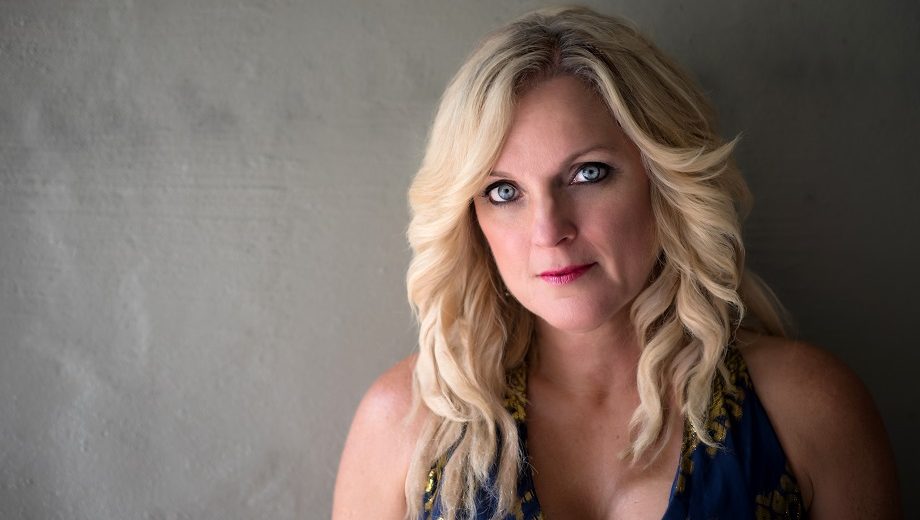
Artist: Rhonda Vincent
Hometown: Greentop, Missouri
Song: “Like I Could”
Release Date: June 19, 2019
Label: Upper Management Music

In Their Words: “As soon as Jeannie Seely started singing ‘Like I Could’ to me, I instantly loved it. It felt like it was written just for me and my vocal style. As we were recording the tracks, it just felt right. You know when you can feel that something is just right for you; like trying on that perfect dress, or pair of shoes. This song was just the right fit.

“The recording session was very impromptu. I had just finished recording a duet for Grand Ole Opry star Jeannie Seely’s new project. There was a cancellation of the afternoon session, and I quickly asked if I could book that time. I called musicians, and it was like it was destiny. The musicians and engineer were there with only an hour’s notice. I sent a message to ask Jeannie for the lyrics and demo. It was really amazing how everything came together.

“I feel that many people will relate to this song and its tremendous heartbreak and sadness. My hope is that there are people who hear this song, namely those in the midst of the devastation of a breakup, who will reconnect and renew their love with each other. It has a very desperate message, asking, ‘What happened, I thought you could see us together forever?’ Maybe this is the perfect song and question they need to hear to bring them back together.” — Rhonda Vincent


Photo Credit: Sharp Images/Rebecca Sharp

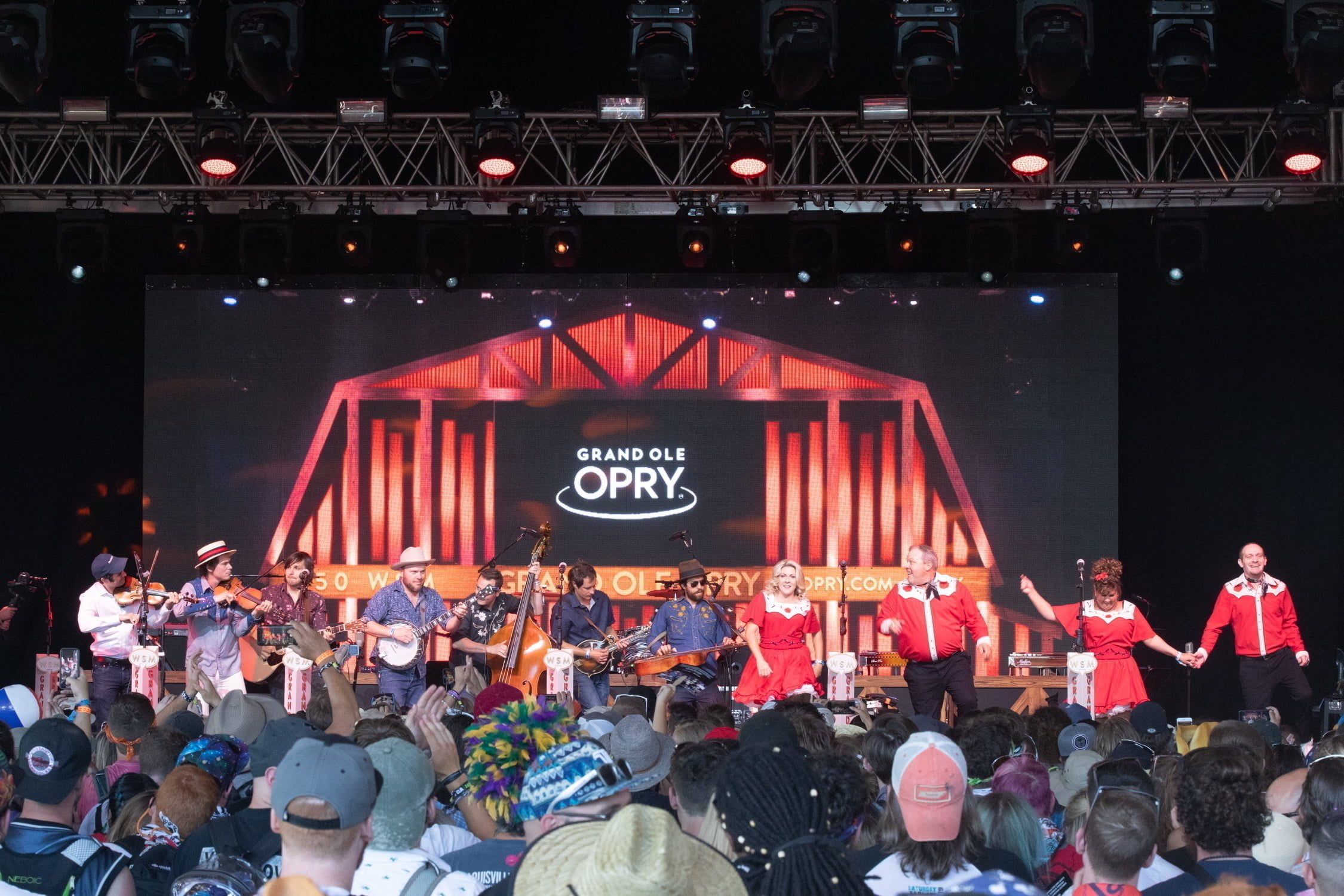
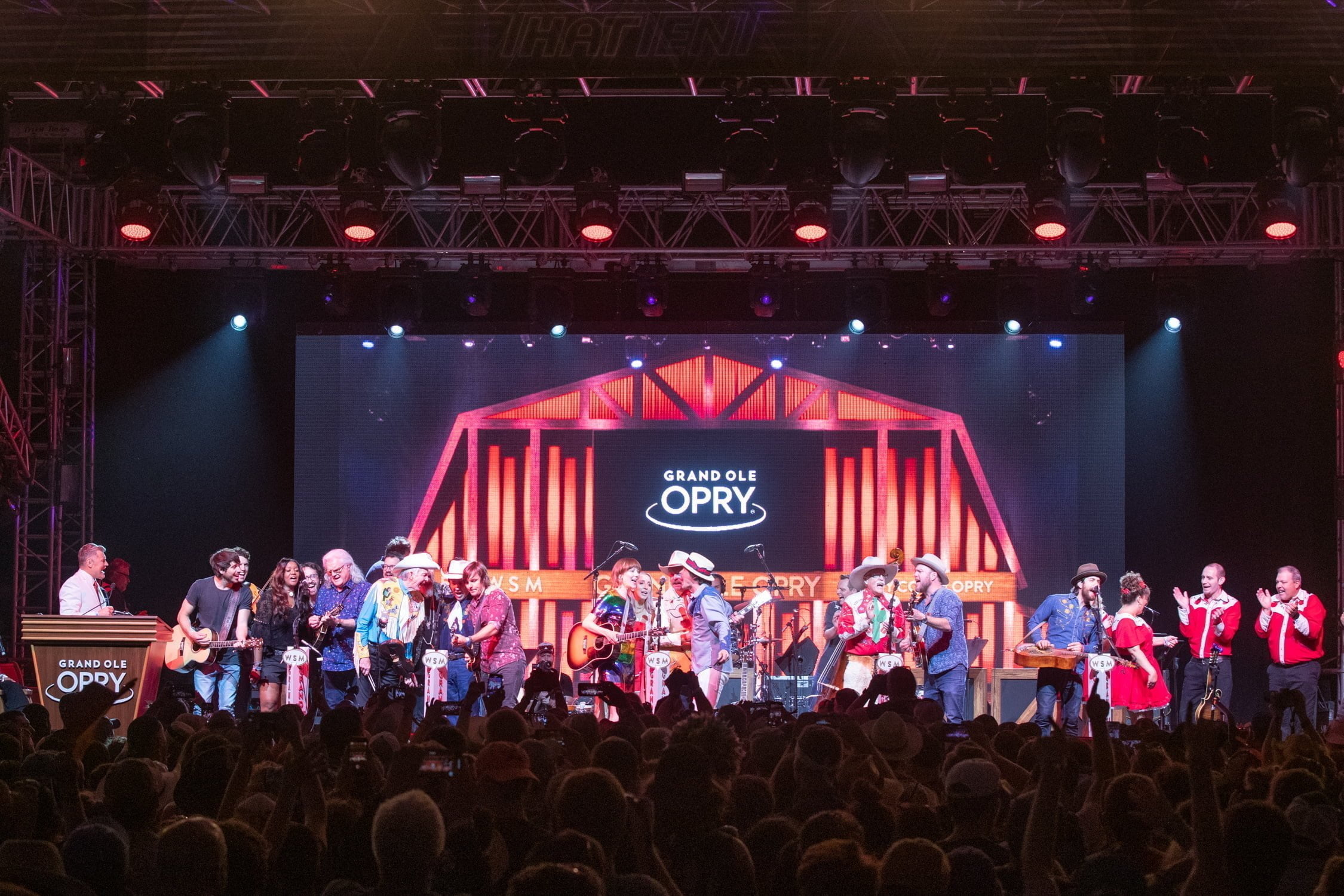
Grand Ole Opry at Bonnaroo 2019 in Photographs

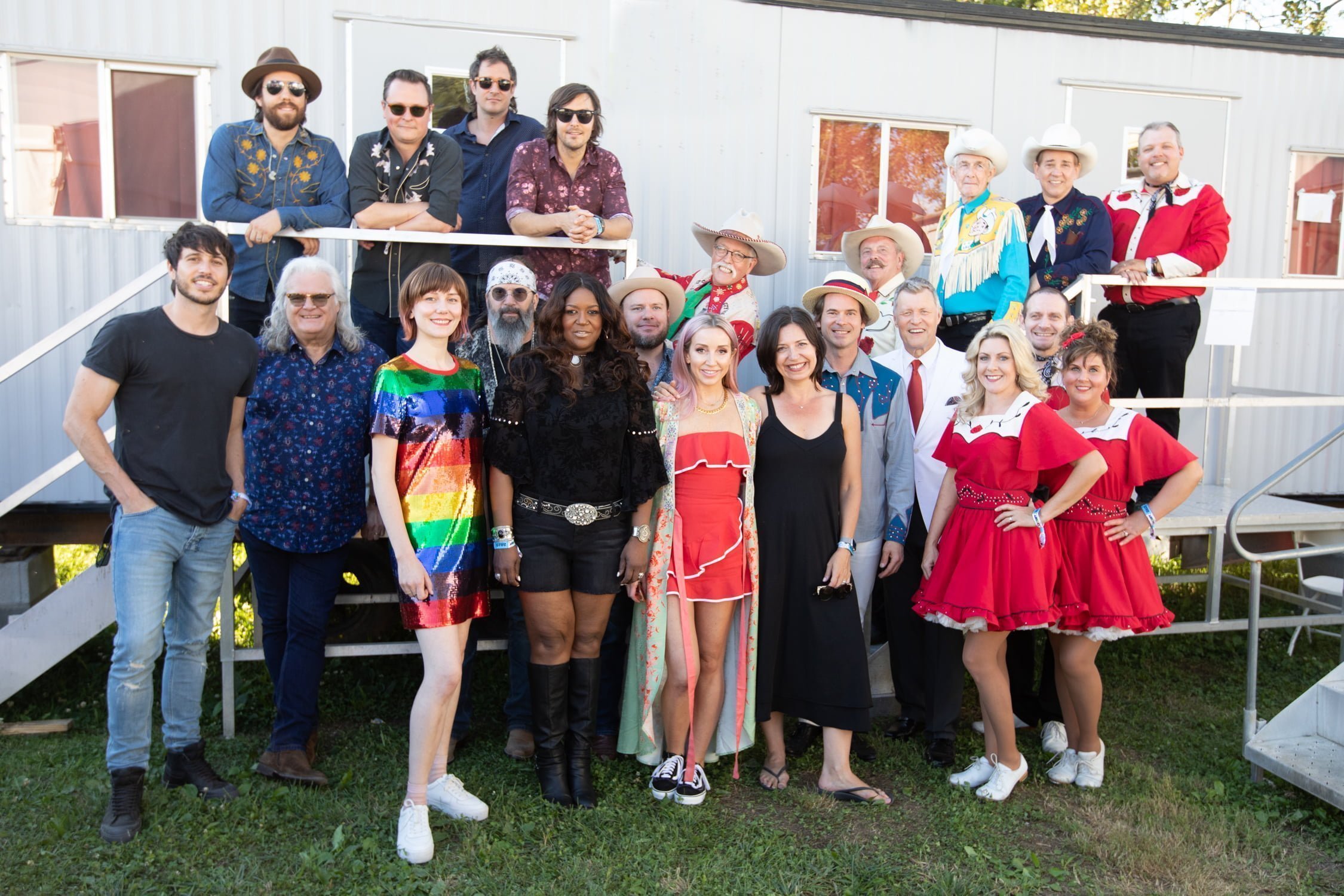
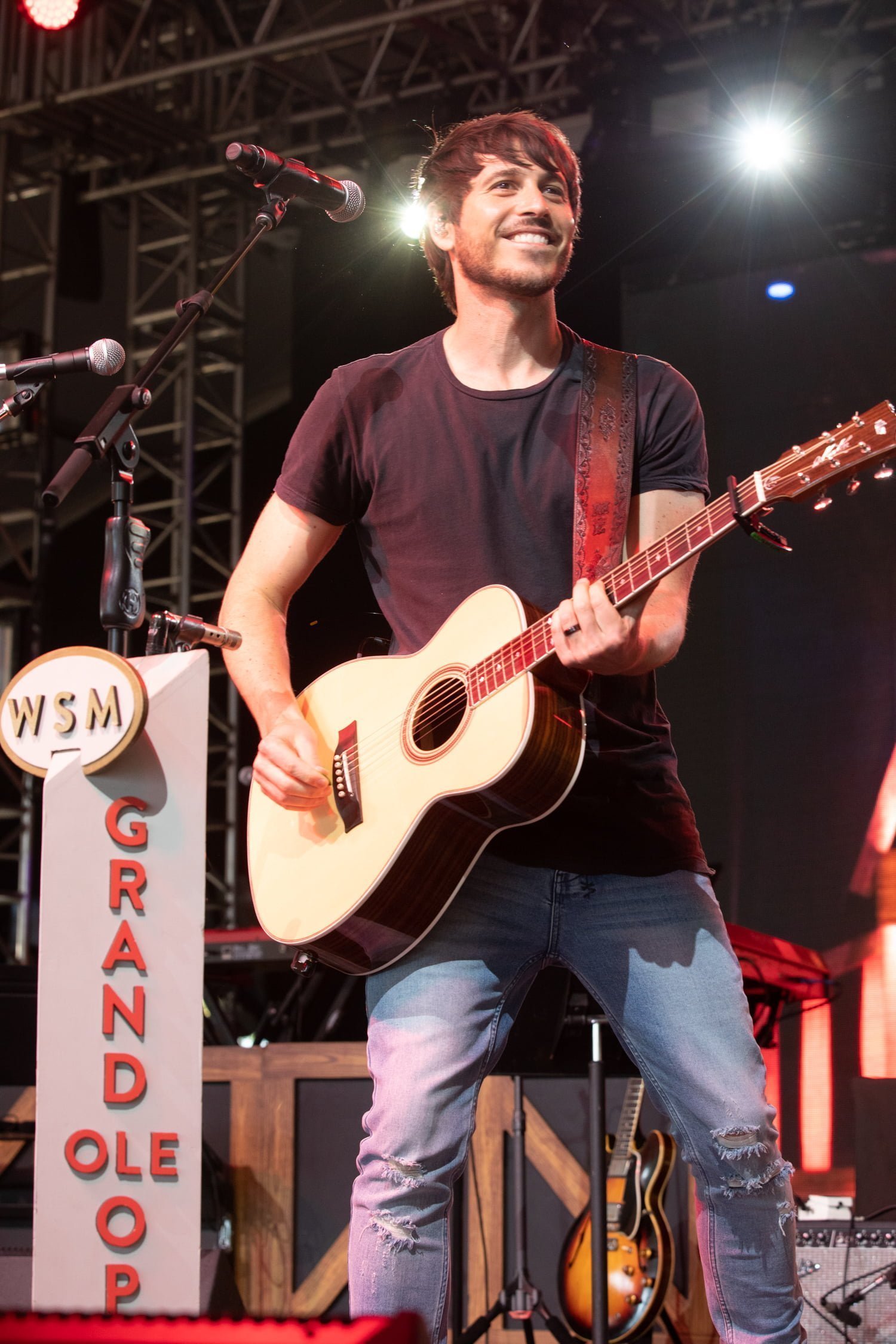
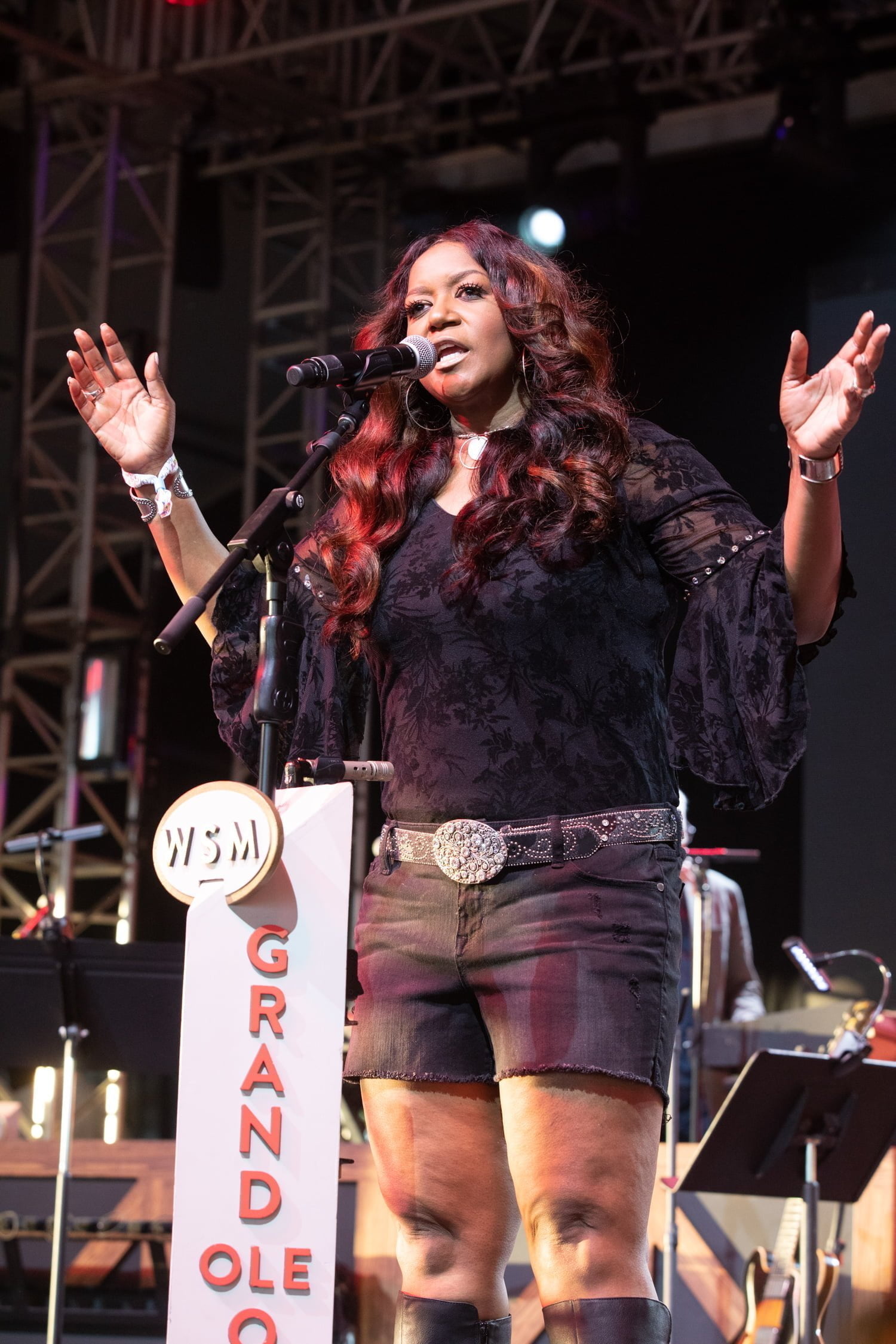
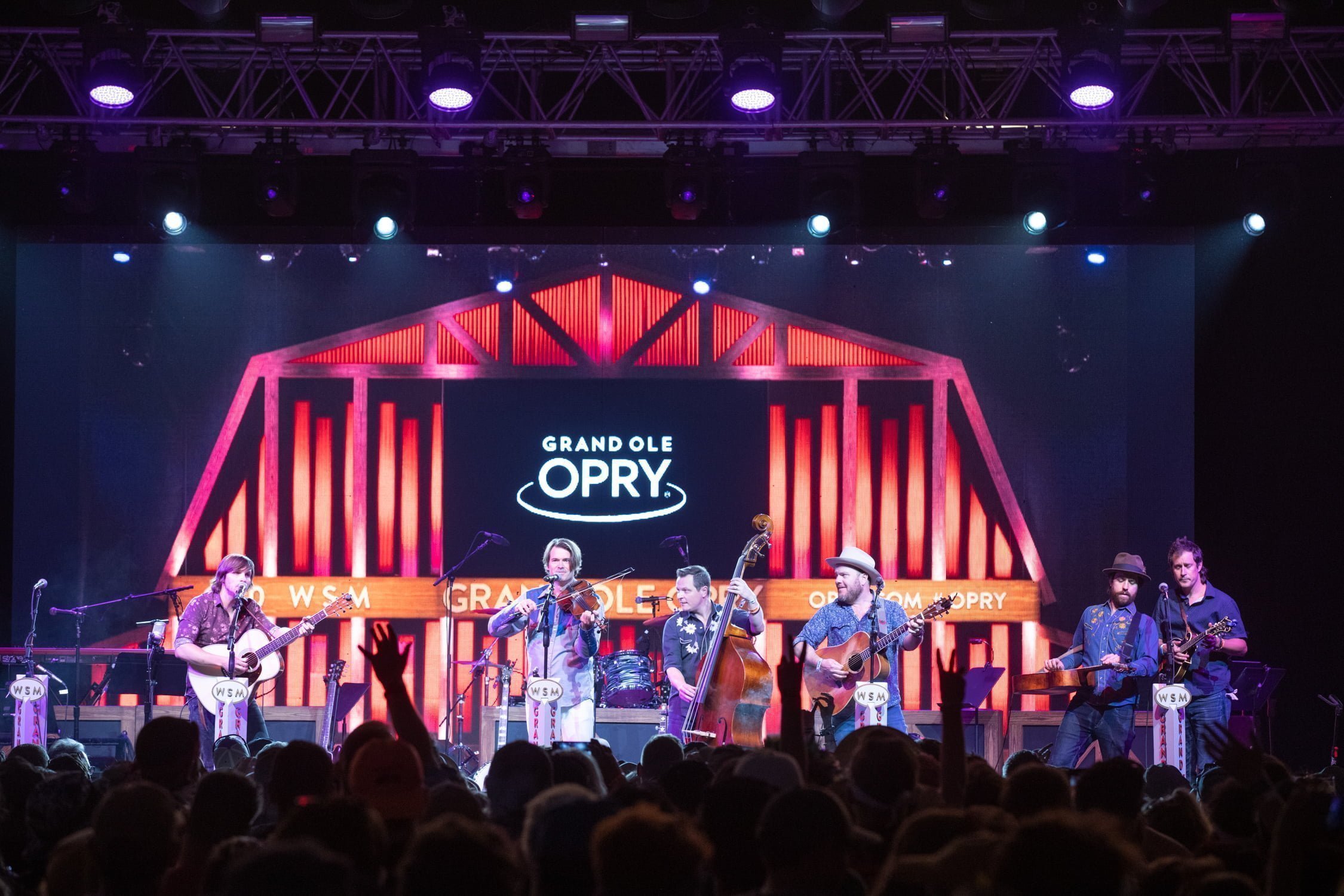
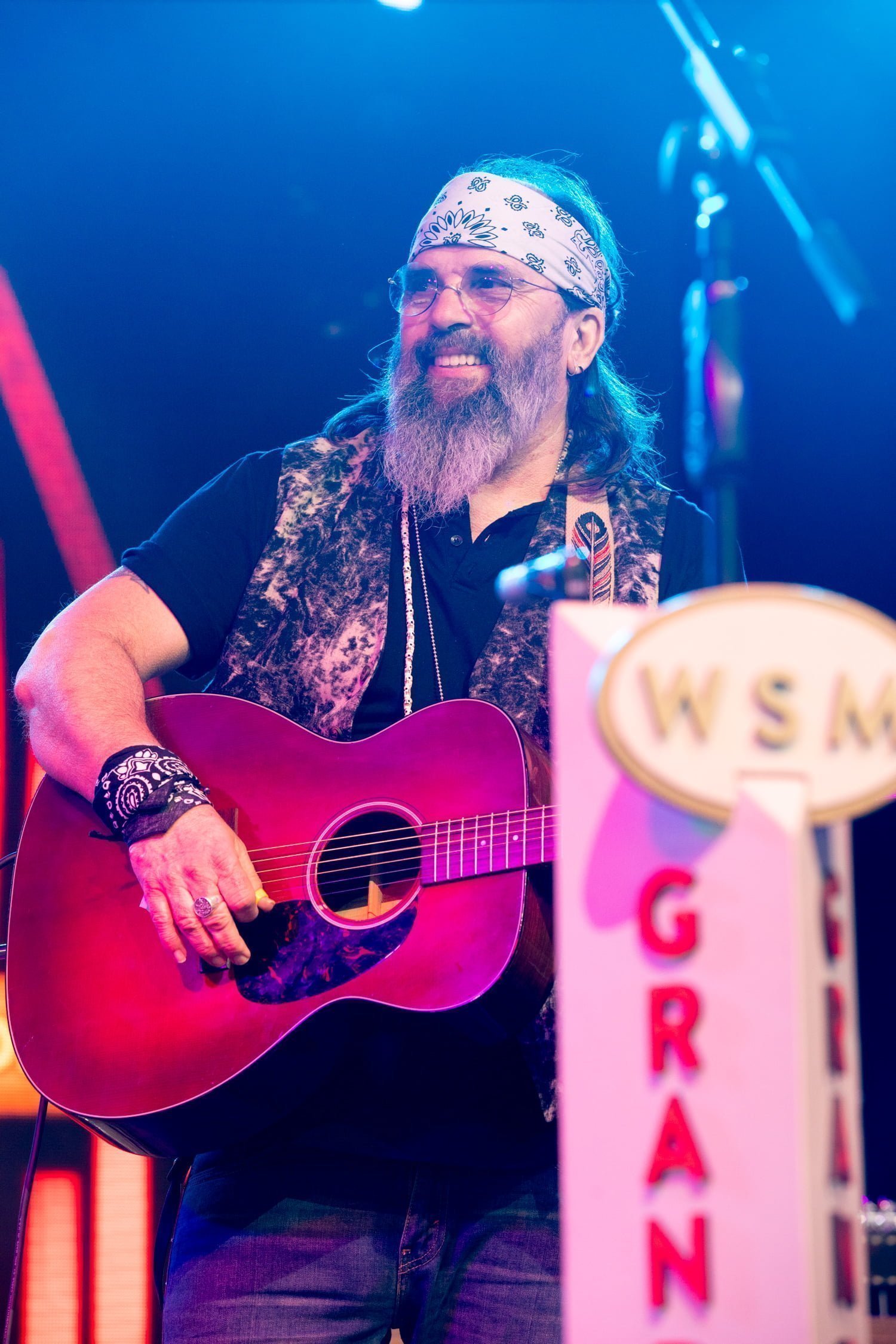
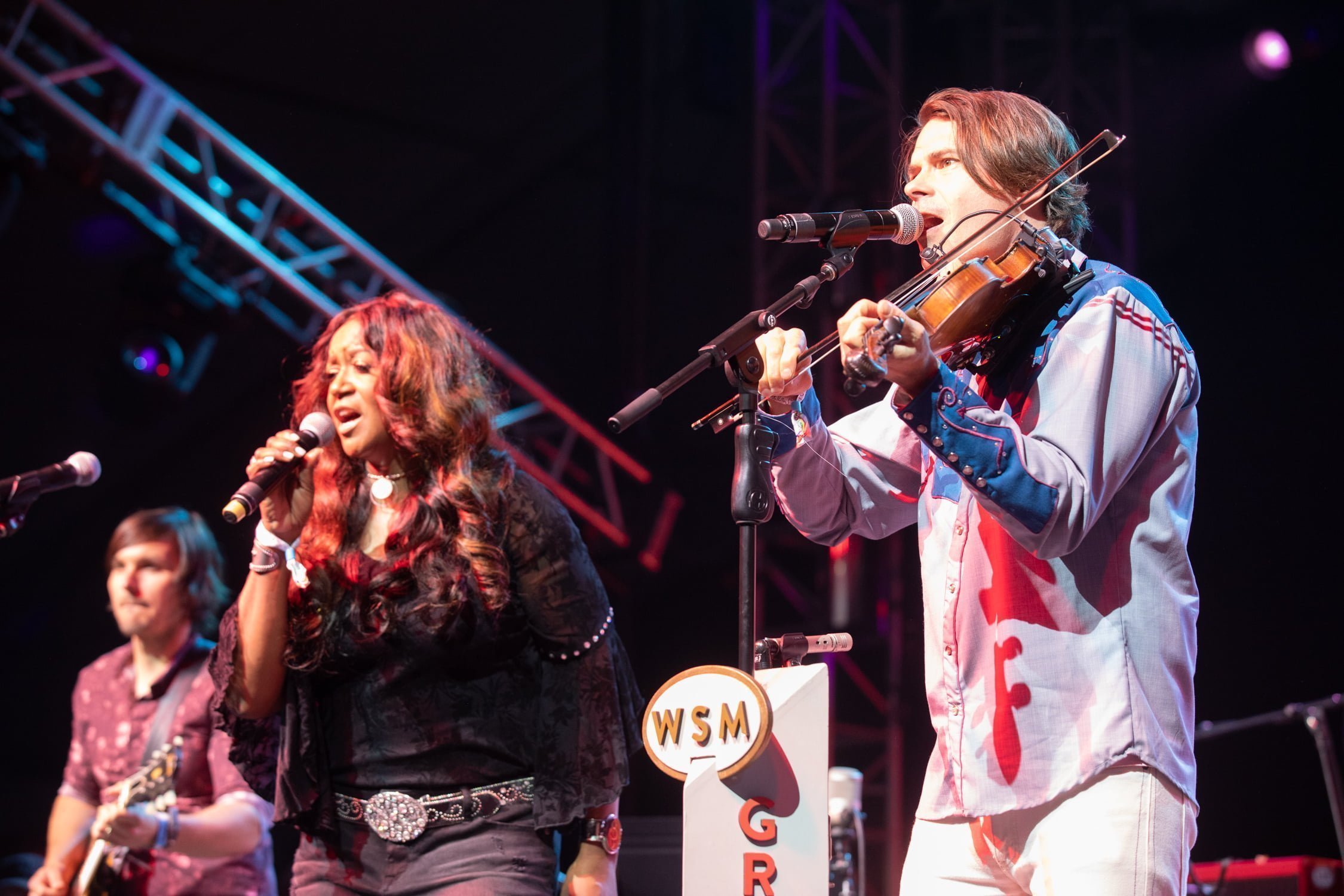
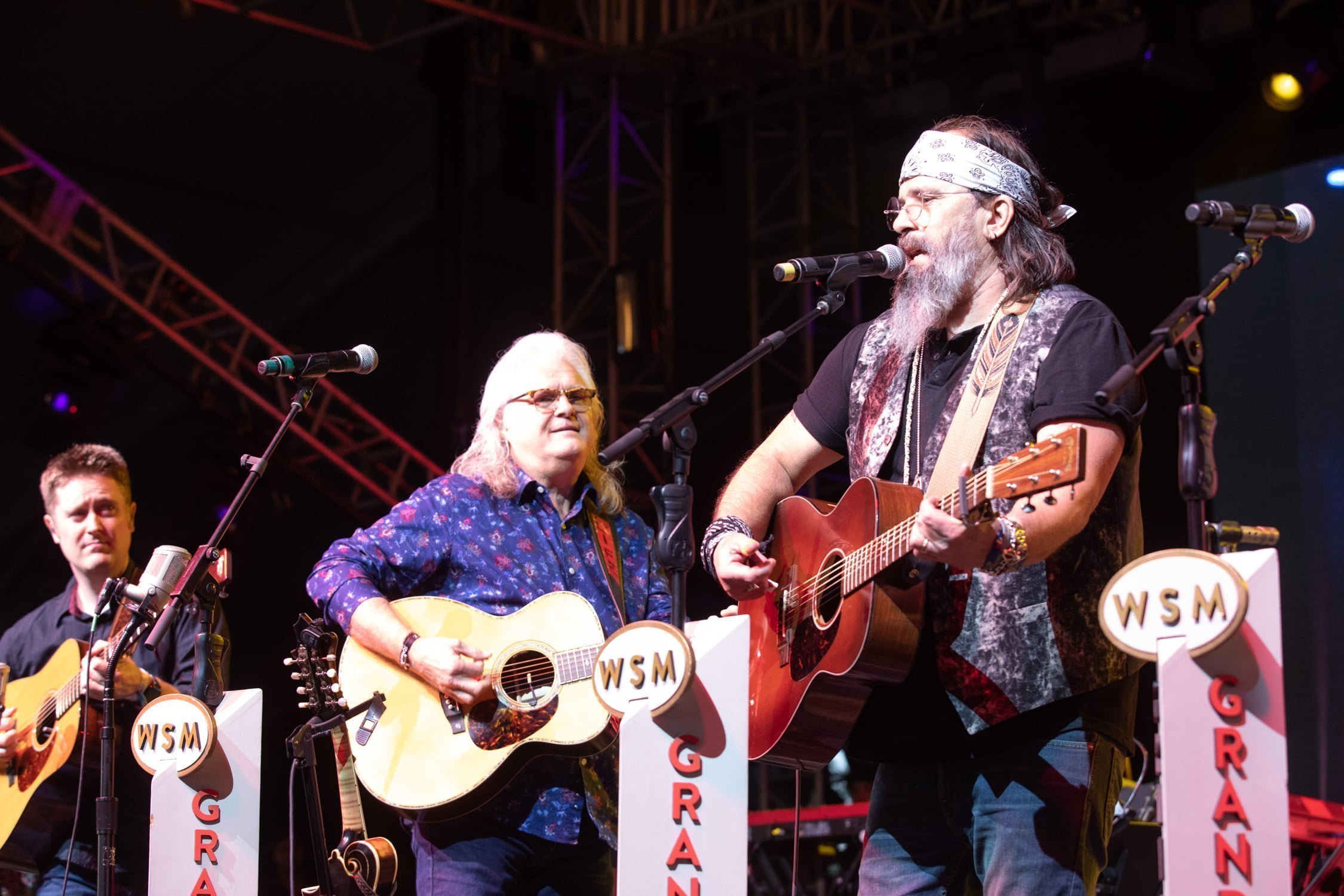
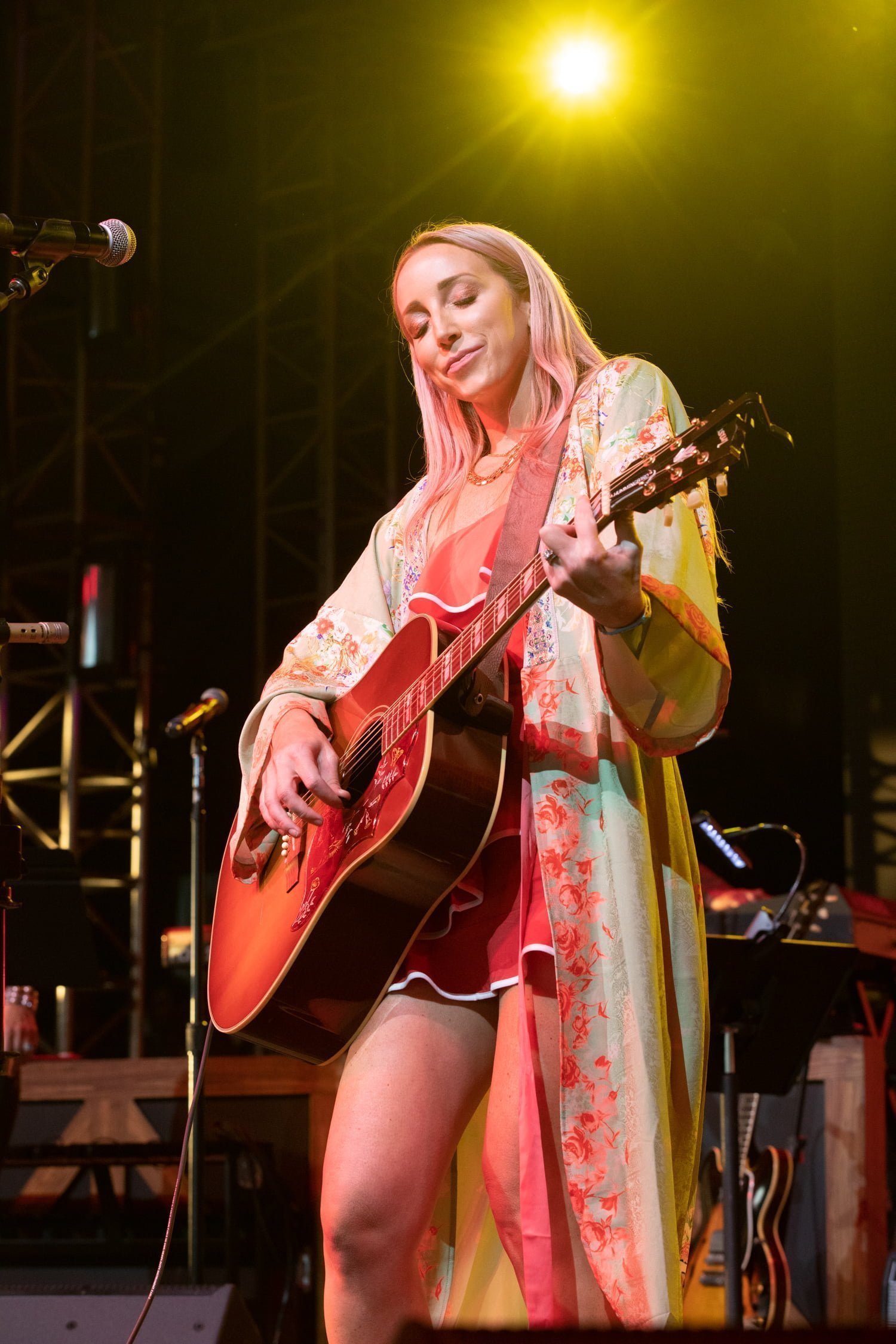
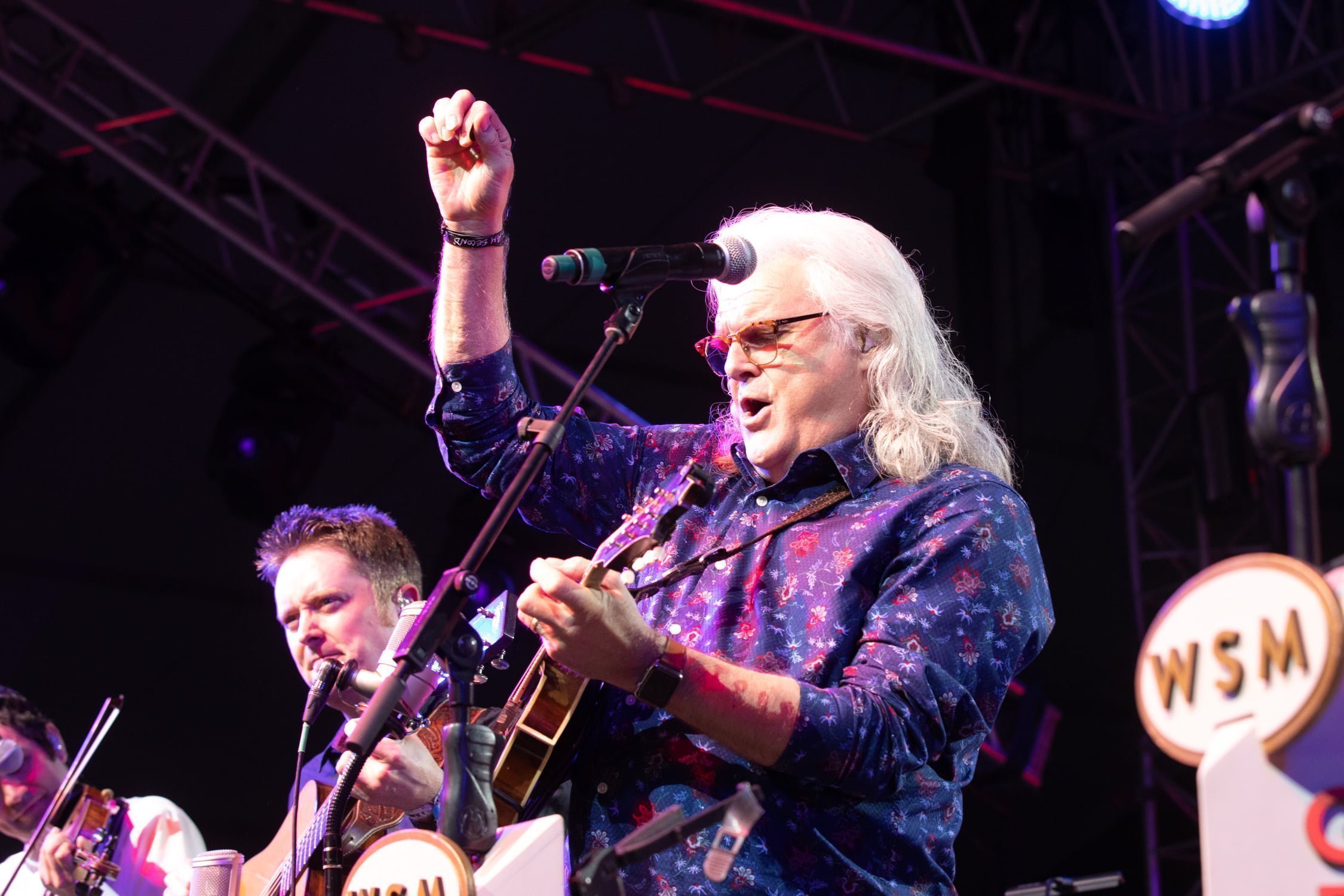
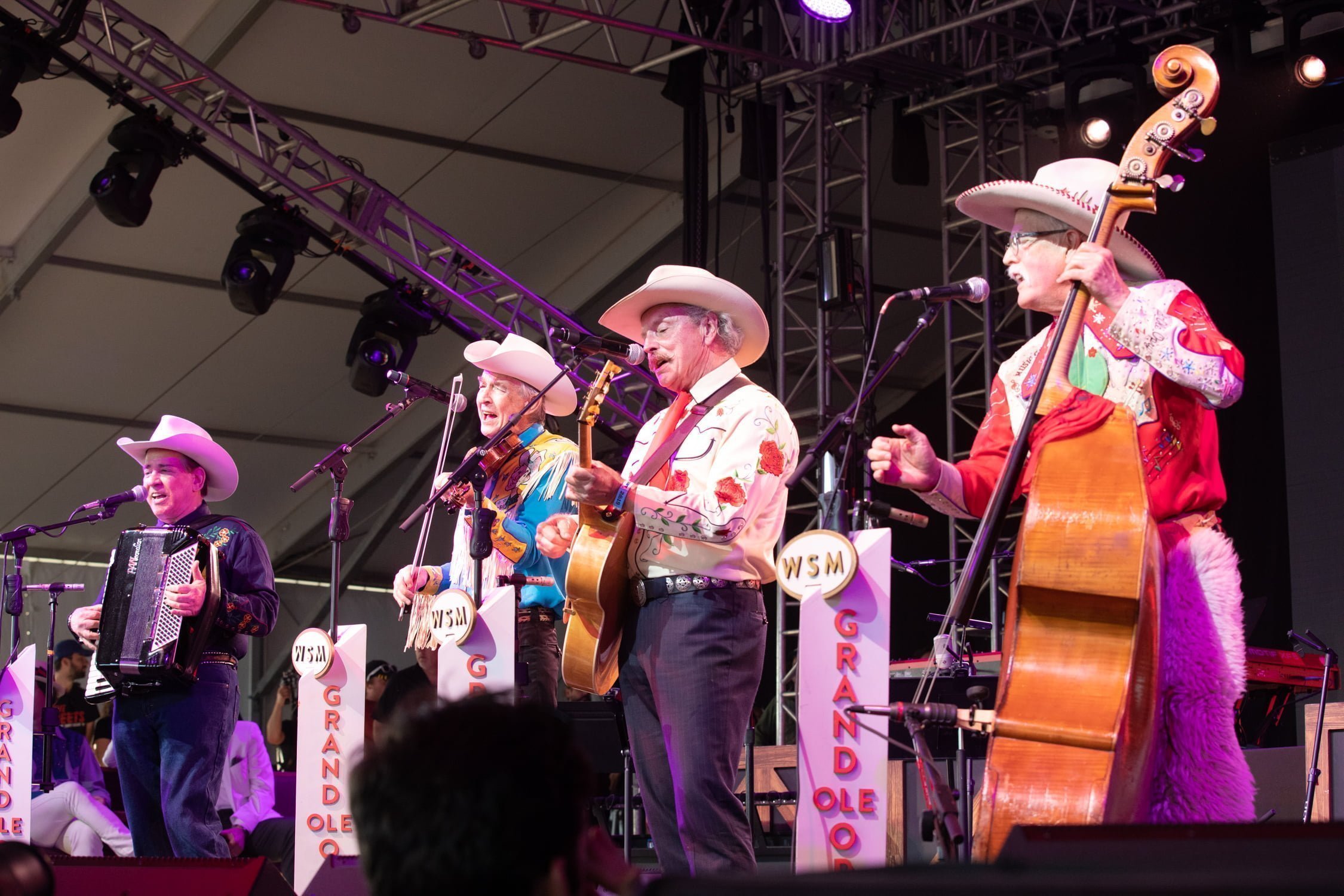
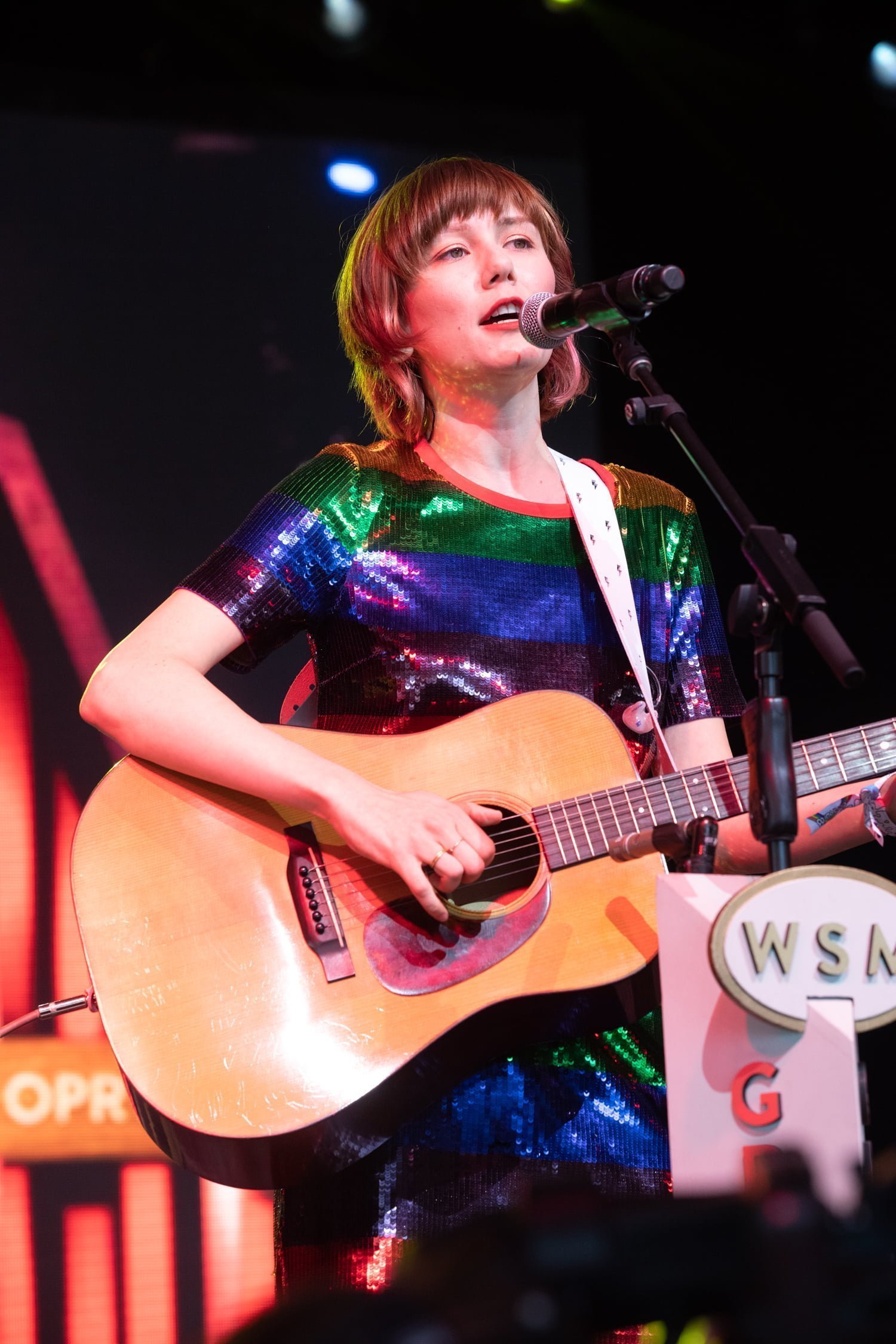
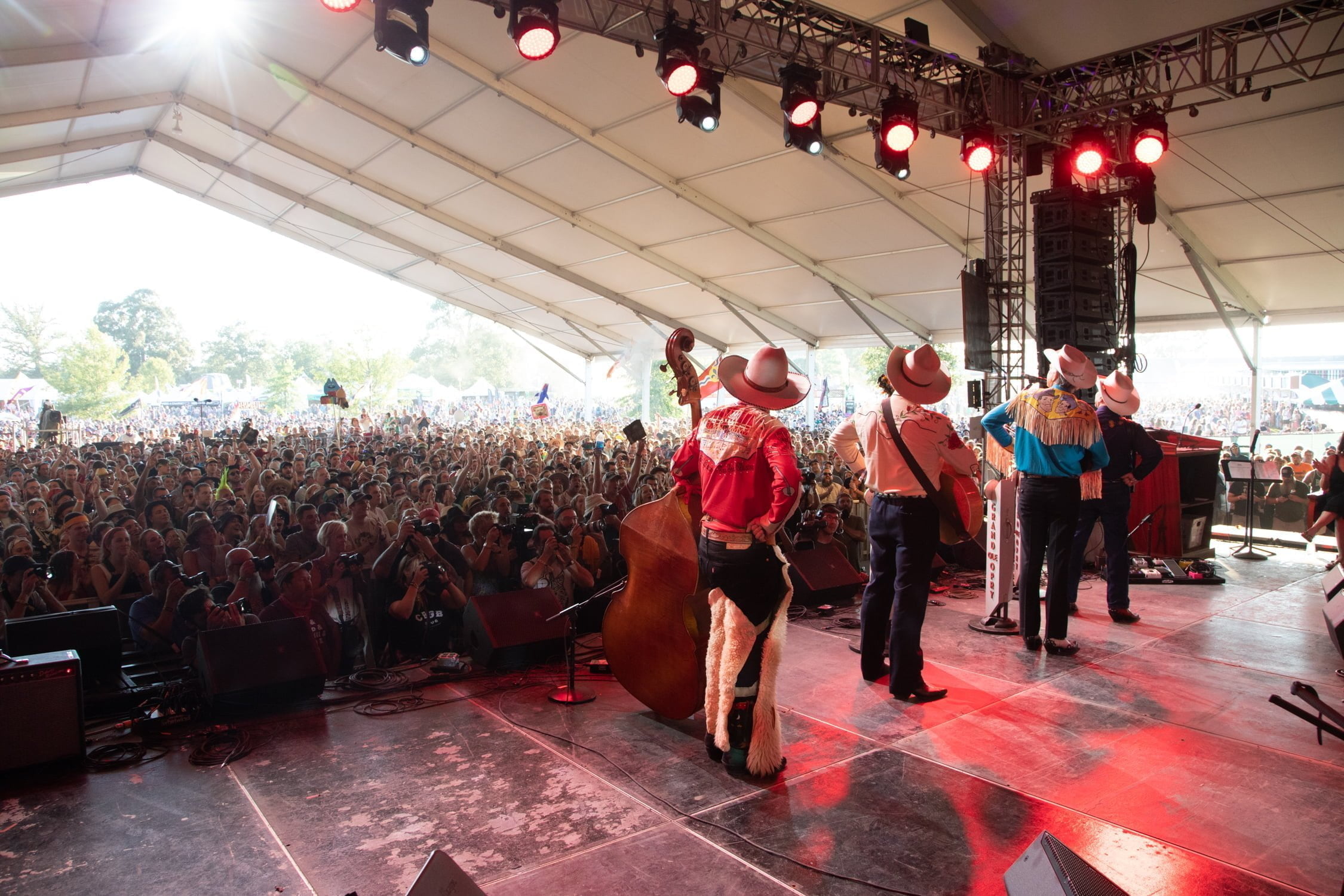
The Grand Ole Opry returned to Bonnaroo Music and Arts Festival this year to headline the festival’s opening night. The Opry carried on the festival’s long-standing tradition of representing country, bluegrass, and roots music with performances by Old Crow Medicine Show and fellow Opry members Ricky Skaggs and Riders In The Sky, plus special guests Steve Earle and the Dukes, Morgan Evans, Ashley Monroe, Wendy Moten, Molly Tuttle, and even the Opry Square Dancers and Opry announcer Bill Cody came along for the ride.

BGS handed off the That Tent torch to the Opry in 2018, after five years of the BGS SuperJam. You can revisit our years of BGS x Bonnaroo goodness here: 2017; 2016; 2014.


All photos: Chris Hollo

Like Father, Like Sons: Del McCoury & The Travelin’ McCourys

Even after five decades in the bluegrass business, the McCoury family is having a banner year in 2019. In February, Del McCoury turned 80 years old and shared the Grand Ole Opry stage with some of his most famous admirers. That same month, the Travelin’ McCourys – fronted by Del’s sons Rob and Ronnie McCoury — picked up a Grammy award in Los Angeles for their self-titled, debut album. And looking ahead, the 12th annual DelFest music festival in Cumberland, Maryland is slated for May, with performances by both bands on the schedule.

In person and off stage, Del McCoury is as polite and warm as one would expect. Smiling broadly as he enters the Opry dressing room, he’s wearing a Hawaiian shirt, his pompadour is on point (as always), and he seems unfazed by the fact that show time is less than 30 minutes away. To paraphrase another Opry star, he’s just so proud to be here.

“I’ve been listening to the Grand Ole Opry since I was at least 10 years old,” he says. “My brother and my dad would listen because it was before TV, you know? Especially out in the country where we lived. People had TVs, but I don’t remember anybody who did out in the country. We grew up on a farm. Like I said, I’ve been listening to the Grand Ole Opry since then and I’ve always looked up to all the acts on here. Especially the bluegrass acts, like Bill Monroe and Flatt & Scruggs. It’s a big show in my mind! Still is!”

Though the time set aside for the interview is somewhat brief, Del conjures up stories about everything from crusty club owners to playing Carnegie Hall. He cracks up at a memory of Bill Monroe flat-out telling festival promoter Carlton Haney that a bluegrass festival would never work. Thinking even further back to his childhood, he reminisces about being fascinated by Earl Scruggs’ banjo on “Rollin’ in My Sweet Baby’s Arms” when he was around 11 years old.

“Something hit me here,” Del says, touching his heart. “That banjo behind the lead singer was so good. And so I learned how to play that. I was already a guitar player but I heard this record and I thought, ‘Wow, that’s what I want to do!’ So, when I could get a banjo, I started learning it. Just take the record, pick the needle up and put it over, and try to play what Earl was doing. It was not simple!”

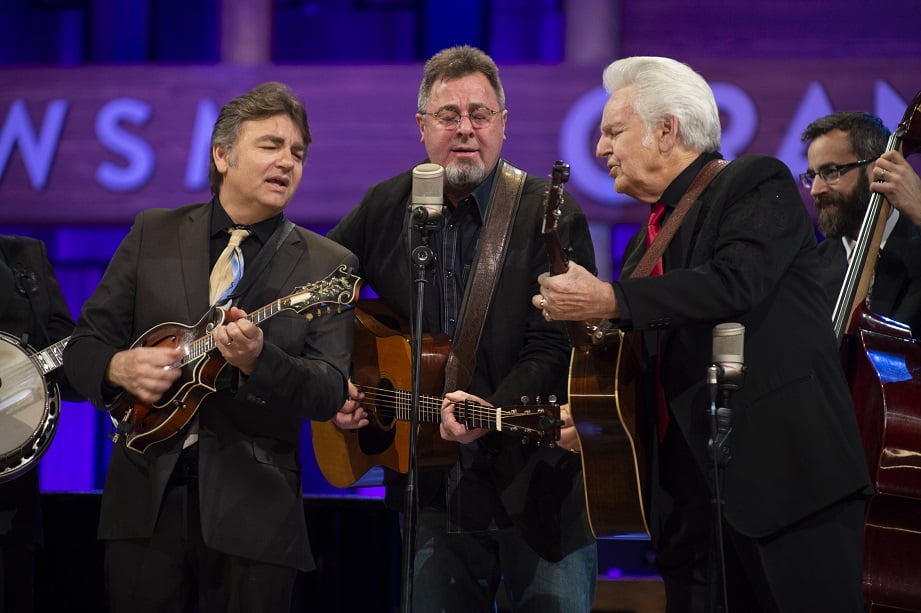
Ronnie McCoury, Vince Gill, Del McCoury
Asked about the decision to spin off a group from The Del McCoury Band, employing everybody except himself, Del says he conferred with manager Stan Strickland about how to make it work.

“I got to an age where I thought, you know, I’m [not] gonna be around here forever,” he noted, just before breaking into his trademark laugh. “I felt good, and I still feel good, but you never know. When you get to 70, you don’t know how many days you got left. I thought, these guys depend on me. My wife and I talked to Stan and I said, ‘You know, if we get them something going on their own, and if something happens to me, then by that time they might be established.’ So we got them a different booking agent than I had, and it seemed like right from the start they were starting to do good already! And I thought, ‘Wait a minute now, I wonder if I should have done that…’”

He breaks into laughter again, before adding, “Especially when they start winning Grammys! And they don’t take me with them!”

Loyal bluegrass fans know that for decades the Del McCoury Band has done its own share of travelin’ – not to mention winning two Grammy awards of their own. Led by Del on lead vocals and guitar, the good-natured group includes Ronnie on mandolin, Rob on banjo, Jason Carter on fiddle and Alan Bartram on bass. Cody Kilby assumes Del’s role as a guitarist in The Travelin’ McCourys, while the vocals in that ensemble are handled in equal share by Ronnie, Rob, Jason, and Alan.

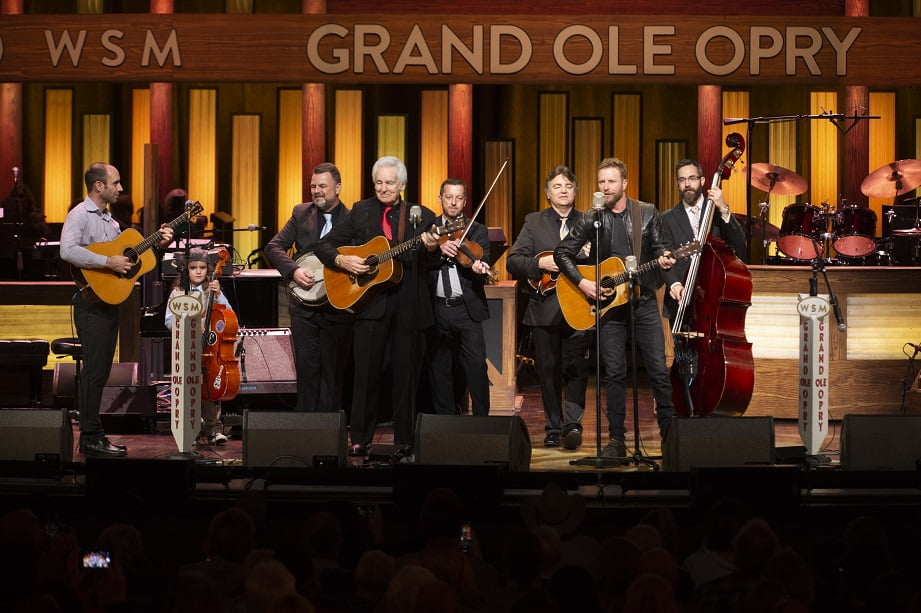
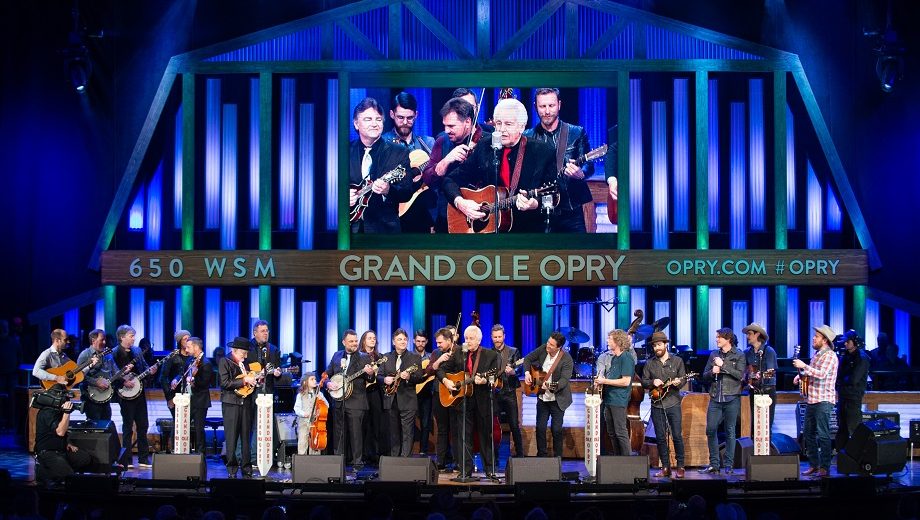
Three days after their Grammy win, the Travelin’ McCourys regrouped with Del when the Opry curated a special show called the Grand Del Opry, in order to commemorate McCoury’s milestone birthday as well as his 15th anniversary as an Opry member. Friends like Sam Bush, Bela Fleck and Abigail Washburn, Vince Gill, Old Crow Medicine Show, Jesse McReynolds, Ricky Skaggs, Marty Stuart, and of course Travelin’ McCourys jammed with the man himself.

The finale of the Grand Del Opry

In an interview a few weeks after the show, Rob says, “One of the biggest things for me was the finale, and looking at all these people on stage to help Dad celebrate his birthday. And also looking out to see nearly a full house in honor of my father. It made me very proud to see all these folks that have such respect for my dad and the music, and they all took the time to come out to the Opry that night and put on a show in honor of my father.”

Del McCoury made his first appearance on the Grand Ole Opry as Bill Monroe’s guitarist in 1963 – and that performance was only McCoury’s second gig with the esteemed Father of Bluegrass. The first was not long before that, when McCoury subbed for Monroe’s banjo player at a New York show. Although McCoury still preferred playing banjo, Monroe offered him a spot as a guitarist and lead singer – a job he kept for a year. “He’s the reason I’m doing that now,” Del says with a chuckle. “I didn’t think I would be, but once I started playing guitar and singing, I liked it.”

Obviously he still does. McCoury has played a staggering number of festivals over the years, including a few of those seminal Carlton Haney bluegrass festivals of the 1960s. Still he needed some persuasion to launch his own music festival. He recalls, “My manager said to me, ‘Did you ever think about having your own festival?’ And I said, ‘Yeah, I’ve always wanted to, but I don’t want the headache! What a headache that’s got to be!’”

But with persistence, the right location, and a diverse lineup, DelFest has become a major player on the folk festival circuit. This year’s roster includes The String Cheese Incident, Trampled by Turtles, Tyler Childers, Railroad Earth, and more than a dozen bluegrass artists, including Billy Strings, Sam Bush, the Gibson Brothers, Sierra Hull, and the SteelDrivers.

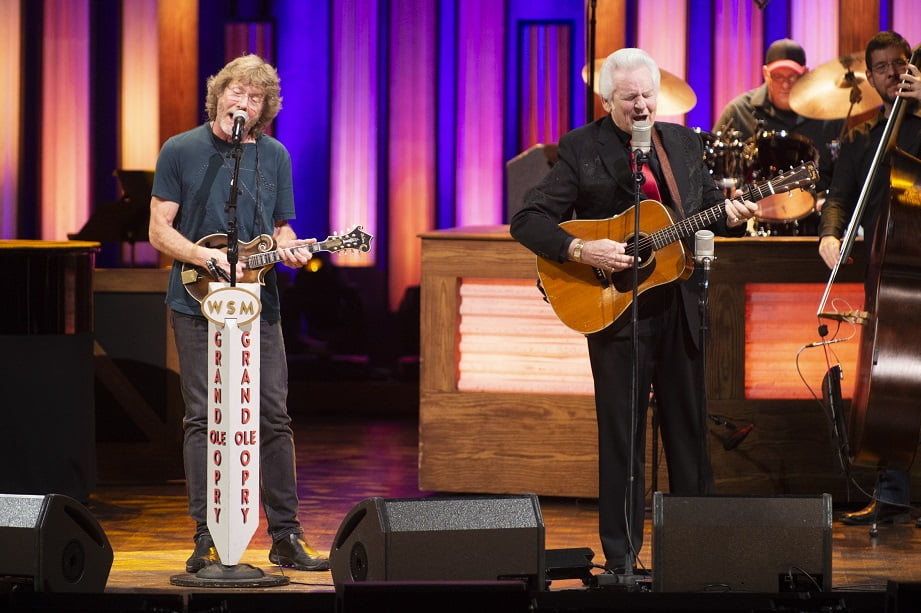
Sam Bush and Del McCoury

“Attendance is staying up there good, and it’s fun,” Del says. “It’s not a bluegrass festival, it’s just a music festival. We have a lot of bluegrass bands there, you know, but we have jam bands, and we have country acts, man, you name it. We had jazz bands, we had a mixture of music, and I like a variety of music my own self. I figured, if we have a variety of bands, some folks will come to see one band, then these folks will come to see another band, and that’s how you get your fans.”

Rob McCoury adds, “I thought having the festival was a great idea. We’ve played hundreds if not thousands of festivals through the years. So I think it was just the natural progression to have a festival of our own. I guess the most surprising thing is, the small details that add up to big things, that no one realizes is going on behind the scenes.”

Asked about the reward of all that work, he answers, “The fans, no doubt about it. All those folks come to DelFest, and anytime dad walks on stage at his own festival he’s a rock star. To me, it’s just the coolest thing.”

Rock star. Bluegrass Hall of Fame member. A nine-time IBMA Entertainer of the Year. Dad. These are just some of the ways you can describe Del McCoury. Winding down the interview backstage at the Opry, he pauses for a moment when he’s asked how he’d like the Opry family to remember him.

Finally, he says, “You know, I guess I’d want ‘em to remember me like a guy that never expected to be an Opry member. I knew I would play music, for years and years, but I thought, ‘The Opry is something is really special and I don’t know if they’d want me there.’ I was fortunate that they did, and I’m just so grateful. I hope they just remember a country guy that really loves the Grand Ole Opry and loves music.”

The Travelin’ McCourys, Vassar McCoury, Del McCoury, and Dierks Bentley
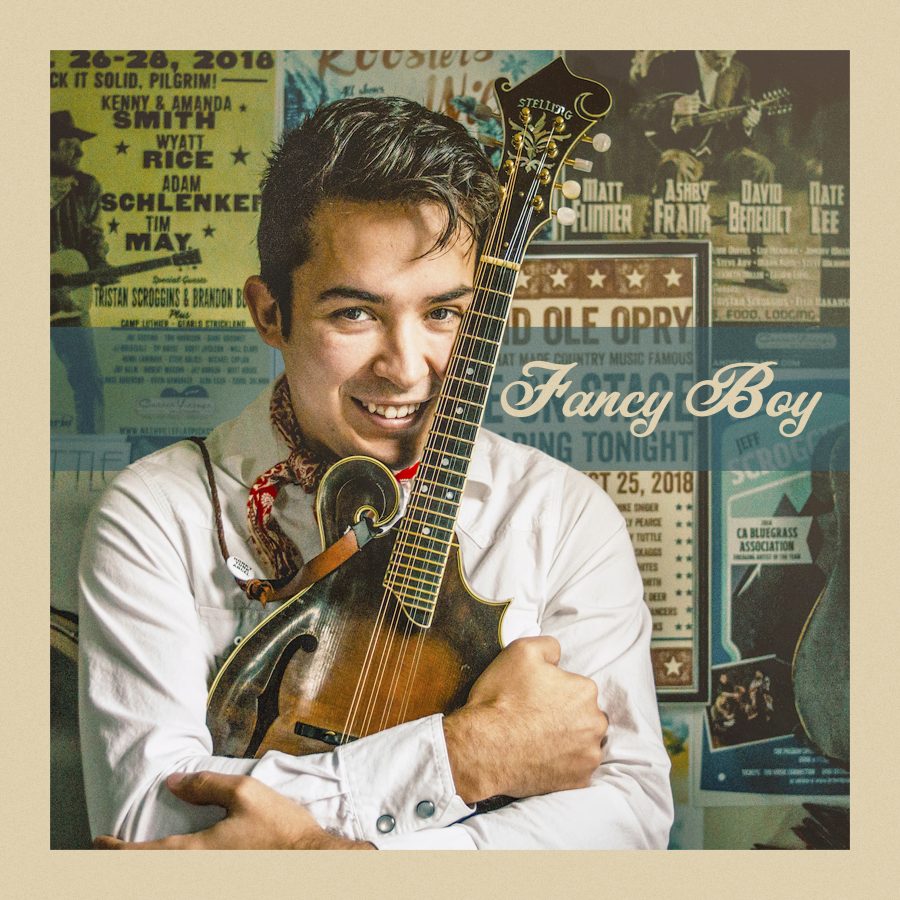
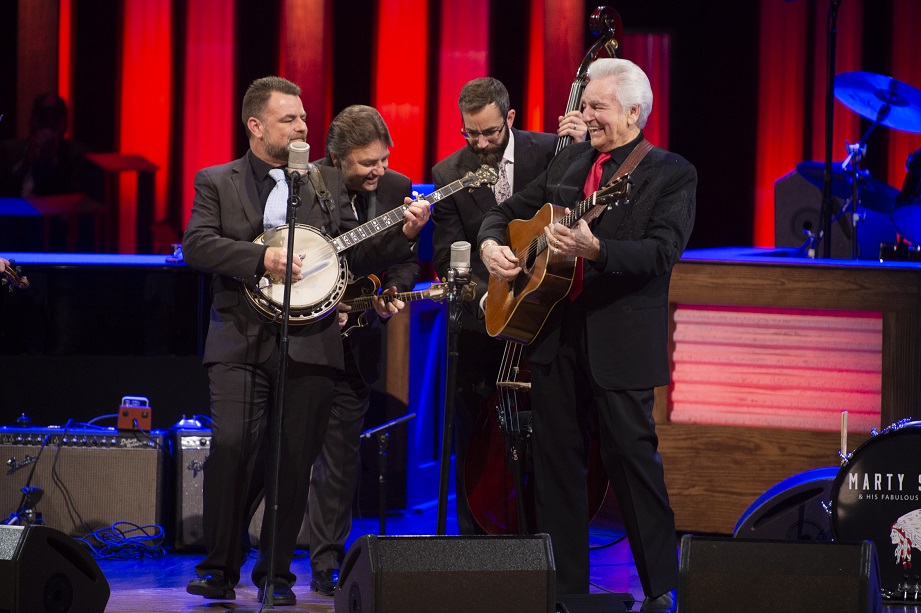

Photo credit: Chris Hollo / The Grand Ole Opry

Tristan Scroggins, “Chinquapin Hunting”

Mandolin has long been the keystone on which bluegrass is built — and it’s not simply because Bill Monroe, the undisputed Father of Bluegrass, played the instrument. Its backbeat chop, set against the boom-thump of the upright bass, isn’t just the backbeat, it’s the backbone of the music — setting the pace, driving the songs forward, and/or gently setting them down in the pocket. Of course, with its multiple hundreds of years of history, the mandolin is easily one of the most innovative instruments in the bluegrass lineup, equally comfortable in traditional bluegrass situations as those jazzy, classical, western swing, and world music genres that also lay claim to the instrument.

In bluegrass, invention on mandolin takes many forms, but one of these has become a pillar unto itself in bluegrass mandolin pedagogy: crosspicking. Pioneered by Grand Ole Opry member and Bluegrass Hall of Famer Jesse McReynolds (among others), crosspicking is a counterintuitive right hand approach that gives the mandolin a lilting, bouncy, arpeggiated, melodic feel that’s all at once astounding and — when done right — seamless. On his brand new EP, Fancy Boy, IBMA Momentum Award winner Tristan Scroggins pays tribute to crosspicking on five quintessential tunes, one of which is “Chinquapin Hunting.” The hours upon hours Scroggins has devoted to the technique show, as he carefully and deliberately teases crosspicking melodies out of each of these tunes — no matter how difficult that task may be.

It’s refreshing to hear the eight-stringed stalwart of the genre played so thoughtfully and intentionally, without simply being a mashed out, toneless chopping speed demon. Not that crosspicking can’t be accomplished also at a foot-stomping clip — Scroggins shows this method’s expansive depth and breadth with aplomb.

Del McCoury’s 80th Birthday at the Grand Ole Opry in Photographs

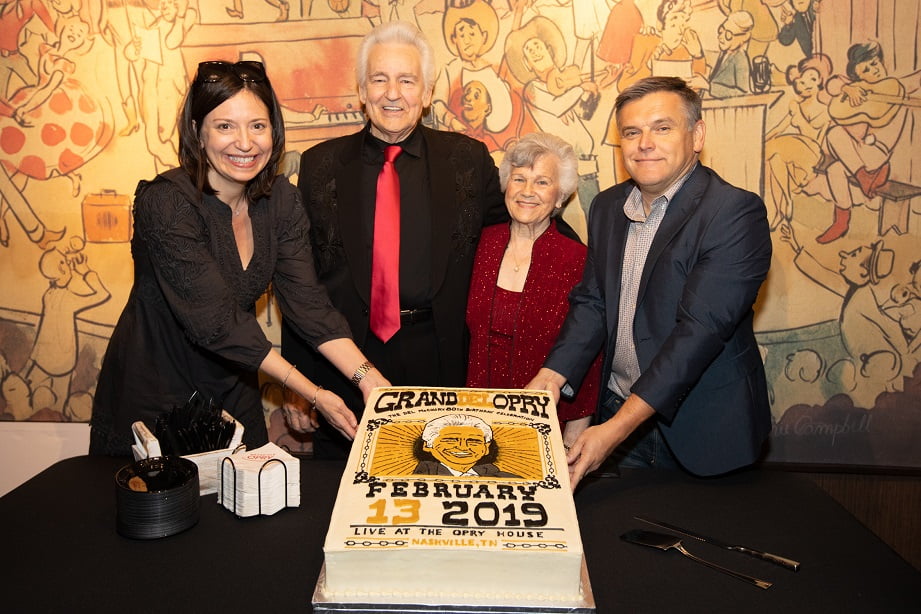
As bluegrass fans know, Del McCoury is kind of a big deal — in fact, the Grand Ole Opry briefly renamed itself on Wednesday (February 13) in his honor when the “Grand Del Opry” event gathered good friends like Dierks Bentley, Sam Bush, Béla Fleck & Abigail Washburn, Vince Gill, Jesse McReynolds, Old Crow Medicine Show, Marty Stuart, and the Travelin’ McCourys to celebrate the legendary musician’s 80th birthday. Happy birthday, Del!


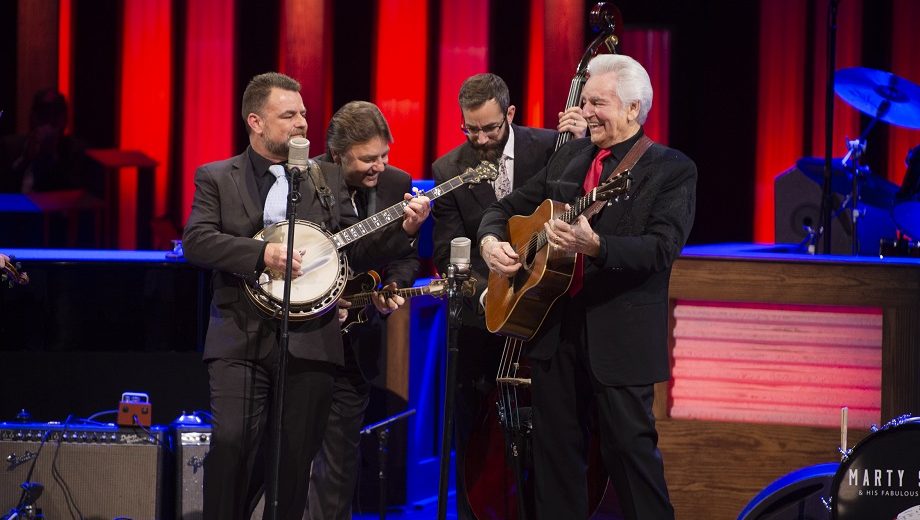
The Travelin’ McCourys’ Ronnie McCoury, Rob McCoury and Alan Bartram with Del McCoury


Sally Williams, Grand Ole Opry; Del and Jean McCoury; Dan Rogers, Grand Ole Opry


Del McCoury Band with Dierks Bentley and special guest Vassar McCoury on “upright bass.” 


Sam Bush and Del McCoury


The finale of the Grand Del Opry


Photo credit: Chris Hollo, The Grand Ole Opry

BGS 5+5: The Steel Woods

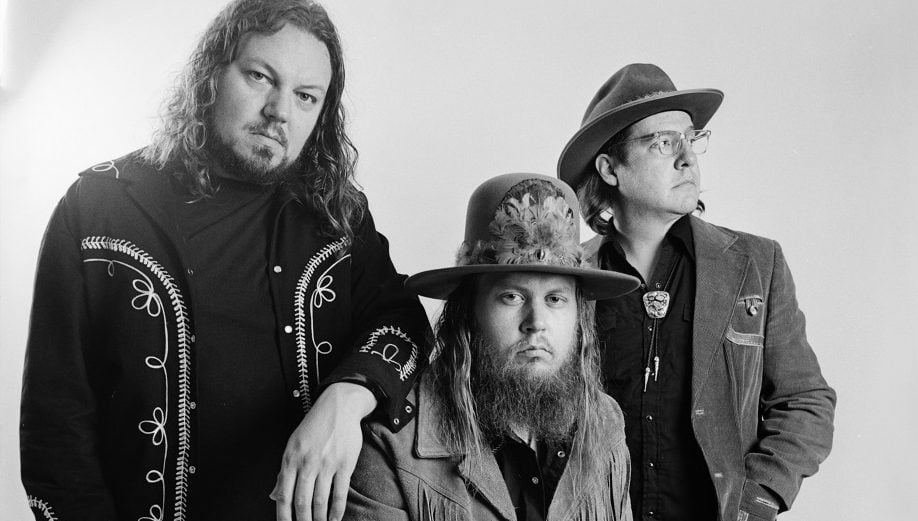
Artist: Wes Bayliss of The Steel Woods
Hometown: Woodland, Alabama
Latest Album: Old News

Which artist has influenced you the most … and how?

My grandpa is one of my biggest musical influences. I grew up in a very musical family. Although most of them had a hand in teaching me about music, the most influential as far as style goes was Grandpa. I remember all us kids would be trying to watch TV when he would grab a guitar and start picking and pretty soon we were gathered around trying to pick along with him.

What’s your favorite memory from being on stage?

One of my favorite memories of being on stage would have to be the first time we played the Opry. It was not at the very top of my bucket list so I couldn’t have anticipated the feeling of standing in the circle. There are so many people that have dreamed of being on that stage all of their life and never got the chance. Realizing that in the moment was one of the most humbling feelings in the world.

What was the first moment that you knew you wanted to be a musician?

My family had a southern gospel band when I was a kid so we were on the road a lot. One day when I was eight, my uncle bought me a harmonica at Cracker Barrel. I’m sure he immediately regretted that when he realized I was gonna blow it until my lungs gave out and we were all stuck on a bus together for hours at a time. He finally told me if I was gonna be making noise I would have to start making it sound good so I did just that. With his help I learned a few cross harp licks and joined the band within weeks. I knew then that music was gonna be my thing.

What rituals do you have, either in the studio or before a show?

We don’t do much as far as pre-show rituals other than the one most important thing for any musician to do before playing. Tune your instrument! I still fail to do that until I get on stage from time to time.

Since food and music go so well together, what is your dream pairing of a meal and a musician?

If I understand this question correctly I would like to pair country fried steak, double hash brown casserole, fried okra and a sweet tea, with myself! I would follow that with a hearty helping of blackberry cobbler and of course, I would have to follow that with a day of fasting.


Photo credit: Alyssa Gafkjen