BGS 5+5: Orville Peck

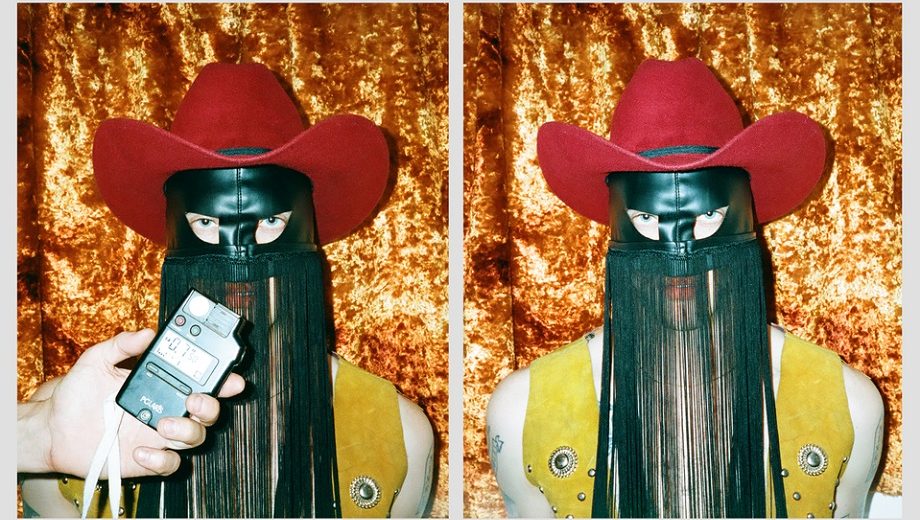
Artist: Orville Peck
Hometown: Unknown
Latest Album: Pony

What’s your favorite memory from being on stage?

I think country music to me is about storytelling. I really tried to stay true to that on this album by making each song stand as its own story, while keeping the subject matter really personal. So anytime I’m singing one of these songs on stage and I look out in the audience and catch someone who’s singing along to the words or crying — that’s an incredible moment for me. Not just because they are reacting to my story, but because in that exact moment they are also sharing their same story with me. That exchange…there’s nothing like that in the world.

What other art forms — literature, film, dance, painting, etc — inform your music?

I grew up loving books, films and theatre. I think the iconography of old cowboy novels and Westerns clearly had a lasting effect but I also loved anything that focused on outcasts. Films by David Lynch, Gus Van Sant, John Waters. I always loved the villains or the sidekicks way more than the heroes.

What was the first moment that you knew you wanted to be a musician?

I just always knew I wanted to be a performer since I was really little. I was a lonely kid with a huge imagination so I was always making something or singing or playing my dad’s guitar. Later I would train as a ballet dancer, work as a professional actor, go on tour playing drums and guitar in punk bands — no matter what I was doing I never considered anything other than performing.

What’s the toughest time you ever had writing a song?

It’s funny because I’m actually not a very technical musician. Every instrument I play, I taught myself and I tend to approach all art, even music, from a visual place. So oftentimes I can visualize what a song looks like, how it feels, how I want other people to feel listening to it, but it can maybe take me awhile to translate that into sound. “Hope to Die” took so many tweaks to sound like what I saw in my head, I think I probably drove the engineer crazy.

What rituals do you have, either in the studio or before a show?

My live band usually goes out to warm up before me so I’m often the last one left to go on stage. It sounds kinda corny but I really try to take that time to focus on what the songs mean to me and to not feel too conscious about the performance. I think all the years of being a stage performer made me feel like I had to stifle anxiety or nerves underneath a performance and kind of put on a “show face” but I actually try to keep things a bit more connected now. I’m a lot more accepting that if I’m nervous or anxious — that’s just part of the show that night.


Photo credit: Carlos Santolalla

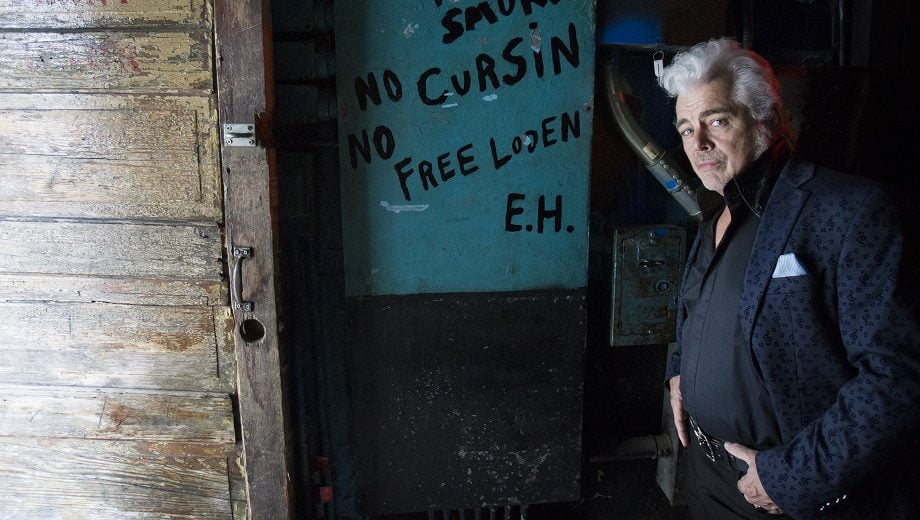
Dale Watson Makes Himself at Home in Memphis

Call us lucky that Dale Watson is feeling so lucky these days. He’s recently bought a house in Memphis, the city where he recorded his new album Call Me Lucky at Sam Phillips Recording studio, purchased the famous nightclub Hernando’s Hideaway, and continues to develop his sound and to reign as the king of Ameripolitan music. Call Me Lucky includes traveling tunes, love songs, and trucking songs, all under three minutes, and featuring Watson’s signature rockabilly sound.

On the slow-burning ballad “Johnny and June,” Watson and Celine Lee, who co-wrote the song, channel Cash and Carter as they look into each other’s eyes and sing about how deeply their lives are intertwined: “you’re the cream in my coffee/you’re the grits to my gravy/you’re the wind in my sails/a lullaby to my baby.” Cash’s drummer W.S. “Fluke” Holland provides the driving beat for “The Dumb Song,” which features a galloping bass line straight out of the Man in Black’s catalog. Every track features Watson’s inventive songwriting, from the Waylon Jennings-like “Restless” to the scampering Merle Haggard-esque “You Weren’t Supposed to Feel This Good.”

BGS caught up with Watson by phone for a chat about songwriting and his new album.

BGS: You recorded this album in Memphis at Sam Phillips Recording studio. Why did you decide to record it there?

Watson: Mostly I record my albums here in Austin, either at my studio, but sometimes at Willie’s or at Ray Hubbard’s studio. A friend of mine, Matt Ross-Spang, who’s a great producer, had been working over there and I went to visit him. I became close to the Phillips family. Since the 1960s, some of the greatest American records have been made there. It felt like home, and it has this great sound, of course.

What made you decide to buy a house in Memphis?

I’ve always liked Memphis. Wherever I was going that took me in that direction, I’d stop in there. The city has grown but it’s done well in cleaning itself up. Memphis reminds me of Austin in the ‘80s. I can record where I want but I wanted to come here to do this one.

You recently purchased the fabled Hernando’s Hideaway nightclub. Is it open yet? How does owning a club help you in your own music?

We’re still doing work on the club but hope it will open up sometime later this year. Hernando’s Hideaway is the only bar where Elvis, Johnny Cash, Jerry Lee Lewis, Carl Perkins, and Charlie Rich played in, never at the same time, though. I am able to get discs from new bands, so I hear some new music. As the owner of the bar, I have to really look for these people to perform and play the kind of music I want in the bar. If I sit in the bar, though, I am going to hear some music that I really like and that I want to hear more of.

Is this album a bookend to your 2015 album Call Me Insane?

(Laughs) I never put those two things together. I never thought of that. The label wanted to go with one of songs for the title, and this is what they chose.

Who would you say are your major influences?

Merle Haggard, Ray Price, Buck Owens, Lefty Frizzell, Johnny Cash, Carl Perkins.

Can you define Ameripolitan? How did you come up with the term?

I came up with the term out of frustration, I think. (laughs) I’d be somewhere, and people would ask me what kind of music I do, and I’d say country music. They’d say, “I love Kenny Chesney.” Nothing against them, but by today’s standard of country music, they’d be disappointed with my music. If I tell them my music sounds like Hank Williams or Jimmie Rodgers or Merle Haggard, more often than not people say they’ve never heard of that.

So, it’s easier to explain what we are by using a different word, Ameripolitan, to describe original music with a prominent roots influence. It starts with Jimmie Rodgers and has a relationship to music between Rodgers and Hank Williams. We’ve been holding the Ameripolitan Awards Show now for six years and promoting the music. We held the first four shows in Austin; this year’s show we held in Memphis.

You have a knack for writing songs quickly. What’s your view of songwriting? When did you start writing songs and playing guitar?

Early on, I learned to write from my dad, who wrote songs. When I was about seven or eight years old, I started making up songs on a ukulele. A little later I wrote a song about the girl across the street. All the good ones are about the girls. (laughs) I’m not writing “American Pie.” I pick a subject or I write about people or a situation I see. You write and you write and you have an album.

I was cleaning up my place for a move a couple of years ago and I found a good song that we dusted off. The only time I wrote songs on the way to the studio to go on an album was for the Sun Sessions. I wrote about four to five songs on the way there. I started playing guitar when my brother Jim needed a rhythm guitar player in his band. He taught me how to play some chord progressions. Two years later I had my own band and I learned on the job.

You wrote “Inside View” on the spot in a club. How did you come up with it?

We were playing the Continental Club in Austin. There were these two girls near the stage and they kept screaming for me to play “inside view, inside view.” Well, we didn’t have a song called that but I said, “All right, ‘Inside View.’” I turned to my band and I wrote the song there on stage. My drummer and road manager, Mike Bernal, usually records our music; he’ll send it to me later to refine. Usually I have to go back and re-record, but I didn’t have to do that with “Inside View.” I get most of my ideas from my audience.

How did the idea for “Johnny and June” come to you?

I was driving with my daughter when the idea came to me, and she wrote it down as I told her about it. I played Johnny’s guitar on that one. It’s got that Cash vibe to it and it’s a duet between Celine and me.

There’s a song on the album called “David Buxkemper.” How did that song come about?

I never met the guy before I wrote the song. One day I got an email through my website from this guy named David Buxkemper. He told me he was a big fan of the Reverend Horton Heat, and he’d seen me on tour with Heat. He told me he was a truckin’ farmer, and he was a big fan of my trucking songs. He also told me he and his grandfather used to watch Hee Haw together and that he liked listening to trucking songs while he was farming. I was intrigued by his story, and with a name like that—you can’t make that up! So I asked him for more details about his life and ended writing this song about him. I like writing about real people.


Photo credit: Mike Brown

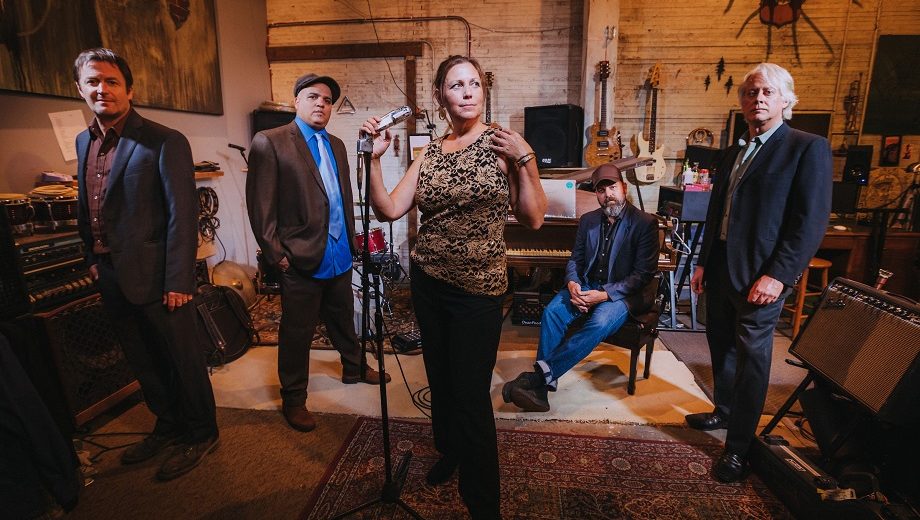
BGS 5+5: The Delines

Artist: The Delines
Hometown: Portland, Oregon
Latest album: The Imperial
Band members: Amy Boone, Cory Gray, Sean Oldham, Freddy Trujillo, Willy Vlautin

Answers by Willy Vlautin

Which artist has influenced you the most … and how?

Man oh man that’s a tough question. I go in phases so I can’t name just one. I grew up worshipping Willie Nelson, he’s always been my personal sorta saint, next was X and then The Pogues and Los Lobos then probably Tom Waits and Louis Armstrong and a dozen others as well.

What’s your favorite memory from being on stage?

The Delines were playing a gig in Madrid and in the audience, right in front of the stage, were two couples making out. A man and a woman and then two men, and I went to myself, goddamn maybe what we’re doing is working! With Richmond Fontaine no women ever came to our shows. It was all middle-aged drunk dudes and none of them had probably made out with anyone in years.

What other art forms — literature, film, dance, painting, etc — inform your music?

I always write songs thinking they are part of a movie and I write novels for a living so those two have always been a big part of my life. I love novels more than anything and I could spend my life in a movie theater. Since I started, I’ve written in characters and stories. For a shy kid it was always easier for me to do it that way. I could say what I needed to say without anyone looking at me. I was way too insecure otherwise. Writing in stories gave me complete freedom from everything, including myself.

What’s the toughest time you ever had writing a song?

Probably from age 12-26. I wrote obsessively, hundreds of tunes and not one good one. Not a single one. You would have thought I’d have stumbled upon one or two but I didn’t. But I loved writing them even though I knew I was no good at it. And then finally a good song came to me. I was 27 and worked at a trucking company loading trucks and all the drivers were talking about seeing shit on the road late at night, white line fever. I was like hot damn, I’ll write that tune. So I write the tune about a long haul trucker who never calls his wife and all the while his wife is on a bender and ends up in a psych ward. I was so proud of the tune, my first good one after 14 years of writing bad ones. Then I played it in a bar one night and a guy comes up to me and says, “That sure don’t sound like Merle’s ‘White Line Fever’ to me.” That’s when I found out Merle Haggard had already written the tune. Even when I was certain I’d gotten a good one someone had already done it.

What was the first moment that you knew you wanted to be a musician?

It started for me around ten but I never thought I would be much of a musician. I just always wanted to plant my flag with musicians because I grew up believing in records more than anything else. Records were always my favorite friends in life. So after a while, just to get closer to them, I joined up.


Photo credit: Jason Quigley

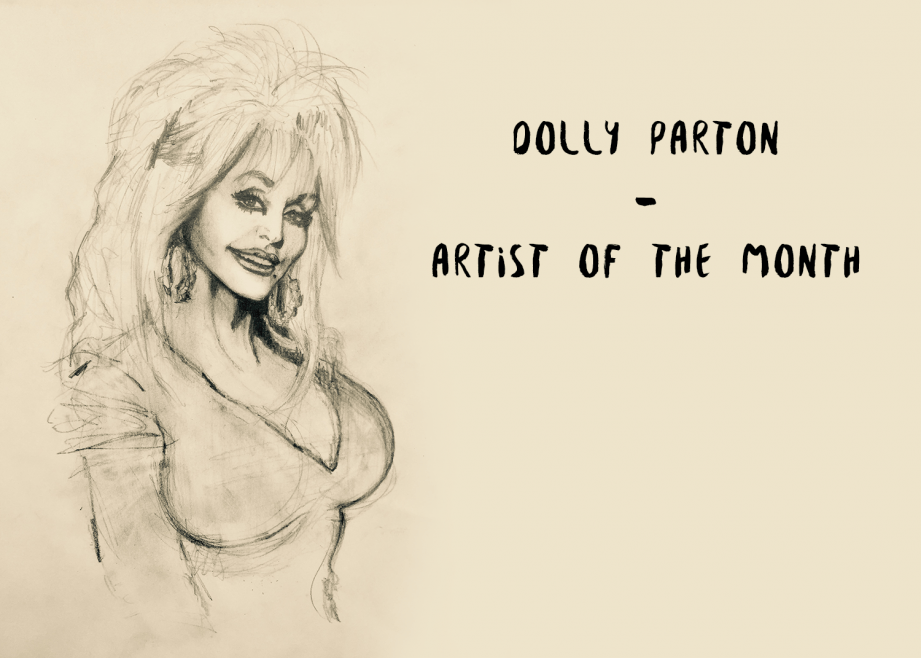
Dolly Parton Carries Childhood Memories Throughout Her Career

Back through the years, I go wandering once again
Back to the seasons of my youth…

So begins “Coat of Many Colors,” which Dolly Parton frequently cites as the favorite song she’s written. That 1971 country classic is just one example of Parton’s ability to view the world through a child’s eye, whether she’s writing about her own life, placing a fictional young character in dramatic circumstances, or simply making a connection to a new generation of kids.

The newest example of this gift is Dumplin’ – a Netflix film where an overweight teenager finds solace in Dolly’s music. Leading up to the movie’s release, Parton released a duet version of “Here I Am” with Sia – an ironic choice, as the pop star is famous for singing with her back to the audience. But that anthem of self-declaration sets the tone for the Dumplin’ soundtrack, underscoring one of the reasons that a teenage girl would love Parton’s music in the first place. The heartfelt film is based on a young adult novel by Julie Murphy.

Seeing an early cut of Dumplin’ inspired Parton to write “Girl in the Movies,” a thoughtful song that finds her identifying with that very character — the “girl in the movies.” Parton told NPR that she wrote it for every little boy and girl. The song carries a strong message, she says: “Don’t just live in a fantasy of watching someone else live their lives. You star in your own role. You be the star of your own life.”

Parton has embodied that perspective for 60 years. In fact, 2019 is the 60th anniversary of the first time she released a song she wrote – in this case, “Puppy Love,” composed with her uncle Bill Owens. Parton was 11 years old when she wrote it, 12 when she recorded it, and 13 when it was released as a single on the tiny Goldband Records. She sang locally around Knoxville, Tennessee, and moved to Nashville on the day after she graduated from high school in 1964. Two years later and still chasing her dreams, she married Carl Dean, a lasting union that nonetheless yielded no children of their own.

Yet time and time again she incorporated a child into the storyline of her music. For example, in “Mommie, Ain’t That Daddy,” Parton sings from the perspective of a woman whose kids happen to see their father begging for money. In “Jeannie’s Afraid of the Dark,” Parton describes Jeannie as a child who feared burial; her duet partner Porter Wagoner then reveals that Jeannie dies. “Malena” is another doomed child who dies on the night of her birthday, finally receiving the set of wings she’d asked for.

By 1970, Parton had carved out a solo career in addition to her role on Porter Wagoner’s TV show. Her first No. 1 hit, “Joshua,” tells the story of an orphaned girl who hears about a mysterious man living a good ways down the railroad track. Curious, she seeks him out – and then promptly moves in with him. (“Why, you’re just what I’ve been lookin’ for!” she exclaims.) The poetic “Coat of Many Colors” arrived a year later, serving as a morality tale that still resonates decades later.

Parton employed that same autobiographical approach for “In the Good Old Days (When Times Were Bad),” a gem from My Tennessee Mountain Home. Reflecting on her childhood years, she sings, “No amount of money could buy from me the memories I have of them / No amount of money could pay me to go back and live through it again.” (Merle Haggard identified with the lyrics so much that he recorded a version, too.) Another of the compositions on that album is simply titled “I Remember” and finds her blissfully recalling those seasons of her youth. Of course, as she matured, so did her songwriting, most notably on poignant compositions like “I Will Always Love You,” “Light of a Clear Blue Morning,” and of course, “Jolene.”

Still, if you dig into her albums from this era, you’ll find songs like “Me and Little Andy,” about a poor girl and her dog who wind up on Dolly’s doorstep. She agrees to let them spend the night; by morning, the girl and the dog are both dead. Another one, “Mammie,” is about a midwife who raises a child after the mother dies at birth and then teaches the child to sing and play guitar — but Mammie herself doesn’t live to the end of song. “Silver Sandals” recounts the story of a disabled young girl who couldn’t walk; when she inevitably dies, Dolly and Porter imagine her happily walking up the golden stairs of Heaven.

On a brighter note, Dolly reminisces about a banjo picker she knew as a kid named “Applejack.” Almost like a precursor to Dumplin’, Parton composed “Shattered Image” about sitting on a bridge as a girl and throwing rocks into her reflection in the water. She compares the experience to the way people were shattering her public image as an adult. A 1979 album cut, “Nickels and Dimes,” is a co-write with her brother Floyd Parton, who died in December. While writing it, Dolly thought about how she’d open up her guitar case in downtown Knoxville as a young girl and busk in order to get enough quarters to buy hamburgers. By the time the song ends, she’s a star, but here’s how it begins:

“I used to stand on the corner and sing as a child
And I’d play my guitar and sing as the people went by
The sidewalks were crowded but I’d just sing louder ‘cause I didn’t mind
Spending my time, spinning my rhymes, and singing for nickels and dimes.”

Even beyond her musical output, Parton has kept a strong bond between herself and a younger generation. In 1986, she invested in a theme park in East Tennessee and rebranded it as Dollywood – a gift that keeps on giving, with new attractions added nearly every year. And it’s not all roller coasters. Parton’s mother sewed a replica of the fabled coat of many colors to display in the museum dedicated to Dolly’s life and career.

Nearly a decade later, Parton instituted the Imagination Library, where pre-school children receive a monthly book at no charge. To these lucky kids, Parton is known as “The Book Lady.” Meanwhile, “Coat of Many Colors” has been successfully transformed into a children’s book and an award-winning TV movie, in addition to being recorded by the likes of Eva Cassidy, Emmylou Harris, Joey & Rory, and Alison Krauss & Shania Twain.

When Parton was 70 years old, she secured a No. 1 country album with 2016’s Pure & Simple. One of the most charming songs on it is titled “I’m Sixteen,” where she sings, “It goes to show you’re never old / Unless you choose to be / And I will be sixteen forever / Just as long as you love me.” A year later she released her first-ever children’s album, I Believe in You.

As 2019 begins, Parton is in the spotlight again. On January 6, “Girl in the Movies” will compete for a Golden Globe award in the category of  Best Original Song in a Motion Picture. A month later, she will be recognized as the MusiCares Person of the Year at an all-star concert event, just a day before the Grammy awards. Along with celebrating her magnificent musical achievements, the presentation also acknowledges the fact that the Imagination Library has given out 100 million books since its inception. Parton is the first member of the Nashville music community to be honored at the annual MusiCares gala.

Way down in the fall, Parton will return to the Grand Ole Opry, celebrating the 50th anniversary of her induction in October. But her history to the Opry stretches about a decade before that. When she was 13, Parton and her uncle Bill Owens had lingered outside the Ryman to meet Johnny Cash. When he emerged, a starstruck Parton begged Cash to let her sing on stage – but it would take a while for this dream to be realized. In time, Opry star Jimmy C. Newman gave up his slot for her, although Cash handled the introduction that night. According to Parton’s autobiography, Cash told the audience, “We’ve got a little girl from up here in East Tennessee. Her daddy’s listening to the radio at home, and she’s gonna be in real trouble if she doesn’t sing tonight, so let’s bring her out here!”

Parton wrote about this career milestone in her book: “I know I had never heard a crowd cheer and shout and clap that way. And they were doing it all for me. I got three encores. This time I was prepared for an encore, but not three, not at the Grand Ole Opry. Someone told me later, ‘You looked like you were out there saying, “Here I am, this is me.”’ I was. Not just to that audience but to the whole world.”


Illustration: Zachary Johnson

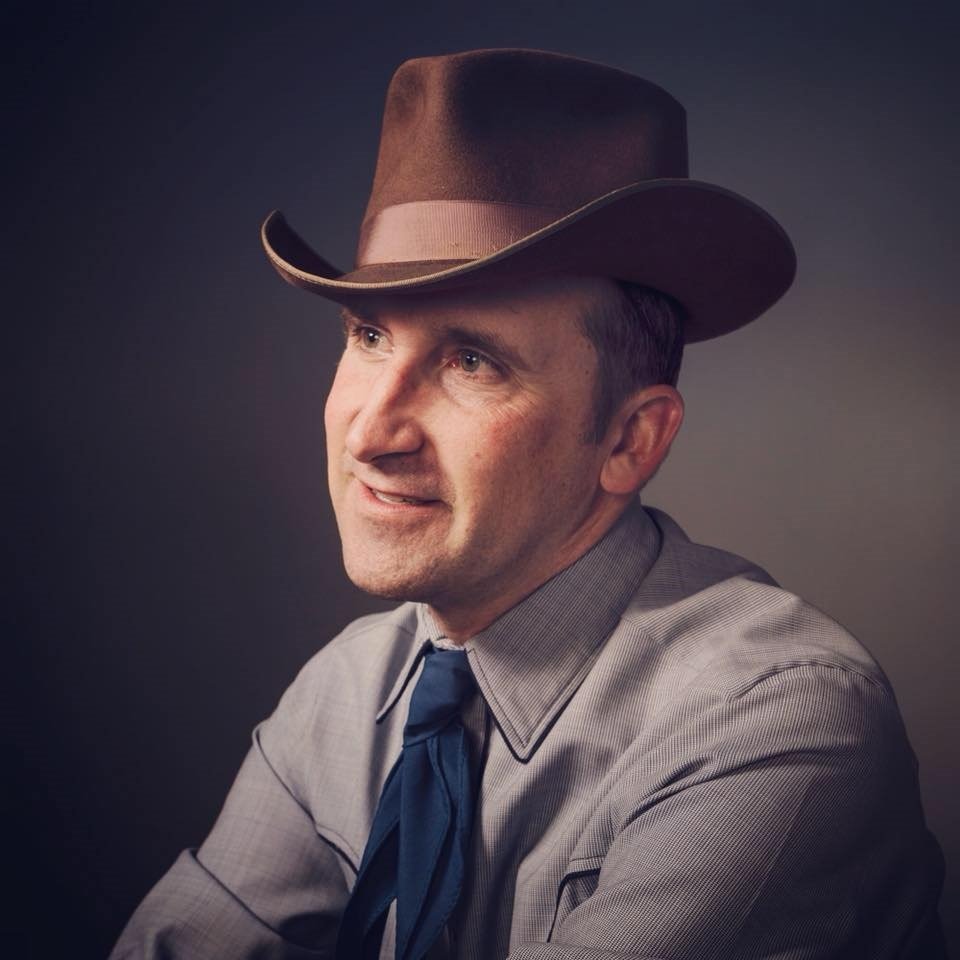
WATCH: Matt Campbell, “That’s The Way”

Artist: Matt Campbell
Hometown: Nashville, Tennessee
Song: “That’s The Way”
Album: The Man With Everything
Release Date: November 9, 2018
Label: Flour Sack Cape Records

In Their Words: “I woke up with the hook of the song in my head, not sure where it came from or what to do with it. I was listening to a lot of Merle Haggard at the time. Country music has a rich tradition of artists staking out political positions, but a lot of modern takes are full of platitudes or play to lowest common denominators. I’m staking out my own position in no uncertain terms, informed by my own experiences. I thought of it as Western Swing song, but the more the lyrics came together the phrasing turned into something closer to rap. I suppose that makes sense because my view is that you have to blur a few lines to make sense of America, if only for your own sanity.” — Matt Campbell


Photo credit: Emily Beaver

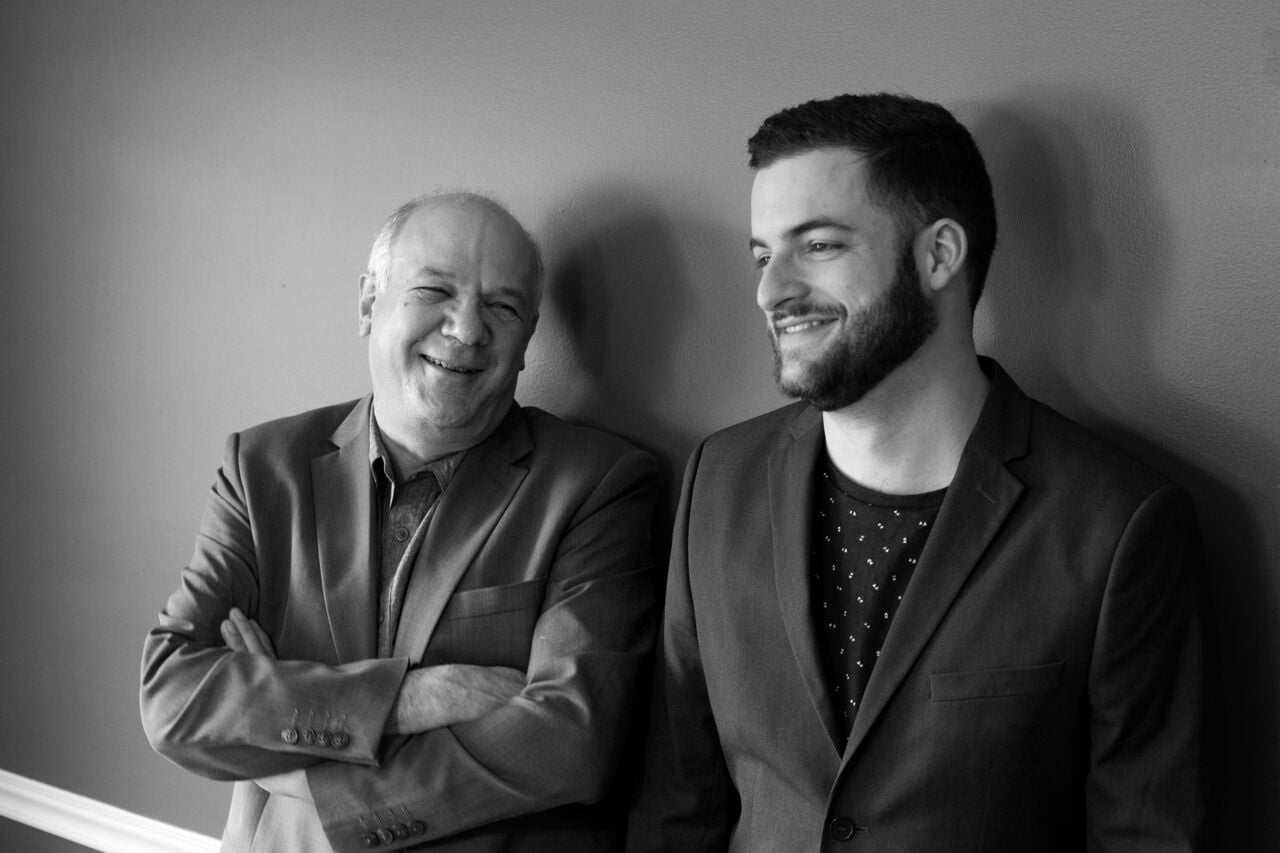
BGS 5+5: Justin Hiltner & Jon Weisberger

Editor’s Note: Our writers at the Bluegrass Situation have many talents — and for regular contributors Justin Hiltner (pictured right) and Jon Weisberger, their original music is worth discovering by our BGS readers.

Artist name: Justin Hiltner & Jon Weisberger
Hometown: Nashville, Tennessee
Latest album: Watch It Burn
Personal nicknames (or rejected band names): “J-Dubs” (Jon); “HUSTIB” (Justin).

Which artist has influenced you the most … and how?

Jon: It would have to be Merle Haggard. His music and his career exemplify so many things that first attracted me to country and bluegrass music. For instance, he worked as a sideman before going out on his own, in a classic sort of apprenticeship that I really appreciate; he wrote about a lot of different things in a lot of different ways, with his personal story being just one element in his songwriting; and to me, he really found a sweet spot between acknowledging and taking part in tradition on the one hand, and having his own, unique voice on the other.

Justin: It’s difficult to pinpoint just one, especially given that bluegrass is predicated upon versatility and wearing all of the creative and musical hats all at once. If I were to hazard an answer, based on where I stand at this point in time, musically and otherwise, it would have multiple parts. Earl Scruggs, first and foremost, really and truly is my most important banjo inspiration. “Little Darlin’ Pal of Mine” off of At Carnegie Hall! was undoubtedly my OH-SHIT-EARL-SCRUGGS moment. Darrell Scott would probably fill the most influential songwriter slot (and getting to sing harmony with Tim O’Brien on Watch it Burn’s “If I Were a Praying Man” let me live my Darrell Scott dreams, if just for one song!) And if I were to pick an influential vocalist, it would have to be Lee Ann Womack. Now I ought to stop while this answer is still sufficiently succinct.

What’s the toughest time you ever had writing a song?

Jon: There are several different kinds of tough! I remember that when Jeremy Garrett and I first wrote “Where The Rivers Run Cold,” he got some feedback about the song that caused us to spend some time trying to write a different chorus, and that was tough; eventually, the band adopted it as it was originally written, which turned out pretty well. And he and Josh Shilling (Mountain Heart) and I recently revisited one we kind of thought we had finished back in late 2014, but that none of us was really satisfied with; that one wound up with a different time signature and a different chorus that we love, but working out what to change and what to keep was a real job.

Justin: On my own, I tend to write hyper-personal, intensely specific songs. I often find myself way too close to a song’s hook or core idea, so close that I can’t make progress or finesse the writing at all. The beauty in having a co-writer like Jon nearby, someone that I’ve worked with for so long, is that I can trust him to take one of those personal song ideas and flesh it out in a way that cares for the premise, but insures that it’s relatable to a broader audience. This is exactly how we wrote “This Isn’t How I Wanted to Come Home” together, a song about my grandma passing away. Without a steady co-writing hand like Jon’s, so many difficult songs sit languishing, unfinished, in my iPhone notes!

If you had to write a mission statement for your career, what would it be?

Jon: Super-simple: write and play music that means something to me, and do so well enough that it means something to others, too — enough that I’m able to, as Melvin Goins used to say, put a biscuit on the table.

Justin: That no one ever feel excluded from these roots genres that we love because of who they are. Full stop.

Which elements of nature do you spend the most time with and how do those impact your work?

Jon: I guess that would be fauna — specifically, cats. My wife and I have two, and they affect my work every time I write with someone at our house! Matisse, the older of the two, appears in the “at the writing table” photo used in Watch It Burn’s graphic design, and in other promotional photos, too, illustrating the exact nature of that impact — entertainment and/or distraction.

Justin: I should hope at this point that it’s a well-known fact that I’m an avid birdwatcher and amateur naturalist. I’ve got 353 species of birds on my life list (an ongoing list of every species I’ve ever successfully identified in-field). I learned very early in my time as a performer that I ought to bring my binoculars wherever I go on tour. I write a lot of songs about birds, but so many aspects of nature filter into my writing — as in “Lady’s Slippers,” from the record, a song indirectly about a gorgeous, rare native orchid. “Winnsboro Blue” was written for a quarry near property my uncle owns in upstate South Carolina, where we go birding every time I’m in the area. It comes through whether you can always trace the connection or not!

How often do you hide behind a character in a song or use “you” when it’s actually “me”?

Jon: I’ve never really thought about it in that way, I guess, in part because I’ve pretty much always been a side musician and singer who took up songwriting more out of need than out of the urge for self-expression that I think motivates a lot of singers and writers, at least when they’re starting out. Too, bluegrass and country are fields in which distance between singer/writer and the character written or sung is no less legitimate than complete identification. Perhaps this more craft-oriented approach has helped as a co-writer; I’m really accustomed to looking for how I can relate to the germ of a song idea almost in the way a listener, rather than a writer would. As a result, I do think there’s a part of me in every song I’ve written, even though they’re almost all co-writes — in fact, that’s part of what makes co-writing so enjoyably mysterious or mysteriously enjoyable.

Justin: I used to hide myself and my identity in my songs not by clever or deflective writing, but by literally distancing myself from my songs. If I had written something with prominent male pronouns I would pitch the song to women, operating under the assumption that I could not/would not ever be the one singing those songs. For so long I felt that my queerness need not be present in my writing and my art, because, “Straight people aren’t flaunting their identities in their music!” Turns out 99.9 percent of all music ever made flaunts heteronormativity pretty unabashedly, so I consciously broke the habit of filtering my own perspective out of my songs. It was a pivotal point for me, personally and professionally, and I’ll never go back to hiding behind songwriting rhetoric choices ever again!


Photo credit: Bethany Carson, Carson Photoworks

MIXTAPE: Eric Corne’s California Country

California country has deep roots and an enduring influence. It’s given us the Bakersfield Sound, country-rock, cosmic country, cow punk, and much more. I love the more raw/less polished sound and how its artists tend to chart their own course. Nashville was a company town; California was where the mavericks went. I have a strong personal connection to California country, stemming from my work as Dusty Wakeman’s engineer at Mad Dog Studios in Los Angeles. Dusty played bass with Buck Owens, engineered Dwight Yoakam’s seminal albums, and co-produced Lucinda Williams’ first two albums. There’s still a strong core of musicians in L.A. with roots stretching back to these earlier generations, and it’s a thrill and an honor to be writing and producing records with such soulful and beautiful people, many of whom populate the selections below. — Eric Corne

Buck Owens — “Streets of Bakersfield”

Buck Owens is, of course, a pillar of California country and a pioneer of the Bakersfield Sound. An iconic harmony guitar riff provides the instrumental theme, with gorgeous vocal harmonies and pedal steel lifting the choruses. This song really encapsulates what California country represents to me — the desire to be oneself.

Merle Haggard — “Working Man”

This is one of my favorite Merle songs. It’s got a great groove and terrific guitar playing with lyrics that clearly represent the blue-collar ethic he embodied.

Lucinda Williams — “Sweet Ole World”

Lucinda really helped broaden the boundaries of country just by doing her own thing. This song has an angelic vocal melody with beautiful harmony and precise responses from the guitar. Immaculately recorded and co-produced by my mentor Dusty Wakeman.

Dwight Yoakam — “It Only Hurts When I Cry”

Dwight and Pete Anderson were real students of classic country music, especially the Bakersfield Sound, and they were at the center of the cow punk movement, along with X, Lone Justice, and others. This is a great song with witty lyrics, perfect production, and top-notch performances.

Jean Shepard — “If Teardrops Were Silver”

Raised in Bakersfield, Jean Shepard was a pioneer for female country singers and one of its first great stars, following on the heels of Kitty Wells’ breakthrough. She had a really pure voice with a lovely vibrato and a great ability to interpret a song.

Bob Wills — “Bubbles in My Beer”

It could be argued that Bob Wills is the godfather of the Bakersfield Sound. He played there regularly and had a strong influence on both Buck and Merle … something I can really hear in this song.

Sam Morrow — “Skinny Elvis” (Featuring Jaime Wyatt)

I’m really proud to work with these two brilliant, young, California country artists who are getting well-deserved national attention. I wrote this one for Sam’s album, Concrete and Mud. It’s a little reminiscent of the Gram/Emmylou song “Ooh, Las Vegas,” so I thought it’d make a great duet with Jaime. I recruited legendary Gram Parsons/Byrds pedal steel player Jay Dee Maness to play on it, which was quite a thrill, as you can imagine.

Guy Clark — “L.A. Freeway”

Guy Clark wasn’t in L.A. for long, and this song is about leaving, but it’s a beautiful farewell song. The song makes reference to another beloved and iconic figure of California country — “Skinny” Dennis Sanchez who played bass with Clark, and ran in circles with the likes of Townes Van Zandt, Rodney Crowell, and Steve Earle. There’s also a thriving honkytonk in Brooklyn named after him. It’s an incredible performance, very dynamic, with a sympathetic arrangement including Wurlitzer piano, weepy fiddle, moaning harmonica, and gorgeous chorus harmonies.

Jade Jackson — “Motorcycle”

Here’s another great, young country singer coming out of Cali right now. I love this lyric and vocal performance — intimate with a dark, rebellious under current.

Linda Ronstadt — “Silver Threads and Golden Needles”

Her early career country records are really underrated. This is a killer country-rock version of a Dick Reynolds/Jack Rhodes classic song with strong ties to the Flying Burrito Brothers. I think Ronstadt is also important to include here, due to her work with Neil Young, the Eagles, Jackson Browne, and others in the L.A. country scene of the late ’60s and early ’70s.

The Byrds — “Hickory Wind”

No playlist of California country would be complete without a song from the Byrds’ seminal country album Sweetheart of the Rodeo. My first gig in Los Angeles was assisting Dusty Wakeman on the mixes for the Gram Parsons tribute concert at which Keith Richards did a beautiful heartfelt version of this song by his old pal, Gram.

Sam Outlaw — “Jesus Take the Wheel (And Drive Me to a Bar)”

An instant classic by one of the brightest stars of the current generation of California country singers with outstanding production by Ry Cooder and Bo Koster of My Morning Jacket on keys, who also guests on my new record.

The Flying Burrito Brothers — “Hot Burrito #1”

Even though Gram Parsons and Chris Hillman’s importance is already represented here via the Byrds, I wanted to include this achingly beautiful Burrito song, partly because of Gram’s incredible vocal and melody, and partly due to Bernie Leadon and the link he represented as a member of both the Burritos and the Eagles, the latter heavily influenced by the former.

Gene Autry — “Mexicali Rose”

Gene Autry’s singing cowboy films were instrumental in bringing country music to a national audience in the 1940s. I was very fortunate to record Glen Campbell on his version of “Mexicali Rose,” but thought I’d include Autry’s version here.

Crosby, Stills, Nash, & Young — “Helpless”

I think the Laurel Canyon music scene played an important role in California country and Neil Young, in particular — first with Buffalo Springfield, with songs like “Learning to Fly” and “I Am a Child,” and later with his Nashville-recorded classic, Harvest. “Helpless” to me represents the seeds of Harvest.

Eagles — “Tequila Sunrise”

Not much needs to be said about the first two Eagles’ albums and their role in the popularity of country-rock. Not to include them would seem an oversight. This also represents the beginning of the fruitful Glenn Frey/Don Henley songwriting partnership.
BGS 5+5: Pauline Andrès

Artist: Pauline Andrès
Hometown: Nashville by way of France
Latest Album: Fearless Heart
Personal Nicknames: Musicians call me P.A, Spanish friends Paulinilla, Southern friends Mama.

If you could spend 10 minutes with John Lennon, Dolly Parton, Hank Williams, Joni Mitchell, Sister Rosetta, or Merle Haggard how would it go?

Tough choice between Merle and Dolly. I guess I’d go for Dolly because such a moment would surely get me high on a crazy good mood for about a month. I would humbly ask for two pieces of advice: one from Dolly, the songwriter, and one from Dolly, the businesswoman. I’d also thank her for both her badass career and the incredible fun I had at Dollywood last Christmas.

Since food and music go so well together, what would be your dream pairing of a meal and a musician?

My life would be complete if I could ever have a big slice of pizza with Springsteen. Wouldn’t even need to talk. But if I could hear an anecdote or two, then my life would be extra complete.

If you had to write a mission statement for your career, what would it be?

Work in the best interest of the songs and nothing else. If it does not serve the songs, it ain’t worth doing.

How do other art forms — literature, film, dance, painting, etc — inform your music?

Literature plays a big part. When I write a song, I always start with an idea, concept, or actual plot. Rarely with a melody or rhythm. Storytelling in the form of books, tales, or poetry is the brainier sister of songwriting. A couple of songs I’ve released are entirely based on literary influences and many are just sprinkled with more subtle references. “On the Doorstep” is feeding off Lovecraft’s writing in every single line and was inspired by at least 10 of his short novels. “She” was born from my obsession with fairy tales — the original, darker, and often Eastern versions of the stories we (think we) know so well.

As you travel around the world, what is the overriding sense you get of the people?

It’s fair to say I’ve traveled a lot and for longer periods of time. At the end of the day, whether in Nashville, Hanoi, or Berlin, you just see the same people with similar-ish struggles. The scenery changes — that’s all. The scale of the problems, too. But not their essence.

It’s probably this universality, this pain that we share, that allows music and arts to create such amazing connections that cross languages and borders. When you travel intensively, you also realize that idiots come in all sizes and languages; therefore, any generalization about a nationality or culture is not only morally wrong, it’s literally not true. People are people. Fact. And the touching part, for me, is to see that most just do the best they can. Even when that ain’t much.

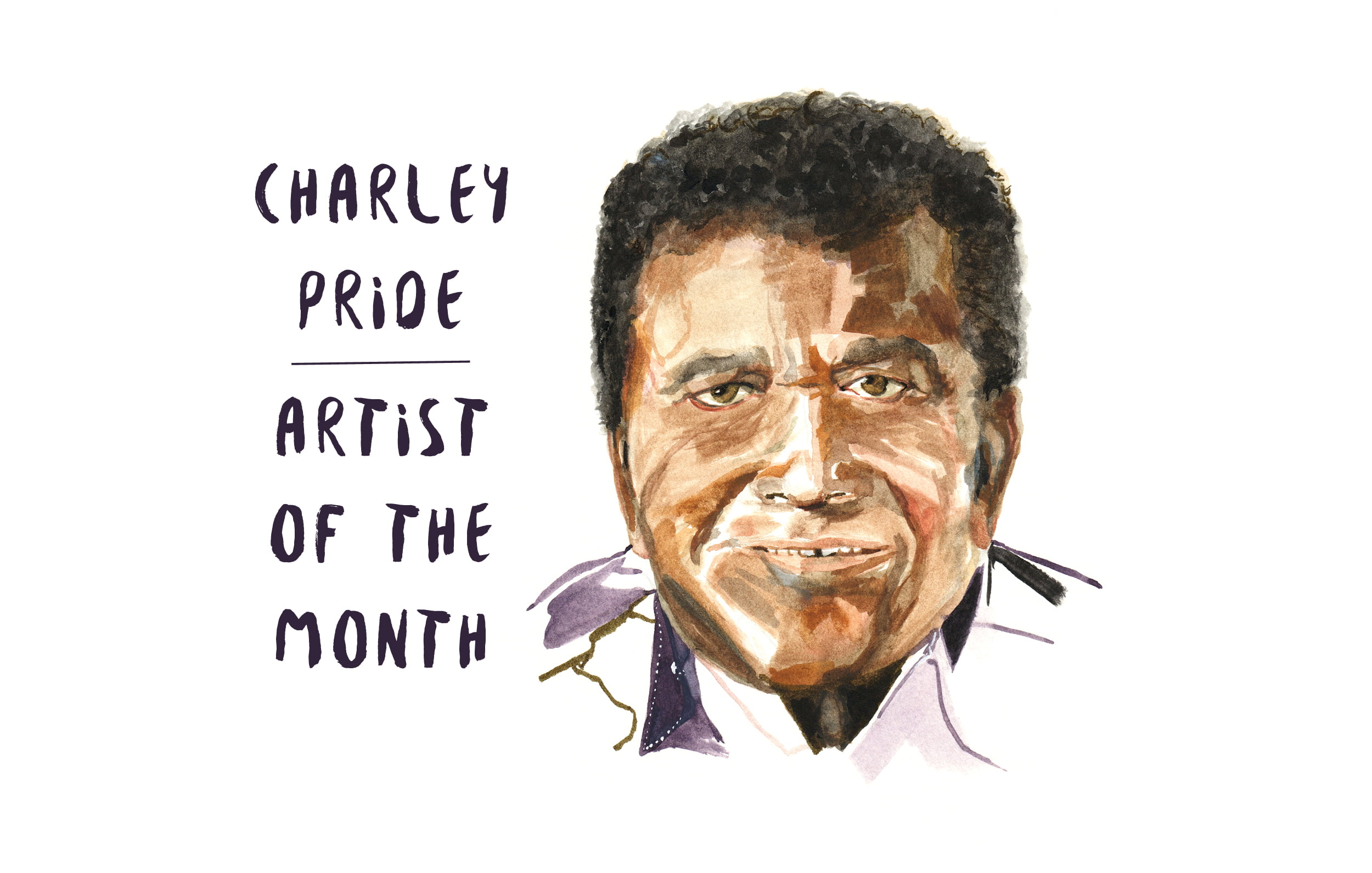
Charley Pride: Crossing Over Generations

Charley Pride might be 83 and a living country legend, but that doesn’t mean he’s not wise or proud enough to still listen to his wife. “It’s been six years since the last one,” Pride says of his 2011 album, Choices. “And my wife said, ‘Why don’t you try and find a producer you might like to work with?'” Pride heard her loud and clear and, together, they found Billy Yates, a renowned Nashville artist, producer, and songwriter. Even in his 80s, Pride wasn’t afraid to shake things up a little. Clearly, he’s never been afraid to take chances and drive from his gut — straight to 36 number one songs and spots in the Country Music Hall of Fame and the Grand Ole Opry.

The result is Music in My Heart, 13 songs of tender country traditionalism centered on Pride’s warm tone and classic, twangy spikes of fiddle and steel guitar. After all these years and one of country’s most storied careers, Pride’s never found a reason to veer away from what he does best — songs that grow fruitfully from the genre’s original roots, watered with the souls of Bill Monroe and Roy Acuff.

“I’m a traditionalist,” says Pride. He repeats the phrase so it’s undeniably clear: “A traditionalist. You don’t have to worry about me crossing over, because I’m a traditionalist and I’m proud of that. People used to say to me, after ‘Kiss an Angel Good Mornin” started going up the charts, ‘Charley, when are you going to cross over?’ I said, ‘I ain’t going to cross over to nothing.’ They want me to cross over? They crossed over to me!”

Pride, who’s sold over 70 million records worldwide, has certainly earned the right to stick to his convictions — and he’s also proven the value of driving straight from the heart, with equal parts hard work along the way. Pride grew up the son of a sharecropper on a cotton farm in Sledge, Mississippi, and has lived a life worthy of the movie screens, so much so that a biopic has been in the works for years (at one point, Dwayne Johnson, aka the Rock, was even in talks to play the singer). Pride held tenure in the Negro baseball league, was drafted by the Army, and ended up in Nashville after his plans in sports crumbled. He took the bus to Tennessee, eventually breaking barriers with hit after hit in the ’60s, ’70s, and ’80s. Even now, he’s still working, performing sometimes 40 concert dates a year. The only difference is that he’s singing to multiple generations.

“I’m singing to three or four decades now,” Pride says. “I was in Indiana a few years back, and a lady hollered out in the audience, ‘Charley! You’re singing to five generations!’ I’m singing to grandmothers, grandfathers, granddaughters. I don’t want to sound like I’m bragging, but they’re still standing up when I first come on. They scream, ‘Oh, Charley. You’ve still got it!’ Not just the ladies; the men are, too. When you get that kind of thing, it’s hard to quit.”

Indeed, Music in My Heart is still very much progressing and alive. Instead of compiling an album of tributes, or something trying to appeal to country’s current trends, it’s unapologetic in its tone: it opens on “New Patches,” with fiddle that’s clear as day, undeniably traditional and Southern-rooted. Pride’s voice, too, has only honeyed as the years have gone on, deepening a touch, yet barely fraying. Even in his personal listening, he’s never strayed from the classics. “I listen mostly to Willie’s Roadhouse,” he admits, about his buddy Willie Nelson’s classic country show on SiriusXM. He sees Randy Travis as the dividing line of sorts between the new and the old guard.

“From Randy Travis came Tim McGraw, Garth Brooks, up to Taylor Swift, to now,” he says. “Most of them, I’ve met and they’ve been really good to me, same as my peers up to George Strait. I’ve liked not one or two of their songs, but a whole bunch. Garth Brooks, he treats me like a dad. Well, not a dad, but with respect, for my being a traditionalist.”

Predictably, it’s once again his wife Rozene — to whom he’s been wed since 1956 — who is the balancing force. “If I’m in her car, she listens to the people coming up,” Pride admits, though don’t ask him to recall any of their names. “The youngsters that are coming up right now.” Pride’s own youngster — his son, Dion — carries on the family tradition with some other famous offspring: Marty Haggard and Georgette Jones, something Pride himself brings full circle on Music in My Heart by covering Haggard’s “The Way It Was in ’51.”

With the genre’s recent embrace of traditionalism, it would be a pity to put Pride only in the category of dust-gathering legacy acts: He is one, undoubtedly, but he’s still making music that has ample power to scratch that modern classic country itch. Maybe that’s because he still sees his best days ahead of him. “I think this is my best work, and I’m not just saying that: I’m stating facts that I believe,” he says. “I culled these songs down to the ones I really love, the way I have done all my life. Like I’ve always said, I’m in the business of selling lyrics, feeling, and emotions.”

And Music in My Heart is beating fast and furiously with all of those things, 83 years in the making.


Lede illustration by Cat Ferraz.

Best of: Grand Ole Opry

When I think of country music, I think of the Grand Ole Opry. As far as I’m concerned, the two are synonyms. What began as the WSM Barn Dance radio show in 1925 has grown into an entire entertainment experience (their YouTube even has style videos), and solidified Nashville as the Country Music Capital. With its rich history, it is no wonder that aspiring country and bluegrass musicians across the globe dream of making an Opry debut. Here are five performances from “country’s most famous stage” for your enjoyment:

Johnny Cash — “Ring of Fire”

Let’s start off with this throwback video of Johnny Cash performing one of his most famous songs, “Ring of Fire,” at the Ryman Auditorium in 1968. While Cash had a tumultuous relationship with the Opry — and was even banned from the show for a period of time in the middle of his career — there is no doubt that his music is always a treat to listen to.

Carson Peters & Ricky Skaggs — “Blue Moon of Kentucky”

While the Opry is an integral part of country music’s rich history, it also ensures a bright future for country music by recognizing young talent. In this 2014 video, then 10-year-old Carson Peters, joined by seasoned Opry member Ricky Skaggs, breathes new life into Bill Monroe’s “Blue Moon of Kentucky.”

Alison Krauss & Jamey Johnson — “My Dixie Darlin’”

Every time Alison Krauss and Jamey Johnson make music together, the result is magical. While Johnson holds down the lead vocals beautifully on this stripped-down rendition of the Carter Family classic, “My Dixie Darlin’,” Krauss’s sweet harmonies and fiddle playing are icing on the cake.

Merle Haggard — “Workin’ Man Blues”

Country music legend Merle Haggard never became an Opry member, but he did perform there many times during his long career. Here, Haggard sings his anthem for the working class, “Workin’ Man Blues,” on the Opry in 1977. Make sure to stick around untill the end to catch an amazing guitar solo!

Steven Curtis Chapman & Ricky Skaggs — “What a Friend We Have in Jesus”

Many musicians across various genres have recorded and performed the old Christian hymn “What a Friend We Have in Jesus,” but this rendition by Steven Curtis Chapman and Ricky Skaggs is my favorite, by far. Chapman and Skaggs deliver the song with a certain tenderness that pairs perfectly with the already comforting lyrics of the song.