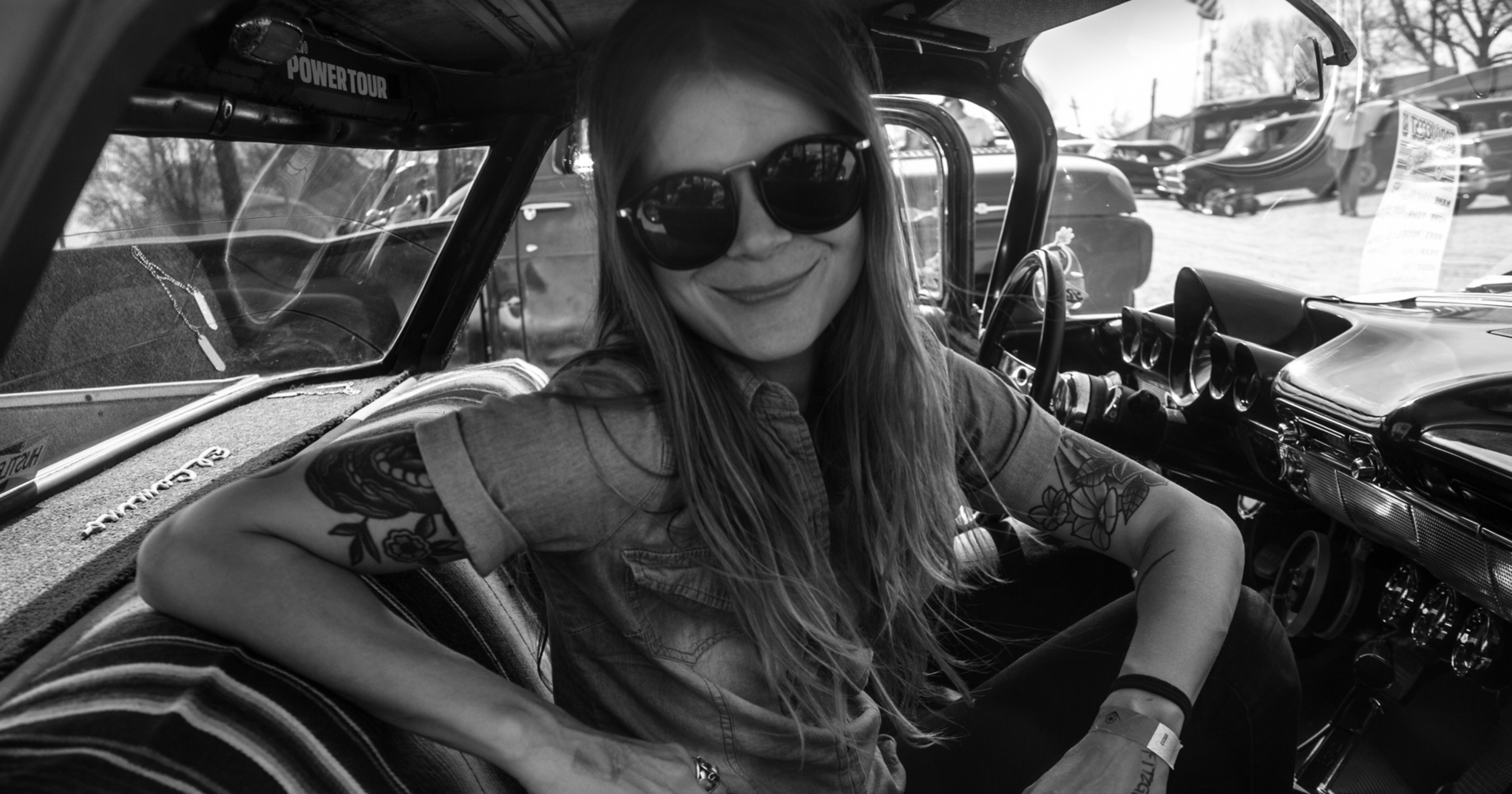
Dolly Parton, Brandi Carlile, and the Women Who Wrote Our 2020 Soundtrack

There are a whole lot of ways you can tell the story of 2020, but for us here at BGS, it will be remembered as a year of especially remarkable songwriting from women in roots music.

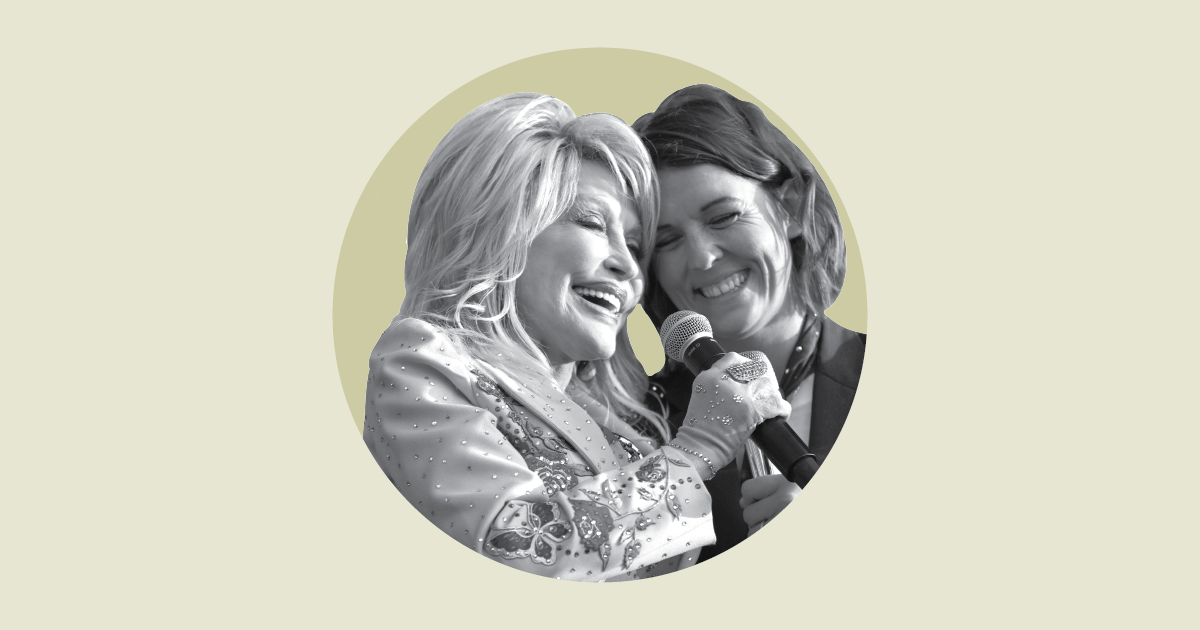
We lead our playlist with the one and only Dolly Parton, who assured us that life will be good again. Parton’s songwriting is presented in an enticing new book, Songteller, and her ability to articulate complicated emotions — through lyrics that speak to all walks of life — is something that Brandi Carlile picked up on as a teenager. In this video interview from the 2020 BMI Country Awards (with a cameo from Dolly at the end), Carlile explains how Parton’s perspective on equality kept Carlile from divorcing country music completely.

Parton, who turns 75 next month, shares a number of important qualities with a new generation of singer-songwriters she’s inspired. In the case of Brandi Carlile, there’s a sense of belonging that is woven throughout their work, from Parton’s “Joshua” to Carlile’s “Carried Me With You.” Like Parton, Brennen Leigh is able to capture a sense of place and make it relatable, even for a listener who’s never been there. Kyshona Armstrong offers a sense of self-worth and self-awareness in her writing, as Parton does, allowing listeners to know them better. Likewise, Maya de Vitry and Parton share a sense of wonder and joy, portraying landscapes — internal and external — that are imagined, yet vivid.

On Prairie Love Letter, her full-length paean to her homeland on the Minnesota-North Dakota border, Brennen Leigh demonstrates a visceral, evocative grounding – just as Parton constantly speaks of her Tennessee mountain home: with a glint in her eye, and a sorrow in her heart for knowing she had no choice but to leave it. Leigh stakes her claim on both the wide, expansive plains and Nashville all at once, asking her audience “Don’t you know I’m from here?” As if to remind she’s as at home in bluegrass and country — and Music City — as Dolly herself.

“Backwoods Barbie,” “Dumb Blonde,” and “Just Because I’m a Woman” are all perfect examples of Parton’s lifelong radical self-possession. She expresses her agency boldly, confidently, without (visible) second guessing – from her wigs to her infamous tattoos to her nothing-special acknowledgement of her plastic surgeries, struggles with suicidal ideation, and so on, she is her fully realized, autonomous self. As Dolly told Jad Abumrad on Dolly Parton’s America, “Who we are is who we are… I would just bow out if I wasn’t allowed to be me…” Kyshona Armstrong‘s prescient album, Listen, holds similar space, as Armstrong doesn’t simply ask folks to listen; her presence, compassion, and radical honesty demand it. Because, first and foremost, she’s welcoming and non-judgmental in that aim, you will find yourself fully enveloped by her music before you realize the conviction within it.

Maya de Vitry made a gorgeous, poetic foray into heavier, rockier turf with How to Break a Fall, a gutsy, genre-bending set of songs. Their anger, release, and passion, expressed by the folk-rock production style, feels right out of Parton’s post-White Limozeen era, an effortless combination of seemingly disparate musical influences, distilled into something that, almost above all else, feels joyful. Where male-centered rock and roll finds itself often hung up on its endemic toxic masculinity, de Vitry and Parton stride into electrified sounds with their femininity forward, and the result is as charming as it is subversive.

It’s striking, among such an incredible volume of musical output from their Americana and country peers this year, that these women would stand out, above and beyond the still-common glass ceilings imposed upon them for decades. Dolly blazed a trail, but these dozens of writers — and singers and pickers and composers and front women and side musicians and authors and poets — would have crashed through inevitably on their own. With songs like Adia Victoria’s “South Gotta Change,” Sunny War’s “Can I Sit With You?,” “Troubled Times” from Laurie Lewis, the Secret Sisters’ “Cabin,” it’s obvious Dolly Parton’s songwriting legacy will be inherited by multiple generations worthy of carrying it on.

Throughout 2020, the BGS editorial team embraced this wealth of excellent music from women songwriters in roots music. It has been a privilege to share these original voices with our readers, too. Here are 50 of our favorite tracks from 2020:


Photo credit: Daniel Jackson for BGS, Newport Folk Fest 2019

Raised Along the Country Music Highway, Brit Taylor Was Bound for Nashville

An exquisite singer who is undeniably country, Nashville singer-songwriter Brit Taylor is taking a stand for herself in her debut album, Real Me. It’s an intriguing collection of original songs that position the East Kentucky native as one of Americana music’s most promising artists. After a number of setbacks, ranging from the demise of a marriage to the end of a publishing deal, she contacted producer Dave Brainard to talk about a fresh start. Around the same time, she met Dan Auerbach, who encouraged her to sound like a traditional country singer, even though she’d been told for years that nobody was buying that kind of music anymore.

Emerging from a cloud of depression, Taylor channeled her emotions into song. Then she released Real Me in November, staking her claim as an artist that proudly honors her roots without sounding stuck in the past. Songs like “Waking Up Ain’t Easy” and “Broken Hearts Break” echo her true country influences, too. Talking by phone from her farm, with a few goats roaming nearby, she told BGS about the journey.

BGS: You’ve said that your family wasn’t very musical, but was there music always around as you were growing up?

Taylor: Yeah, I grew up in Eastern Kentucky, right by the Country Music Highway, US 23. So, the culture of country music is super rich around Eastern Kentucky. I grew up singing in the Kentucky Opry Junior Pros in Prestonsburg, Kentucky. I was always singing and playing music every weekend of the summer, and through the Christmas season.

What were those shows like?

It’s kind of like something you would see in Branson. Back when I was a kid, it was booming and tourism was really rich around there. We would sell out shows every Christmas and have to add matinees. I felt like I was in the big time when I was a kid! [Laughs] It’s a really nice theater, too. I saw my first concert there, and it was George Jones. I played there for 10 years, and then I moved to Nashville and started playing tiny bars! It was such a shock, The Junior Pros opened up for the older members who were in the Kentucky Opry. What I was in was just kids. I don’t think anybody was older than 18.

When did you learn to play guitar?

I learned to play guitar in my senior year of high school. I had a vocal coach and I was taking piano lessons. He knew I wanted to move to Nashville. I was very [eager to move]! I was always playing by ear, and I was always frustrating him, because I hated to read music. One day he said, “How are you gonna pack this piano around Nashville?” And I was like, “Well, I don’t know.” He said, “You’re not going to make it in that town unless you learn how to play guitar.”

And I went home and I was like, “Mom, you have to buy me a guitar. Now.” [Laughs] We went to the music store and she didn’t know anything about music. The guitar was a hundred bucks, or two hundred bucks, and my mom said, “I am only spending $50 on this guitar.” I told the guy at the cash register that I would sing him any song that he wanted if I could have that guitar for fifty dollars. I sang him a Fleetwood Mac song and he let me buy the guitar.

You had to overcome a lot of setbacks to get where you are. How did you stay focused and inspired to keep going?

I don’t think I ever thought about the option of quitting. It’s always just been there, that this is what I want to do. There’s never been any other thought. It was hard at times, but it was never like, “I want to do something else.” This is just what it’s always been. I don’t picture life any other way.

What kind of lessons did you learn from your family? Were they good at teaching you a work ethic, focus, and dedication?

Oh yeah. My dad’s an entrepreneur and he was always going against the grain, working for himself. A lot of people don’t understand that, but I came from a family that understood being an entrepreneur and chasing your dreams at all costs. He was also a martial arts instructor and that’s how he got started. So, he always taught me how to fight, whether it was in a karate match, or in real life.

Did you take lessons in martial arts as well?

I did. Dad had me whippin’ ass since I was 4. [Laughs]

How much of this dream you had was about songwriting as well? How important was it to develop your voice as a songwriter?

Oh, I wrote my first song when I was 13. It was terrible, but it came so natural. The structure came natural. I think I had listened to so much country music at that point, it had to come natural. Yeah, I moved to town to write songs. I wanted to be an artist, too, but I definitely wanted to write my own songs. It’s always been a dream to have other people record my songs as well.

Who were some of your heroes when you moved here?

Patty Loveless. I love her. She’s one of my favorite artists. Darrell Scott, and lots of songwriters, too. I grew up listening to a lot of Elvis and oldies. I sang a lot of Patsy Cline and Loretta Lynn growing up. The Judds, Dwight Yoakam, all those Kentucky artists.

Were you listening to the words even back then?

Every single word. My dad’s favorite story to tell is about when we were on the way to Myrtle Beach. I was always my dad’s little sidekick and I would sit in the front seat while my mom and my brother would nap in the back. We were listening to Sam Cooke. The line in the song was, “My baby’s gone and she ain’t coming back.” And my dad called me his baby. I was 4 years old, and I think I thought that song was about the man’s daughter. Dad said he looked over and saw me crying, and he said, “What’s wrong, baby?” And I said, “Why won’t his baby come back to him, Daddy?” [Laughs] I’m just sitting over there bawling, listening to Sam Cooke, and it’s not even about what I thought it was about, but it hit me.

Did you go to college in Nashville?

Murfreesboro. I moved here to go to school for music business at MTSU.

What do you remember about those early days, finally being so close to Nashville?

Oh my gosh, it was the best time of my life! I felt like such an adult. I’ve always been a little ahead of myself, I think, and just being on my own, getting to make my own decisions because I’m really independent, was just the best time time in my life. I had already started writing songs and co-writing songs, and I was just ready.

I moved here when I was 19 and I remember that feeling of excitement. It feels like the whole world is in front of you.

Oh, it does. That’s the cool thing about living on the farm, too. I remember when I would drive from Murfreesboro to Nashville, or Kentucky to Nashville, seeing the skyline of Nashville is so exciting! It’s just glorious! It still makes my heart drop because I’m not in it every day. So when I get to drive to town, it’s still really special.

Are you living on a farm now?

Yeah, I live out in Mount Juliet, outside of Nashville, and I’ve got a little over three acres. And I adore it! I don’t know if it’s because I grew up this way, but there’s some kind of peace about it when you can be out in the woods. I’m an animal lover. My next thing I want to get, with these goats, is these miniature donkeys. [Laughs] And you can’t really have those in Nashville.

Where did that love of animals come from?

Oh, I’ve always had animals. My dad’s a big animal lover. And his dad had llamas, emu, ostriches, donkeys, horses… I mean, he was always getting some kind of crazy animal. And apparently I’ve taken on that role in the family.

I think animals can bring comfort in stressful times. Is that the case for you?

Yeah, I can’t look at these little Pygmy goats and not smile. They’re just hilarious! And they make me happy. The music industry is full of ups and downs, and life in general is full of ups and downs, and it’s so easy to walk outside and be grounded in nature. It’s just being in nature and watching the animals running around, because they don’t have to think about anything. They’re just hollering for some more hay.

When you listen to Real Me now, what goes through your mind?

I’m grateful. I just listened to it and I’m grateful. I’m just as much in love with this record as I was in the process of making it. I still listen to it and get butterflies.


Photo credit: David McClister
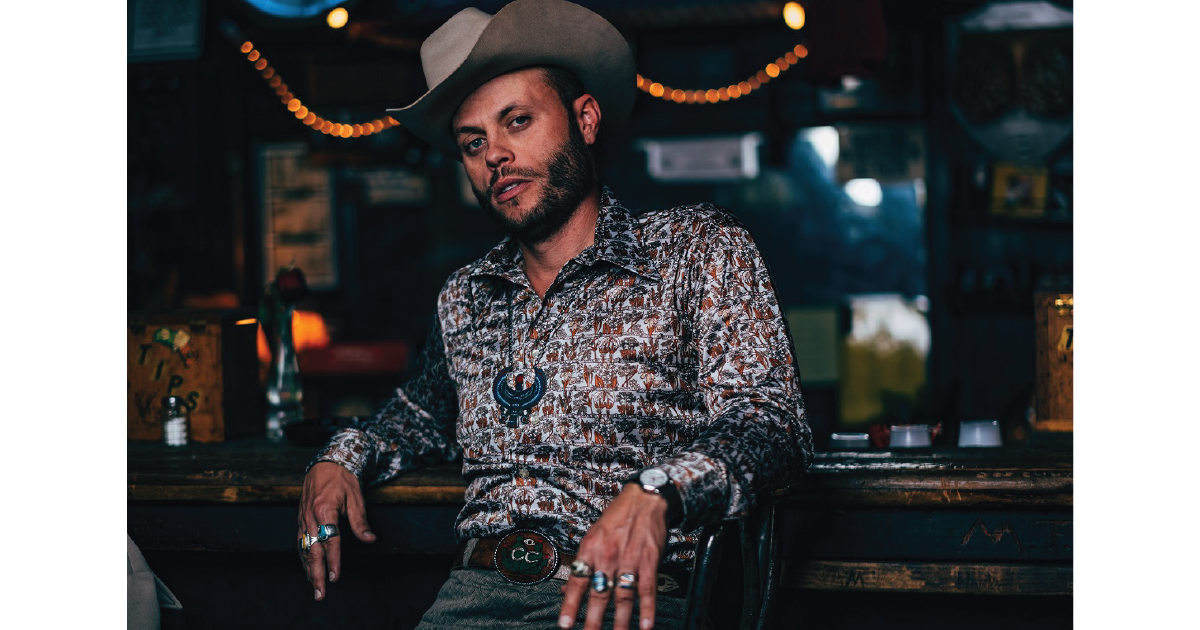
LISTEN: Rachel Brooke, “Undecided Love”

Artist: Rachel Brooke
Hometown: Lovells, Michigan
Song: “Undecided Love”
Album: The Loneliness in Me
Release Date: October 23, 2020
Label: Mal Records

In Their Words: “It’s like a good classic heartbreak song. Waiting for someone to choose you and return the love you have for them… but maybe they won’t. It’s leaving your fate up to someone else, knowing that there’s a good chance you’ll fall. I love all the sounds and instruments on this one, and I feel lucky to have Dave Feeny play pedal steel. He makes it sound exactly like I’ve always imagined it. I also love the ‘back and forth’ with guitar (Louis Osborn) and pedal steel. I wanted to create a somewhat call and response feel, similar to a conversation between two people, echoing the lyrics in a way. This is actually one of the older songs of the bunch. I think the idea came for this song a few years ago, and it was just a fragment of an idea/song, but we knew something was special about it, and kept working on it. This is my mom’s favorite song on the album, so you know it’s good. ;)” — Rachel Brooke


Photo credit: Jess Varda

LISTEN: David Quinn, “Letting Go”

Artist: David Quinn
Hometown: Woodridge, Illinois
Song: “Letting Go”
Album: Letting Go
Release Date: October 23, 2020

In Their Words: “The song ‘Letting Go’ is what really got the whole record going for me. It put everything in perspective about what I was trying to say with the album. It all started with that opening line, ‘I’m letting go of everything that’s holding me down.’ I was dealing with a bunch of things at the moment, and I just needed to let it all go. I had a headache for about six months straight, and I reference that in the song: ‘My head, it hurts/Lord you know I’m spinnin’ around.’

“I was also being pulled in a million different directions in my personal life and with music. After the first record, I felt a little pigeonholed by a specific genre, when for me, I’m just making country music the way I hear it. I was tired of even considering those things when I was making music, or any decision with my life. I think we spend far too much time trying to make other people happy, and I decided I am through with it, even if that means getting rid of people or things in your life that hold you back; that’s where that song came from. The song allowed me to put it on paper, and release it from my mind, and it turned into a major theme on the record.” — David Quinn


Photo credit: Jess Myers

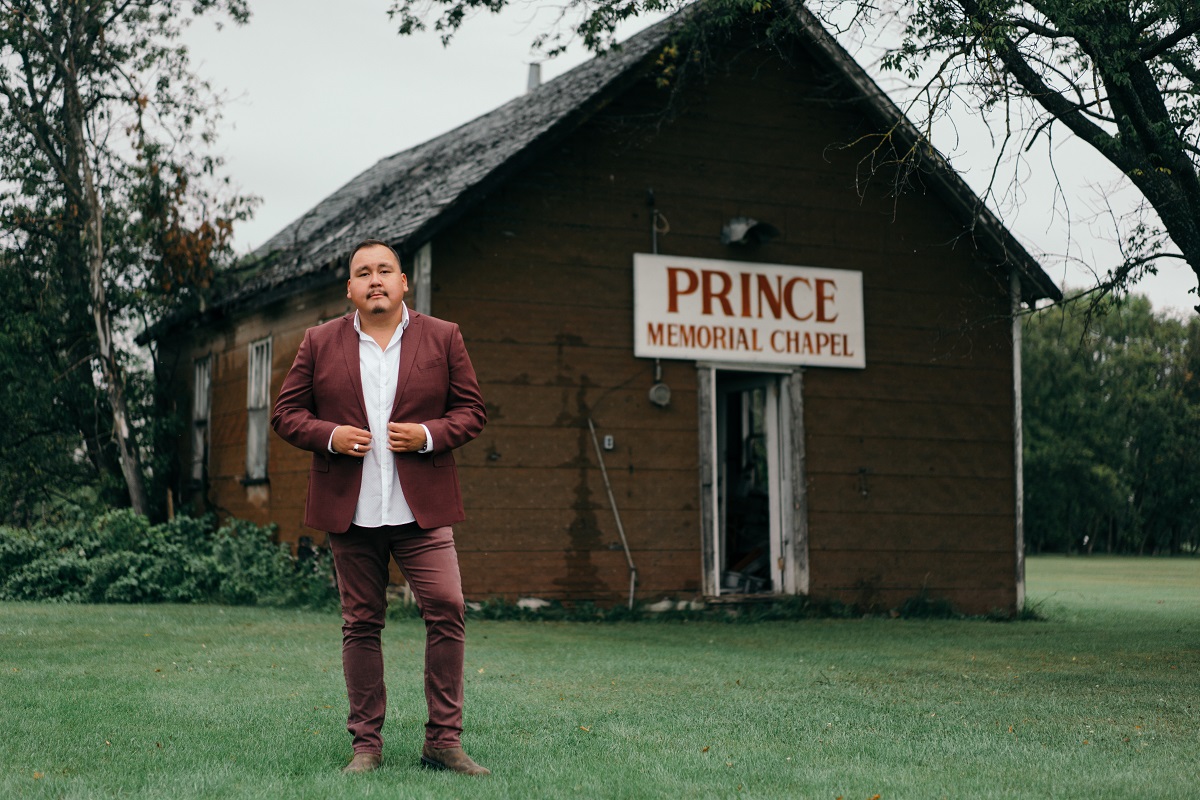
LISTEN: William Prince, “Gospel First Nation”

Artist: William Prince
Hometown: Peguis First Nation – Manitoba
Song: “Gospel First Nation”
Album: Gospel First Nation
Release Date: October 23, 2020
Label: Glassnote

In Their Words: “Gospel is by definition ‘the good news.’ These songs were capable of lifting spirits in the darkest of times. I witnessed it on many occasions. They provided hope and relief. A subject I addressed earlier this year. Maybe that message needs continuing throughout this time. I am as much the grandson of Chief Peguis, the founder of Peguis First Nation, as I am Edward Prince Sr., one of the founding Christian pastors of that same community. Gospel First Nation is an amalgamation of two very important realms in my life.” — William Prince


Photo credit: Jsenftphotography

Brennen Leigh’s ‘Love Letter’ to the Musical, Magical Prairie

Nearly twenty years after leaving home, striking out to make a living in the bluegrass and country scenes first in Texas and now in Nashville, singer-songwriter Brennen Leigh is still longing for the prairie. Born in North Dakota and raised in rural Minnesota, Leigh’s brand new album, Prairie Love Letter, lives up to its name in all but the stereotypical, assumptive ways implied by its title. 

Produced by Robbie Fulks, Prairie Love Letter idealizes Leigh’s harsh, forbidding homeland — as paeans to the prairie are wont to do — but not without the nuance a nomadic, troubadour lifestyle affords, and Leigh’s perspective as a woman in 2020. It’s all underscored by the ever-growing distance between her and the grassy plains for which she pines, marked by months and years, continually ticking by.

Being that the sum of Fulks’ and Leigh’s musical comfort zones lands squarely upon the intersection of old country, bluegrass, Americana, and what we’ll call “alt-roots,” the album cheerfully denies genre ascriptions while reinforcing the Great Plains states’ propensity for birthing country music forged in the furnaces of hard living, firmly-held values (though not necessarily strictly conservative), and a desperate need for the distraction and diversion music brings. 

BGS reached Brennen Leigh by phone at her home in Nashville and began our conversation with the album’s seemingly pugnacious, yet perfectly apt lead track.

There’s something particularly resonant about the album’s opener, “Don’t You Know I’m From Here,” because you’re talking about rural life and how these authenticity signifiers are so important to rural life and identity, but they’re also really important to roots music. There’s a really interesting symmetry to “Don’t You Know I’m From Here” where it seems you’re simultaneously asking that question of the region you’re from — Minnesota, North Dakota, the plains — but also asking that question as a woman in roots music and country. What do you think?

I honestly never thought about it in that specific way, but when you put it that way, that is how I feel. Obviously, the going home, the rural element — what did you call them? Signifiers. That’s huge. We’re all in a sort of “countrier than thou” battle all the time. I try to just write what’s true to me as much as I can, and be affected by that as little as possible. When you talk about country music, it’s something I do feel secure in. I don’t need to show or tell anyone — nor have I ever been accused of lacking that authenticity. However, I’ve struggled just as much as the next independent artist. Sometimes it leaves one feeling, “Well, why has this other person been pushed to the top of the pile?” They say not to compare, but you know. Why is this other person edified, when they’re not country, so to speak? [Laughs] It’s hard not to compare yourself to others and get into that mindset.

Also what you said about women — we women, it’s like there’s only room for one at a time. We all have to fight each other. That’s not how I really feel, but your lizard-brain would make you feel like you have to fight with other women for that one slot they give us. This year, one of the silver linings of this pandemic has been that it’s given me some time to appreciate a lot of my peers in ways that I couldn’t before. Or that I didn’t take the time to before. My fellow performers, that are kind of my same age or similar level of fan base, exploring their catalogs has made me feel more like I’m part of that bigger Americana community. 

I think that’s an interesting way to get at the crux of this question, because on one hand just talking about authenticity is kind of make-believe, right? “Authenticity” is not a concrete thing, we ascribe authenticity. We perceive it. So talking about it is almost propagating the problem, and to step outside of it and look at it objectively is the real question. I think the nugget in “Don’t You Know I’m From Here” is that the speaker in the song isn’t seeking external validation in asking that question, but rather validating themselves internally. 

That’s exactly what it is. I don’t need to go home and have everyone at home validate me for being from there. It’s something that comes from inside. I know where I’m from. I know I’m a Minnesotan and I was born in North Dakota. And yet, I get questions cause my accent has changed and I’ve lived in the south now for I think eighteen years. It’s funny, when I moved to Texas I had a little bit of this fear that my music wasn’t going to be “southern” enough. [Laughs] That people were going to think I was inauthentic. But it hasn’t come into question and up north, that was one of my fears, that people would go, “Who is this person from Nashville singing about our part of the country?” That hasn’t happened either, because they’re starved for people to sing about it, because there aren’t a lot of people singing about it. 

The album is really flexible with which genre aesthetics it aligns with, it feels like the exact kind of country that comes out of the Upper Midwest. That hardscrabble, bootstraps mentality that we all are used to being attributed to the south, that’s how the plains survives, too. The album’s themes feel really similar to the way that southern country music speaks about life and work and pleasures, but it’s still different. To me, the way that’s most tangible is in how the record playfully denies any genre label. How did the bluegrassy, Americana meets old country quality come together and how is it tied to Minnesota and North Dakota’s music?

For one, we didn’t really plan it in a specific way. Robbie Fulks produced it — Robbie and I talked about how to treat each song. We both are believers in stories. The literature of stories. How do I present this little three- or four-minute story in a way that the listener is going to hear and feel what’s going on? We treated it case by case. 

As for the genre… “ambiguity” that you mention, I think it just comes from my influences. I come from old country and bluegrass. The part of the country where I grew up, it’s popular music, but not in the same sense that it is here or in Texas. It’s not as much a part of the culture. It depends on the family. In my family, bluegrass and old country is what we did. We played on the porch and we sang and we went to bluegrass festivals and we went to country music concerts when we could find them. That’s kind of always been in my roots and it came naturally. I’d be curious to see how people would classify it, because we weren’t like, “By golly we’re going to make a country album!” We just did what we knew how to do. 

A song like “Yellow Cedar Waxwing,” that one feels so bluegrassy. What was the balancing act like, with Robbie, whether to lead you to bluegrass or away from it on a song? 

I think we more or less talked about instruments and how they were appropriate to each song. That one is a very vivid memory in my imagination of being a kid and going with my grandmother to pick juneberries on a specific occasion. Here we were, on a gravel road, with buckets over our arms, and we were gonna pick juneberries. Maybe that song was written with thought of the Carter Family, that pre-bluegrass kind of feel. We thought we needed to put a little banjo and stuff on it. The story kinda had a little bit of a bluegrass thing; Grandma, picking berries, it lent itself to that. I’m comfortable with being fluid between the more classic country thing and the more modern thing and the bluegrass thing. I’m not thinking about how it’s going to be taken, I’m not even worried about it too much. But I am interested to know [what listeners think]. 

There’s a striking theatrical quality to these songs and their characters and their stories. Do you feel that as well in this set of songs? Do you see them as something of a soundtrack or a musical in their own way?

That’s an astute observation, because some of what influenced me growing up was old westerns and musicals, like Oklahoma! That western landscape, where you could just see for miles, always had a symphony and horns. Musicals are kind of in my background. I’ve even thought about writing a musical sometime about something. Originally I was thinking, “Oh maybe I can make these songs fit into a musical!” But I made a record instead. [Laughs]

It was something I kind of wanted to do for a number of years. I always thought there was something musical and something magical about that area. I used to eat up those episodes of Prairie Home Companion that had the “News from Lake Wobegon” stories. Those were my favorite part. I remember when I was painting my apartment in Nashville when I first moved here, I binge-listened to a bunch of those stories from Lake Wobegon. Then I read My Ántonia for the first time. It knocked me over. Something about Willa Cather’s writing about the prairie.

To kind of return to the ideas we began with, this record feels like, almost more than anything else, that it’s examining ideas of what it means to be an insider versus an outsider and how the line between each of those positions is often much more blurry than we think. 

I’m coming around to that now. I think in my first few years gone I felt hurt when I would come home. When someone would say, “Well you don’t sound like you’re from Minnesota.” That hurt my feelings, because I wanted to have that stamp of belonging. Now I’m older and I realize that everything that has made me who I am to this point is valid. Living in Texas for fifteen years? I’m proudly part Texan now. I can claim part-Texan. I have some of the same feelings about certain places in Texas [as places in the Upper Midwest.] 

That feeling of belonging, that’s what everybody wants. I mentioned My Ántonia, it takes place in Nebraska on the prairie. The reason I tie that book to the album and give it so much credit for inspiring me is because they do have a lot of the same themes. These characters are homesick, they just want to belong somewhere. There’s a part earlier on in the book when the main character feels blotted out. It’s his first time on the prairie and he looks out and he can’t see any mountains and he feels blotted out. What a beautiful and devastating way of putting it… The funny thing is I never really felt like I fit in that well when I lived there. 

As someone who idealizes this place and loves it and returns to it not only literally, but also with these songs and this album, what is it like to be from there, away for eighteen years, and writing about now?

When you’ve lived away, you realize there’s some beauty in it. Like my mom says, “Brennen, you just don’t remember how cold it was.” It was so cold in the winter. She’s right, I have forgotten! Putting on your long johns and two pairs of socks and snow boots every single day and freeze in a car on the way to school. I have forgotten those things and it has changed a little bit. North Dakota is very conservative, Minnesota is a swing state last I checked, but even the cultural geography of Minnesota has changed since I moved.

There are a lot more immigrants and things have changed politically. Obviously, Minneapolis — I don’t touch on Minneapolis very much [on the record] — but there’s been the unrest there. That’s pretty far from where I’m from. Where I’m from, I guess it’s kind of mixed in terms of politics. There are just a few things, like the pipeline issue, I couldn’t leave that alone. It made me so mad! [Laughs] Mostly because I knew they had chosen that area because it was worthless to them. That area is not worthless. It’s god’s country. I know a song can’t do very much, but I felt angry enough to write it.


All photos: Kaitlyn Raitz

The Show on the Road – Sarah Shook

This week on The Show On The Road, we catch up with acclaimed roots-rocker Sarah Shook. For most of the last decade, Shook has been making cut-to-the-bone country music of her own outlaw variety — first with her early band The Devil and now with her seasoned group of sensitive twang-rock shitkickers, The Disarmers.


LISTEN: APPLE PODCASTSSTITCHERSPOTIFYMP3

Homeschooled in deeply religious seclusion in upstate New York and North Carolina, Shook largely only heard classical composers growing up. As a loner, creative teenager trying to process her hidden bisexuality, she described hearing Elliott Smith and Belle & Sebastian as revelatory — finally someone felt like her and found a way to share it with the world. But it was after encountering the raw honesty in the songs of Johnny Cash that she found a purpose and a place for her achy-voiced folk songs.

With a little encouragement from her longtime lead guitarist, who saw how powerful her presence (and her songs) could be on stage, an openly reticent Shook took the leap and started playing professionally in 2013. She gained national attention with her stellar back-to-back albums Sidelong and Years, which caught the attention of famed alt-/outlaw country label Bloodshot Records (they signed her) and sent her on a relentless round of touring.

With confessional, lived-in songs like “Fuck Up” and “New Ways To Fail” Shook is a master of getting to the point, processing her tough transition to sobriety with grace, humor and wit. Much like her hero Johnny Cash, she suffers no fools when it comes to love and its tricky late-night detours. With her signature half-smile/half-grimace candor Shook sings about another love affair gone wrong: “I need this shit like I need another hole in my head.”

Stick around to the end of the episode to hear a live-from-home acoustic rendition of her deliciously twangy kiss-off, “Gold As Gold.”


Photo credit: Derek Ketchum

LISTEN: The Nude Party, “Nashville Record Co.”

Artist: The Nude Party
Hometown: Livingston Manor, New York
Song: “Nashville Record Co.”
Album: Midnight Manor
Release date: October 2, 2020
Label: New West Records

In Their Words: “‘Nashville Record Company’ comes from a conversation I had with my mom, when I was home in North Carolina for the holidays. I was very broke, telling her about the music industry, all the players in it and how it works. She suggested that if things got too down and out, maybe I could just switch sides. Become an A&R guy or something. I was strumming my guitar later that day, thinking about it. This song is the thought-dream that fell out.” — Patton Magee, The Nude Party


Photo credit: Bryan Derballa

LISTEN: Victoria Bailey, “Tennessee”

Artist: Victoria Bailey
Song: “Tennessee”
Album: Jesus, Red Wine & Patsy Cline
Release Date: September 18, 2020
Label: Rock Ridge Music

In Their Words: “I first heard Johnny Cash’s rendition of this Rick Scott song while driving through snowy Tennessee a few winters back. I was heading down toward Leiper’s Fork in my little rental car, stopping all along the road to pet horses and listening to all my favorite country legends along the way. This song really sums up how I feel about the South and Tennessee as a whole. I love the little pleasures in life that Tennesseeans hold near and dear: family traditions and small town simplicities.

“My favorite verse in the song is, ‘We got a cabin in the country / And a creek that rolls nearby / And a dog that won’t even bark at a firefly.’ That’s exactly what I saw all around me exploring Tennessee on that trip — just a lot of pure joy and friendly folks! Recording this song was SO much fun. My band fell in love with the lyrics as much as I did. We tried to stay pretty true to the sound of Cash’s recording, but we sprinkled a little bit of our own sound into it as well. It was such an honor recording this song, especially because it represents a state I have come to love oh so very much!” — Victoria Bailey


Photo credit: Stefanie Vinsel Johnson

LISTEN: Mandy Barnett, “A Fool Such as I”

Artist: Mandy Barnett
Hometown: Crossville, Tennessee
Song: “A Fool Such as I”
Album: A Nashville Songbook
Release Date: August 21, 2020
Label: Melody Place LLC

In Their Words: “The first time I heard “A Fool Such as I,” I was just a kid. Baillie & the Boys had a big hit on it on the ‘80s. Later on, I became familiar with some of the other great versions by Hank Snow and Elvis Presley. Every year we would play the after party at the BMI Awards and would always include this iconic Nashville song in our set list.” — Mandy Barnett


Photo credit: Jiro Schneider