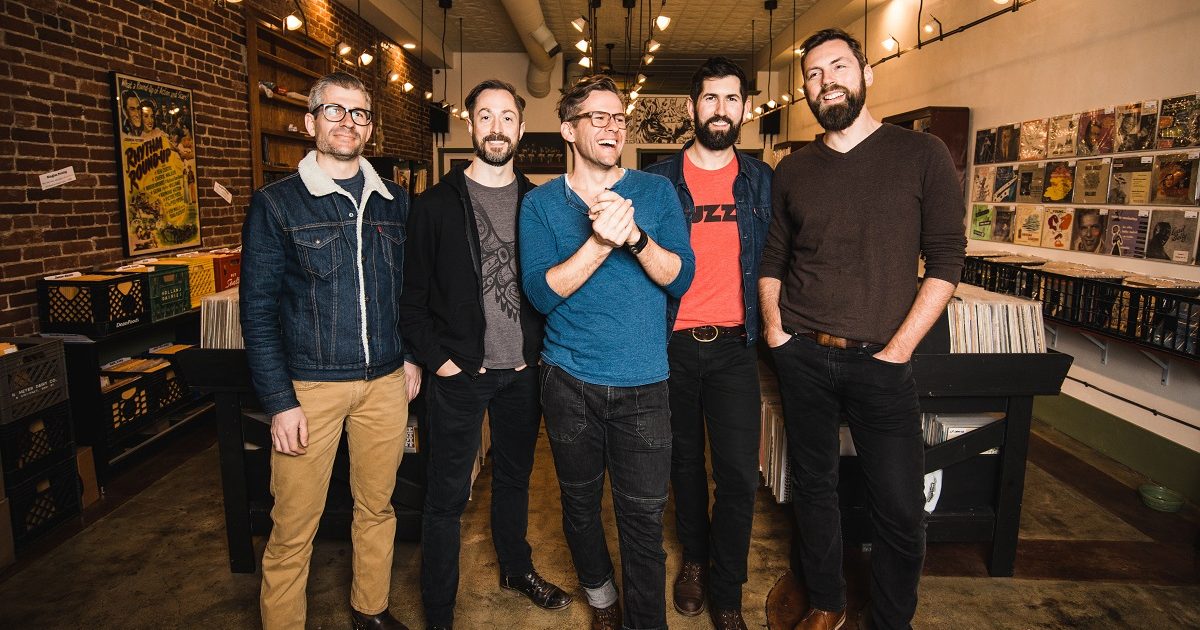
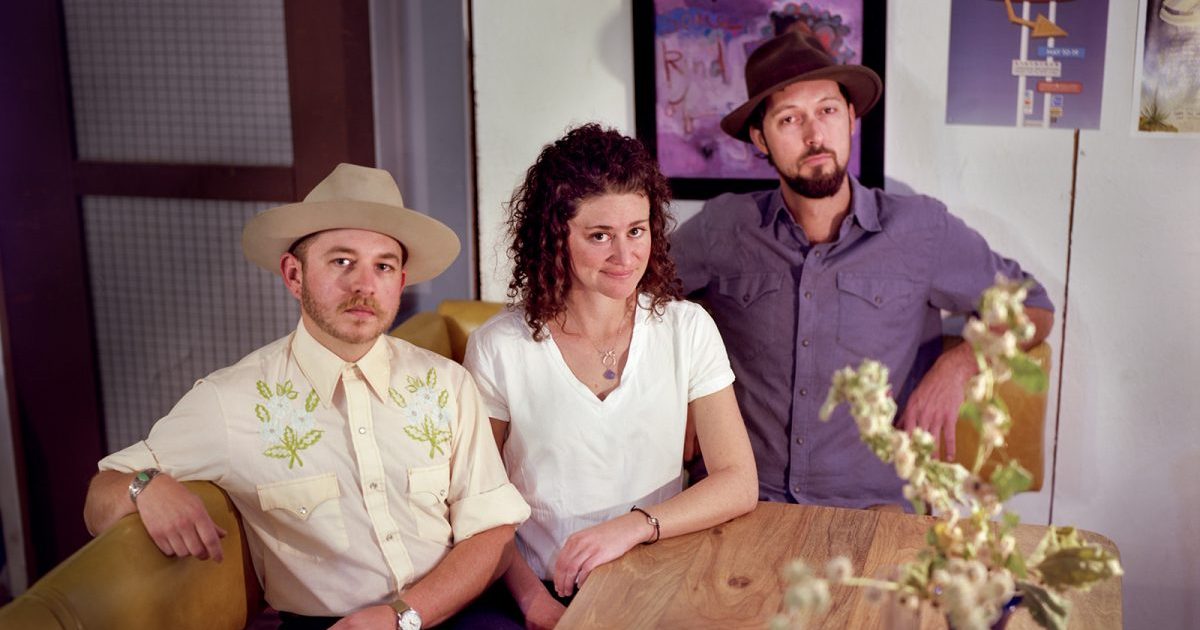
Artist:The Steel Wheels Hometown: Harrisonburg, Virginia Latest album:Everyone a Song, Volume 1 Personal nicknames (or rejected band names): Trent Wagner and The Steel Wagler
Answers by Trent Wagler
What’s your favorite memory from being on stage?
I remember a festival finale performance of “The Weight” in northern Alberta where we were thrust (last minute) into leading the song. Isn’t “The Weight” some sort of Canadian anthem? I don’t know, we felt a little like impostors, but it became even more hilarious when a whole bunch of volunteers and other musicians hopped on stage and we were given conflicting accounts of who was singing what verses. In the end Michael Franti surprised us by appearing on the drum kit and singing a verse that included a little change of lyrics name-checking the festival. It was memorable.
What was the first moment that you knew you wanted to be a musician?
When I was about 9 years old, I played Duffy the Fluffy in a small church Christmas play called Baa, Baa, Bethlehem. I slicked my hair back and wore sunglasses and sang a song that went, “Duffy the Fluffy is who I’m gonna be, come to the city you’ll be waiting to see me.” And the rest of the sheep sang, “Get a job, baa baa baa, baa, baa baa baa baa baa.” But I had a guitar strapped around my neck and I sang with confidence. Wait, maybe THAT was my favorite memory from being on stage!
What rituals do you have, either in the studio or before a show?
In the studio, I always tape a sheet of paper on the wall with the title of each song we are recording. On that paper, we keep a running list of notes, ideas, or whatever that song still needs. It’s helpful to have a visual representation of notes, and when things are dragging along, there’s a sense of accomplishment to crossing off each note. When the song is finished, it’s ceremoniously taped on a different wall.
Which elements of nature do you spend the most time with and how do those impact your work?
I try to ride bike everyday. Recently, I’ve been most excited about gravel road rides, a bit easier than mountain biking, but with a similar feeling of distance from civilization. I love the way riding a bike gives you respect for a mountain. The bicycle also turns you into a different kind of an animal. Sometimes a mule, sometimes a bird, but I usually feel transformed after a good bike ride. And the whole process, of getting away, being in nature, and riding is a great reset for my creativity. I live in the Shenandoah Valley and the beauty of the landscape finds a way into my writing all the time. There is a reason that rivers and mountains are cliché metaphors, because there is an undeniable depth and power to them.
Since food and music go so well together, what is your dream pairing of a meal and a musician?
It seems like I should say I’d eat a fistful of cigarettes and a barrel of red wine and listen to Tom Waits and Leonard Cohen, but I can’t think of a better pairing than Brandi Carlile and some wild-caught salmon. There are musicians that garner praise from critics and others that have an easy-listening popular songs for the masses, but very few thread the needle like Brandi Carlile. She might be the only music my wife, 16-year-old daughter, and I can all passionately agree on. You know how salmon looks like it’s just a layer of pure pink muscle? Brandi’s songs are all muscle.
Artist:Scythian Hometown: Front Royal, Virginia Song: “Galway City” Album:Roots & Stones Release Date: October 13, 2020 Label: Konenko Records
In Their Words: “We take a yearly trip to Ireland with our fans and have taken over 600 of them over the last seven years. There is one place we never miss — Galway City — and it never disappoints. So many magical nights. We wrote a song in tribute: a bunch Americans pulling up to the jewel of Ireland and falling in love with its cobblestone streets, cozy pubs, nooks and crannies, and coastal air. We hope ‘Galway City’ brings people back to happy days drinking and laughing with friends.” — Alex Fedoryka, Scythian
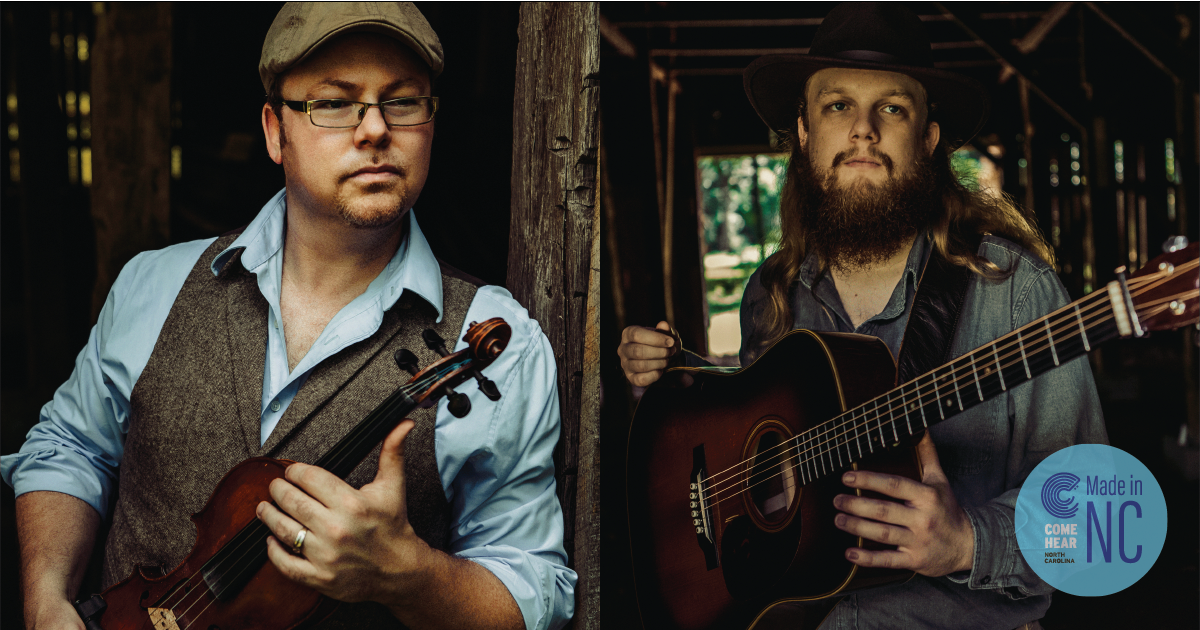
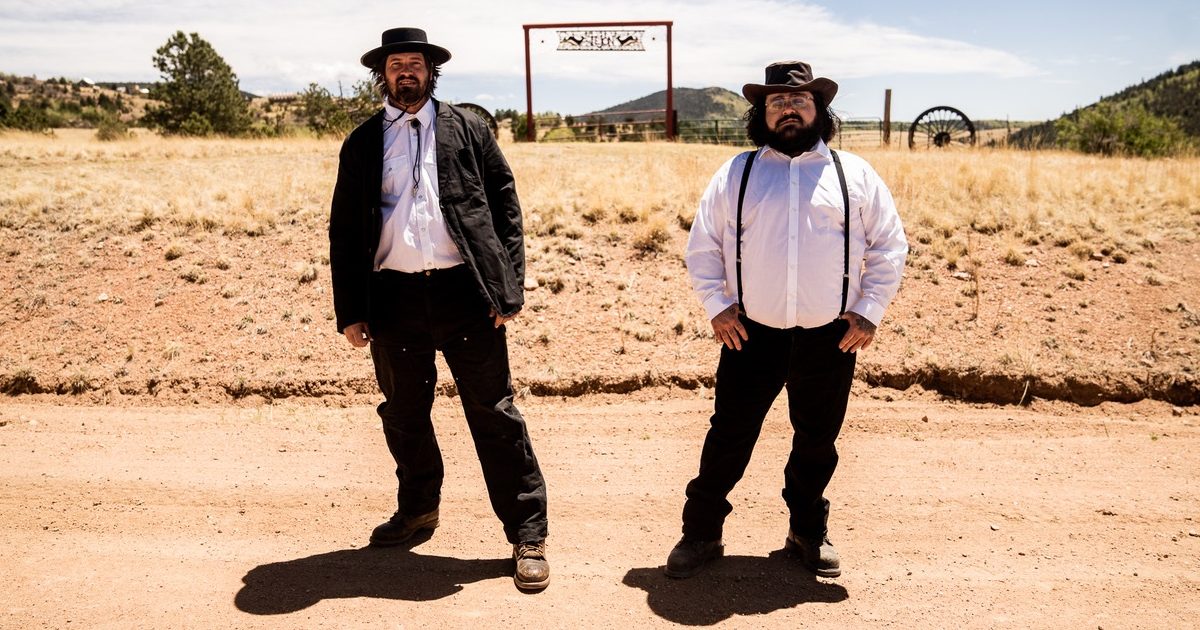
Artist:Appalachian Road Show Hometown: Canton, North Carolina (Jim Van Cleve); Lexington, North Carolina (Zeb Snyder) Personal Nicknames: Jibby (Jim); Appalachian Zeb (Zeb)
Editor’s Note: As BGS and Come Hear NC team up in November, we present North Carolina natives Jim Van Cleve and Zeb Snyder of Appalachian Road Show for this edition of BGS 5+5. Their newest album is Tribulation.
What other art forms — literature, film, dance, painting, etc — inform your music?
I think in a subconscious way, film and photography likely inspire my writing and even playing in a powerful way — and especially when referring to instrumental pieces. I’ve often said that when I’m writing, I can almost see or even “feel” a scene from a movie or a compelling visual image or something. There’s almost like this “unseen visual” which informs the emotional content of the piece of music in question. In some subconscious way, the gravity of a scene from a movie, or in a powerful photograph, will inhabit the melody shapes and rhythmic feel I’ll gravitate towards.
And, I think when I’m writing, I’m often subconsciously wondering… “What is happening in the movie that THIS song is the score for?” It’s difficult to put in words, but I definitely feel it. With Appalachian Road Show, there are such compelling stories that come from the region of our namesake, that it feels like it saturates every note of every song when we’re at our emotional peak. I can often envision scenes from Cold Mountain or The Outlander or Braveheart even during certain songs we’ll perform. — Jim Van Cleve
Which artist has influenced you the most … and how?
I’d have to say Tony Rice. When I think back on my growth as a flatpicker, I can see how Tony’s influence on me has changed and come from different directions over the years. When I first discovered his music at eleven years old, I was all about figuring out his lead playing on bluegrass songs and fiddle tunes. After that, I started getting into his original instrumentals and his work with [David] Grisman and on Béla Fleck’s albums, which taught me new chord voicings and more challenging leads.
The next and maybe the most important phase would be when I started taking rhythm playing more seriously as a teenager and started studying all of the subtleties of Tony’s rhythm pattern and embellishments, particularly on the Bluegrass Album Band stuff. I have so many favorite guitar players, but I always come back to Tony every so often and figure out things that I had never noticed or understood earlier in life. — Zeb Snyder
What’s the toughest time you ever had writing a song?
I believe maybe the one that was the most challenging for me was when I was asked to write a new IBMA Awards show theme song. The song was ultimately called “The Road From Rosine,” and there were a LOT of angles to consider with that one. For starters, the previous song, “Shoulder to Shoulder,” was written and recorded by one of my heroes Jerry Douglas, (and the whole band on that track is a bluegrass Mount Rushmore). The tune itself is a classic and had been used for years and years as the awards show theme. I’d grown up with the song, and it being a staple of the show, so I had this subconscious mountain to climb in the first place.
Then, on top of that, you have all of these “marks” — emotional and energy/dynamic-wise — that a song being used like this has to hit, because you know how it needs to be used throughout the show. So, it just had a lot of different roles it needed to fill, and in general you just want it to be as great as it can be, given the gravity of that situation. I wanted the song to capture the essence and spirit of bluegrass… the way the founding fathers of the music intended for it to feel, but I also wanted it to embody a sense of where the music is heading, with kind of a forward looking element. So basically, I was trying to write a song that would bridge all the gaps between the past, the present, and the future of our music, and also be theme-ish. — Jim Van Cleve
If you had to write a mission statement for your career, what would it be?
Every undertaking, big or small, do it to the absolute best of your ability, keeping integrity and transparency above all. If you’re going to do a thing, do it beyond the point of excellence. Be authentic and strive to treat the people you work with like you’d wish to be treated, even (and especially) when they make it difficult to do so! haha! 😉 Full disclosure: It’s been our intention from the start to adopt this philosophy in Appalachian Road Show, and we feel that it’s been an important part of our early successes. — Jim Van Cleve
What was the first moment that you knew you wanted to be a musician?
Well, I started playing music through classical lessons. I was seven years old, and my sister had just started doing Suzuki method violin lessons. My parents got me into the Suzuki classical guitar program. At that point, I enjoyed playing, but it was kind of like a favorite school subject, not a passion. Four years later I started playing bluegrass guitar. That was when everything changed. I was so passionate about playing, and I was acting on my own initiative instead of treating practice like it was homework.
I would lose track of time while I was practicing, figure songs and licks out on my own, spend hours researching and listening my favorite artists on the internet, and even get random ideas for my own little instrumentals and licks before I even really knew what I was doing. When my family band started playing a few gigs, that was it. I discovered that I could feel pretty calm and confident on stage, even though I was a shy and reserved kid by nature. My passion for the music took over, and I couldn’t imagine doing anything else for a living. — Zeb Snyder
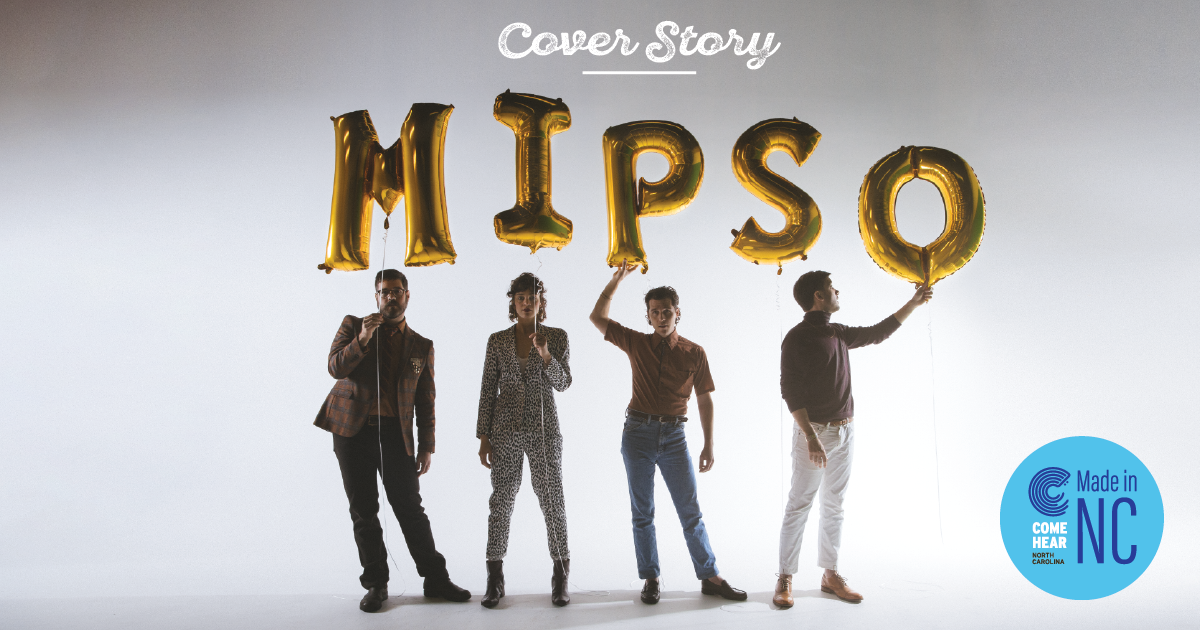
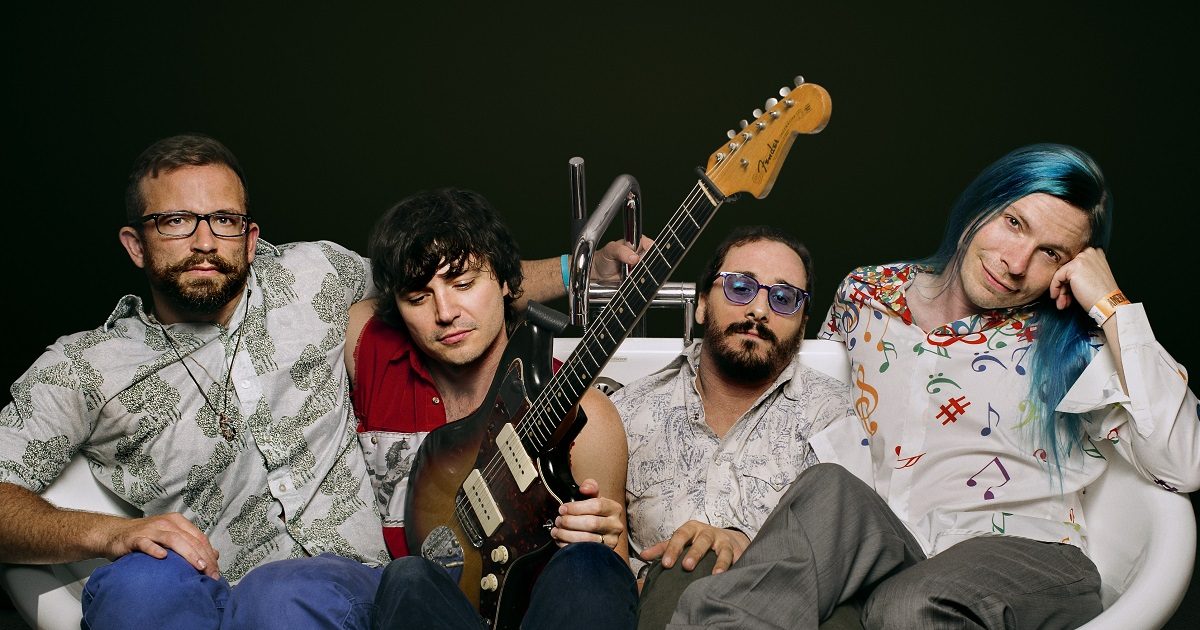
To hear Mipso perform, it’s hard to believe that Libby Rodenbough, Joseph Terell, Jacob Sharp, and Wood Robinson didn’t originally get together with the intention of digging into bluegrass history or starting a band. But as the self-described “indie kids” played around with vocal harmonies and playful strings as students at UNC Chapel Hill, the traditional sounds of their native North Carolina beckoned.
“I had a need for exploring my own roots — the places I’m from and the traditions that come from North Carolina and the Piedmont specifically,” Terrell, who plays the guitar, tells BGS. “There’s a lot of depth to the music that’s been made around here, and because a lot of those folks are still making music around here, it’s still passed down in neighborhoods, at jam sessions and orally.”
As Mipso’s audience grew, its sound evolved, integrating elements of pop with traditional strings and vocal harmonies, and the foursome reckoned with more than just chords and lyrics.
“I was trying to make sense of North Carolina and being a more long-term North Carolinian — not just by birth, but by choice,” says fiddle player Rodenbough, of the early days. “There was so much context and story behind this traditional music. Every song, even if it was a modern creation, had little threads that tied it back to words that had been sung for decades or hundreds of years. It just felt like… well, in a nice way, a bottomless pit. Or, what’s a nice way to say that?”
“A well! An inexhaustible well,” offers Terrell with a laugh. And they’re still drinking from it: Last month, the group issued their fifth full-length album, a self-titled effort that embraced the band’s quirks and their past experiences.
“We’ve been living together so closely for the last eight years, and for better or for worse, we’re us now,” says Terrell. “We had phases of the band where we thought, ‘Oh, we’re supposed to be this, we need to make a song this way.’ This record, it was like, ‘Fuck it, this is how we make music.’ We like it, and we’re weird if we’re weird, and if we’re not, we’re not, but this is how we go about it. Here’s Mipso.”
BGS: Plenty of songs on this album feel like they were born from one person’s memory or experience; “Let a Little Light In,” for example, has specific lyrics about childhood. How do you bring a song from one person’s brain or notebook to the band as a whole?
Joseph Terrell: The lyrics and the melodies are certainly an important part of what makes a song, but I think when we talk about combining our voices, we’re talking about making a presentation of a song that makes an emotional impact when people hear it. “Let a Little Light In” is a great example of a song that really transformed in the studio. The lyrics mostly came from me, but Libby and Jacob and Wood had more to do than I did with building this cool, playful soundscape of dancey noises to make up a kind of funhouse mirror of childhood weirdness.
Libby Rodenbough: A lot of the songs are lyrically one person’s, or maybe two people’s, work. But we talk about the meaning of songs when we talk about the arrangements because the delivery of it has so much to do with the emotional meaning. There’ve been songs before that we’ve vetoed or decided to leave off a record because they felt too specific to one person — the rest of the band was going to feel like a backing band. Part of our standard for what makes a Mipso song is that we all have to find an in-road somewhere, something we can sink our teeth into.
You see a lot of bands packing up and moving to places like Nashville or LA, but you’ve held tight to the community where you came up in North Carolina. What makes it such a special place for you, as people and as musicians?
Terrell: For me, North Carolina is where the music comes from, and Nashville or Los Angeles is where the business comes from. In as many ways as possible, trying to keep and hearth and home on the music side of that equation is going to be really healthier in the long run.
Rodenbough: I would say, too, that there’s a part of it that’s arbitrary: Because I was born here and went to school here, and because I believe that there are benefits that you can only reap after a certain amount of time spent in one place, this is the place where I still am. It could have been somewhere else. But it’s North Carolina, because I’m a North Carolinian. This is it.
Terrell: There’s a part of you, a Libby-ness, that’s because you’re from this place. It gets a little bit vague and spiritual on some level to justify it, but I do feel that that’s true somehow.
Rodenbough: We formed the type of connection to a place that we have here by having been born here and having come of age here — by having returned here from every tour for seven or eight years. I have a more intergenerational community of people in my life. I’ve known people when they’ve had babies, and I know their kids now. I’ve met their parents and grandparents. You just can’t really rush that process.
Terrell: I had dinner on the porch with my grandparents three weeks ago — they’re 92 and 94 — and my grandma gave me a CD of my great-grandmother telling stories. It was recorded in 1985. So I’ve just been driving around in my car listening to this CD, and it’s about all these places that I still go. I feel a spiritual connection here that I can’t exactly explain. Yet I would hate to think that this answer could be spun in a way that means, “If you weren’t born in a place, you’re not valuable to that place,” because certainly the reason I love Durham is because of the immigrant community. There’s lots of ways of being from a place.
One song that feels especially prescient on the new album is “Shelter.” I think a lot of people can relate to the idea of seeking out a place to be safe and accepted. What do those lyrics mean to you?
Terrell: That song came from Wood, primarily. He had this great melody that reminded us of a British Isles folk melody. Some of his family in Robeson County in Eastern North Carolina had been really impacted by one of the bad hurricanes, and he had the idea of telling that as a snippet of a story. But instead of making this about one very specific scenario where you’d need shelter, you have four different scenes that land on the same phrase or message — kind of in the tradition of country songwriting. Whether you’re a kid, an immigrant, a person facing natural disasters because of global warming, or the richest person in New York City going up into some big tower, this is a human need for shelter. We all need it, and therefore, we should all think of ourselves as tied together.
Rodenbough: And I think that a lot of the strife — to put it really lightly — happening in the country right now comes from an anxiety about lacking shelter, lacking a feeling of safety. That applies to people who are very clearly lacking in physical shelter as well as people who seem to be lacking for nothing. Our country has failed to provide that for people from every walk of life for a long time now, and so I think that’s one of the reasons that it’s unfortunately especially relatable right now. We all feel untethered. We all feel like we don’t really have a home.
Mipso’s sound developed in part thanks to in-person communities at places like festivals and neighborhood jams. Do you feel like there’s a way to emulate that in online communities?
Rodenbough: For so many subcultures, the internet has given people the gift of knowing that others like them exist. It is very empowering, and in some cases, that’s a bad thing — there are a lot of internet subcultures that we wish probably didn’t have that vehicle. But, for better or for worse, it makes something that probably felt very geographically disparate, and therefore disconnected, feel really strong and unified.
One example during COVID has been a Facebook group called Quarantine Happy Hour: They do a concert every night, or even a couple of concerts every night, and I’ve watched more bluegrass and old time music since [joining] than I did probably in the couple of years prior. It’s like a who’s-who, especially of contemporary old-time players, with bluegrass too. Every concert, no matter how well-known the performers are, has a couple of hundred people, and folks are tipping like crazy. And it’s interesting that it took a pandemic to make that happen, because we could have done that all along.
Even before the pandemic, though, Mipso was really harnessing the power of the internet to reach new fans — even listeners who maybe never considered themselves fans of traditional music.
Terrell: I think we’re probably more like a gateway drug into bluegrass than a haven for diehard fans. We have played a good number of bluegrass festivals and traditional-oriented-type venues, but I think we’re on the fringe of what they consider to be part of that world. If people find our music and like it, they might say, “Wait… there’s something in this that’s leading me towards all these other artists.” But there’s certainly not, like, a big tag we’re putting on our foreheads to weed out bluegrass or non-bluegrass fans.
Are there any misconceptions you think people have about bluegrass or traditional music — things they really get wrong?
Terrell: I mean, I have two things. The first is the idea that it’s white music, which I think is a really pernicious and awful myth. So much of this, the only reason we’re doing this is because it came from slaves who were here, and it came from African American music.
Rodenbough: It’s one of the nastiest and almost most ridiculous perversions of the truth, that white supremacists have used this type of music as an example of anglo-cultural achievement.
Terrell: The other [misconception] is that it’s tame or like, “stripped down.” For me, the best way to understand bluegrass specifically is that it was rock ’n’ roll right before rock ’n’ roll. It was high-energy and rip-roaring — the banjo twanged right before the electric guitar. It was the head-banging music of its day. [Laughs]
Rodenbough: This was a wild music — bluegrass in particular was not an old folky hokey thing. The way that we divide up the genres of traditional music comes straight out of marketing. I think it can be useful to understand how one style of music informs another that came later chronologically or something, but it’s not necessary to draw hard lines between old time and bluegrass in order to love stringband music or to love fiddle-centric music. All the borders are so blurry, just like with everything in history and in our overlapping cultures. I think that’s so wonderful, and I wouldn’t want to try to clean it up. That would be missing what’s so special about not even traditional music, but vernacular music — music that non-professionals make in their lives, about their lives.
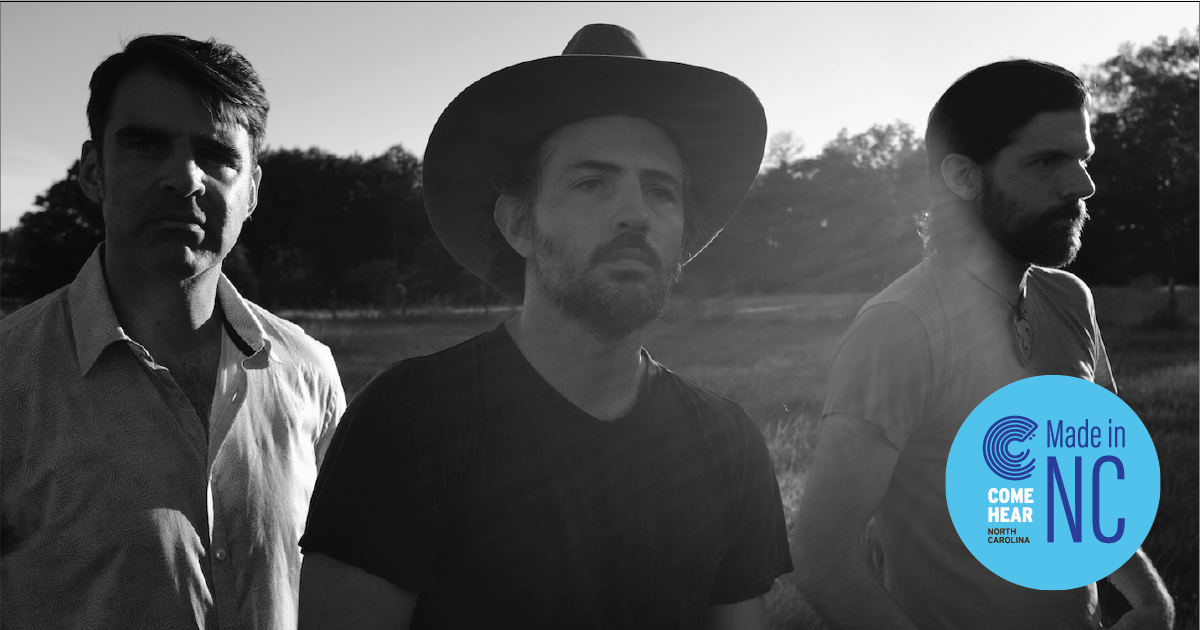
Back in March, the Avett Brothers — Scott and Seth Avett, along with bassist Bob Crawford — were scheduled to leave their homes in North Carolina and head out West, where their longtime producer, Rick Rubin, was waiting at his studio in Malibu. They were in a prolific place at the top of the year, and eager to keep up the momentum. They had just released Closer Than Together, their tenth studio album, in October 2019, and had written and recorded The Third Gleam, the latest chapter in a series of acoustic EPs. They had also written a ton of new material — enough for another album, by Scott’s estimation — and were all set to move forward with it when the coronavirus hit. Everything, including their flights to California, ground to a halt.
The only thing that’s gone according to plan for the Avetts in 2020 is The Third Gleam, and it’s weirdly fitting — fateful, even — that it’s a homecoming in many ways. The eight-song EP was ushered into a tumultuous time they never saw coming, one that’s forcing everyone to stay put, slow down, and count their blessings more fervently than usual. It’s a return to the sparse acoustic arrangements that the Avetts perfected in their early releases before they teamed up with Rubin in 2009 for their mainstream breakthrough, I And Love And You, which brought them into the rock arena.
The Second Gleam came out in 2008 just before I And Love And You changed their lives and their sound, and though they’ve never strayed from their bluegrass and folk framework, they haven’t returned to the simplicity of Scott and Seth working through ideas with only their guitars and each other for company to this degree in over a decade. (Crawford does join them on The Third Gleam; he wasn’t brought in for the first two.)
The Third Gleam was written long before the world abruptly changed, but it touches on themes that bubbled up from the tension and strife that’s shaped recent moments of violence, unrest, uncertainty, despair, and the embers of resilience, hope, and the pursuit of social justice that smolder in spite of all of the above. Gun violence (“I Should’ve Spent the Day With My Family”), facing the unknown with grace (“Victory”), considering mortality (“Prison to Heaven”), and the deep joys and struggles of the human condition (“The Fire”) are all explored here, in soft tones, plaintive strumming, and the meditative plucking of Scott’s banjo.
Each song is striking in its approachable yet profound sincerity, and this less-is-more approach is one they found to be particularly effective in this fractured time. These issues were on their minds before the coronavirus upended life as we know it, but the Avett Brothers find themselves finding new meaning on The Third Gleam back where they started: at home, in North Carolina, trying to make sense of the world with little more than two voices and two guitars in sharp relief. For Scott, it’s simple: “The smallness of the Gleam — that’s where its power is.”
BGS: When I think of the first two Gleams, some of the saddest songs you’ve ever written come to mind, like “If It’s the Beaches,” but also gems that became fan favorites, like “Murder in the City.” How do The Gleam, the Second Gleam and The Third Gleam stand out to you? What sets them apart from the rest of your work?
Scott Avett: If there was a heart or soul or spirit to everything we do, [The Gleams] orbit a bit closer to that. If there’s layers to an entity or a life, this is kind of at the pure center of it. I’m coming up with this theory for some reason right now with you. [Laughs] At the root of the songs, a lot of the songs on other releases, we have wrung them out — put them literally through the wringer — to see what they want to become, what they can become, what we’re trying to hear and get out of them. Are we challenging them or going too far with them? With these, we don’t ever take that journey. It’s much earlier in the inception of the life of the song that we stop meddling with them. There’s a little more to just be with them, which is at the root of things.
Seth Avett: The series itself sort of represents a simplification across many aspects of this whole thing. It represents the clearing out of many great things, many great tools, and many great advantages we have with our band and our resources, and our possibilities. It simplifies the process of collaboration, the process of artwork. It simplifies recording, mixing, mastering and everything else. Across the board, it’s just a process of simplification and reduction, to where the only real star is the lyrics. I think that we’re still attempting to make something that’s engaging, musically, but it’s no secret: what we put our time into is storytelling, writing words and then sharing them onstage. It’s always at the heart of our songs, and so the Gleam is presenting only the heart rather than the entire body in a way.
Bob Crawford: They’re Scott and Seth’s sketchbooks, really. If you knew these guys as well as I do — and I know a lot of people know them very well, because they put it all out there and they always have — but if you love a great painter’s paintings, and you become a connoisseur of that painter’s paintings, their sketchbooks are widely available nowadays, be it Rembrandt or Leonardo da Vinci. That’s how I look at the Gleams, stitched in with the fabric of all our work: they’re basically more broken down, raw thoughts that they guys have. They’ve always wanted these things to be quieter and less. This is the first one, I think, I’ve played on; normally it’s just Scott and Seth doing these. It’s just a chance for them to get quiet, be alone, and be brothers.
You’ve been very busy between Gleams. How has it been to return to this acoustic space after playing arena-ready roots-rock on Closer Than Together?
Seth Avett: What it does for me, personally, is it takes a new inventory of our trust, of our brotherhood — my trust for Scott and his trust for me — with no other real considerations. It’s wonderful to be reminded in such a genuine way, with such gravity, that we still trust each other completely, and we’re not moving forward based only on the efforts of others. We still have each other’s trust and care, and we still hold those things in the highest regard. It’s a funny thing: on the first two Gleams and on this one, when we go into the process of finding out what the songs are going to be, and we present them to each other, there’s very little discussion.
All these full-length records, whether one person wrote the whole song technically or not, the other one will have a certain amount of contribution to it. There’s a lot of weighing: “What does it mean?” “Can it be said better?” “Is this too much, is this too little?” We do consider them in a big way, and we consider the songs on the Gleams in a big way as well — but we hardly talk about it. It’s like, “Hey, here’s four songs that are feeling really good to me and things I want to say,” and the other brother says the same, and that’s it. We just do it. It’s cool.
Bob Crawford: These Gleams give them an opportunity to come together and work together a little more than they have in recent years. We’re coming full-circle because of the pandemic. Since the pandemic, they’ve been living very close together and spending more time together. They were always close as brothers and best friends, but closer, approximately, so they could get together. We were actually about to go to Malibu to record the week the pandemic hit, the week of the shutdown. Ultimately, we tried to do it all these different ways; it just didn’t work out, so it turned into them recording demos themselves, sending me the demos, and me recording the bass and sending them back.
Did any of these new songs pose a new challenge you hadn’t confronted in your songwriting before?
Scott Avett: What’s different about mine — and this is a change for Seth and I — we sort of switched places. Several years ago, I probably would’ve been the one that tended to be more rapid-fire, more erratic. I just chop it up with a lot of syllables and a lot of words. On this one, we switched. We were laughing about it. Seth’s songs have a lot of words and tell stories, they’re narrative, and then mine are very much personal and have a lot less words and a lot more space.
I always look at it that there’s only one character on the record, there’s one character in the story, and the two of us kind of make that character. We would do very different things on our own, probably. There’s a contrast to it, a gemini sort of approach to it I guess. [“I Should Have Spent the Day With My Family”] is a good example of what’s changed for us. It’s minor and subtle to anybody else, but it’s a change for us.
Seth Avett: If you look at The Third Gleam, it’s impossible not to compare and contrast between me and Scott — I know it is, I’m sure all of our fans do it — where the differences between the Seth and Scott songs have never been more laid bare, in terms of the difference of the vibe. Scott’s songs, they just have so much space and breadth in them. I don’t look at “Family” or “Fire” as songs that have a ton of breadth in them; they feel a bit more urgent.
The narratives have a bit more of an agenda. Whereas, “I Go to My Heart,” “Victory,” “Back into the Light,” they have quite a lot of breadth and space, and so I’m seeing a change in him. If we are writing the songs we’re meant to write, and we are giving reverence to our form, then the changes in us are the changes in the song. If you ask, “How have I seen his writing change?” I’m thinking about how he is growing and changing, as a man, as a father, as a brother. It’s all kind of wrapped in one.
The role of advocacy and activism in music has changed, even since you released Closer Than Together, and “Family” is a turning point for you especially, Seth. You mention your wife and child by name in a song about gun violence, and you’ve never done that before. How has it been to anchor the Gleam in this moment in that regard?
Seth Avett: I can’t say that there was a point where I said, “Okay, now I’m going to open the door and start writing these types of songs.” This sort of happened incrementally. A song like “Bang Bang,” there were multiple moments where I’d go to a hotel room, and I’d turn on the television, and it’s just one [show] after the next, from ridiculous garbage to the most eloquent sci-fi — but it’s always the leading man with the gun. It’s always presented with such power, and it’s just ridiculous. The idea of holding a gun to make someone powerful is absurd; it’s preposterous.
I had many moments like that, and then there were many shootings. “I Should Have Spent the Day with My Family” is an obvious, super-literal reaction; “We Americans,” that’s the first four years of a person’s life growing up as an American. I don’t know that there’s one moment where I gave myself permission, but there have been many moments that I consider wholly unavoidable in terms of taking that into the songwriting.
This has been a tumultuous time, so I was curious if you think there’s a connection between that and going back to the foundation with an acoustic EP. Do you find that it was an organic thing to take a step back and retract to that nucleus and get to the root of all things Avett with The Third Gleam, considering everything going on?
Bob Crawford: It’s definitely a time of reflection, and it does make you appreciate all we’ve done, because you don’t know when and how we’re going to do it again. … For me, “Victory” is the greatest song they ever wrote. We only win when we submit; we only find peace when we let go. How do we hold it all together in our hearts at the same time? How do we not lose our minds at that? How do we find true peace inside while there’s chaos flowing back and forth? I think, hopefully, the Avett Brothers can be part of the center of that. If you are the center of that, you’re not polarizing. You can’t alienate anybody. No matter what you know they believe, face to face is how we live the gospel, how we can make real change.
Artist:Stillhouse Junkies Hometown: Durango, Colorado Song: “Mountains of New Mexico” Album:Calamity
In Their Words: “‘Mountains of New Mexico’ is an old-school murder ballad about misunderstood victim vs. outlaw, but it’s also an ode to the great wildernesses of the American West and their ability, even in the Information Age, to humble us as they have since the beginning of time. And what better backdrop for this kind of tale than northern New Mexico’s Bisti Badlands, a sun-scarred, alien landscape of hoodoos, gullies, and maze-like washes. The August sun limited our video shoot schedule to early morning and sunset, and the light was nothing short of magical; the song’s windswept climax came to life in a way we had scarcely imagined. ‘Mountains of New Mexico’ is a reminder that trading one kind of trouble for another doesn’t always work in our favor.” — Cody Tinnin, Stillhouse Junkies
Artist:Tejon Street Corner Thieves Hometown: Colorado Springs, Colorado Song: “No Good” (Acoustic) Album:Monarch Sessions Release Date: October 16, 2020 Label: Liars Club
In Their Words: “At first glance, ‘No Good’ is about being a party animal. But a more in-depth look reveals the struggle for acceptance and a teetering battle with impostor syndrome. It’s easier to be hard on yourself than it is to understand why people like you. The song is a reminder to practice a positive self-image even though it takes work. Monarch Sessions combines both audio and video mediums so that we were able to portray our most authentic and emotionally-fueled performance in a time when live music isn’t an option. The video accompaniment allows for an inside look at our own reactions to the songs as we perform them, adding a layer to the album that wouldn’t be achievable otherwise. We put our heart and soul into these songs and you can finally see it through Monarch Sessions.” — Connor O’Neal, Tejon Street Corner Thieves
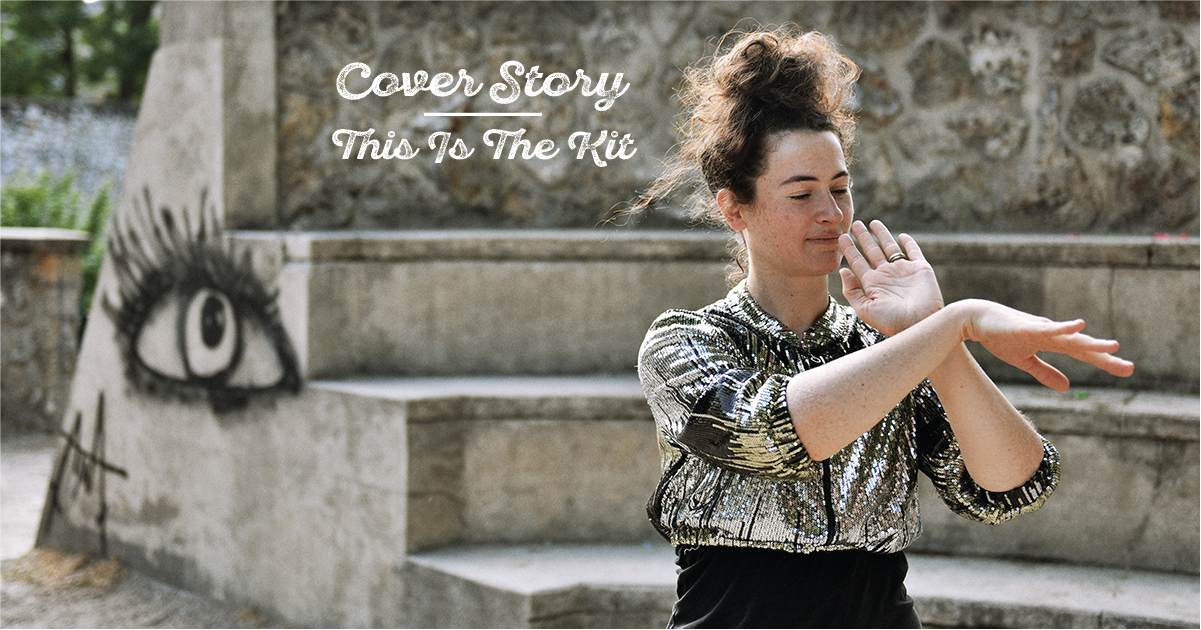
Kate Stables, principal of alternative roots outfit This Is the Kit, didn’t intend to write a pandemic album to follow her acclaimed 2017 debut, Moonshine Freeze. In fact, she wrote the entirety of Off Off On well before the term “COVID-19” entered our collective consciousness.
In the way that great art often can, though, the songs Stables wrote for Off Off On anticipated the needs of our current moment. Across 12 tracks, Stables sings of growth-inspiring personal reflection, the “two steps forward, one step back” nature of processing trauma, and continuing to move forward in the face of grief, all explored with deeply felt empathy and sharp insight.
Stables and her band recorded the bulk Off Off On prior to the COVID-19 lockdown alongside producer Josh Kaufman (Bonny Light Horseman, the Hold Steady) at Real World Studios in the U.K. Sonically, the album builds atop the lush, banjo-driven alternative folk of Moonshine Freeze, with complex, often subtle arrangements that offer thoughtful soundscapes for Stables’ striking lyrics.
BGS caught up with Stables via Skype to discuss finding sources of inspiration, writing about difficult personal moments, and living as a musician during the COVID-19 lockdown.
BGS: To start us off, everyone has had their own specific difficulties resulting from the pandemic, but musicians, especially, have been dealt a tough blow. How has that affected you and how have you adjusted to being home more, and not being able to tour this record?
Stables: At first, it was kind of novel and a bit of a relief, almost. For the first summer in living memory, I didn’t have loads of festivals to do. So it was a summer I spent with my family doing family stuff instead. So that was nice, at first. Now that the time for actual touring would have been starting soon but it isn’t starting soon, it feels a bit weird. It’s the longest amount of time I’ve ever gone without playing gigs and without touring. So it feels really weird and I miss doing gigs so much. And I really miss my band. They’re in the U.K. and I’m in France. I’ve never gone this long without seeing them.
With regard to the album, you wrote and completed the majority of it before the pandemic started. What were the origins of the album and how has its meaning evolved for you since you first began plotting it?
I don’t usually have a pre-album vision. It’s normally just me writing songs as and when they come and seeing what kind of shape it all takes along the way. One of the earliest songs that was written for this album was “Started Again.” “Started Again” is almost a bit of a bridge song from the last album to this album, because I feel like it could have gone on either, in terms of what I was thinking about. It feels like it’s connected to my past life, in a way, because I feel like everyone has a new type of life now. The world has passed through this strange portal and we’re all a bit different and have to adapt to things. It’s not an obviously key song on this album… but it’s also a bit linked to my thinking about perseverance and getting through the difficulties and coming out the other side again and again. It’s funny because that’s also what the world seems to be dealing with at the moment. Those are themes that accidentally came out while writing the album, without knowing that COVID-19 was coming.
I read the track-by-track notes that you wrote for the album, and one line that stuck out to me was, “Listening through to these recordings, I hear new COVID-19 references every day.” Could you elaborate on that? I heard some myself when I was listening, but am curious as to which resonated with you.
Partly there’s the “we’ve all got to get through this” that I was dealing with in the album, which now seems like I’m talking about COVID. There are lines like, “Try not to cough.” That is too ridiculous and coincidental. There’s a song about a hospital and the breathing apparatus in the hospital; that felt spooky, now that so many people are in hospitals than ever before. Things that were written with one story in mind and now this new situation has given them another story.
I’ve talked to a few other artists who have had similar experiences. It’s interesting, because obviously no one could have predicted where we are now, but it does make you wonder if you were intuiting that we were collectively going down this road.
Yeah, are we all tuned into something that we don’t know about? It does feel weird. I think also with writing, and you may get this in your work, you do end up with funny coincidences and predicting the future accidentally sometimes. It’s just the way it goes when you’re working with words and language and storytelling, whether it’s journalism or fiction or songwriting. These weird cosmic moments do happen.
One of my favorite tracks, both sonically and lyrically, is “This Is What You Did.” How did you write that one?
Writing it was fun because it was an example of me playing with rhythm, which is my favorite thing to do. I tried to find a banjo-picking pattern that was quite hard, something I almost couldn’t do, and worked until I got it. I tried to find a pattern where I wasn’t using the same fingers every time, something as random as possible. The beats were regular but the strings I was picking were somewhat randomly generated. Then I tried to find vocal rhythms that were difficult for me to sing at the same time. I guess it was like brain gymnastics. I like it when you can’t tell where a pattern starts and finishes. … That repetitive, cyclical nature of the music lent itself to this mind-loop approach with the lyrics.
Reading through your notes about “No Such Thing,” you reference both Jack Kornfield and Jane Austen as inspirations. How do you find inspiration? Do you always have your antenna up?
Language is the material I work in and I really enjoy exploring other people’s work with language. When I hear a phrase that makes me laugh or that sounds pleasing to say out loud, I’m always noting down little quotes of things that make a spark in my brain, even if it’s something out of Bob’s Burgers or something… So I guess I do always have a bit of a radar up for rhymes, assonance alliteration; things like that make my ears prick up.
When you reach the point in your writing process when you’re ready to fully arrange a song, what does your collaboration with your band look like? They’re such fantastic players and it sounds like you’re all quite close.
Sometimes I have a bit of an idea of the vibe or the kind of pace that I was envisaging for a song, but it’s also nice to not say anything until they’ve tried something out. Quite often they’ll find something that’s better than what I had in mind. I’ve ended up with three of my favorite musicians playing in my band, which feels like a privilege and a real kind of fluke. So it’s nice to let them do their own thing as much as possible. I’d be interested to know, though, if they think that’s what I do. Maybe they think I’m really controlling. [Laughs] What I hope I do is let them have space to do their stuff.
Prior to lockdown, you got to spend a lot of time on the road with the National. How does playing as part of someone else’s project inform your work as a solo artist?
In a few ways, but it’s hard to put your finger on one. Traveling is nutritious for me in terms of writing and wellbeing and being inspired. The act of traveling, even just looking out the window while you’re going along the road, is inspiring. But also the fact that you’re going to different places and meeting new people and having these new experiences… Also just seeing how other people work. I found it fascinating to be part of this symbiotic ecosystem that’s going around on tour. Everyone plays an important part and looks out for each other and it’s really fascinating to see how other people tour.
It’s a bit tricky to look too far ahead right now, but, in addition to getting your album out, what are you looking forward to in the coming months?
Because the gigs aren’t there to be looked forward to, I think I’m looking forward to seeing what I can get done instead. There are a lot of musical projects that I’d love to get stuck into, and I hope that I just will. This time, we’re all learning how to be ready for anything and not to assume that something is going to happen, so, ideally, I’ll just be making music instead of touring. I really hope I’ll be able to make music with people, even if it’s long-distance.
Artist:Strung Like A Horse Hometown: Chattanooga, Tennessee Song: “Lookin’ for Love” Album:WHOA! Release Date: October 30, 2020 Label: Transoceanic Records
In Their Words: “‘Lookin’ For Love’ is a tune all about that exciting feeling you only get when first falling in love. It’s meant to invoke the joy of a relationship young enough to not be complicated. I know all our longtime fans are gonna be stoked on this one. The strings were cooling off just a little, and we needed to let them open up again and meet their quota. So we took care of business the way we used to — playing live in a room all together with a few mics scattered about. This one is a helluva good time, and I think our excitement for this song made its way through the wires. We all love to fall in love, and that’s the fun part to focus on. If you’re lookin’ for heartbreak, you’re in the wrong song.” — Clay Maselle, Strung Like a Horse
Artist:Ruby Mack Hometown: Greenfield, Massachusetts Song: “Little Bird” Album:Devil Told Me Release Date: October 23, 2020
In Their Words: “‘Little Bird’ is a spirited newgrass ditty about laying down your pride and being vulnerable to the risk and improbable feelings that flood in when you follow your heart versus the stasis of playing it safe. I wrote it with a friend when I didn’t have the courage to tell the one I loved that I loved her. ‘Little Bird’ was the 2am phone calls in the heat of the summer. We never kissed and we never told a soul. Historically, songwriting has been a vehicle for sharing everything I couldn’t say directly. I conceal my truths in poetry, metaphor, and melody. ‘Little Bird’ is a page from one of my oldest diaries.” — Emma Ayres, Ruby Mack
This website uses cookies to improve your experience. We'll assume you're ok with this, but you can opt-out if you wish.AcceptRejectRead More
Privacy & Cookies Policy
Privacy Overview
This website uses cookies to improve your experience while you navigate through the website. Out of these, the cookies that are categorized as necessary are stored on your browser as they are essential for the working of basic functionalities of the website. We also use third-party cookies that help us analyze and understand how you use this website. These cookies will be stored in your browser only with your consent. You also have the option to opt-out of these cookies. But opting out of some of these cookies may affect your browsing experience.
Necessary cookies are absolutely essential for the website to function properly. This category only includes cookies that ensures basic functionalities and security features of the website. These cookies do not store any personal information.
Any cookies that may not be particularly necessary for the website to function and is used specifically to collect user personal data via analytics, ads, other embedded contents are termed as non-necessary cookies. It is mandatory to procure user consent prior to running these cookies on your website.