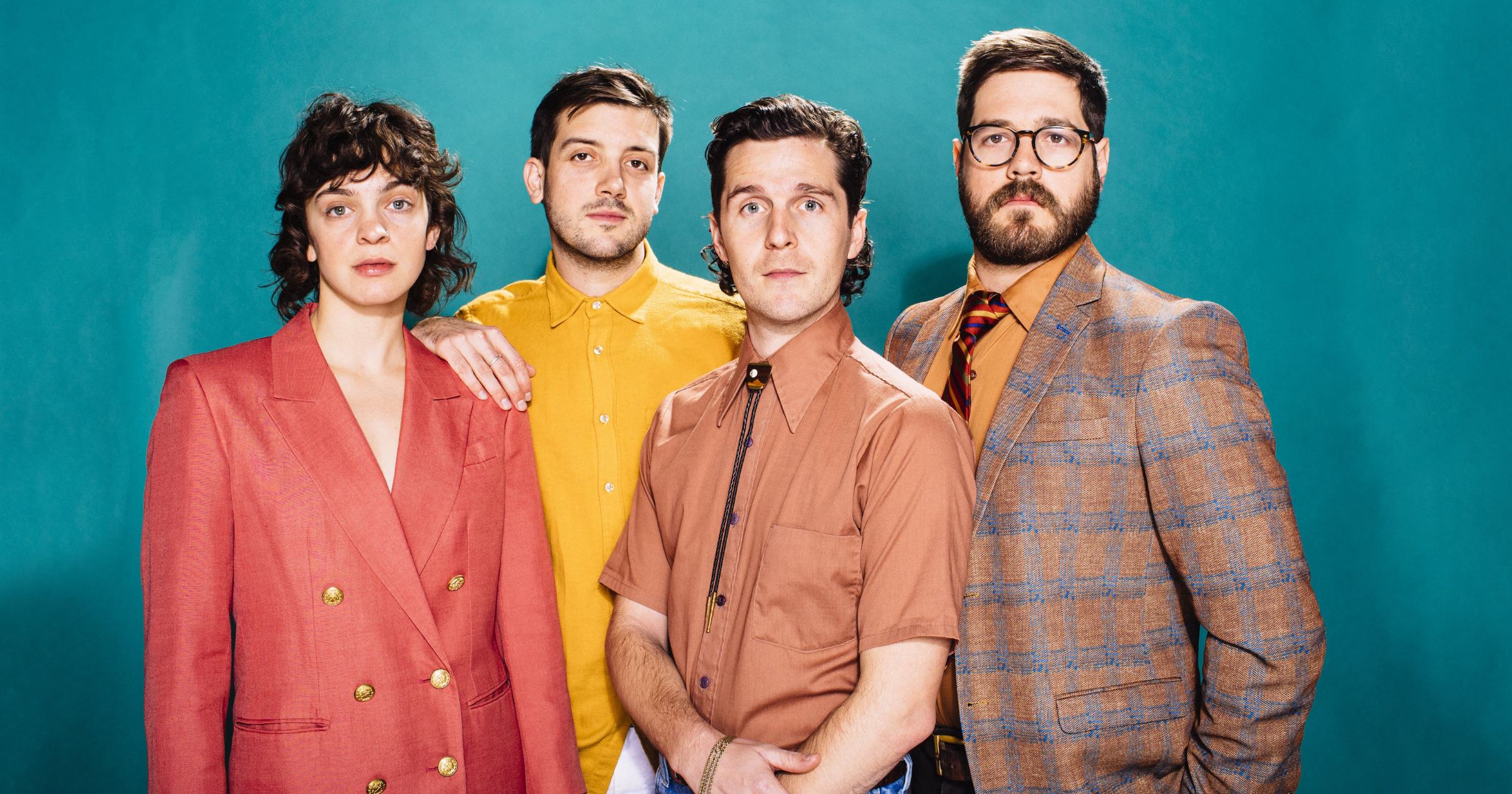
Mipso’s sixth full-length release, simply called Mipso, marks an adventurous, exploratory turn for the group’s sound. Up until their most recent couple of projects the North Carolina four-piece’s music usually dwelt in the string band realm, but as this music video for “Let a Little Light In” will attest, the new self-titled album features more experimental textures and atmospheres. In the video, the members of Mipso revisit nostalgic memories that have a marked fuzziness and that strange cocktail of joy and sadness about them.
On YouTube, singer-fiddler Libby Rodenbough posted, “It was really tempting to take this song in a kind of familiar bluesy direction, but we fought the temptation and tried to take into a weirder, quirkier zone.” Mipso is a unique step for the group, following very much in the footsteps of this single. In a press release, the band calls it their “most sonically adventurous and lyrically rich work to date, each moment charged with the tension between textural effervescence and an underlying despair about the modern world.” Watch “Let a Little Light In” below.
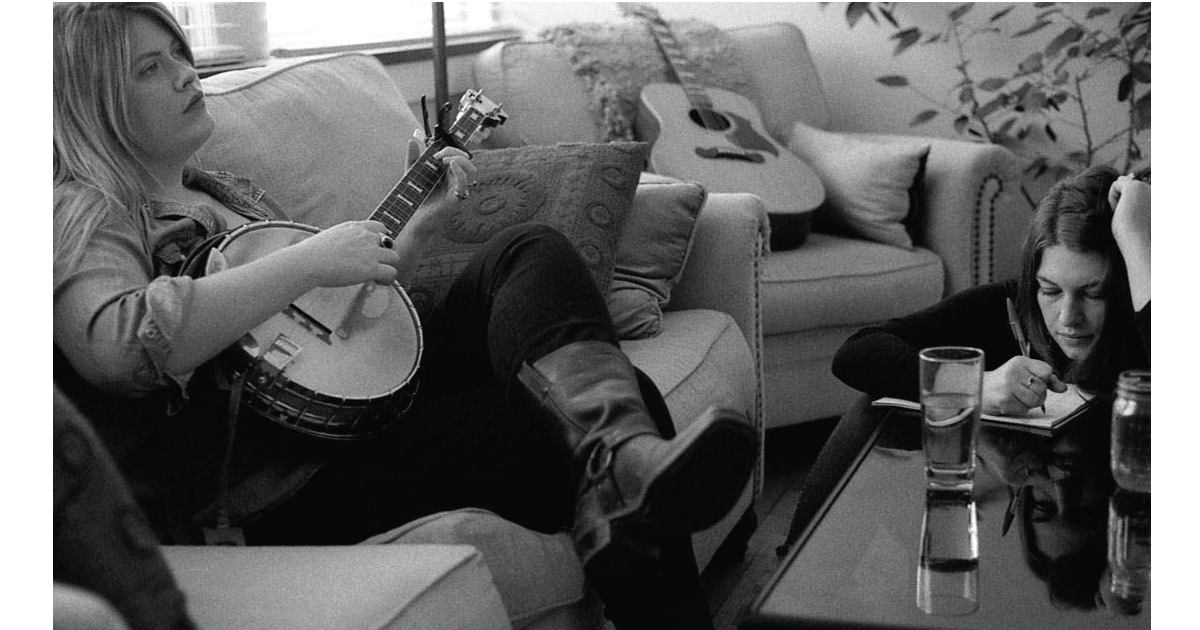
In normal times, you might find Kentucky-hearted duet the Local Honeys touring the UK or out on the road with folks like Colter Wall and Tyler Childers. But, like so many, the past year has been a paused their movement, allowing space and time to experience life in a way that most busy artists rarely get to.
Many caught wind of the group after a viral New York Times article in late 2020 about our nation’s cultural depression. But like other defendants of Appalachian people and culture, Montana Hobbs and Linda Jean Stokley, who make up the pair, have been outspoken via their music for a long time. Their new double-sided single continues a demand of accountability from big industry. “It’s a modern anthem of the American working class,” said Stokley.
BGS caught up with the Local Honeys to talk about these two songs — “Dying To Make a Living” and “Octavia Triangle” — as well as the message in their music.
BGS: In the before times, you’ve led pretty busy schedules, including multiple international tours. What have you been up to since the pandemic began?
Montana Hobbs: Well, I can tell you what we’ve be into. We’ve been in our jammies a lot! But you know, we’ve experienced probably a similar story to anybody else that has been in the gig industry. We’ll all remember it as a point in our lives and a point in our careers that was kind of sedentary, if you will. I think our story is not much different, we’ve had more time at home to focus on things that we don’t get to do on the road – like exercise, cook at home, read. At the new year we both decided that we weren’t gonna think so much about what this past year has been, but think more about what this new year is going to be for us.
Linda Jean Stokley: In 2019 we went on about five separate concert tours. So the beginning of 2020 was our last tour, we were all over the UK as well as greater Europe, on our own headlining tour but also supporting Tyler Childers. That was a huge tour, and it really took a lot out of us, so it was kind of welcoming to have a little bit of a break after that. But over this past year, we have done a few cool things. We went on the Tyler tour, we got signed to La Honda Records — that’s a pretty big deal for us. We love everything that they do, and have been constantly inspired by them. Our management and being with a label have proven so helpful, even during this time, to have someone like our manager that is so good about keeping our spirits up. Another thing that we’ve done this past year is put out a Western AFvideo, and that was a highlight. We didn’t get to do much, but what we did was really welcomed.
In a time of so much uncertainty, what inspired this new release?
LJS: We recorded those in October of 2019, and we’d been working on trying to change up our sound a bit, to make our sound bigger but not non-traditional, kind of neo-traditional. So we were thinking in 2020, how are we gonna release these songs? Then in October 2020, our friend Jimmy McCowan, who’s on one of those tracks, suddenly passed away from a heart attack. So, we talked to La Honda and asked if we could finally get these out. That’s kind of what spawned the release of this A-side/B-side single.
These songs show two perspectives on life in the coal mines: working like hell to provide for your family, while enduring personal struggles both medical and mental. What are you trying to tell the rest of the world about these Appalachian issues?
LJS: In July of 2019, there was a blockade in Harlan County, [Kentucky], and over a thousand miners in central Appalachia were out of work, because of the Blackjewel mining company. They went bankrupt, and they didn’t tell anybody. They didn’t tell any of their workers until the day of. In the middle of the day, they said, “this is your last day.” That is completely illegal. It was strange that it had to happen in Harlan County, which is so synonymous with all these bloody labor wars. To have something like this happen with one of the largest coal companies in the nation just shows that they can get away with all kinds of unlawful behavior. These people, their checks bounced. Of course that’s going towards their mortgage or rent, but it’s also going towards their medical costs, because there are so many disabled miners. We started thinking about this song more and more. We sang it a little bit, but didn’t have a need to sing it necessarily because we didn’t have anything to say. When we were on tour a lot, we would tell the story of what was going on, and put song and emotion into what’s happening, to get people to listen.
MH: To add on that, the song became more relevant to us in this time frame. It was a song that we were familiar with, via the band Foddershock, but also Rick & the Po’ Folk, Rich Kirby and his traditional band, and Pierceton Hobbs [who released his own version in 2020]. Basically, we felt like when you’re given the stage to speak on things like this, you might as well take advantage of the time and the attention that you’ve been given. Make that time worth it, and get a message that you feel is important across. When we would go over to England, which is also a very post-coal society that we didn’t know much about, we had firsthand connections where they told us stories of tragedy, how their grandfathers were miners, and so on. It made the whole history of traditional music come full circle for us, to where we had the opportunity to sing a song, but we also had the opportunity to tell a story of where we’re from and what’s happening where we are. Which is what traditional music was in its first iteration.
I know that you both, along with other musicians, visited the miner’s blockade. What was that like?
MH: We went and visited the miner’s blockade in August. We just went down there and hung out with these people, they had their entire families on the train tracks. They had little encampments set up. People like Brett Ratliff, Rich Kirby, Tanya Turner at the time worked for Appalshop, went down there with us. Son, it was so hot. It was very much like third world conditions in what’s supposed to be the greatest country.
The week before, we were at Cowan Creek Mountain Music School in Whitesburg, Kentucky. Jim McCowan has been a member of the faculty there probably as long as the school has been around. This guy in my class asked, “Have you heard the song that Jimmy’s mother wrote?” We were both very close to Jim, he was a very bright light. So I sat on a picnic table with him and said, “I heard that you do a song your mother wrote.” And I’m one of those people that’s a real sneaky recorder with my phone, and I have about a 10 or 15 minute clip of him playing this song called the “Octavia Triangle.” He had such a beautiful delivery of the song.
We were thinking of something that would pair well with “Dying To Make a Living,” which is economic hardship, being pushed under the rug. Even though this work is essential, they’re being treated less than they’re worth. So then I thought that “Octavia Triangle” completely highlighted what it is to actually live, and work, and die, and love, in the coalfields. This was a true story that happened in Pike County, Kentucky. Who’s to blame other than these harmful practices which we still practice today?
As a fellow musician from Central Appalachia, I feel like Foddershock (who wrote “Dying”) rarely get the attention or recognition they deserve. Do you have a favorite album, or a starter pack for those who have never heard the band?
LJS: I absolutely love Foddershock, I’m always trying to find their CDs. I’m waiting on WV [Hill] to send me some recordings. Obviously, I think “Dying to Make a Living” is one of the best places to start. I would also say “Eat Possum & Prosper” is one of my favorite tracks of theirs. And I really love “When Coal Was King.” There’s one that’s called “Live in a Trailer.” “Cahoots,” as well.
Do you have any new goals or ideas to try for when things turn around and we can all get back on the road?
MH: Hmm… we are ready and willin’! Open for suggestions, open for bookings… But like I said before, this is a time that we will all remember as a pause in our lives and a pause in history, even though it’s been a hell of a lot of history put into one year. We’ve been granted this time to kind of work on things, we’ve been writing a lot. It’s always been something we’ve done and tried to practice, but now it seems like it’s at the forefront of our minds. We want to be seen as not just traditional musicians, not just old-time musicians, but we wanna be known as songwriters as well. Carrying on that storytelling, and showing how I feel about what’s going in the time and place I’m from. That’s one of the biggest connectors in music in general, it’s saying you’re not alone. Like when we went to Wales, even our song “Cigarette Trees,” which is about strip mining, people would come up to us and say, “They do that here too, and we don’t like it either.”
LJS: We’re finding so many relatable things to talk about when we tour in the UK specifically. Touring has really given us a way and a platform to connect with all these people around the world that are dealing with similar situations. Every time we go anywhere, we talk to people about the whole idea of ‘saving Appalachia,’ and trying to tell people that no, we have to pay attention to the causes of poverty and suppression that are happening within our state and within the entire southeast region. We don’t need saving, and we don’t need developing — we need somebody to actually understand what is going on in our area. We’re looking forward to reconnecting with people.
Artist:Cristina Vane Hometown: Turin, Italy Song: “Prayer For the Blind” Album:Nowhere Sounds Lovely Release Date: April 2, 2021
In Their Words: “‘Prayer For the Blind’ is inspired by a friendly couple I met while camping on the border of Nebraska and Iowa. She told me her mother suffered from dementia, but that it couldn’t help but make her laugh when her mother claimed that her husband was cheating on her, going dancing with a woman with two peg legs, and that she was going to wring her neck. The anecdote got me thinking about how we try and find levity in heavy situations, and also about the bond between mothers and daughters and the intergenerational burdens that can be passed along through them. I wanted to find a tone that matched the difficult nature of these questions, and the lonesome modal banjo seemed perfect for that, paired with Nate Leath’s great fiddling. The issues of motherhood and illness are no new phenomenon, so I thought old time sounds fit the theme well — you can’t beat a fiddle and banjo!” — Cristina Vane
Photo credit: Oceana Colgan Video credit: Jeremy Harris
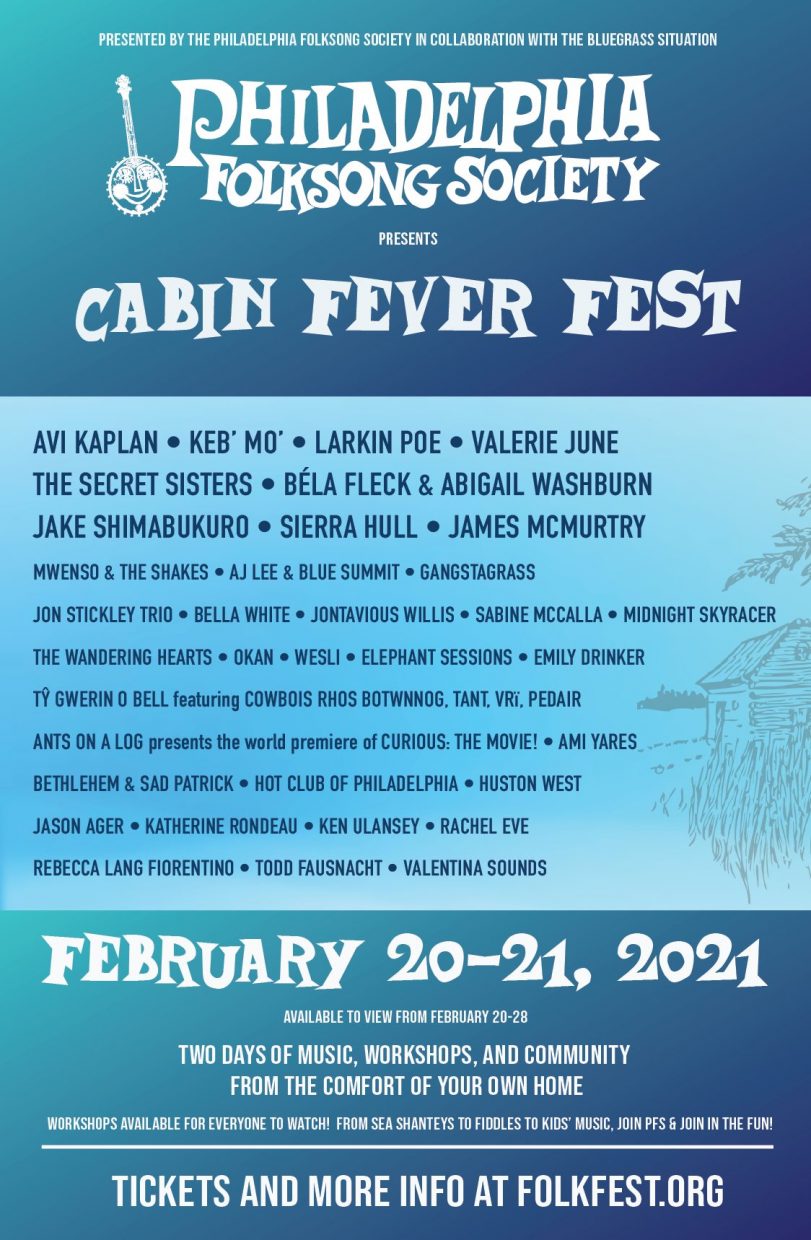
BGS and the Philadelphia Folksong Society, who are presenters of the oldest continuously run music festival in North America, are proud to join together to virtually present Cabin Fever Fest on February 20 & 21. This fully digital, interactive musical experience will include multiple streaming stages, performances by international stars and local favorites, music workshops and lessons, and more. (See the full lineup below.)
Tickets to Cabin Fever Fest are available now, full weekend passes are available for just $45 for PFS Members and $50 for Not-Yet-Members. Your ticket gives you full access to the event from February 20 until February 28, to watch at your leisure and convenience.
To get excited for the launch of the festival this Saturday, we wanted to introduce our BGS audience to some of the amazing folks on the lineup. Hopefully you’ll find a few favorite artists and performers — new and old — to catch this weekend on Cabin Fever Fest, presented by BGS and the Philadelphia Folksong Society!
Avi Kaplan
We first turned our attention to former Pentatonix low-end Avi Kaplan when he released his first rootsy foray, I’ll Get By, last February. In our interview last year, he spoke about his time with the internationally-renowned a capella group, growing up on bluegrass, and how is journey back to folk took shape. We were excited to have Avi on Whiskey Sour Happy Hour episode 3 last spring and we’re so excited to have him on Cabin Fever Fest, as well!
By now a longtime friend of BGS as well as a stalwart of the Americana-blues scene, Keb’ Mo’ has been our Artist of the Month, has been on our podcasts, our live lineups, and our year-end and holiday playlists, and now will join us and our Philly Folksong Society friends for Cabin Fever Fest! Whether he’s sharing a stage with Taj Mahal or swapping licks with Rob Ickes & Trey Hensley, Keb’ Mo’ is an extraordinary picker and collaborator.
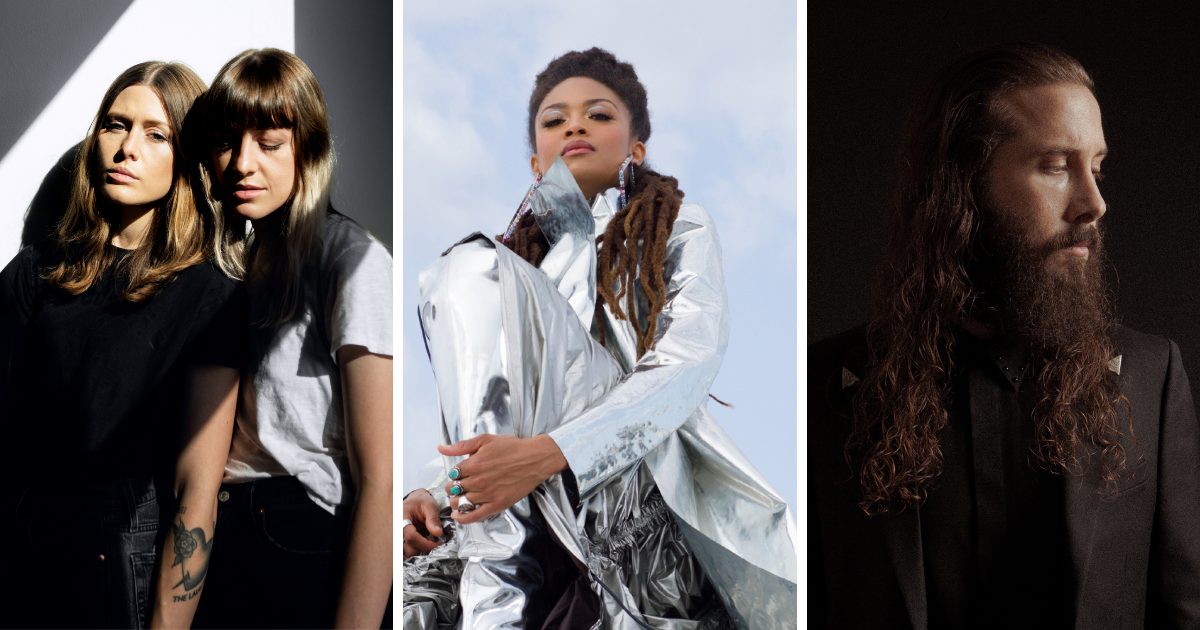
Bluegrass family band turned modern blues-rock shredders Larkin Poe are a constantfavoriteon the pages and social media channels of BGS — and we totally see why! They combine fiery, impassioned energy with bluegrass technique and virtuosity for a brand of southern rock and blues that appeals to all kinds of roots music fans. They’ve kept up a constant “touring” calendar despite COVID-19, and we’re so grateful to have them join our virtual festival.
A cosmic, mystical force on banjo, with her songwriting pen, or within the pages of her poetry notebook, Valerie June is another Whiskey Sour Happy Hour alumnus joining us on the Cabin Fever Fest lineup. Her upcoming Jack Splash-produced album, The Moon and Stars: Prescriptions for Dreamers, is generating quite a bit of buzz in folk circles — the single, “Call Me a Fool” features Stax legend Carla Thomas! — so of course we’re looking forward to her Cabin Fever performance!
What would a folk festival be without sibling harmonies!? The way The Secret Sisters — Laura Rogers and Lydia Slagle — blend their songwriting styles, their production and arrangements, and their voices is so effortless — while laser-precise, deliberate, and painstaking.
Lockdown shows from Nashville’s self-professed banjo house (and basement) have kept all of us going through the past year or so — or at least, all of us at BGS and Philly Folksong Society! We’re tickled they’ll be bringing more of their humorous, engaging, double-banjo content to Cabin Fever Fest.
Perhaps the world’s foremost ukulele virtuoso, Jake Shimabukuro represents quite a few American roots music traditions often left to the wayside in folk circles. Shimabukuro has performed with many bluegrass, old-time, and Americana greats including Sierra Hull, Cathy Fink & Marcy Marxer, Alison Brown, Béla Fleck, and more. His prodigious approach to the ukulele — an instrument with skyrocketing popularity at the moment, especially among Gen Z — will surely wow new and old fans alike, no matter your entry point to roots music.
Speaking of Sierra Hull! One of our all-time favorite mandolin maestros, this thoughtful composer/songwriter will headline one day of our BGS stage. Every chance we get to work together, we take it! We can’t wait to see what new, astounding cover songs — like her Whiskey Sour Happy Hour rendition of “King of Anything” — fantastic musical acrobatics, and bluegrass nuggets she’ll pepper throughout her performance.
Our Philly Folk Fest friends turned us onto local favorites, Mwenso & the Shakes, and we’re awfully glad they did. Led by Michael Mwenso, the troupe of global artists present music that’s entrancing, entertaining, and as they put it, “A formidable timeline of jazz and blues expression through African and Afro American music.” Their debut album, Emergence [The Process of Coming Into Being], is available wherever you get music now. We can’t wait to hear from Mwenso & the Shakes!
Based in Santa Cruz, California these fixtures in the Northern California bluegrass scene are making a splash on a national scale, despite the pandemic throwing a wrench in their ascension. Blue Summit’s music is modern, crisp, and precise with a songwriting heart that feels fully realized and mature, despite their relative youth as a group. Lee’s vocals and originals spearhead the ensemble, reminding of Alison Krauss and her former bandmate Molly Tuttle, too. BGS has been waiting for the opportunity to get Blue Summit on a lineup and Cabin Fever Fest was the perfect opportunity!
Check out the full lineup and schedules for Cabin Fever Fest below and don’t forget to head to the CFF website for more information — discover workshops, get your Philly Folksong Society membership, find FAQs, and more!
Saturday, February 20, 2021
(all times EST)
CAMP STAGE presented by the Philadelphia Music Co-op
11:00AM Katherine Rondeau 11:30AM Jason Ager 12:00PM Hot Club of Philadelphia 12:30PM Rebecca Lang Fiorentino 1:00PM Ami Yares 1:30PM Bethlehem & Sad Patrick
CAMP STAGE presented by the Bluegrass Situation
2:30PM The Wandering Hearts 3:15PM AJ Lee & Blue Summit 4:30PM Jontavious Willis 5:45PM Jon Stickley Trio 7:00PM Sierra Hull
MARTIN STAGE / MAIN STAGE
3:30PM Emily Drinker 4:15PM OKAN 5:30PM James McMurtry 6:45PM Mwenso & the Shakes 8:00PM The Secret Sisters 9:15PM Keb’ Mo’ 10:15PM Avi Kaplan
Sunday, February 21, 2021
CAMP STAGE presented by the Philadelphia Music Co-op
11:00AM Ken Ulansey 11:30AM Huston West 12:00PM Rachel Eve 12:30PM Todd Fausnacht 1:00PM Ants On a Log Presents the World Premier of CURIOUS: The Movie 1:50PM Valentina Sounds
CAMP STAGE presented by Eisteddfod Amgen
2:30PM Tŷ Gwerin o bell featuring Cowbois Rhos Botwnnog, Tant, VRi, Pedair
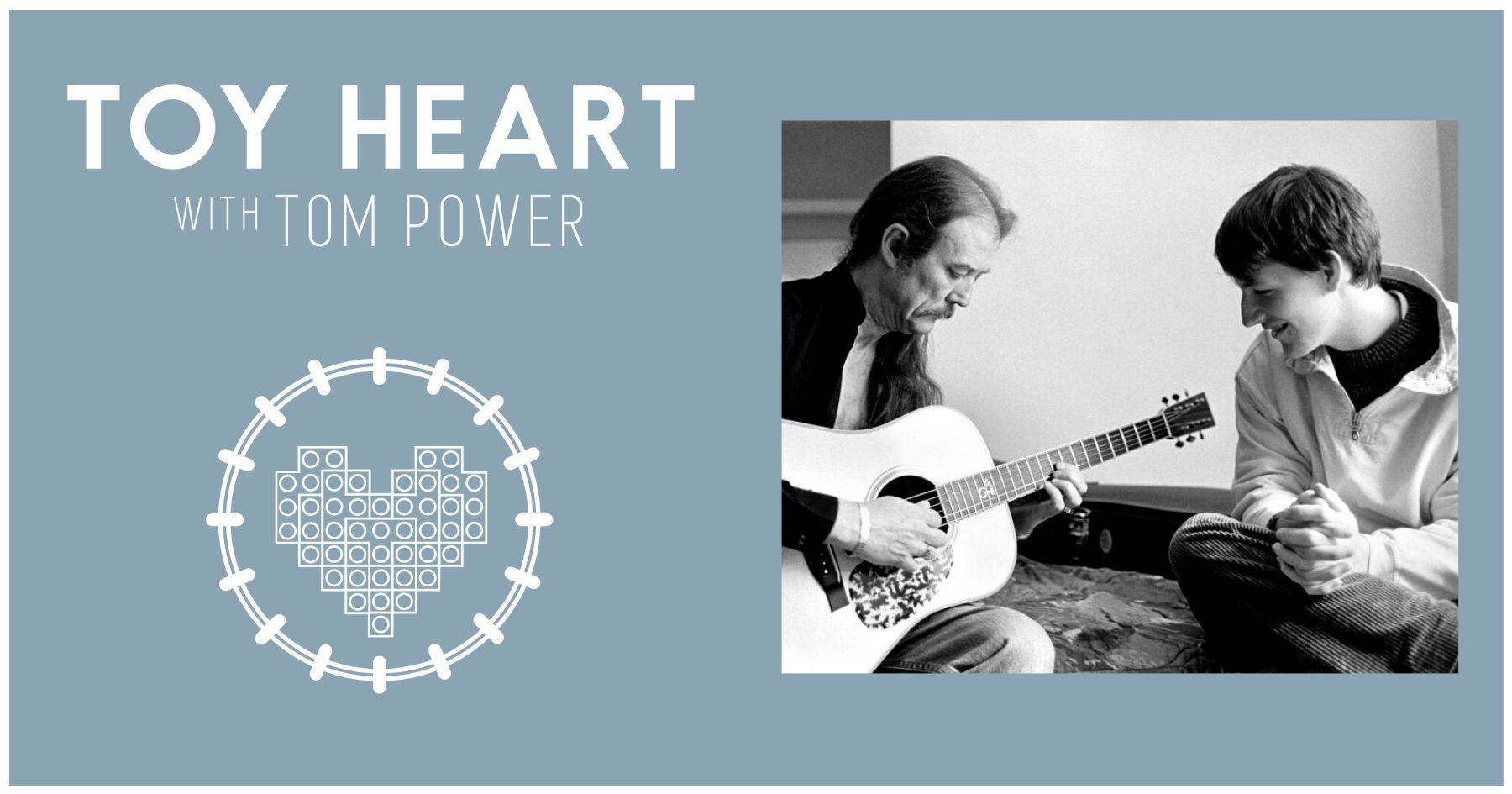
In the final chapter of Toy Heart’s three-part tribute to Tony Rice, host Tom Power speaks to several musicians who have been inspired by Tony Rice throughout their career, pickers and artists through whom Tony’s music will certainly live on.
On episode 3 of Toy Heart: Remembering Tony Rice, MacArthur “Genius” and Punch Brothers frontman Chris Thile tells a story about a jam with Tony Rice backstage that changed his musical life. Chris “Critter” Eldridge (pictured), also of the Punch Brothers, talks about the time he spent living with and learning from Tony — not just about music, but about life. Guitarist and singer-songwriter Molly Tuttle speaks about Rice’s influence on her guitar playing and how she sees his music living on even through musicians like herself, who never knew him personally. Finally, in-demand Nashville guitarist, session player, and sideman Bryan Sutton talks about recording with Tony and how he learned to be himself thanks to Tony Rice’s example.
Editor’s Note: Hear Thile at timestamp 01:58; Eldridge at 33:17; Tuttle at 01:03:17; and Sutton at 01:21:09
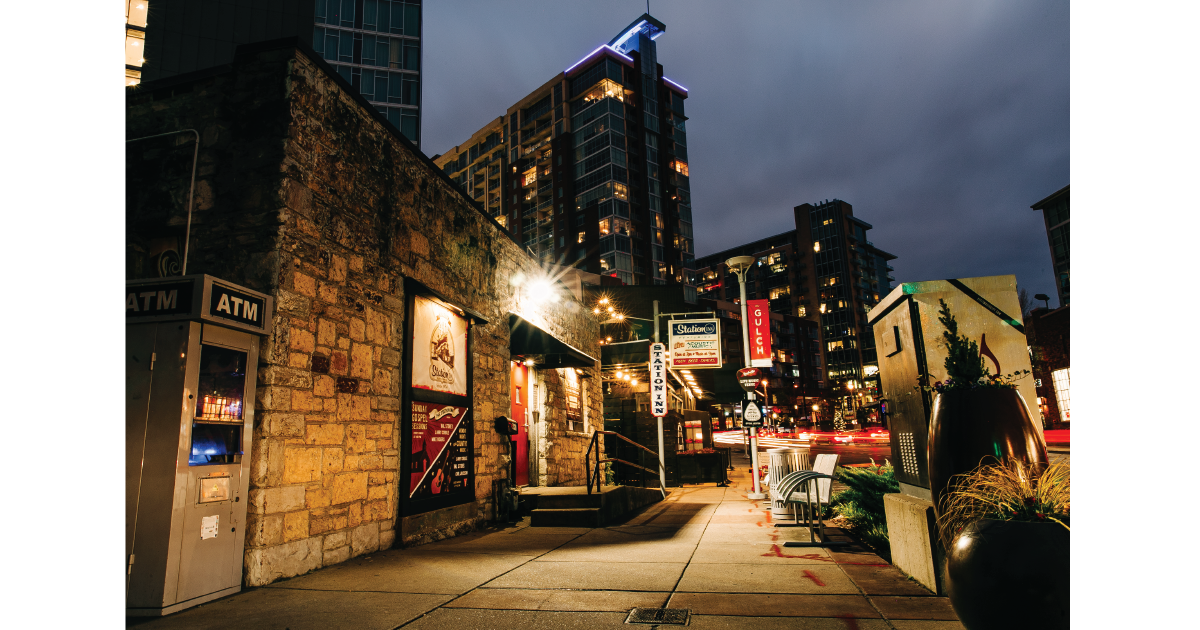
The humble appearance of the Station Inn could never give away the enormity of its legacy and importance to bluegrass music. Nestled between skyscrapers in an ever-growing city, a single story cinder-block building with its windows painted shut sticks out as a relic from the past — when the Urban Outfitters across the street used to be an empty field of waist-high grass.
For nearly 50 years “the World Famous” Station Inn has played a pivotal role in bluegrass as both a venue and community hub, drawing people to Nashville and making connections that had a major impact on the music. Through the rest of 2021, The Country Music Hall of Fame and Museum will honor and present the history and legacy of the venue in their exhibit The Station Inn: Bluegrass Beacon.
“The main reason that we wanted to do this exhibit is because the Station is such a vital and important part of not just Nashville music history, but of American music history,” says Peter Cooper, one of the curators of the new exhibit. The Station Inn has a larger-than-life reputation in the bluegrass community, but this new exhibit endeavors to highlight both the importance of the venue’s history and its welcoming atmosphere.
During the mid-1980s, adventurous singer-songwriter and musician Peter Rowan assembled all-star groups he dubbed “Crucial Country” for a series of shows that created a buzz amongst progressive roots music fans and players. In this photo, Rowan (right) is joined by Mark O’Connor on guitar and Sam Bush on mandolin. Photo: Charmaine Latham
It was founded in 1974 by a group of bluegrass musicians and singers — Bob and Ingrid Fowler, Marty and Charmaine Lanham, Jim Bornstein, and Red and Bird Lee Smith — who wanted to provide their fellow musicians and fans with a venue where they could play and hear bluegrass music. At that time the Station was more of a clubhouse where the owners functioned as the house band and guests would come up to jam. They moved to the current location in 1978; three years later, the club was bought by J.T. Gray, who at the time was driving Jimmy Martin’s tour bus.
Gray, who would go on to be inducted into the Bluegrass Hall of Fame in 2020 and was given a lifetime achievement award by the Southeast Regional Folk Alliance, began booking national touring acts to perform. It would be easy and accurate to show why the Inn is significant by pointing to the artists who have played there, including Bill Monroe, the Stanley Brothers, Vince Gill, Alison Krauss, and essentially any other important name in bluegrass. But the clubhouse atmosphere always remained. Countless (as in absolutely too many to count) threads of bluegrass history, both well-known and overlooked, can all be traced back to chance meetings at the Station Inn. J.T. Gray fostered a welcoming atmosphere that led to many locals and visitors from out of town to meet there, including mandolinist Mike Compton.
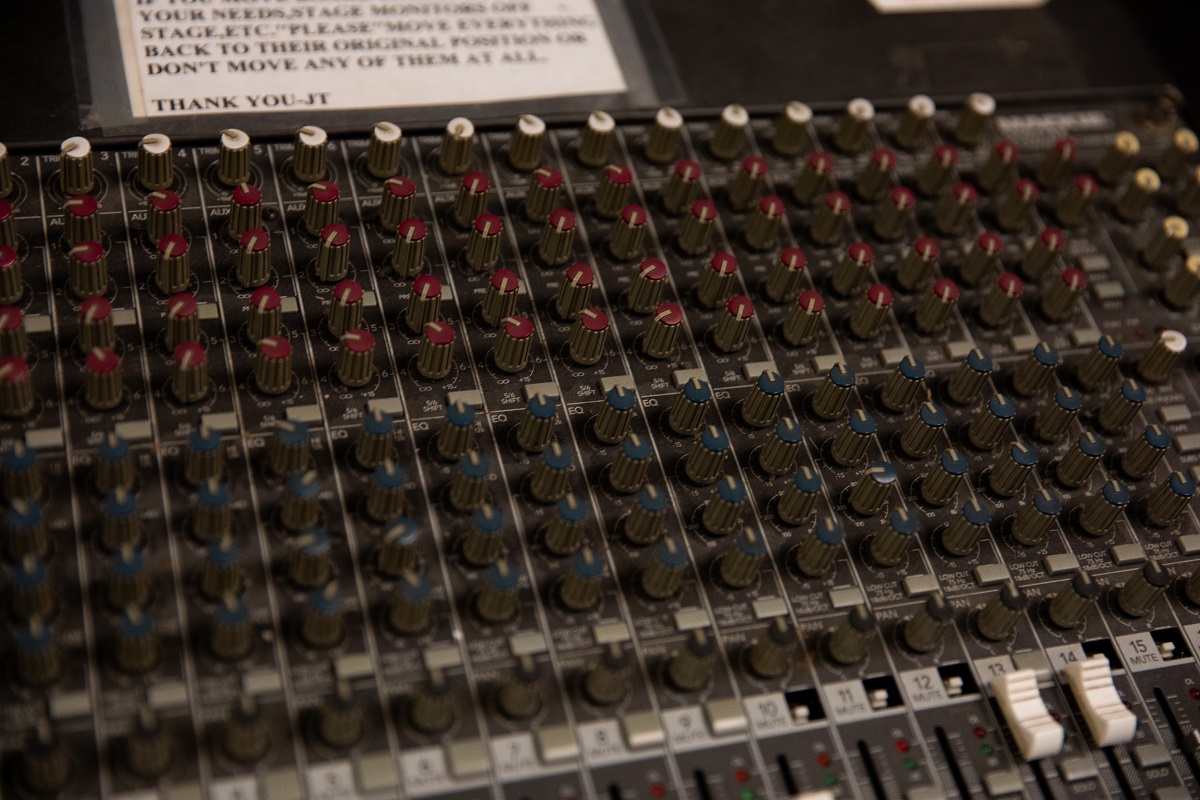
The venue’s sound-mixing console described by Gray as “the first piece of modern sound equipment we ever bought”
“I rode up [to Nashville] with Raymond Huffmaster, a bluegrass guy from Meridian, Mississippi, where I’m from, because I’d been hanging around him trying to learn how to play,” Compton says. They visited the bluegrass spots in town including the Station Inn, and Compton recalls after heading home, “Pat Enright got in touch with me and said they were starting a band and asked if I wanted to join. So I moved [to Nashville] in 1977 and moved in with J.T. Gray.”
Mike and Pat would continue playing together and later go on to form the legendary Nashville Bluegrass Band, which became a staple act at the Station Inn. A predecessor to that award-winning band was performing at the Station the first time future bluegrass star, Kathy Chiavola, came to town in 1979.
“When that door opened, the room was packed and I saw a vision of heaven,” she says, recalling that first night. “I heard these two voices, Alan [O’Bryant] and Pat [Enright], in their prime. And I lost it. I said, ‘OK. I’m moving here.’ There was a notice on the Station Inn bulletin board that a band of women playing bluegrass were looking for a roommate.” That band turned out to be the Bushwhackers, which featured bluegrass pioneers Susie Monick and Ginger Boatwright. Chiavola eventually joined the Bushwhackers playing bass and singing lead and harmony until Doug Dillard moved to Nashville. As the banjo player from the Dillards (who were famous for playing the Darlings on The Andy Griffith Show), Dillard put a band together and asked Ginger Boatwright to join, and about a year later asked Chiavola, too. Both the Bushwhackers and the Doug Dillard Band would frequently perform at the Station.
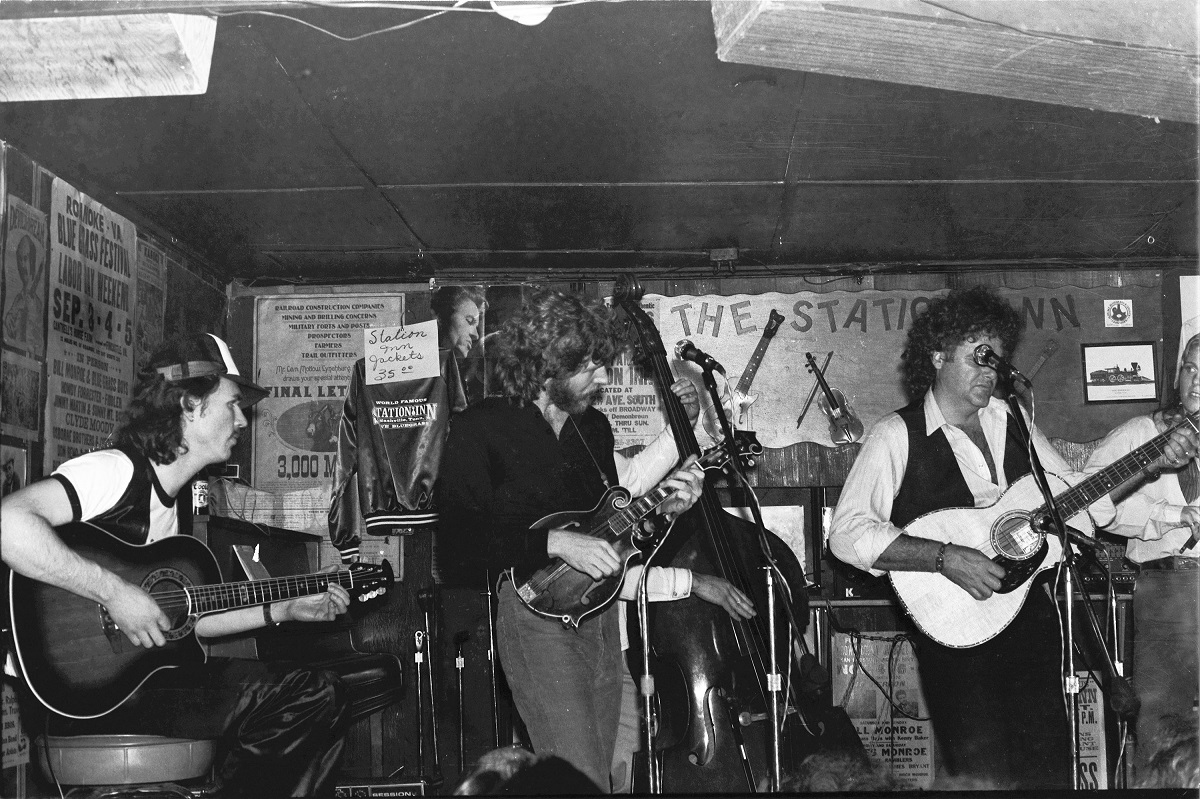
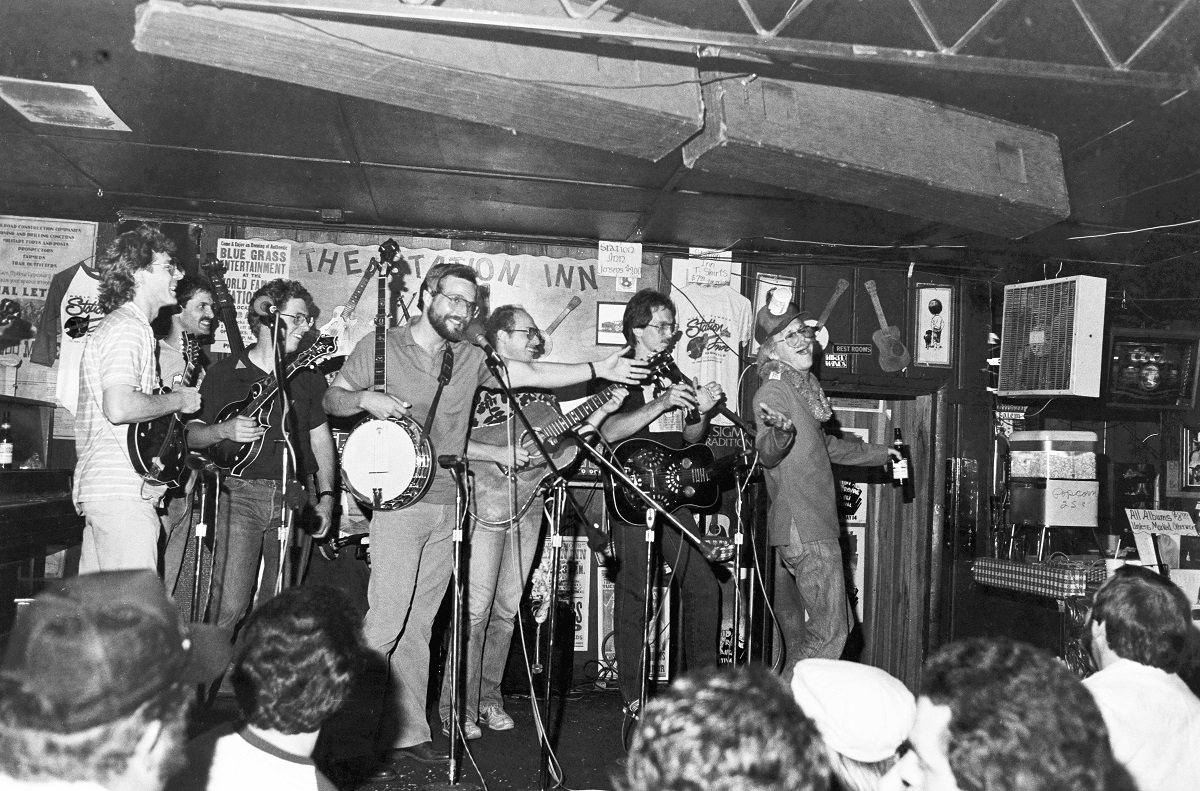
Vocalist, bones player, and madcap entertainer Ed Dye (far right) was a colorful presence at the Station Inn during the 1980s and early 90s. He assembled the Nashville Jug Band with a cast of stellar Nashville musicians from rock, jazz, and bluegrass backgrounds, and hosted wildly unpredictable shows. In this photo, he takes the stage with (from left): Sam Bush, Mark Schatz, Tim O’Brien, Alan O’Bryant, David Grier, and Jerry Douglas. Photo: Charmaine Lanham
Chiavola eventually moved into a duplex next to bluegrass bassist Mark Schatz. Together, they would often play the Station Inn with Charlie Cushman, Stuart Duncan, and Bobby Clark as part of a band called The Satellites. Other times, Chiavola would perform at the Inn with an ensemble called the Lucky Dogs which featured Jerry Douglas, Béla Fleck, Edgar Meyer (who had just moved to town), and sometimes Sam Bush or Mark O’Connor.
“It was beyond belief,” she says. “Sometimes I remember being on stage at the Station and listening to those guys play. I thought it was the most heavenly sound — I can’t even describe it to you. It was perfect music with so much feeling. You could hear a pin drop. It was so beautiful.”
Schatz, on the other hand, often performed at the Station with Mike Compton as part of John Hartford’s band. Hartford had moved back to Nashville to form a string band after a successful songwriting career in L.A. That California connection later landed him the contract to help with the music for the Coen Brothers’ massively successful O Brother, Where Art Thou? Compton’s 1927 Gibson A-Jr. model mandolin, which he played with the Nashville Bluegrass Band, in John Hartford’s string band, and on the O Brother soundtrack, is included in the new exhibit.
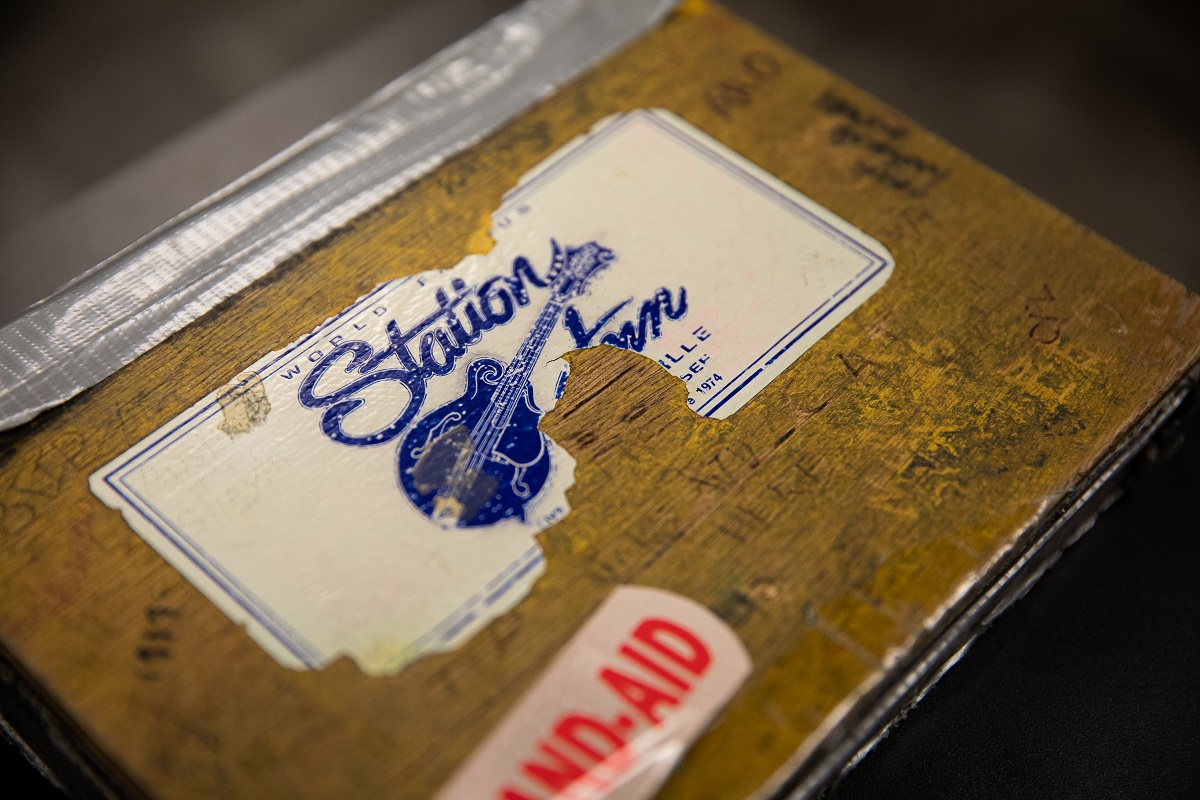
A cigar box used for many years to collect admission fees at the club entrance
Also on display is a small wooden box that was used to collect admission for years, along with some history about former Station Inn employee and local folk icon, Ann Soyars. “Ann embodied what the Station is about,” Cooper says. Soyars worked the door and was “small but fierce.” She was known to throw out rowdy college football players for being too loud, but also welcome regulars and newcomers alike. “Ann’s inclusion in the exhibit is indicative of what we’re trying to do, which is to help people understand not just the facts of the matter, but the spirit of the matter. The Station Inn is an example of musical community building in the most positive way. It’s like Cheers for ‘grassers.”
In addition, the exhibit features other artifacts from both the building and the musicians who have performed there including a fiddle played extensively by Tammy Rogers with the SteelDrivers, Mike Bub’s Kay M-1 double bass, which he played with many groups at The Station Inn — including Weary Hearts (Chris Jones, Butch Baldassari, Ron Block), the Del McCoury Band, and the Sidemen (Terry Eldridge, Jimmy Campbell, Ronnie McCoury, Gene Wooten, Ed Dye, Kristin Scott Benson, and Larry Perkins). Seats from a tour bus used by Lester Flatt, which serve as seating in the venue, are on view as well.
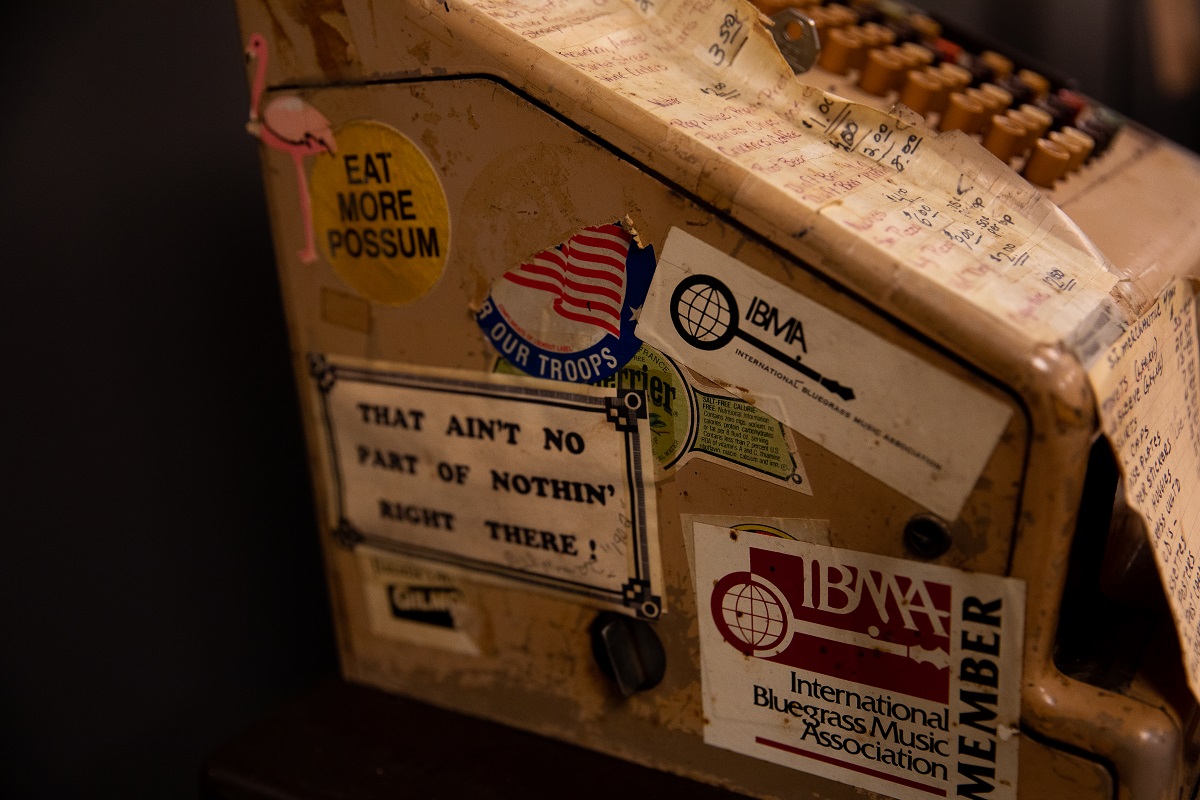
The Station Inn’s cash register
Generations of performers’ children have grown up in the Station’s green room and backstage and have gone on to perform on stage as adults. Newspaper has been put down on the bar to admire someone’s new puppies. Great care has been taken to lovingly craft the perfectly reheated pizza. Beers are shared by locals and honored guests after the doors are closed to the public. (And I have hidden fancy decaf coffee and a pour-over in the back that I take out when I visit.) To this day the Station Inn is a community gathering place where friendships, bands, and lifelong loves of bluegrass are formed. It embodies not only the authenticity of the music but of the community. And often, everyone knows your name.
Editor’s Notes: The Station Inn has endeavored to safely present live music throughout the pandemic. They have reopened to live audiences at a limited capacity and live stream performances through their web portal stationinntv.com.
The Country Music Hall of Fame and Museum will present The Station Inn: Bluegrass Beacon until January 2, 2022. The museum is currently open to the public at a limited capacity.
Photo of Station Inn and artifacts: Emma Delevante for the Country Music Hall of Fame and Museum Other photos: Charmaine Lanham
Artist:Tejon Street Corner Thieves Hometown: Colorado Springs, Colorado Song: “Deal Rag” Album:Stolen Goods Release Date: May 7, 2021 Label: Liars Club
In Their Words: “‘The Deal Rag’ had been a staple in our band since day one. It’s upbeat and fun as hell to play! It’s about when deals go wrong and you end up in a bad situation. Something we’re all too familiar with. We love the ragtime swing and the and the washboard solo rips. This is the first song we decided to put on Stolen Goods. It really sets the pace for the whole album.” — Connor O’Neal, Tejon Street Corner Thieves
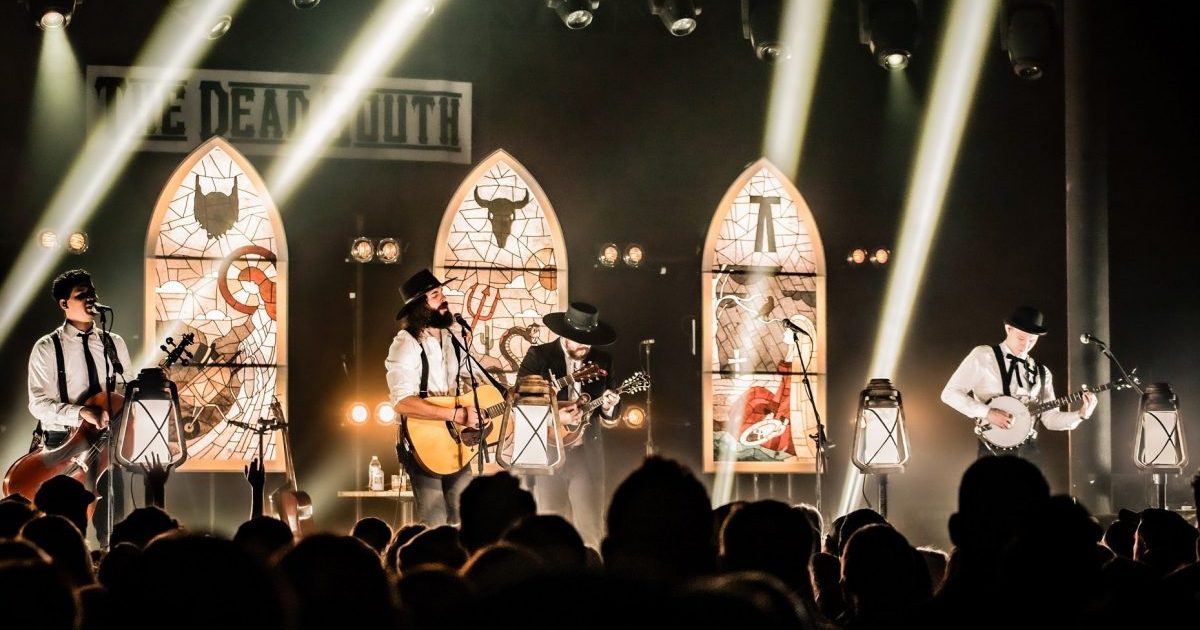
Artist:The Dead South Hometown: Regina, Saskatchewan Song: “The Recap” (Live) Album:Served Live Release Date: January 29, 2021 Label: Six Shooter Records
In Their Words: “It’s been tough not being able to do what we love. Playing live shows is a part of who we are and it has been ingrained in us to work hard and put on a great show night after night, and we miss the hell out of it! Putting out a live record is the next best thing to keeping these feelings alive and strong. We hope this live album brings people great feelings and sparks memories of unforgettable nights with us.” — Nate Hilts
“‘The Recap’ was one of the first songs we ever wrote. It was also the first music video we filmed. This song really helped kickstart this whole thing, and we’re happy it’s become such a fan favourite.” — Colton Crawford
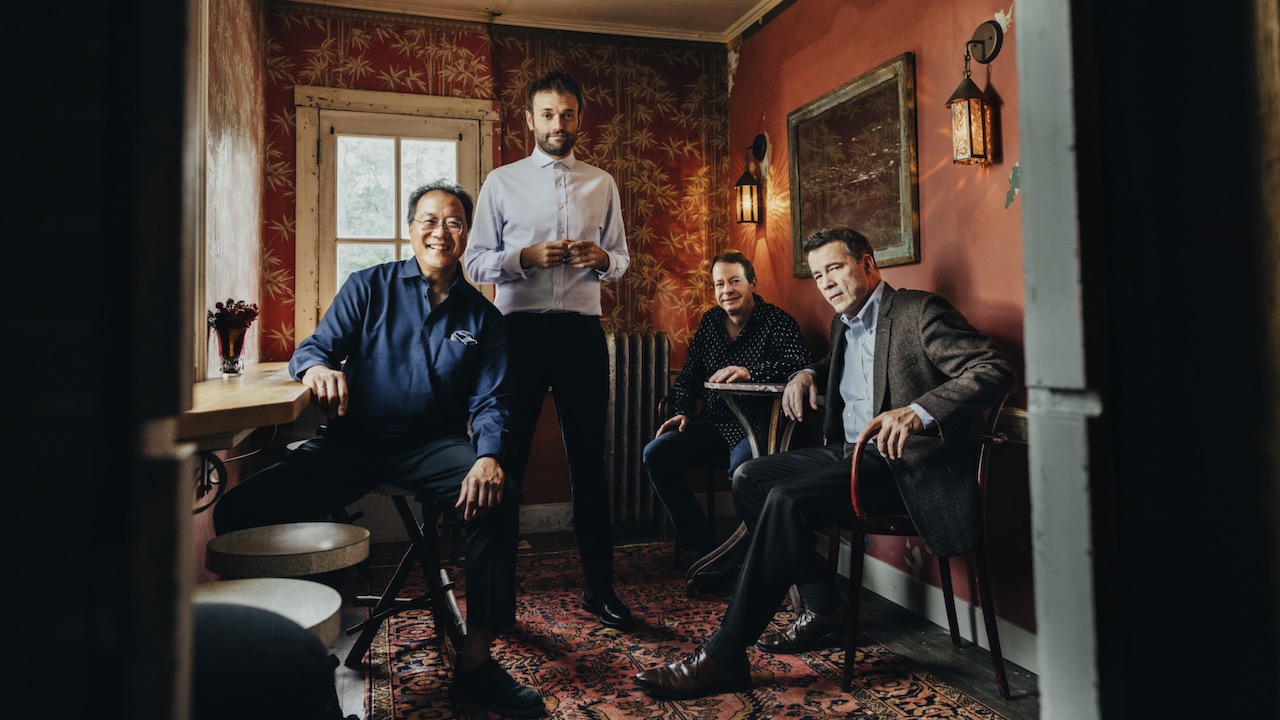
The Goat Rodeo was back in town in 2020, and while their stay was short, they left behind a new record for us to enjoy until their next visit. The all-star string quartet (no, not literally a rodeo) released their second album Not Our First Goat Rodeo in June, and much like the passing of a comet, audiences everywhere took it in with wonder and awe. The four visionaries that constitute the Goat Rodeo have each accomplished many incredible, out-of-this world feats, but when Yo-Yo Ma, Edgar Meyer, Chris Thile, and Stuart Duncan join forces, the music made feels less like an album and more like a rare phenomenon you’re lucky to see even once in a lifetime.
This fall, NPR’s Tiny Desk (Home) concert series shared music from their sophomore release. Chris Thile acts as an emcee sharing backgrounds and insights between the three songs featured, all of which can be found on Not Our First Goat Rodeo. As in the 2011 release, the rodeo’s second coming features the beautiful vocal presence of Aoife O’Donovan on the song “The Trappings” (as well as on two other tracks not performed for NPR). Despite their brief reunion, Not Our First Goat Rodeo will surely be considered as one of the highlights of 2020. Watch the Tiny Desk performance here – and read our BGS Artist of the Month interviews with Stuart Duncan, Edgar Meyer, Chris Thile, and Yo-Yo Ma.
There are a whole lot of ways you can tell the story of 2020, but for us here at BGS, it will be remembered as a year of especially remarkable songwriting from women in roots music.
We lead our playlist with the one and only Dolly Parton, who assured us that life will be good again. Parton’s songwriting is presented in an enticing new book, Songteller, and her ability to articulate complicated emotions — through lyrics that speak to all walks of life — is something that Brandi Carlile picked up on as a teenager. In this video interview from the 2020 BMI Country Awards (with a cameo from Dolly at the end), Carlile explains how Parton’s perspective on equality kept Carlile from divorcing country music completely.
Parton, who turns 75 next month, shares a number of important qualities with a new generation of singer-songwriters she’s inspired. In the case of Brandi Carlile, there’s a sense of belonging that is woven throughout their work, from Parton’s “Joshua” to Carlile’s “Carried Me With You.” Like Parton, Brennen Leigh is able to capture a sense of place and make it relatable, even for a listener who’s never been there. Kyshona Armstrong offers a sense of self-worth and self-awareness in her writing, as Parton does, allowing listeners to know them better. Likewise, Maya de Vitry and Parton share a sense of wonder and joy, portraying landscapes — internal and external — that are imagined, yet vivid.
On Prairie Love Letter, her full-length paean to her homeland on the Minnesota-North Dakota border, Brennen Leigh demonstrates a visceral, evocative grounding – just as Parton constantly speaks of her Tennessee mountain home: with a glint in her eye, and a sorrow in her heart for knowing she had no choice but to leave it. Leigh stakes her claim on both the wide, expansive plains and Nashville all at once, asking her audience “Don’t you know I’m from here?” As if to remind she’s as at home in bluegrass and country — and Music City — as Dolly herself.
“Backwoods Barbie,” “Dumb Blonde,” and “Just Because I’m a Woman” are all perfect examples of Parton’s lifelong radical self-possession. She expresses her agency boldly, confidently, without (visible) second guessing – from her wigs to her infamous tattoos to her nothing-special acknowledgement of her plastic surgeries, struggles with suicidal ideation, and so on, she is her fully realized, autonomous self. As Dolly told Jad Abumrad on Dolly Parton’s America, “Who we are is who we are… I would just bow out if I wasn’t allowed to be me…” Kyshona Armstrong‘s prescient album, Listen, holds similar space, as Armstrong doesn’t simply ask folks to listen; her presence, compassion, and radical honesty demand it. Because, first and foremost, she’s welcoming and non-judgmental in that aim, you will find yourself fully enveloped by her music before you realize the conviction within it.
Maya de Vitry made a gorgeous, poetic foray into heavier, rockier turf with How to Break a Fall, a gutsy, genre-bending set of songs. Their anger, release, and passion, expressed by the folk-rock production style, feels right out of Parton’s post-White Limozeen era, an effortless combination of seemingly disparate musical influences, distilled into something that, almost above all else, feels joyful. Where male-centered rock and roll finds itself often hung up on its endemic toxic masculinity, de Vitry and Parton stride into electrified sounds with their femininity forward, and the result is as charming as it is subversive.
It’s striking, among such an incredible volume of musical output from their Americana and country peers this year, that these women would stand out, above and beyond the still-common glass ceilings imposed upon them for decades. Dolly blazed a trail, but these dozens of writers — and singers and pickers and composers and front women and side musicians and authors and poets — would have crashed through inevitably on their own. With songs like Adia Victoria’s “South Gotta Change,” Sunny War’s “Can I Sit With You?,” “Troubled Times” from Laurie Lewis, the Secret Sisters’ “Cabin,” it’s obvious Dolly Parton’s songwriting legacy will be inherited by multiple generations worthy of carrying it on.
Throughout 2020, the BGS editorial team embraced this wealth of excellent music from women songwriters in roots music. It has been a privilege to share these original voices with our readers, too. Here are 50 of our favorite tracks from 2020:
Photo credit: Daniel Jackson for BGS, Newport Folk Fest 2019
This website uses cookies to improve your experience. We'll assume you're ok with this, but you can opt-out if you wish.AcceptRejectRead More
Privacy & Cookies Policy
Privacy Overview
This website uses cookies to improve your experience while you navigate through the website. Out of these, the cookies that are categorized as necessary are stored on your browser as they are essential for the working of basic functionalities of the website. We also use third-party cookies that help us analyze and understand how you use this website. These cookies will be stored in your browser only with your consent. You also have the option to opt-out of these cookies. But opting out of some of these cookies may affect your browsing experience.
Necessary cookies are absolutely essential for the website to function properly. This category only includes cookies that ensures basic functionalities and security features of the website. These cookies do not store any personal information.
Any cookies that may not be particularly necessary for the website to function and is used specifically to collect user personal data via analytics, ads, other embedded contents are termed as non-necessary cookies. It is mandatory to procure user consent prior to running these cookies on your website.