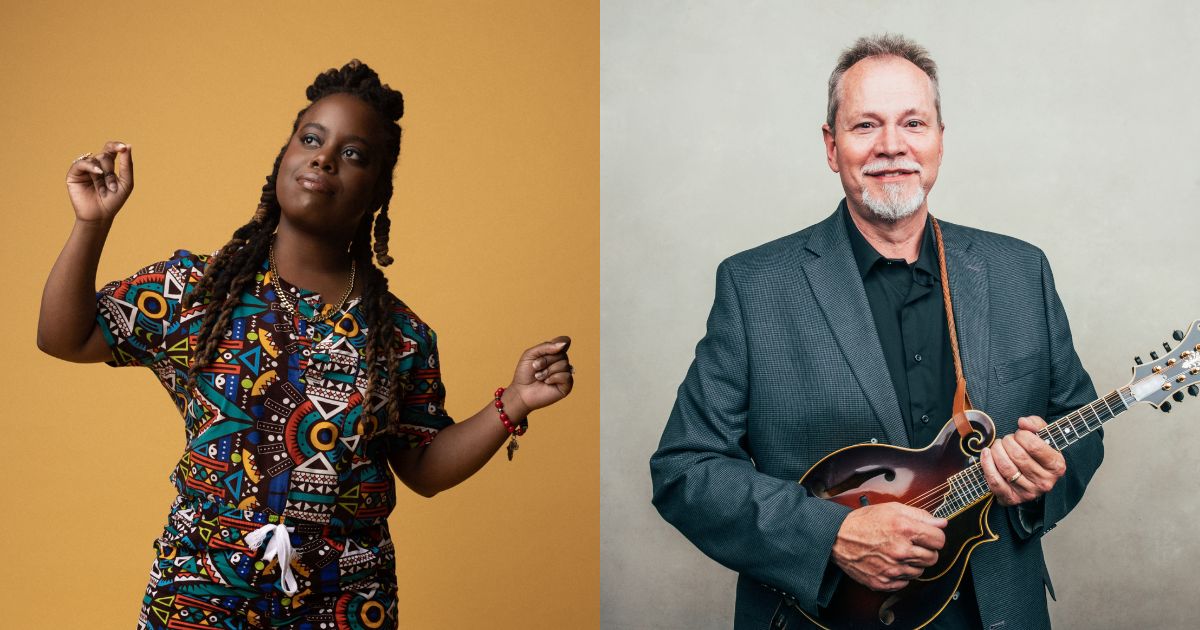
It’s our first New Music Friday of August! This week, we’ve got an excellent handful of tracks you simply gotta hear. First, there’s Paula Fong with a “zippy little tune” that’s delightfully old school country. Plus, Danny Roberts brings us a ramblin’ bluegrass track, “The Drifter,” which pays homage both to David “Dawg” Grisman and Roberts’ late brother-in-law, Mike Mullins.
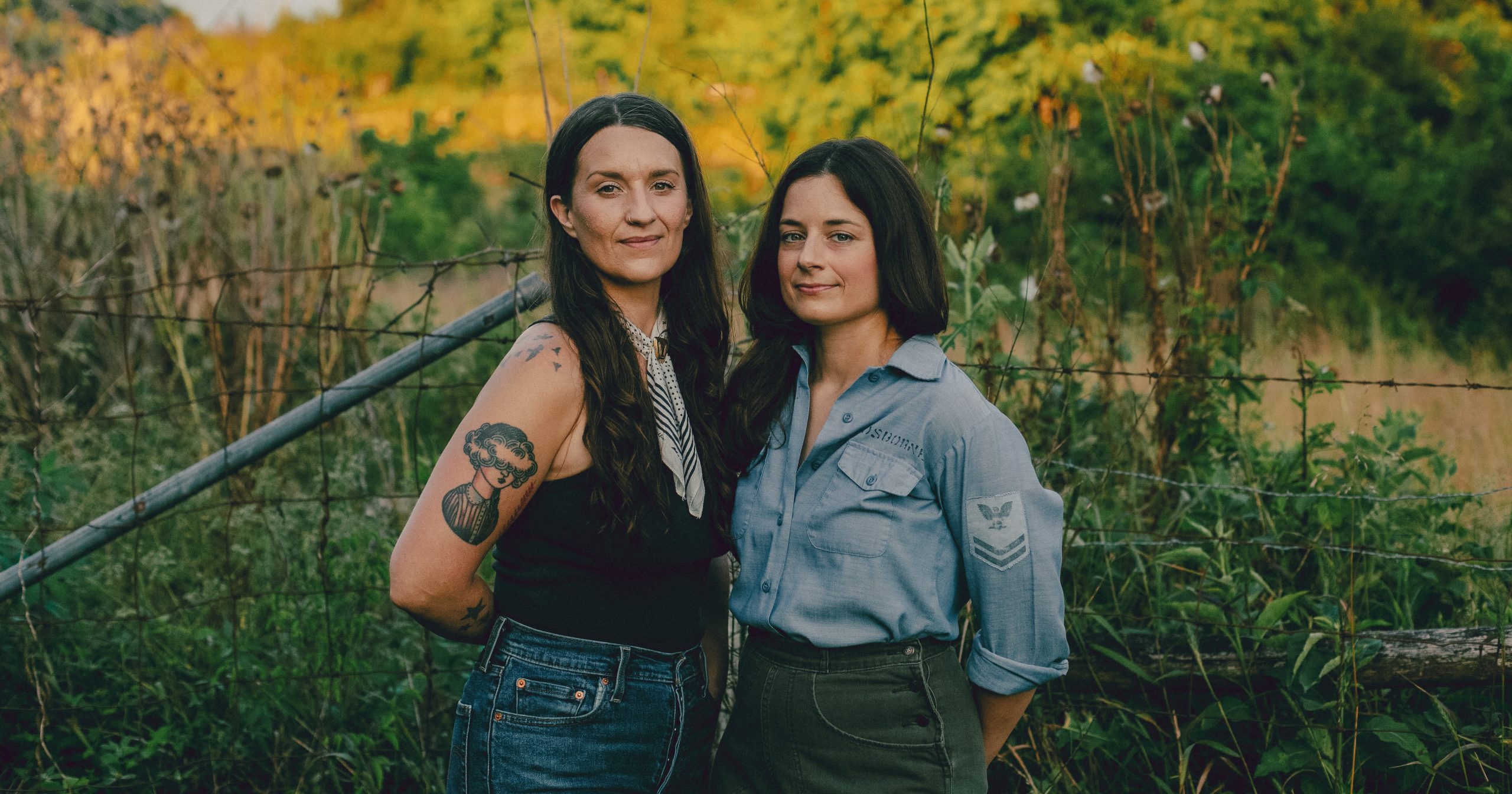
Our penultimate premiere is the title track for Americana duo – and 2024 AmericanaFest Official Showcase artist – A Tale of Two’s upcoming album, Renegade. To finish us off, the impeccable and mystifying guitarist Yasmin Williams calls on indie folk favs Darlingside for “Virga,” a swirling song from her just-announced upcoming album, Acadia.
Listen below, ’cause You Gotta Hear This!
Paula Fong, “A House Is Not A Home”
Artist:Paula Fong Hometown: Los Angeles, California Song: “A House Is Not A Home” Album:Chestnut Mare Release Date: September 6, 2024
In Their Words: “This is hands down the fastest I’ve ever written a song. It took me around 15 minutes to write it top to bottom – chords and lyrics – and felt like it just flew out of my head onto the page. I often write about fairly heavy subjects, but in this case I thought I’d just try out a zippy little tune that puts a smile in your heart and makes you want to tap your feet. I often get compliments that it sounds like an effortlessly classic old country tune.
“When I was in my early 20’s I moved from Los Angeles to North Carolina for a time to work at an outdoor Montessori/Quaker farm school that was located in the foothills of the Appalachian Mountains. Life there was full and busy, but in a different way from LA. Many things were clearer, more simple, more joyful in a way. I feel like this song captures one facet of the simplicity of that time (and some specific NC references – traveling across the mountains, chickens in the garden). Generally speaking, I think love is hardly simple, but there are certainly moments that can feel as easy and carefree as this song.” – Paula Fong
Danny Roberts, “The Drifter”
Artist:Danny Roberts Hometown: Nashville, Tennessee Song: “The Drifter” Release Date: August 2, 2024 Label: Mountain Home Music Company
In Their Words: “When I started writing ‘The Drifter,’ I was inspired to compose something to pay tribute to one of my all-time favorite mandolin players, David Grisman. I feel like this song has that vibe, though nobody can play that style like Dawg. The song title is in honor of my late brother-in-law, Mike Mullins, who wrote a book called The Drifter before he passed away; that title just seemed to fit this song. ‘The Drifter’ was so much fun to record, and it’s always great to have my wife Andrea playing bass with me and the solos that Tony Wray (banjo and guitar) and Jimmy Mattingly (fiddle) played on it are magical. I’m blessed to have such great musicians helping me bring my music to life!” – Danny Roberts
Track Credits: Danny Roberts – Mandolin Andrea Roberts – Bass Tony Wray – Acoustic guitar, banjo Jimmy Mattingly – Fiddle
A Tale of Two, “Renegade”
Artist name:A Tale Of Two Hometown: Nashville, Tennessee Song: “Renegade” Album:Renegade Release Date: October 4, 2024
In Their Words: “‘Renegade’ is a fitting title for both the record and this song. It represents a shift, a changing of the tide. Our aim is to embody an identity that defies the norms of Nashville. Drawing inspiration from fragments of a previously unreleased track, “Renegade” continues the next chapter of our story, infused with the spirit of the Appalachian terrain we know so well.” – A Tale of Two
Track Credits: Aaron Lessard – Guitar and vocals Stephanie Adlington – Vocals Ross McReynolds – Percussion Elizabeth Estes – Fiddle Jon Estes – Bass
Yasmin Williams, “Virga”
Artist:Yasmin Williams Hometown: Woodbridge, Virginia Song: “Virga” Album:Acadia Release Date: October 4, 2024 Label: Nonesuch Records
In Their Words: “A virga occurs when trails of rainfall from a cloud evaporate before they reach the ground. While virga can be beautiful to look at, it can also cause extreme turbulence for aircrafts. I related this phenomenon to how I feel about participating in the music industry. While it’s so fulfilling to create music that I’m proud of and to be able to travel around the world, the industry itself is dangerous to be a part of and doesn’t always value art or artists.
“Instead, the music industry values metrics and other things that are related to business, not art, forcing most artists to think about hitting their next business target instead of putting their energy into their music. I often feel overwhelmed with all of the expectations that the music business puts on artists and the constant need to move on to the next goal post instead of being able to reflect on, and be grateful for, the things I’ve already achieved.
“While writing ‘Virga,’ I realized that it’s totally fine to feel suspended in time, with my career goals, hopes, and dreams suspended in the atmosphere of an environment I have no control over… and I eventually learned how to thrive “in Virga,” through both the beautiful times and the turbulent ones.” – Yasmin Williams
Track Credits: Darlingside – Vocals Rich Ruth – Synth, Yasmin Williams – Harp guitar Jeff Gruber – Recording engineer Mixed by Ken Lewis at thATMOS Studios.
Photo Credit: Yasmin Williams by Ebru Yildiz; Danny Roberts by Sandlin Gaither.
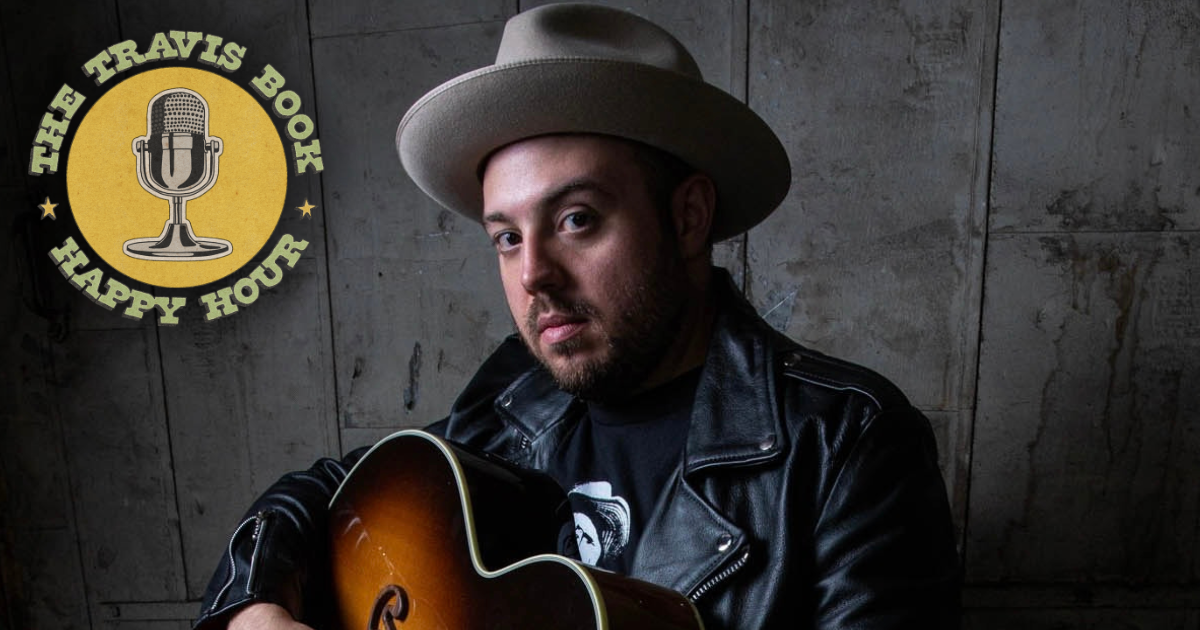
Trey Hensley is simply the most ferocious acoustic guitar player I’ve ever encountered. His attack and control of the guitar is unrivaled and left me in awe. He is, however, also just about as kind and as humble as an East Tennessee man can be. I had a great time playing music with and getting to know more about this musical titan and I’m really happy to make this podcast available.
This episode was recorded live at 185 King Street in Brevard, North Carolina on November 14, 2023.
Timestamps:
0:06 – Soundbyte 0:21 – Introduction 1:25 – Show introduction by Bill K. 2:14 – “Can’t Outrun the Blues” 6:00 – “Can’t Judge a Book” 9:48 – “Brown Eyed Women” 13:40 – Story about “Brown Eyed Women” 15:20 – “Backstreets Off Broadway” 18:15 – Interview w/ Trey 48:40 – “Hold Whatcha Got” 51:30 – “Mama Tried” 53:50 – Outro
Editor’s Note: The Travis Book Happy Hour is hosted by Travis Book of the GRAMMY Award-winning band, The Infamous Stringdusters. The show’s focus is musical collaboration and conversation around matters of being. The podcast includes highlights from Travis’s interviews and music from each live show recorded in Asheville and Brevard, North Carolina.
The Travis Book Happy Hour is brought to you by Thompson Guitars and is presented by Americana Vibes and The Bluegrass Situation as part of the BGS Podcast Network. You can find the Travis Book Happy Hour on Instagram and Facebook and online at thetravisbookhappyhour.com.
In Their Words: “The one and only Chet Atkins would be celebrating his 100th year if he were still here in body. We miss him. We love his playing, we remember all the great lessons and wisdom he handed out freely to us. We always use his example as the one written in stone. My fellow CGPs, John Knowles and Steve Wariner, have their own experiences and memories to share, and they have lived a different life to me. Yet, because of our love for Chet’s music, we are forever joined, like family.
“I’m looking forward to CAAS ’24 coming in July — an event that was started by people whose lives were forever changed by Chet’s music and his example as a person. He has inspired me since I was 7 years old and I truly miss talking with him. He’s a dad, a brother, a friend, and a teacher who will never be replaced in my life. Chet was funny, curious, energetic, and yet cool and relaxed. He taught me to never settle for mediocrity and to FIGHT it tooth and nail! Thanks for all you’ve done Chet!” – Tommy Emmanuel
Photo Credit: Simone Cecchetti Video Credit: Directed by Joshua Britt & Neilson Hubbard for Neighborhoods Apart.
In Their Words: “The song was written after my first visit in Soave, Italy in 1999. It was the first festival I ever played. I was so happy and overjoyed from the experience of the festival that I started writing when I got into the backseat of the car. We were driving from Soave down to Rome for a show and workshop, and I wrote this song on the way there. I got it finished and played it that night at the show. I tried to give it a sort of Spanish feel in the bridge, because I had met a lot of Spaniards that weekend at the festival. Bella Soave means ‘beautiful Soave.’ It’s a beautiful place and has been a big part of my musical life.” – Tommy Emmanuel
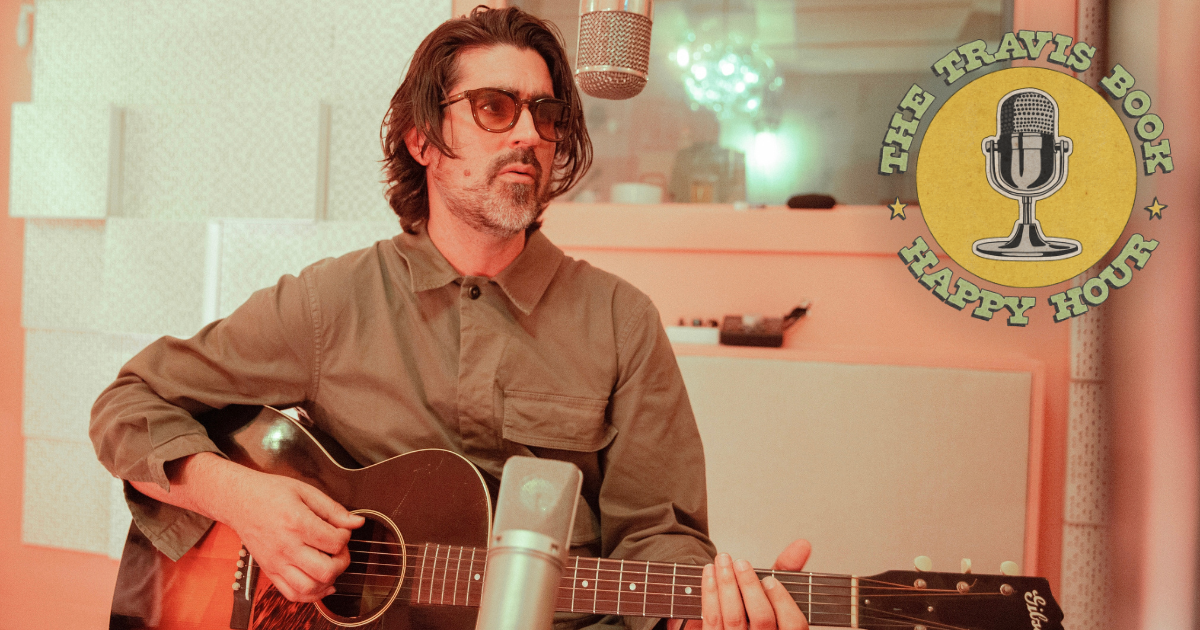
I met Ed Jurdi at a taping of The Travis Book Happy Hour in March of 2021. Our mutual friend Nicki Bluhm was on the show and she’d invited Ed, who’d recently moved to Asheville, to attend. I was not yet acquainted with Band of Heathens or Ed Jurdi, but when we met after the show I was struck by his warmth and attentiveness. It was a couple years before I would get him to Brevard to join me, but immediately during rehearsals I knew we’d be friends and this would only be the first of many times we’d share a stage. I had a blast on this episode (as evidenced by my over-playing) and I’m happy to share it with you.
This episode was recorded live at 185 King St. in Brevard, North Carolina on May 30, 2023. Huge thanks to Ed Jurdi and Tommy Maher.
Timestamps:
0:08 – Soundbyte 0:49 – Introduction 2:09 – Bill K’s introduction 2:45 – Travis’ audience greeting 3:31 – “All I’m Asking” 7:33 – “Bumblebee” 12:52 – “What a joy” 13:27 – “Jackson Station” 18:32 – Interview 34:11 – “South By Somewhere” 38:51 – “The Good Doctor” 42:45 – “Walking and Talking” 48:43 – Outro
Editor’s note: The Travis Book Happy Hour is hosted by Travis Book of the GRAMMY Award-winning band, The Infamous Stringdusters. The show’s focus is musical collaboration and conversation around matters of being. The podcast is the best of the interview and music from the live show recorded in Asheville and Brevard, North Carolina.
The Travis Book Happy Hour Podcast is brought to you by Thompson Guitars and is presented by Americana Vibes and The Bluegrass Situation as part of the BGS Podcast Network. You can find the Travis Book Happy Hour on Instagram and Facebook and online at thetravisbookhappyhour.com.
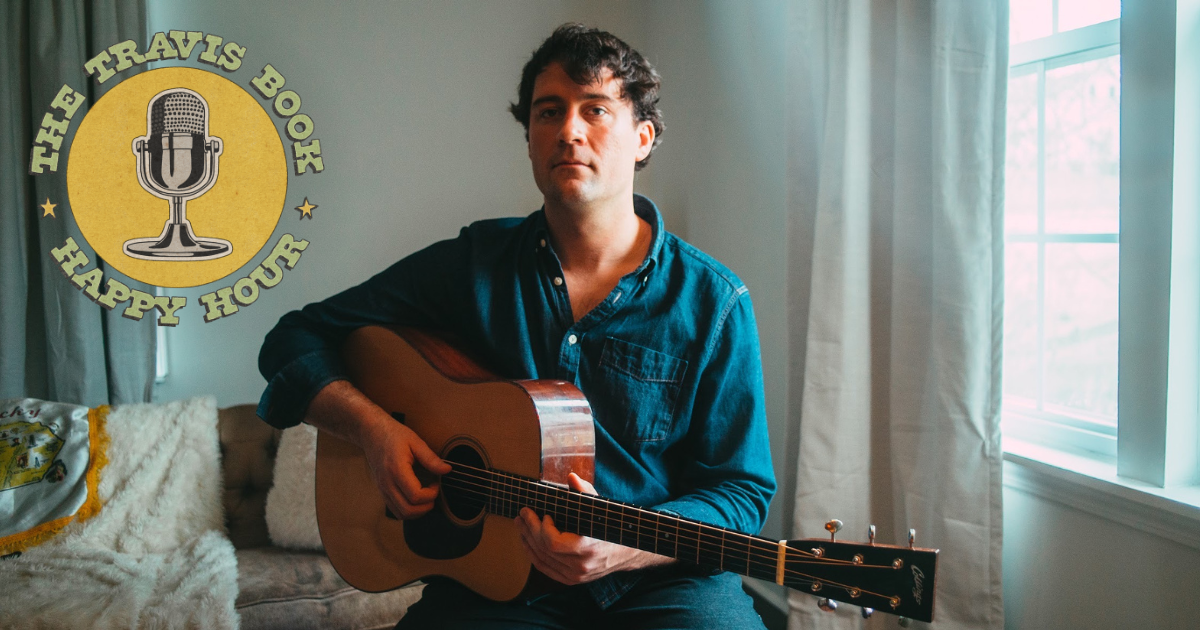
The night Jordan Tice joined me in Brevard for the taping of this episode it was cold, wet, and dark – classic Western North Carolina in late January. We had the garage door behind the stage closed and the lights low. Jordan’s guitar playing, soft-spoken demeanor, and humor made for a wonderfully intimate and enjoyable evening for everyone in the room. Jordan’s a gem and this episode feels like an evening by the fire with a good book, dog curled up at your feet.
This episode was recorded live at 185 King St. in Brevard, North Carolina on January 31st, 2023. Huge thanks to Jordan Tice.
Timestamps:
0:07 – Soundbyte 0:33 – Introduction 1:48 – Bill K Introduction 2:48 – “Tell Me Mama” 6:07 – “Covers are nice…” 6:24 – “Dayton, Ohio – 1903” 10:30 – “Bachelorette Party” 12:30 – “Why did you name it that?” 13:40 – “Weary Blues” 17:51 – “Matter Of Time” 21:21 – “Bad Little Idea” 25:40 – Interview 43:02 – “Trying To Get To Heaven” 48:33 – “Wild Bill Jones” 52:30 – Outro
Editor’s note: The Travis Book Happy Hour is hosted by Travis Book of the GRAMMY Award-winning band, The Infamous Stringdusters. The show’s focus is musical collaboration and conversation around matters of being. The podcast is the best of the interview and music from the live show recorded in Asheville and Brevard, North Carolina.
The Travis Book Happy Hour Podcast is brought to you by Thompson Guitars and is presented by Americana Vibes and The Bluegrass Situation as part of the BGS Podcast Network. You can find the Travis Book Happy Hour on Instagram and Facebook and online at thetravisbookhappyhour.com.
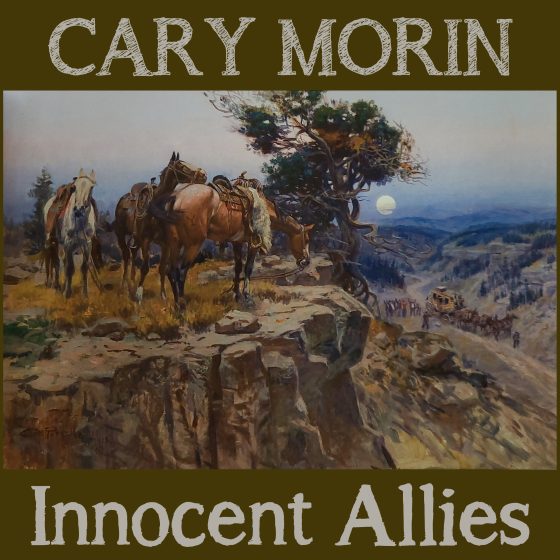
Guitarist Cary Morin’s (Crow/Assiniboine) new album, Innocent Allies, includes a striking painting on its cover created by renowned Western painter/sculptor Charles M. Russell (1864-1926), who spent his formative years as an artist in Morin’s home state, Montana. Innocent Allies, Russell’s work, depicts horses, cowboys, and settlers, routine subjects for the visual artist. The piece references how the iconic beasts of burden, who helped build the American West, were often innocent partakers in the violence, imperialism, and White Supremacy of American empire advancing across the rural, montane, wide expanses of the West.
For the new record, Morin leverages his expansive musical vocabulary – flatpicking, fingerstyle guitar, blues, folk, singer-songwriter, rock and roll and pop textures, and instrumental lyricism – to synthesize more than a dozen of Russell’s paintings and works into songs and tunes. The result is pastoral, evocative, and certainly cinematic. But these songs, as Russell’s body of work, are not sanitizations of the past or representations of American mythmaking and revisionism.
Morin views these paintings with a hefty dose of nostalgia, mentioning throughout our telephone conversation how this art was ubiquitous throughout his youth, his life in Montana, and its influence reaches well into his present, while he tours the country playing guitar from his new home base in Colorado. But that nostalgia isn’t predicated upon turning blind eyes to the atrocities endemic to Americana imaginations of “cowboys and indians,” Manifest Destiny, and the genocide and displacement of Native peoples.
The cover art for Cary Morin’s ‘Innocent Allies,’ including Charles M. Russell’s visual work by the same title.
Like Russell before him, Morin offers a grounded, realistic, and eyes-wide-open perspective not only on Russell’s body of work and those iconic images, but on the entire American societal construction of the West, as well. He does so with a formless and gorgeous genre fluidity and with playing styles entirely his own. Each track is stunning and expansive, even in their moments of intimacy and coziness.
Innocent Allies is a delicious record, made ever more fascinating by its unique concept, its nuanced inspirations and influences, and Morin’s one-of-a-kind voice on guitar. We began our interview chatting about the album’s conception before discussing Montana bluegrass, the constructive uses of genre, Beyoncé’s impeccable choice in Rhiannon Giddens’ banjo playing, and so much more.
I wanted to begin by asking you about the art of Charles M. Russell and how it inspired the new album, Innocent Allies – not only is his work on the cover, but it’s also very clear that these are cinematic and very artful songs. They’re very evocative. How did you take a different medium than your own and translate it into your own art?
Cary Morin: The album and the artwork all comes from my upbringing in Montana in the ‘70s. People from Montana all know that Charlie Russell is our most famous artist that ever came out of Montana. There have been a bunch of [artists] actually, but he’s kind of the top of the pile. When I was a kid – probably even today, too – anywhere in the state, you’re gonna be surrounded by his paintings or his sculptures.
He moved from St. Louis, Missouri when he was, I think 16? His parents gave him a train ticket to go out [West] and they wanted him to work on a sheep ranch owned by a friend of theirs for a while to get this fascination that he had with Montana out of his system. But it kind of backfired. He ended up living out his days there, for the most part. He gradually became a really advanced sculptor and painter, eventually getting to the point where he could really [demonstrate] action in the things that he created. He could [depict] minute muscles and forces and accurate movement – same in his paintings.
He ended up doing thousands of paintings and sculptures. They’re in collections all over the world now. Not only in Montana, but there are some museums around the U.S. that have huge bodies of work from him. When I was a kid, the coffee table books that were soon to follow his work, my dad and my mom ended up having all of them. My dad was a huge fan of his books, his writing, his stories, the letters that he wrote to everybody, the paintings, the sculptures.
With that stuff just always laying around when I was a kid, I became pretty familiar with it. I’m by no means an expert at that, but I just grew up around it all and know it pretty well. With this album, originally I was going to do a tribute album. It was going to be as country as I could make it. I’m not really a country player, I grew up in Montana. I can understand how it’s put together, and I could play some pedal steel. I’m pretty much a novice, but I know enough to get by, at least in the studio. So, [originally], it was all going to be all written by another artist.
After a while, I just couldn’t get my head around putting out an album where I didn’t write a single song on it. I think we were at home listening to Red Headed Stranger and I thought, “Man, I really love the production on this.” That was another favorite of my dad’s. He loved Willie Nelson.
I thought the production feel of [that record] would go along with the paintings in the coffee table book that was sitting right in front of us. It was kind of like a moment and a suggestion. The more I thought about it, the more I was like, “This takes care of everything.” I know a fair bit about Charlie Russell and his paintings are so accurate, they all tell stories. So I just started writing stories about the paintings. Looking at them and trying to imagine that scene and that moment of time that he captured. I wondered what happened before that moment and maybe what happened after that moment. Pretty soon we had a good pile of songs. It was a really fun process. At the time, we didn’t know what we were going to do with it. I mean, maybe I felt like it was a good idea, but after if it ever got done, then what?
Well, it definitely sounds like your own kind of sculptural process to get to this album. Carving something and then seeing where it leads you; starting with an idea, but then following the art wherever it goes.
I want to ask you about genre, because we’re having this conversation in “the zeitgeist” right now with Beyoncé and with Lana Del Rey and other people “going country.” On one hand, genre feels so important in this moment and on the other hand, it feels like we are accelerating ever faster toward being in a post-genre world. When I listen to this album, like you’re saying, it does remind me of Red Headed Stranger. It is straight up and down country to me.
But I wonder how you view genre, yourself? Is identifying with genre useful to you? Do you think it’s kind of a vestige of the past? How do you identify with genre at this point and with this record?
Well, with me in particular, that’s a pretty interesting question, because in the early ‘70s, when I was starting to play music and get interested in music, I lived in Montana. With my dad being a military guy, I didn’t really have access to a lot of albums of a wide, eclectic variety of genres and of sounds. But I did end up listening to classical music and my folks were big country fans. My oldest brother was a rock fan. I would stumble across things. I became a bluegrass fan from the influence of my best friends.
I didn’t really understand genres. I just heard music and I liked it. I didn’t really know how to put labels on it. I wasn’t aware of publications that would outline where the boundaries are on music. I didn’t think of things as a specific genre – although, you know, I sure liked the way that Doug Kershaw played fiddle, however I came across that! Or, I really appreciated the way Chubby Checkers played piano. That was all from Louisiana, but I had no idea what Louisiana was, or what Canadian music was, or any of that. It was all just music that I liked.
Having grown up without all that knowledge, I think it did have an effect on how I play music, because I would kind of bounce from genre to genre. I played with a band for 20 years, and we would play like the way Stevie Ray Vaughan played blues guitar. I didn’t really understand that much about blues music, but I thought what he did on David Bowie’s album was amazing. And so that had an influence on the way I play guitar. I really love Pat Metheny, and that had an influence on how I play guitar. I really love Mark Knopfler. It’s like all these genres couldn’t be any farther apart, but they all had a place in my mind. I maybe didn’t realize it at the time, but all those little influences would end up having an effect on how I make albums.
Genres now, that I hear on the radio – which is really only when I drive around – that’s [usually] like a public station, a community radio station, so I don’t really hear pop music. But, everything’s kind of starting to sound the same. I don’t know why that is. I think that maybe money has something to do with it. You know, “What sells?” What the buying public listens to, in order for advertising to be sold. I guess I don’t really pay attention to it too much. But I think that a lot of it’s driven by money.
You know, I can’t understand why Beyoncé would shout out to the world, “I’m gonna face country music!” and have that feel [like a] benefit. I think that she would only do that if she was motivated by something other than her love of Hank Williams. [Laughs] You know what I mean?
[Laughs] it’s hard to imagine! And then, at the same time, in the 100-ish years country music has been around, this seems to be a routine move. There’s always this moment where the people on the inside aren’t making that much money, or feel like they aren’t making much money, and you see someone like Lana or Beyoncé coming and you think, “Wait… There’s money to be made here? What? Tell me more about this!!”
Exactly!
From listening to your music, I think I would describe you as “genre agnostic.”
But I was curious what your feeling was on the Beyoncé announcement and the press coming out on that.
I found it really interesting, because I’ve known Rhiannon [Giddens] for years. She played with Pura Fé an artist/group that I played with in Europe for like five years. To hear her pick up a fretless banjo and just beat it into submission, I was like, “Holy God!” I had never heard anybody play a fretless banjo before, let alone like that. What a perfect choice for Beyoncé. She picked one of the best banjo players that I’ve ever met. I was surprised and impressed.
Yeah, me too. And also to have Robert Randolph playing steel on the tracks. Beyoncé and her team very clearly knew that she couldn’t appear like a “carpetbagger.” It’s not the most perfect term in this context, you know what I mean. She didn’t want to be viewed as somebody who was interloping – she did a good job at that “authenticity signaling” for sure.
It’s a wild thing to watch happen and to watch the discourse, in the wake of the two tracks, half of the people being like, “That’s not country” and half of the people being like, “Black folks invented country music, Indigenous folks invented country music, this is nothing new.” To watch those factions bump up against each other again, it’s kind of endlessly fascinating to me.
Like John Travolta having a hand in the revival of Texas music! Some idea that somebody somewhere along the line has and it catches on and takes off. I like it, too. I think culturally, I love it when things evolve. I do remember when I was a kid that I would hear on the radio what people call “country music” and go, “Boy, isn’t this happening in what is called Southern rock already?” There’s always players borrowing from other players.
And then it’s the studio musicians that played in that stuff. They may have showed up on a Bob Marley album somewhere along the line, too, because they played in a studio. Hell, man, when I was a kid I didn’t even know who Bob Marley was. I think it’s great that people learn from each other.
I wanted to ask you about bluegrass. You talked a little bit about what bluegrass means to you earlier in our conversation, but also when we premiered your track, “Whiskey Before Breakfast,” but I wanted to give you a chance to talk about your bluegrass influence again – we are the Bluegrass Situation, after all. What does bluegrass mean to you as a genre, as a picker?
That also goes back to the ‘70s. When I was talking about all the music that I either got from my family or from older brothers and my best buddies – bluegrass was a pretty big deal in Montana back in those days. I remember early on listening to these albums that didn’t exist in my friends’ houses. Hearing about Flatt & Scruggs and maybe I heard it on TV. I’d see things on Hee Haw And it definitely piqued my interest.
But the stuff that was going on in Montana, there was a band called Live Wire String Choir, which was a Montana bluegrass band. There was another one called Lost Highway Band that was a little bit electrified, but still bluegrass. And then there was the Mission Mountain Wood Band, which was kind of the king of all of them. They were straight ahead bluegrass, but from around Missoula. They actually appeared on Hee Haw one time, although I never saw that episode. They had an album called In Without Knocking back in the day and I was maybe around 12 years old, something like that. Everybody was buying that album. We had a copy of it, so I was learning those songs.
I think there was a plane accident and a lot of the band didn’t survive, but there’s one guy, his name is Rob Quist, who was one of the founders of the band. He still plays shows in Montana. His music and that band’s music turned me on to bluegrass. Through investigation and through the help of friends, I learned more and more about it. I got way into flatpicking. I never had an American-made guitar when I was a kid. I didn’t really realize the importance of that.
I was still fascinated with Tony Rice, and still fascinated with the crazy melodies that David Bromberg pumped out. I love John Hartford – so it was, I guess, a personal quest of mine. I have some friends that are pretty good bluegrass players. But I left Montana when I was 18 and I kind of pursued bluegrass for a while, but then I kind of got back into fingerpicking and fingerstyle guitar and eventually electric guitar.
And all that Clarence White stuff that I had heard and the Will the Circle Be Unbroken album, a lot of those artists that were kind of starting to press the boundaries of bluegrass music caught my attention. Eventually, I just abandoned that piece of guitar [playing] altogether and got really into playing electric guitar for many years. It wasn’t until maybe 20 years ago that I started really getting back into playing acoustic guitar. I never really abandoned electric, but I started playing fingerstyle guitar and pursuing it. I’d play for five, ten hours a day, daily. I just couldn’t get it out of my mind, largely thanks to Kelly Joe Phelps.
The early acoustic experiences that I had never really went away and I was really interested in creating music based on all of those influences throughout my life.That’s where the fingerstyle thing came back in.
I think the tune that I like the best on the album is “Bullhead Lodge.” And I love the Charles Russell painting that inspired it. I wondered if you could take us into your composition process for “Bowhead Lodge” and specifically, how you were synthesizing those related paintings while you were improvising, composing the tune – because I think that’s really fascinating.
Well, thank you. I’m glad that that song resonates with you. First of all, Charlie’s painting of his cabin on Lake McDonald – Charlie painted from memory, he’s not a guy that you would see sitting out in the middle of the fields with an easel, as romantic as that looks, he wasn’t that guy. He ended up painting a lot of depictions of his view of the lake from Bullhead Lodge. There are so many of them and they’re all just serene.
I was playing a show with Phil Cook in North Carolina and at sound check, he said, “Cary, we could just play this thing…” and he played this short, open-tuning melody. “We could play this thing for 10 minutes and people would love it,” he said.
We just kind of sat there and tweaked it for a little while. I don’t remember the melody he played. We didn’t do that during the show. But, I always remember him saying, “Play the simple thing and people will love it.” When I was looking at those paintings of Lake McDonald, I just started playing this melody. It wasn’t really written on the spot, I suppose. I goofed around with it for a couple of hours, but then I came up with sort of four variations of a similar melody. I started with a simple one and then changed it and changed it and changed it until the chords finally changed into what tags the song.
Because of that process, I like that song too, because it’s a great memory. I was glad that it made it onto the album. People have been talking about that recording, it seems like it’s resonated with folks.
(Editor’s Note: Welcome to the debut of our new humor column, The Resonator – from the pen of satirist and performer Greg Hess.)
RALEIGH, N.C. — Gary Plapinger (48), a local Guitar Center salesman, expressed surprise upon realizing that the person he had been explaining chords to was none other than acclaimed guitarist Molly Tuttle.
“I feel tricked,” remarked Plapinger in retrospect. “I dedicated a considerable amount of time to that gal’s musical education.”
According to witness Ashlyn Lockerbie (32), the entire interaction could have been avoided. “Molly [Tuttle] politely explained to him multiple times that she had been playing for years,” Lockerbie stated. “She wasn’t even looking to buy a guitar.”
Plapinger, however, held a different perspective. “I was suggesting she get a ukulele; thought her kids could enjoy it too,” he explained, despite Tuttle not currently having children.
Observing the cringe-worthy spectacle from her hiding place behind a bass amplifier, Lockerbie later managed to escape through the loading dock to avoid Plapinger. “I’m not proud of running,” she said with a haunted look. “But I had to save myself.”
In a statement released on Friday, Grammy award-winning Tuttle revealed that she had entered the store seeking directions after leaving her cellphone in an Uber. To her dismay, this led to an hour and twenty-minute encounter with Plapinger, including a lecture on the greatest guitar solos of all time, a photo presentation of his 1999 canary yellow Camaro, and an impromptu performance of “Stairway to Heaven,” all without Tuttle’s consent.
According to Facebook, Plapinger has been a part-time sales associate at Guitar Center since 2016, following his divorce. He also serves as an alternate lead guitarist for the local Led Zeppelin cover band, Boogie With Stu.
“I even added her to the guest list for my show at Foamie’s that night. Surprise, surprise, she didn’t show up!” he exclaimed, before turning his attention to a woman perusing pedal boards. “Her loss. She could have learned how to rock,” he added with a shrug.
Tuttle is currently touring the United Kingdom with Tommy Emmanuel and said that the incident has motivated her to aid other women facing similar situations.
“I never pass a music retailer without checking on the women inside and ensuring they want to be there,” said Tuttle, whose Run Don’t Strum Foundation has rescued numerous musicians to date. “After what I’ve been through, it’s the least I can do.”
Greg Hess is a comedy writer and performer in Los Angeles. His work has been featured in The American Bystander, The Onion, Shouts & Murmurs, Points in Case, and he cohosts the hit satirical podcast MEGA.
Artist:Tommy Emmanuel Hometown: Nashville, Tennessee Song: “Tennessee Stud” featuring Nitty Gritty Dirt Band Album:Accomplice Two Release Date: April 28, 2023 Label: CGP Sounds
In Their Words: “I’ve always loved this song. I wanted to pay tribute with Nitty Gritty to Doc Watson and the original version that appears on the Will The Circle Be Unbroken album. Jeff Hanna sang on that version with Doc. Jeff and I split the verses up so we could come together on the choruses. It was a very relaxed feeling recording with the Nitty Gritty guys. They know it so well and I loved coming up with little changes in the riffs and chords to try to add my own touch to this classic. I love working with such an iconic band. I see them still giving music their ALL! Their passion for music, good songs, and performing for the fans is all still present when you see them and doesn’t seem like the years have taken their edge at all. More power to Nitty Gritty!” – Tommy Emmanuel
In Their Words: “We started writing ‘Wild As A Flower’ almost two years ago, not knowing how the story that the song reflected would progress. After we lost one of our beloved animals in January, we were finally able to finish the song. It’s been refreshing to allow ourselves to explore new territories in our songwriting together, especially the spiritual elements that come up often in our conversations — we get pretty deep into the existential a lot of times and it’s opened up our writing a lot.” – Amanda Fields & Megan McCormick
Photo Credit: Lindsey Patkos Video Credit: Rebecca Branson Jones
This website uses cookies to improve your experience. We'll assume you're ok with this, but you can opt-out if you wish.AcceptRejectRead More
Privacy & Cookies Policy
Privacy Overview
This website uses cookies to improve your experience while you navigate through the website. Out of these, the cookies that are categorized as necessary are stored on your browser as they are essential for the working of basic functionalities of the website. We also use third-party cookies that help us analyze and understand how you use this website. These cookies will be stored in your browser only with your consent. You also have the option to opt-out of these cookies. But opting out of some of these cookies may affect your browsing experience.
Necessary cookies are absolutely essential for the website to function properly. This category only includes cookies that ensures basic functionalities and security features of the website. These cookies do not store any personal information.
Any cookies that may not be particularly necessary for the website to function and is used specifically to collect user personal data via analytics, ads, other embedded contents are termed as non-necessary cookies. It is mandatory to procure user consent prior to running these cookies on your website.